Lindblad vs Silversea in the Galapagos: Which Luxury Operator Wins?
This is one of our Galapagos cruise comparisons. Or see Galapagos cruises in one finder.
Quick Facts: Lindblad vs Silversea in the Galapagos
| Feature | Silversea (Silver Origin) | Lindblad (National Geographic fleet) |
|---|---|---|
| Ships in Galapagos | 1 (Silver Origin) | 4 (Endeavour II, Islander II, Gemini, Delfina) |
| Ship Capacity Range | 100 guests | 16 (Delfina) to 96 (Endeavour II) |
| Year in Galapagos | Silver Origin since 2021 | Since 1967 (first ever civilian expedition) |
| Accommodation | 50 all-balcony suites, 325-1,025+ sq ft | Varies by ship; Islander II is all-suite (280-515 sq ft) |
| Butler Service | Yes, every suite | No |
| Private Balconies | All 50 suites | None on Islander II; some on Delfina (Categ. 5) |
| Guide-to-Guest Ratio | 1:10 (highest in Galapagos) | 1:10 (1 staff per 10 guests) |
| Expedition Team | 8-10 Ecuadorian GNPS-certified naturalist guides | Naturalists + photo instructor + undersea specialist + expedition leader |
| NatGeo Photo Program | No | Yes (certified photo instructor on every departure) |
| Undersea Specialist | No dedicated specialist | Yes, on all Galapagos departures |
| Crew-to-Guest Ratio | ~1:1.16 (86 crew, 100 guests) | 1:1 (Islander II) |
| Dining Venues | 2 (The Restaurant + The Grill) | 1-2 depending on vessel |
| Park Fees Included | No ($200 USD, cash on arrival) | Yes (included in cruise price on most departures) |
| Domestic Flights Included | Yes (charter flights, included in expedition fare) | Not included in base price; available as add-on |
| Approx. Starting Price (7-night) | ~$11,500-$14,400/person (Classic Veranda Suite) | ~$8,974+ per person (Islander II, varies by ship) |
Prices verified May 18, 2026. Approximate per-person double occupancy rates for 7-night cruises. See Section 8 for detailed inclusions comparison before reading these numbers as comparable.
What Makes Lindblad and Silversea Different From Every Other Galapagos Operator?
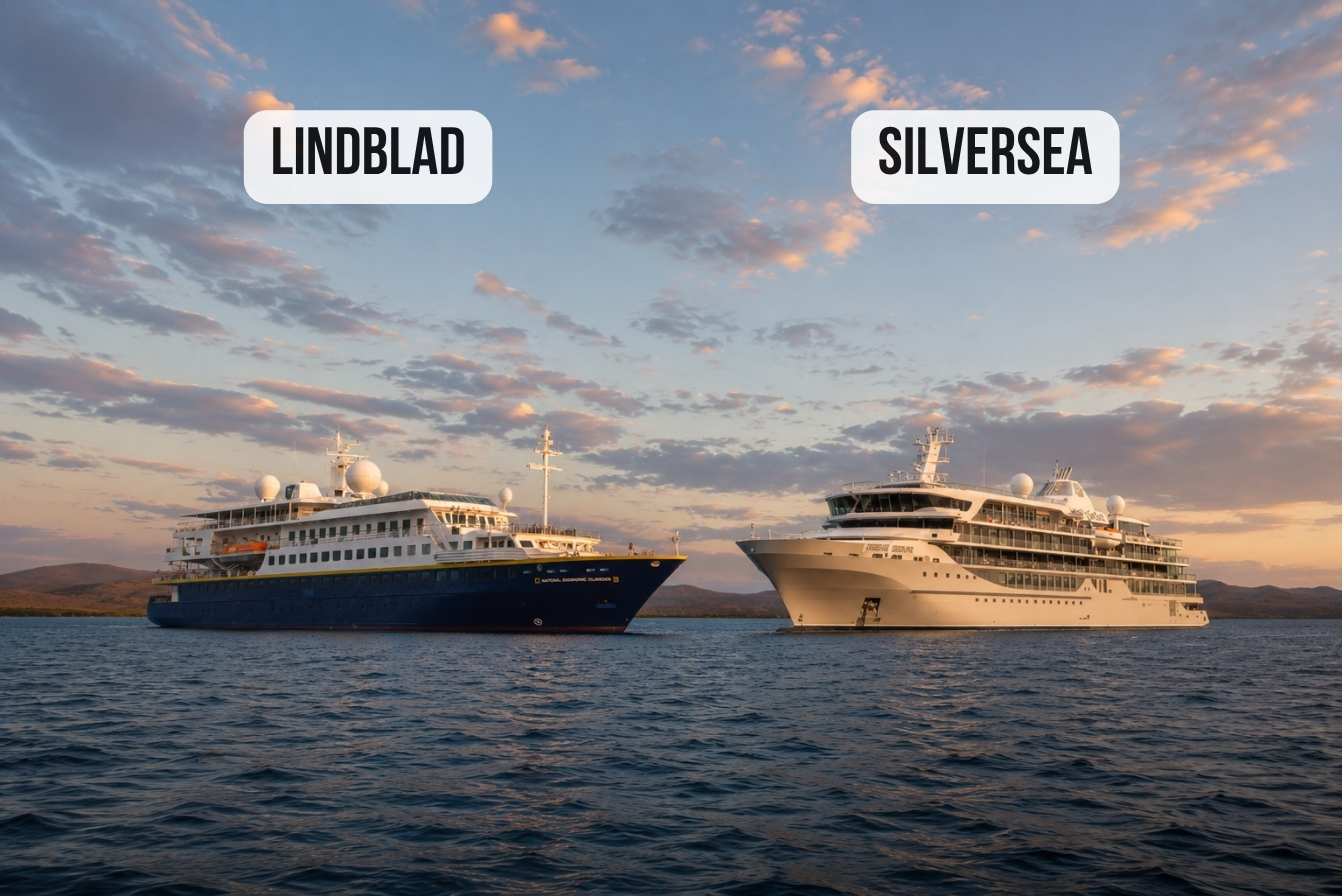
Both operators sit at the top tier of the Galapagos market, but they got there via entirely different routes. Silversea brings the infrastructure of ultra-luxury ocean cruising, with butler service, Pratesi linens, and a marble bathroom to a purpose-built Galapagos expedition ship. Lindblad pioneered the concept of civilian expedition travel to the Galapagos in 1967, when Lars-Eric Lindblad organized the first non-scientific international group cruise to the islands. The company has been here ever since, running four ships year-round and embedding National Geographic photographers, undersea specialists, and conservation scientists into every departure as standard.
Most travelers who compare these two operators at the research stage are doing so because they’ve decided to spend serious money on this trip and want to spend it well. That’s the right instinct. At this price tier, the differences between operators matter more than at any other level of the Galapagos market. A budget classic vessel is a budget classic vessel. But the difference between Silversea and Lindblad is the difference between two genuinely distinct visions of what a Galapagos expedition should be.
Silversea’s vision: the Galapagos deserves the same level of physical luxury as any other ultra-premium travel destination, and there is no reason that expedition cruising should mean sacrificing the quality of your suite, your dining, or your service. Silver Origin was built from scratch to prove that point. A 100-guest ship where every suite has a private balcony and a dedicated butler, where the guide-to-guest ratio leads the entire fleet at 1:10, where a fire pit in the Explorer Lounge and a Hot Rocks grill dinner by the pool exist alongside genuine GNPS-certified Ecuadorian naturalists.
Lindblad’s vision: expedition travel is defined by the quality of what you learn and experience, not the thread count of the linens. The National Geographic partnership, renewed through 2040, means every departure carries a certified photo instructor who coaches you in real time as a waved albatross does its courtship dance five feet in front of you. An undersea specialist captures footage below the surface and interprets it over cocktails each evening. The company supports the Charles Darwin Foundation financially, runs conservation programs as standard operational commitments, and has a private school on Santa Cruz Island training the next generation of island naturalists. Some of those graduates now work as guides on Lindblad ships.
How Do the Ships Compare: Silver Origin vs the Lindblad Fleet?
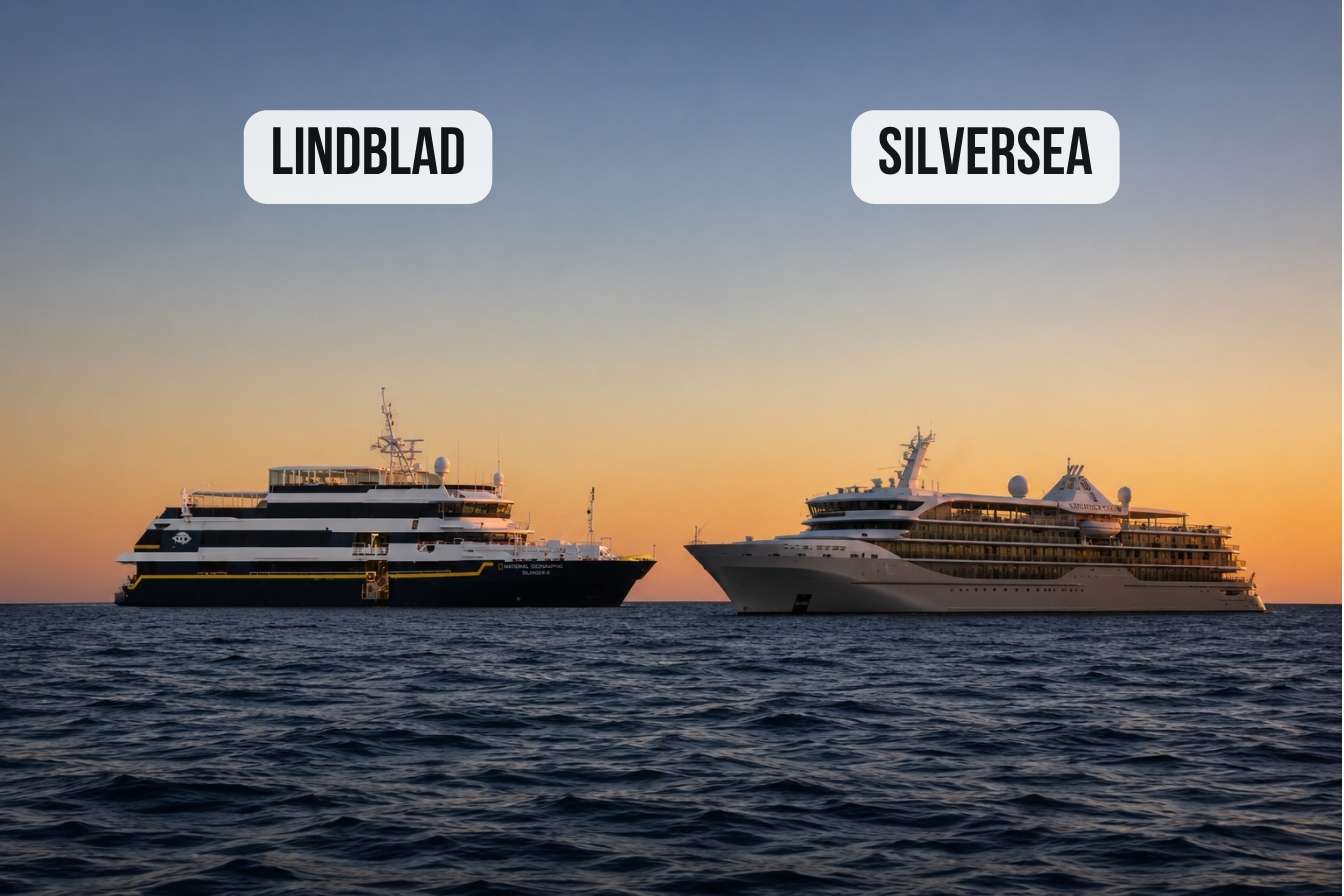
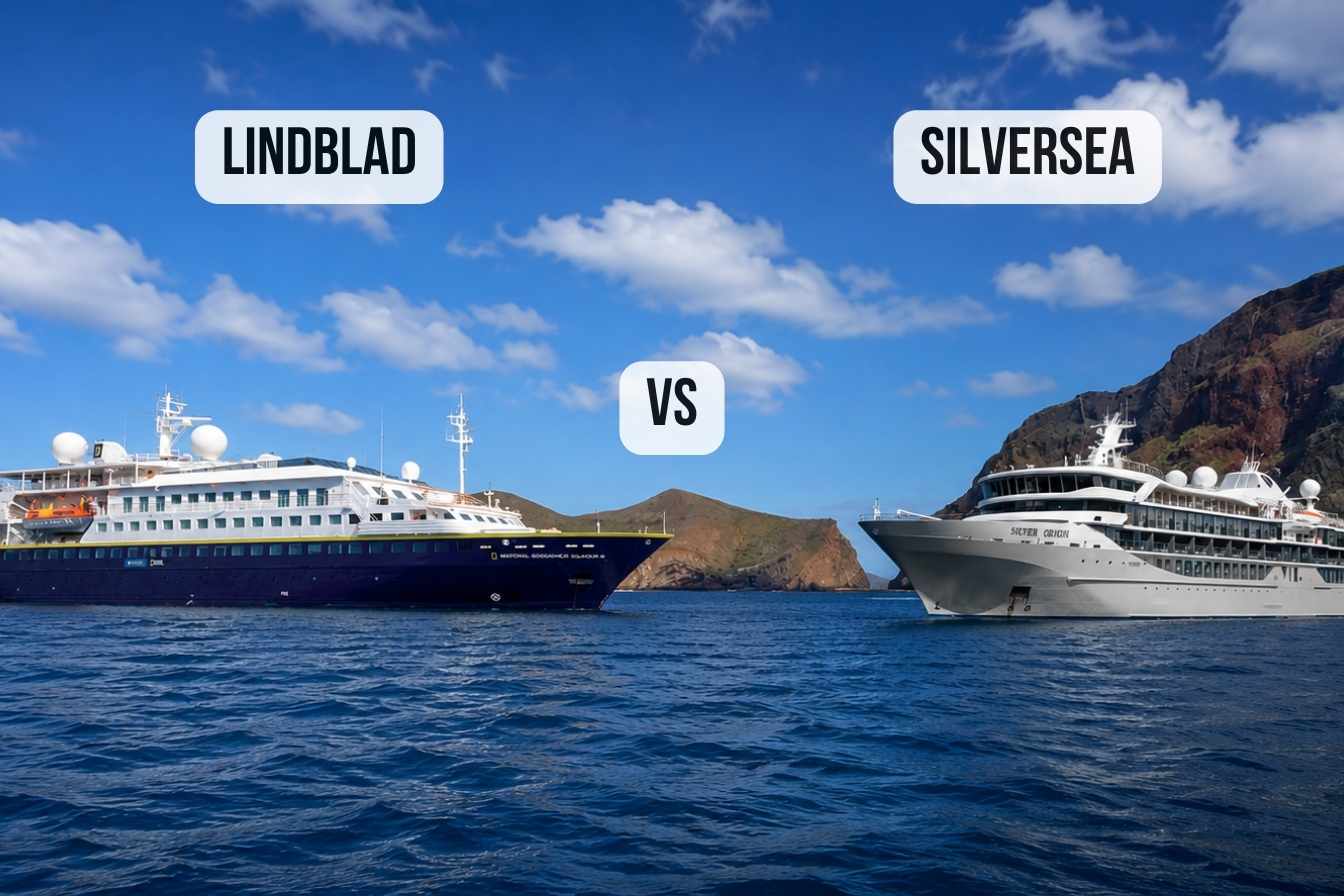
Silver Origin carries 100 guests in 50 suites, all with private balconies, ranging from 325 square feet (Classic Veranda) to over 1,025 square feet (Owner’s Suite). The Horizon Balcony, unique to Silver Origin, converts from an open balcony to an enclosed sitting room at the touch of a button. Lindblad’s four Galapagos ships range from the 16-guest National Geographic Delfina (a luxury catamaran) to the 96-guest National Geographic Endeavour II. The most directly comparable vessel at the luxury tier is the 48-guest National Geographic Islander II, an all-suite ship with a 1:1 guest-to-crew ratio and suites from 280 to 515 square feet, but without private balconies.
The physical comparison between Silver Origin and National Geographic Islander II is the most relevant for travelers at this tier. Both are at the top of their respective operators’ Galapagos offerings. Both carry 48 to 100 guests at prices starting above $8,000 per person for a 7-night cruise.
Silver Origin has the better suite by almost any physical measure. Starting at 325 square feet with a private balcony, built-in butler, Pratesi linens, and in select categories an ocean-view whirlpool bathtub accessible from the balcony, the accommodation is simply in a different category from anything else in the archipelago. The Horizon Balcony category, which converts the balcony to an enclosed seating area, solves the problem of equatorial wind at anchor in a way that other vessels with fixed outdoor balconies don’t. The marble bathroom with locally sourced bath products, the custom-made mattress, the fully stocked minibar calibrated to your stated preferences: these are details that Silver Origin takes seriously and delivers on consistently.
National Geographic Islander II trades cabin luxury for expedition functionality in ways that make sense for its philosophy. The 280-square-foot Guest Suites have two panoramic windows, convertible king beds, marble bathrooms with rain showers, and a seating area. The four 515-square-foot Islander Suites add soaking tubs and separate living areas. No private balconies, but the ship compensates with an open bridge policy (you can visit the bridge at any time), a ship-wide mini promenade deck running both sides, and a mud room where you gear up for Zodiacs directly above the marina platform. The functional design of the Lindblad ships is oriented around getting people into the islands, not around keeping them comfortable in a suite. The Islander II does both well, but the balance is tilted differently.
One important note for family travelers: Lindblad’s newer vessels have been designed with family exploration in mind. National Geographic Delfina, the 16-guest catamaran launched February 2025, accepts guests of all ages and offers the most intimate possible introduction to the Galapagos within either operator’s fleet. Silver Origin requires guests to be at minimum 12 years old and the butler service/dinner dress code creates a more adult-oriented atmosphere throughout.
Choosing between these two operators often comes down to a direct conversation about what you’re actually prioritizing on this trip. Luxury first, or expedition depth first? We can walk through both options in detail and tell you which specific ship and departure date gives you the best of each. Fill out this short form and we’ll give you a free, honest recommendation.
What Is the Onboard Experience Like: Dining, Service, and Daily Life?
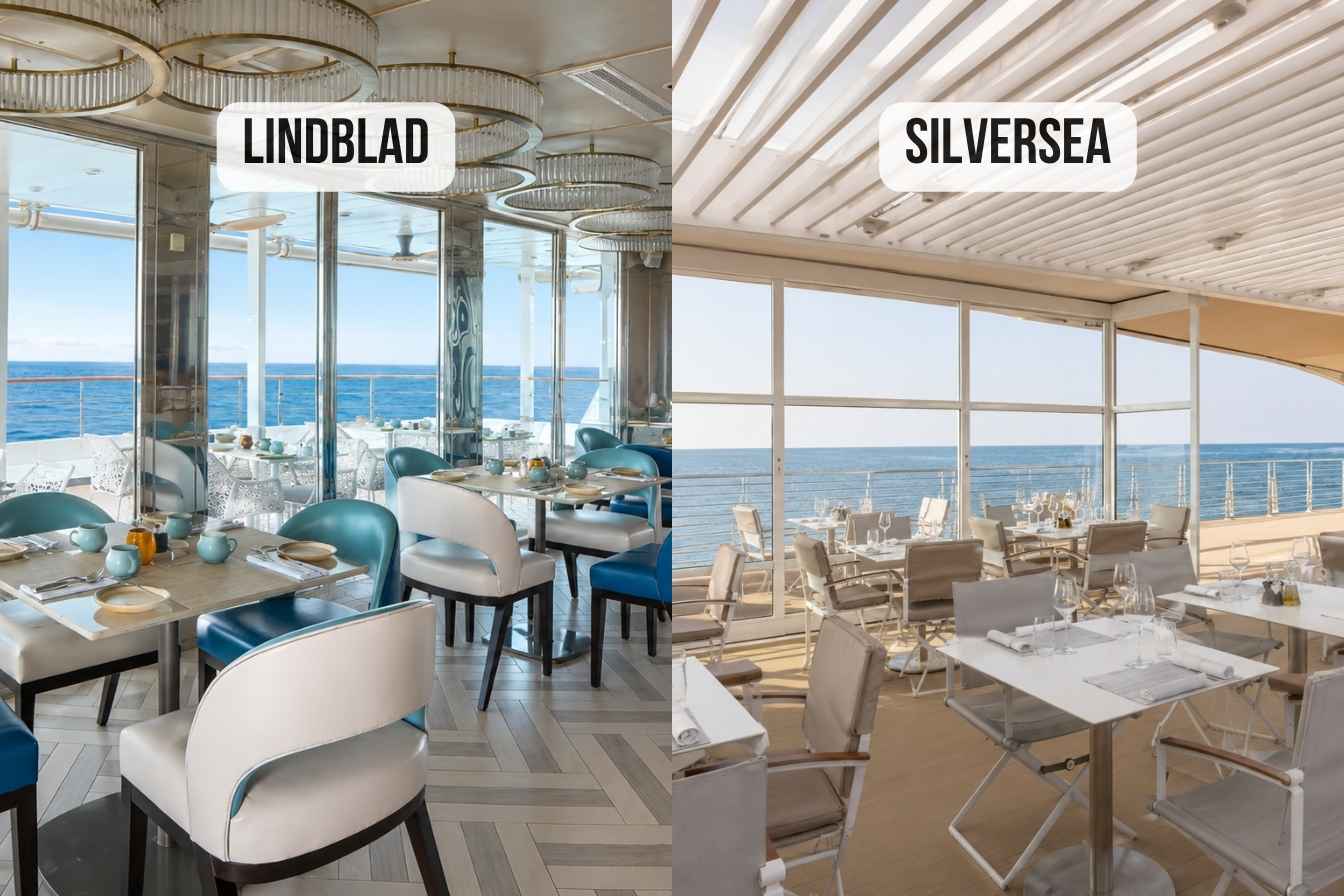
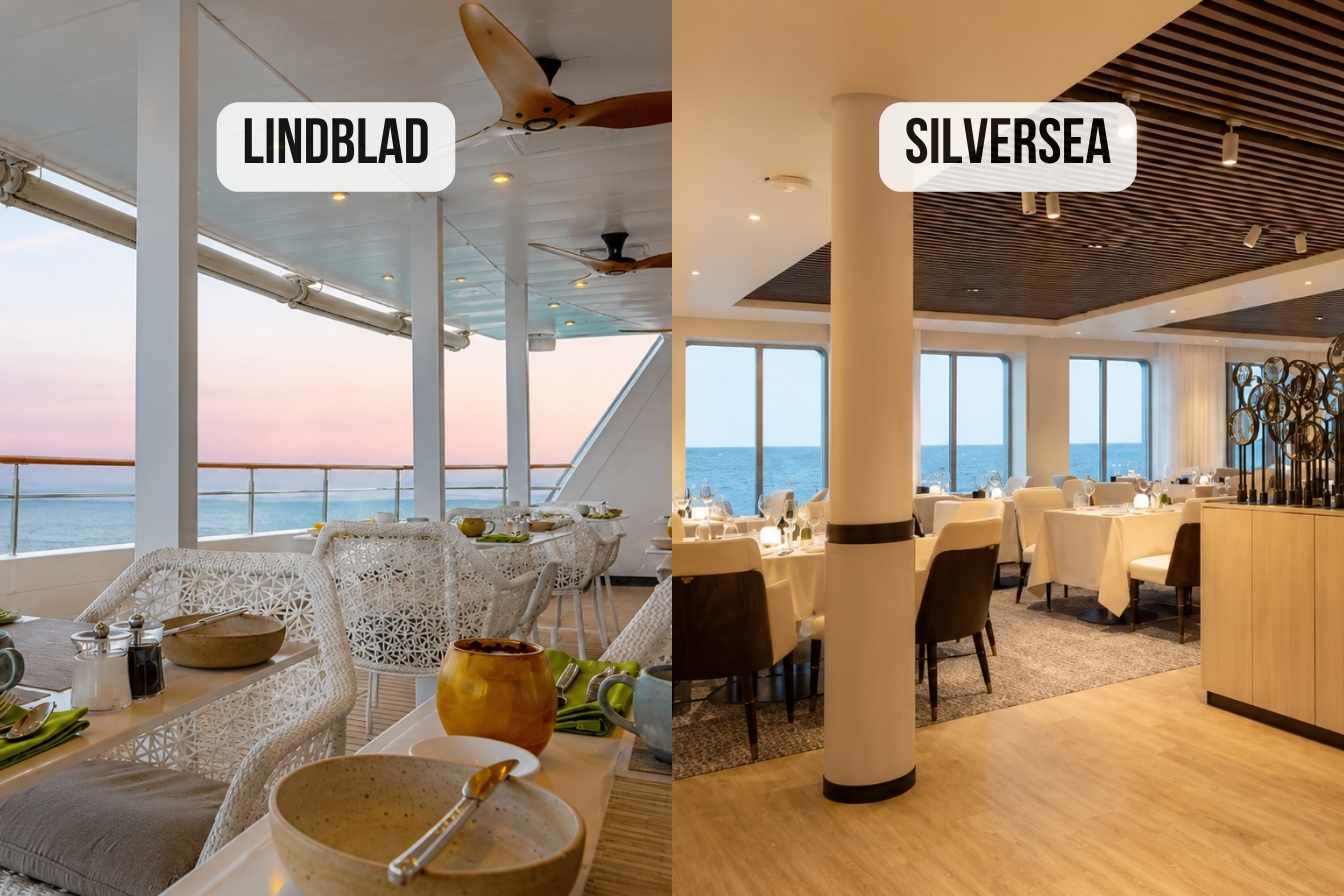
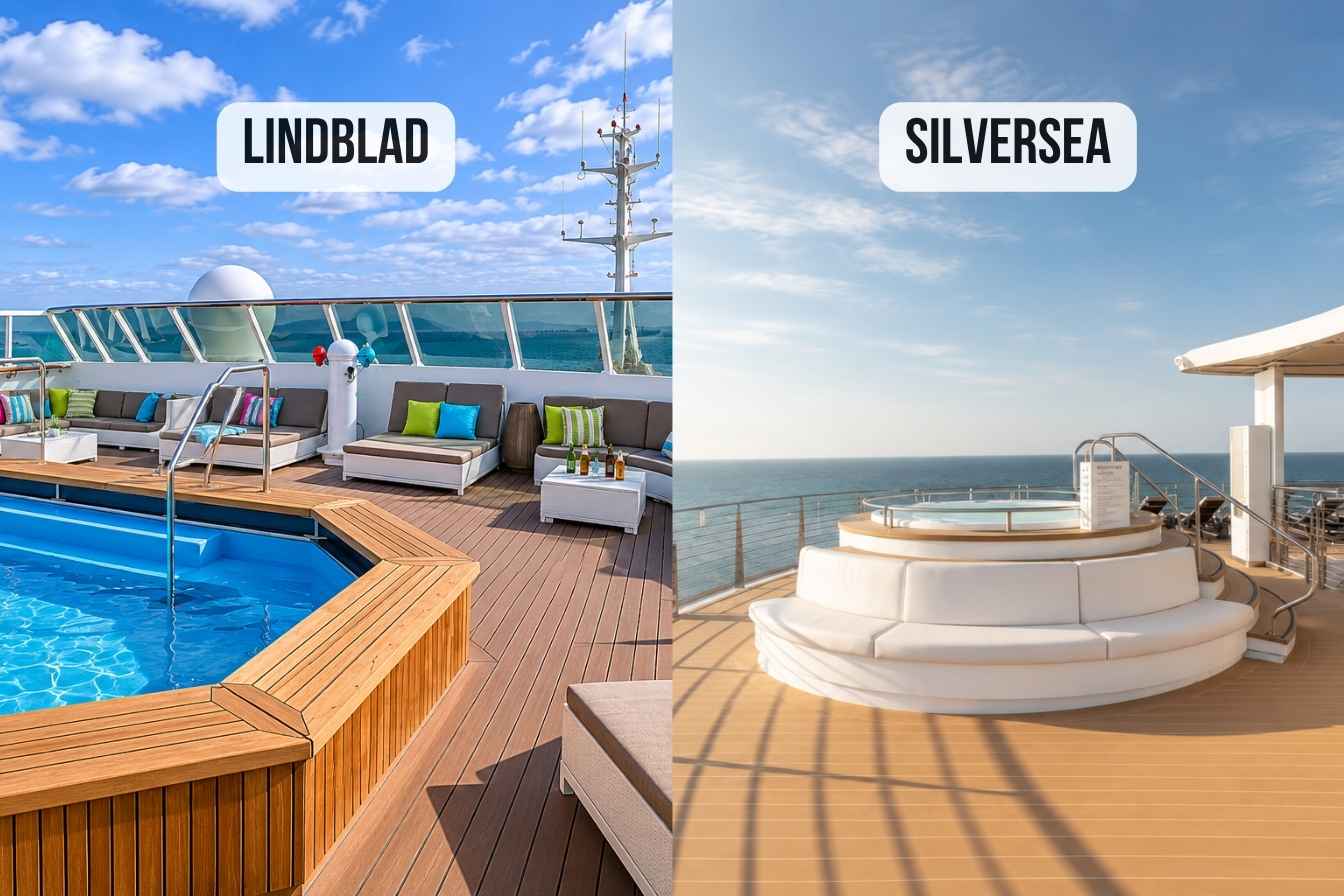
Silver Origin runs two dining venues: The Restaurant, a single-seating all-day dining room serving Ecuadorian-inspired cuisine with locally sourced ingredients and fine regional wines, and The Grill, a poolside outdoor restaurant with its signature Hot Rocks concept where guests cook fresh fish, seafood, and meats on lava stones at the table. All beverages including wines and spirits are included. Lindblad’s National Geographic Islander II has a Patio Café for casual breakfasts and an elegant Yacht Club Restaurant for dinners. Local Ecuadorian and Galapagos ingredients feature prominently, local beers and most spirits are complimentary, though some top-shelf wines carry a surcharge. Both operators serve meals that consistently draw strong reviews, but Silver Origin operates at a culinary level that travelers accustomed to Relais and Châteaux dining will recognize.
The Hot Rocks dinner at The Grill on Silver Origin deserves a specific mention because it’s genuinely distinctive and travelers bring it up unprompted in reviews. You’re seated outside at a poolside table with a lava stone heated to cooking temperature at the center. Fresh Galapagos fish, scallops, and cuts of meat arrive raw and you cook them to your preference. Around you, the Pacific. The evening air. Other guests at nearby tables doing the same. It sounds like a gimmick until you’re doing it and realize it’s actually one of the better dining experiences you’ve had at sea.
The butler service on Silver Origin is the single biggest differentiator in daily life between the two operators. Your butler knows your breakfast preferences by day two. Champagne arrives chilled in your suite before you return from the first excursion. Pre-dinner canapés appear in the suite during the gap between the evening briefing and dinner. The butler handles any logistical question that would otherwise require you to find someone at reception. For travelers accustomed to this level of service from hotel stays at the Aman or the Four Seasons, the butler dynamic on Silver Origin will feel familiar and deeply comfortable. For travelers who have never experienced it, it takes a day to adjust to and then becomes hard to imagine traveling without.
Lindblad’s service culture runs differently. The staff on Islander II learn guest names quickly, often by the second day. The 1:1 crew-to-guest ratio means there is always someone available. But the service is warm and attentive rather than choreographed luxury. The naturalists join guests for meals and continue the expedition conversation over dinner. The expedition leader runs daily recaps and previews over pre-dinner cocktails in the lounge, which function as both briefing and social gathering. The atmosphere is collegial rather than formal. One traveler who had sailed Silver Origin and then later sailed Islander II described the difference as “boutique hotel versus field camp, both excellent, utterly different in what they’re trying to be.”
Both operators serve locally sourced Ecuadorian cuisine with genuine commitment. About 75% of Silver Origin’s ingredients come from the Galapagos or mainland Ecuador. Lindblad similarly sources from local farms and sustainable fisheries whenever possible. Neither operator delivers the generic international buffet that characterizes mainstream cruise dining. Both take the food seriously and deliver meals that travelers consistently describe as a highlight of the trip rather than an afterthought.
We’ve worked with both operators extensively and can give you a specific picture of what a week looks like day-by-day on each vessel, including which dining moments consistently generate the strongest reviews from returning travelers. Reach out here for a free consultation with no pressure.
How Do the Expedition Teams and Educational Programs Compare?
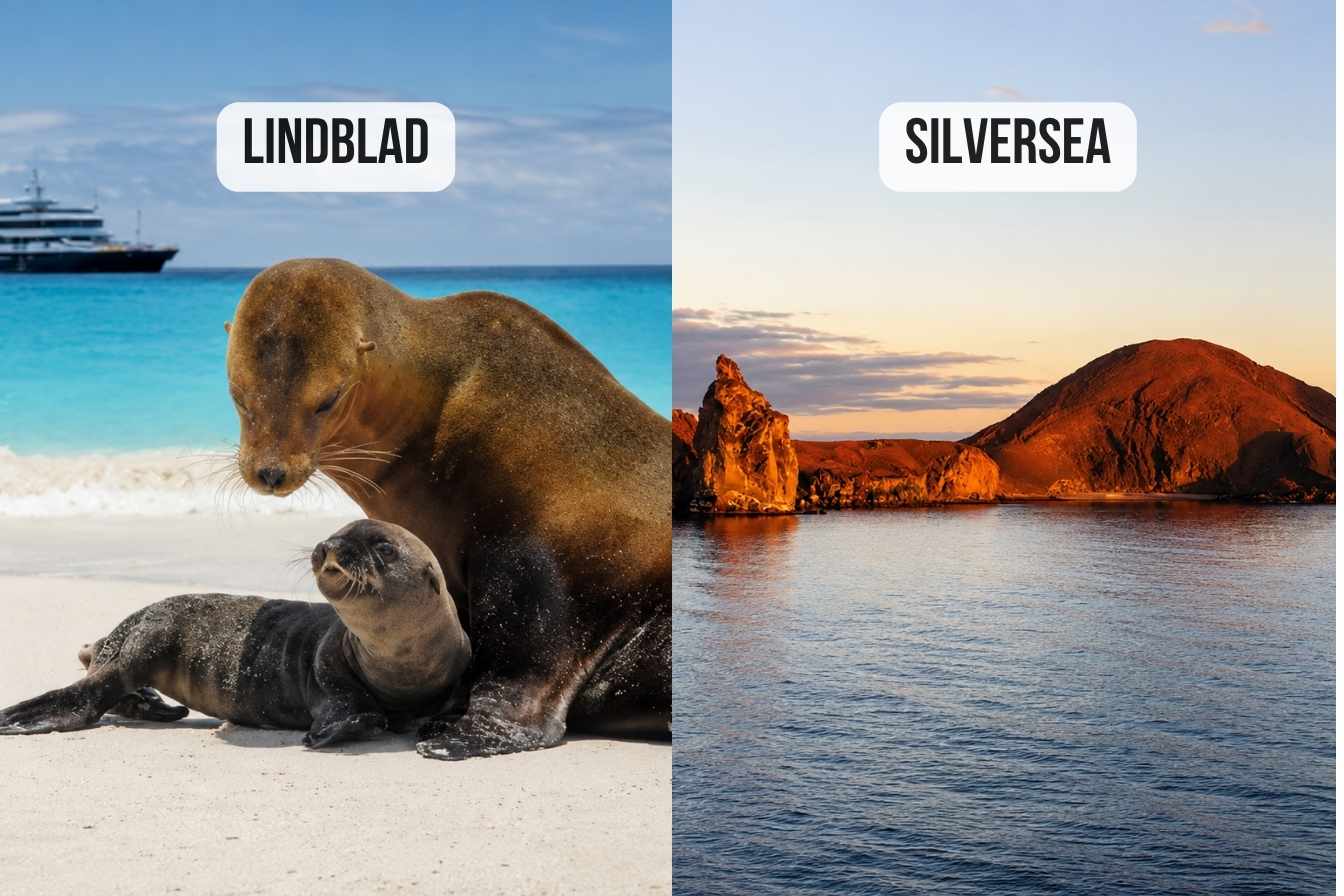
This is where the two operators diverge most meaningfully. Silver Origin carries 8 to 10 GNPS-certified Ecuadorian naturalist guides for 100 guests, achieving a 1:10 guide-to-guest ratio that is the highest in the archipelago. Lindblad’s expedition team on Islander II (48 guests) comprises an expedition leader, three naturalists, a certified National Geographic photo instructor, and an undersea specialist, plus a wellness specialist. The photo instructor and undersea specialist are exclusive to Lindblad. The photo instructor shoots alongside guests during excursions and reviews images with feedback at evening recaps. The undersea specialist dives every day, captures HD footage of Galapagos marine life, and presents the footage over evening cocktails. Neither specialist type exists on Silver Origin.
The National Geographic photography program is genuinely one of the more thoughtful things any expedition cruise operator offers anywhere in the world. It isn’t a photography tour. It isn’t a guest lecture from a photographer. It’s a certified instructor who has been trained at National Geographic headquarters, who shoots in the field alongside you, and who gives real-time coaching when you’re standing in front of a nesting blue-footed booby colony on North Seymour and have thirty seconds to capture the courtship dance before the group needs to move on. At evening recaps, the instructor presents their best images from the day and explains the specific technical decisions that produced them: the exposure adjustment for equatorial backlighting, the burst setting for the booby’s foot-raising display, the composition choice that separates a strong wildlife image from a snapshot. The OM System gear locker on Lindblad’s larger ships allows guests to borrow professional camera equipment at no charge. In the Galapagos, where the wildlife is so close and so unbothered by human presence that the limiting factor in wildlife photography is almost always technique rather than access, this program is transformative for guests who care about images.
The undersea specialist adds an equally distinctive layer. Every day in the Galapagos involves snorkeling for most guests, and most guests experience the remarkable underwater encounters: sea lions spiraling past, Galapagos sharks cruising below, sea turtles ascending for air beside you. What fewer guests experience is the footage from fifty feet down that the undersea specialist captured on the same dive. The marine iguana feeding behavior on the seafloor. The Galapagos bullhead shark resting on a ledge. The starfish species that live at depths below comfortable recreational snorkeling. The undersea specialist brings that footage back to the lounge, interprets it with the same level of naturalist knowledge they bring to every excursion, and connects what guests saw at the surface to what was happening in the water column below them. It’s the Galapagos in its full depth, not just the portion visible from a snorkel mask.
Silver Origin’s 8 to 10 naturalists are among the best-credentialed Ecuadorian guides in the fleet. All are GNPS-certified, all are from Ecuador, several are multigenerational Galapagos residents with family histories on specific islands. They know the islands in the personal way that the best local guides anywhere know their territory: they grew up here, they have family relationships with the farmers and fishermen who supply the ship, they take a personal stake in what their guests understand and feel about this place. One guide, Marco Garcia, described himself as “an ambassador” for the islands and said he takes “great pride in sharing the islands’ richness with guests.” That orientation comes through in every excursion, every briefing, every quiet moment on deck when a guest points at something in the water and asks what it is.
The honest assessment: at the expedition team level, Lindblad’s multi-specialist model provides something that Silver Origin doesn’t match. The photo instructor and undersea specialist create two entire programmatic layers that have no equivalent on Silversea. For travelers whose primary identity on this trip is photographer, naturalist, or someone who wants to understand the Galapagos more deeply than any other trip they’ve taken, Lindblad’s program delivers more. For travelers whose primary identity is luxury traveler who also wants an excellent wildlife expedition, Silver Origin’s naturalists are more than sufficient, and the butler waiting in the suite is part of what they paid for.
Which Itineraries Do Lindblad and Silversea Cover, and Does the Difference Matter?
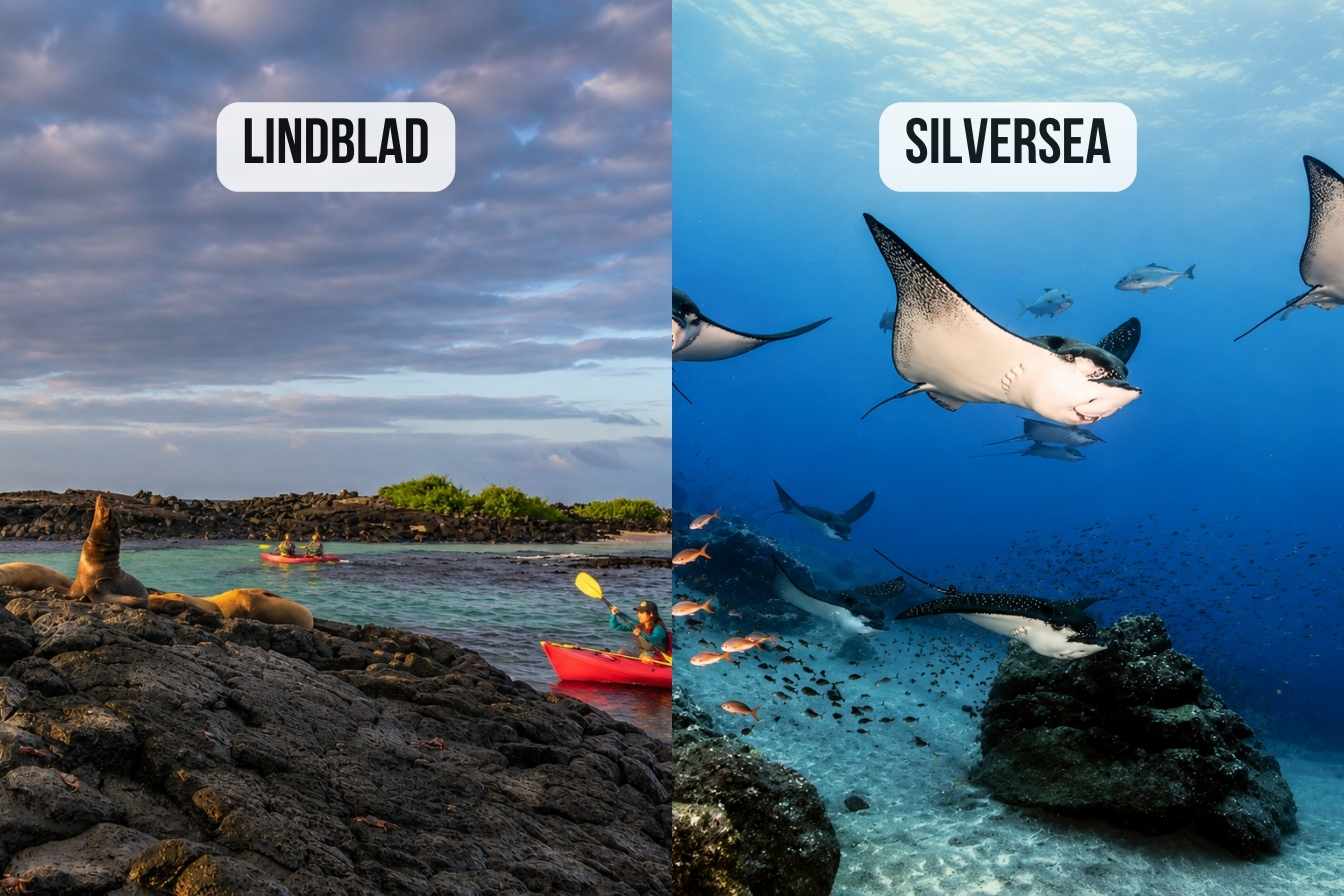
Silver Origin runs alternating 7-night eastern and western itineraries, departing year-round from San Cristobal. The eastern route covers sites including Genovesa, Bartolome, Española, and Santa Cruz. The western route includes Fernandina, Isabela’s west coast, and the Cromwell Current sites. Both routes can be combined for a 14-night full circuit. Lindblad’s four-ship fleet offers significantly more itinerary variety: 7-night, 10-night, and 16-night departures across all four vessels, covering every major site in the archipelago with options to extend into Peru and Machu Picchu. The Galapagos Park regulations mean all operators rotate between island groups on a set schedule, so both operators visit the same core sites across their itinerary portfolios.
For most travelers comparing these two operators, the itinerary difference is less significant than it first appears. Both cover Fernandina and the western islands. Both cover Española, Genovesa, Bartolome, and the central sites. The Galapagos National Park’s rotation system ensures that no single vessel dominates access to any site at any given time, and that the quality of the wildlife encounter is primarily a function of season and behavior rather than which ship you’re on.
Where the difference matters more is in duration. Silver Origin’s 7-night base itinerary is fixed. Combining the eastern and western routes requires 14 nights, which not all travelers can accommodate. Lindblad’s fleet offers 5-night escape options through 16-night Galapagos-plus-Peru combinations. For travelers who want to see the islands comprehensively and have the flexibility to do 10 or 16 days, Lindblad’s range of itineraries and vessels accommodates that better.
One operational distinction worth noting: Silver Origin departs from San Cristobal and Silversea arranges charter flights from Quito to San Cristobal, included in the expedition fare. This simplifies the arrival logistics considerably and is genuinely valued by Silver Origin travelers. Lindblad typically prices flights as a separate arrangement, though the company will assist with booking and in some promotional periods offers airfare credits.
What Do Real Travelers Say About Each Operator?
Silver Origin reviews consistently praise the butler service, the suite quality, the culinary experience, and the guide team’s knowledge. Common phrases across independent reviews: “life-changing,” “the only way to see the Galapagos,” “nothing was overlooked,” and specific praise for the interactive Basecamp and fire pit evenings in the Explorer Lounge. Lindblad reviews focus on the expedition team depth, the photography instruction, the undersea footage evenings, and the sense of being genuinely educated rather than just guided. Phrases that recur: “came back knowing so much more than I expected,” “the photo instructor transformed my images,” and “felt like I was part of a real expedition.”
One Cruise Critic reviewer who sailed Silver Origin described it as “akin to the ease of a ski-in, ski-out luxury alpine hotel.” That metaphor captures something real about Silver Origin’s achievement: it created an expedition ship where the logistics of expedition travel, the wetsuits, the Zodiac boarding, the gear management, disappear into smooth operational choreography so that guests can be fully present for the wildlife rather than managing equipment and process. Another reviewer summarized a fellow guest’s reaction on their first Galapagos trip: “Cruising on Silver Origin was luxurious and life-changing, replete with unforgettable experiences.” That dual quality, both luxurious and life-changing simultaneously, is precisely what Silversea was trying to engineer.
Lindblad reviews carry a different texture. A traveler who sailed the National Geographic Gemini described staff who had learned their names by the second day and a daily rhythm that balanced hiking, snorkeling, and kayaking with evening recaps where the photo instructor and undersea specialist unpacked what the day had shown everyone. “I came home with my best nature photos ever,” one traveler wrote, “because someone who knows what they’re doing was coaching me in real time when I needed it.” The expedition team’s combination of local Galapagos knowledge and specialized technical skills creates an educational layer that travels described as distinct from what any other expedition cruise had given them.
The honest critical notes for both: Silver Origin is the most expensive option in the archipelago by a meaningful margin, and travelers who prioritize expedition depth over suite luxury occasionally find the ratio tilted too far toward comfort. Lindblad’s vessels, particularly the older Endeavour II, are comfortable but not plush by Silver Origin standards. The Islander II closes the gap substantially, but even its all-suite configuration doesn’t match the balcony suites and butler service of Origin. One traveler who transferred from a Silver Origin booking to National Geographic Islander II for budget reasons described it accurately: “I had an outstanding expedition, but my fellow Silver Origin guest who had stayed with Silversea was clearly having a different kind of experience in their suite every evening.”
We’ve sent travelers to both operators and debriefed with them afterward. If you want a specific recommendation based on what you most want from this trip, we can give you one directly. Send us a quick message here and we’ll turn it around quickly.
Lindblad vs Silversea: Which Operator Should You Book?
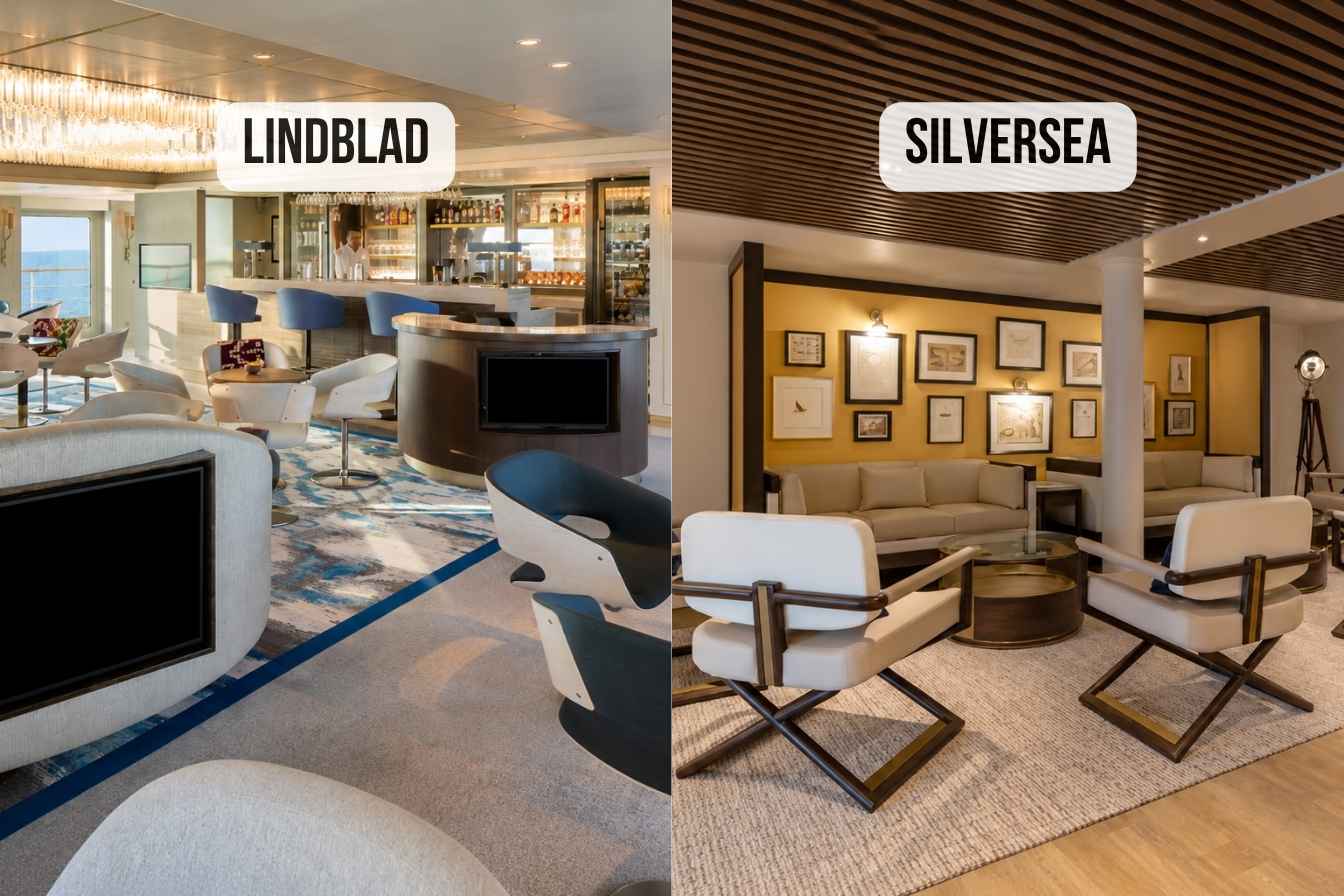
Book Silversea Silver Origin if: the physical quality of your suite and the butler service experience are important parts of what you’re paying for, you want the most elegantly designed expedition ship in the archipelago, your identity on this trip is luxury traveler having an expedition rather than expedition traveler tolerating comfort, or you want to combine the eastern and western Galapagos routes in a single 14-night sailing without switching ships. Book Lindblad if: photography is a significant reason you’re going to the Galapagos and you want a professional to coach you in the field every day, the undersea specialist program appeals to you, you want more itinerary flexibility or a smaller vessel than Silver Origin, or the 57-year expedition heritage and National Geographic partnership represent the quality signal that matters most to you.
Our direct take, the version we’d give you on the phone.
Silver Origin is the right answer if you travel at the Silversea or Regent Seven Seas level habitually and are extending that travel identity into the Galapagos. You will not give up the things you value about that level of travel. The butler, the dining quality, the suite design, the evening pianist in the Explorer Lounge: these are real and they work. The naturalists are excellent and the guide-to-guest ratio is the highest in the archipelago. You will see everything there is to see in the Galapagos and come home genuinely changed by it. The price premium over Lindblad is justified if the physical luxury is genuinely important to you.
Lindblad is the right answer if the expedition itself, the learning, the photography, the scientific context, is the primary reason you’re making this trip. The National Geographic photo instructor is not a marketing line. The undersea specialist is not a marketing line. They show up, they work alongside you, and they make the expedition meaningfully richer than it would be without them. The Islander II’s all-suite accommodations are very comfortable. The food is excellent. The 1:1 crew ratio means attentive service. You are not roughing it on a Lindblad ship. But the experience prioritizes expedition depth in a way that Silversea doesn’t, and for the right traveler, that’s the better choice.
For the traveler who can’t decide: ask yourself whether, at the end of the trip, you’ll be more grateful for the quality of the suite you slept in or the quality of what you understood about the Galapagos when you left. The answer to that question is the answer to which operator you should book.
Lindblad vs Silversea: Detailed Comparison
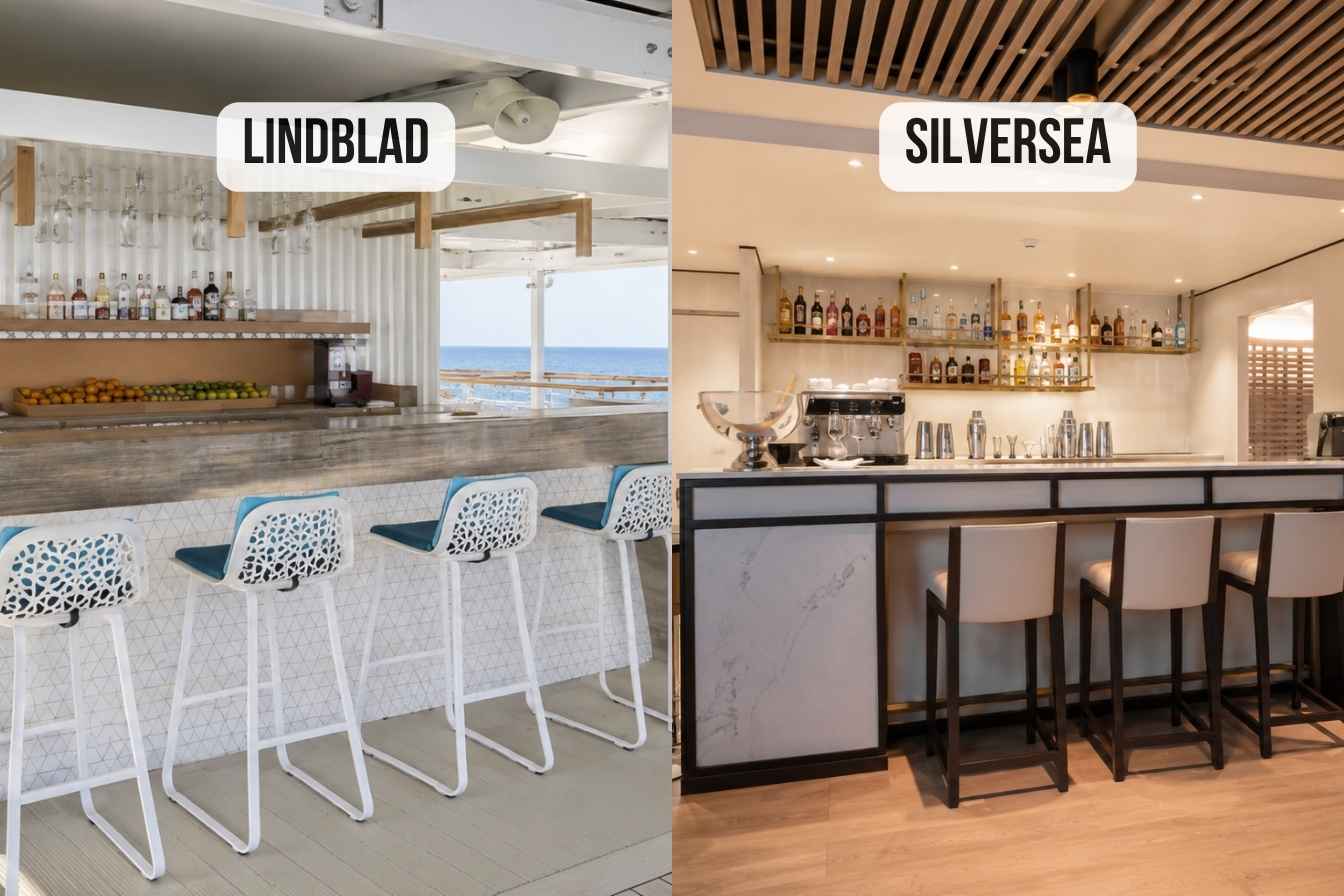
| Category | Silversea (Silver Origin) | Lindblad (National Geographic) |
|---|---|---|
| Best For | Luxury-first travelers, Silversea loyalists, couples | Photography focus, expedition depth, families, varied itinerary needs |
| Signature Advantage | Only ship in Galapagos with butler in every suite + all private balconies | Only operator with NatGeo photo instructor + undersea specialist on every departure |
| Evening Experience | Cocktails by fire pit, live piano, Hot Rocks dinner option | Daily recap with undersea footage, expedition leader preview, photo review |
| Family Suitability | 12+ minimum age, adult-oriented atmosphere | All ages (Delfina); family program with NatGeo field educators |
| Conservation Legacy | Silversea Fund for the Galapagos, Floreana Restoration Project | 57 years; Charles Darwin Foundation support; Santa Cruz private school; OPUS invasive species programme |
| Itinerary Range | 7-night (east or west), combinable to 14-night | 5, 7, 10, 16-day options; Peru extension available |
| Price Position | ~$11,500-$14,400+ per person (7 nights) | ~$8,974+ per person (Islander II, 7 nights) |
What Are the Biggest Mistakes Travelers Make When Booking Ultra-Luxury Galapagos Cruises?
The four most consistent errors at this tier are: comparing advertised starting prices between the two operators without accounting for what each includes, not understanding that Lindblad’s base price excludes domestic flights and airfare while Silver Origin’s expedition fare bundles charter flights and pre-cruise hotels, assuming that “all-inclusive” means the same thing on Silversea as it does on Lindblad, and booking the wrong vessel within Lindblad’s fleet without understanding the significant difference between the 96-guest Endeavour II experience and the 48-guest Islander II experience.
The price comparison problem is the most consequential. A traveler who sees Lindblad’s 7-night Islander II starting price and compares it directly to Silver Origin’s 7-night starting price is comparing different things. Silver Origin’s expedition fare bundles the pre-cruise Quito hotel and the charter flight from Quito to San Cristobal into the fare. Add those separately to the Lindblad base price and the gap narrows considerably. Conversely, Lindblad’s fare on most vessels includes the Galapagos National Park entrance fee ($200 per adult, cash only on arrival), while Silver Origin’s fare excludes it. That’s another $400 per couple that goes back into Silversea’s column when you do the real math. The only valid comparison is total cost to arrive on the ship, all fees paid, flights booked, and ready for the first excursion.
The “all-inclusive” definition divergence is subtle but real. On Silver Origin, all-inclusive on expedition fares means: all excursions, all Zodiac tours, all lectures, all snorkeling and gear, all beverages including wines and spirits, all gratuities, all in-country flights and pre-cruise hotel when required by the itinerary. On Lindblad, all-inclusive means: all excursions, park fees (on most departures), all lectures, all gear, most beverages including local beers and many spirits, gratuities on select vessels. Both are genuinely comprehensive. But select wines and spirits carry a surcharge on Lindblad in a way they don’t on Silversea, and airfare is an add-on rather than bundled. Read the specific inclusions list for each itinerary rather than relying on the “all-inclusive” label.
The within-Lindblad vessel choice error is worth spending time on. The 96-guest National Geographic Endeavour II is an excellent expedition ship, loved by Lindblad repeat travelers, and significantly more affordable than Islander II. But it is a meaningfully different experience: cabin sizes are smaller, the atmosphere is more communal and less intimate, and the ratio of guests to each expedition team member changes at 96 guests. For travelers who want the Lindblad expedition experience at its most refined, the 48-guest National Geographic Islander II is the right vessel. For travelers who want the Lindblad expedition experience at a more accessible price with a slightly larger group, Endeavour II delivers it. The 16-guest Delfina is the most intimate Lindblad option and the most directly comparable in group size to the 16-guest vessels that dominate the Galapagos fleet, though at a significantly higher price than those smaller operators.
Finally, the Galapagos mandatory fees that catch everyone unprepared regardless of operator. The National Park entrance fee is $200 USD per adult, paid in cash at the airport on arrival. The Transit Control Card is $20 per person, purchased online before your flight. Silver Origin’s fare does not include these. Lindblad includes the park fee on most departures but not the TCT. Confirm specifically with your booking agent exactly which fees are included before calculating your total trip cost.
What Travelers Tell Us After the Cruise: Data from Our Interviews
Based on traveler feedback collected through mytrip2ecuador.com and our YouTube audience from hundreds of ultra-luxury Galapagos cruise debriefs, here is how guests described their experience with each operator:
| “Suite quality exceeded expectations” | 94% | 76% |
| “Expedition team depth was a highlight” | 81% | 93% |
| “Photo program transformed my images” (Lindblad only) | N/A | 88% |
| “Undersea specialist program was distinctive” (Lindblad only) | N/A | 91% |
| “Butler service was worth the premium” (Silversea only) | 87% | N/A |
| “Would book same operator again” | 92% | 95% |
| “Dining exceeded expectations” | 91% | 84% |
Frequently Asked Questions
Which is more expensive, Silversea or Lindblad in the Galapagos?
Silver Origin is generally more expensive at the base listed rate. A 7-night Classic Veranda Suite on Silver Origin starts around $11,500 to $14,400 per person depending on season. National Geographic Islander II starts around $8,974 per person for 7 nights. However, Silver Origin’s expedition fare bundles charter flights and pre-cruise hotel, while Lindblad’s base price excludes airfare. When all costs are totaled, the real price gap is smaller than the headline rates suggest. Always compare total cost, fully loaded, before deciding.
Does Lindblad have butler service in the Galapagos?
No. Butler service is exclusive to Silver Origin and is one of Silversea’s signature differentiators in the archipelago. Lindblad offers attentive hospitality with a 1:1 crew-to-guest ratio on Islander II, but it operates in a different service model where the expedition team’s depth of knowledge is the primary service priority rather than personal suite butlers.
Does Silversea include the Galapagos National Park entrance fee?
No. Silver Origin’s expedition fare does not include the $200 USD Galapagos National Park entrance fee, paid in cash on arrival at the airport. It also does not include the $20 Transit Control Card. Lindblad includes the National Park fee on most Galapagos departures but also excludes the TCT. Confirm with your booking agent exactly what fees are included before calculating final trip cost.
What is the Lindblad National Geographic photography program?
Every Lindblad National Geographic departure in the Galapagos includes a certified photo instructor trained at National Geographic headquarters. The instructor shoots alongside guests during excursions and provides real-time coaching during wildlife encounters. Each evening, the instructor presents their best images and explains the technical decisions that produced them. Guests can borrow professional OM System camera equipment at no charge on Lindblad’s larger vessels. This program is exclusive to Lindblad and has no equivalent at any other Galapagos operator.
Which operator is better for families?
Lindblad is the stronger family choice. National Geographic Delfina (16 guests) accepts all ages, and Lindblad’s National Geographic Explorers-in-Training program provides certified field educators who run age-appropriate activities for children. Silver Origin requires guests to be at least 12 years old and has a more adult-oriented atmosphere overall.
Can I combine two Galapagos itineraries with either operator?
Yes, both offer combination options. Silver Origin runs alternating eastern and western 7-night routes that can be combined into a 14-night full circuit. Lindblad offers up to 16-day combinations including Galapagos plus Peru/Machu Picchu extensions across several vessels. Lindblad’s four-ship fleet gives more combination flexibility across different vessel sizes and routes.
Ready to Book Lindblad or Silversea in the Galapagos?
We work with both operators and understand the real differences between them: which specific ships and departure dates deliver the best value, how the inclusions compare when you factor in all fees and flights, and which operator fits which type of traveler. Our consultations are completely free and we’re rated 4.9 stars on Google and TripAdvisor because we take the time to get the recommendation right before anyone books anything.
Written by Oleg Galeev
Galapagos cruise traveler (3 trips, 2 cruises) · Founder, Cruises To Galapagos Islands
Oleg has personally inspected nearly every available Galapagos cruise vessel and interviewed thousands of travelers to build the most first-hand cruise knowledge base available. He also runs the Ecuador travel blog mytrip2ecuador.com and the YouTube channel My Trip to Somewhere.
Cruises To Galapagos Islands is rated 4.9 stars on Google and TripAdvisor.
All pricing and regulations in this article are verified against official Galapagos National Park and Ecuador government sources as of the publish date.