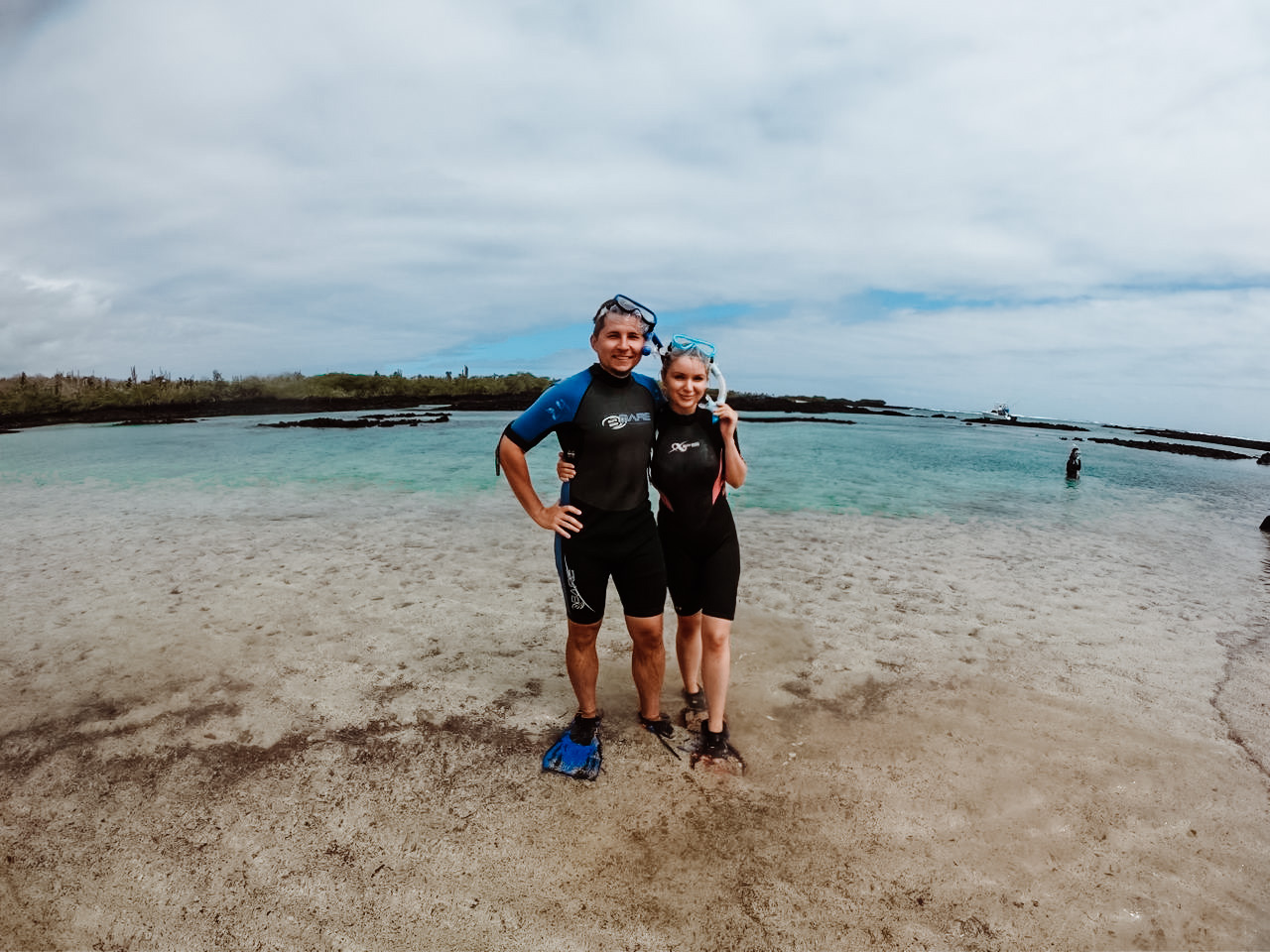
Aqua Galapagos Cruise Review
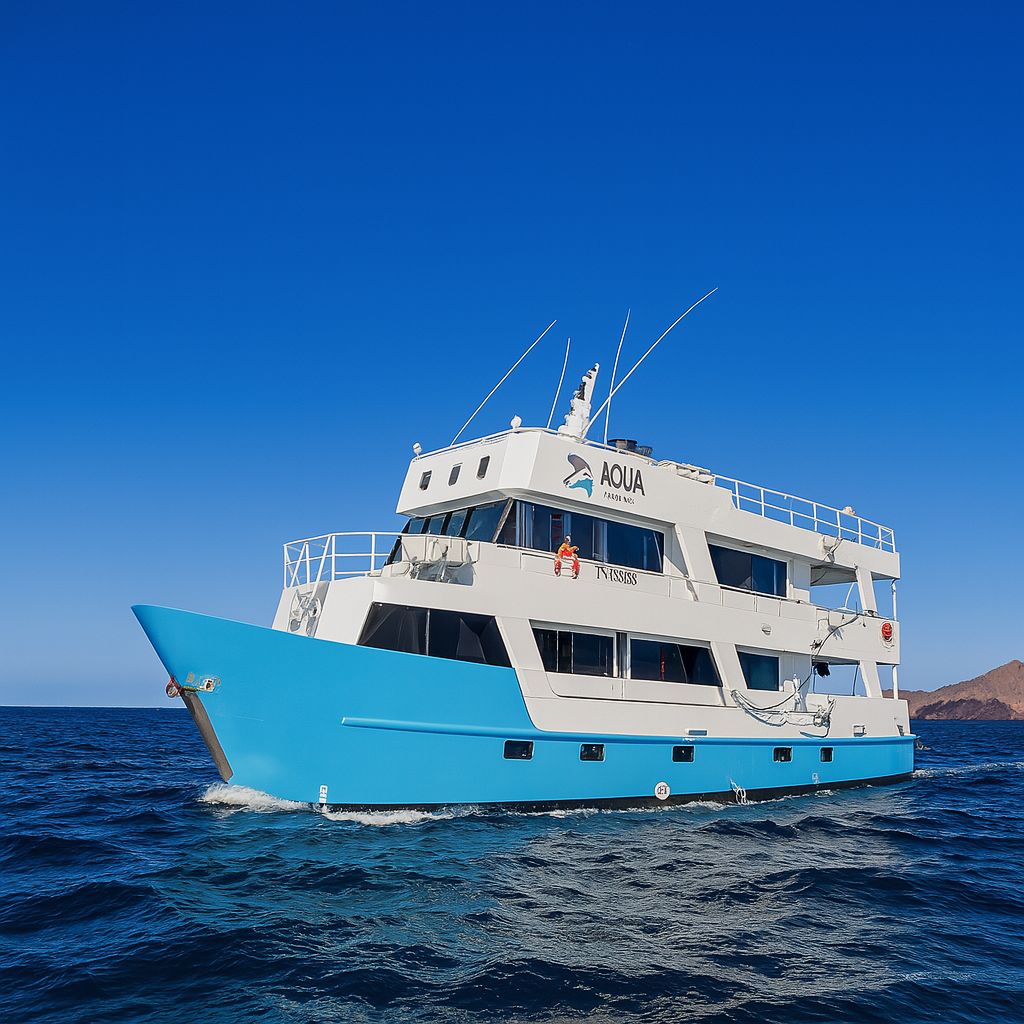
The Aqua is one of 7 Tourist Class ships we review. See all tourist class Galapagos cruises, or use our finder to see the best Galapagos cruises side by side.
Aqua: Quick Facts
| Detail | Info |
|---|---|
| Vessel type | Purpose-built steel motor liveaboard (mono-hull) |
| Length | 83 ft (25 m) |
| Capacity | 16 passengers |
| Cabins | 8 en-suite cabins – mix of bunk-style and convertible twin/double, private bath, hot water, A/C; ocean-view windows on main and upper deck cabins |
| Refurbished | 2019 (full refit) |
| Crew | 8 crew + 1 certified dive guide per 8 guests (ratio 1:8) |
| Itinerary type | 7-night diving liveaboard (departures weekly, typically Tuesdays); also naturalist cruises (3, 4, 7 nights) |
| Key dive sites | Darwin Island, Wolf Island, Cousin Rock, Cape Douglas, Punta Vicente Roca, Isabela Island sites |
| Dives per trip | ~18-19 dives over 7 nights |
| Price (2026) | From ~$4,279-$4,500 per person (7 nights, double occupancy) – prices verified May 22, 2026 |
| Nitrox | Available – $150 USD extra per trip |
| Full gear rental | $250 USD extra per trip (BCD, regulator, mask, fins, 7mm wetsuit, hood, gloves, boots, dive computer, torch) |
| Min. experience required | Advanced Open Water (or equivalent) + minimum 50 logged dives + diving insurance (mandatory) |
| Park entry fees (not included) | $200 USD adults / $100 USD children under 12 + $20 USD TCT – verified May 22, 2026 |
What Is the Aqua and Who Is This Cruise Actually Built For?
The Aqua is an 83-foot steel motor liveaboard purpose-built for diving, and it is the most affordable vessel in the Galapagos with consistent access to Wolf and Darwin Islands – the two northern pinnacles that represent the greatest concentration of pelagic marine life anywhere in the Pacific. It is not a wildlife cruise with a bit of snorkeling. It is a serious diving platform for experienced divers who want to be in the water up to four times a day in some of the most demanding and extraordinary conditions on earth.
Darwin’s Arch. Wolf Island. Those two names come up in every serious conversation about bucket-list diving. Schools of scalloped hammerheads so dense they block the light. Whale sharks gliding through at cleaning stations. Galapagos sharks, silky sharks, manta rays, eagle rays by the dozen. Marine iguanas swimming alongside you, which happens nowhere else on the planet. Mola mola at depth when the cold current hits. The Aqua gets you to all of it, repeatedly, over seven nights, at a price that makes the Calipso or the Humboldt Explorer look expensive by comparison.
Fully rebuilt in 2019 from motors to dive deck to cabin interiors, the Aqua is not an old boat fighting its age. It is a modern, functional liveaboard designed around the specific requirements of Galapagos diving: zodiac tenders for every dive, a dedicated dive deck with camera tables and rinse tanks, nitrox capability, personal safety equipment including GPS devices and surface marker buoys issued to every diver on every dive. The systems work because they were built for this specific environment, not adapted from something else.
One crucial thing to understand before reading further: the Aqua is not for beginners. The minimum requirements – Advanced Open Water certification and 50 logged dives – are real, not formalities. Galapagos waters have strong and unpredictable currents, cold thermoclines, sometimes poor visibility, and strong surge in certain conditions. These are conditions where inexperienced divers become liabilities to themselves and to the guides managing them. The Aqua enforces these requirements because they have to.
If you’re considering the Aqua and want to understand exactly what the diving conditions are like across different months, or want to compare it with other liveaboards currently operating in the archipelago, we’re happy to walk you through it. Fill out this short form and we’ll get back to you with a free, honest assessment.
What Are the Cabins and Onboard Accommodations Like on the Aqua?
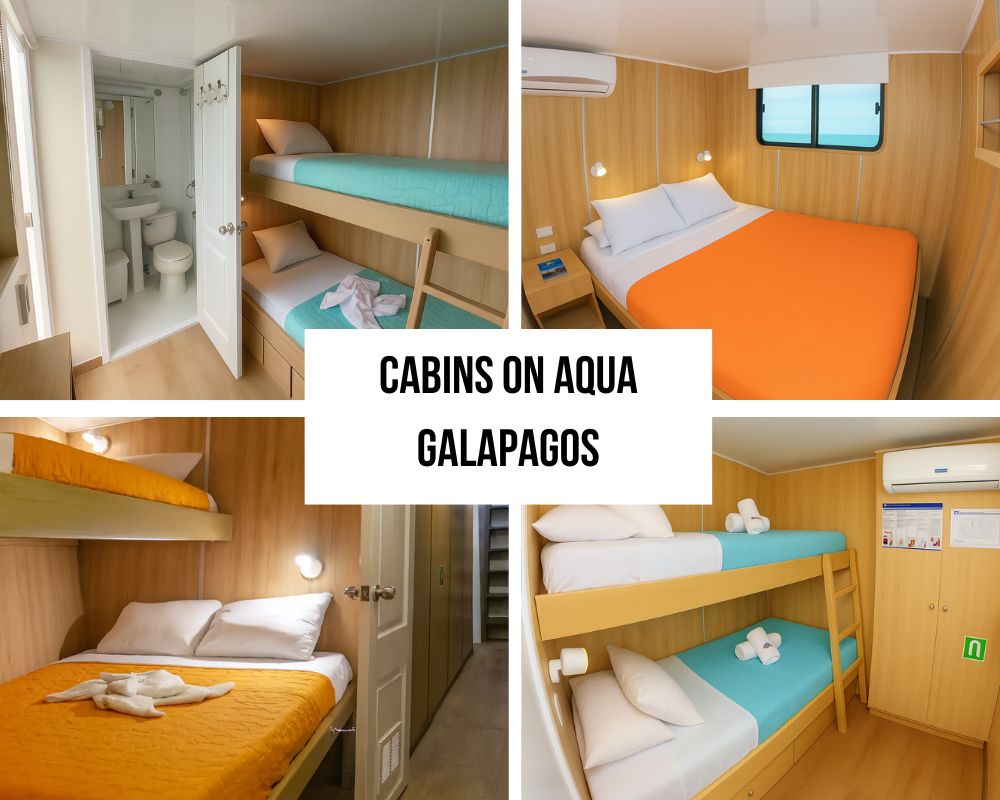
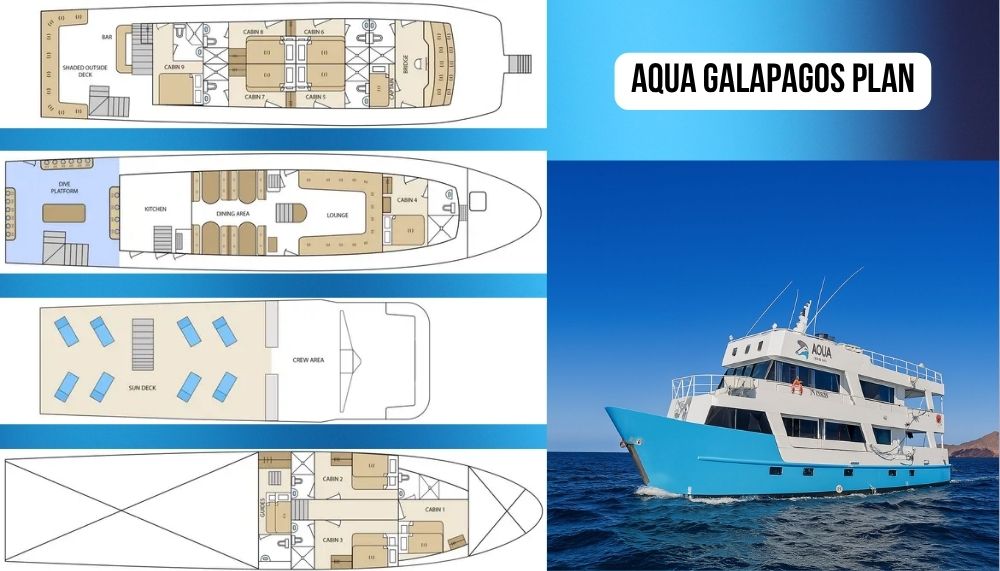
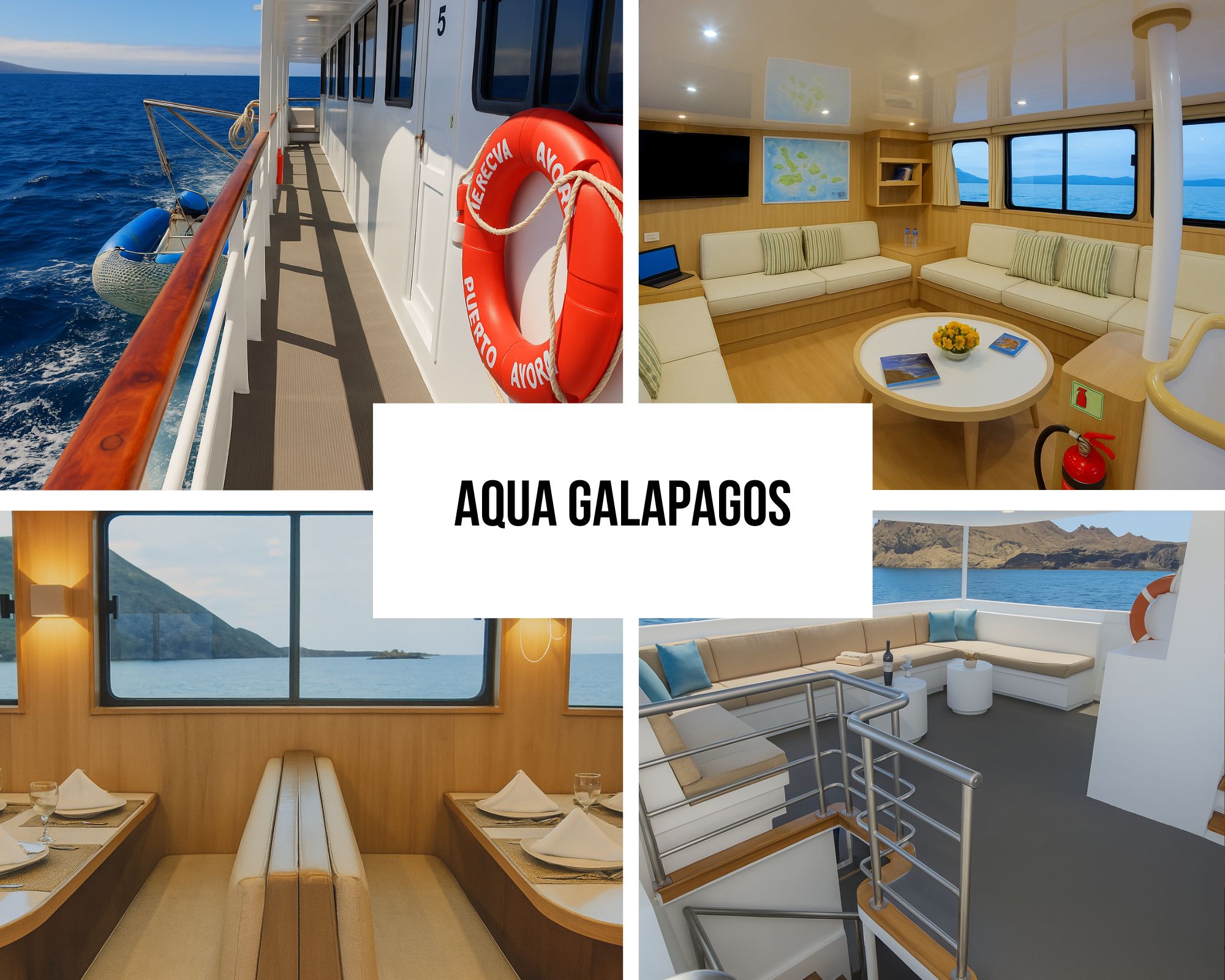
The Aqua has eight en-suite cabins across multiple deck levels. Two main-deck cabins offer a lower double bed and a single upper bunk, suitable for couples or triple occupancy. Four upper-deck cabins have a single lower and single upper bunk arrangement. One cabin on the lower deck has a matrimonial bed. Main and upper deck cabins have ocean-view picture windows; lower deck cabins do not. All cabins have private bathrooms, hot showers, and individually controlled A/C. The rooms are compact – this is a purpose-built dive boat, not a floating hotel – but they are clean, functional, and significantly improved since the 2019 refit.
Here’s what to understand about cabin selection on a liveaboard like the Aqua: you spend very little of your waking hours in the cabin. You wake up, get in the water, eat, get back in the water, eat again, get in the water one more time if there’s an afternoon dive, eat dinner, attend the briefing for tomorrow’s sites, and sleep. The cabin is where you store your gear and sleep. That’s it. On this kind of trip, the quality of the dive deck, the food, and the social atmosphere matter more than the cabin square footage.
That said, cabin position matters in the same way it does on any motor vessel: upper and main deck cabins are further from the engine noise and have natural light through the ocean windows. The lower deck cabins are more affected by mechanical sounds overnight. If you have options when booking, request a main or upper deck cabin. The lower deck matrimonial cabin is sometimes popular with couples specifically for the double bed configuration, and the engine noise trade-off is worth it for many people.
The social areas are built around the reality of what divers actually need. A lounge with bar and small library for evening downtime. A dedicated dining area where meals are served. A generous sundeck for surface intervals and watching the scenery. The dive deck itself is where most time gets spent during the day – it’s sized for 16 divers gearing up simultaneously, with benches, camera tables for photographers, charging stations, and multiple rinse hoses. That last point matters: a crowded, badly organized dive deck is one of the fastest ways to make a liveaboard feel chaotic. The Aqua’s layout was designed with that in mind.
Wi-Fi is available on board, though coverage in the remote northern islands is limited. Don’t plan on streaming or being reliably reachable during the Wolf and Darwin days. Most divers view this as a feature rather than a problem.
Which Itineraries Does the Aqua Sail and What Will You Actually See?
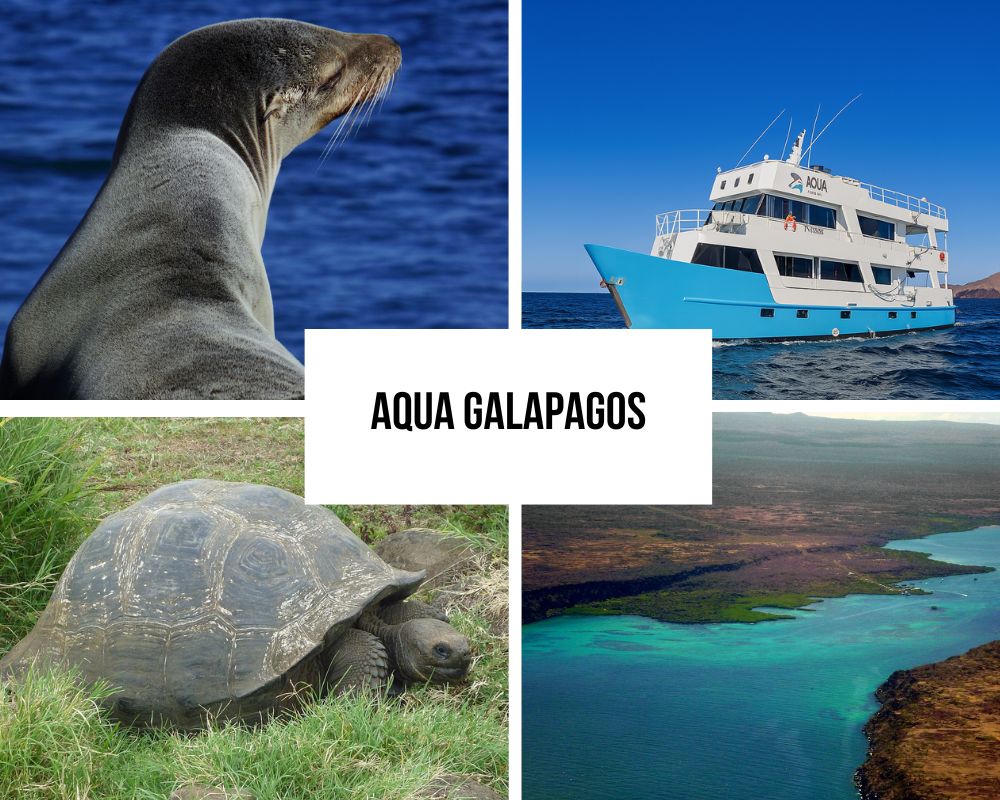
The Aqua runs two primary 8-day (7-night) diving itineraries, both departing weekly and both hitting Darwin and Wolf Islands as their centerpiece. Route A emphasizes the northern islands with maximum time at Darwin and Wolf, then returns south through Cousin Rock and central island sites including Bartolome and the Charles Darwin Research Station on Santa Cruz. Route B takes a north-central approach, covering Cousin Rock, the dramatic western sites of Isabela and Fernandina, and looping back through the central islands. The Aqua also operates shorter naturalist cruises of 3, 4, and 7 nights for non-divers or combined groups.
| Route | Focus | Key Dive Sites | Pelagic Highlights |
|---|---|---|---|
| Route A (8 days) | North-heavy, Wolf and Darwin primary | Darwin’s Arch, Wolf Island, Cousin Rock, Bartolome, Santa Cruz | Scalloped hammerheads, whale sharks (seasonal), manta rays, Galapagos sharks, silky sharks |
| Route B (8 days) | North-central, western island sites added | Cousin Rock, Cape Marshall, Cape Douglas, Punta Vicente Roca, Punta Shark Bay | Mola mola, marine iguanas underwater, penguins, flightless cormorants, eagle rays |
| Naturalist (3/4/7 nights) | Central and surrounding islands, snorkeling focus | Rabida, Bartolome, Isabela, Santa Cruz Highlands | Sea lions, giant tortoises, blue-footed boobies, marine iguanas, sea turtles |
The Wolf and Darwin access is the single thing that sets the Aqua apart from every non-diving cruise in the archipelago. These two islands are off-limits to land visits – no other tour, wildlife cruise, or naturalist program can get you there in any meaningful sense. Only liveaboard dive permits allow boats to anchor and use the sites. Wolf and Darwin are strictly a diving privilege, and the marine life at both pinnacles is in a different category from anything in the central islands.
Standing on the surface at Darwin’s Arch before a dive, the water below looks ordinary. Dark, cold, moving. Then you drop in, negative entry, and within sixty seconds you’re in a column of scalloped hammerheads cycling in slow spirals around the volcanic rock. Dozens. Sometimes hundreds. Whale sharks come through at cleaning stations near the arch at depths between 15 and 30 meters, often with remoras trailing behind them. The experience is genuinely difficult to describe without sounding like you’re overstating it. You aren’t.
Route B’s western island sites offer a completely different texture. Punta Vicente Roca on Isabela is one of the more unusual dives in the Galapagos: cold, often low visibility, but home to mola mola (ocean sunfish) and flightless cormorant sightings, plus marine iguanas actually swimming underwater – which, regardless of how many times you’ve read about it, is genuinely strange and wonderful when you see it in person. Cape Douglas on Fernandina is similarly cold and rich.
The combination route, where both itineraries are joined into a 15-day trip, is available for travelers who want the full experience. It’s physically demanding and expensive, but for serious divers who have traveled specifically to maximize time in the water, it represents the most comprehensive single Galapagos diving experience available at this price point.
Choosing between Route A and Route B depends on what marine life you most want to prioritize and what time of year you’re going. We know both routes well and can match you to the right departure for your diving goals. Get in touch here for a free consultation – no commitment needed.
How Is the Food, Crew, and Day-to-Day Experience on the Aqua?
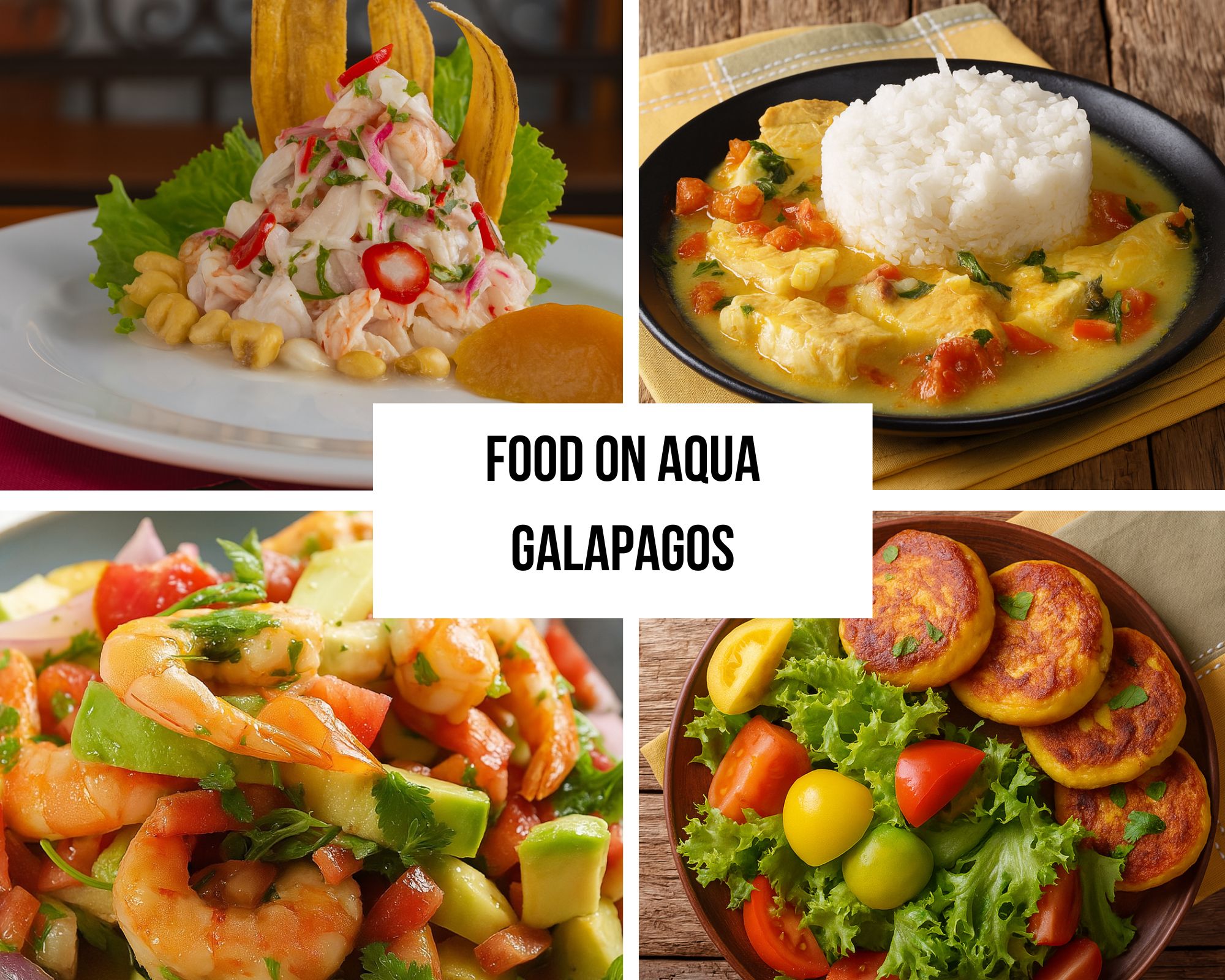
Food on the Aqua is full-board and consistently well-reviewed – plentiful, well-prepared, and varied enough that it holds up over seven days without the repetition complaints that show up on some liveaboards. Fresh local ingredients feature throughout, with particular praise going to the seafood dishes. Coffee, tea, and purified water are unlimited. Alcohol and soft drinks are purchased separately from the bar. The crew is described across reviews as friendly, organized, and genuinely enthusiastic about the diving – a crew that has worked these sites repeatedly and knows what’s likely to be at each location before the divers hit the water.
A typical day runs something like this: wake up call before first light, hot drink and a snack, first dive at the site the boat overnighted to. Back on deck, rinse gear, breakfast. Second dive mid-morning. Back up, second rinse, lunch. Third dive after a surface interval. Dinner, dive briefing for tomorrow’s sites, sleep while the boat transits overnight to the next location. Repeat for seven nights. It sounds relentless written out. In practice, the rhythm becomes natural by day two and most divers report finding it deeply satisfying rather than exhausting.
The crew celebrations are mentioned in multiple independent reviews – a small but telling detail. Welcome dive party at the start of the week. End-of-trip celebration on the final night. Crossing-the-equator acknowledgment when the boat makes the transit. These aren’t corporate team-building exercises. They’re the kind of spontaneous crew culture that develops on a boat where the same people work together season after season and genuinely enjoy what they do. Several reviewers specifically flag this atmosphere as unexpected and welcome on what could otherwise feel like a purely functional diving operation.
One practical point that comes up in more experienced travelers’ accounts: the dive briefings are thorough and the guides manage groups well, but the quality of individual dives also depends on conditions that nobody controls. Visibility at Darwin is frequently exceptional, sometimes over 100 feet in good current. At sites closer to the colder upwellings – Punta Vicente Roca, Cape Douglas – visibility can drop to 10 to 20 feet. Current is always a factor. Divers who accept this variability as part of the Galapagos experience tend to have exceptional trips. Those who need guaranteed blue-water conditions every dive are better served in warmer, clearer locations elsewhere.
How Good Are the Naturalist Guides on the Aqua?
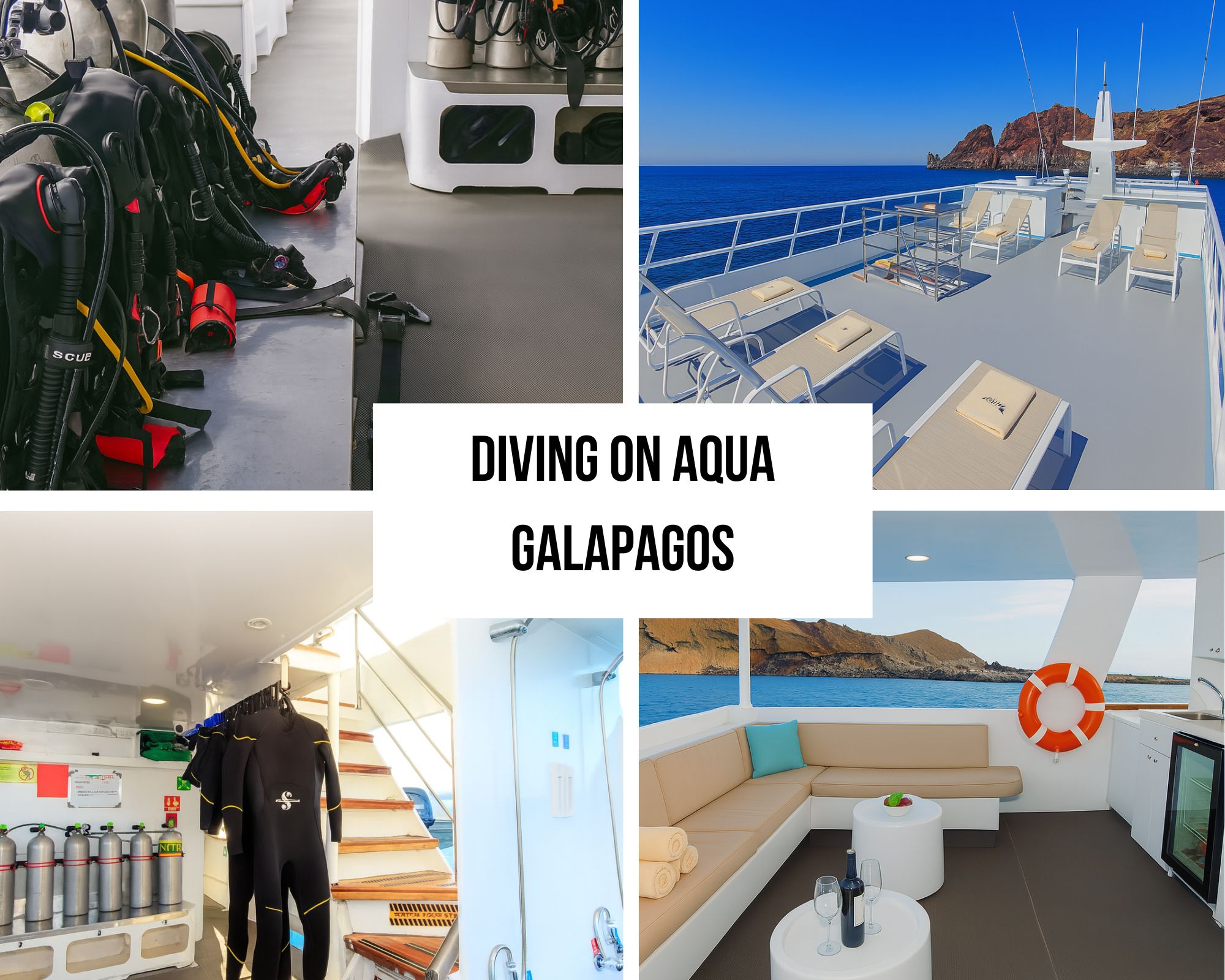
The Aqua runs one certified dive guide per eight guests – a 1:8 ratio – which is the standard for Galapagos liveaboards and represents the National Park’s minimum requirement for safe operations. The guides are Galapagos locals with deep site knowledge, consistently described across reviews as knowledgeable, safety-conscious, and skilled at helping divers find specific species. Guide quality on the Aqua is rated “Superb” across aggregated review platforms, with no meaningful pattern of negative guide feedback in recent years.
The local knowledge point is worth pausing on. The Aqua’s guides have dived these sites hundreds of times. They know where the hammerheads are most likely to be at different current states, which cleaning stations the whale sharks use at what depths, where the mola mola tend to hold position at Isabela. That’s not something you can replicate by reading dive briefing cards. It’s accumulated pattern recognition from seasons of watching the same sites across different conditions, and it’s the reason why guides on purpose-built Galapagos liveaboards tend to outperform the average experience of diving with a guide who rotates through multiple global destinations.
The 1:8 guide ratio means that on a full boat, two guides manage the group simultaneously. Some higher-end liveaboards offer 1:4 ratios, which allows guides to spend more time with individual divers and customize experience more precisely. The Aqua’s ratio is functional and safe – it’s the same ratio used by most other Galapagos liveaboards at this price point – but divers who want more personalized underwater attention can find it at the Calipso or Galapagos Sky at a higher price.
For photography-focused divers, one specific thing to note: the guides are experienced at identifying mola, hammerhead aggregation positions, and cleaning station activity, but underwater photography assistance varies by individual guide. If you’re traveling primarily to shoot large pelagics, it’s worth asking when booking whether a photography-focused briefing can be arranged. Some Galapagos liveaboard operators have formalized this; the Aqua’s approach is more flexible and guide-dependent.
What Do Real Travelers Say About the Aqua? (The Good and the Honest)
The Aqua’s independent review profile is strongly positive, with a 9.0/10 rating across aggregated platforms and consistent praise for wildlife encounters, crew atmosphere, food quality, and guide knowledge. The honest negatives are specific and consistent: cabin size is the most common note, nitrox costs extra rather than being included, and some departures experience limited visibility at certain sites. The single most important pattern from experienced divers who have compared the Aqua to higher-priced boats: the marine life is identical regardless of which liveaboard you’re on – because it’s the same ocean, the same sites, the same wildlife.
That last point gets made directly in reviews and deserves emphasis. One diver who went on the Aqua after considering the Calipso and Humboldt Explorer put it plainly: no need to go on a more expensive liveaboard. The marine life, crew experience, and guide quality are the same. You pay more on the Calipso for larger cabins, a jacuzzi, and a higher-end finish. The hammerheads at Darwin’s Arch don’t know or care what boat brought you there.
The nitrox pricing generates the most consistent friction in reviews. At most sites in the Galapagos, nitrox is not optional for the serious diver, it extends bottom time in the 60 to 100 foot range where most of the pelagic action happens, and it reduces nitrogen loading on a trip involving 18 or 19 dives over seven days. The $150 surcharge is reasonable in absolute terms but feels like a nickel-and-dime when you’ve already paid $4,500 for the trip. The Calipso and Galapagos Sky include nitrox in their headline price, which is partly why they list higher per-person figures. The Aqua’s actual cost once you add nitrox is closer than the headline numbers suggest. Factor it in when you’re comparing prices across boats.
Visibility variability is the other honest variable. On the June 2024 ScubaBoard trip report – one of the most detailed independent accounts available – visibility at Darwin was over 100 feet, excellent by any standard. At Isabela’s western sites, it dropped to 10 to 20 feet during the mola dives. Both conditions were on the same trip, on the same boat. This is Galapagos diving in general, not the Aqua specifically. The cold Humboldt and Cromwell currents that make the marine life so extraordinary also create the visibility inconsistency. Every experienced Galapagos diver knows this going in.
If you have specific diving experience, certification levels, or photography goals you want to factor into your decision, we’re happy to help assess whether the Aqua is the right fit or whether another vessel in the fleet better matches your needs. Send us a quick message and we’ll get back to you with an honest comparison.
How Does the Aqua Compare to Similar First-Class Vessels?
Among Galapagos diving liveaboards, the Aqua is the most affordable option with Wolf and Darwin access – meaningfully cheaper than the Calipso, Humboldt Explorer, and Galapagos Sky while offering the same essential dive sites and comparable guide quality. The trade-off is straightforward: smaller cabins, nitrox as an add-on rather than included, no jacuzzi, and a less polished onboard finish. For divers who spend most of their time in the water and treat the boat primarily as a floating basecamp, the Aqua’s trade-offs cost very little in experience while saving $1,000 to $3,000 per person over a week-long trip.
| Vessel | Length | Capacity | 7-Night Price (approx.) | Nitrox included? | Notable Edge |
|---|---|---|---|---|---|
| Aqua | 83 ft | 16 | ~$4,279-$4,500 | No (+$150) | Best value Wolf/Darwin access; fully rebuilt 2019 |
| Calipso | 117 ft | 16 | ~$5,500-$7,200 | No (+cost) | Largest boat in class, jacuzzi, more spacious cabins, newer finish |
| Humboldt Explorer | ~100 ft | 16 | ~$5,000-$6,500 | No (+$150-$220) | 4 full days at Wolf/Darwin (most of any liveaboard), hot tub, TV in cabins |
| Galapagos Sky | 108 ft | 16 | ~$5,500-$7,000 | Yes | Highest review ratings, nitrox included, most polished overall product |
| Nortada | ~80 ft | 12 max | ~$4,500-$6,000 | Yes | Smallest group size, rebreather support, most flexible operations |
One comparison worth calling out specifically: the Humboldt Explorer offers four full days at Darwin and Wolf, more than any other liveaboard in the fleet. If maximum time at the northern pinnacles is your singular priority, the Humboldt’s itinerary design is hard to beat despite the higher cost. The Aqua gives you access to the same sites with slightly less time there, at significantly lower cost. Most divers who have done both report that the difference in marine life quality between two and four days at Darwin is smaller than expected – you see the hammerheads and whale sharks on day one. The incremental improvement from additional days at Wolf is real but not transformational for most people.
The Galapagos Sky holds the highest aggregate review scores in the fleet – “Exceptional” across multiple platforms – and includes nitrox. It’s also the most expensive. Whether that premium is worth paying depends on how much the cabin experience and overall polish matter to you relative to the diving itself. Several experienced liveaboard travelers rate the Sky higher and would choose it again without hesitation. Others say the Aqua delivered everything that mattered at a fraction of the price difference.
Is the Aqua Worth the Price? Our Honest Verdict
Yes, unambiguously – for the right diver. The Aqua is the best value entry point into Galapagos liveaboard diving for experienced divers who want Wolf and Darwin access without paying luxury liveaboard prices. The diving is extraordinary, the crew is genuinely good, the food holds up over seven days, and the 2019 refit means you’re on a modern boat rather than an aging vessel coasting on reputation. The conditions: you need to be an experienced, certified diver with 50+ logged dives and proper insurance, you should factor nitrox into your budget, and you need to accept that Galapagos visibility is variable by nature, not by operator choice.
What we’ve consistently heard from the divers we work with who have been on the Aqua: the marine life ratio to price is better than almost any other diving destination they’ve visited. Galapagos diving isn’t cheap regardless of which boat you choose. But the concentration of pelagic wildlife at Wolf and Darwin, the uniqueness of diving with marine iguanas and penguins in the same week, and the overall density of the experience justifies the cost in a way that many destinations don’t.
The divers who get the most out of the Aqua prepare seriously. They arrive with their Nitrox certification already completed rather than doing the course on the boat (which is possible but eats into diving time). They have 7mm wetsuit experience and know how to handle cold water. They’ve watched current-diving videos and understand how to read a reef hook situation. They’ve pre-booked their slot months in advance, because popular departures in July and August fill up well ahead of time. None of this is complicated. It’s just the difference between showing up as a prepared Galapagos diver versus someone who assumes the guide will compensate for inexperience in challenging conditions.
What Divers Actually Report: Cohort Feedback from Aqua Guests
Based on feedback gathered through mytrip2ecuador.com, our YouTube audience, and years of diver conversations across the Galapagos liveaboard fleet, here’s what people who have sailed the Aqua consistently report. These patterns span multiple years of data across different seasons and both primary itineraries.
| Marine life / dive quality | 94% | 5% | 1% | Near-universal; poor visibility conditions account for almost all mixed ratings |
| Guide quality | 88% | 9% | 3% | Local Galapagos guides with site-specific knowledge rated highly; 1:8 ratio occasionally limiting for photographers |
| Food quality | 82% | 14% | 4% | Among the strongest food ratings in its price class; local seafood consistently praised |
| Cabin comfort | 64% | 28% | 8% | Small cabins noted consistently; most experienced divers accept this as a liveaboard trade-off |
| Crew atmosphere | 91% | 7% | 2% | Crew culture and onboard celebrations are a recurring positive; described as genuinely warm rather than transactional |
| Value for money | 86% | 11% | 3% | Highest value-for-money rating of any Galapagos liveaboard we track; nitrox add-on is the most common value complaint |
What Catches Divers Off Guard on the Aqua
These are the variables that come up often enough that we address them with every diver before they commit.
Nitrox is essential but costs extra. At most Galapagos sites, nitrox meaningfully extends your bottom time and reduces nitrogen loading across 18 to 19 dives over seven days. Budget $150 per person for it from the start. Some divers also need the Nitrox course on board (an additional $250) if they don’t hold the certification – this is available but it uses morning time that could be spent diving. Get certified before you go.
The experience requirements are real and enforced. The Aqua requires Advanced Open Water certification and a minimum of 50 logged dives, plus mandatory diving insurance. This is not a soft suggestion. Galapagos currents are strong, thermoclines are sharp, and conditions can change within a single dive. Divers who push through with fewer dives logged tend to spend more time managing their buoyancy and air consumption than watching the wildlife. The 50-dive minimum exists for genuine safety reasons.
Visibility is variable and that’s fine. At Darwin in good current, you might see 100 feet. At Punta Vicente Roca with the cold upwelling active, 15 feet. Both conditions can occur on the same trip. Divers who arrive having mentally accepted this tend to be amazed regardless; those who arrive expecting Caribbean visibility are sometimes disappointed even when the marine life is spectacular.
Cabin size is a real trade-off. The Aqua’s cabins are smaller than the Calipso and Humboldt Explorer. If you’re traveling with a partner and both of you have significant dive gear, packing efficiently becomes a practical requirement. Soft duffel bags beat rolling suitcases on any liveaboard. Leave non-essentials at a hotel in Quito or Guayaquil.
The TCT must be purchased online before departure. As of May 29, 2025, all visitors to the Galapagos must buy the $20 USD Transit Control Card through the official digital platform before flying from the mainland. The in-person airport counter option has been phased out. Complete this in advance, download the QR code, and carry both digital and physical copies.
Frequently Asked Questions
What experience level do I need to dive on the Aqua?
Advanced Open Water certification (or equivalent) and a minimum of 50 logged dives are mandatory. Diving insurance is also required and non-negotiable. These are real requirements, not suggestions – Galapagos conditions include strong currents, cold water, and limited visibility that demand a solid diving foundation.
Is nitrox included in the Aqua price?
No. Nitrox costs $150 USD per person as an add-on. Given the dive profile across 7 nights – depths between 60 and 100 feet, up to 4 dives daily – nitrox is effectively necessary for most divers to maximize bottom time safely. Budget for it from the start. The Nitrox course is available on board for $250 if you’re not yet certified, but completing it before you depart is strongly recommended.
Can the Aqua reach Darwin and Wolf Islands?
Yes. The Aqua is specifically permitted and itinerary-designed to access Wolf and Darwin, the remote northern islands that are the premier hammerhead and whale shark dive sites in the Galapagos. Only liveaboard dive vessels with permits can access these sites – no land visits are allowed at Wolf or Darwin.
How does the Aqua compare to more expensive Galapagos liveaboards?
The core diving experience – the marine life, the sites, the guide quality – is equivalent to what you’d find on the Calipso, Humboldt Explorer, or Galapagos Sky. What you pay more for on those boats is larger cabins, a more polished onboard finish, and amenities like jacuzzis or included nitrox. Multiple experienced divers who have compared the Aqua to higher-priced boats report that the diving difference is negligible; the comfort difference is real but manageable for a week.
What is the best time of year to dive the Galapagos on the Aqua?
The dry/cool season (June to December) brings the Humboldt Current, cooler water, higher marine life activity, and the best hammerhead aggregations at Wolf and Darwin. Whale sharks are most common between June and November. The warm season (January to May) brings calmer seas, warmer water, and better conditions for manta rays, but the pelagic action at the northern islands is generally less intense. June through August is consistently considered the peak period for Galapagos diving; book these departures months in advance.
Can non-divers travel on the Aqua?
Yes. The Aqua also runs naturalist cruises of 3, 4, and 7 nights focused on snorkeling, wildlife hikes, and island exploration. These can be booked independently or combined with the diving itinerary for a 15-day hybrid trip that covers the best of both worlds. Confirm current naturalist cruise availability and pricing when booking.
Ready to Plan Your Aqua Galapagos Dive Trip?
Popular departures in peak season (June through August) book up well ahead of time. If you’re targeting a specific window, it’s worth confirming availability now rather than later. Our team works with the full range of Galapagos liveaboards and can tell you honestly whether the Aqua matches your diving profile, or point you toward a vessel that fits better if it doesn’t. No sales pressure, no booking commitment until you’re ready.
Cruises To Galapagos Islands holds a 4.9-star rating on both Google and TripAdvisor. We help people book the right cruise, not just any cruise.
Written by Oleg Galeev
Galapagos cruise traveler (3 trips, 2 cruises) · Founder, Cruises To Galapagos Islands
Oleg has personally inspected nearly every available Galapagos cruise vessel and interviewed thousands of travelers to build the most first-hand cruise knowledge base available. He also runs the Ecuador travel blog mytrip2ecuador.com and the YouTube channel My Trip to Somewhere.
Cruises To Galapagos Islands is rated 4.9 stars on Google and TripAdvisor.
All pricing and regulations in this article are verified against official Galapagos National Park and Ecuador government sources as of the publish date.