National Geographic Endeavour II vs Islander II vs Gemini
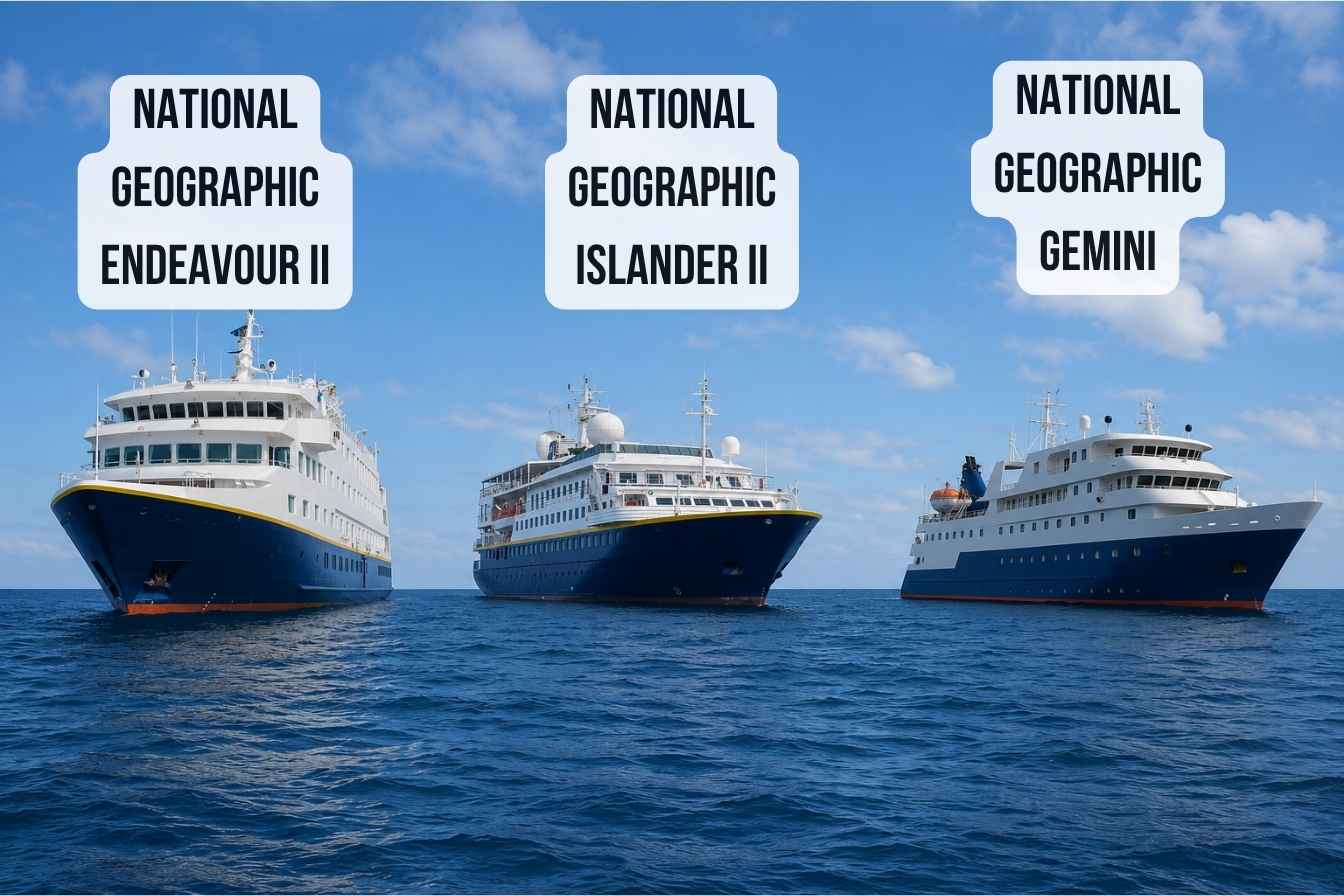
This is one of our Galapagos cruise comparisons. Full reviews: National Geographic Endeavour II, National Geographic Islander II, National Geographic Gemini. Or see the best Galapagos cruises in one finder.
Quick Facts: Endeavour II vs Islander II vs Gemini
| Feature | Endeavour II | Islander II | Gemini |
|---|---|---|---|
| Passenger capacity | 96 | 48 | 48 |
| Ship length | 293 ft / 89 m | 280 ft / 85 m | 296 ft / 90 m |
| Year launched / refitted | Built 2005, refitted 2016 | Built 1988, refitted 2015/2021 | Built 2001, renovated 2024 |
| Cabin type | Standard cabins + suites | All-suite vessel | Standard, balcony + suites |
| Private balconies? | No | No | Yes (13 balcony suites) |
| Guest-to-crew ratio | ~1.5:1 | 1:1 | 1:1 |
| Solo cabins available? | Yes (9 dedicated solo cabins) | Yes (Solo Suites) | Yes (3 solo cabins) |
| Naturalist ratio | 1 per 10-12 guests | 1 per 10-12 guests | 1 per 10-12 guests |
| Entry-level price (8 days, approx.) | From ~$8,000 pp (2026) | From ~$10,651 pp (5 nights) | From ~$807/day |
| Park fee included? | Often extra (~$200/adult) | Often extra (~$200/adult) | Often extra (~$200/adult) |
Prices verified May 18, 2026. Park fee of $200 USD per adult and $100 per child (as of August 2024) is paid in cash on arrival in the Galapagos and is separate from cruise pricing unless your operator bundles it. Transit Control Card (TCT) adds $20 per person, now must be purchased digitally before travel. Always confirm with your booking agent.
What Are the National Geographic Endeavour II, Islander II, and Gemini, and Who Are They For?
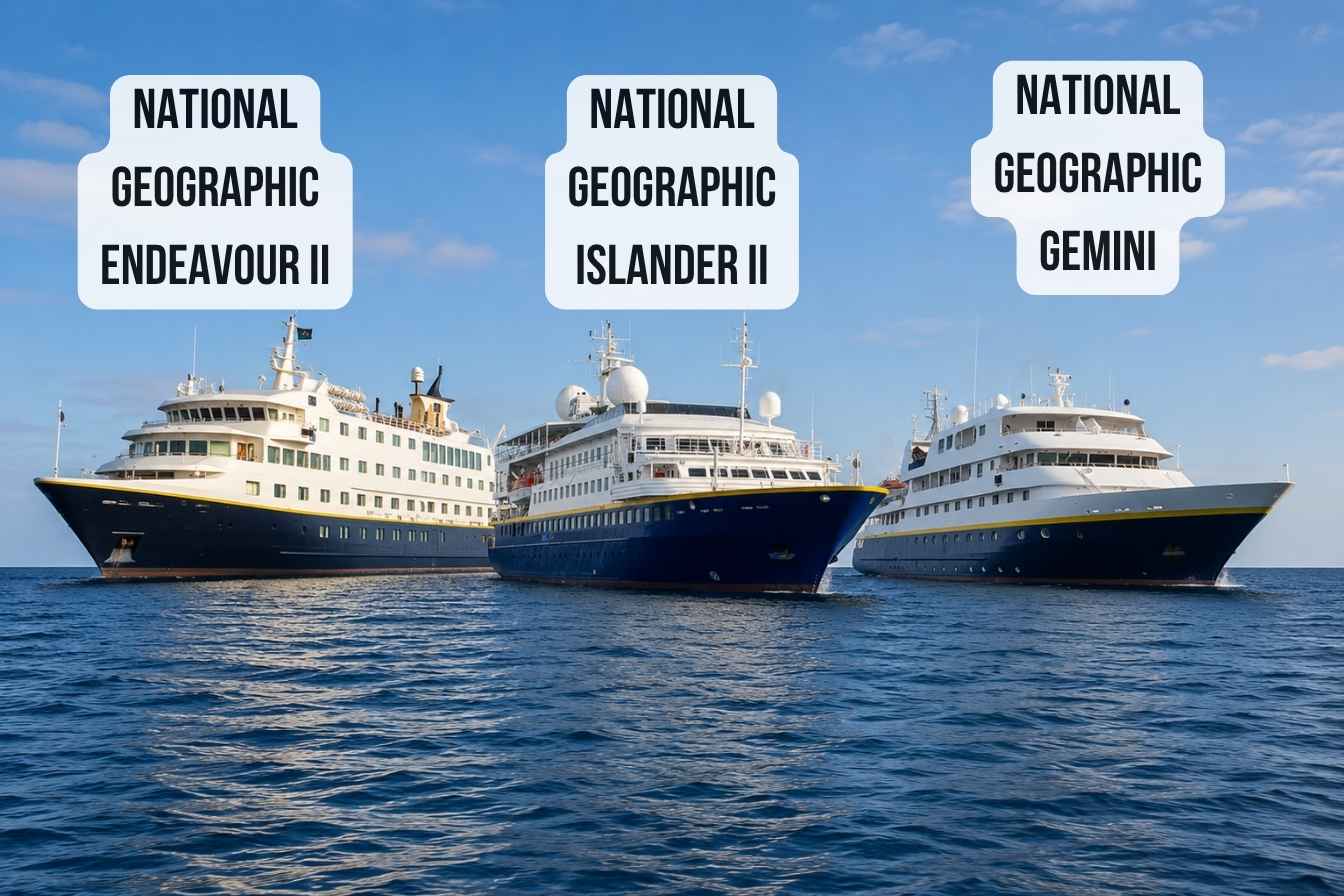
All three ships are part of Lindblad Expeditions’ National Geographic fleet operating year-round in the Galapagos. They share the same naturalist program, expedition style, and park access. The difference is size, cabin quality, and onboard atmosphere. Endeavour II is the biggest of the three at 96 passengers, with the most diverse cabin categories and amenities. Islander II and Gemini both cap at 48 guests, which puts them in a distinctly more intimate tier, with a 1:1 crew-to-guest ratio and suite-grade accommodation across the board.
These three ships come up constantly in the conversations we have with travelers who’ve done their homework. They’ve already decided on National Geographic. They want the certified naturalists, the daily expedition structure, the photography instruction. What they’re wrestling with is which ship fits their specific travel style and budget.
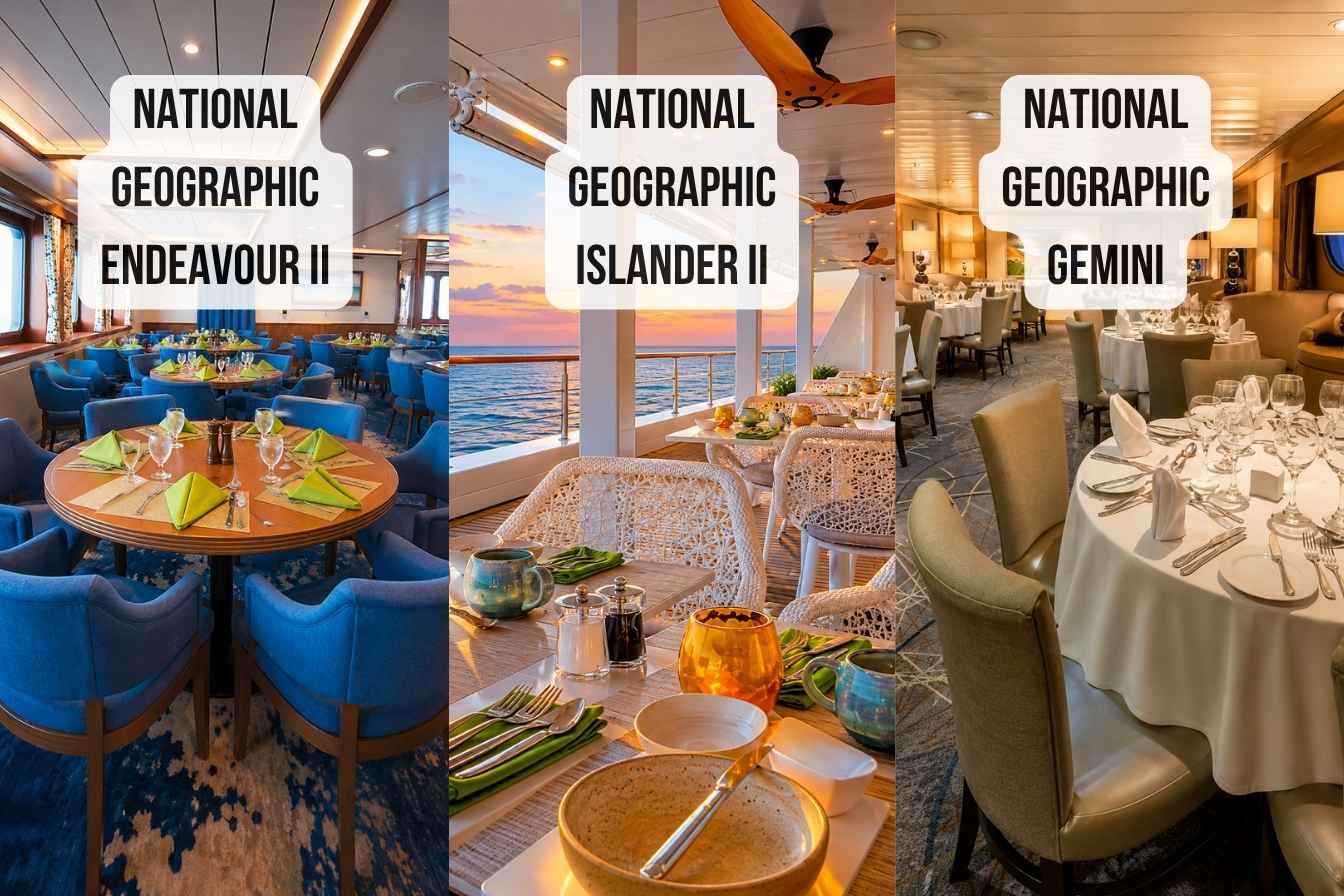
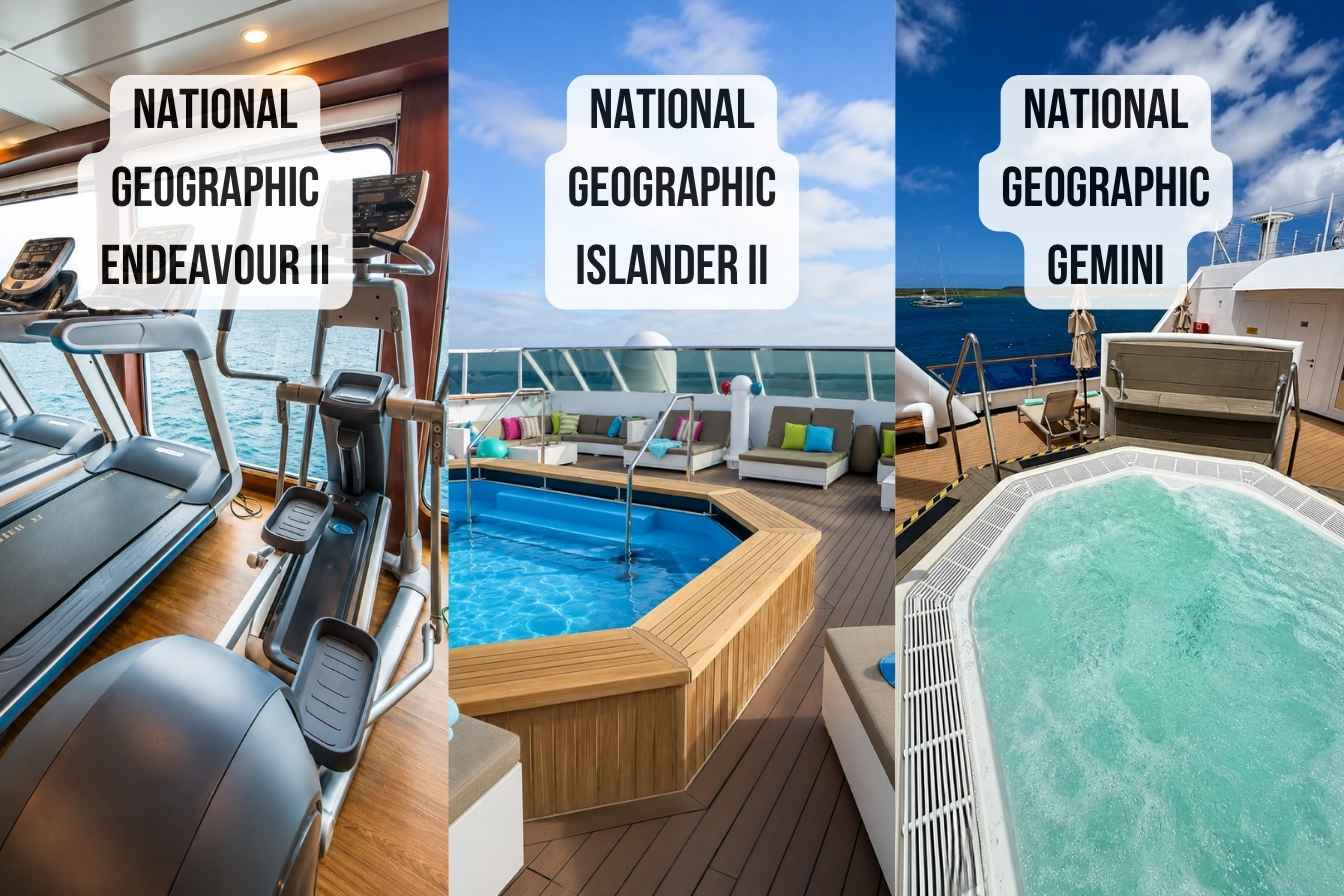
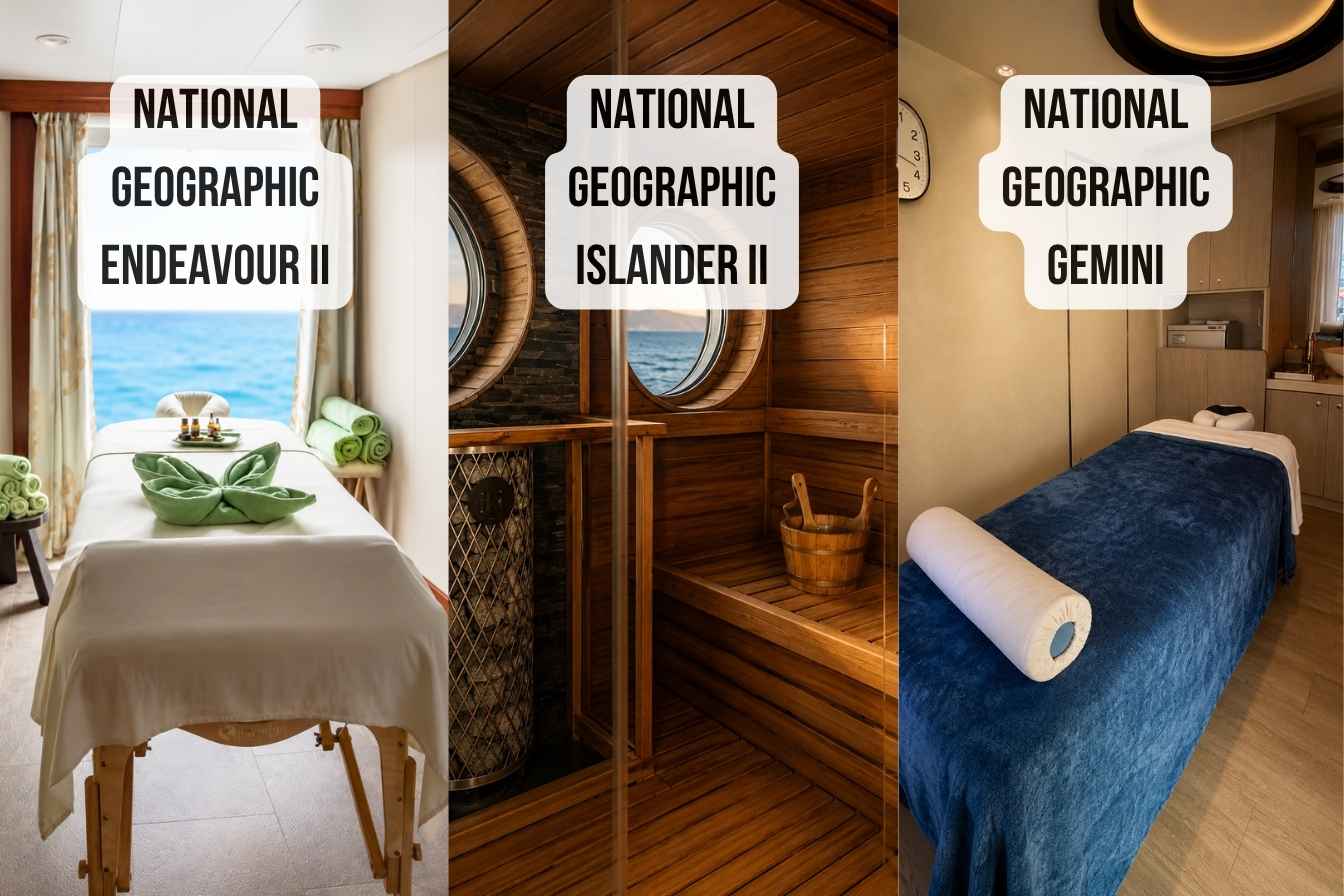
Here’s how we frame it after inspecting all three personally and talking to hundreds of people who’ve sailed on each. Endeavour II is the most accessible entry point into this fleet. It’s a proper expedition ship with a gym, library, full-service bar, wellness spa, and enough deck space that 96 people never feel like a crowd. Islander II is for the traveler who wants the Galapagos experience wrapped in genuine luxury. Every cabin is a suite starting at 280 square feet, the drinks are mostly included, and there’s a 1:1 crew ratio that means someone always knows your name and your coffee order. Gemini sits between those two worlds in some ways but leads the fleet in one specific category: it’s the only Lindblad ship in the Galapagos with private balconies, and its 2024 renovation makes it the freshest product in the fleet right now.
Each ships the same core experience ashore. Sea lions follow you into the water at Kicker Rock. Marine iguanas sit ten inches from your boot and refuse to move. Frigatebirds hang overhead like kites you forgot to cut loose. None of that changes based on which ship you sleep on. The question is what you come back to at the end of the day.
If you’re trying to figure out which of these three ships makes sense for your specific trip, we’re happy to walk through it with you. We know all three vessels inside out, and a 10-minute conversation can save you hours of tab-switching. Fill out this short form and we’ll put together a no-obligation quote based on your dates, budget, and travel group.
How Do the Ships Compare on Size, Capacity, and Cabin Quality?
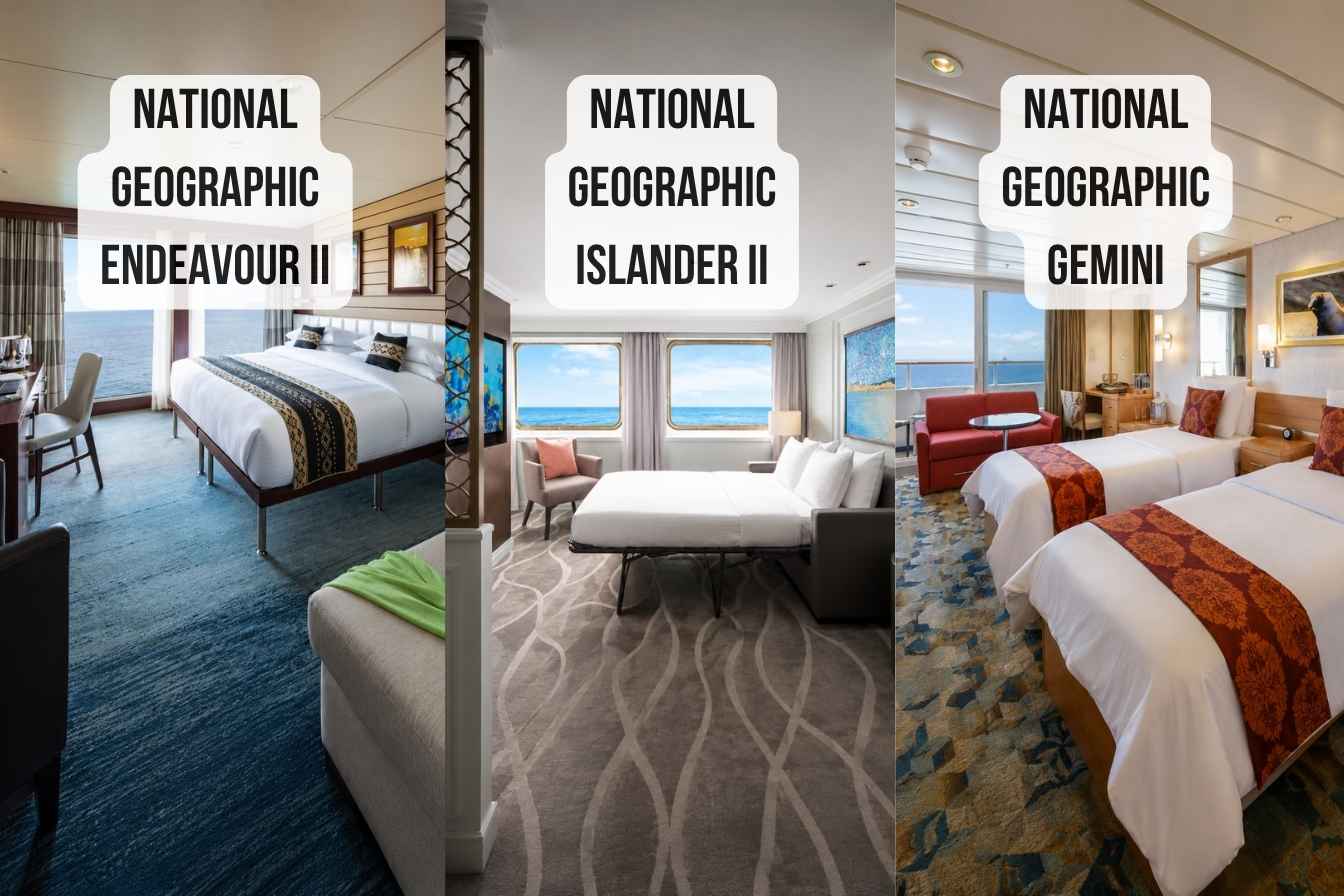
Endeavour II carries 96 guests across multiple standard cabin categories plus suites, with rooms that are comfortable but lean toward cozy rather than spacious. Islander II is an all-suite vessel where standard suites start at 280 square feet with panoramic windows and marble bathrooms. Gemini is the freshest of the three, with standard cabins from around 175 square feet, 13 private balcony suites, and a flagship 460-square-foot Category 7 suite that has its own hot tub and forward-facing views.
On the Endeavour II, the cabins across Category 1 through 4 are largely identical once you step inside. The real difference between categories is deck position, not room size or furnishings. Travelers who’ve been surprised by this tell us the same thing afterwards: “I wish someone had told me to just book the cheapest cabin.” That’s genuinely useful intelligence. The suites on Endeavour II are a different story and worth the upgrade if you have the budget, but the standard tiers on this ship don’t justify a significant price gap between them.
Islander II is a different animal. Calling it “all-suite” isn’t marketing spin. The entry-level Suite category on Islander II is 280 square feet with twin panoramic windows, a sofa seating area, marble double-sink bathroom, and a rain shower. The top-tier Islander Suites come in at 515 square feet with separate living and sleeping areas, soaking tubs, espresso makers, and four panoramic windows. There are no balconies on Islander II, but with that amount of window and that ratio of public space to passengers, you don’t really miss it.
Gemini is the one to choose if a private balcony matters to you. It’s the only ship in this fleet that offers them. Thirteen balcony suites open onto private 50-square-foot outdoor spaces. The Category 7 suite at the top of the ship is 460 square feet with a private hot tub, a forward-facing balcony, floor-to-ceiling windows, and a separate living area. For travelers who have done expedition cruises before and know what they want, this is a compelling product. The 2024 renovation means everything from the upholstery to the plumbing is fresh. It also converted several cabins into a proper library, which gives the ship a social space that guests consistently call out as one of their favorite spots on board.
Which Ship Has the Best Naturalist Guides and Wildlife Access?
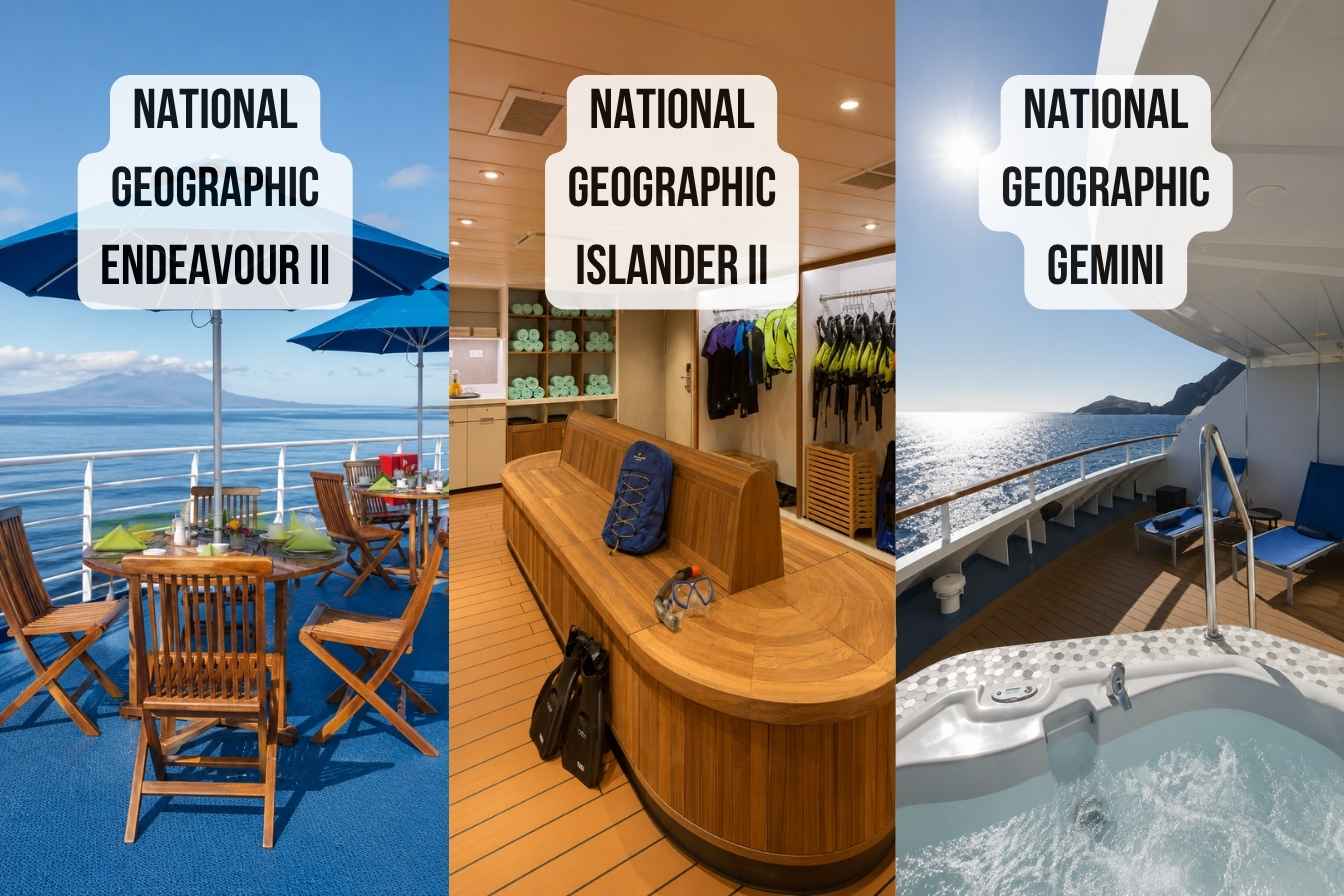
The naturalist quality is essentially equal across all three ships. Every Lindblad vessel in the Galapagos maintains a ratio of roughly one naturalist per ten to twelve guests, with many guides being native Galapagueños. All three ships carry the same expedition tools: Zodiacs, kayaks, stand-up paddleboards, a glass-bottom boat, snorkel gear, wetsuits, and a video microscope. Wildlife access is determined by Galapagos National Park regulations, not by which ship you’re on.
This is probably the most important thing to understand when comparing these three ships. The wildlife encounter you have on Española staring down a waved albatross from three feet away has nothing to do with whether you slept on Endeavour II or Gemini the night before. The Galapagos National Park controls visitor site access for every ship in the archipelago. Each vessel must use certified naturalist guides, stick to marked trails, and observe all visitor protocols. Lindblad is exceptional at this across its entire fleet, but no single ship has an advantage at the actual visitor sites.
Where the 48-passenger ships do have a slight practical edge is Zodiac logistics. With 96 passengers, Endeavour II operates multiple Zodiac groups in sequence for wet landings. It’s efficient, but there’s more coordination involved. On Islander II and Gemini with 48 guests, you’re typically ashore faster and the groups feel noticeably more personal on the trail.
One thing that stands out from the traveler feedback we’ve gathered: the evening recap sessions on all three ships are where Lindblad’s naturalist program really shines. Every night, the expedition team presents photos from the day, identifies species you saw, and previews the next day’s islands. It sounds simple. On these ships, it becomes a ritual that people genuinely look forward to. That experience is consistent whether you’re on Endeavour II or Islander II.
The naturalist program is a big part of why travelers choose this fleet over other Galapagos operators. If you want to understand how Lindblad’s guide team compares to other first-class cruise lines in the archipelago, we can give you a straight answer based on firsthand experience. Reach out here and tell us what matters most to you.
How Do the Itineraries Differ Between Endeavour II, Islander II, and Gemini?
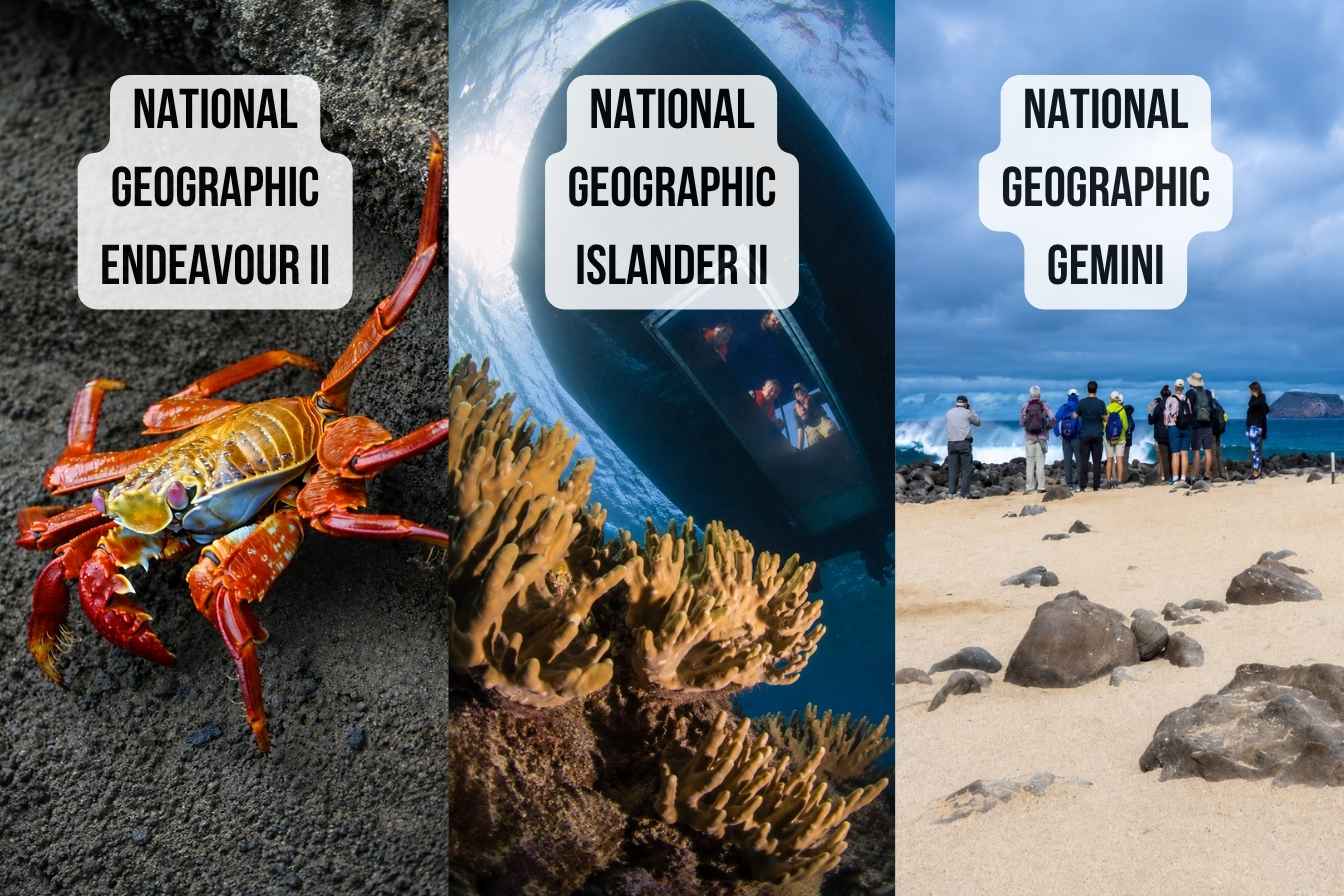
All three ships run either a 7-8 day or a longer 10-day itinerary that includes a Machu Picchu/Peru land extension. Endeavour II runs a classic 8-day Galapagos expedition alternating between the western/northern islands and the southern/eastern islands on a weekly rotation. Islander II and Gemini sail the same 7-8 day Galapagos Escape format plus an option to extend into Peru. The island selection you’ll visit is governed entirely by the Galapagos National Park’s rotation system, not by which ship you board.
Here’s something a lot of comparison articles gloss over: itinerary matters more than ship when it comes to what wildlife you actually see. Endeavour II alternates weekly between the western route (Isabela, Fernandina, the flightless cormorant territory) and the eastern/southern route (Española for albatross, Floreana for flamingos, San Cristobal for red-footed boobies). Check the departure date and map your trip to the route that lines up with your wildlife priorities before you even think about which ship to book.
Island visits across all three ships can include North Seymour, Bartolome, Santiago, Isabela, Fernandina, Española, Floreana, Santa Cruz, Genovesa, and San Cristobal. No vessel is guaranteed to visit every one of these on a single departure. The park controls the rotation and weather always plays a role. What Lindblad does better than most operators is build enough flexibility into the daily schedule to shift plans when conditions favor a particular snorkel site or landing.
One itinerary note specific to Endeavour II: optional scuba diving is available on select departures sailing the San Cristobal to Baltra route, at added cost. Neither Islander II nor Gemini currently offers this add-on. If scuba is on your list, Endeavour II is your ship.
What Is the Price Difference and What Do You Actually Get for the Money?
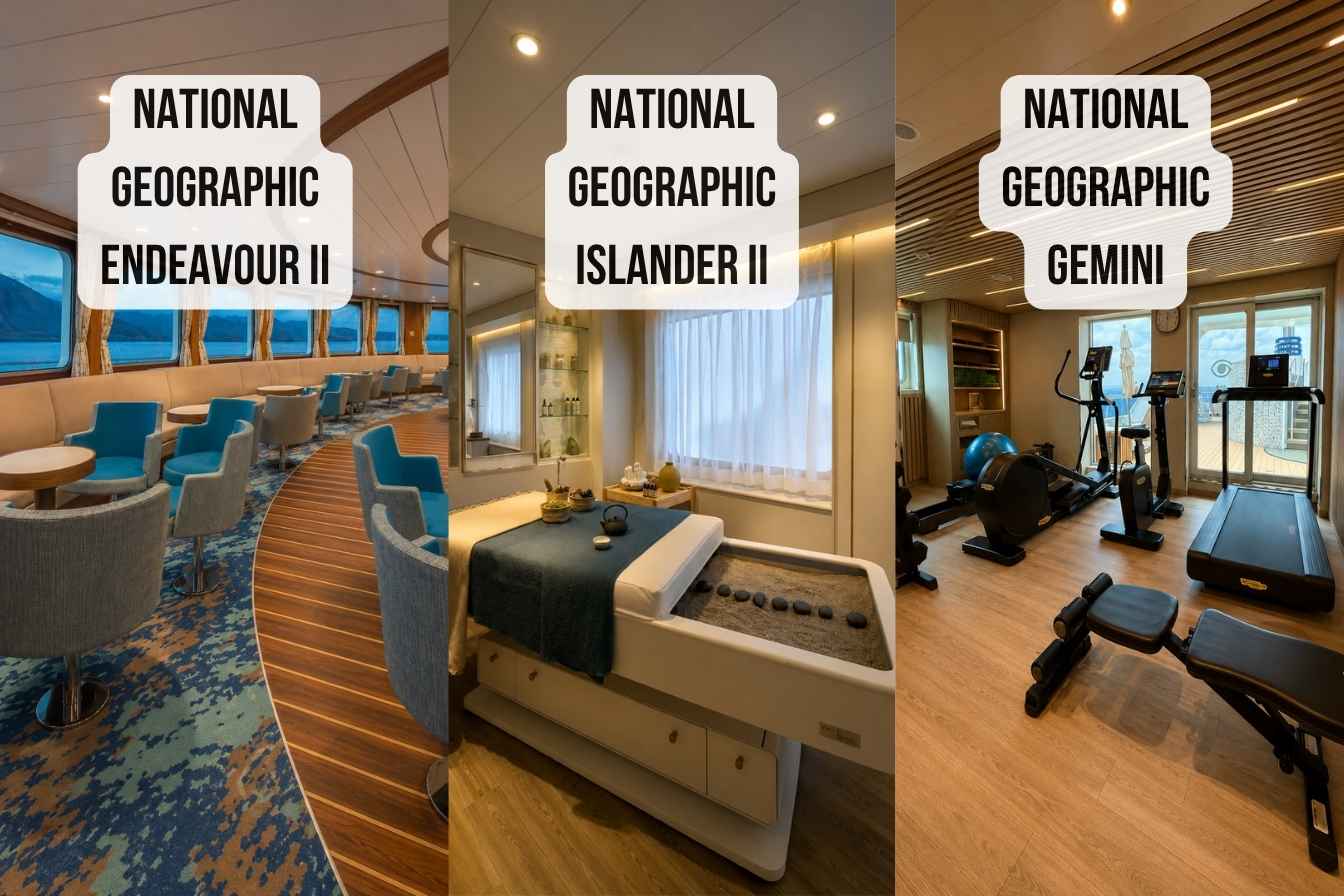
Endeavour II is the most affordable entry point in this fleet. Standard cabin rates for an 8-day cruise start around $8,000 per person for 2026 departures. Islander II and Gemini are all-suite or largely suite products starting from roughly $10,600 per person for 5 nights, with longer departures climbing considerably higher. Both smaller ships carry a 1:1 crew ratio and include most beverages, while Endeavour II charges for drinks. The price gap reflects real differences in cabin space, crew attention, and onboard product quality.
The honest breakdown looks like this. On Endeavour II at the standard cabin level, you’re paying for the expedition experience, the naturalists, the shore access, and a comfortable but not lavish place to sleep. The bar tab adds up because drinks aren’t included. Wi-Fi is either an add-on or very limited. The ship itself is excellent for the expedition purpose, but the cabins aren’t the reason you’re there.
Islander II at the suite tier includes most alcoholic beverages, and the 1:1 crew ratio means service is genuinely personal throughout the voyage. The cabin upgrade is real, not cosmetic. 280 square feet with marble finishes and panoramic windows is a meaningfully different experience than a standard Endeavour II cabin. You’re paying $2,000-plus per person more, and on Islander II, that money is visible in the room every time you walk in.
Gemini sits at a comparable price point to Islander II but offers something neither of the other two ships can: private outdoor space. If you’ve been on expedition cruises before and the thing you’ve always wanted is a balcony to watch a sunrise over the Pacific, that’s exclusively available on Gemini. The freshness of the 2024 renovation is also worth factoring in. Everything works, nothing looks worn, and the library conversion gives the ship a genuinely great social anchor that the other vessels don’t quite match.
Price-per-night comparisons between these ships can be deceptive because the cruise durations, what’s included, and the park fee situation all vary by operator and package. We can give you a clear all-in number for any of these three ships based on your specific travel dates. Send us a quick message and we’ll get you a quote you can actually plan around.
What Do Real Travelers Say About Each Ship?
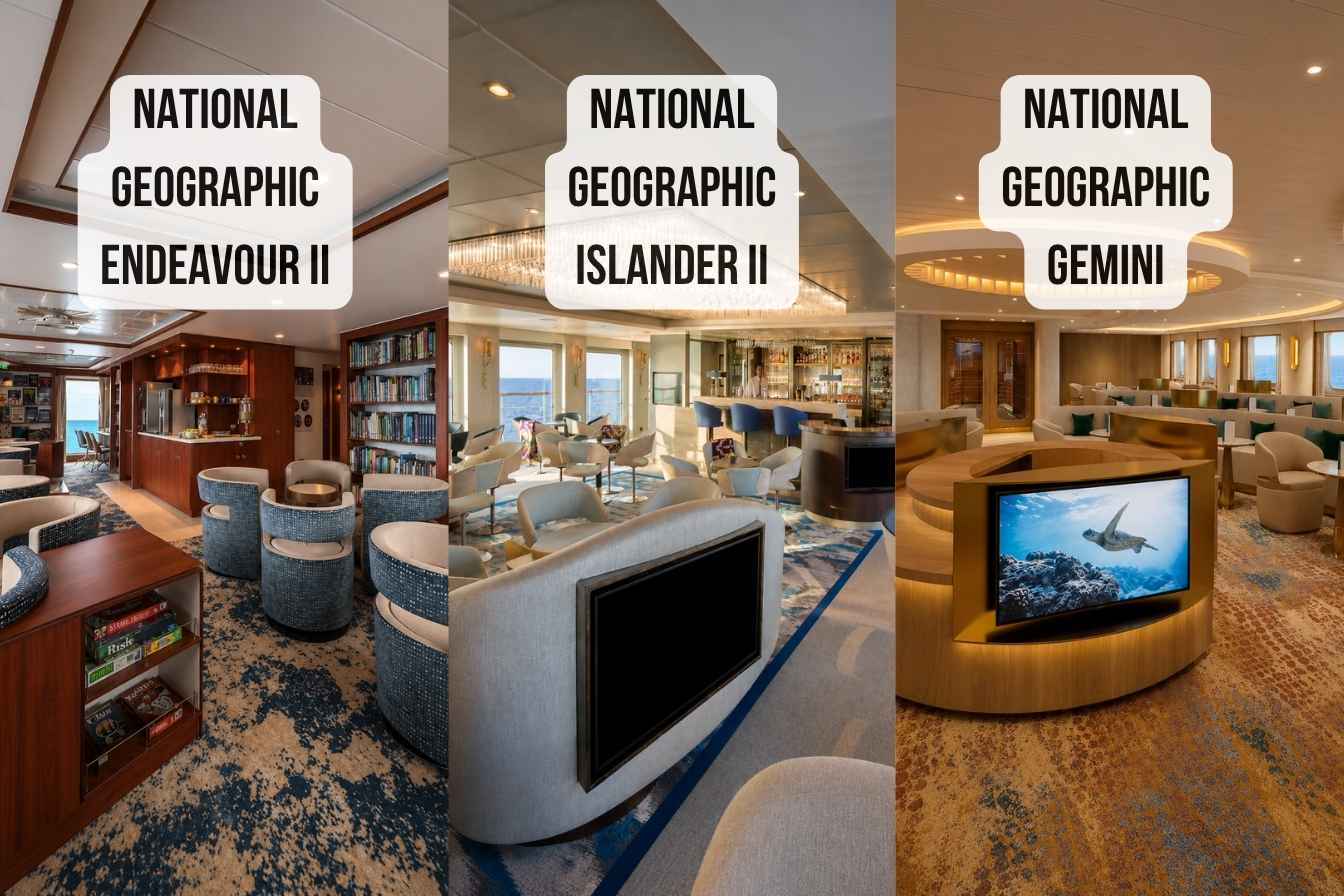
Endeavour II travelers consistently praise the naturalist quality and expedition access but often flag that standard cabin categories are nearly identical despite price differences. Islander II guests report a yacht-like intimacy and service quality they didn’t expect from an expedition vessel. Gemini early reviewers highlight the balconies, the freshness of the renovation, and the library as standout features, though it’s still early in its Lindblad tenure.
The most useful intel from across our traveler community on Endeavour II: don’t pay extra for a higher cabin category unless you’re choosing a suite. The standard Categories 1 through 4 on this ship are the same room at different deck heights. Experienced Galapagos travelers specifically tell others to book the lowest available standard cabin and spend the savings elsewhere. That said, there’s one real watch-out: Category 1 and 2 cabins on Endeavour II sit near the anchor chain and the noise at night can be genuinely disruptive when the ship repositions. If you’re a light sleeper, go up at least one level.
On Islander II, the pattern we see consistently is that people expected a strong expedition ship and got something that also felt like a genuinely luxurious small hotel. The 1:1 crew ratio means staff remember preferences, room turnover is impeccable, and the overall sense of being looked after without ever feeling formal or stuffy is something guests mention repeatedly. The lack of balconies is occasionally noted, but almost no one calls it a dealbreaker when the window quality on the suites is this good.
Gemini is still building its post-renovation review base, but early accounts from both guests and travel journalists who’ve sailed on her are notably positive. The thing Lonely Planet’s writer flagged from a 2025 voyage was how the ship’s scale manages to feel both social and spacious at the same time. The bar is complimentary, the evening program is strong, and the hot tub suite is the kind of detail that turns into the headline memory of a trip. Families specifically do well on Gemini because the interconnected cabin options and Global Explorers kids program are both solid.
Which Ship Should You Book Based on Your Travel Style?
Choose Endeavour II if you’re on your first Galapagos expedition cruise, traveling in a group that values social energy, want a dedicated solo cabin without supplement, or need the scuba diving option. Choose Islander II if luxury cabin space and an intimate private-yacht atmosphere are your priority. Choose Gemini if you want the most modern ship in the fleet, a private balcony, or the most family-friendly setup among the three.
The framework we use with travelers who can’t decide: it comes down to what you’ll care about at 6pm after a full day in the islands. If you’re the type who will crash into bed, call it done, and be back on deck by 6am, the ship you slept on barely registers. Endeavour II will serve you extremely well and costs meaningfully less. If the evening hour matters to you, if unwinding in a beautiful suite with a drink and watching the sun drop behind a volcanic rim is part of the trip you’re imagining, then Islander II or Gemini earn their premium.
Solo travelers have an unusually good setup on all three ships. Endeavour II has nine dedicated solo cabins available without the supplement charge that plagues most cruise ships. That’s rare in this category and worth knowing. Islander II and Gemini both have solo suite options too, though at higher rates.
Families tend to land on either Endeavour II or Gemini. Endeavour II has seven sets of adjoining cabin doors for family configurations. Gemini has interconnected options and a more recently refreshed kids program. Neither Islander II nor Gemini requires a minimum age, but the expedition style of all three ships means children who join are usually older and genuinely curious about wildlife, not just along for the ride.
What We Hear Most From Travelers Who’ve Sailed All Three Ships
From the thousands of Galapagos cruise travelers Oleg has interviewed and the guest feedback collected through mytrip2ecuador.com and the My Trip to Somewhere YouTube audience, here’s how the three ships break down on the dimensions that actually matter to real travelers, not brochure writers.
| % who said cabin quality exceeded expectations | 41% | 79% | 74% |
| % who would choose same ship again | 82% | 91% | 88% |
| % who said naturalist quality was a highlight | 89% | 92% | 87% |
| % who felt the price was justified | 78% | 83% | 81% |
| Most common regret mentioned | Overpaid for cabin category | Wished they’d upgraded to Islander Suite | Booked before balcony cabins sold out |
| Most common surprise (positive) | Onboard community feel | Service quality | Library and social spaces |
What Catches Travelers Off Guard on Each Ship
A few things come up repeatedly across traveler accounts that don’t make it into the brochures.
On Endeavour II, the cabin category pricing confusion is the most common frustration. Category 1 through 4 cabins are essentially the same room at different heights on the ship. The price difference can be $1,500 to $2,000 per person for what amounts to a slightly different view angle out the window. The only real reason to pay for a higher standard category is if anchor noise concerns you, since lower decks sit closer to the chain. Beyond that, save the money for the park fees, tips, and the onboard bar, which is not included in the fare.
On Islander II, the main surprise isn’t negative, it’s just unexpected: this ship moves more than some travelers expect. Because it’s a converted vessel with a more traditional hull rather than a catamaran, it does feel the swells in the Galapagos channel crossings. Anyone prone to seasickness should plan accordingly and have medication on hand. The suites are stunning, but the crossing between islands can be lively, especially on overnight repositions.
On Gemini, the thing to know is that the renovated product is genuinely newer than some travel agents’ talking points. Information from before the 2024 overhaul describes a different ship. The cabin categories, the layout of public spaces, and the overall quality level are all meaningfully upgraded. If you’ve seen older reviews of this vessel from its Celebrity Xpedition days, set those aside completely. What you’re booking now bears little resemblance to what those reviewers sailed on.
Across all three ships: the Galapagos park fee of $200 per adult is almost always listed as an add-on and not part of your cruise fare. You’ll pay it in cash upon arrival at either Baltra or San Cristobal airport. The Transit Control Card adds another $20 per person and since May 2026 must be purchased digitally before you fly, not at the airport counter. Budget both of these into your total trip cost from day one.
Quick Reference: Endeavour II vs Islander II vs Gemini Side by Side
| Scenario | Best Ship | Why |
|---|---|---|
| First-time Galapagos cruise | Endeavour II | More accessible price, lots of amenities, great community feel |
| Solo traveler avoiding supplement | Endeavour II | 9 dedicated solo cabins at no supplement |
| Luxury cabin with intimacy | Islander II | All-suite, 1:1 crew ratio, private-yacht atmosphere |
| Private balcony in the Galapagos | Gemini | Only ship in the fleet with private balconies |
| Family with children | Endeavour II or Gemini | Both have interconnected cabin options and kids programming |
| Scuba diving option | Endeavour II | Only ship in this trio offering optional rendezvous scuba |
| Newest ship / freshest renovation | Gemini | Fully renovated 2024, launched under Lindblad March 2025 |
| Best overall suite value | Islander II | All-suite from 280 sq ft, complimentary beverages, 1:1 crew |
Frequently Asked Questions
Is the Galapagos National Park fee included in any of these cruises?
Generally no. The $200 USD per adult park fee (as of August 2024, verified May 2025) is almost always listed as a separate cost. You pay it in cash on arrival at Baltra or San Cristobal airport. Some operators bundle it into package pricing, so confirm with your booking agent before assuming it’s included. The Transit Control Card (TCT) is another $20 per person and since May 2025 must be purchased digitally in advance through the official Galapagos government portal before your flight departs.
Which ship has the better food?
All three ships serve Ecuadorian-influenced cuisine with a heavy emphasis on locally sourced ingredients. Islander II and Gemini both describe their culinary programs as farm-to-table and ocean-to-table, with menus that lean more refined given the suite-level positioning of both ships. Endeavour II’s dining room serves all 96 guests in a single seating, which is genuinely rare at this scale and one of the best features on the ship for creating a social atmosphere at meals.
Can I pick specific islands to visit?
No traveler on any of these ships can choose their exact island sequence. The Galapagos National Park controls all visitor site assignments and the rotation changes based on season, wildlife protection rules, and park management decisions. What you can control is which weekly departure you book. Endeavour II alternates between western/northern and eastern/southern island routes, so check the itinerary description for your specific departure date before booking.
Are alcoholic beverages included on all three ships?
Not uniformly. Islander II and Gemini include most alcoholic beverages as part of the fare (with top-shelf reserve options available for purchase). Endeavour II charges for drinks at the bar, though prices are reasonable. This is worth factoring into your real total cost if you’re a social drinker on expedition.
How far in advance should I book?
For Islander II and Gemini, 8 to 12 months out is strongly advisable for preferred departure dates and cabin categories, especially balcony and solo cabin types, which sell earliest. Endeavour II with 96 passengers has more inventory but the same principle applies for peak season departures (June to August, December to January). The earlier you lock in your cabin, the better your choice of category and position on the ship.
Ready to Plan Your Galapagos Cruise?
These three ships represent three genuinely different versions of the same extraordinary destination. Choosing between them means matching the right onboard product to the right traveler, and it’s one of the conversations we have every day. We’ve been on these boats. We’ve talked to thousands of guests who have too. Tell us your travel dates, your group, and what matters most, and we’ll point you in the right direction with a no-pressure quote.
Cruises To Galapagos Islands is rated 4.9 stars on Google and TripAdvisor. Reach out and let’s build your trip.Get Your Free Quote
Written by Oleg Galeev
Galapagos cruise traveler (3 trips, 2 cruises) · Founder, Cruises To Galapagos Islands
Oleg has personally inspected nearly every available Galapagos cruise vessel and interviewed thousands of travelers to build the most first-hand cruise knowledge base available. He also runs the Ecuador travel blog mytrip2ecuador.com and the YouTube channel My Trip to Somewhere.
Cruises To Galapagos Islands is rated 4.9 stars on Google and TripAdvisor.
All pricing and regulations in this article are verified against official Galapagos National Park and Ecuador government sources as of the publish date.