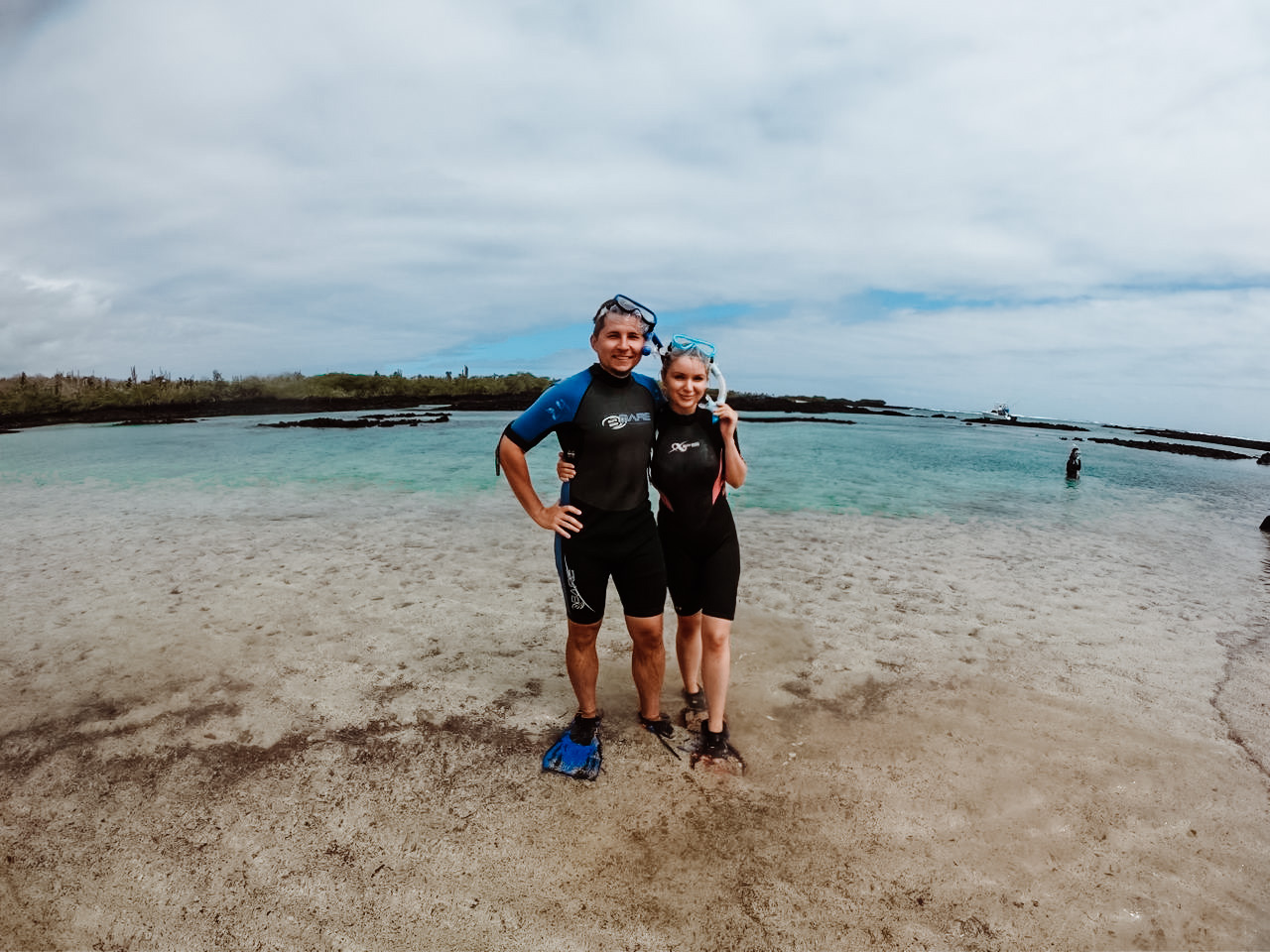
5-Day Galapagos Cruise Itinerary: What to Expect
Part of our guide to how long your Galapagos cruise should be. Ready to pick a ship? See the best Galapagos cruises by price, size and class.
Quick Facts: 5-Day Galapagos Cruise
| Detail | What to Know |
|---|---|
| Actual Excursion Time | 3 full days plus arrival and departure half-days |
| Islands Typically Covered | 4 to 5 islands depending on route and operator |
| Route Options | Eastern/central mini-loop, western mini-loop, northern loop (Genovesa-focused), southern loop |
| Daily Excursions | 2 guided excursions per full day (morning and afternoon); typically 6 to 8 total |
| Price Range (2026) | $1,500-$5,500+ per person depending on vessel class |
| Best For | Travelers combining Galapagos with broader Ecuador or South America itinerary; first-timers with limited vacation days; families |
| Upgrade Value | ~20% more cost than 4-day; 50% more island time. Best single upgrade in Galapagos cruise planning. |
| Park Entrance Fee | $200 USD adults / $100 USD children under 12 (cash on arrival) – Prices verified July 10, 2026 |
| Transit Control Card | $20 USD, pre-registered online before flying – Prices verified July 10, 2026 |
Why the 5-Day Galapagos Cruise Is the Most Popular Length for a Reason
The 5-day Galapagos cruise is the most widely booked format in the archipelago, and that popularity reflects something real. Three full excursion days is the threshold where the trip stops feeling like a highlights reel and starts feeling like an immersion. You have enough time to see genuinely different ecosystems across consecutive days, for the naturalist guide to understand your interests, and for the rhythm of morning briefing, Zodiac transfer, land excursion, snorkel session, and evening debrief to feel natural rather than rushed. It delivers the Galapagos experience rather than a sampler of it.
The math works out differently from the 4-day format in ways that matter. On a 4-day cruise you get two full excursion days. On a 5-day cruise you get three. That one additional day represents a 50% increase in island time for roughly 20% more cost. No other upgrade in Galapagos cruise planning delivers that ratio. The day-one arrival logistics and day-five departure are identical regardless of cruise length. What changes is how many mornings you wake up anchored beside a new island.
Three full days also means your naturalist guide has time to work. The best guides on these cruises don’t deliver the same talk at every site. They pay attention to what the group responds to, which questions get asked at dinner, who wants the geology detail and who wants to know which finch species that was. By day three that calibration is in place, and the excursions get better for it. That calibration barely starts on a 4-day cruise before it’s time to disembark.
The 5-day format is also the entry point for some of the best itinerary variety. A 4-day cruise is structurally limited to the central cluster of islands because longer sailings can’t be completed in the time. Five days opens the southern loop including Española, the western mini-loop reaching Isabela and Fernandina, and northern itineraries that include Genovesa. The itinerary selection at 5 days is substantially wider than at 4 days, and that variety is part of what makes it the sweet spot for most travelers.
We’ve got a full breakdown on Galapagos cruise itinerary A vs B if you want to know exactly which route covers which islands and how to decide between the two before you book.
Which Islands Does a 5-Day Galapagos Cruise Cover?
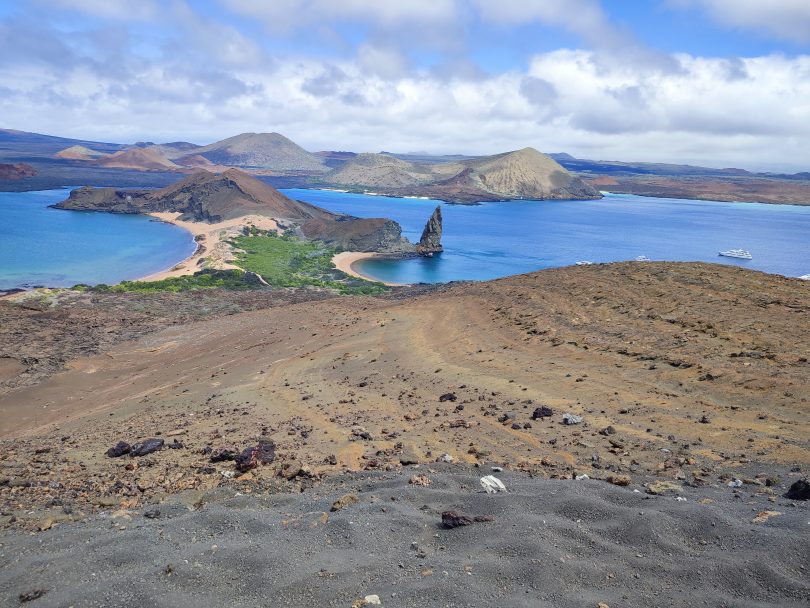
A 5-day cruise typically covers four to five islands across one regional loop. The three most common route types are the eastern/central mini-loop (South Plaza, Santa Fe, San Cristobal or Floreana, Santa Cruz), the western mini-loop (Santiago, Bartolome, Isabela, Fernandina, Santa Cruz), and the northern loop (Genovesa, Santiago or Rabida, Bartolome, Santa Cruz). Each covers one distinct character of the archipelago rather than trying to span all of them. The southern loop (Española, Floreana, San Cristobal, Santa Cruz) is also common and is the best 5-day option for travelers specifically targeting the waved albatross.
| Route | Typical Islands | Signature Experience | Best For |
|---|---|---|---|
| Eastern/Central | South Plaza, Santa Fe, San Cristobal or Floreana, Santa Cruz | Land iguanas, penguin snorkeling, Kicker Rock or Devil’s Crown, giant tortoises | First-timers, calm seas, widest inventory |
| Western Mini | Santiago, Bartolome, Isabela (Tagus Cove, Urbina Bay), Fernandina, Santa Cruz | Flightless cormorant, marine iguanas, Punta Espinoza, volcanic terrain, fur seals | Travelers wanting western exclusives; stronger sea legs preferred |
| Northern | Genovesa, Santiago or Rabida, Bartolome, North Seymour, Santa Cruz | Red-footed boobies and Genovesa seabird colonies, Pinnacle Rock, frigatebird courtship | Birders; Genovesa is the draw |
| Southern | Española, Floreana, San Cristobal, Santa Cruz | Waved albatross (Apr-Dec), Devil’s Crown snorkeling, Post Office Bay, Gardner Bay | Albatross season; experienced travelers; birding |
One thing worth flagging before you book: “western” and “eastern” are industry labels, not formal Galapagos National Park designations. Operators use them loosely. A 5-day cruise marketed as western may spend only one day near Isabela and Fernandina while emphasizing Santiago and Bartolome. Read the day-by-day schedule and confirm the specific sites, particularly if you have a species on your list that’s only found at one island. We go through this with every traveler we work with. Fill out this short form and we’ll identify which 5-day routes actually deliver what you’re after.
Not sure which Galapagos itinerary covers the most ground or whether island count is even the right thing to optimize for? This breakdown on which Galapagos itinerary visits the most islands gives you a straight answer and the context to use it.
What Wildlife Can You Expect on a 5-Day Cruise?
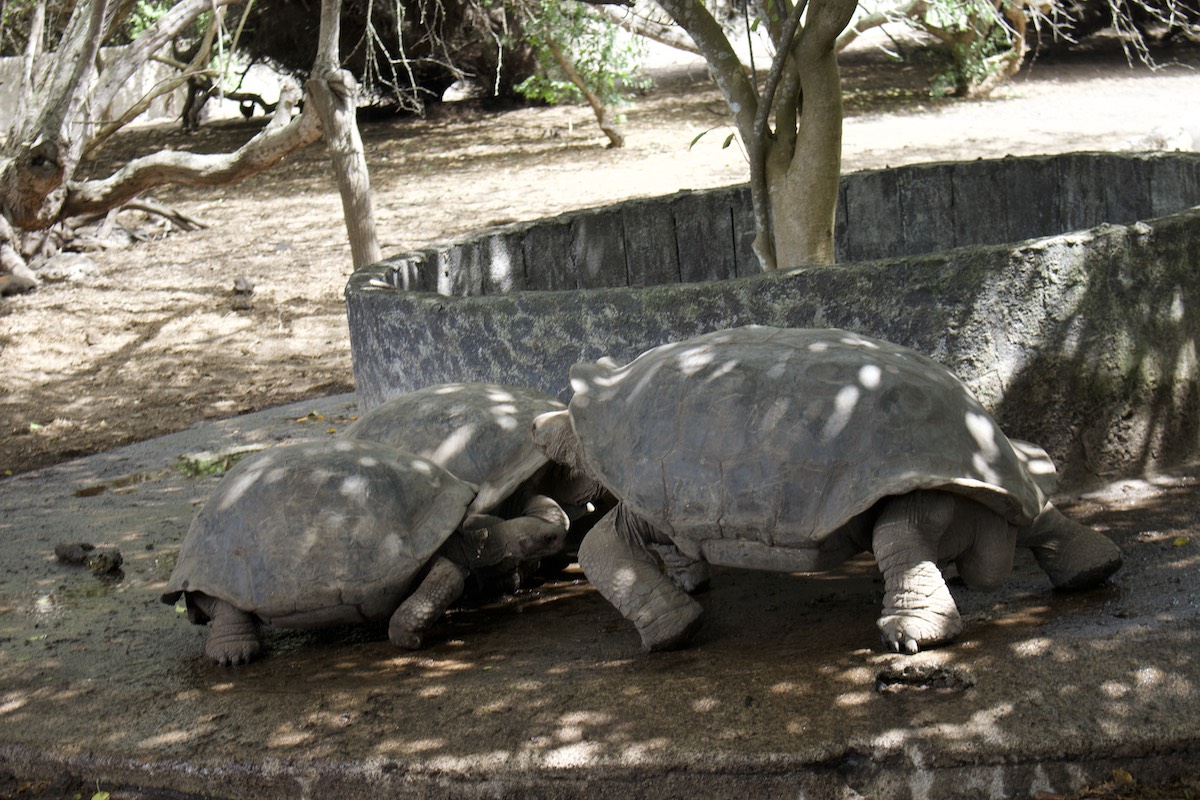
The core Galapagos wildlife is available on every 5-day itinerary regardless of route: sea lions at nearly every landing, marine iguanas on every coastal site, giant tortoises at the Santa Cruz highlands or Darwin Research Station, blue-footed boobies at multiple islands, Darwin’s finches, and snorkeling with sea turtles and white-tip reef sharks. Beyond that, what you see depends on your route. The western mini-loop adds the flightless cormorant and the Fernandina marine iguana mega-colony. The southern loop adds the waved albatross in season. The northern loop adds the Genovesa seabird cathedral.
The sea lion interaction on a 5-day cruise is worth describing specifically because it surprises most travelers. These animals have no fear response to humans. A sea lion pup that decides to investigate your snorkel fins will do so thoroughly and without the slightest concern that you might be a threat. In the water, young sea lions use snorkelers as playmates, spiraling around legs, blowing bubbles at masks, and chasing each other through the group at speed. This happens on day one. By day three it feels normal. That normalization is part of what a 5-day cruise delivers that a 4-day cruise only hints at.
The snorkeling encounters on a 5-day itinerary are typically six to eight in-water sessions across the three full days, varying by route and conditions. Each session at a different site brings genuinely different marine life. Bartolome’s cove delivers penguins and reef sharks. Kicker Rock (on eastern itineraries) delivers hammerheads in season. Punta Vicente Roca on the western mini-loop delivers Mola mola ocean sunfish from June through November. The variation between sessions is one of the aspects travelers mention most consistently in feedback: they expected snorkeling to feel repetitive and it never did.
One wildlife note specific to 5-day planning: if you’re targeting a species that’s only seasonal, the 5-day cruise makes the seasonal calculation more important than the 8-day does. On an 8-day cruise, if the albatross season has ended or the hammerheads haven’t arrived yet, you still have other days and other sites. On 5 days, a poor seasonal match can affect a proportionally larger share of the trip. Match your dates to your target species before you book.
Not sure which species you can realistically see on which 5-day route during your travel window? Send us a quick message here and we’ll run through it with you.
Trying to decide between routes based on what you most want to see out there? Here’s which Galapagos cruise route has the best wildlife broken down by the encounters most travelers come back talking about.
What Does a Typical Day Look Like on a 5-Day Galapagos Cruise?
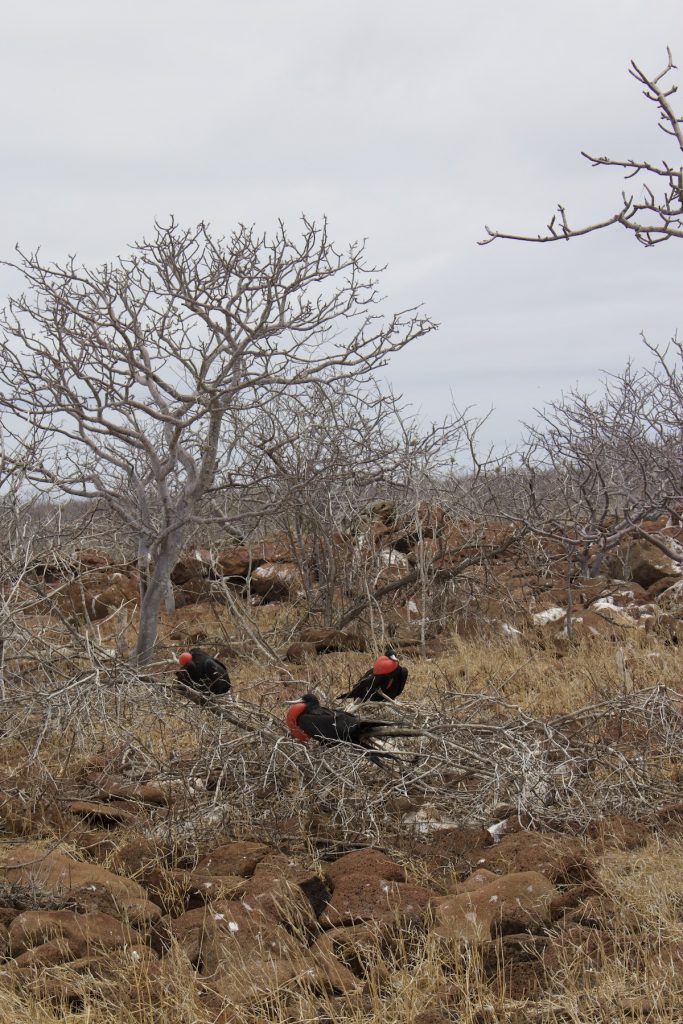
A full excursion day on a Galapagos cruise starts early and stays active. Wake-up call between 6 and 7am, breakfast, morning briefing from your naturalist guide covering the day’s sites and what to look for. Zodiac transfer to the first landing by around 7:30am, before day-tour boats arrive from the inhabited islands. Two to three hours ashore or in the water. Back to the vessel for lunch while the boat repositions. Afternoon briefing, second excursion at a different site. Return to the vessel by late afternoon, rinse gear, shower, dinner, evening debrief on what was seen and preview of tomorrow. Boat moves overnight to the next island. Repeat.
The early start matters more than most travelers expect before they arrive. Wildlife on the Galapagos is most active in the morning hours. Blue-footed boobies are flying and fishing at 7am. Frigatebirds are inflating pouches during courtship before the equatorial heat builds. Sea lions are alert and playful in the cool morning water. By 11am some of the smaller animals are resting in shade and the character of the site changes. Cruise passengers who board Zodiacs at first light experience a different island from day-trippers who arrive at 10am from Puerto Ayora. That early access is one of the structural advantages of a cruise over any land-based arrangement, and it applies every single day.
The inter-island passages happen mostly overnight while you sleep, which means you spend your daylight hours ashore rather than on the water. On a well-designed 5-day itinerary, the only significant daytime sailing is on the arrival afternoon (from Baltra to the first overnight site) and occasionally after a midday excursion when sites are on the same island or adjacent. The ship’s movement at night is how a 5-day cruise covers the geographic range it does without sacrificing landing time.
Evenings are genuinely relaxed. Dinner on most vessels is around 7pm, followed by the naturalist guide’s briefing for the next day. This briefing is worth attending seriously: the guide explains what species you’ll encounter, how to behave around them, any specific landing technique for the site (wet versus dry, rocky versus sandy), and what conditions to expect. On some vessels this becomes a natural informal discussion. By day three it often turns into a conversation, not a lecture, because everyone on the boat has shared the same experiences and has questions that come from that.
What’s the Best Time of Year for a 5-Day Galapagos Cruise?
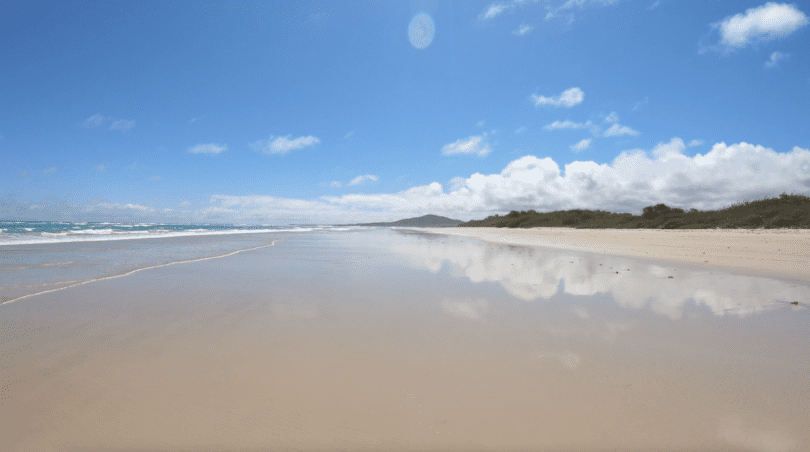
The Galapagos works year-round on a 5-day cruise, but the two seasons produce different experiences and the shorter format makes seasonal matching more important than it is on a longer trip. December through May brings warmer water (22-26°C), calmer seas, and clearer snorkeling visibility. June through November brings cooler water (18-22°C), rougher conditions on western routes, peak hammerhead activity at Kicker Rock, and the best Mola mola sightings at Punta Vicente Roca. Match the season to the route and the species you want to see, not to a general sense of when the Galapagos is “best.”
A practical seasonal guide by route: the eastern/central mini-loop works well in any month, with Devil’s Crown snorkeling best in April through June (clearest visibility) and Kicker Rock hammerheads peaking July through October. The western mini-loop is best in May or November, avoiding the August through September window when the Bolivar Channel swell makes the crossings rough and the shorter itinerary has no flexibility to absorb a lost morning. The southern loop is only viable for the albatross between April and December, with May and November being the shoulder-season sweet spots for price and conditions. The northern loop works year-round; Genovesa’s seabird colonies are active throughout the year.
The price angle is worth knowing. Shoulder season departures in September and the first two weeks of December consistently offer lower prices and fewer visitors at landing sites. The wildlife is still excellent in those windows. If your schedule is flexible, a September or early December 5-day departure often represents better overall value than a January or July sailing on the same vessel.
| Month | Season | Water Temp | Notes for 5-Day Cruises |
|---|---|---|---|
| Dec-May | Warm, calmer | 22-26°C | Best for western mini-loop (calmer seas); albatross returns Apr; excellent snorkeling visibility; peak prices Dec-Jan and Mar-Apr |
| Jun-Nov | Cool, windier | 18-22°C | Hammerheads peak Jul–Oct at Kicker Rock; Mola mola at Punta Vicente Roca Jul-Nov; avoid western mini-loop Aug-Sep if motion-sensitive; Sept best price window |
Water temperatures verified July 10, 2026.
How Does a 5-Day Cruise Compare to 4-Day and 8-Day Options?
Compared to the 4-day, the 5-day delivers 50% more island time for roughly 20% more cost, opens wider route options, and allows the cruise rhythm to establish itself before departure day arrives. Compared to the 8-day, the 5-day covers one regional loop versus two or three, misses the outer circuits (Darwin and Wolf, remote western Isabela), and leaves travelers most likely to want to return. The 5-day is not a compromise: it’s a distinct product that serves travelers with genuine time constraints. The 8-day is the better choice if your schedule genuinely allows it.
The comparison travelers most often ask us to help with is 5-day versus 8-day when they have about a week of flexibility. If you can do 8 days, do 8 days. The outer islands accessible on longer itineraries, Fernandina’s west face, the full western Isabela circuit, produce the encounters that generate the strongest feedback from experienced Galapagos travelers. Those aren’t accessible on a 5-day western mini-loop in any meaningful way. The naturalist guide relationship is also richer on 8 days: by day six on a well-run vessel, those evening briefings are genuine intellectual conversations about evolution, conservation, and the specific animals you’ve been seeing together all week.
That said, an 8-day cruise isn’t always the right call. The Galapagos trip of a lifetime combining Quito plus the Amazon plus the islands is a common pattern, and a 5-day cruise fits naturally into a 12 to 14-day Ecuador trip without unbalancing the rest. A 5-day cruise followed by two nights on Santa Cruz land-based adds day-tour sites to your experience at lower marginal cost. These combinations often produce a richer total Ecuador trip than an 8-day cruise would on its own.
If you’re genuinely torn between 5 and 8 days and want help working through the tradeoffs for your specific dates and travel context, that’s exactly the kind of conversation we have regularly. Reach out here and we’ll give you a straight answer.
Still deciding how long to spend in the Galapagos before you commit to booking? This guide on the 10-day Galapagos cruise gives you a straight answer on what ten days covers and who this length is actually built for.
What Travelers Say After 5-Day Galapagos Cruises: Our Feedback Data
Based on feedback collected through mytrip2ecuador.com and our YouTube audience, alongside interviews with thousands of Galapagos cruise travelers:
| Factor | % Rated Excellent or Very Good | Common Traveler Comment |
|---|---|---|
| Wildlife encounters | 93% | “Every single landing was different. I didn’t expect that.” |
| Pace felt right for the length | 84% | “By day three we had a real routine. It felt like we belonged on the boat.” |
| Snorkeling met or exceeded expectations | 89% | “Swimming with sea lions is completely different from anything I’d done before.” |
| Would upgrade to 8-day if doing it again | 58% | “Now I want to see the western islands. Coming back for 8 days.” |
| Would recommend 5-day to friends in same situation | 91% | “If a week is all you have, five days is exactly the right way to spend it.” |
The 58% who’d upgrade to 8 days is interesting because it’s lower than the equivalent figure from 4-day travelers (where nearly 80% wished they’d gone longer). The 5-day format leaves fewer travelers feeling they’d been short-changed and more feeling they’d had a complete experience that simply inspired them to return. That’s the difference between a sampler and an entry point.
What Should You Know Before Booking a 5-Day Galapagos Cruise?
Book early for peak seasons, read the day-by-day itinerary before committing, and confirm whether the park entrance fee is included in your cruise price. Most mid-range and premium operators include the $200 fee in their pricing; budget operators often list it separately. The TCT card ($20) moved to online-only registration in May 2025 and must be completed before your domestic flight. Neither fee can be paid by card at the airport. Bring $200 per adult in USD cash even if the operator says the fee is included, as a backup in case of discrepancies on arrival.
A few things that catch 5-day cruise travelers off guard:
The excursion count isn’t what you’d expect from the marketing. Most operators advertise “two guided excursions per day,” which sounds like ten excursions over five days. In practice, day one typically has one afternoon excursion and day five has one morning excursion. You’re getting eight excursions on a well-run 5-day cruise, sometimes fewer. That’s still plenty. Just don’t compare the number in the brochure to the number you’ll actually do.
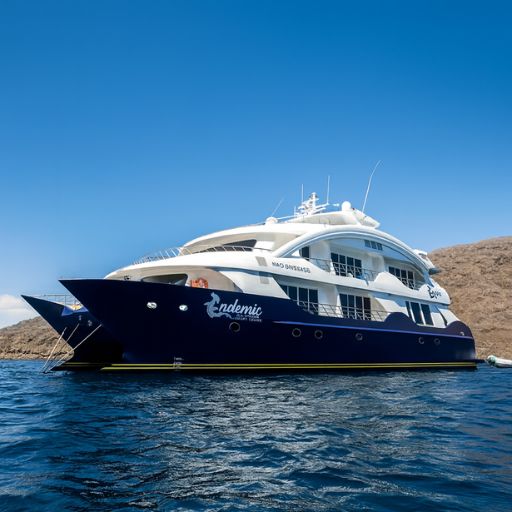
Catamarans are significantly more stable than single-hull yachts. On a 5-day western mini-loop in July or August, when the Bolivar Channel has genuine swell, the difference between a catamaran and a single-hull motor yacht is the difference between a manageable crossing and a rough morning. If you’re booking the western route during the cool season and you have any sensitivity to motion, specifically request a catamaran hull. Many budget and mid-range options are catamarans in 2026 and the stability advantage is real.
The naturalist guide matters more than the vessel class on short cruises. A five-star cabin with a mediocre guide is a lesser experience than a three-star cabin with an exceptional naturalist. On three full excursion days, a guide who anticipates behavior, positions the group correctly before a wildlife event, and synthesizes what you’re seeing across sites produces meaningfully better experiences than one who reads from a script. Ask operators specifically about their guide’s years of experience and island specialization before you book.
Combine with land time if budget is a constraint. A 5-day cruise plus two nights land-based in Puerto Ayora before or after the sailing covers most of what a 7-day cruise covers, often for less money. Day tours from Santa Cruz reach Bartolome, North Seymour, and Santa Fe, adding central island sites without additional boat nights. If you’re trying to maximize the Galapagos experience on a defined budget, this hybrid is worth modeling against simply upgrading to a longer cruise.
A week in the Galapagos is enough to cover serious ground if the route is right. Here’s a guide to the 7-day Galapagos cruise so you understand which routes make the most of every day on the water.
Which Ships Offer A 5-Day Galapagos Cruise?
Of the 75 ships we review, 44 list a 5-day itinerary. Class, guest count and price guide come from our own review of each ship.
| Ship | Class | Guests | Cruise Lengths | Price Guide |
|---|---|---|---|---|
| Aida Maria | Tourist Class | 16 | 4, 5, 6, 8, 15 days | ~$1,388-$3,565 per person depending on length and season |
| Angelito | Tourist Class | 16 | 4, 5, 6, 8 days | ~$500-$800 per person per day, tourist-superior class |
| Danubio Azul | Tourist Class | 10 | 4, 5, 8 days | From ~$3,990-$4,690 per person (8 days/7 nights diving, double occupancy) |
| Golondrina | Tourist Class | 16 | 4, 5, 8, 12, 15 days | ~$350-$450 per person per day tourist class range – contact for exact departure rates |
| Merak | Tourist Class | 8 | 4, 5, 8, 15 days | Lowest in the fleet – contact for current rates |
| Nemo I | Tourist Class | 12 | 4, 5, 8 days | ~$450-$500 per person per day (tourist superior range) – contact for exact rates |
| Bonita | Tourist Superior | 16 | 5, 7, 9 days | Tourist superior range – discounts up to 30% available on selected departures; contact for current rates |
| Nemo II | Tourist Superior | 14 | 5, 8 days | First-class catamaran range – contact for current per-departure rates |
| Fragata | Tourist Superior | 16 | 5, 8 days | From ~$1,936 USD / 5 days; from ~$3,061 USD / 8 days (per person, double occupancy |
| Eden | Tourist Superior | 16 | 4, 5, 7, 8, 10, 15 days | ~$400-$600 per person/day for Tourist Superior class |
| Yolita II | Tourist Superior | 16 | 4, 5, 7, 8, 10 days | ~$6,800 per person (main deck cabin) |
| Xavier III | Tourist Superior | 16 | 4, 5, 7, 8, 10, 14 days | ~$2,500-$3,500 per person (Tourist Superior lower end) |
| Archipel I | Tourist Superior | 16 | 4, 5, 8, 11, 12, 15 days | ~USD $381–$580 per person per day |
| Archipel II | Tourist Superior | 16 | 4, 5, 8, 11, 12, 15 days | ~$3,000-$4,500 |
| Monserrat | Tourist Superior | 16 | 4, 5, 7, 8, 9, 10, 11, 12, 14, 15 days | From ~USD $3,800-$5,500 per person |
| M/C Anahi | First Class | 16 | 4, 5, 8, 11, 12, 15 days | Standard from ~USD $3,150; suite from ~$3,297 |
| Nemo III | First Class | 16 | 4, 5, 8 days | See review |
| Köln | First Class | 16 | 4, 5, 8, 12, 15 days | See review |
| Galaxy | First Class | 16 | 4, 5, 6, 8, 15 days | From ~USD $3,200 |
| Seaman Journey | First Class | 16 | 4, 5, 7, 8, 9, 11, 12, 15 days | See review |
| Treasure of Galapagos | First Class | 16 | 5, 7, 9, 11, 15 days | See review |
| Galapagos Odyssey | First Class | 16 | 4, 5, 6, 8, 15 days | See review |
| Eco Galaxy II | First Class | 16 | 5, 6, 15 days | ~USD $3,800 / 5-day (2025); ~USD $4,100 / 5-day (2026) |
| Grand Daphne | First Class | 16 | 5, 8, 13 days | From USD $3,042 / 4 days (2025) |
| Grand Queen Beatriz | First Class | 16 | 4, 5, 8, 13 days | From USD $3,289 / 4 days (2025) |
| Solaris | First Class | 16 | 4, 5, 6, 7, 14 days | From ~$4,150 per person (ocean view cabin, regular season) |
| Tip Top II | First Class | 16 | 4, 5, 8 days | From ~$3,613 pp (main deck double occupancy) |
| Tip Top IV | First Class | 16 | 4, 5, 8 days | From ~$2,750 pp (4-day); ~$492–500 pp/day for 8-day |
| Santa Cruz II | First Class | 90 | 5, 7, 9, 11 days | From $3,400 pp (Horizon Deck double) |
| Isabela II | First Class | 40 | 5, 7, 9, 11, 15 days | ~$701-730 pp/day |
| Galapagos Legend | First Class | 100 | 4, 5, 8, 15 days | From $1,800 pp double occupancy |
| Galapagos Angel | First Class | 16 | 4, 5, 6, 7, 8, 11, 12, 15 days | From $4,245 pp double occupancy |
| Grand Majestic | Luxury | 16 | 4, 5, 8 days | See review |
| National Geographic Islander II | Luxury | 48 | 5, 7, 8, 10 days | From ~$8,974 pp (5-night); standard 8-day significantly higher |
| Ocean Spray | Luxury | 16 | 4, 5, 7, 14 days | $718-$884 per person per day |
| Endemic | Luxury | 16 | 4, 5, 6, 8 days | From $74,490 (4-night) to $149,190 (8-night) |
| Infinity | Luxury | 20 | 4, 5, 8 days | From $71,450 (4-night) to $160,450 (8-night) |
| Natural Paradise | Luxury | 16 | 4, 5, 8 days | ~$6,000-$8,000 pp (8-night, inquiry-based) |
| Galapagos Horizon | Luxury | 16 | 4, 5, 8 days | $58,450 (4-night) / $82,450 (5-night) / $126,450 (8-night) |
| Alya | Luxury | 16 | 5, 6 days | See review |
| Cormorant II | Luxury | 16 | 3, 4, 5, 7, 8, 11, 12, 15 days | From $4,845 pp (Suite, 4 days) to $10,745 pp (Suite, 8 days). Premium Suite from $5,545 (4 days) to $12,545 (8 days). Includes all meals, so |
| Galaxy Sirius | Luxury | 16 | 4, 5, 6, 11 days | From $5,700 pp (5 days) to $7,100 pp (6 days). Includes all meals, snacks after excursions, soft drinks, water, coffee, tea, snorkel gear, w |
| Petrel | Luxury | 16 | 4, 5, 6, 8 days | From $4,390 pp (4 days) to $8,690 pp (8 days). Includes all meals, non-alcoholic beverages, snorkel gear, wetsuits, kayaks, excursions, tran |
| Sea Star | Luxury | 16 | 4, 5, 6, 15 days | From $4,845 pp (Galapagos Suite, 5 days) to $6,445 pp (Balcony Suite or Sea Star Suite, 6 days). Includes all meals, water, coffee, tea, sno |
Frequently Asked Questions
How many full days do you actually get on a 5-day Galapagos cruise?
Three. Day one is an arrival half-day (afternoon excursion only, after flying in and boarding). Days two, three, and four are full excursion days with morning and afternoon landings. Day five is a departure half-day with one morning excursion before the transfer to the airport. Total guided excursions across the trip: typically six to eight.
Is a 5-day cruise enough to see the Galapagos properly?
Yes, for one regional loop done well. Three full excursion days is enough to experience the rhythm of the cruise, encounter the core Galapagos wildlife seriously, and visit four to five islands with genuine depth. It’s not enough to do multiple circuits or reach the outer islands at Darwin and Wolf. Whether it’s “enough” depends on what you came for. For most travelers on a defined time budget, it is.
Can I do the western Galapagos islands on a 5-day cruise?
Yes. The 5-day western mini-loop typically visits Santiago, Bartolome, Isabela (Tagus Cove and Urbina Bay or Punta Vicente Roca), and Fernandina (Punta Espinoza). You get the flightless cormorant, the Fernandina marine iguana colony, and the Isabela volcanic terrain. What you don’t get is the full western circuit that an 8-day itinerary covers. Confirm the specific sites with your operator before booking, particularly whether Fernandina and the western Isabela sites are genuinely on the schedule.
What is the park entrance fee for a 5-day Galapagos cruise in 2026?
$200 USD per adult and $100 per child under 12 for foreign visitors, paid in cash on arrival at Baltra or San Cristobal airport. Plus a $20 Transit Control Card pre-registered online before your domestic flight. Some operators include the park fee in their cruise pricing; confirm in writing before booking. Prices verified July 10, 2026.
Should I choose a 5-day or 8-day Galapagos cruise?
If your schedule genuinely allows 8 days, take 8 days. The additional days open the outer circuits, allow more remote islands, and produce the experience most travelers describe as the reason they came back. If your schedule allows only 5 days, a 5-day cruise is a strong, complete experience rather than a compromised one. The 5-day is not a lesser version of the 8-day; it’s a different product serving different travel windows.
What should I pack for a 5-day Galapagos cruise?
Reef-safe sunscreen (required by Galapagos National Park regulations), a wide-brim hat, lightweight long sleeves for sun protection during landings, closed-toe shoes with ankle support for lava terrain, sandals or water shoes for wet landings, a light waterproof jacket for cool-season passages, sea sickness medication even if you don’t usually need it, and a drybag for cameras and phones during Zodiac transfers. Most vessels provide wetsuit rentals; confirm whether yours does before you pack a full suit.
The 5-day Galapagos cruise is the format we recommend most often to travelers who are coming for the first time with a defined but limited window. Three full days is enough to feel like you’ve really been there, not just passed through. The route you pick matters more than most people realize before they start looking at vessels. If you want help matching the right 5-day itinerary to your dates, interests, and motion tolerance, get in touch here and we’ll build you a shortlist with honest context on each option.
Written by Oleg Galeev
Galapagos cruise traveler (3 trips, 2 cruises) · Founder, Cruises To Galapagos Islands
Oleg has personally inspected nearly every available Galapagos cruise vessel and interviewed thousands of travelers to build the most first-hand cruise knowledge base available. He also runs the Ecuador travel blog mytrip2ecuador.com and the YouTube channel My Trip to Somewhere.
Cruises To Galapagos Islands is rated 4.9 stars on Google and TripAdvisor.
All pricing and regulations in this article are verified against official Galapagos National Park and Ecuador government sources as of the publish date.