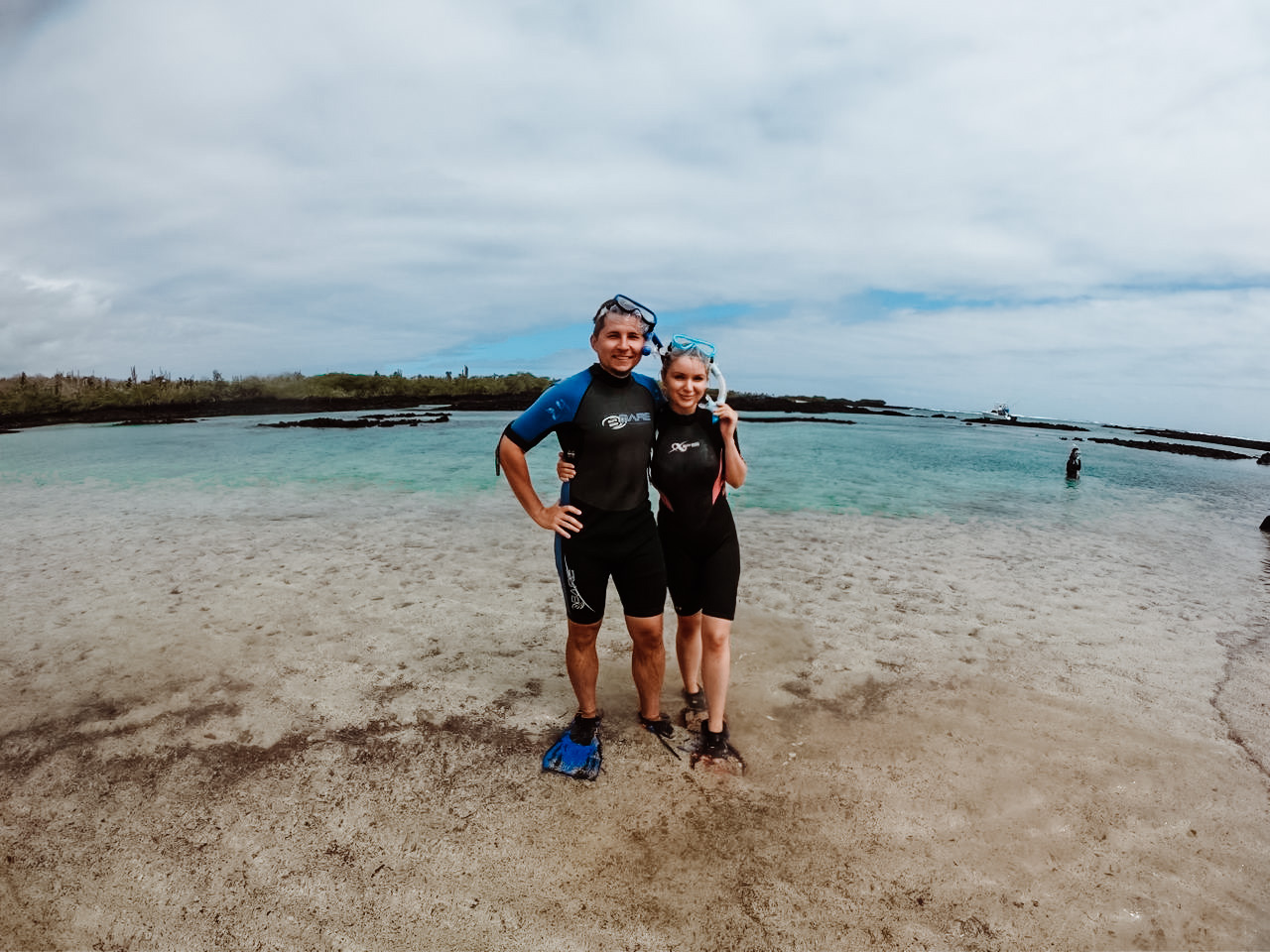
Tip Top II Galapagos Cruise Review
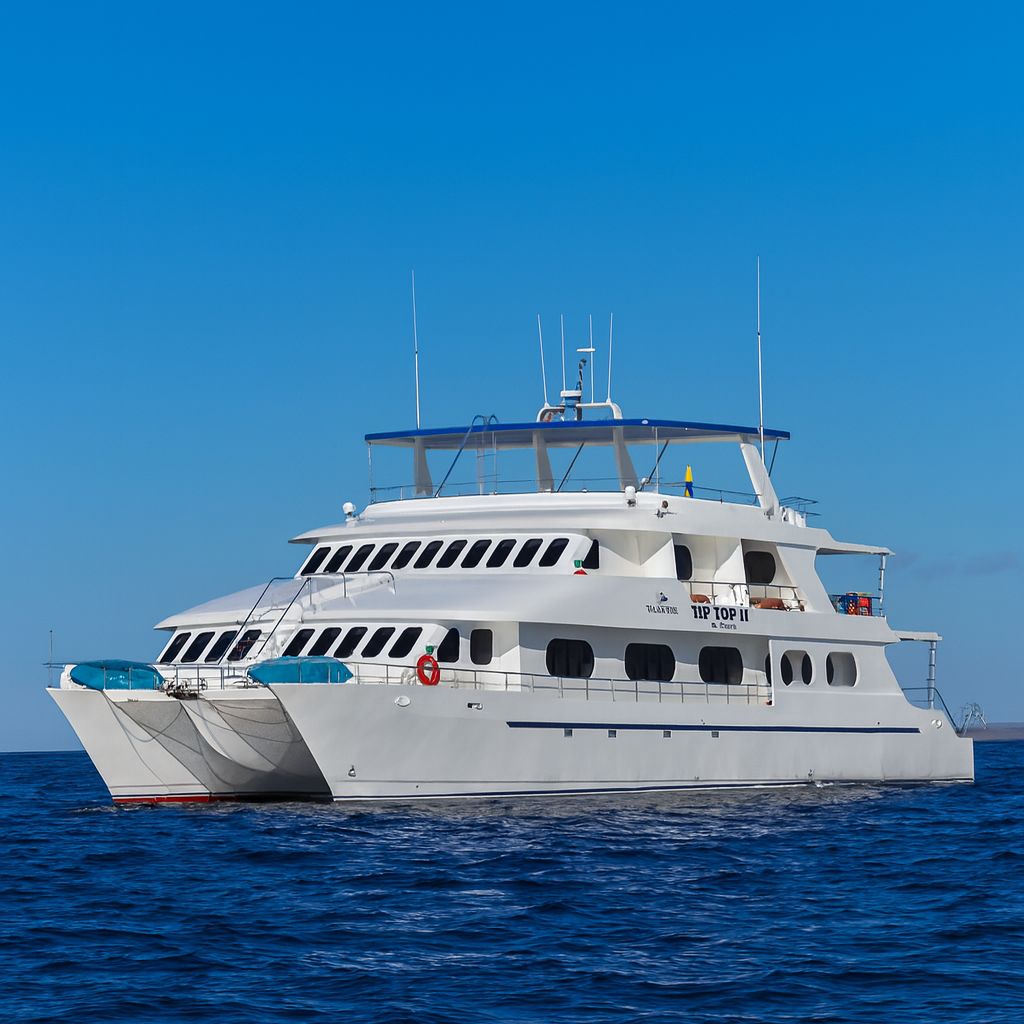
The Tip Top II is one of 28 First Class ships we review. See all first class Galapagos cruises, or use our finder to see Galapagos cruises side by side. It sails for Rolf Wittmer Turismo: see all Rolf Wittmer Turismo ships in the Galapagos.
Quick Facts: Tip Top II Galapagos Cruise
| Detail | Information |
|---|---|
| Vessel type | Motor catamaran |
| Built / Refurbished | 2008 / fully refurbished 2016 |
| Class | First Class |
| Operator | Rolf Wittmer / Tip Top Travel (42+ years operating in Galapagos) |
| Capacity | 16 guests / 8 crew |
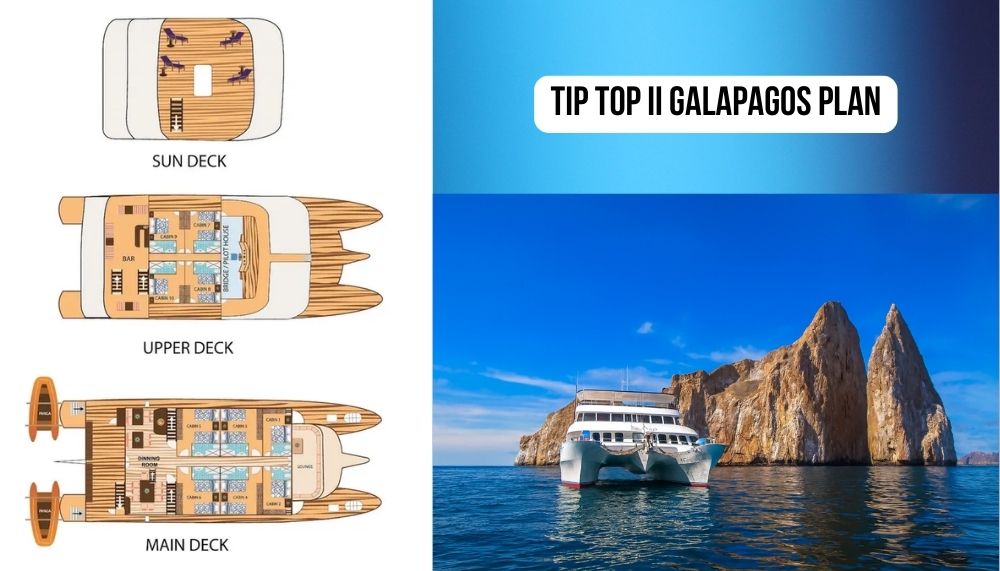
| Cabins | 10 total: 6 main deck (2 single, 4 twin), 4 upper deck (with private balconies) |
| Length / Speed | 104-112 ft / 12 knots cruise speed |
| Itineraries | 4-day, 5-day, and 8-day routes (North, South, West) |
| Starting price (8-day, double) | From ~$3,613 pp (main deck double occupancy) |
| Park entrance fee (not included) | $200 USD adults / $100 children under 12 – cash only on arrival |
| Transit Control Card (not included) | $20 USD per person – purchased at mainland airport |
| Included | All meals, guided excursions, snorkel gear, kayaks, paddleboards, beach towels, water/tea/coffee, snacks, Wi-Fi |
| Not included | Domestic flights, park fee, TCT, alcohol, soft drinks, wetsuit rental, tips, insurance |
Prices verified May 26, 2026. Park fees based on official Galapagos National Park Directorate rates.
What Is the Tip Top II and Who Is It For?
The Tip Top II is a 16-guest first-class motor catamaran operated by the Rolf Wittmer family, one of the original families to settle the Galapagos Islands over 80 years ago. Built in 2008 and fully refurbished in 2016, it runs 4, 5, and 8-day itineraries. It’s best suited for travelers prioritizing stability at sea, private balconies at a first-class price, and a family-run operation with decades of on-the-ground Galapagos experience.
The Wittmer connection matters more than it might sound. Most Galapagos cruise operators are agencies or companies that contract boats and guides. The Tip Top fleet is different. The family has been physically based in the archipelago since the 1930s, runs its own operation from Puerto Ayora, and has over 42 years of cruise experience on these specific waters. The guides know these sites in the kind of depth that only comes from working the same territory for a long time.
The catamaran hull sets the Tip Top II apart from most first-class motor yachts. Two hulls instead of one means the boat sits wider and rolls far less. If you’ve ever been on a monohull Galapagos yacht in choppy overnight conditions and spent most of the night gripping the bunk frame, you already understand why this matters. The Tip Top II is consistently described as one of the most stable boats at this class level.
Who fits this boat best: couples who want a balcony cabin without paying luxury-class prices. Families with kids who benefit from interconnected cabin configurations. Travelers with limited sea experience who want the wildlife experience without the motion sickness risk. And anyone who values institutional Galapagos knowledge in their guide and crew over a newer, flashier vessel.
What Does the Tip Top II Look Like Inside? (Cabins, Decks, Common Areas)
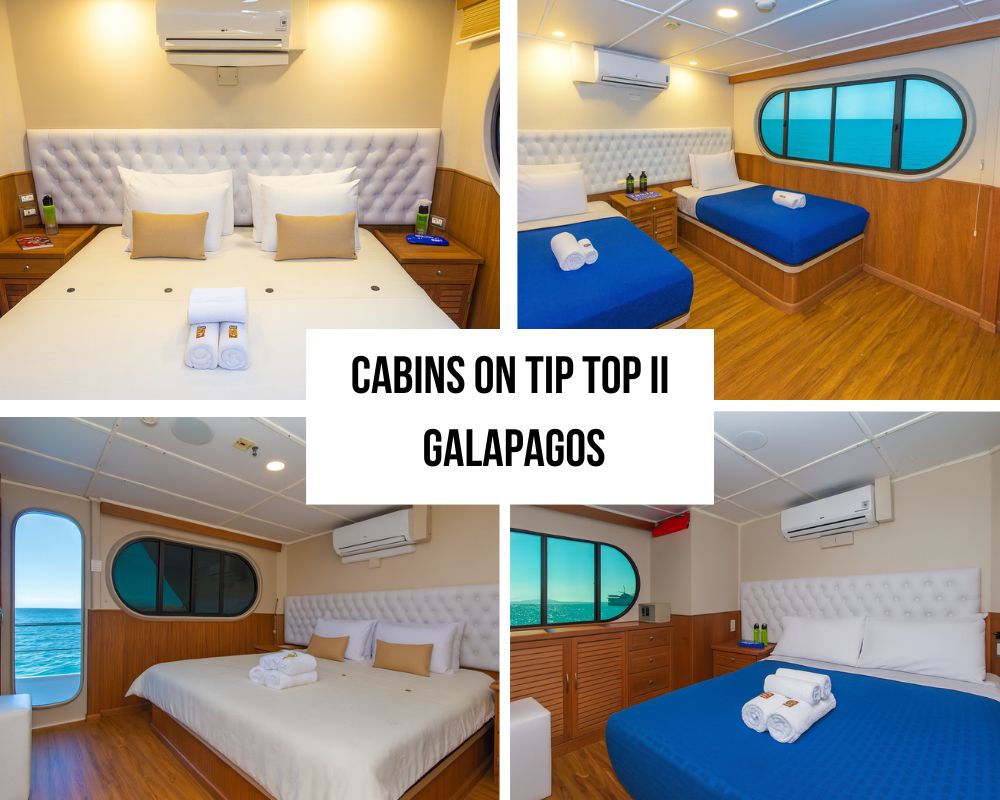
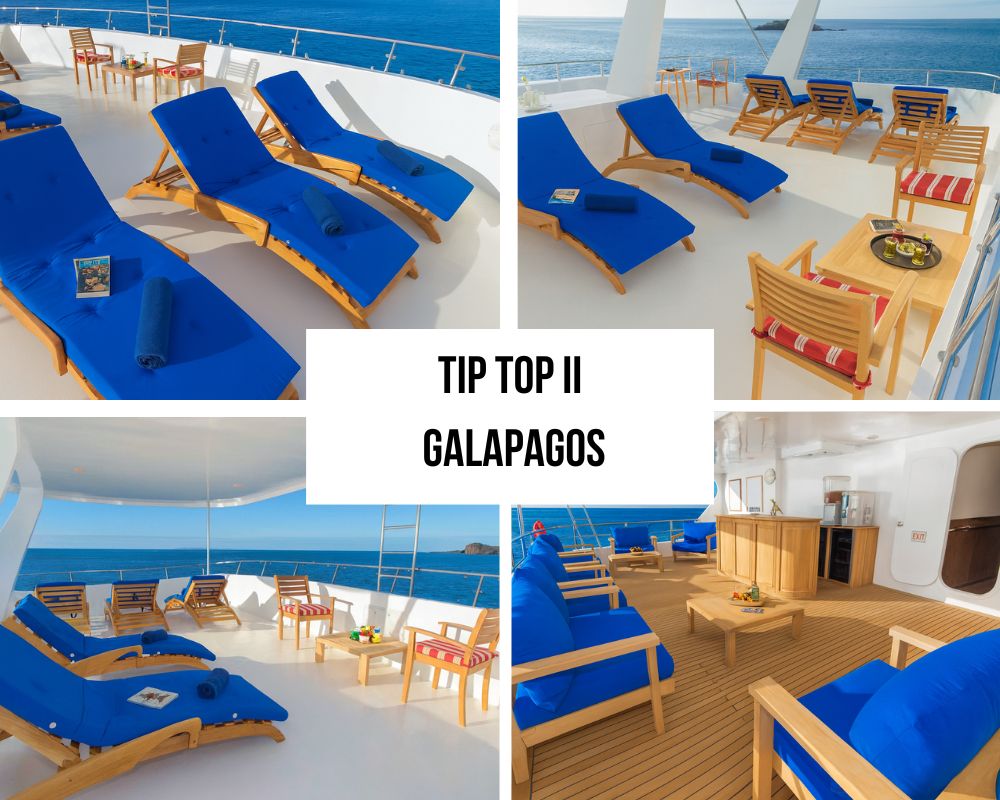
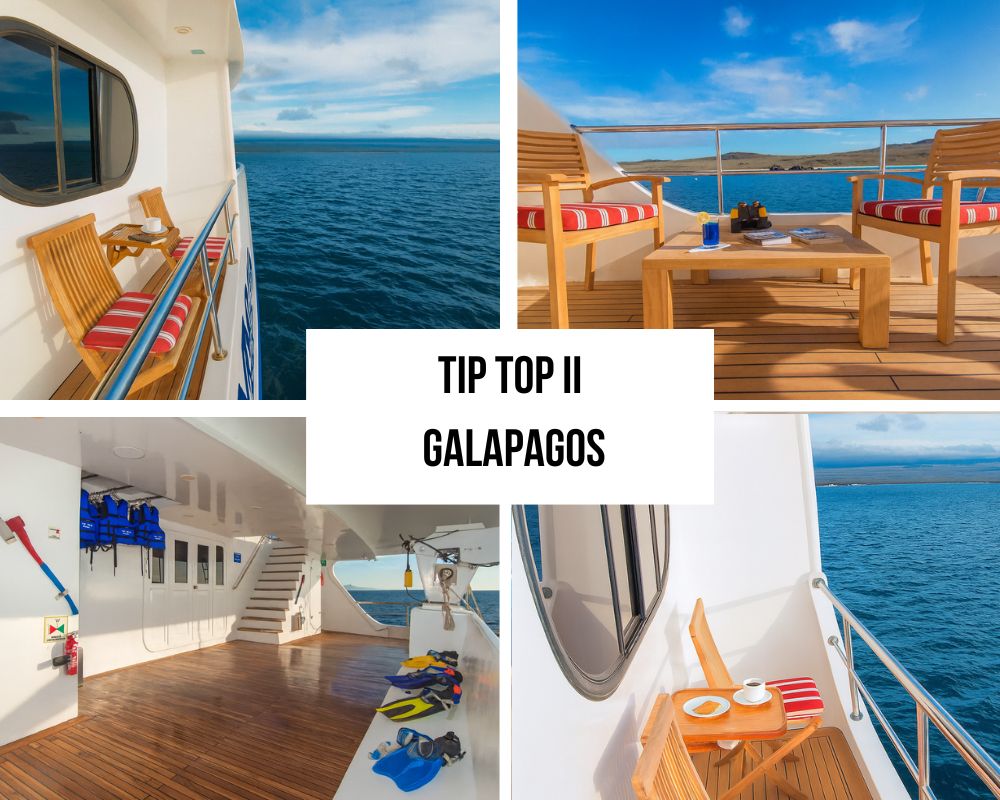
The Tip Top II has 10 en-suite cabins across two decks. Main deck cabins include two single-bed options and four twin-bed rooms, all around 28 square meters with windows. Upper deck has four cabins, each with a private balcony – two configured with twin beds and two with king-size beds. Common areas include an air-conditioned lounge and dining room, an al-fresco upper deck dining area, a bar, a library, and a sun deck with loungers.
The private balconies on the upper deck are the detail that keeps coming up when travelers describe what they loved about this boat. You step out before the morning briefing, coffee in hand, and watch the coastline of whatever island the boat anchored near overnight. It’s a small thing that changes how the cruise feels from the inside. At the first-class price tier, balconies are not standard – they appear more commonly on luxury vessels. The Tip Top II offers four of them.
The catamaran design also opens up the common areas in a way a same-length monohull can’t match. The salon spans the full width of the boat on the main deck. The al-fresco dining area on the upper deck is where breakfast and lunch tend to happen when conditions allow, which is most of the time in calm anchorages. There’s a sun deck above that with loungers and comfortable seating.
The 2016 refurbishment updated the interior finishes significantly. Cabins feature storage space, safety boxes, hairdryers, and independent AC. One reviewer who came aboard specifically to compare all 10 cabins (they’d chartered the full boat for a family trip) noted the upper-deck king suites were noticeably larger and more comfortable than the main-deck twin rooms. That’s worth knowing when you’re choosing a cabin category.
Wi-Fi is included – a small detail, but not universal across first-class boats.
Which Itineraries Does the Tip Top II Offer and Which Islands Do You Visit?
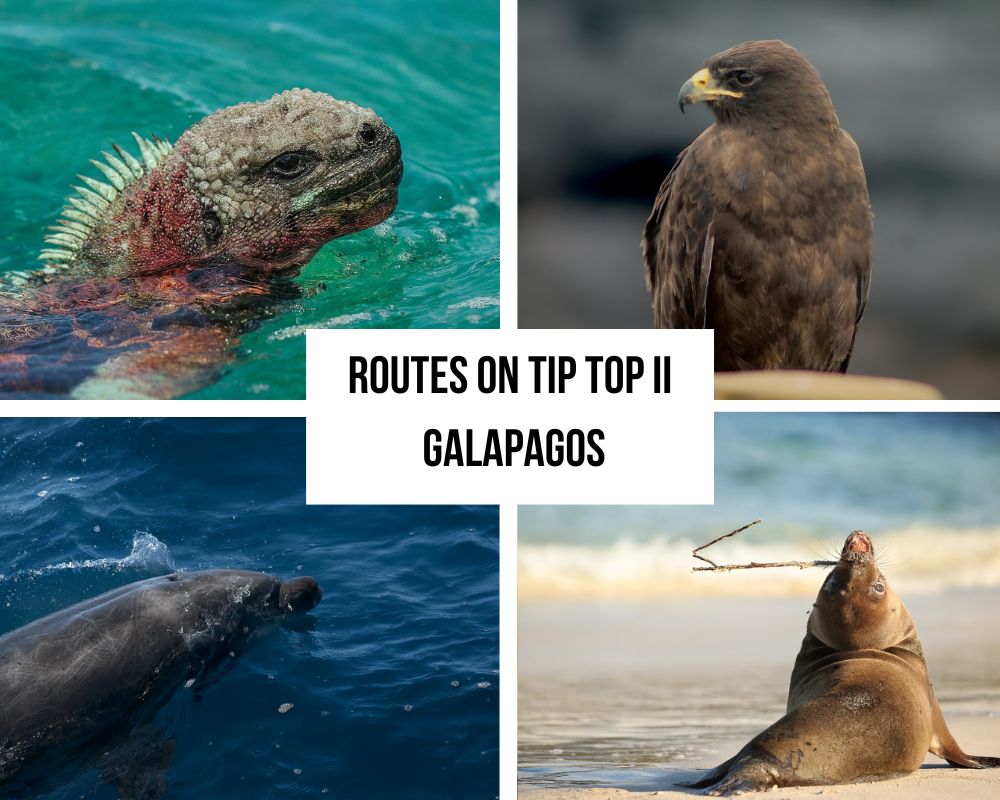
The Tip Top II runs 4-day, 5-day, and 8-day itineraries covering northern, southern, and western island routes. The 8-day North itinerary, which combines western islands (Isabela, Fernandina) with Genovesa in the north, is the standout offering. Genovesa is a rarely visited island accessible only to a handful of vessels with the right park permits. Getting there at first-class rates is unusual.
Most first-class yachts never reach Genovesa. The island sits in the far north of the archipelago, requiring a longer overnight passage, and National Park permits to visit are limited. The Tip Top II’s 8-day North route reaches it, and the site there is genuinely unlike anything in the central or southern Galapagos. The red-footed booby colony at Prince Philip’s Steps on Genovesa is one of the largest in the world. Storm petrels nest in the lava cracks in numbers that make the ground look like it’s moving.
The 8-day itinerary also covers the western islands of Isabela and Fernandina, so you’re getting both the remote west and the remote north in one cruise. That combination puts it among the more ambitious first-class route options in the entire Galapagos fleet.
| Route | Duration | Key Islands | Best For |
|---|---|---|---|
| North (recommended) | 8 days / 7 nights | Isabela, Fernandina, Genovesa, Santiago, Santa Cruz | Wildlife photographers, return visitors, serious nature travelers |
| South | 8 days / 7 nights | Floreana, Española, San Cristobal, Santa Cruz | First-timers wanting classic southern highlights |
| 4 or 5-day options | 4–5 days | Central islands, Santa Cruz, San Cristobal | Limited time; first introduction to the islands |
Itineraries subject to change by Galapagos National Park authority. Verified May 26, 2026.
Two excursion visits per day is the standard pace, which matches what we see across well-run first-class boats. The 12-knot cruising speed means transit time between sites is shorter than on slower monohulls – that extra hour at the landing site rather than in transit adds up across a week.
Choosing between the North and South itinerary is genuinely the most important decision you’ll make before booking this vessel. If you’ve never been to the Galapagos, either route delivers the core experience. If you’re coming back or you specifically want the rarest wildlife, North is the better call. We walk through this choice with travelers regularly. Send us a note here and we’ll tell you which route suits your dates and interests best.
How Good Is the Food and Naturalist Guide Experience on the Tip Top II?
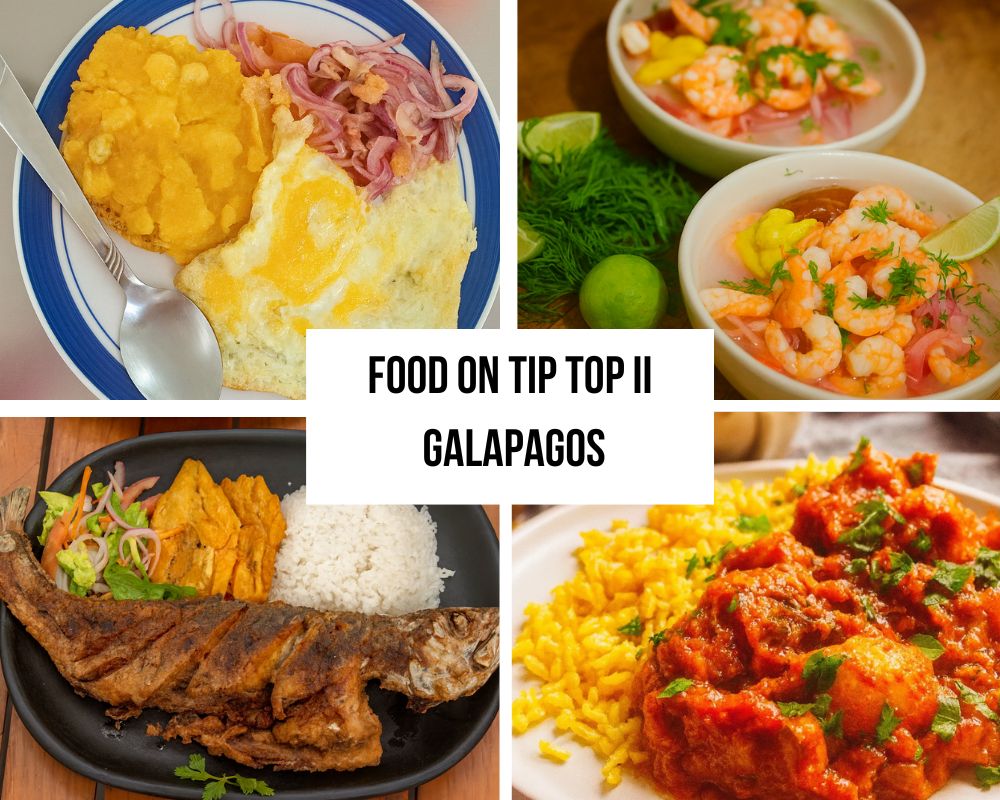
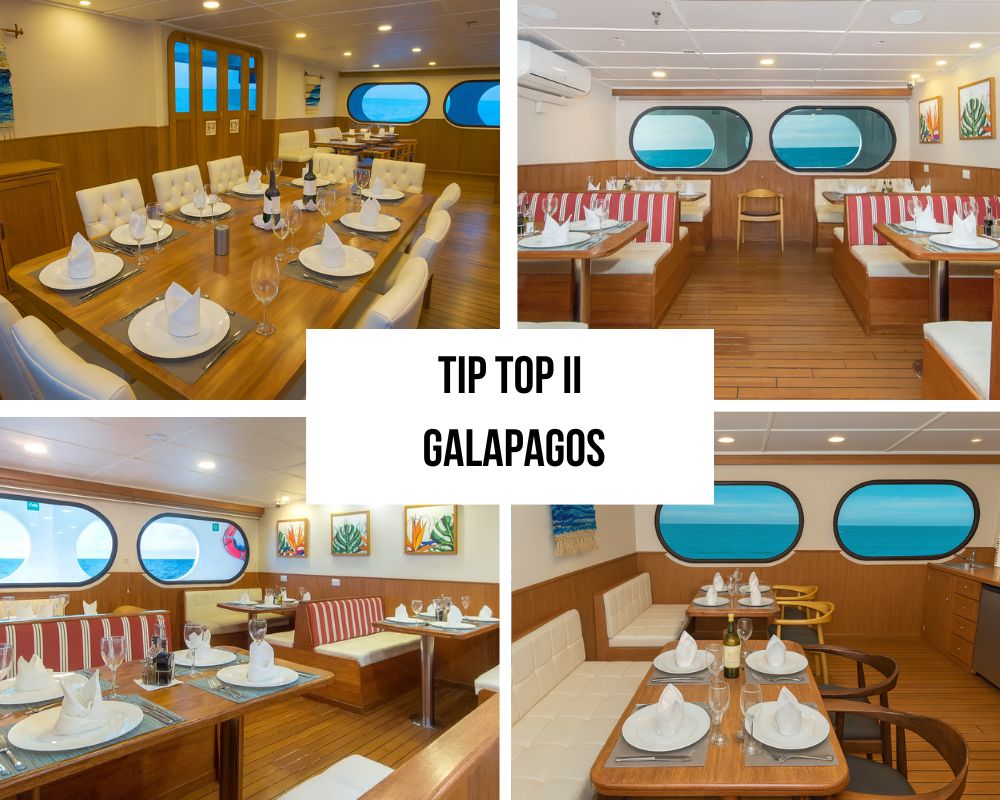
The Tip Top II is known for strong food and consistently excellent guides. Named guides – Felipe, Angelina, Luis – appear repeatedly in traveler reviews as knowledgeable, enthusiastic, and genuinely skilled at making wildlife come alive. The chef incorporates Ecuadorian dishes alongside international options, and the al-fresco upper-deck dining setup makes meals feel like part of the experience rather than a break from it.
A family that chartered the full boat described guide Felipe as friendly, knowledgeable, and patient with five kids across a full week – not the easiest assignment. Another traveler used the phrase “bottomless pit of knowledge” for guide Felipe on the western itinerary. A third specifically cited guide Angelina as someone who “pushed us hard” and whose enthusiasm elevated every landing. That pattern of named-guide praise across different departures and different years points to consistent guide quality, not a lucky coincidence.
Food on the Tip Top II sits comfortably above the middle of the first-class range. Breakfast and lunch happen al-fresco on the upper deck when weather allows, which most guests describe as one of their favorite onboard moments. Fresh ceviche features regularly. The Ecuadorian dishes aren’t tokenistic. One reviewer noted the food was healthy, generous, and varied enough that nothing felt repetitive over eight days.
The boat also sails with a cruise director in addition to the naturalist guide. That separation of roles – the guide focused on wildlife interpretation, the cruise director handling logistics and passenger needs – keeps the daily flow smooth and frees the guide to actually be a guide.
Dietary requirements can be accommodated if flagged at booking time. Tell the operator before you arrive. Waiting until the dock in Puerto Ayora to mention a serious allergy creates a real problem for the kitchen.
What Do Real Travelers Say About the Tip Top II? (Praise, Complaints, Patterns)
The Tip Top II earns consistent praise across TripAdvisor and travel forum reviews for its crew warmth, guide quality, food, and the catamaran stability. The most recurring critical note is not about the boat itself but about the bar setup – limited drink options and no by-the-glass wine or cocktail menu. A few travelers mention the main-deck twin cabins feel more compact than expected for first class.
The stability comes up constantly, and not in an abstract way. Travelers who chose the Tip Top II specifically because they’d been seasick on previous trips describe it as the reason they were finally able to enjoy a type of Galapagos cruise properly. One traveler with experience on eight previous cruises called the cabin the largest they’d ever had. The catamaran beam is simply wider than a same-length monohull, which means more floor space and less motion.
The bar situation is worth flagging because it comes up enough to be a real pattern. Small bottles of beer run about $4. Soft drinks around $3. Wine is sold by the bottle, not the glass, which means a solo traveler or couple who wants a glass of wine with dinner either commits to a full bottle or goes without. Hard liquor is sometimes available only by the full bottle. This is not unusual across mid-range Galapagos yachts, but it’s genuinely worth knowing before you board. Bring your own preferences early in the cruise if you want flexibility.
The social atmosphere on a 16-person boat with experienced, attentive staff trends toward genuinely warm. Multiple reviews describe the cruise director as going out of their way to make the trip feel personal. A family reported that Maria Jose as cruise director ensured everything was to their liking and managed the chaos of a multi-kid charter with ease. That kind of hospitality comes from an operator who’s been doing this for four decades and knows that the human side of a cruise matters as much as the wildlife.
What Tip Top II Travelers Tell Us: Patterns from Traveler Feedback
Based on traveler feedback collected through mytrip2ecuador.com and our YouTube audience, alongside thousands of traveler interviews Oleg has conducted across the Galapagos cruising market:
| Feedback Category | % Strong Satisfaction | Common Comment Pattern |
|---|---|---|
| Catamaran stability / seasickness | 96% | “Best stability I’ve experienced on a small yacht” |
| Naturalist guide quality | 97% | “Guide was knowledgeable, enthusiastic, made the trip” |
| Crew / cruise director warmth | 95% | “Felt like a family trip, not a tour group” |
| Food quality and variety | 93% | “Healthy, generous, great Ecuadorian dishes” |
| Upper-deck balcony cabins | 94% | “Worth the upgrade, mornings on the balcony were special” |
| Bar / drinks selection | 84% | “Limited options; wine by bottle only was a minor frustration” |
How Does the Tip Top II Compare to Similar First-Class Vessels?
The Tip Top II’s closest comparisons are the Tip Top IV and V (same operator, newer/higher-spec versions), and catamaran alternatives like the Anahi. Against monohull first-class yachts like the Solaris or Treasure of Galapagos, the Tip Top II wins on stability and balcony access. It loses on solo-traveler value, it charges a single supplement, which the Solaris does not. Against the Tip Top V, which is the operator’s more premium vessel, the Tip Top II offers essentially the same itineraries at a lower price point.
| Vessel | Type | Private Balconies | Solo Supplement | 8-Day Price (double) | Genovesa Access |
|---|---|---|---|---|---|
| Tip Top II | Catamaran | Yes (upper deck) | Yes | From ~$3,613 pp | Yes (North route) |
| Tip Top V | Catamaran | Yes | Yes | Higher (flagship) | Yes |
| Solaris (2019) | Motor yacht | No | No (5 single cabins) | From ~$4,150+ pp (5-day) | No |
| Anahi | Catamaran | Limited | Yes | Mid-range | Varies |
Prices are approximate regular-season reference rates. Verified May 2026.
The Tip Top II vs. Tip Top V decision is straightforward: if budget is the priority, the II delivers the same family operation, the same itineraries, and very similar crew culture at a meaningfully lower cost. The V has newer fittings and a higher cabin spec. Both are well worth booking.
If you’re a solo traveler, the single supplement on the Tip Top II changes the math considerably. Two solo-cabin options exist on the main deck, but they come with a supplement. The Solaris is still the better solo value in the first-class category. For couples, families, and groups, the Tip Top II competes strongly.
How Much Does the Tip Top II Galapagos Cruise Cost and What’s Included?
The Tip Top II starts at approximately $3,613 per person double occupancy for an 8-day main-deck cabin. Upper-deck balcony cabins run from $4,213 per person double. Single occupancy is available on two main-deck cabins at $5,413 per person. Add the $200 park fee, $20 Transit Control Card, and ~$470-510 for domestic round-trip flights, and total all-in costs typically land between $4,500 and $6,000 per person for most travelers.
The cruise fare covers all meals from lunch on arrival day through breakfast on departure, every guided excursion, snorkeling gear, kayaks, paddleboards, beach towels, water, tea, and coffee throughout. Wi-Fi is included. Wetsuit rental is not – budget $40-50 for an 8-day full wetsuit hire, and pre-book it. If you wait until boarding to request one, the right size may not be available.
| Cost Item | Approximate Cost (2026) | Notes |
|---|---|---|
| 8-day cruise, main deck double | From ~$3,613 pp | Cabins 1-2 pricing; regular season |
| 8-day cruise, upper deck balcony | From ~$4,213 pp | Cabins 7-10; private balcony included |
| 8-day cruise, single occupancy | From ~$5,413 pp | Main deck solo cabins; supplement applies |
| Galapagos National Park fee | $200 pp (adults) / $100 (under 12) | Cash USD only; paid on arrival at Galapagos airport |
| Transit Control Card (TCT) | $20 pp | Purchased at mainland Ecuador airport before flight |
| Domestic flights (round-trip) | $470-510 pp | Quito or Guayaquil to Galapagos and back |
| Wetsuit rental (8-day) | $40–50 pp | Pre-book before arrival; sizes limited on board |
| Crew gratuities (recommended) | ~$30 pp/day | Standard practice; bring USD cash |
All prices verified May 26, 2026. Official park fee source: Galapagos National Park Directorate. Cruise prices are indicative; contact operators for exact availability and current rates.
Children under 12 receive a 40% discount off the adult cruise rate, which makes the Tip Top II one of the more family-budget-friendly first-class options when that discount is factored in alongside the interconnected cabin configurations.
Booking the domestic flight as part of your cruise package is worth the coordination. Airport transfers on operating days are included in the fare, if you book flights separately and miss a connection, the boat cannot hold. The operator coordinates timing when flights are booked together. If you want us to put together a full package quote covering the cruise, flights, and pre- or post-cruise nights in Quito or Guayaquil, get in touch here and we’ll handle the details.
Is the Tip Top II Worth Booking in 2026/2027 – Our Honest Take?
Yes. The Tip Top II earns its place at the first-class level through a combination of things no other boat in this category fully matches: catamaran stability, private balconies at a non-luxury price, the Genovesa access on the 8-day North route, and four decades of Wittmer family operational experience behind everything from the guide selection to how the kitchen runs. It’s not the newest boat in the market. But new doesn’t equal better in the Galapagos.
When I inspect Galapagos vessels, I’m looking at things the photos don’t capture. How the crew interacts when nobody is watching. Whether the guide seems genuinely invested or just running through a script. The caliber of the naturalist briefings in the evening. The Tip Top II passes those checks. The Wittmer name in the Galapagos means something real, and it’s maintained its standard over decades when a lot of operators have come and gone.
The 8-day North itinerary is the reason to book this particular vessel over comparable first-class alternatives. If you want both Fernandina and Genovesa – the western volcanic coast and the northern red-footed booby colony – in one cruise, your options at this price point are narrow. The Tip Top II is one of them.
Two honest caveats. The bar setup will frustrate travelers who like wine with dinner and don’t want to commit to a full bottle. And the main-deck twin cabins, while comfortable, run smaller than the upper-deck rooms in ways that matter over eight days. If your budget allows, the upper-deck balcony cabins are worth the step up. The balcony alone changes the morning rhythm of the whole trip.
For 2026 and into 2027, the December-to-April window books earliest. That’s when wildlife activity peaks across the southern sites, the seas are calmer for the longer overnight passages on the North route, and the 16-passenger limit means inventory disappears faster than most travelers expect. If those dates are in your window, don’t wait on it.
We work with travelers on this exact decision – which vessel, which route, which cabin, and we’ve been on most of the boats we recommend. If you want a direct answer on whether the Tip Top II is right for your specific trip, send us a message here. Free, no pressure, and you’ll hear from someone who has actually been on the water in the Galapagos.
What to Know Before You Book: Fail Points and Smart Preparation
The Tip Top II is a well-run operation, but a few things trip travelers up across multiple reviews:
Bar setup expectations. Wine is sold by the bottle ($24 range), not the glass. Beer and soft drinks are available individually. Hard liquor may require purchasing a full bottle. If you enjoy a drink with dinner, factor this in and embrace the commitment or plan accordingly.
Wetsuit rental must be pre-booked. Water temperatures in the western islands can run 17-20°C depending on season, and without a wetsuit, snorkeling sessions get cut short. Pre-book the full suit rather than the shorty. The $10 difference matters more than it looks on paper when you’re in the current off Fernandina.
Main-deck cabin size. The twin-bed main-deck rooms work fine for a week but feel smaller than the upper-deck options. If you’re traveling as a couple and spend any time in your cabin between excursions, the upper-deck king configuration is a meaningful comfort upgrade.
The North route has real overnight passages. The leg to Genovesa is long and can be rough depending on season and conditions. Bring motion sickness medication and use it preventively the evening before long overnight runs – not the morning after you already feel sick.
Arrive the night before departure. A missed domestic flight to the Galapagos means a missed departure, not a rescheduled one. Build in a night in Quito or Guayaquil before your cruise start date. The Galapagos travel community’s standing advice on this point is unanimous for good reason.
Frequently Asked Questions
Why is the catamaran design better for Galapagos cruising?
A catamaran’s twin-hull design sits wider in the water than a monohull of the same length, which significantly reduces rolling motion. This makes overnight passages much more comfortable and dramatically lowers the risk of seasickness. The Tip Top II is specifically noted as one of the most stable first-class vessels in the Galapagos fleet.
Do all Tip Top II cabins have private balconies?
No. Only the four upper-deck cabins (rooms 7-10) have private balconies. The six main-deck cabins have windows but no balcony. If a balcony is a priority, book upper-deck and specify at the time of reservation whether you want a twin or king-bed configuration.
What makes the 8-day North itinerary special?
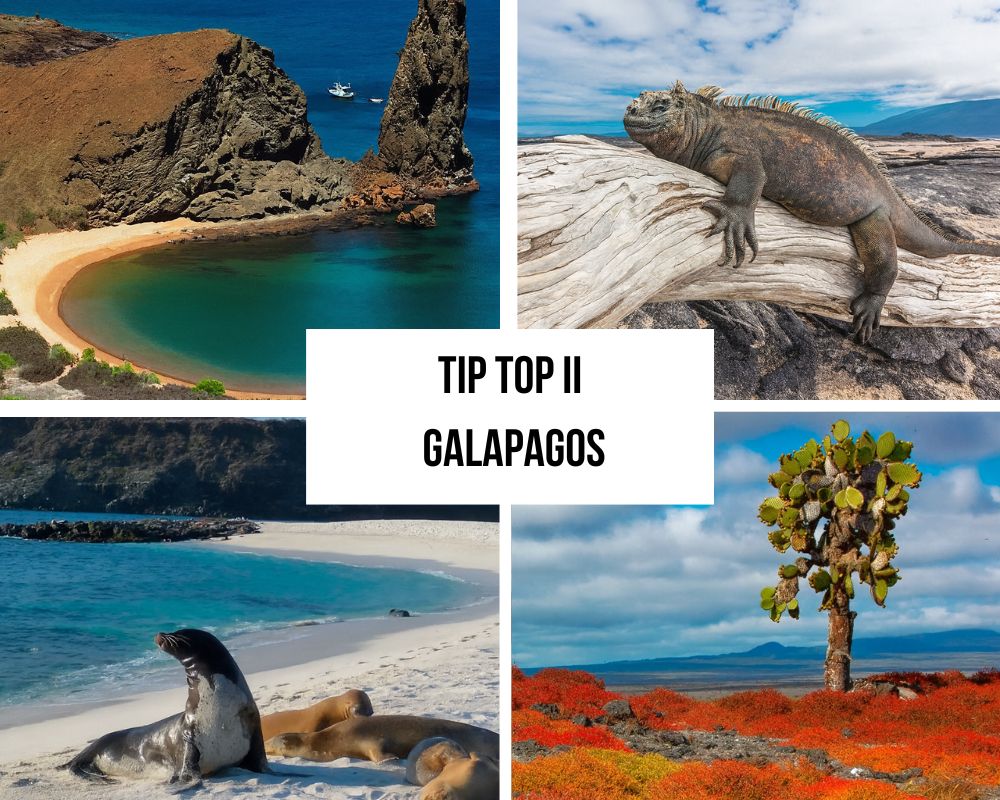
It combines the remote western islands of Isabela and Fernandina – home to flightless cormorants, Galapagos penguins, and massive marine iguana colonies – with Genovesa Island in the far north, one of the least-visited sites in the archipelago and home to one of the world’s largest red-footed booby colonies. Very few first-class vessels reach both areas in one itinerary.
Is the Tip Top II good for families with children?
Yes. The boat offers interconnected cabin configurations suitable for families, a 40% child discount for children under 12, and an attentive crew and cruise director setup that handles varied group needs well. Multiple family reviews describe the experience as genuinely accommodating for children of different ages.
How much is the Galapagos National Park entrance fee in 2026?
The fee is $200 USD for foreign adults and $100 USD for children under 12, as of August 2024 when it doubled from the previous $100 rate. It must be paid in cash USD on arrival at Baltra or San Cristobal airport. The Transit Control Card is an additional $20 per person, purchased at the mainland Ecuador airport before boarding your flight.
Thinking about the Tip Top II for your Galapagos trip?
We’re a local agency rated 4.9 stars on Google and TripAdvisor, and we’ve personally reviewed most of the boats we recommend – including the Tip Top fleet. If you want a free personalized quote covering the cruise, cabin selection, domestic flights, and any mainland Ecuador extensions, we’ll put it together with no obligation. Fill out this short form and we’ll be back to you quickly.
Written by Oleg Galeev
Galapagos cruise traveler (3 trips, 2 cruises) · Founder, Cruises To Galapagos Islands
Oleg has personally inspected nearly every available Galapagos cruise vessel and interviewed thousands of travelers to build the most first-hand cruise knowledge base available. He also runs the Ecuador travel blog mytrip2ecuador.com and the YouTube channel My Trip to Somewhere.
Cruises To Galapagos Islands is rated 4.9 stars on Google and TripAdvisor.
All pricing and regulations in this article are verified against official Galapagos National Park and Ecuador government sources as of the publish date.