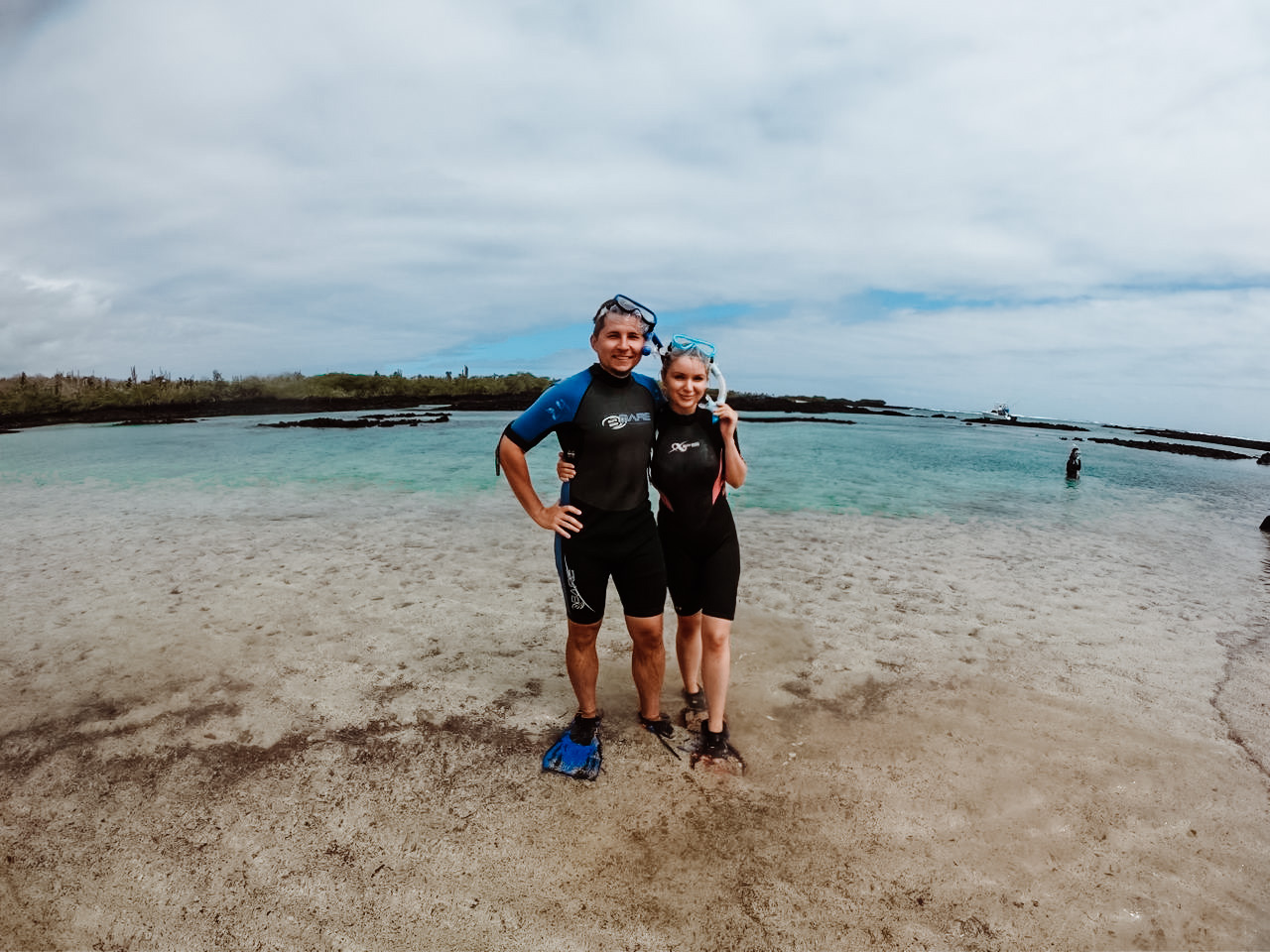
National Geographic Delfina Review
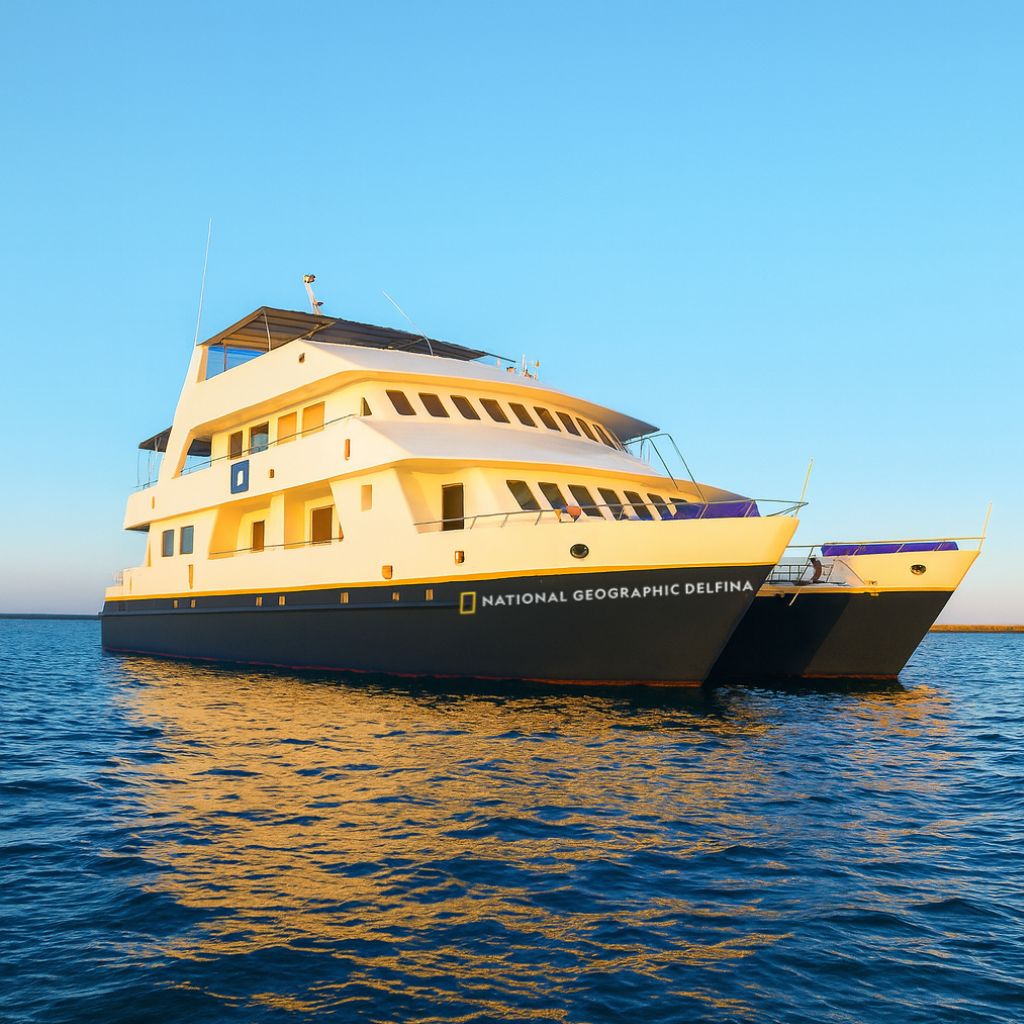
The National Geographic Delfina is one of 26 Luxury ships we review. See all luxury Galapagos cruises, or use our finder to see Galapagos cruises side by side. It sails for National Geographic-Lindblad Expeditions: see all National Geographic-Lindblad Expeditions ships in the Galapagos.
Quick Facts: National Geographic Delfina
| Spec | Detail |
|---|---|
| Operator | National Geographic – Lindblad Expeditions |
| Vessel Type | Luxury catamaran (double hull) |
| Built / Renovated | Built 2007 (as Athala II); fully renovated 2024; relaunched Feb 14, 2025 |
| Ship Length | 98 feet |
| Max Passengers | 16 guests |
| Crew | 12 |
| Staterooms | 8 staterooms across 2 decks |
| Cabin Size | 172 sq ft with balcony (Cat 5) or deck access (Cat 4) |
| Starting Price (10-day) | From ~$6,860 per person (double occupancy, excl. airfare) – Prices verified May 26, 2026 |
| Itinerary Lengths | 10 days and 16 days (+ Machu Picchu option) |
| Private Charter | Yes, available for full group buyout |
| Elevator | No, stairs only between decks |
| Galapagos Entry Fee | $200 USD (park entrance) + $20 transit card – Prices verified May 26, 2026 |
| Internal Flight (Guayaquil–Baltra) | ~$520-$570 per person, round-trip – Prices verified May 26, 2026 |
What Is the National Geographic Delfina and Who Is It Actually For?
The National Geographic Delfina is a 98-foot luxury catamaran carrying just 16 guests and 12 crew, making it the smallest and most intimate ship in the Lindblad Expeditions Galapagos fleet. Built in 2007 in Guayaquil, Ecuador, and extensively renovated in 2024, it relaunched under the National Geographic brand in February 2025. It suits travelers who want an experience that feels genuinely private: families chartering the whole boat, small friend groups celebrating a milestone, and couples who find the idea of a 48-guest ship too social.
The ship’s name carries a specific meaning. Lindblad Expeditions’ founder Sven-Olof Lindblad named it after his youngest daughter, Delfina. That’s not a marketing detail. It signals something about how Lindblad views this vessel. It’s personal, intentional, and sized for the kind of trip you take with people you actually care about.
Sixteen people is a number worth sitting with for a moment. By the end of the first full day at sea, you will know everyone on board by name. The crew outnumbers the guests by a ratio that approaches the absurd in the best way. Two veteran naturalists, including a National Geographic certified photo instructor, are there for a group that would fit comfortably around a single long dinner table. That dynamic changes how the whole trip feels. Conversations happen easily. Excursion groups form and dissolve fluidly. The evening recaps feel less like lectures and more like a gathering of people who spent the day doing something remarkable together.
The Delfina also has a strong legacy to draw on. Before it became the Celebrity Xploration under Celebrity Cruises in 2017, it sailed as the Athala II for Ocean Adventures from 2007. AdventureSmith Explorations, one of the most respected small-ship specialists in the industry, described it as one of their favorite Galapagos catamarans during those early years. Its return under the National Geographic banner, after a full 2024 renovation, brings that history back to the best-run expedition program currently operating in the archipelago.
How Does the Delfina Compare to Other Galapagos Cruise Options?
The Delfina occupies a unique position in the Galapagos cruise market. It’s priced higher than most tourist superior and first-class monohulls but below the Gemini’s luxury bracket, and it offers something neither can match: the intimacy of 16 guests on a ship with 12 crew. The closest competitors are other 16-guest catamarans operating in the islands, but none carry the Lindblad guide program or the National Geographic brand’s educational infrastructure.
| Ship | Type | Max Guests | Starting Price (10-day) | Key Differentiator |
|---|---|---|---|---|
| Nat Geo Delfina | Catamaran | 16 | From ~$6,860 pp | Most intimate Lindblad ship; private charter option |
| Nat Geo Gemini | Expedition ship | 48 | From ~$13,091 pp | Largest suites in fleet; 1:1 crew ratio; 5 guides |
| Nat Geo Islander II | Expedition ship | 48 | From ~$6,500+ pp | Mid-fleet; strong guide program |
| Other 16-guest catamarans | Catamaran | 16 | From ~$4,000-$8,000 pp | Varies; no Nat Geo guide program |
| First-class monohulls | Motor yacht | 16-32 | From ~$5,000-$9,000 pp | More spacious interiors; gentle rolling motion |
Prices verified May 26, 2026. Per person, double occupancy, excluding international and internal airfare.
The honest comparison between the Delfina and the Gemini comes down to one question: do you want depth of guide program or depth of intimacy? The Gemini carries five expedition staff and has the largest suites in the fleet. The Delfina carries two guides for 16 people, which is an exceptional ratio, and gives you a group small enough that you’ll know every person’s name and story within 24 hours. They are different experiences. Neither is strictly better. A solo traveler who wants to meet interesting people might lean Gemini. A family of six buying out half the boat might find the Delfina a far more compelling option.
Choosing between these ships is genuinely one of the trickier parts of planning a Galapagos cruise, and the price difference between them isn’t always the deciding factor. Our team at Cruises To Galapagos Islands can walk you through the tradeoffs based on your group size, travel dates, and what you actually care about seeing. Fill out this short form and we’ll put together an honest comparison and a no-obligation quote.
What Are the Cabins and Onboard Amenities Like on a 16-Guest Catamaran?
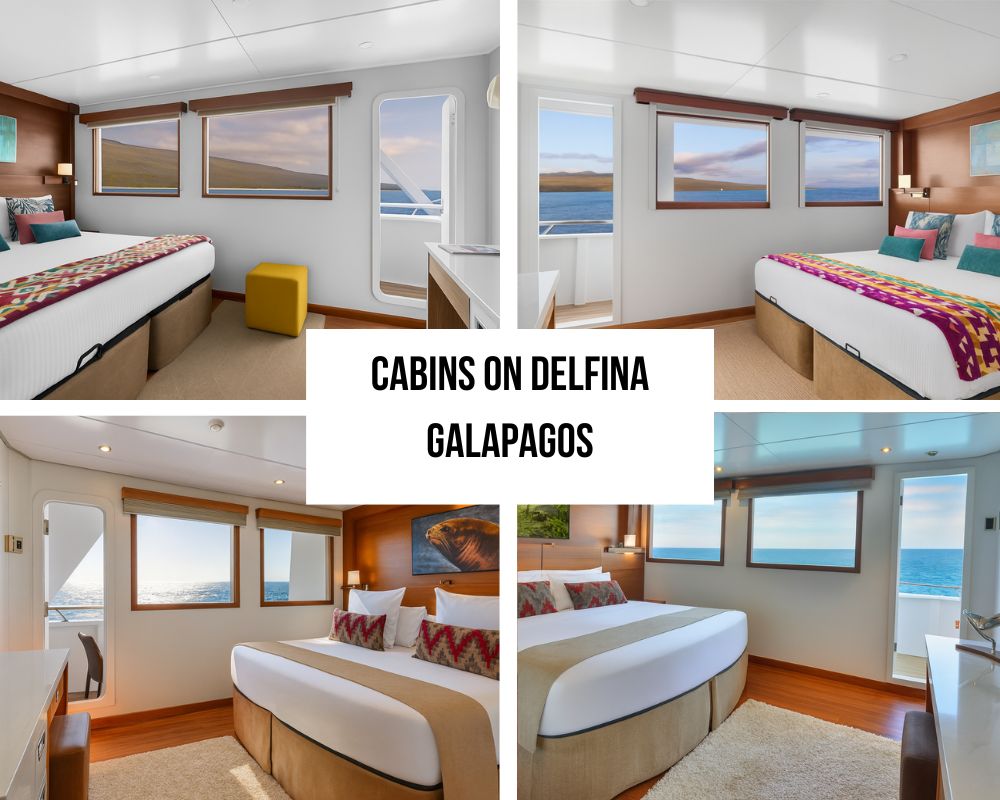
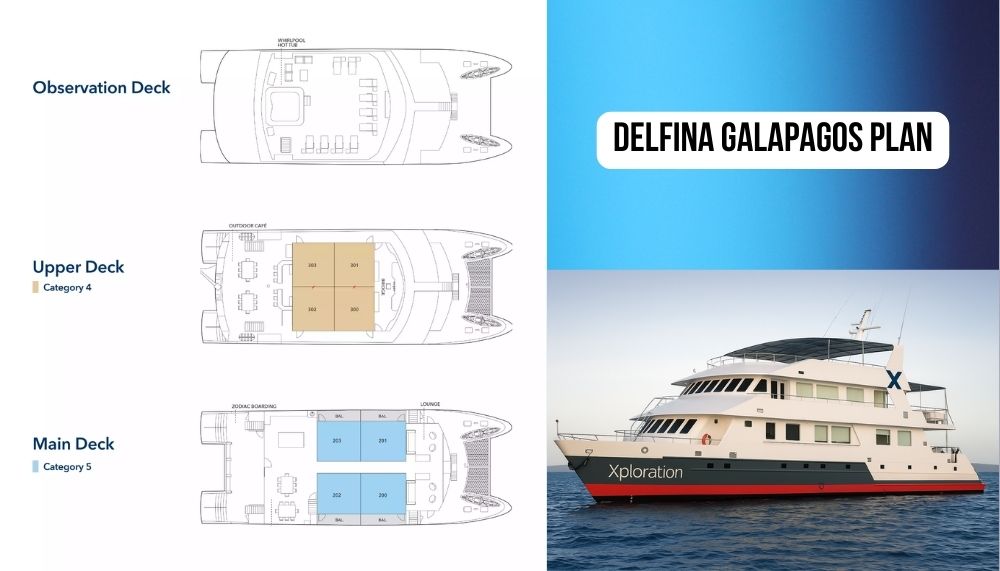
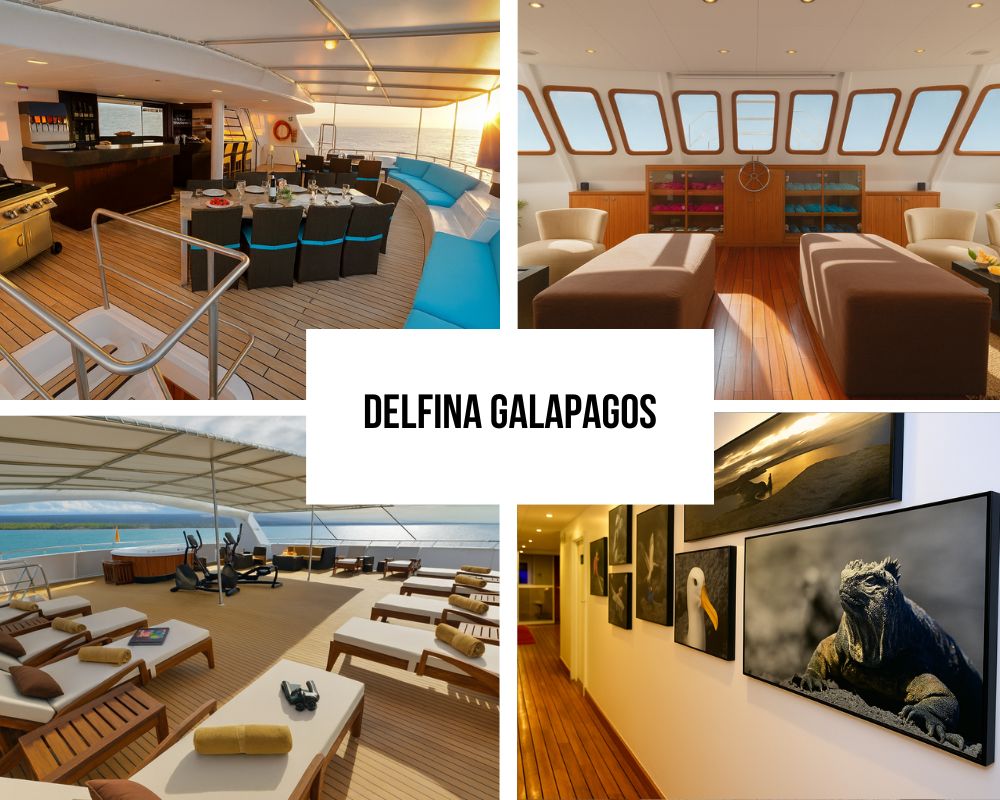
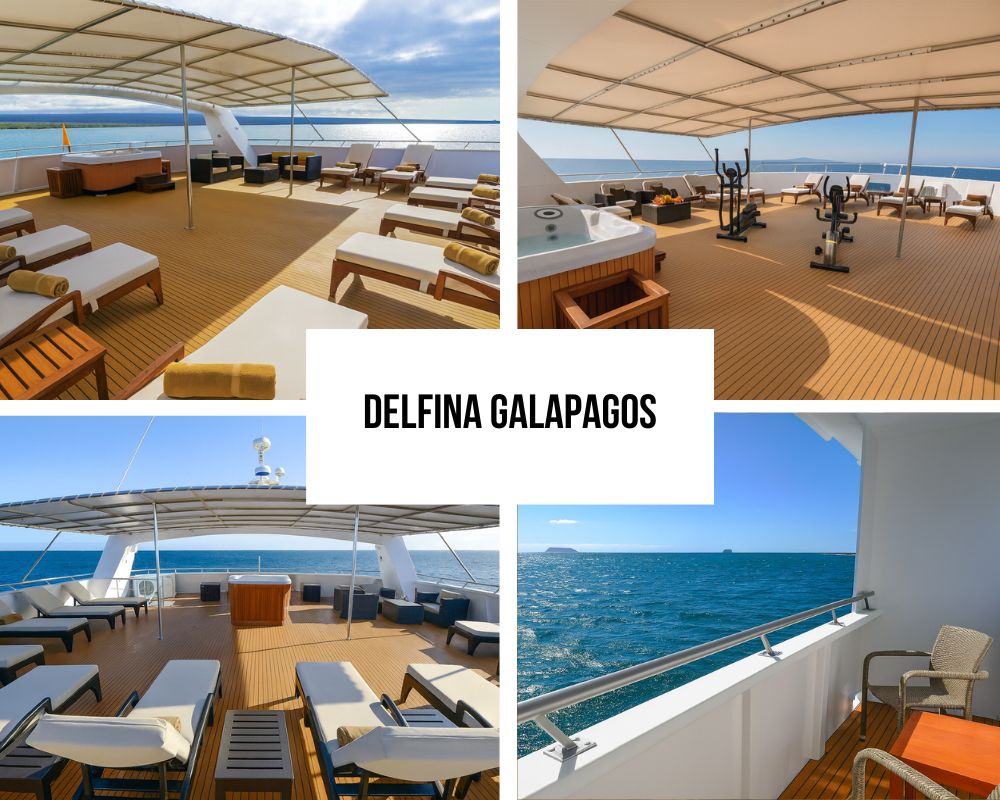
The Delfina has 8 staterooms spread across two decks, each at 172 square feet with warm polished wood interiors, queen or twin bed configurations, ensuite bathrooms, and ocean views through large windows. Category 5 rooms on the main deck have a private 43-square-foot balcony. Category 4 rooms on the upper deck open directly onto the wraparound outdoor deck rather than a private balcony. The ship has no elevator, and all decks connect by stairs.
Both cabin categories are identical in footprint at 172 square feet. The trade-off between them is real and worth thinking about. The Category 5 balcony rooms give you a private outdoor space off your cabin, which on a warm evening at anchor is genuinely wonderful. The Category 4 upper deck rooms sacrifice the private balcony but open directly onto the wide wraparound deck, which is the ship’s most social outdoor space. Upper deck rooms also sit higher on the vessel, which means better sightlines from your windows but potentially more movement in choppier conditions.
Adjacent Cat 4 cabins can be interconnected, so pairs 300/301 and 302/303 link together to create family configurations. This is worth knowing if you’re traveling with teenagers or two couples who want connected rooms without booking a full charter.
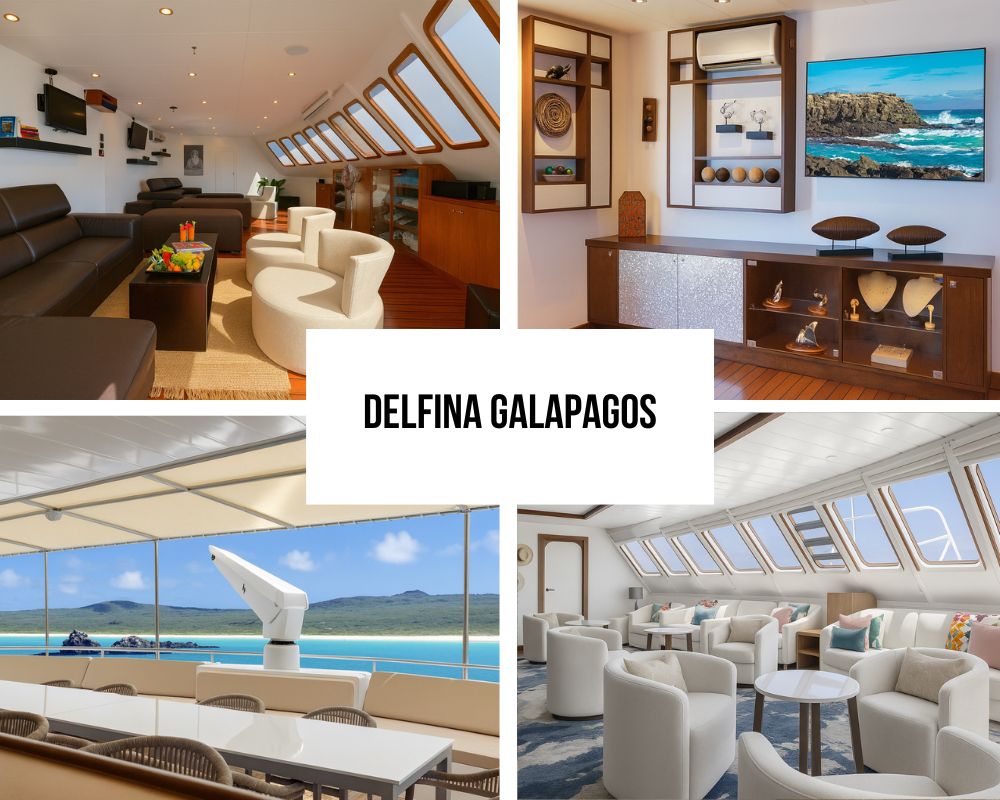
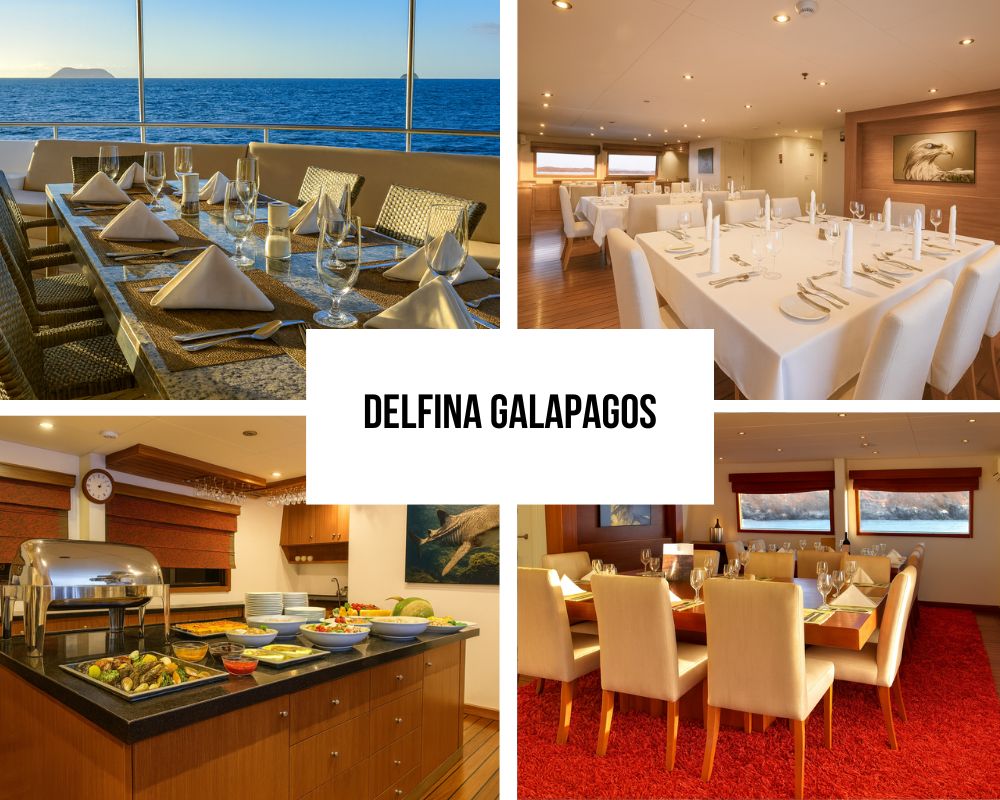
The common spaces punch well above what you’d expect from a 98-foot vessel. The open-air observation deck on top has a whirlpool hot tub, lounge chairs, and 360-degree views that on a clear night over the equator are extraordinary for stargazing. The main deck lounge is airy and comfortable, with a well-stocked library and a bar that becomes the natural gathering point before dinner. Al fresco dining happens on the wraparound upper deck, where you can watch dolphins ride the bow wave while eating. The marina platform at the stern is the departure point for Zodiacs, kayaks, and snorkeling excursions.
| Cabin Category | Deck | Size | Key Feature | Interconnectable |
|---|---|---|---|---|
| Category 5 | Main Deck | 172 sq ft + 43 sq ft balcony | Private balcony with seating; 2 large windows | No |
| Category 4 | Upper Deck | 172 sq ft | Door opens directly to wraparound outdoor deck; large window | Yes (300/301 and 302/303) |
One thing the Delfina has over many comparable 16-guest catamarans: the renovation was thorough. This isn’t a boat that looks like it was refreshed with a paint job and new linens. Lindblad invested seriously in the 2024 refit before its 2025 relaunch, and the interiors reflect that. The wood detailing, the bathroom fittings, the quality of the soft furnishings – they all feel like a ship that was rebuilt, not touched up.
What Is the Food Like on the National Geographic Delfina?

Dining on the Delfina follows the same Ecuadorian-first philosophy as the rest of the Lindblad Galapagos fleet: locally sourced ingredients, farm-to-table and ocean-to-table where possible, and menus developed in partnership with Ecuadorian chefs. Given the 16-guest format, meals feel more like sitting down with a group of friends than a structured restaurant service. The outdoor café on the wraparound upper deck is where most breakfasts and lunches happen. Dinners move inside when the evening cools.
Breakfast starts with Galapagos-grown coffee, which anyone who has tried it knows is exceptional. The islands sit at altitude in the highlands of Santa Cruz and San Cristobal, producing arabica beans with a clean, bright profile that nothing imported off the mainland quite matches. Bespoke omelets, fresh local fruit, Andean supergrains, and pressed juices round out the morning. It is not a modest affair.
Lunch on the Delfina is built around what the Ecuadorian kitchen does best. Expect dishes like seco de pollo (a slow-cooked chicken stew with local aromatics), fresh ceviche using catch sourced that morning, encebollado (Ecuador’s signature fish soup with cassava and citrus), and pan de yuca, the warm cheesy cassava bread that passengers reliably describe as one of the most unexpectedly good things they ate all week. The Ecuadorian feast at lunch is one of the highlights Lindblad specifically calls out as a signature of the voyage, and based on traveler feedback it earns that status.
What changes on a 16-guest ship is the texture of mealtimes themselves. Naturalists regularly sit with guests over dinner. Conversations about what you saw that day flow into the evening’s briefing about tomorrow almost organically. With 16 people around the table, you’re not competing for a guide’s attention the way you might on a larger ship. Meals become part of the expedition experience rather than a break from it.
Alcohol is included in the fare with the exception of premium brand spirits. The ship stocks beer, house wines, cocktails, and standard spirits. Premium labels are available for purchase. Non-alcoholic beverages, filtered water, coffees, and teas are available all day.
Which Itineraries Does the National Geographic Delfina Sail?
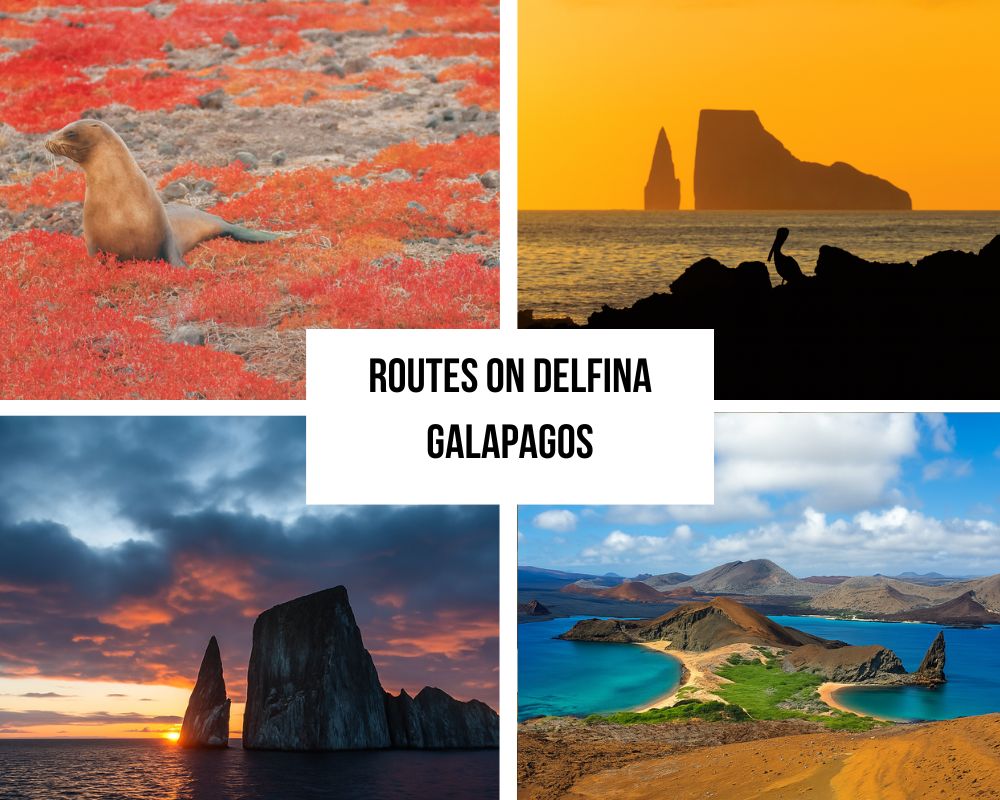
The Delfina sails two core itineraries year-round: a 10-day “Galapagos by Catamaran: An Intimate Voyage” and a 16-day “Galapagos by Catamaran + Machu Picchu and Peru’s Land of the Inca.” Both depart Fridays with embarkation on Saturday after an included pre-voyage night in either Quito or Guayaquil. The 10-day itinerary covers a broad sweep of the central and western islands, with the specific island mix subject to Galapagos National Park permit rotation.
The island visits typically span North Seymour, Santa Cruz, Isabela, Fernandina, Española, Floreana, and San Cristobal. What the Delfina’s shallow draft and catamaran hull allow is access to anchorages and snorkeling sites that deeper-draft vessels cannot reach. This is not a small advantage. Some of the most spectacular snorkeling in the western islands requires anchoring close to rocky shorelines and volcanic formations where deeper-drafted ships simply cannot go. For underwater wildlife encounters in particular, the Delfina’s hull configuration opens doors.
The 16-day combined itinerary is designed for travelers who want to pair the Galapagos with Peru in a single expedition. After the Galapagos sailing, a fully-escorted land stay includes the Sacred Valley, Cusco, and Machu Picchu. For anyone who has been considering both destinations separately, this package eliminates the logistics of building a two-country itinerary from scratch. It’s a meaningful trip extension that justifies the longer commitment.
The specific islands your departure visits depend on Galapagos National Park permit assignments, which rotate across the fleet. If you have a particular wildlife goal, like watching whale sharks in the western islands or catching blue-footed booby courtship displays, the timing of your departure matters as much as which ship you choose. Reach out to our team here and we’ll match your travel window to the right departure date and help you understand what each itinerary is likely to cover.
| Itinerary | Length | Islands Typically Covered | Departure Day |
|---|---|---|---|
| Galapagos by Catamaran: An Intimate Voyage | 10 days | North Seymour, Santa Cruz, Isabela, Fernandina, Española, Floreana, San Cristobal | Friday (embark Saturday) |
| Galapagos by Catamaran + Machu Picchu | 16 days | Full Galapagos circuit + Sacred Valley, Cusco, Machu Picchu, Peru | Friday (embark Saturday) |
Itineraries subject to Galapagos National Park permit rotation. Specific islands may vary by departure date.
What Does a National Geographic Delfina Cruise Actually Cost?
The Delfina’s 10-day cruise starts at roughly $6,860 per person in the Category 4 cabin, with Category 5 balcony rooms higher. That fare covers all meals, included alcohol, all guided excursions, snorkeling gear, kayaks, paddleboards, Zodiac tours, and the two-guide expedition team. What it does not cover: the $200 Galapagos park entrance fee, the $20 transit card, internal flights from the mainland at roughly $520-$570 per person round-trip, gratuities, premium spirits, and your international airfare to Ecuador.
True all-in cost for the 10-day voyage lands around $8,500-$9,500 per person when you add the mandatory fees and internal flights. That’s meaningfully less than the Gemini’s equivalent cost, and for many travelers it represents the sweet spot: a Lindblad-quality expedition with the National Geographic guide program, at a price closer to what a strong first-class vessel charges, but with intimacy that no first-class vessel can match at 16 guests.
The private charter option deserves its own paragraph. The Delfina is available for full group buyout, which Lindblad actively markets for family reunions, milestone celebrations, multi-generational travel, and corporate expeditions. For a group of 8-16 people, a private charter converts the per-person cost into a different calculation entirely. You control the timing, the group composition, the pace of each day, and to some extent the priorities of each excursion. If you’re already planning a group trip of 8 or more people to the Galapagos, it’s worth running the charter numbers before defaulting to individual cabin bookings.
Private charter pricing on the Delfina varies by season and group size and isn’t listed publicly. If you’re thinking about gathering family or close friends for something genuinely memorable, our team can pull together the real numbers for you. Send us a message here and we’ll get you what you need to make an informed decision.
| Cost Item | Amount | Included in Fare? |
|---|---|---|
| Cruise fare (10-day, Cat 4) | From ~$6,860 pp | Yes (base fare) |
| All meals, snacks, included alcohol | Included | Yes |
| All guided excursions, Zodiacs, kayaks, snorkel gear | Included | Yes |
| Galapagos National Park entrance fee | $200 pp | No |
| Transit card (INGALA) | $20 pp | No |
| Internal flights (Guayaquil/Quito–Baltra, round-trip) | ~$520-$570 pp | No |
| Gratuities | Discretionary | No |
| Premium spirits | On request | No |
Prices verified May 26, 2026. Per person, double occupancy.
What Do Real Travelers Say After Sailing the Delfina?
Traveler feedback on the Delfina consistently highlights the group dynamic as the defining feature of the experience. On a 16-guest ship, the social texture of the voyage matters in a way it simply doesn’t on a 48-guest or 96-guest vessel. The feedback we’ve gathered through mytrip2ecuador.com and our YouTube audience points to three consistent patterns: the intimacy exceeds expectations, the guide-to-guest ratio transforms what you learn, and the catamaran’s stability is a genuine relief for motion-sensitive travelers who came in nervous.
The stability point deserves honest treatment because it comes up so often. Catamarans behave differently from monohulls, and understanding the difference helps you decide whether the Delfina is the right ship for you. A monohull rolls side to side in beam seas, which is the classic seasickness-inducing motion. A catamaran’s dual-hull design reduces that rolling considerably. The trade-off is a more pronounced pitching motion (bow up, bow down) in longer swells. In the Galapagos specifically, where inter-island crossings tend to produce shorter chop rather than long oceanic swells, most experienced Galapagos guides and tour operators describe catamaran stability as a genuine advantage for motion-sensitive guests. A survey by one Galapagos specialist found that nearly 92% of cruise passengers reported seasickness as little to no problem across both vessel types, but the patterning consistently favors catamarans during the choppier July through October season.
What trips people up, and this comes through clearly in the traveler conversations we collect, is the adjustment from expecting a resort experience and arriving at an expedition. Sixteen guests, 12 crew, early mornings, physical hiking, getting in and out of Zodiacs in salt water. The Delfina is beautifully appointed but it is not a floating hotel. The guests who love it most are the ones who came ready to be active, curious, and flexible when the park rotates an itinerary.
The no-elevator situation applies here as it does on the Gemini. Stairs only between decks. Worth knowing in advance, especially if you’re traveling with older family members or anyone with mobility concerns.
What Our Traveler Community Says: Delfina and 16-Guest Catamaran Feedback
Based on traveler feedback collected through mytrip2ecuador.com, our YouTube audience, and thousands of Galapagos cruise traveler interviews conducted by Oleg Galeev:
| Group atmosphere / intimacy | 98% | “Felt like a private charter”; “Knew everyone by day two” |
| Guide quality and depth | 96% | “Best naturalists we’ve had anywhere”; “Photo instructor was incredible” |
| Catamaran stability | 94% reported better than expected | “Less motion than I feared”; “Came prepared for seasickness and didn’t need medication” |
| Food and dining | 95% | “Ecuadorian feast was a highlight”; “Coffee alone was worth it” |
| Value for money | 92% | “Better value than expected for this level of intimacy” |
| Would recommend private charter | 97% | “Wish we’d done a full charter”; “Perfect for our family group” |
Is the National Geographic Delfina Worth It for Your Trip?
For travelers who want the most intimate small-group experience in the Lindblad Galapagos fleet, the Delfina delivers it clearly. Sixteen guests is a number that changes the social and experiential texture of a cruise in ways that are hard to fully appreciate until you’ve experienced both sizes. The catamaran hull offers genuine stability advantages for motion-sensitive travelers. The price entry point is lower than the Gemini while retaining the National Geographic guide program. For family groups, multi-generational trips, or anyone considering a private charter, this is likely the most compelling vessel in the islands.
The honest contrarian take: the Delfina’s 16-guest format is a feature for most people and a constraint for a few. Solo travelers or couples who travel specifically to meet interesting people from around the world will get more of that on the 48-guest Gemini or Islander II, where the guest pool is simply larger. The Delfina locks you in with 15 other people for 10 days. If those 15 people are your family or your closest friends on a charter, that’s perfect. If you’re a solo traveler who wants variety and a larger social circle, the Gemini’s dynamic suits you better.
What the Delfina does better than anything else in the Lindblad fleet: it gives you the Galapagos at a scale that feels genuinely right for the destination. The islands are not a mass-tourism environment. They are protected, managed, and intimate by design. Experiencing them from a 16-guest ship, with a crew that outnumbers you, anchored off a shoreline with sea lions visible through your cabin window at dawn, is exactly the register the Galapagos deserves.
Book early for the private charter option if that’s your route. Full buyouts on the Delfina are available but they move. A group that spends three months debating whether to commit usually ends up losing the dates they wanted to someone else.
What Catches Travelers Off Guard on the National Geographic Delfina
From monitoring travel forums, TripAdvisor threads, and our direct traveler conversations, these are the patterns that consistently surprise first-time Delfina guests:
Underestimating how small 16 guests actually feels. Most travelers expect it to feel intimate. Fewer expect it to feel as close as a family dinner by day three. For most guests this is a revelation and a highlight. For introverted travelers who need solitude to recharge, plan for that need deliberately. The ship’s observation deck and bow area offer quiet in the mornings before excursions start.
Not budgeting for the mandatory extras. The cruise fare is the largest line item but not the only one. The $200 park entrance fee, $20 transit card, and roughly $520-$570 per person for internal flights add up to around $750 per person before you board. Budget for it in advance rather than discovering it at checkout.
Misjudging catamaran motion. The Delfina is more stable than a monohull in beam seas and rougher during overnight crossings in longer swells. Most guests manage fine. But motion-sensitive travelers who book expecting total stillness occasionally find the pitching motion during inter-island passages catches them off guard. Coming with medication in hand and taking it proactively before overnight crossings is the standard advice from everyone who has done this trip.
Choosing the wrong cabin category. Category 4 upper deck rooms open onto the shared wraparound deck rather than a private balcony. This is great for spontaneous wildlife watching from your doorstep and for socializing. It is less great if privacy is a priority for you. Category 5 main deck rooms with private balconies suit couples who want their own outdoor space. Know which matters more before you book.
Leaving the private charter option unresearched. Groups of 8 or more who book individual cabins without checking the charter cost often wish afterward they had looked into it. The per-person math on a full charter changes significantly once you’re past 8 travelers, and the experience gain, total control over schedule and group composition, is substantial.
Frequently Asked Questions
Can you charter the entire National Geographic Delfina privately?
Yes. The Delfina is available as a full private charter for groups, families, milestone celebrations, and corporate expeditions. With only 16 guest berths, it is the most practical vessel in the Lindblad Galapagos fleet for a full group buyout. Private charter pricing varies by season and must be requested directly through a booking agent or travel specialist.
Is the National Geographic Delfina good for seasick-prone travelers?
Better than a monohull in most conditions. The catamaran’s dual-hull design significantly reduces the rolling motion that causes most seasickness. In longer swells the pitching motion increases, but the Galapagos inter-island passages typically produce shorter chop rather than long oceanic swells. Motion-sensitive travelers should still bring medication and consider taking it proactively before overnight crossings rather than after they feel unwell.
What is the difference between Category 4 and Category 5 cabins on the Delfina?
Both categories are 172 square feet. Category 5 rooms are on the main deck and have a private 43-square-foot balcony with seating and two large windows. Category 4 rooms are on the upper deck and open directly onto the ship’s shared wraparound outdoor deck rather than a private balcony. Adjacent Category 4 cabins (300/301 and 302/303) can be interconnected for family configurations.
How does the National Geographic Delfina compare to the National Geographic Gemini?
The Delfina carries 16 guests and 12 crew on a 98-foot catamaran, while the Gemini carries 48 guests with a 1:1 crew ratio on a 296-foot expedition ship. The Delfina offers greater intimacy and starts at a lower price point. The Gemini offers larger suites (including the largest in the Lindblad fleet), five expedition guides versus two on the Delfina, and a broader social environment. The right choice depends on whether intimacy or guide depth is your priority.
Does the Delfina include the night before the cruise?
Yes. The 10-day Delfina itinerary includes a pre-voyage night in either Quito or Guayaquil before flying to Baltra to board the ship on Saturday. An included post-voyage hotel night is also provided at the end of the expedition.
Is the National Geographic Delfina good for families with children?
Yes, particularly for families chartering the whole vessel or booking multiple interconnected cabins. The National Geographic Global Explorers program runs on Delfina voyages for kids and teens. Family savings promotions (typically 50% off cabin fare for guests aged 22 and under) appear on select departures. The 16-guest format is especially well-suited to multi-generational family groups who want a cohesive trip rather than sharing a larger ship with strangers.
Planning a Galapagos Cruise? Let’s Talk.
The Delfina is one of the most distinctive options in the islands right now, but it’s not right for everyone. Whether you’re comparing it to the Gemini, looking at private charter costs for a group, or just trying to figure out which ship and itinerary fits your situation, we can help make that decision faster and clearer.
Oleg has been to the Galapagos three times, taken two cruises personally, and has spent years building one of the most comprehensive first-hand cruise knowledge bases available. Cruises To Galapagos Islands is rated 4.9 stars on Google and TripAdvisor. Our quotes are free and there’s no pressure attached.
Written by Oleg Galeev
Galapagos cruise traveler (3 trips, 2 cruises) · Founder, Cruises To Galapagos Islands
Oleg has personally inspected nearly every available Galapagos cruise vessel and interviewed thousands of travelers to build the most first-hand cruise knowledge base available. He also runs the Ecuador travel blog mytrip2ecuador.com and the YouTube channel My Trip to Somewhere.
Cruises To Galapagos Islands is rated 4.9 stars on Google and TripAdvisor.
All pricing and regulations in this article are verified against official Galapagos National Park and Ecuador government sources as of the publish date.