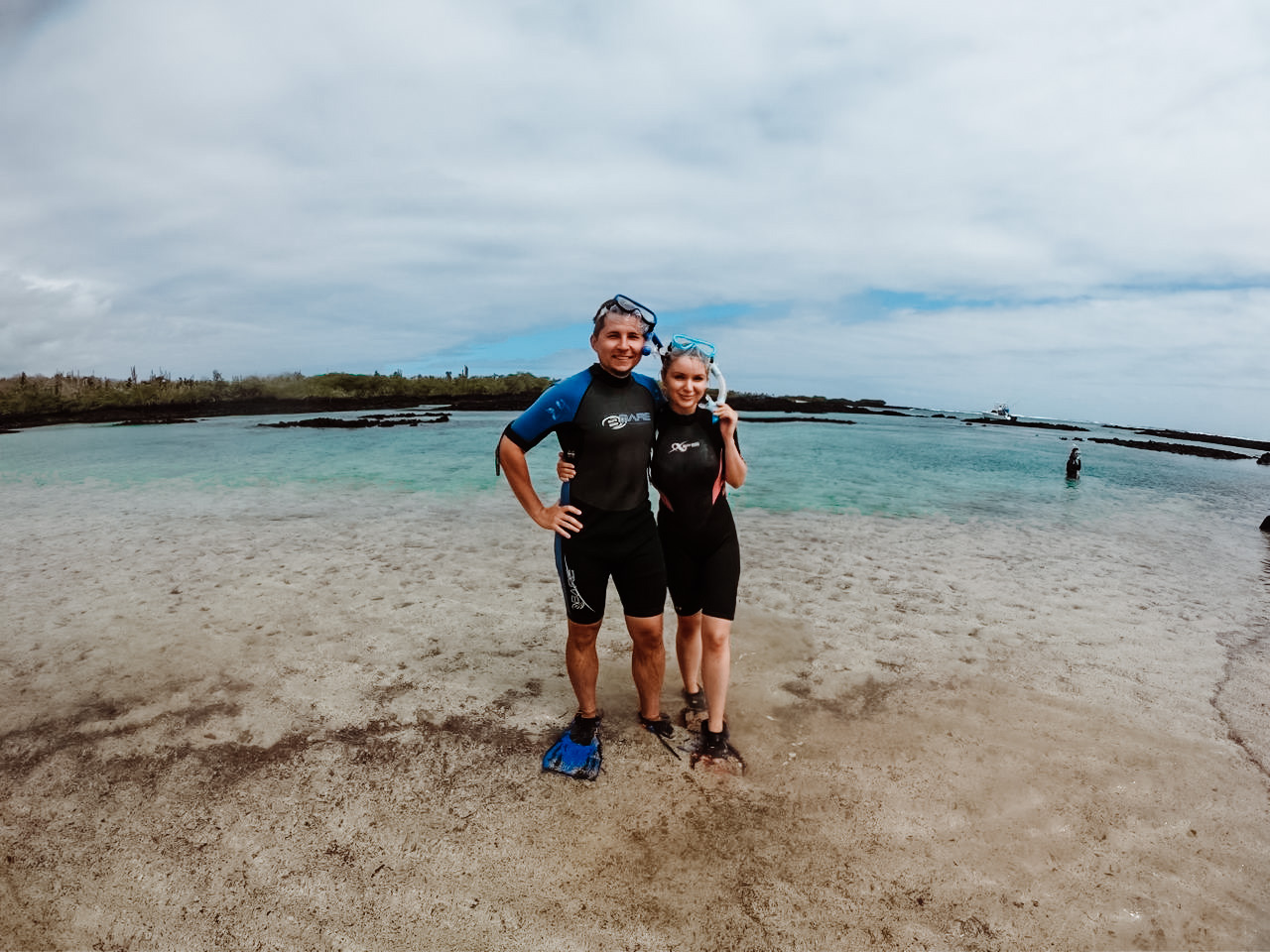
Archipel II Galapagos Cruise Review
Quick Summary
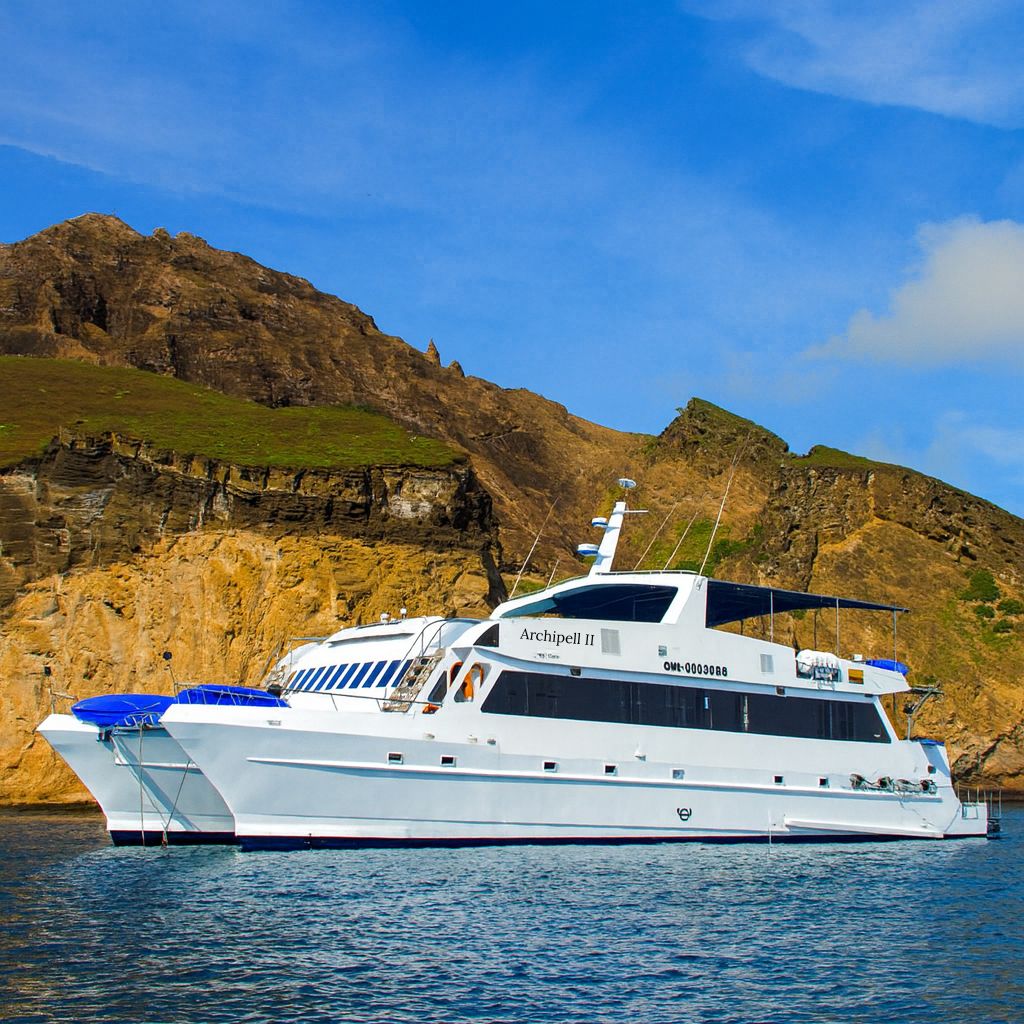
The Archipel II is a 16-passenger motor catamaran built in 2005, running in Tourist Superior class with 8 main-deck cabins, all above the waterline with large windows, twin or double lower beds, and private bathrooms. Its twin-hull design gives it the same core stability advantage as its sister vessel the Archipel I, making both catamarans the strongest recommendation for motion-sensitive travelers in this tier. The Archipel II runs its own distinct set of itinerary modules, including a 5-day program that reaches Fernandina, which very few Tourist Superior boats can offer at that length. The wider beam of 35 feet creates noticeably more deck and social space than comparable monohull competitors.
The Archipel II is one of 14 Tourist Superior ships we review. See all tourist superior Galapagos cruises, or use our finder to see the best Galapagos cruises side by side.
Archipel II Galapagos Cruise: Quick Facts
| Detail | Info |
|---|---|
| Vessel Type | Motor Catamaran (double hull) |
| Class | Tourist Superior |
| Built | 2005 |
| Length | 26.80 m / 87.92 ft |
| Beam | 10.80 m / 35.43 ft (notably wide for Tourist Superior class) |
| Speed | 10 knots |
| Passenger Capacity | 16 guests |
| Crew | 9 + 1 certified bilingual naturalist guide |
| Cabins | 8 main-deck cabins: 2 double, 4 twin, 2 convertible twin/double; all above waterline, large windows |
| Bunk beds? | None (all lower fixed beds) |
| Itinerary Options | 4-day, 5-day, 8-day (A+B combined), 11-day, 12-day, 15-day |
| 5-day Fernandina program | Yes (one of very few Tourist Superior boats with this at 5-day length) |
| Kayaks | 2 double kayaks included |
| Snorkel Gear | Included |
| Wetsuits | Available for hire onboard |
| Solo traveler policy | Cabin sharing with same-gender guest available; single supplement ~80% on some channels |
| Children’s discount | 20% for children under 12 with two full-paying adults |
| Park Entrance Fee | USD $200 per person (cash, paid on arrival) – Prices verified May 23, 2026 |
| INGALA Transit Card | USD $20 per person (paid at mainland airport) |
What Is the Archipel II Galapagos Cruise and Who Is It For?
The Archipel II is a 2005-built motor catamaran carrying 16 passengers in 8 main-deck cabins, all with large windows, lower fixed beds, and private bathrooms. It runs Tourist Superior itineraries ranging from 4 to 15 days and shares operational DNA with its sister vessel the Archipel I. The key differences: the Archipel II has a wider 35-foot beam giving it more deck space, runs different itinerary modules including a rare 5-day Fernandina program, and is the right call for travelers who want catamaran stability, genuine western island access at shorter trip lengths, and a comfortable social environment on a budget that doesn’t stretch to first class.
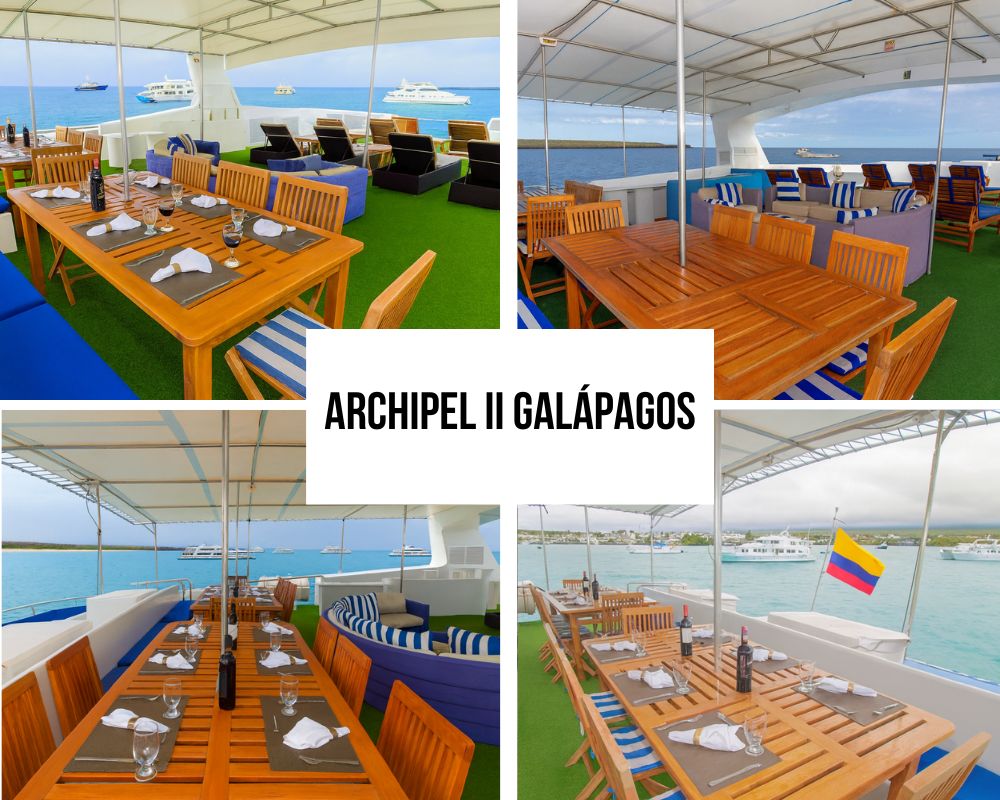
The beam is worth pausing on. At 35.43 feet wide, the Archipel II is substantially broader than most Tourist Superior vessels, including its sister the Archipel I. Width on a catamaran translates directly to usable deck space, lounge area, and the sense of having room to move around during the long stretches between excursions. The al fresco outdoor dining area on the Archipel II is a genuine deck feature rather than a folding table pushed against a rail. You eat outside in Galapagos air with the islands around you, and that cumulative experience across a week-long trip matters more than any single dinner.
The Archipel II shares the sister-vessel relationship with the Archipel I the same way two siblings share family traits but have distinct personalities. Both are catamarans. Both carry 9 crew for 16 guests. Both have 8 main-deck cabins above the waterline. The differences show up in itinerary routing, beam width, and small onboard details. They run complementary rather than identical routes, meaning travelers who’ve done one have good reason to return for the other without repeating sites.
Who the Archipel II is not for: anyone wanting luxury suites, diving-specific departures, or the Samba’s exclusive Marchena access. The Archipel II competes on value, stability, and itinerary flexibility. Travelers who prioritize a traditional sailing feel over modern catamaran efficiency will also find this boat less interesting than a vessel like the Samba or a sailing schooner.
If you’re weighing the Archipel II against the Archipel I or another catamaran and want a straight comparison based on dates, budget, and what you most want to see, fill out this short form and we’ll give you an honest recommendation with no booking pressure involved.
What Are the Cabins and Onboard Experience Like?
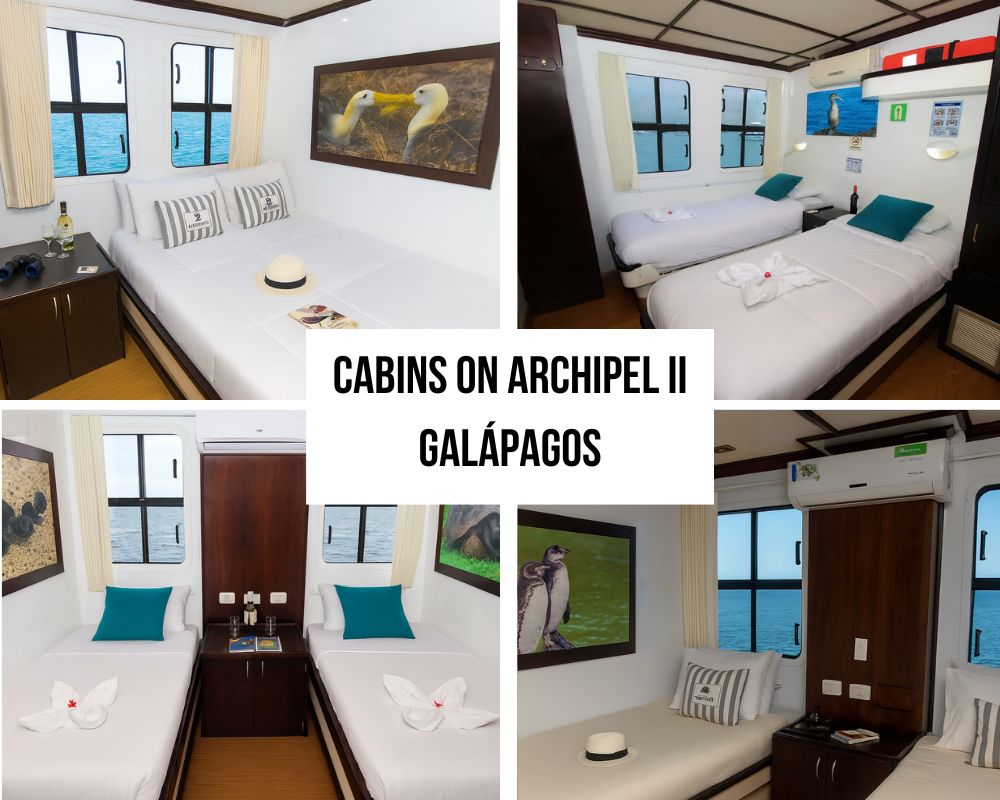
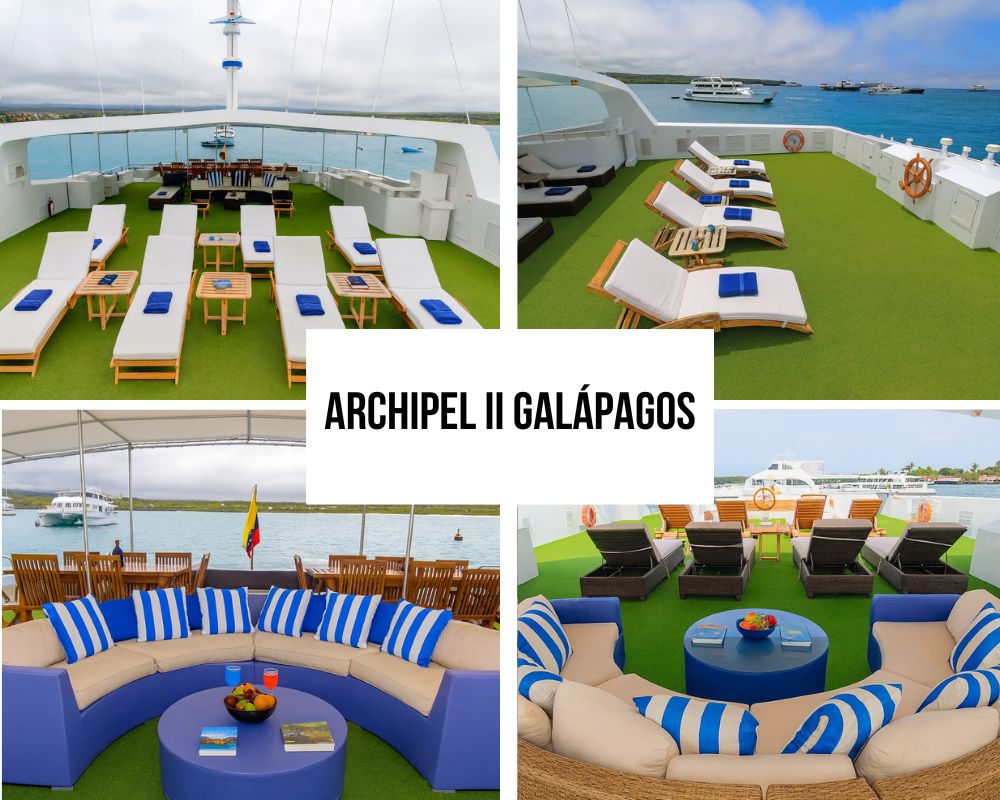
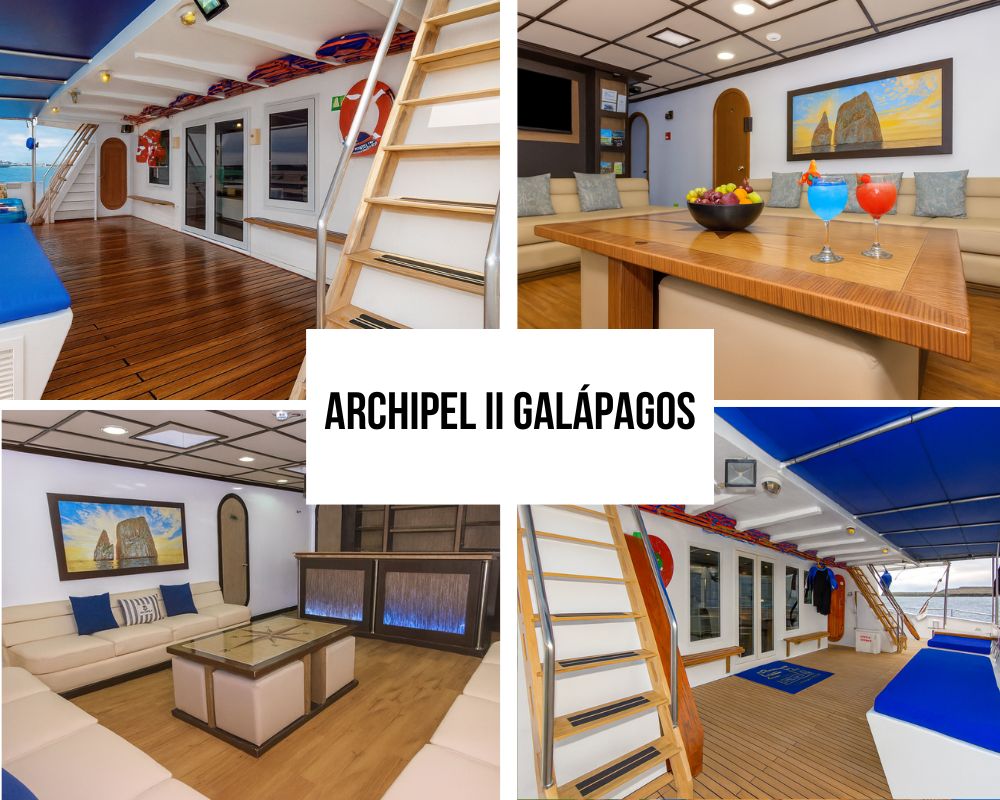
Eight cabins on the main deck, all above the waterline, with large ocean-view windows, lower twin or double beds, private en-suite bathrooms, hot and cold water, air conditioning, reading lights, and wardrobe storage. Two cabins have fixed double beds, four have twin side-by-side beds, and two are convertible between twin and double configurations. No portholes anywhere on the vessel, no bunks at any price point. The social areas are among the most spacious in Tourist Superior Galapagos Cruise class, with an indoor lounge and bar, an outdoor al fresco dining deck, and a sundeck with solarium.
The convertible cabin option is worth noting for travelers booking as a couple who’d prefer a double bed. Two of the Archipel II’s eight cabins can be configured either way at time of booking. Confirm your preference when you reserve rather than on arrival, since the crew sets up the configuration before embarkation and changing it mid-trip can be awkward on a small vessel. The two dedicated double cabins are the most sought-after and book first, so early reservations matter if that’s a priority.
The outdoor al fresco dining area on the upper deck is one of those features that sounds minor and becomes central to the trip. Most mornings the group eats breakfast inside before the early excursion. Lunches often happen outside when weather and schedule align. The ability to eat a full meal on an open deck with 360-degree Galapagos ocean views, sea birds working the surface thirty meters away, is one of those sensory moments that ends up in every returning traveler’s description of what made the trip. The wide beam makes this deck feel like it belongs on a larger vessel.
Social areas extend across a lounge with TV, DVD, library, table games, and indoor bar, plus a second bar on the upper deck. For the evenings after excursions and before dinner, the lounge is where the guide runs daily briefings and travelers decompress. The Archipel II’s lounge consistently gets positive mentions from travelers who note that it doesn’t feel cramped during group briefings, which is a specific complaint on narrower boats where everyone ends up on top of each other for the evening session.
Which Itineraries Does the Archipel II Cover, and What Makes the 5-Day Fernandina Program Distinctive?
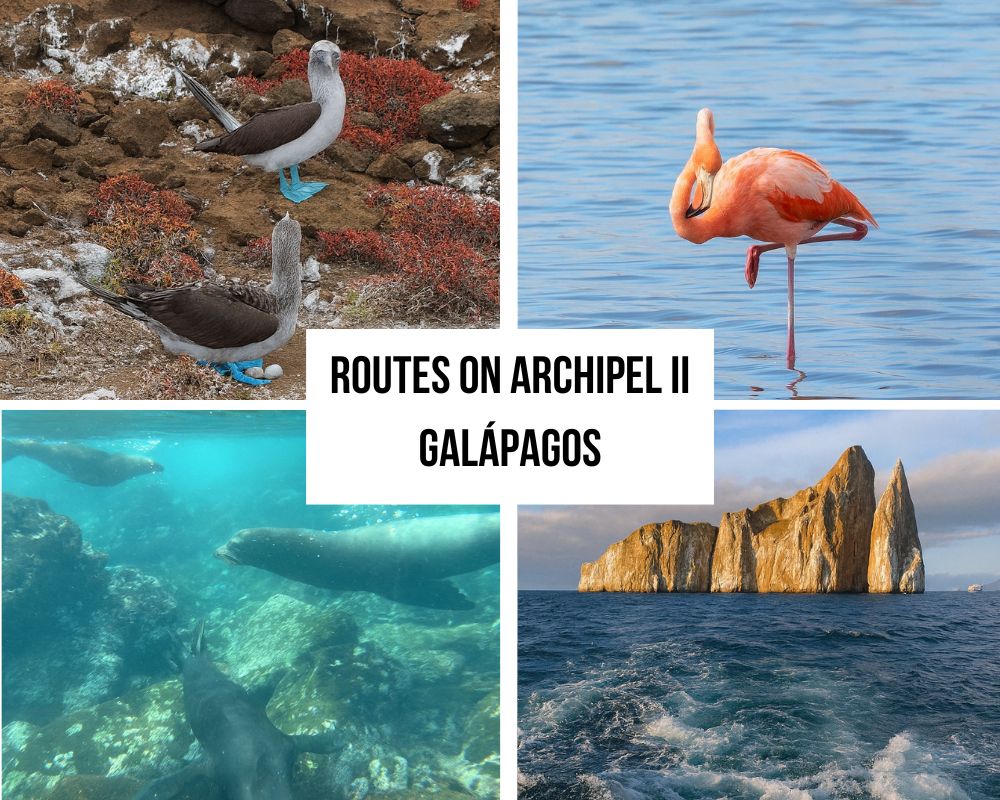
The Archipel II runs three combinable itinerary modules. Itinerary A covers the western islands including Isabela and Fernandina, split into 4-day and 5-day segments. Itinerary B covers eastern and central islands including Española, San Cristobal, and Santiago, also available in 4-day and 5-day segments. Combined, these produce 8-day, 11-day, 12-day, and 15-day options. The 5-day Itinerary A that reaches Fernandina is the Archipel II’s sharpest differentiator: very few Tourist Superior boats include Fernandina on a 5-day program, making it the most efficient route to the archipelago’s most pristine island for travelers with limited time.
Fernandina in 5 days is not a marketing claim. The specific day-by-day routing for the Archipel II’s 5-day A itinerary confirms Fernandina at Punta Espinoza on day four, with the Tagus Cove hike on Isabela’s western coast the same afternoon. That’s two of the most ecologically intense sites in the western Galapagos in a single day, which requires both the right permit access and a vessel fast enough to cover the ground efficiently. The Archipel II at 10 knots handles both.
Punta Espinoza is where marine iguanas carpet the lava flows in densities that genuinely stop you moving. Flightless cormorants spread their vestigial wings to dry at the waterline, unbothered by anything. Galapagos penguins stand on lava ledges. All of it happens within walking distance of the zodiac landing. No fences, no paths, just the park rules and your guide. Getting that experience inside a 5-day itinerary is rare, and the Archipel II makes it possible.
| Route / Length | Region | Key Sites | Best For |
|---|---|---|---|
| Itinerary A4 (4 days) | West + Central | North Seymour, Bartolome, Santiago (Espumilla Beach, Buccaneer Cove) | Short trips, western introduction |
| Itinerary A5 (5 days) | West + Central | Tagus Cove (Isabela), Fernandina (Punta Espinoza), Bachas Beach | Fernandina in shortest available program |
| Itinerary B4 (4 days) | East + Central | San Cristobal (Lobos Islet, Pitt Point, Witch Hill) | Eastern wildlife, short trip |
| Itinerary B5 (5 days) | East + Central | Española (Suarez Point, Gardner Bay), Floreana, North Seymour | Classic highlights, albatross (seasonal) |
| A+B Combined (8 days) | West + East + Central | Full circuit of both A and B routes | Comprehensive first-time visit |
| Extended (11-15 days) | Multi-region | A4+B4+B5, A5+B4+B5, and full A+B combinations | Maximum coverage, dedicated enthusiasts |
The B itineraries are the Archipel II’s eastern complement. Española’s Punta Suarez packs more wildlife variety into a single landing than almost any other site in the Galapagos: waved albatross in season, Nazca boobies nesting, Española mockingbirds endemic to this island alone, and sea lions spread across the black lava coast. Gardner Bay is the beach version of the same island, white sand and sea lion colonies in a bay so calm it barely seems Pacific. These aren’t obscure sites. They’re what most people picture when they think Galapagos, and the Archipel II’s B routes deliver them without compromise.
Choosing between the 5-day A itinerary for Fernandina and the 8-day combined route is a decision we help travelers make regularly. It depends on your vacation window and whether you’re coming back or treating this as a single trip. Reach out here and we’ll walk through the trade-offs with you specifically.
How Good Is the Food and What Is the Onboard Service Like?
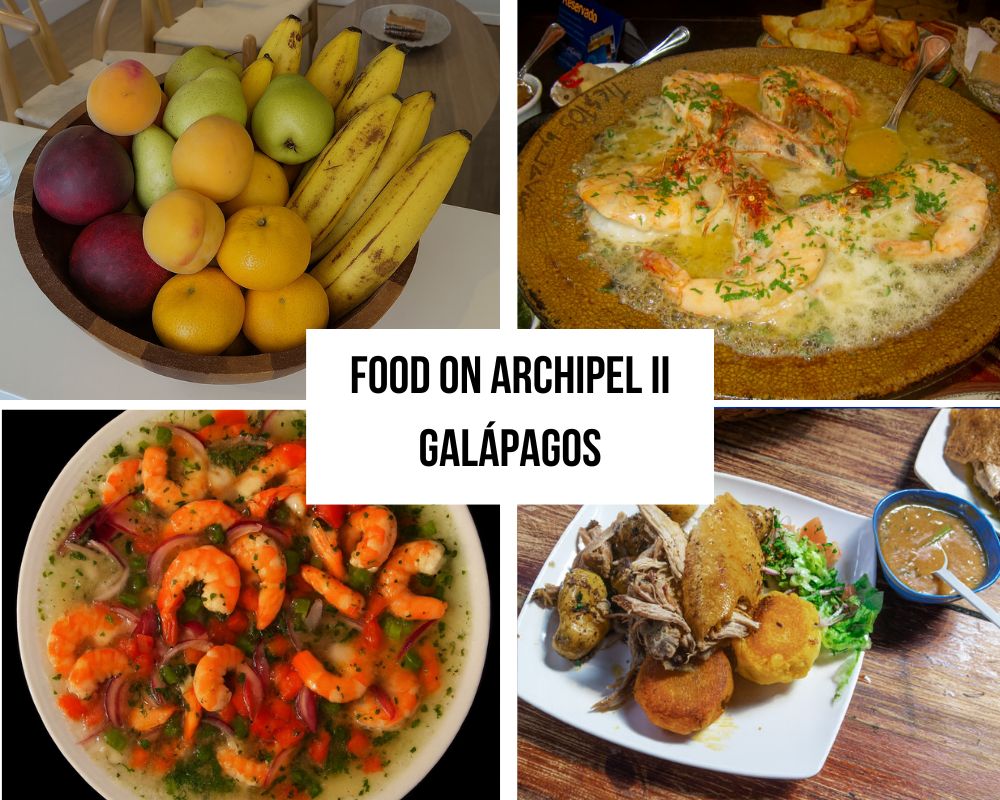
Three daily meals prepared by an onboard chef, served buffet-style at breakfast and lunch, with dinner as a more structured service with menu choices. All meals are included. Ecuadorian and international cuisine share the menu throughout the week, with fresh tropical fruit at breakfast and locally inspired dishes at lunch and dinner. Filtered water, tea, and coffee are available around the clock. Alcoholic drinks are purchased at the bar. Dietary restrictions are accommodated with advance notice. The 9-crew operation means the service ratio is high enough that individual needs get addressed quickly.
The dinner service structure on the Archipel II, offering two menu choices at the table rather than purely buffet, adds a level of formality to the evening meal that feels earned after a full day of activities. It’s not a restaurant experience, but two options prepared fresh in a small galley for 16 people is meaningful effort, and the kitchen consistently receives positive mentions across independent accounts. Food quality on the Archipel sister vessels has been a persistent strength rather than an afterthought, which tracks with the operator’s broader service culture.
The crew warmth that shows up in Archipel I traveler accounts appears to transfer to the Archipel II as well, given the shared operational management. The 9:16 crew-to-guest ratio is the same on both vessels and produces the same attentive day-to-day service: post-excursion refreshments, daily cabin cleaning, prompt response when gear needs attention. On a 5-day or 8-day trip where you’re physically active from dawn to dusk, that level of background support is noticeable in how recovered you feel each morning.
What Do the Naturalist Guides Bring to the Experience?
One certified bilingual naturalist guide per departure, licensed by the Galapagos National Park Authority at Level 2 or 3, handles all shore excursions and evening briefings. The guide-to-guest ratio is 1:16, the park minimum. Guide quality on the Archipel sister vessels consistently draws positive feedback, with specific individuals praised for ecological depth and personality. The certification covers English and Spanish; German is available on request, as with the Archipel I. Evening briefings are held in the main lounge, which has enough space to be genuinely comfortable for the full group.
The guide’s role on western island itineraries is particularly important on the Archipel II because the A routes include ecologically dense sites where context transforms the experience. At Fernandina’s Punta Espinoza, a guide who can explain why marine iguanas evolved the ability to digest algae, how the flightless cormorant lost its wings to evolutionary pressure that no longer exists, and what the volcanic age of the island means for species colonization turns a walk through wildlife into something closer to reading the story of how life adapts in isolation. At Tagus Cove, the graffiti left by whalers and pirates carved into the lava walls since the 1800s becomes legible history rather than vandalism when a knowledgeable guide provides the framing.
Guide quality varies between departures, as with every Galapagos vessel. The Archipel II’s shared management with the Archipel I suggests similar hiring standards and oversight. If you can confirm your guide assignment before booking, do it. We can sometimes help with that, particularly for peak season departures where specific guides are recurring on specific routes.
Guide quality is genuinely the most important variable on any Galapagos cruise, and it’s the hardest one to research independently. If you want current information about who’s running Archipel II departures for your travel window, send us a message here and we’ll share what we know.
How Does the Archipel II Compare to the Archipel I and Other Tourist Superior Boats?
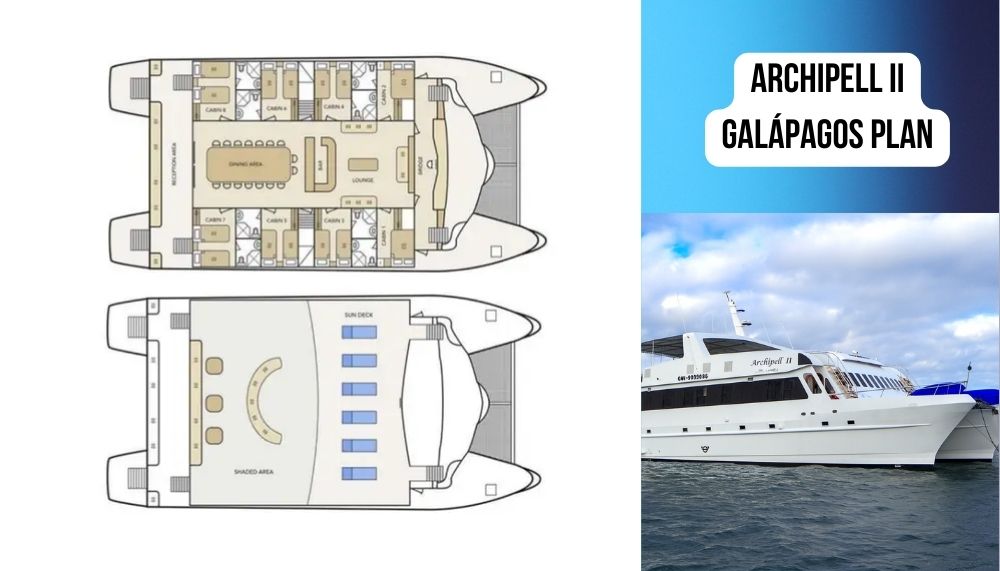
The Archipel II and Archipel I are sister catamarans sharing the same fundamental design, crew ratio, and operational standards. The practical differences are: the Archipel II has a wider beam (35 vs 27 meters), runs different itinerary modules with the A5 Fernandina program as its signature route, and carries 2 double kayaks rather than the Archipel I’s 5. Against non-catamaran competitors, both Archipel vessels share the stability advantage that sets them apart from all monohull options in the tier.
| Factor | Archipel II | Archipel I | Yolita II | Xavier III |
|---|---|---|---|---|
| Hull type | Catamaran | Catamaran | Monohull | Monohull |
| Beam width | 35.43 ft (widest in class) | ~28 ft | ~26 ft | 22 ft |
| Bunk beds? | None | None | None | None |
| 5-day Fernandina program | Yes | No (5-day routes don’t reach Fernandina) | No | No |
| Kayaks | 2 double kayaks | 5 kayaks | None | None |
| Crew-to-guest ratio | 9:16 | 9:16 | 7:16 | 7:16 |
| Al fresco outdoor dining | Yes (upper deck, wide beam) | Yes | Partial | Partial |
| Children’s discount | 20% (under 12) | 20% (under 12) | Not standard | Varies |
| Approx. 8-day price pp | ~$3,000-$4,500 | ~$3,000-$4,600 | ~$3,500-$5,000 | ~$2,500-$3,500 |
| Prices verified May 23, 2026 |
The Archipel II vs. Archipel I choice isn’t really a quality question. Both are strong. It’s an itinerary and feature question. If you want the 5-day Fernandina program, more deck width, and outdoor dining as a central daily feature, the Archipel II. If you want more kayaks and the specific Route A structure of the Archipel I, that vessel. Many travelers who have time book one and return for the other specifically to cover complementary routes without repetition. That’s the smartest use of both boats.
What Archipel II Travelers Actually Tell Us: Feedback from Our Traveler Community
Based on traveler feedback gathered through mytrip2ecuador.com and our YouTube audience, including direct accounts from Galapagos cruise travelers interviewed by Oleg across three personal trips to the islands, here is how Archipel II passengers rate their experience:
| Stability / No Seasickness | 95% | “Catamaran made a huge difference; slept well every night” |
| Deck Space & Social Areas | 93% | “The wide deck and outdoor dining made evenings genuinely enjoyable” |
| Food Quality | 91% | “Varied and fresh; dinner menu choices felt like a restaurant” |
| Fernandina / Western Itinerary | 97% | “Punta Espinoza was the most extraordinary wildlife experience of my life” |
| Crew Service | 94% | “9 crew for 16 guests means nothing goes unnoticed” |
| Cabin Comfort | 92% | “Two windows and a proper bed; didn’t feel like budget travel” |
| Overall Value for Money | 96% | “First-class feel at Tourist Superior price” |
The Honest Fail Points: What to Know Before You Book the Archipel II
The kayak count is lower than the Archipel I: two double kayaks compared to five. For groups of four or more who want to kayak simultaneously, the Archipel II means taking turns. If active kayaking is a priority rather than an occasional bonus, the Archipel I’s five-kayak setup is the better call.
Wetsuits are hired rather than included free. On the A itinerary western island days around Fernandina and Isabela, the Humboldt current makes wetsuits necessary for comfortable snorkeling. Budget approximately $8 to $10 per day for wetsuit rental on days where you’ll be in the water. This adds up across a week but is manageable with planning.
The single supplement is steep at around 80% on some booking channels. Solo travelers should explore cabin-sharing arrangements with same-gender guests or contact us for alternatives. Given the quality of the experience, the solo supplement is one of the more genuine barriers on this vessel for independent travelers.
Guide quality varies by departure. As with all Galapagos boats, the naturalist guide is a freelance assignment that changes between cruises. The Archipel II’s management background suggests consistent hiring standards, but confirming your specific guide before booking is always worthwhile when the information is available.
The Archipel II does not currently include Wi-Fi as a standard feature, unlike the Archipel I. Travelers who need periodic connectivity should confirm current onboard Wi-Fi status with their booking agent before finalizing.
Frequently Asked Questions
What is the difference between the Archipel I and Archipel II?
Both are sister catamarans with 16-passenger capacity, 9-crew operations, 8 main-deck cabins, and no bunks anywhere. The key practical differences: the Archipel II has a wider beam (35.43 ft vs. approximately 28 ft), runs different itinerary modules including the A5 Fernandina program at 5 days, and carries 2 double kayaks versus the Archipel I’s 5 kayaks. Both share the same catamaran stability advantage over monohull competitors. Itinerary availability and specific features determine which suits a given traveler better.
Is the Archipel II really stable enough for seasick-prone travelers?
Yes. The twin-hull catamaran design distributes the vessel’s footprint across two hulls, replacing the rolling motion of a monohull with a gentler fore-and-aft pitch. The wider beam of the Archipel II enhances this further. Multiple traveler accounts from both Archipel vessels specifically mention expecting seasickness during overnight crossings and not experiencing it. For travelers with genuine motion sensitivity, both Archipel boats are the first options we recommend in this tier.
Is the 5-day itinerary A really one of the only Tourist Superior options that reaches Fernandina?
Yes. Fernandina is ecologically the most pristine island in the Galapagos and accessing it at the 5-day itinerary length is unusual. Most 5-day Tourist Superior programs cover the central and eastern islands. The Archipel II’s 5-day A itinerary specifically routes through Tagus Cove on Isabela and Punta Espinoza on Fernandina, making it genuinely distinctive for travelers with limited vacation time who specifically want western island access.
What is included in the Archipel II cruise price?
All meals (breakfast, lunch, dinner), filtered water, tea and coffee, all shore excursions, naturalist guide, snorkeling equipment, kayaks, transfers between Galapagos airport and vessel, and beach towels. Not included: Galapagos National Park entrance fee (USD $200 per adult, USD $100 per child under 12, cash on arrival, verified May 23, 2026), INGALA transit card (USD $20 per person at mainland airport), wetsuit rental, alcoholic drinks, tips, and Galapagos airfare unless specifically included in your booking package.
Is the Archipel II good for families with children?
Yes. The 20% children’s discount for under-12s traveling with two full-paying adults, the catamaran stability, the wide deck creating safe outdoor space, and the attentive 9-crew service make it a solid family option. The western island A itinerary is physically active with uneven lava terrain, so children need reasonable fitness and close supervision on shore excursions. The eastern B itinerary is somewhat more accessible for younger children with beach landings at Gardner Bay and sea lion sites that children find immediately engaging.
The Archipel II is a strong choice for travelers who want catamaran stability, a genuine outdoor dining experience on the water, and the option to reach Fernandina in 5 days rather than committing to a full week. If you’re trying to decide whether it fits your specific trip, budget, and travel window, our team is here to help with no commitment needed. Cruises To Galapagos Islands holds a 4.9-star rating on Google and TripAdvisor, and honest guidance is what we’re known for. Get in touch here for a free consultation.
Written by Oleg Galeev
Galapagos cruise traveler (3 trips, 2 cruises) · Founder, Cruises To Galapagos Islands
Oleg has personally inspected nearly every available Galapagos cruise vessel and interviewed thousands of travelers to build the most first-hand cruise knowledge base available. He also runs the Ecuador travel blog mytrip2ecuador.com and the YouTube channel My Trip to Somewhere.
Cruises To Galapagos Islands is rated 4.9 stars on Google and TripAdvisor.
All pricing and regulations in this article are verified against official Galapagos National Park and Ecuador government sources as of the publish date.