Solaris Galapagos Cruise Review
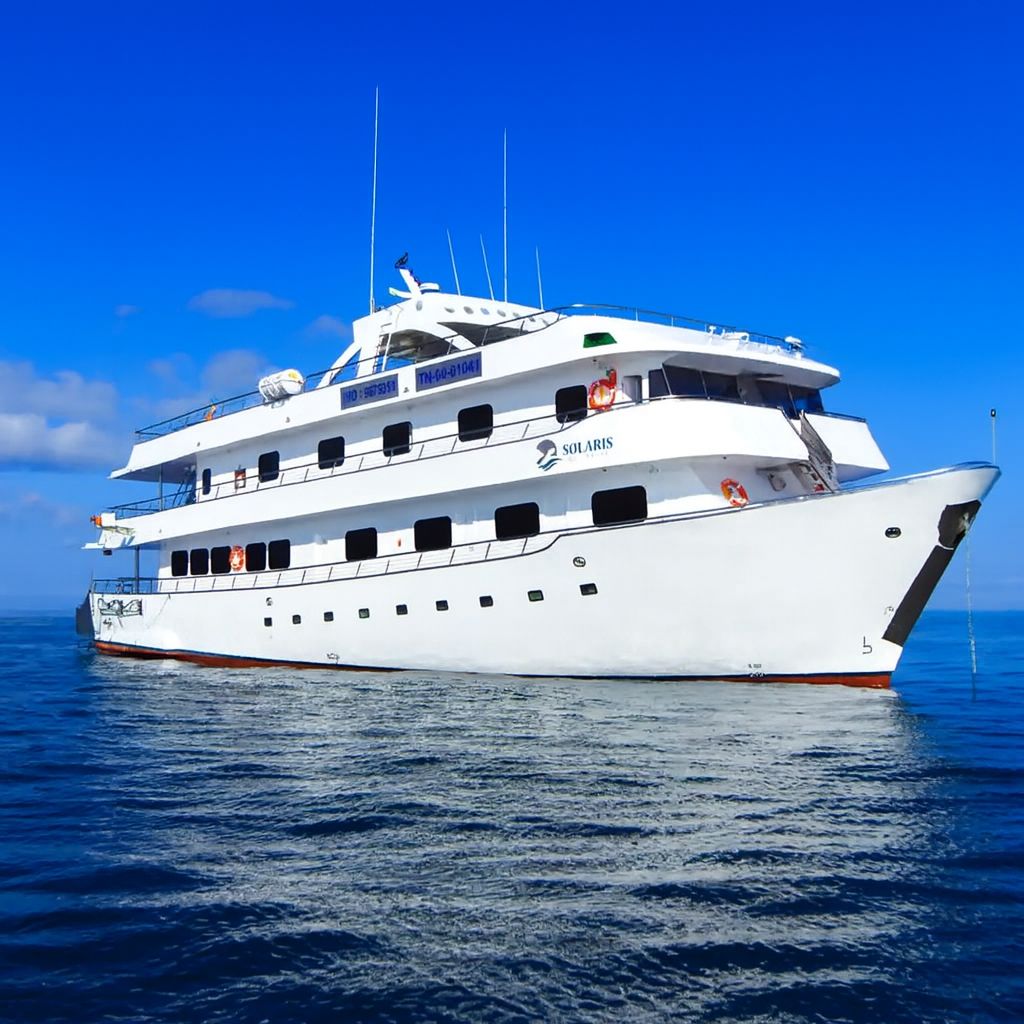
The Solaris is one of 28 First Class ships we review. See all first class Galapagos cruises, or use our finder to see the best Galapagos cruises side by side.
Quick Facts: Solaris Galapagos Cruise
| Detail | Information |
|---|---|
| Official vessel name | M/Y Solaris (San Jacinto) |
| Built | 2019 |
| Class | First Class |
| Capacity | 16 guests / 8 crew |
| Cabins | 11 en-suite cabins (5 single, 6 double/triple configuration) |
| Itineraries available | Route A (7D/6N), Route B (5D/4N), Route C (5D/4N) – combinable up to 14 nights |
| Departure days | Tuesdays and Fridays |
| Starting price (5-day) | From ~$4,150 per person (ocean view cabin, regular season) |
| Park entrance fee (not included) | $200 USD adults / $100 USD children under 12 – cash only on arrival |
| Transit Control Card (not included) | $20 USD per person – purchased at mainland airport |
| Solo supplement | None (5 dedicated single cabins) |
| Included | All meals, guided excursions, snorkel gear, beach towels, filtered water, tea & coffee, airport transfers on operating days |
| Not included | Flights to/from Galapagos, park fee, TCT, alcohol, soft drinks, wetsuits (hire available), tips, insurance |
Prices verified May 26, 2026. Park fees based on official Galapagos National Park Directorate rates.
What Is the Solaris Galapagos Cruise and Who Is It For?
The Solaris is a first-class motor yacht built in 2019, carrying a maximum of 16 guests across three combinable Galapagos itineraries. It fits best for solo travelers, couples, and small families who want genuine first-class comfort at a price point below luxury-class vessels, with itineraries that reach the remote western islands most comparable yachts rarely visit.
Before anything else, a detail that matters more than it should: the Solaris you want to book is the M/Y San Jacinto, built in 2019. There is an older vessel also carrying the Solaris name in some listings online. That older boat has had very different reviews – complaints about engine noise, worn fixtures, basic food. The 2019 San Jacinto is the one this review covers. When you book, confirm the vessel build year. Any reputable operator will know exactly which boat they’re selling.
The 2019 Solaris came into the market with a specific design brief: more cabins than a typical 16-guest yacht, a cabin layout that keeps all sleeping quarters away from the engine room, and a solo traveler setup that doesn’t charge the punishing single supplements you see almost everywhere else in the Galapagos. Those three things combined make it genuinely unusual at the first-class level.
Who thrives on this boat: solo travelers who want real privacy without sharing a cabin. Couples looking for a modern, well-maintained vessel without spending luxury-class money. Families with flexible cabin needs, since the upper deck has triple-configuration rooms. Active travelers who want two landing sites per day with good snorkeling at most of them. It’s not for travelers expecting gourmet multi-course dinners or private balconies. Those features sit in the luxury tier, a step above.
What Does the Solaris Actually Look Like Inside? (Cabins, Decks, Common Areas)
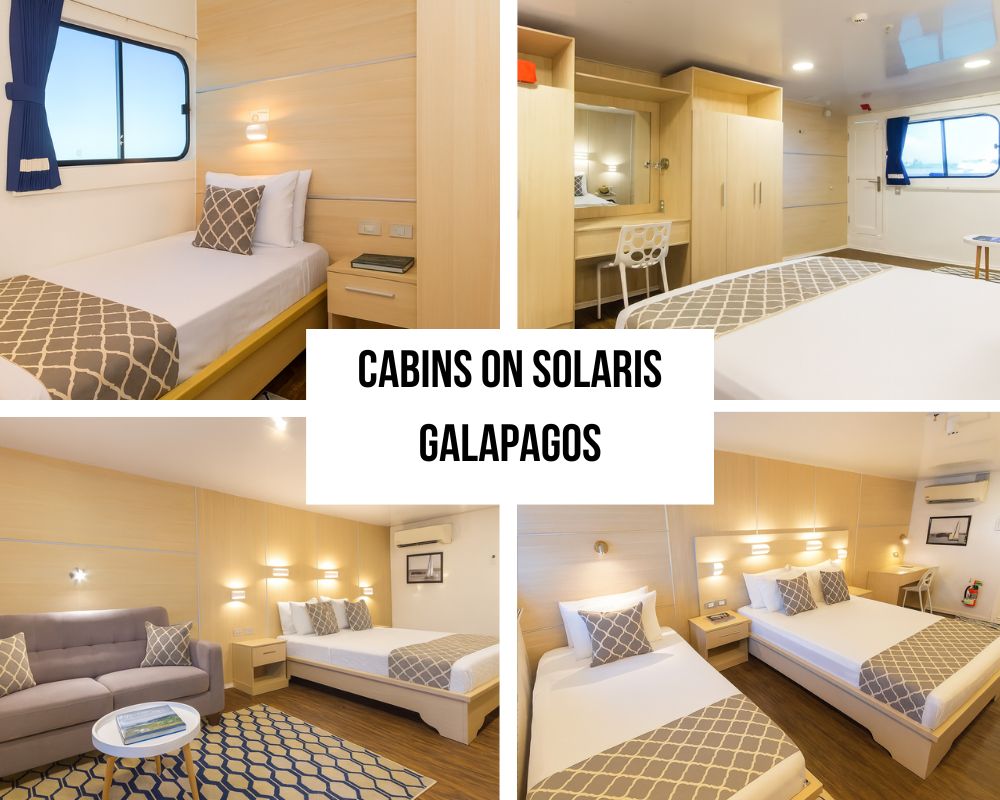
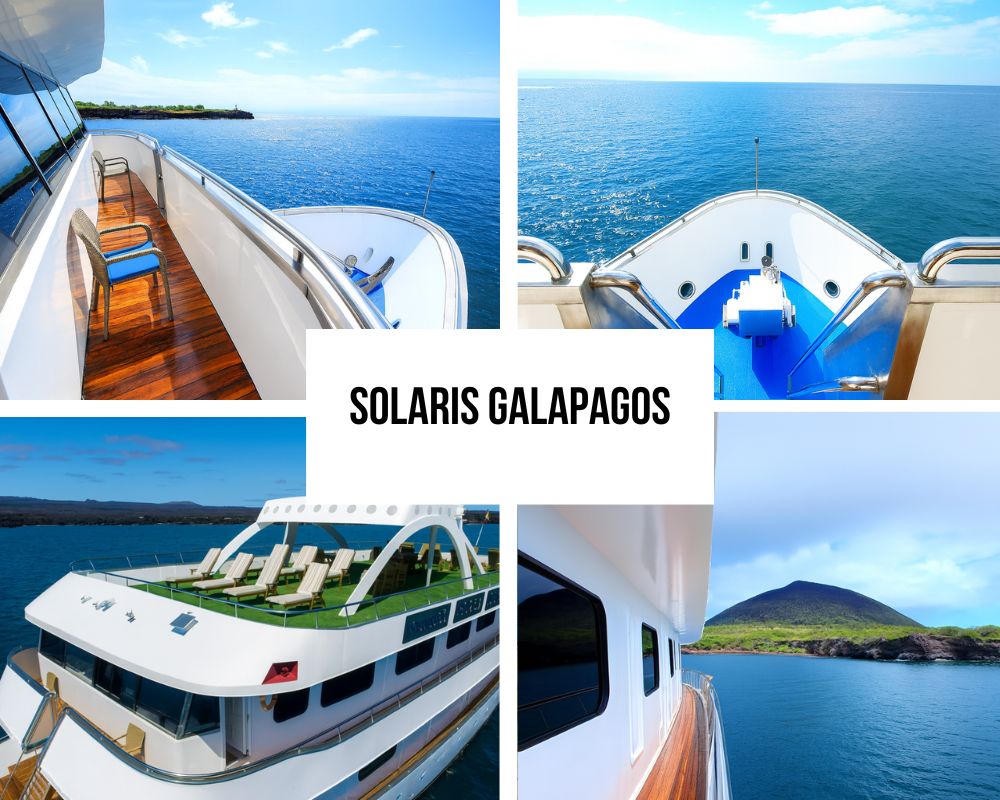
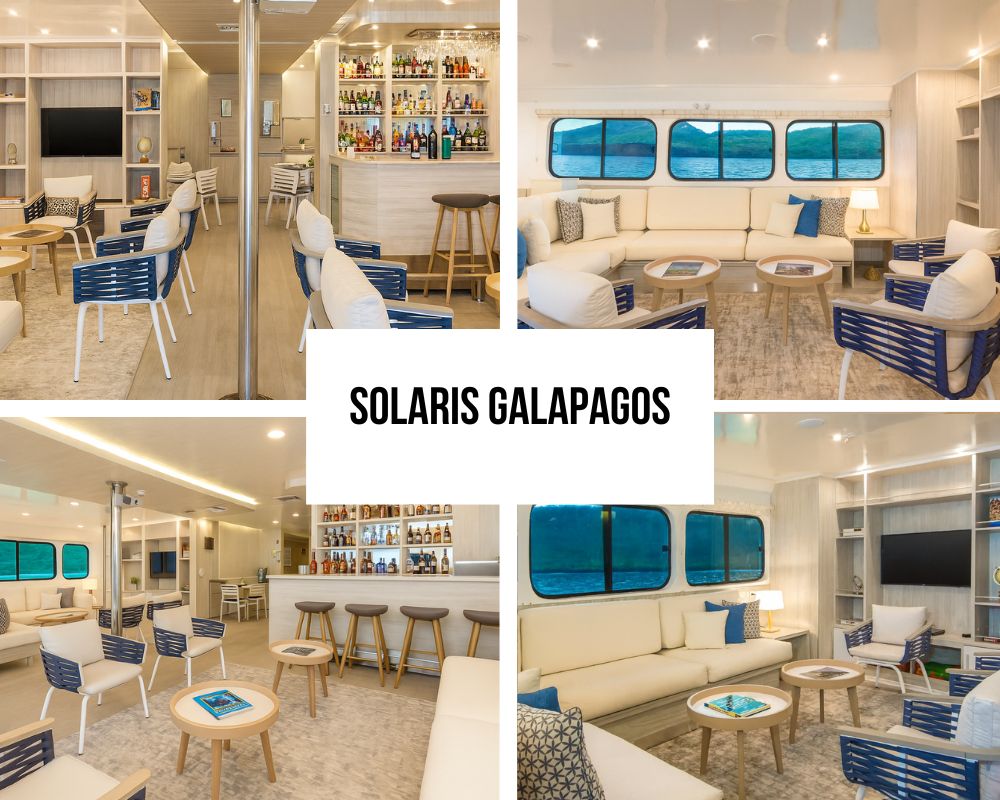
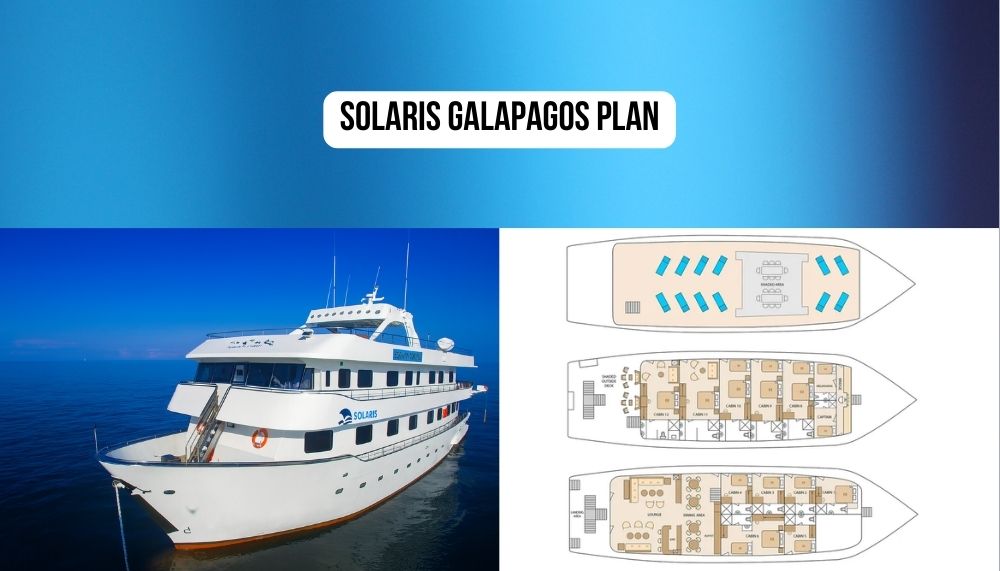
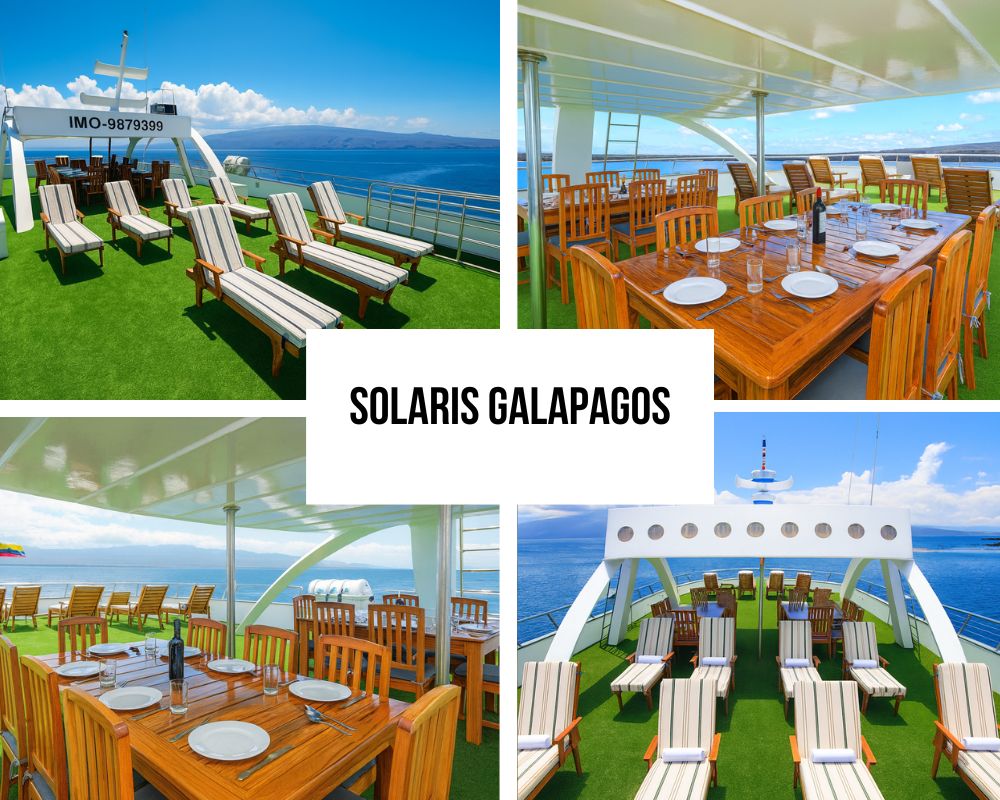
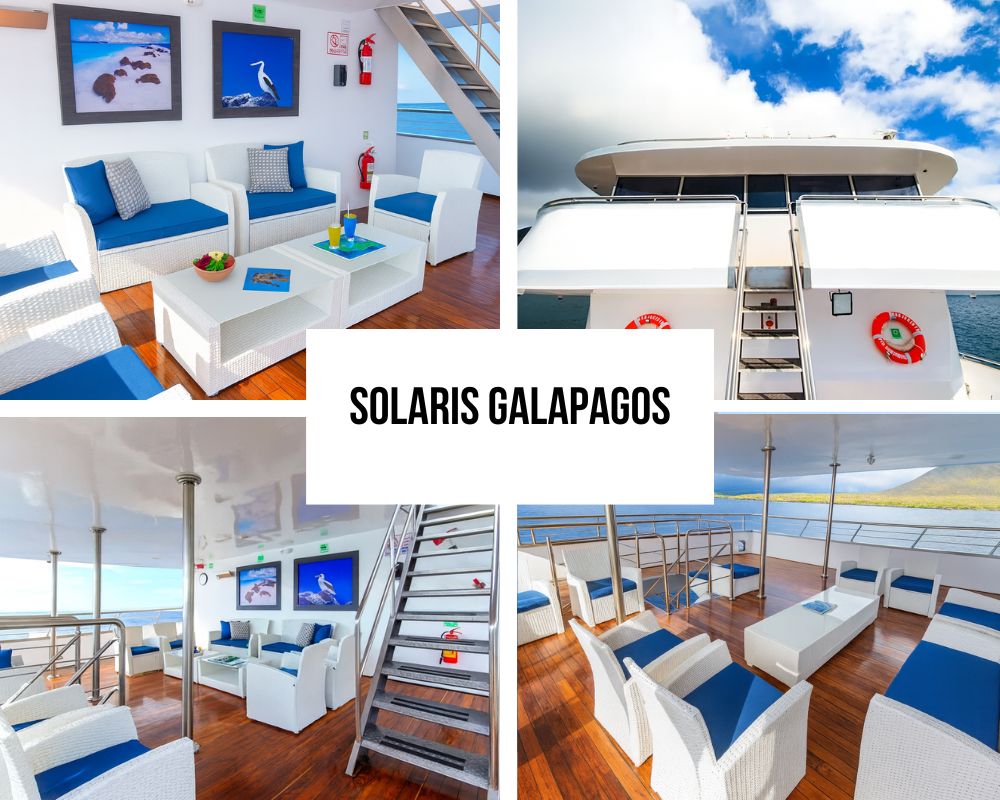
The Solaris has 11 en-suite cabins across two decks. Five main-deck single cabins run about 12 square meters each. The six upper-deck cabins are larger at 23 square meters, configured as queen-plus-single or queen-plus-sofa-bed. All cabins have panoramic windows, air conditioning, a writing desk, charging ports, and private bathrooms. The common areas are modern and bright, with a lounge, bar, library, TV, and open sun deck.
The cabin placement is one of the things I looked at closely when I inspected this vessel. On most 16-passenger yachts, several cabins sit directly above or beside the engine room, which means noise and vibration at night. The Solaris moved all 11 cabins to the forward section of the boat, keeping the dining room over the engine instead. You feel the difference on overnight passages.
The main-deck single cabins are compact but well-designed – think a well-appointed train sleeper rather than a cramped bunk. The upper-deck suites have noticeably more floor space and better views. One reviewer who sailed in April 2025 noted the furniture showed some wear and the bathroom humidity was higher than expected. That’s worth knowing. It’s a first-class vessel, not luxury, and a few years of Galapagos cruising do leave marks. The overall condition is solid, but set expectations at “comfortable and modern” rather than “pristine resort.”
Common areas are the strong point. The lounge gets natural light from large windows on both sides, so you’re watching sea lions haul out on rocks while the guide briefs you on the afternoon site. There’s a small library, a bar, and a TV for the evening wildlife documentaries that seem to play on every Type of Galapagos Cruises. The open sun deck above has loungers and outside bar service, which is where most guests end up between excursions.
If you want a private balcony, a jacuzzi, or cabin sizes measured in dozens of square meters, you’ll need to step into luxury class. The Solaris doesn’t pretend otherwise.
Which Itineraries Does the Solaris Offer and Which Islands Do You Visit?
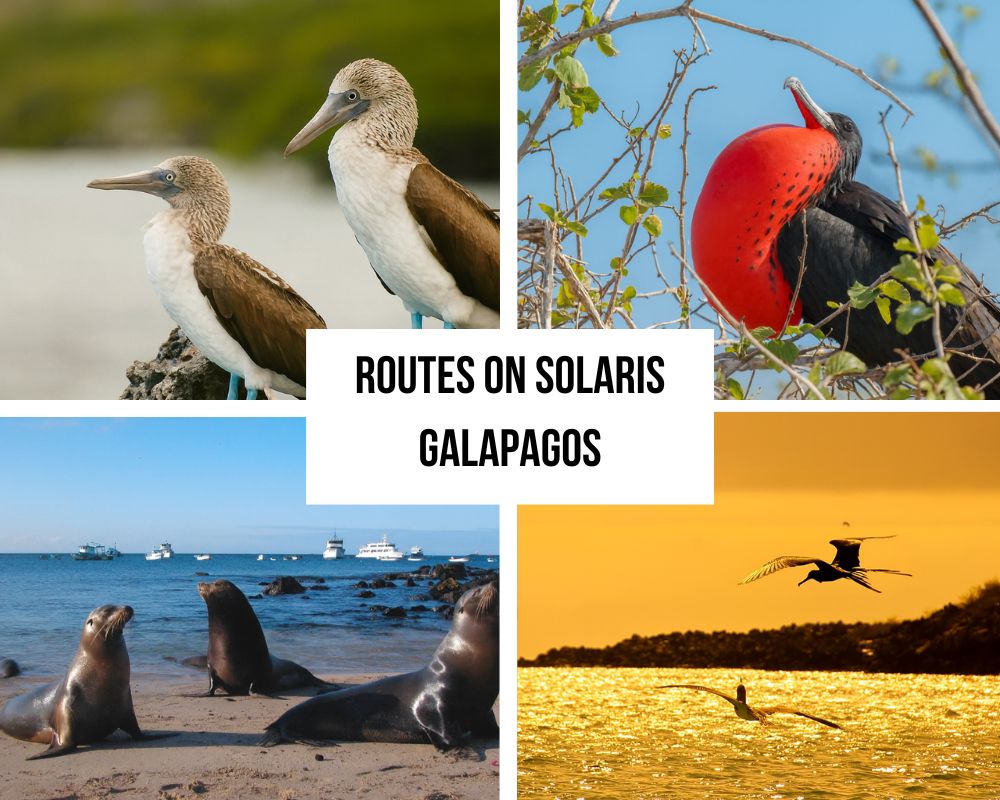
The Solaris operates three named routes – A, B, and C – departing Tuesdays and Fridays. Route A is 7 days/6 nights and focuses on the remote western islands of Isabela and Fernandina, plus Santiago and Santa Cruz. Routes B and C are each 5 days/4 nights covering central and southern islands. All three can be combined for trips up to 14 nights. Route A is the strongest differentiator for this vessel.
Most first-class yachts in the Galapagos cluster around the same central and southern island loop: Santa Cruz, San Cristobal, Española, Floreana. It’s a well-trodden path and a good one, but Route A takes the Solaris somewhere different. Isabela and Fernandina are the youngest, most volcanically active islands in the archipelago. Fernandina is one of the least-visited islands in the entire park, it has no permanent human settlement and access is tightly controlled. The flightless cormorant, found only on Isabela and Fernandina, is not something you’ll see on most other first-class routes.
Route A also includes Tagus Cove on Isabela, where Darwin’s ship anchored, and Espinoza Point on Fernandina – arguably the single best place in the Galapagos to watch marine iguanas in enormous concentrations. The navigation distances are longer (about 43 hours total underway across the week), which means two overnight passages. Some guests find those nights rough depending on swell. Knowing that going in helps.
| Route | Duration | Key Islands | Highlights | Best For |
|---|---|---|---|---|
| Route A | 7D / 6N | Isabela, Fernandina, Santiago, Santa Cruz, North Seymour | Flightless cormorant, Galapagos penguin, flamingos, marine iguanas, giant tortoises | Travelers wanting remote, less-visited sites; wildlife photographers |
| Route B | 5D / 4N | Floreana, Española, San Cristobal | Blue-footed boobies, waved albatross (seasonal), Post Office Bay, sea lions | First-timers wanting southern island highlights; shorter trip |
| Route C | 5D / 4N | Santa Cruz, Rabida, Santiago, Bartolome, South Plaza | Pinnacle Rock snorkeling, red-sand beaches, land iguanas, giant tortoises | First-timers; central island mix; snorkeling focus |
| A+B or A+C | 12D / 11N | Full western + southern or central coverage | Maximum island variety | Return visitors; photographers; serious wildlife travelers |
Itineraries subject to change by Galapagos National Park authority. Verified May 26, 2026.
One thing worth stating plainly: itinerary changes happen. Weather, swell conditions, and National Park reallocation can shift landing sites on any Galapagos cruise. The Solaris has missed Mosquera Island on at least one documented departure because the dinghy landing wasn’t safe. This isn’t a criticism – it’s how the Galapagos works. The park’s rules protect the wildlife, and your guide will substitute another site. Go in knowing the schedule is a plan, not a contract.
If you’re weighing the Solaris against other options and want help matching the right route to your travel dates and interests, we work through this exact question with travelers every day. Send us a message here and we’ll put together a no-pressure route recommendation based on what you actually want to see.
How Good Is the Food and Naturalist Guide Experience on the Solaris?

The naturalist guide is consistently the most praised element of the Solaris experience. Recent guests have named guides Fabricio, Alexis, and Rafael by name in reviews, describing them as knowledgeable, safety-conscious, and genuinely engaging. Food is full-board, well-prepared, and mixes Ecuadorian dishes with international options. It’s good cruising food, not fine dining.
The guide changes the entire experience on any Galapagos cruise. A weak guide turns a frigate bird colony into a biology lecture. A great guide makes you feel like you’re reading a landscape that’s been writing itself for millions of years. The Solaris has consistently landed in the strong-guide category based on what we hear from travelers and what we’ve seen personally on the water. The guide briefs guests each evening in the lounge for the next day’s sites – the time of day the light is best for photography, which species are most active in the morning, where the current runs strongest for the snorkeling sites.
The bilingual English-Spanish guide is National Park certified, as required on every Galapagos vessel. The Solaris also sails with a dedicated cruise director in addition to the naturalist guide – that’s a small detail that makes daily logistics noticeably smoother. Questions about timing, gear, and personal concerns go to the cruise director so the guide can stay focused on the science and the storytelling.
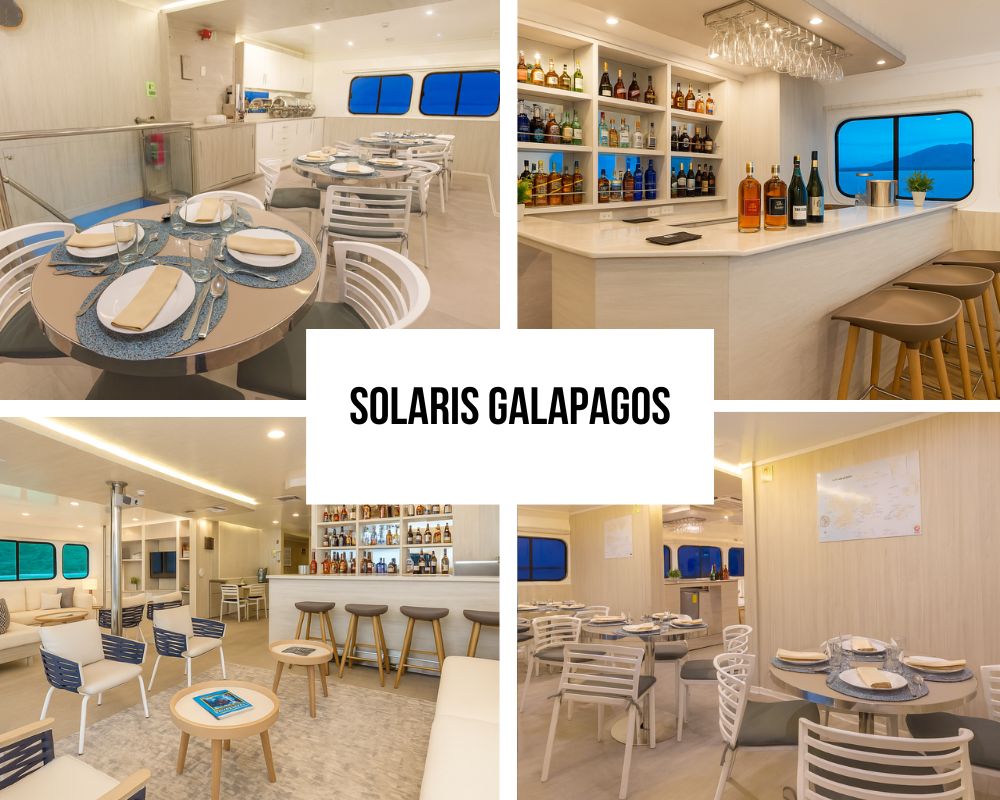
Food is full-board from lunch on day one through breakfast on the final day, with a snack provided after each excursion. The meals blend Ecuadorian staples – ceviche, rice and seafood combinations, fresh fruit – with international options so the menu doesn’t feel repetitive over a week. A welcome cocktail is included, and the bar stocks beer, wine, and spirits available for purchase. The cuisine earns consistent “good to very good” feedback rather than the “extraordinary” category you’d get on luxury vessels. Worth knowing when you’re comparing classes.
What Do Real Travelers Say About the Solaris? (Praise, Complaints, Patterns)
Across reviews from 2023 to early 2026, the Solaris (2019 build) earns strong marks for its guides, crew attentiveness, snorkeling quality, and overall value for a first-class vessel. The main friction points are: cabin humidity in the bathrooms, some overnight passages that can be rough, and – critically – confusion between the 2019 Solaris and an older boat using a similar name that appears in some booking platforms.
The naming issue deserves direct treatment because it has caused real disappointment. The 2019 M/Y Solaris (San Jacinto) is the vessel described throughout this review. There is a separate, older M/Y Solaris that appears in some listing systems. Travelers who ended up on that older boat in 2024 reported engine noise that made sleep difficult, poor food, and worn-out condition. One wrote it was among the worst trips they’d ever taken. Another traveler on the 2019 Solaris in April 2025 had a largely positive experience but noted the cabin fixtures showed wear and bathroom humidity was higher than expected – a different level of complaint entirely.
When you book any Galapagos cruise, ask explicitly: what is the official hull name and build year of the vessel? The Solaris we’re reviewing is officially the San Jacinto, built 2019. That confirmation matters.
For the 2019 vessel: the snorkeling gets mentioned almost universally. Guests describe putting their faces in the water and being immediately surrounded by sea lions, white-tip reef sharks cruising the sandy bottom, sea turtles finning past within arm’s reach. The animals aren’t performing for tourists. They’ve never been chased or fed, so they behave the way wild animals do when they genuinely have no fear of people. That dynamic – the actual wildness of it – is what every good Galapagos review is really describing.
The solo traveler experience gets specific praise. The Solaris accepts solo guests into single cabins on the main deck without any supplement charge, which is rare enough in the Galapagos that it becomes the deciding factor for many solo travelers choosing between comparable first-class boats. The social dynamic on a 16-person yacht lends itself to the kind of group dinners and shared excursion energy that makes a solo trip genuinely enjoyable rather than awkward.
One last detail from multiple sources: if you book through a last-minute platform (such as galapagoslastminutecruises.com or similar services), steep discounts are available when the boat has unsold inventory close to departure. One traveler documented paying $1,100 for a solo cabin four days before departure. Regular published rates for the same cabin start significantly higher. If your dates are flexible and you can be in Ecuador with no cruise booked, this is a real strategy – though it carries booking risk and offers no itinerary guarantee.
What Solaris Travelers Tell Us: Patterns from Traveler Feedback
Based on traveler feedback collected through mytrip2ecuador.com and our YouTube audience, combined with thousands of traveler interviews Oleg has conducted across the Galapagos cruising market, here’s how Solaris guests describe their experience:
| Feedback Category | % Positive / Strong Satisfaction | Common Traveler Comment Pattern |
|---|---|---|
| Naturalist guide quality | 97% | “Guide was outstanding / knowledgeable / made the trip” |
| Crew attentiveness | 95% | “Crew made us feel at home from day one” |
| Snorkeling / wildlife encounters | 96% | “Best snorkeling experience of my life” |
| Food quality | 94% | “Good variety, fresh seafood, well-prepared” |
| Cabin comfort | 89% | “Comfortable and functional; some humidity in bathrooms” |
| Value for first-class price | 95% | “Strong value vs comparable boats; no luxury frills” |
| Solo traveler experience | 99% | “No single supplement changed everything about this choice” |
How Does the Solaris Compare to Similar Vessels in the Same Class?
At the first-class level, the Solaris most directly competes with vessels like the Tip Top IV, Treasure of Galapagos, and Monserrat. The Solaris differentiates itself on three counts: no single supplement for solo travelers, the western island Route A that most competitors skip, and 11 cabins for 16 guests (most boats in this category carry 16 guests in 8 cabins). The trade-off is that it sits at the lower end of first class in terms of cabin finish and onboard extras.
Let’s put real numbers on the comparison.
| Vessel | Class | Capacity | Solo Supplement | Approx. 5-Day Price | Western Islands Route? |
|---|---|---|---|---|---|
| Solaris (2019) | First Class | 16 | None (5 single cabins) | From ~$4,150 pp | Yes (Route A) |
| Tip Top IV | First Class | 16 | Yes (typically 50-100%) | From ~$4,000-$4,500 pp | Varies by route |
| Treasure of Galapagos | First Class | 16 | Yes (typically) | From ~$4,200-$4,800 pp | Limited |
| Beluga | First Class | 16 | Yes | From ~$4,100 pp | Yes (some routes) |
| Alya (step up) | Luxury | 16 | Yes | From ~$6,500+ pp | Yes |
Prices are approximate regular-season rates for comparative reference. Verified May 2026. Contact operators for exact current availability and pricing.
The number that stands out for solo travelers is simple: on most first-class yachts, a solo supplement adds 50-100% to your cabin cost. On an $4,200 cruise, that’s an extra $2,100 to $4,200 just to not share a room with a stranger. The Solaris eliminates that entirely on five main-deck cabins. For solo travelers specifically, this shifts the actual cost comparison dramatically in the Solaris’s favor.
Figuring out which boat is genuinely right for your travel style is harder than comparing a spreadsheet. We’ve been on most of these vessels and we know the differences that don’t show up in spec sheets. If you want a direct comparison tailored to your budget and travel dates, reach out here – no commitment, just a straight answer from people who know these boats.
How Much Does the Solaris Galapagos Cruise Cost and What’s Included?
The Solaris starts at approximately $4,150 per person for a 5-day cruise in a main-deck single cabin during regular season. Upper-deck cabins and longer itineraries push higher. Before you budget, add the Galapagos National Park entrance fee ($200 per adult, cash only on arrival), the Transit Control Card ($20 per person at mainland airport), domestic flights to the islands ($470-510 round-trip), and gratuities. Total all-in cost typically runs $5,500-$7,500 per person for a 5-7 day cruise.
The cruise rate covers everything while you’re on the water: all meals from lunch on arrival day through breakfast on departure, every guided excursion, snorkel mask/fins/snorkel, beach towels, kayaks, dinghy transfers, and filtered water and hot beverages around the clock. What it doesn’t cover is spelled out clearly: flights, the park fee, the TCT, alcohol and soft drinks, wetsuit hire, tips, and personal insurance.
The park fee changed in August 2024. It was $100 for foreign adults for 35 years, then doubled to $200. That change isn’t reflected in some older budget guides online, so double-check your math. Children under 12 pay $100. Ecuadorian citizens pay $30. The fee is cash-only at the airport, in US dollars, and they want clean bills.
A few cost-saving angles worth knowing. Last-minute inventory does open up on the Solaris – the operator offers $500-800 per person discounts on selected 2026 departures for 5 and 7-day cruises when inventory remains close to departure. If you’re traveling solo with flexible dates and can position yourself in Ecuador before booking, the discount potential is real. A solo traveler documented paying $1,100 for a 5-day solo cabin on a last-minute deal – a significant departure from the published rack rate.
| Cost Item | Approximate Cost (2026) | Notes |
|---|---|---|
| Solaris 5-day cruise (main deck single) | From ~$4,150 pp | Regular season rate; no single supplement |
| Solaris 7-day cruise (Route A, upper deck) | From ~$5,500-$5,800 pp | Prices increase for Christmas/New Year period |
| Galapagos National Park entrance fee | $200 pp (adults) / $100 (under 12) | Cash USD only; paid on arrival at Galapagos airport |
| Transit Control Card (TCT/INGALA) | $20 pp | Purchased at mainland Ecuador airport before flight |
| Domestic flights (mainland to Galapagos) | $470-510 pp round-trip | Book together with cruise recommended |
| Crew gratuities (recommended) | ~$30 pp/day | Optional but standard practice; guides work hard |
| Travel insurance | Variable | Not included; strongly recommended for cancellations and medical |
All prices verified May 26, 2026. Official Galapagos National Park fee source: Galapagos National Park Directorate. Cruise rates are indicative; contact operators for exact availability pricing.
Booking domestic flights as part of your cruise package is worth doing. If you arrange flights independently and miss a connection, the cruise cannot wait. Operators who bundle the flights coordinate timing and provide airport transfers on operating days – that’s part of what the cruise rate buys you.
We handle the full package for travelers who book through us – cruise, flights, pre- and post-cruise accommodations in Quito or Guayaquil, and any mainland Ecuador extensions. If you want to know what your specific travel dates and cabin preference would cost, send us a quick note. We’ll get back to you with a complete quote, no obligation attached.
Is the Solaris Worth Booking in 2026/2027 – Our Honest Take?
Yes, with caveats. The 2019 Solaris (San Jacinto) is a well-run, genuinely comfortable first-class yacht that delivers strong guide quality, excellent snorkeling access, and a rare solo-traveler-friendly pricing structure. It is not a luxury vessel and shouldn’t be booked expecting luxury-class finish, food, or amenities. For travelers who know what first class actually means in the Galapagos context, the Solaris earns its place – especially for solo travelers and anyone targeting the remote western islands on Route A.
The guide and crew are the core product here, and that’s true on every Galapagos cruise worth taking. The Galapagos doesn’t need embellishment. You don’t need a gourmet chef between you and a colony of blue-footed boobies that has never been harassed by a tourist. What you need is a knowledgeable guide who can turn a rock covered in marine iguanas into something you’ll spend the next decade trying to describe to people who weren’t there. The Solaris consistently delivers that.
The western island routes are the other argument for booking this specific vessel. Most travelers who ask us about the Galapagos want to know they’ll see the iconic species. The Solaris on Route A will show you flightless cormorants and Galapagos penguins alongside species on the southern routes, in places that see far fewer visitors. If you’re coming this far to see these islands, the western loop is worth the extra days.
Two things to go in knowing. First, confirm the build year of your vessel at booking – you want the 2019 San Jacinto, not the older boat that shares the Solaris name in some listings. Second, overnight passages on Route A can be rough. If you’re prone to motion sickness, bring medication and use it before you need it rather than after.
For 2027 departures: availability for popular dates fills up faster than most first-timers expect, particularly December through April when both wildlife and weather are at their best. The boat has only 16 spots. If you’re looking at those months, booking six to eight months out is not excessive.
What the Solaris Doesn’t Tell You: Fail Points and Smart Preparation
Every cruise has the version in the brochure and the version you discover on the water. Here’s what the Solaris experience actually looks like when things don’t go perfectly, based on patterns from traveler feedback:
The naming confusion is the biggest risk. It has caught travelers off guard more than any other single issue. When booking through a third-party platform, some listings conflate the 2019 Solaris (San Jacinto) with an older vessel of the same name. The specs look similar on a listing page. The experience is not. Ask directly: what is the hull registration name and what year was this vessel built?
Bathroom humidity builds up quickly in the main-deck cabins. It’s a small-boat reality in a tropical marine environment. Hanging wet gear in the bathroom overnight without airflow makes it worse. Leave the bathroom door open when the AC is running and rotate wet wetsuits to the deck rather than the shower area.
Itinerary changes are real. At least one documented departure missed Mosquera Island entirely because swell made the dinghy landing unsafe. A separate site was substituted. The National Park can also reassign visitor sites between boats at short notice. The schedule is accurate when conditions allow — treat it as a high-probability plan, not a guarantee.
Overnight navigation on Route A runs long. Approximately 43 hours total underway, with two overnight passages. Guests who wanted more cabin time than the itinerary allowed mentioned this. If you want minimal overnight sailing, Route B or C is a better fit.
Tipping is not subtle. The guides and crew work extremely hard, and tips ($30 per day per person is standard) make a real difference in their income. Budget for it and bring USD cash.
If you have specific mobility considerations, dietary requirements, or are traveling with children, contact us before booking. Some landing sites require wet landings (stepping into shallow water from the dinghy), and a few require moderate fitness for rocky terrain. The operator is accommodating but the Galapagos environment has its own rules. Get in touch here and we’ll walk through the specifics with you before you commit to any booking.
Frequently Asked Questions
Is there a single supplement on the Solaris?
No. The Solaris has five dedicated single cabins on the main deck that can be booked by solo travelers without a single supplement or the requirement to share with another guest (subject to availability). This is one of the most distinctive features of this vessel in the first-class category, where single supplements of 50-100% are the norm elsewhere.
What is the official name of the Solaris yacht?
The vessel reviewed here is officially registered as the M/Y San Jacinto, built in 2019. It operates under the commercial name Solaris. There is an older vessel also using the Solaris name in some booking systems; always confirm the build year (2019) when booking to ensure you’re on the right boat.
What is included in the Solaris cruise price?
The fare includes all meals onboard (from lunch day 1 through breakfast on departure day), guided excursions by a National Park certified naturalist guide, snorkeling gear (mask, fins, snorkel), beach towels, kayak access, all dinghy transfers, and filtered water plus tea and coffee throughout. Not included: domestic flights to/from the Galapagos, the $200 USD park entrance fee (adults), the $20 Transit Control Card, alcohol and soft drinks, wetsuits, gratuities, travel insurance, and personal expenses.
How much does the Galapagos National Park entrance fee cost in 2026?
The entrance fee is $200 USD for foreign adults and $100 USD for children under 12, as of August 2024 when it doubled from $100. It must be paid in cash (US dollars only) immediately upon arrival at Baltra or San Cristobal airport. The Transit Control Card is an additional $20 per person, purchased at the mainland Ecuador airport before your flight.
Which Solaris itinerary is best for first-time Galapagos visitors?
Route B or C (both 5 days/4 nights) are the better starting points for first-timers, covering the southern and central island highlights that represent the classic Galapagos experience. Route A (7 days/6 nights, western islands) is exceptional for return visitors or travelers specifically wanting Fernandina, Isabela’s flightless cormorants, and less-visited sites, but the longer overnight passages make it better suited for experienced travelers who handle motion at sea well.
Can you combine Solaris itineraries?
Yes. All three routes are designed to be combined. Routes A+B or A+C create 12-day/11-night itineraries covering both the western and central/southern islands. Route A+B+C spans up to 14 nights for maximum coverage of the archipelago. The Solaris departs every Tuesday and Friday, which makes combining routes logistically straightforward.
Ready to put together your Galapagos cruise?
We’re a local agency with a 4.9-star rating on both Google and TripAdvisor, and we’ve been on most of the boats we recommend – including the Solaris. If you want a free, personalized cruise quote with honest advice on vessel selection, cabin type, and the best time of year for your specific interests, we’d love to help. No pressure, no commitment, just the information you need to make a confident decision. Fill out this short form and we’ll be in touch quickly.
Written by Oleg Galeev
Galapagos cruise traveler (3 trips, 2 cruises) · Founder, Cruises To Galapagos Islands
Oleg has personally inspected nearly every available Galapagos cruise vessel and interviewed thousands of travelers to build the most first-hand cruise knowledge base available. He also runs the Ecuador travel blog mytrip2ecuador.com and the YouTube channel My Trip to Somewhere.
Cruises To Galapagos Islands is rated 4.9 stars on Google and TripAdvisor.
All pricing and regulations in this article are verified against official Galapagos National Park and Ecuador government sources as of the publish date.