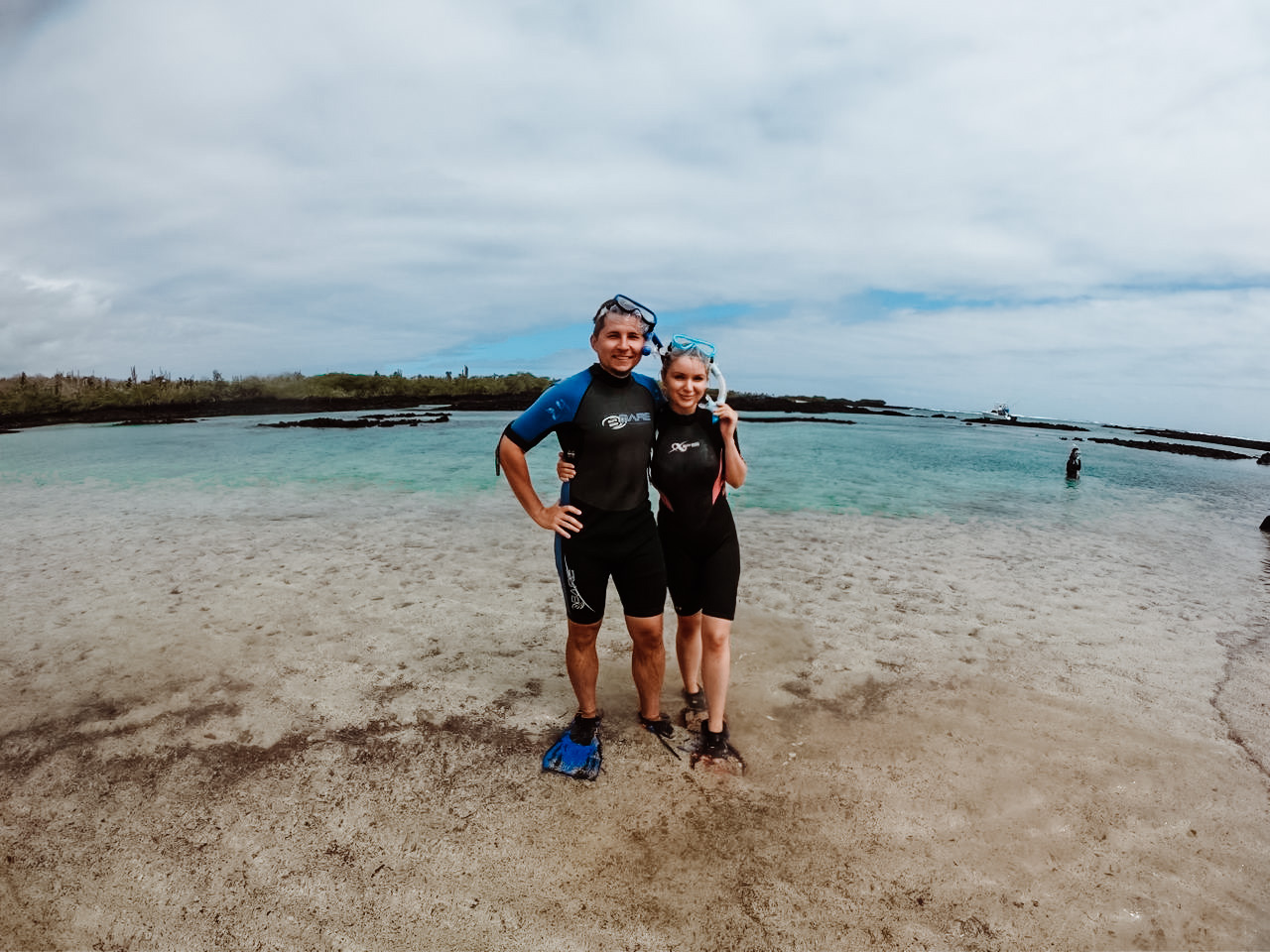
National Geographic Gemini Review
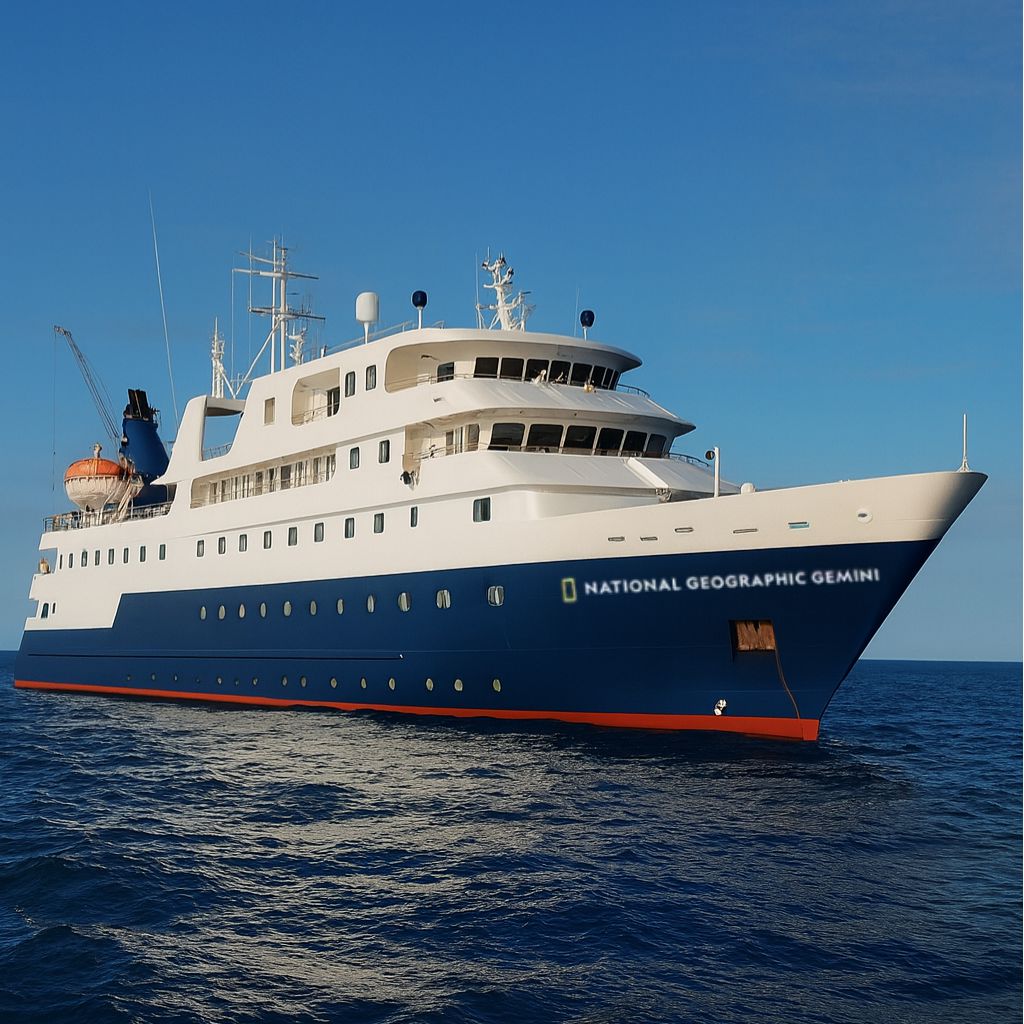
The National Geographic Gemini is one of 26 Luxury ships we review. See all luxury Galapagos cruises, or use our finder to see the best Galapagos cruises side by side. It sails for National Geographic-Lindblad Expeditions: see all National Geographic-Lindblad Expeditions ships in the Galapagos.
Quick Facts: National Geographic Gemini
| Spec | Detail |
|---|---|
| Operator | National Geographic – Lindblad Expeditions |
| Launched (refit) | Originally 2001 (Sun Bay 1); relaunched March 14, 2025 |
| Ship Length | 296 feet |
| Max Passengers | 48 guests |
| Crew Ratio | 1:1 guest-to-crew |
| Cabin Count | 28 cabins including 13 balcony suites |
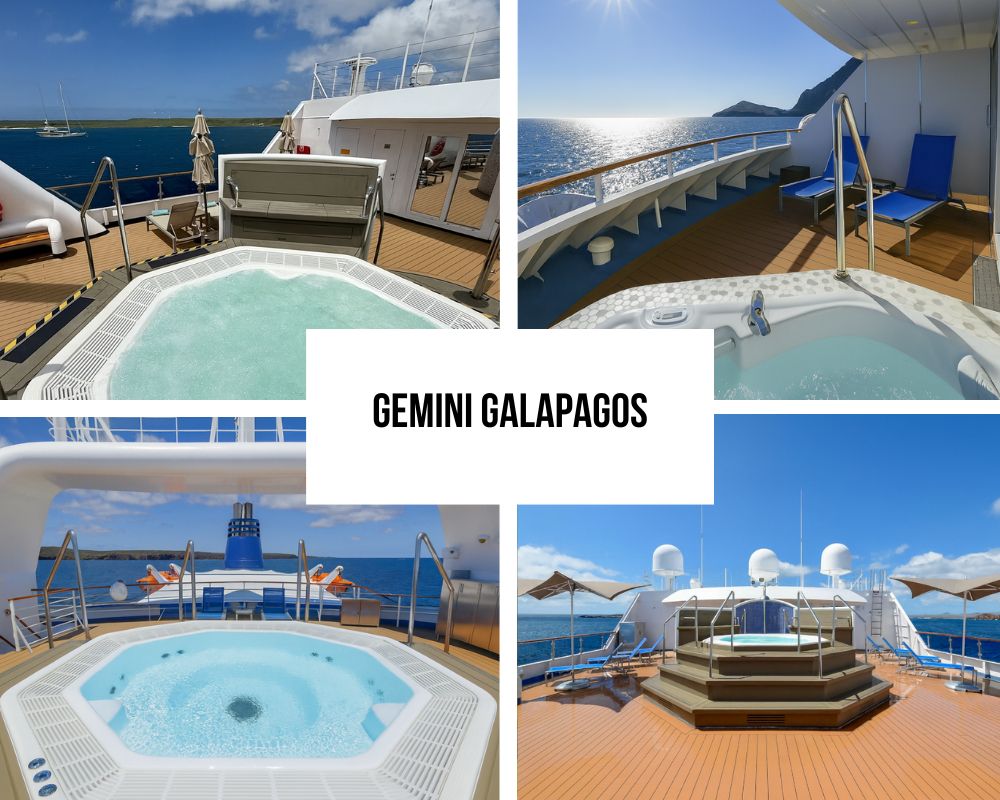
| Largest Suite | Suite 601 – 460 sq ft + 195 sq ft balcony + private hot tub |
| Starting Price (10-day) | From ~$13,091 per person (double occupancy, excl. airfare) – Prices verified May 26, 2026 |
| Itinerary Lengths | 8, 10, and 16 days |
| Elevator | No, stairs only between decks |
| Galapagos Entry Fee | $200 USD (park entrance) + $20 transit card – Prices verified May 26, 2026 |
| Internal Flight (Guayaquil–Baltra) | ~$520-$570 per person, round-trip – Prices verified May 26, 2026 |
What Is the National Geographic Gemini and Who Actually Books It?
The National Geographic Gemini is a 296-foot, 48-guest expedition ship operated by Lindblad Expeditions under the National Geographic brand in the Galapagos Islands. Originally built in 2001, it was completely relaunched in March 2025 after a multi-million-dollar refit that stripped out the old Celebrity Cruises identity and rebuilt it as a purpose-forward expedition vessel. It targets travelers who want a serious, guide-led wildlife experience without the institutional feel of a 100-guest ship.
The backstory matters here. This ship sailed for years as the Celebrity Xpedition before Celebrity Cruises sold it to Lindblad Expeditions in 2024. Lindblad invested heavily in a full renovation and cut the passenger capacity from what was once nearly 100 guests down to 48. Several cabins were removed entirely to make room for a proper library and more communal space. The result is a ship that feels like a private yacht in terms of intimacy but has the infrastructure of a full expedition vessel.
The people who book the Gemini tend to fall into a few consistent groups. Couples in their 50s and 60s celebrating milestone trips. Families who want a structured educational component for their kids, something beyond just seeing animals. Solo travelers who appreciate that the 48-guest cap keeps the group tight enough to actually meet everyone by day two. And dedicated wildlife photographers who want a certified photo instructor on board, a benefit that comes standard on every Lindblad sailing.
It is not a beginner’s cruise, in the sense that it draws people who have already done a lot of travel and know what they want. The price filters out casual interest. But it also attracts a specific type of first-timer to the Galapagos: the kind who researched for a year and decided they were only going to do this once so they might as well do it properly.
We’ve talked to hundreds of past Gemini guests through our team at Cruises To Galapagos Islands and through Oleg’s audience at mytrip2ecuador.com. The consistent thread: nobody regrets the upgrade. The consistent hesitation before booking: the price. We’ll break that down properly in a later section.
How Does the Gemini Compare to Other Galapagos Cruise Classes?
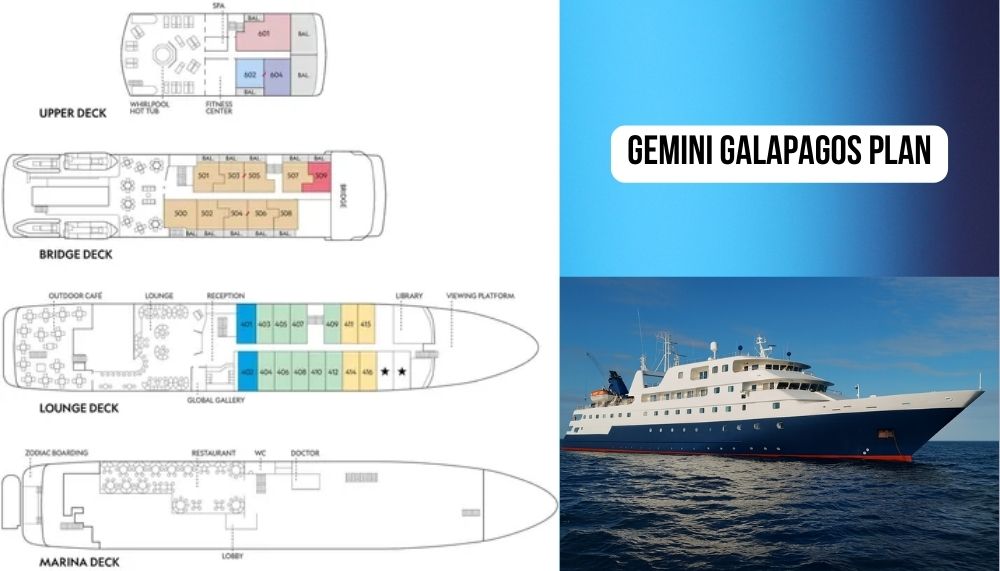
The Gemini sits at the top of the Lindblad Galapagos fleet and in the broader luxury tier of Galapagos expedition cruising. It offers more space per guest, larger suites, and a deeper expedition toolkit than tourist superior or first-class vessels, but it competes directly with a handful of other high-end small ships in the islands. The key differentiator is the 1:1 crew-to-guest ratio and the National Geographic guide program, which no other operator replicates exactly.
| Cruise Class | Typical Guests | Price Range (7-10 days) | Guide Program | Best For |
|---|---|---|---|---|
| Economy / Tourist | 16-20 | $2,500-$5,000 pp | 1 licensed naturalist | Budget-first travelers |
| Tourist Superior | 16-32 | $5,000-$8,000 pp | 1-2 guides | Value-focused travelers |
| First Class | 16-48 | $7,000-$12,000 pp | 2-3 specialist guides | Comfort + wildlife depth |
| Nat Geo Gemini (Luxury) | 48 max | $13,000-$30,000+ pp | 5 guides incl. photo instructor + undersea specialist | Immersive expedition experience |
Prices verified May 26, 2026. All prices per person based on double occupancy, excluding international airfare.
One thing worth saying plainly: the jump from first class to the Gemini’s price bracket is real and significant. You are paying, in part, for guide depth. Five expedition staff for 48 guests means you almost always have someone nearby who can tell you what that bird is doing and why. On a budget vessel with one guide for 16 people, you’ll still see the same animals. The Galapagos doesn’t gatekeep wildlife by budget. What changes is how much you understand what you’re witnessing.
The Gemini’s biggest structural advantage over other luxury small ships is the 1:1 crew-to-guest ratio. Pair that with the ship’s shallow draft and exceptional maneuverability, and you get a vessel that can access anchorages that larger expedition ships cannot. From what we’ve seen firsthand, this matters most on the western itineraries, where Fernandina and the remote volcanic areas reward a ship that can get genuinely close.
Sorting out which cruise class actually fits your budget and travel style is genuinely one of the harder parts of planning a Galapagos trip. The brochure pricing rarely tells the full story. If you want someone to walk you through the real options, our team at Cruises To Galapagos Islands is happy to help. Fill out this short form and we’ll put together a comparison and a no-obligation quote based on your dates and budget.
What Are the Cabins and Onboard Amenities Actually Like?
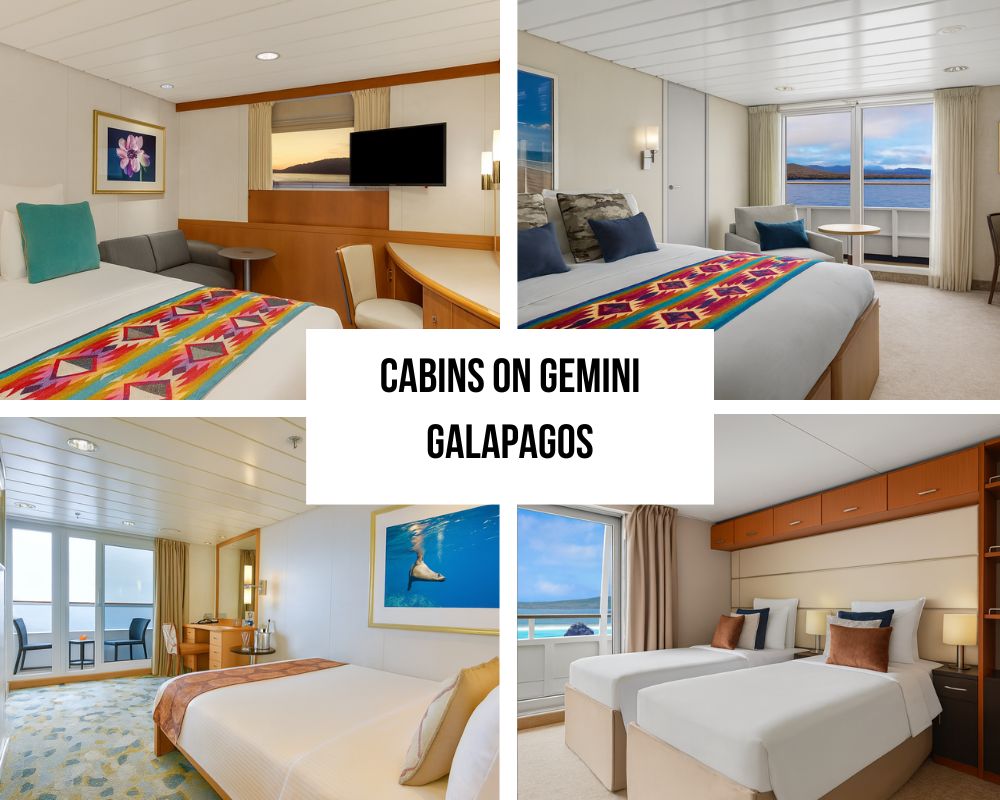
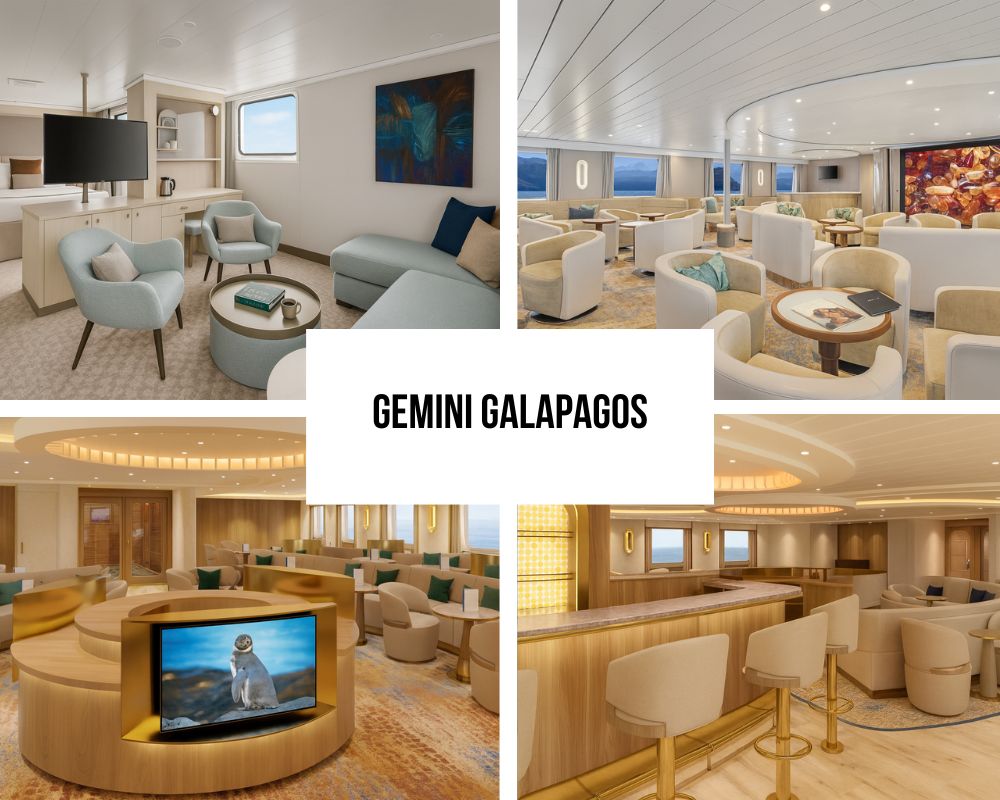
Every cabin on the Gemini faces the ocean, which sounds like a small thing until you’re lying in bed watching the islands slide by through a floor-to-ceiling window. The ship offers 28 cabins across four grades, from 175-square-foot premium rooms to the flagship Suite 601 at 460 square feet with a private hot tub and two separate balconies. There’s no elevator on board, so if stairs are a real concern, this needs to factor into your cabin selection.
The range runs from standard double cabins at roughly 175–205 square feet up through balcony suites and the flagship Suite 601 on the upper deck, which has a separate sitting room, forward-facing 195-square-foot balcony, a private Jacuzzi, and a side balcony. That suite is the largest offered anywhere in the Lindblad Galapagos fleet. Two cabins are wheelchair-accessible, though given the stairs-only configuration, anyone with significant mobility limitations should discuss this carefully before booking.
All cabins include queen or twin bed configurations, a sofa, desk, mini fridge, TV, and glass-enclosed shower. Nothing feels cramped. The bathroom sizing is genuinely good for a ship this size, which matters more than people expect when you’re rinsing off saltwater twice a day.
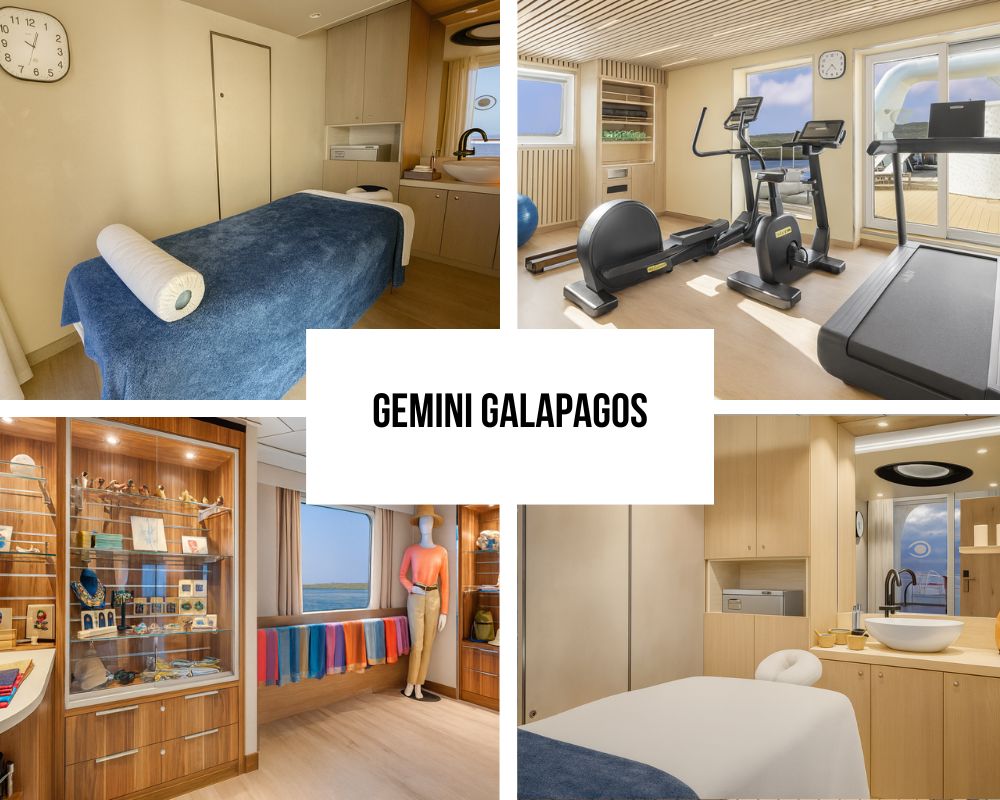
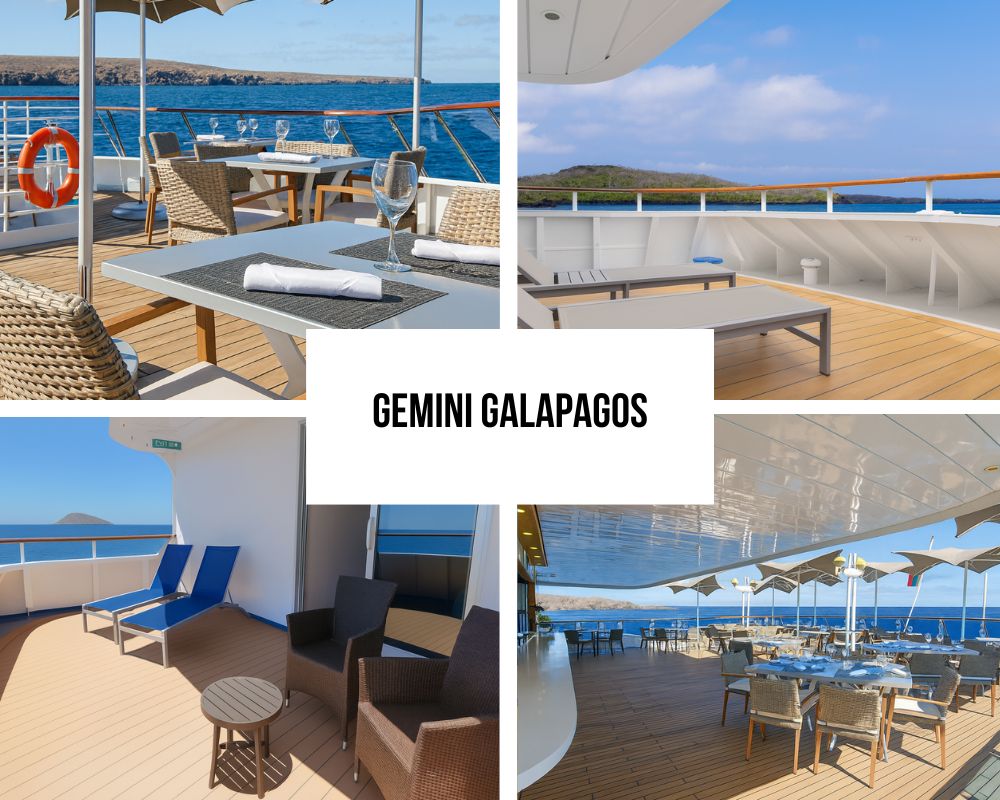
Beyond the cabins, the ship’s common spaces are well-designed for what expedition cruising actually requires. The panoramic lounge doubles as a lecture hall where expedition leaders run nightly recaps and pre-dawn briefings. The library is well-stocked. The outdoor café on the lounge deck becomes the social heart of the ship by day two. On the upper deck, there’s an open-air observation area with a whirlpool hot tub, a small fitness center, and a LEXspa offering massages and body treatments. These amenities don’t rival a resort spa, but after a full day of hiking and snorkeling, a 60-minute massage with island-inspired ingredients is exactly right.
| Cabin Category | Approx. Size | Key Features | Price Range (10-day) |
|---|---|---|---|
| Category 1 (Premium) | ~175 sq ft | Ocean-facing, queen or twin, sofa, mini fridge | From ~$13,091 pp |
| Category 2 (Deluxe) | ~205 sq ft | Larger floor plan, same ocean-facing configuration | From ~$16,152 pp |
| Category 4 (Balcony) | ~205 sq ft | 50 sq ft private balcony, floor-to-ceiling glass doors | From ~$19,855 pp |
| Category 5 (Suite) | ~250 sq ft | Larger balcony, premium fittings | From ~$23,739 pp |
| Suite 601 (Penthouse) | 460 sq ft + 195 sq ft balcony | Private Jacuzzi, dual balconies, forward-facing views, separate living room | Inquire directly |
Prices verified May 26, 2026. Per person, double occupancy. Single cabin supplements available.
The no-elevator situation is one of the most consistently raised practical concerns from travelers we speak with. It’s worth being honest: the stairs are manageable for most people, and the distances are short. But if you have knee issues or travel with someone who does, book the lowest deck cabins and factor the stair situation into your planning. It’s not a dealbreaker for the vast majority of guests, but nobody should be surprised by it.
What Is the Food Like on the National Geographic Gemini?

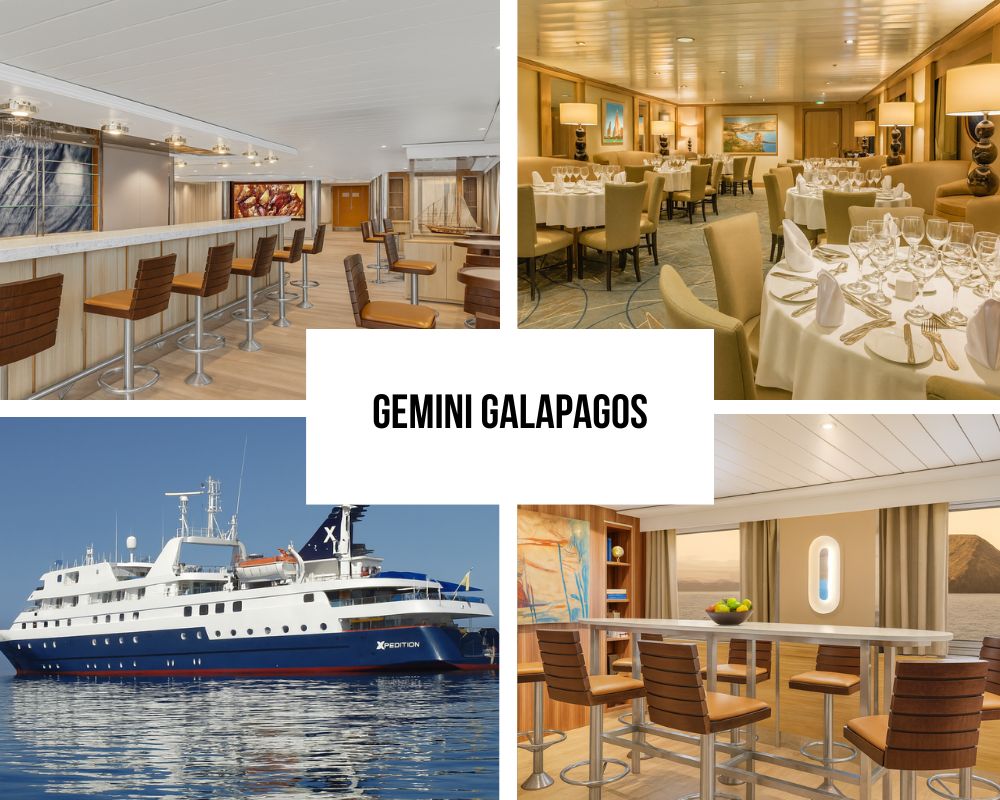
Dining on the Gemini is rooted in Ecuadorian ingredients, sourced locally wherever possible, and served in two settings: the glass-wrapped indoor restaurant on the Marina Deck and the outdoor café on the Lounge Deck. The philosophy is farm-to-table and ocean-to-table, and based on traveler feedback it delivers. Most guests cite the food as one of the genuine surprises of the trip. It’s far better than what most people expect from a small expedition ship.
Breakfast runs as a buffet with locally grown and roasted Galapagos coffee, fresh-pressed juices, Andean supergrains, and made-to-order omelets. It’s not a hushed, formal affair. People come and go, expedition staff join tables, the morning briefing for the day’s excursions sometimes bleeds right into the meal. Lunch covers salads, sustainable seafood, meats, and rotating Ecuadorian dishes. Dinner is where the kitchen shows off more, with fresh produce, sustainably sourced lobster during season, and wines from Chilean and Argentine producers.
What makes the food program feel different from other luxury ships we’ve been on is the intentionality behind the sourcing. The Galapagos has strict biosecurity regulations that limit what can be imported to the islands, which forces a kitchen to be creative with what’s actually available locally. The Gemini’s galley team leans into this constraint rather than fighting it. The result is a menu that genuinely reflects the place, not a generic luxury cruise menu that happens to be sailing near the equator.
The dining is open seating, casual dress, and the cafe and restaurant can accommodate all 48 guests in a single sitting. There’s no reservation system, no dress code to worry about, and expedition leaders regularly join guests at lunch and dinner. That last part matters more than it sounds. Some of the best conversations about what you saw that morning happen over a late lunch with a naturalist sitting across the table.
Alcohol is included with the fare with the exception of certain premium brands. The ship provides 24-hour access to snacks, non-alcoholic beverages, premium coffees, teas, and filtered water. There’s also a well-stocked bar adjacent to the lounge. Nobody goes hungry or thirsty on this ship. One traveler who sailed in late 2025 put it plainly in a review: the food was so plentiful and good that she was convinced she came home several pounds heavier, which she considered entirely worth it.
Which Itineraries Does the National Geographic Gemini Sail?
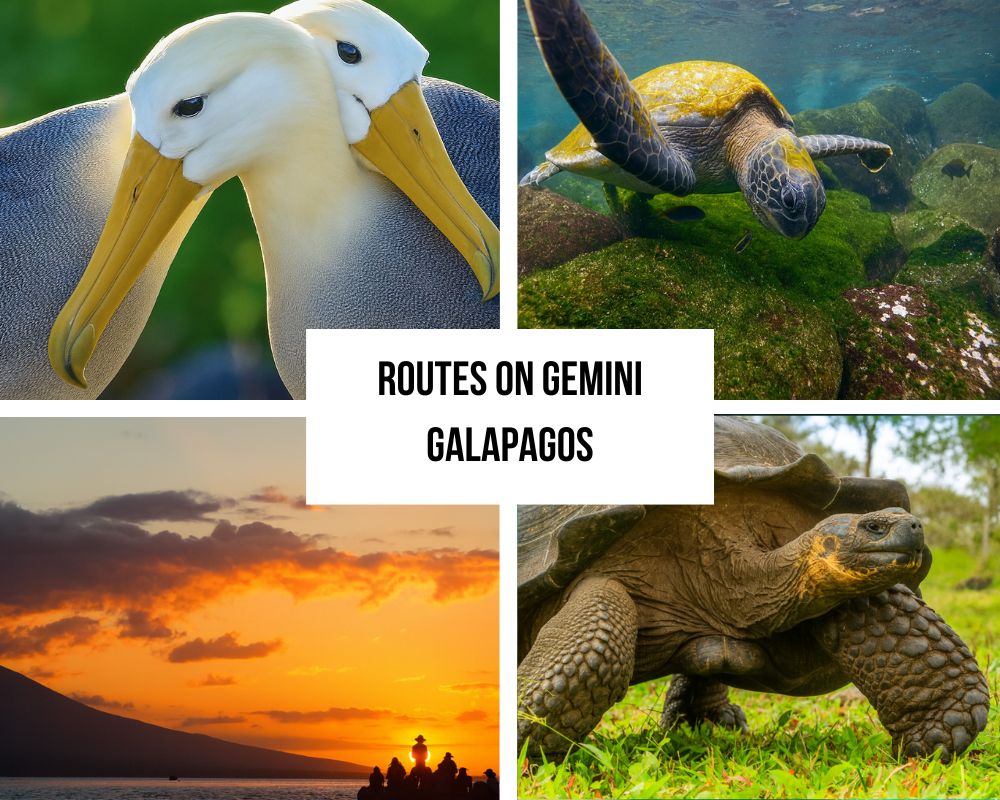
The Gemini sails year-round in the Galapagos on primarily two core itinerary types: a 10-day “Exploring the Galapagos” voyage and an 8-day “Galapagos Escape” format. A longer 16-day combined cruise-and-land option is also available, pairing a Galapagos sailing with time in Peru at sites including Machu Picchu and Cusco. The ship departs Fridays from Baltra Island and covers a wide sweep of the archipelago across both western and central island groups.
The 10-day itinerary is the most popular. Islands typically visited across the rotation include Santa Cruz, Isabela, Fernandina, Española, Floreana, San Cristobal, North Seymour, and Genovesa. Not all islands appear on every departure since the Galapagos National Park manages visitation schedules to protect wildlife and distribute tourist impact. The exact islands you visit depend on park-assigned permits for your specific sailing date.
Genovesa is worth singling out. It’s a flooded volcanic caldera in the remote northern archipelago, home to over a million seabirds. Getting there requires an overnight crossing, which means some passengers feel the ship’s movement during the night. It’s also one of the most spectacular stops in the entire islands. The traveler feedback we’ve gathered consistently puts Genovesa among the top two or three experiences of a full Galapagos voyage, so if your sailing includes it, don’t let a mildly choppy night deter you from choosing this itinerary.
Itinerary selection is genuinely tricky because the specific islands assigned to each departure vary, and certain wildlife behaviors are seasonal. Before you book purely based on price, it’s worth talking through the timing. We at Cruises To Galapagos Islands can walk you through which departure dates hit the wildlife windows you care most about. Send us a quick message here and we’ll look at the specific dates together.
| Itinerary | Length | Islands Typically Covered | Starting Price |
|---|---|---|---|
| Exploring the Galapagos | 10 days | North Seymour, Santa Cruz, Isabela, Fernandina, Española, San Cristobal | From ~$13,091 pp |
| Galapagos Escape | 8 days | Santa Cruz, Isabela, Fernandina, Española, Floreana, San Cristobal, North Seymour | From ~$11,500+ pp (inquire) |
| Galapagos + Peru (Machu Picchu) | 16 days | Full Galapagos circuit + Cusco, Sacred Valley, Machu Picchu | Inquire for pricing |
Prices verified May 26, 2026. All prices per person, double occupancy, excluding international and internal airfare. Internal flights Guayaquil-Baltra run ~$520-$570 pp round-trip.
What Does a National Geographic Gemini Cruise Actually Cost?
A 10-day Gemini cruise starts at roughly $13,091 per person in the entry cabin category, with balcony suites in the $20,000 range and the flagship penthouse considerably higher. That figure covers nearly everything on board: all meals, snacks, included alcohol, excursions, Zodiac tours, snorkeling gear, wetsuits, and guide fees. What it does not cover: Galapagos park entrance ($200), the transit card ($20), internal flights to and from the islands (around $520-$570), gratuities, premium spirits, and international airfare to Ecuador.
The true all-in cost for a 10-day trip is closer to $15,000-$16,000 per person once you add mandatory fees and flights from the mainland. For the penthouse or upper suite categories, you’re looking at $25,000 and above. These are not casual numbers. But put in context against other luxury expedition cruises globally, the Galapagos delivers a density of wildlife encounters that is almost impossible to find anywhere else on earth, and the Gemini captures that at the highest level of access currently available to independent travelers.
One thing worth knowing: Lindblad and its booking partners run regular promotions. A 20% early booking discount on select 2026 and 2027 departures has been available, and family savings promotions (50% off cabin fare for travelers aged 22 and under) appear several times per year. These aren’t tricks to chase, but if your dates are flexible, asking about upcoming promotions can save thousands of dollars on the same sailing.
The pricing landscape for Galapagos cruises has a lot of moving parts, and the Gemini is no exception. Different cabin categories, different booking windows, and seasonal pricing all affect what you actually pay. Rather than spending hours comparing spreadsheets, just reach out to our team here. We’ve been helping travelers price and plan types of Galapagos cruises for years and can tell you quickly whether the Gemini fits your budget or whether a comparable ship delivers better value for your specific travel dates.
What Do Real Travelers Say After Sailing the Gemini?
Traveler feedback on the Gemini is consistently strong, with the guide team, food quality, and intimate atmosphere drawing the most praise. The main practical concerns raised are the absence of an elevator, potential motion during overnight crossings to remote islands like Genovesa, and the premium pricing. These are real trade-offs, not minor quibbles, and they’re worth taking seriously depending on your physical situation and seasickness sensitivity.
From thousands of traveler conversations collected through mytrip2ecuador.com and our YouTube audience, a few patterns emerge that you won’t read on most review sites. The guests who feel the trip was worth every dollar almost universally say the same thing: the guide depth changed what they saw. Not just where they went, but how much they understood of what they were witnessing. The undersea specialist who dives with a camera and shows the footage on a video microscope at the evening recap. The photo instructor who spots a behavior two seconds before it happens and positions you to capture it. These details separate the Gemini from even well-regarded first-class options.
The seasickness question comes up often in the traveler forums we monitor. The honest answer: the Gemini moves more than a large ship, particularly during overnight crossings between island groups. Most guests manage fine with standard preparation, and the ship’s shallow draft was designed for the Galapagos’s specific sea conditions. However, guests with a genuine sensitivity to motion should request lower-deck, midship cabins, bring medication, and accept that two or three overnight sails may involve some movement. It is not a showstopper, but going in unprepared amplifies the experience significantly.
The no-elevator situation gets raised regularly by guests who didn’t realize it in advance. It is a single staircase between decks and the distances are short, but for travelers with knee or hip limitations, this should be discussed before booking. Two wheelchair-accessible cabins are available, but the broader ship design does require some mobility.
What Our Traveler Community Says: Gemini Guest Feedback Breakdown
Based on traveler feedback collected through mytrip2ecuador.com and our YouTube audience over multiple Lindblad Galapagos sailings:
| Guide quality and depth | 98% | “Changed how we saw everything”; “Best naturalists we’ve had anywhere” |
| Food and dining | 95% | “Far better than expected”; “Loved the Ecuadorian dishes”; “Came home heavier” |
| Cabin comfort | 96% | “Spacious and well-designed”; “Best cabins of any small ship we’ve been on” |
| Value for money | 91% | “Expensive but worth it”; “Would not have seen what we saw on a cheaper ship” |
| Motion / seasickness concern | 14% reported mild issues | “Fine with medication”; “Overnight crossings were the only rough stretches” |
| Would book Lindblad again | 97% | “Already looking at their other expeditions”; “Only regret is not doing 10 days instead of 8” |
Is the National Geographic Gemini Worth It for Your Trip?
For travelers who prioritize guide depth, food quality, and an intimate expedition atmosphere over cost, the Gemini is one of the top three options in the Galapagos right now. It is not the right choice if your primary constraint is budget, if you have significant mobility limitations, or if you expect the kind of resort-style amenities found on larger ships. For everyone else, the combination of 48-guest capacity, a 1:1 crew ratio, and Lindblad’s 50+ years of on-the-ground relationships in the islands makes a genuinely compelling case.
Here’s the honest version of the verdict, which most review articles skip. The Galapagos is a wildlife destination first. The animals will astonish you on any legitimate cruise class, from budget to luxury. What changes as you move up the price ladder is not access to the islands themselves but depth of experience, cabin comfort, and the quality of interpretation. On the Gemini, you have five expedition staff for 48 guests, a photo instructor who has shot for National Geographic, an undersea specialist, and a crew that has been doing this in these specific islands for decades. That is a different kind of trip than what a good first-class vessel offers. Not categorically superior in every dimension, but genuinely different.
The price is real. For most travelers, this is the most expensive vacation they will ever take. But the Galapagos itself is a once-in-a-generation decision for most people. The question worth asking is not whether the Gemini is expensive. It absolutely is. The question is whether, given you’re already committing to a Galapagos cruise, the gap between first class and the Gemini is worth the increment. Based on the traveler feedback we’ve gathered and our own time on the water out there, the answer is yes for anyone who will genuinely use what the ship provides.
One practical point: book early. The Gemini has 48 berths on a year-round schedule, but popular departure windows, particularly the July through October high season for wildlife activity, fill months in advance. The top suite categories go first. If you’re targeting specific dates, waiting rarely helps the price and consistently hurts availability.
What Trips People Up on the National Geographic Gemini
From monitoring travel forums, TripAdvisor threads, and our own traveler interviews, these are the patterns that catch people off guard:
Not budgeting for the extras. The per-person cruise fare is large but the add-ons are real. Galapagos park entrance is $200, the transit card is $20, internal flights from mainland Ecuador run $520-$570, and gratuities are not included. Budget an additional $1,500-$2,000 per person over the listed cruise fare to land on the true cost.
Choosing the wrong cabin for their mobility level. The ship has no elevator. This is not a problem for most guests, but for travelers with knee issues or significant mobility concerns, it needs to factor into cabin selection. Book lower-deck cabins if this applies to you.
Underestimating the physical pace. The Gemini is an expedition cruise. Days start early, often before 6 AM, and involve hiking over volcanic terrain, getting in and out of Zodiacs, and snorkeling in open water with some current. Guests who arrive physically unprepared and fatigued from travel miss the best parts of the first two days. A few days of mainland Ecuador before boarding helps considerably.
Seasickness without a plan. The overnight crossings, particularly to Genovesa and the western islands, involve real movement. Guests who wait until they feel sick to act on this lose most of the next morning. Come with a plan, whether that’s prescription patches, over-the-counter medication, or sea bands, and implement it before the overnight sail, not after.
Booking the wrong itinerary for their wildlife priorities. Whale shark season runs July through November and requires specific western island routing. Blue-footed booby courtship peaks in May through July. Giant tortoise nesting behavior changes by island and season. If you have a specific wildlife goal, ask before you book a departure date, not after.
Frequently Asked Questions
Does the National Geographic Gemini have an elevator?
No. The Gemini connects all four decks by stairs only. Two wheelchair-accessible cabins are available, but guests with significant knee, hip, or mobility limitations should discuss the ship’s layout carefully before booking and consider requesting a lower-deck cabin to minimize stair use.
What is included in the National Geographic Gemini cruise price?
The cruise fare includes all meals and snacks, included alcohol (beer, house wine, cocktails, spirits except premium brands), 24-hour access to non-alcoholic beverages and filtered water, all guided shore excursions, Zodiac tours, snorkeling gear and wetsuits, kayaks, paddleboards, glass-bottom boat access, and the full expedition guide team. Not included: Galapagos park entrance fee ($200), transit card ($20), internal flights to/from the islands (~$520-$570 pp), gratuities, premium spirits, and international airfare to Ecuador.
How is the National Geographic Gemini different from other Lindblad Galapagos ships?
The Gemini is the largest ship in the Lindblad Galapagos fleet at 296 feet and 48 guests, and offers the largest suites in the fleet including the flagship Suite 601 with a private hot tub and dual balconies. It carries the same expedition guide team structure as the Islander II and Endeavour II, but has more cabin space per guest and the 1:1 crew-to-guest ratio. The National Geographic Delfina is a smaller 16-guest catamaran option for those wanting a more intimate sailing.
Is the National Geographic Gemini good for families with children?
Yes. The ship has interconnected cabin configurations for families, a National Geographic Global Explorers program for kids and teens, and family savings promotions (typically 50% off cabin fare for travelers aged 22 and under) are available on select departures. The expedition pace is active and full days, which suits curious kids well. The caveat is the stairs-only layout, which matters for very young children and anyone with mobility concerns.
When is the best time to sail the National Geographic Gemini in the Galapagos?
The Gemini sails year-round, and there is genuinely no bad time to visit the Galapagos. July through November offers calmer seas, whale shark sightings in the western islands, and active booby courtship displays. December through May brings warmer water temperatures, green vegetation, and sea turtle nesting. The key is matching your itinerary to your specific wildlife priorities, which varies by island and season.
Is seasickness a problem on the National Geographic Gemini?
The Gemini is a 48-guest small ship and will move more than a large cruise vessel, particularly during overnight crossings between island groups. Most guests do fine with preparation. For guests sensitive to motion, lower-deck midship cabins are more stable, and arriving with medication already in hand (prescription patches, non-drowsy antihistamines, or sea bands) and taking it before the crossing rather than after is strongly recommended.
Ready to Plan Your Galapagos Cruise?
Planning a Galapagos expedition is one of the more complex travel decisions most people will ever make. The itinerary timing, the cabin categories, the hidden costs, the wildlife seasonality – there’s a lot to sort through, and the brochures only go so far.
Our team at Cruises To Galapagos Islands has been doing this for years. Oleg has been to the Galapagos three times, taken two cruises personally, and physically inspected nearly every vessel sailing in the archipelago. We’re rated 4.9 stars on Google and TripAdvisor, and our quotes are free, honest, and come with zero pressure to book.
Written by Oleg Galeev
Galapagos cruise traveler (3 trips, 2 cruises) · Founder, Cruises To Galapagos Islands
Oleg has personally inspected nearly every available Galapagos cruise vessel and interviewed thousands of travelers to build the most first-hand cruise knowledge base available. He also runs the Ecuador travel blog mytrip2ecuador.com and the YouTube channel My Trip to Somewhere.
Cruises To Galapagos Islands is rated 4.9 stars on Google and TripAdvisor.
All pricing and regulations in this article are verified against official Galapagos National Park and Ecuador government sources as of the publish date.