
TL;DR
The Golondrina is a 16-passenger tourist-class (budget) motor yacht, one of the oldest and most recognized entry-level vessels in the Galapagos fleet. Eight bunk-bed cabins across three deck levels, carpeted throughout, all with private bathrooms, hot water, and individual A/C. Itineraries run 4, 5, and 8 days and can be combined into 12 and 15-day cruises – some of the most flexible scheduling in its class. It operates alongside its sister ship the Fragata, which is newer and slightly roomier. The Golondrina’s honest strengths are outstanding guide quality, warm crew culture, genuinely good food, and its unbeatable price. Its honest limitations: the boat is old and shows it, cabins are small, engine noise on overnight transits is significant, and some travelers have flagged railing height on the upper deck in rough conditions. For budget travelers who go in with clear expectations, it over-delivers. For those expecting more than budget class offers, it won’t.
Golondrina: Quick Facts
| Detail | Info |
|---|---|
| Vessel type | Motor yacht (mono-hull) |
| Class | Tourist class (budget) – naturalist cruises only |
| Length | 22.22 m (73 ft) |
| Capacity | 16 passengers |
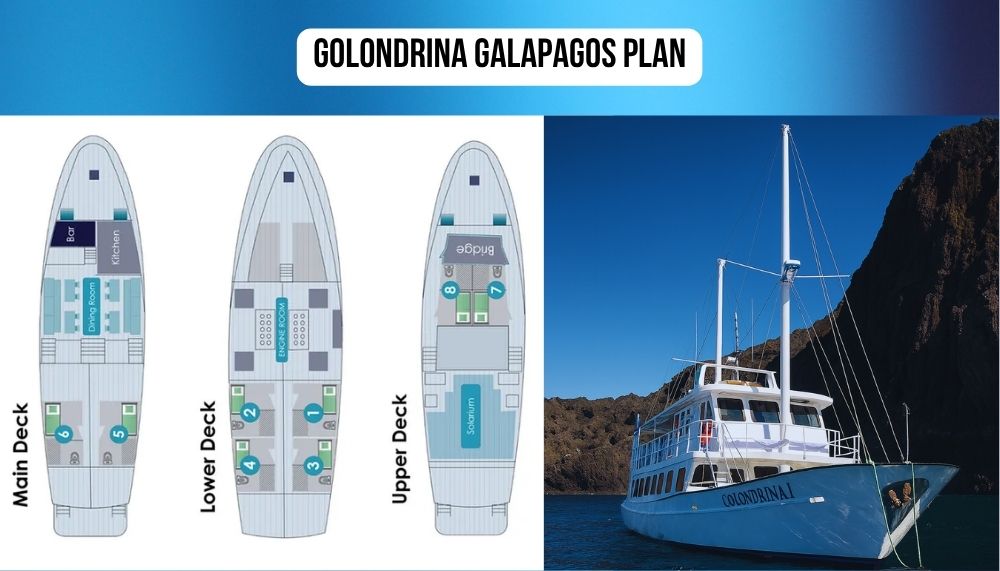
| Cabins | 8 double cabins, all bunk-style – upper deck (cabins 7 & 8): windows; main deck (5 & 6): windows; lower deck (1-4): portholes. All carpeted, private bathroom with hot water, A/C. |
| Speed | 8 knots |
| Crew | 5 crew (captain, engineer, cook, sailor) + 1 bilingual naturalist guide |
| Itinerary lengths | 4, 5, and 8 days; combinable into 12 and 15-day cruises |
| Departures | Multiple per week (Monday and Friday for 5-day; Monday and Friday for 8-day) |
| Sister ship | Fragata – tourist superior class, newer, larger cabins, runs same itineraries alongside the Golondrina |
| Price range (2026) | ~$350-$450 per person per day tourist class range – contact for exact departure rates (prices verified May 22, 2026) |
| Snorkeling/wetsuits | Available for rent on board – snorkel gear: $25 (5 days) / $35 (8 days); wetsuit: $25 (5 days) / $35 (8 days) |
| Park fees (not included) | $200 USD adults / $100 USD children under 12 + $20 USD TCT – verified May 22, 2026 |
What Is the Golondrina and Who Is This Cruise Actually Built For?
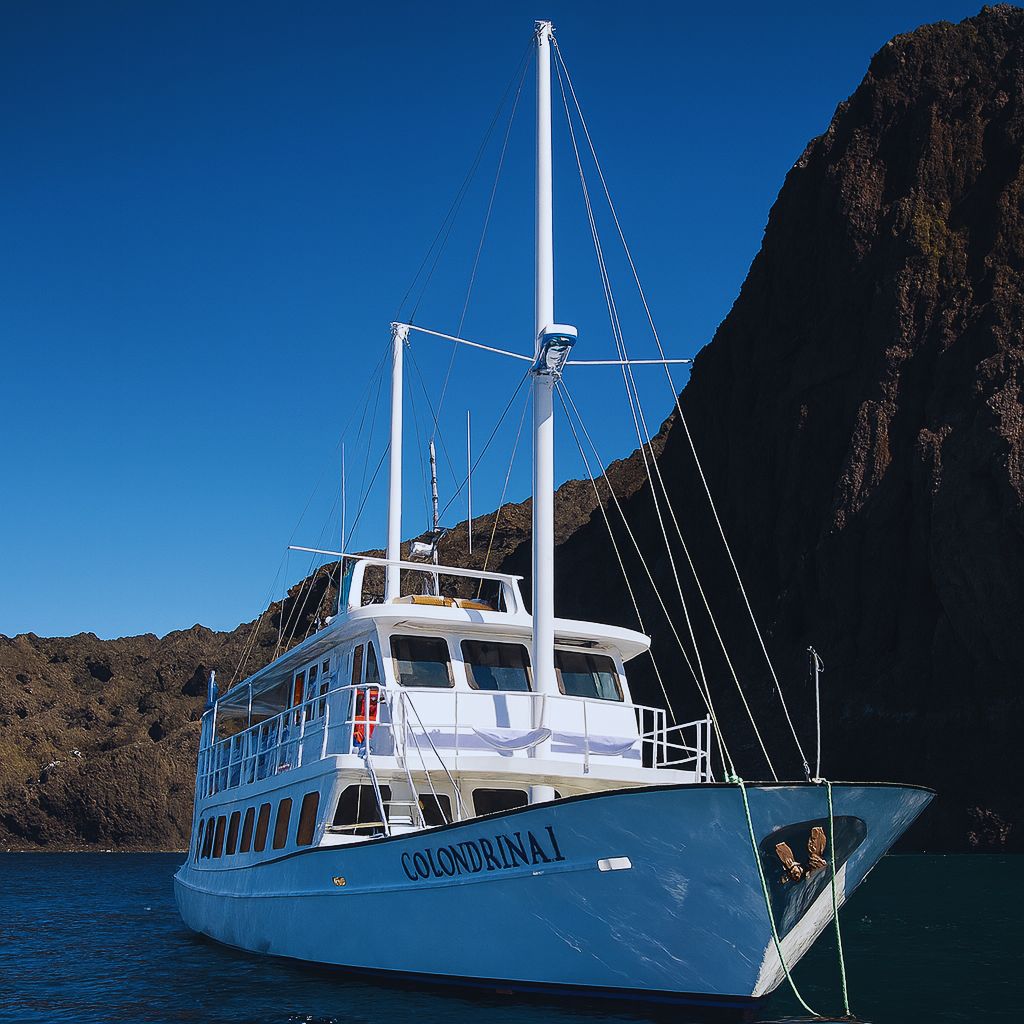
The Golondrina is one of the oldest continuously operating naturalist yachts in the Galapagos fleet – a 16-passenger, 73-foot motor yacht in the tourist (budget) class with a long and genuine reputation for excellent guides, warm crew, and good food at prices that make the islands accessible to travelers who can’t or won’t spend $3,000 to $5,000 for a week at sea. It is not a polished product. It is a classic, somewhat worn vessel that has been taking people to see marine iguanas and blue-footed boobies since before most of the archipelago’s current mid-range fleet existed.
The boat’s name means “swallow” in Spanish – the small, fast bird. It suits a vessel that is humble in appearance but reliably gets you where the wildlife is. The Golondrina operates alongside a sister ship, the Fragata, on the same itineraries. The Fragata is tourist superior class, newer, and physically more spacious. If you’re comparing the two, the Fragata costs more and delivers a noticeably better cabin experience. Both use the same guides on many departures, cover the same islands, and serve food from the same kitchen ethos. The choice between them is almost entirely about how much the onboard comfort matters to you relative to the price difference.
Who the Golondrina is actually built for: budget-conscious travelers who understand they are buying access to the Galapagos wildlife experience at the lowest realistic price, not a mid-range cruise experience at a bargain. People who have been to the Galapagos before and just want to get back out there without spending first-class money. Solo travelers and students. Backpackers doing their first big wildlife expedition. Families with teenagers who have more flexibility than comfort requirements. Groups who book the whole boat and don’t care about the age of the vessel as long as the guide is exceptional and the islands deliver.
The islands always deliver. That hasn’t changed since Darwin.
If you’re trying to decide between the Golondrina and the Fragata – or comparing either of them against other vessels in a similar price range – we can walk you through the actual differences honestly. Fill out this short form and we’ll get back to you with a free, no-pressure quote tailored to your dates and priorities.
What Are the Cabins and Onboard Accommodations Like on the Golondrina?
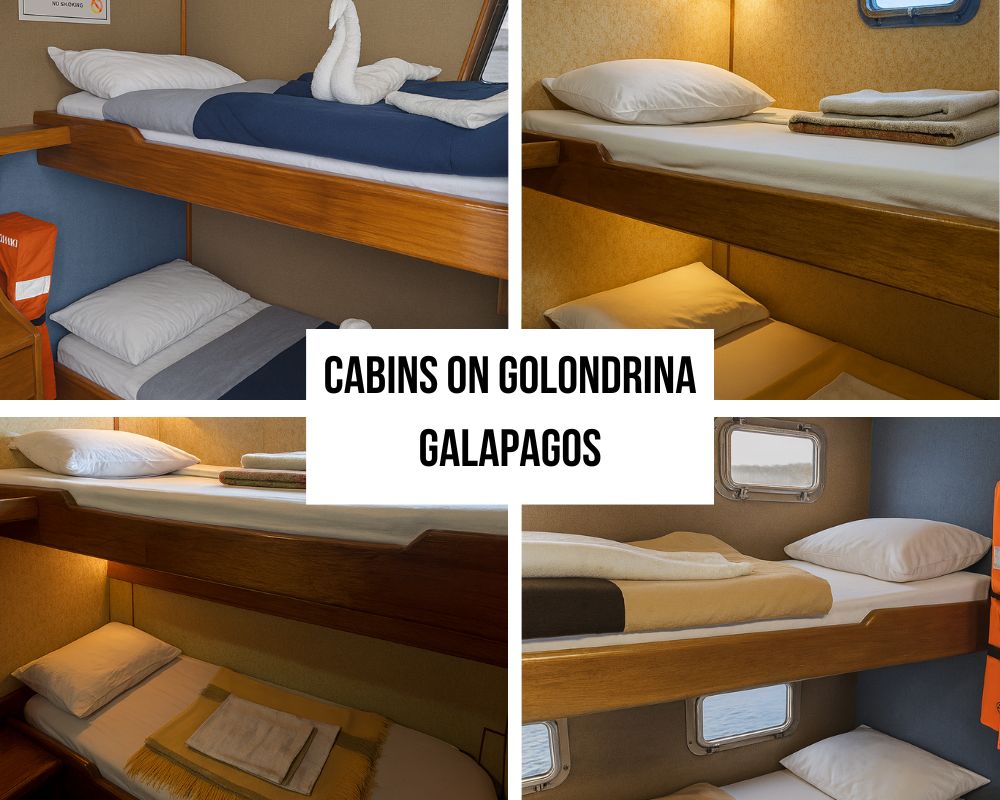
The Golondrina has eight cabins across three deck levels, all bunk-style with private bathrooms, hot showers, and individual air conditioning. Upper deck cabins (7 and 8) have windows. Main deck cabins (5 and 6) have windows. Lower deck cabins (1 through 4) have portholes. All are carpeted, which is unusual and genuinely appreciated, it softens the feel of a small space considerably. Cabins are small by any standard, roughly 4.5 to 5 square meters, and bathrooms are proportionally tight. Both facts are consistent and should be expected, not discovered on arrival.
The carpet detail comes up in reviews more than you’d expect. On a budget boat where everything else is functional rather than comfortable, the carpeted cabins create a warmth that travelers notice. Combined with the private bathroom setup, the Golondrina’s cabin experience consistently exceeds what first-time guests anticipate given the price.
Cabin selection follows the same hierarchy as every multi-deck vessel: upper deck cabins have windows and less engine exposure. Lower deck cabins sit closest to the engine room and take more mechanical noise on overnight transits. Four lower-deck cabins with porthole-only windows is a meaningful constraint if you’re a light sleeper or someone who needs natural light in the morning. Specify upper or main deck when booking. It doesn’t cost more, and the difference in overnight comfort is real.
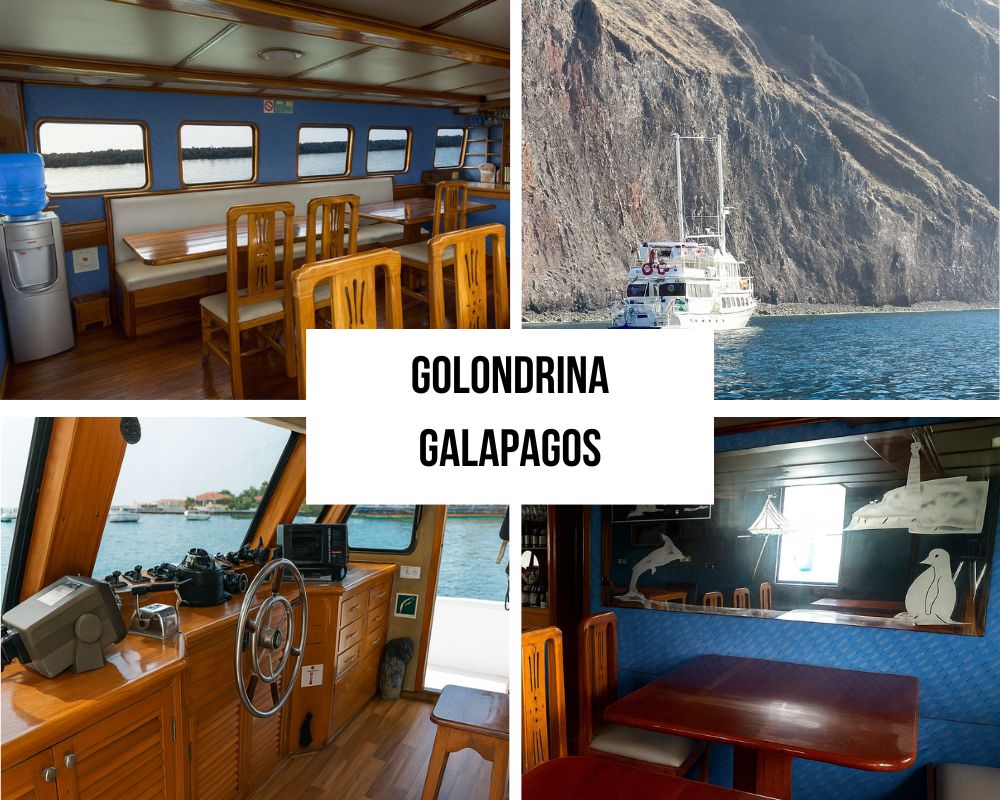
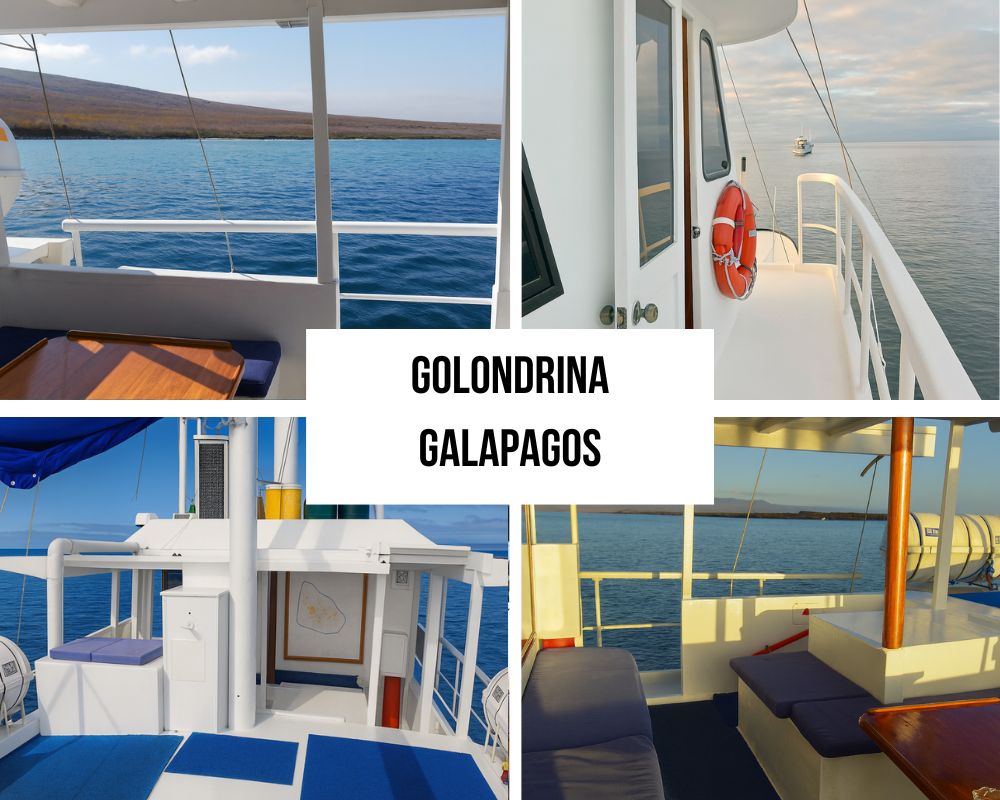
The common areas are the boat’s genuine strengths. The dining room and lounge are comfortable, with a TV and DVD player, bar, and enough seating for all 16 guests at once without crowding. The sundeck is a reliable gathering point between excursions – several reviews mention spending time there reading, watching ocean life, or simply letting the salt and wind do their thing. One reviewer described the experience as “bare feet and comfortable,” which captures it better than most official descriptions.
One specific physical concern from multiple reviews deserves direct mention: the railing height on the upper deck. At least two independent reviewers have described it as low enough that going overboard was a realistic concern in rough night conditions, and one flagged that the area outside upper-deck cabins was dark and felt unsafe during overnight passages in rough seas. The operator’s response is that the vessel meets all Galapagos National Park and maritime safety regulations. Both things can be true simultaneously. Our honest advice: be cautious on deck during rough overnight passages, use the interior passages if you need to move around at night, and treat the upper sundeck as a daytime-only space when conditions are not calm.
Which Itineraries Does the Golondrina Sail and What Islands Will You See?
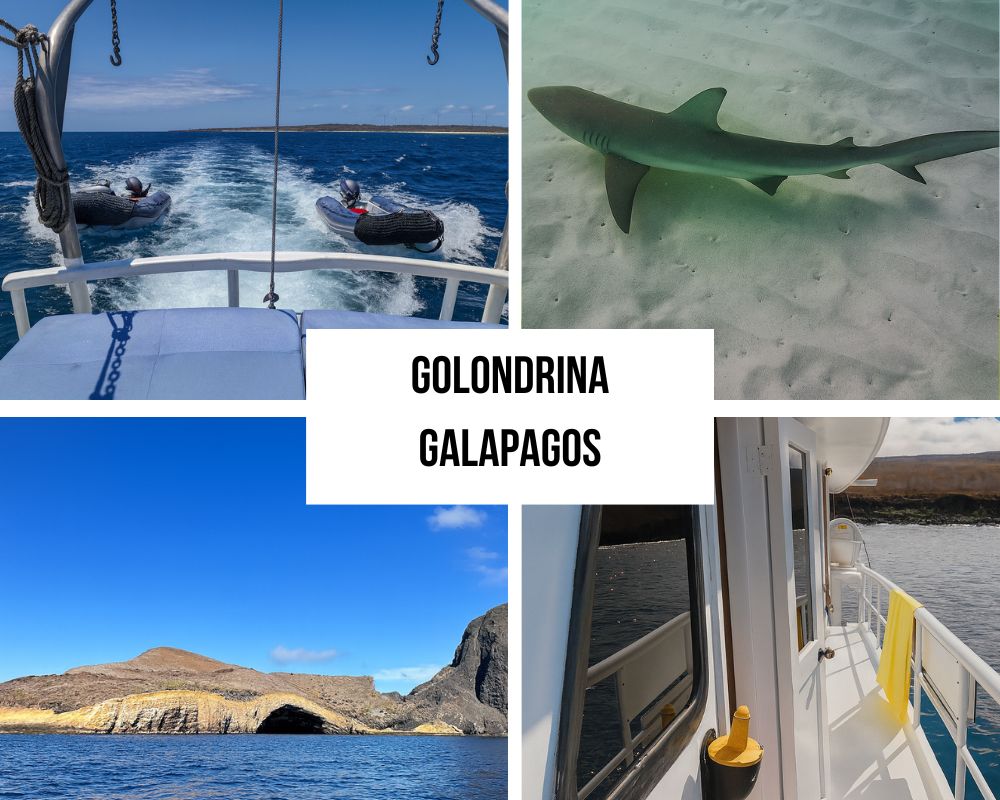
The Golondrina runs four primary itineraries – A, B, C, and D – covering different combinations of the central, eastern, western, and southern islands. Lengths run 4, 5, and 8 days, with back-to-back combinations available for 12 and 15-day full-archipelago coverage. The flexibility is one of the boat’s genuine selling points. Most budget-class vessels lock you into one itinerary at one length. The Golondrina gives you meaningful choice, and the itinerary design draws on years of operational knowledge about where the best wildlife encounters are at each island.
| Itinerary | Length | Key Islands and Sites | Wildlife Highlights |
|---|---|---|---|
| A – Eastern and Central | 8 days | Genovesa (Prince Philip’s Steps, Darwin Bay), Bartolome, South Plaza, Santa Fe, San Cristobal (Kicker Rock), Espanola | Red-footed boobies, frigatebirds, sea lions, blue-footed boobies, waved albatross (seasonal), sharks at Kicker Rock |
| B – Northwestern | 5 days | Mosquera, Punta Vicente Roca (Isabela), Urbina Bay, Tagus Cove, Puerto Egas (Santiago), Chinese Hat, Rabida | Seahorses, penguins, sea turtles, mola mola, marine iguanas, Darwin finches, Galapagos hawks |
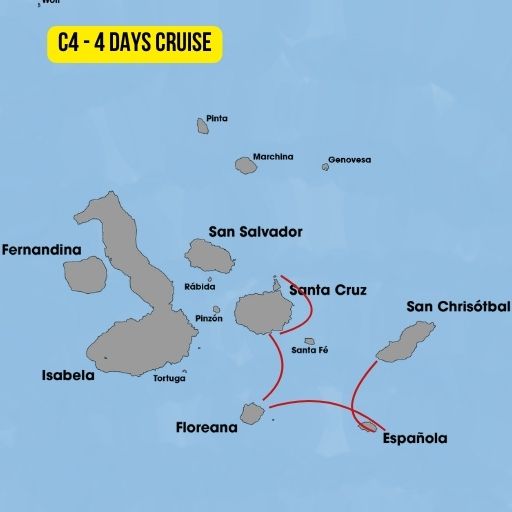
| C – Central and Northern | 8 days | Bachas Beach, Genovesa (El Barranco), Santiago (Puerto Egas, Espumilla Beach), Bartolome, South Plaza, Floreana, North Seymour | Sea turtles, boobies, frigatebirds, marine iguanas, sharks, flamingos at Floreana |
| D – Isabela Focus | 4 days | Tintoreras Islet, Breeding Center Arnaldo Tupiza, Wetlands, Wall of Tears | Giant tortoises, penguins, marine iguanas, whimbrels, rays at Tintoreras |
The 8-day Itinerary A is the strongest offering for first-timers who want genuine breadth. It combines Genovesa‘s dramatic birdlife – the prince Philip’s Steps walkway through nesting red-footed boobies is one of the most visually overwhelming land visits in the archipelago – with the central islands, Kicker Rock snorkeling, and the waved albatross at Espanola in season. That combination at budget pricing is the best case the Golondrina makes for itself.
The 5-day northwestern itinerary (B) covers Isabela and Santiago, which put you in front of the western island wildlife: seahorses, penguins, mola mola, and the dramatic panga ride through Punta Vicente Roca. For travelers who have already done the central islands on a previous trip, this is the itinerary to consider on a return visit.
The back-to-back combination option deserves emphasis. Most budget vessels don’t offer it at all. Booking a 5-day and an 8-day departure consecutively gives you 13 days on the water covering significantly more of the archipelago than any single departure can reach. For travelers who can make the time work, this is one of the best-value ways to see the Galapagos in depth without paying first-class prices.
The itinerary that’s right for you depends on which wildlife you most want to see and how much time you have. We know the Golondrina’s routes well and can match you to the right departure. Reach out here for a free quote and honest itinerary advice – no booking pressure.
Multiple Route Options on the Golondrina Galapagos Cruise
How Is the Food, Crew, and Day-to-Day Experience on the Golondrina?
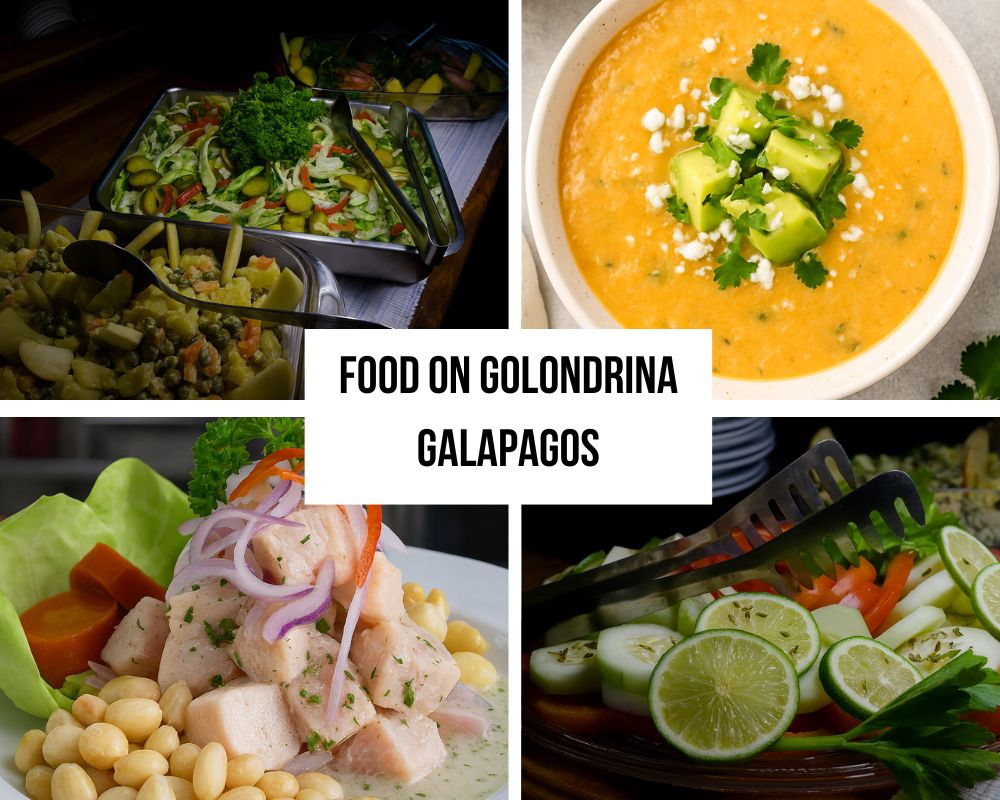
Food on the Golondrina is consistently one of the most praised aspects of the boat across years of independent reviews – a chef working fresh local ingredients, producing meals that multiple travelers describe as better than what they eat at home. Three buffet-style meals daily plus after-excursion snacks. Coffee, tea, and purified water included throughout the day. Soft drinks and alcohol are extra. The crew is small – five people plus the guide – and the 16-passenger cap means you get attentive, personalized service that larger or more corporate vessels can’t match.
The food praise is remarkably consistent across a decade of reviews. Names come up: Elliott and Sarah, credited as chefs on specific departures, described as producing “amazing dishes.” Multiple reviewers note specific meals. One traveler said the food was “better than we eat at home” – not a comment you expect about a budget vessel. The Golondrina’s kitchen quality appears to be a genuine point of pride that has been maintained over years of operation, not a recent improvement that might not hold.
The crew culture is warm in the way that small family-operated vessels tend to be. At 16 passengers with a crew of five, everyone knows everyone within a day. The crew assists on excursions, helps with snorkeling entries and exits from the pangas, watches the group in the water, and generally treats the personal safety and enjoyment of guests as a hands-on rather than procedural responsibility. Several reviewers mention the crew helped a seasick passenger recover and stay engaged with the rest of the trip – a detail that says something real about the quality of care.
The daily rhythm mirrors any Galapagos naturalist cruise: morning excursion, meals, afternoon excursion, briefing for tomorrow, overnight transit. The Golondrina moves at 8 knots, which is slower than most vessels in the fleet. On overnight passages, the engine noise is a genuine factor – multiple reviewers specifically recommend earplugs. The lower deck cabins are most affected. This is not something that will change between departures. Pack earplugs, request an upper deck cabin, and treat it as the expected cost of sailing on an older budget motor yacht.
How Good Are the Naturalist Guides on the Golondrina?
The Golondrina’s guide quality is consistently its most praised feature across years of reviews, and the names Jorge and Roberto appear repeatedly across independent accounts from multiple years. Jorge has been a guide since 1989 and is described by a recent reviewer as having “amazing animations of the animals” and absolute mastery of the natural history. Roberto, described as newer, earned equally strong write-ups for warmth, in-water supervision, and making the experience accessible to younger travelers. Guide quality on the Golondrina is a genuine differentiator that punches well above the boat’s budget-class price.
Jorge’s 1989 start date is worth sitting with for a moment. That’s over 35 years of guiding in the Galapagos. He has watched the tortoise population recover, seen the sea lion colonies shift with El Niño cycles, walked every trail on every permitted island hundreds of times. When he explains why the Darwin finches on one island have different beak shapes from the finches on an island 50 kilometers away, he’s not reading from a script. He was watching this ecosystem before most of his guests were born.
That level of accumulated field knowledge is what separates exceptional Galapagos guides from competent ones. The official certification system sets a baseline. What Jorge and Roberto bring is the layer that no certification covers: the ability to read current conditions, anticipate where the interesting encounters will be that day, and communicate the ecological relationships between species in a way that makes the archipelago feel alive rather than like a zoo with particularly well-trained staff.
One note from the research: the Golondrina shares its guide pool with the sister ship Fragata, and some departures have guides originally listed in booking paperwork who are then replaced before sailing. Roberto, for instance, was described as “not the guide initially listed in our paperwork” by one reviewer who nonetheless gave him a strong review. Guide assignment is worth confirming a week before departure – not because quality is low, but because specific guide experience varies and knowing who is on your trip helps you prepare the right questions.
What Do Real Travelers Say About the Golondrina? (The Good and the Honest)
The Golondrina’s review profile is broadly positive, with consistent praise for guides, food, crew, and wildlife encounters, and consistent notes on cabin size, engine noise, and the age of the vessel. The most significant safety concern raised by independent travelers – railing height on the upper deck during rough overnight passages – appears in multiple reviews across different years and is worth naming plainly. The operator states full compliance with maritime safety regulations. Both things can be true. Travelers who book upper-deck cabins should exercise caution on deck at night in rough conditions.
The pattern across travelers who loved the Golondrina is almost identical to the pattern for every other budget vessel in this series: they knew what they were booking, they went for the wildlife and the guide rather than the facilities, and the Galapagos delivered far beyond what the price of the boat suggested was possible. One family described a Christmas trip with three teenagers as exceeding every expectation. A solo traveler said the small group size meant the crew could assist on a nearly one-on-one basis, making difficult terrain and ocean snorkeling feel manageable. A European couple called the food better than home cooking.
The travelers who came away less satisfied almost always describe a mismatch between expectation and product. One guest who had sailed the Fragata and then the Golondrina back-to-back described the Golondrina as “fine for a budget trip” but noticeably more dated and cramped than its sister ship. That’s accurate. It is more dated and cramped. The Fragata costs more. If the comparison matters to you, the premium for the Fragata is real and the difference in physical product is real.
One specific success pattern from experienced Galapagos travelers who chose the Golondrina: they prepared well for the physical demands of the trip – hiking boots for rough lava terrain, wetsuits for cold-season water, seasickness patches used preventively rather than reactively, and earplugs for the engine noise. Travelers who arrive physically prepared and expectation-calibrated consistently describe the Golondrina as one of the best-value experiences they’ve had anywhere.
If you’re deciding between the Golondrina and the Fragata – or trying to work out whether either fits your travel style – we can give you a straight comparison in about five minutes. Send us a quick message and we’ll put together a free quote covering both options for your dates.
How Does the Golondrina Compare to Similar Vessels in Its Class?
Among budget and lower tourist-superior class vessels, the Golondrina is one of the most established names in the fleet with a guide quality that consistently exceeds what its price would suggest. Its closest natural comparison is its own sister ship the Fragata, which runs the same itineraries at tourist-superior pricing with newer, more spacious cabins. Against other budget-class competitors, the Golondrina’s guide legacy and itinerary flexibility are its strongest differentiators. Its age and the railing concern are its honest limitations.
| Vessel | Class | Capacity | Bed Type | Notable Edge |
|---|---|---|---|---|
| Golondrina | Budget / Tourist | 16 | Bunk | Lowest price in fleet; 35-year guide legacy; most flexible itinerary combinations (4/5/8/12/15 days) |
| Fragata | Tourist Superior | 16 | Bunk/convertible | Sister ship, same itineraries, newer and more spacious, upper-deck convertible twin beds |
| Aida Maria | Tourist Superior | 16 | Bunk | Handbuilt local timber, widest itinerary range (up to 15 days), strong Galapagos family roots |
| Angelito | Tourist Superior | 16 | Convertible twin/double | Owner on every departure, convertible beds in all cabins, Itinerary A (Genovesa + Espanola) |
The Golondrina versus Fragata comparison is the most practically useful for travelers who have already decided on this operator’s network. The Fragata is the same itineraries, the same ocean, often the same guide, with a newer and more comfortable physical product. Travelers who have sailed both consistently rate the Fragata higher for cabin comfort. The Golondrina wins on price and on the emotional texture of being on a vessel with decades of history in these waters.
Against the Aida Maria and Angelito, the Golondrina competes primarily on price. Both the Aida Maria and Angelito are in tourist-superior class and offer more recent vessels at marginally higher prices. The Golondrina’s 35-year guide legacy and particularly strong food program are genuine competitive advantages. Its age and the railing issue are genuine disadvantages. Which set of trade-offs matters more is a personal decision that a 10-minute pre-booking conversation can usually resolve.
Is the Golondrina Worth Booking? Our Honest Verdict
Yes, for the right traveler with the right expectations. The Golondrina delivers outstanding wildlife access, genuinely excellent guides, consistently praised food, and warm crew service at the lowest price available for a multi-day Galapagos cruise. The honest conditions: the boat is old and the age shows, cabins are small, engine noise on overnights is significant, snorkeling gear costs extra, and some deck areas warrant caution in rough night conditions. Go in knowing all of this and the Golondrina over-delivers. Go in expecting more and it won’t.
The Golondrina has been taking people to see the iguanas and the tortoises for decades. Guides who have been working these islands since 1989 have seen things no first-time visitor or newer boat can replicate: the recovery of wildlife populations, the rhythms of the seasons, the way the current shapes where the wildlife concentrates on any given day. That accumulated knowledge is not something you can buy on a newer, more expensive vessel. It lives in the people who have been doing this work year after year on a boat called the Swallow.
If you are a solo traveler, a student, a budget-focused family, or anyone for whom the Galapagos has felt financially out of reach – the Golondrina is how you get there. Book an upper or main deck cabin, pack earplugs, rent the wetsuits and snorkel gear, take seasickness medication preventively, and show up ready to be surprised by how much the islands give you regardless of what class of boat brought you there.
What Travelers Actually Report: Cohort Feedback from Golondrina Guests
Based on feedback gathered through mytrip2ecuador.com, our YouTube audience, and years of traveler conversations across the Galapagos fleet, here’s what people who have sailed the Golondrina consistently report across multiple years of departures.
| Category | % Positive | % Mixed | % Negative | Key Pattern |
|---|---|---|---|---|
| Guide quality | 87% | 9% | 4% | Among the highest guide ratings in the budget class; Jorge (35+ years) and Roberto named repeatedly across years |
| Food quality | 83% | 13% | 4% | Consistently one of the best-rated food programs in budget class; chef named in multiple positive accounts |
| Cabin comfort | 54% | 31% | 15% | Carpeting and private bathrooms exceed budget expectations; engine noise and cabin size are consistent notes |
| Wildlife experience | 98% | 2% | 0% | Near-universal; Galapagos wildlife is extraordinary regardless of vessel class |
| Crew warmth | 84% | 11% | 5% | Small crew and 16-passenger cap create genuine personal attention; crew water safety supervision specifically praised |
| Overall value for money | 81% | 13% | 6% | Travelers who calibrated expectations to budget class consistently rate value very high; those who expected more rated it lower |
What Catches People Off Guard on the Golondrina
These are the practical variables that come up consistently enough across reviews that we flag them with every traveler before they book.
Engine noise on overnight transits is significant and well-documented. The Golondrina runs at 8 knots and transits between islands at night. Multiple independent reviews from different years recommend earplugs specifically and explicitly. Lower-deck cabins are most affected. Pack earplugs the way you pack sunscreen – don’t think about it, just do it.
The railing on the upper deck in rough conditions warrants caution. At least two independent reviewers across different years described the railing as low enough to be uncomfortable on rough overnight passages, with one noting that the exterior deck area was dark and movement outside felt risky. The operator confirms compliance with all applicable maritime safety regulations. Our honest advice: treat the outer deck as a daytime feature, move through interior passages at night during rough conditions, and if you’re in an upper-deck cabin, be aware of the exposure in adverse weather.
Snorkeling gear and wetsuits cost extra. Unlike some competing vessels that include these, the Golondrina rents them separately – snorkel gear runs $25 to $35 depending on trip length, wetsuits the same. Budget these in from the start. Bringing your own snorkel mask is worth doing if you have one; a well-fitting personal mask improves the snorkeling experience significantly.
The boat is old and looks it. The Golondrina is not a renovated vessel. What you see is what decades of use produce: a worn but functional interior, well-maintained where it matters (safety equipment, bathrooms, engines), and carrying the physical character of a vessel that has been working the archipelago for a long time. Travelers who find charm in that description will love it. Travelers who find discomfort in it should consider the Fragata or another tourist-superior option.
The TCT must be completed online before departure. As of May 29, 2025, all travelers must purchase the $20 USD Transit Control Card through the official digital platform before flying to the islands. The airport counter option is being phased out. Complete it before you leave for Quito or Guayaquil and carry both digital and physical copies.
Frequently Asked Questions
What is the difference between the Golondrina and the Fragata?
They are sister ships run by the same operator on the same itineraries. The Fragata is tourist-superior class – newer, larger cabins, and upper-deck convertible twin beds rather than bunks. The Golondrina is tourist (budget) class – older, smaller cabins, bunk beds throughout, lower price. Both use the same guide pool and cover the same islands. The choice is almost entirely about how much the cabin experience matters to you relative to the price difference.
Can I combine Golondrina itineraries for a longer cruise?
Yes, this is one of the Golondrina’s genuine strengths. Back-to-back combinations of the 5-day and 8-day itineraries create 12 and 15-day cruises covering significantly more of the archipelago. Not all budget vessels offer this flexibility. Confirm exact combination options and pricing when booking, as availability depends on departure schedule alignment.
Is the Golondrina suitable for families with children?
Yes, with some considerations. Multiple family reviews describe positive experiences including with teenagers. The activity level is genuinely demanding – daily snorkeling, hiking over rough lava terrain, wet and dry landings from pangas. Young children and elderly travelers with mobility concerns should assess the physical requirements carefully before booking. A 10% discount applies for children under 5 years of age.
Does the Golondrina include snorkeling gear?
Snorkeling gear and wetsuits are available for rent on board – they are not included in the base price. Snorkel equipment runs $25 for 5-day trips, $35 for 8-day trips. Wetsuits are the same. Budget these into your total cost. Bringing your own snorkel mask is a reasonable option that improves fit and comfort.
What is the best time of year to sail on the Golondrina?
The Galapagos is a year-round destination. The warm season (January to May) brings calmer seas, warmer water, and better snorkeling visibility. The cool/dry season (June to December) brings stronger wildlife activity, cooler water, and rougher overnight passages – the season where the railing concern on the upper deck is most relevant. Prices are generally lower January through April.
What mandatory fees are not included in the Golondrina price?
The Galapagos National Park entrance fee ($200 USD adults, $100 USD children under 12), the Transit Control Card ($20 USD per person), snorkeling gear rental ($25-$35), wetsuit rental ($25-$35), and alcoholic drinks are all paid separately. The TCT must be purchased online before departure as of May 29, 2025.
Ready to Plan Your Golondrina Cruise? Let’s Find the Right Fit.
Whether the Golondrina is exactly right for you or you’d be better served by the Fragata or another vessel in a similar price range, a short conversation with our team saves a lot of second-guessing. We’ve worked with both boats, we know the guide schedules, and we can tell you honestly which departure and itinerary combination makes the most sense for your travel dates and priorities.
Cruises To Galapagos Islands holds a 4.9-star rating on both Google and TripAdvisor. We help people book the right cruise, not just any cruise.
Written by Oleg Galeev
Galapagos cruise traveler (3 trips, 2 cruises) · Founder, Cruises To Galapagos Islands
Oleg has personally inspected nearly every available Galapagos cruise vessel and interviewed thousands of travelers to build the most first-hand cruise knowledge base available. He also runs the Ecuador travel blog mytrip2ecuador.com and the YouTube channel My Trip to Somewhere.
Cruises To Galapagos Islands is rated 4.9 stars on Google and TripAdvisor.
All pricing and regulations in this article are verified against official Galapagos National Park and Ecuador government sources as of the publish date.