
TL;DR
Travel insurance is not currently enforced as a legal requirement to enter the Galapagos, though Ecuador’s government has at various points mandated health insurance for visitors and some operators require proof of coverage. What matters more than the legal question is the practical one: the Galapagos is 1,000 km from mainland Ecuador with limited medical facilities, and a medical evacuation to the mainland or the US can cost $60,000 to over $100,000 out of pocket. The US Department of State specifically warns travelers about this. With a Galapagos cruise costing $6,000 to $9,000 per person, most of it non-refundable, comprehensive travel insurance covering medical evacuation and trip cancellation is the only financially sensible approach regardless of what is technically required.
| Factor | Reality |
|---|---|
| Legally required? | Not currently enforced; some operators require proof as a booking condition |
| Recommended by whom? | US Department of State, virtually all reputable operators, every Galapagos travel specialist |
| Medical facilities on the islands | Two small hospitals; cannot perform major procedures; evacuation required for serious conditions |
| Medical evacuation cost without insurance | $60,000 to $100,000+ according to US Department of State |
| Minimum medical evacuation coverage recommended | $50,000 (Quasar minimum); $100,000 to $250,000 recommended by most insurers |
| Trip cancellation coverage needed? | Strongly recommended – most cruises have strict no-refund policies within 60 to 90 days of departure |
| Comprehensive policy cost | 4 to 10% of total trip cost; roughly $400 to $900 for a $9,000 cruise |
| Does credit card coverage suffice? | Usually not – most have gaps in evacuation limits, pre-existing conditions, and adventure activity coverage |
Is Travel Insurance Legally Required to Visit the Galapagos Islands?

Travel insurance is not currently being enforced as a legal entry requirement for the Galapagos Islands, though Ecuador’s government has at various points mandated health insurance coverage for visitors, and the regulatory status has shifted over time. As of 2026, most travelers arrive without being asked to show proof of insurance at either the mainland airport or the Galapagos arrivals hall. What is consistent is the universal recommendation from the US Department of State, reputable operators, and every experienced Galapagos travel advisor: get comprehensive coverage anyway, because the financial and medical consequences of not having it in this specific location are severe.
The legal situation has been genuinely confusing over the years. Ecuador required health insurance for all foreign visitors during and after the COVID period. That requirement was subsequently modified. Some travel sources still describe insurance as mandatory; others note it isn’t being checked. The honest answer is that enforcement is inconsistent and the regulatory picture can change. Treating “not currently being enforced” as a reason to skip insurance on a $6,000 to $9,000 trip to a remote Pacific archipelago 1,000 km from the nearest comprehensive hospital is a financial decision that doesn’t hold up to scrutiny.
Several reputable operators treat insurance as a booking condition regardless of what government authorities require. Quasar Expeditions explicitly requires proof of medical evacuation coverage of at least $50,000 as a condition of participating in their expeditions. Royal Galapagos requires all visitors to have mandatory travel insurance. These are commercial requirements independent of Ecuadorian law, and they reflect operators’ understanding of what the location demands.
If you’re not sure which insurance requirement applies to the specific cruise you’re considering, contact us here and we’ll confirm exactly what documentation your operator requires before you finalize your booking.
We’ve put together a full entry process breakdown in our Galapagos entry requirements, transit card and national park fees explained guide so you know exactly what to prepare, what to pay, and what to expect at each checkpoint.
Do Galapagos Cruise Operators Require Travel Insurance?
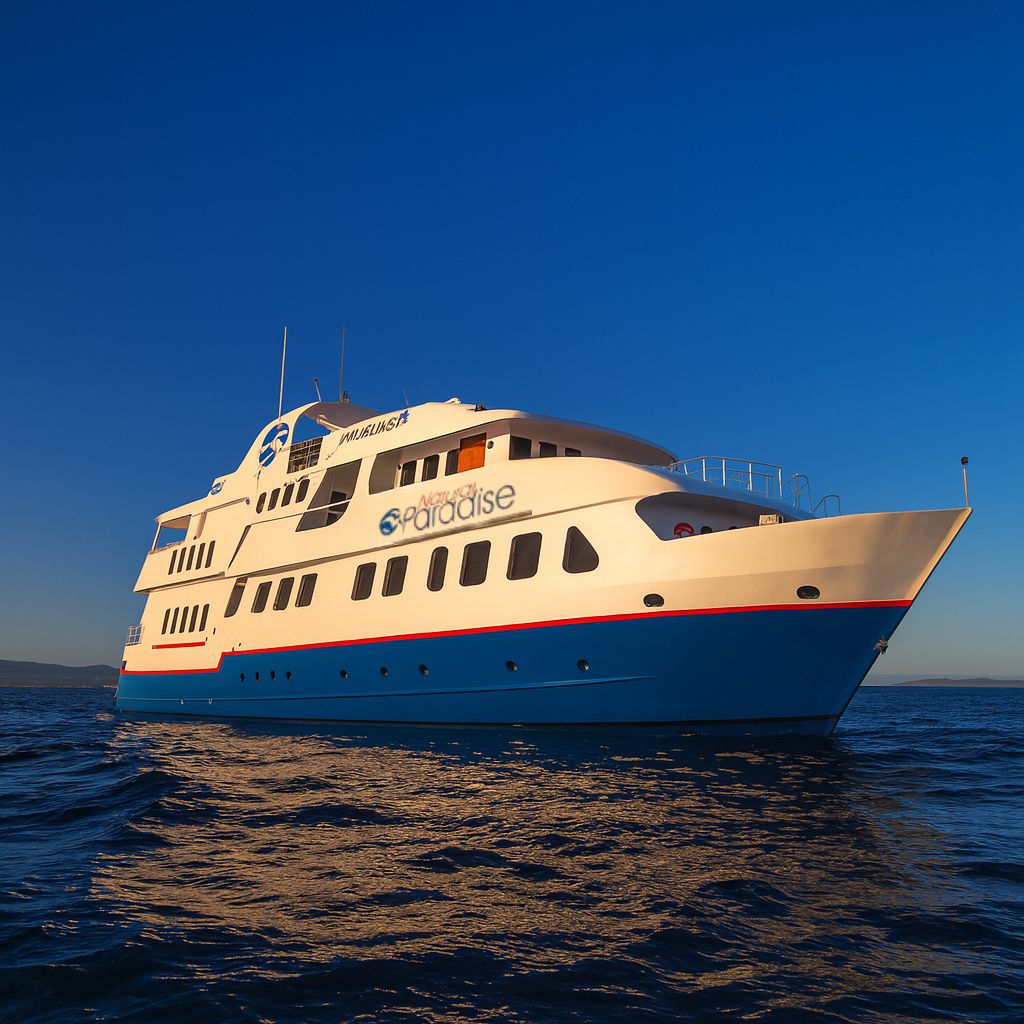
Policies vary by operator and class, but a significant number of reputable Galapagos cruise operators require proof of travel insurance as a booking condition. This is most consistent among luxury and first-class operators who have experienced the consequences of uninsured passengers requiring emergency evacuation or last-minute cancellations. Budget economy operators are less likely to require documented proof. Regardless of whether your specific operator requires it, the financial exposure of an uninsured cancellation or medical emergency on a Galapagos cruise is large enough that the requirement question is largely irrelevant to whether you should buy it.
Quasar Expeditions specifies a minimum medical evacuation coverage of $50,000 per person and strongly urges comprehensive trip cancellation coverage in addition. Galakiwi describes medical insurance including evacuation as mandatory. Royal Galapagos requires travel insurance as a booking condition. These operators are at the premium end of the market. Mid-range tourist superior operators vary – some require documentation, others strongly recommend and leave it to traveler judgment.
The cancellation angle is specific to how Galapagos cruises are priced and when refunds stop. Most operators’ terms require full payment 60 to 90 days before departure and offer no refund or credit within that window. A traveler who books an $8,000 cruise, pays in full in March for a June departure, and then needs to cancel in May due to illness or a family emergency receives nothing back without trip cancellation insurance. The cruise cost is simply lost. For a trip in this price range, trip cancellation coverage is the single most financially protective element of any insurance policy, independent of the medical considerations.
Why Is Travel Insurance Strongly Recommended Even When Not Mandatory?
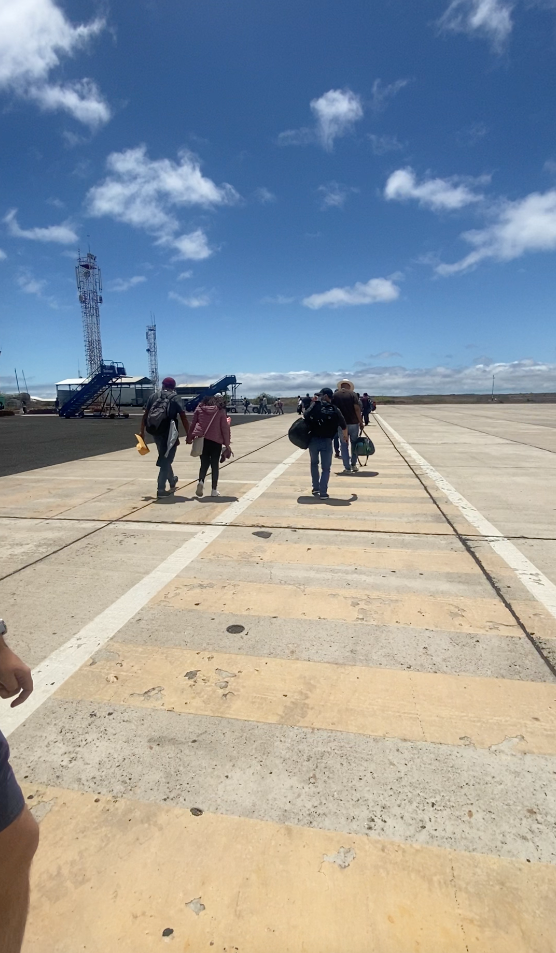
Three specific realities make travel insurance more important for a Galapagos cruise than for most other destinations: the non-refundable nature of the large upfront investment; the limited medical infrastructure on islands 1,000 km from the nearest comprehensive hospital; and the complex multi-connection itinerary structure that creates multiple points where flight delays can cause cruise misses with no recovery. Any one of these alone would justify insurance. Together they make skipping it genuinely reckless on a financial basis.
The non-refundable investment is larger on a Galapagos cruise than on almost any other comparable nature trip. The cruise cost itself is $4,000 to $10,000 per person. Add domestic Galapagos flights at $300 to $500 round-trip, international flights at $600 to $1,500, the $200 park fee, and a Quito hotel. The total pre-paid, non-refundable trip investment per person routinely reaches $6,000 to $12,000 before tips or incidentals. Trip cancellation insurance costs 4 to 10% of that figure – roughly $240 to $1,200 for the full package. The alternative is risking the entire amount against whatever life circumstance might make travel impossible at 61 days before departure.
The itinerary complexity argument deserves specific attention. Getting to a Galapagos cruise involves at minimum: an international flight to Quito or Guayaquil, an overnight, a domestic flight to Baltra or San Cristóbal, an airport transfer to the dock, and boarding before the ship’s departure. Each connection is a potential break point. An international flight delayed by weather in Miami misses the Quito overnight. A Quito overnight missed means arriving too late for the morning Galapagos domestic flight. A domestic flight missed means missing the ship. Trip interruption coverage that pays for emergency flights to catch the cruise at its next port of call is a directly applicable benefit on a trip with this structure.
For travelers who want to understand exactly what insurance coverage their specific operator requires and what scenarios it needs to cover, send us a message here and we’ll give you a specific checklist for your booking.
Want to know exactly what comes with your cruise price before you hand over a significant chunk of your travel budget? Here’s our what is actually included in a Galapagos cruise price guide so you book with confidence.
What Type of Coverage Do You Actually Need for a Galapagos Cruise?
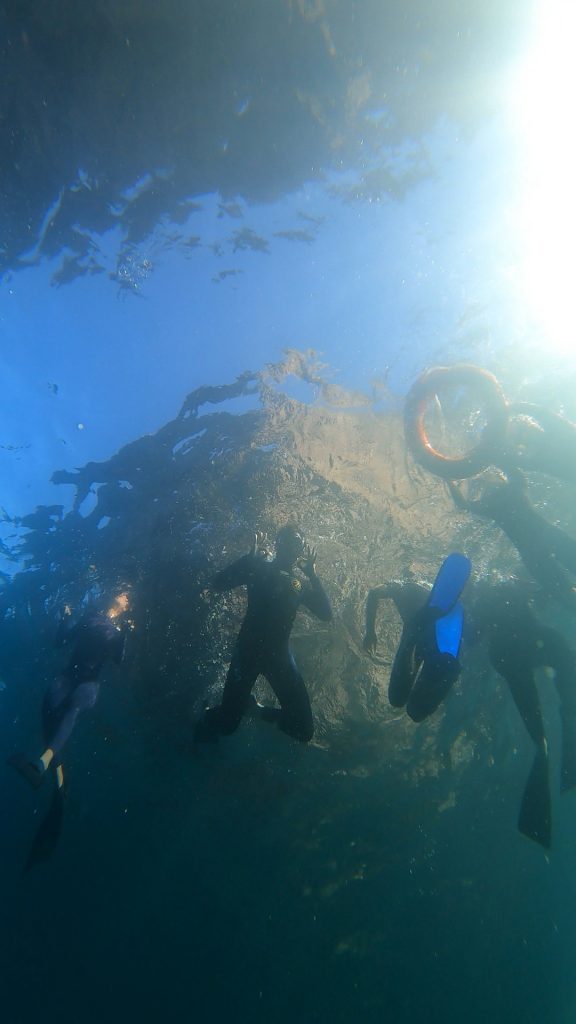
A comprehensive Galapagos cruise insurance policy needs four coverage elements: trip cancellation and interruption to protect the non-refundable investment; emergency medical coverage with a minimum of $100,000 and ideally $250,000 or more; medical evacuation coverage with a minimum of $100,000 (most insurers recommend $250,000 to $500,000 for international remote destinations); and adventure activity coverage that explicitly includes snorkeling, kayaking, hiking, and if applicable, scuba diving. Standard travel policies that exclude adventure sports leave gaps that are specifically relevant to every excursion activity on a Galapagos cruise.
The adventure activity coverage gap catches travelers who buy a standard travel policy and assume it covers everything. Many standard policies exclude “adventure sports” including snorkeling, kayaking, and hiking on volcanic terrain. These are not exotic activities – they are the core activities of every single day on a Galapagos cruise. A twisted ankle on a lava trail, a snorkeling incident, a kayak capsize – any of these are medical events that a standard policy with adventure exclusions won’t cover. Read the fine print on what your specific policy defines as excluded before buying. If snorkeling is excluded, find a different policy.
For scuba divers on diving liveaboards, the bar is higher. Standard travel insurance typically excludes scuba diving entirely. A dedicated diver’s policy or a travel policy with explicit scuba diving inclusion is required. Decompression sickness treatment at a hyperbaric chamber, which is not available on the Galapagos islands, requires evacuation to the mainland. The treatment itself at a hyperbaric facility can cost thousands of dollars. Divers visiting the Galapagos without dive-specific coverage are accepting a specific, well-documented financial risk.
What Does Medical Evacuation Coverage Mean in the Galapagos Context?
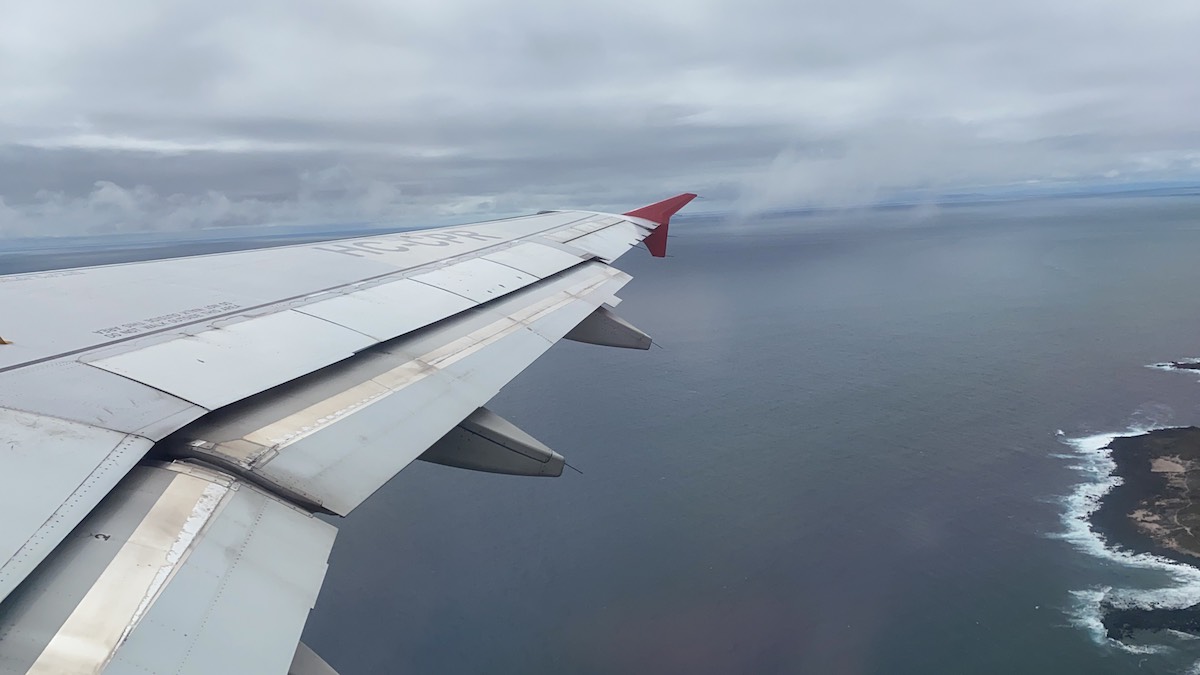
Medical evacuation from the Galapagos means a medically supervised air transport from the islands to a hospital capable of treating your condition – in practice, a hospital in Quito, Guayaquil, or potentially the United States. The Galapagos has two small hospitals that handle routine medical needs. They cannot perform major surgery, treat complex cardiac events, or manage serious trauma. The US Department of State states that evacuation from the Galapagos “can cost $60,000 or more.” Industry estimates for international medical evacuations with full medical staffing run $60,000 to over $100,000, excluding the subsequent hospital treatment at the destination.
The geography makes this figure concrete. The Galapagos is roughly 1,000 km from Guayaquil – about 1.5 hours by commercial flight. An air ambulance covering this distance with medical staff, equipment, and the logistical overhead of a remote island departure runs toward the lower end of international medical evacuation costs. But a patient with a serious cardiac event or a complicated fracture requiring specialist intervention may need transport beyond Guayaquil to Quito or even to the United States, at which point costs escalate significantly. One forum participant described being required to show proof of $1,000,000 in evacuation coverage for a Galapagos visit – an extreme requirement, but one that reflects the seriousness of the exposure.
The practical implication is to buy evacuation coverage with limits that match the realistic cost range. Quasar’s minimum of $50,000 is a floor, not a target. Coverage of $100,000 to $250,000 is more appropriate for international remote destinations. Some comprehensive travel insurance policies include medical evacuation coverage up to $500,000 or $1,000,000. The premium difference between a $100,000 evacuation limit and a $500,000 limit is modest within the overall policy cost. On a $9,000 trip, optimizing the insurance coverage is not where to save money.
Does Your Existing Health Insurance or Credit Card Cover a Galapagos Cruise?
For most travelers, existing health insurance and credit card coverage do not adequately cover a Galapagos cruise. Most US domestic health insurance plans (including Medicare) provide little or no coverage outside the United States. Credit card travel insurance has important gaps: evacuation limits that may fall short of Galapagos costs, pre-existing condition exclusions, adventure activity exclusions, and the requirement that all evacuation requests must be pre-authorized through the card’s benefits administrator – a process that can be difficult to navigate in a medical emergency on a remote Pacific island.
The credit card coverage question requires specific attention because it’s the most common rationalization for skipping a separate travel insurance policy. Premium cards like the Chase Sapphire Reserve, American Express Platinum, and similar products do include travel protections. But the gaps are significant for the Galapagos context. First, credit card evacuation coverage typically moves you to the nearest adequate medical facility, not home – which in the Galapagos means Quito or Guayaquil, not the US. Second, pre-existing conditions are commonly excluded, and any medical event related to a pre-existing condition may not trigger coverage. Third, the coverage amount on most premium cards is lower than insurers recommend for international remote destinations. Fourth, adventure activities like snorkeling and hiking are excluded on many card policies.
Medicare specifically deserves mention because a meaningful proportion of Galapagos cruise travelers are retired Americans who rely on Medicare as their primary health coverage. Medicare provides virtually no coverage outside the United States. A serious medical event requiring hospitalization in Quito and subsequent repatriation to the US is paid entirely out of pocket for a Medicare beneficiary without supplemental international coverage. At the price point of a Galapagos cruise, this demographic arguably has the strongest financial argument of any group for comprehensive travel insurance.
We work with travelers across all age groups and coverage situations. If you’re unsure whether your existing health insurance or card benefits are sufficient for the Galapagos specifically, ask us here – we’ll tell you exactly what gaps are most common for your situation and what to look for in a supplemental policy.
Want to know exactly what’s missing from your cruise price before the unexpected charges start adding up? Here’s our what is not included in a Galapagos cruise guide so there are no nasty surprises on board.
How Much Does Travel Insurance for a Galapagos Cruise Cost?
Comprehensive travel insurance for a Galapagos cruise typically costs 4 to 10% of the total insured trip cost. On a $9,000 per-person trip (cruise, flights, hotels), a comprehensive policy costs $360 to $900 per person. A mid-range comprehensive policy for a couple on a $16,000 combined trip budget runs $640 to $1,600. Medical-only policies without trip cancellation coverage cost significantly less – as low as $80 to $250 per person, but leave the non-refundable cruise investment unprotected if a covered cancellation reason prevents travel.
The 4 to 10% range reflects significant variation based on traveler age, trip cost, coverage level, and policy type. Older travelers pay more because the actuarial risk of medical events is higher. A 65-year-old insuring a $9,000 trip might pay 8 to 10% of trip cost, while a 35-year-old insuring the same trip might pay 4 to 5%. Cancel For Any Reason (CFAR) policies cost 40 to 50% more than standard cancellation policies but cover any reason for cancellation rather than just named covered reasons (illness, death in the family, natural disasters). CFAR is worth considering for a Galapagos cruise given the complexity of getting there and the size of the non-refundable investment.
The right way to buy insurance for a Galapagos cruise is to insure the full trip cost including all prepaid non-refundable components: cruise fare, domestic and international flights, Quito hotels, and any pre-booked tours. Underinsuring to save on the premium is false economy, if the insured amount is $5,000 but the total non-refundable trip cost is $9,000, a cancellation leaves $4,000 unrecovered even with a claim. Buy the policy as soon as you make the first non-refundable payment. CFAR coverage has a purchase window – typically within 14 to 21 days of the initial trip deposit, and is not available after that window closes.
We’ve put together a full cost breakdown in our how much does a Galapagos cruise cost guide so you know exactly what to budget for at every tier from economy to luxury.
| Insurance Policy Type | Cost Range (Per Person) | What It Covers / Protects | Strategic Risk Exposure & Purchase Rules |
| Comprehensive Travel Policy (Standard) | 4% to 10% of total trip cost • $360 – $900 (for a $9,000 budget) • $640 – $1,600 (per couple on a $16,000 budget) | Standard named trip cancellation (illness, injury, death in family, natural disaster), medical emergencies, baggage delay, and marine medical evacuation. | Age-Dependent Pricing: A 35-year-old typically maps to the 4% to 5% premium tier, while a 65-year-old scales into the 8% to 10% tier due to actuarial risk. |
| Cancel For Any Reason (CFAR) | Add 40% to 50% premium surcharge on top of the standard comprehensive rate. | Absolute cancellation protection allowing you to back out for non-traditional, unnamed reasons (e.g., changes of mind, work conflicts). | Strict Time Window: Must be purchased within a tight 14 to 21-day window of making your very first non-refundable cruise deposit. |
| Medical-Only Emergency Policy | $80 to $250 flat | Emergency healthcare on the islands, onboard physician fees, and specialized emergency airlift evacuation to the mainland. | Zero Investment Protection: Leaves your baseline $6,000 to $9,000 non-refundable cruise ticket 100% unprotected if a pre-trip event forces you to cancel. |
What Are the Most Common Insurance Mistakes Galapagos Travelers Make?
Five insurance mistakes account for most of the financial pain Galapagos travelers experience: not buying insurance at all and losing a non-refundable cruise to an unexpected life event; buying insurance but missing the CFAR window by waiting too long after the deposit; buying a standard policy that excludes adventure activities including snorkeling and hiking; relying on credit card coverage without verifying its evacuation limits and exclusions; and insuring only the cruise fare rather than the total trip cost including flights, hotels, and tours. Each of these is a preparation failure, not a coverage failure.
The timing mistake is the most avoidable and arguably the most consequential. Travel insurance purchased the day before departure covers almost nothing useful – trip cancellation by definition doesn’t apply if you’re already departing. A CFAR upgrade purchased after the window has closed cannot be added retroactively. Pre-existing condition coverage, which waives the exclusion for conditions that existed before the policy was purchased, typically requires buying the policy within 14 to 21 days of the first trip payment. A traveler who buys insurance three months after booking the cruise and then needs to cancel for a condition diagnosed before the policy was purchased may find their cancellation claim denied. The correct approach is to buy insurance the same week you make the first non-refundable payment.
The adventure activity exclusion is the one that surprises travelers most when they read their policy after a claim is denied. Virtually every activity on a Galapagos cruise excursion – hiking on volcanic terrain, snorkeling in open Pacific water, zodiac rides in ocean swells, kayaking along coastal cliffs – can be argued to fall under “adventure sports” as defined by some standard travel policies. The specific language in the policy determines coverage, not the common sense perception of what constitutes an adventure. Before buying, confirm in writing that the policy covers the specific activities on a Galapagos cruise. Reputable travel insurance comparison sites like Squaremouth allow filtering by activity coverage, making this verification straightforward.
| Situation | Frequency (%) | Outcome |
|---|---|---|
| Had comprehensive insurance; needed to cancel | 95% | Full or near-full recovery of non-refundable costs |
| Had no insurance; needed to cancel | 0% | Lost partial or full cruise investment; significant financial impact |
| Had insurance; needed medical care during trip | 98% | Costs covered; evacuation coordinated; no out-of-pocket impact |
| Relied on credit card only; needed medical care | 42% | Partial coverage; gaps in pre-existing conditions or activity exclusions |
| Missed CFAR window; needed to cancel for personal reason | 0% | Cancellation denied as uncovered reason; lost investment |
Frequently Asked Questions
Is travel insurance mandatory for the Galapagos Islands?
Not currently being enforced as a universal legal requirement, though Ecuador has mandated it in the past and some individual operators require proof as a booking condition. Regardless of what is legally required at any given time, the financial and medical exposure of visiting the Galapagos without coverage is severe enough that comprehensive insurance is the only prudent choice.
How much medical evacuation coverage do I need for a Galapagos cruise?
A minimum of $100,000, with $250,000 recommended by most insurers for international remote destinations. The US Department of State cites Galapagos evacuation costs of $60,000 or more. Some operators require at least $50,000. The premium difference between $100,000 and $250,000 coverage limits is small relative to the total policy cost.
Does my US health insurance cover a Galapagos cruise?
Most US domestic health insurance plans provide little to no coverage outside the United States. Medicare provides virtually none. Employer health plans vary – check specifically for international coverage limits and whether emergency evacuation is included. If your plan doesn’t explicitly cover international emergency medical and evacuation, supplemental travel insurance is not optional.
Does credit card travel insurance cover a Galapagos cruise?
Partially, but with important gaps. Credit card evacuation coverage typically transports you to the nearest adequate facility, not home. Pre-existing conditions are often excluded. Adventure activities including snorkeling and hiking may be excluded. Evacuation limits on most cards are lower than insurers recommend for the Galapagos. Verify your specific card’s terms for all of these before relying on it as your primary coverage.
When should you buy travel insurance for a Galapagos cruise?
Within 14 to 21 days of making your first non-refundable trip payment. This is the window for CFAR coverage and pre-existing condition waivers on most policies. Buying at the time of the cruise deposit, not the time of departure, maximizes the coverage available to you.
Questions About Insurance for Your Specific Cruise?
Insurance requirements vary by operator, and the coverage gaps that matter most depend on your age, health history, and the specific activities your itinerary includes. We help every traveler we work with understand what their specific cruise requires and what a sensible policy looks like for their situation.
Rated 4.9 stars on Google and TripAdvisor. Get in touch here and we’ll make sure you have the right coverage in place before departure.
Written by Oleg Galeev
Galapagos cruise traveler (3 trips, 2 cruises) · Founder, Cruises To Galapagos Islands
He also runs the Ecuador travel blog mytrip2ecuador.com and the YouTube channel My Trip to Somewhere.
Cruises To Galapagos Islands is rated 4.9 stars on Google and TripAdvisor.
Insurance requirements and regulations change. Verify current rules with your operator and the Galapagos National Park before travel.