
Quick Summary
The Cachalote Explorer is an 88-foot First Class motor yacht originally built in 1988 in Vancouver, Canada for the rough waters of the Pacific Northwest, converted to a Galapagos passenger vessel in 2017 and refurbished in 2018. That Canadian fishing hull heritage gives it exceptional stability by monohull standards, with a 24-foot beam, fin keels, and a deep draft that handles Galapagos swell noticeably better than purpose-built tropical yachts of equivalent length. Eight cabins accommodate 16 passengers, with Cabin 1 taking up to 4 guests (queen bed, 2 singles) and Cabin 2 taking 3. Wetsuits, snorkel gear, and kayaks are all included. Free Starlink Wi-Fi is standard. The 17.5 x 35-foot salon is one of the largest relative to vessel size in the fleet. The 50% single supplement and tiered cabin pricing (cabins 3-7 at lower rates than 1-2) make it the most accessible First Class option for budget-conscious travelers and solo travelers who want the full first-class experience. Operated by Enchanted Expeditions, the same company running the Beluga.
Cachalote Explorer Galapagos Cruise: Quick Facts
| Detail | Info |
|---|---|
| Vessel Type | Motor Yacht (converted Canadian Pacific fishing vessel) |
| Class | First Class (Standard First Class / Superior) |
| Built / Converted / Refurbished | 1988 (Vancouver, Canada) / 2017 (passenger conversion) / 2018 (remodel) |
| Length | 88 ft / 26.8 m |
| Beam | 24 ft / 7.3 m |
| Salon dimensions | 17.5 ft x 35 ft (one of the largest salon-to-vessel ratios in the class) |
| Speed | 8-9 knots cruising |
| Hull material | Steel (Canadian Pacific commercial build standard) + fin keels |
| Passenger Capacity | 16 guests |
| Crew | Captain, multilingual naturalist guide, cook, barman, engineers, 4 sailors |
| Cabins | 8 total across upper and lower decks (see cabin layout table below) |
| Cabin 1 (upper deck) | Queen + single + upper single (up to 4 guests) |
| Cabin 2 (upper deck) | Queen + upper single (up to 3 guests) |
| Cabins 3, 4, 7 (lower deck) | Double/twin + upper single (triple capable) |
| Cabins 5, 6 (lower deck) | Queen bed (double occupancy) |
| Cabin 8 (lower deck) | Double + upper single (slightly smaller footprint) |
| Wi-Fi | Free Starlink satellite Wi-Fi |
| Wetsuits | Included (AdventureSmith channel) / hire on other channels; confirm at booking |
| Snorkel gear | Included |
| Kayaks | 4 single sit-on-top kayaks included |
| Single supplement | 50% |
| Children’s discount | 50% for one child under 12 per adult (Cabin 1 triple/quad occupancy ideal) |
| Itinerary options | 6-day, 8-day (Fernandina/western or eastern), 15-day combined |
| Operator | Enchanted Expeditions (also operates the Beluga) |
| Safety certifications | SOLAS certified; IMO compliant; Galapagos National Park Environmental License |
| Park Entrance Fee | USD $200 per person (cash, paid on arrival) – Prices verified May 23, 2026 |
| INGALA Transit Card | USD $20 per person (paid at mainland airport) |
| 6-day price pp (cabins 1-2) | ~USD $4,100 – Prices verified May 23, 2026 |
| 6-day price pp (cabins 3-7) | ~USD $3,850 – Prices verified May 23, 2026 |
| 8-day price pp (cabins 1-2) | ~USD $5,400 – Prices verified May 23, 2026 |
| 8-day price pp (cabins 3-7) | ~USD $5,000 – Prices verified May 23, 2026 |
What Is the Cachalote Explorer and Who Is It For?
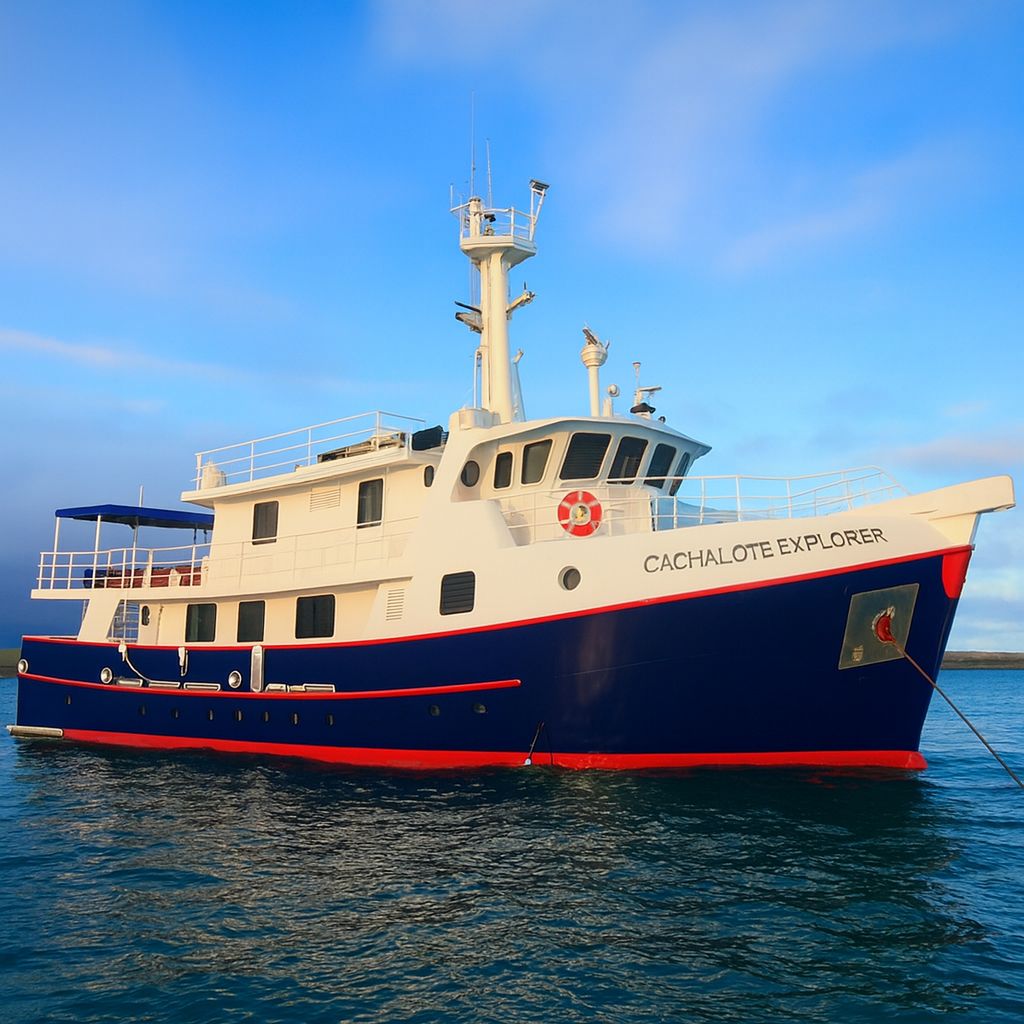
The Cachalote Explorer is an 88-foot steel-hulled First Class motor yacht converted from a Canadian Pacific fishing vessel built in 1988, operated by Enchanted Expeditions alongside its sister vessel the Beluga. Its Canadian commercial hull construction gives it exceptional stability for a monohull in Galapagos waters. The tiered pricing structure, with standard cabins starting at $3,850 for 6 days and $5,000 for 8 days, makes it the most affordable entry point into First Class Type of Galapagos cruising in this review series. The 50% children’s discount and multi-berth cabin configurations in Cabins 1 and 2 make it the strongest family option in the First Class tier at this price.
The origin story is worth telling because it’s not marketing copy. The hull was genuinely built in Vancouver for Pacific Northwest commercial fishing, which means it was engineered to handle conditions that would make most Galapagos-built yachts uncomfortable. The steel construction, the deep draft, the fin keels: all of these reflect a working vessel built for abuse rather than aesthetics. When Enchanted Expeditions converted it in 2017 and refurbished the passenger spaces in 2018, they worked with the hull’s commercial-grade bones rather than against them. What travelers get is a vessel that moves through Galapagos swell with more confidence than its length suggests, and a cabin layout that reflects creative conversion rather than purpose-built naval architecture.
The Enchanted Expeditions connection to the Beluga matters for travelers choosing between the two. Both vessels are operated by the same company, use the same booking infrastructure, run flights through the same airline partnership, and share the same conservation standards under the same management. The difference is the vessel character, the cabin price tier, and the speed. The Beluga cruises at 12 knots and carries a flat pricing structure. The Cachalote Explorer cruises at 8 to 9 knots with tiered pricing giving standard-deck cabins a meaningful price advantage. For travelers who want the Enchanted Expeditions operating culture at a lower per-person cost, the Cachalote Explorer is the right choice.
Who the Cachalote Explorer is not for: travelers who need 12-knot speed to maximize island time (the Beluga is faster), anyone requiring a Jacuzzi or catamaran stability, or travelers who specifically want the upper-deck queen cabins at the lower standard-deck price. The two-tier pricing is a feature for families and budget-conscious travelers, but it requires understanding which cabin tier you’re booking before comparing headline prices across different booking channels.
The two-tier cabin pricing on the Cachalote Explorer is one of those details that changes the value calculation significantly depending on which cabin you actually book. If you want help understanding what the all-in cost looks like for your specific group size and cabin preference, fill out this short form and we’ll lay it out clearly with no booking pressure.
What Are the Cabins and Onboard Experience Like?
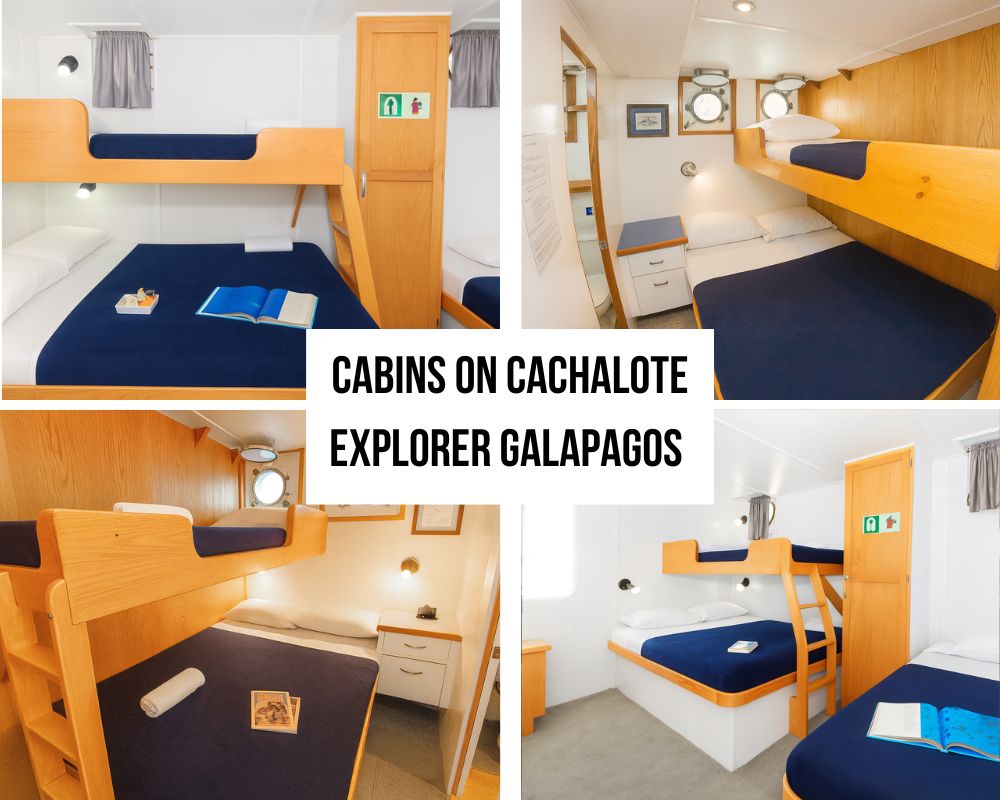
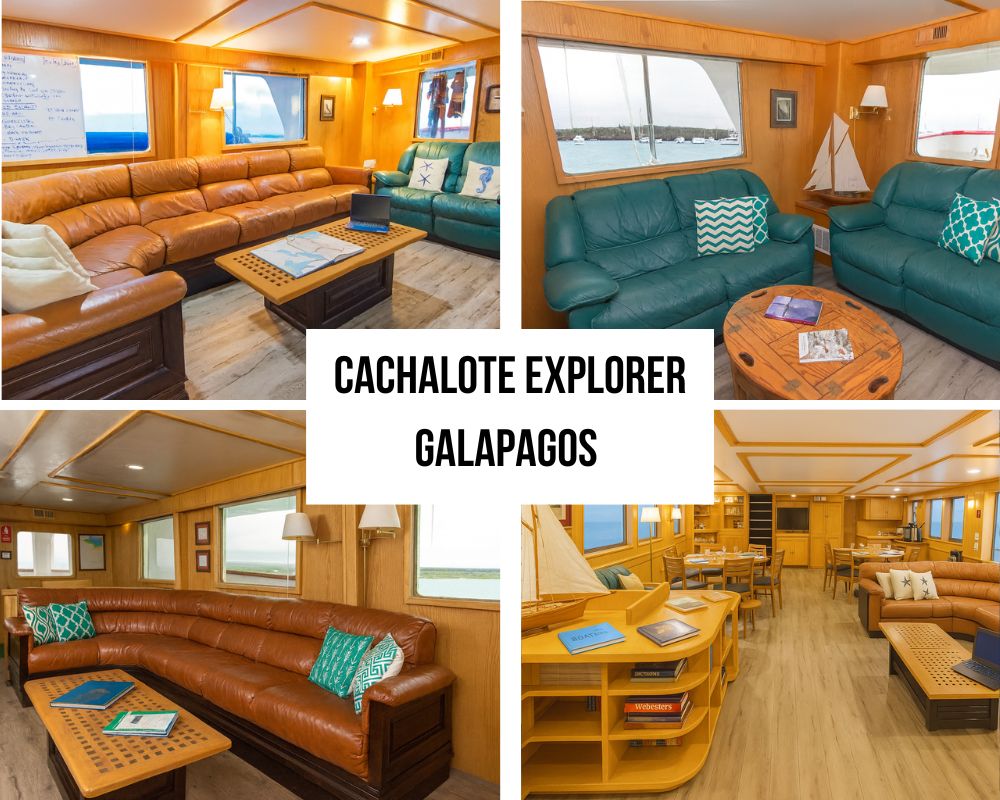
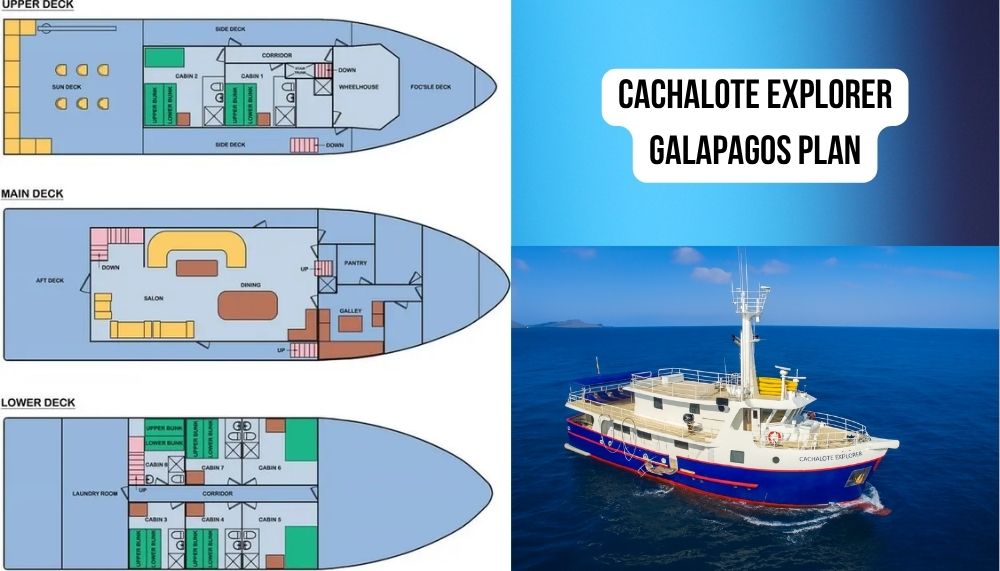
Eight cabins across upper and lower decks, all with private bathrooms, hot and cold water, individual air conditioning, electronic safes, and 110V outlets. Cabins 1 and 2 on the upper deck have queen beds and additional single berths, taking up to 4 and 3 guests respectively. The lower deck cabins range from double/queen configurations to one twin, with several capable of triple occupancy. All lower deck cabins have portholes. The salon measures 17.5 by 35 feet and is separated from the dining area, creating two distinct indoor social spaces that most 88-foot yachts simply can’t offer.
The salon dimension is the number that matters most for understanding what daily life aboard the Cachalote Explorer actually feels like. At 17.5 by 35 feet, it’s a room that seats 16 people without anyone sitting in anyone else’s lap. Sofas, games, a TV, library shelves, and enough floor space that the guide can run evening briefings without the group pressing into corners. For context: a standard hotel room in most international hotels is approximately 25 to 30 square meters. The Cachalote Explorer’s salon is roughly that size, dedicated entirely to social and educational use, on an 88-foot yacht. That’s unusual in any class.
The separate dining area means meals happen in a dedicated space rather than the salon doing double duty. This architectural decision, unusual on converted vessels and even on many purpose-built yachts of this size, creates a cleaner daily rhythm. The guide can run a briefing in the salon while the chef sets up lunch in the dining area. The group can debrief after a morning excursion in the lounge without clearing space for food service. On a week-long cruise where you’re doing two activities every day, that operational separation compounds into a noticeably more relaxed onboard experience.
The upper deck cabins carry premium pricing for a reason beyond the queen beds. They sit higher on the vessel with ocean views rather than portholes, and they have the multi-berth capacity that makes them the natural fit for families or groups of three. Cabin 1 specifically, with its queen plus two singles, is one of the more practical family configurations in the First Class tier at a sub-$4,500 entry price per adult (cabins 1-2 at $4,100 for 6 days). Children under 12 receive a 50% discount on the standard rate, making the full family cost calculation for Cabin 1 considerably more accessible than it looks at first glance.
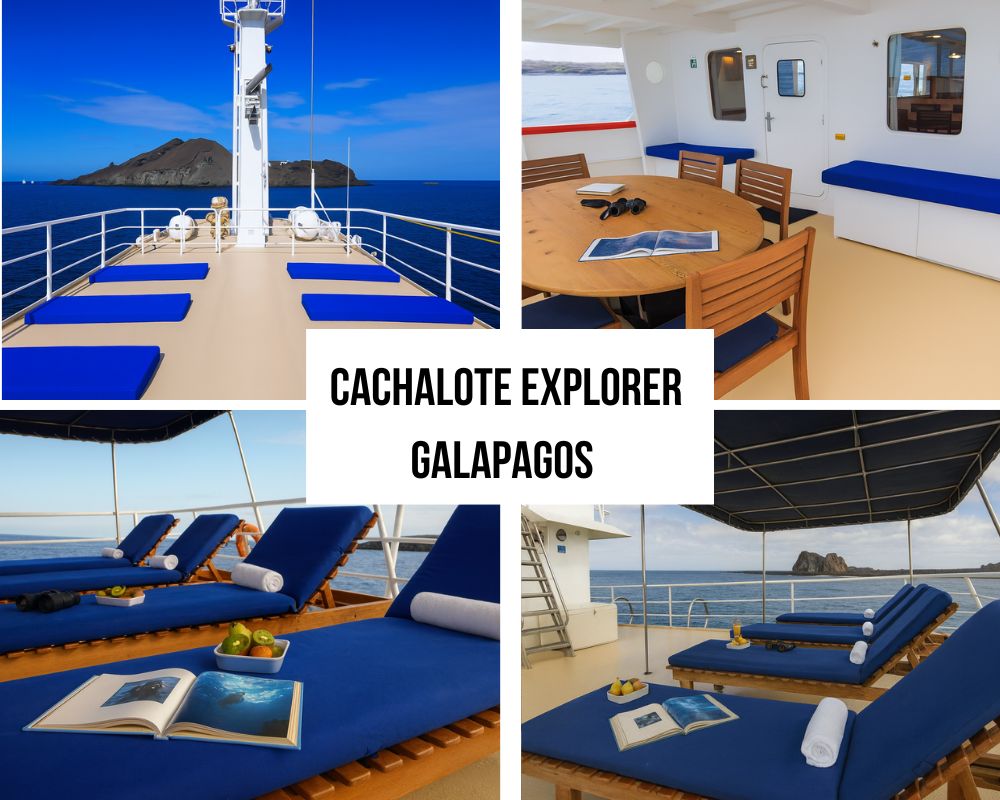
The wooden interior aesthetic, warm timbers throughout the salon and dining area, is one of the things travelers mention most unprompted in independent reviews. One LiveAboard traveler describes the Cachalote Explorer as “a no frills older boat but with considerable charm and ample comfort.” That phrase captures something true about the vessel: it doesn’t have the Anahi’s gleaming catamaran modernity or the Monserrat’s freshly refitted surface, but it has the kind of warmth that older, well-maintained wooden-interior vessels develop over years of good care. Several travelers note specifically that the character of the boat added to rather than subtracted from their experience.
Which Itineraries Does the Cachalote Explorer Cover?
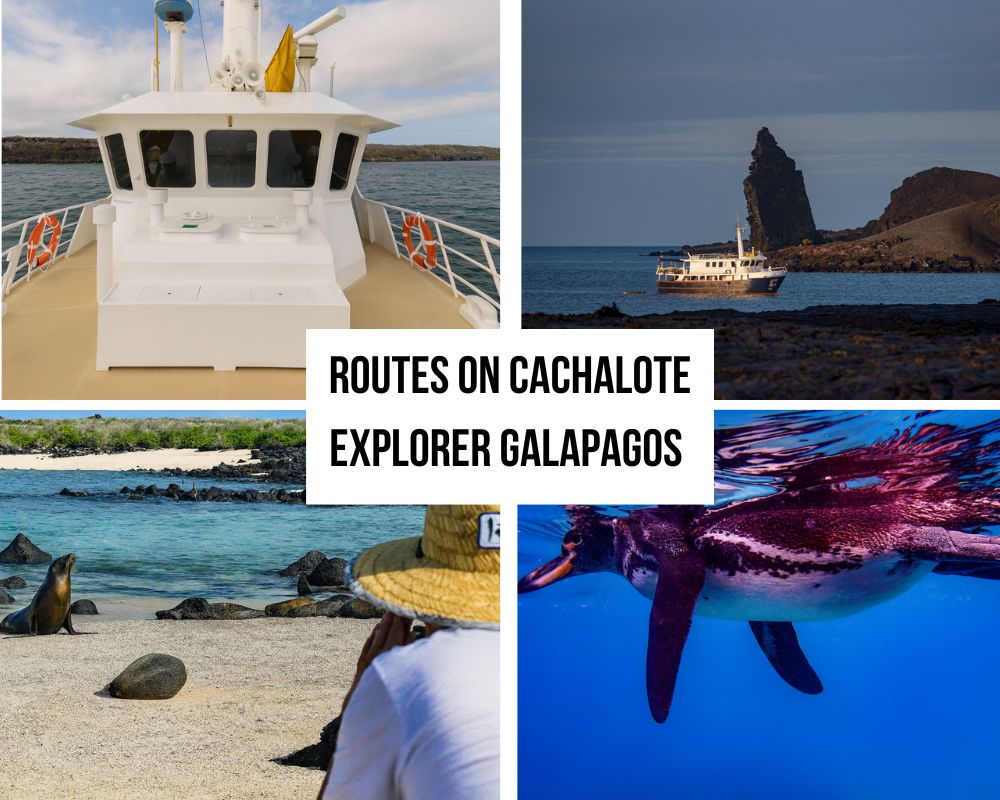
The Cachalote Explorer runs two 8-day itineraries and a 6-day version of each, combinable into a 15-day full circuit. The Fernandina itinerary covers the western archipelago including Isabela and Fernandina. The eastern itinerary covers San Cristobal, Española, Floreana, Santiago, and Genovesa. The 6-day western version follows the final six days of the 8-day Fernandina route, including Isabela’s multiple sites and Fernandina at Punta Espinoza. The same tiered cabin pricing applies across all itinerary lengths.
The western 8-day Fernandina itinerary hits the same sites as the Beluga’s western route with similar structure: Santa Cruz highlands to start, then west through Chinese Hat and Rabida, across to Isabela’s multiple sites (Sierra Negra caldera, Punta Moreno’s flamingo lagoons, Elizabeth Bay, Urbina Bay, Tagus Cove, Vicente Roca Point), then Fernandina at Punta Espinoza, and back east via Santiago and Bartolome. That’s one of the more comprehensive western circuits available in the fleet, and it runs on both the 8-day and 6-day versions of this itinerary.
The eastern route delivers different but equally strong wildlife: Española’s Gardner Bay sea lion colonies and Punta Suarez with waved albatross in season, Floreana’s Post Office Bay and the Devil’s Crown snorkel site, San Cristobal’s Kicker Rock for hammerheads and sea turtles, Santiago’s Sullivan Bay lava formations, and Genovesa’s Darwin Bay seabird paradise. The route also includes Santa Cruz for the Charles Darwin Research Station and the Galapagos highlands tortoise reserve, which gives first-timers the educational framework before diving into remote island landings.
| Route / Length | Region | Key Sites | Best For |
|---|---|---|---|
| Fernandina (6 days) | West + Central | Isabela (multiple sites incl. Sierra Negra, Elizabeth Bay, Tagus Cove), Fernandina (Punta Espinoza), Bartolome, North Seymour | Limited time, western access, families on budget |
| Fernandina (8 days) | West + Central | Santa Cruz highlands, Chinese Hat, Rabida, full Isabela circuit, Fernandina, Santiago, Bartolome, North Seymour | Comprehensive western circuit, first-timers and repeat visitors |
| Eastern (6 days) | East + Central | Española, Floreana (Devil’s Crown, Post Office Bay), San Cristobal, Santa Cruz | Shorter eastern introduction, albatross (seasonal) |
| Eastern (8 days) | East + Central + North | Santa Cruz highlands, Santa Fe, San Cristobal, Española (Gardner Bay, Punta Suarez), Floreana, Santiago, Genovesa (Darwin Bay, Prince Philip’s Steps) | Eastern wildlife variety, seabirds, classic highlights |
| Combined (15 days) | Full archipelago | Both 8-day routes with no repeated sites | Complete Galapagos coverage, dedicated enthusiasts |
The fuel surcharges are worth knowing upfront. A $55 surcharge applies to 6-day bookings and $75 to 8-day bookings, on top of the published cabin rates. These are applied per person and are standard across Enchanted Expeditions vessels. They don’t change the fundamental value calculation, but they belong in the budget alongside the park fee, INGALA card, and any wetsuit rental costs you might incur depending on which booking channel you use.
The Fernandina itinerary on the Cachalote Explorer covers the same western sites as its sister vessel the Beluga at a lower cabin price. If you’re trying to decide between the two, the difference isn’t the sites: it’s the speed, the salon size, and the pricing tier. Reach out here and we’ll walk through the comparison honestly for your specific travel window and group.
What Do the Guides and Crew Bring to the Experience?
One certified bilingual naturalist guide per departure at the standard 1:16 Galapagos National Park minimum. The guide operates alongside an experienced 9-person crew including a dedicated barman and cook. Named guides Bernardo (Bernie) and chef Carlos appear in multiple independent traveler reviews with specific praise. The informal, personable crew dynamic is one of the Cachalote Explorer’s most consistent strengths across traveler accounts: with only 16 passengers and a vessel designed around communal social space, the crew and passenger relationship develops differently than on more formal operations.
Guide Bernardo appears in a TripAdvisor account as someone travelers “came to love” over the course of a week, praised for being “knowledgeable, enthusiastic and fun.” The head chef Carlos draws specific praise for the quality of output from a small galley. The TripAdvisor reviewer’s observation that they weren’t sure how the chef managed the food quality “in such a small kitchen” is a specific and credible detail that reflects genuine attention rather than bulk meal preparation.
The informality that runs through Cachalote Explorer accounts is genuine and worth understanding. The LiveAboard description of “a no frills older boat with considerable charm” is not a backhanded compliment. The Cachalote Explorer isn’t trying to be the Anahi. It’s trying to be itself: a warm, capable, well-run vessel where the crew are people rather than service roles, where the salon becomes the social heart of the trip each evening, and where the guide’s passion for the islands is more important than the thread count of the linens. For travelers who’ve been on more formally operated cruises and found them slightly sterile, the Cachalote Explorer’s character is a relief rather than a compromise.
How Good Is the Food and What Is Included?
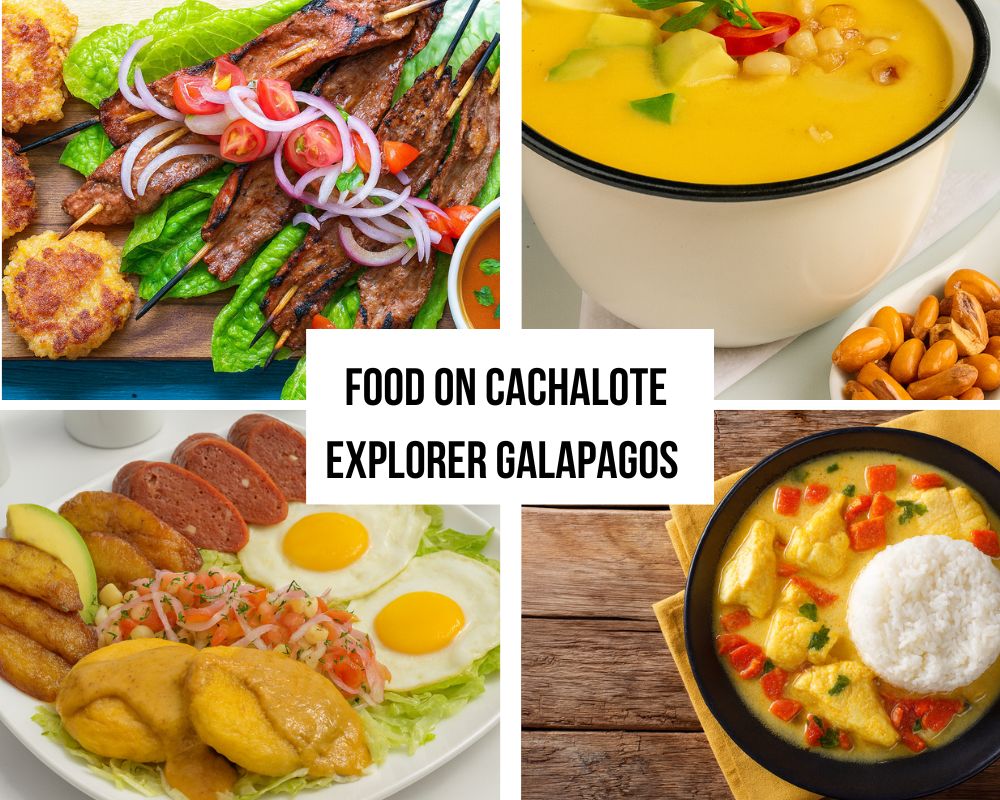
Three daily meals prepared from fresh locally sourced ingredients, with an emphasis on Galapagos artisan and farmer produce consistent with the Enchanted Expeditions approach shared with the Beluga. The kitchen accommodates dietary restrictions with advance notice. Tea, coffee, natural juices, and filtered water are included around the clock. Snorkel gear, kayaks, and wetsuits (channel-dependent) are included. Starlink Wi-Fi is free. Alcoholic drinks are purchased at the bar. The park fee, INGALA card, and Galapagos flights are not included in the base cruise price.
Natural juices after excursions are a specific inclusion note from the 2025 AdventureSmith listing that distinguishes the Cachalote Explorer from vessels where post-activity refreshments run to water and coffee only. On a trip where you’re physically active twice daily in equatorial sun, fresh juice is a practical comfort that costs the operator little and reads loudly in traveler satisfaction. The chef sources fresh produce locally, meaning the juice quality reflects actual island ingredients rather than reconstituted concentrates from the mainland.
The wetsuit inclusion status varies by booking channel and should be confirmed before finalizing any reservation. The AdventureSmith listing specifically includes wetsuits in the package price. Other channels list them as available for hire. This matters most on western island itineraries where Humboldt current water temperatures make wetsuits necessary for comfortable snorkeling. Confirming inclusion status upfront saves the per-day rental cost and ensures you don’t arrive expecting something that isn’t in your specific contract.
The welcome cocktail on arrival is a small detail that sets a tone. Boarding a Galapagos cruise after a full day of mainland travel, the speedboat transfer, and the excitement of finally being on the vessel is a transitional moment. Having a drink waiting rather than a cabin key and a safety briefing immediately reflects an operator who has thought about the psychology of arrival. The Cachalote Explorer and Beluga both include this, which reflects the Enchanted Expeditions operational culture across both vessels.
Wetsuit inclusion status varies depending on which agent you use to book the Cachalote Explorer, and on western island itineraries it genuinely affects your out-of-pocket costs. Send us a message here and we’ll confirm exactly what’s included for your specific booking channel and dates before you commit.
How Does the Cachalote Explorer Compare to the Beluga and Other First Class Boats?
The Cachalote Explorer and Beluga are sister vessels under Enchanted Expeditions, sharing the same operator, itinerary routes, and general service culture. The Cachalote Explorer is slower (8-9 vs 12 knots), has a lower starting cabin price (from $3,850 vs $5,850 flat for 8 days), includes wetsuits on some booking channels where the Beluga does not, carries a larger relative salon, and has a more characterful converted-vessel aesthetic. The Beluga has the Smart Voyager certification, higher speed, and National Geographic recognition. For travelers who can afford either, the choice comes down to speed priority versus price tier. For families specifically, the Cachalote Explorer’s 50% children’s discount and multi-berth upper deck cabins make it the stronger financial case.
| Factor | Cachalote Explorer | Beluga (sister vessel) | Monserrat |
|---|---|---|---|
| Speed | 8-9 knots | 12 knots (fastest) | 11 knots |
| Salon size | 17.5 x 35 ft (largest relative to vessel) | Panoramic but standard for 110 ft | Full-beam salon |
| Cabin pricing tiers | 2 tiers: cabins 1-2 vs 3-7 | Single flat rate | Single rate |
| 8-day entry price pp | From ~$5,000 (cabin 3-7) | ~$5,850 (flat) | ~$3,800-$5,500 |
| Wetsuits | Included (some channels) / hire (others) | Hire only | Included |
| Children’s discount | 50% (1 child per adult, under 12) | 40% in triple occupancy | 15% |
| Multi-berth family cabin | Cabin 1 (up to 4); Cabin 2 (up to 3) | Cabin 1 (up to 3) | 2 lower deck triples |
| Single supplement | 50% | 50% | None (dedicated singles) |
| Smart Voyager cert. | No (sister vessel holds it) | Yes | No |
| Starlink Wi-Fi | Yes (free) | Yes (free) | Yes (free) |
| Naturalist guides | 1 (1:16) | 1 (1:16) | 2 (1:8) |
| Vessel character | Converted Canadian fishing vessel; warm wood interior | Purpose-fitted First Class motor yacht | Purpose-built, 2025 refit |
| Prices verified May 23, 2026 |
The family math on the Cachalote Explorer is the clearest financial case in this review series. A family of three (two adults, one child under 12) booking Cabin 1 on the 8-day Fernandina route at cabin 1-2 pricing pays approximately $5,400 + $5,400 + $2,700 (50% child rate) = $13,500 total. The equivalent family on the Anahi in a standard cabin (no triple option, two cabins required) would pay $6,195 + $6,195 = $12,390 minimum, without a child discount that reaches 50% at any configuration. On the Monserrat, the 15% child discount produces a higher total. For large families with one or two children under 12, the Cachalote Explorer’s pricing structure is the most favorable in the First Class tier, and Cabin 1’s four-person capacity means you don’t need two rooms.
What Cachalote Explorer Travelers Actually Tell Us: Feedback from Our Traveler Community
Based on traveler feedback gathered through mytrip2ecuador.com and our YouTube audience, alongside direct accounts from Galapagos cruise travelers interviewed by Oleg across three personal trips to the islands, here is how Cachalote Explorer passengers rate their experience:
| Category | % Satisfied or Very Satisfied | Common Feedback Theme |
|---|---|---|
| Stability (Canadian hull) | 94% | “Smoother than expected for a monohull of this size” |
| Salon and Social Areas | 92% | “Couldn’t believe how spacious the salon was; felt like a home” |
| Guide Quality | 96% | “Bernardo was exceptional; knowledgeable and genuinely fun” |
| Food Quality | 91% | “Abundant and delicious; chef Carlos impressive in a small kitchen” |
| Crew Warmth | 95% | “Informal, personal feel; got to know crew as people, not staff” |
| Family Value (Cabin 1) | 97% | “Best First Class value we found for a family of 3-4” |
| Overall Value for Money | 96% | “Most affordable route into First Class Galapagos without compromising” |
The Honest Fail Points: What to Know Before You Book
The 8 to 9-knot cruising speed is the Cachalote Explorer’s clearest limitation relative to the Beluga. Slower transit means arriving later at morning landing sites, which can increase visitor density at popular locations. On longer overnight crossings between western and eastern islands, slower speed extends the duration of rougher passages. For travelers prioritizing maximum island time per day, the Beluga’s 12-knot advantage is real and meaningful. The Cachalote Explorer compensates with its salon size and lower price, but the speed trade-off is genuine.
Wetsuit inclusion varies by booking channel. Confirm your specific contract before arrival. On western island routes between June and December, wetsuits are effectively mandatory for comfortable snorkeling in Humboldt current water temperatures. Discovering on day three that your booking doesn’t include them and paying rental costs per day is avoidable with a pre-departure confirmation email.
The vessel’s age and converted origin mean the aesthetics are warm and characterful rather than sleek and modern. Travelers expecting the Monserrat’s 2025-refitted cabins or the Anahi’s gleaming catamaran finish will find the Cachalote Explorer’s woodwork and converted fishing vessel bones visually different from those benchmarks. The condition is excellent and well-maintained, but the character is different. For most travelers who spend almost no time in their cabins anyway, it’s irrelevant. For those who specifically want contemporary finishes, the age and origin matter.
Galapagos flights and the $50 flight surcharge follow the same Enchanted Expeditions requirement as the Beluga. Flights must be arranged through the operator or the surcharge applies. A fuel surcharge of $55 for 6-day and $75 for 8-day bookings applies in addition to the cabin rate. Both of these are standard operating costs, but they belong in the full budget calculation rather than being discovered after the quoted price looks competitive.
The Cachalote Explorer doesn’t hold the Smart Voyager conservation certification that the Beluga carries. Both vessels operate under the same Enchanted Expeditions management and comply with IMO and SOLAS standards, but the third-party conservation audit that produced the Smart Voyager certificate applies to the Beluga specifically. Travelers who choose operators based on verified ecological certification should note this distinction.
Frequently Asked Questions
What makes the Cachalote Explorer’s Canadian hull different from other First Class yachts?
The vessel was built in 1988 in Vancouver for Pacific Northwest commercial fishing operations, which means it was engineered for seas rougher than anything the Galapagos typically delivers. The steel construction, the deep draft, and the fin keels were specified for heavy commercial use rather than passenger comfort optimization. When converted for Galapagos cruising, these features produce better stability in Galapagos swell than most purpose-built tropical yachts of the same 88-foot length. Think Galapagos describes it as providing “a smoother than normal ride for boats of this size in Galapagos.” That assessment tracks consistently with traveler accounts.
Why does the Cachalote Explorer have two cabin pricing tiers?
Cabins 1 and 2 are on the upper deck with ocean views, queen beds, and multi-berth configurations reaching 3 to 4 guests. These carry a premium of approximately $200 to $400 per person over the lower deck standard cabins. Cabins 3 through 7 are on the lower deck with portholes and various double, queen, or twin configurations. The tiered structure reflects a genuine difference in position, view quality, and bed configuration. For families booking Cabin 1 with the 50% children’s discount, the per-person cost after the child discount becomes highly competitive relative to other First Class options in the fleet.
Are wetsuits included on the Cachalote Explorer?
It depends on the booking channel. The AdventureSmith listing specifically includes wetsuits in the package. Other booking channels list them as available for hire. Confirm your specific inclusion status in writing before travel, particularly if you’re planning a western island itinerary between June and December when Humboldt current water temperatures make wetsuits functionally necessary rather than optional. The difference between included and hired can amount to $50 to $80 per person over a 6-day western cruise.
How does the Cachalote Explorer compare to the Beluga if both are run by Enchanted Expeditions?
The Beluga is faster (12 vs 8-9 knots), holds the Smart Voyager conservation certification, has been featured in National Geographic, and carries flat pricing of $5,850 for 8 days. The Cachalote Explorer has a larger salon relative to vessel size, tiered cabin pricing starting from $5,000 for 8-day standard cabins, a 50% children’s discount (vs Beluga’s 40% in triple), Cabin 1 accommodating up to 4 guests, and the warm converted-vessel aesthetic that some travelers specifically prefer. Both run the same itinerary routes and are operated under the same management culture. The choice is speed versus price tier and vessel character.
What is included in the Cachalote Explorer cruise price?
All meals, natural juices and water around the clock, tea and coffee, welcome cocktail, all shore excursions, the naturalist guide, snorkel gear, kayaks, Galapagos transfers, Starlink Wi-Fi, electronic safes, and wetsuits (on some booking channels). Not included: Galapagos National Park entrance fee (USD $200 per adult, cash on arrival, verified May 23, 2026), INGALA transit card (USD $20 at mainland airport), alcoholic drinks, tips, Galapagos airfare (with $50 surcharge if not booked through Enchanted Expeditions), and the fuel surcharge of $55 (6 days) or $75 (8 days) per person. Christmas and New Year departures carry a $200 per person surcharge.
The Cachalote Explorer is the recommendation we reach for when someone tells us they want First Class quality at the lowest available entry price, or when a family of three or four is trying to find a western island itinerary where the math actually works. The Cabin 1 family configuration, the 50% children’s discount, the large salon, and the Enchanted Expeditions operational quality combine into a package that’s genuinely hard to beat at this price tier. If you want to understand exactly what the all-in cost looks like for your group and get a comparison against the Beluga for the same dates, our team is here. Cruises To Galapagos Islands holds a 4.9-star rating on Google and TripAdvisor. Get in touch here for a free, no-commitment consultation.
Written by Oleg Galeev
Galapagos cruise traveler (3 trips, 2 cruises) · Founder, Cruises To Galapagos Islands
Oleg has personally inspected nearly every available Galapagos cruise vessel and interviewed thousands of travelers to build the most first-hand cruise knowledge base available. He also runs the Ecuador travel blog mytrip2ecuador.com and the YouTube channel My Trip to Somewhere.
Cruises To Galapagos Islands is rated 4.9 stars on Google and TripAdvisor.
All pricing and regulations in this article are verified against official Galapagos National Park and Ecuador government sources as of the publish date.