
TL;DR
The southern Galapagos is the most historically layered and ecologically diverse circuit in the archipelago. Its core stops are Española, Floreana, Santa Fe, and South Plaza, typically combined with Santa Cruz as the hub. You get the waved albatross (April through December on Española), the best reef snorkeling at Devil’s Crown, Floreana’s genuinely strange human history, the pale endemic iguanas of Santa Fe, and the compressed wildlife spectacle of South Plaza in under one square kilometer. Seas are calmer than the western circuit. Most itineraries run 5 to 8 days, and the route works well for first-timers and repeat visitors alike.
Quick Facts: Galapagos Southern Islands Itinerary
| Detail | What to Know |
|---|---|
| Core Islands | Española, Floreana, Santa Fe, South Plaza, Santa Cruz |
| Typical Length | 5 to 8 days |
| Access | Cruise; some sites (South Plaza, Santa Fe) accessible on day tours from Santa Cruz |
| Sea Conditions | Generally calm; calmer than western circuit year-round |
| Signature Wildlife | Waved albatross (Apr-Dec), Santa Fe land iguana, Christmas iguana, flamingos, Floreana mockingbird |
| Top Snorkeling | Devil’s Crown (cruise only), Champion Islet, Gardner Bay, Santa Fe Bay |
| Unique Feature | Floreana: most human history of any island; Post Office Bay tradition since 1793; 1930s murder mystery |
| Best Season | Apr-Dec for albatross; Dec-May for warm clear snorkeling |
| Park Entrance Fee | $200 USD adults / $100 USD children under 12 (cash on arrival) – Prices verified July 10, 2026 |
| Transit Control Card | $20 USD, pre-registered online before flying – Prices verified July 10, 2026 |
What Makes the Southern Galapagos Islands Worth a Dedicated Itinerary?
The southern route covers the oldest islands in the archipelago, and that age produces something no other circuit delivers in the same combination: extreme endemism, dramatic human history, the finest beaches in the islands, and two of the top three snorkeling sites in the entire Galapagos. It also includes the only place on Earth where the waved albatross breeds. If you want wildlife variety, white sand, warm clear water, and a layered story to bring home, the southern circuit is the one most travelers should be looking at.
Most people searching for a Galapagos itinerary end up reading about the western route because the flightless cormorant and volcanic landscapes photograph dramatically. The southern route is quieter about its credentials. It shouldn’t be. Española is one of the most species-dense islands in the entire archipelago by area, with an endemism rate that has few parallels anywhere on Earth. Floreana is the most historically complicated island in the islands, with a pirate postal tradition dating to 1793 and a 1930s murder mystery that still hasn’t been solved. Santa Fe has the most endemic species per island of any Galapagos island. South Plaza packs more wildlife into less than a square kilometer than almost anything else you’ll visit anywhere.
It’s also genuinely accessible in a way some other circuits aren’t. The seas are calm, the terrain is varied rather than uniformly demanding, and the itinerary delivers multiple types of experience across a single week: cliff wildlife spectacle at Española, history and reef snorkeling at Floreana, endemic reptiles and turquoise bay at Santa Fe, compressed wildlife wonder at South Plaza, and giant tortoises at Santa Cruz to bookend everything.
We’ve taken a lot of travelers through the planning process for their first Galapagos cruise, and the southern route comes up as the recommendation more often than any other when someone wants a complete first-trip experience. If you want to talk through whether it fits your interests, fill out this short form and we’ll give you an honest comparison.
The snorkeling in the Galapagos is unlike anything else in the world but not every itinerary puts you in the best water. Here’s a full guide to the best Galapagos itinerary for snorkeling so you book the route that actually delivers underwater.
Which Islands Are Included in a Southern Galapagos Itinerary?
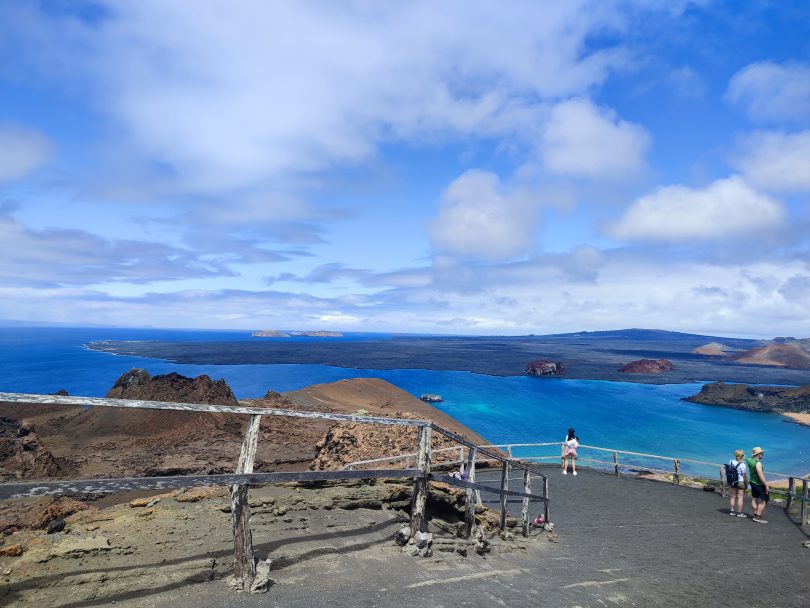
The southern route typically covers five islands: Española, Floreana, Santa Fe, South Plaza, and Santa Cruz. The first two are the headline stops for wildlife and history. Santa Fe and South Plaza are central islands geographically but almost always included on southern itineraries because their short time requirements and high wildlife density make them excellent additions to full-day schedules. Santa Cruz appears on virtually every Galapagos itinerary as the embarkation hub and adds the Darwin Research Station and highland tortoise experience.
It’s worth being direct about the overlap between the southern and eastern routes. Both include Española and Floreana. The distinction in practice comes down to what fills the remaining days. Eastern itineraries lean toward San Cristobal and Kicker Rock. Southern itineraries lean toward Santa Fe, South Plaza, and sometimes Bartolome. Neither label is a formal Galapagos National Park designation. It’s an industry convention, and operators use it inconsistently. Read the day-by-day schedule rather than the route label when comparing cruises.
The answer depends on cruise length, operator, and route in ways that aren’t always obvious from the brochure. Here’s a guide on which Galapagos itinerary visits the most islands so you compare options on equal footing.
| Island | Key Sites | What You’ll See | Time Required |
|---|---|---|---|
| Española | Punta Suarez, Gardner Bay | Waved albatross (Apr-Dec), blue-footed and Nazca boobies, Christmas iguana, Española mockingbird, blowhole, white sand beach | Full day (morning + afternoon) |
| Floreana | Devil’s Crown, Punta Cormorant, Post Office Bay, Champion Islet | Reef snorkeling (cruise-only at Devil’s Crown), flamingos, olivine green-sand beach, historic postal barrel, Floreana mockingbird, human history | Full day |
| Santa Fe | Barrington Bay | Santa Fe land iguana (endemic, pale yellow), largest prickly pear cacti in the archipelago, sea lions, Galapagos hawks, snorkeling in turquoise bay | Half day |
| South Plaza | Coastal loop trail | Land iguanas, sea lions, swallow-tailed gulls, tropicbirds, Sesuvium vegetation (turns red in dry season), cliff views | 2 to 3 hours |
| Santa Cruz | Darwin Research Station, highlands, Tortuga Bay | Giant tortoises (wild and breeding program), Darwin’s finches, lava tunnels, Puerto Ayora town | Half to full day |
What Wildlife Can You Expect to See on the Southern Route?
The southern circuit delivers the broadest wildlife variety per day of any Galapagos itinerary. Española alone has the waved albatross, blue-footed boobies, Nazca boobies, the Española mockingbird, Christmas iguanas, sea lions, and the famous blowhole all in a single morning walk. Floreana adds flamingos, the Floreana mockingbird, reef fish diversity at Devil’s Crown, and sea turtles. Santa Fe has its own endemic iguana species found nowhere else. South Plaza squeezes land iguanas, sea lions, and seabird colonies into a territory you can cross in a few minutes.
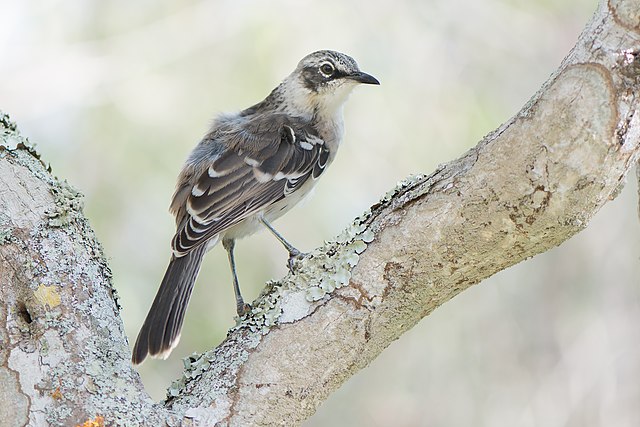
Española’s Punta Suarez trail is the most wildlife-dense single walk in the Galapagos. You step off the Zodiac onto a rocky shore where sea lion pups are already investigating your feet before you’ve taken three steps. The marine iguanas here have the most vivid coloration in the archipelago, red and turquoise patches that prompted the nickname Christmas iguana. The Española mockingbird, bold and curious to an almost comedic degree, will check your shoes and your camera strap and look directly at you with no apparent concern. Then the albatross begin to appear, enormous birds performing their courtship rituals a few meters from the trail. The blowhole at the cliff edge shoots seawater 20 meters into the air when the swell pushes through the lava fissure at the right angle. It’s a lot to process in two hours.
Floreana’s wildlife story is split between the water and the land. The flamingo lagoon at Punta Cormorant is one of the more reliable flamingo viewing sites in the Galapagos, with birds wading through the brackish water against a backdrop of the green olivine-crystal sand beach, one of only a few beaches in the world with sand that color. Devil’s Crown’s snorkeling is covered in depth elsewhere in this article, but it bears repeating: the fish density inside the eroded volcanic crater consistently produces the most visually overwhelming reef encounter of any southern stop.
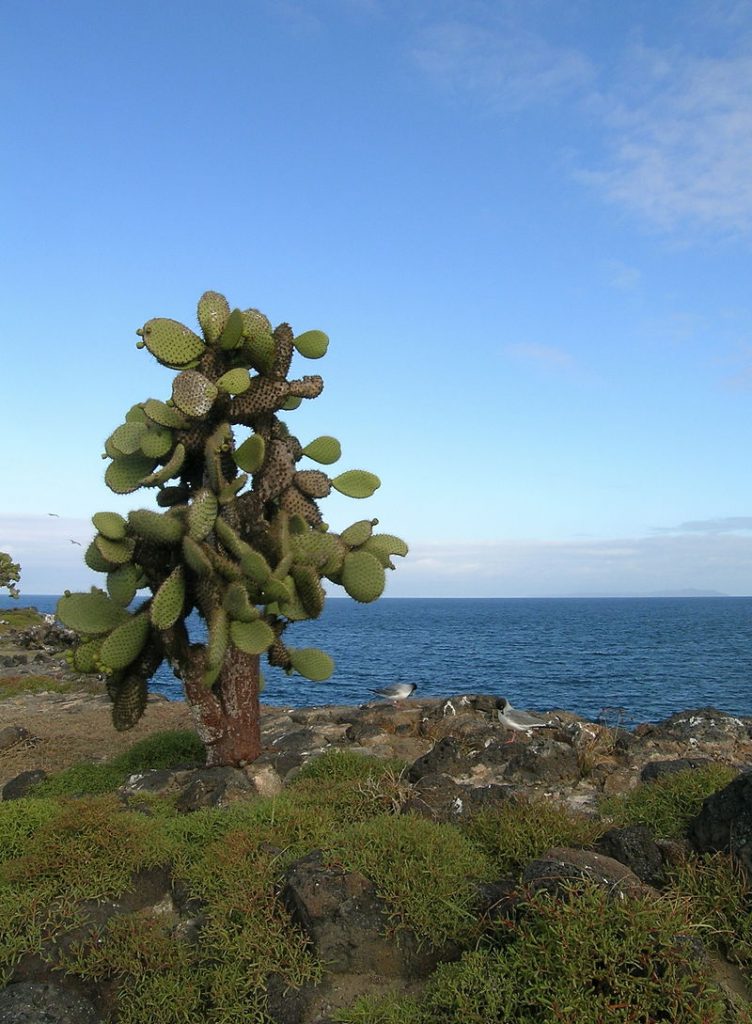
Santa Fe offers something specific that the headline islands don’t. The Santa Fe land iguana is the largest in the Galapagos and a paler, more yellowish color than any other land iguana in the archipelago. It lives nowhere else on Earth. These animals wait under the enormous Opuntia cactus trees, some reaching six meters tall, the tallest in the archipelago, for falling cactus pads and fruit. Watching one work patiently through a spined cactus pad with complete indifference to its own apparent discomfort is one of those quietly funny Galapagos moments that lands differently than the dramatic wildlife scenes.
We’ve got a full breakdown on the best Galapagos itinerary for birdwatching if you want to know exactly which routes give you the best shot at blue-footed boobies, waved albatross, frigatebirds, and Darwin’s finches in a single trip.
| Species | Where | Exclusive to Southern Route? | Best Season |
|---|---|---|---|
| Waved albatross | Española (Punta Suarez) | Yes. Española only, worldwide. | Apr-Dec |
| Santa Fe land iguana | Santa Fe (Barrington Bay) | Yes. Santa Fe only, worldwide. | Year-round |
| Christmas iguana (red-green coloring) | Española (Punta Suarez) | Yes. Española subspecies only. | Jan-Mar peak coloration |
| Española mockingbird | Española (both sites) | Yes. Española endemic. | Year-round |
| Floreana mockingbird | Champion Islet (from panga) | Yes. Extinct on main Floreana island. | Year-round |
| American flamingo | Punta Cormorant lagoon, Floreana | One of best viewing sites | Year-round; nesting Oct |
| Swallow-tailed gull | South Plaza cliffs | Seen throughout but concentrated here | Year-round |
One piece of wildlife information that most southern itinerary articles skip: the Floreana mockingbird no longer lives on Floreana itself. Invasive species wiped it out on the main island. The only surviving populations are on two small satellite islets, Champion and Gardner-near-Floreana, viewed from the panga rather than on a landing. It’s one of the more poignant conservation details in the archipelago and worth knowing before you visit so you understand why the encounter is handled the way it is.
Wildlife is the whole reason most people go to the Galapagos and the route you pick determines what you actually see. Here’s a full guide on which Galapagos cruise route has the best wildlife so you book the right one.
How Long Should You Spend on a Southern Galapagos Cruise?
Five days covers the southern essentials if you prioritize Española and Floreana. Eight days is where Santa Fe and South Plaza get the unhurried treatment they deserve and the overall experience feels complete. The southern circuit has a particular advantage at the five-day mark compared to the western route: the sailing distances between islands are shorter, which means even the shorter itineraries don’t feel rushed at the expense of site time. For families or travelers combining the Galapagos with other Ecuador destinations, a five-day southern sailing often hits the sweet spot.
South Plaza is the island that most often gets compressed or cut on shorter itineraries, which is a pity. It’s small enough that the walk only takes a couple of hours, but those hours are packed. Land iguanas and sea lions share the same rocky shoreline in one of the few places in the archipelago where both species coexist at close quarters. The Sesuvium ground cover turns vivid orange-red in the dry season, giving the landscape an almost otherworldly color contrast against the blue water. The cliff at the end of the trail drops straight to the sea, with tropicbirds, shearwaters, and boobies wheeling below you. It’s not dramatic in the way Española is. It’s just very good.
Eight days on the southern circuit typically includes all five core islands plus at least one additional stop from the central archipelago, often Bartolome or North Seymour, giving the itinerary both the southern endemic wildlife and the iconic central Galapagos landscapes. That combination consistently earns the strongest traveler feedback of any route we work with.
The islands you only reach on a 14-day itinerary are some of the most extraordinary in the entire archipelago. Here’s a guide to the 14-day Galapagos cruise so you see what becomes possible when time isn’t the limiting factor.
What’s the Best Time of Year for the Southern Islands?
April through December is essential for the waved albatross on Española. December through May delivers the warmest, clearest water for snorkeling at Devil’s Crown and Gardner Bay, and calmer overall seas. June through November adds cooler water, more active marine life, and stronger hammerhead activity at Devil’s Crown. The southern circuit is genuinely good year-round, but the albatross window is the single most important scheduling factor on this route.
The January to March gap is worth spelling out clearly. The entire albatross colony leaves Española by January and doesn’t return until April. Traveling in February means standing at Punta Suarez without the main event. Blue-footed boobies, Nazca boobies, marine iguanas, and sea lions are all still there in February and they’re not disappointing. But if the albatross brought you to this island, those months are the wrong months.
Floreana’s Devil’s Crown runs warmer and calmer during the warm season, which makes it a more accessible snorkel in December through May for travelers who aren’t strong swimmers or prefer manageable current. In the cool season (June through November) the current through the crown’s channel increases and the fish density rises, rewarding more experienced snorkelers with a richer encounter. Either works. The site is outstanding across all seasons.
| Season | Sea Conditions | Water Temp | Key Wildlife Notes |
|---|---|---|---|
| Dec-Mar | Calm, intermittent rain | 22-26°C | No albatross Jan-Mar; Christmas iguanas at peak coloration; warm snorkeling; sea turtles nesting |
| Apr-Jun | Calm to moderate | 21-25°C | Albatross returns April; blue-footed booby courtship; clearest water; flamingos active |
| Jul-Nov | Slightly rougher; calming Oct | 18-22°C | Albatross active with chicks; hammerheads peak at Devil’s Crown; sea lion pups; frigate bird courtship |
Water temperatures verified July 10, 2026.
How Does the Southern Route Compare to Eastern, Western, and Central Itineraries?
The southern route delivers the best combination of beach experience, snorkeling quality, wildlife variety, and historical depth of any single Galapagos circuit. The western route beats it on raw volcanic spectacle and exclusive endemic species like the flightless cormorant. The eastern route overlaps significantly, differing mainly in its inclusion of Kicker Rock and San Cristobal over Santa Fe and South Plaza. The central route is the most accessible but misses Española and Floreana entirely. For travelers who can only do one Galapagos cruise, the southern circuit is often the strongest all-round recommendation.
The honest framing of southern versus eastern is this: if Kicker Rock’s hammerhead diving is a priority, go eastern. If the combination of albatross, Floreana history, endemic iguanas on Santa Fe, and the compressed biodiversity of South Plaza sounds more compelling, go southern. Many travelers who’ve done both say the southern circuit felt more varied per day, while the eastern circuit felt stronger on individual peak moments like Kicker Rock. That’s a real distinction worth weighing.
Against the western route, the comparison is cleaner: different experiences, similar quality, different physical demands. The southern route is more accessible for families, older travelers, and those who want white sand beaches alongside their wildlife. The western route is for travelers specifically after volcanic terrain, the flightless cormorant, and cold-water big-animal snorkeling.
The central route, built around Santa Cruz, Bartolome, Rabida, and Santiago, skips the southernmost islands entirely. It’s an excellent introduction to the Galapagos for travelers on shorter trips, but the absence of Española is the most consequential omission in the archipelago for most people’s bucket lists.
If you’re genuinely torn between routes or trying to figure out which makes sense given specific dates and interests, we can walk through it with you in detail. Send us a message here and tell us what you’re most hoping to see.
We’ve got a full breakdown on the Galapagos northern islands itinerary if you want to know exactly what you’ll encounter at Darwin and Wolf and why this is considered one of the best dive destinations on the planet.
What Should You Know Before Booking a Southern Galapagos Cruise?
Confirm Española is explicitly in the day-by-day schedule, not just mentioned in the headline island list. Check Devil’s Crown is listed as a Floreana stop rather than just Post Office Bay alone. Book before January if you’re targeting albatross season, since April through December departures on quality vessels sell out months ahead. And as with every Galapagos itinerary, bring $200 per adult in USD cash for the park fee paid on arrival, plus the $20 Transit Control Card pre-registered online before your flight.
A few things that catch southern-route travelers off guard:
The Floreana murder mystery is actually worth knowing before you land. The Galapagos Affair, as it’s called, refers to a series of disappearances and deaths among German settlers on Floreana in the early 1930s. An Austrian woman calling herself the Baroness arrived with two lovers and proceeded to steal supplies, disrupt the other settlers, and eventually vanished without explanation along with one companion. A third person was later found dead on a different island. Friedrich Ritter, the German doctor who’d started the colony with his partner Dore Strauch, died shortly after under circumstances that remain suspicious. The only survivors were the Wittmer family, and the last person who could have explained what happened, Margret Wittmer, died in 2000 without ever giving a clear account. Knowing this before you stand at the Baroness Viewpoint above Floreana makes the visit considerably more interesting. Descendants of the Wittmers still run the only hotel on the island.
Devil’s Crown is cruise-only. Day tours can no longer access this snorkeling site. If you’re considering a land-based Galapagos trip with day excursions from Santa Cruz, Devil’s Crown is not available to you. It requires a multi-day cruise with Floreana included in the schedule.
South Plaza is tiny but time-efficient. At 0.13 square kilometers, it’s one of the smallest visitor sites in the archipelago. This actually works in its favor: the wildlife is concentrated, the walk is manageable for almost everyone, and it pairs naturally with Santa Fe into a full southern day without requiring a long sail. Some travelers dismiss South Plaza in advance as too small to bother with and regret it afterward.
Cash remains mandatory for park entry. The $200 park fee is paid in USD cash at the airport desk on arrival. There are no ATMs at Baltra or San Cristobal airports. A family of four with all members over 12 needs $800 in bills before leaving the arrivals hall. The $20 Transit Control Card switched to an online-only pre-registration in 2025 and must be completed before your domestic flight departs. Verified July 10, 2026.
What Travelers Say After the Southern Route: Our Feedback Data
Based on feedback collected through mytrip2ecuador.com and our YouTube audience, alongside interviews with thousands of Galapagos cruise travelers:
| Factor | % Rated Excellent or Very Good | Common Traveler Comment |
|---|---|---|
| Wildlife variety per day | 94% | “Every island was completely different. I didn’t expect that.” |
| Española experience | 97% | “The albatross courtship dance was the single most memorable wildlife moment of my life.” |
| Floreana history engagement | 81% | “I wished I’d read about the 1930s mystery before arriving. It would have made the visit much richer.” |
| Devil’s Crown snorkeling | 91% | “Best snorkeling I’ve done anywhere. The current was real but totally worth it.” |
| South Plaza met or exceeded expectations | 88% | “I almost skipped it. Would have been the biggest mistake of the trip.” |
| Would recommend southern route for first-timers | 91% | “It’s the most complete Galapagos experience you can get in a week.” |
The Floreana history engagement number is the interesting one at 81%. It’s high, but it’s the lowest on the table, and the feedback pattern is consistent: travelers who knew the 1930s story before arriving were significantly more engaged with every Floreana stop than those who encountered it only through their guide’s briefing on the day. The mystery is genuinely compelling and the island feels different when you know what happened there. Look it up before you go.
Frequently Asked Questions
Is the southern itinerary suitable for first-time Galapagos visitors?
Yes, and it’s probably the strongest first-trip option in the archipelago. It combines the most famous wildlife experience (albatross on Española), the best reef snorkeling (Devil’s Crown), genuine human history (Floreana), and endemic species found nowhere else (Santa Fe iguana). Sea conditions are calmer than the western circuit, terrain is varied rather than uniformly demanding, and the route delivers a genuinely different experience at each stop.
Can I visit South Plaza and Santa Fe without a cruise?
Yes. Both are accessible on day tours from Puerto Ayora on Santa Cruz. The trip takes about an hour each way and tours typically combine both islands in a full day. This is one of the few Galapagos experiences that works reasonably well without a multi-day cruise, though you miss the early morning light and the late afternoon wildlife activity that cruise passengers get by anchoring overnight nearby.
What is the Galapagos Affair and why does it matter for Floreana visitors?
The Galapagos Affair refers to a series of mysterious deaths and disappearances among German and Austrian settlers on Floreana in the early 1930s. An Austrian woman calling herself the Baroness vanished with one companion in 1934. Others died under suspicious circumstances. The mystery was never solved, and the last person who might have known the truth died in 2000. Knowing this history before you visit Floreana makes the Baroness Viewpoint, Post Office Bay, and the general atmosphere of the island considerably more resonant.
Is the Floreana mockingbird visible on a standard southern cruise?
The Floreana mockingbird is extinct on the main island of Floreana. The only surviving populations live on Champion Islet and Gardner-near-Floreana, two small satellite islands. On most cruises that include Floreana, you view Champion Islet from the panga rather than landing on it. The birds are often visible from the boat. Ask your operator whether Champion Islet is specifically in the schedule rather than just Floreana generally.
What’s the difference between the southern and eastern Galapagos itineraries?
Both include Española and Floreana. The eastern route adds San Cristobal and Kicker Rock, prioritizing shark snorkeling and the island-hopping experience from that gateway airport. The southern route replaces those with Santa Fe and South Plaza, prioritizing endemic reptile encounters and the compressed wildlife density of the central-south archipelago. Neither is superior. The choice comes down to whether Kicker Rock diving or the Santa Fe iguana matters more to you.
The southern Galapagos is the route we recommend most often to first-time visitors who want a complete experience rather than a single highlight. The albatross, the reef at Devil’s Crown, the pale iguanas of Santa Fe, the strange layered history of Floreana, the compressed spectacle of South Plaza in a couple of hours. Each island contributes something the others don’t. If you want to work out the right cruise and the right timing, we can help. Get in touch here and we’ll put together a shortlist with honest recommendations and no pressure.
Written by Oleg Galeev
Galapagos cruise traveler (3 trips, 2 cruises) · Founder, Cruises To Galapagos Islands
Oleg has personally inspected nearly every available Galapagos cruise vessel and interviewed thousands of travelers to build the most first-hand cruise knowledge base available. He also runs the Ecuador travel blog mytrip2ecuador.com and the YouTube channel My Trip to Somewhere.
Cruises To Galapagos Islands is rated 4.9 stars on Google and TripAdvisor.
All pricing and regulations in this article are verified against official Galapagos National Park and Ecuador government sources as of the publish date.