
TL;DR
The central circuit is the most accessible and logistically straightforward Galapagos itinerary. It’s built around Santa Cruz as the hub, with day trips and short cruise stops at Bartolome, North Seymour, Santa Fe, South Plaza, Rabida, and Santiago. You’ll see blue-footed boobies, frigatebirds, sea lions, giant tortoises, Galapagos penguins, and the iconic Pinnacle Rock view. What you won’t get is Española’s albatross, Fernandina’s flightless cormorant, or the deep-water snorkeling of the outer circuits. The central route is the best option for shorter trips, families, and anyone who wants a complete Galapagos introduction without the longer sailings the other routes require.
Quick Facts: Galapagos Central Islands Itinerary
| Detail | What to Know |
|---|---|
| Core Islands | Santa Cruz, Bartolome, North Seymour, Santa Fe, South Plaza, Rabida, Santiago |
| Typical Length | 4 to 8 days; most central sites also reachable on day tours from Santa Cruz |
| Access | Most flexible of all routes; cruise or land-based day tours from Puerto Ayora |
| Sea Conditions | Calmest overall; short inter-island sailings between most sites |
| Signature Wildlife | Blue-footed booby, magnificent frigatebird, Galapagos penguin (Bartolome), giant tortoise, land iguana, sea lion |
| Iconic Landmark | Pinnacle Rock, Bartolome: most photographed site in the Galapagos |
| Best For | First-timers, families, shorter trips, land-based combinations, motion-sensitive travelers |
| Day Tour Access | Bartolome, North Seymour, Santa Fe, South Plaza all reachable on day tours from Puerto Ayora |
| Park Entrance Fee | $200 USD adults / $100 USD children under 12 (cash on arrival) – Prices verified July 10, 2026 |
| Transit Control Card | $20 USD, pre-registered online before flying – Prices verified July 10, 2026 |
What Makes the Central Galapagos Islands the Best Starting Point for First-Timers?
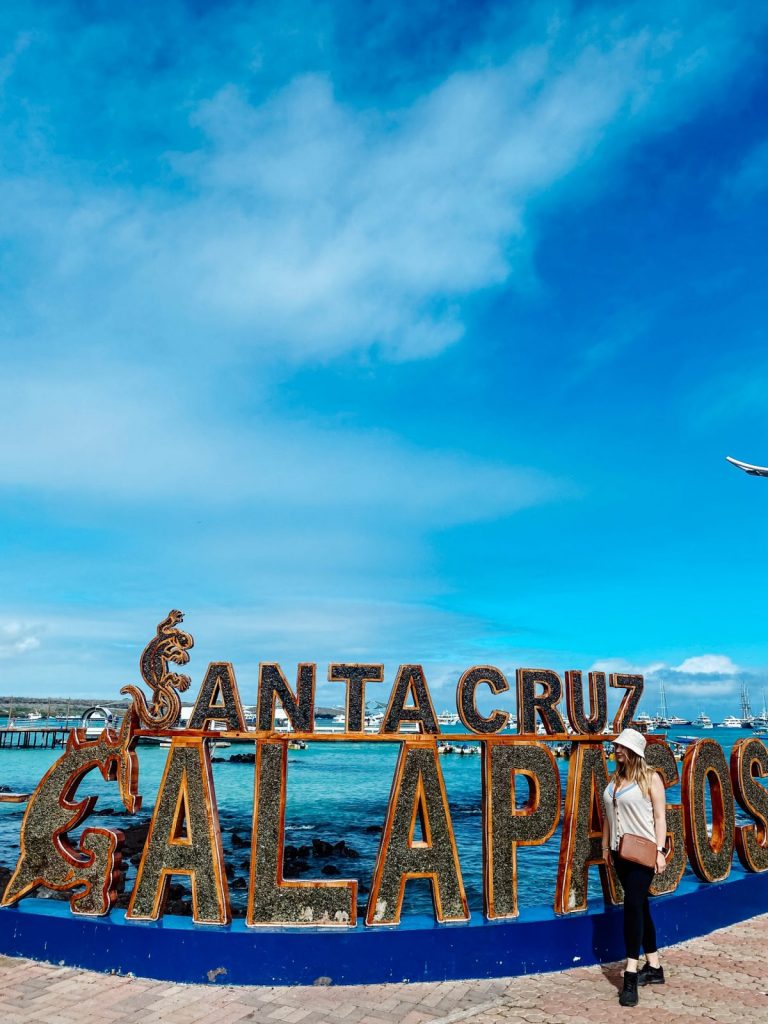
The central islands sit at the geographic and logistical heart of the archipelago. They’re the easiest to reach, require the shortest inter-island crossings, have the calmest sea conditions, and offer the widest range of activities in the smallest geographic footprint. Most importantly, they deliver the Galapagos icons most travelers have in mind before they arrive: the Pinnacle Rock panorama, the blue-footed booby, the frigatebird with its inflated red pouch, sea lions on every beach, and wild giant tortoises in the Santa Cruz highlands. No other route is this accessible or this consistently rewarding for someone visiting the islands for the first time.
Santa Cruz is the operational center of the Galapagos. Puerto Ayora, its main town, has the largest population in the archipelago, the Charles Darwin Research Station, the best infrastructure for independent travelers, and direct ferry connections to Isabela and San Cristobal. Baltra Airport, fifteen minutes away by ferry, handles the majority of domestic flights from the mainland. This is where most cruises start, most day trips depart, and most travelers spend at least a night or two before or after anything else.
The central islands also benefit from something the western and northern circuits don’t have: day-trip accessibility. Bartolome, North Seymour, Santa Fe, and South Plaza can all be reached on organized day excursions from Puerto Ayora. That flexibility means travelers with limited time, specific budget constraints, or mobility considerations have options that simply don’t exist for Española or Fernandina. You don’t have to be on a multi-night cruise to see Pinnacle Rock or snorkel with penguins.
That accessibility comes with one honest caveat. The central islands see more visitor traffic than any other circuit, because they’re the most reachable. Visitor numbers at landing sites are regulated by the Galapagos National Park, so it never feels crowded in the way a popular European landmark might. But you will occasionally share Bartolome’s summit trail with other boats, in a way you wouldn’t at Fernandina’s Punta Espinosa. Worth knowing before you arrive.
Which Islands Are Included in a Central Galapagos Itinerary?
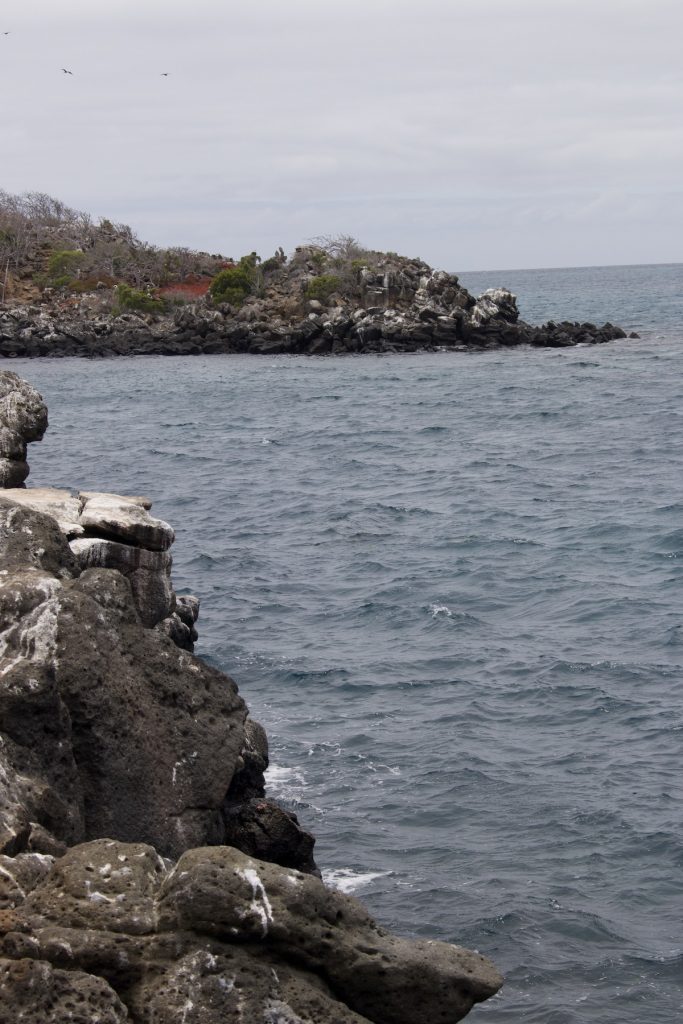
The core central islands are Santa Cruz, Bartolome, North Seymour, Santa Fe, South Plaza, Rabida, and Santiago. Most short itineraries (4 to 5 days) cover Santa Cruz plus three or four of the others. Longer 7 to 8 day central sailings work through the full list, sometimes adding Daphne Major as a scenic navigation stop or extending to the northern edge of the central archipelago at Genovesa. Rabida and Santiago are often the islands that get dropped from shorter itineraries and added back on longer ones.
| Island | Key Sites | What You’ll See | Day Tour Available? |
|---|---|---|---|
| Santa Cruz | Darwin Research Station, El Chato highlands, Tortuga Bay, Black Turtle Cove, lava tunnels | Giant tortoises wild and in breeding program, Darwin’s finches, marine iguanas, flamingos, lava tunnels | Inhabited island; base for all day trips |
| Bartolome | Pinnacle Rock summit trail, beach snorkeling | Best panoramic view in the Galapagos, Galapagos penguins, sea lions, white-tip reef sharks, sea turtles (nesting Jan-Mar) | Yes; 2hr from Puerto Ayora |
| North Seymour | 1.9km loop trail | Magnificent frigatebirds (red pouch inflation), blue-footed boobies nesting within meters of trail, land iguanas, sea lions | Yes; 30min from Baltra |
| Santa Fe | Barrington Bay, two trails | Santa Fe land iguana (endemic), largest prickly pear cacti in archipelago, sea lions, snorkeling in turquoise bay | Yes; often paired with South Plaza |
| South Plaza | Coastal loop trail, cliffs | Land iguanas, sea lions, swallow-tailed gulls, red Sesuvium groundcover, seabird cliff views | Yes; often paired with Santa Fe |
| Rabida | Red-sand beach, flamingo lagoon | Distinctive iron-rich crimson beach, flamingos, pelicans, sea lions, moray eels and reef sharks snorkeling | Cruise primarily |
| Santiago | Sullivan Bay, Puerto Egas, Buccaneer Cove | 1897 pahoehoe lava fields, fur seal grottos, tidal pools, marine iguanas, oystercatchers, wading birds | Cruise primarily |
Santiago is one of those central islands that tends to get undersold in short-trip planning. Sullivan Bay’s lava field, formed from an 1897 eruption, is one of the best places in the archipelago to understand the geology of these islands. The pahoehoe patterns in the solidified lava are extraordinarily detailed and the walk across them feels like another planet. Puerto Egas on the same island has fur seal grottos in collapsed lava tunnels right at the waterline, animals resting in the shade just meters from where you stand.
If you want help working out which central islands to prioritize given your specific dates, budget, and what you’ve already seen in the Galapagos or want to see most, we’re happy to talk through it. Fill out this short form and we’ll give you a straightforward recommendation.
Trying to maximize your island count without just booking the longest and most expensive cruise available? Here’s which Galapagos itinerary visits the most islands broken down so you find the best balance between coverage and cost.
What Wildlife Can You Expect to See on the Central Route?
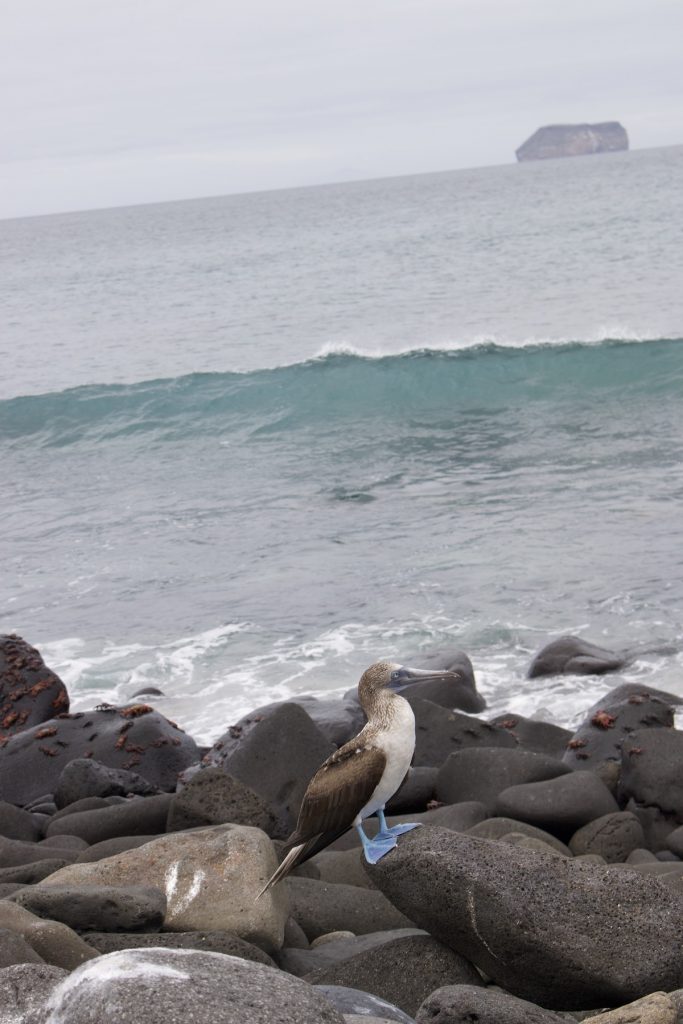
The central circuit delivers the most visited and most reliably seen Galapagos species across a short itinerary. Blue-footed boobies nesting at active colonies within a meter of the North Seymour trail. Frigatebirds with their inflated scarlet pouches at the same site, often right beside the boobies in what your naturalist guide will explain is a deliberate design: the frigatebird steals fish the boobies catch. Giant tortoises in the Santa Cruz highlands, walking free through the mist. Galapagos penguins at Bartolome, snorkeling faster than you’d expect anything on two legs to move. Sea lions essentially everywhere.
North Seymour is the central circuit’s most concentrated birding experience. The island is small and flat, formed by an underwater uplift rather than volcanic eruption, which gives the terrain a scrubby, low-canopy character that makes the nesting colonies impossible to miss. The trail runs directly through active frigatebird and blue-footed booby nesting sites. On a good day you can photograph both species performing their respective courtship displays from the same standing position. The frigatebird’s inflated red pouch can reach the size of a small football. The blue-footed booby’s courtship involves picking up sticks and presenting them, and high-stepping with exaggerated care to show off the blue feet. It’s one of those moments where the Galapagos makes you feel like you walked into a wildlife documentary.
Bartolome’s contribution to the wildlife lineup is specific and rare: snorkeling with Galapagos penguins. These are the only penguins in the northern hemisphere and the second smallest penguin species on the planet. At rest on the rocks at the base of Pinnacle Rock they look unremarkable. In the water they turn into something else entirely, moving faster than seems physically plausible, darting through the snorkeling group in pursuit of fish with complete disregard for the humans in the water. Sea turtles are frequent company. White-tip reef sharks sleep on the sandy bottom. Underwater visibility at Bartolome is generally excellent.
The Santa Cruz highlands bring a different register entirely. Giant tortoises moving slowly through the misty vegetation, sometimes 40 or 50 of them in the same reserve, some over a meter long. Darwin’s finches picking at the ground nearby. A light rain making the vegetation vivid green against the volcanic rock. After the drama of cliff bird colonies and open-water snorkeling, the highlands feel quiet and ancient. It’s a good reminder that the most famous evolutionary story these islands tell is a slow one.
Still comparing Galapagos routes before you commit to a cruise date? This guide on which Galapagos cruise route has the best wildlife gives you a straight answer based on species diversity, sighting frequency, and what each route is genuinely known for.
How Long Should You Spend on a Central Galapagos Cruise?
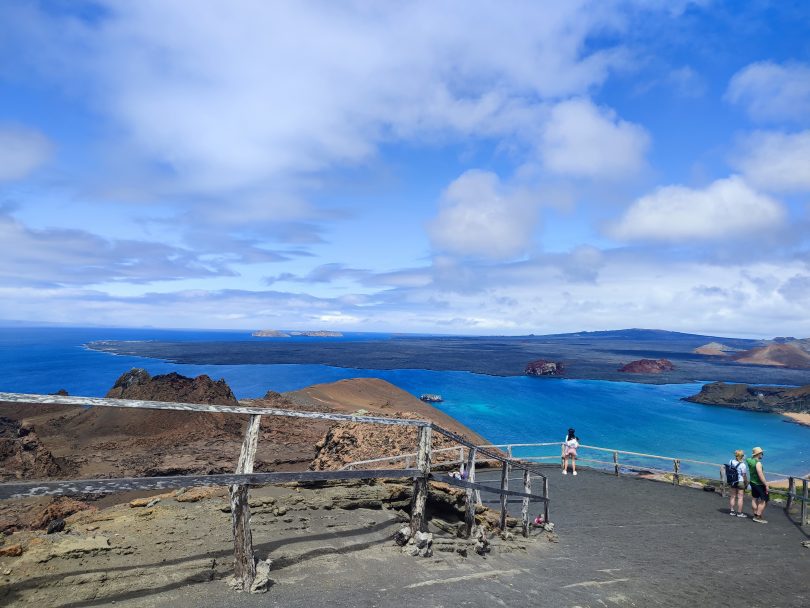
Four to five days covers the central highlights comfortably. Santa Cruz with the highlands and Research Station, Bartolome for Pinnacle Rock and penguin snorkeling, North Seymour for the bird colonies, and one of either Santa Fe or South Plaza fills a well-rounded shorter itinerary. Eight days lets you add Rabida, Santiago’s Sullivan Bay and Puerto Egas, and more time at each site without rushing. The central circuit is also the only Galapagos route where a land-based stay with day trips can reasonably substitute for a cruise, at least for some of the sites.
The land-based option deserves honest treatment. If you’re on a strict budget or your group has diverse interests that don’t all point toward a week on a boat, staying in Puerto Ayora and doing day tours is a legitimate way to see most of the central circuit. Bartolome, North Seymour, Santa Fe, and South Plaza are all accessible as day trips. The Darwin Research Station and El Chato tortoise reserve are on Santa Cruz itself. What you miss is the early morning light at the uninhabited islands before day-trip boats arrive, the overnight anchoring that lets cruise passengers do sunset and sunrise excursions, and any site that’s exclusively on the cruise itinerary. For the outer circuits, a cruise isn’t optional. For the central islands, it’s the better experience, but it’s not the only viable one.
Ten days in the Galapagos is where you stop sampling and start actually covering the archipelago. Here’s a full guide to the 10-day Galapagos cruise so you know exactly what full island coverage looks like in practice.
What’s the Best Time of Year for the Central Islands?
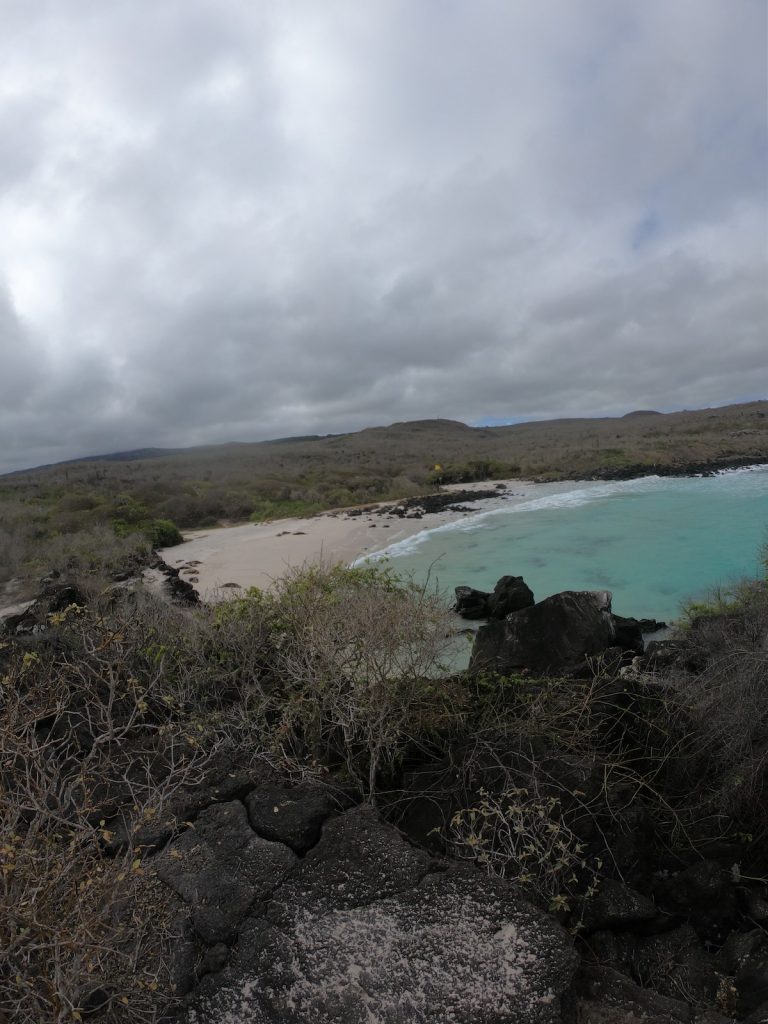
The central Galapagos works every month of the year, with the two seasons offering different trade-offs rather than one being clearly better. December through May brings warmer water (22-26°C), calmer seas, clearer snorkeling visibility at Bartolome and Santa Fe, and lush green highland vegetation on Santa Cruz. June through November is cooler and windier, with water temperatures dropping to 18-22°C, but it brings more active wildlife, more dramatic frigatebird and booby behavior at North Seymour, and Galapagos penguins at their most active around Bartolome.
The central circuit is uniquely well-suited to the shoulder months of June and November. Seas are transitioning, visitor numbers are lower than peak season, and the wildlife is active without the full cool-season roughness. Bartolome’s penguin colony is more active and more visible in the cooler months. Giant tortoises in the Santa Cruz highlands are more numerous during the wet season when food is abundant. Blue-footed booby courtship at North Seymour runs from roughly June through August. None of these patterns are strict cutoffs, but they’re worth knowing.
The central circuit also has the most reliable year-round experience of any Galapagos route, because none of its signature wildlife disappears seasonally the way the waved albatross does from Española or whale sharks do from the northern waters. You can book the central circuit for any month and be confident you’ll see the main attractions.
| Season | Conditions | Water Temp | Wildlife Highlights |
|---|---|---|---|
| Dec-May (warm) | Calm, intermittent rain, lush vegetation | 22-26°C | Sea turtle nesting (Jan-Mar at Bartolome), warm snorkeling, highland tortoises abundant, frigate courtship begins |
| Jun-Nov (cool) | Drier, windier, slightly rougher | 18-22°C | Blue-footed booby courtship peaks (Jun-Aug), penguins most active at Bartolome, sea lion pups, whale season (Jul-Oct, sightings during central passages) |
Water temperatures verified July 10, 2026.
If you’re unsure which month gives you the best combination of conditions and wildlife for your specific group, we can help narrow it down. Reach out here and tell us your target dates and top interests.
How Does the Central Route Compare to the Southern, Eastern, and Western Itineraries?
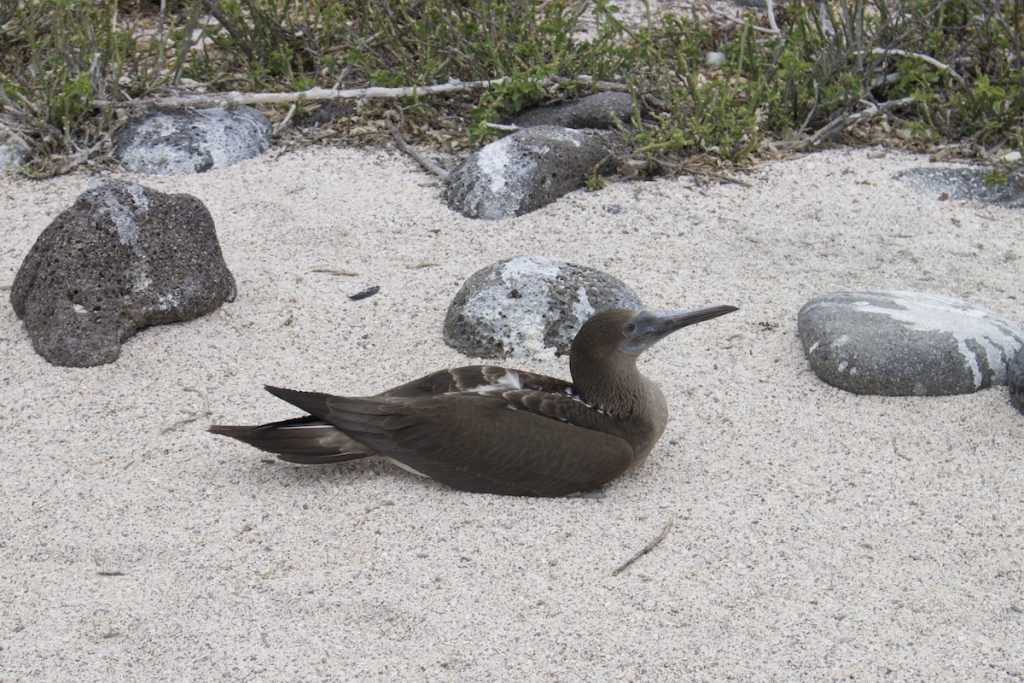
The central circuit trades exclusivity for accessibility. It doesn’t have Española’s albatross, Fernandina’s flightless cormorant, or the deep-water liveaboard encounters at Darwin and Wolf. What it has instead is the greatest wildlife variety per day for a short itinerary, the easiest sea conditions in the archipelago, the most flexibility between cruise and land-based options, and the clearest entry point into what the Galapagos actually looks and feels like. For travelers on their first visit with limited time, it is almost always the correct starting point.
The most common comparison we work through with travelers is central versus southern. The southern route is richer in exclusive wildlife and more layered in human history. It requires more time and longer sailings between islands. The central route is faster, more varied per day, and more accessible from multiple directions. For a five-day trip, the central circuit consistently produces a stronger overall experience than a rushed attempt at the southern circuit on the same timeline.
Against the eastern route, the trade is similar. The eastern circuit adds Kicker Rock’s hammerhead snorkeling and San Cristobal, but it often sacrifices the visual drama of Bartolome and the concentrated bird colonies at North Seymour. For travelers who care equally about scenery and wildlife, the central circuit often edges it.
The western route is a fundamentally different experience and not a reasonable comparison for most first-timers. It requires longer sailings, more physical demand, and produces a smaller wildlife list in exchange for more dramatic and exclusive encounters. It’s where you go on your second or third Galapagos trip.
| Route | Best For | What You Give Up | Min. Days |
|---|---|---|---|
| Central | First-timers, short trips, families, land-based, calm seas | Albatross, flightless cormorant, deep-water pelagics, remoteness | 4 |
| Southern | Best all-round first visit with more time, birders, history | Bartolome views, Kicker Rock, shorter trip viability | 5 |
| Eastern | Snorkeling focus, San Cristobal flexibility, albatross | Bartolome, central bird colonies, Santiago | 5 |
| Western | Exclusive endemic species, volcanic terrain, advanced snorkeling | Accessibility, beaches, short-trip viability, calm seas | 5 |
What Should You Know Before Booking a Central Galapagos Cruise?
Book Bartolome as early as possible, particularly for the January through March and June through August peak periods. The island has a daily visitor cap and it fills up. If you’re planning a land-based trip from Santa Cruz, Bartolome day tours are among the first to sell out because they’re the most popular single-day experience in the archipelago. Bartolome is also the only central island where the hike involves significant sun exposure with no shade on the boardwalk, which sounds minor but matters significantly in equatorial sun.
Some things that catch central-route travelers off guard:
Day tours reach the popular sites later than cruise passengers. Cruise ships anchor overnight near their next morning site. Day-tour boats leave Puerto Ayora early but still arrive at Bartolome or North Seymour after cruise groups are already ashore. The difference in morning light and pre-crowd wildlife behavior is real. If you’re using a camera seriously, this matters. If you’re just there to see the animals and the view, the difference is minimal.
North Seymour requires booking when frigatebirds are displaying. Frigatebird courtship runs roughly from September through March, with the red pouch inflation being the specific behavior most travelers come for. Outside that window, frigatebirds are present but not displaying. Ask before you book specifically for that experience, particularly if you’re visiting between April and August.
The Darwin Research Station is free but misunderstood. Many travelers expect a wildlife experience at the Research Station and find an educational facility. It is genuinely worth visiting for the giant tortoise breeding enclosures and the context it provides for everything else you’ll see. But the wild tortoise encounter is in the El Chato reserve in the highlands, not at the Research Station itself. The two are often presented as a combined visit and they complement each other well, but they’re different experiences.
The Galapagos entry fee is still cash-only on arrival. The $200 park fee per adult is paid in USD bills at the airport desk before exiting the arrivals hall. There are no ATMs at Baltra Airport. Bring the full amount from the mainland. The $20 Transit Control Card must now be registered online before your domestic flight, no longer purchased at the airport counter. Both requirements apply regardless of whether you’re on a cruise or a land-based trip. Verified July 10, 2026.
What Travelers Say After the Central Route: Our Feedback Data
Based on feedback collected through mytrip2ecuador.com and our YouTube audience, alongside interviews with thousands of Galapagos travelers over the years:
| Factor | % Rated Excellent or Very Good | Common Traveler Comment |
|---|---|---|
| Bartolome experience | 93% | “That view is every Galapagos photo I’d ever seen. Standing there was surreal.” |
| North Seymour bird colonies | 91% | “I walked past a nesting frigatebird at arm’s length. It didn’t move. I couldn’t believe it.” |
| Penguin snorkeling at Bartolome | 87% | “One swam straight through the group at full speed. Nobody was ready for how fast they are.” |
| Highland tortoise experience | 89% | “Nothing prepares you for how large they actually are.” |
| Would recommend central route for first visit | 88% | “The perfect introduction. Now I want to go back and do the outer islands.” |
| Wished itinerary included Española | 44% | “The one thing I’d add for next time.” |
That last figure is the most useful one for trip planning. Nearly half of central-route travelers come back wishing they’d added Española to their itinerary. If you have the time for an 8-day sailing that builds the central circuit and extends to include Española, that combination almost universally produces stronger overall satisfaction. The constraint is usually time and budget, not desire.
The islands you reach on a second consecutive cruise are often the ones that leave the biggest impression. Here’s a guide on back-to-back Galapagos cruise itineraries so you see what becomes possible when you stay out there long enough.
Frequently Asked Questions
Can I do the central Galapagos islands without a cruise?
Yes, more than any other Galapagos circuit. Bartolome, North Seymour, Santa Fe, South Plaza, and the Santa Cruz highlights (highlands, Darwin Research Station, Tortuga Bay) are all accessible as day tours from Puerto Ayora. Rabida and Santiago are primarily cruise sites. If your goal is a strong central island experience with flexibility and lower cost, a land-based stay on Santa Cruz with daily tours is a legitimate option. You’ll miss some early-morning access and a few cruise-only sites, but the core experience is achievable.
Is the hike at Bartolome difficult?
It’s moderate. The trail climbs about 100 meters via 372 wooden steps with no shade and significant equatorial sun exposure. Most reasonably fit travelers complete it without difficulty in 30 to 45 minutes. Bring water, wear sun protection, and go at a steady pace rather than rushing. The view from the top is worth it and the descent is easier than the climb. The snorkeling at the base of Pinnacle Rock afterward requires being comfortable in open water with some current.
When is the best time to see frigatebirds displaying at North Seymour?
Frigatebird courtship, including the red pouch inflation, runs approximately September through March. It’s most active from October through February. Outside these months, frigatebirds are present but not displaying. If the courtship display is specifically on your list, confirm your visit dates fall within the season before booking.
What is the Galapagos park entrance fee in 2026?
$200 USD per adult and $100 per child under 12 for foreign visitors, paid in USD cash on arrival at Baltra or San Cristobal airport. The $20 Transit Control Card must be registered online before your domestic flight. Neither payment can be made by card at the airport. Prices verified July 10, 2026.
Does the central circuit include Española or Floreana?
Not typically. The standard central itinerary does not include Española or Floreana, which are on the southern or eastern circuits. Some 8-day “central and southern” combinations bridge the two and include Española alongside the central islands. If Española’s albatross (April through December) is important to you, look specifically for combined itineraries rather than a pure central sailing.
The central Galapagos is where most first-time visitors have their first real wildlife moment, whether it’s a sea lion pup investigating their fins at Bartolome, a frigatebird’s scarlet pouch inflated to impossible size at North Seymour, or a giant tortoise the size of a coffee table walking slowly past in the Santa Cruz mist. It’s a strong circuit and we genuinely enjoy helping travelers plan it well. If you want to talk through which specific islands to prioritize for your dates and group, get in touch here and we’ll put together a clear recommendation with no pressure.
Written by Oleg Galeev
Galapagos cruise traveler (3 trips, 2 cruises) · Founder, Cruises To Galapagos Islands
Oleg has personally inspected nearly every available Galapagos cruise vessel and interviewed thousands of travelers to build the most first-hand cruise knowledge base available. He also runs the Ecuador travel blog mytrip2ecuador.com and the YouTube channel My Trip to Somewhere.
Cruises To Galapagos Islands is rated 4.9 stars on Google and TripAdvisor.
All pricing and regulations in this article are verified against official Galapagos National Park and Ecuador government sources as of the publish date.