
TL;DR
The 8-day Galapagos cruise is the most-booked format on the islands and the one most experienced operators and expedition professionals recommend for a reason: it is the shortest itinerary that covers a full regional circuit without compromising on site time, pace, or wildlife variety. Six full sailing days is enough to reach the remote outer islands that shorter cruises can’t access, let the experience accumulate into something genuinely different from a highlights reel, and come home feeling complete rather than wishing for more. It fits inside a standard two-week vacation window and delivers approximately 85% of the Galapagos Big 15 species on a single well-chosen route.
Quick Facts: 8-Day Galapagos Cruise
| Detail | What to Know |
|---|---|
| Structure | 8 calendar days / 7 nights on vessel / 6 full sailing days |
| Islands Covered | 6 to 9 islands depending on route and operator |
| Visitor Sites | 8 to 12 of the 18 National Park-recognized sites on a single approved itinerary |
| Species Coverage | ~85% of the Galapagos Big 15 on a well-matched route |
| Main Routes | Eastern (Española, Floreana, San Cristobal, Santa Fe, South Plaza, North Seymour, Santa Cruz); Western (Fernandina, Isabela multiple sites, Santiago, Bartolome, Rabida, Santa Cruz) |
| Price Range (2026) | $2,500-$3,500 budget; $3,500-$6,000 mid-range; $6,000-$12,000+ luxury |
| Who It’s For | Most first-time visitors; couples; families with children 6+; anyone who can take a full week away |
| What It Can’t Do | Cover both eastern and western circuits (requires 11+ days); reach Darwin and Wolf dive islands |
| Park Entrance Fee | $200 USD adults / $100 USD children under 12 (cash on arrival) – Prices verified July 10, 2026 |
| Transit Control Card | $20 USD, pre-registered online before flying – Prices verified July 10, 2026 |
Why the 8-Day Galapagos Cruise Is the Format Most Experts Actually Recommend
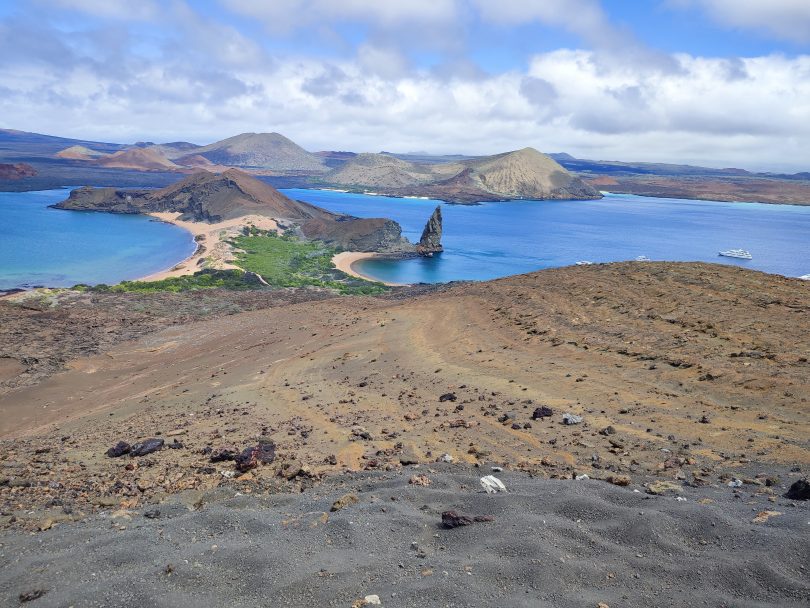
The 8-day Galapagos cruise earns its expert recommendation for one structural reason: it is the shortest format that completes a full regional circuit without cutting site time to make the schedule work. Shorter cruises cover part of one circuit. The 8-day covers the whole thing. That difference produces a qualitatively different trip, not just more of the same thing. You visit the remote outer islands that require overnight sailing to reach. You have time for the naturalist relationship to develop into something genuinely useful. You have enough days that the trip’s best moment usually happens on day four or five, not on the last afternoon.
There is a practical structural argument behind the expert consensus that rarely gets spelled out directly. The Galapagos National Park approves cruise itineraries in 4, 5, 6, 8, 11, 14, and 15-day cycles. The 4, 5, and 6-day formats are geometrically constrained: the overnight sailing required to reach Fernandina or the full Española circuit takes time that shorter itineraries simply don’t have. An 8-day cruise on the eastern route can visit Española, Floreana, San Cristobal, Santa Fe, South Plaza, North Seymour, and Santa Cruz properly, without skipping or compressing any of them. A 5-day cruise on the same route either skips several of those islands or rushes through the ones it visits. That’s the difference the extra days buy.
The cost argument also runs in the 8-day’s favor. You’ve already paid for international flights to Ecuador, domestic flights to the islands, the $200 park fee, and the $20 TCT card. Those fixed costs are the same on a 4-day cruise as they are on an 8-day cruise. Extending by four days adds vessel time to a trip where you’ve already absorbed the biggest expenses. The cost per effective island day drops significantly as you extend. Spending the marginal cost of those four additional days to complete the circuit properly is almost always the better value decision once you’ve committed to the trip at all.
From our experience working with thousands of travelers, the 8-day cruise is also the format that generates the fewest regrets. Travelers who do shorter cruises frequently tell us they wish they’d stayed longer. Travelers who do 8-day cruises almost never tell us the same. They often say they want to come back for the other circuit. That’s a different kind of wish, and it’s a healthier one: it means the trip delivered what it promised and opened the appetite for more rather than leaving the impression that something was missing.
If you’re trying to decide between an 8-day and something shorter, we’re happy to talk through the honest tradeoffs for your specific situation. Fill out this short form and we’ll give you a straight answer.
Still comparing 7-day Galapagos itineraries before you commit to a cruise? This guide gives you a straight answer on the best routes and what separates a good week from a great one out there.
What Does an 8-Day Galapagos Cruise Actually Cover?
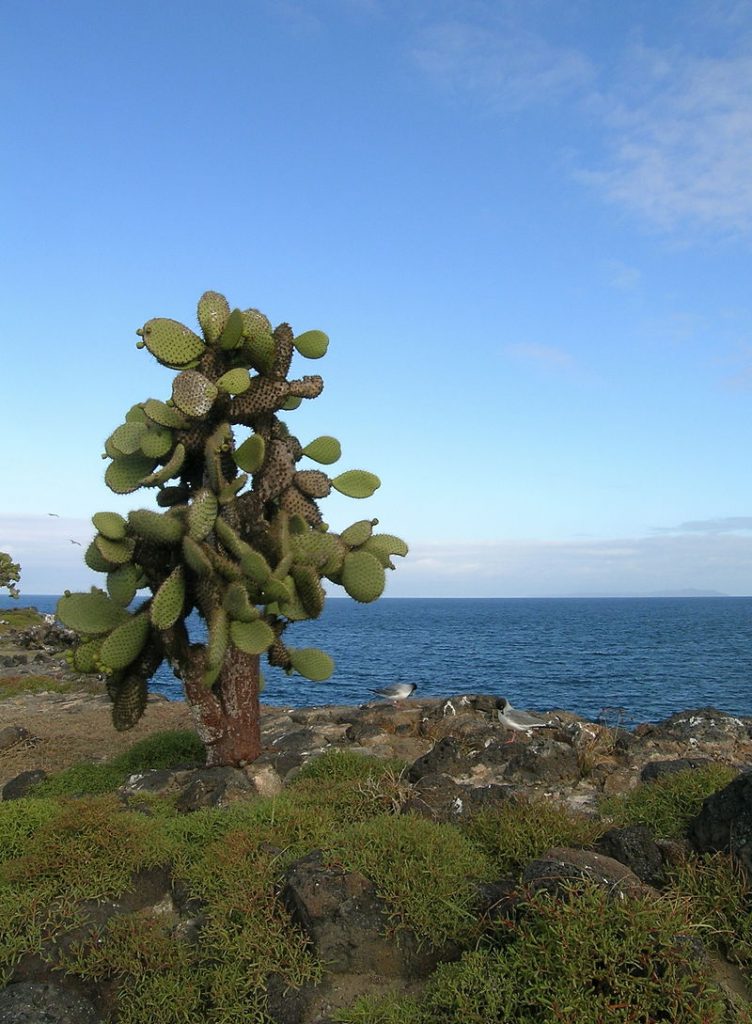
An 8-day Galapagos cruise visits 6 to 9 islands across one complete regional circuit, covering 8 to 12 of the 18 National Park-recognized visitor sites. Six full sailing days gives every major site on either the eastern or western route its own proper time allocation: a full morning excursion and an afternoon excursion, rather than a compressed visit that shortchanges the landing to make the sailing schedule work. This is the key operational difference between 8 days and shorter formats: no site gets abbreviated because of transit pressure.
The eastern 8-day route typically visits: Santa Cruz highlands and Darwin Research Station on day one, South Plaza and Santa Fe on day two, San Cristobal (Kicker Rock and Cerro Brujo) on day three, Floreana (Devil’s Crown, Post Office Bay, Punta Cormorant) on day four, Española (Punta Suarez and Gardner Bay, the two strongest wildlife sites in the eastern archipelago) on day five, Santa Cruz and North Seymour on day six, a final island on day seven, and departure on day eight. That sequence gives Española a full day, which it deserves. Shorter cruises that include Española are often in and out in a single morning.
The western 8-day route typically visits: Santa Cruz on day one, Floreana on day two, Santiago (Sullivan Bay and Puerto Egas) on day three, Bartolome and Rabida on day four, Isabela (Tagus Cove and Urbina Bay) on day five, Isabela western face (Punta Vicente Roca) and Fernandina (Punta Espinoza) on day six, Elizabeth Bay on day seven, and North Seymour before departure on day eight. The critical day is day six on the western route: Punta Vicente Roca and Punta Espinoza are the western circuit’s two most remote and ecologically significant sites. Reaching them on a shorter western itinerary is possible but compromised. On 8 days they get the time they need.
One thing worth confirming before you book any 8-day cruise: not all itineraries marketed as “8-day eastern” or “8-day western” include the same sites. The National Park assigns routes to vessels, and the specific sites can vary between operators and even between departure dates on the same vessel. Confirm that Punta Espinoza on Fernandina (western) or Punta Suarez on Española (eastern) is explicitly in the day-by-day schedule before putting down a deposit. These are the sites that justify the additional time and cost of the longer format. If they’re not on the itinerary, you’re paying 8-day prices for a 5-day experience.
Still trying to figure out which itinerary gives you the broadest Galapagos experience before you commit? This guide on which Galapagos itinerary visits the most islands gives you a clear answer based on route, length, and what each island actually contributes.
Which 8-Day Route Is Right for You: Eastern or Western?
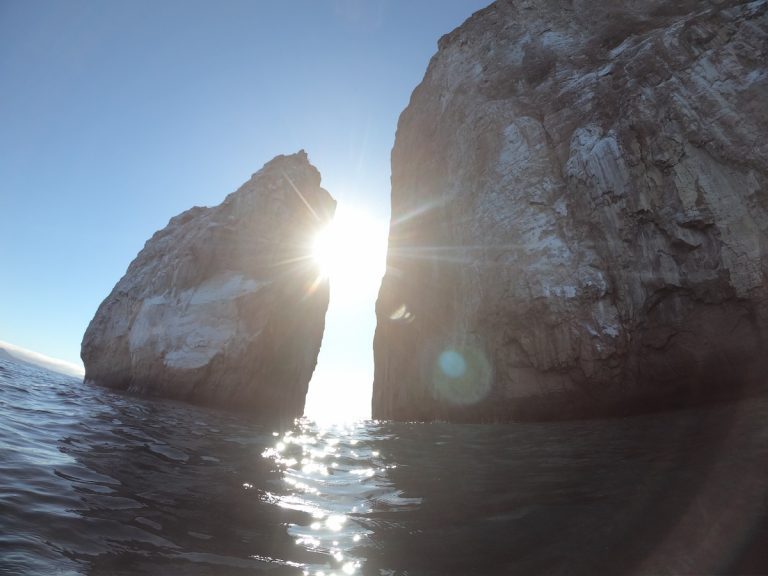
Eastern if: it’s your first Galapagos cruise, you have children or motion-sensitive travelers in your group, the waved albatross is on your list (April through December), or you want the finest dedicated snorkeling sites in the archipelago at Kicker Rock and Devil’s Crown. Western if: you’ve already done the eastern circuit, wildlife photography is a priority, you specifically want to see the flightless cormorant or the Fernandina marine iguana mega-colony, or you want the most remote and volcanically raw terrain available on a standard cruise. Most first-time visitors go eastern; most returning visitors who’ve done eastern go western next.
The eastern route is calmer, more historically layered, and delivers the waved albatross on Española, the only place in the world where that bird breeds. Española alone justifies a week-long cruise. Punta Suarez on Española is the most species-dense single walk in the Galapagos: the albatross courtship dance, Christmas iguanas, the Española mockingbird, active booby colonies, and the blowhole all in two hours. Gardner Bay adds one of the finest beaches in the Pacific with a resident sea lion colony that uses snorkelers as entertainment. Devil’s Crown off Floreana is the most praised snorkeling site in the archipelago. San Cristobal’s Kicker Rock delivers hammerhead sharks in season. The eastern circuit is a very strong itinerary and it’s the right first Galapagos cruise for the majority of travelers.
The western route requires more from you physically. The Bolivar Channel between Isabela and Fernandina can be rough, particularly in August and September, and the lava terrain at Punta Espinoza demands ankle-support footwear and attention. What you get in return is access to something genuinely unavailable on any other standard cruise format. The flightless cormorant exists only on Isabela and Fernandina. The Fernandina marine iguana colony is the largest in the archipelago, hundreds of animals piled on the lava at Punta Espinoza with sea lion colonies and nesting cormorants in the same field of view. Punta Vicente Roca on Isabela’s northwest tip delivers Mola mola ocean sunfish from June through November and Galapagos penguins year-round, from a panga ride along 200-meter volcanic cliffs with no landing at all. These experiences don’t have equivalents on the eastern route.
| Factor | Eastern 8-Day | Western 8-Day |
|---|---|---|
| Sea conditions | Calmer year-round | Rougher; catamaran recommended Aug-Oct |
| Signature exclusive wildlife | Waved albatross (Apr-Dec), Christmas iguana, Española mockingbird | Flightless cormorant, largest marine iguana colony, Mola mola (Jun-Nov) |
| Top snorkeling | Devil’s Crown (best reef fish diversity), Kicker Rock (hammerheads), Gardner Bay | Punta Vicente Roca (Mola mola, penguins), Elizabeth Bay (turtles, iguanas) |
| Terrain | Sandy beaches, rocky cliffs, highland vegetation | Active lava fields, steep volcanic cliffs, mangroves |
| Physical demand | Moderate | Moderate to demanding; lava terrain requires ankle support |
| Best for | First-timers, families, motion-sensitive travelers, birders | Returning visitors, wildlife photographers, exclusive endemic species |
| Best months | Apr-Dec (albatross); May and Nov (sweet spots) | May and Nov (sweet spots); Jun-Nov for Mola mola; avoid Aug-Sep on single-hull |
The route question is the most important decision in 8-day cruise planning. If you want help thinking it through based on your specific interests, travel group, and dates, reach out here and we’ll give you a direct recommendation.
What Wildlife Can You Expect on an 8-Day Cruise?
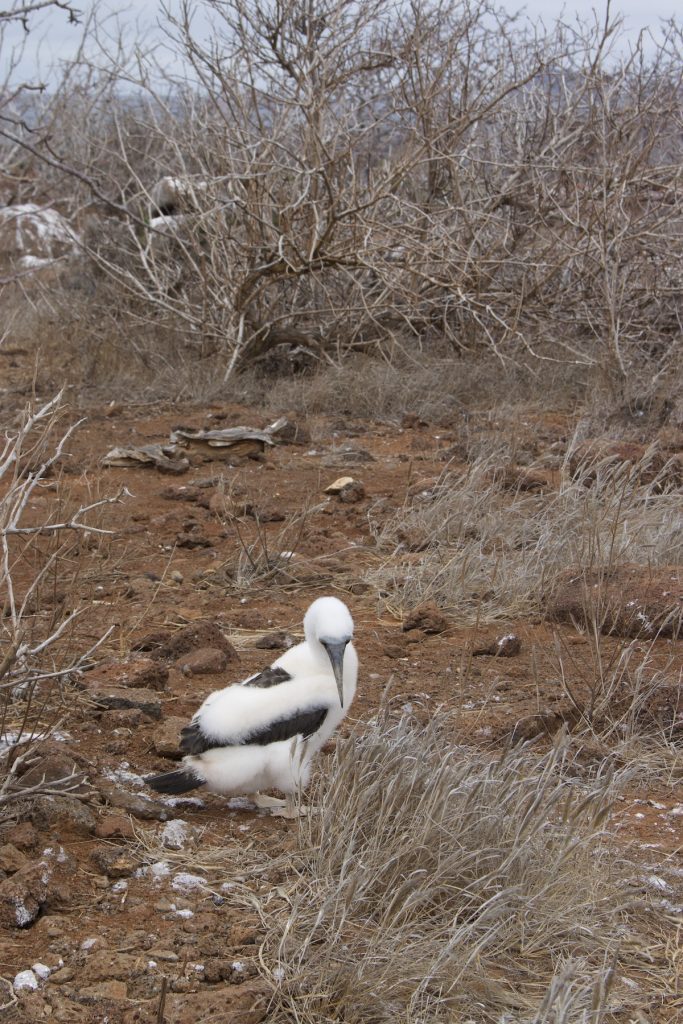
An 8-day Galapagos cruise reaches approximately 85% of the Galapagos Big 15 species. The remaining 15% are almost entirely species exclusive to whichever circuit you didn’t choose: the waved albatross (eastern only) or the flightless cormorant (western only). Everything else available on a standard non-diving cruise is reachable on 8 days: giant tortoises, sea lions, marine iguanas, blue-footed boobies, Galapagos penguins, frigatebirds, Darwin’s finches, Nazca boobies, flamingos, sea turtles, white-tip reef sharks, Galapagos hawks, and the various endemic mockingbird species.
The wildlife density difference between 8 days and shorter formats isn’t just about species count. It’s about what accumulates across six full excursion days. By the fourth day of an 8-day cruise, the daily briefing from your naturalist guide has shifted from introducing species to discussing patterns: why the marine iguanas sneeze salt, what the frigate bird’s red pouch actually communicates and to whom, how the specific lava formation you’re walking across connects to the island’s volcanic history. These conversations require days of shared experience to develop. They don’t happen on a 5-day cruise, where the guide is still in introduction mode on day three.
The 8-day format also produces a higher probability of the unexpected sightings that tend to define trips in retrospect. More days in the field means more chances for the whale that surfaces off the bow during a morning passage, the hammerhead school that materializes at Kicker Rock before breakfast, or the Mola mola that drifts within two meters of the panga at Punta Vicente Roca. These encounters are not scheduled. They happen to travelers who are in the right places for long enough. Six full sailing days gives the schedule room to absorb one rough morning or one site change without losing a key landing.
One species note that often surprises travelers who’ve done their research: the Galapagos penguin is reliably seen on the western 8-day route and occasionally on eastern routes at Bartolome, but it’s not a headline guarantee on either circuit. The western route’s Isabela and Fernandina sections are where the Galapagos penguin population is most concentrated, and a well-run western 8-day almost always produces multiple sightings across different sites. If penguins specifically are important to your group, the western route is the better choice regardless of other preferences.
Trying to decide between routes based on what you most want to see out there? Here’s which Galapagos cruise route has the best wildlife broken down by the encounters most travelers come back talking about.
What’s the Best Time of Year for an 8-Day Galapagos Cruise?
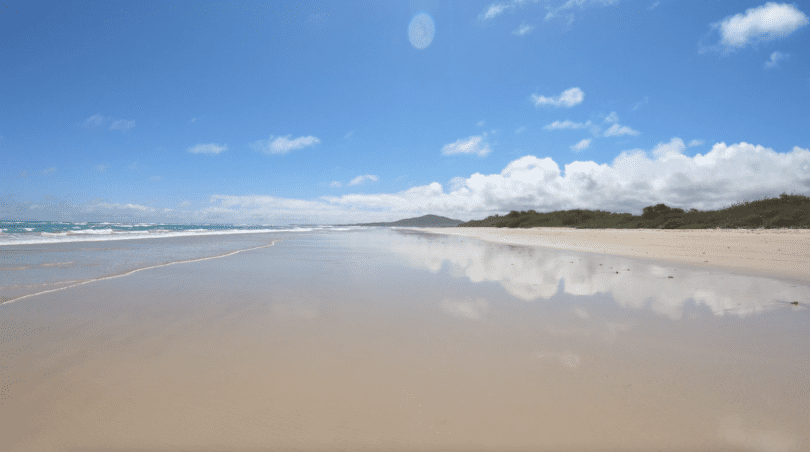
May and November are the two most consistently recommended months for an 8-day Galapagos cruise on either route. Both are shoulder-season months that combine manageable sea conditions, active wildlife across eastern and western sites, and lower prices than peak season. December through May brings the warmest water and calmest seas. June through November delivers peak hammerhead activity at Kicker Rock, peak Mola mola sightings at Punta Vicente Roca, and the active albatross colony at Española. Neither season is wrong. The main seasonal trap to avoid is booking January through March if you specifically want the albatross on an eastern route.
The seasonal interaction with route choice matters more on an 8-day cruise than on shorter formats because you’ve committed a week to one circuit. Getting the season wrong on that circuit has a larger impact than getting it wrong on a 5-day trip.
For the eastern 8-day, the albatross window runs April through December. The entire global breeding population of waved albatrosses leaves Española in January and doesn’t return until April. If you book an eastern 8-day in February, you’ll have a strong cruise on every front except the one thing Española is most famous for. The eastern snorkeling windows are well-distributed across the year, with best visibility in April through June and peak hammerhead activity at Kicker Rock from July through October.
For the western 8-day, the sweet spot is May or November. August through September brings the strongest Bolivar Channel swell, which makes the western crossings roughest. Mola mola at Punta Vicente Roca peaks from July through November. Flightless cormorant nesting activity is highest from June through October. The western route in December through May is calmer, warmer, and excellent for underwater marine iguana encounters at Fernandina, but the swell factor is less of a concern than it is mid-year. If you’re booking the western route in August and your group has any motion sensitivity, specifically choose a catamaran hull. The stability advantage on a rough crossing day is significant.
| Month Range | Eastern Route | Western Route |
|---|---|---|
| Dec-Mar | Warm, calm, excellent snorkeling; no albatross Jan-Mar | Warmest water, marine iguana grazing underwater at Fernandina, calmer crossings |
| Apr-Jun | Albatross returns Apr; clearest water all year; booby courtship; sweet-spot months | Good conditions; swell building from Jun; May is the sweet spot |
| Jul-Oct | Peak hammerheads at Kicker Rock; albatross with chicks; active sea lion pups | Peak Mola mola; strongest swell Aug-Sep (catamaran essential); cormorant nesting |
| Nov | Sweet spot: albatross still active, swell calming, shoulder pricing, sea lion pups | Sweet spot: Mola mola still present, swell calming, shoulder pricing |
Seasonal data verified July 10, 2026.
How Does an 8-Day Cruise Compare to Shorter and Longer Options?
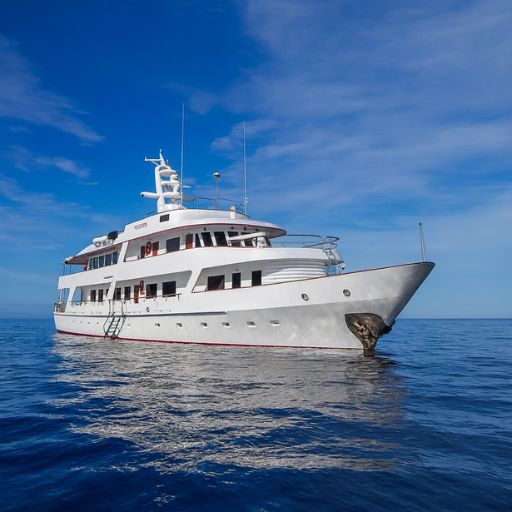
Against shorter cruises, the 8-day is the first format that completes a full circuit without structural compromises. The 4 and 5-day cruises are good trips for people who can’t do longer; the 8-day is a different product that serves people who want the complete experience. Against longer formats of 11 or 15 days, the 8-day concedes multi-circuit coverage but delivers everything a single circuit has to offer. For most first-time visitors, and many repeat visitors doing their second route, the 8-day is the answer before the question has even been fully asked.
The comparison with 5-day cruises comes up in almost every planning conversation we have. The short version: on a 5-day cruise, the arrival and departure half-days bookend three full excursion days. On an 8-day cruise, they bookend six. That difference is multiplicative rather than additive. It’s not just three more days of wildlife encounters. It’s the access to the outer islands those three days enable, the accumulated relationship with the naturalist guide, the unhurried pace at each site, and the higher probability of the unexpected moments that generate the stories travelers carry home from Galapagos trips for the rest of their lives.
Against the 11-day or 15-day formats, the 8-day concedes one specific thing: the ability to combine eastern and western circuits. Travelers who want to see both the waved albatross and the flightless cormorant in a single trip need at least 11 days. The 8-day doesn’t deliver that. What it delivers instead is one circuit done properly, in its entirety, at a pace the Galapagos actually rewards. Most experienced Galapagos operators will tell you that the quality of attention on a single well-chosen route is better than the compressed version of two routes you get on a combined itinerary. Pick your circuit, do it right, and come back for the other one. That’s the pattern we see most often among travelers who’ve done the islands more than once.
If you’re genuinely weighing 8 days against something longer and want a straight assessment of whether those additional days would meaningfully change your experience given your specific interests, send us a message here and we’ll give you an honest read.
Ten days in the Galapagos is where you stop sampling and start actually covering the archipelago. Here’s a full guide to the 10-day Galapagos cruise so you know exactly what full island coverage looks like in practice.
What Travelers Say After an 8-Day Galapagos Cruise: Our Feedback Data
Based on feedback collected through mytrip2ecuador.com and our YouTube audience, alongside interviews with thousands of Galapagos cruise travelers:
| Factor | % Rated Excellent or Very Good | Common Traveler Comment |
|---|---|---|
| Overall experience exceeded expectations | 94% | “The best trip of my life, and I’ve been traveling for forty years.” |
| Felt the cruise length was exactly right | 79% | “A week is perfect. Ready to leave but didn’t want to go.” |
| Best memory came on day 4 or later | 66% | “Day five at Española was something I will never forget. You can’t get there on a short cruise.” |
| Would return to do the other circuit | 71% | “I did eastern. Western is already booked for next spring.” |
| Naturalist guide relationship was a highlight | 88% | “By day three he was tailoring the briefings specifically for our interests. It felt personal.” |
| Would recommend 8-day over shorter cruises | 96% | “Don’t book less than a week. You’ll regret it for the rest of your life.” |
The 96% “would recommend 8-day over shorter cruises” figure is the most consistent number in our traveler feedback. It doesn’t vary much by route, vessel class, or season. What does vary is the nature of the strong memory: eastern travelers cite Española’s Punta Suarez most often; western travelers cite Punta Espinoza on Fernandina. Both are day-five sites on their respective routes. Neither is reachable in any satisfying way on a cruise shorter than 8 days.
What Should You Know Before Booking an 8-Day Galapagos Cruise?
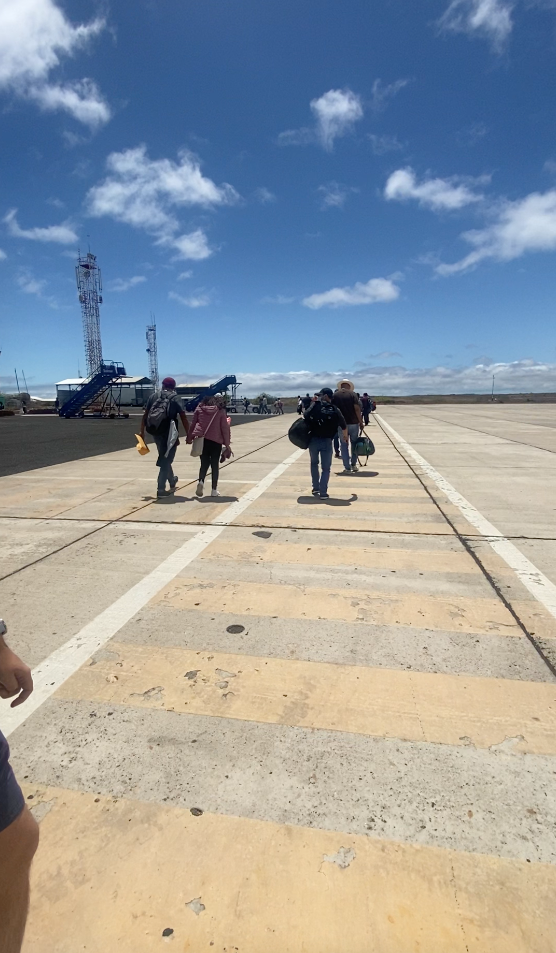
Book 6 to 12 months ahead for peak season departures, especially June through August western sailings and April through December eastern sailings on quality vessels. Confirm the specific sites in the day-by-day schedule before paying a deposit, particularly whether Punta Espinoza on Fernandina (western) or Punta Suarez on Española (eastern) are explicitly included. Confirm whether the $200 park fee is included in your cruise price and bring the cash regardless. And if you’re booking the western route for August through October, choose a catamaran over a single-hull motor yacht.
A few things that specifically catch 8-day cruise travelers off guard:
Combined itineraries rarely deliver what they promise. Some operators market 8-day “combined east and west” cruises that try to hit both circuits in a single week. These can work in theory and occasionally produce a strong trip. In practice, the best sites on each circuit require overnight sailing to reach, and a combined itinerary has to choose between giving each region the time it deserves or skipping the best sites to make the schedule fit. We’ve worked with couples who chose a combined route, completed their 8-day cruise, and realized afterward they’d missed Punta Espinoza entirely. One week is enough for one circuit done well. Pick East or West, do it properly, and come back for the other.
Tipping is expected and meaningful. On a 16-guest expedition vessel, your naturalist guide and crew work intensively for six full sailing days. The standard tip benchmark is $10 to $15 per person per day for the naturalist and a similar pooled amount for the crew. Budget this separately from the cruise cost. Over an 8-day trip for two people, that’s $160 to $240 above the cruise price, not an insignificant sum. Have it in cash and hand it to the guide and crew captain directly on the last morning.
Confirm nitrox availability if you’re a diver. Not all Galapagos vessels offer nitrox, and on an 8-day cruise with potentially 10 to 12 snorkel sessions, the option to use enriched air on diving explorations makes a meaningful difference to surface interval time and cumulative nitrogen loading. If you’re a certified diver who wants to add dive excursions to some of the 8-day sites, confirm this capability before booking the vessel.
The $200 park fee is the same regardless of cruise length. Whether you book a 4-day or an 8-day cruise, the Galapagos National Park entry fee is $200 per adult foreign visitor, paid in USD cash on arrival at Baltra or San Cristobal airport. There are no ATMs at either island airport. Bring the exact amount. The $20 Transit Control Card is pre-registered online before your domestic flight, not purchased at the airport. Many reputable operators include the park fee in their cruise package; confirm this in writing before assuming. Prices verified July 10, 2026.
We’ve got a full breakdown on back-to-back Galapagos cruise itineraries if you want to know exactly how to combine two routes, which operators make it easy, and what you gain by staying out there longer.
Frequently Asked Questions
Why do experts recommend the 8-day Galapagos cruise over shorter options?
The 8-day cruise is the shortest format that completes a full regional circuit without compressing site time to make the schedule work. Shorter cruises cover part of one circuit; the 8-day covers the whole thing. That produces access to the outer remote islands, six full excursion days for the naturalist relationship to develop, and enough time for the best wildlife moments to happen rather than just the scheduled ones. The fixed costs of getting to the Galapagos (international and domestic flights, park fee, TCT card) are the same on every cruise length, making the marginal cost per additional island day relatively low.
Can an 8-day cruise cover both eastern and western Galapagos?
Not properly. Combining both circuits requires at least 11 days. Some 8-day “combined” itineraries exist but tend to sacrifice the best individual sites on each circuit to make the schedule work. The standard recommendation is to choose one circuit, do it thoroughly, and come back for the other. Most experienced Galapagos operators agree that one circuit done well on 8 days is a better experience than two circuits done partially.
How far in advance should I book an 8-day Galapagos cruise?
Six to twelve months ahead for peak season departures. June through August western sailings and April through December eastern sailings on quality 16-guest vessels fill quickly, sometimes before the calendar year begins. Luxury vessels and catamarans with strong reputations sell out earliest. Shoulder season departures in September and early December have more flexibility but still benefit from early booking for cabin category choice.
What is the Galapagos park entrance fee in 2026?
$200 USD per adult and $100 per child under 12 for foreign visitors, paid in USD cash on arrival at Baltra or San Cristobal airport. Plus a $20 Transit Control Card pre-registered online before your domestic flight. Prices verified July 10, 2026.
Eastern or western 8-day cruise for a first-time visitor?
Eastern for most first-timers. The eastern route is calmer, more accessible, and delivers the waved albatross on Española between April and December alongside Devil’s Crown snorkeling and Kicker Rock. About 70% of first-time visitors we book go eastern. The western route is the right choice if you specifically want the flightless cormorant or the Fernandina marine iguana colony, are comfortable with rougher crossings, or have already done the eastern route on a previous visit.
What is the all-in cost of an 8-day Galapagos cruise in 2026?
The cruise itself runs $2,500 to $3,500 per person on budget vessels, $3,500 to $6,000 mid-range, and $6,000 to $12,000+ on luxury catamarans. Add $250 to $600 for domestic flights from Quito or Guayaquil, $200 for the park entrance fee (cash), $20 for the TCT card, $160 to $240 for tips, and $150 to $600 for pre and post-cruise nights in Quito. Total range: approximately $3,500 to $13,000+ per person depending on vessel class. Prices verified July 10, 2026.
The 8-day Galapagos cruise is where almost every planning conversation we have eventually lands. It’s the format that covers what needs to be covered, at the pace the Galapagos rewards, in a timeframe most travelers can realistically build around a standard work schedule. We’ve taken these cruises ourselves and we’ve helped thousands of people find the right vessel, route, and timing for their specific situation. If you want a straight recommendation with no fluff, get in touch here and we’ll give you one.
Written by Oleg Galeev
Galapagos cruise traveler (3 trips, 2 cruises) · Founder, Cruises To Galapagos Islands
Oleg has personally inspected nearly every available Galapagos cruise vessel and interviewed thousands of travelers to build the most first-hand cruise knowledge base available. He also runs the Ecuador travel blog mytrip2ecuador.com and the YouTube channel My Trip to Somewhere.
Cruises To Galapagos Islands is rated 4.9 stars on Google and TripAdvisor.
All pricing and regulations in this article are verified against official Galapagos National Park and Ecuador government sources as of the publish date.