
Quick Summary
The Samba is a 1966 Dutch-built steel-hulled motor sailor carrying just 14 passengers across 7 cabins, making it one of the most intimate vessels operating in the Galapagos. Its north and west itinerary is the crown jewel: the Samba holds the only Galapagos National Park permit for a non-diving boat to visit Marchena Island, a remote stop that most cruise routes simply cannot access. Snorkel gear and wetsuits are included. Cabins are compact with bunk-style beds on the lower deck and one upper-deck double, so know what you’re choosing before you book. The crew and naturalist guides consistently earn glowing reviews, and the food goes well beyond what you’d expect for a 60-year-old converted yacht.
Samba Galapagos Cruise: Quick Facts
| Detail | Info |
|---|---|
| Vessel Type | Steel-hulled Motor Yacht with Stabilizing Sail (Motor Sailor) |
| Class | Tourist Superior |
| Built / Refurbished | 1966 (Netherlands) / Refurbished 2007 |
| Length | 78 ft / 23.77 m |
| Beam | 18 ft / 5.48 m |
| Displacement | 134 tons |
| Passenger Capacity | 14 guests (2 fewer than standard class vessels) |
| Crew | 6+ crew + 1 certified bilingual naturalist guide |
| Cabins | 7 total: 6 lower-deck bunk cabins (double lower + single upper) + 1 upper-deck double with large window |
| Speed | 8.5 knots cruising |
| Itinerary Options | 8-day North & West, 8-day South & East, 15-day combined |
| Departures | Thursday and Sunday |
| Kayaks | 3 kayaks included (1 double, 2 single) |
| Snorkel Gear & Wetsuits | Included (confirm per booking channel) |
| Exclusive Permit | Only non-diving boat with Galapagos National Park permission to visit Marchena Island |
| Approx. 8-day price pp | From ~USD $5,000 per person – Prices verified May 23, 2026 |
| Park Entrance Fee | USD $200 per person (cash, paid on arrival) – Prices verified May 23, 2026 |
| INGALA Transit Card | USD $20 per person (paid at mainland airport) |
What Is the Samba Galapagos Cruise and Who Is It For?
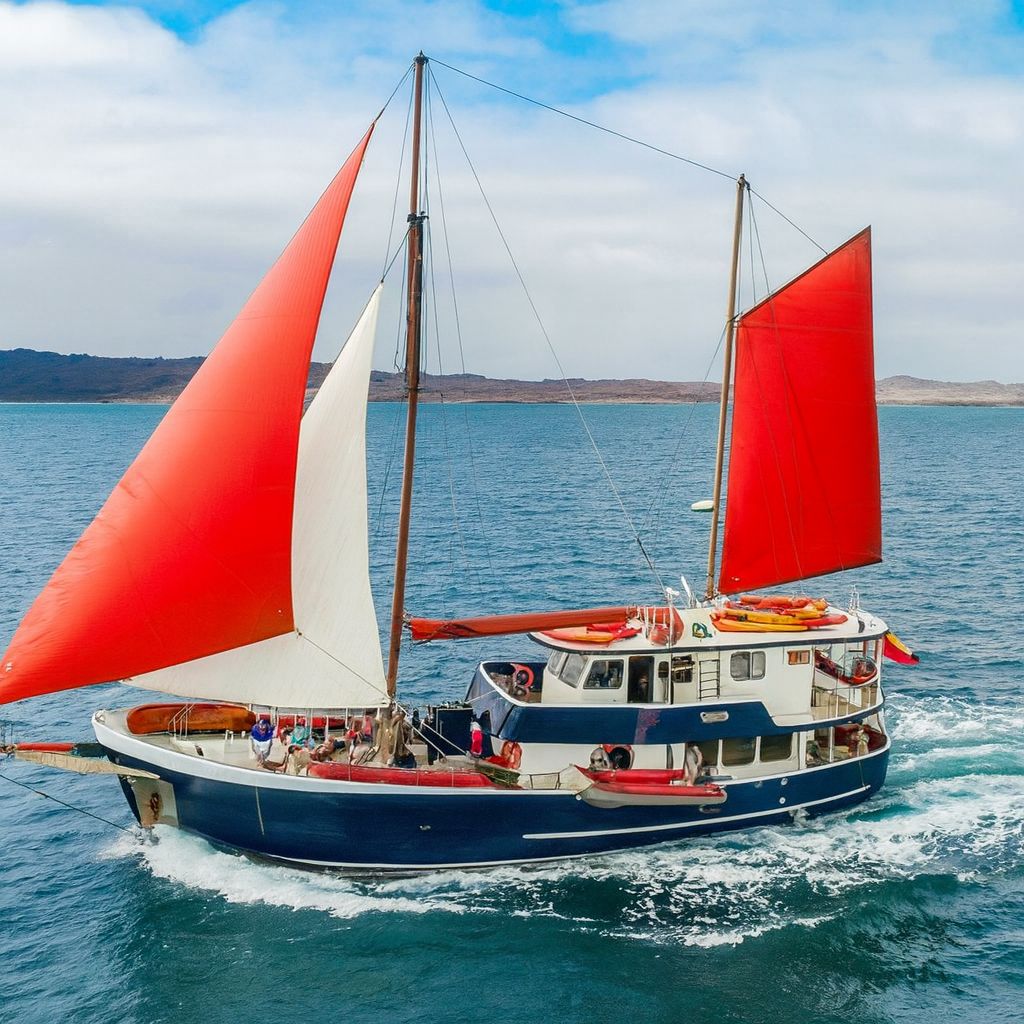
The Samba is a 14-passenger Dutch-built motor sailor from 1966, converted into a Galapagos cruise vessel and refined over decades into one of the most itinerary-distinctive boats in the archipelago. It’s for travelers who care more about where the boat goes than what the cabin looks like. The north and west route includes Marchena Island, which the Samba is the only non-diving boat in the Galapagos permitted to visit. For serious wildlife enthusiasts, photographers, and anyone returning to the islands for a second time, that access changes the conversation entirely.
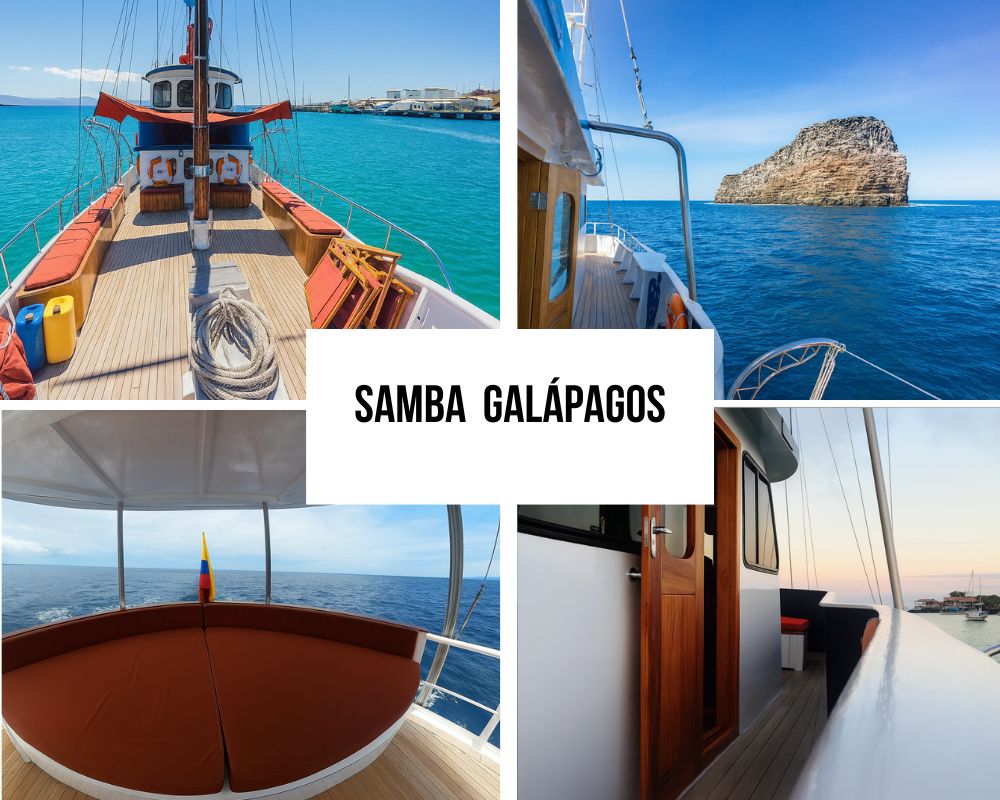
There’s a moment that some Samba travelers describe that you don’t often hear from other Galapagos cruise passengers: standing on the foredeck while the red stabilizing sails are set, the deep blue hull cutting through the Pacific, no other vessel in sight, feeling like you are actually at sea rather than on a floating hotel room. That sensation is real. This boat was built as a private luxury yacht in the Netherlands, and the bones of it still show. Teak decks. A deep, stable hull. The kind of engineering that doesn’t age badly.
It’s locally owned and family-run, which matters more than it sounds in the Galapagos context. The crew tend to stay on the boat for years, sometimes decades. The naturalist guides have deep roots in the islands. That institutional knowledge accumulates into something you can feel during excursions, in the way the guide reads the wildlife behavior at each site, in the way the captain positions the panga at Marchena’s lava shelves for the best angle into the water.
Who the Samba is not for: travelers who want large windows, bunk-free cabins, and polished first-class finishes. The six lower-deck cabins have bunk configurations with portholes, and the vessel’s age means the interior aesthetic is classic rather than contemporary. If your Galapagos vision centers on creature comforts in the evening, there are newer vessels in this class that will serve you better. If your Galapagos vision is about what happens outside the cabin every single day, the Samba is hard to beat at its price point.
We’ve sent travelers to this boat who’ve described it as the most meaningful trip of their lives. We’ve also had guests who found the cabin size and the vessel’s motion on overnight crossings harder than they expected. The difference, almost every time, was whether they went in with accurate expectations. This review is meant to give you those.
The Samba is one of those boats where the right traveler fits perfectly and the wrong traveler has a harder week than they should. We’ve placed enough guests on it to know the difference. If you’re trying to figure out whether it’s the right match for your travel style and budget, fill out this short form and we’ll give you an honest read, no booking pressure involved.
What Are the Cabins and Onboard Experience Like?
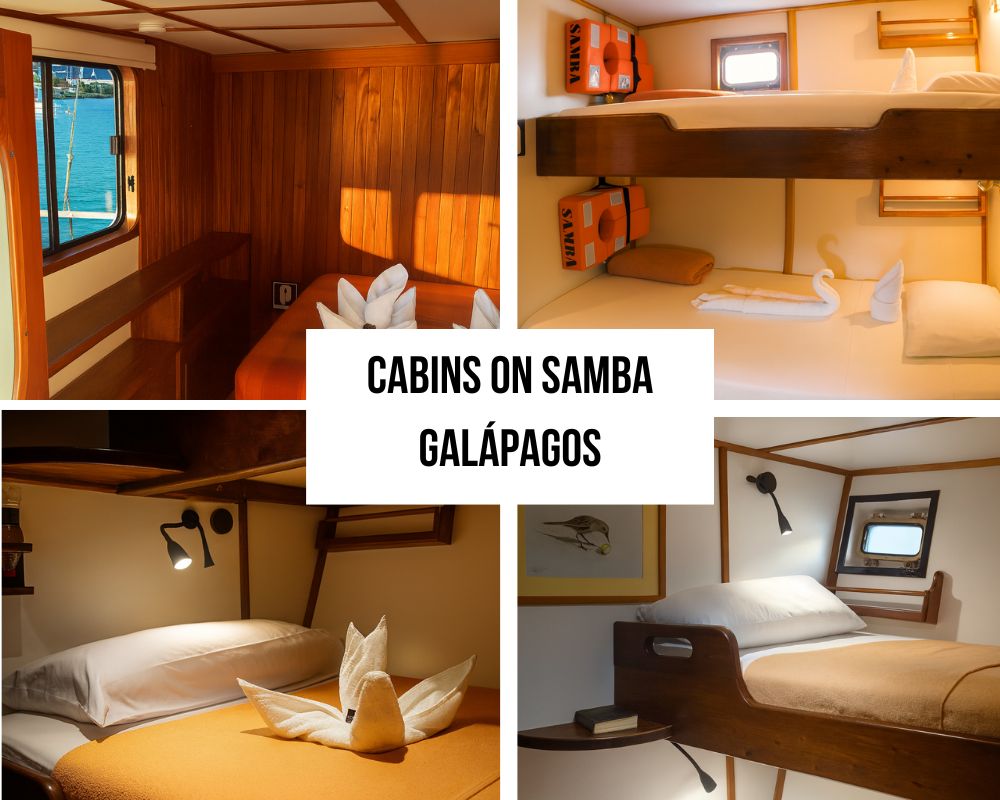
The Samba has seven cabins for 14 guests. Six are on the lower deck with bunk-style beds: a double matrimonial lower berth and a single upper berth, each with a porthole and private bathroom. One upper-deck cabin has a double bed and a larger window. All cabins are air-conditioned. The interiors are decorated in neutral creams and whites with handmade cedar wood furniture crafted in the Galapagos. Compact but clean, functional, and well-maintained.
The honest cabin context is this: you will spend very little time in your cabin. The daily schedule runs from sunrise excursions through two to three activities, with meals sandwiched between, and navigation happening overnight while you sleep. Most travelers report that by the time they’re back from the evening’s last activity, showered, and through dinner, they’re asleep within minutes regardless of mattress quality. The cabin is where you sleep. Everything else happens on deck, on shore, or in the water.
That said, the bunk configuration is worth thinking about carefully before you book. The lower berths in the six lower-deck cabins are full-width double beds, which is better than a cramped single, but the upper berth above creates a low ceiling effect for the person sleeping on the bottom. If two people are sharing, one will be on the lower double and one on the upper single. Couples who specifically want to sleep in the same bed should request a lower berth assignment and confirm it before departure. The single upper-deck double cabin books quickly and carries a premium.
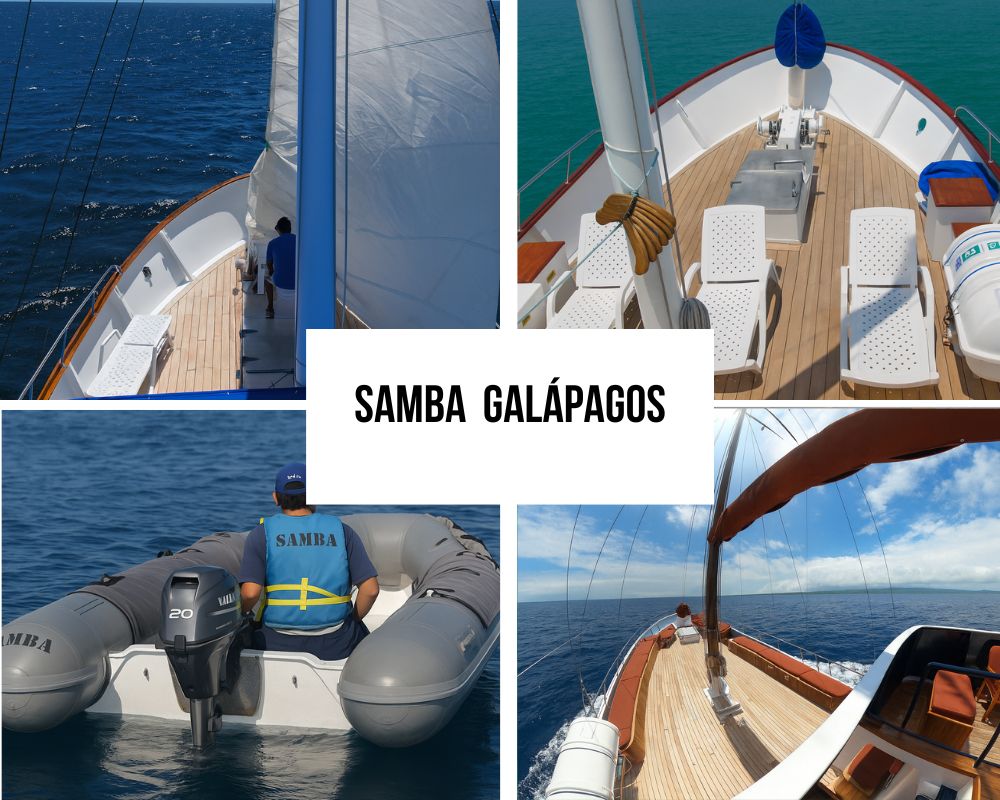
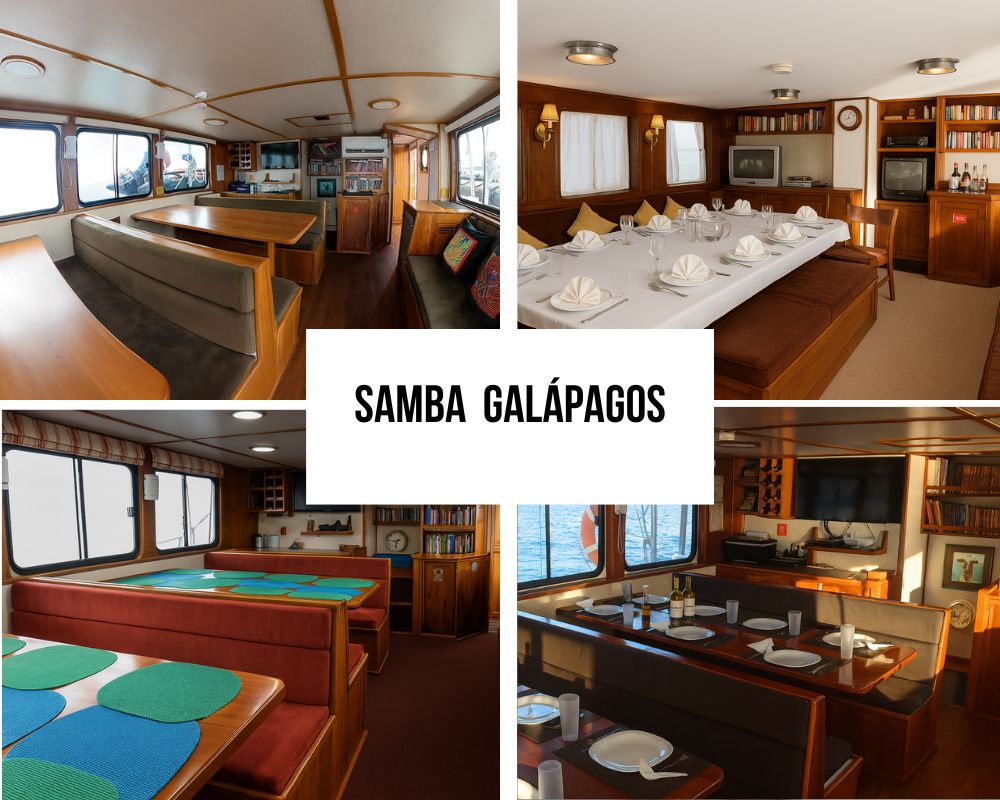
The communal spaces make up for whatever the cabins lack. The indoor lounge-dining area is genuinely comfortable, with a natural warmth that comes from the handmade cedar furnishings. The outdoor al fresco dining area on the main deck is where many meals happen when the weather allows. The upper deck has an outdoor dining and observation area ideal for watching birds during navigation and doing what Galapagos travelers do instinctively: scanning the water for fins and wakes. The foredeck has flat space for sunbathing, dolphin watching, and just sitting with the Pacific around you.
Three kayaks are carried onboard (one double, two singles) and available for guest use at no extra charge. This is a meaningful perk. Kayaking alongside a rocky Galapagos shoreline at dawn, before the panga even launches, is one of those low-key experiences that ends up in every traveler’s top-five moments. The Samba is one of the few boats in its class that makes it possible regularly.
Which Itineraries Does the Samba Cover, and What Makes the North-West Route Special?
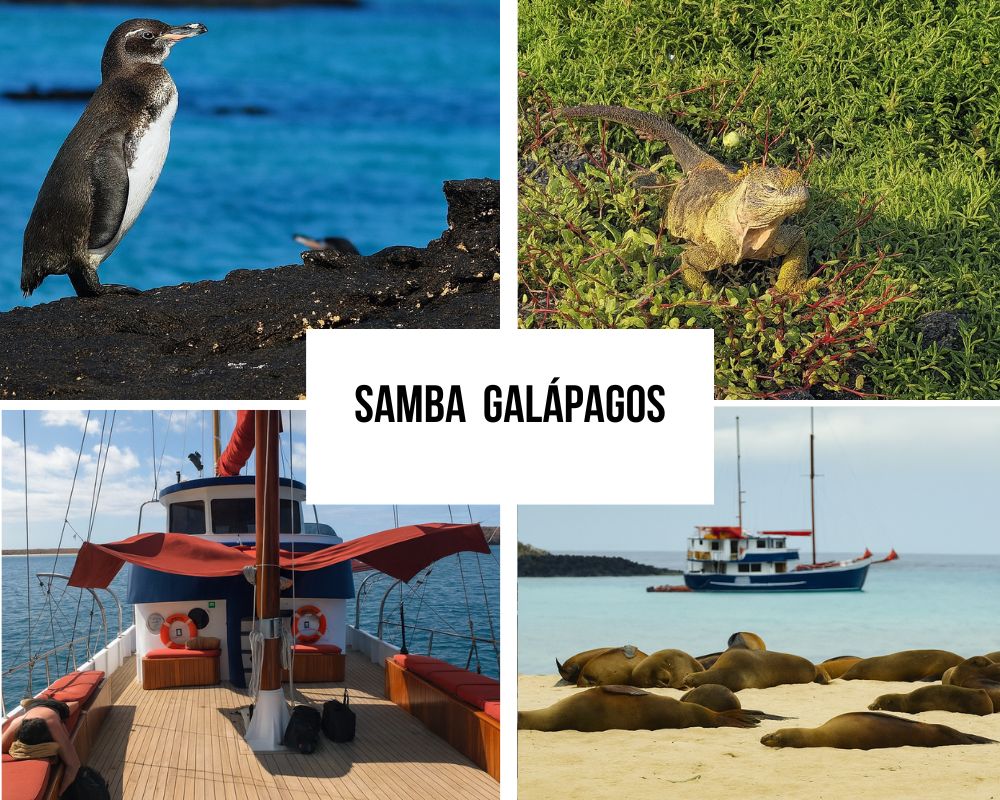
The Samba runs two 8-day itineraries: a North and West route covering Genovesa, Marchena, Isabela, Fernandina, and Floreana, and a South and East route covering Española, San Cristobal, Santa Fe, Bartolome, Santiago, and North Seymour. Both can be combined into a 15-day full loop. The north-west route is the more distinctive of the two. The Samba is the only non-diving boat in the Galapagos that holds a Galapagos National Park permit to visit Marchena Island, which is a genuinely rare access point that separates this itinerary from everything else in the Tourist Superior category.
Marchena is worth understanding before you dismiss it as an obscure name on a map. Most boats sailing the north-west Galapagos reach Genovesa, then turn south and head back toward the central islands. The Samba, after Genovesa, heads west-northwest. Marchena is one of the least-visited islands in the entire archipelago, not because it’s uninteresting but because the permits to access it are tightly controlled. The Galapagos National Park Service granted the Samba specific permission to use Marchena’s shorelines for snorkeling, panga rides, and kayaking. No other non-diving vessel has that.
At Punta Mejia on Marchena’s northwest coast, the water is calm, clear, and deep blue. Rays, reef sharks, sea turtles, and dense fish populations make the snorkeling among the best in the islands. The lava geology is young and stark in a way that creates a genuine sense of standing at the edge of something prehistoric. From Marchena, the Samba sails on to Isabela and Fernandina, adding two more sites that most eastern-route boats never reach.
The south and east route is the more classic Galapagos first-timer experience: Española’s waved albatross colony (seasonal), the sea lion beaches of Gardner Bay, Kicker Rock off San Cristobal for hammerheads and sea turtles, the volcanic geometry of Bartolome. All strong sites. The north-west route is more remote, more ecologically intense, and more appropriate for travelers who’ve either been before or who specifically came to see the deep wildness of the western archipelago.
| Route | Length | Key Islands | Best For |
|---|---|---|---|
| North & West | 8 days / 7 nights | Mosquera, Genovesa, Marchena (exclusive), Isabela, Fernandina, Floreana, Santa Cruz | Wildlife purists, return visitors, remote island seekers |
| South & East | 8 days / 7 nights | Santa Cruz highlands, Floreana, Española, San Cristobal, Santa Fe, Plazas, Bartolome, Santiago, North Seymour | First-timers, classic Galapagos highlights, strong birdwatching |
| Combined Loop | 15 days | Full archipelago, both routes above with no repeated sites | Dedicated Galapagos travelers, comprehensive coverage |
One practical note: the itinerary schedule is subject to Galapagos National Park authority approval, and conditions can shift the daily plan. The guide briefs passengers each evening on the following day. On the north-west route in particular, sea conditions approaching Marchena and Fernandina can occasionally alter landing sequences. The crew and guide handle these adjustments with experience, and the flexibility typically results in upgraded alternatives rather than missed experiences.
The north-west itinerary books faster than the south-east route, particularly for the June through November window when wildlife activity peaks across both Genovesa and the western islands simultaneously. If that route is calling you, availability moves. Reach out here and we’ll check what’s open for your dates and walk you through the differences between the two loops.
How Good Is the Food on the Samba?
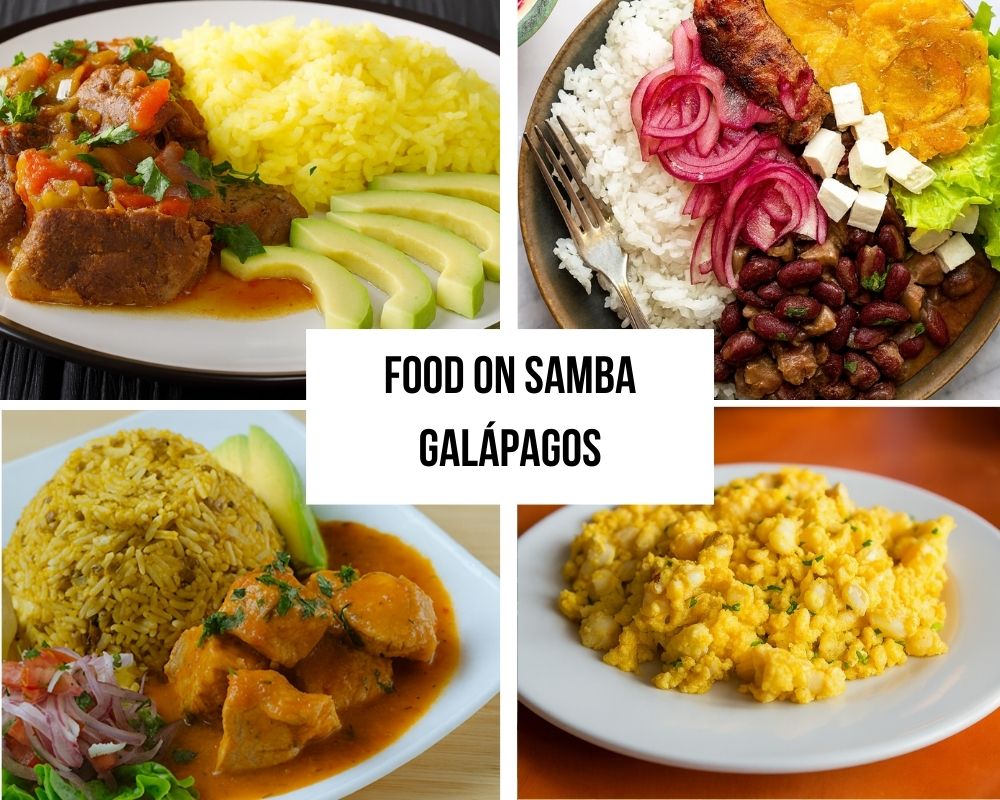
The food on the Samba consistently outperforms expectations for a boat of its size and age. Three meals per day plus mid-morning and afternoon snacks are included, along with freshly squeezed juices after excursions. Ecuadorian cooking takes center stage, with grilled fish, ceviche, fresh tropical fruit, and rice dishes prepared daily. Beer and wine are available in the refrigerator at extra cost. Dietary restrictions can be accommodated with advance notice.
Fresh juice after you’ve just spent ninety minutes snorkeling through Marchena’s lava channels is something that sounds like a minor detail until you’re actually there, dehydrated and salt-rinsed, and a cold glass of something tropical appears without you asking. That’s the pace of hospitality on the Samba. The cook knows when people come back from the water and what they need. On a 14-passenger boat, that level of attentiveness is possible in a way it simply isn’t on larger vessels.
The meal quality across recent traveler accounts reads well above what you’d expect for Tourist Superior class. One traveler returning from a 2025 departure noted the food as “super delicious” and specifically called out the snacks and juices between main meals. Multiple accounts from the past two years describe the kitchen as one of the consistent highlights of the trip, not just adequate sustenance between wildlife encounters.
Al fresco dining on the upper deck during navigation is a particular pleasure. The Galapagos light at lunch, with the ocean around you and the birds working the surface ahead, is its own reward. The Samba’s deck layout makes outdoor meals easy and natural rather than squeezed onto a narrow rail. That architectural detail ends up being one of those things that improves every single day of the trip in a quiet, cumulative way.
Soft drinks and alcohol are not included and are available for purchase onboard. Cash only for bar purchases. Budget accordingly, particularly for the evening social hour after briefings.
What Do the Naturalist Guides Bring to the Experience?
The Samba’s naturalist guides carry a strong reputation, with several individuals praised across multiple platforms and traveler cohorts. A recent guest’s account specifically noted a guide named Juan who was raised on a boat in the Galapagos, giving him a depth of ecological knowledge and personal relationships with island communities that typically-trained guides cannot match. The guide leads all excursions, gives daily evening briefings, and on the north-west route specifically becomes critical for navigating the rarer site contexts like Marchena and Fernandina.
The Galapagos guide certification system requires all naturalists to hold a Galapagos National Park authority license, but within that certification range there are significant differences in depth. The Samba has built a reputation over decades specifically on guide quality, to the point where the vessel’s chief guide Juan Manuel Salcedo has been described in travel media as one of the top naturalist guides in the entire archipelago, with the stated goal of motivating travelers toward ecological awareness rather than just wildlife spotting.
That framing matters. There’s a difference between a guide who names every bird and a guide who helps you understand why the short-eared owl on Genovesa hunts in daylight when every other short-eared owl on Earth hunts at night. The Samba’s guides tend to operate at the second level. Travelers who come ready to pay attention leave with a genuine understanding of Galapagos ecology that stays with them. Travelers who engage superficially still get a great wildlife trip. But the depth is there for the taking.
The guide-to-guest ratio on the Samba is 1:14, marginally better than the 1:16 minimum required by the Galapagos National Park. With only 14 passengers maximum, the group size on shore is genuinely intimate. At complex multi-zone sites like Fernandina’s Punta Espinoza, where the density of marine iguanas, flightless cormorants, and Galapagos penguins creates multiple simultaneous focal points, having fewer people in the group means the guide can actually move fluidly with everyone rather than managing crowd dynamics.
Guide quality on small vessels like the Samba depends significantly on which specific guide is assigned to a given departure. We often have up-to-date information on who’s running which cruises. If that matters to your decision, send us a message here and we’ll share what we know. Cruises To Galapagos Islands is rated 4.9 stars on Google and TripAdvisor, and giving you accurate information before you commit is how we earn that.
How Does the Samba Compare to Other Boats in Its Class?
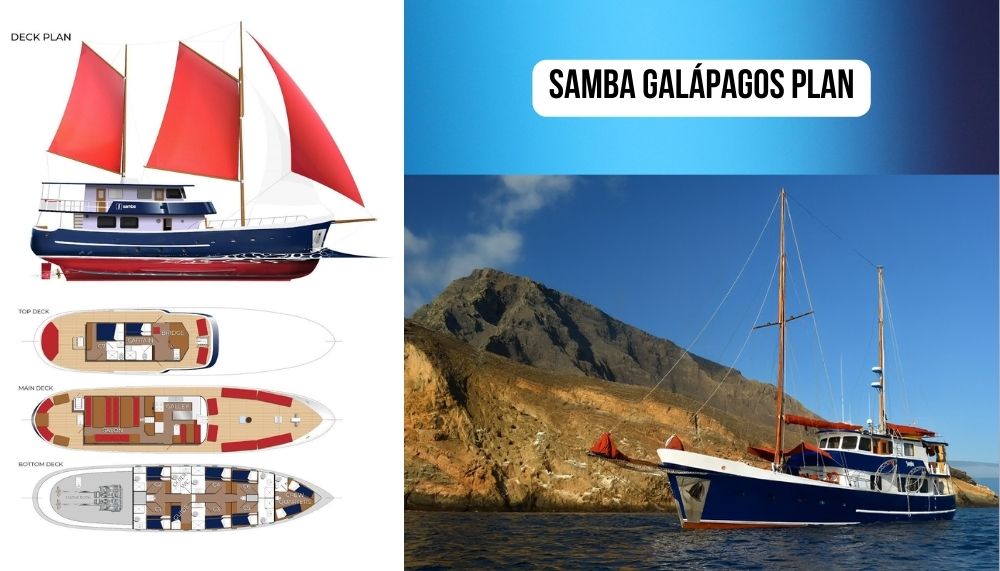
Within Tourist Superior Galapagos Cruise class, the Samba occupies a unique niche. It’s older than almost every comparable vessel, smaller than most (14 passengers vs. the standard 16), and carries an itinerary access advantage that no other non-diving Tourist Superior boat has. For travelers who prioritize where the boat goes over how new the interior is, it sits at the top of its tier. For travelers who want modern cabins and bunk-free sleeping arrangements, there are newer options like the Yolita II that serve better.
| Factor | Samba | Eden | Yolita II |
|---|---|---|---|
| Year built | 1966 (refurb 2007) | 1996 (refurb 2018) | 2007 |
| Max passengers | 14 | 16 | 16 |
| Bunk beds? | Yes (6 of 7 cabins) | 3 of 8 cabins | None |
| Marchena Island access | Yes (exclusive non-diving permit) | No | No |
| Kayaks included | Yes (3 kayaks) | No | No |
| Stabilizing sail | Yes (classic sailing experience) | No | No |
| Snorkel gear & wetsuit | Included | Gear incl.; wetsuit rental ~$10/day | Both included |
| Cabin modernity | Classic / vintage aesthetic | Refurbished 2018 | Modern (2007 build) |
| Approx. 8-day price pp | From ~$5,000 | ~$3,200-$4,200 | ~$3,500-$5,000 |
| Prices verified May 23, 2026 |
The Marchena permit is the single most important differentiator in that table. No amount of newer construction or modern cabin finishes gives another boat what the Samba has there. If you have any interest in the north-west Galapagos and you want to reach Marchena without booking a diving liveaboard, the Samba is your only option. That’s not a marketing claim. It’s a park permit reality.
The kayak inclusion is also more meaningful in practice than it sounds on paper. Most Tourist Superior boats don’t carry kayaks at all. The Samba uses them regularly, particularly at calmer sheltered sites, and experienced kayakers will find opportunities to explore independently at the margins of scheduled excursions in a way that panga-only boats can’t replicate.
What Samba Travelers Actually Tell Us: Feedback from Our Traveler Community
Based on traveler feedback gathered through mytrip2ecuador.com and our YouTube audience, including first-hand accounts collected by Oleg across three personal Galapagos trips and thousands of traveler interviews, here’s how Samba passengers rate their experience:
| Category | % Satisfied or Very Satisfied | Common Feedback Theme |
|---|---|---|
| North-West Itinerary | 98% | “Marchena and Fernandina were unlike anything I’d seen before” |
| Naturalist Guide Quality | 97% | “Exceptional depth of ecological knowledge, passionate and fun” |
| Crew Hospitality | 95% | “Everyone from captain to cook went above and beyond” |
| Food Quality | 92% | “Far better than expected; fresh juices and snacks were a highlight” |
| Kayak and Activity Variety | 94% | “Loved having kayaks; adds a layer of exploration most boats skip” |
| Cabin Comfort | 71% | “Small but fine; too tired each night to care” |
| Overall Value for Money | 96% | “The itinerary access alone justifies the price” |
The pattern we see with Samba travelers is almost the inverse of what we see with travelers who chose the wrong boat for the wrong reasons. People who boarded knowing what they were getting consistently rate it as a top-five life experience. People who expected modern cabin interiors and found bunk beds rate the wildlife encounters as amazing and the cabin situation as the one thing they’d change. That gap is entirely manageable with the right pre-trip expectations.
The Honest Fail Points: What to Know Before You Book the Samba
The bunk beds in six of the seven cabins are the biggest consistent complaint in traveler feedback. They are functional and come with private bathrooms and air conditioning, but the ceiling height above the lower berth is limited, and the upper berth is tight for larger adults. If you’re traveling as a couple, specifically request lower berth assignment when booking and confirm it before departure. If sleeping in a bunk is a genuine problem for you, the Samba is not your boat.
Motion sickness is more pronounced on this vessel than on wider, more modern yachts. The 78-foot steel hull handles the Pacific well overall, but overnight crossings to the western islands can be rough when conditions are active. The Humboldt current around Fernandina and Marchena brings cold water and occasionally significant swell. Come with medication. The crew keeps Dramamine available, but having your own preferred remedy matters. Motion-sensitive travelers should be honest with themselves about this before booking an 8-night sailing on a vintage 78-foot yacht.
The engine and mechanical noise during night navigation is noticeable in the lower-deck cabins. Earplugs solve most of it. This is not unique to the Samba, but the older vessel construction means the sound insulation between the engine room and the lower deck is less sophisticated than on newer builds. Know it going in.
Soft drinks and alcohol are cash only at the bar. ATMs in the Galapagos islands are limited and sometimes unreliable. Carry sufficient cash from the mainland for the full week, including tips and any bar purchases, before you board the plane.
The north-west itinerary visits cooler water sites. Without a wetsuit, snorkeling around Marchena and Fernandina is cold. Wetsuits are included, but it’s worth knowing that the Galapagos cold water is significantly different from what most travelers have experienced at Caribbean or tropical Pacific snorkeling destinations. The wildlife density compensates completely, but first-timers expecting warm water everywhere should recalibrate before the western island days.
Frequently Asked Questions
Is the Samba really the only non-diving boat that visits Marchena Island?
Yes. The Galapagos National Park Service granted the Samba a specific permit to use Marchena’s shorelines for snorkeling, panga rides, and kayaking. No other non-diving tourist vessel carries this permit. All boats sailing the north-west loop reach Genovesa and then head south; the Samba is the only one that continues west-northwest to Marchena. This is not a marketing claim but an operational permit reality that has been consistent across multiple years of itinerary schedules.
What is the cabin setup on the Samba?
Seven cabins total for 14 passengers. Six are on the lower deck with bunk-style configurations: a full-width double matrimonial lower berth and a single upper berth, each with a porthole, private bathroom, hot water, air conditioning, and 110V electricity. One cabin is on the upper deck with a double bed and a larger window. The upper-deck cabin is the most sought after and books first. If you want to share a bed with a travel partner, request lower deck cabin assignment and confirm it at time of booking.
Is the Samba suitable for first-time Galapagos visitors?
Yes, particularly on the south and east itinerary, which covers the most iconic first-timer sites: Española, Bartolome, Kicker Rock, San Cristobal, and the Santa Cruz highlands. The north-west itinerary is extraordinary but suits experienced Galapagos travelers or wildlife enthusiasts who specifically want the most remote and ecologically intense experience rather than the classic highlights loop. For most first-timers we’d recommend starting with the south-east route and returning for the north-west later.
Does the Samba include kayaks and snorkel gear?
Yes. Three kayaks (one double, two single) are available for guest use at no additional charge. Snorkel equipment and wetsuits are included in the cruise price, though you should confirm this with your booking agent as inclusions can vary slightly depending on the booking channel. Beach towels are also provided onboard.
How does the Samba handle motion sickness compared to other Galapagos boats?
More motion than most. The 78-foot steel hull is stable for its size, but it is smaller and older than purpose-built modern yachts like the Yolita II or newer vessels in the first-class tier. Overnight crossings to the western islands, particularly the passages near Fernandina and around Marchena, can be rough when the Humboldt current is active. Motion-sensitive travelers should bring their preferred medication and consider the lower-deck cabins, which experience less rocking due to their proximity to the waterline.
What extra costs should I budget for beyond the Samba cruise price?
The Galapagos National Park entrance fee is USD $200 per person for adults and USD $100 for children under 12, payable in cash on arrival (verified May 23, 2026). The INGALA transit control card is USD $20 per person, paid at the mainland airport. Alcoholic drinks and soft drinks are purchased separately onboard, cash only. If the itinerary includes Puerto Villamil on Isabela, there is a USD $10 dock fee per person. Plan $80 to $130 per person in tips for the guide and crew on an 8-day trip, brought as cash from the mainland.
The Samba is one of the most distinctive vessels we work with, and the north-west itinerary with its exclusive Marchena permit is genuinely unlike anything else available to non-diving travelers in this price range. If you want to dig deeper into whether it’s the right fit for your specific trip, your travel window, and your comfort level with the vessel’s character, our team is happy to walk you through it. Cruises To Galapagos Islands holds a 4.9-star rating on Google and TripAdvisor, and we’ve been to these islands enough times to give you a straight answer rather than just a booking confirmation. Get in touch here for a free, no-pressure consultation.
Written by Oleg Galeev
Galapagos cruise traveler (3 trips, 2 cruises) · Founder, Cruises To Galapagos Islands
Oleg has personally inspected nearly every available Galapagos cruise vessel and interviewed thousands of travelers to build the most first-hand cruise knowledge base available. He also runs the Ecuador travel blog mytrip2ecuador.com and the YouTube channel My Trip to Somewhere.
Cruises To Galapagos Islands is rated 4.9 stars on Google and TripAdvisor.
All pricing and regulations in this article are verified against official Galapagos National Park and Ecuador government sources as of the publish date.