
TL;DR
The Aida Maria is a handbuilt, family-owned 16-passenger yacht in the tourist-superior class, one of the most affordable ways to do a proper Galapagos cruise. Cabins are small and bunk-style, but the itineraries are some of the most flexible in its price range, and the crew have an authenticity most budget vessels can’t match. It’s the right boat if you know what you’re signing up for, and the wrong one if you don’t.
Aida Maria: Quick Facts
| Detail | Info |
|---|---|
| Vessel type | Motor yacht |
| Class | Tourist Superior |
| Capacity | 16 passengers |
| Cabins | 8 double cabins (bunk-style), all with private bath, hot water, A/C |
| Dimensions | 66 ft (length) / 19 ft (width) |
| Built | 1996 – handbuilt from local Galapagos timber |
| Crew | 9 crew, including bilingual Level II naturalist guide |
| Itinerary lengths | 4, 5, 6, 8, and 15 days |
| Price range (2026) | ~$1,388-$3,565 per person depending on length and season (prices verified May 22, 2026) |
| Family history | Owner family running Galapagos tours since the 1960s, roots in islands since 1930s |
| Park entry fees (not included) | $200 USD adults / $100 USD children under 12 + $20 USD Transit Control Card (TCT) – verified May 22, 2026 |
What Is the Aida Maria and Who Is This Cruise Actually For?
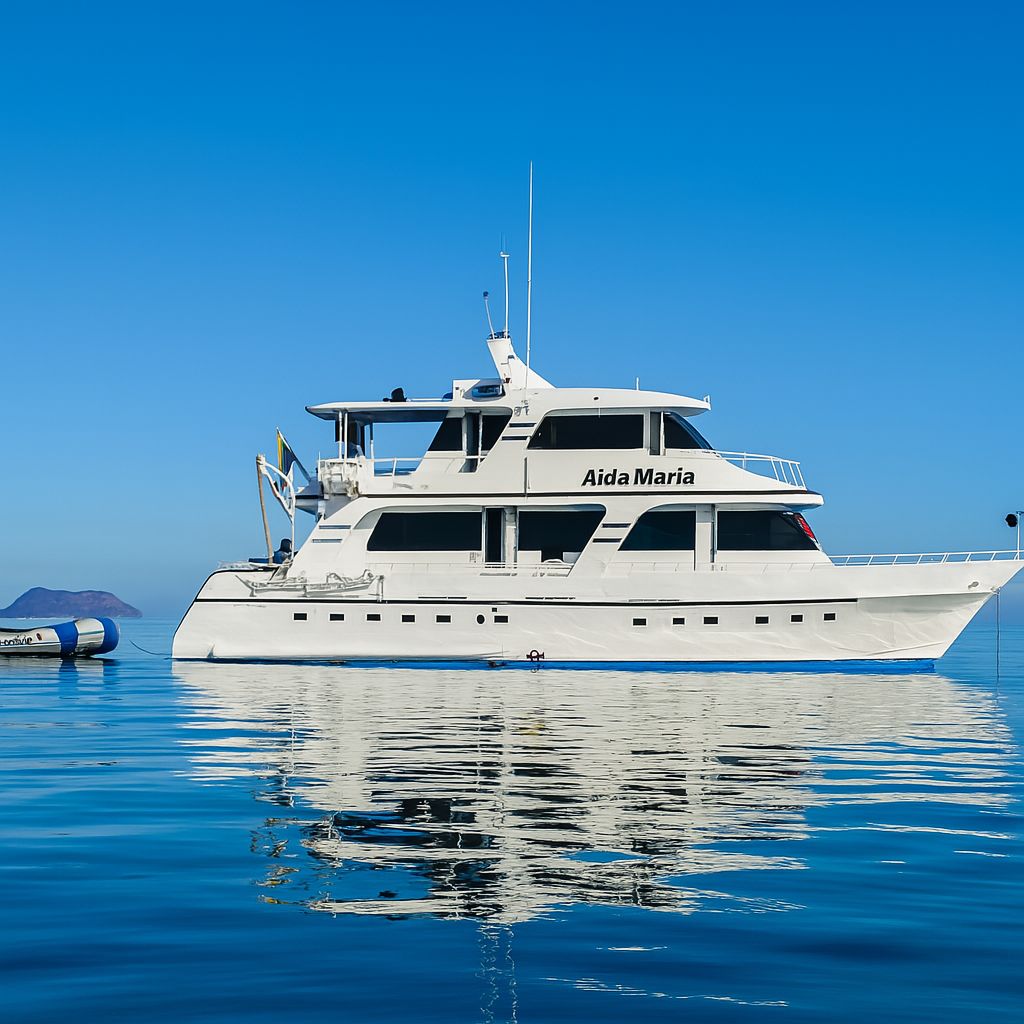
The Aida Maria is a 16-passenger tourist-superior class motor yacht built entirely by hand in the Galapagos using local timber – one of the very few vessels in the archipelago you can genuinely say was made by the islands themselves. Owned and operated by a family with roots in the Galapagos since the 1930s and running tours since the 1960s, it sits at the affordable end of the cruise spectrum. It’s the right choice for budget-conscious travelers who want a real multi-day cruise experience, not a day trip or a land-based island hop.
Before we get into the specifics, you need to understand one thing about the Aida Maria: the boat does not pretend to be something it isn’t. Walk aboard expecting a floating boutique hotel and you’ll be disappointed. Walk aboard understanding you’re getting a classic, character-filled wooden yacht with bunk beds and a crew that genuinely loves these islands, and the experience shifts completely.
We’ve been on this vessel. We’ve also talked to hundreds of travelers who have booked it over the years. The people who loved it most came in with realistic expectations. The ones who didn’t usually booked it thinking “tourist superior” meant something closer to first class. It doesn’t. Tourist superior is the second tier from the bottom in the Galapagos class system, and the Aida Maria is very honest about what that means.
That said, there’s something the Aida Maria has that you simply cannot buy on a luxury catamaran: authenticity. The wood on those rails grew on the islands you’re sailing past. The owner’s grandfather watched Charles Darwin Station get built. Your guide probably grew up here. That context changes the experience in ways that are hard to quantify but easy to feel after a couple of days onboard.
If you’re not sure whether the Aida Maria fits your travel style or budget, our team can walk you through the options honestly. We’ve been on this boat, and we’ll tell you exactly whether it’s right for you, or point you somewhere else if it isn’t. Fill out this short form and we’ll get back to you with a no-pressure quote.
What Cabin Classes and Accommodations Does the Aida Maria Offer?
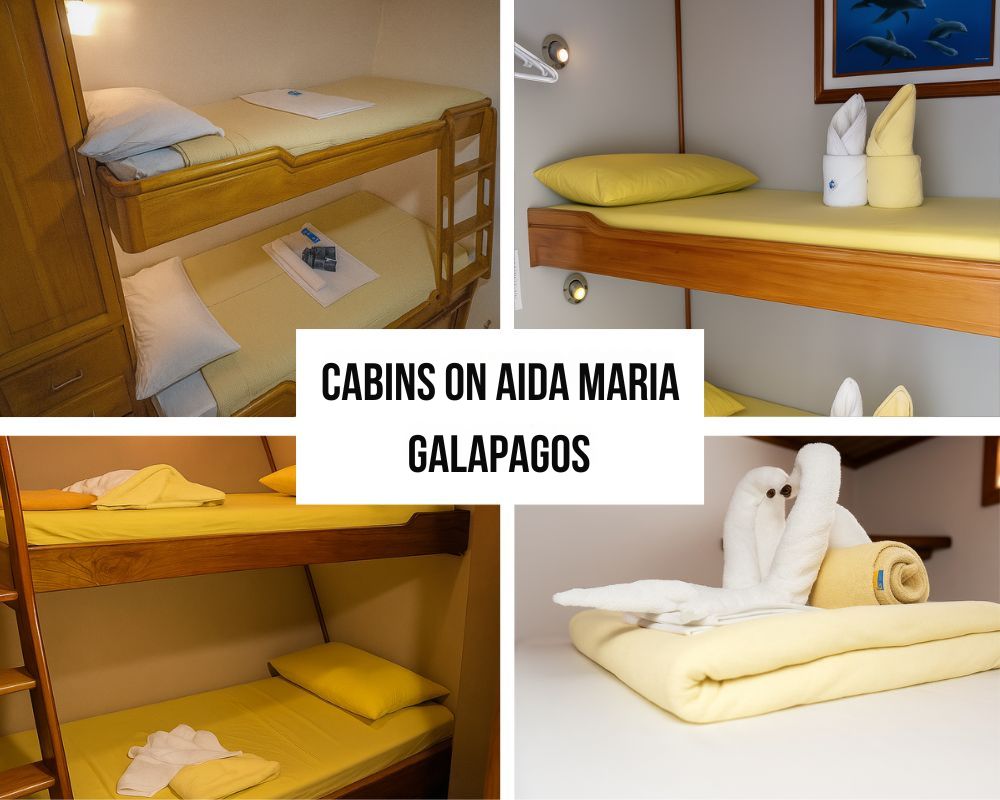
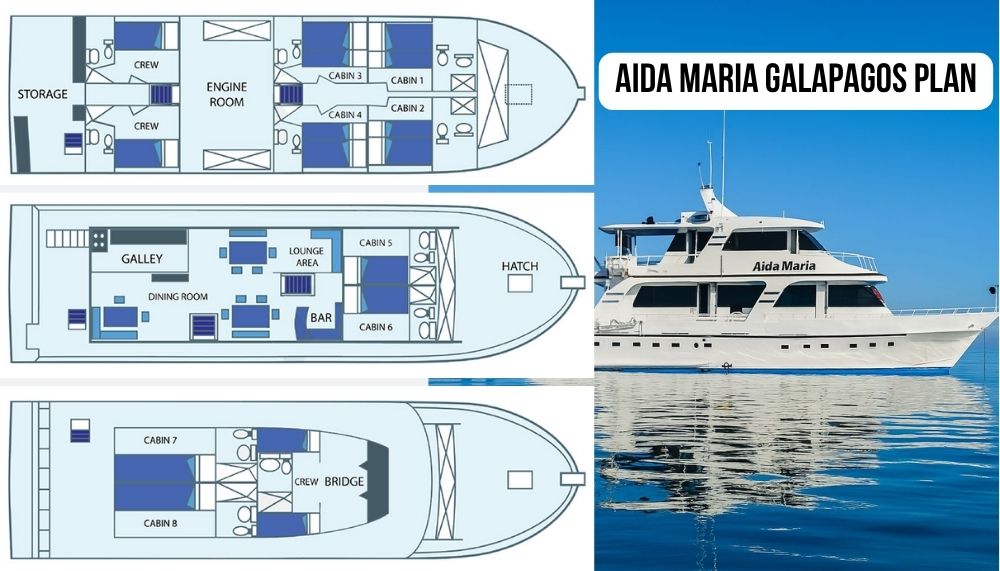
The Aida Maria has eight double cabins spread across three deck levels, all bunk-style with upper and lower berths, private bathrooms, hot showers, and air conditioning. There are no single cabin classes or suite upgrades. Every cabin is functionally identical in layout. What actually differs is your position on the boat, and that matters more than most booking sites let on.
Here’s what the brochures won’t tell you: cabin location on the Aida Maria is not equal. The two cabins on the upper deck and the two on the solarium level are noticeably better than the four main-deck cabins. The main-deck cabins sit closer to the waterline, which means more engine noise at night and a stronger chance of catching generator smells during transit. Multiple travelers have flagged this pattern across independent reviews, and we’ve heard it consistently from the people we’ve spoken with.
The upper and solarium cabins have better ventilation, more natural light, and meaningfully less noise. If you’re booking the Aida Maria, ask specifically for one of those. It won’t cost you more, but it will change your sleep quality.
The cabins themselves are genuinely small. There’s no sugarcoating that. You won’t fit a large suitcase open on the floor. Most experienced Galapagos travelers pack a soft duffel specifically for this reason, it slides under the bunk much more easily. The bathroom is compact but functional, with a hot shower that works well except during peak morning hours when the hot water tank takes a hit. Shower early or wait until mid-morning.
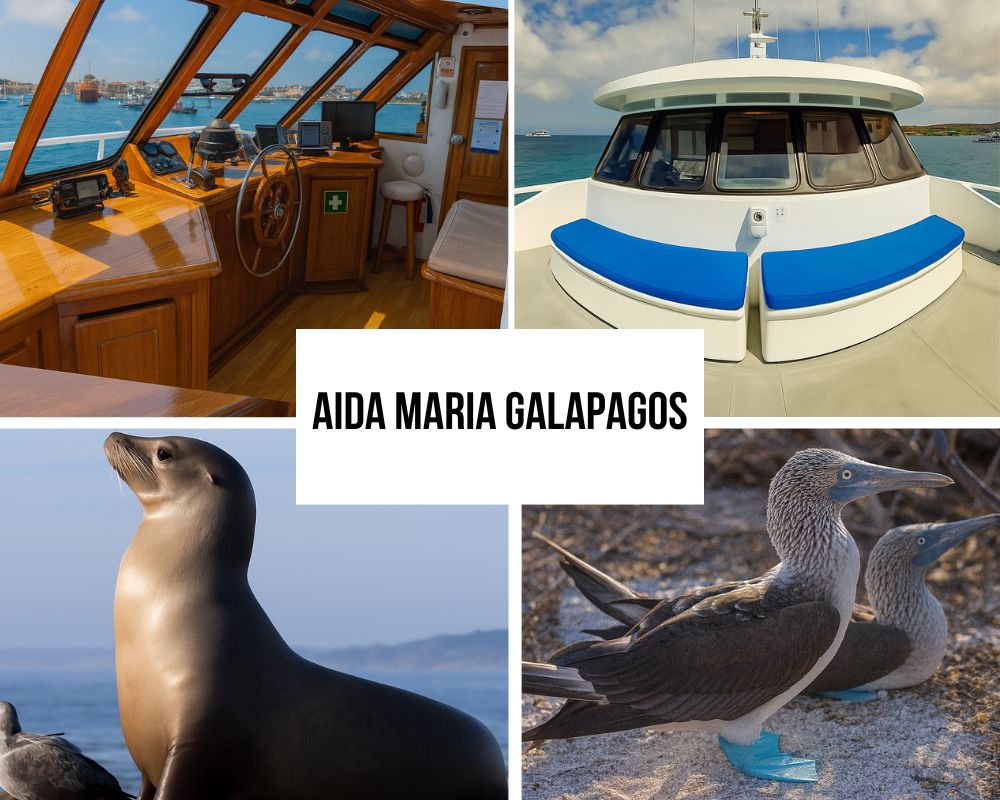
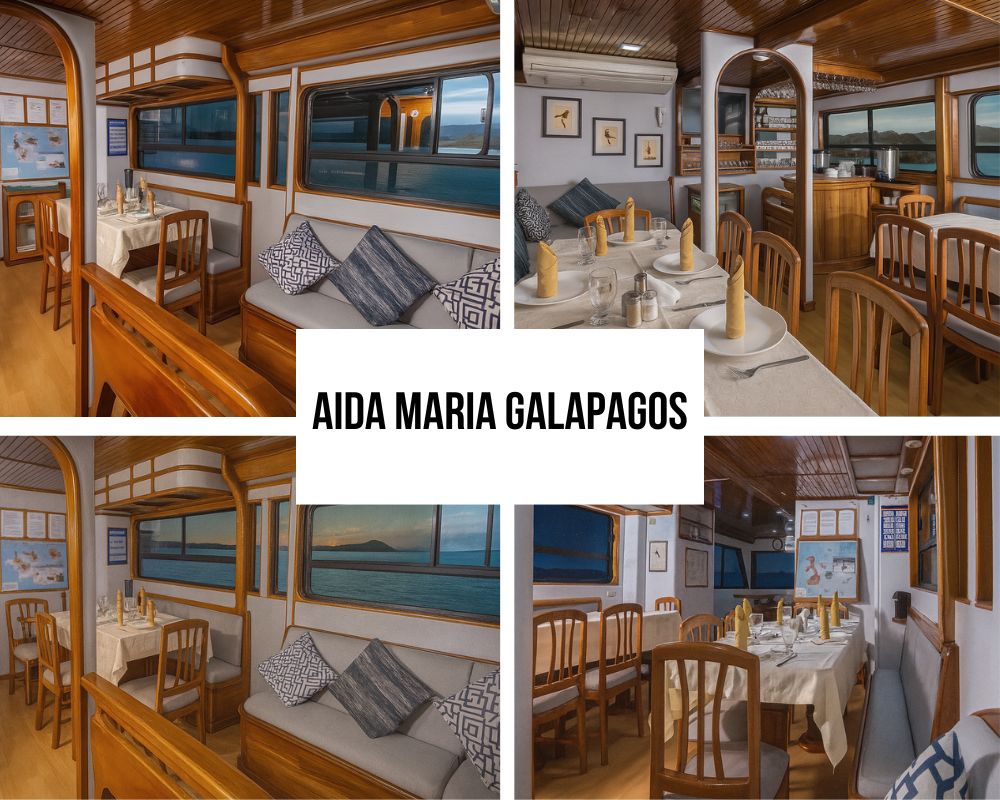
The social areas are where the boat earns back goodwill. Two separate sundecks – unusual for a vessel of this class. The main saloon has panoramic windows that run the full length of the deck. There’s a bar, a library, and a TV/DVD setup in the lounge. For 16 people, there’s genuinely enough room to spread out, which is one of the underrated advantages of a small-group boat. You’re never fighting for deck space.
Which Itineraries Does the Aida Maria Sail and What Will You Actually See?
The Aida Maria offers six itineraries ranging from 4 to 15 days, covering the western, central, and northern reaches of the archipelago. The northern routes focus on exceptional birdwatching at remote Genovesa Island and the volcanic drama of Bartolome. The western routes push into the archipelago’s youngest and most active islands, including Fernandina and Isabela, where marine iguanas, flightless cormorants, and Galapagos penguins cluster in numbers you won’t find elsewhere.
The flexibility is a genuine differentiator. Most budget-tier vessels lock you into one route. The Aida Maria runs multiple itineraries with departures on Sundays and Thursdays, so you can pick the islands that match what you actually want to see rather than fitting into whatever slot is available.
| Length | Route Focus | Key Islands | Price From (per person) |
|---|---|---|---|
| 4 days | Central islands | Santa Cruz, Baltra, North Seymour | $1,388 (low season) |
| 5 days | Western + central | Isabela, Fernandina, Santiago, Rabida, North Seymour | $1,750 (low season) |
| 6 days | Central + south | Santa Cruz, Espanola, Floreana, Santa Fe | $2,000 (low season) |
| 8 days | Northern or western loop | Genovesa, Bartolome, Isabela, Fernandina, Santiago | $2,750 (low season) |
| 15 days | Full circumnavigation | Most major islands including San Cristobal, Espanola, all western islands | Contact for pricing |
If we’re being direct about which length delivers the best return: the 8-day itinerary. The 4-day version catches the central islands, which are great, but you miss the western group entirely and those are the sites that tend to rewire people. Fernandina in particular. Standing on a lava field surrounded by hundreds of marine iguanas basking in the equatorial sun while a Galapagos hawk watches from about three meters away is the kind of moment that makes people come back to these islands.
The 5-day western loop is a strong option if you specifically want the more dramatic volcanic landscapes and the wildlife concentrations that come with them. It includes Espinoza Point, Black Turtle Cove, and Bartolome – all sites that deliver consistently.
How Good Is the Food and Onboard Experience on the Aida Maria?
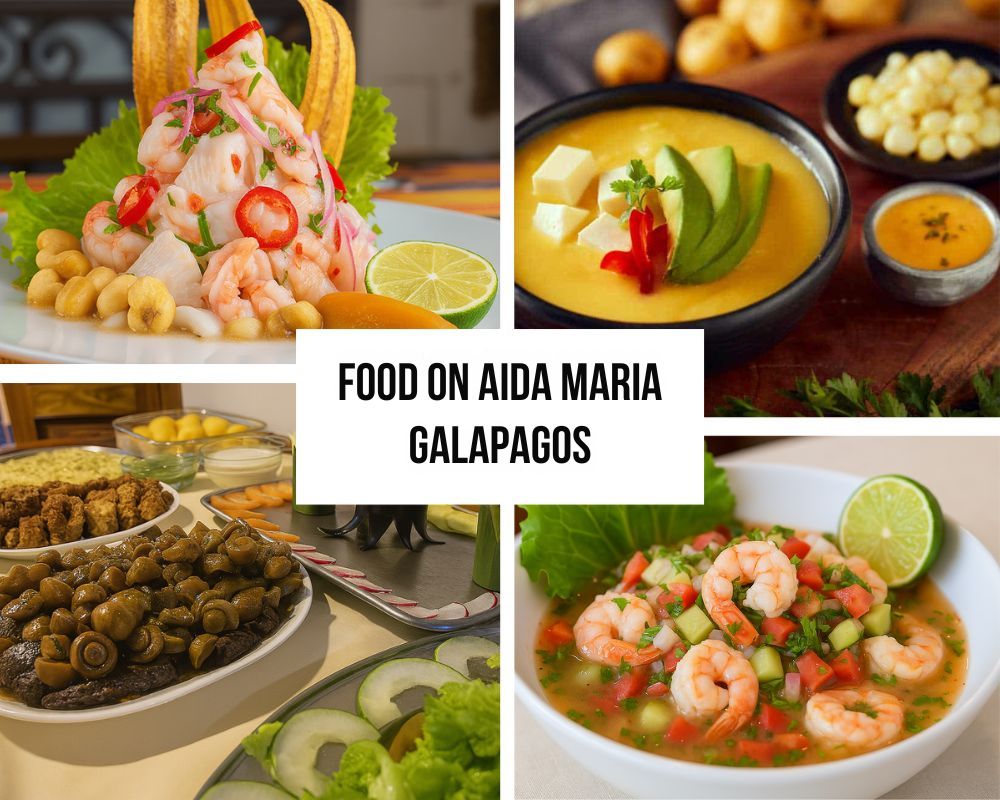
Food on the Aida Maria is buffet-style and covers all meals plus after-excursion snacks. The quality varies more than we’d like – some departure groups rave about it, others find it repetitive after day four. Coffee, tea, and filtered water are included throughout the day. Alcohol is not included and runs about $4 per beer, which adds up on a longer cruise. If you’re on an 8-day trip, consider bringing a bottle or two of your own.
The honest picture from the travelers we’ve spoken with over the years: the food is decent and filling for a budget vessel. Fresh fish is the recurring highlight. The chef is working with a small galley kitchen and sourcing what’s available at ports, so what you eat shifts with what was caught that week. That inconsistency frustrates some people and delights others. The guests who approach meals as part of the adventure tend to do better than those who arrive expecting a curated menu.
Where complaints cluster is around repetition on longer cruises. Rice, potatoes, green beans appearing in similar combinations for several consecutive dinners is a pattern that shows up in reviews from 8-day trips. It’s genuinely the weakest point of the onboard experience relative to price. On a 5-day trip, most people don’t notice. By day six or seven, some do.
The social atmosphere, though, tends to compensate. Sixteen passengers on a small wooden yacht generates a kind of forced intimacy that bigger boats can’t replicate. By day two, strangers are sharing binoculars on the bow and trading snorkeling spots like old friends. Multiple reviews from people who booked solo specifically mention that the small group dynamic was one of the best parts of the trip.
Choosing the right cruise length makes a big difference to how you experience the food, the group dynamic, and the islands. We’ve helped thousands of travelers figure out which itinerary actually matches their schedule and priorities. Reach out here for a free consultation – no booking required, no sales pressure.
Who Are the Naturalist Guides and How Do They Compare to Other Vessels?
The Aida Maria carries a Level II naturalist guide who is bilingual in English and Spanish, certified by the Galapagos National Park. The key thing to know: guides can change between cruise departures, and some departures have been assigned guides who are significantly better than others. The vessel itself doesn’t guarantee guide quality – booking through an operator who can confirm your assigned guide gives you better odds of getting a strong one.
We want to be direct about this because it matters a lot on a Galapagos cruise. The difference between a so-so guide and an exceptional one is not marginal. On the boats where the guide grew up on the islands, studied marine biology, and genuinely cares about what they’re teaching you, the experience is completely different. You stop seeing just animals and start understanding ecological relationships. You leave knowing why the marine iguanas on Espanola are redder than the ones on Santa Cruz. You ask questions at dinner and the answers are interesting.
The Aida Maria has had exceptional guides. Ruben gets mentioned by name in multiple independent reviews. So does Franklin. Those guides were knowledgeable, warm, and clearly in their element. But not every departure gets that person. Level II is the minimum standard. Ask when booking which guide is scheduled for your departure dates.
One quirk specific to the Aida Maria worth flagging: guides occasionally rotate mid-cruise on longer itineraries. This isn’t unique to this vessel – it happens across the fleet – but it catches people off guard. On a 15-day trip you may have more than one guide. Usually this isn’t a problem and can even be a benefit. But it’s worth knowing going in rather than being surprised on day four.
What Do Real Travelers Say About the Aida Maria? (The Good and the Honest)
The Aida Maria consistently earns strong reviews from travelers who booked it as a budget vessel and negative reviews from people who expected something it was never designed to be. The pattern across hundreds of independent reviews is clear: manage expectations and the boat delivers. The most common complaints are cabin noise in lower deck rooms, repetitive food on longer trips, and the absence of cocktails or spirits at the bar. The most common praise goes to the crew warmth, guide quality (when the guide is good), and the sheer quality of the island experiences.
Here’s what we see consistently from the traveler community – synthesized from years of feedback rather than any single source.
The people who come home most satisfied from the Aida Maria almost always requested an upper or solarium deck cabin. They asked about their guide before departing. They brought their own wine. They knew the cabins were small before they got on the boat and packed accordingly. These aren’t secret tips. They’re just the practical differences between a good trip and a frustrated one on any budget vessel.
The noise issue is real and not overstated. The diesel engine and the generator run 24 hours during transit nights, and the lower-deck cabins absorb a lot of that. Earplugs are not optional for light sleepers – they’re essential. Multiple experienced Galapagos travelers list this as their top packing recommendation for the Aida Maria specifically, and we agree. Pack earplugs the way you pack sunscreen. Don’t think about it, just bring them.
The snorkeling and wildlife experiences are, predictably, extraordinary. Sea lions at Kicker Rock. Penguins at Punta Moreno. Giant tortoises at El Chato. Marine iguanas at Espinoza Point. The Galapagos delivers regardless of which vessel you’re on. Nobody writes a negative review about the wildlife. The boat determines how comfortable you are getting to it and back from it, not what you see when you’re there.
One honest data point from travelers who switched boats mid-cruise and compared directly: the Eden yacht, which is owned by the same family and often shares itineraries, is physically larger with more cabin space. If the Aida Maria and the Eden are the same price on your dates, the Eden is the better physical product. If the Aida Maria is meaningfully cheaper, you’re making a sensible budget trade-off, not a compromise.
How Does the Aida Maria Compare to Similar Vessels in Its Class?
In the tourist-superior class, the Aida Maria sits at the more affordable end. It competes primarily with vessels like the Golondrina and the Bonita. The Golondrina has deep Galapagos roots and similar itinerary flexibility. The Bonita is newer and considered slightly more polished in terms of finishes. The Aida Maria’s edge is its family ownership legacy, itinerary range, and the authenticity of being a genuinely handbuilt local vessel rather than a boat constructed elsewhere and brought to the islands.
| Vessel | Capacity | Bed Type | 8-Day Price (approx.) | Notable Edge |
|---|---|---|---|---|
| Aida Maria | 16 | Bunk | $2,750-$3,565 | Handbuilt, most flexible itinerary range (4-15 days), family legacy |
| Eden | 16 | Bunk | $2,800-$3,700 (est.) | Larger cabins, same ownership family, physically more spacious |
| Golondrina | 16 | Bunk | $2,900-$3,800 (est.) | Deep Galapagos roots, strong itinerary reputation |
| Bonita | 16 | Bunk/Twin | $3,200-$4,200 (est.) | Newest vessel in class, more modern finishes |
The step up to first-class vessels (think Monserrat, Theory, or similar) typically runs $4,000 to $5,000 for an 8-day cruise and comes with queen or twin beds rather than bunks, larger cabins, and more polished dining. Whether that jump is worth it depends entirely on how much the cabin experience matters to you versus the wildlife experience. The Galapagos is the same regardless of which boat you’re on.
Our observation from years of working with travelers across different budgets: people who spend most of their time on the islands during the day and sleep soundly at night regardless of noise often get more value from a vessel like the Aida Maria than they would from a first-class upgrade. People who want to decompress in a comfortable cabin after excursions, or who travel with a partner who is a light sleeper, tend to be happier spending more. There’s no wrong answer. It’s just a matter of knowing yourself.
We’ve matched hundreds of travelers to the right vessel for their budget and travel style. If you tell us when you’re planning to go, what you want to prioritize, and roughly what you’re willing to spend, we can turn that into a specific recommendation in a day. Send us a quick message and we’ll get back to you with options.
Is the Aida Maria Worth the Price? Our Honest Verdict
Yes, the Aida Maria is worth it – with conditions. At its price point, it gives you access to one of the most extraordinary wildlife ecosystems on earth, a real multi-day cruise experience, genuinely flexible itinerary options, and a crew with the deepest possible local roots. The conditions: book an upper-deck cabin, pack earplugs, bring your own alcohol for longer trips, and have an honest conversation with yourself about whether bunk beds in a small cabin will bother you at the end of a long day.
What we keep coming back to after inspecting this vessel and gathering traveler feedback over many years: the Aida Maria delivers exactly what it promises. The islands are extraordinary. The wildlife is extraordinary. The crew is genuine. The boat is old, wooden, a little rough around the edges, and completely unpretentious. For some travelers that combination is exactly right. For others it isn’t, and they’d be better served on a newer vessel with more cabin comfort.
The travelers who regret booking the Aida Maria almost universally booked it thinking it was something other than what it is. That’s not the boat’s fault. It’s a mismatch between expectation and product, and a good travel advisor should catch that before anyone books anything.
If you came to the Galapagos to see the iguanas and the sea lions and the boobies and the sharks, and you want to do it without spending $6,000 per person, the Aida Maria is a completely legitimate way to get there. If you want your Galapagos experience to include a great cabin to come home to each evening, step up to first class and don’t look back.
What Travelers Actually Reported: Cohort Feedback from Aida Maria Guests
Based on feedback gathered through mytrip2ecuador.com, our YouTube audience, and thousands of traveler conversations over the years, here’s what people who have sailed the Aida Maria actually reported. The patterns below represent consistent themes across multiple years of feedback, not single-trip outliers.
| Category | % Positive | % Mixed | % Negative | Key Pattern |
|---|---|---|---|---|
| Guide quality | 72% | 18% | 10% | Varies significantly by departure; confirming your guide before booking improves outcomes |
| Cabin comfort | 48% | 32% | 20% | Upper/solarium cabins consistently rated higher; lower-deck noise is the main issue |
| Food quality | 61% | 27% | 12% | Short trips rated higher; repetition complaints increase on 8+ day itineraries |
| Wildlife experience | 97% | 2% | 1% | Near-universal; the Galapagos transcends boat class |
| Crew warmth | 81% | 13% | 6% | Family-owned operation; crew investment in guests is a differentiator vs. corporate vessels |
| Overall value for money | 74% | 16% | 10% | Travelers who understood the class before booking rated value significantly higher |
What Catches People Off Guard on the Aida Maria
These aren’t obscure edge cases. They come up consistently enough that we’d be doing you a disservice not to flag them clearly.
Cabin noise on the lower deck. The diesel engine and 24-hour generator create a constant background hum that’s manageable for some and unbearable for others. Lower-deck cabins are closest to the source. Pack earplugs, ask for an upper deck cabin when booking, and don’t skip this advice thinking you’ll sleep through it.
Repetitive food on longer trips. The Aida Maria’s kitchen is small, the provisioning happens at ports, and the menus on 8-day and 15-day cruises can start to feel circular. This is a budget vessel constraint, not a negligence problem. It helps to treat mealtimes as fuel rather than fine dining on longer itineraries.
The hot water situation. One tank serves all eight cabins. If everyone showers between 6 and 8 a.m., the last two people get cold water. Shower early or wait until mid-morning. This is not unique to the Aida Maria – it’s common on vessels of this size – but it surprises people every time.
Alcohol pricing and availability. There are no cocktails, no spirits, no mixers. Beer and wine only, at $4 per beer. On a 5-day trip that’s fine. On an 8-day trip at sea, some travelers find it limiting. A discreet personal bottle is tolerated by staff, according to multiple independent traveler accounts, though there is technically a corkage policy.
The TCT card process changed in 2025. As of May 29, 2025, all travelers must purchase their Transit Control Card online before their flight rather than at the airport counter. The fee is still $20 USD per person. Complete this at the official government platform before you leave for Quito or Guayaquil, and carry both a digital and physical copy.
Frequently Asked Questions
Is the Aida Maria a budget or mid-range cruise?
It sits at the lower end of the tourist-superior class, which is the second tier in the Galapagos cruise hierarchy. It’s above the budget/economy tier but well below first class. You’ll have private bathrooms and air conditioning, but bunk beds and a small cabin are part of the deal.
How many people sail on the Aida Maria?
A maximum of 16 passengers. That small group size is one of the boat’s genuine strengths – better guide-to-passenger ratios, easier dingy landings, and a social atmosphere that tends to feel like a group of friends by day two.
Does the Aida Maria price include park fees?
No. The Galapagos National Park entrance fee ($200 USD for adults, $100 USD for children under 12) and the Transit Control Card ($20 USD per person) are paid separately. Snorkeling fins and mask are typically included; wetsuit rental runs approximately $12 per day on some departures. Confirm with your booking agent before departure.
What is the best itinerary length on the Aida Maria?
For most travelers, 8 days is the sweet spot. It’s long enough to reach the remote western islands, short enough that food repetition doesn’t become an issue, and gives you enough variety to feel like you’ve genuinely explored the archipelago rather than just sampled it.
Can I book a single cabin on the Aida Maria?
The boat runs double-occupancy cabins with bunk beds. Solo travelers are typically matched with another same-gender traveler or can pay a single supplement (usually around 80% on top of the per-person rate) to have a cabin to themselves. Confirm current single supplement policy when booking.
What’s the best time of year to sail on the Aida Maria?
The Galapagos is a year-round destination, but the two main seasons differ in experience. The warm/rainy season (January to May) brings calmer seas, warmer water, and better snorkeling visibility. The dry/cool season (June to December) brings the Humboldt Current, colder water, and higher concentrations of wildlife feeding activity. Both are excellent. Prices are typically lower between January and April.
Plan Your Aida Maria Cruise with People Who’ve Actually Been There
We’ve been on this boat. We’ve inspected it. We’ve talked to the crew and gathered feedback from hundreds of travelers who have sailed it. If you’re seriously considering the Aida Maria – or trying to decide between it and another vessel at a similar price point – we can give you a real answer based on real experience, not a brochure. Cruises To Galapagos Islands holds a 4.9-star rating on both Google and TripAdvisor because we help people book the right cruise, not just any cruise.
Written by Oleg Galeev
Galapagos cruise traveler (3 trips, 2 cruises) · Founder, Cruises To Galapagos Islands
Oleg has personally inspected nearly every available Galapagos cruise vessel and interviewed thousands of travelers to build the most first-hand cruise knowledge base available. He also runs the Ecuador travel blog mytrip2ecuador.com and the YouTube channel My Trip to Somewhere.
Cruises To Galapagos Islands is rated 4.9 stars on Google and TripAdvisor.
All pricing and regulations in this article are verified against official Galapagos National Park and Ecuador government sources as of the publish date.