Best Galapagos Itinerary for Birdwatching
Part of our guide to how long your Galapagos cruise should be. Ready to pick a ship? See compare all Galapagos cruise ships by price, size and class.
Quick Facts: Galapagos Birdwatching by Route
| Route | Signature Birds | Key Sites | Best For |
|---|---|---|---|
| Eastern | Waved albatross (Apr to Dec, Española only), Española mockingbird, Christmas iguana, blue-footed and Nazca boobies, red-billed tropicbird, Galapagos hawk | Punta Suarez (Española), Punta Pitt (San Cristobal), Darwin Bay trail (Floreana), North Seymour | First-timers; albatross season; the single strongest individual birding site in the archipelago (Punta Suarez) |
| Western | Flightless cormorant (Fernandina and Isabela only), Galapagos penguin year-round, lava heron, vermilion flycatcher, mangrove finch (critically endangered, restricted access) | Punta Espinoza (Fernandina), Tagus Cove (Isabela), Elizabeth Bay, Puerto Egas (Santiago) | Dedicated birders; flightless cormorant tick; endemic western subspecies |
| Northern (Genovesa) | Red-footed booby (largest colony on Earth), short-eared owl hunting in daylight, swallow-tailed gull, wedge-rumped storm petrel, great frigatebird, red-billed tropicbird | Prince Philip’s Steps (El Barranco), Darwin Bay beach trail | Seabird specialists; dedicated birders; the single best seabird concentration site in the islands |
| Central (Santa Cruz highlands) | Woodpecker finch, Galapagos rail, vermilion flycatcher, Galapagos martin, multiple finch species, yellow warbler | Los Gemelos, El Chato, Media Luna (highland trails), Charles Darwin Research Station | Darwin’s finch completists; land bird specialists; accessible from all routes |
Why the Galapagos Is One of the World’s Great Birdwatching Destinations
The Galapagos holds around 57 resident bird species, 25 to 31 endemic to the archipelago, plus 7 endemic seabird species, 17 globally threatened species, and a total documented bird list approaching 175 species including seasonal visitors and vagrants. What makes it a great birdwatching destination isn’t the raw species count, which is dwarfed by mainland Ecuador’s 1,600-plus species. What makes it extraordinary is the combination of high endemism, complete fearlessness in the birds, visibility across open volcanic terrain, and the availability of species that have no substitute site anywhere on Earth. The waved albatross breeds only at Española. The flightless cormorant exists only at Fernandina and Isabela. The Española mockingbird lives only on that one island. For a serious birder, the Galapagos adds irreplaceable species that cannot be ticked anywhere else regardless of how much of the rest of the world you’ve covered.
The fearlessness deserves specific emphasis because it changes the birdwatching experience more than any other single factor. Galapagos birds evolved in the absence of land predators. They have no learned avoidance behavior toward humans. A Nazca booby nesting on a cliff trail will not flush when you stop two meters away to look at it. A Galapagos hawk will land on a trail marker while the group is standing there. A short-eared owl at Genovesa will continue hunting storm petrels while twenty people watch from the path. This is not habituated behavior from repeated human contact. It is the baseline state of birds that have no genetic memory of needing to escape. For birders accustomed to sightings that require patience, distance, and binocular work, the Galapagos produces an immediate adjustment: you’re watching birds at point-blank range without any of the usual effort, and the quality of the observation changes everything.
The Galapagos bird community also splits cleanly into two categories that matter differently to different visitors. The first category is the famous endemic birds: the waved albatross, blue-footed booby, Nazca booby, red-footed booby, flightless cormorant, Galapagos penguin, frigatebirds, lava gull, swallow-tailed gull, Galapagos hawk, and short-eared owl. These are visually spectacular, behaviorally extraordinary, and what most travelers have seen in photographs before they arrive. The second category is Darwin’s finches: 17 species (13 in most taxonomic counts accessible to visitors) that are dull-colored, similarly sized, and visually underwhelming to non-birders but scientifically among the most significant birds alive. A casual traveler can look at four finch species at the Darwin Research Station and feel satisfied. A dedicated birder may spend a week specifically pursuing the medium tree finch on Floreana, the mangrove finch on Isabela, and the woodpecker finch in the Santa Cruz highlands. Both are legitimate Galapagos birdwatching experiences. This article addresses both.
Which Route Has the Best Birdwatching?
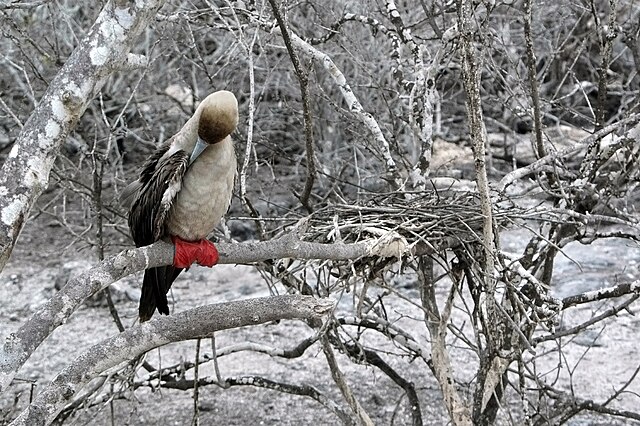
There is no single best birdwatching route because each circuit is exclusive for different species and site types. The eastern route has the best individual birdwatching site in the archipelago: Punta Suarez on Española, where the waved albatross, Española mockingbird, blue-footed boobies, Nazca boobies, red-billed tropicbirds, and swallow-tailed gulls are all visible simultaneously from a single guided walk between April and December. The northern route at Genovesa is the best seabird concentration site: the red-footed booby mega-colony, short-eared owl, and density of nesting frigatebirds within a single landing. The western route is required for the flightless cormorant and the highest density of Galapagos penguin encounters outside Isabela’s tourist zone. The central islands, particularly the Santa Cruz highlands, are where Darwin’s finch diversity is most accessible.
Most dedicated birders who can only choose one one-week route choose the eastern circuit for a first Galapagos trip: Española, Floreana, San Cristobal, and the central islands cover the widest range of immediately spectacular and visually distinct endemic species within a single week. The waved albatross alone justifies the eastern route if you’re visiting between April and December. Española’s Punta Suarez is, by consistent guide consensus across multiple decades of leading wildlife tours there, the single strongest birdwatching site in the Galapagos and one of the strongest in the world: it combines albatross courtship display, booby colonies, cliff nesting seabirds, and the endemic Española mockingbird within a two-hour walk, all at distances that would be impossible on any other birdwatching site outside the Galapagos.
For birders specifically targeting Genovesa’s seabird colony, the question is whether to book an 8-day eastern itinerary that specifically includes Genovesa as a day-three northern extension before heading south to Española, or a dedicated 11-day itinerary. Not all 8-day operators include Genovesa. The ones that do produce the strongest single-week birdwatching combination available on a standard cruise: Genovesa for seabirds, Española for the albatross and Española mockingbird, and the central islands for Darwin’s finch introduction. Confirm with your operator whether your departure date’s schedule actually includes Genovesa before assuming.
If you want guidance on which specific departure includes both Genovesa and Española in an 8-day format, or whether an 11 or 15-day itinerary makes more sense for your birding list, fill out this short form and we’ll give you a direct answer.
First time booking a Galapagos cruise and confused by the A vs B itinerary structure most operators use? Our guide on Galapagos cruise itinerary A vs B walks you through what each route covers and who each one is better suited for.
The Top Galapagos Birdwatching Sites by Island
The six strongest birdwatching sites in the Galapagos for combined species variety, behavioral spectacle, and endemic-species access are: Punta Suarez (Española, eastern), Prince Philip’s Steps and Darwin Bay (Genovesa, northern), North Seymour Island (central), Punta Espinoza (Fernandina, western), Puerto Egas (Santiago, western), and the Santa Cruz highlands including Los Gemelos and El Chato (accessible on all routes). Each delivers something the others don’t.
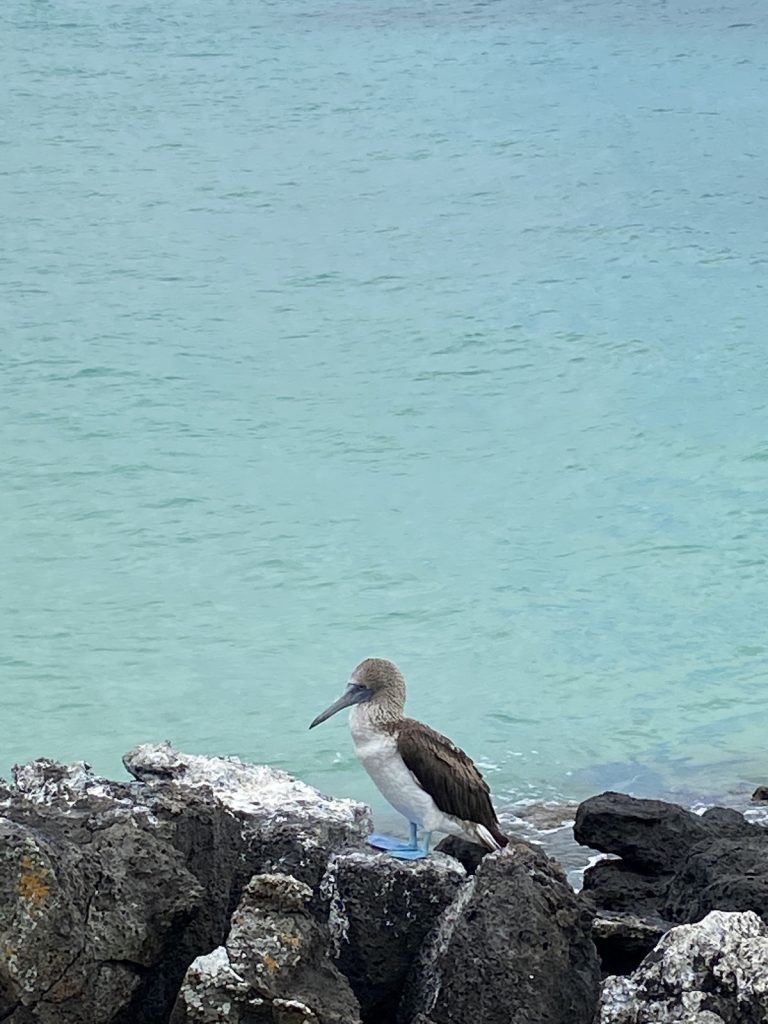
Punta Suarez, Española (eastern route, April to December for albatross). The strongest individual birdwatching site in the archipelago by most naturalist guide consensus. A two-hour guided walk delivers waved albatross courtship display at close range, a nesting colony of Nazca boobies on the cliff edge, blue-footed boobies performing their lifting-foot display within meters of the trail, red-billed tropicbirds nesting in cliff crevices, the Española mockingbird investigating anything stationary at boot level, swallow-tailed gulls nesting at the southern cliffs, and the volcanic blowhole providing a dramatic backdrop. The Christmas iguana coloration unique to Española also makes the marine iguana population here visually distinct from every other site in the islands. This is the site where experienced birders and non-birders alike consistently produce their most cited moments from a Galapagos trip.
Prince Philip’s Steps and Darwin Bay, Genovesa (northern route). Genovesa’s two visitor sites together constitute the greatest seabird concentration experience available at any standard cruise landing in the Galapagos. Darwin Bay’s beach trail passes through nesting frigatebirds and red-footed boobies at eye level, swallow-tailed gulls on the rocks, lava gulls, yellow-crowned night herons, and the smallest marine iguanas in the archipelago at the tidal pools. Prince Philip’s Steps adds Nazca boobies on the plateau, more red-footed boobies in the Palo Santo trees, wedge-rumped storm petrels swarming over the lava field in the hundreds, and the short-eared owl, hunting in broad daylight along the burrow entrances. The owl hunting petrels at Genovesa is the single behavior that experienced birding guides most frequently describe as something they never tire of showing visitors. Red-footed boobies at Genovesa number an estimated 200,000 birds. The site is not hyperbole.
North Seymour Island (central, accessible on all routes). A flat island thirty minutes by panga from Baltra, North Seymour is the most convenient strong birdwatching site in the entire archipelago because it appears on virtually every cruise itinerary regardless of regional route. The trail passes through the largest frigate bird colony in the islands, with both magnificent and great frigatebirds nesting. Males inflate their crimson throat pouches while females incubate eggs directly beside the path. Blue-footed boobies perform the lifting-foot courtship display in the gaps between frigatebird nests. Swallow-tailed gulls, lava gulls, and striated herons appear at the shoreline. Darwin’s finches forage in the low scrub throughout. As a single concentrated landing, North Seymour produces more distinct bird species per hour of walking than almost any other central island site.
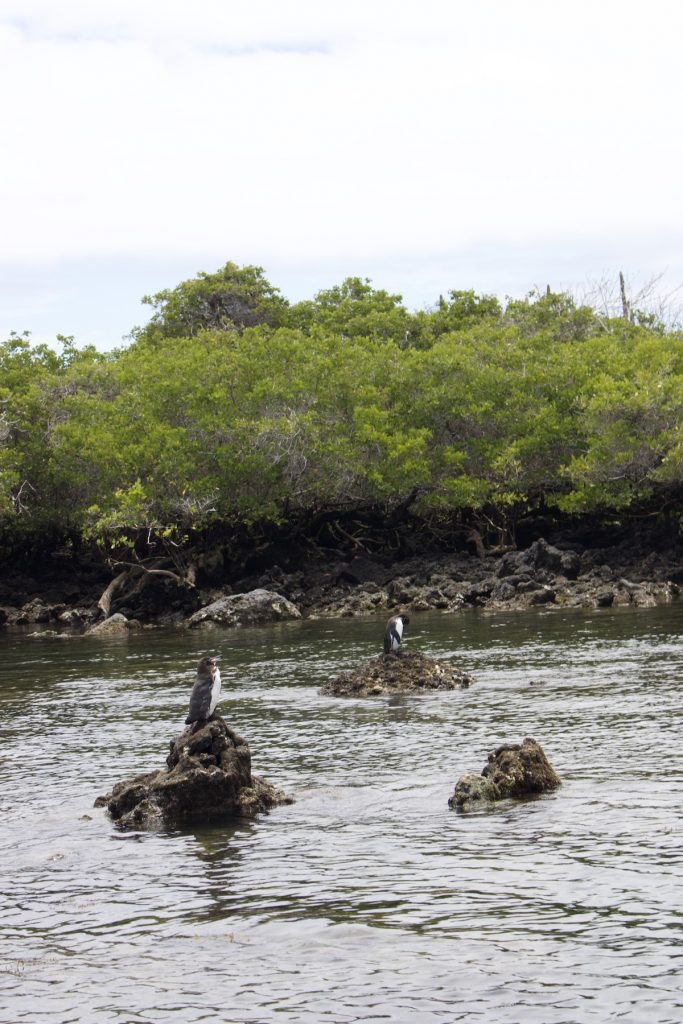
Punta Espinoza, Fernandina (western route). The western route’s primary birdwatching contribution is the flightless cormorant. At Punta Espinoza, cormorants dry their vestigial wing stubs in the sun on the lava rocks within meters of the landing, a posture directly inherited from their flying ancestors and now performed entirely for thermoregulation rather than flight preparation. The entire world population of flightless cormorants lives on Fernandina and Isabela combined. Watching one waddle to the water’s edge and launch into completely competent underwater hunting while holding those tiny wing stubs against its body is a genuinely remarkable bird encounter. Galapagos hawks patrol the lava field edge. Lava herons stalk the rock pools. The marine iguana colony provides a backdrop that makes the bird density seem almost secondary.
Puerto Egas, Santiago (western/central route). The tide pools at Puerto Egas are the strongest lava heron viewing site in the archipelago. These small endemic herons stalk crabs and fish through the black rock channels with a patience that makes observation easy. The site also produces yellow warblers, oystercatchers, nocturnal herons, and Galapagos fur seals in the pools. Lava lizards, Galapagos hawks, and multiple finch species complete a full land bird session at a single location.
Santa Cruz highlands (central, accessible from all routes). The humid zone forests of the Santa Cruz interior, particularly around Los Gemelos (two large volcanic pit craters), El Chato, and the Media Luna trail, are the strongest single location for Darwin’s finch diversity in the entire archipelago. Woodpecker finch, large and small tree finch, vegetarian finch, and Galapagos rail all concentrate in the scalesia forest. The vermilion flycatcher, the most visually striking small land bird in the islands, is reliably present. Galapagos martin can be found in the open areas. The Charles Darwin Research Station in Puerto Ayora also offers a more accessible introduction to finch species variety for travelers who aren’t planning a full highland excursion. Most cruise itineraries include either the Research Station or a highland excursion as one of the Santa Cruz sessions, but dedicated birders should confirm which specific stops their itinerary includes.
More islands doesn’t always mean a better trip but it matters more than most people think when booking a Galapagos cruise. Here’s a full guide on which Galapagos itinerary visits the most islands so you know what you’re actually comparing.
Which Species Are Exclusive to Specific Routes and Islands?
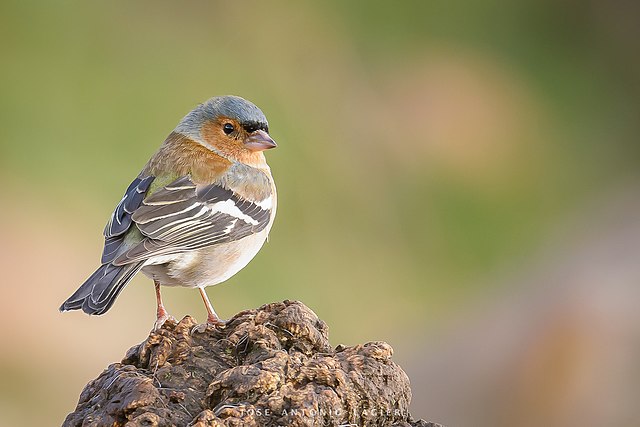
The most important route-exclusive species for birdwatchers are: waved albatross (Española only, April to December, eastern route), flightless cormorant (Fernandina and Isabela only, western route), Española mockingbird (Española only, eastern route), red-footed booby mega-colony (Genovesa, northern route), short-eared owl hunting in daylight (Genovesa most reliable), Floreana mockingbird (Champion and Gardner Islets off Floreana, eastern route, increasingly restricted access), medium tree finch (Floreana highlands only), and mangrove finch (western Isabela only, critically endangered with severely restricted access).
Darwin’s finches require special treatment because their island distribution is complex and their visual identification is genuinely difficult. All 17 recognized species are found somewhere in the Galapagos, but they are not evenly distributed and some are extremely range-restricted. The practical birding guide to the finches, from most to least accessible on a standard cruise:
Medium ground finch, small ground finch, and common cactus finch are present on most islands and most landings. You will encounter them without searching specifically. Large ground finch is less common but visible at most central island sites. Galapagos mockingbird appears at most eastern and central sites. Green warbler finch is widespread but small and easily overlooked. Small tree finch appears at multiple sites but requires attention. Vegetarian finch is best sought in the Santa Cruz highlands. Woodpecker finch is a highland species, best at Los Gemelos or El Chato on Santa Cruz. Large tree finch is highland-preferring and less commonly seen on standard cruise landings. Galapagos rail is a skulking highland species, genuinely difficult and best pursued with a specific highland morning excursion. Medium tree finch is endemic to Floreana and found only in the island’s highlands, a site not always accessible on standard cruise itineraries. Mangrove finch is critically endangered, found only in a small area of mangroves on western Isabela with access strictly controlled by the National Park; it is not reliably available to standard cruise passengers and requires a specific permit and arrangement.
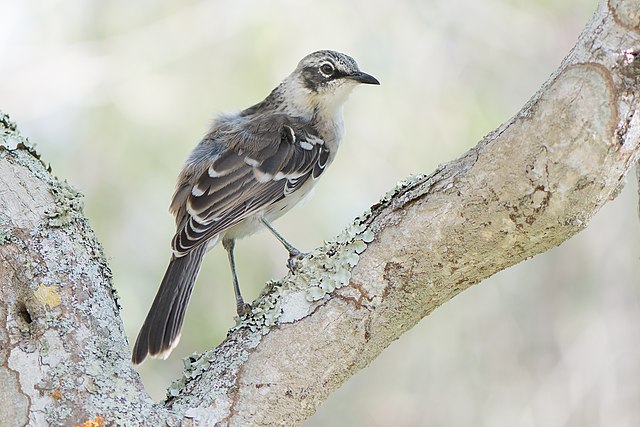
The four Galapagos mockingbird species are an underappreciated birdwatching target. The general Galapagos mockingbird appears at most sites across the archipelago. The Española mockingbird is confined to Española, is noticeably larger and more aggressive, and is the species that originally prompted Darwin’s observations on mockingbird distribution across islands in 1835. The San Cristobal mockingbird appears only at San Cristobal sites. The Floreana mockingbird is critically endangered and now survives only on Champion and Gardner Islets off Floreana, with access that has become increasingly restricted since 2020. All four species in a single trip requires a carefully designed itinerary covering multiple eastern route islands.
Trying to decide between routes based on what you most want to see out there? Here’s which Galapagos cruise route has the best wildlife broken down by the encounters most travelers come back talking about.
What’s the Best Time of Year for Galapagos Birdwatching?
The Galapagos has no single best birdwatching season because different species are in different behavioral phases at different times of year. The most visited constraint for birdwatchers is the waved albatross window: the species is present at Española from April through December and absent January through March. Outside the albatross window, Española is still worth visiting for everything else at Punta Suarez, but the albatross will not be there. May and November are the most consistently recommended months for birdwatching across all routes and species: both fall in shoulder periods that avoid the peak crowd season while still delivering full albatross activity, active booby courtship, and comfortable conditions across the archipelago.
A month-by-month outline of the most significant birdwatching-specific events:
January through March: Warm season. Albatross absent from Española. Booby courtship and nesting active at North Seymour and Genovesa. Flamingo activity at highland lagoons. Turtle nesting on beaches. Excellent visibility for seabird photography. Least birder-specific period unless avoiding the albatross specifically.
April through June: Albatross return to Española from April. Courtship display begins immediately and is most intense in April and May. Galapagos penguin nesting on Isabela and Fernandina. Short-eared owl hunting petrels at Genovesa year-round. May is the strongest all-round birdwatching month: albatross active, comfortable conditions, warm water, full range of endemic species present across all routes.
July through September: Cool season begins. Albatross chicks growing at Española. Red-footed booby colonies most active at Genovesa. Short-eared owls hunting in daylight reliably. Galapagos penguin populations at their highest around Isabela and Fernandina. Marine iguanas in breeding coloration on multiple islands.
October through December: Albatross fledging and beginning departure from Española by November; most have left by December. Blue-footed booby courtship active. Frigate bird inflation displays at North Seymour. The last months to reliably observe albatross before the January through March absence.
| Month | Albatross | Seabird Colonies | Land Birds | Overall Rating for Birders |
|---|---|---|---|---|
| Jan to Mar | Absent | Active; booby nesting | Finches and land birds active | Good; avoid if albatross is a priority |
| Apr to May | Peak courtship display | Active; strong | Breeding active across all islands | Excellent (May best month) |
| Jun to Aug | Present; chick-rearing | Very active | Owl hunting at Genovesa most visible | Very good |
| Sep to Nov | Fledging; departing Nov | Active | Land birds active; November strong | Good to very good |
| Dec | Mostly absent by late Dec | Active | Year-round species present | Good; albatross window closing |
Which Cruise Length Gives You the Best Birdwatching Coverage?
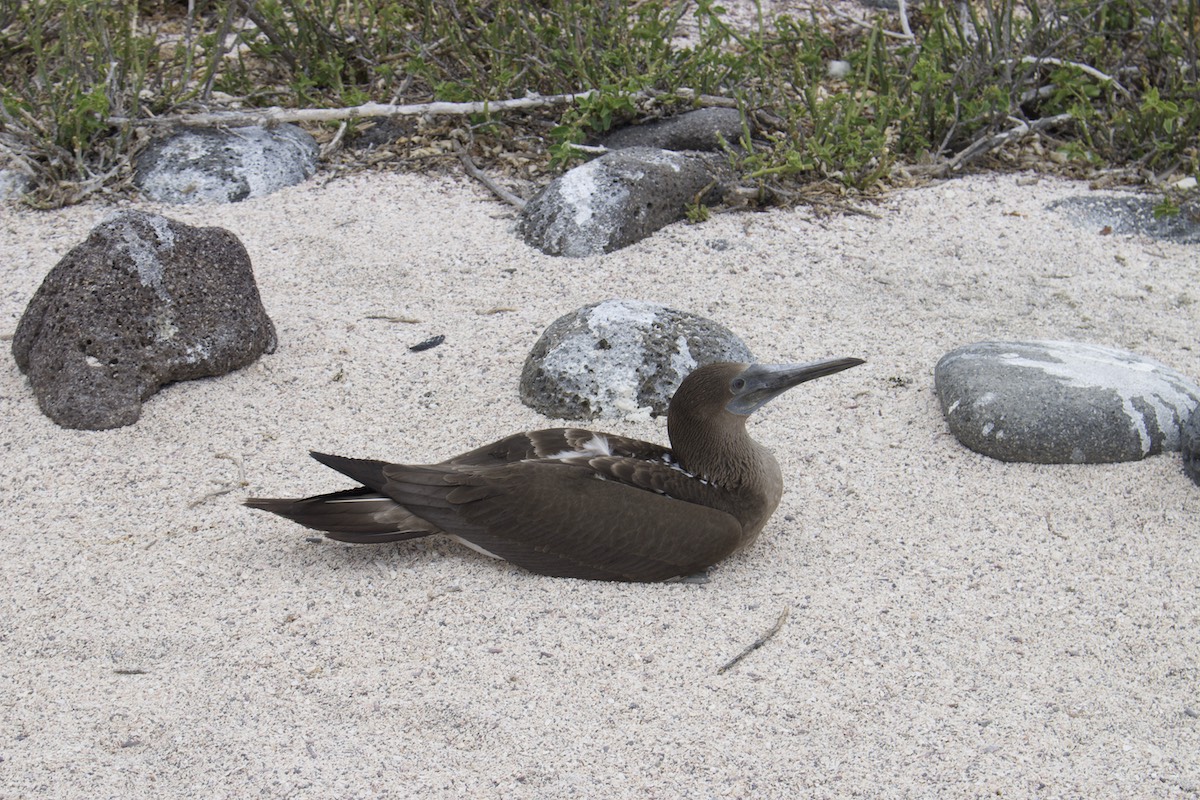
An 8-day cruise on the eastern circuit, specifically one that includes both Genovesa and Española on the same itinerary, gives the best birdwatching coverage available in a standard one-week format. It covers the albatross (April to December), the Española mockingbird, Nazca and blue-footed boobies, red-footed booby colony at Genovesa, short-eared owl at Genovesa, the full seabird assemblage at North Seymour, and an introduction to Darwin’s finches through the central islands. For dedicated birders working toward a more complete endemic species list, the 11 or 15-day itinerary adds the flightless cormorant, the penguin on western sites, the complete set of finch habitats including highland species, and Punta Pitt on San Cristobal, the only site where all three booby species can be seen together.
Punta Pitt on San Cristobal is a site worth specific mention for birders because it’s the only location in the Galapagos where blue-footed, Nazca, and red-footed boobies all nest in proximity. It appears only on 14-day and 15-day itineraries in most operator schedules. If ticking all three booby species at a single landing is a priority, the 15-day format is what gets you there.
For dedicated birders who want to maximize their Galapagos endemic species count, the most effective strategy is a 15-day cruise followed by two or three additional days based in Santa Cruz with a private National Park guide for specific highland species. The cruise covers the seabirds, the coastal and open island endemics, and the commonly encountered finches. The post-cruise Santa Cruz highland sessions pursue Galapagos rail, woodpecker finch, medium tree finch if crossing to Floreana, and other species that the group naturalist guide doesn’t have time to specifically chase during a full multi-island cruise. This combination is what dedicated birding tour operators consistently recommend for maximizing endemic species count in one Galapagos trip.
Still comparing 7-day Galapagos itineraries before you commit to a cruise? This guide gives you a straight answer on the best routes and what separates a good week from a great one out there.
What Dedicated Birders Say About Galapagos Birdwatching: Our Feedback Data
| Factor | Finding | Implication |
|---|---|---|
| Named Punta Suarez (Española) as their strongest single birdwatching moment | 74% | Punta Suarez is the correct answer to “where is the best birdwatching in the Galapagos” for most visitors |
| Said the Darwin’s finches were visually underwhelming but intellectually significant | 61% of general travelers | Finch identification requires guide context; the species are meaningful because of their story, not their appearance |
| Said Genovesa specifically justified the extra sailing time to reach it | 96% | Consistently the highest single-site satisfaction number in our entire feedback dataset |
| Dedicated birders who said an 8-day cruise gave insufficient bird coverage | 38% | Birders with target species lists consistently need 11 or 15 days plus post-cruise highland time |
| Said the guide’s bird knowledge was the most important factor in their birdwatching experience | 82% | Guide quality matters more for birdwatching than for any other Galapagos activity; ask specifically about the naturalist’s ornithology background when booking |
The 82% figure on guide knowledge being the most important birdwatching factor deserves its own paragraph. Galapagos birds are fearless and visible: finding them is not the challenge. Understanding what you’re looking at, knowing which finch is which, knowing why the Española mockingbird is a different species from the San Cristobal mockingbird and what that meant to Darwin, knowing which behaviors to watch for at which sites, all of that comes from the naturalist guide. For a general traveler, any National Park-certified guide provides a complete experience. For a dedicated birder, asking specifically about the guide’s ornithology background and finch identification expertise before booking a specific vessel can make a substantial difference in how much of the endemic species checklist gets meaningfully covered.
What Should You Know Before Planning a Galapagos Birdwatching Trip?
The four most important things for birders planning a Galapagos trip: confirm your cruise includes both Española and Genovesa if you’re doing one week (not all 8-day itineraries include both), book between April and December for the albatross window, ask specifically about your naturalist guide’s ornithology depth before committing to a vessel, and plan an additional post-cruise day or two in the Santa Cruz highlands if your target list includes highland land birds and specific finch species that the cruise schedule won’t have time to specifically pursue.
A few additional things that specifically affect birders:
Binoculars are less critical here than on any other birdwatching trip you’ll ever take. The birds are at such close range that binoculars are genuinely optional for most Galapagos species. What they add is the ability to identify finch beak morphology at close range for species confirmation, and to pick out specific plumage details on seabirds in flight. Bring them, use them, but don’t assume they’re necessary for a quality bird encounter.
The mangrove finch is probably not on your list. It’s critically endangered, found only in a small mangrove area on western Isabela, and access requires a specific National Park permit that is not included on standard cruise itineraries. Unless you’re specifically on a dedicated birding cruise with a Galapagos National Park Special Access permit, this species should not be an expected tick. The Galapagos Conservation Trust runs active conservation work for the species and publishes updates on its status. It is one of the rarest birds in the world.
Darwin’s finches take a guide to get right. The 17 species are all similar in size and coloration. Beak morphology is the primary identification characteristic, and in the field many species overlap in apparent beak size. A good guide who specifically focuses finch identification, points out which species are at each site, and explains the dietary adaptations makes the finch portion of the trip coherent. Without that contextual layer, most finch observations reduce to “small brown bird.” The Charles Darwin Research Station in Puerto Ayora has captive and semi-captive populations of several species in accessible enclosures, making it the most reliable location for finch species comparison in controlled conditions.
The $200 park fee covers all visitor sites on all birdwatching routes. The Galapagos National Park entrance fee is $200 per adult foreign visitor and $100 per child under 12, paid in USD cash on arrival at Baltra or San Cristobal airport. The $20 Transit Control Card is pre-registered online at the mainland Ecuador airport before your domestic flight. These fees are required for all visitors regardless of cruise format. Prices verified July 10, 2026.
Whether you’re a general traveler who wants to see the albatross at Punta Suarez or a dedicated lister working through the Galapagos endemic checklist, the itinerary choices are the same types of decisions and the stakes are the same: the wrong route misses species that can’t be seen anywhere else. Get in touch here and we’ll help you build the right itinerary for your specific bird list.
Frequently Asked Questions
When is the best time to visit the Galapagos for birdwatching?
May is the best single month: the waved albatross courtship display is at peak intensity at Española, seabird colonies are active across all routes, and comfortable conditions prevail across the archipelago. The full albatross window is April through December. January through March is the only period to specifically avoid if the albatross is a priority species, as the birds are absent from Española during those months.
How many endemic bird species can you see on a standard Galapagos cruise?
On a well-designed 8-day cruise that includes both Española and Genovesa, experienced birders can realistically encounter 20 to 25 endemic species including multiple finch species, all three booby species, both frigatebird species, the albatross, flightless cormorant (western route only), Galapagos penguin, Galapagos hawk, short-eared owl, lava gull, swallow-tailed gull, and multiple mockingbird species. Reaching all 25 to 31 recognized endemic species requires 15 days plus post-cruise highland time and is not achievable on any single standard cruise.
What is the single best birdwatching site in the Galapagos?
Punta Suarez on Española is the most consistently recommended single birdwatching site in the archipelago by naturalist guides and dedicated birders. It combines the waved albatross courtship display (April to December), Nazca and blue-footed boobies, red-billed tropicbirds, Española mockingbird, and swallow-tailed gulls within a single two-hour walk. Genovesa’s Prince Philip’s Steps and Darwin Bay together form the strongest seabird concentration site in the islands and the most frequently named birdwatching highlight in our traveler feedback data.
Where is the best place to see Darwin’s finches?
Common species like medium ground finch and small ground finch appear at almost every landing across the archipelago. For finch diversity and highland species including woodpecker finch, Galapagos rail, and tree finches, the Santa Cruz highlands (Los Gemelos, El Chato, Media Luna trail) are the most productive single location. The Charles Darwin Research Station in Puerto Ayora offers an accessible introduction to finch species in semi-captive conditions. The medium tree finch is endemic to Floreana highlands. The mangrove finch is critically endangered and not reliably accessible on standard cruise itineraries.
Can you see the flightless cormorant on the eastern Galapagos route?
No. The flightless cormorant is endemic to Isabela and Fernandina, both western route islands. It does not appear at any eastern route site. If the flightless cormorant is a target species, book the western circuit or an 11 to 15-day combined itinerary that includes Fernandina.
Does it matter which naturalist guide you get for birdwatching in the Galapagos?
Yes, more than for any other Galapagos activity. Galapagos birds are fearless and easy to approach. The variable is the depth of identification and behavioral knowledge the guide brings. For general travelers, any National Park-certified guide produces a complete experience. For dedicated birders with species target lists, asking specifically about the guide’s ornithology background and finch identification expertise before booking can make a substantial difference in how much of the endemic species checklist gets meaningfully covered.
Galapagos birdwatching is unlike anywhere else on Earth, not because of the species count but because the birds stand there and let you look. The albatross at Punta Suarez will perform its courtship dance two meters from where you’re standing. The red-footed boobies at Genovesa will occupy every available tree branch while you walk through them. The short-eared owl will hunt storm petrels in daylight on a lava plateau while a naturalist guide explains exactly what you’re watching. Getting the right itinerary, the right route, the right season, and the right guide is what turns that experience from impressive to something you’ll describe for the rest of your life. Get in touch here and we’ll help you plan it properly.
Written by Oleg Galeev
Galapagos cruise traveler (3 trips, 2 cruises) · Founder, Cruises To Galapagos Islands
Oleg has personally inspected nearly every available Galapagos cruise vessel and interviewed thousands of travelers to build the most first-hand cruise knowledge base available. He also runs the Ecuador travel blog mytrip2ecuador.com and the YouTube channel My Trip to Somewhere.
Cruises To Galapagos Islands is rated 4.9 stars on Google and TripAdvisor.
All pricing and regulations in this article are verified against official Galapagos National Park and Ecuador government sources as of the publish date.