Best Galapagos Itinerary for Diving
Part of our guide to Galapagos liveaboard dive boats. Ready to pick a ship? See Galapagos cruises by price, size and class.
Quick Facts: Galapagos Diving Options
| Factor | Dive Liveaboard | Land-Based Day Diving |
|---|---|---|
| Sites accessed | Darwin, Wolf, Fernandina, northern Isabela, and central sites | Central sites only: Gordon Rocks, Kicker Rock, North Seymour, Daphne, Los Tuneles |
| Headline wildlife | Hammerhead schools, whale sharks (Jun to Nov), silky sharks, manta rays, Galapagos sharks, orcas (occasional) | Hammerheads (Gordon Rocks, Kicker Rock), sea lions, sea turtles, Galapagos sharks, marine iguanas, penguins (Isabela) |
| Dives per week | 18 to 22 dives on 7-night itinerary; up to 30 on 10-night | 2 to 3 dives per day; total depends on days booked |
| Experience required | Advanced Open Water minimum; 50 to 100 logged dives recommended; current and drift dive experience essential | Open Water for most sites; Gordon Rocks requires 25 recent dives; Kicker Rock suits intermediate divers |
| Trip length | 7 to 10 nights on vessel (most common: 8-day/7-night) | As few or many days as you choose; flexible |
| Price range (2026) | $4,400 to $7,800+ per person all-inclusive | $120 to $200 per 2-tank day trip; accommodation separate |
| Land access | Very limited; typically one brief Santa Cruz excursion per week | Full access to inhabited island wildlife and day tours |
| Park Entrance Fee | $200 USD adults / $100 USD children (cash on arrival) – same for all options. Prices verified July 10, 2026 |
How Galapagos Diving Works and Why It’s Different From the Cruise System
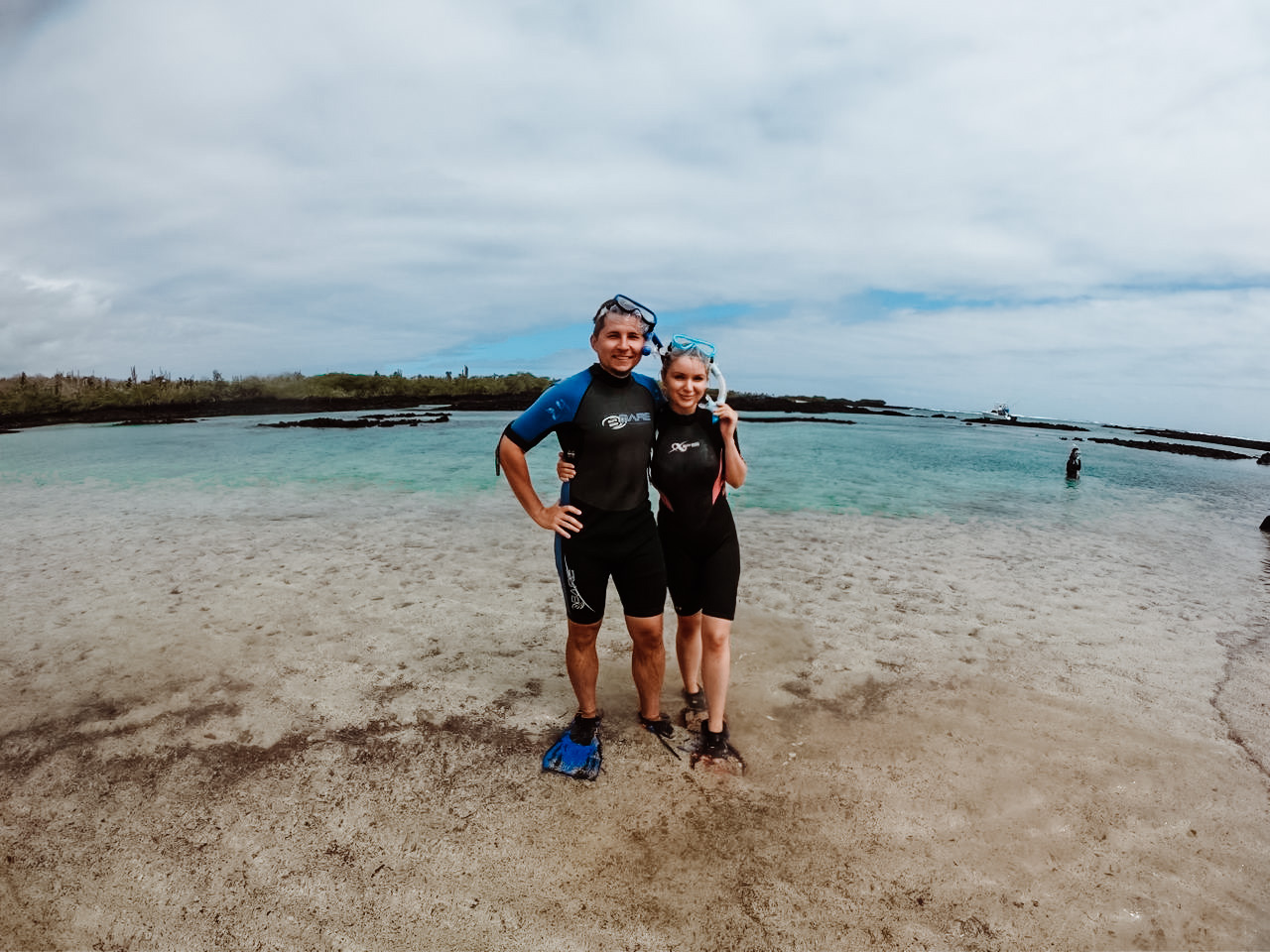
Galapagos scuba diving is a completely separate product from the naturalist cruise system. Standard naturalist cruises, whether 4-day or 15-day, include surface snorkeling only. There is no scuba diving on a naturalist cruise. If you want to dive, you book a dedicated liveaboard dive vessel that operates exclusively for scuba divers, or you stay on one of the inhabited islands and join day trips with local dive operators. These are different vessels, different operators, different booking channels, and different experiences. Getting this distinction clear before planning saves significant confusion.
The reason for the separation is structural. The Galapagos National Park regulates access to dive sites differently from terrestrial visitor sites. Dive liveaboards operate under a separate permitting system and are licensed specifically to access diving zones, including Darwin and Wolf in the far north of the archipelago. Naturalist cruise vessels are not licensed for scuba operations and are not equipped with dive compressors, tanks, or BCDs. A diver who books a naturalist cruise expecting to scuba dive will be disappointed. This is one of the most common planning errors we see in Galapagos trip preparation.
The two diving formats serve different travelers. The liveaboard format is for serious experienced divers whose primary purpose is maximum diving, maximum pelagic encounters, and access to Darwin and Wolf. It delivers 18 to 22 dives across a week, the boat moves between sites overnight, and land access is minimal. The day-diving format is for recreational divers who want to blend diving with island exploration, wildlife walks, and a more flexible schedule. Day diving from Santa Cruz or San Cristobal produces excellent encounters at central sites, with the freedom to combine diving mornings with naturalist tours or highland walks in the afternoon.
For travelers who want to do both diving and the full naturalist wildlife experience, the most practical combination is to book a naturalist cruise first, then extend your trip in Santa Cruz for two or three days of day diving before or after. This combination lets you do the land wildlife circuit properly on the cruise and add quality diving without committing to a full liveaboard. A full diving liveaboard plus a separate naturalist cruise in the same trip is logistically possible but requires 14 or more days and significant budget. If you want help working out the right combination for your situation, fill out this short form and we’ll give you a direct recommendation.
Two weeks in the Galapagos is the closest you’ll get to seeing everything the archipelago has to offer in a single trip. Here’s a full guide to the 14-day Galapagos cruise so you know exactly what back-to-back itineraries look like and who they’re built for.
Darwin and Wolf: The Only Sites Worth Diving in the Far North
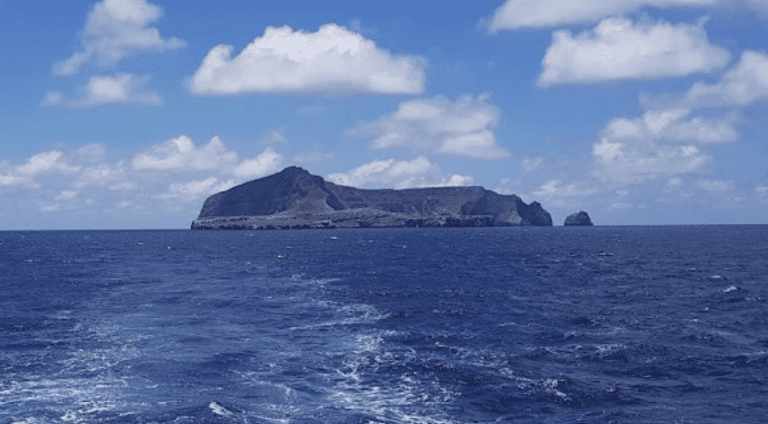
Darwin and Wolf Islands sit roughly 160 kilometers north of the main Galapagos archipelago in the far north of the Marine Reserve. They are accessible only by liveaboard dive vessel. No day trips operate here, no naturalist cruises call here, and no land visits are permitted. What they deliver underwater has no equivalent on Earth: scalloped hammerhead sharks in schools of hundreds, whale sharks from June through November (the largest fish in the ocean, reaching 12 meters in length), silky sharks patrolling in organized formations, Galapagos sharks, manta rays, spotted eagle rays, dolphin encounters mid-dive, and the occasional orca. Darwin and Wolf are consistently listed among the top five dive destinations in the world by experienced divers and dive professionals who have logged sites globally.
Darwin Island is the more northern of the two, famous for the dramatic underwater pinnacles where Darwin’s Arch collapsed in 2021. The physical arch no longer exists above the surface, but the dive site below, now known as Darwin’s Pillars, remains unchanged: two submerged columns surrounded by the current and fish life that made the site legendary. The dive technique here is to find a sheltered position behind the structure and let the current bring the animals to you. Hammerheads appear in disciplined formations, circling at depth before ascending toward the thermocline. In peak whale shark season (June through November), a shadow appears in the blue at the edge of visibility, then resolves into something the size of a school bus moving without apparent effort through the current. Silky sharks and Galapagos sharks patrol the outer edges. Manta rays cross mid-water. Schools of jacks and tuna flash past in tight formations. A single dive here can produce more megafauna encounters than most divers see across an entire year of diving elsewhere.
Wolf Island is slightly to the south of Darwin and has a different character: less vertical, more kinetic, with the reef life layered from the wall out into the blue. Galapagos sharks hold their ground along the structural edges; hammerheads sweep through in schools through the water column; eagle rays glide at mid-depth in pairs and quartets. The boulder topography creates sheltered pockets where moray eels, reef fish, and turtles gather between the larger pelagic action. Moray eels in crevices, turtles drifting past unhurried, and then without notice: another surge of hammerheads sweeping through, the whole scene in motion again. Divers who spend three or four days between Darwin and Wolf consistently describe the diving as evolving rather than repetitive, with each dive at the same site producing genuinely different configurations of animals and encounters.
One detail worth noting: a typical 7-night liveaboard itinerary spends two or three days at Darwin and Wolf combined, typically delivering 10 to 12 of the trip’s 18 to 22 total dives at these two sites. The remaining dives are distributed across central sites like Gordon Rocks, Punta Carrion, and occasionally Fernandina and northern Isabela on the return transit. The Darwin and Wolf portion of a liveaboard trip is the reason most experienced divers book it. The central sites are a welcome addition but not the primary draw.
What You’ll See at Darwin and Wolf
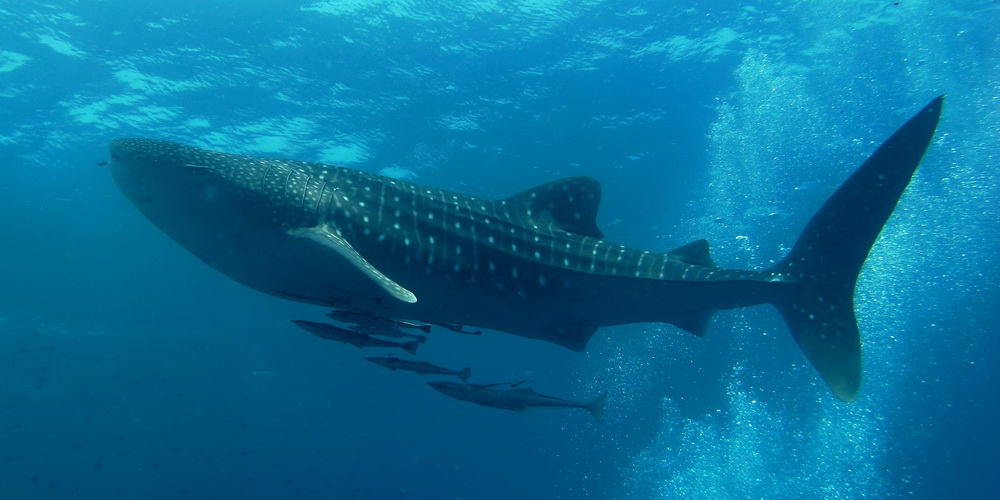
The headline species at Darwin and Wolf are scalloped hammerhead sharks, whale sharks (seasonal), and Galapagos sharks. Beyond these, every dive at these sites includes encounters with multiple species from the following: silky sharks, spotted eagle rays, golden cowl rays, mobula rays, Galapagos sea lions, sea turtles, schools of jacks and tuna in the thousands, rainbow runners, bottlenose dolphins, and occasional sightings of whale sharks, tiger sharks, and orcas. The marine biomass at these sites is driven by the nutrient upwelling from cold currents converging at the Darwin-Wolf volcanic ridge, which creates one of the most productive marine ecosystems in the Pacific.
Scalloped hammerheads are the animal most divers specifically come to Darwin and Wolf to see, and the reality matches or exceeds the expectation. The peak hammerhead aggregations occur year-round but are most concentrated during the cool season (June through November) when the cold current upwelling is strongest. During peak cool season, schools of several hundred hammerheads have been documented circling the Darwin pinnacles in disciplined formations, rising toward the surface in the morning light before descending again as water temperature shifts through the thermocline. Liveaboard naturalist logs from October 2025 document hammerhead sightings on every dive across a five-day Darwin and Wolf stay, with peak school size at Darwin estimated at 200 to 300 animals on the strongest days.
Whale sharks are the other defining Darwin and Wolf encounter, available from June through November with peak concentration in September and October. These animals, the largest fish in the ocean, use the nutrient-rich waters around Darwin as a feeding and possibly breeding aggregation point. The Galapagos Whale Shark Project has documented that most whale sharks encountered at Darwin are large females, many believed to be pregnant. A whale shark encounter during a Darwin dive is not guaranteed even in peak season, but it is consistently reported across multiple liveaboard itineraries during the June through November window. When it happens, divers describe it as genuinely humbling: an animal that makes every other animal in the dive look small, moving through the same water column without acknowledging the divers at all.
Orca sightings at Darwin and Wolf are rare but have been recorded, including at least one documented incident of an orca actively hunting a hammerhead shark during a liveaboard dive in September 2025. Dolphins are more reliably present throughout the year, frequently approaching the liveaboard vessel between dives and occasionally passing through dive sites mid-water. These are additional encounters rather than headline species, but they contribute to the overall density of megafauna activity that defines Darwin and Wolf as different from every other diving destination.
Trying to decide between routes based on what you most want to see out there? Here’s which Galapagos cruise route has the best wildlife broken down by the encounters most travelers come back talking about.
Day Diving From the Inhabited Islands: The Land-Based Option
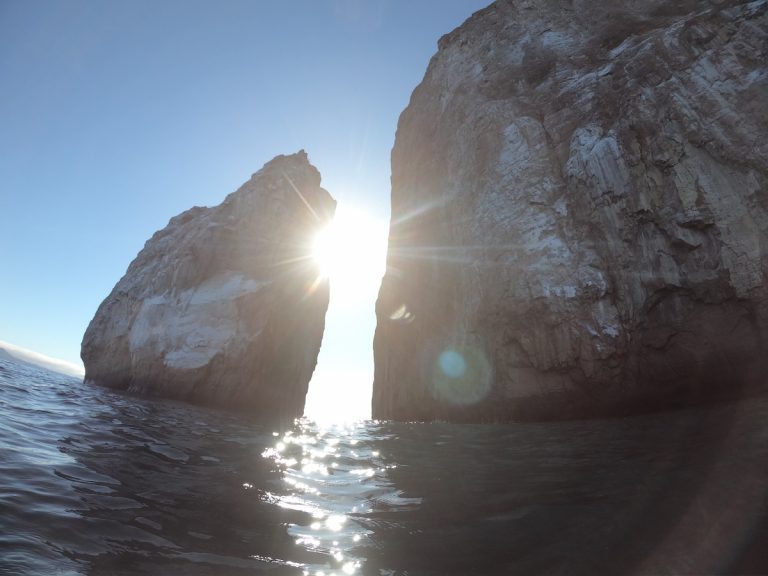
Day diving from Santa Cruz, San Cristobal, and Isabela provides access to approximately 17 established dive sites in the central and eastern archipelago. The best of these, Gordon Rocks off Santa Cruz and Kicker Rock off San Cristobal, reach near-liveaboard quality for experienced recreational divers. They don’t produce the Darwin and Wolf hammerhead school encounters, but they deliver hammerheads in groups of 50 or more, Galapagos sharks, sea lions, marine iguanas underwater, sea turtles, eagle rays, and the full central-archipelago wildlife profile. Day diving is the right format for recreational divers who want quality diving without the intensity or cost commitment of a liveaboard.
Gordon Rocks off Santa Cruz is the most famous day dive site in the central archipelago. Two volcanic rock outcrops form a partially submerged caldera where strong current converges from multiple directions, creating the conditions that concentrate marine life. Hammerheads have been documented here in groups of 50 or more during cool season morning dives, typically at 20 to 30 meters depth where the current funnels them along the rock wall. Galapagos sharks patrol the open water at the outer edge. Sea lions zoom through the dive at close range. Turtles rest in the shallower sections. Gordon Rocks requires at least 25 logged dives within the last 18 months (specific operator requirement, not a National Park rule) and comfort with strong, multidirectional current. It’s not a beginner site. For experienced recreational divers it’s one of the best day dives available anywhere without a liveaboard commitment.
Kicker Rock off San Cristobal is structurally different: two volcanic tuff columns with a narrow channel between them that creates a current corridor. Hammerheads are the headline species in the cool season (July through October), but Galapagos sharks, white-tip reef sharks, and eagle rays are reliable year-round. The channel snorkel experience (on naturalist cruises) and the scuba dive (from San Cristobal day operators) are at the same site but produce different encounters: divers reach 20 to 30 meters where the hammerheads are more concentrated and the larger sharks are more reliably present. Intermediate dive experience is appropriate; strong current experience is recommended.
| Site | Base Island | Headline Species | Level |
|---|---|---|---|
| Gordon Rocks | Santa Cruz | Hammerheads, Galapagos sharks, sea lions, eagle rays | Intermediate to advanced; 25 recent dives required |
| Kicker Rock | San Cristobal | Hammerheads (Jul to Oct), Galapagos sharks, white-tip reef sharks, eagle rays | Intermediate; current experience needed |
| North Seymour | Santa Cruz | White-tip reef sharks, sea lions, eagle rays, schooling fish | Open Water suitable |
| Daphne Island | Santa Cruz | Hammerheads, Galapagos sharks, turtles, reef fish | Intermediate; current exposure |
| Los Tuneles | Isabela | Seahorses, reef fish, white-tip sharks, turtles, penguins | Open Water suitable; calm conditions |
| Punta Vicente Roca | Isabela (liveaboard or extended day trip) | Mola mola (Jun to Nov), penguins, marine iguanas, seahorses | Advanced; cold water 18 to 20°C year-round |
If you’re planning land-based diving in the Galapagos and want guidance on which base island and which operators best match your experience level and target species, send us a message here and we’ll point you in the right direction.
The answer depends on cruise length, operator, and route in ways that aren’t always obvious from the brochure. Here’s a guide on which Galapagos itinerary visits the most islands so you compare options on equal footing.
Which Liveaboard Route Has the Best Diving?
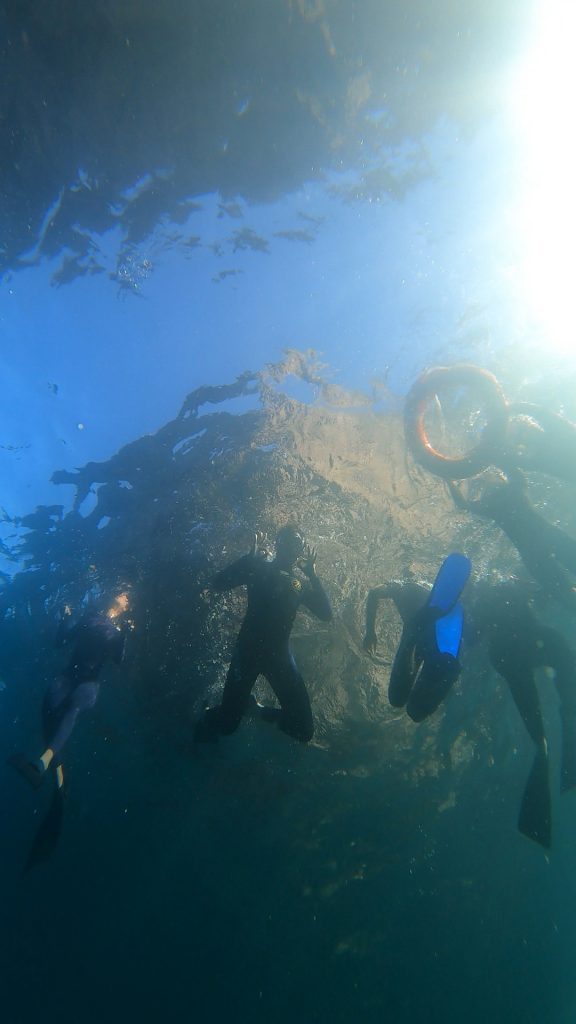
The standard Galapagos liveaboard route includes Darwin and Wolf for two to four days (representing 10 to 16 of the total dives), plus central sites on transit days, with some operators including Fernandina and northern Isabela on extended 10-night itineraries. There are no meaningfully different “route options” in the way naturalist cruises have eastern and western alternatives: the liveaboard’s primary destination is always Darwin and Wolf because that’s why divers book it. The variation between liveaboard operators is in how many days they spend at Darwin and Wolf, which central sites they add on transit days, and whether the 10-night extended itinerary adds Fernandina dives to the itinerary.
The 7-night (8-day) liveaboard is the most common format, typically structured as one transit day from Baltra to the Darwin and Wolf area, two to three days diving Darwin and Wolf, and a return transit with one or two days of central site diving. Total dives: 18 to 22. This is the standard format across the most-booked Galapagos liveaboards including the Humboldt Explorer, Tiburon Explorer, Galaxy Diver II, Galapagos Sky, and Galapagos Aggressor III.
The 10-night extended itinerary adds three more dive days, typically distributed between additional Darwin and Wolf time and one or two days at Fernandina and northern Isabela sites on the return south. Fernandina adds the marine iguana dive (one of the more surreal diving experiences in the archipelago: watching marine iguanas graze on algae on the lava slope at 5 to 8 meters depth while sea lions and Galapagos penguins hunt around you) and Cabo Douglas, where manta ray encounters are common. For divers who have already done a standard 7-night liveaboard and want more depth, the 10-night format makes sense. For first-time Galapagos divers, the 7-night format is sufficient and the correct choice.
One important practical note: the overnight transit to Darwin from the central archipelago takes 12 to 18 hours in open water. This is the roughest sailing segment of any Galapagos liveaboard trip, done in open Pacific Ocean conditions rather than the sheltered island waters of the central archipelago. Anyone with significant motion sensitivity should be prepared for this passage with appropriate medication regardless of the vessel’s stabilization.
We’ve got a full breakdown on the Galapagos central islands itinerary if you want to know exactly which islands are included, what you’ll see on each one, and how to get the most out of this route.
What’s the Best Time of Year for Galapagos Diving?
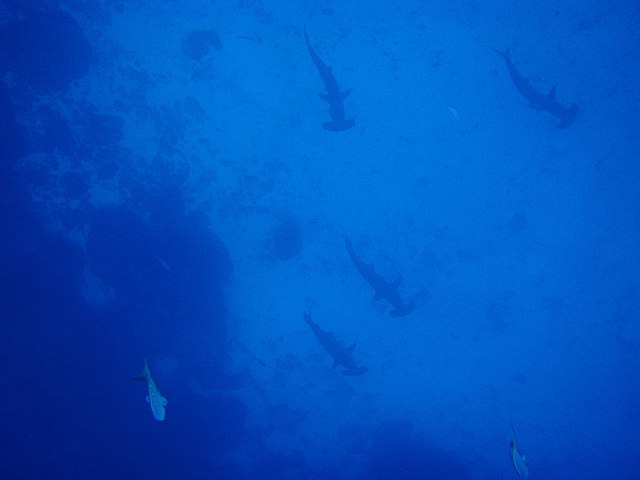
The two seasons produce the clearest version of the Galapagos diving tradeoff anywhere in the world. The cool season (June through November) brings colder water (16 to 24°C), stronger currents, lower visibility (10 to 20 meters), and peak whale shark presence at Darwin and Wolf from June through November, with strongest concentrations in September and October. The warm season (December through May) brings warmer water (23 to 29°C), calmer conditions, better visibility (20 to 30 meters), and still-excellent hammerhead encounters but no whale sharks. June through November is whale shark season and the most sought-after window for liveaboard bookings. December through May suits divers who want warmer water and more comfortable conditions with slightly reduced pelagic density.
The whale shark timing is the primary seasonal driver for Darwin and Wolf liveaboard planning. These animals arrive at Darwin between June and November, with September and October representing peak concentration based on Galapagos Whale Shark Project documentation. Outside that window, whale shark sightings at Darwin and Wolf are essentially zero. If a whale shark encounter is on your list, you dive in the cool season and you bring appropriate thermal protection.
The hammerhead season is more nuanced. Schools of hundreds of hammerheads at Darwin peak in the cool season when the cold current upwelling concentrates their prey. But hammerheads are present year-round at both Darwin and Wolf and at central sites like Gordon Rocks and Kicker Rock. Warm season hammerhead encounters at Darwin tend to involve smaller groups, sometimes single animals or groups of five to twenty rather than the massed formations visible in the cool season. For a first-time liveaboard diver who specifically wants the iconic wall-of-hammerheads experience, the cool season is the correct booking window.
| Season | Water Temp | Visibility | Headline Dive Experience | What’s Missing |
|---|---|---|---|---|
| Cool (Jun to Nov) | 16 to 24°C | 10 to 20m | Whale sharks (Jun to Nov); peak hammerhead schools; highest marine biomass | Colder water; stronger currents; lower visibility; rough transit to Darwin |
| Warm (Dec to May) | 23 to 29°C | 20 to 30m | Warm, clear water; calmer conditions; large manta ray concentrations (Dec to May at Cabo Marshall); comfortable diving for all experience levels | No whale sharks; smaller hammerhead groups; less pelagic density overall |
| Sep to Oct (peak) | 18 to 22°C | 10 to 18m | Peak whale shark season; largest hammerhead aggregations of the year; orca sightings most probable | Coldest water; books earliest; highest prices; roughest transit conditions |
Temperature and visibility ranges verified July 10, 2026. Individual dive day conditions vary with current strength, plankton, and local weather patterns.
What Divers Say About Galapagos Liveaboard Trips: Our Feedback Data
| Factor | Finding | Implication |
|---|---|---|
| Ranked Darwin and Wolf among top five dive experiences of their life | 89% | Consistent with global dive community consensus; these sites genuinely deliver on their reputation |
| Found the currents more challenging than expected | 63% | Dive experience requirements are genuine; arriving with 50+ dives in open water is the minimum, not a suggestion |
| Wished they had booked the 10-night instead of 7-night itinerary | 41% | Extended itinerary adds meaningful value for divers who already have Darwin and Wolf experience |
| Said the transit to Darwin was rougher than expected | 58% | Open Pacific crossing deserves preparation; sea sickness medication is not optional for sensitive travelers |
| Saw whale sharks (booking in peak whale shark season) | 76% | Peak season (Sep to Oct) produces high but not guaranteed whale shark encounter rate; nothing in wildlife is certain |
The 63% who found the currents more challenging than expected is the most important planning data point in this table. It corresponds directly to the advice most experienced Galapagos dive guides give: the minimum certification requirements (Advanced Open Water, 50 dives) are necessary but not sufficient for the most current-intense sites at Darwin and Wolf. A diver with 50 dives all completed in calm, warm, clear water in the tropics will struggle at Gordon Rocks and may not manage Darwin in the cool season. Prior current and drift dive experience is what the dive experience requirement is actually testing for. Be honest about your dive history before booking a Galapagos liveaboard.
What Should You Know Before Booking a Galapagos Dive Trip?
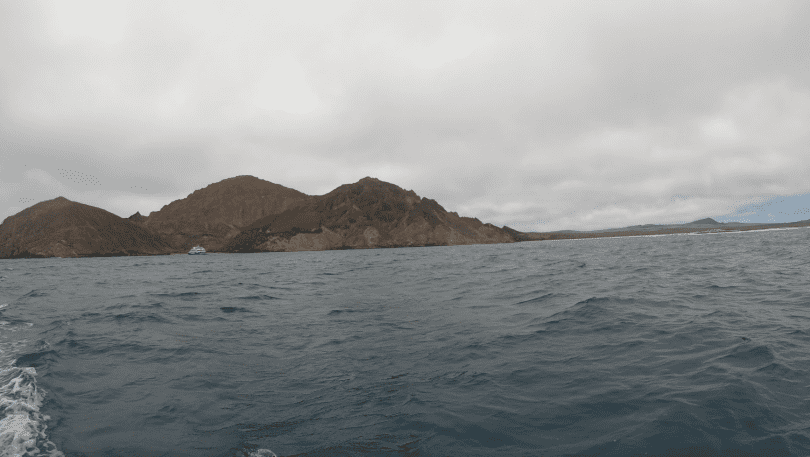
The most important things to confirm before booking a Galapagos dive trip are: your certification and logged dive count relative to the operator’s requirements, whether you have recent current and drift dive experience, which specific sites the itinerary includes and how many days at Darwin and Wolf, and the vessel’s experience rating and diver-to-guide ratio. Galapagos liveaboard diving books 9 to 12 months ahead for peak season (September through October). Budget travelers should know that day diving from Santa Cruz or San Cristobal produces genuinely excellent encounters at a fraction of liveaboard cost.
A few things that catch first-time Galapagos divers off guard:
No night diving is permitted in the Galapagos. The National Park prohibits night diving throughout the Marine Reserve. Every dive on a Galapagos liveaboard is a day dive, typically starting around 6am for the first dive and finishing the last dive in late afternoon. Operators run three to four dives per day. A 7-night itinerary typically delivers 18 to 22 dives total.
Nitrox availability varies by vessel. Some liveaboard operators offer enriched air (Nitrox) and require Nitrox certification for its use; others don’t carry it at all. For a diving trip with three to four dives per day in the cold currents of Darwin and Wolf, Nitrox can meaningfully reduce surface interval time and cumulative nitrogen loading. Confirm whether your vessel carries it before booking if this is a priority.
The $200 park fee applies to all visitors. Divers pay the same Galapagos National Park entrance fee as naturalist cruise passengers and day-trip snorkelers: $200 per adult foreign visitor and $100 per child under 12, paid in USD cash on arrival at Baltra or San Cristobal airport. The $20 Transit Control Card is pre-registered online before your domestic flight. Prices verified July 10, 2026. Many liveaboard operators include the park fee in their all-inclusive pricing; confirm in writing before assuming.
A 7mm wetsuit is worth serious consideration for cool season diving. Water temperatures at Darwin and Wolf in September and October drop to 16 to 18°C at depth, particularly during descent through thermoclines. A 3mm or 5mm wetsuit manages surface temperatures but becomes uncomfortable after 30 to 40 minutes at depth in cold water. Many divers on cool-season Galapagos liveaboards who brought 5mm suits report wishing they had 7mm. Most liveaboards provide 5mm rental suits as standard; confirm availability and sizing before departure.
Frequently Asked Questions
Can you scuba dive on a standard Galapagos naturalist cruise?
No. Standard naturalist cruises include surface snorkeling only. Scuba diving requires booking a dedicated dive liveaboard or joining day trips from the inhabited islands. These are separate products, separate vessels, and separate booking channels from naturalist cruises.
What certification do you need to dive at Darwin and Wolf?
Advanced Open Water certification is the minimum most operators require. Beyond certification, 50 to 100 logged dives with demonstrated experience in currents and drift conditions is strongly recommended. A diver with 50 warm-water tropical dives in calm conditions will struggle significantly at Darwin and Wolf in the cool season. Prior current diving experience is the practical requirement behind the certification threshold.
What is the best time to dive at Darwin and Wolf for whale sharks?
June through November, with peak concentration in September and October. Outside this window, whale shark sightings at Darwin and Wolf are essentially absent. Water temperatures during peak whale shark season drop to 16 to 22°C; a 7mm wetsuit is worth serious consideration for extended liveaboard diving in these months.
How many dives does a Galapagos liveaboard deliver?
A 7-night (8-day) itinerary typically delivers 18 to 22 dives, with three to four dives per full diving day. A 10-night extended itinerary can reach 26 to 32 dives. Night diving is prohibited throughout the Galapagos Marine Reserve. All dives are day dives, beginning around 6am for the first session.
Can beginners dive in the Galapagos?
Yes, at certain central sites accessible from the inhabited islands. Los Tuneles off Isabela, North Seymour off Santa Cruz, and some San Cristobal sites are manageable for Open Water certified divers with recent experience. Kicker Rock is intermediate. Gordon Rocks requires 25 recent dives. Darwin and Wolf are not appropriate for beginners regardless of certification. The Galapagos as a whole is not a destination where we recommend getting your Open Water certification: learn elsewhere, then come here.
How much does a Galapagos liveaboard dive trip cost in 2026?
Liveaboard all-inclusive packages range from $4,400 to $7,800+ per person for a 7-night itinerary, depending on operator and vessel class. Extended 10-night itineraries run $6,000 to $10,000+. Add $200 for the park fee (cash on arrival), $20 for the Transit Control Card (online pre-registration), and domestic flight costs ($250 to $600 return). Day diving from Santa Cruz or San Cristobal runs $120 to $200 per 2-tank day trip, with accommodation and meals separate. Prices verified July 10, 2026.
Galapagos diving is genuinely among the best in the world, and Darwin and Wolf specifically have a claim on best-in-world status for megafauna density that very few sites can challenge. The logistics are specific, the requirements are real, and the planning is different from anything in the naturalist cruise system. If you want help working out whether a liveaboard or land-based day diving format is right for your experience level, preferred species, and travel window, or if you want to combine diving with a naturalist cruise in the same trip, get in touch here and we’ll give you a straight recommendation.
Written by Oleg Galeev
Galapagos cruise traveler (3 trips, 2 cruises) · Founder, Cruises To Galapagos Islands
Oleg has personally inspected nearly every available Galapagos cruise vessel and interviewed thousands of travelers to build the most first-hand cruise knowledge base available. He also runs the Ecuador travel blog mytrip2ecuador.com and the YouTube channel My Trip to Somewhere.
Cruises To Galapagos Islands is rated 4.9 stars on Google and TripAdvisor.
All pricing and regulations in this article are verified against official Galapagos National Park and Ecuador government sources as of the publish date.