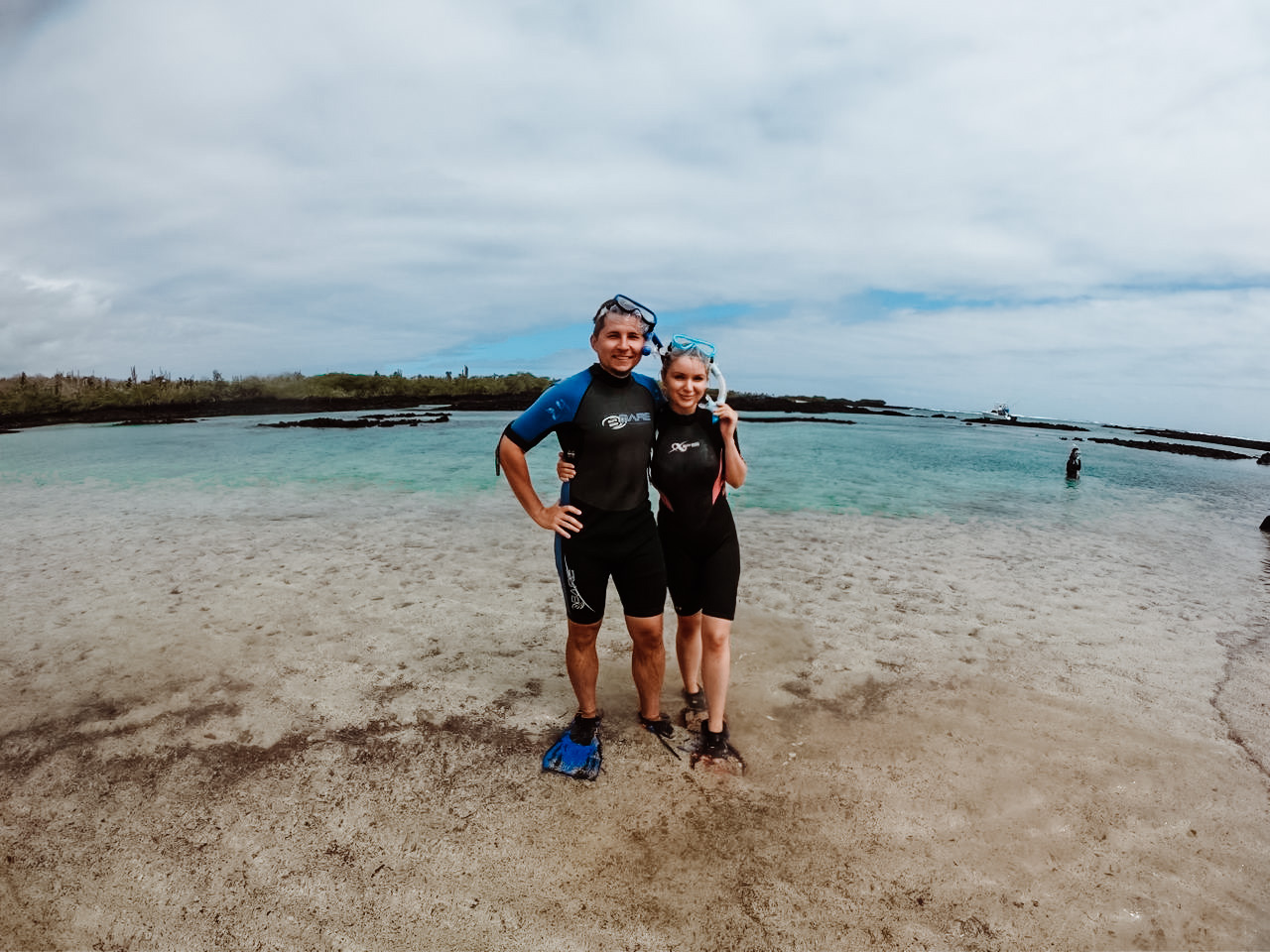
Galapagos Eastern Islands Itinerary: What You’ll See
Part of our guide to how long your Galapagos cruise should be. Ready to pick a ship? See Galapagos cruises by price, size and class.
Quick Facts: Galapagos Eastern Islands Itinerary
| Detail | What to Know |
|---|---|
| Core Islands | San Cristobal, Española, Floreana, Santa Cruz (plus Genovesa on some routes) |
| Typical Length | 5 to 8 days |
| Access | Cruise or land-based with day trips (San Cristobal has its own airport) |
| Terrain Type | White and green-sand beaches, rocky cliffs, highland lush vegetation, tuff cones |
| Water Temperature | 20-26°C warm season; 18-22°C cool season (warmer than western route) |
| Best Season | Apr-Dec for waved albatross; Dec-May for calmer seas and warmer water |
| Signature Wildlife | Waved albatross (Española only), red-footed boobies, blue-footed boobies, Española mockingbird, Christmas iguanas |
| Top Snorkeling | Kicker Rock (San Cristobal), Devil’s Crown (Floreana), Gardner Bay (Española), Champion Islet (Floreana) |
| Park Entrance Fee | $200 USD adults / $100 USD children under 12 (cash on arrival) – Prices verified July 10, 2026 |
| Transit Control Card (TCT) | $20 USD, pre-registered online before flying – Prices verified July 10, 2026 |
| Cruise Departure Point | San Cristobal Airport or Baltra, depending on the cruise |
What Makes the Eastern Galapagos Islands Different From the Rest of the Archipelago?
The eastern islands are the oldest in the Galapagos, formed millions of years ago when the Nazca plate was positioned over the volcanic hotspot now beneath the western islands. That age translates into richer soil, lusher vegetation, and more beach terrain than you’ll find anywhere else in the archipelago. It also means a higher rate of endemism on individual islands, species that evolved in isolation and exist nowhere else on Earth.
Española is estimated to be around 4.5 million years old, the most ancient island in the archipelago. San Cristobal is close behind. These are not young, raw, volcanic places. They’re settled, layered, and covered in life in a way Fernandina simply isn’t. The beaches at Gardner Bay on Española and Cerro Brujo on San Cristobal are among the finest stretches of white sand in the entire Pacific. You would not find anything like them on the western circuit.
The age also created the conditions for some of the most extreme endemism in the archipelago. Española has its own mockingbird found nowhere else. Its own lava lizard. Its own marine iguana subspecies, the one that turns red and turquoise during mating season and earned the nickname “Christmas iguana.” The island’s isolation drove evolution down its own specific path for millions of years, and you see it everywhere you look.
The other thing the eastern route has that no other Galapagos circuit can offer: the waved albatross. Every adult waved albatross on Earth returns to Española between April and December to breed. The global population of around 25,000 to 30,000 birds all converge on a single island. Watching their courtship dance, with beak fencing and synchronized bowing, the whole bizarre performance that can go on for days, is one of those wildlife moments that stays with people for years. I’ve seen a lot of extraordinary things on these islands, and the albatross colony at Punta Suarez is still one of the top three.
Which Islands Are Included in an Eastern Galapagos Itinerary?
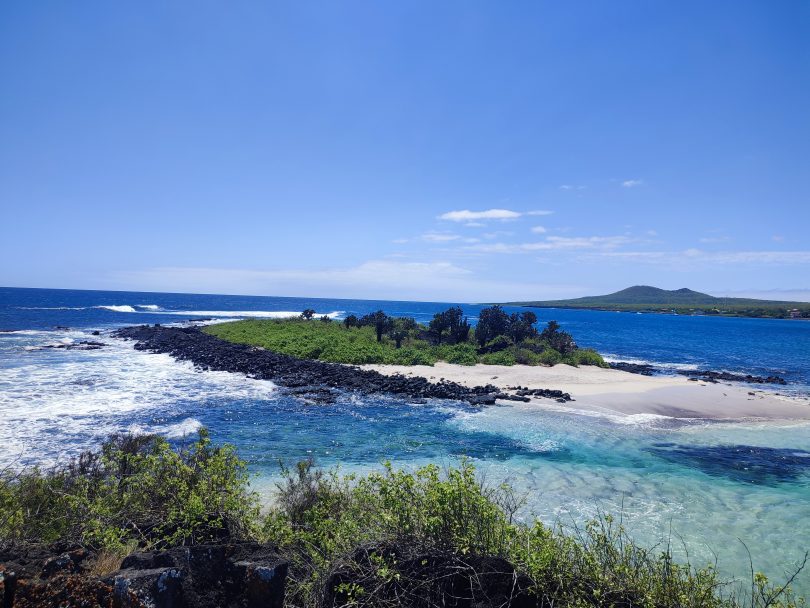
The core of the eastern route is San Cristobal, Española, and Floreana, almost always combined with at least a stop on Santa Cruz. Some 8-day eastern itineraries also include Genovesa in the far north, a birding island that most travelers rate as one of the strongest additions available. The specific mix varies by operator and cruise length. San Cristobal also functions as an embarkation point for many eastern sailings, given it has its own airport.
Here is what each island brings to the route:
| Island | Key Sites | What You’ll See | Landing Type |
|---|---|---|---|
| Española (Hood) | Punta Suarez, Gardner Bay | Waved albatross (Apr-Dec), blue-footed and Nazca boobies, Española mockingbird, Christmas iguanas, sea lions, blowhole | Dry landing (rocky), beach landing |
| San Cristobal | Kicker Rock, Cerro Brujo, Punta Pitt, El Junco Lagoon, La Loberia | Hammerhead sharks (snorkel/dive), all three booby species at Punta Pitt, giant tortoises, freshwater lake, large sea lion colonies | Day tour by boat to Kicker Rock; various landings on island |
| Floreana (Charles) | Devil’s Crown, Punta Cormorant, Post Office Bay, Champion Islet | Best reef snorkeling in the archipelago, flamingos, olivine-crystal green-sand beach, 200-year-old postal tradition, Floreana mockingbird | Wet landing; Devil’s Crown is water entry only (cruise only) |
| Santa Cruz | Charles Darwin Research Station, highlands, Tortuga Bay, Black Turtle Cove | Giant tortoises (wild in highlands), breeding program, lava tunnels, Darwin’s finches | Dry landing, town visit |
| Genovesa (optional) | Darwin Bay, Prince Philip’s Steps | Red-footed boobies, frigatebirds, short-eared owls, Nazca boobies, storm petrels | Wet and dry landings; long overnight crossing required |
One thing worth knowing before you book: Española is the island that separates a strong eastern itinerary from a mediocre one. Some shorter eastern sailings skip it entirely, concentrating on Santa Cruz, San Cristobal, and some central islands instead. If seeing the albatross or the Punta Suarez wildlife trail is important to you, check the day-by-day schedule and confirm Española is explicitly listed before paying a deposit.
If you’re not sure which itinerary has the right island combination for what you want to see, we can pull together the options and walk you through the tradeoffs. Fill out this short form and tell us what matters most, we’ll match you to the right route honestly.
We’ve got a full breakdown on which Galapagos itinerary visits the most islands if you want to know exactly how the longer and shorter routes compare and what each additional island actually adds to the experience.
What Wildlife Can You Actually Expect to See on the Eastern Route?
The eastern circuit is the strongest in the archipelago for birdlife, and it delivers the only place on Earth where you can see the waved albatross breeding. You’ll also find all three species of Galapagos boobies on San Cristobal’s Punta Pitt, which is unique to this island. Española’s Christmas iguanas with their red and green breeding coloration, the bold Española mockingbird, and large relaxed sea lion colonies on Gardner Bay round out what most travelers name as their eastern highlights.
The waved albatross deserves its own paragraph because nothing quite prepares you for it. These are the largest birds in the Galapagos, with wingspans of up to 2.5 meters. They mate for life, return to Española every year, and stage a courtship display that involves bowing, beak-clacking, stumbling, and vocalizations that sound like something between a foghorn and a hiccup. You can walk within a few meters of a performing pair. They genuinely do not register you as a threat. The contrast between how ungainly they are on land and how completely effortless they are the moment they launch themselves off the cliffs into the sea wind is one of those things that stays with you.
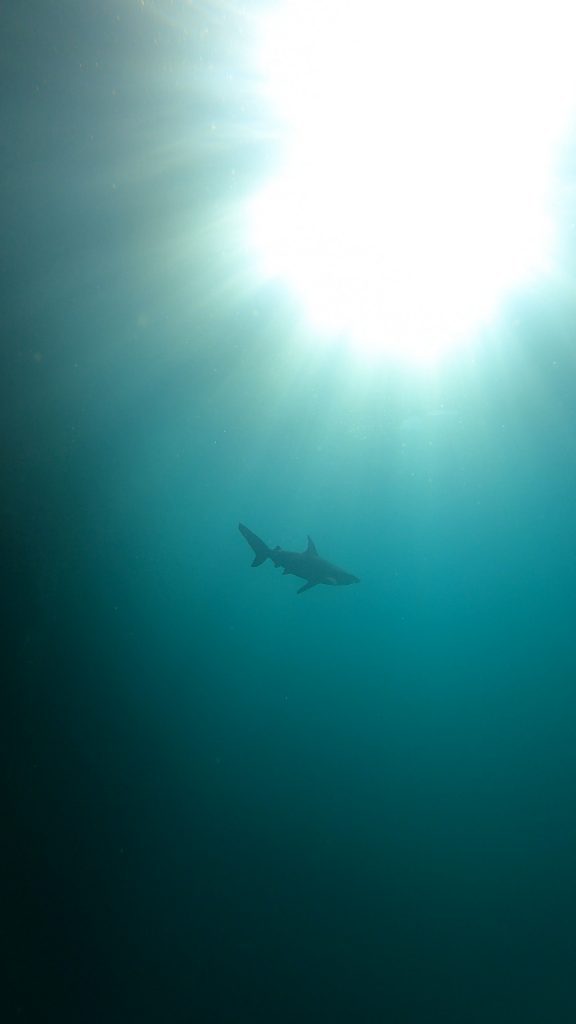
Kicker Rock off San Cristobal is the premier snorkeling landmark in the eastern archipelago. It’s a dramatic formation: an ancient tuff cone eroded into two sheer walls rising 150 meters from the ocean, with a narrow channel between them. The snorkeling channel is the main event, with sea turtles, Galapagos sharks, king angelfish, and a bait ball of Salema fish that can be overwhelming in its density. Hammerhead sharks appear seasonally, more reliably during the cool season (June through November) and particularly in the early morning. Divers get considerably better hammerhead sightings than snorkelers because the sharks tend to cruise at depth, but surface snorkelers do see them occasionally, especially from July through October.
Devil’s Crown off Floreana is consistently rated by travelers as one of the two or three best snorkeling experiences in the entire archipelago, neck and neck with Kicker Rock. It’s the eroded remains of a volcanic crater, a ring of jagged rocks just offshore, with a channel running through it. The current through that channel is real. It’s not a gentle float, you’re working. But the fish diversity inside is remarkable: king angelfish, parrotfish, surgeonfish in dense clouds, white-tipped reef sharks on the bottom, eagle rays. On stronger current days, hammerheads appear in the deeper water outside the crown. Devil’s Crown is cruise-only now, no day trips are permitted, so you have to be on a boat with Floreana in its schedule to access it.
| Species | Where to See It | Found on Other Routes? | Best Season |
|---|---|---|---|
| Waved albatross | Española only (Punta Suarez) | No. Española only, worldwide. | Apr-Dec; peaks May-Nov for active courtship |
| All three booby species together | Punta Pitt, San Cristobal | Only Punta Pitt has all three at once | Year-round |
| Christmas iguana (red-green coloring) | Española (Punta Suarez) | Subspecies endemic to Española | Jan–Mar for peak coloration; present year-round |
| Española mockingbird | Española (both sites) | Endemic to Española | Year-round; notoriously bold and curious |
| Scalloped hammerhead shark | Kicker Rock (San Cristobal), Devil’s Crown (Floreana) | Seen at Kicker Rock most reliably in the archipelago | Jun-Nov for peak sightings; early morning best |
| American flamingo | Punta Cormorant lagoon (Floreana) | Also seen in central islands | Year-round; nesting peaks Oct |
| Red-footed booby | Punta Pitt (San Cristobal), Genovesa | Northern route (Genovesa) also reliable | Year-round |
| Green sea turtle | Gardner Bay, Kicker Rock, Cerro Brujo | Throughout archipelago, very reliable on eastern route | Nesting Oct-Mar; seen year-round snorkeling |
The eastern route also has one social wildlife experience the western circuit simply can’t match: Gardner Bay. That beach on Española’s northeastern shore is one of the longest and most beautiful in the archipelago, and it belongs to the sea lions. They’re lounging on it, sleeping on it, playing in the shallows in front of it. The Española mockingbirds pick their way around the sea lion pups investigating bootlaces and camera bags. The snorkeling off the small islet just offshore turns up reef sharks, eagle rays, and sea turtles in calm, clear, warm water. It’s an afternoon that most people describe as the single most relaxed and joyful stretch of their entire Galapagos trip.
Not sure which Galapagos route gives you the best shot at the encounters that make the trip worth it? This breakdown on which Galapagos cruise route has the best wildlife covers the key species by island and what each route actually delivers.
How Long Should You Spend on an Eastern Galapagos Cruise?
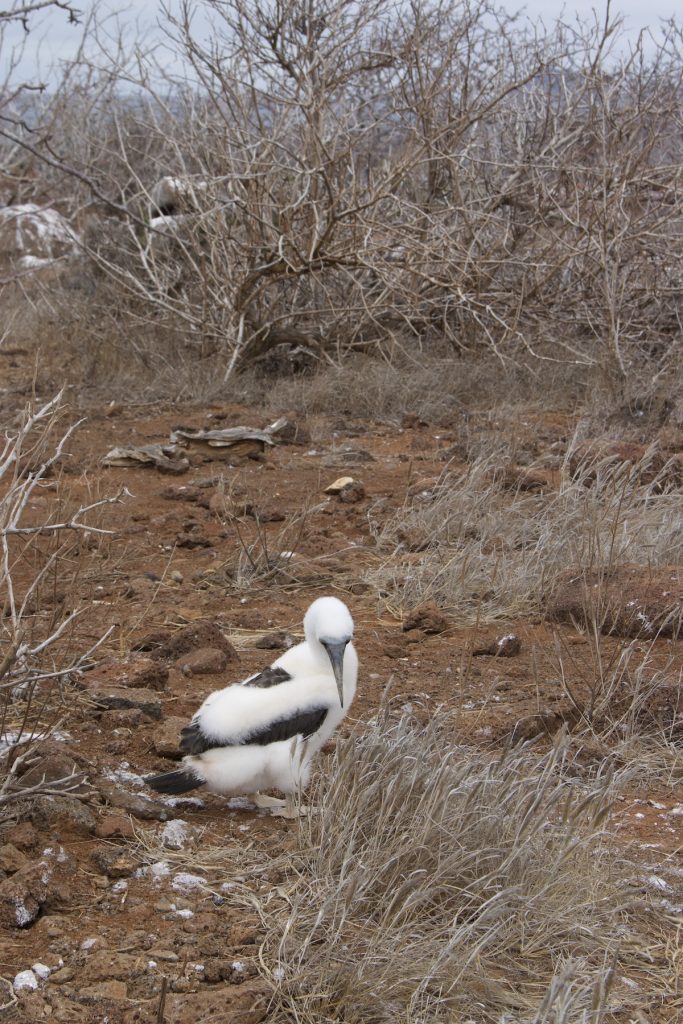
Five days gives you a solid eastern circuit hitting the core highlights: Española, Floreana, San Cristobal, and Santa Cruz. Eight days is where the route gets genuinely expansive, often adding Genovesa and giving you two full excursions per day rather than rushing through. For most travelers who specifically want the waved albatross and the snorkeling at Kicker Rock and Devil’s Crown, five days is the minimum threshold. Eight days is significantly better if the schedule allows.
The five-day eastern sailing is probably the most commonly booked Galapagos cruise overall, partly because San Cristobal Airport makes logistics clean. You fly in, board the boat, and fly out from the same island five days later without needing to cross to Baltra. That convenience has real value for travelers combining the Galapagos with time in Quito or Guayaquil.
The tradeoff is density. On a five-day itinerary, you get Española and Floreana but you’re moving through them at a pace that leaves some travelers wishing for more time. Punta Suarez on Española alone could absorb an entire morning and feel unhurried. On shorter sailings, you’re often back at the Zodiac while part of the group is still watching the albatross launch off the cliff edge. That’s not a dealbreaker, but it’s worth knowing.
Genovesa is what tips the eight-day eastern route into something special for birdwatchers specifically. The island is essentially a caldera flooded by the sea, with bird colonies so dense and so varied that the two visitor sites, Darwin Bay and Prince Philip’s Steps, collectively hold red-footed boobies, Nazca boobies, frigatebirds, short-eared owls, and storm petrels in numbers that are genuinely staggering. The one catch: it requires a long overnight sailing from the central islands, which means more open-water crossing time, and the northern waters can be rougher during the cool season.
Thinking about whether five or eight days makes more sense for your trip, and what that means for cost and timing? We’ve helped a lot of travelers work through exactly that calculation. Send us a message here and we’ll lay out the options for your dates.
A week in the Galapagos is enough to cover serious ground if the route is right. Here’s a guide to the 7-day Galapagos cruise so you understand which routes make the most of every day on the water.
What’s the Best Time of Year for the Eastern Islands?
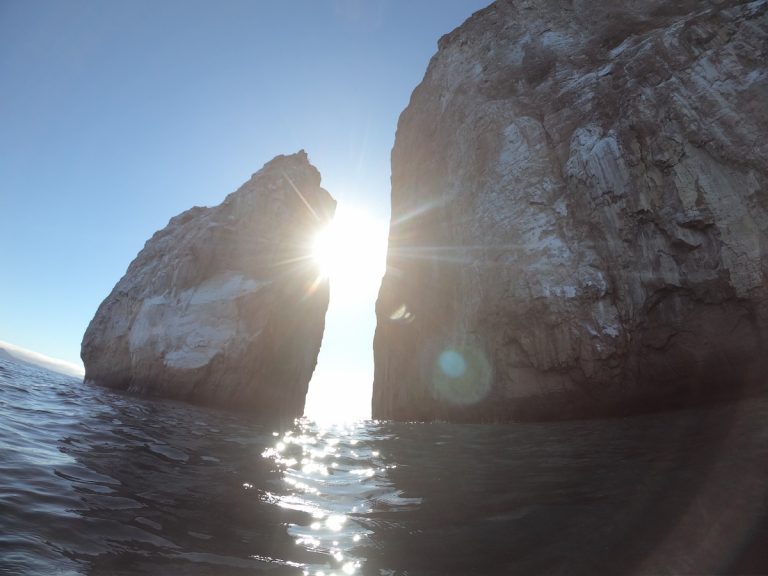
The eastern Galapagos works year-round, but the two seasons produce genuinely different trips. April through December is when the waved albatross is on Española, making those months essential for anyone with the albatross on their list. December through May brings the warmest, clearest water for snorkeling at Devil’s Crown and Gardner Bay. June through November delivers the coolest water, the richest marine life, and the best hammerhead sightings at Kicker Rock. Calmer seas year-round on the eastern circuit make it the best option for travelers who are sensitive to motion sickness.
The albatross window is the single biggest scheduling variable on this route. The birds return to Española in April and leave by January. If you’re going between January and March, you’ll miss the colony entirely. Some operators don’t emphasize this clearly enough, and travelers who specifically wanted the albatross arrive in February and find an empty nesting ground. If the albatross matters to you, book between April and December, full stop.
Kicker Rock is one of those snorkeling sites where timing genuinely changes what you see. The hammerhead schools are a cool-season phenomenon, strongest from July through October and particularly in the early morning. Travelers who snorkel Kicker Rock in February in warm, clear water often have beautiful sessions without seeing a single shark. Travelers who hit it on an October morning in choppier, colder water sometimes come back describing a hundred hammerheads moving through the channel. Neither experience is wrong, but they’re different enough that it’s worth knowing which season you’re booking into.
The calmer water during the warm season (December through May) makes Devil’s Crown at Floreana considerably easier for less experienced snorkelers. The current through the channel is always present, but in the warm season it’s more manageable. Cool season snorkeling at Devil’s Crown is more demanding and rewards stronger swimmers with richer fish density and occasional deeper-water shark sightings.
| Month | Sea Conditions | Water Temp (Eastern) | Wildlife Highlights |
|---|---|---|---|
| Dec-Feb | Calm, best visibility | 22-26°C | Albatross departs Jan; sea turtles nesting; warm snorkeling at Devil’s Crown and Gardner Bay |
| Mar-May | Calm, intermittent rain | 22-26°C | Albatross returns Apr; blue-footed booby courtship; clearest water all year |
| Jun-Aug | Slightly rougher, windier | 19-22°C | Albatross active; hammerheads building at Kicker Rock; sea lion pups active |
| Sept-Nov | Coolest, rougher early; calming Oct-Nov | 18-21°C | Peak hammerhead sightings at Kicker Rock; albatross chicks; frigatebird courtship; October best for diving |
Water temperatures verified July 10, 2026 against Galapagos National Park Directorate and operator field data.
How Does the Eastern Route Compare to the Western and Central Itineraries?
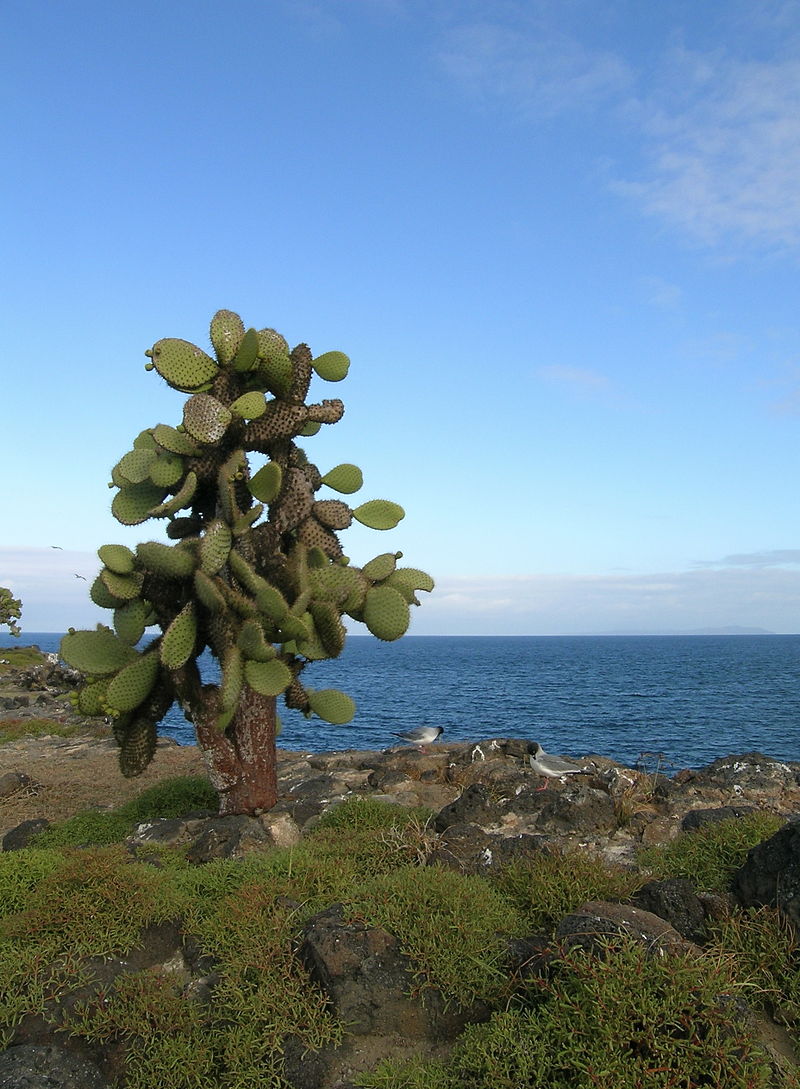
The eastern route gives you the finest beaches, the best dedicated snorkeling sites, the waved albatross, and the calmest sailing conditions of any Galapagos circuit. The western route counters with the flightless cormorant, the largest marine iguanas, volcanic raw terrain, and a colder, denser underwater environment. The central route is the most accessible option and works well for shorter trips and land-based combinations. Most repeat visitors end up doing at least two different routes across separate trips.
The comparison we field most often from travelers is eastern versus western, and it’s genuinely a different experience rather than one being better. If you’re a birdwatcher or the waved albatross is a specific goal, eastern. If you’re most excited by raw volcanic landscapes and unique endemic species like the flightless cormorant, western. If you want the best combination snorkeling and beach experience in the archipelago, eastern. If you prefer colder, denser, more intense underwater encounters with bigger marine animals, western still edges it out.
The eastern route also has the unique advantage of accessibility. San Cristobal’s airport means you can fly directly into the eastern islands, making it the starting point for many cruises and the easiest base for land-based day trip arrangements. This is why the eastern circuit tends to see a slightly higher volume of visitors than the western, particularly on shorter itineraries. The Galapagos National Park manages visitor numbers at each site carefully, so it never feels crowded, but it’s worth knowing you’re on the more accessible side of the archipelago.
The central route, by contrast, concentrates on Santa Cruz, Bartolome, Santa Fe, and Rabida. It’s the best option for first-timers with limited time because the islands are clustered, the sailing distances are short, and the wildlife experience is excellent without the long crossings the eastern and western circuits sometimes require. But the central route doesn’t include Española, and that’s the most consequential omission for most travelers.
| Route | Signature Wildlife | Sea Conditions | Best For |
|---|---|---|---|
| Eastern | Waved albatross, all three booby species, Christmas iguana, hammerheads at Kicker Rock | Calm to moderate year-round | Birding, beach experience, snorkeling variety, first-timers, motion-sensitive travelers |
| Western | Flightless cormorant, large marine iguanas, Mola mola, penguins year-round | Moderate to rough (esp. Jun-Sept) | Volcanic landscapes, exclusive endemic species, cold-water marine density |
| Central | Giant tortoises, sea lions, blue-footed boobies, Pinnacle Rock (Bartolome) | Calmest | Shorter trips, land-based combinations, first-timers without sea legs |
| Northern (Genovesa) | Red-footed boobies, frigatebirds, short-eared owls, massive seabird colonies | Long crossing, can be rough | Dedicated birders; best added to an 8-day eastern itinerary |
One itinerary combination we recommend regularly: an 8-day eastern route that includes Española, Genovesa, Floreana, and San Cristobal, with Santa Cruz as the embarkation hub. This hits the albatross, the Genovesa seabird colonies, Devil’s Crown, and Kicker Rock in a single cruise. Travelers who do this sailing consistently rate it as one of the most well-rounded Galapagos experiences available. If you want to see whether that kind of itinerary is available for your dates, reach out here and we’ll put together the specifics.
The southern islands pack some of the most iconic Galapagos experiences into a single route. Here’s a full guide to the Galapagos southern islands itinerary so you know which stops are worth the most of your time.
What Should You Know Before Booking an Eastern Galapagos Cruise?
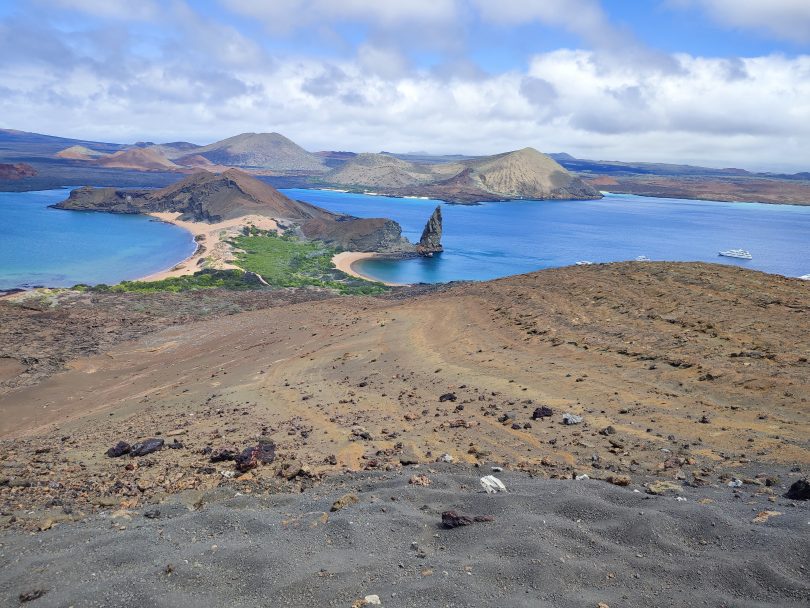
The most important thing to confirm before booking an eastern itinerary is whether Española is actually on it. Not every cruise marketed as “eastern” visits the island, and the albatross and Punta Suarez are the experiences most travelers came for. Beyond that: book early for peak albatross season (April through December), confirm Devil’s Crown is in the Floreana stop rather than just Post Office Bay, and know that Kicker Rock hammerhead sightings are not guaranteed even in peak season, though they’re significantly more likely during early morning cool-season sessions.
Here is what catches eastern-route travelers off guard most consistently, drawn from patterns across thousands of traveler conversations:
The albatross window is strict. January, February, and March mean no albatross on Española. The birds leave by January and don’t return until April. Several booking platforms and even some operators list “Española Island” on itineraries year-round without flagging that the main attraction is absent for three months. If the albatross is the draw, check the months against the breeding calendar before confirming any booking.
Devil’s Crown is cruise-only. Day trips from Puerto Baquerizo Moreno or Puerto Ayora cannot access Devil’s Crown anymore. The Galapagos National Park removed day-tour access at this site. If you’re planning a land-based trip and adding day excursions, Devil’s Crown will not be available to you. You have to be on a multi-day cruise with Floreana in the schedule.
Hammerheads at Kicker Rock are a probability, not a guarantee. We’ve seen travelers come away disappointed because they expected a guaranteed hammerhead spectacle at Kicker Rock and had a perfectly good snorkel session without seeing a single one. The sharks move. Some days they don’t appear at all. Most days during the cool season they do, and some sessions are truly extraordinary. Going in with realistic expectations makes a no-shark day at Kicker Rock still feel like a great experience rather than a letdown.
The Española mockingbird will investigate your belongings. This is not a warning, it’s preparation. The Española mockingbird is bold in a way most birds aren’t. It evolved without land predators and has essentially no fear response to humans. It will check your shoes, investigate your camera strap, and possibly try to drink from your water bottle. It’s wonderful. Just keep your lenses covered.
Cash for entry fees is still mandatory. The $200 park fee is cash-only at the airport, whether you land at San Cristobal or Baltra. There are no ATMs at either Galapagos airport. Bring the full amount in USD bills from the mainland, plus the $20 TCT pre-registered online before your domestic flight. A family of four with all adults over 12 needs $800 in cash before exiting the arrivals terminal.
The Galapagos is one of the few destinations that genuinely works for families with kids of almost any age but the itinerary you pick still matters. Here’s a full guide to the best Galapagos itinerary for families so you book a cruise the whole group gets something out of.
What Travelers Actually Say After the Eastern Route: Our Feedback Data
Based on feedback collected through mytrip2ecuador.com and our YouTube audience, along with interviews with thousands of Galapagos cruise travelers over the years, here is how eastern itinerary travelers rate their experience across key factors.
| Waved albatross experience | 96% | “The courtship dance was the single most memorable wildlife moment of my life.” |
| Snorkeling quality (Kicker Rock + Devil’s Crown) | 89% | “Devil’s Crown had the most colorful reef fish I’ve ever seen. The current was strong but worth every second.” |
| Beach experience (Gardner Bay) | 93% | “Gardner Bay was the most relaxed and joyful afternoon of the entire trip. Sea lions everywhere.” |
| Sea conditions comfort | 87% | “Much calmer than I expected. Even travelers in our group who were nervous about seasickness were fine.” |
| Would choose eastern again over western | 76% | “I did the western route after. Both incredible. But the eastern felt more varied, more accessible, and the albatross made it.” |
| Overall met or exceeded expectations | 92% | “Nothing could have prepared me for what it actually is like. Not a single thing.” |
The number that stands out most from eastern travelers is the sea conditions comfort rating. At 87%, it’s considerably higher than the equivalent figure from western itinerary travelers. That gap reflects a real difference in ocean exposure. The eastern circuit was the right call for a lot of people who weren’t sure they could handle the rougher western crossings.
Where the Eastern Itinerary Catches People Off Guard
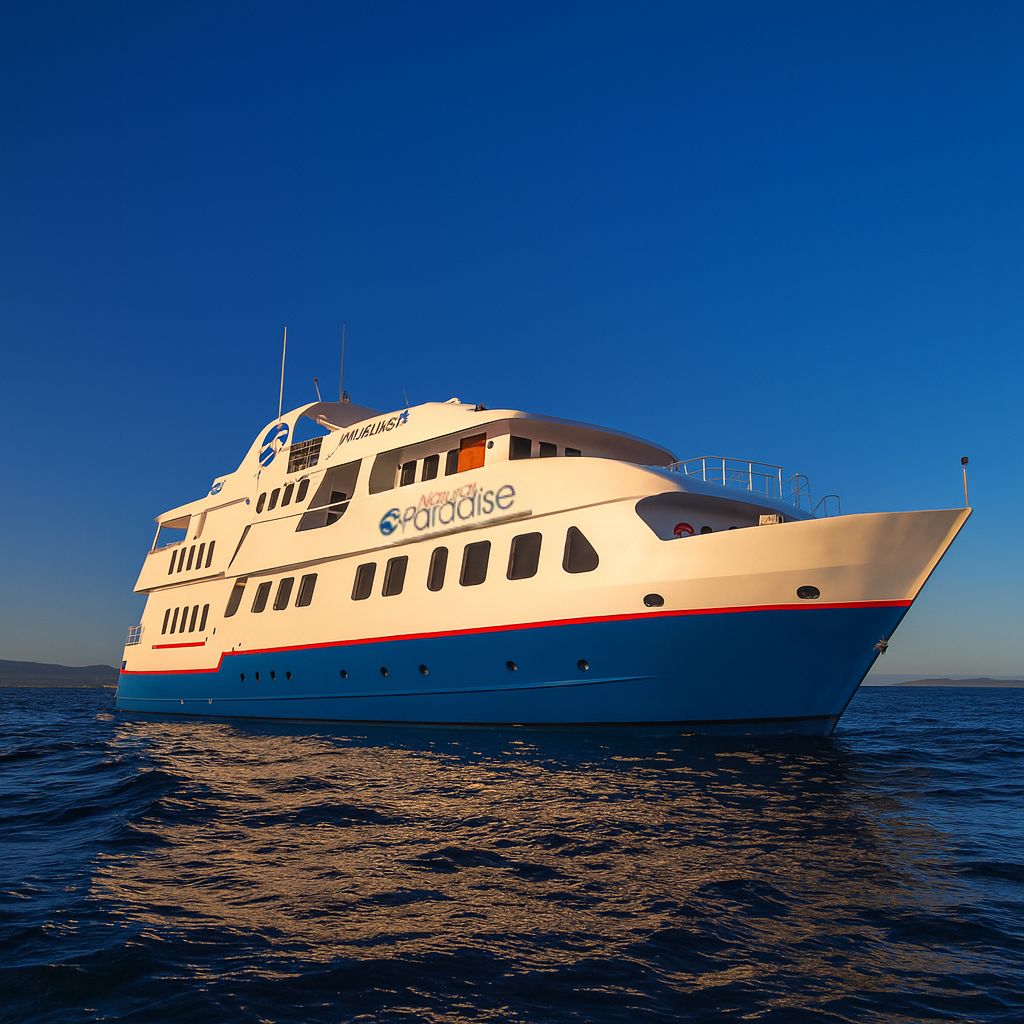
Every route has its fail points. These are the specific ones that show up repeatedly across eastern travelers and that we try to address before anyone books.
Booking a cruise that skips Española entirely. Some operators label a sailing as an “eastern itinerary” while actually spending the bulk of time on central islands like Santa Cruz, Bartolome, and Rabida with a single stop at San Cristobal. That’s a perfectly good cruise, but it’s not what most people imagine when they book the eastern route. Read the detailed daily schedule, not just the headline island list. Confirm Punta Suarez and Gardner Bay are both included.
Going in January through March expecting to see the albatross. This comes up regularly enough that we flag it in every pre-booking conversation. The colony is completely gone from Española those three months. No birds, no courtship, no fledgling launches. Travelers who chose their dates without knowing this often feel the gap keenly when they’re standing at Punta Suarez and there’s nothing there but blue-footed boobies. Great birds. Not what they came for.
Treating Kicker Rock snorkeling like a Caribbean reef. It’s not. The current through the channel between the two rock walls is real and can feel strong for less experienced swimmers. The water temperature in the cool season will be noticeably cold without a wetsuit. And the shark sightings, when they happen, can feel intense rather than leisurely. People who snorkel Kicker Rock expecting the visual clarity and calm conditions of a tropical resort reef sometimes find it harder and more demanding than expected. That doesn’t mean it’s bad, it means it’s a different category of experience entirely.
Missing the Post Office Bay tradition at Floreana. This sounds like a minor detail but a surprising number of travelers sail past it without fully engaging. The barrel at Post Office Bay has been in use since the late 18th century, first by whalers leaving letters for ships heading home. Today travelers leave postcards addressed to their hometown with no stamps, relying on future visitors to pick up and hand-deliver mail going to their destination. It’s one of those things that takes ten minutes and gives you a story that lands at dinner parties for years.
Frequently Asked Questions
Can I see the waved albatross on the eastern route year-round?
No. The waved albatross is present on Española from April through December only. The entire global breeding population leaves the island by January and doesn’t return until April. Traveling between January and March means no albatross sightings. This is the most important seasonal variable on the eastern route.
Is it possible to do the eastern Galapagos without a cruise, using land-based day trips?
Partially. San Cristobal is an inhabited island with its own airport and hotel infrastructure, and day tours from Puerto Baquerizo Moreno do include Kicker Rock. However, Española is roughly 90 kilometers from San Cristobal and requires an overnight cruise to visit properly. Floreana’s Devil’s Crown is now cruise-only with no day-trip access. If Española or Devil’s Crown are on your list, a multi-day cruise is the only way to access them.
Are hammerhead sharks guaranteed at Kicker Rock?
No. Wildlife sightings are never guaranteed in the Galapagos, and hammerhead sightings at Kicker Rock vary significantly by season and time of day. Cool season (June through November), particularly early mornings in July through October, produces the most consistent sightings. Warm season visitors often have excellent sessions at Kicker Rock without seeing a single hammerhead. The site is spectacular regardless.
Can children do the eastern itinerary?
Yes, and the eastern route is generally considered one of the more family-friendly Galapagos circuits. The calmer sea conditions suit children who might be sensitive to motion. The beach time at Gardner Bay, the sea lions at La Loberia on San Cristobal, and the giant tortoise encounters on Santa Cruz are particular hits with younger travelers. The Zodiac boarding that all Galapagos cruises involve requires children to be physically able to climb in and out independently.
What is the minimum realistic budget for an eastern Galapagos cruise in 2026?
Budget vessels on a 5-day eastern sailing start around $1,500 to $2,000 per person. Mid-range 8-day options typically run $3,000 to $5,000 per person. On top of the cruise, budget $200 per adult for the park entrance fee in cash, $20 for the TCT card, roundtrip flights from Quito or Guayaquil to San Cristobal or Baltra ($400 to $500), and at least one mainland night. Prices verified July 10, 2026.
What makes Española Island special compared to other Galapagos islands?
Española is the oldest island in the Galapagos and has the highest rate of endemism of any single island in the archipelago. It’s the only nesting site for the entire world population of waved albatrosses. It has its own endemic mockingbird species, its own lava lizard, and its own marine iguana subspecies that turns red and turquoise during mating season. The giant tortoise restoration program here, rebuilding a population from just 14 individuals in the 1960s to over 1,500 today, is one of the most significant conservation successes in the world.
Most travelers who do the eastern Galapagos come back talking about the albatross. Not just the size of the birds, though that’s striking on its own. It’s the performance: two animals that chose each other years ago, running through an elaborate sequence of bows and honks and beak clacking on an ancient island at the southern edge of the Pacific. After all the itinerary research and the logistics of getting there, it turns out that’s what you came for. We’ve been there, we’ve watched it ourselves, and we genuinely enjoy helping travelers plan the trip that leads them to that moment. If you’re ready to look at specific cruise options, get in touch here and we’ll put together a shortlist for your dates with no pressure and no obligation.
Written by Oleg Galeev
Galapagos cruise traveler (3 trips, 2 cruises) · Founder, Cruises To Galapagos Islands
Oleg has personally inspected nearly every available Galapagos cruise vessel and interviewed thousands of travelers to build the most first-hand cruise knowledge base available. He also runs the Ecuador travel blog mytrip2ecuador.com and the YouTube channel My Trip to Somewhere.
Cruises To Galapagos Islands is rated 4.9 stars on Google and TripAdvisor.
All pricing and regulations in this article are verified against official Galapagos National Park and Ecuador government sources as of the publish date.