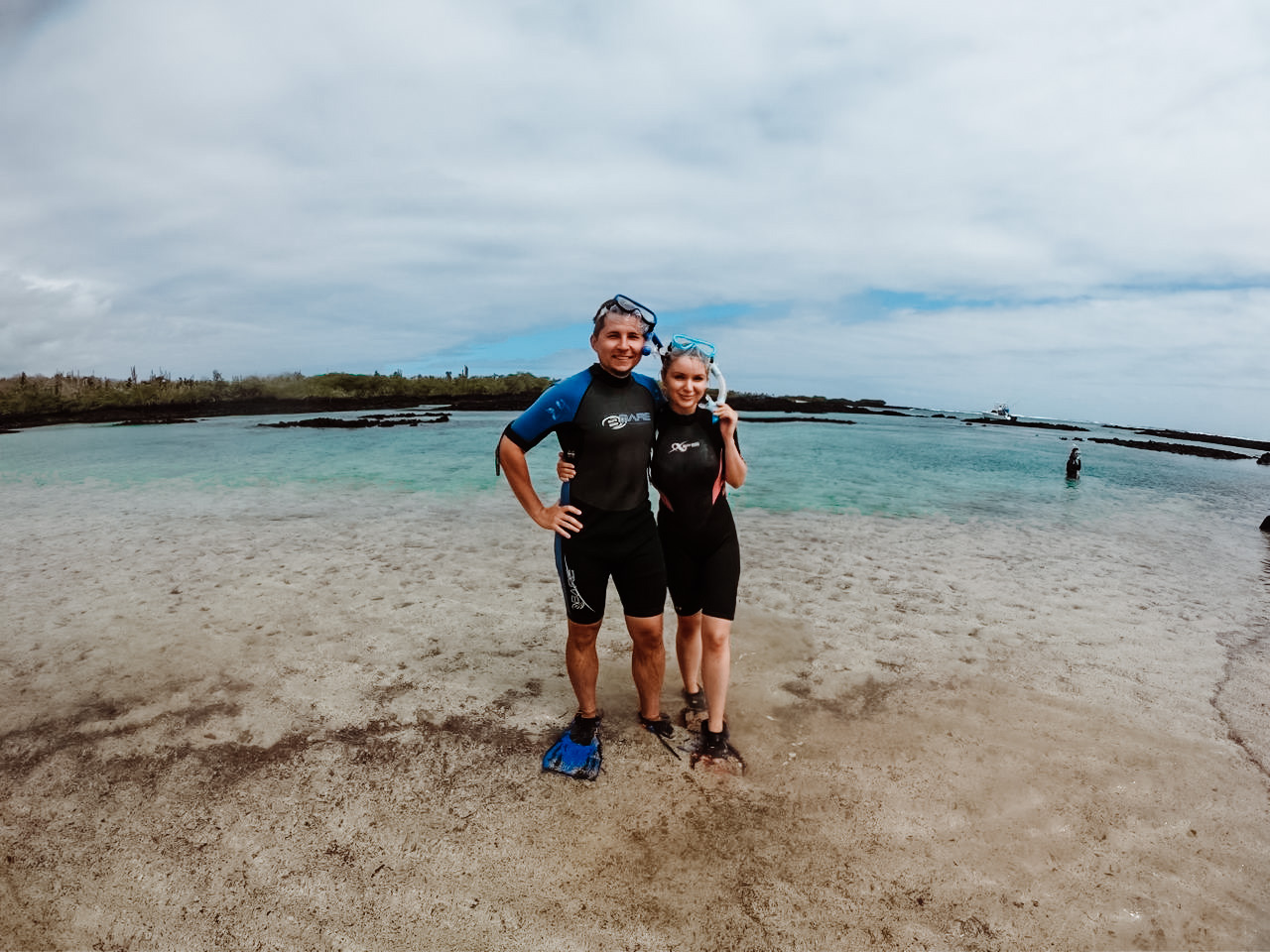
Galapagos Western Islands Itinerary: What You’ll See
Part of our guide to how long your Galapagos cruise should be. Ready to pick a ship? See Galapagos cruises by price, size and class.
Quick Facts: Galapagos Western Islands Itinerary
| Detail | What to Know |
|---|---|
| Core Islands | Isabela, Fernandina, Santiago, Santa Cruz (varies by operator) |
| Typical Length | 5 to 8 days (cruise only; no land-based option) |
| Access | Cruise only. Fernandina and western Isabela are closed to day-trippers. |
| Terrain Type | Lava fields, volcanic cliffs, mangroves, uplifted seabeds |
| Water Temperature | 16-22°C year-round (cold; 5mm wetsuit recommended) |
| Best Season | Dec-May (calmer seas, warmer water); Jun-Nov (big marine life, colder, rougher) |
| Signature Wildlife | Flightless cormorant, Galapagos penguin, marine iguana, Mola mola, whale sharks (Jun–Nov) |
| Park Entrance Fee | $200 USD adults / $100 USD children under 12 (cash on arrival) – Prices verified July 10, 2026 |
| Transit Control Card (TCT) | $20 USD, pre-registered online before flying – Prices verified July 10, 2026 |
| Cruise Departure Point | Baltra (Baltra Airport, 2.5hr flight from Quito or Guayaquil) |
What Makes the Western Islands Different From the Rest of the Galapagos?
The western Galapagos sits on a cold upwelling called the Cromwell Current, and that single fact changes everything. It makes the water colder and the marine life dramatically denser than anywhere else in the archipelago. The islands here are also geologically the youngest, meaning you’re walking on land still being shaped by active volcanoes, not ancient eroded coastlines. This combination of cold-water productivity and raw volcanic energy creates a wildlife experience unlike the east, the south, or the central islands.
Most travelers picture a Galapagos cruise as islands that look more or less like each other. They don’t. The western route is almost jarringly different from a standard central or eastern sailing. The first time I stepped onto Punta Espinosa on Fernandina, the lava fields stretched out to the water’s edge and hundreds of marine iguanas were piled on top of each other, barely moving, staring at nothing. It felt like arriving on a planet that hadn’t heard about us yet.
That strangeness has a geological explanation. Fernandina and the western face of Isabela Island sit directly over the Galapagos hotspot, the same volcanic plume that built every island in the archipelago. Fernandina is less than a million years old and still volcanically active, its last eruption recorded in March 2024. Isabela, the largest island in the Galapagos at 4,588 square kilometers, is built from five merged shield volcanoes. These are not old, settled, mature islands. They’re still becoming.
That youth also means the western islands have seen far less human interference. Fernandina has zero introduced mammals. No rats. No feral cats. No goats. The wildlife here evolved without land predators and it shows in how the animals behave around visitors. You are not a threat. You are not particularly interesting. You are just another large object on a beach full of iguanas.
Which Islands Are Included in a Western Galapagos Itinerary?
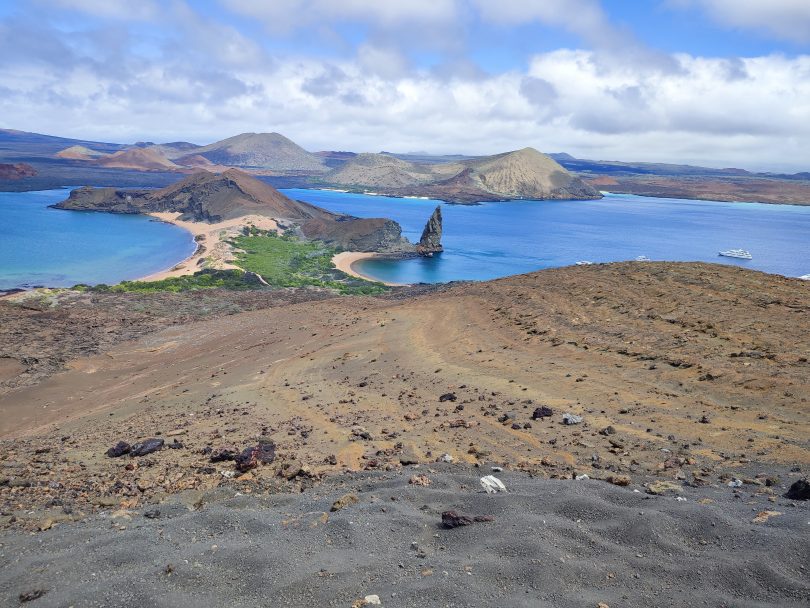
Every western itinerary includes Isabela and Fernandina as its core. Most also incorporate Santiago Island and Santa Cruz, which serve as the embarkation hub for most cruises. Depending on the cruise length, you may also see Rabida, Floreana, or portions of the central archipelago. The exact mix varies by operator and cruise length, and the Galapagos National Park controls which visitor sites any vessel can access on a given week.
Here is how the key islands break down by what they actually deliver on a western sailing:
| Island | Key Sites | What You’ll See | Landing Type |
|---|---|---|---|
| Fernandina | Punta Espinosa | Marine iguanas (largest colony), flightless cormorant, Galapagos penguin, sea lions, Sally Lightfoot crabs, Galapagos hawk | Dry landing on lava |
| Isabela (West) | Punta Vicente Roca, Tagus Cove, Urbina Bay, Elizabeth Bay, Moreno Point | Mola mola, penguins, Nazca boobies, land iguanas, giant tortoises, flightless cormorant, eagle rays | Zodiac only (Punta Vicente Roca), dry/wet landings at others |
| Santiago | Sullivan Bay, Puerto Egas (Egas Port), Espumilla Beach, Buccaneer Cove | Fur seals, marine iguanas, sea lions, blue-footed boobies, historic lava flows Darwin visited in 1835 | Dry and wet landings |
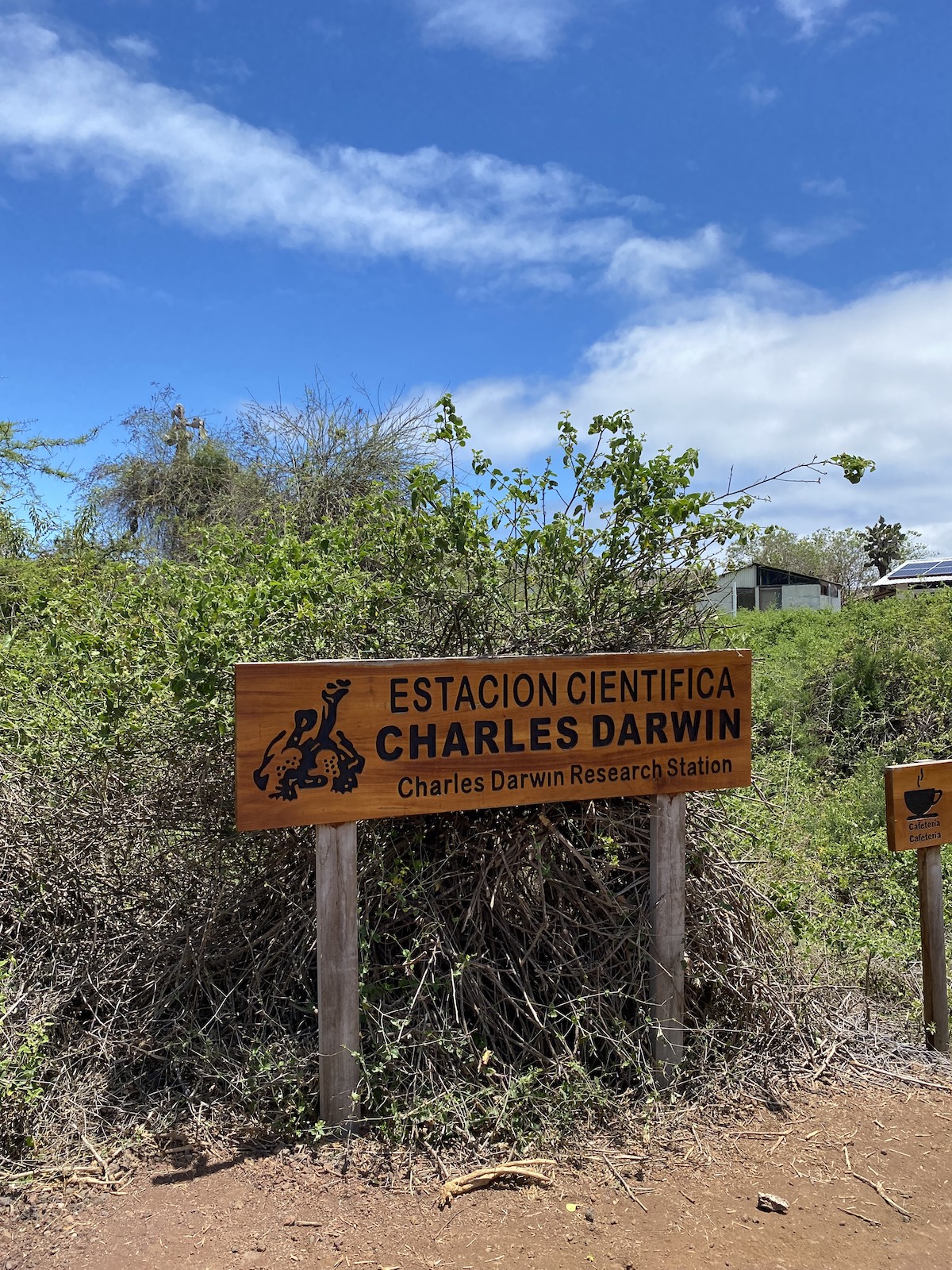
| Santa Cruz | Charles Darwin Research Station, highlands, Dragon Hill | Giant tortoises (wild and breeding program), land iguanas, Darwin’s finches, flamingos | Dry landing, town visit |
| Rabida | Red sand beach, coastal lagoon | Flamingos, pelicans, sea lions, moray eels during snorkel | Wet landing |
One thing worth knowing before you book: “western itinerary” is not a standardized term. Some cruises marketed as western actually spend most of their time in the central archipelago with a single stop at Isabela. If seeing Fernandina and the remote western face of Isabela matters to you, confirm those sites are listed in the day-by-day itinerary before putting down a deposit.
If you want help reading through what different cruises actually visit and what tends to get skipped, we’re happy to go through the options with you. Fill out this short form and we’ll pull together a breakdown based on your dates and interests.
Trying to maximize your island count without just booking the longest and most expensive cruise available? Here’s which Galapagos itinerary visits the most islands broken down so you find the best balance between coverage and cost.
What Wildlife Can You Actually Expect to See?
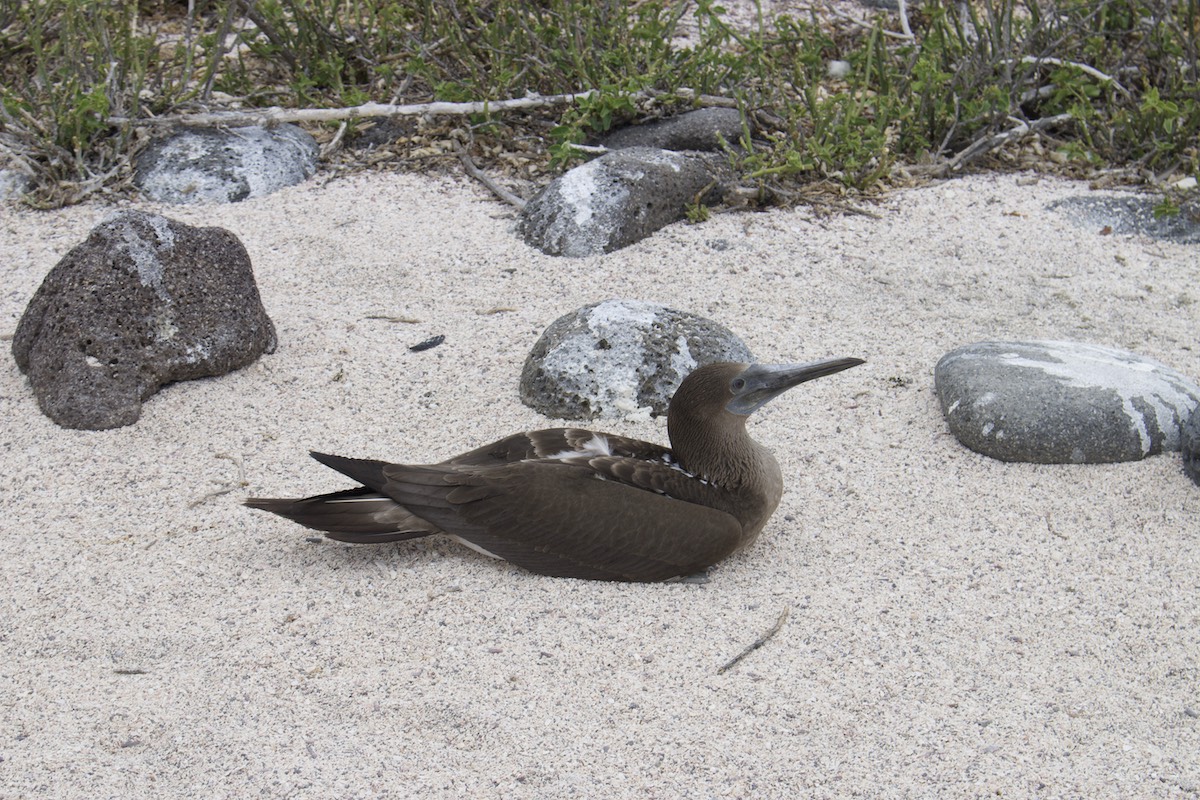
The western route has the highest concentration of species found nowhere else in the Galapagos. The flightless cormorant exists only on Isabela and Fernandina, full stop. The same goes for the largest marine iguana colonies in the archipelago. You’ll also find Galapagos penguins year-round (not seasonal here), Mola mola ocean sunfish during the upwelling months, and whale sharks for those on diving extensions. Sea lions, giant tortoises, land iguanas, and blue-footed boobies round out what most travelers see on nearly every excursion.
The flightless cormorant is the one I always tell people to pay attention to. It’s easy to walk past and not register what you’re actually looking at. This is a bird that lost its ability to fly because there was no evolutionary pressure to keep it. No land predators, abundant fish just offshore. The wings are still there, vestigial, used for balance on the rocks. When you see one drying those stubby wings in the sun the way its flying cousins do on other continents, the whole arc of island evolution clicks into focus. Darwin saw this. So will you.
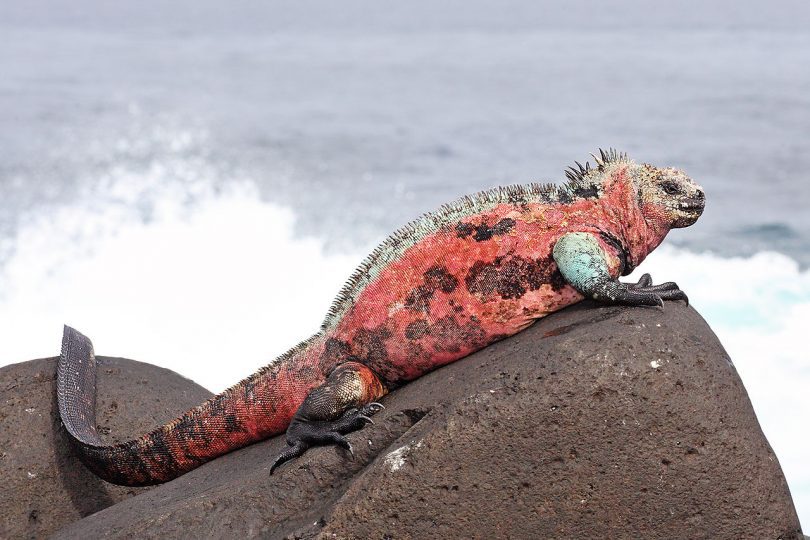
The marine iguanas at Punta Espinosa on Fernandina are unlike anything on the other islands. Hundreds of them. Sometimes thousands, piled over each other on the lava. These are the largest marine iguanas in the archipelago (the colder waters and more abundant algae allow them to grow bigger), and if you’re there during the right season they’ll be diving underwater to graze right alongside your snorkeling group.
Punta Vicente Roca on the northwest tip of Isabela is one of the stranger snorkeling experiences in the Galapagos. There’s no landing here, only a panga ride along 200-meter volcanic cliffs where the Ecuador Volcano’s caldera collapsed into the sea. The snorkeling happens right at those cliffs. During the cool season upwelling (June through November), ocean sunfish, called Mola mola, appear regularly here, drifting near the surface like enormous prehistoric dinner plates. Nothing about them looks like a fish that should exist. They’re one of those animals the western itinerary delivers that simply isn’t part of the eastern route.
Wildlife is the whole reason most people go to the Galapagos and the route you pick determines what you actually see. Here’s a full guide on which Galapagos cruise route has the best wildlife so you book the right one.
| Species | Where to See It | Found on Other Routes? | Best Season |
|---|---|---|---|
| Flightless cormorant | Fernandina (Punta Espinosa), Isabela (west coast) | No. Western only. | Year-round; nesting peaks Jun-Oct |
| Galapagos penguin | Isabela, Fernandina (largest populations) | Occasional in central islands | Year-round on western route; peak activity Sept |
| Marine iguana (giant subspecies) | Punta Espinosa, Fernandina | Smaller iguanas seen elsewhere | Year-round; underwater grazing Dec-May |
| Mola mola (ocean sunfish) | Punta Vicente Roca, Isabela | Rare elsewhere | Jul-Nov (upwelling peak) |
| Giant tortoise (multiple subspecies) | Isabela highlands, Santa Cruz | Central and eastern too | Year-round |
| Galapagos hawk | Fernandina, Urbina Bay (Isabela) | Some islands in south | Year-round |
| Dolphins and humpback whales | Bolivar Channel between Isabela and Fernandina | Less common elsewhere | Dolphins year-round; whales Jul-Oct migration |
How Long Does a Western Islands Itinerary Usually Run?
Most western Galapagos cruises run either 5 days or 8 days. Five-day itineraries typically hit the western highlights (Isabela, Fernandina, and Santiago) with limited time at each site. Eight-day sailings allow two excursions daily at a wider set of visitor sites and are what we recommend for most travelers who specifically want the western route. Going shorter than 5 days on the western circuit usually means you’ll miss either Fernandina or the remote Isabela sites entirely.
The five-day version is what most people end up booking when they’re combining the Galapagos with other Ecuador travel: a few days in Quito, then a week split between islands and mainland. That’s fine. But the western circuit on five days feels rushed in a way the eastern route doesn’t, because the sailing distances between sites are longer. You’re covering more ocean.
Eight days is where things open up. You get Punta Vicente Roca and a full morning at Punta Espinosa without having to rush back for a long transit. You get two proper shore landings per day. You get an evening briefing from your naturalist that actually goes somewhere rather than just covering tomorrow’s logistics. From the travelers we work with, eight days is the threshold where the western itinerary becomes what it’s supposed to be.
If budget is the constraint, consider a five-day western combined with a few days land-based on Santa Cruz rather than extending the cruise. You’ll see less of the remote western sites but you’ll fill the remaining days with things the central island does very well, the Darwin Research Station, highland tortoises, the lava tunnels.
Planning a specific number of days and not sure how to structure it around what you want to see? We put together a lot of custom itinerary combinations for travelers in exactly this situation. Reach out here and tell us what you’re working with, budget, dates, and what matters most, and we’ll map out the options honestly.
Trying to decide if a 10-day cruise justifies the cost over an 8-day option? Here’s the 10-day Galapagos cruise broken down so you understand what full island coverage really means and whether it matches your priorities.
What’s the Best Time of Year to Do the Western Circuit?
There is no bad time to sail the western Galapagos, but the two seasons deliver genuinely different experiences. December through May brings calmer seas, warmer water (20-24°C), and marine iguanas feeding underwater near Fernandina. June through November brings the Cromwell Current upwelling, colder water (16-20°C), rougher crossings, dramatically denser marine life, and the best odds of Mola mola, whale sharks (from Isabela in June), and penguin mating activity. Neither is wrong. They’re different trips.
The one piece of western-specific advice that most general Galapagos guides skip: the water here is cold year-round. Even in February at peak warm season, Punta Vicente Roca snorkeling runs at temperatures that will make a 3mm shorty feel insufficient by the end of the session. The Cromwell Current upwells cold, nutrient-rich water from the deep Pacific directly into the western channel. That upwelling is why the wildlife is so dense here. It’s also why a 5mm full wetsuit is the right call for any western itinerary, not the 3mm shorty most boats hand out as standard.
The other seasonal factor specific to the western route: rough water between islands. The crossings between Santiago, Isabela, and Fernandina take longer and can get bumpy, especially July through September when the Humboldt Current is at its most pronounced. This matters if you’re prone to motion sickness. The eastern and southern routes are physically calmer. If rough ocean passages worry you, either go western during the warm season (Dec-May), bring medication and take it seriously, or consider an itinerary that focuses on the central and eastern islands instead.
| Month | Sea Conditions | Water Temp (Western) | Wildlife Highlights |
|---|---|---|---|
| Dec-Feb | Calm, some rain | 20-24°C | Iguana hatchlings on Fernandina, frigate bird courtship, warm-water snorkeling |
| Mar-May | Calm, clearest visibility | 22-26°C | Marine iguanas grazing underwater, sea turtles nesting, booby courtship |
| Jun-Aug | Rougher, windier | 17-21°C | Flightless cormorant nesting begins, penguins active, whale sharks at Wolf (diving) |
| Sept-Nov | Cooling, calming toward Oct | 16-20°C | Best Mola mola sightings, sea lion pups, hammerhead schools, penguin mating peak |
Water temperatures verified July 10, 2026 against Galapagos National Park Directorate and operator field data.
How Does the Western Route Compare to the Central or Eastern Itineraries?
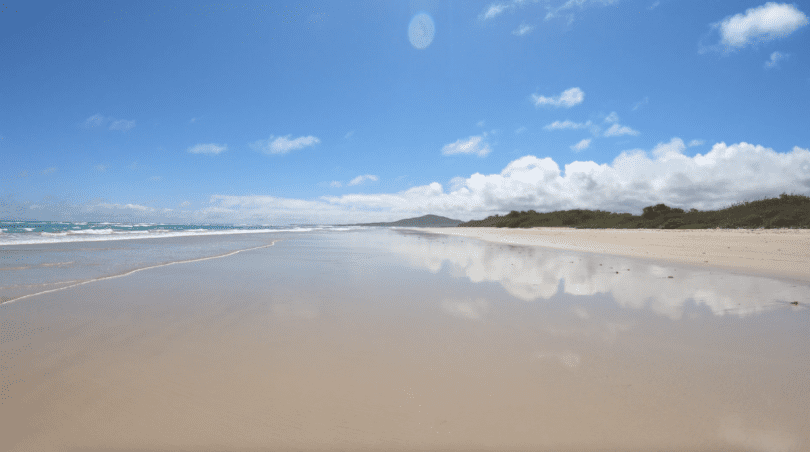
The western route is the most remote and volcanically raw of the main Galapagos circuits. It trades the waved albatross (eastern only, Española Island) and the classic sandy beach experience for the flightless cormorant, larger marine iguanas, colder more productive snorkeling, and landscapes that look genuinely alien. The central route is the most accessible and best for first-timers unsure about rough water. The eastern route appeals to birders and those who want Española. The western route is for travelers who want the frontier of the archipelago.
This is the comparison question we get most often, and the honest answer is: it depends on what you’re optimizing for. Here is how we break it down for travelers who call us.
If your priority is the most dramatic, least visited wildlife experience in the archipelago, and you’re okay with cold water and some rough passages, go west. The flightless cormorant and the Fernandina marine iguana colony are two of the most singular wildlife moments in the Galapagos and they only exist here. The western islands are also completely off-limits to day-trippers, so you never share a landing site with crowds from land-based tours.
If you’re traveling with people who are motion sickness-prone, want sandy beaches, or are most excited about seeing the waved albatross, the eastern or southern route is more appropriate. Española’s albatross colony (April through December) is genuinely spectacular in its own right and gives nothing away to the western circuit’s highlights. It’s a different kind of spectacular.
The central route is what most people end up on when they book a shorter cruise without thinking too carefully about regions. It includes good central islands like Santa Cruz, Bartolome, and Rabida, and it’s a very solid introduction to the Galapagos. It just doesn’t have what the west has.
| Route | Signature Wildlife | Sea Conditions | Best For |
|---|---|---|---|
| Western | Flightless cormorant, large marine iguanas, Mola mola, penguins | Moderate to rough (esp. Jun-Sept) | Volcanic landscapes, exclusive wildlife, advanced snorkeling |
| Eastern / Southern | Waved albatross (Apr-Dec), red-footed boobies, white-tip sharks | Calmer overall | Birding, beach experience, first-time visitors, motion sickness concerns |
| Central | Giant tortoises, sea lions, blue-footed boobies, Bartolome Pinnacle Rock | Calmest | Shorter trips, land-based combinations, first-timers |
| Northern (Genovesa) | Red-footed boobies, short-eared owls, frigatebirds | Long ocean crossing required | Dedicated birders |
One combination worth knowing about: some longer 8-day itineraries combine western and southern islands, giving you Fernandina and Isabela alongside Española and Floreana. If you have 8 days and can’t choose between the albatross and the cormorant, look for a cruise that doesn’t force you to pick. We’ve booked a lot of travelers onto exactly these combined sailings and the feedback is consistently that it’s the strongest week-long option in the archipelago.
If you’re trying to figure out which route makes sense for your group’s interests and physical comfort level, we can help you think through it. We’ve taken these crossings ourselves and interviewed thousands of travelers who have. Send us a quick message and we’ll give you a straight answer based on what you’re actually looking for.
We’ve got a full breakdown on the Galapagos southern islands itinerary if you want to know exactly which islands make the cut, what you’ll see at each one, and why this route is a strong choice for first-time visitors.
What Should You Know Before Booking a Western Islands Cruise?
The western itinerary requires a few things from you that other Galapagos routes don’t. You need to be comfortable boarding and exiting a Zodiac from the water side, not a dock. You need sea legs for crossings that can get choppy. You need to walk on lava terrain, which is uneven and can be tiring. And you need to budget appropriately: entry fees for foreign adults are $200 USD cash (plus a $20 TCT card pre-registered online), and western-specific cruises tend to run at the higher end of the price range because the sailing distances are longer.
A few things that catch first-time western travelers off guard, pulled from patterns we see repeatedly across the travelers we work with:
The Zodiac-only sites. Punta Vicente Roca doesn’t have a landing. You snorkel and do panga rides, full stop. Some other western sites are also Zodiac-only, not because the park restricts landing, but because there’s nowhere to land. Lava cliffs into the water. Make sure you are physically capable of getting in and out of a moving inflatable dinghy, it’s usually a meter drop into a boat that’s rolling with the swell.
The lava terrain at Punta Espinosa. The path across Fernandina is pahoehoe lava, which sounds smooth but is actually ridged, cracked, and unpredictable underfoot. Ankle injuries happen when people walk too fast because they’re excited about the iguanas and not paying attention to the ground. Closed-toe shoes with ankle support, not sandals.
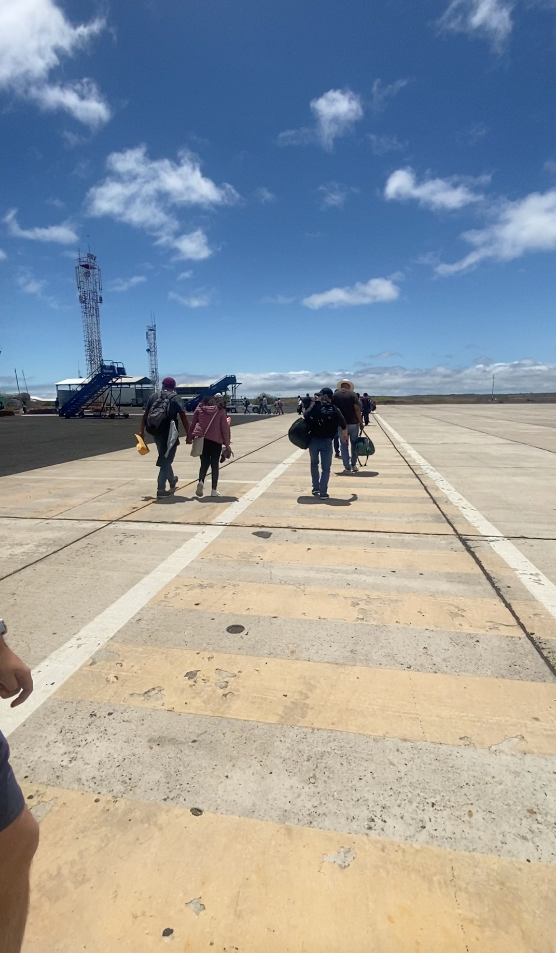
The cash requirement for entry fees. The $200 park fee is cash-only on arrival at Baltra Airport. There are no ATMs at Baltra. You must bring this in USD bills from the mainland. The $20 TCT card has moved entirely online since May 2025, so you pre-register that before your Galapagos flight, but the $200 park fee is still a cash transaction at the airport desk. A family of four with all adults over 12 needs $800 in cash before exiting the arrivals hall.
Western cruises book out farther in advance. There are fewer vessels with permits for the western remote sites, especially Fernandina, than there are for the central archipelago. Eight-day western sailings during warm season peak (January through March) frequently sell out six to nine months ahead. If you’re planning a trip for next year, start the cruise comparison now rather than when flights are booked.
Not sure which Galapagos route is realistic for families with younger travelers or which cruises are actually set up to handle kids well? This breakdown on the best Galapagos itinerary for families covers the right islands, the right ships, and the right pacing.
What Travelers Actually Say After the Western Route: Our Feedback Data
Based on traveler feedback collected through mytrip2ecuador.com and our YouTube audience, plus interviews with thousands of cruise passengers over the years, here is how western itinerary travelers rate their experience across several key factors.
| Wildlife uniqueness | 94% | “Nothing prepared me for Fernandina. It felt prehistoric.” |
| Snorkeling quality | 81% | “Cold but unbelievable. Mola mola in October was surreal.” |
| Physical difficulty (managed expectations) | 68% | “Lava terrain was harder than I expected. Bring real shoes.” |
| Sea conditions | 72% | “Rougher crossings in August but worth every minute once we arrived.” |
| Remoteness / exclusivity | 97% | “No crowds. You really feel like you’re somewhere few people get to go.” |
| Would choose western again over central | 88% | “I came back and did the eastern route the second trip. Both are worth it but the west is harder to forget.” |
The number that stands out from our traveler interviews is not the wildlife rating. It’s that 68% managed expectations around physical difficulty. A quarter of travelers on the western route are surprised by how demanding the terrain and the Zodiac transitions are. We flag this in every pre-trip conversation we have because it changes what you wear, what shoes you pack, and whether you need to think about your knees before you go.
Where the Western Itinerary Catches People Off Guard
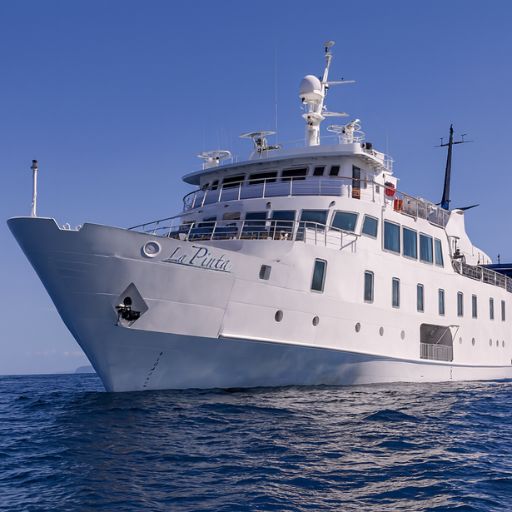
Every route has its failure points. These are the specific ones that show up repeatedly across western travelers and that we try to head off before anyone books.
Booking the wrong cruise under the western label. We’ve seen itineraries marketed as “western” that only reach Isabela’s populated southern port of Puerto Villamil, which has none of the remote wildlife that makes the western circuit special. Puerto Villamil is a lovely town. It is not Punta Espinosa. Read the day-by-day schedule and confirm Fernandina and the western Isabela sites like Tagus Cove and Elizabeth Bay are actually on it before you pay.
Underestimating the cold water. The Cromwell Current makes the western snorkeling the most productive in the archipelago and the coldest. Even experienced snorkelers from warm-water destinations are often underprepared. Ask your cruise whether they carry 5mm full wetsuits in all sizes, not just the standard 3mm shorties. If they don’t, plan to rent one in Puerto Ayora before departure.
Skipping seasickness prevention. The crossings between the western islands, especially the passage from Santiago to Isabela, can be rough for hours. People who wouldn’t describe themselves as prone to motion sickness have been very surprised by the Bolivar Channel in July. Take medication the night before the first crossing, not after you start feeling it. By then it’s already harder to manage.
Not confirming the cash requirement. Several travelers we’ve spoken with showed up at Baltra with a card, expecting to pay the park fee on a terminal. There is no card option at the fee desk. You need $200 per adult in USD bills on your body when you land. This is the single most fixable pre-trip mistake and one of the most common.
Frequently Asked Questions
Can I visit Fernandina on a land-based trip from Puerto Ayora?
No. Fernandina is closed to day-trippers and accessible only as part of an authorized multi-day cruise. This is a Galapagos National Park regulation, not a scheduling issue. If seeing Fernandina is important to you, a cruise is the only option.
Is the western itinerary suitable for older travelers or those with mobility limitations?
It depends on the specific limitations. The Zodiac boarding and lava terrain at Punta Espinosa require a decent level of mobility. Some western visitor sites like Tagus Cove’s hike to Darwin Lake and Urbina Bay involve longer walks on uneven ground. That said, several western sites are panga-only, meaning you observe wildlife from the inflatable boat without landing at all, and those work well for travelers who can manage the Zodiac but prefer not to hike. Talk to the operator directly about which excursions are optional and what the physical requirements are for each one.
Do I need to tip on a Galapagos cruise?
Tipping your naturalist guide and crew is standard practice and genuinely appreciated. A common benchmark is $10 to $15 per person per day for the guide and a similar amount pooled for the crew, but this varies by cruise class and how your trip goes. Budget this separately from your cruise cost.
How much should I budget total for a western Galapagos cruise?
The cruise itself is the biggest variable, ranging from roughly $2,500 to $8,000+ per person depending on length and vessel class. On top of that: $200 park fee cash, $20 TCT card, roundtrip flights from Quito or Guayaquil to Baltra (around $400–$500), and at least one night on the mainland before or after. A realistic all-in budget for an 8-day mid-range western sailing is $4,000 to $6,000 per person excluding international flights to Ecuador. All prices verified July 10, 2026.
Is the western itinerary worth it compared to the eastern route?
They’re different enough that “worth it” isn’t quite the right frame. The western route gives you things the eastern simply cannot: the flightless cormorant, the Fernandina marine iguanas, Mola mola at Punta Vicente Roca. The eastern gives you the waved albatross, a generally calmer sailing, and white sandy beaches. Many repeat visitors do both routes on separate trips. For a first visit where you can only do one, the western route tends to produce the most singular memories, particularly if you’re comfortable with active terrain and cold water.
What documents do I need to enter the Galapagos?
For 2026: a passport valid for at least six months, a Transit Control Card (TCT) pre-registered online for $20 before your flight, a biosafety sworn declaration completed online within 48 hours of your Galapagos flight, the Ecuador customs FRA form completed before entering Ecuador (required since July 2025), and $200 USD cash for the park fee paid on arrival at the airport. Bags are physically inspected for prohibited organic materials before you board the domestic flight. All requirements verified July 10, 2026.
The western itinerary is one of those trips that takes a few days to settle in after you’re back home. People keep talking about Fernandina. They talk about the silence on the lava, the way the iguanas ignore you, the cormorant drying its vestigial wings like it’s been doing that for a million years without any human to watch. We’ve been there, we’ve sent a lot of travelers there, and we genuinely enjoy helping people figure out whether it’s the right fit for what they’re after. If you’re ready to look at specific cruises and sailing dates, get in touch here and we’ll build out a shortlist with honest recommendations and no pressure.
Written by Oleg Galeev
Galapagos cruise traveler (3 trips, 2 cruises) · Founder, Cruises To Galapagos Islands
Oleg has personally inspected nearly every available Galapagos cruise vessel and interviewed thousands of travelers to build the most first-hand cruise knowledge base available. He also runs the Ecuador travel blog mytrip2ecuador.com and the YouTube channel My Trip to Somewhere.
Cruises To Galapagos Islands is rated 4.9 stars on Google and TripAdvisor.
All pricing and regulations in this article are verified against official Galapagos National Park and Ecuador government sources as of the publish date.