
TL;DR
Every Galapagos cruise price covers the same core package regardless of class: your cabin, all meals, non-alcoholic beverages, twice-daily guided excursions with a certified naturalist, snorkel masks and fins, and inter-island transport aboard the vessel. What changes between cruise classes is the quality of all those things, not the list itself. What is never included on any cruise, regardless of price: the $200 National Park entrance fee, the $20 INGALA TCT card, international flights to Ecuador, guide and crew gratuities, and alcoholic drinks. Domestic flights and travel insurance are sometimes included on luxury packages but excluded on most others. Always read the inclusions list of the specific boat before booking, not just the class category.
| Item | Always Included | Sometimes Included | Never Included |
|---|---|---|---|
| Cabin accommodation | ✓ | ||
| All meals (breakfast, lunch, dinner) | ✓ | ||
| Non-alcoholic drinks, water, coffee, tea | ✓ | ||
| Twice-daily guided excursions | ✓ | ||
| Certified naturalist guide | ✓ | ||
| Snorkel mask and fins | ✓ | ||
| Wetsuit | ✓ (tourist superior and above, varies) | ||
| Alcoholic beverages | ✓ (luxury only, some vessels) | ||
| Domestic Ecuador flights | ✓ (some luxury/first class packages) | ||
| National Park fee ($200 adults) | ✓ (some operators collect in advance) | ||
| INGALA TCT card ($20) | ✗ (always separate) | ||
| International flights to Ecuador | ✗ | ||
| Guide and crew gratuities | ✓ (some luxury vessels) | ||
| Travel insurance | ✗ | ||
| Scuba diving | ✗ (dedicated liveaboard only) |
What Does the Base Price of a Galapagos Cruise Actually Cover?
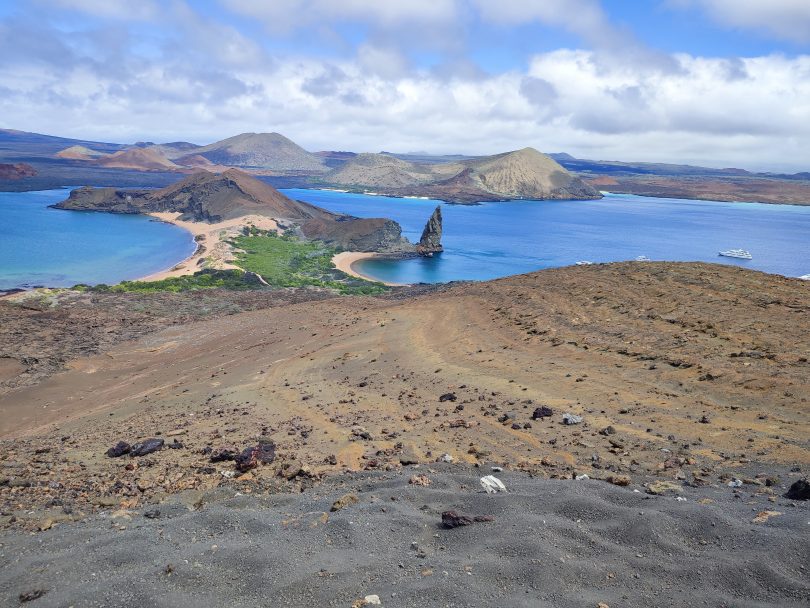
Every Galapagos cruise price, regardless of class, covers five things without exception: your cabin for the duration of the trip, all meals from the day you embark to the day you disembark, non-alcoholic beverages throughout, twice-daily guided excursions to visitor sites led by a certified naturalist, and the inter-island transport that moves you between islands overnight while you sleep. That core package is consistent across budget and luxury alike. Everything above that baseline is where classes diverge.
The all-inclusive structure of a Galapagos cruise is genuinely different from most travel products. On a typical resort vacation, you pay for accommodation and then spend separately on activities, meals, and transport. On a Galapagos cruise, the boat is the accommodation, the transport, the dining room, and the activity center simultaneously. Every morning you wake up anchored at a new island. Every excursion is organized and guided. Every meal is prepared and waiting. There are no incidental costs to the experience itself.
That structure exists because of how the Galapagos National Park operates. All landings at visitor sites require a certified guide. The guide travels with the group, leads the walk, briefs passengers before each excursion, and manages the strict park rules about distances from wildlife, prohibited items, and time limits at sites. The guide isn’t an optional extra you can skip to save money. The guide is how you legally access the islands. Every cruise, at every price point, includes this as a non-negotiable.
What the base price does not cover, on virtually every boat at every class level, are the costs that exist outside the vessel itself: the government fees for entering the archipelago, the flights to get there, the tip you leave for the crew who made the trip work, and the drinks you order at the bar after dinner. Those line items are yours to manage separately, and we’ll cover each one in detail further down.
If you’re comparing two or three boats and trying to figure out which one actually gives you more for the money once the inclusions are properly accounted for, that’s exactly the kind of analysis we do. Some boats that look cheaper at face value end up costing more all-in once you factor in what’s excluded. Send us a message here and we’ll break it down for your specific options.
Galapagos cruise pricing is more complicated than most travel sites make it look – our how much does a Galapagos cruise cost guide breaks down what’s included, what’s extra, and where the real cost differences between budget and luxury actually lie.
Are Meals and Drinks Included on a Galapagos Cruise?
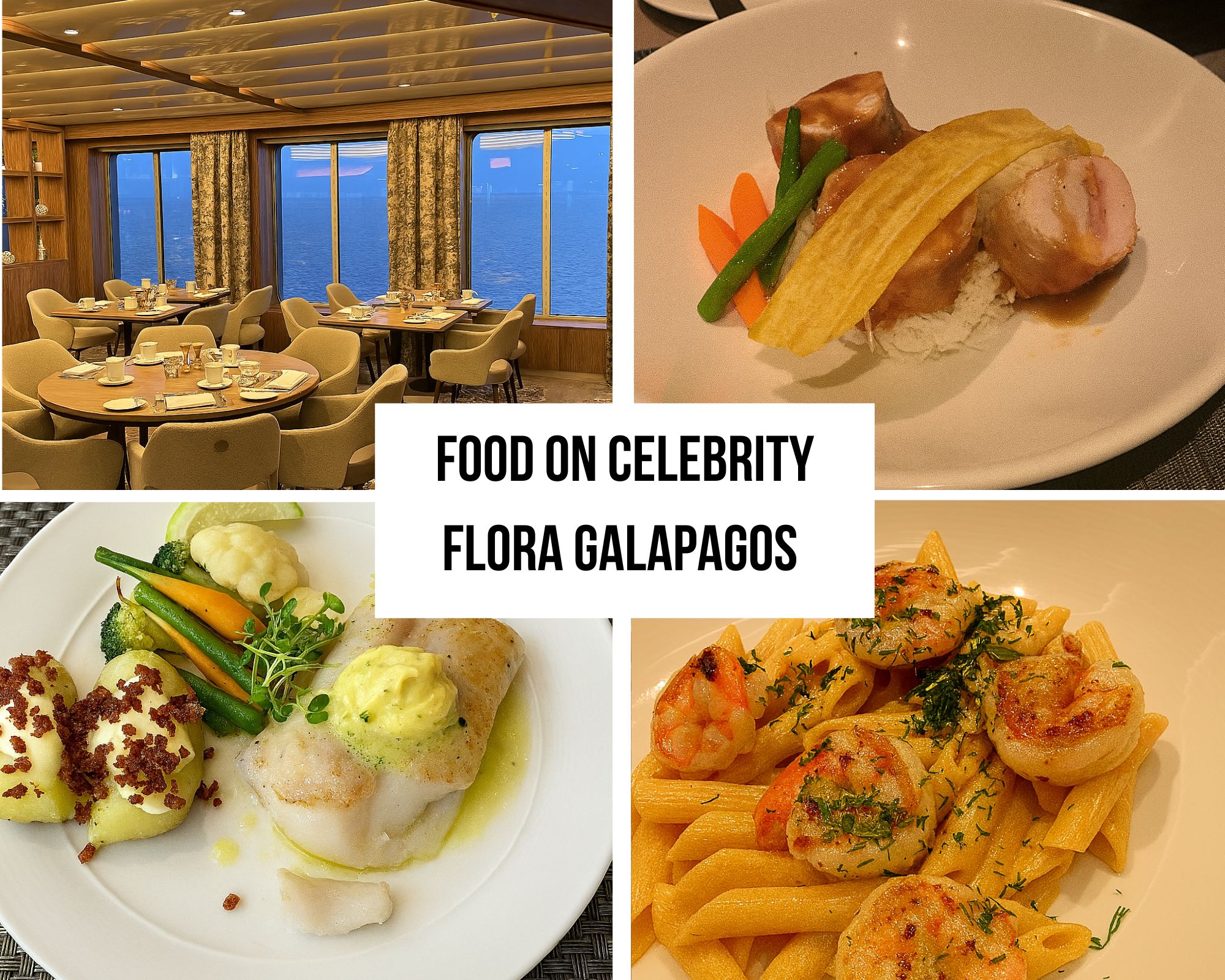
All meals are included on every Galapagos cruise: breakfast, lunch, dinner, and snacks throughout the day. Non-alcoholic beverages, including water, juice, coffee, and tea, are included on all boats. Alcoholic drinks are excluded on most vessels and purchased separately at onboard bar prices, typically $5 to $12 per drink or $30 to $80 per bottle of wine. A small number of luxury operators include an alcohol package, but this is the exception rather than the standard across the fleet.
The meal quality gap between cruise classes is real and worth understanding before you book. Budget boats serve solid, straightforward food. Think set menus, local staples, fresh seafood, and simple desserts. You won’t go hungry and the food is generally good, especially the seafood in a destination this close to the Pacific. But the variety is limited and the presentation is functional.
Tourist superior boats step up noticeably in terms of menu variety and ingredient quality. First class boats move into chef-prepared meals with better sourcing and more variety across the week. Luxury vessels serve gourmet dining with locally sourced ingredients, structured menus, and the kind of presentation you’d expect at a quality restaurant on land. Celebrity Cruises’ Flora, for instance, features menus developed with Michelin-starred chef consultation. That level of food matters more over a 7-night trip than it might seem when you’re reading a spec sheet at home.
One thing consistent across all classes: dietary restrictions are accommodated on essentially every boat if communicated in advance. Vegetarian, vegan, gluten-free, and allergy-driven requirements are handled routinely. The key phrase is “in advance.” Tell your operator before departure, not on embarkation day. The provisioning for a remote voyage happens before the boat leaves the dock, and the galley has very limited ability to source alternatives once you’re at sea.
On alcohol: the standard on most boats is that you pay a bar tab settled at the end of the cruise. A few boats allow passengers to bring their own wine or spirits aboard, subject to a corkage fee that ranges from $10 to $40 per bottle. Some boats explicitly prohibit bringing your own alcohol. Check this before you pack, especially if you have a particular preference. Ecuador allows up to 3 liters of duty-free alcohol on incoming international flights, which some travelers use to bring wine aboard, but only where the boat policy permits it.
Is Snorkeling and Diving Equipment Included in the Price?
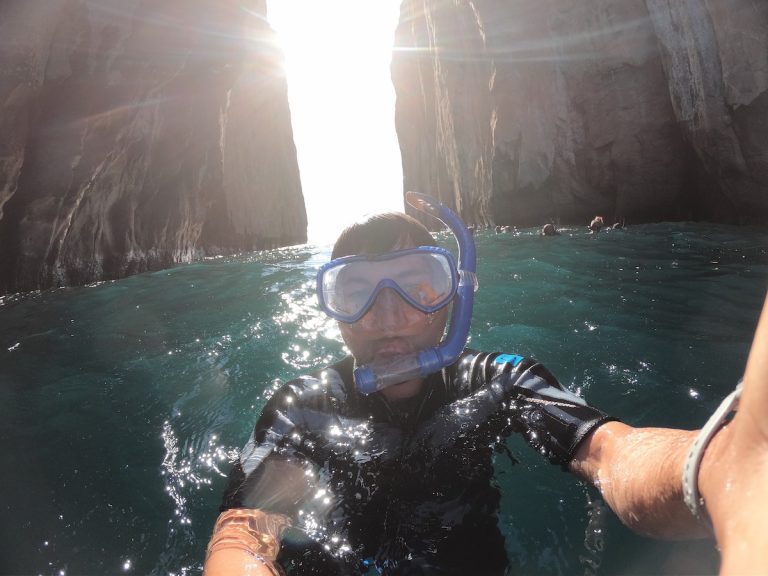
Snorkel masks and fins are included on virtually every Galapagos cruise at all class levels. Wetsuits are included on most tourist superior, first class, and luxury vessels, and available to rent for $25 to $35 per week on budget boats that don’t include them. Scuba diving is not available on standard nature cruises at all. It requires a dedicated diving liveaboard vessel with a separate permit structure, separate pricing, and a different type of itinerary entirely.
The wetsuit question matters more in the Galapagos than almost anywhere else because water temperatures vary significantly by season. In the warm season (December to May), water runs 23 to 27°C and a wetsuit is optional for most swimmers. In the cool season (June to November), the Humboldt Current drops water to 20 to 23°C, and an unprotected snorkeler starts feeling cold within 15 to 20 minutes. On an 8-day cruise with two water excursions per day, that adds up fast. Budget boats that charge separately for wetsuits at $25 to $35 per week are genuinely cheaper to rent from than to skip, particularly in the second half of the year.
The scuba diving point is one that frustrates travelers who discover it after booking. A standard Galapagos nature cruise cannot offer scuba diving. This isn’t a policy the boat chooses. It’s a National Park regulation. Diving in the Galapagos is only legal from vessels that hold a specific diving permit, and those vessels operate as dedicated liveaboards with itineraries built entirely around multiple dives per day. They access different sites than nature cruises, including Darwin and Wolf Islands in the far north where hammerheads and whale sharks congregate. If diving is your primary goal, you need a different vessel entirely, not just an upgrade on a standard cruise.
For non-divers, some nature cruises offer “snorkel-plus” programs that include in-water naturalist guidance, where the guide enters the water with the group. This is more common on first class and luxury boats. It significantly changes the snorkeling experience because the guide can point to things underwater that you’d swim past without knowing what you were looking at.
Do Galapagos Cruises Include the National Park Fee and INGALA Card?
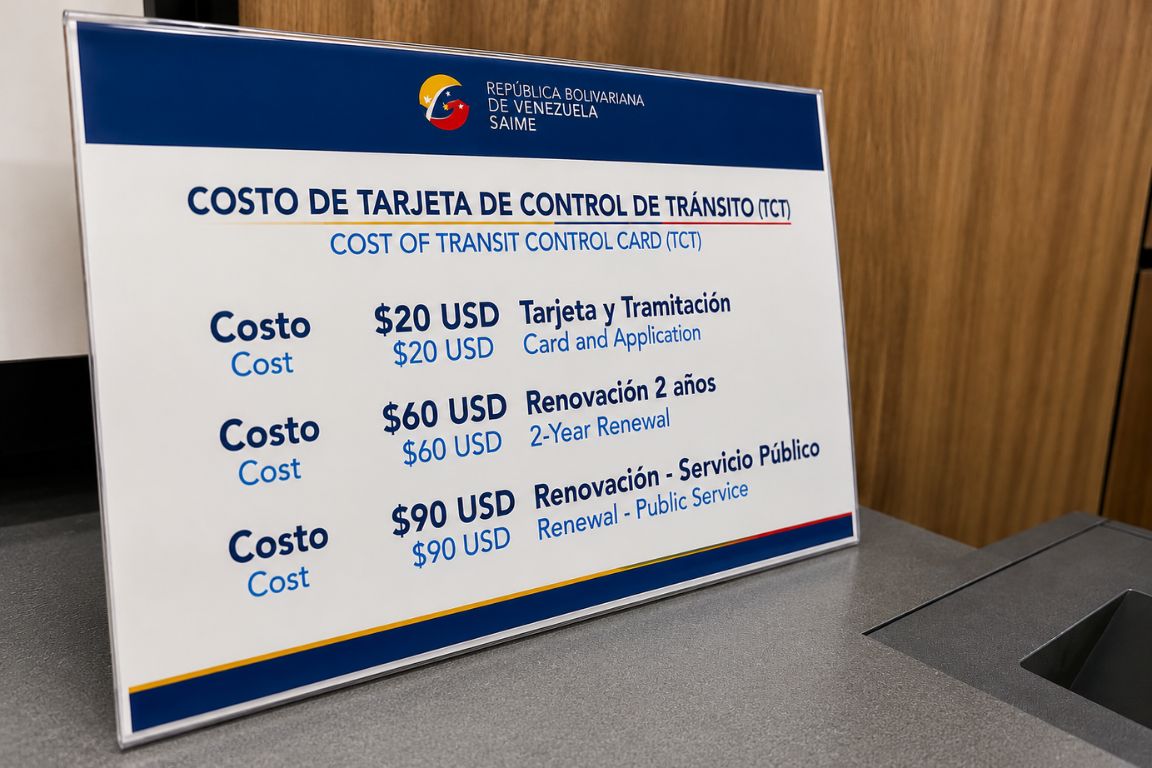
The $200 National Park entrance fee and the $20 INGALA Transit Control Card (TCT) are almost never included in the advertised cruise price. They are government-mandated fees paid directly to Ecuadorian authorities, not to the cruise operator. Some operators collect both on your behalf in advance and include the amounts in a bundled total, but the fees themselves are always additional to the base cruise cost. Read the inclusions list carefully and never assume these are covered unless the booking documentation explicitly states so.
The National Park fee is paid in cash, in U.S. dollars, at the airport checkpoint upon arrival in the Galapagos. Adults pay $200, children under 12 pay $100. These rates have been in effect since August 2024 when Ecuador raised them from the previous $100 adult level. They apply to all foreign visitors without exception and must be paid before you pass through to the arrivals area.
The TCT card is a separate $20 per person immigration document required by INGALA, Ecuador’s Galapagos governing body. It must be completed online before your flight to the islands, ideally within 48 hours of departure. You receive a QR code by email, which you present at the airport checkpoint on the mainland before boarding your Galapagos flight. The online registration system is at the official Galapagos government portal. Some operators handle TCT registration as part of their service. Most do not. If yours doesn’t, complete it yourself well before your travel day.
The confusion around whether these fees are “included” comes from two places. First, some operators advertise an all-in price that bundles fees and flights alongside the cruise, making it look like the cruise itself costs more. Second, some booking summaries list fees as line items without making it clear they’re mandatory additions, not optional upgrades. The practical rule: if the booking documentation says “National Park fee: included,” believe it. If it doesn’t mention the fee at all, budget $220 per adult in cash above the cruise price.
One of the most common sticker-shock moments for Galapagos travelers happens at the airport when they realize $200 per person in cash is due on the spot. We make sure every traveler we work with knows exactly what to bring and what’s already covered before they leave home. If you’d like that kind of clarity from the start, get in touch here and we’ll walk through the full cost picture with you.
Trying to figure out what the Transit Control Card actually is, how much the national park fee costs, and where you pay it? Check out our Galapagos entry requirements, transit card and national park fees explained guide before you book anything.
Are Flights to the Galapagos Included in the Cruise Price?
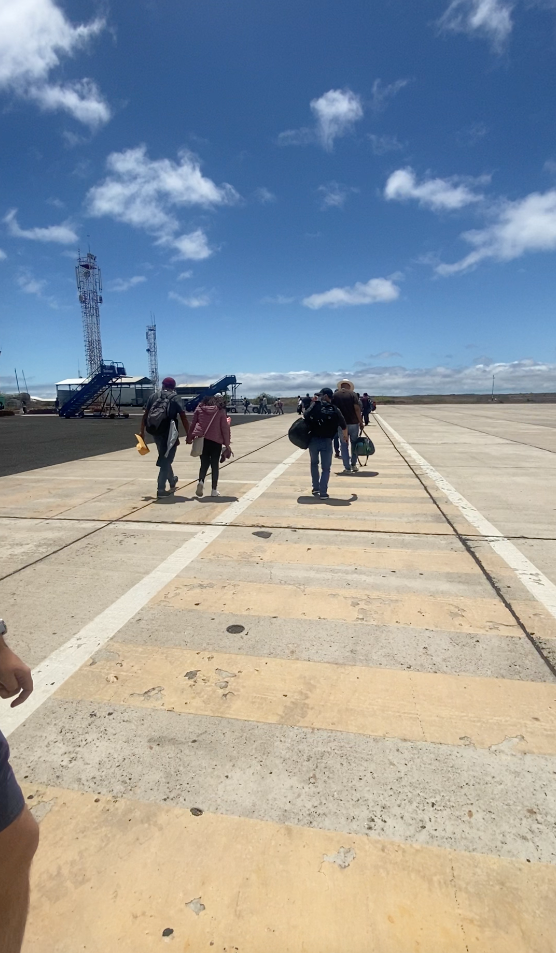
International flights to Ecuador are never included in any standard Galapagos cruise price. Domestic flights from Quito or Guayaquil to the Galapagos are excluded on most boats but included on some first class and luxury packages, particularly with larger operators like Celebrity Cruises and select luxury yachts. Always confirm whether domestic flights are included in your specific package, because “flights included” on some listings refers only to the Ecuador-to-Galapagos leg, not the international journey.
The reason flights matter so much in Galapagos planning is that the domestic flight is not a separate purchase you can manage independently without risk. Each cruise embarkation happens at a specific airport on a specific island: Baltra (near Santa Cruz) or San Cristóbal. Your domestic flight must land at the correct airport for your cruise’s start point, and must land early enough to make the embarkation. A cruise ship will not wait for a passenger who missed their flight. These are expedition vessels running fixed National Park itineraries with strict timing.
When an operator includes the domestic flights, they coordinate the booking directly. They know which flights connect correctly with the embarkation, which airlines run those routes, and what time you need to be on the mainland before the flight. This coordination eliminates the single largest logistical risk of the whole trip. When you book domestic flights independently, that coordination is your responsibility, and the consequences of getting it wrong are significant.
Luxury packages from operators like Celebrity Cruises, Silversea, and Lindblad often include both domestic flights and international flights from specified gateway cities. These packages are priced higher to reflect what’s bundled, but the all-in figure makes budgeting straightforward and removes the coordination burden entirely. For travelers who find logistics stressful, a fully bundled luxury package is often worth its premium for reasons that have nothing to do with the cabin size.
What Is Never Included Regardless of Cruise Class?
Four costs apply to every Galapagos cruise traveler without exception, at every price point, on every vessel: the $200 National Park entrance fee (cash), the $20 INGALA TCT card, international flights to Ecuador, and travel insurance. Guide and crew gratuities are technically optional but universally expected and factored into every realistic budget. No amount of spending on the cruise itself changes these universal costs.
This is the section most cost breakdowns gloss over, so we’ll be direct about it. Spend $14,000 per person on a luxury yacht. You still pay $200 cash at the airport. You still complete the TCT online yourself or through your operator. You still bought your own plane ticket from wherever you live to Quito or Guayaquil. You still need travel insurance with medical evacuation coverage, which is a legal entry requirement for the archipelago. Those four items are structural costs of visiting the Galapagos, not cruise costs. They don’t change based on which boat you’re on.
Gratuities occupy a slightly different category because they’re voluntary in theory but effectively mandatory in practice. The naturalist guide, the captain, the crew, the cook – these people have cared for you in a remote environment for a week. The standard recommendation is $10 to $15 per person per day on budget and tourist superior boats, and $20 to $25 per person per day on first class and luxury. On a first class 8-day cruise, that’s $160 per person minimum, $320 for a couple. Not a rounding error. Plan for it from the start.
Alcohol, as covered in Section 2, is excluded on most boats. Laundry service is excluded on most boats (available for a fee on some, particularly longer itineraries where passengers need it). Personal items, souvenirs, and spending at the small shops in Puerto Ayora or Puerto Baquerizo Moreno are obviously personal expenses. Wi-Fi is increasingly available on Galapagos vessels via Starlink satellite, and roughly 90% of the 2026 fleet carries it, often at no charge. A few boats still charge for connectivity. Worth checking before you pack assuming you’ll be fully offline.
We’ve put together a full exclusions breakdown in our what is not included in a Galapagos cruise guide so you know exactly what to set aside beyond the sticker price and how to compare operators honestly.
| Cost | Amount | How and When Paid |
|---|---|---|
| National Park entrance fee | $200 adults / $100 under-12s | Cash (USD) at Galapagos airport on arrival; some operators collect in advance |
| INGALA TCT card | $20 per person | Online before flying; QR code presented at mainland airport checkpoint |
| International flights to Ecuador | $600 to $2,500+ per person | Booked independently; never included in standard cruise price |
| Travel insurance (with evacuation) | $150 to $800 per person | Purchased before travel; legally required for Galapagos entry |
| Guide and crew gratuities | $10 to $25 per person per day | Cash (USD) given in envelope on final cruise evening; split among crew |
| Alcoholic beverages | $5 to $12 per drink; $30 to $80 per bottle | Bar tab settled at end of cruise on most vessels |
How Do Inclusions Differ Between Budget, Tourist Superior, First Class, and Luxury?
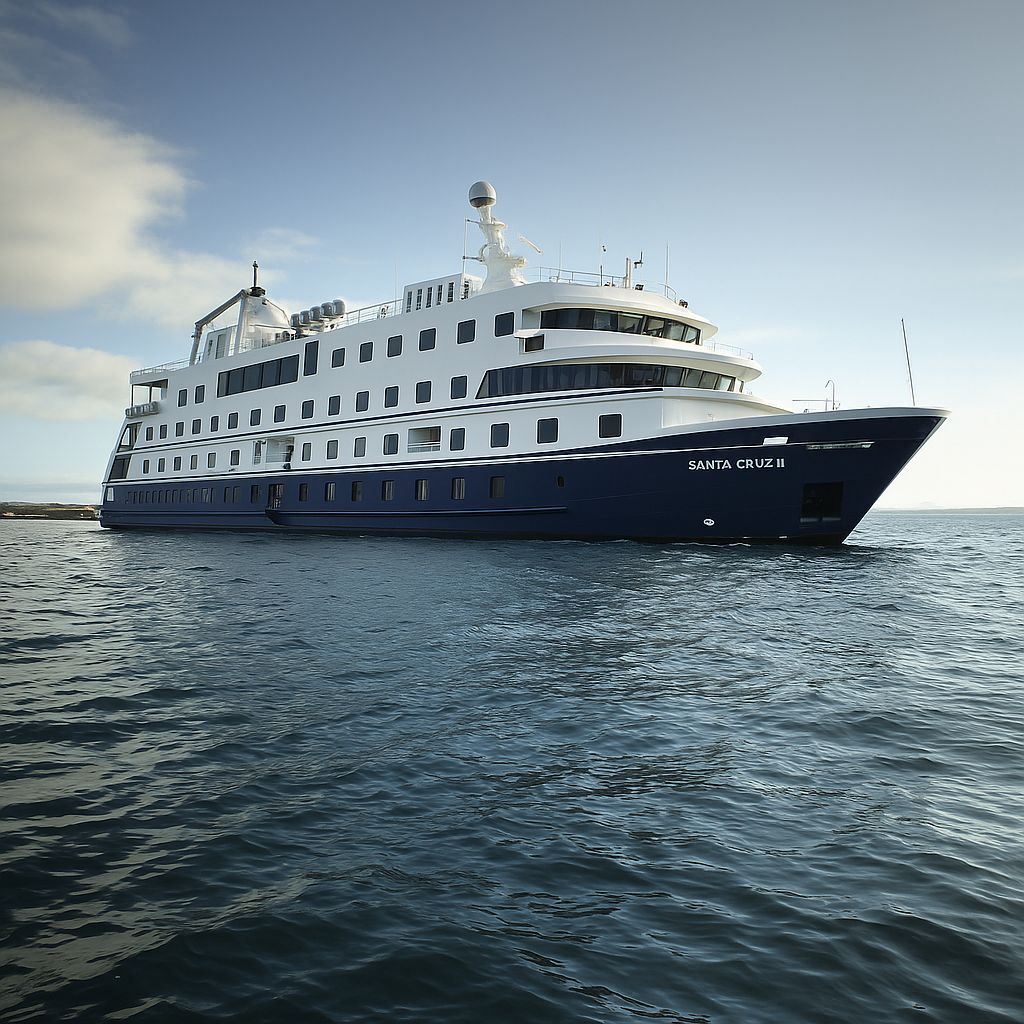
The core inclusion list (cabin, meals, excursions, guide, snorkel gear) is the same across all four classes. What changes is the quality of everything on that list, plus a set of additional inclusions that appear progressively as you move up the price ladder. Wetsuits shift from rental to included. Guides shift from Level II to Level III with advanced degrees. Alcohol shifts from excluded to a complimentary package. At the top end, domestic flights, gratuities, and even international flights can fold into the price.
The guide difference deserves particular attention because it’s the one inclusion gap that most directly affects what you actually experience. The Galapagos National Park certifies guides at three levels. Level I covers basic local knowledge and is rarely found on cruises. Level II guides are bilingual, certified, and competent – they know the islands, follow park rules precisely, and deliver solid briefings before each landing. Level III guides hold university degrees in biology, ecology, or related fields, have six or more years of guiding experience in the archipelago, and demonstrate deep specialist knowledge of the wildlife, geology, and evolutionary dynamics of the islands.
Budget and some tourist superior boats carry Level II guides as standard. First class and luxury boats carry Level III almost exclusively. This isn’t a subtle difference when you’re standing 2 meters from a waved albatross performing its mating dance on Española Island. The Level II guide can tell you what it is and where it nests. The Level III guide can explain the aerodynamics of the albatross’s 2-meter wingspan, why pair bonding in this species spans decades, and how the population on Española represents nearly the entire world’s breeding population of this species. Same bird. Completely different experience.
| Inclusion | Budget | Tourist Superior | First Class | Luxury |
|---|---|---|---|---|
| Cabin (private) | Most boats; some share bath | ✓ | ✓ | ✓ |
| All meals | ✓ Basic | ✓ Good | ✓ Chef-prepared | ✓ Gourmet |
| Non-alcoholic drinks | ✓ | ✓ | ✓ | ✓ |
| Guided excursions | ✓ | ✓ | ✓ | ✓ |
| Naturalist guide level | Level II | Level II to III | Level III | Level III (degree-level) |
| Snorkel mask and fins | ✓ | ✓ | ✓ | ✓ |
| Wetsuit | Rental ($25 to $35/week) | Usually included | Included or rental | ✓ (3mm and 5mm options) |
| Kayaking | Rarely | Some boats | Most boats | ✓ |
| Alcoholic drinks | Extra charge | Extra charge | Extra charge | Some boats include a package |
| Domestic Ecuador flights | Extra | Extra | Sometimes included | Often included |
| Gratuities | Extra | Extra | Extra | Some vessels include |
| Wi-Fi | Rare | Most boats (Starlink) | ✓ | ✓ |
| Binoculars (loan) | Rarely | Some boats | Most boats | ✓ |
The inclusions table above captures the general pattern, but specific boats within each class vary. One tourist superior boat we regularly recommend includes wetsuits, kayaking, and daily in-water guide support at its price point, which genuinely competes with first class elsewhere. Knowing which individual boats over-deliver for their class is where working with someone who has physically inspected these vessels makes a real difference. Reach out here and tell us your budget range and what matters most to you.
What Should You Budget for on Top of the Listed Cruise Price?
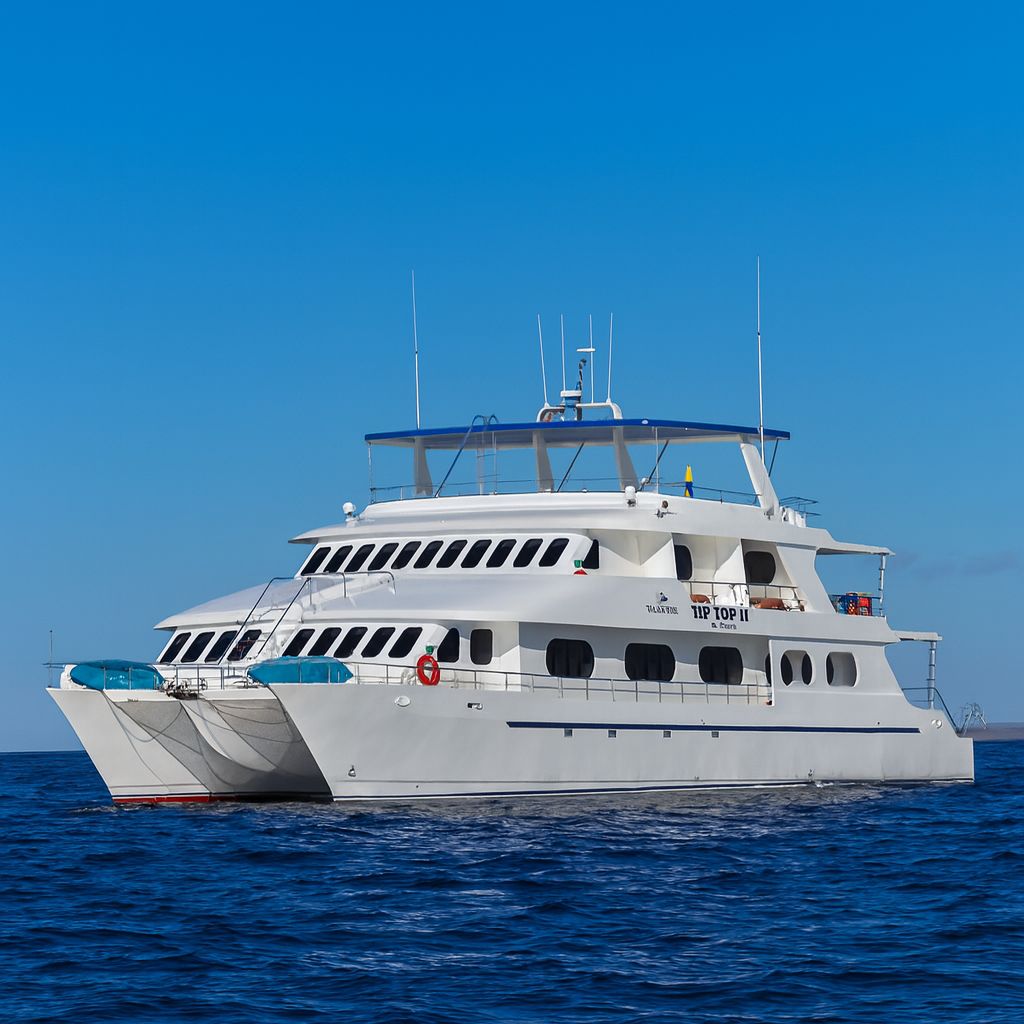
On top of the listed cruise price, budget a minimum of $600 to $800 per person in additional costs for a standard 7 to 8 day trip: $200 for the National Park fee, $20 for the TCT card, $100 to $160 in gratuities, $150 to $300 in drinks and personal spending, and $150 to $300 for travel insurance. Domestic flights add another $300 to $500 per person if not included. International flights from North America add $600 to $1,500 per person on top of that.
The traveler who budgets only the cruise price and is surprised by everything else is not uninformed. They were given incomplete information. Most boat listings show the headline cruise rate because that’s what operators compete on. The fees, tips, and travel logistics sit in the fine print or aren’t mentioned at all until booking confirmation arrives.
We’ve talked to thousands of travelers about what their Galapagos trips actually cost. The gap between what people budgeted from the listing price and what they actually spent runs $800 to $1,500 per person on average. Almost all of it is predictable and avoidable with proper planning. The National Park fee never changes. The tip expectation never changes. The domestic flight cost is predictable months in advance. None of these are surprises if someone tells you about them before you book.
| Overlooked Cost | % Who Forgot to Budget for It | Avg Amount Underbudgeted (Per Person) | Typical Comment |
|---|---|---|---|
| National Park fee ($200 cash) | 64% | $450 | “I had no idea I needed cash at the airport” |
| Guide and crew gratuities | 78% | $250 | “The envelope appeared on the last night and I wasn’t prepared” |
| Alcoholic drinks onboard | 41% | $220 | “Assumed drinks were included like at a resort” |
| Domestic flights (Ecuador mainland to islands) | 52% | $180 | “I thought the cruise price covered getting to the islands” |
| Travel insurance | 47% | $200 | “Bought it last minute and paid more than I needed to” |
| Pre-cruise hotel night in Ecuador | 38% | $250 | “Didn’t realize I needed to arrive in Ecuador the day before” |
The full picture, built from the cruise price outward, looks like this for a typical first-time traveler on a tourist superior 8-day boat: cruise rate, plus $220 in government fees, plus $120 to $160 in gratuities, plus $300 to $500 in domestic flights, plus $150 to $300 in drinks and personal spending, plus $200 to $400 in travel insurance, plus $100 to $200 for an overnight hotel in Quito or Guayaquil. That’s $1,290 to $1,780 per person added to whatever the boat costs. It’s not small. Budget for it from day one.
Frequently Asked Questions
Is the naturalist guide always included on a Galapagos cruise?
Yes, without exception. The Galapagos National Park requires a certified naturalist guide to accompany all visitor groups at every landing site. This is a legal requirement, not an optional service. Every boat at every price point includes a licensed bilingual guide as part of the cruise package.
Does a Galapagos cruise include transfers from the airport to the boat?
Usually yes, for the transfer between the Galapagos island airport and the boat embarkation point. This is standard across most operators. Transfers from mainland Ecuador airports (Quito or Guayaquil) to your pre-cruise hotel are not typically included unless you’re on a fully bundled luxury package that specifies it.
Is Wi-Fi included on Galapagos cruises?
On most 2026 vessels, yes. Starlink satellite internet is now fitted on roughly 90% of the fleet and is generally offered free to passengers on first class and luxury boats. Some tourist superior and budget boats charge a small daily fee or offer it only in common areas. Check with your specific vessel before assuming full connectivity throughout.
Are sea kayaks included on a Galapagos cruise?
On many first class and luxury vessels, kayaking is included as part of the excursion program. On tourist superior boats it varies by vessel. On budget boats it’s rarely included and sometimes available to rent. If kayaking is something you specifically want, check that it’s confirmed on your chosen boat before booking.
Does a Galapagos cruise include laundry service?
Not typically on standard or tourist superior boats. First class and luxury vessels more commonly offer laundry service, sometimes included and sometimes for a per-item fee. On a 4 or 5-day cruise it’s rarely needed. On a 7 to 8-day trip, especially in the warm season when you’re changing clothes multiple times a day after water excursions, laundry becomes more relevant. Pack accordingly or check whether your boat offers it.
Does a more expensive cruise include scuba diving?
No. Scuba diving is not available on any standard naturalist cruise, regardless of class or price. National Park regulations restrict diving to dedicated liveaboard vessels with specific dive permits. If scuba diving is your priority, you need a purpose-built diving liveaboard with a completely different permit, itinerary, and vessel type than a standard nature cruise.
Want to Know Exactly What Your Cruise Includes Before You Book?
Every boat we recommend comes with a clear breakdown of what’s in and what’s out. No ambiguity about whether the wetsuit is extra, whether the domestic flights are covered, or whether tips are expected. We’ve been on these boats personally and we know what each one actually delivers.
Tell us your travel dates, your group size, and your rough budget, and we’ll match you to boats where the inclusions genuinely fit what you’re looking for. Rated 4.9 stars on Google and TripAdvisor. No pressure, no obligation. Get in touch here and let’s find the right fit.
Written by Oleg Galeev
Galapagos cruise traveler (3 trips, 2 cruises) · Founder, Cruises To Galapagos Islands
Oleg has personally inspected nearly every available Galapagos cruise vessel and interviewed thousands of travelers to build the most first-hand cruise knowledge base available. He also runs the Ecuador travel blog mytrip2ecuador.com and the YouTube channel My Trip to Somewhere.
Cruises To Galapagos Islands is rated 4.9 stars on Google and TripAdvisor.
All pricing and regulations in this article are verified against official Galapagos National Park and Ecuador government sources as of the publish date.