
TL;DR
The listed cruise price never covers six things: the $200 National Park entrance fee (cash only on arrival), the $20 INGALA Transit Control Card, international flights to Ecuador, domestic flights from Ecuador’s mainland to the islands, travel insurance, and guide and crew gratuities. Beyond those universal gaps, most boats also exclude alcoholic beverages, wetsuit rental on budget vessels, laundry service, and any personal spending on souvenirs or extras in port. The gap between the advertised cruise price and what you actually spend runs $1,200 to $2,500 per person on a typical 7 to 8 day trip. Budget for it from day one.
| Cost | Amount | Who Pays It |
|---|---|---|
| National Park entrance fee | $200 adults / $100 children under 12 | Every visitor, every class, cash only on arrival |
| INGALA TCT card | $20 per person | Every visitor; completed online before flying |
| Domestic flights (mainland to islands) | $300 to $500 per person round-trip | Excluded on most boats unless package specifies otherwise |
| International flights to Ecuador | $600 to $1,500+ per person | Always your cost; never included in cruise price |
| Guide gratuity | $10 to $20 per person per day | Cash, given in envelope on final cruise night |
| Crew gratuity | $10 to $20 per person per day | Cash, separate envelope from guide; split among crew |
| Alcoholic beverages | Beer $5 to $8; cocktails up to $12; wine $30 to $80 per bottle | Excluded on most boats; bar tab settled at cruise end |
| Wetsuit rental (budget boats) | $25 to $35 per week | Included on tourist superior and above; rental on budget class |
| Travel insurance | $150 to $800 per person | Required for entry; never included in cruise price |
| Pre-cruise Ecuador hotel | $50 to $200 per night | Strongly recommended night before Galapagos flight |
| Souvenirs and personal spending | $50 to $300+ | Small shops in Puerto Ayora and Puerto Baquerizo Moreno |
Why Do So Many Travelers Get Surprised by Extra Costs on a Galapagos Cruise?
The gap between advertised cruise prices and actual trip costs exists because operators compete on the cruise rate, not the total spend. The headline number represents the boat, the cabin, the meals, and the excursions. Everything that sits outside the vessel – government fees, flights, tips, insurance – lives in fine print or isn’t mentioned at all until you’re deep into the booking process. On a trip this expensive, that gap can run $1,200 to $2,500 per person above the listed price.
There is nothing dishonest about this structure. Every industry advertises the core product and leaves the peripheral costs to the buyer. You see it when you book a flight and discover the seat fee, the baggage fee, and the payment processing charge at checkout. Galapagos cruises work the same way, just with larger numbers and more consequential items in the gaps.
What makes it more disorienting here is that the Galapagos sits far enough outside most travelers’ experience that the hidden costs aren’t obvious from general knowledge. When you book a Caribbean resort, you probably know you’ll tip, buy drinks, and pay for excursions. But mandatory government fees paid in cash at a remote island airport? An immigration card you complete online 48 hours before departure? A legal requirement for travel insurance with medical evacuation coverage? These aren’t things most people intuitively know to budget for, because they’ve never encountered them before.
The pattern we’ve seen across thousands of traveler conversations is consistent. Almost everyone arrives knowing about the cruise price. Roughly half arrive without having budgeted the $200 park fee in cash. A meaningful number arrive without having completed the TCT card online. And nearly everyone underestimates what they’ll spend on tips. None of these are surprises if someone tells you about them upfront. This article is that conversation.
We walk every traveler we work with through the full cost picture before they book, not after. No surprises at the airport and no envelope shock on the last night. If you want that kind of straight-talking guidance from a 4.9-star rated agency, get in touch here and we’ll give you a complete all-in estimate for your specific dates and group.
We’ve put together a full inclusions breakdown in our what is actually included in a Galapagos cruise price guide so you can compare operators on equal terms and know exactly what a fair price covers.
What Government Fees Are Never Covered by the Cruise Price?
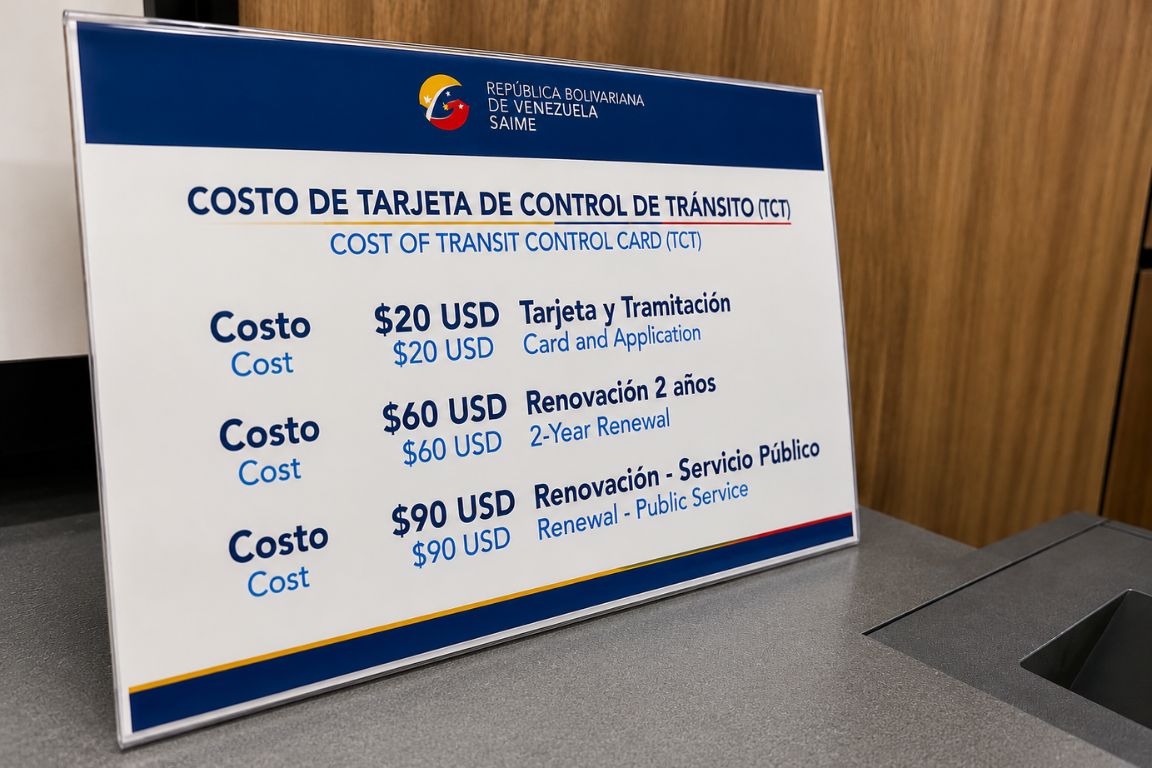
Two government-mandated fees apply to every Galapagos visitor without exception: the $200 National Park entrance fee (adults) and the $20 INGALA Transit Control Card. Neither is included in the listed cruise price on most boats. Both are non-negotiable. Skip either one and you will not be permitted to enter the archipelago. Together they add $220 per adult to your trip cost before you’ve bought a single drink or tipped a single crew member.
The National Park entrance fee jumped from $100 to $200 for adult foreign visitors in August 2024. Children under 12 pay $100. Ecuadorian nationals pay a reduced rate of $30. The fee is collected in cash at the airport checkpoint when you land in the Galapagos, either at Baltra or San Cristóbal. The money goes directly to conservation and local government, distributed across the National Park, municipalities, INGALA, and other institutions. There is no card reader that reliably works at this checkpoint. Bring the cash in U.S. dollars. Do not arrive assuming you can pay by card.
Some cruise operators collect the park fee as part of the booking and pay it on your behalf on arrival. This is convenient but it means the fee amount is buried in the cruise total rather than shown separately. Read your booking documentation carefully. If the National Park fee isn’t listed as included, it’s not.
The TCT card is a separate $20 immigration document required by INGALA, the Ecuadorian body that regulates the Galapagos. It must be completed online at the official Galapagos government portal before your flight to the islands, ideally within 48 hours of departure. You get a QR code by email, which you show at the mainland airport checkpoint before boarding your Galapagos flight. The in-person counter at the airport used to be an alternative but is being phased out. Complete the registration online well before travel day. A missed TCT means a delayed or cancelled flight to the islands, and your cruise ship will not wait.
Not sure what paperwork, fees, and entry processes are waiting for you before you even set foot on a Galapagos island? Here’s our Galapagos entry requirements, transit card and national park fees explained guide so you arrive fully prepared.
| Fee | Amount | When Paid | How Paid | Can Cruise Cover It? |
|---|---|---|---|---|
| National Park entrance fee | $200 adults / $100 children under 12 | On arrival at Galapagos airport | Cash (USD) only; cards unreliable | Sometimes; always check |
| INGALA TCT card | $20 per person | Before flying; complete online 48 hrs ahead | Online payment; QR code on phone or printed | Rarely; almost always separate |
Are Tips and Gratuities Expected on a Galapagos Cruise?
Yes, gratuities are expected on every Galapagos cruise and represent one of the most consistently underbudgeted costs of the entire trip. The standard recommendation is $10 to $20 per person per day for the naturalist guide and a separate $10 to $20 per person per day split among the captain and crew. On an 8-day first class trip, a couple should plan to leave $320 to $640 in gratuities alone. Two envelopes are provided on the final evening: one for the guide, one for the crew.
The two-envelope system trips up first-timers who assume tips work like a restaurant, where you leave one amount for one service. On a Galapagos cruise, the naturalist guide and the vessel crew are entirely separate teams with different roles and different tip pools. The guide leads your excursions, delivers wildlife briefings, and shapes the intellectual experience of the trip. The crew feeds you, maintains the vessel, operates the zodiacs, cleans the cabins, and keeps you safe at sea. Both groups depend on gratuities as a meaningful part of their income, and the tip is calibrated by class.
For budget and tourist superior cruises, the broadly accepted range is $10 to $15 per person per day for the guide and the same for the crew. First class and luxury bumps that to $15 to $25 per person per day for each. On a 7-day tourist superior cruise at $12 per day, a solo traveler leaves $84 for the guide and $84 for the crew: $168 total. A couple on the same boat leaves $336. On an 8-day first class cruise at $20 per day, a couple leaves $320 for the guide and $320 for the crew: $640 total.
One thing worth knowing: some luxury operators, including Celebrity Cruises and Hurtigruten Expeditions, include gratuities in the price. A few others note on their booking documentation that tips are “not expected” or already built in. Always check. But for the large majority of the fleet, tips are not included and are very much expected.
Bring U.S. dollars in small denominations. The tip envelopes typically appear in your cabin on the final evening. Some passengers write a personal note alongside the cash. It’s not required, but the guides and crew genuinely appreciate it after a week of hard work in a remote environment.
Want to know who to tip, how much, and when on a Galapagos cruise without getting it wrong? Here’s our Galapagos cruise tipping guide so you arrive prepared.
What Does Alcohol Actually Cost on a Galapagos Cruise?

Alcoholic beverages are excluded from virtually every standard Galapagos cruise price across all classes and are purchased separately at onboard bar prices. Beer typically runs $5 to $8 per bottle, cocktails up to $12, and wine $30 to $80 per bottle depending on the vessel. A couple who each have a drink or two per evening over 8 days can easily spend $200 to $400 extra on alcohol alone. Very few boats include a drinks package, and those that do are generally at the luxury end of the fleet.
The pricing reality surprises travelers who have experienced all-inclusive resorts, where drinks flow freely as part of the package. A Galapagos cruise operates more like a restaurant: meals are included, beverages with dinner are non-alcoholic by default, and anything from the bar goes on your tab. The tab is settled at the end of the cruise, usually by cash or card depending on the vessel.
There is a meaningful price gap between buying wine onboard versus buying it before you arrive. A bottle of wine that costs $15 at the duty-free shop in Quito airport can cost $50 onboard the same category of boat. Some boats allow passengers to bring their own alcohol with a corkage fee of $10 to $40 per bottle. Others prohibit outside alcohol entirely. A few allow one bottle per cabin without charge. None of these policies are standard across the fleet, so check before you pack anything.
Ecuador allows travelers to bring up to three liters of alcohol in duty-free from an international flight. If your boat permits outside alcohol and doesn’t charge a corkage fee, picking up a few bottles in Quito before flying to the islands is a genuine money-saver. If your boat prohibits it, don’t bother. The logistics are not worth the risk of confiscated wine and a strained relationship with the crew before you’ve even unpacked.
Before you book any boat, we can tell you exactly what the drinks policy is and whether the onboard bar prices are reasonable for the class. A few boats we work with have genuinely better bar pricing than others at the same tier. It’s a small thing, but over 8 days it adds up. Send us a message here and we’ll factor that into our recommendation.
Which Activities and Equipment Are Not Included in the Base Price?
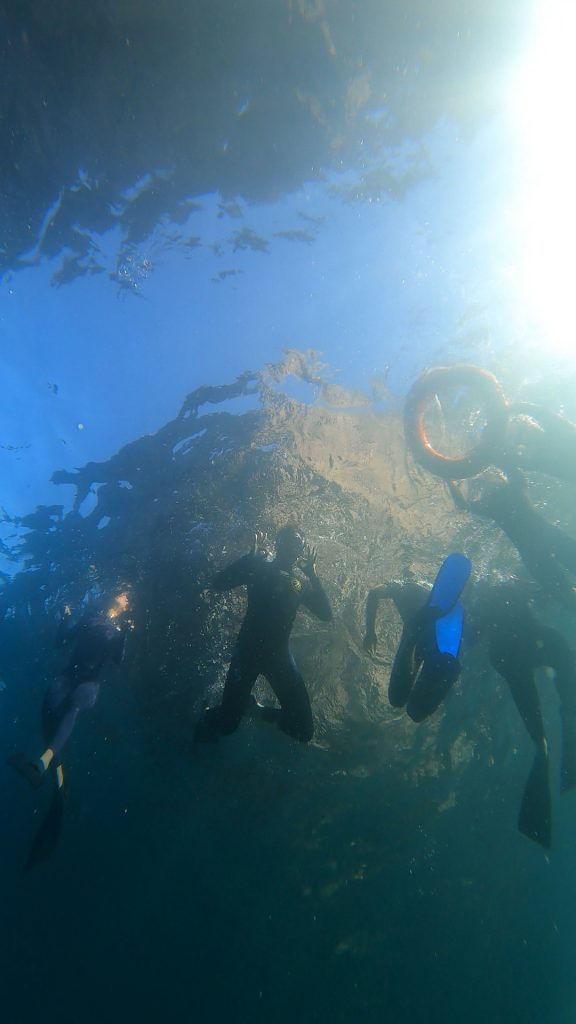
Wetsuit rental is the most common equipment cost excluded on budget-class boats, running $25 to $35 per week. Scuba diving is never available on standard nature cruises regardless of price; it requires a dedicated liveaboard with a separate park permit. On most vessels, kayaking and stand-up paddleboarding are included on first class and luxury boats but may carry a rental charge on tourist superior and budget boats. Photography add-ons, spa services, and specialty guided dives are always additional.
The wetsuit gap matters most in the cool season, June through November, when the Humboldt Current drops water temperatures to 20 to 23°C. That’s cold for someone who stops moving underwater. Budget boats that don’t include wetsuits charge $25 to $35 for the week, which is worth paying. Some travelers try to skip the wetsuit to save money and regret it by day two when every snorkel session becomes a shivering endurance exercise rather than an encounter with sea lions.
On scuba diving: the frustration is real and worth addressing directly. A standard nature cruise cannot offer scuba diving at any price point, in any class, on any boat. This is a National Park regulation, not a boat policy. Diving from a non-diving vessel is illegal in the Galapagos Marine Reserve. The only legal way to dive is from a dedicated liveaboard that holds a specific diving permit. Those boats run different itineraries, different pricing, and a completely different experience. If diving is your primary reason for visiting the Galapagos, you need a different booking entirely.
Kayaking is a grey area. On most first class and luxury boats, kayaking is part of the daily excursion program with no extra charge. On tourist superior boats it’s vessel-specific, sometimes included and sometimes available for a fee. Budget boats rarely include it. If kayaking matters to you, confirm it’s included on your specific boat before you book, not after you board.
What Travel Costs Outside the Boat Are Always Your Responsibility?
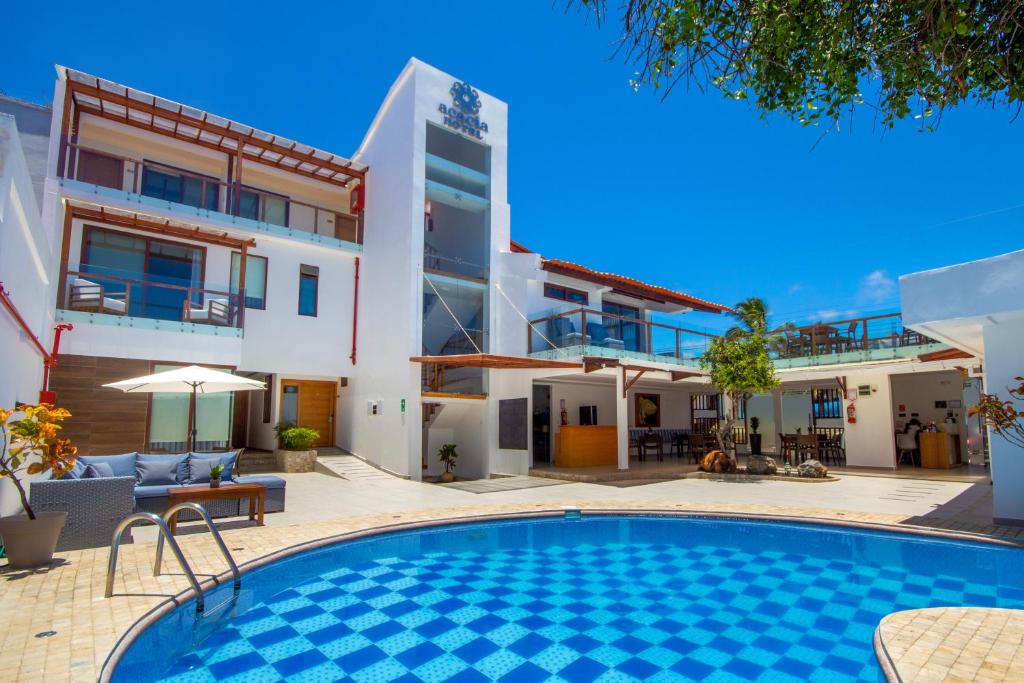
Three travel costs outside the boat are your responsibility on virtually every Galapagos cruise booking: international flights to Ecuador, domestic flights from Quito or Guayaquil to the Galapagos, and a hotel night in mainland Ecuador before your Galapagos flight. Together, these three line items add $1,000 to $2,500 per person to the trip cost on top of the cruise price, depending on your origin city and hotel preference.
International flights from North America to Ecuador run $600 to $1,500 per person round-trip, depending on origin city, airline, booking lead time, and season. Flights from Europe run $700 to $1,400. These are the costs that anchor the entire trip budget and should be researched before committing to a cruise, not after. The cruise price is fixed once you book. International flight prices are not.
Domestic flights from Quito or Guayaquil to Baltra or San Cristóbal add $300 to $500 per person round-trip on LATAM or Avianca. Some cruise packages include domestic flights; many do not. This is one of the most frequently misunderstood costs in Galapagos planning. “Flights included” on some marketing materials means only the Ecuador-to-islands leg, not the international journey. On other packages it means nothing is included. Read carefully.
The mainland hotel night is easy to overlook because it’s not part of the cruise booking at all. But arriving in Ecuador the morning of your Galapagos flight is a genuine risk. International flight delays happen. Connection times slip. Missing the domestic flight to the Galapagos on the day your cruise begins means missing the first day of the expedition, and cruise operators are not obligated to wait or refund. One night in Quito or Guayaquil costs $50 to $200 depending on the hotel category. It’s cheap insurance against a much more expensive problem.
| Cost | Typical Range | Notes |
|---|---|---|
| International flights (North America) | $600 to $1,500 round-trip | Varies widely by origin city and booking timing; never included in cruise |
| International flights (Europe) | $700 to $1,400 round-trip | Direct routes to Quito via Madrid, Amsterdam; connect to Guayaquil internally |
| Domestic flights (mainland to Galapagos) | $300 to $500 round-trip | LATAM or Avianca; sometimes included in luxury packages; check before assuming |
| Pre-cruise hotel (Quito or Guayaquil) | $50 to $200 per night | At least one night strongly recommended; two nights if international connection has layover risk |
| Post-cruise hotel (if needed) | $50 to $200 per night | Depends on return flight timing; Galapagos flights land mid-afternoon in Quito/Guayaquil |
What Personal and Onboard Extras Catch Travelers Off Guard?
The personal and onboard costs that most consistently catch travelers off guard are: the bar tab at the end of the cruise (often higher than expected), souvenir purchases in port towns, laundry fees on longer itineraries, and the pre-cruise shopping run for personal items that were forgotten at home. None of these are large individually, but together they routinely add $200 to $500 per person above what people budgeted for personal spending.
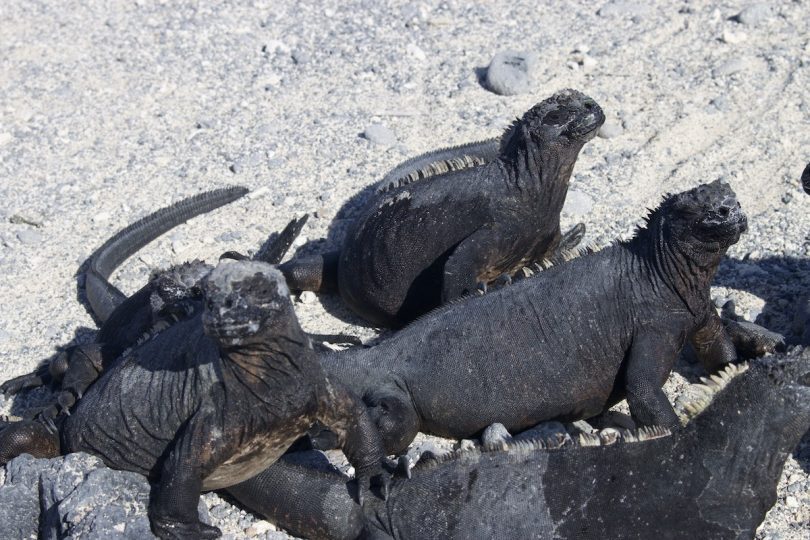
The bar tab surprise is the most common one. People drink more on a Galapagos cruise than they expect to. There’s a psychological component: you’ve spent $5,000 on the trip, you’re in one of the most extraordinary places on Earth, you’ve just watched marine iguanas swimming next to you, and the sunset off the stern of a small yacht at Fernandina is extraordinary. A glass of wine with dinner turns into two. Every evening. For eight days. At $8 to $12 per glass or $50 per bottle, the bar tab accumulates in ways that feel inconsequential in the moment and visible on the credit card statement at home.
Puerto Ayora on Santa Cruz is the main shopping hub for most itineraries that pass through the central islands. There are souvenir shops selling the expected range of Galapagos-themed goods. Most items are affordable individually, but the cumulative spending of a group buying gifts for people at home adds up. Budget $50 to $150 per person if you plan to shop. More if you’re bringing gifts for a large family.
Laundry is less common on short itineraries but relevant on 8-day trips, particularly in the warm season when passengers are changing clothes twice a day after water excursions. First class and luxury boats often offer laundry for a per-item fee. Budget and tourist superior boats rarely offer it. Plan your packing for re-wearing rather than fresh clothes every day, or budget for a laundry service if your boat offers it.
One overlooked cost that nobody mentions in cruise planning guides: the cash you need on embarkation day before you board. If the National Park fee isn’t prepaid by your operator, you’re paying $200 cash at the airport on the day you arrive. If you forgot to complete the TCT card online, you’re paying $20 at the airport counter. If you arrive in Ecuador and realize you need sunscreen, seasickness medication, or a dry bag that you forgot at home, you’re buying it at tourist-area prices before boarding. Come with more cash than you think you need, in U.S. dollars, in mixed denominations.
What Does the True All-In Cost of a Galapagos Cruise Look Like?
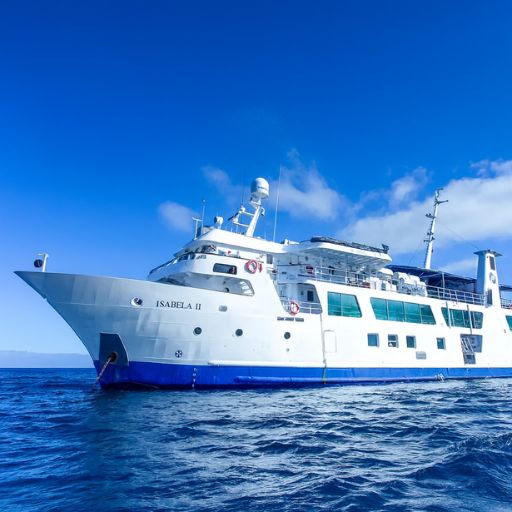
The true all-in cost of a Galapagos cruise runs $1,200 to $2,500 per person above the listed cruise price, depending on cruise class, travel origin, and personal spending habits. For a couple on a 7-day tourist superior cruise departing from North America, the realistic total is $14,000 to $18,000, not the $8,000 to $10,000 the cruise listings suggest. Every one of those extra costs is predictable and budgetable in advance. The only surprise is not knowing about them before you book.
The table below builds the full picture from scratch for three common traveler profiles. These are realistic ranges, not worst-case scenarios. The figures reflect what travelers actually spend, based on thousands of post-trip conversations collected through mytrip2ecuador.com and our YouTube audience over the years. Every item is listed separately so you can adjust for what your specific boat does and doesn’t include.
| Cost Category | Couple, Tourist Superior, 7 Days | Solo Traveler, First Class, 8 Days | Couple, Luxury, 8 Days |
|---|---|---|---|
| Listed cruise price (total) | $7,000 to $9,800 | $7,320 to $11,200 (incl. single supplement) | $12,800 to $22,400 |
| National Park fees | $400 (2 adults) | $200 | $400 (2 adults) |
| TCT cards | $40 | $20 | $40 |
| Domestic flights | $600 to $1,000 | $300 to $500 | $600 to $1,000 (or included) |
| International flights | $1,400 to $3,000 | $700 to $1,500 | $2,000 to $5,000 |
| Guide and crew gratuities | $280 to $560 (at $10 to $20/day each) | $240 to $480 | $480 to $800 (or included) |
| Alcohol onboard | $150 to $400 | $80 to $200 | $0 to $300 (sometimes included) |
| Travel insurance | $400 to $700 | $250 to $500 | $600 to $1,000 |
| Pre/post Ecuador hotels and meals | $200 to $400 | $100 to $200 | $400 to $1,000 |
| Souvenirs and personal spending | $150 to $400 | $100 to $250 | $300 to $600 |
| Realistic Total (all travelers) | $10,620 to $16,700 | $9,310 to $15,050 | $17,620 to $32,540 |
| Gap Above Listed Cruise Price | $1,620 to $6,900 | $1,990 to $3,850 | $4,820 to $10,140 |
The gap between listed cruise price and real total is widest for couples because many of the fixed costs, such as the park fees, flights, and hotel nights, scale with the number of people. A solo traveler paying a single supplement at least avoids doubling those line items. The luxury tier shows a smaller relative gap because some operators bundle flights, park fees, and gratuities into their listed price, shrinking the hidden extras. Budget and tourist superior boats almost never bundle these items, so the gap is proportionally larger.
Three practical rules that come directly from what travelers report after the trip. First: bring $500 per person in U.S. cash, on top of whatever card budget you’re planning. Cash is needed for park fees, tips, small purchases in port, and anything where the card reader fails. Second: budget for the bar tab as a fixed cost, not an afterthought. Two drinks per person per evening over 8 days adds up to $200 to $400 per couple even at reasonable bar prices. Third: buy travel insurance the day you pay the cruise deposit. Most policies with the best cancellation coverage require purchase within 14 to 21 days of the initial booking. Waiting until a week before travel doesn’t unlock the same protections.
Want to know what you’re actually paying for at each price point before you hand over a significant chunk of your travel budget? Here’s our how much does a Galapagos cruise cost guide so you book with confidence.
Frequently Asked Questions
How much cash should I bring for a Galapagos cruise?
Bring at least $500 per person in U.S. dollars in mixed denominations. The absolute minimum covers the $200 park fee and $20 TCT card if not prepaid, plus a reasonable tip budget. The rest covers drinks, small purchases in port, and an emergency buffer. Credit cards work for bar tabs on most vessels but fail often enough that cash is the reliable option. Don’t arrive at a remote island airport assuming the card reader will work.
Do you have to tip on a Galapagos cruise?
Tipping is not legally mandatory but is strongly expected and standard practice across the entire fleet. The guide and crew rely on gratuities as a meaningful part of their income. Arriving without tipping, or leaving a token amount after a high-quality 8-day expedition, reflects poorly and is noticed. Budget for tips as a fixed cost, not a discretionary one.
Is travel insurance really required for the Galapagos?
Yes. Travel insurance with medical and evacuation coverage is a legal entry requirement for the Galapagos Islands. The islands are remote, medical facilities are limited, and an emergency evacuation to the Ecuadorian mainland can cost $10,000 to $100,000 out of pocket without coverage. Beyond the legal requirement, a Galapagos cruise involves significant upfront non-refundable payments and physical activity in challenging terrain. Insurance is genuinely necessary here, not just advisable.
Are domestic flights from Ecuador to the Galapagos usually included?
Not on most bookings. Domestic round-trip flights from Quito or Guayaquil to Baltra or San Cristóbal run $300 to $500 per person and are excluded from the cruise price on the majority of standard tourist superior and first class boats. Some luxury packages include them. Always confirm with the specific operator before assuming. Booking domestic flights independently without coordinating the airport with your cruise embarkation point is one of the most common and expensive planning mistakes on this trip.
Can I bring my own alcohol on a Galapagos cruise?
It depends entirely on the boat. Some vessels allow one bottle per cabin with no charge. Others charge a corkage fee of $10 to $40 per bottle. Some prohibit outside alcohol entirely. Check the boat policy before you buy anything. Ecuador allows up to three liters of duty-free alcohol on incoming international flights, so purchasing at Quito airport before flying to the islands is worth considering if your boat’s policy is favorable.
What is the single supplement on a Galapagos cruise?
The single supplement is the surcharge a solo traveler pays to occupy a double cabin alone. It typically runs 50 to 100% of the per-person cabin rate. On a $5,000 first class cruise, a 75% supplement means the solo traveler pays $8,750. Some vessels have dedicated single cabins with no supplement. Some operators will match solo travelers to share a cabin with another same-gender solo, which eliminates the supplement. Ask specifically when inquiring – this is negotiable on some boats during shoulder season when they’d rather fill the cabin than sail empty.
Want a True All-In Cost for Your Specific Trip?
The ranges in this article are realistic but broad, because boats vary significantly in what they include and exclude. The fastest way to get an accurate number is to work through the specifics with someone who knows the current fleet and has been on these boats personally.
Tell us your travel dates, group size, and the cruise class you’re considering, and we’ll put together a full cost breakdown with every line item made clear before you commit to anything. Rated 4.9 stars on Google and TripAdvisor. No pressure, no obligation. Get in touch here.
Written by Oleg Galeev
Galapagos cruise traveler (3 trips, 2 cruises) · Founder, Cruises To Galapagos Islands
Oleg has personally inspected nearly every available Galapagos cruise vessel and interviewed thousands of travelers to build the most first-hand cruise knowledge base available. He also runs the Ecuador travel blog mytrip2ecuador.com and the YouTube channel My Trip to Somewhere.
Cruises To Galapagos Islands is rated 4.9 stars on Google and TripAdvisor.
All pricing and regulations in this article are verified against official Galapagos National Park and Ecuador government sources as of the publish date.