
TL;DR
A cruise gives you access to 70% more visitor sites than a land tour, including the remote outer islands where the most extraordinary wildlife encounters happen. A land tour costs roughly half as much, offers more flexibility, and is a better fit for travelers with tight budgets, young children, severe motion sickness, or a desire to experience actual island life. Neither option is objectively better. The right choice depends on what you actually want from the Galapagos. Wildlife maximalists choose the cruise. Budget-conscious, flexible travelers choose land. Many experienced travelers combine both on return visits.
| Factor | Cruise | Land Tour |
|---|---|---|
| Visitor sites accessible | All 60+ including remote outer islands | ~18 sites reachable by day tour from inhabited islands |
| Cost (7 to 8 days, mid-range, per person) | $6,000 to $9,000 all-in | $2,500 to $5,000 all-in |
| Wildlife diversity | Maximum – remote islands, rare species | Good – central island species only |
| Flexibility | Low – fixed itinerary, fixed schedule | High – choose daily, adjust pace |
| Motion sickness risk | Moderate – overnight passages between islands | Lower – but speedboat day transfers still expose you |
| Solo traveler cost | Single supplement adds 50 to 100% | No supplement; hotels priced per room |
| Local culture access | Minimal – most time on uninhabited sites | Good – stay in real towns, eat local |
| Age restrictions | Most boats require children 7 and older | No age restrictions; suitable for any age |
| Booking flexibility | Fixed departures; book months in advance | Book anytime; flexible start dates |
| Scuba diving | Not available on nature cruises | Available from dive shops on Santa Cruz, San Cristóbal, Isabela |
What Is the Core Difference Between a Galapagos Cruise and a Land Tour?
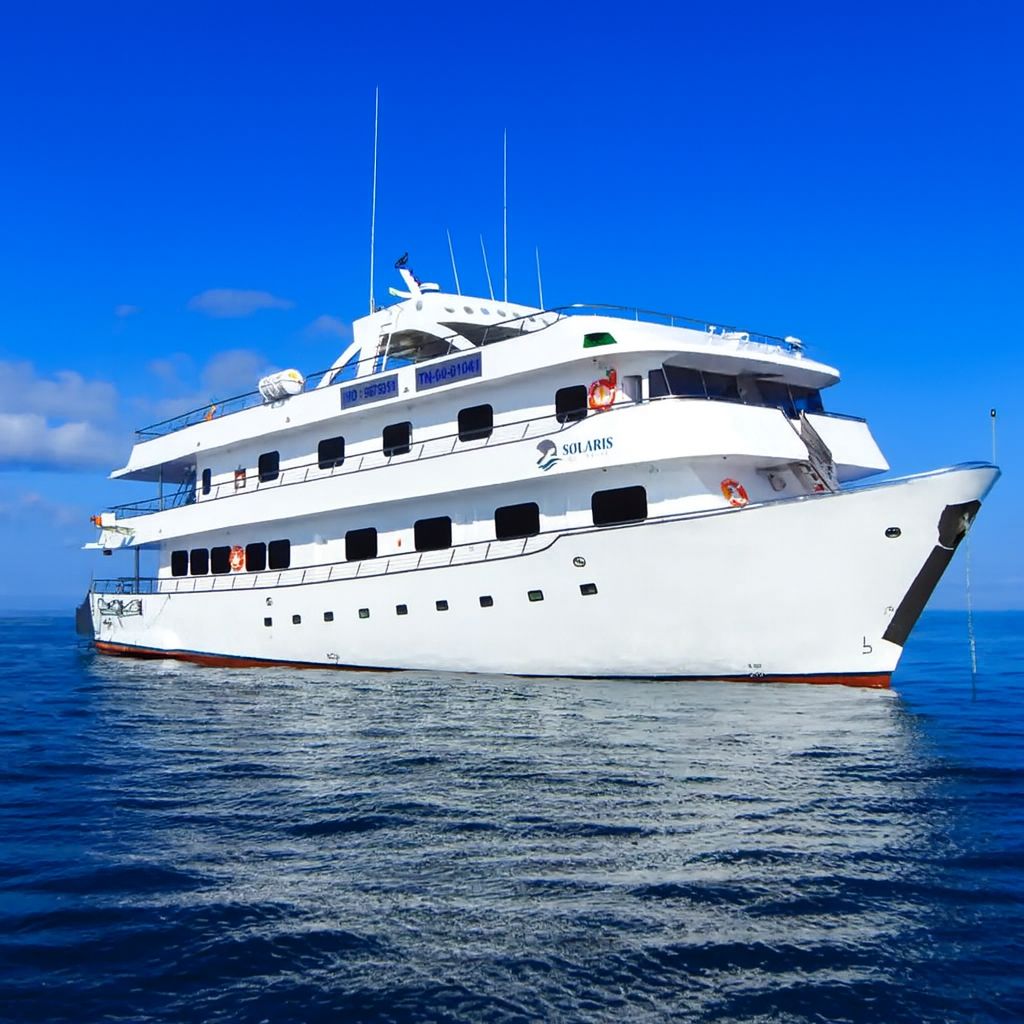
A Galapagos cruise is a live-aboard expedition where you eat, sleep, and travel on a small ship, waking up at a new uninhabited island each morning. A land tour means staying in hotels on one or more of the four inhabited islands and taking day boat excursions to nearby visitor sites. The fundamental difference isn’t comfort or price. It’s access. A cruise reaches islands that a land tour physically cannot, and that access gap shapes everything else about the two experiences.
The Galapagos archipelago spans 45,000 square kilometers of Pacific Ocean. Its 19 major islands are scattered across that space, and 97% of the total land area is protected National Park. The four inhabited islands where tourists can stay are Santa Cruz, San Cristóbal, Isabela, and Floreana. Everything else is accessible only by boat, and only by boats that carry a certified naturalist guide operating under a National Park permit.
On a cruise, the boat moves between islands overnight. You wake up anchored at Española, or Genovesa, or Fernandina, already at the site. Your excursion starts at 7am when the wildlife is most active, the light is best, and the heat hasn’t peaked. You’re in a group of 8 to 16 people with one certified guide. You spend two to three hours at the site, return to the boat, eat, rest, and repeat in the afternoon at a different location.
On a land tour, you wake up in a hotel in Puerto Ayora or Puerto Baquerizo Moreno, and a speedboat takes you to a visitor site accessible within a half-day’s travel. You arrive midday or later. The group may be larger. The guide changes each day. You return to your hotel in the evening, choose a restaurant for dinner, and have free time. The experience has more texture and spontaneity. It also has harder ceilings on where you can go.
If you’re genuinely torn between these two options and want someone who has personally experienced both to talk through what makes sense for your specific situation, that’s exactly the kind of conversation we have with travelers every week. Get in touch here and we’ll give you an honest read, not a sales pitch for whichever costs more.
Which Option Gives You Access to More of the Galapagos?
A cruise gives you substantially more access. Roughly 70% of the Galapagos National Park’s visitor sites can only be reached by an overnight vessel, meaning land-based travelers simply cannot visit them. The remote outer islands, including Española, Genovesa, Fernandina, and the northern sites at Darwin and Wolf, hold the wildlife encounters most commonly associated with the Galapagos in people’s imaginations. All of them are cruise-only.
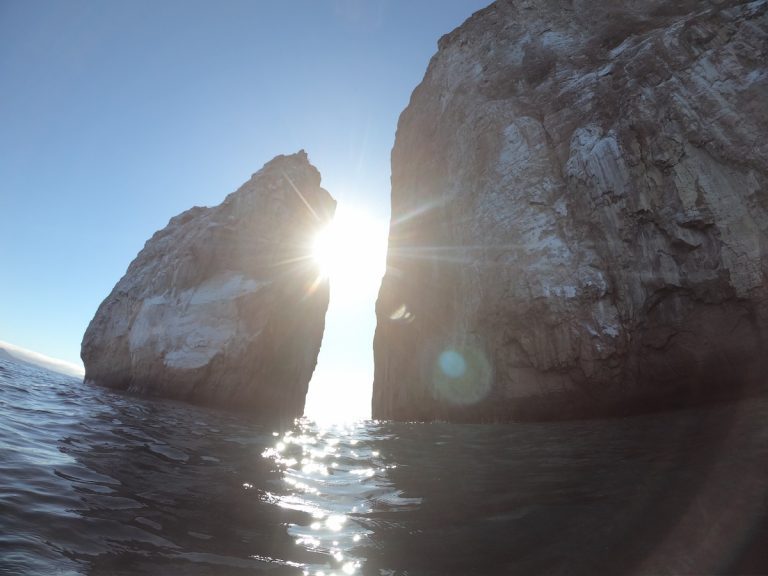
Land tours reach about 18 visitor sites accessible by day boat from the three main inhabited islands. These are genuinely good sites. North Seymour has blue-footed boobies and magnificent frigatebirds in nesting season. Bartolome has the iconic Pinnacle Rock and Galapagos penguins. Kicker Rock off San Cristóbal is one of the best snorkeling sites in the archipelago. Tortuga Bay on Santa Cruz offers a beach walk and calm-water snorkeling with rays and sharks. None of these are consolation prizes.
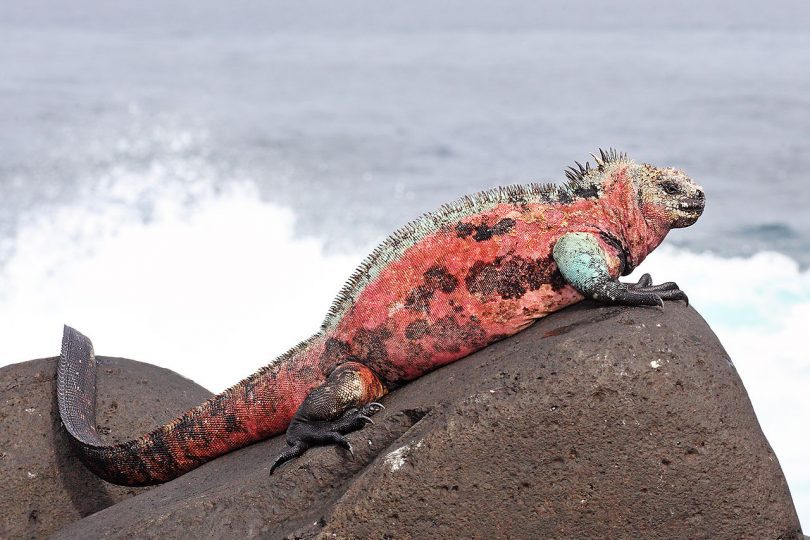
But the sites only a cruise reaches are in a different category entirely. Española Island, in the far southeast, holds the only significant breeding population of waved albatross in the world. Genovesa, the “bird island” in the northeast, has red-footed booby colonies, short-eared owls hunting by day, and a collapsed volcanic caldera that looks like nothing else on Earth. Fernandina, the youngest and most volcanically active island in the west, has marine iguanas in numbers that genuinely stop first-time visitors in their tracks. Flightless cormorants dry their vestigial wings on lava shores while sea lions sprawl around them entirely indifferent to your presence.
Those encounters are the ones travelers describe twenty years later. They are not available on a land tour, no matter how well the land tour is organized or how good the guide is. The wildlife on the accessible islands is wonderful. The wildlife on the outer islands is in a different league.
We’ve put together a full planning breakdown in our how to plan a Galapagos cruise guide so you know exactly what to sort out, in what order, and how to avoid the most common and costly mistakes.
| Island / Site | Land Tour (Day Boat) | Cruise | What You’d Miss Without a Cruise |
|---|---|---|---|
| North Seymour | ✓ | ✓ | Nothing; accessible by both |
| Bartolome (Pinnacle Rock) | ✓ | ✓ | Nothing; accessible by both |
| Kicker Rock (San Cristóbal) | ✓ | ✓ | Nothing; accessible by both |
| Española (waved albatross, Punta Suarez) | ✗ | ✓ | World’s only major waved albatross colony, Punta Suarez blowhole |
| Genovesa (red-footed boobies, Darwin Bay) | ✗ | ✓ | Vast booby colonies, short-eared owls, volcanic caldera |
| Fernandina (flightless cormorants) | ✗ | ✓ | Largest marine iguana colony, flightless cormorants, active volcano |
| Darwin and Wolf Islands | ✗ | Dive liveaboard only | Hammerhead and whale shark encounters; only via dive liveaboard |
| Los Túneles (Isabela) | ✓ | ✓ | Nothing; one of the best accessible snorkel sites |
How Does the Cost Compare Between a Cruise and a Land Tour?
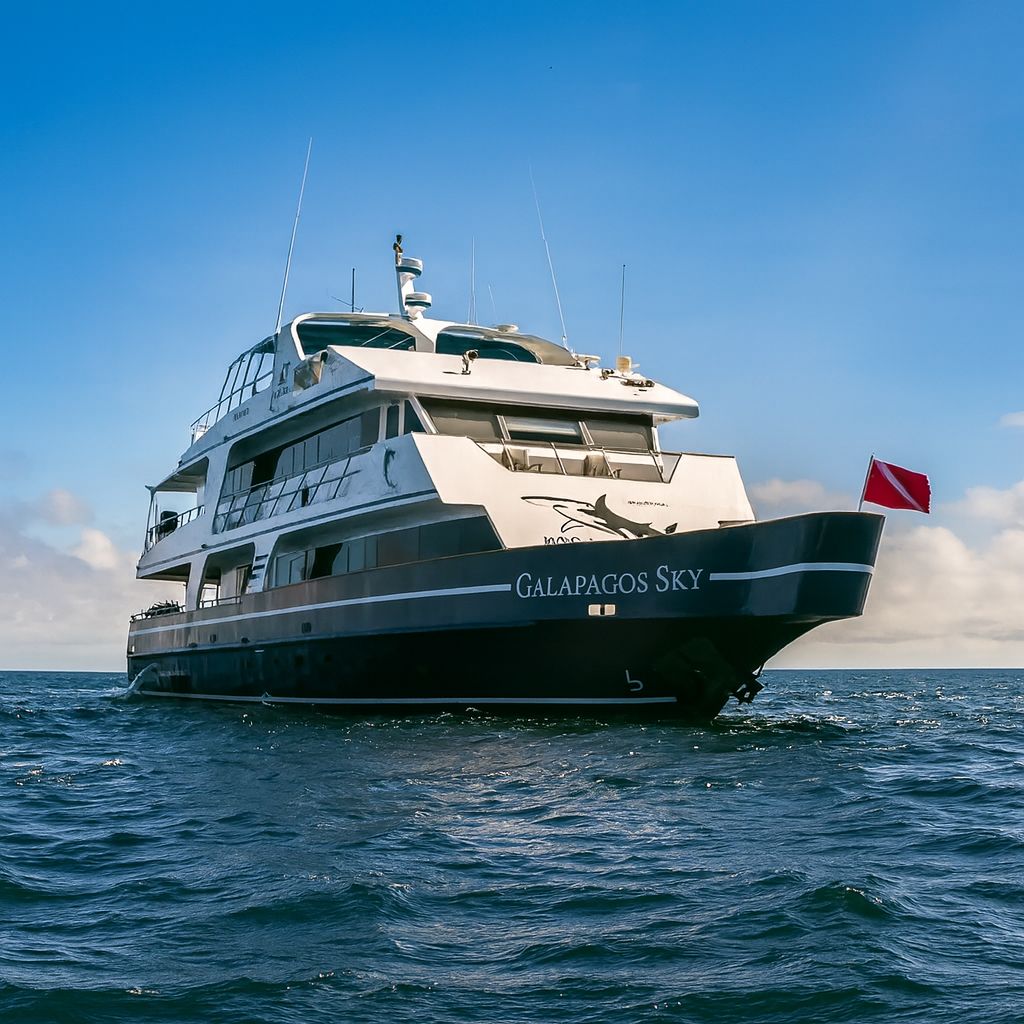
A land tour costs roughly 40 to 60% less than a comparable-quality cruise. A mid-range 7-day land tour runs $2,500 to $5,000 per person all-in from North America, including flights and park fees. A mid-range cruise covers the same period at $6,000 to $9,000 all-in. The gap is real but narrower than most people assume once land tour extras are properly accounted for: day tours, inter-island speedboat ferries, and out-of-pocket meals add up quickly.
The land tour budget breaks down differently than the cruise. Instead of one all-inclusive price, you pay for hotel nights separately ($50 to $200 per night depending on category), buy day tours individually ($80 to $280 each), pay inter-island speedboat fees ($30 per person each way), and cover most meals yourself outside of breakfast. A traveler who wants to see 5 or 6 different sites over 7 days on a land tour, staying on two or three islands, can easily spend $3,500 to $4,500 per person once everything is counted. That’s not cheap, but it’s meaningfully less than a tourist superior cruise for the same period.
Solo travelers find the biggest cost advantage on land. The single supplement on a cruise, typically 50 to 100% of the cabin rate, can add $2,000 to $4,000 to the trip cost. Hotels charge per room, not per occupancy, eliminating that surcharge entirely. For a solo traveler, a well-organized land tour can cost less than half of an equivalent cruise including the supplement.
One honest note: the gap between land tour and cruise costs is not as wide as the advertised prices suggest. This is because land tour listings typically show a base price for accommodation and guides only, leaving day tour costs, inter-island transport, and meals to be discovered later. A traveler who books a $1,500 land tour package and then adds 6 day tours at $150 each, three inter-island speedboats at $30 each, and 10 restaurant meals at $15 each has spent $3,500 before flights and park fees. That’s closer to a budget cruise than the headline numbers imply.
Not sure what a Galapagos cruise actually costs once you factor in everything beyond the headline price? Here’s our how much does a Galapagos cruise cost guide so you budget with realistic numbers.
Galapagos Financial Matrix: Cruise vs. Land Tour
| Cost Factor | Galapagos Cruise (Mid-Range) | Galapagos Land Tour (Mid-Range) |
| All-In Cost Range (7 Days) | $6,000 to $9,000 per person | $2,500 to $5,000 per person |
| Pricing Structure | All-Inclusive Headline Rate: Covers accommodation, all meals, all excursions, gear, and guiding under a single ledger. | Fragmented Pay-As-You-Go: Base package usually covers only hotels and basic guides; extras are paid incrementally. |
| Excursion & Day Costs | Included in the upfront price. | Paid individually: $80 to $280 per day tour. |
| Accommodation Rates | Included in the cabin price. | $50 to $200 per night (depending on hotel category). |
| Inter-Island Transport | Included (handled seamlessly overnight via the ship’s hull). | $30 per person, each way via public speedboat ferries. |
| Out-of-Pocket Meals | Included (all meals provided by the ship’s galley). | Most meals are out-of-pocket (except basic hotel breakfasts). |
| Solo Traveler Surcharge | High Impact: Single supplement fees run 50% to 100% of the cabin rate (adding $2,000 to $4,000). | Zero Surcharge: Hotels charge per room rather than per occupancy, eliminating the single supplement. |
| The “Hidden Cost” Reality | High price transparency; very few surprise expenses at checkout. | Advertised prices look drastically lower, but adding daily tours, transport, and meals can quickly push a $1,500 base package up to $3,500 before flights. |
Which Is Better for Wildlife Viewing: Cruise or Land Tour?
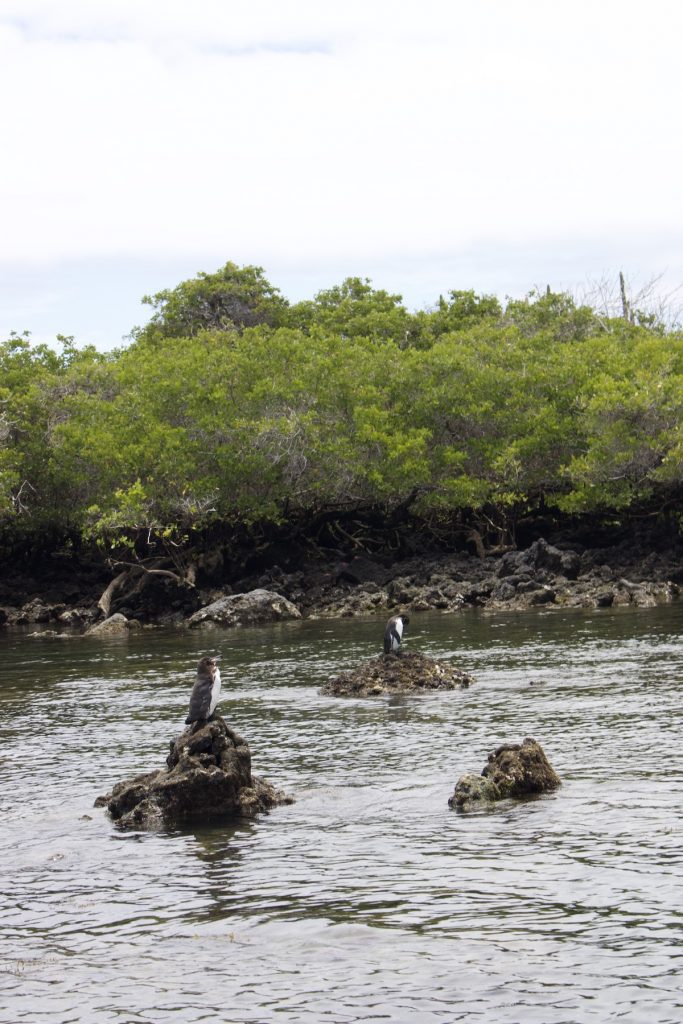
For maximum wildlife diversity and the encounters most strongly associated with the Galapagos, a cruise wins clearly. The outer islands accessible only by cruise carry species and densities that the accessible day-tour sites simply don’t match. For a traveler whose main goal is seeing specific iconic species like the waved albatross, flightless cormorant, or large marine iguana colonies, the cruise isn’t just better. It’s the only option.
The accessible islands deliver genuinely impressive wildlife. A land-based traveler can see blue-footed boobies on North Seymour, swim with Galapagos penguins at Las Tintoreras, snorkel alongside white-tip reef sharks at Kicker Rock, and watch giant tortoises in the highlands of Santa Cruz. These are real, remarkable encounters. Most people who do a land tour come home deeply satisfied by what they saw.
But there’s a ceiling. The animals on the accessible day-tour islands see more tourist traffic than those on the remote outer islands. They’re still remarkably unafraid of humans, because that’s a Galapagos-wide characteristic. But a morning on Española at Punta Suarez, where waved albatrosses are performing courtship dances 2 meters from where you’re standing, in a group of 12 people with one exceptional naturalist guide, is a fundamentally different intensity of encounter than a busy day tour from Puerto Ayora to North Seymour with 25 other visitors.
One counterintuitive point from our traveler conversations: some land-based visitors actually describe more personal wildlife moments than cruise passengers, specifically because of the unstructured time. When you’re walking along the Puerto Ayora waterfront at dusk and a pelican lands 50 centimeters from your table at the restaurant, or a sea lion colonizes your beach towel at Tortuga Bay, those unscripted moments have their own magic. A cruise runs on a schedule. A land tour has room for the unexpected.
Which Option Is Better for Families, Couples, and Solo Travelers?
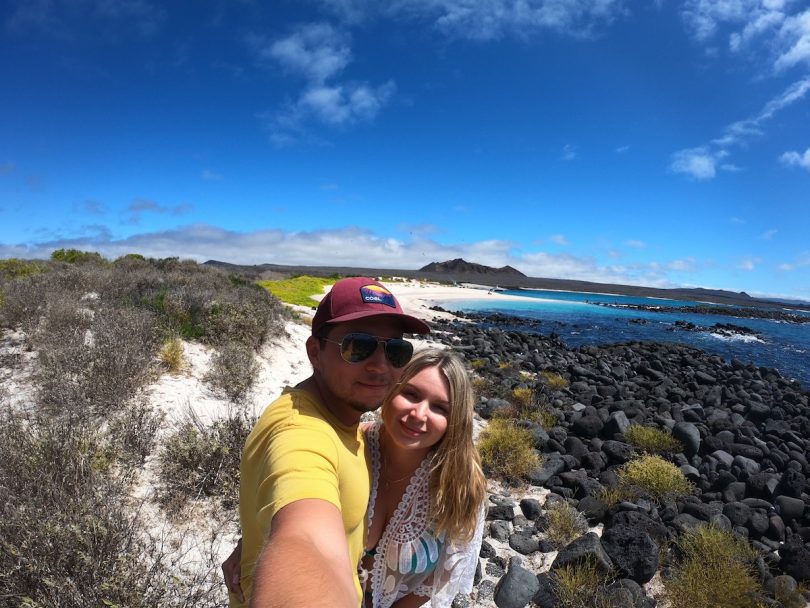
Couples and groups whose primary goal is wildlife are almost always better served by a cruise. Solo travelers face a significant cost penalty on cruises due to single supplements and are often better off on land unless they can find a cabin-share arrangement. Families with children under 7 are mostly excluded from cruise boats by age policy and should default to land. Families with older children or teenagers who are wildlife-focused will typically get more from a cruise, provided someone in the family isn’t severely motion-sensitive.
For couples, the cruise case is strong. The shared live-aboard experience, the rhythm of excursions and evenings on deck, the naturalist briefings, the small group size that keeps it intimate – these create a kind of travel memory that’s hard to replicate on land. Honeymooners and anniversary travelers consistently rate Galapagos cruises among the best experiences of their lives, and the structure of the trip actually helps by taking decisions off the table. You don’t choose where to go. You wake up there.
For families with young children, the calculus shifts significantly. Most Galapagos cruise vessels set a minimum age of 7, and some require 12. The reason is practical: zodiac launches involve stepping from a small rubber boat onto a rocking vessel or wading through surf in the dark. Wet landings with toddlers are not manageable. Land tours have no age restrictions, allow nap schedules and midday breaks, and give parents the option to skip a specific excursion without losing money on a pre-paid cruise day.
Solo travelers face the most nuanced decision. The single supplement on a cruise is the core issue. It can add 50 to 100% to the cabin rate, pricing a solo first-class cruise at $8,000 to $11,000 per person. A land tour for the same traveler might run $3,000 to $4,500 all-in. That’s a gap of $4,000 to $7,000. Some solo travelers find it worth it for the wildlife access and the natural social dynamic of a small-ship group. Others, particularly those with limited budgets or specific flexibility preferences, are better served on land. Shoulder season cruise operators do sometimes waive the single supplement on unsold cabins, which can make the math work if dates are flexible.
If you’re traveling solo and trying to figure out whether a cruise makes financial sense for your situation, we can check current availability and single supplement structures across the fleet for your target dates. Sometimes the numbers work out better than the standard rates suggest. Send us a message here and we’ll take a look.
What Are the Biggest Drawbacks of a Galapagos Cruise?
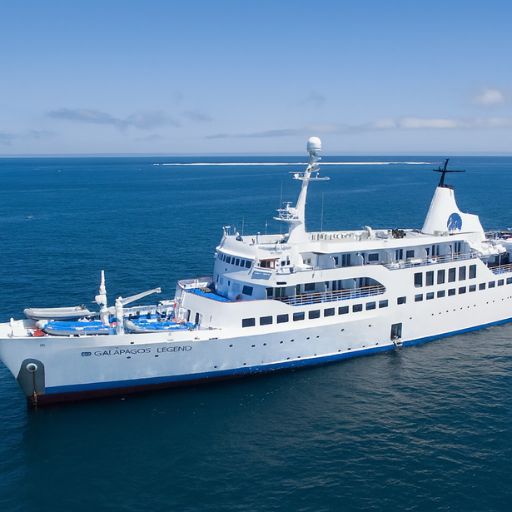
The four most significant drawbacks of a Galapagos cruise are: the structured, packed schedule that leaves little room for rest or spontaneity; the real risk of seasickness during overnight passages, particularly in the cool season; the high single supplement cost for solo travelers; and the inflexibility of fixed departure dates that require committing to specific travel dates months in advance. None of these are dealbreakers for most travelers, but all four are real and worth honest consideration.
The pace is the one that surprises people most. Two guided excursions per day, every day, for 7 or 8 days sounds wonderful in planning and is genuinely wonderful in practice. But it’s also exhausting. Early morning briefings at 6:45am. Zodiac launches at 7am. Two to three hours on lava fields in equatorial sun. Back to the boat, lunch, a brief rest, and the afternoon excursion starting at 3pm. Dinner at 7pm. Evening briefing about tomorrow. Most travelers describe a Galapagos cruise as the kind of trip that requires a vacation after the vacation. That’s a compliment but also an honest warning for anyone who was planning to relax.
Seasickness is genuinely unpredictable. Some travelers who have never had motion sickness on any other trip find the overnight passages between Galapagos islands uncomfortable, particularly in August and September when the Humboldt Current creates choppy seas. Scopolamine patches (prescription) and Dramamine work well but must be taken before symptoms start, not after. Budget boats, being smaller and lighter, tend to move more than larger first-class and luxury vessels in rough water. If anyone in the travel party has a strong history of seasickness, this needs to be a serious planning consideration, not an afterthought.
The fixed itinerary means you go where the boat goes, on the boat’s schedule. You can opt out of individual excursions, but the structure of the trip doesn’t bend around your preferences. If you want to spend three hours on a beach because you feel like it, a cruise isn’t the right vehicle. If you want the naturalist to take you back to the same spot tomorrow because you want another look at the albatross, that’s not possible either. The National Park controls the itinerary and the timing. The boat follows the permit.
Seasickness on a Galapagos cruise is more manageable than most nervous first-timers expect – our what happens if you get seasick on a Galapagos cruise guide breaks down the prevention options, the roughest routes, and what the crew actually does to help.
What Are the Biggest Drawbacks of a Galapagos Land Tour?
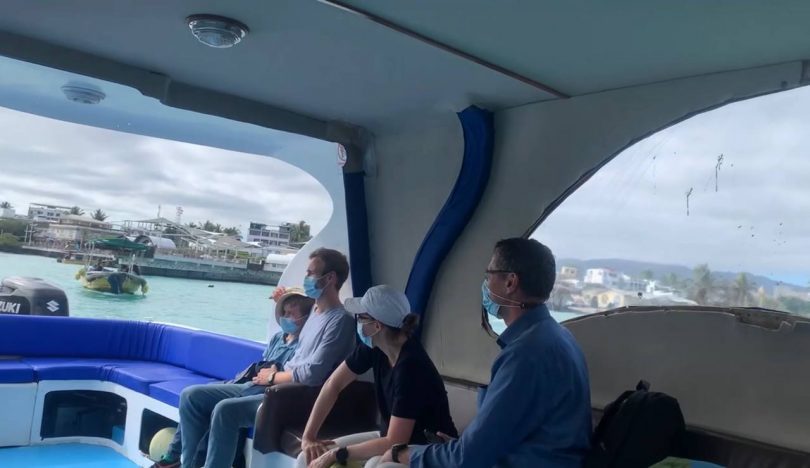
The three most significant drawbacks of a Galapagos land tour are: the hard ceiling on which islands you can visit, which excludes the most remote and wildlife-rich sites; the daily logistical management required to book tours, arrange ferry tickets, and navigate between islands; and the counterintuitive seasickness risk from the fast, open speedboats used for inter-island transfers, which in choppy conditions can be harder on sensitive travelers than a large cruise vessel.
The access gap is the honest starting point. A land tour traveler is essentially visiting a curated selection of the Galapagos – the islands and sites within reasonable day-trip range of the three inhabited hubs. Those sites are remarkable. But the traveler who returns from a land tour having seen only what’s accessible from Santa Cruz is missing Española, Genovesa, Fernandina, and a dozen other sites that many cruise passengers describe as the peak experiences of their entire trip. Knowing what you’re choosing not to see is important before you commit to the land-based option.
The seasickness myth deserves specific attention because it comes up constantly in planning conversations. Many travelers choose a land tour specifically to avoid boats and seasickness. The reality is that a land tour in the Galapagos involves regular boat travel. The inter-island speedboat ferries between Santa Cruz, Isabela, and San Cristóbal can take 2 hours each way in conditions that are often rougher than an overnight passage on a well-maintained cruise vessel. The day tour boats to North Seymour and Bartolome travel at speed across open water. A land-based traveler who is severely motion-sensitive needs to plan for inter-island flights ($100 to $150 each way) rather than ferries, which adds cost and removes the speedboat option but doesn’t eliminate boat exposure entirely, since zodiac pangas to visitor sites still apply.
The daily logistics of a land tour are manageable but real. Booking each day tour separately through a local agency, coordinating inter-island transport, managing ferry schedules, and finding restaurants for every meal that the cruise would have provided adds friction to each day. Some travelers enjoy this spontaneity. Others find it exhausting by day four, particularly after a long trip to get to Ecuador. The all-inclusive structure of a cruise removes all of those decisions from the itinerary, which has genuine value for travelers who want to simply show up and be taken care of.
Want an honest answer on whether you actually need an agent for a Galapagos cruise or whether going direct is straightforward enough? Here’s our can you book a Galapagos cruise directly or do you need an agent guide so you choose wisely.
How Do You Decide Which One Is Right for You?
Choose a cruise if wildlife access and variety are your primary goals and your budget allows it. Choose a land tour if your budget is under $4,000 per person all-in, you’re traveling with children under 7, you have severe motion sickness, or you want flexibility and local immersion as part of the experience. If you’re genuinely torn, the single best tiebreaker question is this: which islands are on your list? If Española, Genovesa, or Fernandina appear on it, you need a cruise. If they don’t, land may be enough.
The decision framework that works across thousands of conversations simplifies to three questions. How important is it to see the most remote islands and their wildlife? How important is flexibility versus structure in how you travel? And what is your honest all-in budget? Most travelers who answer those three questions clearly land on one side of the comparison without ambiguity.
There is a third option that experienced Galapagos travelers increasingly take: combining both. A shorter cruise to reach the remote outer islands, followed by a few days on land in Santa Cruz to decompress, explore the town, and experience Galapagos island life at ground level. This approach captures what each option does best and avoids what each does poorly. The cruise handles the remote wildlife access. The land days handle the cultural texture and the unstructured time.
We’ve personally taken both options across three trips to the Galapagos. The first trip was entirely on cruise, which was the right call for experiencing the maximum range of the archipelago from a standing start. Later visits included land time precisely because the inhabited islands have their own character that a cruise barely touches. Puerto Ayora at night, the fish market in the morning, the local almuerzo spots for lunch – these are genuinely different from the uninhabited sites the cruise visits, and they’re worth experiencing once you’ve already seen the outer islands.
| Traveler Profile | Chose Cruise (%) | Would Choose Cruise Again (%) | Chose Land Tour (%) | Would Choose Land Again (%) | Top Regret (Where Applicable) |
|---|---|---|---|---|---|
| Couples (wildlife-focused) | 87% | 96% | 13% | 41% | Land travelers: “Wish we’d gone to Española” |
| Solo travelers | 34% | 78% | 66% | 92% | Cruise travelers: “Single supplement cost more than expected” |
| Families (children under 12) | 29% | 82% | 71% | 94% | Most chose land; flexibility and age limits were key |
| Budget travelers (<$4,000 all-in) | 8% | 62% | 92% | 95% | Land travelers: satisfied but aware of the access trade-off |
| Return visitors (2nd+ trip) | 68% | 98% | 32% | 89% | Many combined both options on second trip |
The Galapagos is genuinely one of the few destinations on Earth where neither option is wrong. A land tour in the Galapagos is still a remarkable trip. A cruise in the Galapagos can be life-changing. The difference between the two is not good versus bad. It’s about what you personally need from the experience, and being honest with yourself about that before you book.
Frequently Asked Questions
Is a Galapagos land tour worth it compared to a cruise?
Yes, for the right traveler. A land tour delivers genuine wildlife encounters, significant cost savings, flexible scheduling, and the experience of actual island life in the port towns. The trade-off is real access to the outer islands. If your budget is under $4,000 per person all-in, or you’re traveling with young children, or you have significant motion sickness sensitivity, the land tour delivers strong value for what it costs.
Can you do scuba diving on a Galapagos land tour?
Yes, and this is actually one of the land tour’s advantages. Dive shops on Santa Cruz, San Cristóbal, and Isabela offer day trips to accessible dive sites. Scuba diving is not permitted on standard nature cruises by National Park regulation, only on dedicated liveaboard dive vessels. If diving is your main goal, land-based dive day trips or a dedicated liveaboard are your two options.
How much cheaper is a Galapagos land tour than a cruise?
Roughly 40 to 60% cheaper on a comparable quality basis. A mid-range 7 to 8 day land tour runs $2,500 to $5,000 per person all-in from North America. A mid-range cruise for the same period runs $6,000 to $9,000 all-in. The gap narrows when you add up day tour costs and meals on a land tour, but the land option is consistently meaningfully cheaper.
Do Galapagos land tours use boats?
Yes. All visitor sites in the Galapagos are accessed by boat, regardless of whether you’re on a cruise or a land tour. Land-based travelers take speedboat ferries between islands (typically 2 hours each way) and day tour boats to visitor sites. The difference is that you sleep on land rather than aboard a vessel overnight. The inter-island speedboats can actually be bumpier in rough water than a larger cruise ship.
Which Galapagos option is better for a first-time visitor?
If budget allows, a cruise is the better introduction to the Galapagos for a first-time visitor. The outer island access, the naturalist guide experience across multiple ecosystems, and the logistical ease of an all-inclusive trip create the most comprehensive first exposure to what makes the archipelago extraordinary. A land tour is the right choice for a first visit only when budget constraints, age restrictions, or motion sickness make the cruise impractical.
Can you combine a Galapagos cruise with a land stay?
Yes, and for returning visitors this is often the ideal approach. A shorter 5 to 7 day cruise to hit the remote outer islands, followed by 3 to 4 days on land in Santa Cruz or San Cristóbal, captures the best of both options. The cruise delivers the wildlife access that only overnight vessels can provide. The land days deliver local food, unstructured time, and the texture of actual island life that the cruise never touches.
Not Sure Which Option Is Right for You?
This decision is genuinely personal and depends on factors like your travel dates, group size, budget, whether motion sickness is a real concern, and what you most want to take home from the Galapagos. We’ve helped thousands of travelers work through exactly this question.
Tell us your situation and we’ll give you a direct, honest recommendation based on what actually fits your needs, not what earns us more commission. We’re rated 4.9 stars on Google and TripAdvisor for that kind of straight talk. Get in touch here and let’s figure out the right call for your trip.
Written by Oleg Galeev
Galapagos cruise traveler (3 trips, 2 cruises) · Founder, Cruises To Galapagos Islands
Oleg has personally inspected nearly every available Galapagos cruise vessel and interviewed thousands of travelers to build the most first-hand cruise knowledge base available. He also runs the Ecuador travel blog mytrip2ecuador.com and the YouTube channel My Trip to Somewhere.
Cruises To Galapagos Islands is rated 4.9 stars on Google and TripAdvisor.
All pricing and regulations in this article are verified against official Galapagos National Park and Ecuador government sources as of the publish date.