
TL;DR
Seasickness on a Galapagos cruise is possible but far less common than most first-timers fear. The islands sit in relatively calm equatorial waters, overnight passages happen while you sleep, and most of each day is spent at anchor or on land. When it does happen, the right medication taken before symptoms start resolves most cases within an hour or two. The vast majority of travelers who experience some seasickness on a Galapagos cruise still describe it as one of the best trips of their lives. Seasickness concerns are a reason to prepare well and choose the right boat – they are not a reason to skip the cruise.
| Factor | Reality |
|---|---|
| Overall risk level | Low to moderate; most travelers experience mild or no symptoms |
| Roughest months | August through October; September and October worst |
| Calmest months | January through June; warm season generally smoother |
| Best boat type for stability | Larger vessels and catamarans; avoid very small monohulls (under 16m) |
| Best cabin position | Lower deck, midship; furthest from bow and stern |
| Best OTC medication | Meclizine (Bonine) for daytime; scopolamine patch for severe susceptibility |
| When to take medication | Before symptoms start; reactive treatment is far less effective |
| Local medication available | Mareol widely available in Ecuador; most boats carry basic seasickness tablets |
| When rough water happens | Overnight passages and open-ocean crossings; rarely during daylight excursions |
How Likely Are You to Get Seasick on a Galapagos Cruise?
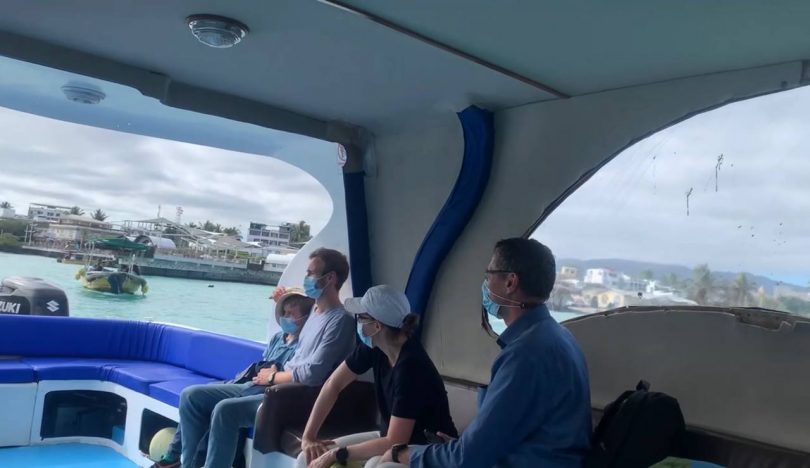
Most Galapagos cruise travelers experience mild or no seasickness. The islands sit in relatively protected equatorial waters, and the overnight passages that cover longer distances happen while passengers are asleep in their cabins – lying down is the position that reduces susceptibility most. During the day, the vessel is almost always anchored in a calm bay while excursions happen on shore or in the water. The motion that causes significant seasickness is concentrated in the overnight crossings, and most passengers sleep through them without issue.
Seasickness happens when the inner ear detects motion that the eyes don’t confirm. In a cabin at night with the lights off, the brain has no visual reference to contradict what the vestibular system is sensing, which is why some passengers who feel fine on deck feel worse below. The physics of the condition create a slightly counterintuitive situation on overnight passages: passengers who go to sleep before the boat begins moving, and stay horizontal throughout, typically experience less discomfort than those who stay up in the salon reading while the boat crosses open water.
Individual susceptibility varies enormously and doesn’t correlate reliably with prior motion sickness history on land. Some people who get carsick consistently have no problem at sea. Others who have never been carsick find the specific motion of a small vessel on ocean swells surprisingly difficult. Charles Darwin, who spent 5 years circumnavigating the globe on HMS Beagle, was reportedly seasick for much of the voyage – including his time in the Galapagos. Being prone to nausea in other contexts is a signal to prepare carefully, not a reason to stay home.
If seasickness is a genuine concern for your trip, the boat you choose matters significantly. We know which vessels are most stable for their class. Get in touch here and we’ll match you to the right option for your specific situation.
Which Parts of the Galapagos Are Roughest and When?
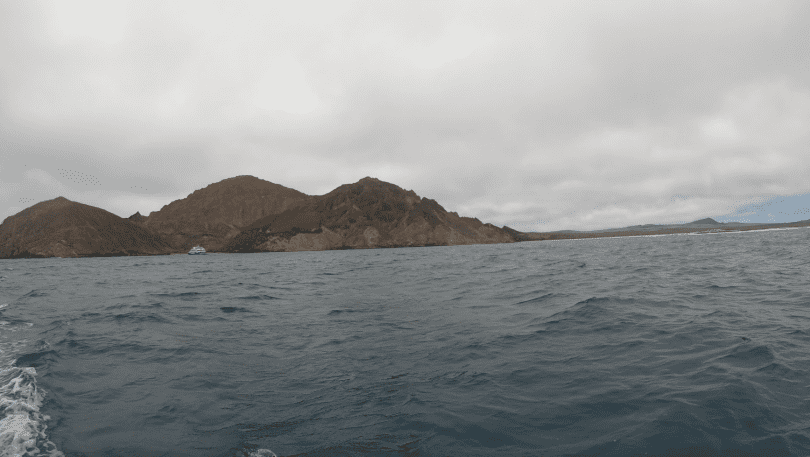
The roughest conditions occur during August through October, when the Humboldt Current from the southern Pacific pushes stronger and cooler water through the archipelago, generating swells that make overnight passages more pronounced. September and October are the peak rough months. January through June, during the warm season when the current is less dominant, produces noticeably calmer seas. The specific passages that generate the most motion are the longer open-ocean crossings to remote outer islands, particularly routes heading toward Genovesa in the northeast or the western shores of Isabela and Fernandina.
The Galapagos straddles the confluence of several ocean currents – the Humboldt from the south, the Panama from the north, and the Cromwell running east along the equator. The interaction between these currents is what makes the archipelago so biologically extraordinary: cold nutrient-rich water from the south collides with warmer northern water, creating conditions that support penguins and sea lions living a few degrees from the equator. It’s the same oceanographic feature that produces rougher water in the second half of the year.
A practical note on itinerary and rough water: not all crossings are equal. A short transit between Santa Cruz and North Seymour, 30 minutes each way, is barely noticeable in any season. A 6-hour overnight passage to Genovesa across open ocean in September is a different experience. Travelers with serious seasickness concerns should ask their operator specifically which overnight passages are in the itinerary and how long each crossing takes. Some 8-day routes are constructed entirely around the central and eastern islands and involve shorter, more protected passages. Others deliberately include the far-flung outer islands that require longer open-ocean crossings.
Which Boat Types and Sizes Handle Rough Water Best?
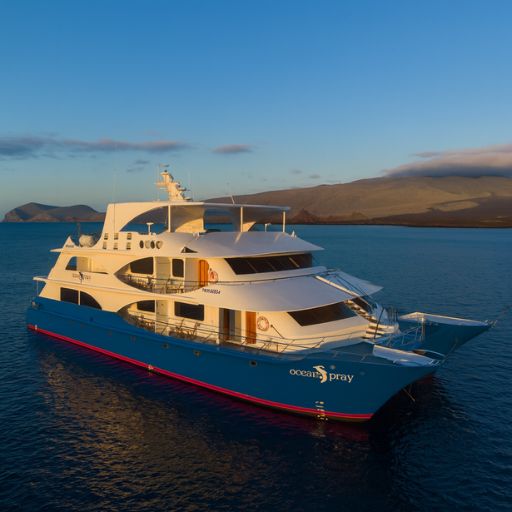
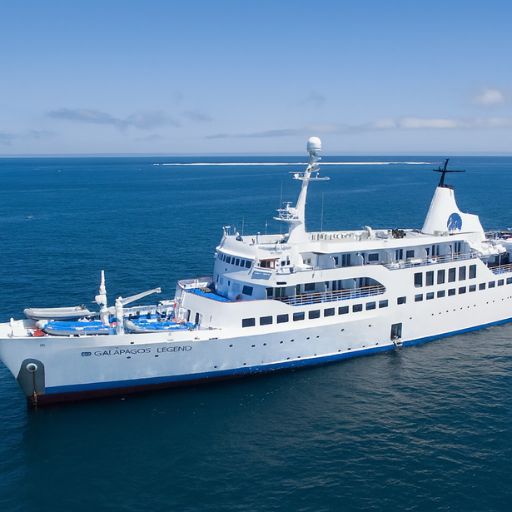
Larger vessels are more stable than smaller ones because their greater mass resists wave motion more effectively. Catamarans reduce rolling (side-to-side motion) significantly compared to monohulls because the wide beam keeps the deck level even in beam seas. However, catamarans tend to pitch more (bow-to-stern motion) in shorter swells, which some passengers find equally disorienting. The honest answer from naval architects consulted by experienced Galapagos operators is that neither hull type is universally better – vessel size, specific hull design, and sea conditions all interact. Among vessels commonly recommended for stability-conscious travelers are the Ocean Spray, La Pinta, Galapagos Legend, and Ecoventura‘s megayachts.
The maximum vessel size in the Galapagos National Park is 100 passengers. Most cruise vessels carry 8 to 50. The physics are straightforward: a 50-meter motor yacht with 32 passengers sits lower in the water, has more mass, and is less affected by the same swell that would significantly rock an 18-meter sailboat with 8 passengers. Budget economy boats are frequently the smallest vessels in the fleet. Larger tourist superior and first-class motor yachts offer meaningfully better stability in rough conditions, which is one of several reasons the guide quality argument for booking better-class vessels has a secondary reinforcing argument in motion comfort.
Cabin position matters almost as much as vessel type. Lower-deck cabins close to the vessel’s center of mass move the least. Upper-deck cabins at the bow or stern move the most – the bow rises and falls on swells and the stern swings in following seas. When booking, ask for the lowest available cabin closest to midship. Most operators can accommodate this request at no extra cost if it’s raised at booking time rather than on boarding day.
One counterintuitive finding worth noting: land-based day trips between islands are often rougher than overnight cruise passages. The speedboat ferries that carry day-trip passengers between Santa Cruz, Isabela, San Cristóbal, and Floreana are smaller, faster, and lower to the water than cruise vessels. They travel at high speed in a direct line regardless of swell direction. Travelers who choose land-based tourism to avoid seasickness sometimes discover that the inter-island speedboats produce more discomfort than the cruise they were trying to avoid.
Want an honest comparison between staying in one place and doing day excursions versus moving between islands on a live-aboard? Here’s our Galapagos cruise vs day trips guide so you pick the right approach.
What Seasickness Medications and Remedies Actually Work?
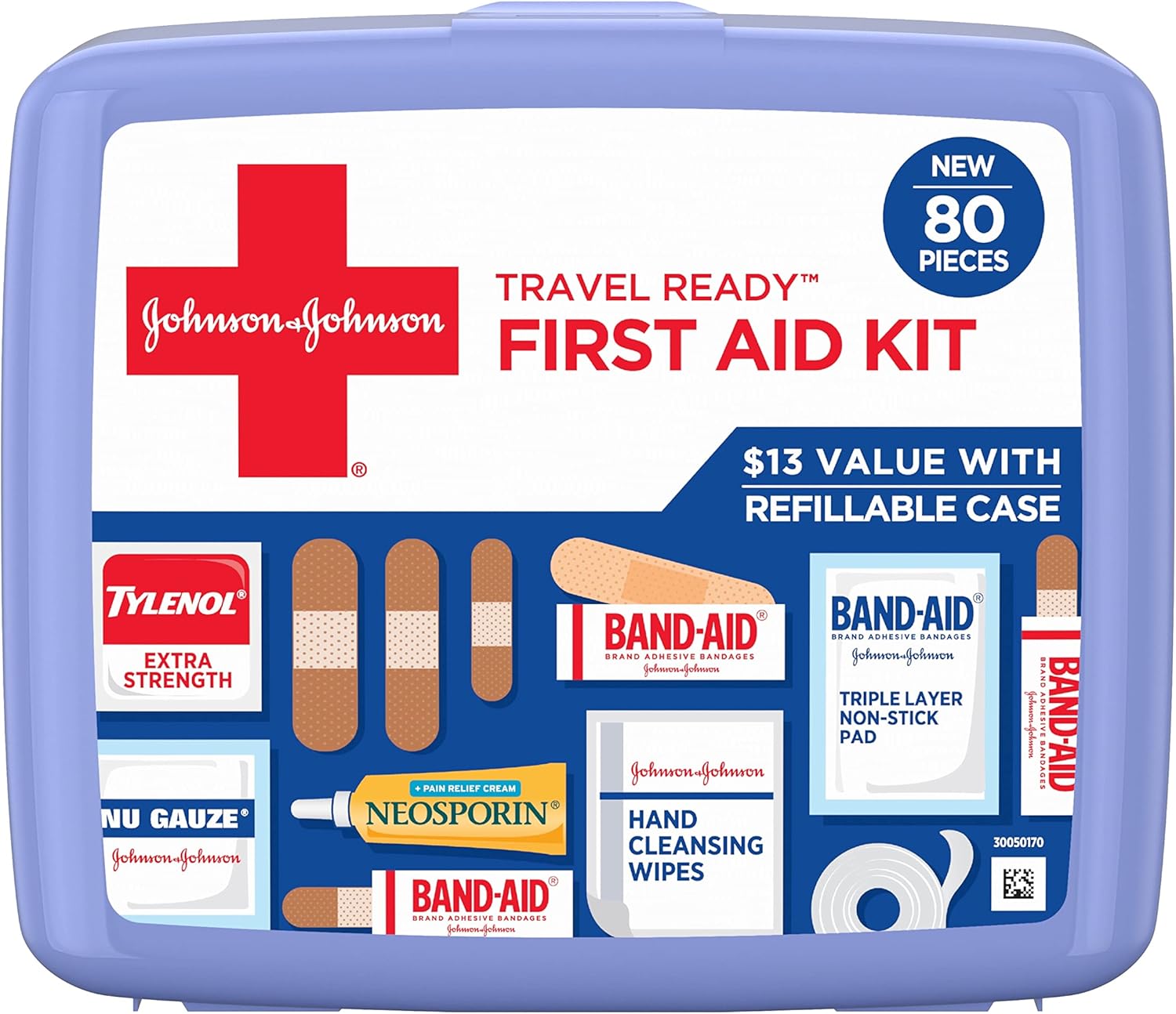
Meclizine (sold as Bonine or Dramamine Less Drowsy) is the best over-the-counter option for most Galapagos travelers: once-daily dosing, less sedating than standard Dramamine, and effective for mild to moderate susceptibility. Standard dimenhydrinate (original Dramamine) works faster and stronger but causes significant drowsiness that interferes with morning excursions. The scopolamine patch (Transderm Scop), applied behind the ear 4 hours before boarding, is the strongest available option for travelers with serious susceptibility, lasts 3 days, and is less sedating than antihistamines, but requires a prescription and should be tested at home before the trip.
The timing rule for all seasickness medication is the same and is worth emphasizing because it’s frequently ignored: take medication before symptoms start, not after. Once nausea sets in, oral medications are difficult to absorb reliably and often take too long to help. For a Galapagos cruise, “before symptoms start” means taking the evening dose before the overnight passage begins, not when the boat starts to move. For the scopolamine patch, “before” means applying it 4 hours before the vessel gets underway which in practice means putting it on the morning of the day you board, not the morning you feel rough.
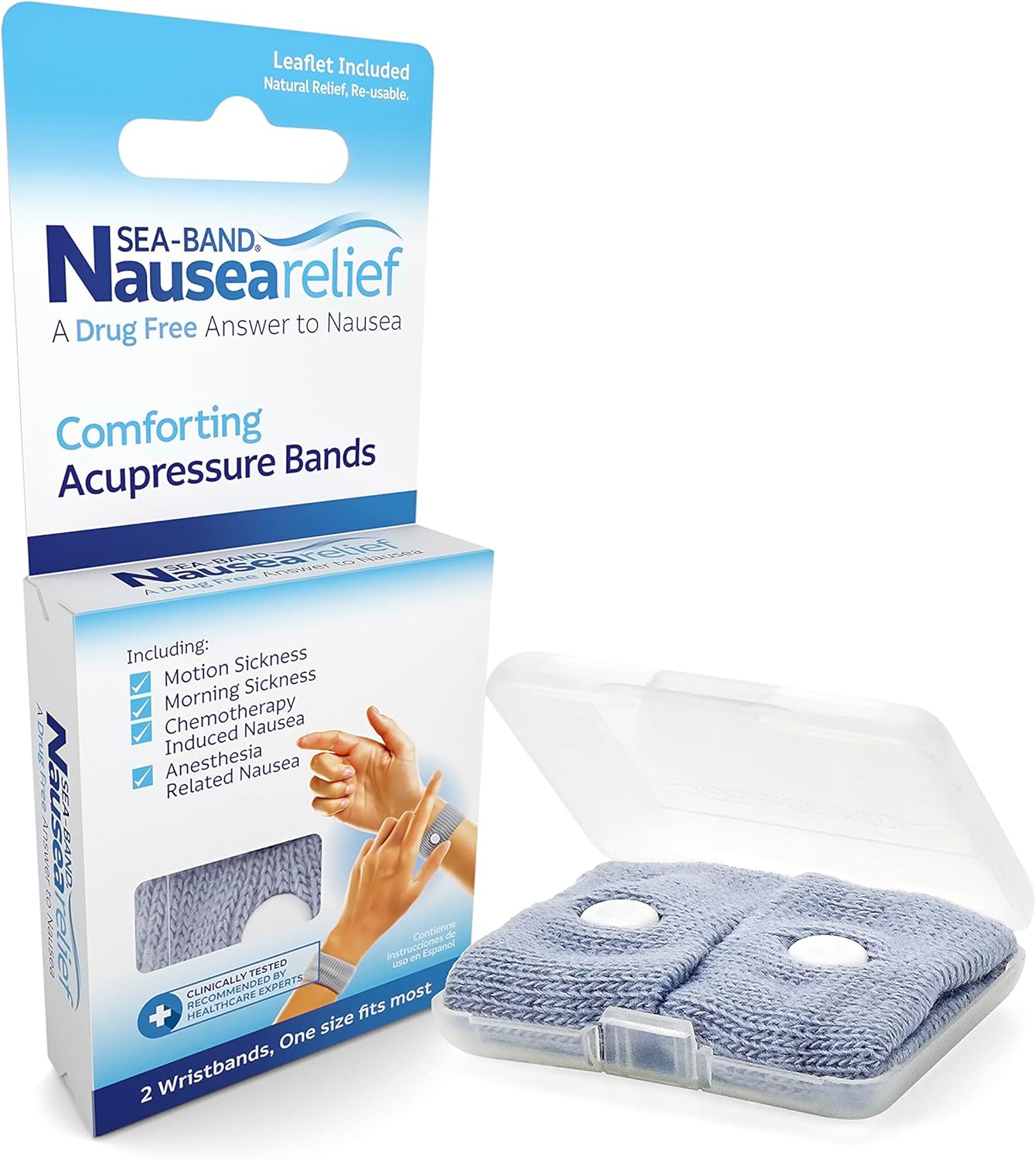
Non-pharmaceutical options with genuine supporting evidence: acupressure wristbands (Sea-Bands) apply pressure to the P6 acupressure point on the inner wrist and reduce nausea in controlled studies, with no side effects. Ginger in meaningful doses – ginger chews, ginger capsules, or strong ginger tea – has demonstrated antiemetic effects. Fresh air on deck combined with a fixed horizon point to watch is the most consistently helpful behavioral intervention: giving the visual system a stable reference reduces the sensory mismatch that causes seasickness.
Mareol is the brand name most commonly available in Ecuador for motion sickness. It contains dimenhydrinate (the same active ingredient as original Dramamine) and is sold over the counter in pharmacies in Quito, Guayaquil, and the Galapagos. Most Galapagos cruise vessels keep a supply of basic seasickness tablets for passengers who need them. Don’t rely on the boat’s supply being the medication you respond to best – bring your own tested option from home.
What Practical Steps Can You Take Once You’re Already Seasick?
If you’re already symptomatic, get on deck immediately and find a fixed horizon to focus on. Fresh air and a stable visual reference are the most effective immediate interventions. Lie down if going on deck isn’t possible – the horizontal position reduces the vestibular mismatch that sustains nausea. Take medication as soon as symptoms appear even though it will be slower to act than if taken prophylactically. Eat something light if you can – an empty stomach makes nausea worse. Avoid reading, screens, and staying in a closed below-deck space.
The cabin vs deck question depends on the specific situation. In daylight with a clear horizon, sitting or standing on the main deck near midship with eyes on the horizon is the most effective single intervention. In the middle of the night during an overnight passage, the best strategy is to stay horizontal in the cabin rather than fighting the urge to go topside in the dark. The reasoning is different: at night, going on deck doesn’t provide a stable visual reference because there’s nothing to focus on, and the physical effort of getting up and navigating a moving vessel can intensify symptoms.
Allowing yourself to vomit if nausea reaches that point is genuinely better than suppressing it. Most seasick passengers feel significantly better after vomiting and can then take medication effectively. The cabin crew on any quality Galapagos vessel has managed this situation many times. Asking the crew for help is not embarrassing – it’s the expected and practical thing to do, and they will know exactly what to offer.
One thing that definitively doesn’t help: dwelling on it or talking about it with other passengers. Seasickness has a meaningful psychological reinforcement component – watching others be sick, or repeatedly describing your own symptoms, actively sustains nausea. Quietly removing yourself from that dynamic and focusing on the horizon or lying down is better than social commiseration, no matter how tempting solidarity feels at the time.
Does Seasickness Ruin a Galapagos Cruise?
For the vast majority of travelers who experience seasickness on a Galapagos cruise, it doesn’t ruin the trip. It typically occurs during overnight passages, resolves with medication and fresh air, and has no bearing on the quality of morning and afternoon excursions when the vessel is at anchor. The wildlife encounters that define the Galapagos experience happen entirely on land or in the water – not on a moving boat. A traveler who feels rough at 3am during a passage to Española and wakes up fine at 7am to stand 2 meters from a waved albatross has had a Galapagos morning that makes the 3am irrelevant.
The travelers who come back saying seasickness genuinely impacted their trip are the small minority who experienced sustained nausea across multiple days, usually on smaller vessels in the rougher August through October window, without effective medication. That specific combination is avoidable with planning. The traveler who books a larger, more stable vessel for a January departure, takes meclizine prophylactically each evening before overnight passages, and knows to get on deck immediately if symptoms start is working with every available variable in their favor.
The more common outcome is travelers who expected seasickness to be a significant problem and found it wasn’t. The 8 to 10 hour overnight passages that intimidate people in advance turn out to be the hours when the most experienced ocean travelers are asleep. The excursion time – two visits per day, mostly at anchor, entirely in calm bays or protected coves – is smooth water almost without exception. The motion happens in transit. The experience happens at the islands. Those two things barely overlap in time.
Which Itineraries and Travel Months Minimize Rough Water Exposure?
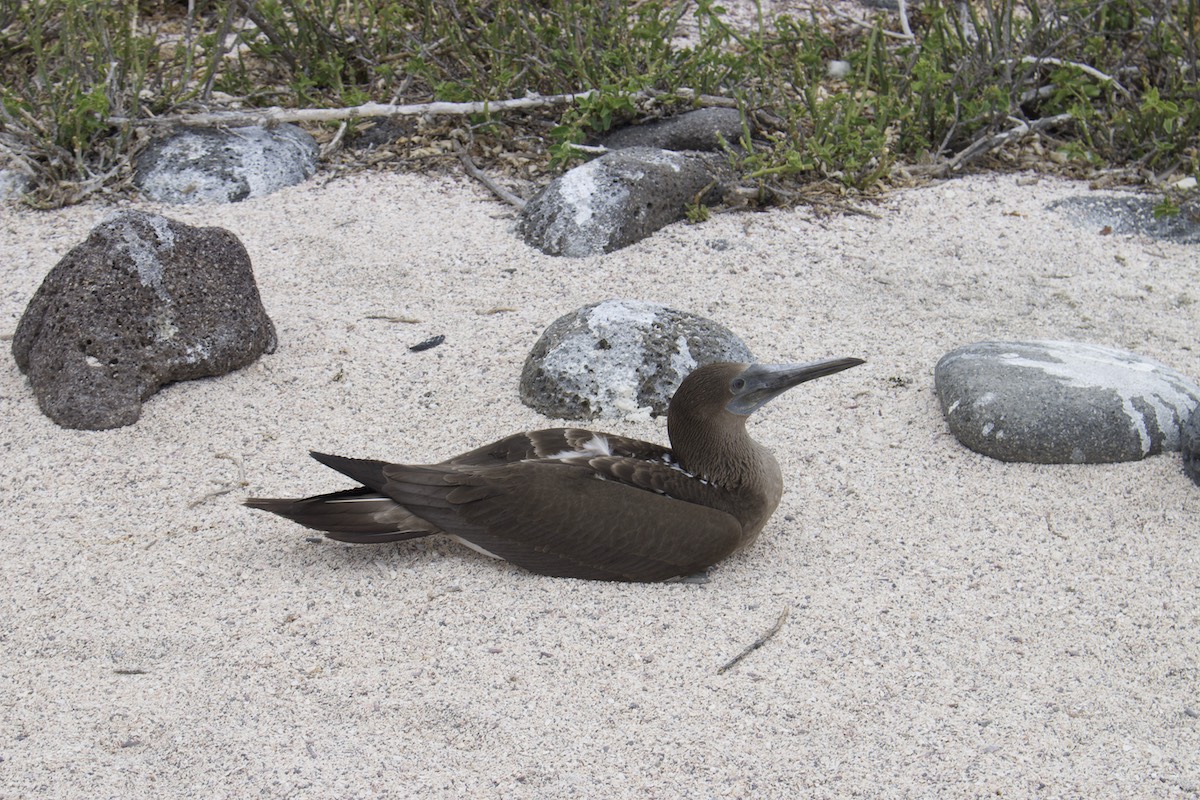
Traveling between January and June gives the calmest base sea conditions across the archipelago. Among individual months, January, February, March, April, and May consistently produce the smoothest water, with the warm season bringing calmer currents and gentler swells. For itinerary selection, routes that stay primarily in the central and eastern islands – Santa Cruz, San Cristóbal, Española, Bartolome, North Seymour – involve shorter passages in more sheltered waters compared to routes that push to the remote northwestern islands. Shorter cruises of 5 or fewer days that stay within a single regional loop typically involve the least total open-ocean transit time.
The trade-off with a calmer-water strategy is worth acknowledging directly. September and October, the roughest months, are also among the best for specific wildlife. Waved albatrosses are at Española performing their courtship display during this period. Sea lion pup populations peak across the central islands September through November. Penguin sightings improve as cooler water increases. The same Humboldt Current that roughens the sea brings nutrients that concentrate wildlife in visible, extraordinary ways. Avoiding September purely for smooth water means missing something genuinely special. The right approach for motion-sensitive travelers is to prepare with the best available medication and choose a larger vessel – not to avoid the most ecologically rich months entirely.
For travelers with severe seasickness concerns, the western itineraries involving Isabela and Fernandina deserve specific attention. The western side of the archipelago can be rougher than the central and eastern islands in any season because the Cromwell Current upwells more forcefully there. These itineraries are worth the exposure for what they contain – flightless cormorants, the largest marine iguana colonies, active volcanic landscapes, but they’re worth flagging as higher-motion routes for passengers who need to plan medication timing carefully.
Not sure which season actually delivers the best Galapagos experience on the water? Here’s our best time of year to take a Galapagos cruise guide so you time your trip right.
Should Seasickness Concerns Stop You From Booking a Cruise at All?
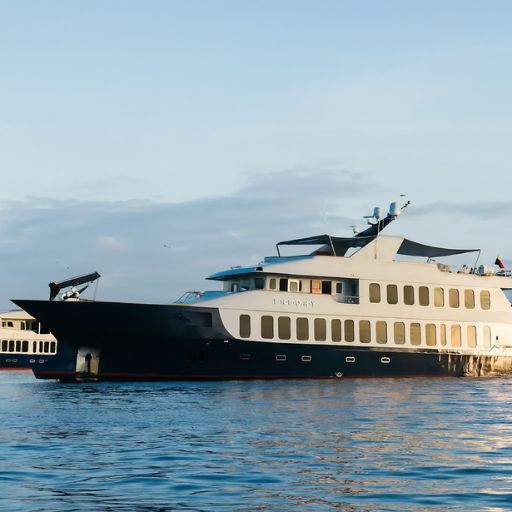
No. Seasickness concerns are a reason to choose the right boat, travel in a calmer month if possible, bring tested medication, and know what to do if symptoms develop. They are not a reason to skip the cruise. The Galapagos is one of the very few destinations in the world where the cruise format is the primary way to reach the most extraordinary sites, and land-based day trips, as noted, often produce rougher motion on inter-island speedboats than the overnight cruise passages they’re meant to avoid. Skipping the cruise because of motion concerns often trades a lower-motion experience for a higher-motion one while also missing most of what makes the Galapagos extraordinary.
The one scenario where skipping the cruise makes sense on motion grounds: a traveler who has experienced severe, medication-resistant motion sickness on multiple previous boat trips – not just nausea, but prolonged vomiting across entire days despite medication – should have an honest conversation with their doctor before booking. For most people, this category doesn’t apply. Mild to moderate motion sickness history responds well to meclizine or scopolamine. The small group with genuinely severe susceptibility may be better suited to a land-based program with inter-island flights rather than speedboats, which exists and delivers a meaningful Galapagos experience at a significantly lower cost.
For everyone else: prepare, choose the right vessel and season, bring medication, and go. The Galapagos is worth the planning that makes it work. The traveler who arrives at Española at 7am, having taken meclizine the night before as the boat passed through open water, and watches the waved albatross perform its sky-pointing courtship dance 2 meters away – that traveler is not thinking about the overnight passage. The passage is over. The island is extraordinary. The preparation worked.
Want to make sure you don’t miss anything critical in the planning process before you spend this much on a trip? Here’s our how to plan a Galapagos cruise guide so nothing falls through the cracks.
| Outcome | % of Travelers | Context |
|---|---|---|
| No seasickness symptoms at all | 64% | Across all months and vessel types |
| Mild symptoms, resolved quickly | 22% | Typically during overnight passages; didn’t affect excursions |
| Moderate symptoms, medication helped | 11% | Mostly August to October travelers or smaller vessels |
| Significant symptoms, affected excursions | 3% | Small minority; most still rated trip highly |
| Had seasickness but still called trip one of the best ever | 94% | Consistent finding – wildlife experience outweighs motion discomfort |
Send us a message here and tell us what matters most to you – we’ll match you to the right option honestly.
Frequently Asked Questions
Is seasickness common on Galapagos cruises?
Less common than most people expect. The equatorial waters around the Galapagos are generally calm, overnight passages happen while passengers sleep, and most daylight hours are spent at anchor. Rough conditions occur more often in August through October and during longer open-ocean crossings to remote outer islands.
What is the best seasickness medication for a Galapagos cruise?
Meclizine (Bonine or Dramamine Less Drowsy) for most travelers: once-daily, less sedating than original Dramamine, effective for mild to moderate susceptibility. For travelers with serious susceptibility, the prescription scopolamine patch (Transderm Scop), applied behind the ear 4 hours before boarding, offers 3-day protection with less sedation. All medications work significantly better taken before symptoms develop than after.
Are catamarans better than monohulls for avoiding seasickness?
Catamarans reduce rolling (side-to-side motion) significantly, which many passengers find the most disorienting type of movement. However, catamarans tend to pitch more (bow-to-stern) in short swells, which some passengers find equally uncomfortable. Vessel size generally matters more than hull type – a large 40-meter monohull is more stable than a small 18-meter catamaran in most Galapagos conditions.
Which months have the calmest seas in the Galapagos?
January through June, during the warm season when Humboldt Current influence is reduced. September and October are the roughest months. July and August are moderate. The calmer months still have occasional rough days – weather is never fully predictable, but the probability of difficult overnight passages is significantly lower than in the dry/cool season.
Can a seasick-prone traveler still enjoy a Galapagos cruise?
Yes, with preparation. Choose a larger, more stable vessel. Travel between January and June. Take meclizine prophylactically each evening before overnight passages. Request a lower-deck midship cabin. Bring ginger chews and acupressure bands as backup. The wildlife encounters that make the Galapagos extraordinary happen entirely on land or in the water – not on a moving boat – so even travelers who feel rough during passages typically experience the islands’ magic fully during excursion hours.
Want Help Choosing the Most Stable Boat for Your Situation?
Vessel stability varies significantly even within the same class and price range. We’ve been on these boats and know which ones handle rough water best, which cabins to request, and which itineraries involve the most open-ocean overnight exposure. If motion is a concern, that information changes the booking decision meaningfully.
Rated 4.9 stars on Google and TripAdvisor. Get in touch here and we’ll match you to the right vessel and itinerary for your specific comfort needs.
Written by Oleg Galeev
Galapagos cruise traveler (3 trips, 2 cruises) · Founder, Cruises To Galapagos Islands
He also runs the Ecuador travel blog mytrip2ecuador.com and the YouTube channel My Trip to Somewhere.
Cruises To Galapagos Islands is rated 4.9 stars on Google and TripAdvisor.