
Quick Summary
Both Quito and Guayaquil work as Galapagos cruise gateways. Quito is more rewarding as a pre-cruise destination: a UNESCO World Heritage historic center, Andean day trips, and a cooler climate. The trade-off is altitude at 2,850m / 9,350 feet, which causes mild symptoms in roughly half of visitors arriving from sea level. Guayaquil is at sea level, warmer, closer to the departure airports, and faster to transit, but less compelling as a city to spend time in. The right choice depends on your cruise itinerary (which city your operator departs from), how you respond to altitude, and how much time you have before boarding. Most travelers choosing freely should spend two nights in Quito. Travelers with altitude sensitivity or who want the fastest path to the islands should use Guayaquil.
Quito vs Guayaquil as a Galapagos Cruise Gateway: Quick Reference
| Factor | Quito (UIO) | Guayaquil (GYE) |
|---|---|---|
| Altitude | 2,850m / 9,350 feet. Altitude symptoms possible in roughly half of visitors from sea level. | Sea level. No altitude adjustment required. |
| Climate | Cool and mild year-round (12 to 20°C / 54 to 68°F). Andean mountain city. Layers required. | Hot and humid year-round (24 to 32°C / 75 to 90°F). Tropical coastal city. |
| City appeal for pre-cruise stay | High. UNESCO World Heritage historic center, colonial architecture, museums, Andean day trips (Cotopaxi, Otavalo, Mindo cloud forest, Middle of the World monument). | Moderate. Malecon 2000 waterfront promenade, Las Penas historic neighborhood, Cerro Santa Ana, Iguana Park. Compelling for one day; less so for two or three. |
| Flight to Galapagos | All Quito-Galapagos flights stop in Guayaquil (you stay on the plane). Total travel time approximately 2.5 to 3 hours gate to gate. | Direct to Baltra or San Cristobal. Approximately 1.5 hours. Slightly cheaper in most cases. |
| Airport to city center | 45 to 60 minutes from Mariscal Sucre International Airport (UIO) to historic center. Highway tolls apply. | Approximately 15 minutes from Jose Joaquin de Olmedo International Airport (GYE) to downtown. Very convenient. |
| International flight connections | Strong. American, United, Delta, LATAM, Avianca, Copa, Iberia serve Quito from major US, European, and Latin American hubs. | Strong. American, United, Delta, LATAM, Avianca, Copa serve Guayaquil. Slightly fewer long-haul options than Quito. |
| Best for | Travelers who want to experience Ecuador before the cruise, have 2 or more days to spare, and are not significantly altitude-sensitive. | Travelers who want the fastest path to the islands, have altitude concerns, or have only one night before boarding. |
Flight schedules and connections change. Always verify with your airline. Note: Quito airport has planned maintenance closures on select dates in 2026 requiring rerouting through Guayaquil. Verified September 2026.
Do You Fly Into Quito or Guayaquil Before a Galapagos Cruise?
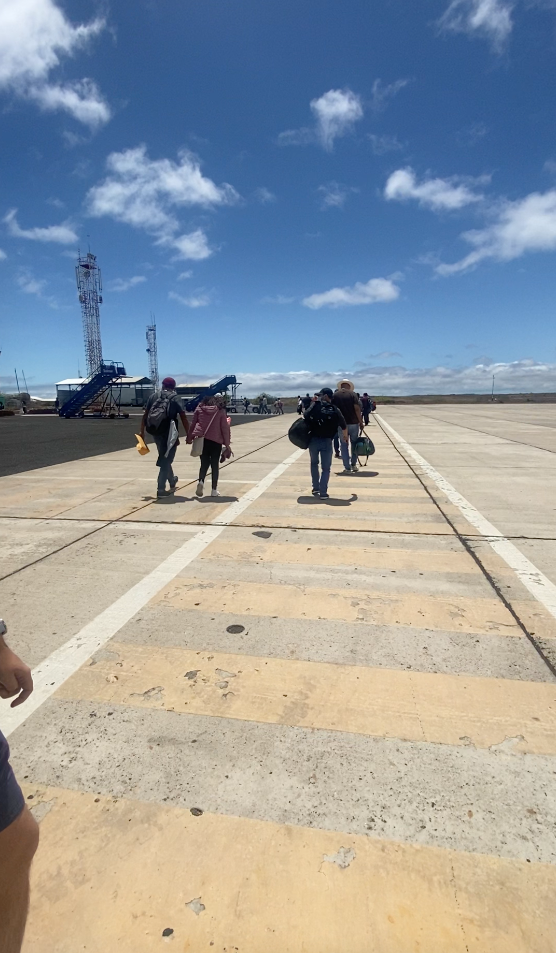
You fly into either Quito (airport code UIO) or Guayaquil (airport code GYE), then take a connecting domestic flight to the Galapagos. Both cities serve as launch points for Galapagos cruises. The Galapagos has two main airports: Seymour Airport on Baltra Island near Santa Cruz, and San Cristobal Airport on the eastern island of San Cristobal. All Quito-to-Galapagos flights stop in Guayaquil before continuing to the islands; you remain on the plane during this stop. Guayaquil flights go directly. The choice of which mainland city to use is partly determined by your cruise operator’s itinerary and partly by personal preference.
Many cruise operators handle the domestic flight leg as part of their package, in which case they will specify which mainland city the flight departs from. HX Santa Cruz II packages, for instance, typically route through Quito and include two hotel nights there before the expedition cruise departs. Celebrity Flora’s all-inclusive packages include flights between Quito and the Galapagos on longer itineraries. If your operator is handling your domestic flights, the gateway city decision may already be made for you. If you are arranging your own flights, both cities give you access to the same Galapagos departure airports.
One practical note specific to 2026: Quito’s Mariscal Sucre International Airport has scheduled runway maintenance closures on several dates, including April 11, May 9, 16, and 30, June 6, September 5, 12, and 26, and October 3, during which no flight operations run from 2:00 a.m. to 2:00 p.m. Travelers with Galapagos departures on these dates must route through Guayaquil regardless of their original plan. If your cruise departs near any of these dates, confirm your routing with your airline before finalizing plans.
The gateway city question is one we answer for every traveler we book, and we factor in your cruise itinerary, your arrival airport, the number of nights you have before boarding, and any health considerations including altitude sensitivity. Fill out this short form and we will include specific gateway logistics alongside your cruise recommendation.
Want to make the most of your time in Quito before you fly to the Galapagos without overspending on a hotel you’ll barely use? Our guide to the best hotels in Quito before a Galapagos cruise walks you through the top options.
What Are the Practical Differences Between Quito and Guayaquil as a Gateway?
The most practical differences are altitude, airport-to-city distance, and city appeal. Quito sits at 2,850m / 9,350 feet, has a cool mountain climate, and offers significantly more to do as a pre-cruise destination. The airport is 45 to 60 minutes from downtown. Guayaquil is at sea level, hot and humid, with an airport only 15 minutes from downtown. It is faster to transit and easier logistically, but a less compelling city for a pre-cruise stay of more than one night.
The airport-to-city distance matters more than it sounds in Quito. The drive from Mariscal Sucre International Airport to the historic center on the Ruta Viva takes 45 to 60 minutes in normal traffic and longer in peak hour. A late international arrival can mean arriving at your hotel close to midnight after an hour in a taxi. This is manageable with advance planning but worth knowing if you are connecting on the same day as your international arrival. In Guayaquil, the airport’s proximity means you can arrive, clear immigration, and be at a hotel near the waterfront within 30 minutes. For travelers with early morning domestic connections to the Galapagos, this convenience is real and meaningful.
The climate contrast between the two cities is significant and worth understanding before you pack. Quito’s mountain climate produces cool, fresh air at 12 to 20 degrees Celsius year-round, with occasional afternoon rain. You will want a jacket in the evenings and layers for sightseeing. Guayaquil’s coastal tropical climate runs 24 to 32 degrees Celsius with high humidity. The Galapagos itself is warm and equatorial, so the temperature jump from Quito to the islands is much larger than from Guayaquil to the islands. Travelers who find the Quito climate pleasant may find the shift to Galapagos heat more jarring than those who have already adjusted to Guayaquil’s warmth before boarding.
Packing for a Galapagos cruise has a few non-obvious requirements that catch first-timers off guard. Here’s a guide on what to pack for a Galapagos cruise so you show up with everything you need and nothing you don’t.
Which City Has Better Flight Connections to the Galapagos?
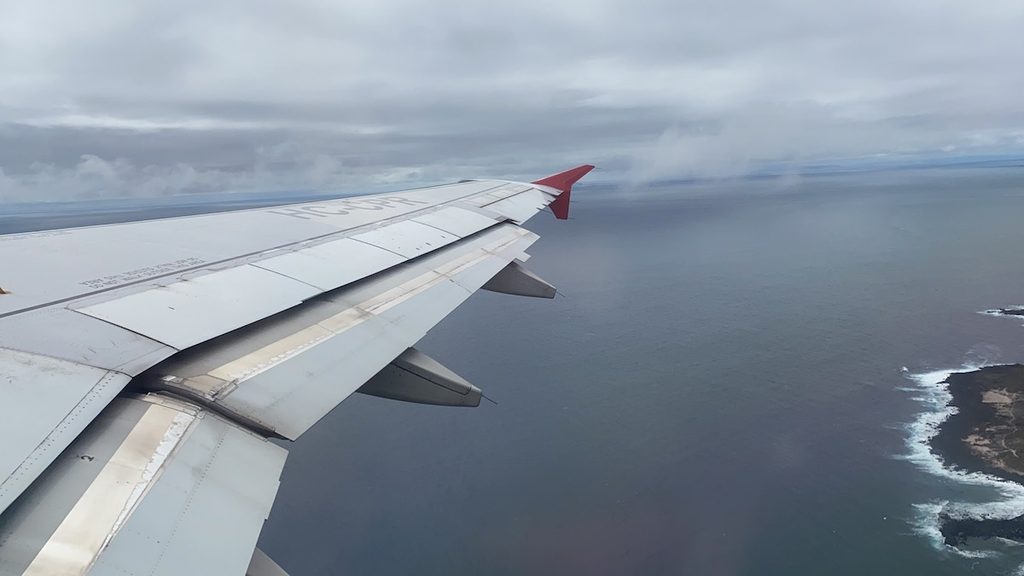
Guayaquil has a direct connection to both Galapagos airports with a flight time of approximately 1.5 hours and is marginally cheaper. Quito flights to the Galapagos are slightly longer because they stop in Guayaquil before continuing, adding roughly 30 to 40 minutes to the total journey. You remain on the plane during the Guayaquil stop. In terms of frequency, both cities have multiple daily departures to Baltra and San Cristobal operated primarily by LATAM and Avianca.
The international flight picture favors Quito slightly for travelers from North America and Europe. More long-haul carriers serve Quito directly, including American Airlines, United, Delta, LATAM, Avianca, Copa, and Iberia. Guayaquil has strong connections from the US and Latin America but fewer long-haul European options. In practice, the most common routing for North American travelers is a direct or one-stop flight to Quito or Guayaquil followed by a domestic LATAM or Avianca flight to the Galapagos the following morning.
The domestic flight to the Galapagos itself is subject to a mandatory biosecurity inspection regardless of which mainland city you depart from. Every passenger’s luggage is inspected before boarding, and items that do not comply with Galapagos biosecurity rules (certain fresh foods, plant material, soil, and contraband items) are confiscated. This inspection adds 30 to 45 minutes to the pre-boarding process. Budget adequate time at the airport regardless of your departure city.
The domestic flight logistics to the Galapagos, including recommended departure times, biosecurity inspection, the INGALA Transit Control Card requirement, and what happens when you land at Baltra or San Cristobal, are details we walk every traveler through before their cruise. Reach out here and we will cover all of this alongside the cruise recommendation.
How Does Quito’s Altitude Affect Galapagos Cruise Travelers?
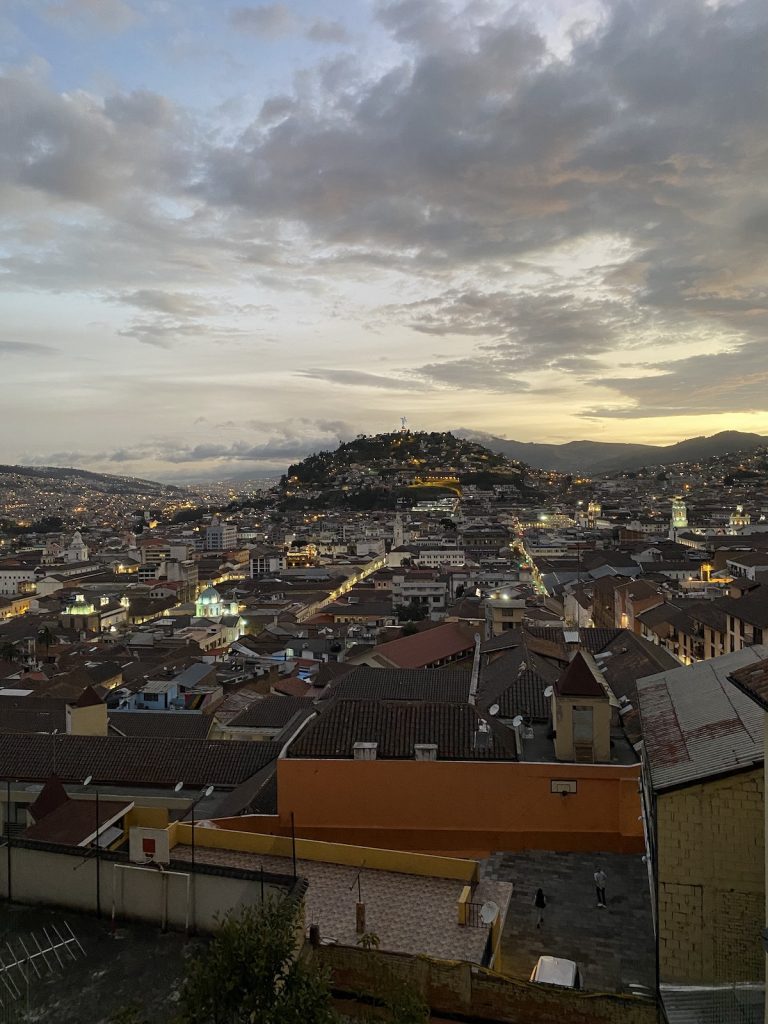
Quito sits at 2,850 meters / 9,350 feet above sea level, delivering approximately 40 percent less oxygen per breath than sea level. Mild altitude symptoms including headache, fatigue, light-headedness, and shortness of breath during exertion are common in the first 24 to 48 hours for travelers arriving from low elevations. Most symptoms resolve within two days as the body acclimatizes. Severe altitude sickness is rare in Quito but possible. Travelers with cardiovascular or respiratory conditions should consult a doctor before planning a Quito stopover.
The altitude adjustment resets completely when you fly down to the Galapagos, which sits at sea level. Any acclimatization gained in Quito does not carry forward to the islands and is not relevant to the Galapagos cruise itself. The Quito altitude question is purely about how you feel during your pre-cruise days in the city. Arriving in Quito and immediately attempting strenuous sightseeing, such as the TeleferiQo cable car that rises to 4,050m, increases the risk of symptomatic altitude sickness. The recommended approach is to keep the first day low-key: walking the flat sections of the historic center, eating light, staying hydrated with 2 to 3 liters of water, and limiting alcohol, which compounds altitude symptoms.
Acetazolamide (Diamox, available in Ecuador as Glaucomed) is a prescription medication that accelerates acclimatization and reduces symptoms. Travelers who know they are sensitive to altitude and want to spend meaningful time in Quito before their cruise should discuss this option with their doctor before travel. For most healthy travelers, two days in Quito produces mild symptoms on day one and near-normal function by day two. One experienced Galapagos operator who has placed approximately 500 travelers per year through Quito since 1999 reports that only one traveler in that period had serious altitude-related health issues requiring medical attention.
Not sure what vaccinations, medications, or medical clearances you need for a Galapagos cruise? Here’s a straight breakdown on Galapagos cruise health requirements so you prepare well in advance.
What Is There to Do in Quito or Guayaquil Before Your Cruise?
Quito offers substantially more pre-cruise activities than Guayaquil. The historic center is the best-preserved colonial district in the Americas and a UNESCO World Heritage Site since 1978. Within day-trip distance: the Middle of the World monument on the equatorial line, the Otavalo indigenous market (2 hours north), the Mindo cloud forest, the Papallacta hot springs, and the slopes of Cotopaxi volcano. Guayaquil offers a strong half-day or one-day experience centered on Malecon 2000, Las Penas, and Cerro Santa Ana, but less reason to stay a second or third night.
Quito’s historic center is the specific asset that makes the city an exceptional pre-cruise destination. The cobblestone streets, elaborate colonial churches (La Compania de Jesus, the Cathedral, San Francisco), and well-preserved plazas create one of the most visually distinctive urban environments in South America. The center sits at a walkable scale: the main attractions are within 20 to 30 minutes of each other on foot. The altitude makes steep hills more tiring than they would be at sea level, but the Quito historic center is genuinely one of the great urban experiences in the hemisphere and worth the two days it rewards.
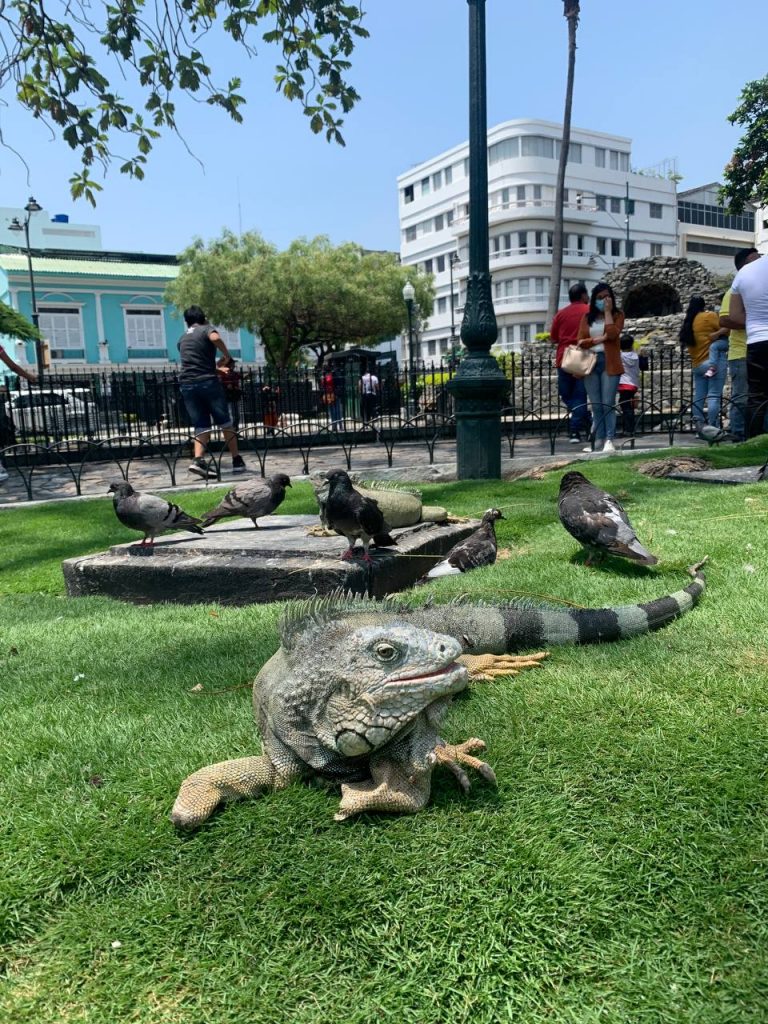
Guayaquil’s highlights are concentrated and efficient. Malecon 2000 is a 2.5-kilometer riverside promenade along the Guayas River that is safe, well-maintained, and enjoyable to walk, particularly at dusk when the lights come on over the water. Las Penas, the oldest colonial neighborhood at the base of Cerro Santa Ana, is an art-filled district of pastel-painted houses and cobblestone lanes. The 444-step climb up Cerro Santa Ana to the lighthouse offers panoramic views of the city and river. Seminario Park, known locally as Iguana Park, has a population of large land iguanas wandering freely among the visitors, providing a surprisingly effective preview of the wildlife encounters ahead in the Galapagos. The practical advice for Guayaquil: use app-based rides (Uber or Cabify) rather than taxis, stick to the malecon area and Las Penas by day, and do not wander the surrounding streets on foot after dark.
If you are planning a broader Ecuador trip around your Galapagos cruise, including highland day trips from Quito, a cloud forest stay, or an Amazon extension, we can help design that itinerary alongside your cruise booking. Ecuador is an extraordinary country and the Galapagos cruise is often the beginning of a longer relationship with it. Send us a message here and we can help plan both.
We’ve got a full breakdown on the Quito layover guide for Galapagos cruise travelers if you want to know exactly which neighborhoods, day trips, and experiences are worth fitting into a short pre-cruise stop.
How Many Nights Should You Spend in Quito or Guayaquil Before Boarding?
Two nights in Quito before your cruise is the standard recommendation and the right call for most travelers. The first night allows for arrival and initial altitude adjustment with a low-key first day. The second day allows for proper historic center exploration, with most travelers feeling close to normal. One night in Guayaquil is sufficient for transit purposes. For Quito, one night is enough if you have visited before or are altitude-sensitive and want to minimize exposure, but it does not leave time for meaningful sightseeing after an international arrival.
The case for two nights in Quito is partly about altitude management and partly about logistics. International flights from North America to Quito typically arrive in the evening. After immigration, baggage, and the 45 to 60 minute airport transfer, you are at your hotel between 10 p.m. and midnight. The first “day” in Quito is effectively half a day at best. Two nights ensures you have one genuine full day in the city, which is what Quito’s historic center and surroundings deserve. One night technically works for transit purposes but wastes the city.
The case for Guayaquil as a transit point rather than a destination is straightforward. If your international flight arrives in Guayaquil, the airport is 15 minutes from downtown, the city has a concentrated half-day of worthwhile sightseeing, and the Galapagos domestic flight departs the same airport the next morning. One night works well. For travelers connecting through Guayaquil after arriving in Quito, there is no particular reason to add a Guayaquil night unless the cruise itinerary requires it.
Want to turn your Galapagos trip into a fuller Ecuador experience without overcomplicating the logistics? Our guide on how to spend extra days in Ecuador walks you through the best options before and after your cruise.
What Travelers Say About Their Pre-Cruise Gateway Experience (Our Data)
From feedback collected through mytrip2ecuador.com and our YouTube audience, here is what Galapagos cruise travelers reported about their gateway city experience:
| Finding | % Who Named It | Pattern Observed |
|---|---|---|
| Experienced mild altitude symptoms in Quito | 51% | Roughly half of travelers who spent time in Quito reported mild symptoms on arrival day (headache, fatigue, shortness of breath on stairs). The vast majority reported near-normal function by the second day. Fewer than 2 percent reported symptoms severe enough to meaningfully limit their Quito sightseeing. |
| Wished they had spent more time in Quito | 63% | Among travelers who spent one night in Quito, 63 percent said in retrospect they wished they had planned two nights. The most common reason: arriving in the evening and leaving the next morning did not allow time to experience the city. |
| Guayaquil stopover was well spent | 74% | Among travelers who spent one night in Guayaquil, 74 percent found the day satisfying with the Malecon 2000, Las Penas, and Cerro Santa Ana combining into a full and enjoyable day. Fewer than 10 percent felt Guayaquil warranted a second night on its own merits. |
| Operator pre-arranged the gateway city | 58% | More than half of travelers reported that their cruise operator had pre-arranged the gateway city as part of the cruise package, removing the decision from them entirely. Among these travelers, Quito was the operator-designated city in 71 percent of cases. |
| Would use same gateway city again | 82% | Regardless of which city they used, 82 percent of travelers said they would make the same choice on a return trip. The strongest satisfaction was among Quito travelers who planned two nights and kept the first day low-key. |
Which Gateway City Is Right for You?
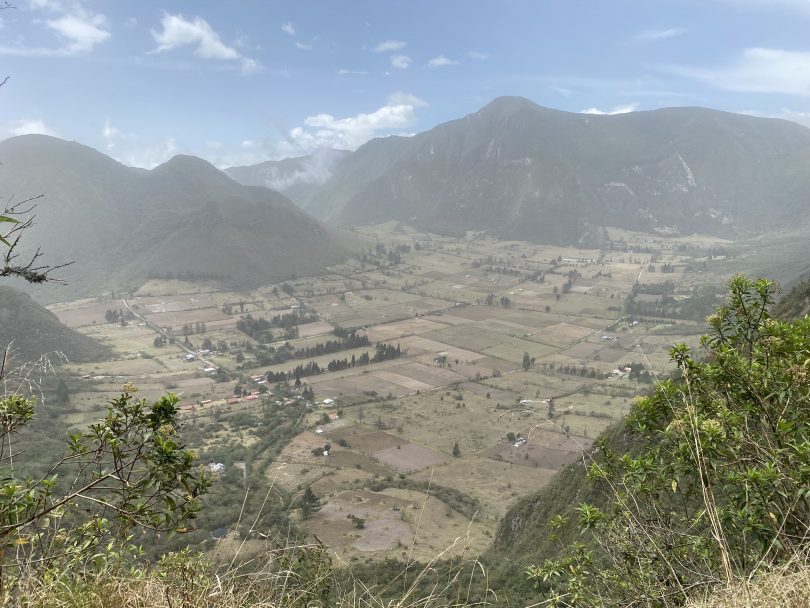
Choose Quito if you want to experience Ecuador beyond the Galapagos, have two or more nights before boarding, are not significantly altitude-sensitive, and want the richer pre-cruise cultural experience. Choose Guayaquil if your cruise operator routes you there, you have only one night before boarding, you have altitude sensitivity or a health condition that makes 2,850m inadvisable, or you simply want the fastest and most logistically simple path to the islands.
The clearest decision tree: if your operator specifies a gateway city as part of their cruise package, use that city. If you are arranging your own mainland stay, Quito is the better choice for two or more nights. Guayaquil is the better choice for one night or if altitude is a concern. If you have time and want to see both, the combination works well: fly into Quito, spend two nights, then fly to Guayaquil, spend one night, and board your Galapagos domestic flight the next morning. This adds cost and complexity but delivers the full mainland Ecuador experience alongside the cruise.
One final practical point: the Yellow Fever vaccination requirement for entering Ecuador was removed on August 27, 2025. This previously applied to travelers arriving from certain countries with Yellow Fever risk and affected routing decisions for some. It is no longer a factor in the gateway city decision for any traveler as of the publish date of this article.
Frequently Asked Questions
Do I have to fly through Quito or Guayaquil to get to the Galapagos?
Yes. All flights to the Galapagos Islands depart from either Quito or Guayaquil on mainland Ecuador. There are no direct international flights to the Galapagos. The domestic flight from Quito stops in Guayaquil before continuing to Baltra or San Cristobal; you remain on the plane during the stop. Flights from Guayaquil go directly to the islands in approximately 1.5 hours.
Is Quito’s altitude a problem before a Galapagos cruise?
For most healthy travelers, Quito’s altitude of 2,850m / 9,350 feet causes mild symptoms on the first day including headache, fatigue, and shortness of breath on stairs. Symptoms typically resolve within 24 to 48 hours. Travelers with cardiovascular or respiratory conditions should consult a doctor before planning a Quito stopover. Altitude symptoms reset completely when you fly down to the Galapagos, which is at sea level.
How many nights should I spend in Quito before my Galapagos cruise?
Two nights is the standard recommendation. International flights typically arrive in the evening, so the first night is a transit arrival. Two nights gives you one full day for the historic center and day trips, with enough altitude adjustment time to enjoy it. One night works for transit purposes but wastes the city. Three or more nights are worthwhile if you want to add Andean day trips such as Cotopaxi, Otavalo, or the Mindo cloud forest.
Is Guayaquil worth stopping in before a Galapagos cruise?
Yes, for one night. Malecon 2000, Las Penas, and the Cerro Santa Ana climb make for a satisfying and efficient half-day or full day. The airport is only 15 minutes from downtown, making Guayaquil the most logistically convenient gateway for same-day airport arrivals with an early morning Galapagos departure. Two nights in Guayaquil on its own merits is less compelling than two nights in Quito.
Does my cruise operator decide which city I fly into?
Often yes. Many operators include the mainland gateway as part of their cruise package, specifying which city the domestic Galapagos flight departs from and sometimes including hotel nights. HX Santa Cruz II packages typically include two hotel nights in Quito before the cruise. Celebrity Flora’s longer packages include mainland-to-islands flights. If your operator handles your domestic flights, the gateway city may be determined by their routing.
Planning Your Galapagos Cruise Gateway?
The gateway city logistics, including which mainland city your cruise departs from, how many nights to spend before boarding, which hotel to use, and what to do while you are there, are details we cover for every traveler we book. We have helped hundreds of travelers navigate both Quito and Guayaquil as pre-cruise destinations and can give you specific, current advice based on your arrival city, cruise itinerary, and travel dates. Cruises To Galapagos Islands is rated 4.9 stars on Google and TripAdvisor. Every conversation is free with no commitment. Fill out the contact form and we will include the full gateway logistics in the recommendation we make for you.
Written by Oleg Galeev
Galapagos cruise traveler (3 trips, 2 cruises) · Founder, Cruises To Galapagos Islands
Oleg has traveled through both Quito and Guayaquil multiple times and documented Ecuador’s cities and regions on mytrip2ecuador.com and the YouTube channel My Trip to Somewhere.
Cruises To Galapagos Islands is rated 4.9 stars on Google and TripAdvisor.