Santa Cruz Island: What to See & Do on Your Cruise Stop
Quick answer
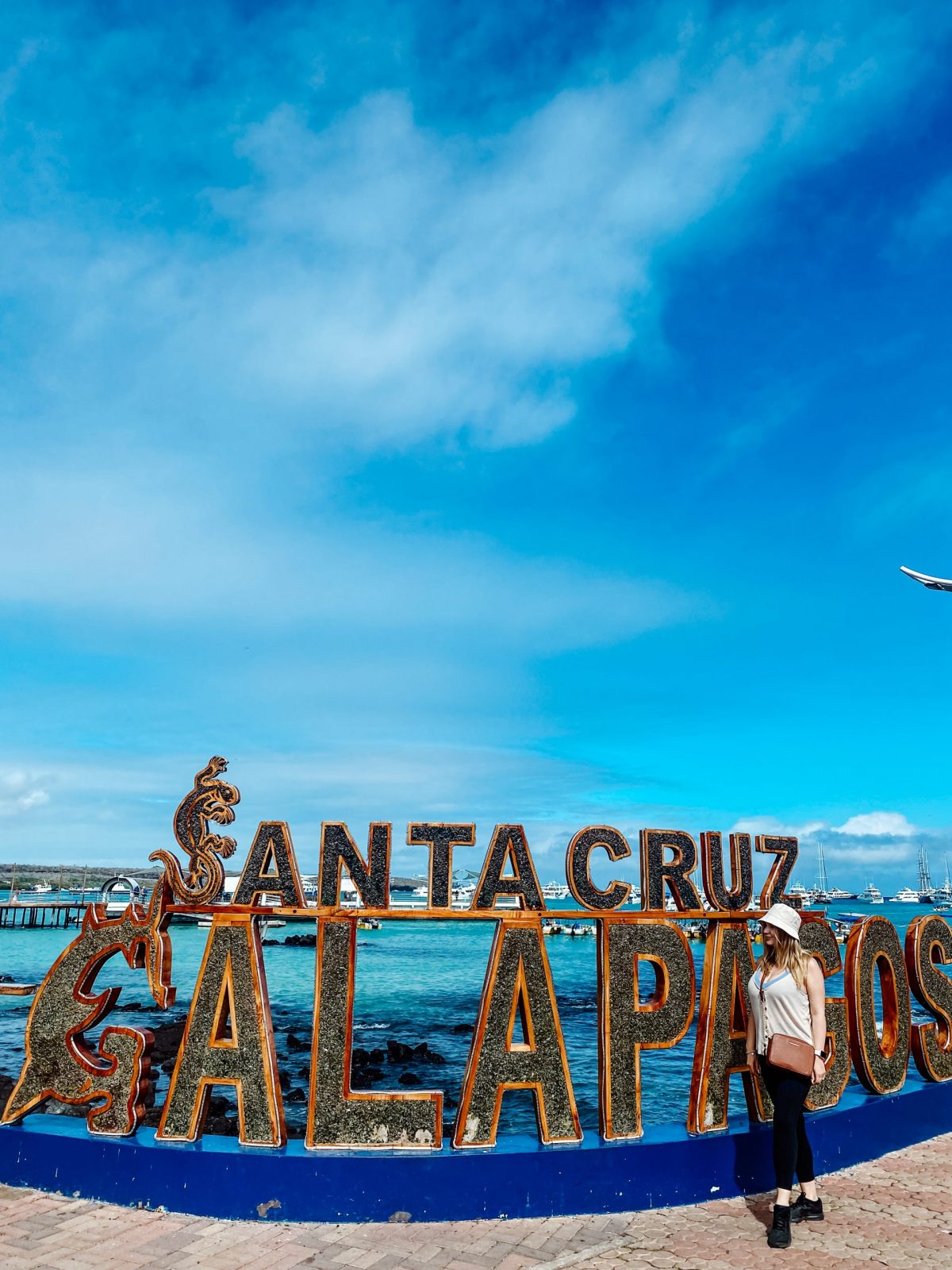
Santa Cruz is the hub of the Galapagos, the island where most cruises begin and end, and the one place that compresses every habitat zone from arid coast to misty highland into a single island. Key stops for cruise passengers are the Charles Darwin Research Station in Puerto Ayora, the highland tortoise reserves at El Chato or Rancho Primicias, the Twin Craters and lava tubes, Black Turtle Cove for a panga wildlife tour, and Las Bachas Beach. Gordon Rocks is the best dive site accessible from Santa Cruz for experienced divers. Tortuga Bay, a 2.5 km walk from town, is the beach most cruise passengers skip and most who make the walk describe as one of the best in the islands.
Part of our guide to what wildlife you can see on a Galapagos cruise. Ready to pick a ship? See compare all Galapagos cruise ships by price, size and class.
Quick Facts: Santa Cruz Island
| Fact | Detail |
|---|---|
| Size | 986 km²; second largest island in the archipelago after Isabela |
| Main town | Puerto Ayora; largest settlement in the Galapagos; approximately 12,000 residents |
| Habitat zones | The only island in the Galapagos that traverses all seven habitat zones from coast to summit |
| Key land sites | Charles Darwin Research Station; El Chato tortoise reserve; Los Gemelos twin craters; lava tubes; Tortuga Bay |
| Key marine sites | Black Turtle Cove (panga); Las Bachas Beach; Gordon Rocks (advanced diving); Las Grietas (swimming) |
| Tortoise subspecies | Domed shell; wild population in the highlands; breeding program at the station |
| Cruise role | Embarkation and disembarkation point for most cruises departing from Baltra airport |
| Park entry fee | USD 200 per adult; paid at Baltra or San Cristóbal airport upon arrival |
Data verified August 7, 2026, against Galapagos National Park, Galapagos Conservancy, and Charles Darwin Foundation sources.
Why Santa Cruz Is the Hub of Every Galapagos Cruise
Santa Cruz is the operational center of the Galapagos. The main airport that serves the archipelago, Baltra, sits on a small island immediately north of Santa Cruz connected by ferry and bus, and most cruise itineraries begin and end with a transfer through Puerto Ayora. Beyond logistics, Santa Cruz is the only island in the archipelago that traverses all seven recognized habitat zones from the arid coast to the mist-covered highland forest. This makes it the single most ecologically diverse island in the Galapagos, and a cruise stop here covers terrain, wildlife, and conservation contexts that no other island provides in the same compressed geography.
Puerto Ayora, with roughly 12,000 residents, is the largest town in the Galapagos and the one place in the archipelago that functions as a genuine small city: restaurants, dive shops, markets, pharmacies, and the Charles Darwin Research Station all within walking distance of the harbor where pangas ferry cruise passengers to shore. The combination of full logistical services and immediate wildlife access makes Santa Cruz the natural base for the archipelago, and most passengers who arrive a day early or depart a day late find themselves here rather than on any other island.
The habitat stratification is Santa Cruz’s distinctive ecological character. Drive north from Puerto Ayora toward Baltra and the landscape transforms completely within 25 kilometres: from dry, cactus-studded coastal zone through agricultural lands into the cloud-catching highland Scalesia forest where giant tortoises roam in open pasture, finches call from every tree, and the mist makes the air feel five degrees cooler. No other cruise itinerary stop in the Galapagos offers this vertical range in a single excursion day.
This ecological diversity also makes Santa Cruz the best single island for understanding what the Galapagos ecosystem actually is at multiple scales. A visitor who spends a full day on Santa Cruz moving from the research station to the highlands to the coast has seen giant tortoises in a breeding pen and in the wild, Darwin’s finches in their endemic highland forest, arid zone lizards and iguanas at sea level, and a mangrove cove with sea turtles, sharks, and rays. This range does not happen on Española or Genovesa, which deliver more intense single-species experiences. Santa Cruz delivers breadth.
Not sure what makes Genovesa worth the detour on a Galapagos cruise or which seabird encounters set it apart from every other landing site? Here’s a straight breakdown on why Genovesa earns its reputation.
Charles Darwin Research Station: What to Expect
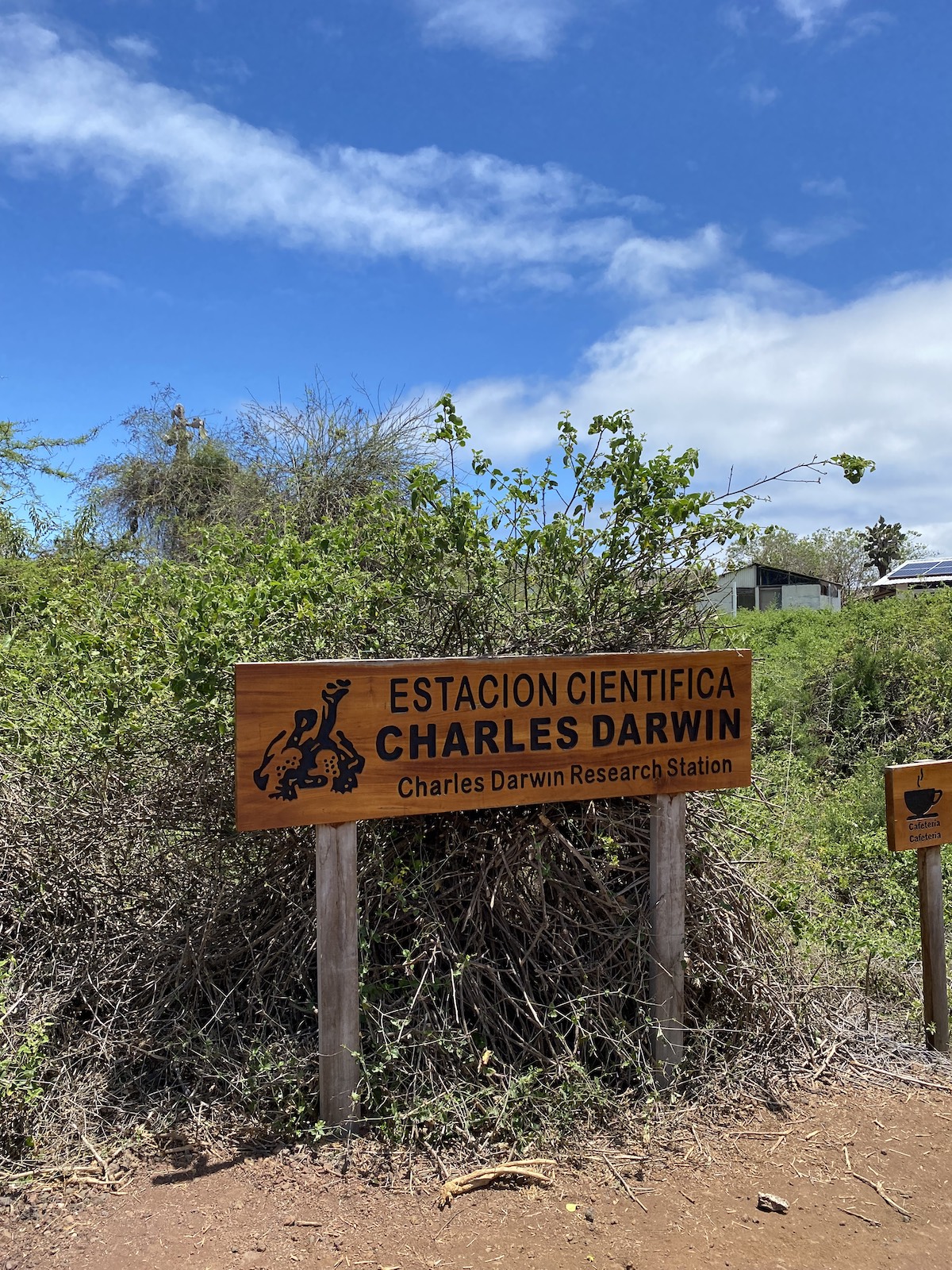
The Charles Darwin Research Station in Puerto Ayora is a working scientific research facility and the most visited land site on any Santa Cruz cruise stop. The key attractions for visitors are the Fausto Llerena Tortoise Breeding Center, where giant tortoises at every growth stage from hatchlings to release-ready juveniles can be observed at close range, and the preserved remains of Lonesome George, the last Pinta Island tortoise, who died in 2012 and now stands as the most famous individual animal in Galapagos conservation history. The station is 500 metres beyond the main Ruta de la Tortuga trail from Puerto Ayora and takes 1.5 to 2 hours to visit properly.
The breeding center runs a program that has been operating since 1965. Young tortoises from subspecies with critically reduced populations are hatched, raised in protected pens until their shells are large enough to resist predation by introduced rats, cats, and ants, and then returned to their home islands. Over 2,000 tortoises have been released since the program began. Visitors walk through the pens and see the size progression: golf-ball-sized hatchlings in indoor nursery bins, progressively larger juveniles in outdoor pens, and adults approaching release size, some nearly 50 kilograms, moving at the speed that makes them look like geological features rather than animals. The difference in scale between a newly hatched tortoise and an adult ready for release is one of the more visually concrete conservation success stories you will encounter anywhere.
Lonesome George requires a separate note because travelers who research the Galapagos before visiting sometimes arrive expecting to see a living animal. George, the last known Pinta Island giant tortoise, died on June 24, 2012, at an age estimated at over 100 years. He spent his final four decades at the research station under the care of keeper Fausto Llerena, after whom the breeding center is now named. His preserved body is displayed in a climate-controlled room at the station. The taxidermied presentation is unnervingly lifelike, and the information panels around it explain the failed mating attempts, the extinction of his subspecies, and what his life and death mean for Galapagos conservation in a way that is worth reading rather than skimming. George is not a depressing exhibit if you approach it with the full context.
The Exhibition Hall at the station is free to enter and covers over 60 years of research with natural history collections, rotating exhibits, and whale skeletons on display. The breeding center visit requires a $10 USD guide fee. Most cruise itineraries include a guided station visit, and cruise guides handle this access automatically. The station is open daily from 08:00 to 12:30 and 14:30 to 17:30. Fill out this short form and we can confirm which cruise itineraries include dedicated station time versus a brief walk-through.
Planning a Galapagos cruise and want to make sure giant tortoises are actually on the itinerary? Our guide on giant tortoises on a Galapagos cruise walks you through the best islands and landing sites.
The Santa Cruz Highlands: Tortoises, Lava Tubes, and Twin Craters
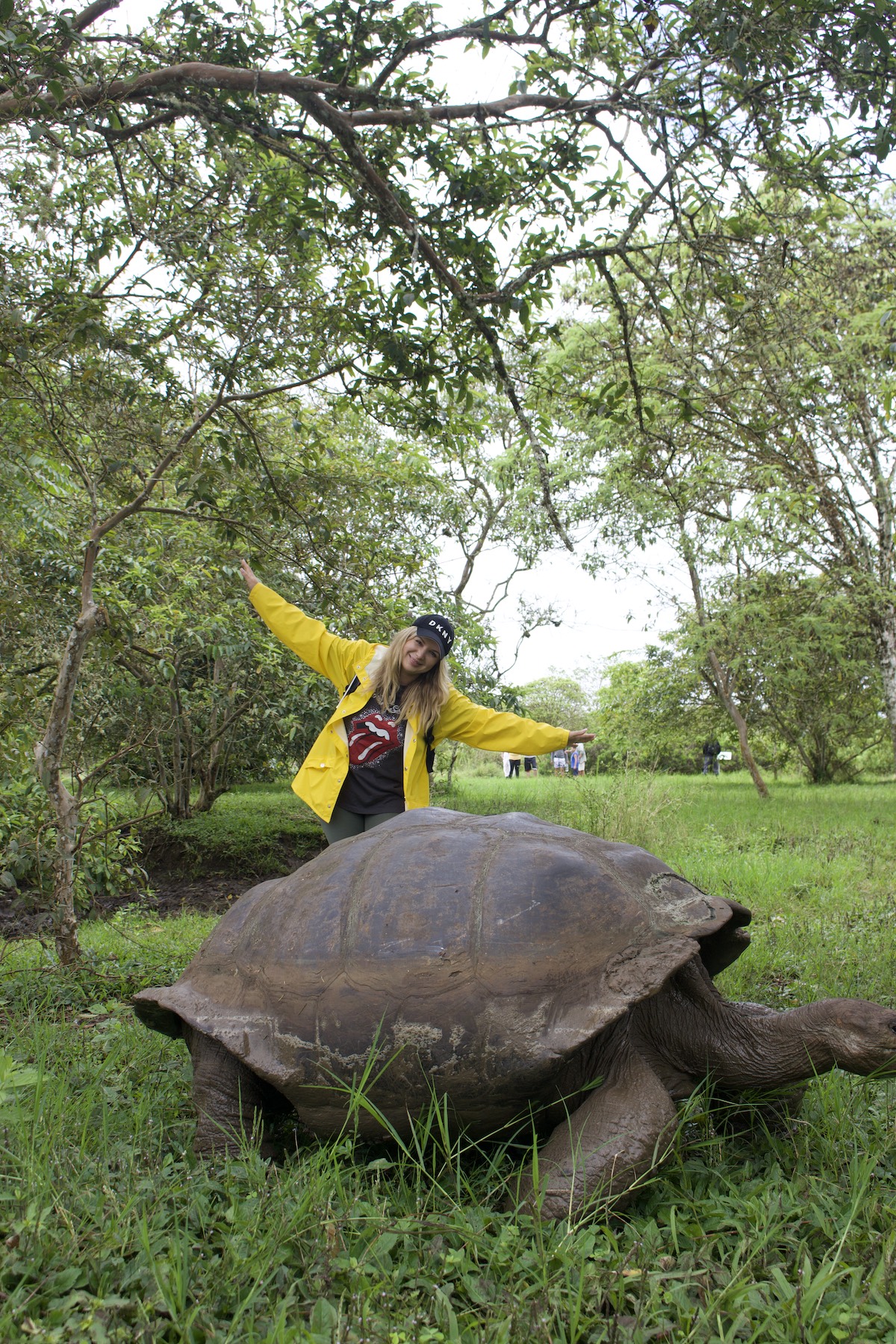
The highlands excursion from Puerto Ayora is the one land experience on Santa Cruz that most cruise passengers rate above every other stop on the entire trip. Wild giant tortoises at El Chato or Rancho Primicias roam freely through open pasture in numbers that can reach dozens visible simultaneously. Los Gemelos, the Twin Craters, are two large volcanic sinkholes surrounded by endemic Scalesia forest where vermilion flycatchers, Darwin’s finches, and occasional short-eared owls are reliably sighted. The lava tubes on the same highland loop are walk-in volcanic tunnels over a metre in diameter that formed when the outer shell of a lava flow cooled and hardened while molten rock continued flowing inside and drained out. All three sites combine into a half-day excursion from Puerto Ayora by taxi or bus.
El Chato Tortoise Reserve covers 12 hectares of highland pasture where the domed-shell Santa Cruz tortoise subspecies feeds on grass and low vegetation. Unlike the tortoises at the research station, which are in pens, these animals are genuinely wild and move freely across the reserve. The closest encounter in Galapagos travel to simply walking through a field and finding a 250 kg tortoise four metres ahead of you, eating, indifferent to your presence. The experience of standing beside an animal that hatched before your grandparents were born, watching it crop grass with a slow sideways jaw movement, is the kind of encounter that does not require explanation or framing to register. Guides do explain it anyway, and their context improves it, but the raw encounter works without words.
Los Gemelos, despite being called craters, are technically pit craters formed by the collapse of magma chamber roofs rather than explosive volcanic events. They sit beside the main road between Puerto Ayora and Baltra at roughly the midpoint of the highland zone. A walking trail loops around the rim of both sinkholes through Scalesia forest, which is the dominant tree species of the Santa Cruz highlands and is itself endemic: a woody composite plant that evolved to tree size in the absence of competing tree species. Vermilion flycatchers, bright red males hovering above the trail before perching, are reliably seen here. The crater rims themselves drop steeply through dense vegetation with no guard rail, which gives the views a physical immediacy that tourists who stay on the trail path entirely miss.
The lava tubes, accessible on the same highland loop at several farms that charge a small entry fee, are some of the largest accessible lava tubes in the world. The main Santa Cruz tubes are over a kilometre in length and tall enough to walk through standing upright for most of their length. The experience of walking through a solidified volcanic conduit, with the cathedral acoustic quality of smooth basalt walls absorbing sound unevenly, is unlike any other experience on a Galapagos itinerary and is not possible on most other islands. Flashlights or headlamps are useful, guides usually carry them.
Not sure why Darwin’s finches are such a big deal or which islands give you the best chance of spotting multiple species? Here’s a straight breakdown on what to know about Darwin’s finches before your Galapagos cruise.
| Highland Site | What You See | Time Required | Notes |
|---|---|---|---|
| El Chato / Rancho Primicias | Wild tortoises free-roaming; highland finches; vermilion flycatchers | 1 to 2 hours | Best in morning when tortoises are most active |
| Los Gemelos (Twin Craters) | Volcanic sinkholes; Scalesia forest; flycatchers; finches; occasional owls | 45 minutes to 1 hour | On the Baltra road; easy to combine with tortoise farms |
| Lava tubes | Walk-in volcanic tunnels; geological formations; unique underground landscape | 30 to 45 minutes | Headlamp useful; small farm entry fee typically USD 3 to 5 |
Best Snorkel and Dive Sites Around Santa Cruz
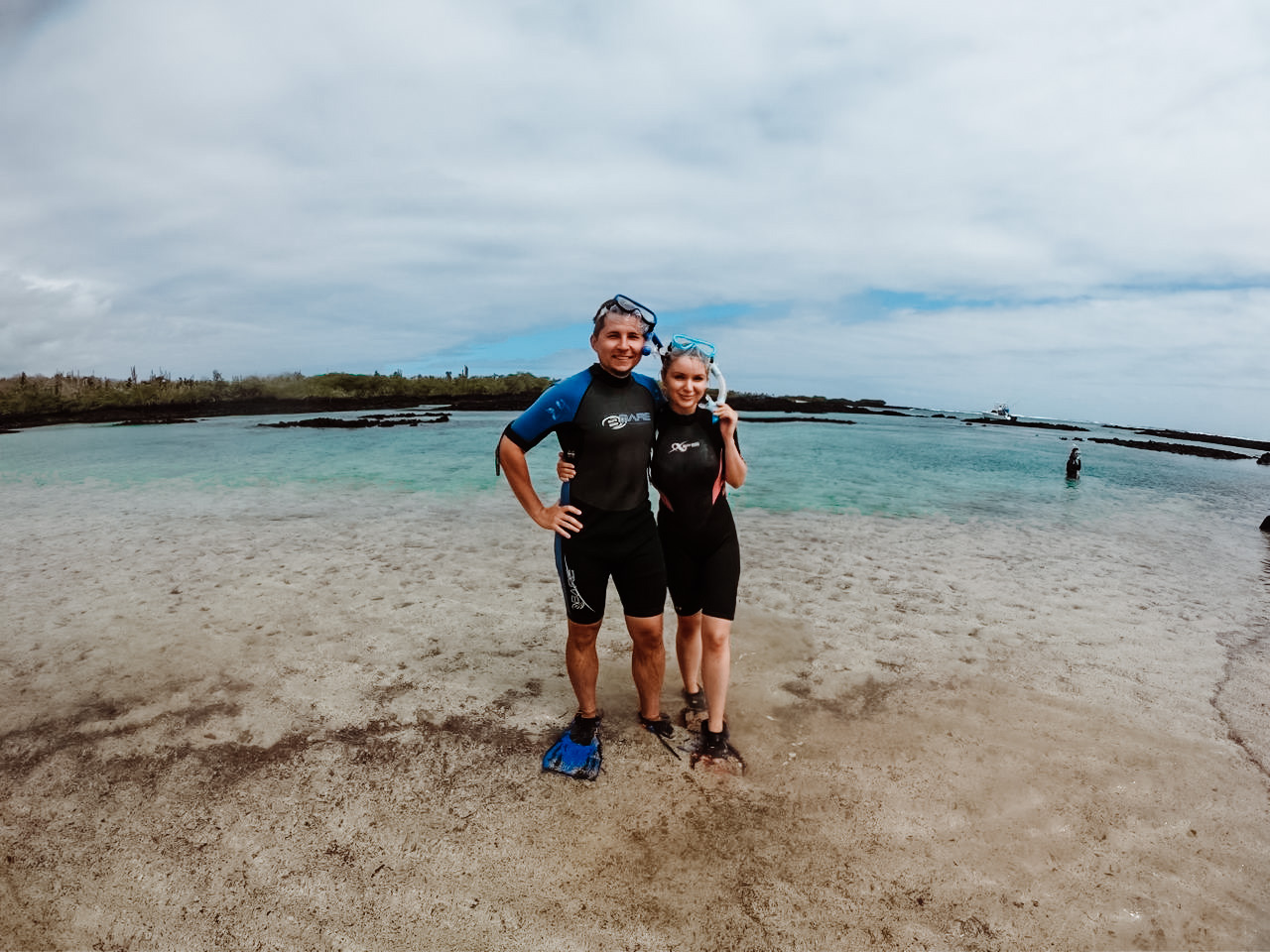
The two most important marine sites for cruise passengers on Santa Cruz are Black Turtle Cove on the north coast and Las Bachas Beach nearby. Black Turtle Cove is a mangrove channel system explored by panga, not by swimming, where sea turtles, eagle rays, white-tip sharks, and juvenile Galapagos sharks concentrate in calm, shallow water. Las Bachas is a beach landing with a lagoon that sometimes holds flamingos and a good casual snorkel off the beach. Gordon Rocks, northeast of Santa Cruz, is the premier dive site in the central archipelago for experienced scuba divers, known as the Washing Machine for its strong and unpredictable currents, and producing hammerhead sharks, Galapagos sharks, and manta rays.
Black Turtle Cove earns its name. The name in Spanish, Caleta Tortuga Negra, refers to the dark coloration of the green sea turtles that gather in the mangrove channels here, notably darker than sea turtles seen at most other sites. The cove is visited exclusively by panga, as landing is not permitted and the shallow mangrove roots make swimming impractical. Passengers sit in the inflatable tender as it moves silently through the channels, with the guide cutting the engine periodically to drift past sleeping turtles, mating turtles, eagle rays gliding in formation below, and occasionally white-tip reef sharks resting on the sandy bottom visible through the clear water. The birding from the panga adds another layer: lava herons, pelicans, blue-footed boobies, and frigatebirds are all visible in the mangrove canopy and at the channel edges. It is one of the more sedate Galapagos wildlife experiences and one of the most consistently well-reviewed.
Gordon Rocks is a different kind of experience entirely. It sits in an eroded volcanic crater and earns its local nickname the Washing Machine from its strong, unpredictable currents. This is an advanced dive site accessible by day tour from Puerto Ayora at a cost of roughly USD 160 to 180, including two dives, equipment, and transport. Species commonly encountered include hammerhead sharks, Galapagos sharks, white-tip reef sharks, green turtles, eagle rays, manta rays, king angelfish, and moray eels. The dive is not suitable for beginners and most operators require Advanced Open Water certification with logged current experience. Cruise passengers who dive and want a hammerhead encounter without the Darwin and Wolf liveaboard investment should ask their operator about adding a Gordon Rocks day dive to the Santa Cruz stop.
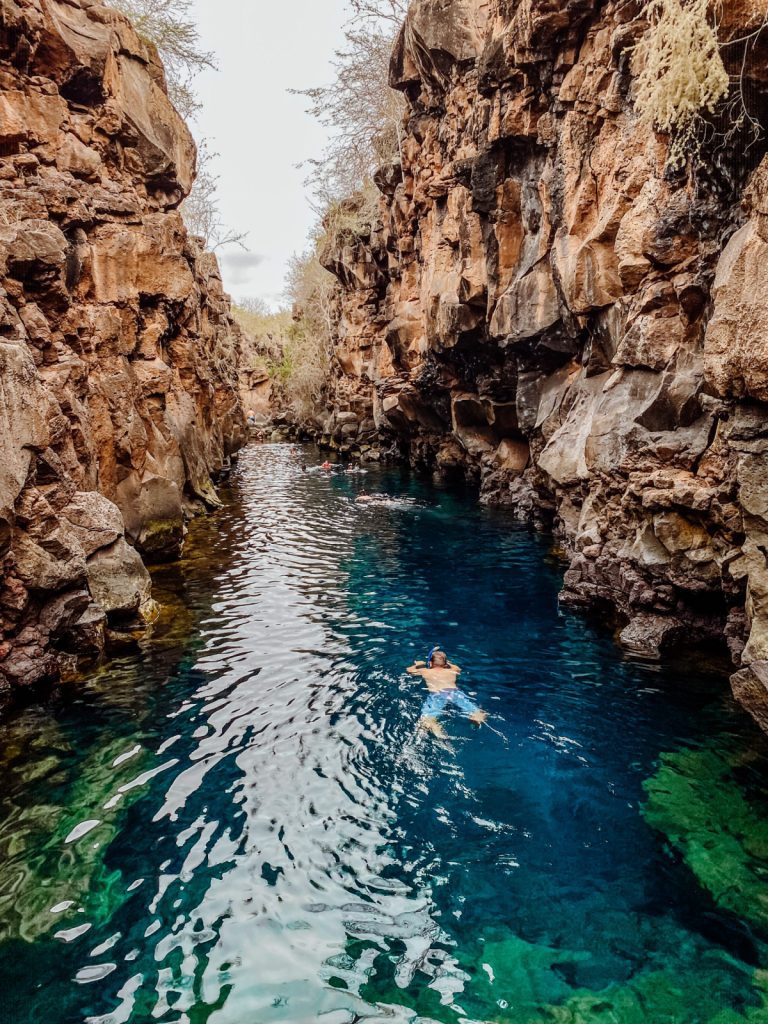
Las Grietas, a narrow lava fissure filled with brackish water between Puerto Ayora and the cruise anchorage, is the best swimming site accessible on foot from town. It is free to enter, takes about 15 minutes to walk to from the boat landing, and offers a cold, clear swim in a natural slot canyon with walls rising several metres above the water. Send us a message here and we can confirm which Santa Cruz marine sites are included as excursion stops on the cruise you are considering.
The underwater world in the Galapagos is as impressive as what’s on land and most first-timers don’t fully expect it. Here’s a guide on what fish and marine life you’ll see snorkeling in the Galapagos so you know what to look for.
Tortuga Bay: The Beach Most Cruise Passengers Miss
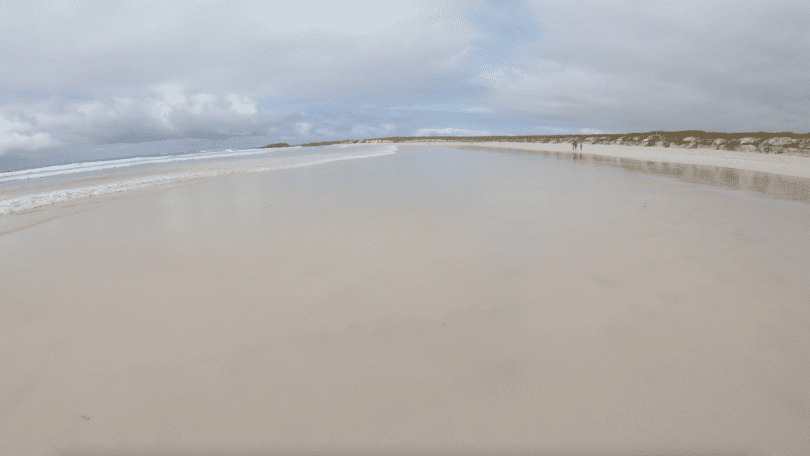
Tortuga Bay is a 2.5 km paved path from the western edge of Puerto Ayora to the finest beach on Santa Cruz, and possibly the finest in the archipelago: a long white sand beach, warm water, marine iguanas sunning on the sand, pelicans, occasional sea turtles visible from the shore, and behind the main beach a calmer lagoon where snorkeling with marine iguanas, golden rays, and white-tip sharks is possible in shallow, protected water. Most cruise passengers do not go because it requires the walk and is not a standard excursion stop. Most who make the walk describe it as a highlight of their entire Galapagos visit.
The beach itself divides into two sections with meaningfully different characters. Playa Brava, the outer beach, faces the open Pacific with surf that attracts local surfers and can have strong currents. Swimming here requires judgment about the conditions on the day. Playa Mansa, the inner calmer lagoon, is protected by a mangrove-fringed headland and has the flat, clear water that makes snorkeling practical for all ability levels. The wildlife on Playa Mansa includes marine iguanas in large numbers on the sand and rocks, sea turtles occasionally visible from shore during nesting season, sharks in the shallows, and the golden rays that glide through the shallow water of the lagoon regularly enough to be part of the standard experience rather than a lucky sighting.
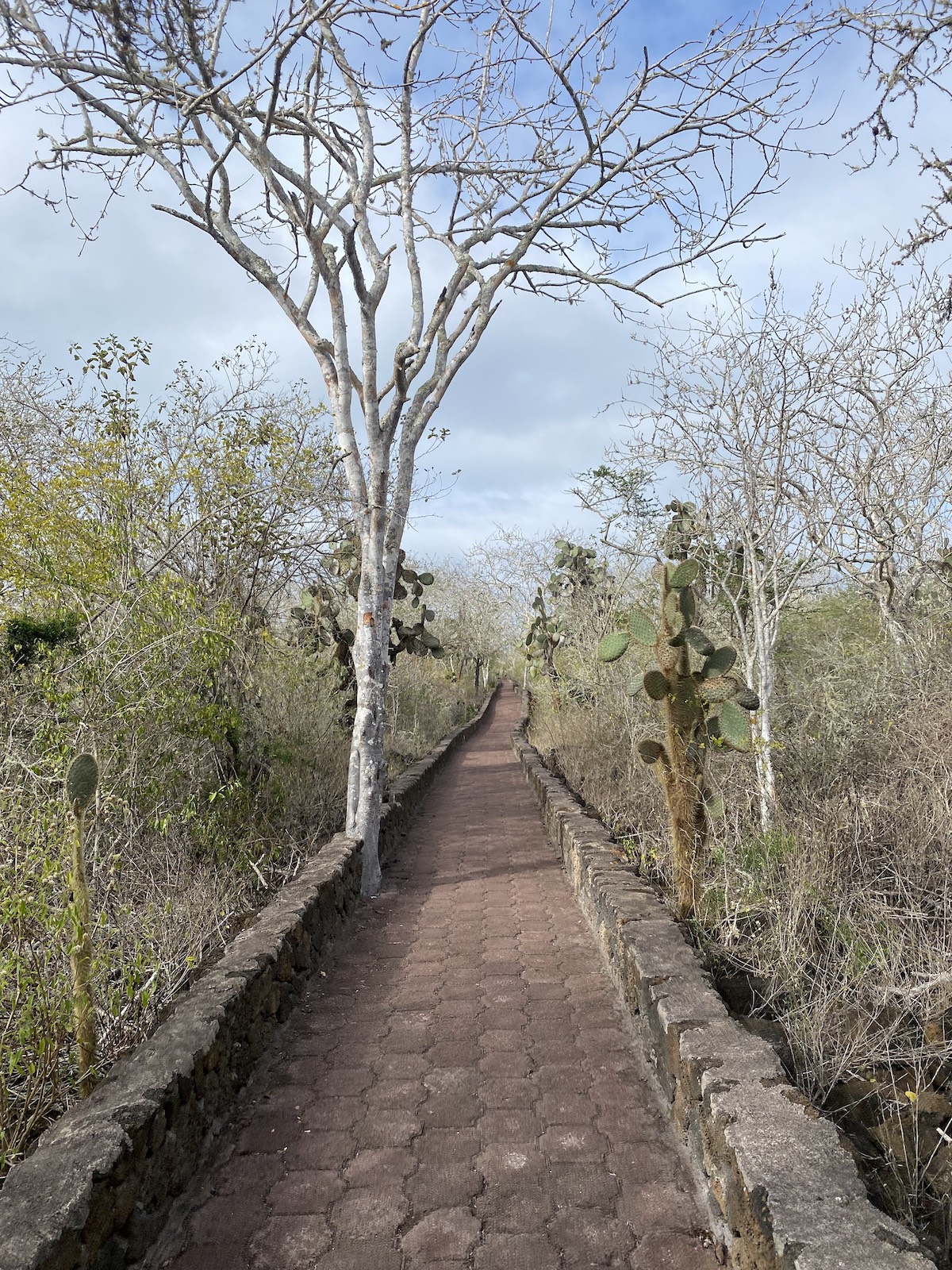
The 2.5 km path from town is entirely paved and flat, cutting through a dry zone forest of cactus and palo santo trees where Galapagos doves, finches, and land iguanas appear regularly along the way. The walk takes 30 to 40 minutes each way, which is why cruise passengers with limited shore time skip it. The standard Puerto Ayora stop on a cruise itinerary, which includes the research station and town time, does not build in the additional hour and a half for the Tortuga Bay round trip. Passengers who have free afternoon time at anchor can make the walk independently without a guide, as the beach falls within the national park but on an open-access trail. This is one of the few significant Galapagos wildlife experiences that is entirely self-guided, free beyond the park entry fee already paid on arrival, and accessible without a boat.
Not sure which islands give you the most reliable sea turtle snorkeling encounters or which cruise routes put you in the water at the best sites? Here’s a straight breakdown on snorkeling with sea turtles in the Galapagos.
What Do Travelers Miss About Santa Cruz?
The three most common misses on a Santa Cruz cruise stop are: treating the research station as a quick photo stop rather than a two-hour educational visit; skipping the highland excursion because it requires an early departure and a 45-minute road transfer; and not walking to Tortuga Bay because it requires a 2.5 km walk not built into the standard itinerary. Each of these misses is a genuinely significant experience, not a marginal one. The highland tortoises and the Tortuga Bay calmer lagoon are on many travelers’ retrospective lists as the best things they did not do on their Galapagos trip, which is a different and more frustrating category than the best things they did.
Rushing the research station. The standard cruise schedule for the research station is often 45 minutes to an hour, which includes the walk from the harbor, a pass through the breeding center pens, a look at Lonesome George, and the walk back. The Exhibition Hall is frequently skipped entirely. Two hours is the minimum to engage seriously with what the station offers: reading the breeding center information about each subspecies, understanding the population numbers and recovery trajectories, spending time with the Lonesome George exhibit rather than photographing it and moving on. This is the intellectual center of the Galapagos conservation story, and the information panels tell it clearly if you read them rather than treating the station as a zoo with slow exhibits.
Skipping the highlands because of the early start. The highland excursion typically departs Puerto Ayora at 07:00 or 08:00 to reach El Chato when tortoises are most active and before the midday heat drives them into the shade. Cruise passengers who had a late evening the night before in Puerto Ayora sometimes skip the optional morning highland excursion. This is the visit most commonly mentioned in our post-trip conversations as the thing people wish they had done. Free-roaming giant tortoises in a highland mist forest is not an experience that any other stop on a Galapagos cruise replicates. It is worth the early start.
Not budgeting time for Tortuga Bay. The walk to Tortuga Bay from Puerto Ayora takes about 35 minutes each way on a flat paved path. With time at the beach, the full excursion is 2.5 to 3 hours. Most cruise schedules give passengers 3 to 4 hours of free time in Puerto Ayora, which is exactly enough for Tortuga Bay if it is the priority rather than the fish market or the ice cream shop. Passengers who know this before arriving plan differently than those who discover it on the dock after spending three hours in town. Reach out here and we will tell you exactly how much free time your specific itinerary builds in at Santa Cruz so you can plan accordingly.
What Our Travelers Report: Santa Cruz Stop Satisfaction by Experience
Based on feedback gathered through mytrip2ecuador.com, our YouTube audience, and Oleg’s direct traveler interviews across three personal visits to the Galapagos:
| Experience | Did It | Rated Excellent | Would Do Again | “Wish I’d done this” (those who skipped) |
|---|---|---|---|---|
| Highland tortoises (El Chato) | 71% | 94% | 99% | 88% |
| Charles Darwin Research Station | 96% | 74% | 81% | n/a (almost everyone went) |
| Black Turtle Cove (panga) | 68% | 87% | 94% | 71% |
| Tortuga Bay walk | 34% | 91% | 98% | 84% |
How Much Time Does Your Cruise Spend on Santa Cruz?
Most cruises allocate one to two days to Santa Cruz, typically split between embarkation logistics, the research station, highland excursion, and one or two marine sites. The exact schedule varies significantly between operators. Some cruises spend the first morning on Santa Cruz before sailing and the last day returning for disembarkation, which provides two partial days. Others treat Santa Cruz as a single full day mid-itinerary. What matters for planning is not how many calendar days include Santa Cruz but how many excursion hours are dedicated specifically to highland and wildlife activities versus embarkation transfers and town time.
| Itinerary Type | Typical Santa Cruz Time | Usually Includes | Often Misses |
|---|---|---|---|
| 5-day cruise | Half to one full day | Research station; Las Bachas or Black Turtle Cove | Highlands; Tortuga Bay; Gordon Rocks |
| 7 to 8-day cruise | One full day; sometimes two partial days | Research station; highlands; Black Turtle Cove or Las Bachas | Tortuga Bay; Gordon Rocks dive |
| 10 to 14-day cruise | Two or more excursion days | All above; possibly Gordon Rocks dive; free time in Puerto Ayora | Rarely misses anything; best Santa Cruz coverage |
The highland excursion is the most commonly omitted Santa Cruz activity on 7-day itineraries due to its 45-minute road transfer from the harbor and early morning departure requirement. Some itineraries schedule it but make it optional, which means passengers who do not know its significance in advance may skip it in favor of more sleep. Asking your operator specifically whether the highland tortoise visit is a scheduled excursion or an optional add-on before booking prevents the single most common Santa Cruz regret.
Land-based travelers using Santa Cruz as a base for day trips to surrounding islands get longer and more flexible access to every site here, including Tortuga Bay at leisure and multiple Gordon Rocks dive sessions. For cruise travelers, the constraint is the excursion schedule, and the solution is information before you board. Knowing that Tortuga Bay exists and what it delivers changes how you use your free time in Puerto Ayora. Knowing that the highland excursion requires an early start changes whether you stay up late the night before in town. These are planning decisions that make a real difference to what you bring home from Santa Cruz. Contact Cruises To Galapagos Islands here and we can walk you through the exact Santa Cruz excursion schedule on any itinerary you are considering.
Frequently Asked Questions
Can you see giant tortoises in the wild on Santa Cruz?
Yes, in the highlands at El Chato Tortoise Reserve or Rancho Primicias. The domed-shell Santa Cruz subspecies roams freely through highland pasture and can be approached to within a few metres. These are not captive animals: they move through the reserve under their own power and the encounter is genuinely wild. The reserves are accessible from Puerto Ayora by taxi in approximately 30 to 45 minutes. Most 7-day and longer cruise itineraries include a highland excursion that covers El Chato alongside Los Gemelos and the lava tubes.
Is the Charles Darwin Research Station worth visiting?
Yes, particularly the Fausto Llerena Tortoise Breeding Center and the Lonesome George exhibit. The station has received mixed reviews from travelers who expect a wildlife zoo and find a research facility with educational exhibits instead. The right expectation is a serious conservation facility where you can observe tortoises at every growth stage, understand the breeding program that has returned over 2,000 animals to the wild, and engage with the most comprehensive public-facing display of Galapagos conservation work anywhere in the archipelago. Allow 1.5 to 2 hours rather than 45 minutes.
Is Tortuga Bay worth the 2.5 km walk?
Unanimously yes from every traveler who makes it. The outer beach is one of the most beautiful in the Galapagos and the inner Playa Mansa lagoon offers calm snorkeling with marine iguanas, golden rays, and white-tip reef sharks in shallow protected water accessible without gear. The walk itself passes through dry zone habitat where land iguanas, finches, and Galapagos doves are reliably sighted. The reason it is skipped is lack of time planning, not the quality of the destination. Budget it specifically into your Puerto Ayora free time.
What is Gordon Rocks and do you need to be a certified diver?
Gordon Rocks is the premier dive site in the central Galapagos, located northeast of Santa Cruz off a small volcanic formation. It is an advanced dive site with strong and variable currents that have earned it the local name the Washing Machine. Advanced Open Water certification with current experience is the standard requirement. The site produces hammerhead sharks, Galapagos sharks, white-tip reef sharks, manta rays, eagle rays, and sea turtles. It is accessible as a day dive from Puerto Ayora and is the best option for cruise passengers who want a hammerhead encounter without committing to a Darwin and Wolf liveaboard itinerary.
Make the Most of Your Santa Cruz Cruise Stop
Santa Cruz rewards planning and penalizes passivity. The highland tortoise encounter, the Tortuga Bay walk, and the Black Turtle Cove panga tour are all available on most cruise itineraries but not guaranteed without knowing to ask for them. We know exactly which excursions each operator includes as standard versus optional on their Santa Cruz stops, which itineraries allocate highland time in the morning when tortoises are most active, and which free-time windows are long enough to walk to Tortuga Bay. A conversation with Cruises To Galapagos Islands before you book costs nothing and turns the most visited island in the Galapagos into the richest stop on your itinerary. Tell us your priorities and we will match you with the right operator and schedule.
Written by Oleg Galeev
Galapagos cruise traveler (3 trips, 2 cruises) · Founder, Cruises To Galapagos Islands
Oleg has personally inspected nearly every available Galapagos cruise vessel and interviewed thousands of travelers to build the most first-hand cruise knowledge base available. He also runs the Ecuador travel blog mytrip2ecuador.com and the YouTube channel My Trip to Somewhere.
Cruises To Galapagos Islands is rated 4.9 stars on Google and TripAdvisor.
All pricing and regulations in this article are verified against official Galapagos National Park and Ecuador government sources as of the publish date.