
TL;DR
A cruise wakes you at the site at 7am when wildlife is most active and the light is good. Day trips depart town mid-morning and arrive at sites midday, when the equatorial sun is harshest and animals are resting in shade. That timing gap is the core experiential difference, and it compounds across every single day. Day trips are genuinely cheaper and more flexible, and they work well for travelers with tight budgets, young children, or limited vacation days. For anyone whose primary goal is seeing maximum wildlife in the best conditions across the most islands, a cruise wins clearly. Day trips are the right choice for specific reasons, not as a generic cheaper substitute for the same experience.
| Factor | Cruise | Day Trips |
|---|---|---|
| Arrival time at visitor sites | 7am – wildlife most active, best light | Midday – animals resting, sun harshest |
| Sites accessible | All 60+ National Park sites | ~18 within day-trip range of inhabited islands |
| Time at each site | 2 to 3 hours, 2 visits per day | 1.5 to 2 hours; most time spent in transit |
| Cost (7 days, mid-range, per person all-in) | $6,000 to $9,000 | $2,500 to $4,500 |
| Transit time per day | Overnight passage while you sleep | 1 to 3 hours each way on speedboats |
| Group size at sites | 8 to 16 per guide (strict park limit) | Up to 16 per guide; multiple groups arrive together |
| Flexibility | Fixed itinerary, fixed schedule | Full flexibility; book day by day |
| Meals included | All meals onboard | Lunch on day tour only; breakfast and dinner at own expense |
| Same guide each day | Yes, builds context and rapport over the week | No, different guide on each day tour |
| Scuba diving | Not available on nature cruises | Available from island dive shops |
What Is the Actual Difference Between a Galapagos Cruise and Doing Day Trips?
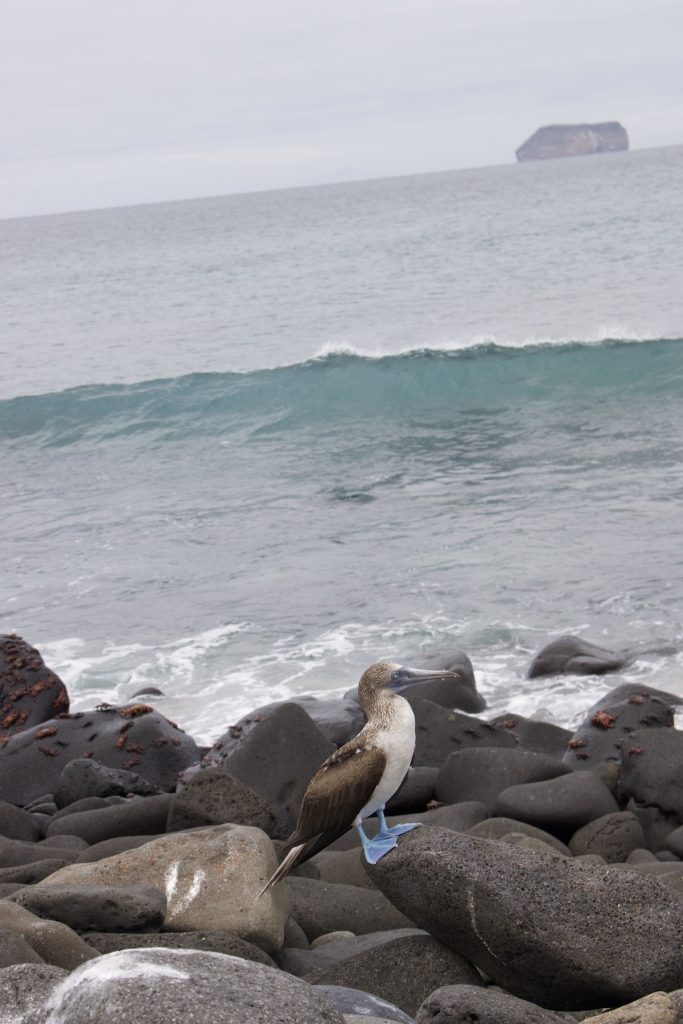
A Galapagos cruise is a live-aboard expedition that moves between islands overnight, placing you at a new uninhabited site every morning with no transit time built into the day. Day trips mean staying in a hotel in town, taking a speedboat to a visitor site each morning, spending a few hours there, and returning to town by mid-afternoon. The structural difference is how you use your time: a cruise maximizes time at the sites, day trips spend a significant portion of each day getting there and back.
The Galapagos National Park operates all visitor sites under the same rules regardless of whether you arrive on a cruise or a day tour. Groups can have a maximum of 16 people per certified guide. Sites are visited on fixed trails. Wildlife can’t be touched or fed. A blue-footed booby is the same blue-footed booby whether you arrived on a luxury yacht or a $230 day tour speedboat.
What changes is everything around that encounter. On a cruise, your zodiac launches from the vessel at 7am. You’re on site before the sun reaches its full heat and before the animals have retreated to whatever shade exists on a lava field. The guide has been with your group for days and knows what questions you’re working up to, what you noticed on the previous island, what connections to draw between what you saw yesterday and what you’re looking at now. You spend two to three hours at the site. You return to the boat, eat lunch, rest for an hour, and head to a second site in the late afternoon as the light softens.
On a day trip, you leave town at 8 or 9am, travel 45 minutes to 2 hours on a speedboat to the site, arrive when the sun is already high, spend 90 minutes to 2 hours there while sharing the site with multiple other day-tour groups who all departed from town at roughly the same time, and ride back to town by 2 or 3pm. You’ve had one site visit. The afternoon is yours. You find dinner. Tomorrow you do the same thing with a different guide, on a different boat, to a different island.
If you’re trying to figure out which structure actually fits your travel style and your goals for the Galapagos, we’re happy to think through it with you. We’ve sent travelers through both options and know exactly where each one works and where it doesn’t. Get in touch here and we’ll give you a straight answer based on your situation.
Which Sites Can You Only Reach on a Cruise vs. Day Trips?
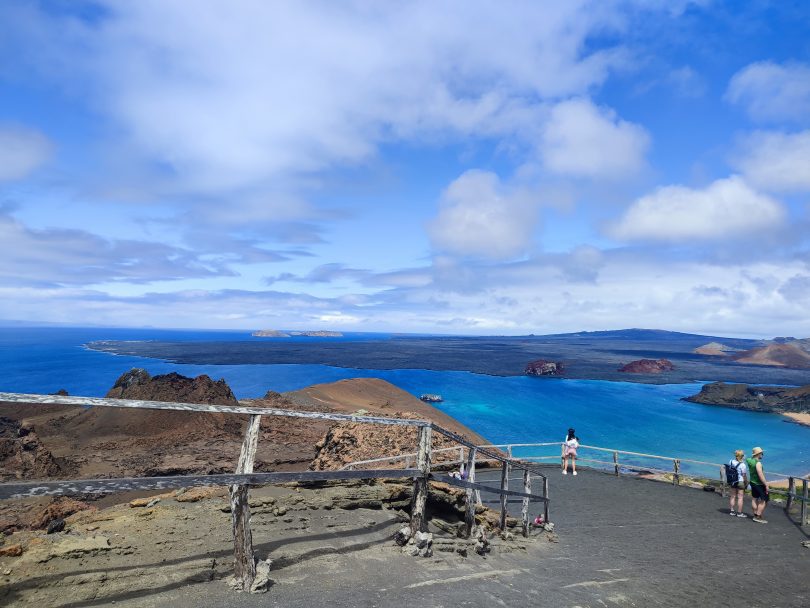
Day trips from the inhabited islands can reach roughly 18 visitor sites, mostly in the central and eastern parts of the archipelago. The remote outer islands, including Española, Genovesa, Fernandina, and the distant northwest, are only accessible by overnight cruise vessel. That means approximately 70% of the National Park’s designated visitor sites are physically off-limits to day trippers. The outer islands hold the wildlife encounters most often described as the defining moments of a Galapagos trip.
From Santa Cruz, the day-tour fleet can reach North Seymour, Bartolome, Santa Fe, South Plaza, Pinzon, and day trips to Isabela and Floreana by speedboat. These are legitimate sites with real wildlife. North Seymour has the highest density of blue-footed boobies and magnificent frigatebirds in the archipelago. Bartolome has the famous Pinnacle Rock and penguins snorkeling in the channel. Kicker Rock off San Cristóbal is one of the best snorkel sites in the whole chain.
What day trips cannot reach: Española, the southeastern island that holds the world’s only major waved albatross breeding colony at Punta Suarez. The birds perform their elaborate courtship dance from April through December, clicking beaks and sky-pointing and swaying in formations that look choreographed. Nothing else in the Galapagos looks like it. Genovesa, the far-northeast “bird island,” has red-footed booby colonies, short-eared owls hunting by day, and a volcanic caldera you descend into by boat. Fernandina, the youngest and most volcanically active island, has marine iguanas so dense on the lava fields that you watch where you step. Flightless cormorants dry their stubby wings on the rocks in front of you.
These are the sites that travel writers reach for when they try to describe what makes the Galapagos unlike any other destination on Earth. All of them require an overnight vessel. None are accessible by day trip. A traveler who spends a week doing day trips from Puerto Ayora has seen a meaningful portion of the Galapagos. A traveler who takes a cruise has seen an entirely different one.
We’ve put together a full planning breakdown in our how to plan a Galapagos cruise guide so you know exactly what to sort out, in what order, and how to avoid the most common and costly mistakes.
| Site | Day Trip | Cruise | Key Wildlife |
|---|---|---|---|
| North Seymour | ✓ | ✓ | Blue-footed boobies, magnificent frigatebirds, sea lions |
| Bartolome (Pinnacle Rock) | ✓ | ✓ | Galapagos penguins, sea turtles, iconic volcanic landscape |
| Kicker Rock (San Cristóbal) | ✓ | ✓ | Hammerhead sharks, Galapagos sharks, sea turtles snorkeling |
| Santa Fe Island | ✓ | ✓ | Santa Fe land iguanas (endemic), sea lions, marine iguanas |
| Española (Punta Suarez, Gardner Bay) | ✗ | ✓ | Waved albatross (world’s only colony), Española marine iguanas |
| Genovesa (Darwin Bay) | ✗ | ✓ | Red-footed boobies, short-eared owls, vast frigatebird colonies |
| Fernandina (Punta Espinoza) | ✗ | ✓ | Flightless cormorants, largest marine iguana colony, active volcano |
| Los Túneles (Isabela) | ✓ | ✓ | Seahorses, manta rays, penguins, sharks in lava tunnels |
| Darwin and Wolf Islands | ✗ | Dive liveaboard only | Whale sharks, schooling hammerheads; dive liveaboard access only |
How Do the Costs Really Compare When You Add Everything Up?
A week of day trips costs roughly $2,500 to $4,500 per person all-in from North America, compared to $6,000 to $9,000 for a mid-range cruise. The gap is real, but it shrinks significantly when day trip extras are properly counted: individual day tours run $150 to $320 each, inter-island speedboat ferries add $30 per person each way, and most meals outside of included day-tour lunches are your own expense. A traveler who books five or six day tours across seven days is spending $900 to $1,600 on tours alone, before hotels, food, and transport.
Individual day tour prices from Santa Cruz in 2026 illustrate the arithmetic quickly. A day trip to North Seymour runs $230 to $280 per person. Bartolome runs $245 to $320. The Los Túneles snorkeling tour from Isabela runs $135 to $155. Española Island, one of the most sought-after day tour sites, runs $250. Book five of those tours across a week and you’ve spent $1,050 to $1,380 on tours alone, plus the hotel, plus all the meals the cruise would have included.
The total for a mid-range day-trip week, assembled honestly, looks like this per person: hotel for 7 nights at $80 to $150 per night ($560 to $1,050), five to six day tours at $150 to $280 each ($750 to $1,680), breakfast and dinner at restaurants for 7 days at $15 to $25 per day ($210 to $350), inter-island speedboat transfers if moving between islands ($60 to $120), park fee and TCT ($220), international and domestic flights ($900 to $2,000). Total: $2,700 to $5,420 per person. That’s a genuine saving compared to a tourist superior cruise at $6,000 to $9,000 all-in. But it’s closer to the cruise than the day-trip headline figures suggest.
One cost the cruise handles that day trips don’t: transit time value. On a cruise, you sleep while the boat moves between islands. On day trips, you’re on a speedboat for 1 to 3 hours each way, every day you want to reach a site beyond Santa Cruz. That transit time is part of what you’re paying for on a cruise, even though it doesn’t show up as a line item.
Wondering whether the price gap between economy and first-class Galapagos cruises reflects a genuine difference in experience or just cabin size and food quality? This how much does a Galapagos cruise cost guide covers the honest value breakdown most cruise comparison sites avoid.
| Cost Component / Variable | Galapagos Day Trips & Land Tour | Galapagos Mid-Range Cruise |
| All-In Estimate Range (7 Days) | $2,700 to $5,420 per person | $6,000 to $9,000 per person |
| Excursion / Day Tour Fees | $750 to $1,680 total (paid out-of-pocket) • Bartolomé: $245 – $320 • North Seymour: $230 – $280 • Española: $250 • Los Túneles (Isabela): $135 – $155 | Included in the upfront cruise rate. All remote landings and daily snorkeling excursions are covered. |
| Accommodations | $560 to $1,050 total ($80 to $150 per night for 7 nights) | Included in the cabin/suite rate. |
| Food & Dining Costs | $210 to $350 total ($15 to $25 per day for out-of-pocket breakfasts and dinners; day tours typically include lunch). | Included in the upfront rate. All meals are provided by the ship’s galley. |
| Inter-Island Transit | $60 to $120 total ($30 per person, each way via public speedboat ferries). | Included as part of the ship’s navigation framework. |
| Mandatory Fees & Flights | $1,120 to $2,220 total • Park Fee & TCT: $220 • Flights (Int’l & Domestic): $900 – $2,000 | Varies • Park Fee & TCT: $220 • Flights are occasionally bundled or added separately. |
| Transit Time Value | High Loss: 1 to 3 hours spent each way inside a bumpy speedboat every single day you want to reach an outlying island site. | Zero Loss: The vessel navigates between remote islands overnight while you sleep, maximizing your daylight exploration hours. |
Which Option Gives You Better Wildlife Encounters?
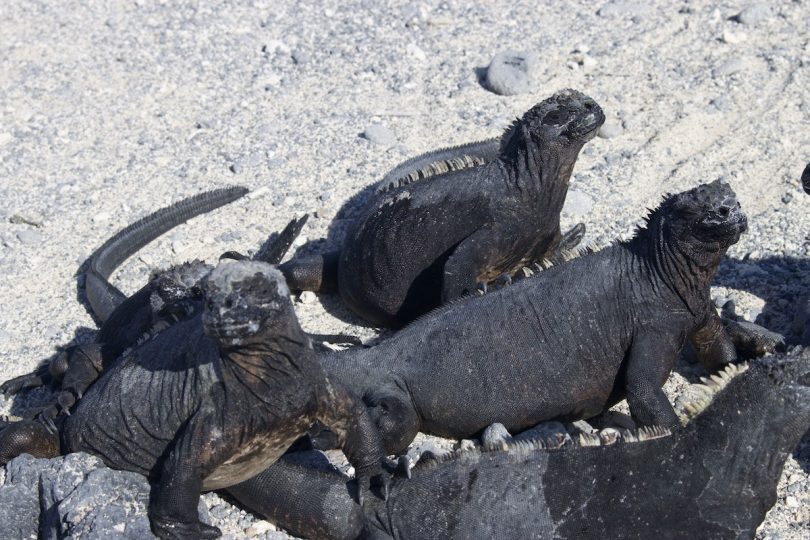
A cruise delivers better wildlife encounters on three specific dimensions: timing, site access, and guide continuity. Early morning visits mean wildlife is active, not sheltered from midday heat. Remote site access means species unavailable on day trips. The same guide every day means someone who knows your interests and builds context across each encounter. Day trips provide genuine wildlife experiences, but the ceiling is lower on all three dimensions and the difference is felt in practice, not just in theory.
The timing gap is the one that travel writers and seasoned visitors describe most consistently. Day-trip boats leave town at 8 or 9am, transit to the site, and arrive around 10am to noon. By that point, equatorial sun is directly overhead. Marine iguanas are piled in the shade of whatever rocks they can find. Blue-footed boobies are sitting still, not dancing. Sea lions are sleeping, not playing. The animals are still there. The encounters still happen. But the activity level and the behavioral richness of the wildlife is measurably lower at midday than at 7am.
A cruise excursion launches at 7am into the golden hour. Marine iguanas are moving to the water to feed. Boobies are in active courtship. Frigatebirds are displaying. The naturalist is narrating what you’re watching as it happens, across the same species you’ll see on multiple islands over the week, building a frame of reference that makes each encounter richer than the last. That cumulative effect, a single guide contextualizing observations across 7 or 8 days, is something day trips structurally cannot replicate because the guide changes with each tour.
For snorkeling, both options deliver remarkable encounters. Kicker Rock on a day trip from San Cristóbal is one of the best snorkel experiences in the Galapagos, accessible without a cruise. Los Túneles off Isabela is similarly extraordinary. A cruise adds site variety across the week and the advantage of afternoon snorkels when day-trip boats have already left. Neither option is poor for underwater encounters. The cruise adds volume and variety that a week of day trips can’t fully match.
Want an honest comparison between the two main ways to experience the Galapagos before you spend this much on a trip? Here’s our Galapagos cruise vs land tour guide so you pick the right option.
How Does the Daily Experience Differ Between Cruise and Day Trips?
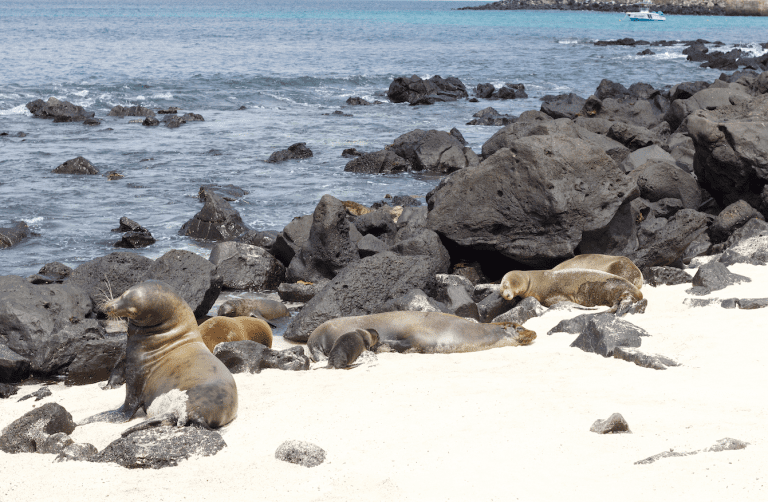
A cruise day has a structure: briefing, morning excursion, back to the boat for breakfast or lunch, rest, afternoon excursion, dinner, evening lecture. Everything is handled. Day trips have a different rhythm: wake up in a hotel, arrange the day’s tour, transit to the site, return to town, find food, decide what to do tomorrow. The cruise offers intensity and immersion. Day trips offer freedom and the texture of actual island life. Which rhythm suits you depends on what kind of traveler you are, not which option is objectively superior.
There is a specific pleasure to the day-trip lifestyle that the cruise misses entirely. Puerto Ayora at 6am, before the tour boats have loaded, is a fishing town. The fish market opens. Local boats bring in the morning catch. Sea lions loll on the dock waiting for scraps. Pelicans stand on bollards in crowds. You eat a cheap breakfast at a comedor on the waterfront, watch the activity, and feel like you’re in a place rather than passing through it. A cruise barely touches the inhabited islands. That lived-in quality is real and it’s only available on land.
Evenings are another dimension. On a cruise, once the afternoon excursion ends and dinner is done, the day is largely over. The boat is anchored at a remote site. There’s no town to walk through, no local restaurant to discover, no chance encounter with a wildlife researcher at a bar in Puerto Ayora who tells you where the albatrosses are nesting this season. Day trips give you evenings. The social life of the Galapagos’s small port towns, the local markets, the restaurants where Ecuadorian food is actually good and cheap, the dive shops full of people comparing notes on what they saw that day – all of that exists only for land-based travelers.
For travelers who are deeply driven by wildlife, none of that matters much. They’d rather be anchored at Fernandina watching flightless cormorants at dusk than in a restaurant in Puerto Ayora. For travelers who want the wildlife to be part of a broader travel experience that includes culture, local food, and autonomy, the day-trip structure delivers things a cruise cannot.
What matters most to you from this trip is the deciding factor, and it’s the question we ask every traveler we work with before recommending anything. Tell us what you’re hoping to experience and we’ll give you an honest recommendation on which structure actually fits your goals.
Trying to figure out what fills the hours between island excursions and whether the on-board experience matches the price tag? Check out our what to expect on your first Galapagos cruise guide before you book anything.
When Do Day Trips Actually Make More Sense Than a Cruise?
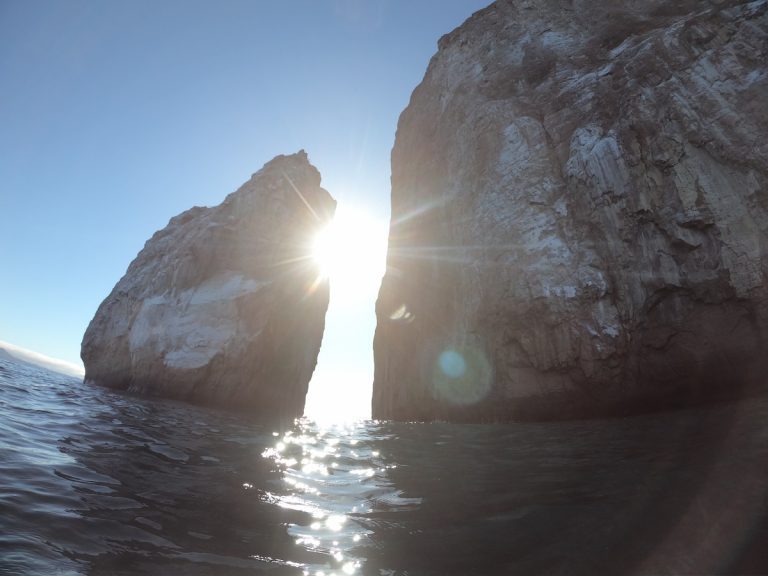
Day trips make more sense than a cruise in five specific situations: your budget is firmly under $4,000 per person all-in; you’re traveling with children under 7 who are excluded from most cruise boats; you want to do scuba diving, which is only available from land-based dive shops on standard day trips; you have 3 to 4 days rather than a week, making a short day-trip stint more efficient than the logistics of a short cruise; or you’re returning to the Galapagos having already done a cruise and want to experience the islands from a different angle.
The budget case is the clearest. A well-organized week of day trips from Santa Cruz, staying in a mid-range hotel and doing five or six guided tours, comes in at $2,500 to $3,500 per person all-in from North America. No tourist superior cruise gets close to that number. If $4,000 per person is a hard ceiling, day trips are not a compromise. They’re the only viable option for experiencing the Galapagos at all.
The diving case is one that genuinely surprises cruise-focused travelers. Scuba diving is prohibited on standard nature cruises by National Park regulation. Only dedicated diving liveaboards can offer it. But dive shops on Santa Cruz, San Cristóbal, and Isabela run daily dive excursions to accessible sites including Kicker Rock, Gordon Rocks (considered one of the best dive sites in the world for hammerhead encounters), and the waters around North Seymour. A traveler staying land-based with a dive certification can do six to eight dives in a week for a fraction of what a dedicated diving liveaboard costs, while also doing non-diving day tours on non-dive days. That’s a compelling combination.
For short trips, day trips also win on practicality. A 3 to 4 day Galapagos add-on at the end of a longer Ecuador trip is hard to fit into a cruise itinerary. Most cruises have fixed departure dates that require planning months in advance. Day trips can be booked with 24 hours’ notice from town. For someone with a few flexible days at the end of a mainland Ecuador journey, arriving in Puerto Ayora and booking tomorrow’s North Seymour tour that afternoon is entirely practical.
Want to know the minimum cruise length that makes the Galapagos genuinely worthwhile versus which durations are worth the extra days? Here’s our how long should your Galapagos cruise be guide so you don’t cut it too short.
What Are the Honest Drawbacks of Relying Only on Day Trips?
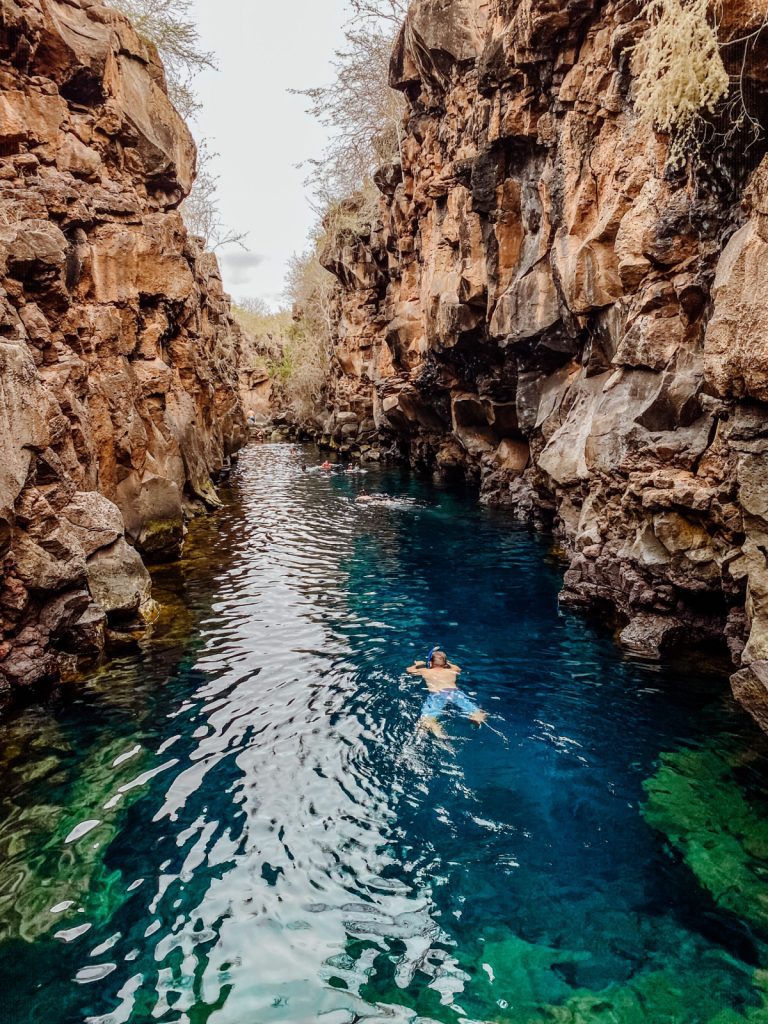
The three most significant drawbacks of relying only on day trips are the hard ceiling on which islands you can visit, the fragmented experience of changing guides every day, and the compounding cost of individual tours that makes a full week of day trips less affordable than it initially appears. The timing problem, arriving at sites in midday heat rather than early morning, is real and consistent, not something that can be managed around with better planning.
The guide fragmentation is the drawback travelers feel most in practice but think about least in planning. On a cruise, the naturalist who leads your first excursion on Española is the same one who leads your snorkel at Genovesa three days later. They know you asked about the albatross’s flight patterns on day two. They remember that you got cold during the afternoon snorkel and add a word about thermoregulation the next time the topic connects. Day trips give you a different certified guide each day. That guide is competent and knowledgeable. But they’re starting fresh with your group every morning, and the cumulative intelligence that builds across a week with one guide simply doesn’t exist.
The midday arrival problem has no workaround within the day-trip structure. Day-tour boats depart from Puerto Ayora because that’s where passengers sleep. Transit to North Seymour takes 45 minutes to an hour. Transit to Bartolome takes 90 minutes. Transit to Española, if it were accessible by day trip, would take over two hours each way. The National Park controls the schedule for cruise vessels, allowing early morning arrivals at remote sites. Day-tour operators are constrained by departure time from the inhabited islands. The math doesn’t allow for 7am arrivals at distant sites when you start from a town hotel at 8am.
The cost accumulation also works against the “cheaper” narrative for travelers who want a full, varied week. Five to six day tours at $150 to $280 each ($750 to $1,680), plus hotels, plus most meals, plus inter-island transport, adds up faster than the individual numbers suggest. The cruise is expensive upfront because it packages everything. Day trips spread those costs across separate transactions, which creates the illusion of lower spending until the week is tallied.
Cruise or Day Trips: Which Should You Choose?
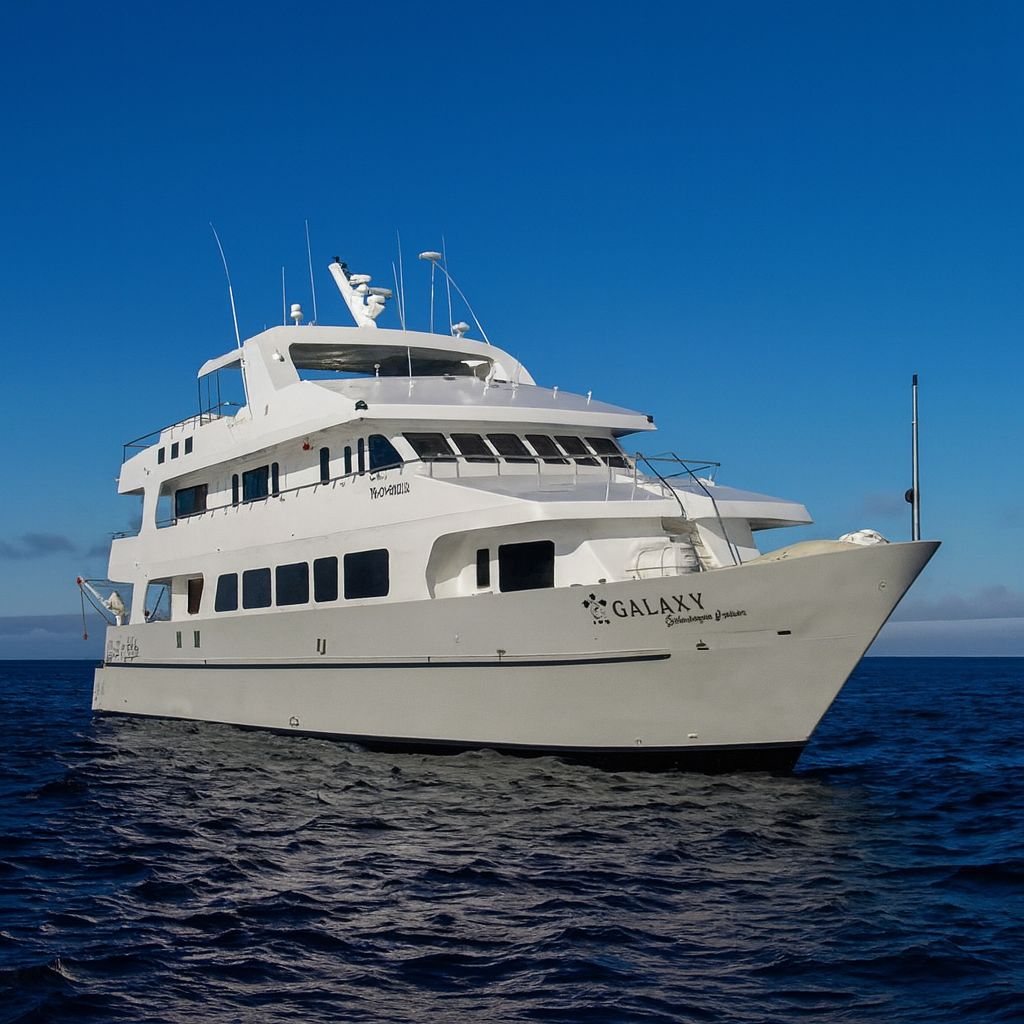
Choose a cruise if wildlife is your primary goal, if you want to reach the outer islands, if a single guide building context across a week matters to you, and if your budget allows it. Choose day trips if your budget is under $4,000 per person all-in, you want to dive, you’re traveling with young children, you have only 3 to 4 days, or you’re returning after a previous cruise and want to experience the islands differently. There is no wrong answer for someone who has thought clearly about what they actually want.
The practical decision tool most travelers find useful: name the three things you most want to take home from the Galapagos. If all three are wildlife encounters, and especially if any of them are species or sites only accessible by cruise, book the cruise. If flexibility, local life, or budget appear on that list, day trips deserve serious consideration.
One option that experienced Galapagos visitors use more often than first-timers realize: a short cruise followed by a few days of day trips. A 5-day cruise that hits the remote outer islands, followed by 3 days in Puerto Ayora doing one or two day tours to central island sites, gives you Española and Genovesa in ideal conditions and then the market and fish dock and free-roaming evening time in town. The structure works because the two options do genuinely different things, and combining them extracts the best from each.
| Outcome Measure | Cruise Travelers | Day-Trip Travelers | Key Context |
|---|---|---|---|
| Would recommend their option to a friend | 96% | 91% | Both high; satisfaction driven by fit with traveler type |
| Wish they had access to more islands | 4% | 74% | Day-trip travelers significantly more likely to express this |
| Felt the experience was worth the cost | 93% | 95% | Cruise travelers consistently rate value highly despite higher price |
| Wish they had more free time and flexibility | 42% | 8% | Cruise travelers more likely to cite the structured pace |
| Would combine cruise and day trips on a return visit | 68% | 71% | Common among travelers who understood both options |
The Galapagos is one of the very few destinations where the comparison between options genuinely isn’t about quality. Both a cruise and a week of day trips deliver wildlife encounters that travelers describe for the rest of their lives. The question is which encounters, in what conditions, and at what cost. Answer those three things honestly and the decision becomes clear.
Want an honest answer on whether a Galapagos cruise is worth the money before you spend this much on a single trip? Here’s our is a Galapagos cruise worth the money guide so you make the call with confidence.
Frequently Asked Questions
Are Galapagos day trips worth it?
Yes, for the right traveler and the right reason. Day trips deliver genuine Galapagos encounters on accessible sites with real wildlife at a fraction of cruise prices. They’re the right choice for budget-limited travelers, divers, families with young children, and anyone with only 3 to 4 days to spend on the islands. They’re the wrong choice for someone who specifically wants Española, Genovesa, or Fernandina and can afford a cruise.
Why do cruise ships arrive at sites in the morning when day trips arrive at midday?
Cruise ships anchor overnight at or near the visitor site, so the zodiac can launch at 7am with no transit time. Day-trip boats leave from inhabited island ports at 8 to 9am and transit 45 minutes to 2 hours to reach sites, arriving midday. The National Park controls which vessels can access which sites on which schedules, and cruise vessels hold site-specific arrival permits that allow early morning access.
Can you see the same wildlife on day trips as on a cruise?
You can see many of the same species, but not at the same sites, in the same conditions, or with the same density. The accessible day-tour sites have blue-footed boobies, sea lions, marine iguanas, penguins, and sharks. The outer islands reachable only by cruise have species like the waved albatross and flightless cormorant that cannot be seen elsewhere in the world. Wildlife on day tours is also encountered at midday in lower-activity conditions compared to early-morning cruise visits.
How much do Galapagos day trips cost per person?
Individual day tours from Santa Cruz run $150 to $320 per person depending on the site and operator, with lunch included. North Seymour costs $230 to $280. Bartolome runs $245 to $320. Los Túneles on Isabela runs $135 to $155. Española, one of the furthest accessible sites, runs around $250. A week of five or six day tours typically costs $750 to $1,600 per person in tour fees alone, before hotel, meals, and transport.
Is scuba diving possible on a Galapagos cruise?
Not on standard nature cruises. Scuba diving is restricted by National Park regulation to dedicated diving liveaboard vessels. Land-based day trips from dive shops on Santa Cruz, San Cristóbal, and Isabela offer dive excursions to accessible sites including Kicker Rock and Gordon Rocks. If diving is your primary goal, day trips from a land base or a dedicated diving liveaboard are the correct options.
Which option is better for a first-time visitor to the Galapagos?
For a first-time visitor whose primary goal is wildlife, a cruise is the stronger choice if the budget allows. The outer island access, early-morning timing at sites, and single guide continuity across the week combine to create the most complete introduction to what makes the Galapagos extraordinary. Day trips are the right first visit only when budget, age restrictions, or diving goals make them the better fit for the specific traveler.
Still Deciding Between a Cruise and Day Trips?
The right answer depends on what you specifically want from this trip. We’ve talked through this decision with thousands of travelers and always start from the same place: what are the three things that matter most to you? From there, the right option usually becomes obvious.
We’re rated 4.9 stars on Google and TripAdvisor, we’ve been on these boats personally, and we’ll give you an honest recommendation regardless of which option it is. Get in touch here and let’s figure out the right fit for your trip.
Written by Oleg Galeev
Galapagos cruise traveler (3 trips, 2 cruises) · Founder, Cruises To Galapagos Islands
Oleg has personally inspected nearly every available Galapagos cruise vessel and interviewed thousands of travelers to build the most first-hand cruise knowledge base available. He also runs the Ecuador travel blog mytrip2ecuador.com and the YouTube channel My Trip to Somewhere.
Cruises To Galapagos Islands is rated 4.9 stars on Google and TripAdvisor.
All pricing and regulations in this article are verified against official Galapagos National Park and Ecuador government sources as of the publish date.