
TL;DR
The Galapagos is on almost every serious diver’s bucket list for good reason: hammerhead sharks in schools of hundreds, whale sharks, marine iguanas feeding underwater, playful sea lions, and pelagic life density that few places on earth can match. But it is demanding diving. Cold water, strong currents, surge, poor visibility on some days, and negative entries from pangas are real conditions, not edge cases. If you want Wolf and Darwin Islands, the legendary northern sites, you need a dedicated liveaboard, an Advanced certification, and at least 50 to 100 logged dives with current experience. If your goal is hammerheads and you’re on a naturalist cruise, Kicker Rock and Gordon Rocks are genuinely excellent alternatives. Plan your season around what you most want to see: whale sharks peak June through November, manta rays and warmer calmer water peak December through May.
Quick Facts: Galapagos Diving at a Glance
| Detail | What You Need to Know |
|---|---|
| Park entry fee | $200 USD cash per adult on arrival – Verified July 30, 2026 |
| Transit Control Card (TCT) | $20 per person, purchased online before your flight |
| Minimum certification (liveaboard) | Advanced Open Water; most operators require 50 to 100+ logged dives |
| Water temperature | 16 to 26°C (60 to 79°F) depending on season and site; 5 to 7mm wetsuit required |
| Visibility | Average 8 to 15m; up to 30m on good days; lower during cooler season |
| Whale shark season | June through November (cool season); best at Wolf and Darwin Islands |
| Manta ray and warm water season | December through May; calmer seas, better visibility |
| Liveaboard cost (7 nights) | $4,100 to $9,300 per person depending on vessel – Verified July 30, 2026 |
| Key liveaboard vessels | Galapagos Sky, Galaxy Diver II, Tiburon Explorer, Aqua, Humboldt Explorer |
| Wolf and Darwin access | Liveaboard only; not accessible from land-based operations |
Is the Galapagos Worth It for Divers?
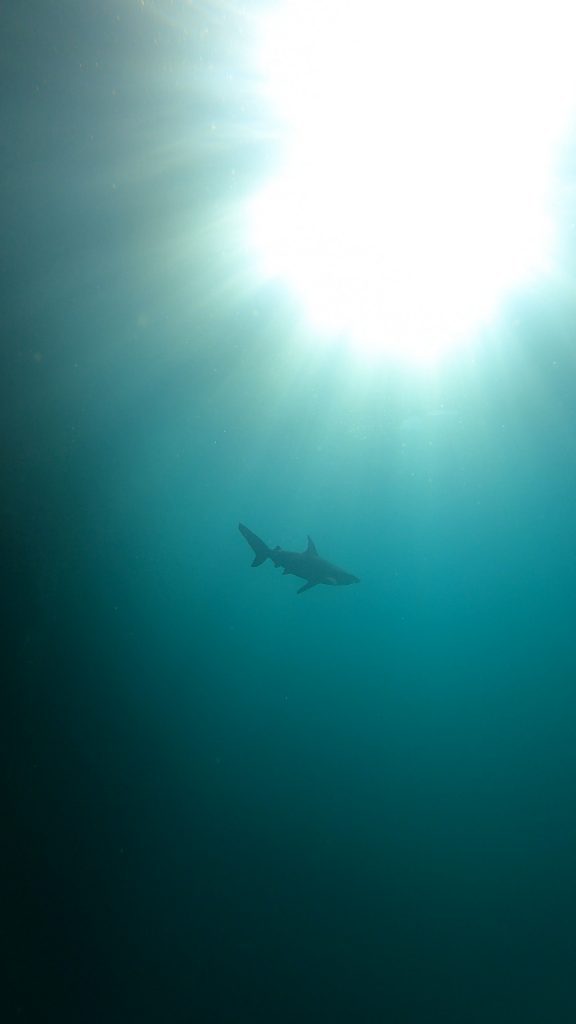
Yes, unambiguously, for the right diver. The Galapagos Marine Reserve contains the highest shark biomass of any dive destination on earth. Schools of scalloped hammerheads in the hundreds, whale sharks reaching eight meters, silky sharks and Galapagos sharks stacking at cleaning stations, manta rays cruising overhead while marine iguanas graze the rocks below: the wildlife density here is simply unlike anything else available in recreational diving. But this is not a dive destination for beginners or for divers who want warm calm water and high visibility as a baseline.
The Galapagos sits at the confluence of five major ocean currents. That nutrient soup is exactly what makes the marine life so extraordinary, and it’s exactly what makes the diving so demanding. Cold thermoclines, surge, poor surface conditions on some days, and currents strong enough that you don’t swim against them, you drift with them and hope the panga crew knows where to pick you up. This is legitimately advanced diving for most sites. Going in with that expectation set correctly makes the difference between coming home electrified and coming home disappointed.
We’ve talked with thousands of divers who’ve been to the Galapagos. Almost none of them say it wasn’t worth it. A handful say they wish they’d gone with more logged dives and better current experience. A few say the conditions on their particular week weren’t what they hoped, which happens anywhere in diving. But the consistent thread is that this destination delivers something you can’t find in the Caribbean, the Red Sea, or Southeast Asia. You put your face in the water at Wolf Island and a hundred hammerheads materialize out of the blue and drift past you in a slow circle. That doesn’t happen anywhere else.
If you’re trying to figure out whether the Galapagos makes sense for your diving experience level, or you want help choosing between a dedicated dive liveaboard and a naturalist cruise with dive options, we’re happy to talk it through. We’re rated 4.9 stars on Google and TripAdvisor. Send us a message here and tell us where you are in your diving experience.
Trying to find a Galapagos cruise that puts wildlife encounters first rather than treating them as a backdrop to the onboard experience? Here’s the best Galapagos cruise for wildlife enthusiasts so you find the right ship and route.
What Will You Actually See Diving in the Galapagos?
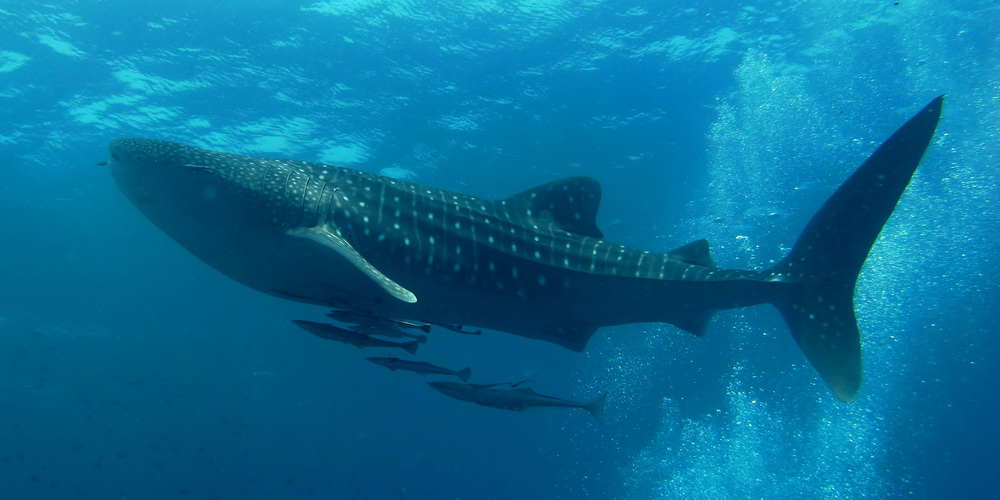
The Galapagos offers two distinct underwater experiences depending on which sites you dive. At Wolf and Darwin Islands in the north, accessible only by liveaboard, the focus is almost entirely pelagic: schooling hammerheads in numbers that beggar description, whale sharks from June through November, silky sharks, Galapagos sharks, eagle rays, and manta rays. At the central and southern sites accessible by land-based day trips or naturalist cruise, the experience is more varied: hammerheads still present but in smaller groups, plus turtles, sea lions, penguins, marine iguanas grazing underwater, reef fish, Mola mola (ocean sunfish), and Mobula rays.
Darwin Island is the signature site. One dive here in season can include swimming through a wall of several hundred hammerheads while whale sharks cruise the blue water above. The experience is so overwhelming that experienced divers report forgetting to breathe correctly. The current is the reason the sharks are there: the upwelling brings nutrients, the nutrients bring baitfish, the baitfish bring everything else. You don’t fight the current at Darwin. You descend on the wall, hold position in the thermocline, and let the ocean put on a show.
Wolf Island, one day’s sail from Darwin, delivers a different energy. The shark cleaning stations here are dense with Galapagos sharks and silky sharks. Eagle rays cruise in formation. The site is nicknamed the “shark theater” for a reason: you wedge yourself into a rock to stay in position against the current and watch the action cycle past you. Both sites require a liveaboard with at least two full days dedicated to them. Any itinerary that promises Wolf and Darwin as a single afternoon stop is not being honest about what the travel time requires.
At the central sites, Gordon Rocks near Santa Cruz is the standout. CNN Travel has rated it the sixth-best dive site in the world. An eroded volcanic crater with surge, current, and a thermocline that brings hammerheads up from the deep. It earns its nickname “The Washing Machine” on rougher days. Kicker Rock (León Dormido) off San Cristobal is more accessible, visually dramatic above and below the waterline, and one of the better intermediate-level dives in the archipelago: hammerheads, eagle rays, turtles, Galapagos sharks, and schools of fish in a channel between two volcanic walls rising 150 meters out of the ocean.
The genuinely unique encounter that gets less attention than the big sharks is the marine iguana dive. Cape Douglas on Fernandina is where marine iguanas, the only ocean-going lizard on earth, are observed feeding underwater, grazing algae off the rocks while divers float alongside them. This happens nowhere else in the world. It’s accessible only by liveaboard, it’s not as dramatic as Wolf Island, and it’s one of the most extraordinary things in all of diving.
What Experience Level Do You Actually Need to Dive in the Galapagos?
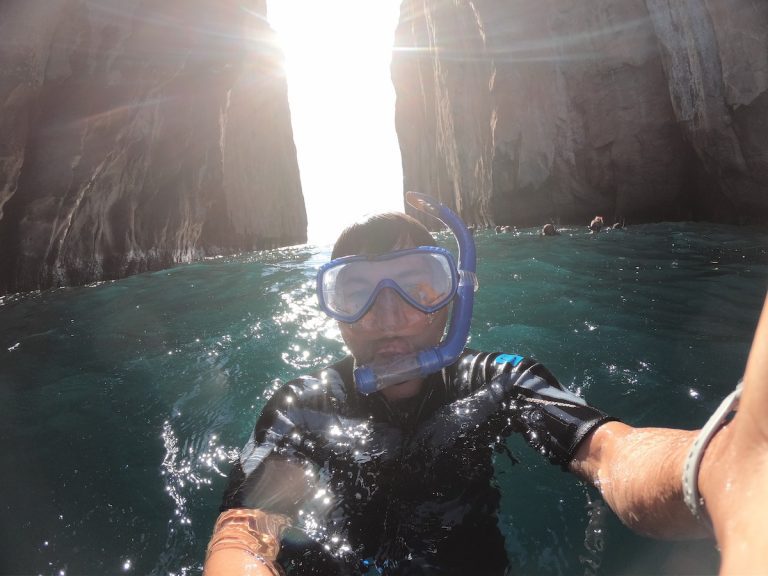
For Wolf and Darwin Islands on a liveaboard: Advanced Open Water minimum, 50 to 100 logged dives, prior experience in strong currents, and comfort with negative entries from a small panga in surge. For Gordon Rocks: Advanced certification and a minimum of 25 dives required by most operators. For Kicker Rock and day-trip sites accessible from land: Open Water certification is technically sufficient, though some current experience is strongly recommended. Across the board, Galapagos is not a place to push beyond your current skill level.
The current issue deserves specific attention because it’s the variable that catches divers off guard most consistently. Currents in the Galapagos regularly run at 2 to 4 knots. At those speeds you cannot swim against them. Almost all diving here is drift diving, meaning you descend, let the current carry you, and surface wherever you end up while the panga crew tracks your bubbles and repositions to collect you. If you’ve never done drift diving before, the Galapagos is not where you want to learn it, particularly at sites like Darwin and Wolf where you might surface in open ocean with a swell running.
The negative entry is the other skill most new Galapagos divers underestimate. A negative entry means you drop into the water with your BCD deflated and descend immediately rather than floating on the surface to organize yourself. This is necessary at sites with strong surface currents where spending time on the top of the water would carry you away from the dive site before you got down. Practicing this technique before the trip, in calmer water somewhere, is not optional for Wolf and Darwin divers.
Water temperature is also a physical reality to prepare for. The cool season brings water temperatures as low as 16 to 18°C at depth in the western islands. A 7mm wetsuit is minimum equipment for this range. Some divers add a hood and gloves. Rental gear is available on liveaboards but fits inconsistently and the better option by a significant margin is bringing your own equipment, particularly your wetsuit. A 5 or 7mm suit from home that fits you correctly will make a meaningful difference in how long you can stay comfortable underwater.
| Site | Access | Min. Certification | Difficulty | Key Wildlife |
|---|---|---|---|---|
| Darwin Island | Liveaboard only | Advanced + 50-100 dives | Advanced | Hammerheads, whale sharks, silky sharks, mantas |
| Wolf Island | Liveaboard only | Advanced + 50-100 dives | Advanced | Galapagos sharks, eagle rays, silky sharks, hammerheads |
| Gordon Rocks | Land-based or liveaboard | Advanced + 25 min dives | Intermediate to Advanced | Hammerheads, eagle rays, turtles, Mola mola |
| Kicker Rock | Land-based or liveaboard | Open Water (current experience helps) | Intermediate | Hammerheads, eagle rays, Galapagos sharks, turtles |
| Cape Douglas | Liveaboard only | Advanced | Advanced | Marine iguanas feeding underwater, penguins, Mola mola |
| Punta Vicente Roca | Liveaboard or day trip | Advanced | Advanced | Mola mola, seahorses, penguins, cold upwellings |
Choosing between a dedicated liveaboard and a naturalist cruise with dive add-ons is one of the more consequential decisions a diver makes when planning a Galapagos trip. We’ve helped divers at every experience level figure out which format gives them the best chance of seeing what they came to see. Fill out this short form and we’ll give you a straight recommendation based on your certification, logged dives, and what’s at the top of your list.
Liveaboard Dive Cruise vs. Snorkel Cruise: Which Is Right for You?
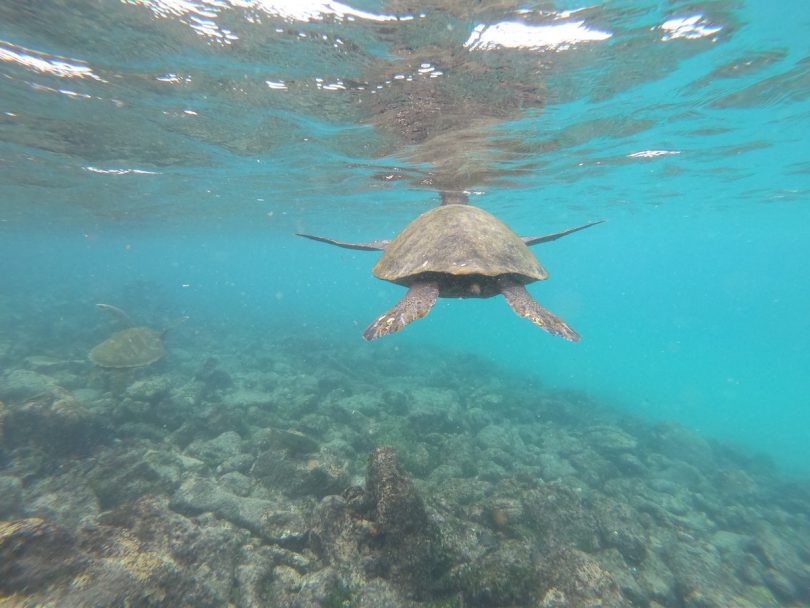
If Wolf and Darwin Islands are on your list, a dedicated dive liveaboard is the only option. These sites are physically inaccessible to naturalist cruises and land-based operations. Full stop. If your goal is hammerheads, eagle rays, turtles, penguins, and sea lions underwater, but you don’t specifically need the northern pelagic experience, a naturalist cruise with day-trip dives from Gordon Rocks or Kicker Rock can deliver genuinely excellent diving. If you’re not a certified diver or diving isn’t your priority, the snorkeling on a naturalist cruise is extraordinary by any global standard and covers most of the same species without the certification requirement.
The critical thing most diving websites don’t say plainly: rendezvous diving on a naturalist cruise, where a separate dive boat meets the ship at certain sites, is a significantly different experience from what a dedicated liveaboard delivers. The number of dives per day is lower. The sites you can reach are fewer. The divemasters are managing a mixed group of varying experience levels. Hammerhead encounters are possible and do happen, but they’re not the structured, high-density experience you get on a purpose-built dive vessel spending multiple days at Wolf and Darwin. If you book a naturalist cruise expecting the Wolf Island experience, you’ll be disappointed. If you book it expecting excellent diving in a beautiful place while also doing wildlife hikes and snorkeling, you’ll be satisfied.
The liveaboard format means 3 to 4 dives per day, up to 19 dives on a 7-night trip and up to 28 on a 10-night itinerary, with days dedicated specifically to the northern islands. You eat, sleep, and dive. The land excursions are limited to a handful of stops on inhabited islands. For the diver who came to the Galapagos specifically for the underwater world, this is the right format. For the diver who also wants the full naturalist experience of hiking with giant tortoises and watching blue-footed boobies, the liveaboard trades those opportunities for diving time.
Some mixed-group couples and families handle this by splitting: the diver books the liveaboard, the non-diver books a naturalist cruise separately, and they meet up in Quito at the end. It’s not elegant but it’s actually more common than most people realize, and it lets both people have the version of the trip that suits them without either compromising.
Snorkeling in the Galapagos is unlike anywhere else on the planet but the cruise you pick determines how much time you actually spend in the water. Here’s a full guide to the best Galapagos cruise for snorkelers so you book the right one.
Which Galapagos Dive Sites and Routes Are Best?
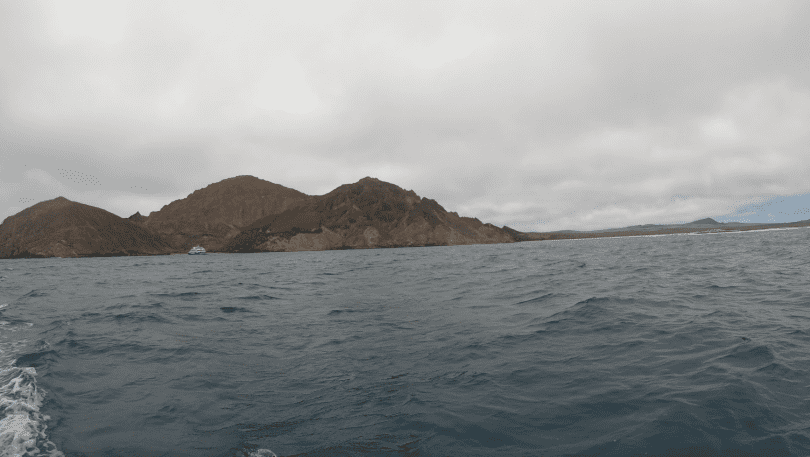
For pelagic big-animal diving, Wolf and Darwin Islands in the north are the undisputed top tier and accessible only by liveaboard. For divers on naturalist cruises or land-based day trips, Kicker Rock off San Cristobal is the single best option: dramatic scenery, reliable hammerhead sightings, intermediate-level conditions, and accessible without the liveaboard commitment. Gordon Rocks near Santa Cruz is the highest-intensity day-trip site in the archipelago, rated among the top ten dive sites globally, and reserved for Advanced divers comfortable with serious currents.
The standard liveaboard itinerary from most operators runs something like this: depart Baltra or San Cristobal, spend the first days diving central sites including Gordon Rocks, Cousins Rock, and Punta Vicente Roca, then make the overnight passage north to Wolf and Darwin where the majority of dive days are concentrated, then return south with stops at Isabela or Fernandina for the Cape Douglas marine iguana dive before returning to port. Seven nights gives you 15 to 19 dives. Ten nights adds more time at the northern islands and reaches around 28 dives.
Cousins Rock, on the Santiago side, is less famous than Gordon Rocks but delivers one of the more diverse reef experiences in the archipelago: seahorses, nudibranchs, barnacle blennies and hawkfish for the macro photographers, alongside the hammerheads, turtles, and sea lions that characterize Galapagos diving broadly. For underwater photographers specifically, Cousins Rock is often described as the most consistently rewarding site for wide-angle and macro work in the same dive.
Punta Vicente Roca on Isabela is where you go for the cold. The Cromwell Current upwells here in a way that drops temperatures sharply and brings Mola mola, seahorses, and species that don’t appear elsewhere in the archipelago. It’s also where penguins hunt alongside divers in water that will test your cold tolerance. Not every diver enjoys it. The divers who do often describe it as their most unusual encounter of the trip.
Not sure which Galapagos cruise gives photographers the best access, the best light, and the most time at the sites worth shooting? This breakdown on the best Galapagos cruise for photographers covers the ships, the itineraries, and the operators who get it right.
What Is the Best Time of Year to Dive the Galapagos?
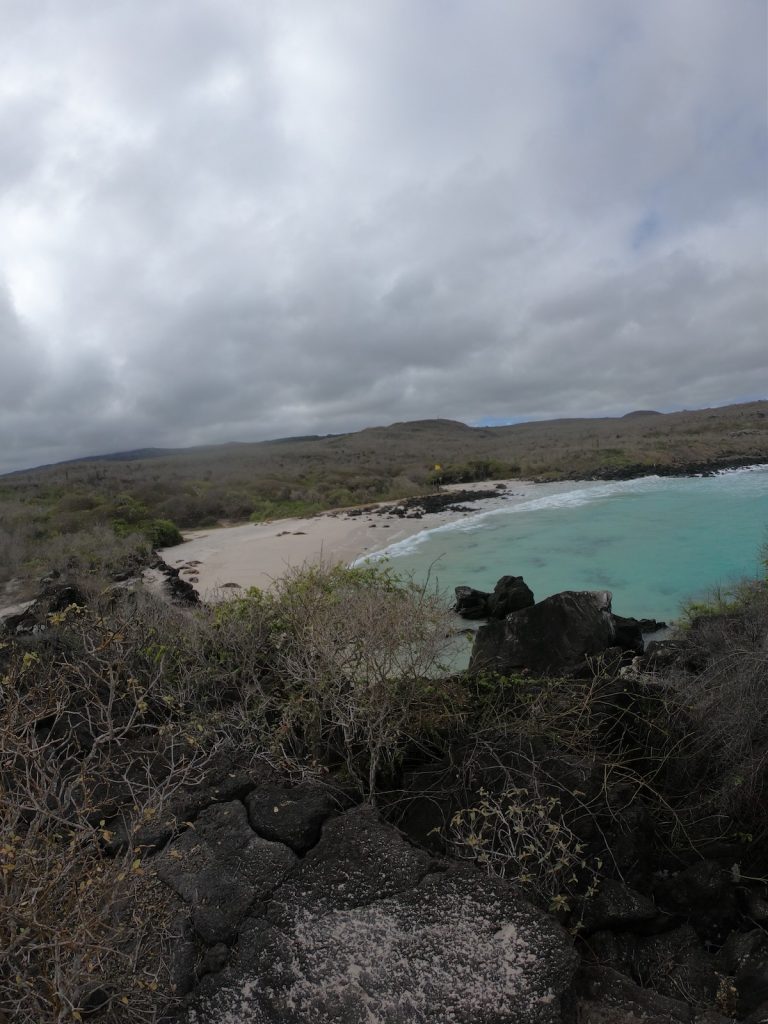
The honest answer is that the best time depends entirely on what you want to see. June through November is whale shark season at Wolf and Darwin, with cooler water, stronger currents, lower visibility, and the highest pelagic action of the year. December through May brings warmer water, better visibility, calmer surface conditions, and manta ray aggregations. Hammerhead sharks are present year-round at the major sites. There is no universally “bad” time to dive the Galapagos, only times that favor different priorities.
The cool season from June through November is what most serious divers target specifically for Wolf and Darwin. The Humboldt Current is at its strongest, driving the nutrient upwelling that attracts whale sharks and concentrates the hammerhead schools. Water temperatures at depth drop to 16 to 18°C in the western islands, which demands a 7mm wetsuit and pushes some divers toward drysuit territory. Visibility averages 8 to 12 meters during this period, sometimes less. Surface conditions can be rough. But the biological payoff is the highest of the year. If your list includes whale sharks, plan for July through October.
The warm season from December through May offers a genuinely different experience. Water temperature rises to 22 to 26°C, visibility improves to 12 to 20 meters on good days, surface conditions are calmer, and the manta ray aggregations around the central and western islands are at their peak. This is also when diving is more comfortable for less experienced divers, since the currents are somewhat gentler and the cold-water shock is reduced. The wildlife is excellent across this period, just different in character from the cool-season pelagic density.
One variable that received significant attention in 2025 and 2026 is El Niño influence. In El Niño years, warmer ocean temperatures suppress the cold-water upwelling that drives shark aggregations at Darwin and Wolf. Trip reports from early 2026 noted fewer hammerheads than typical La Niña or neutral years, with more turtles, eagle rays, and reef fish activity instead. Before booking, it’s worth checking current ocean temperature forecasts and asking your operator what the recent sightings data looks like at Wolf and Darwin. This is not a dealbreaker, but it’s information that informs expectations.
The Galapagos is worth visiting year-round but the timing of your cruise changes what you’ll see and how you’ll experience it. Here’s a full guide on the best time of year to take a Galapagos cruise so you book the right window for your priorities.
What Divers Tell Us After Their Galapagos Liveaboard
From the thousands of Galapagos travelers Oleg has interviewed through mytrip2ecuador.com and the YouTube channel, divers represent one of the most opinionated groups. The data below reflects aggregate feedback collected from divers across multiple seasons and vessel types.
| Finding | Result | Context |
|---|---|---|
| Divers who said Wolf or Darwin was the best dive of their life | ~79% | Highest among divers with 100+ logged dives who visited June through October |
| Divers who wished they had more logged dives before the trip | ~34% | Most common among divers with under 50 dives attempting Wolf and Darwin |
| Divers who brought their own wetsuit and were glad they did | ~88% | Rental gear availability and fit issues cited as primary concern on cool-season trips |
| Divers who were caught off guard by current intensity | ~41% | Even experienced divers note Galapagos currents are unlike most other destinations |
| Divers on naturalist cruises who wished they’d booked a liveaboard instead | ~52% | Most common among certified divers who had Wolf and Darwin as a primary goal |
| Divers who would return for a second Galapagos dive trip | ~91% | The most consistent metric across all diver profiles we track |
What Are the Biggest Mistakes Divers Make Booking a Galapagos Cruise?
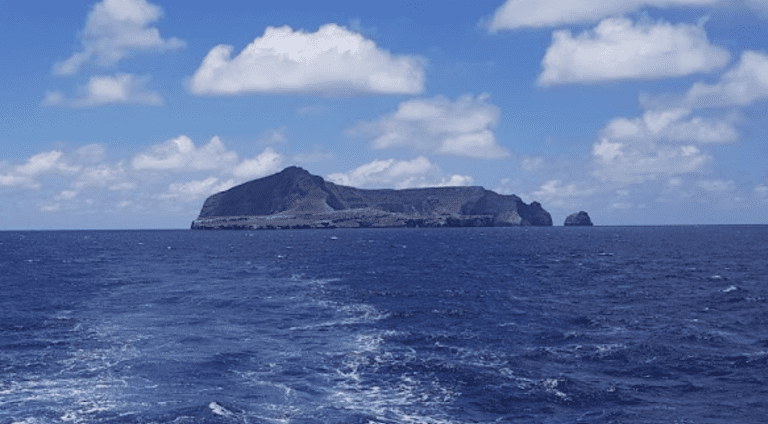
The most consistent diver mistakes: booking a naturalist cruise when Wolf and Darwin are the actual goal, going with under 50 logged dives and encountering conditions they’re not ready for, renting a wetsuit on board in the cool season and finding the fit inadequate for cold water, not checking El Niño forecasts before committing to whale shark season dates, and booking only 7 nights when 10 nights would have added meaningfully more time at the northern sites. Every one of these is avoidable with basic pre-trip research.
The naturalist cruise mistake is the most common and the most expensive. It goes like this: a diver wants to see the Galapagos, knows it’s famous for diving, books a naturalist cruise because it covers more islands and looks more complete, then arrives to find that the dive add-ons don’t go to Wolf or Darwin and the hammerhead sightings at the day-trip sites are inconsistent. The fix is simple: if diving is the primary reason you’re going to the Galapagos, book a liveaboard. If diving is secondary to the naturalist experience, a naturalist cruise with dive options is fine and genuinely enjoyable. Know which one you are before you book.
Underestimating the conditions is the second consistent failure. Some divers read “Advanced Open Water required” and assume their 40 warm-water resort dives qualify them. They don’t. The Galapagos is advanced diving in the sense that the conditions are dynamic, demanding, and not immediately forgiving of weak buoyancy or poor current awareness. Instructors in the Galapagos report seeing divers empty their tanks in 20 minutes from stress responses to currents they’d never encountered before. More logged dives in varied conditions, not just total dive count, is what prepares you.
Nitrox certification is worth getting before the trip. Most quality liveaboards offer Nitrox fills, and more bottom time on the repetitive dive schedules at Wolf and Darwin makes a meaningful difference. Get the certification at home before you travel, not as an add-on once you’re on the boat.
Finally, the El Niño variable deserves specific pre-booking attention if whale sharks are the priority. In El Niño years, warm surface water suppresses the cold upwelling that concentrates whale sharks at Darwin. Trip reports from early 2026 documented fewer sightings than historical averages. Before locking in July or August dates for the specific purpose of whale shark encounters, check current ENSO forecasts and ask your operator directly what they’re seeing. A liveaboard in a good year at Wolf and Darwin is one of the greatest dives on earth. The same vessel in a strong El Niño year is still excellent diving, just different in character from the marketing photographs.
Frequently Asked Questions
Do you need to be an advanced diver to dive in the Galapagos?
For Wolf and Darwin Islands, yes: Advanced Open Water certification and 50 to 100 logged dives with current experience is the realistic minimum. For Kicker Rock, an Open Water certification is technically sufficient, though current experience helps. For Gordon Rocks, Advanced certification and a minimum of 25 logged dives is required by most operators. There are some calmer beginner-friendly sites accessible from San Cristobal for divers building their skills.
Can you dive in the Galapagos on a naturalist cruise?
Some naturalist cruises offer rendezvous diving where a separate dive boat meets the ship at certain sites. This gives you access to sites like Gordon Rocks and Kicker Rock. However, Wolf and Darwin Islands are not accessible this way. If those northern sites are your priority, a dedicated dive liveaboard is the only option. Rendezvous diving on a naturalist cruise is a good option for divers who want a mix of wildlife hiking and casual diving without committing to a full liveaboard schedule.
What wetsuit thickness do I need for the Galapagos?
A 5mm wetsuit is the minimum for warm-season diving from December through May. A 7mm wetsuit is strongly recommended for cool-season diving from June through November, particularly at western sites where water temperatures drop to 16 to 18°C at depth. Add a hood and gloves if you run cold. Bring your own wetsuit if at all possible: rental gear on liveaboards has limited size availability and a poorly fitting wetsuit in cold water is genuinely miserable.
When is the best time to see whale sharks in the Galapagos?
June through November is the whale shark season at Wolf and Darwin Islands. July through October is the peak window for the most consistent sightings. Whale sharks are large female individuals that aggregate here annually, some reaching eight meters. Sightings are not guaranteed but are common during this period in neutral or La Niña years. In El Niño years, warmer surface temperatures can suppress sightings. Check current ocean conditions before booking if whale sharks are your primary goal.
How many dives can you do on a Galapagos liveaboard?
Most 7-night liveaboard itineraries include 15 to 19 dives with 3 to 4 dives per day. Ten-night itineraries reach up to 28 dives and allow more time at Wolf and Darwin specifically. All diving in the Galapagos is non-decompression; there are no deco dives permitted in the Marine Reserve. Nitrox is available on most reputable vessels and is recommended for extending bottom time on repetitive dive days.
Is snorkeling in the Galapagos as good as diving?
For most of the Galapagos wildlife, genuinely yes. Sea lions, turtles, marine iguanas, penguins, rays, and large reef fish are all regularly encountered while snorkeling from naturalist cruises. The specific experience that’s only available to divers is the deep pelagic action at Wolf and Darwin: the hundreds of hammerheads and the whale sharks operate at depths that snorkelers can’t reach. But the snorkeling at sites like Gardner Bay, Kicker Rock, and Devil’s Crown is world-class by any global standard and doesn’t require certification or equipment beyond a mask and fins.
Booking a Galapagos dive trip correctly means knowing whether you want a liveaboard or a naturalist cruise, which season matches your target wildlife, which vessel has the best safety record and dive guide quality, and whether your experience level is genuinely ready for the conditions you’ll encounter. We’ve been helping divers and non-divers plan Galapagos trips for years, we’re rated 4.9 stars on Google and TripAdvisor, and we give straight answers rather than just selling you the most expensive option. If you want a honest recommendation based on your certification, dive history, and wildlife priorities, get in touch here and we’ll get back to you with something specific and useful.
Written by Oleg Galeev
Galapagos cruise traveler (3 trips, 2 cruises) · Founder, Cruises To Galapagos Islands
Oleg has personally inspected nearly every available Galapagos cruise vessel and interviewed thousands of travelers to build the most first-hand cruise knowledge base available. He also runs the Ecuador travel blog mytrip2ecuador.com and the YouTube channel My Trip to Somewhere.
Cruises To Galapagos Islands is rated 4.9 stars on Google and TripAdvisor.
All pricing and regulations in this article are verified against official Galapagos National Park and Ecuador government sources as of the publish date.