Best Galapagos Cruise for Wildlife Enthusiasts
Part of our guide to the types of Galapagos cruises. Ready to pick a ship? See the best Galapagos cruises by price, size and class.
Quick Facts: Wildlife Cruise Planning in the Galapagos
| Detail | What Wildlife Enthusiasts Need to Know |
|---|---|
| Park entry fee | $200 USD cash per adult on arrival – Verified July 30, 2026 |
| Transit Control Card | $20 per person online before departure |
| Total endemic species | Over 200 endemic species; 188 bird species (eBird May 2026); 34 endemic birds |
| Big 15 coverage on 8-day cruise | 12 to 14 species depending on route, season, and guide quality |
| Guide certification levels | Level I (basic), Level II (intermediate), Level III (highest; required by first-class and luxury operators) |
| Maximum group size per guide | 16 passengers per certified naturalist; national park rule |
| Best vessel size for wildlife | 16 passengers; entire group ashore simultaneously; maximum flexibility |
| Waved albatross season | April through December at Espanola only; absent January through March |
| Flightless cormorant and penguin | Western route only (Isabela and Fernandina); not on eastern itineraries |
| Whale shark season | June through November at Darwin and Wolf Islands; dive liveaboard required |
Why Is the Galapagos the World’s Best Wildlife Destination?
One reason above all others: the animals have no learned fear of humans. Every other major wildlife destination on earth is visited by animals that have spent millions of years developing flight responses to predators. The Galapagos evolved in isolation without terrestrial predators, which means the wildlife has no instinct to retreat when a large mammal approaches. A Galapagos hawk lands on the trail ahead and watches you with the same curiosity you bring to it. A sea lion pup investigates your fins in the water. A blue-footed booby stops its courtship dance, looks directly at you, and resumes. This is not zoo behavior. These are wild animals in their natural habitat, and their fearlessness is the product of millions of years of undisturbed evolution.
The second reason is sheer endemism. Over 200 endemic species exist in the Galapagos, meaning they are found nowhere else on earth. The marine iguana is the only sea-going lizard in the world. The flightless cormorant evolved without aerial predators to the point where its wings became vestigial. The Galapagos penguin is the only penguin species that breeds north of the equator. The woodpecker finch uses cactus spines as tools to extract insects from bark, one of very few tool-using bird species on earth. Each of these species is simultaneously ordinary in the Galapagos, visible on almost any landing, and completely impossible to see anywhere else.
The third reason is the regulatory framework. The national park caps visitor groups at 16 per naturalist guide, controls site access by permit, and enforces a 2-meter wildlife distance rule at every landing. The result is a destination that has maintained its extraordinary wildlife encounter quality despite over 200,000 annual visitors, because the system was designed from the beginning to protect the resource rather than maximize access.
Matching a wildlife enthusiast to the right Galapagos cruise means identifying the guide certification level, the itinerary species targets, and the vessel that deploys entirely ashore at once rather than rotating shifts. We track all of this. We are rated 4.9 stars on Google and TripAdvisor. Send us a message here with your specific wildlife priorities and we will find the right departure.
What Wildlife Can You Expect to See on a Galapagos Cruise?
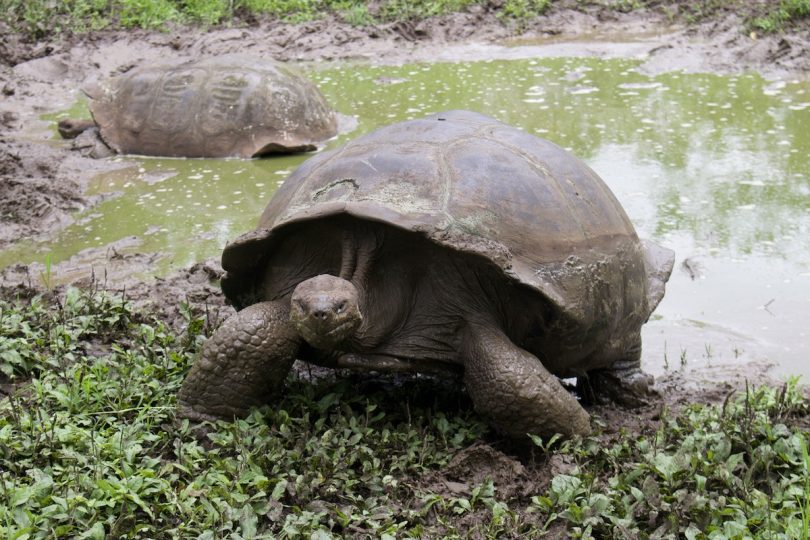
An 8-day Galapagos cruise delivers 12 to 14 of the Big 15 species depending on route and season. The near-certainties on any licensed itinerary are Galapagos giant tortoises, marine iguanas, Galapagos sea lions, blue-footed boobies, Nazca boobies, magnificent and great frigatebirds, and multiple Darwin’s finch species. The route-specific and season-specific species, waved albatross, flightless cormorant, Galapagos penguin, red-footed booby, Galapagos hawk, and Galapagos fur seal, require deliberate itinerary selection to see reliably.
The Big 15 is the most useful planning framework for wildlife enthusiasts because it immediately surfaces the route dependencies. Waved albatross nests exclusively on Espanola Island from April through December and is completely absent from January through March, when the colony returns to open ocean. Flightless cormorant and dense Galapagos penguin colonies exist only on the western coasts of Fernandina and Isabela. Red-footed booby in large numbers is a Genovesa specialty. These are not minor variations between routes; they are entirely different species lists requiring entirely different itineraries.
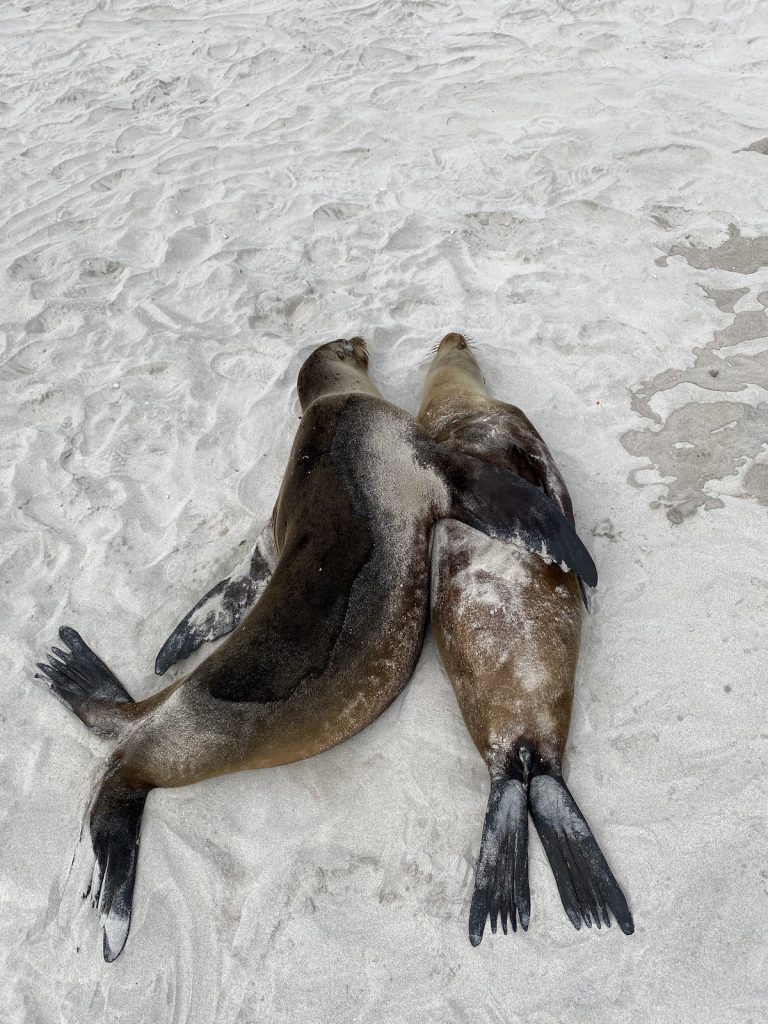
Marine life is equally route and season dependent. Green sea turtles are present at virtually every snorkel site year-round. White-tip reef sharks rest on the sandy bottom at most sites regardless of season. Hammerhead sharks peak at Kicker Rock and Gordon Rocks during the cool season. Whale sharks are exclusively a cool-season phenomenon at Darwin and Wolf Islands from June through November. Galapagos penguins in the water are a western-route encounter at Punta Vicente Roca and Tagus Cove. Manta rays peak in the Bolívar Channel between Isabela and Fernandina from August through October.
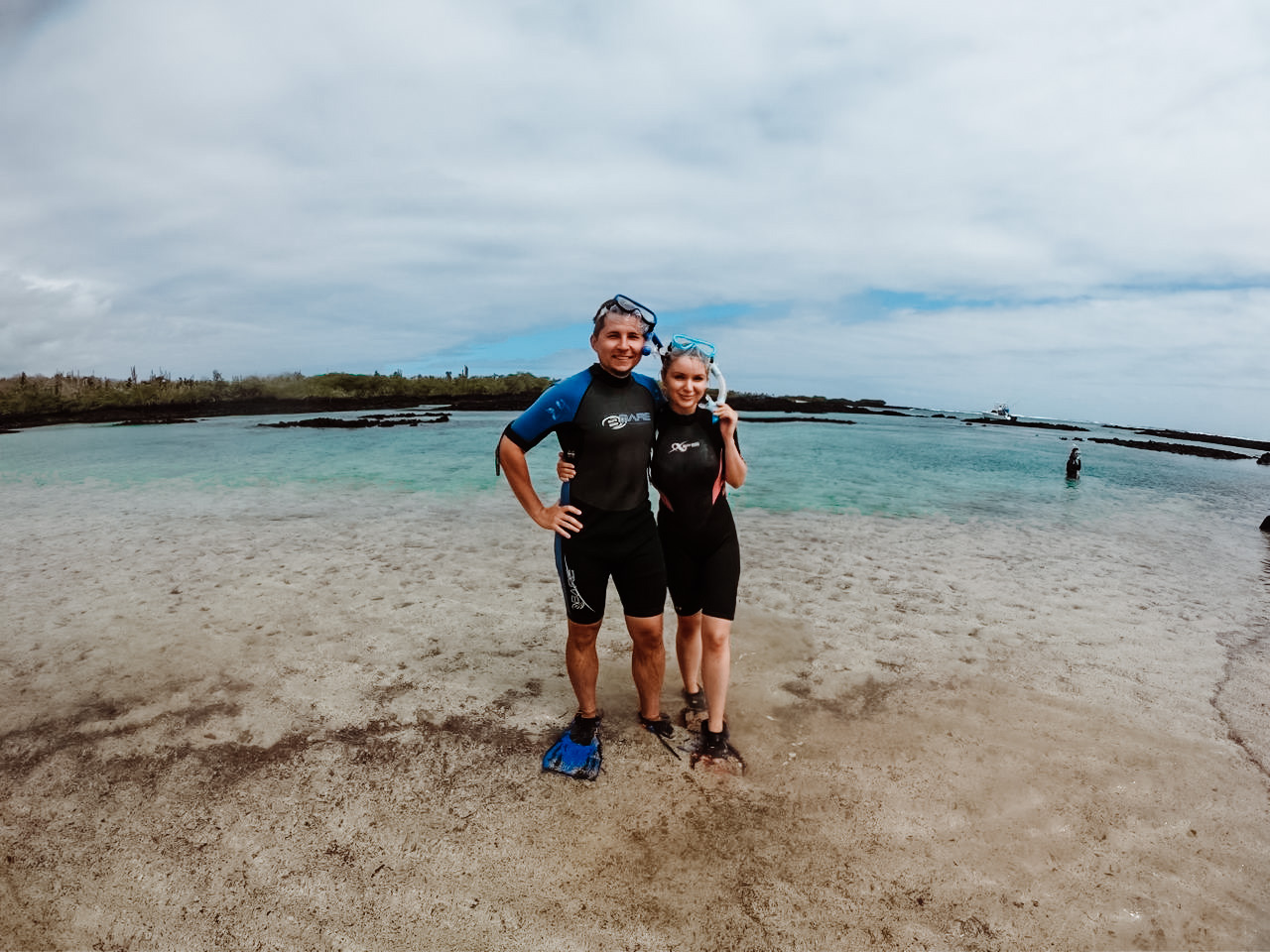
We’ve got a full breakdown on the best Galapagos cruise for snorkelers if you want to know exactly which vessels, routes, and operators put you in the water at the sites where the marine life actually shows up.
| Species | Route Required | Best Season | Sighting Probability (8-day cruise) |
|---|---|---|---|
| Galapagos giant tortoise | Any (Santa Cruz highlands or CDRS) | Year-round | >99% |
| Marine iguana | Any | Year-round; breeding colors Jan-Apr | >99% |
| Galapagos sea lion | Any | Year-round | >99% |
| Blue-footed booby | Any | Year-round; courtship peaks Apr-Jun | >95% |
| Waved albatross | Eastern (Espanola only) | April through December | >90% Apr-Dec; 0% Jan-Mar |
| Flightless cormorant | Western only (Fernandina, Isabela) | Year-round | >80% on western; 0% on eastern |
| Galapagos penguin | Western preferred (rare on eastern) | Year-round; density peaks cool season | >85% western; ~20% eastern |
| Red-footed booby | Northern (Genovesa) | Year-round at Genovesa | >95% at Genovesa; rare elsewhere |
| Galapagos fur seal | Western (Santiago, Isabela north) | Year-round | ~70% western; ~30% eastern |
| Galapagos hawk | Any (absent on inhabited islands) | Year-round | ~75% on uninhabited island visits |
Which Cruise Vessel and Guide Quality Matters Most for Wildlife Viewing?
The single most important wildlife viewing variable after the itinerary is the naturalist guide. A Level III certified naturalist with deep field experience transforms every landing from observation into understanding. The Galapagos National Park licenses guides at three levels. Level I covers basic ecology and park rules. Level II adds deeper species knowledge. Level III is the highest certification, requiring years of field work, advanced biology, and examination by the national park directorate. First-class and luxury operators staff Level III guides exclusively. Budget and mid-range operators vary considerably, and guide assignment is not always guaranteed in advance.
Guide quality matters for a concrete reason: the Galapagos wildlife encounter is only as deep as the interpretation layer on top of it. Standing in front of a marine iguana without context, you see a lizard sunning on a rock. Standing in front of the same iguana with a Level III guide, you understand that you are looking at the only marine lizard in the world, that it evolved from a land ancestor that drifted here on vegetation rafts millions of years ago, that the bright red and green breeding coloration you are seeing right now only appears from January through April, and that the salt crystals building up around its nostrils come from specialized glands that filter marine salt from its bloodstream after feeding dives. The encounter is identical. The experience is completely different.
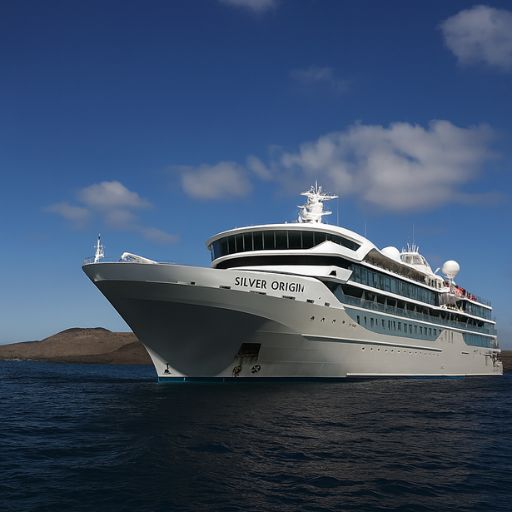
Vessel size matters for a secondary but real reason. A 16-passenger vessel deploys its entire group ashore simultaneously. Every passenger is on the trail at the same time, under the same guide, watching the same behavioral moment together. A 100-passenger vessel deploys in rotating zodiac shifts of 16 at a time, which means the first group may witness a hawk catching a lava lizard while the third group arrives to find the hawk gone. For wildlife enthusiasts whose priority is behavioral observation rather than comfort, the 16-passenger vessel is structurally superior regardless of price tier.
Identifying which specific vessel in the 2026 fleet assigns Level III guides as a guaranteed standard rather than a best-effort practice, and which vessels run full-group simultaneous landings, requires knowledge of the fleet that goes beyond brochure reading. Reach out here and we will give you specific answers on the departures that best serve serious wildlife travelers.
Which Itinerary Delivers the Best Wildlife Encounters?
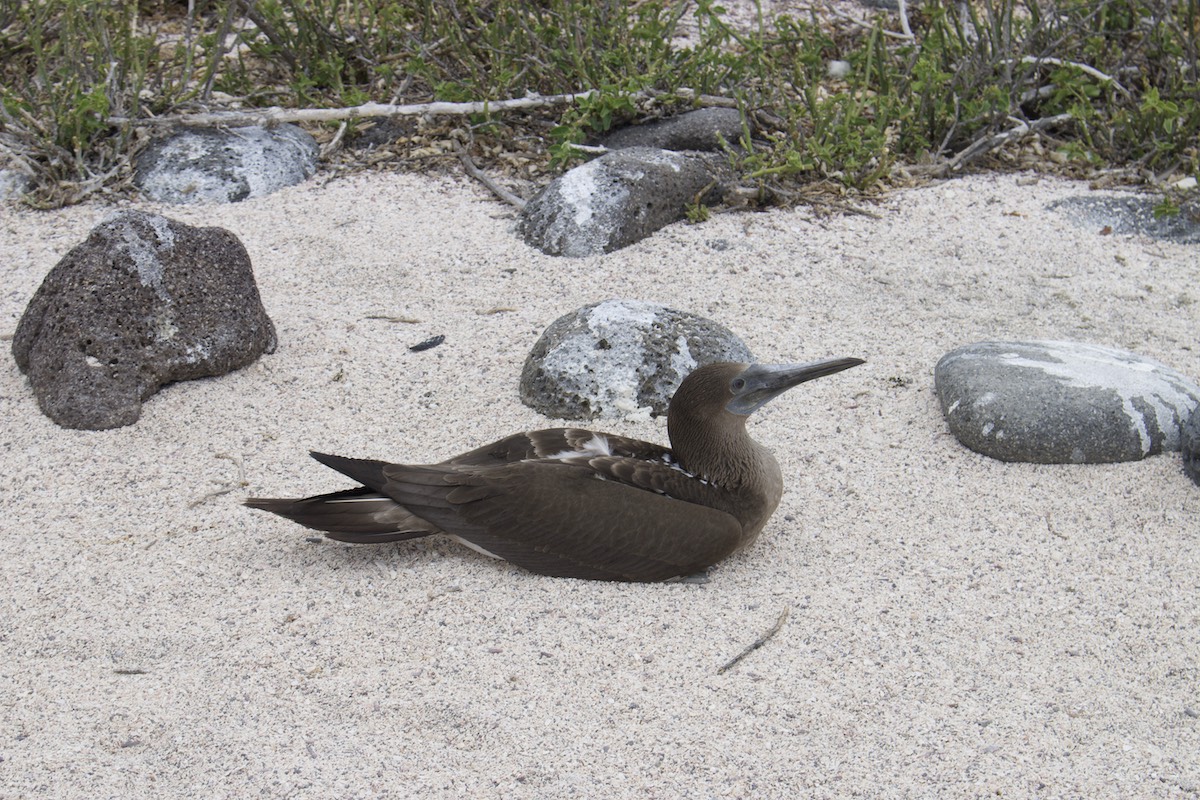
No single itinerary covers every major wildlife target. Eastern covers the waved albatross, the most iconic seabird encounter in the archipelago, along with giant tortoises, blue-footed boobies, sea lions, and some of the best snorkeling. Western covers flightless cormorant, the densest penguin colonies, Fernandina’s pristine ecosystem, and peak marine mammal activity in the Bolívar Channel. A combined 11 to 15-day full-archipelago itinerary delivers the most comprehensive species coverage, with some operators achieving 14 to 15 of the Big 15 on longer departures. For a first-time wildlife enthusiast, eastern is the more accessible choice. For anyone returning or wanting maximum species coverage, the combined route is the answer.
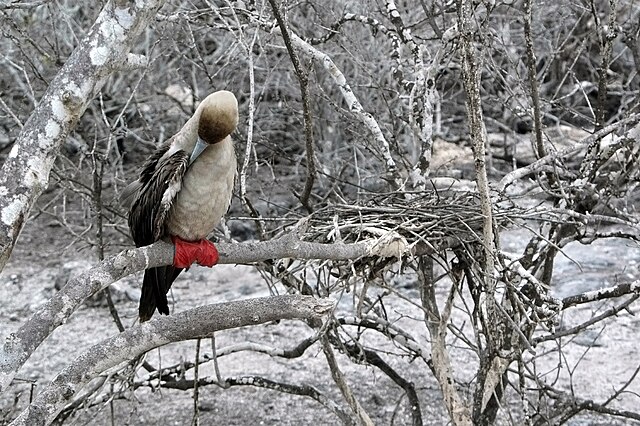
Genovesa deserves specific attention for wildlife enthusiasts. The island, nicknamed Bird Island, sits in the far northeast and is accessible only on itineraries that specifically include it, usually as a 10-day eastern extension or on full-archipelago voyages. Inside Darwin Bay, a flooded volcanic caldera reached through a narrow gap in the crater wall, you find the largest red-footed booby colony in the Galapagos, nesting in the acacia trees above your head. Magnificent frigatebirds inflate their scarlet throat sacs on branches within arm’s reach. The short-eared owl hunts storm petrels on Prince Philip’s Steps in full daylight, one of the only places on earth where you can watch an owl hunt actively without waiting for dark. Genovesa is a non-negotiable target for serious birdwatchers.
Trying to find a Galapagos cruise that takes birdwatching seriously rather than treating it as a side note to the wildlife experience? Here’s the best Galapagos cruise for birdwatchers broken down so you find the right ship and route.
What Is the Best Season for Wildlife in the Galapagos?
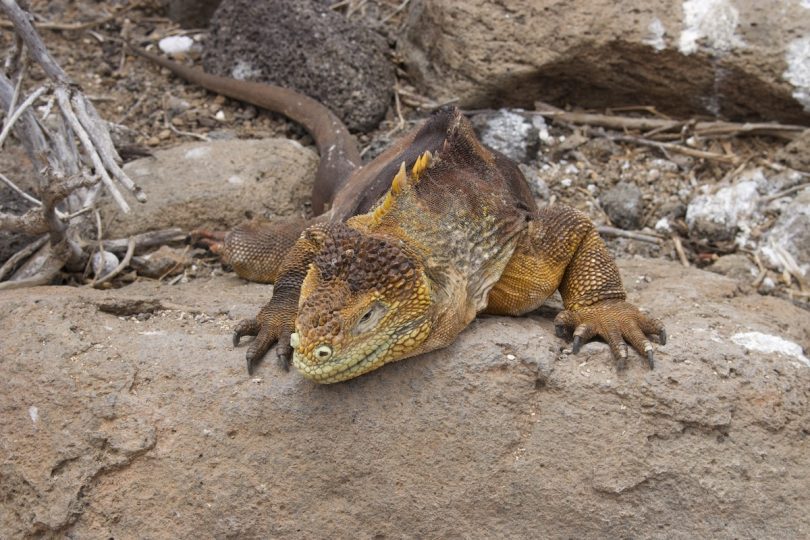
There is no bad season, but there are better seasons for specific targets. April through June sits at the intersection of warm-season comfort and peak behavioral display: waved albatross arriving and beginning courtship on Espanola, blue-footed booby courtship dances at their most intense across North Seymour and Espanola, frigatebird throat sac inflation peaking, and land iguana eggs beginning to hatch. The cool season from July through November delivers peak marine life density: hammerhead schools at Gordon Rocks, whale sharks at Darwin and Wolf, manta rays in the Bolívar Channel, and the highest penguin density of the year at the western sites.
The month-by-month pattern for wildlife enthusiasts breaks down into three distinct windows. January through March is warm water, sea turtle nesting on the beaches, marine iguanas in breeding coloration on Espanola and Fernandina, and land iguana hatchlings appearing on Santa Cruz. Waved albatross is absent during this window. April through June is the courtship and hatching peak, with the most behavioral activity of the year across multiple seabird species simultaneously and the albatross colony newly returned to Espanola. July through November is the marine season: cooler water, richer upwelling, more sharks, more cetaceans, and more active feeding behavior among seabirds driven by the productive Humboldt Current.
For wildlife enthusiasts who can only visit once and want the broadest possible behavioral diversity, April and May sit in the overlap zone: warm enough for comfortable snorkeling, albatross returned, booby courtship peaking, marine iguanas still in breeding color, and the cool-season marine productivity beginning to build. It is the closest thing to an all-targets window available in the Galapagos calendar.
Not sure which months give you the best combination of wildlife activity, water visibility, and comfortable conditions on a Galapagos cruise? This breakdown on the best time of year to take a Galapagos cruise covers every season honestly.
What Wildlife Enthusiasts Tell Us After Their Galapagos Cruise
From the thousands of Galapagos travelers Oleg has interviewed through mytrip2ecuador.com and the YouTube channel, wildlife enthusiasts are the most specific group in both pre-trip expectations and post-trip reflections. The data below reflects aggregate feedback from travelers who cited wildlife as their primary booking motivation.
| Finding | Result | Context |
|---|---|---|
| Wildlife enthusiasts who said the Galapagos exceeded their highest expectations | ~89% | Highest post-trip satisfaction rate of any traveler demographic we track |
| Wildlife enthusiasts who named the guide as the most valuable element of the experience | ~81% | Consistent across all vessel classes; higher priority than cabin comfort or food quality |
| Wildlife enthusiasts who missed a key target species due to wrong itinerary or wrong season | ~34% | Most common: missing waved albatross (booked Jan-Mar eastern); missing flightless cormorant (booked eastern only) |
| Wildlife enthusiasts who said a Level III guide made a measurable difference to their trip | ~77% | Among those who had prior cruise experience with a less qualified guide for comparison |
| Wildlife enthusiasts who returned for a second Galapagos cruise specifically to see missed species | ~68% | Return rate higher among wildlife enthusiasts than any other traveler profile |
Which Sites Deliver the Most Remarkable Wildlife Encounters?
Five sites stand above all others for wildlife encounter quality. Punta Suarez on Espanola delivers waved albatross courtship, Nazca and blue-footed booby colonies, the Espanola marine iguana in Christmas breeding color, the blowhole, and the Espanola mockingbird all within a single two-hour trail walk from April through December. Punta Espinosa on Fernandina offers the largest marine iguana congregation in the archipelago, flightless cormorants nesting within trail distance, and the most ecologically pristine shoreline available on any visitor site. Darwin Bay on Genovesa is the seabird colony that redefines what a colony means. North Seymour in an hour covers blue-footed booby courtship and frigatebird throat inflation simultaneously. Gardner Bay on Espanola is the most productive sea lion snorkel encounter in the archipelago.
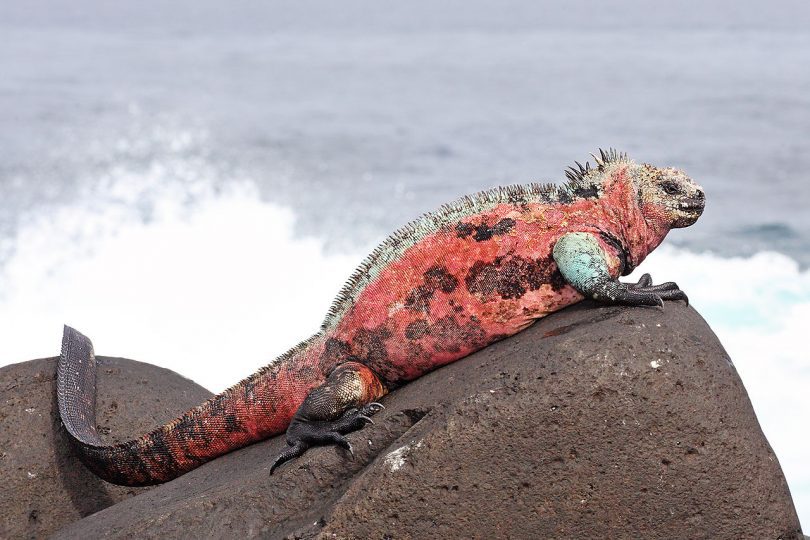
The Espanola marine iguana deserves specific mention because it demonstrates something no other Galapagos site does: island-specific coloration. During breeding season from January through April, the marine iguanas on Espanola develop vivid red and green scales, producing the Christmas iguana coloration that has no equivalent anywhere in the archipelago. The same species on Fernandina or Santa Cruz is dark gray-black. On Espanola it looks like a different animal. This is island-specific adaptation in visual real time, and a naturalist guide who explains what you are looking at converts a beautiful photograph into a lesson in evolutionary biology that stays with you permanently.
Genovesa’s Darwin Bay is accessible only through a 20-meter gap in the crater wall at the right tide and sea state. Inside, the horseshoe caldera creates a protected anchorage ringed by cliffs holding tens of thousands of red-footed boobies in their nesting trees. The call density from the colony creates sound as much as sight. The short-eared owl at Prince Philip’s Steps hunts in daylight, perching openly on lava shelves and hunting storm petrel chicks from the crevices below. This is wildlife behavior at a level of drama and density that exists nowhere else on the eastern circuit.
The Galapagos is one of the greatest photography destinations on the planet but the cruise you pick determines how close you actually get to the subjects. Here’s a full guide to the best Galapagos cruise for photographers so you book the right one.
What Are the Biggest Mistakes Wildlife Enthusiasts Make Booking a Galapagos Cruise?
Four mistakes appear consistently among wildlife-focused travelers. The first is booking an eastern itinerary in January through March specifically to see waved albatross, not knowing the colony is entirely absent during those months. The second is booking the western route without knowing that Espanola’s albatross and Genovesa’s red-footed booby colony are eastern and northern targets respectively, meaning the western route misses both. The third is not asking about the specific naturalist guide assigned to their departure, accepting whatever the vessel provides without inquiry. The fourth is booking a 100-passenger vessel expecting the same wildlife intimacy as a 16-passenger yacht and discovering the zodiac rotation system at the first landing site.
The albatross season mistake is the most consequential because it is invisible at booking time. An eastern itinerary that includes Espanola looks identical on paper in December and in February. The waved albatross colony, one of the primary reasons many wildlife enthusiasts specifically choose the eastern route, is present on Espanola from roughly April through December and completely absent from January through March when the colony returns to the open Pacific. A wildlife enthusiast who books a February eastern departure with the albatross on their must-see list will spend time at Espanola’s extraordinary marine iguana colony and blue-footed booby site but will not see an albatross. Confirm the albatross season against your specific departure dates before booking.
The guide inquiry mistake has real consequences that appear only after arrival. On a 16-passenger first-class vessel, the specific guide assigned to your departure makes the difference between a week of genuine naturalist education and a week of professionally delivered but ultimately surface-level species identification. Asking “who is the naturalist guide assigned to our specific departure, and what is their certification level and primary specialty?” before committing to a booking is a perfectly normal question that any reputable operator will answer directly. If the answer is vague or deferred, treat it as a signal about how seriously the operator takes guide quality.
Frequently Asked Questions
Can I see all 15 of the Big 15 species on a single cruise?
Achieving all 15 on a single 8-day cruise is very difficult because the Big 15 requires both eastern and western coverage plus a Genovesa visit for the red-footed booby. A full-archipelago 11 to 15-day itinerary on the right vessel achieves 14 to 15 of the Big 15 with the right combination of route, season, and guide quality. An 8-day cruise, eastern or western, typically achieves 12 to 14 depending on itinerary specifics and season.
Do I need binoculars on a Galapagos cruise?
For land encounters, binoculars are largely optional because the wildlife is close enough to observe clearly without magnification. For seabirds at sea, oceanic species spotted from the deck between islands, and the more distant cliff-nesting sites at Genovesa, binoculars meaningfully improve the experience. A quality 8×42 or 10×42 pair is worthwhile for serious wildlife enthusiasts and birdwatchers. The sea lion swimming next to your fins does not require optics.
Is Darwin’s finch identification difficult without expert guidance?
Yes, genuinely so. There are 13 Darwin’s finch species in the Galapagos, and many are visually similar. Bill size, body size, and island location are the primary identification markers, and the distinctions between closely related species require exactly the kind of field experience a Level III naturalist guide has spent years developing. A guide who can identify which finch you are looking at by bill shape from five meters and explain how that bill morphology connects to the food source it exploits is demonstrating the same evolutionary logic Darwin was working through in 1835. This is one of the clearest examples of where guide quality translates directly into wildlife experience quality.
A wildlife-focused Galapagos cruise requires more specific planning than a general trip: the right itinerary for your target species, the right season, a guaranteed Level III naturalist guide, and a vessel size that puts your whole group ashore at once. We have matched hundreds of wildlife enthusiasts to the right combination, and we are rated 4.9 stars on Google and TripAdvisor. If you want a specific recommendation built around your species targets and travel dates, get in touch here and we will give you something concrete and useful.
Written by Oleg Galeev
Galapagos cruise traveler (3 trips, 2 cruises) and Founder, Cruises To Galapagos Islands
Oleg has personally inspected nearly every available Galapagos cruise vessel and interviewed thousands of travelers across three trips and two cruises. He also runs the Ecuador travel blog mytrip2ecuador.com and the YouTube channel My Trip to Somewhere.
Cruises To Galapagos Islands is rated 4.9 stars on Google and TripAdvisor.
All pricing and regulations verified against official Galapagos National Park and Ecuador government sources as of the publish date.