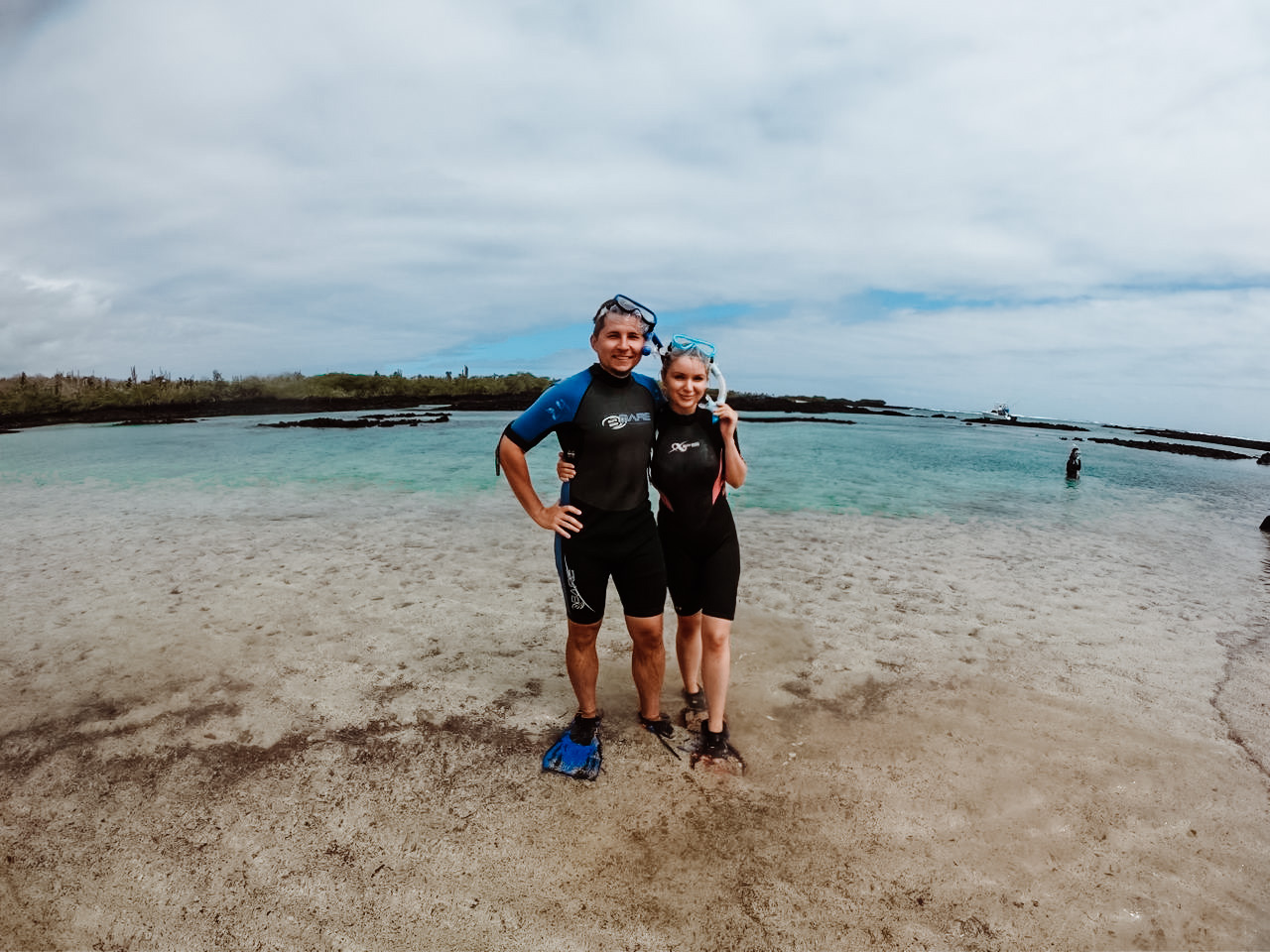
Best Galapagos Cruise for Active Travelers
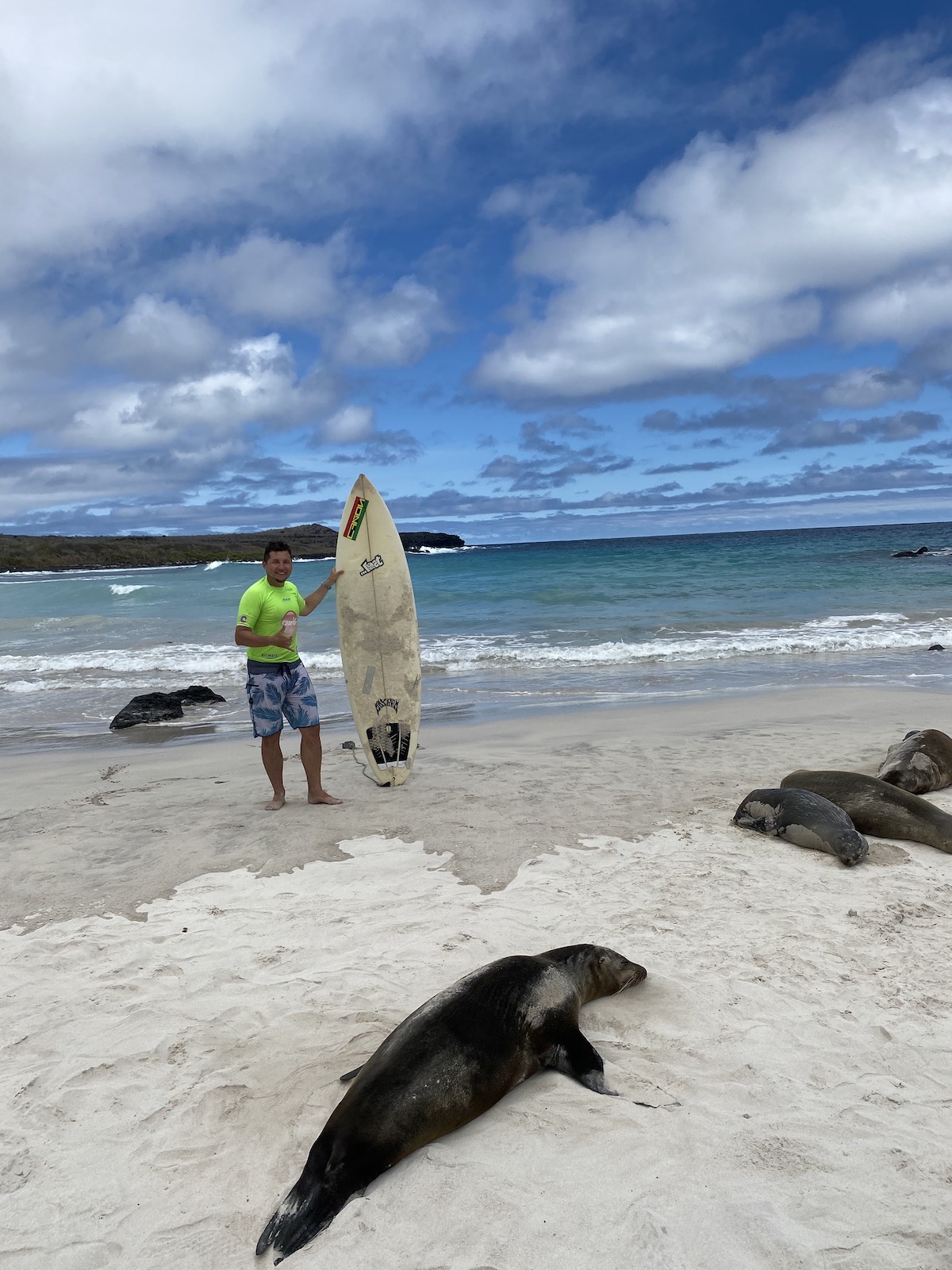
Part of our guide to the types of Galapagos cruises. Ready to pick a ship? See the best Galapagos cruises by price, size and class.
Quick Facts: Active Galapagos Cruise Planning
| Detail | What Active Travelers Need to Know |
|---|---|
| Park entry fee | $200 USD cash per adult on arrival – Verified July 30, 2026 |
| Transit Control Card | $20 per person online before departure |
| Daily activity sessions | 2 per day standard; 3 to 4 on premium active vessels |
| Hardest hike on a cruise | Sierra Negra Volcano, Isabela – 24 km round trip, 6 to 7 hours, 2,217 ft elevation gain |
| Easiest trail | Bartolome boardwalk – 600m, 372 steps, 45 minutes, all-surface boardwalk |
| Best snorkel sites | Devil’s Crown (Floreana), Kicker Rock (San Cristobal), Elizabeth Bay (Isabela), Punta Vicente Roca |
| Diving: requires | Advanced OW certification, 50+ logged dives, current experience for Darwin and Wolf liveaboard |
| Best itinerary for active travelers | Western (Isabela, Fernandina, Santiago) – highest activity density and wildlife encounters |
| Best season for active travel | June through November (cool season) – richer marine life, whale watching, peak shark activity |
| Vessels with full active kit | Ecoventura (kayaks, SUP, wetsuits), Aqua Mare (kayaks, SUP, paddleboards), National Geographic Endeavour II, Endemic |
Is the Galapagos Right for Active Travelers?
Completely, and in a way most active travelers don’t expect. The Galapagos is not a passive observation destination where you stand behind a rope and watch wildlife from a distance. Every hike crosses terrain that sea lions, iguanas, and hawks share with you without the slightest interest in moving. Every snorkel session puts you in the water with animals that investigate you out of curiosity rather than fleeing. The activity isn’t performance or adventure sport – it’s immersion in an ecosystem that has no learned fear of people. That combination, genuine physical activity inside one of the most biodiverse environments on earth, doesn’t exist at the same level anywhere else.
The structure of a Galapagos cruise is built around activity. Two excursions per day is the standard minimum. The first goes ashore in the morning: a guided hike across volcanic terrain, lava fields, sandy beaches, or highland forest, covering 1 to 6 kilometers depending on the site. The second is typically a water activity: snorkeling, kayaking, or a panga ride along a coastline. On premium active vessels this expands to three or four sessions per day, with additional kayaking, paddleboarding, or a second snorkel at a different site. There’s no day at sea with nothing to do.
The physical demands are also honest. Galapagos trails are not paved or maintained in the way urban park trails are. They cross cobble lava, loose ash, wet sand, and root-covered highland paths. The panga transfer from vessel to shore involves a short ladder descent and often a wet landing where you step into knee-deep water. None of this is technical. But it does require genuine mobility and the willingness to be physically active every day for a week or more.
If you want to know which specific vessels in the 2026 fleet run the most activity sessions per day and carry the fullest kit of kayaks, paddleboards, and wetsuits, we track this across the fleet. We’re rated 4.9 stars on Google and TripAdvisor. Send us a message here and we’ll match you to the right active cruise for your dates and fitness level.
The species you see in the Galapagos depends almost entirely on which islands your cruise visits. Here’s the best Galapagos cruise for wildlife enthusiasts so you build your itinerary around the encounters that matter most.
What Active Activities Are Available on a Galapagos Cruise?
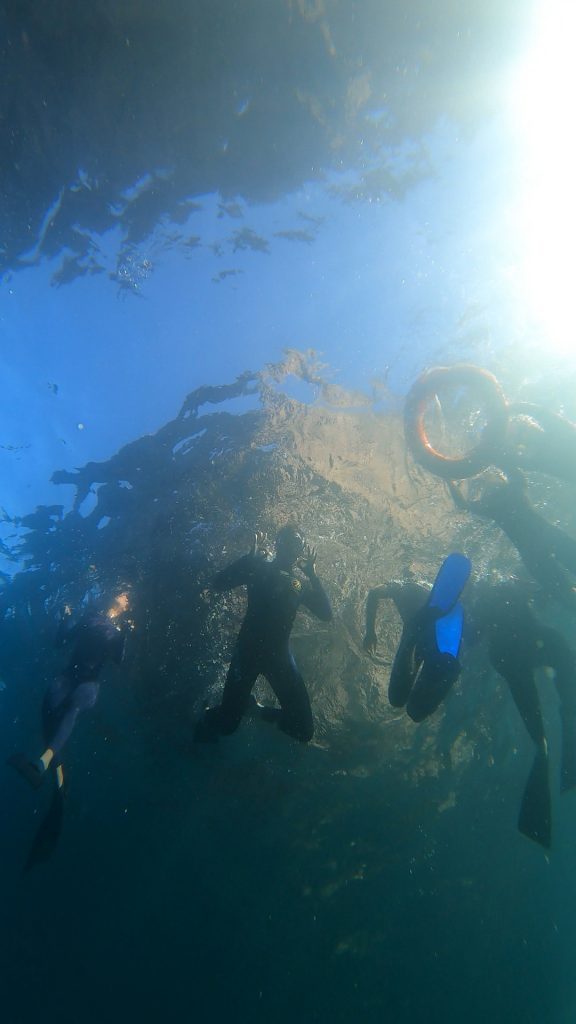
Six activities anchor the active Galapagos cruise experience: hiking on volcanic and highland terrain, snorkeling in one of the world’s most biodiverse marine environments, kayaking along protected coastlines, paddleboarding in calm bays, panga rides along cliff faces and mangrove channels, and for certified divers, day diving from select naturalist vessels at sites like Kicker Rock and Gordon Rocks. Full dive liveaboards to Darwin and Wolf are a separate category requiring Advanced Open Water certification and at least 50 logged dives. Most naturalist cruise vessels offer all activities except certified scuba diving.
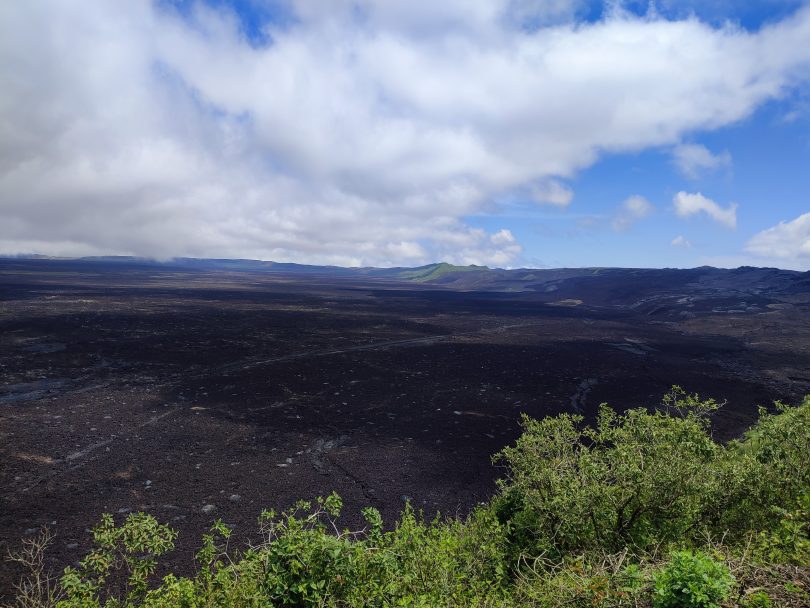
Hiking in the Galapagos ranges from the Bartolome boardwalk at 372 wooden steps taking 45 minutes, to the Sierra Negra rim trail at 24 kilometers round trip with 2,217 feet of elevation gain over 6 to 7 hours. Sierra Negra on Isabela is the most demanding trail accessible on a cruise itinerary: the path starts in highland forest, climbs through lava fields to the rim of the second-largest volcanic caldera in the world, and requires proper hiking footwear, sun protection, and reasonable cardiovascular fitness. It is not technical but it earns its moderate-to-hard rating. Most other cruise hiking is in the easy to moderate range, covering 1 to 4 kilometers on uneven terrain at a pace set by the naturalist guide.
Kayaking in the Galapagos opens specific ecosystems that zodiac boats are too large to enter: mangrove channels where seahorses and young sharks use the root systems as nurseries, shallow rocky coves where fur seals watch from the boulders, and coastline sections where the only access is human-powered. This is not whitewater kayaking. It is flatwater sea kayaking in protected bays and coves, suited to beginners with proper instruction and experienced paddlers equally. The wildlife at kayak distance is a completely different experience from the zodiac view.
Snorkeling quality in the Galapagos is in a class by itself. The combination of temperate Humboldt Current upwelling and warmer equatorial surface water creates exceptional marine diversity. Sea lions enter the water the moment snorkelers do and immediately turn playful: barrel rolling, blowing bubbles at your mask, and occasionally stealing your fin. Marine iguanas graze along the bottom in water clear enough to watch every bite. Green sea turtles are present at nearly every snorkel site year-round. The water temperature runs warm in the warm season (December through May) and cooler in the Humboldt months (June through November); a full wetsuit is practical from June onward.
Diving in the Galapagos is world class but only if you’re on the right boat. Here’s a full guide to the best Galapagos cruise for divers so you book the ship and itinerary that actually gets you to the best sites.
Which Cruise Class and Vessel Best Supports Active Travel?
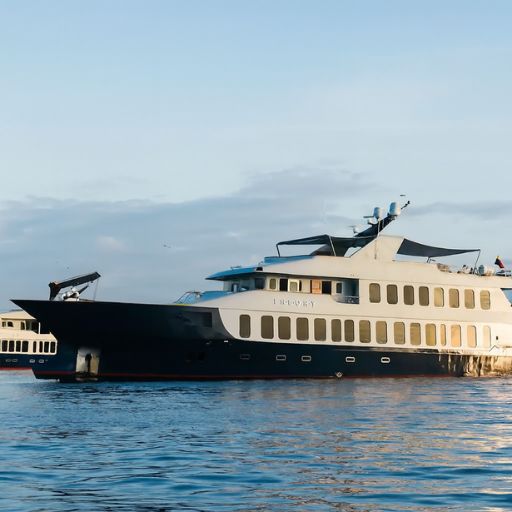
First-class vessels of 16 passengers with full active equipment are the best fit for active travelers. At this size, the entire group goes ashore simultaneously rather than in rotation, the guide can extend a site visit when the activity is productive, and the vessel carries kayaks, wetsuits, paddleboards, and snorkel gear as standard. The Ecoventura fleet (Origin, Theory, Evolve), the Endemic, the Aqua Mare, and the National Geographic Endeavour II and Islander II all meet this standard. What to look for: vessels that explicitly list kayaks and paddleboards as included equipment, run 3 or more activity sessions per day, and carry 5mm full wetsuits for cool-season water temperatures.
| Vessel / Fleet | Passengers | Active Kit | Daily Sessions | Best For |
|---|---|---|---|---|
| Ecoventura Origin / Theory / Evolve | 20 | Kayaks, SUP, full wetsuits, snorkel gear | 3-4 | Active couples and small groups wanting luxury + full activity program |
| Aqua Mare | 16 | Kayaks, paddleboards, snorkel gear, wetsuits, military-grade tenders | 3-4 | Active travelers who want ultra-premium comfort between sessions |
| Endemic | 16 | Kayaks, snorkel gear, 3mm and 5mm wetsuits, in-water naturalist | 3-4 | Snorkel-focused active travelers; strong in-water guide program |
| National Geographic Endeavour II / Islander II (Lindblad) | 48-96 | Kayaks, SUP, glass-bottom zodiac, snorkel gear, undersea specialist | 3-4 | Active travelers who want NatGeo expedition depth and a larger social group |
| Galapagos Sky / Galaxy Diver II (dive liveaboard) | 16 | Full dive equipment; Nitrox; dive computer rental | 3-5 dives/day | Advanced certified divers targeting Darwin and Wolf; whale sharks June–November |
Confirming which vessels in the 2026 fleet run the specific active programs you want, on the itinerary and season that matches your goals, takes more than a brochure read. Reach out here with your activity priorities and we’ll identify the specific departures that deliver them.
Which Itinerary Has the Most Active Opportunities?
The western itinerary, covering Isabela, Fernandina, and Santiago, delivers the highest active opportunity density in the archipelago. Punta Vicente Roca on northern Isabela is panga-only access: the cliffs drop straight into the water and the site is reached by zodiac ride along the face, with snorkeling in one of the most productive cold-water upwelling zones in the islands. Elizabeth Bay is kayak-accessible mangrove channel snorkeling with marine iguanas, penguins, and sea turtles. Sierra Negra on Isabela is the hardest single hike on any cruise itinerary. Sullivan Bay on Santiago is an alien lava field walk across the youngest surface rock in the archipelago.
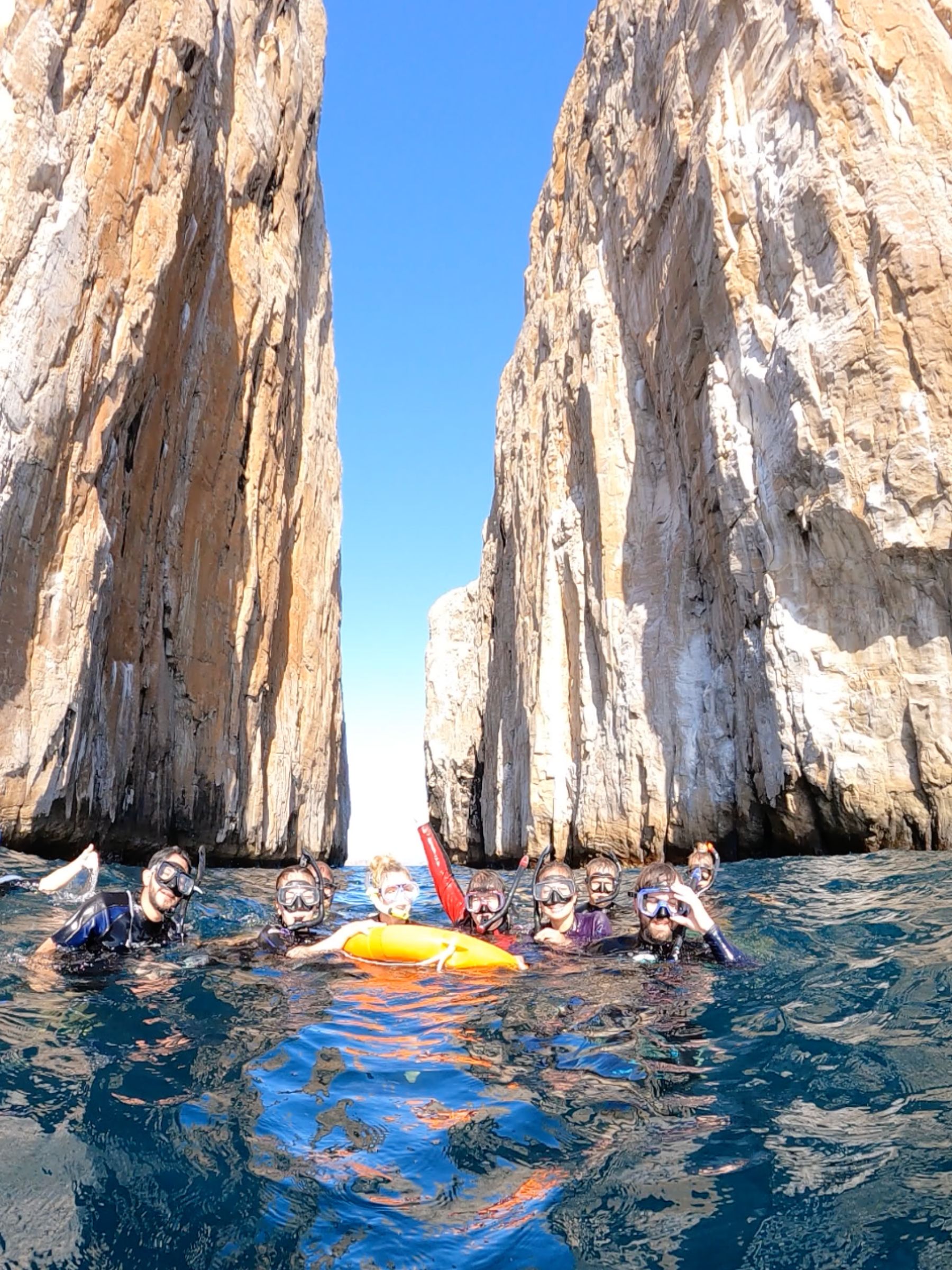
The eastern itinerary has strong active content too, particularly at Devil’s Crown off Floreana, which is consistently rated among the top snorkel sites in the entire archipelago. Kicker Rock off San Cristobal is a two-rock volcanic formation rising 150 meters from the sea and a classic drift snorkel through a channel with hammerhead sharks, Galapagos sharks, sea turtles, and rays. Gardner Bay on Española is a 2-kilometer beach walk among sea lion colonies. North Seymour is a compact island covered in bird colonies where you walk among blue-footed boobies performing their courtship dance at arm’s length. Strong active content throughout, just somewhat gentler in terrain and water conditions than the western route.
Not sure which Galapagos cruise prioritizes snorkeling time over land visits or which ships carry the best gear and guides for in-water experiences? This breakdown on the best Galapagos cruise for snorkelers covers the ships and itineraries worth booking.
| Site | Route | Activity Type | Difficulty | Highlight |
|---|---|---|---|---|
| Sierra Negra Volcano | Western (Isabela) | Hiking | Hard – 24km, 6-7 hrs | 2nd largest volcanic caldera on earth; lava field views |
| Punta Vicente Roca | Western (Isabela) | Snorkeling / panga ride | Moderate – cold water, current | Penguins, marine iguanas, Mola mola sunfish, flightless cormorants |
| Elizabeth Bay | Western (Isabela) | Kayaking / snorkeling | Easy to moderate | Mangrove channels; sea turtles; manta rays; penguins |
| Sullivan Bay | Western (Santiago) | Hiking / lava walk | Easy – 2.4km, 2 hrs | 130-year-old pahoehoe lava; alien landscape; pioneer plants |
| Devil’s Crown | Eastern (Floreana) | Snorkeling | Moderate – some current | Eagle rays, sea turtles, reef sharks; best eastern snorkel site |
| Kicker Rock | Eastern (San Cristobal) | Snorkeling | Moderate – drift snorkel | Hammerheads, Galapagos sharks, sea turtles, rays |
| Bartolome Summit | Central | Hiking (boardwalk) | Easy – 372 steps, 45 min | Pinnacle Rock panoramic; Galapagos penguins below in the bay |
| Gordon Rocks | Central (day dive) | Scuba diving | Advanced – strong current, “Washing Machine” | Hammerhead schools; ranked 3rd best dive site globally |
What Physical Fitness Level Do You Need?
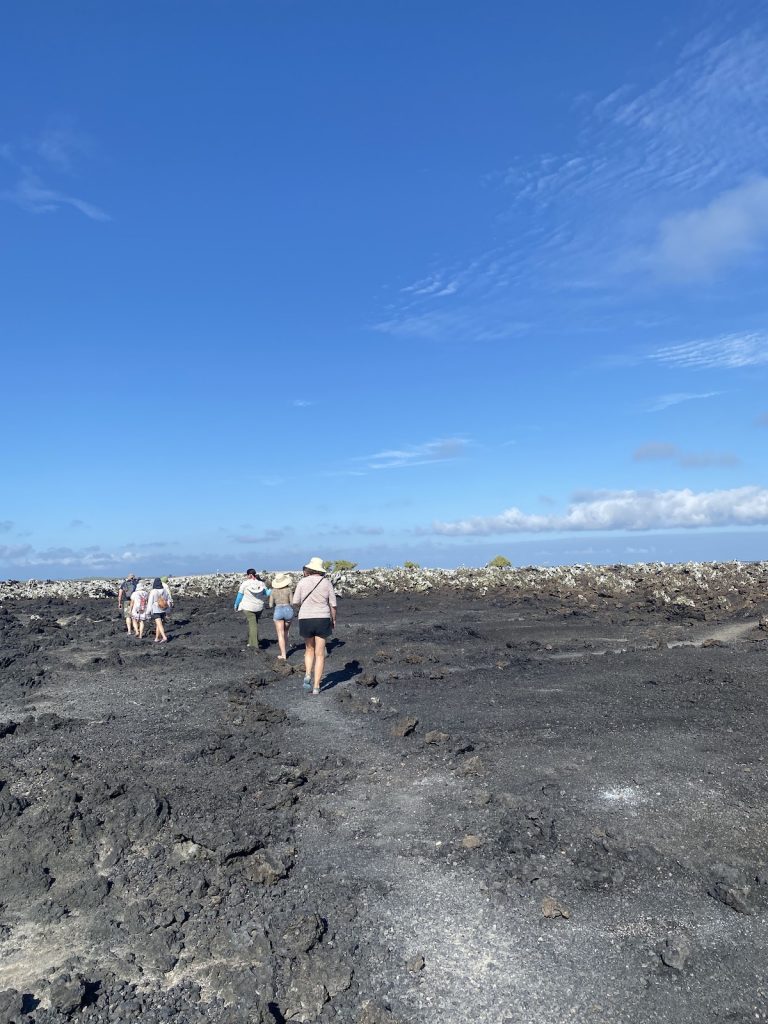
The minimum baseline for a standard Galapagos cruise is the ability to walk on uneven terrain for 60 to 120 minutes, manage a panga ladder descent at each landing (roughly one meter of upper-body-assisted stepping off a moving boat), and enter the water with fins and a mask from a zodiac platform. No technical fitness is required for the standard program. The Sierra Negra hike requires genuine cardiovascular fitness and leg strength. Beyond that, fit hikers, swimmers, and kayakers will find all activities well within their capability and genuinely satisfying.
The panga transfer is the physical step most first-timers don’t anticipate. The zodiac pulls alongside the vessel or a shoreline landing, and you step down or across a short drop while the boat moves with the swell. This takes a moment of confidence rather than significant strength, but it is the one moment where limited mobility becomes a genuine consideration. Travelers with significant knee, hip, or shoulder limitations should ask operators specifically about panga access at each site on their intended itinerary before booking.
Trail surfaces in the Galapagos are consistently uneven. Cobble lava, loose volcanic ash, wet sand, and muddy highland paths are the four main types. None is technically difficult, but all require footwear with genuine traction and ankle support. Active travelers who show up in sandals or flat-soled sneakers will be uncomfortable on the lava sites and potentially unsafe on steep ash trails. Proper hiking boots or trail runners with ankle support are non-negotiable for the more demanding hikes.
The first Galapagos cruise is the one that either makes you want to go back or leaves you wishing you’d chosen differently. Here’s the best Galapagos cruise for first-timers so you get it right from the start.
What Active Travelers Tell Us After Their Galapagos Cruise
From the thousands of Galapagos cruise travelers Oleg has interviewed through mytrip2ecuador.com and the YouTube channel, active travelers are among the most consistently enthusiastic groups post-trip. The data below reflects aggregate feedback from travelers who specifically cited hiking, snorkeling, kayaking, or diving as primary booking motivations.
| Finding | Result | Context |
|---|---|---|
| Active travelers who said snorkeling was the standout activity of the trip | ~74% | Sea lion water encounters cited most often as the specific highlight |
| Active travelers who wished their vessel had more kayaking sessions | ~43% | Most common among those who booked mid-range or budget vessels without confirmed kayak programs |
| Active travelers who completed the Sierra Negra hike and called it the best land activity | ~88% | Consistently the highest-rated single activity on western itineraries |
| Active travelers who said they underestimated the trail terrain difficulty | ~37% | Most common complaint: showing up in inadequate footwear |
| Certified divers who said the Galapagos was the best diving of their life | ~91% | Highest single-activity satisfaction rate of any category we track |
What Is the Best Time of Year for Active Galapagos Travel?
The cool season from June through November is the best window for active travelers who prioritize marine life density, diving, and the most intense wildlife encounters. The Humboldt Current brings cold, nutrient-rich water that drives extraordinary marine productivity: whale sharks at Wolf and Darwin from June through November, peak hammerhead density at Gordon Rocks and Kicker Rock, manta ray concentrations, and schooling fish in volumes that make warm-season sites look sparse. The water is colder (requiring a 5mm wetsuit from July onward) but the reward is marine life volume that the warm season simply doesn’t match.
For hiking specifically, the cool season has a practical advantage: the equatorial sun is partially filtered through garúa mist in the mornings, which makes multi-hour hikes like Sierra Negra more comfortable than the direct overhead sun of the warm season. The Sierra Negra trail in December or January under clear equatorial sky requires significant sun protection and starts to feel brutally exposed by 10am. The same trail in August under a partial garúa overcast is genuinely more comfortable.
The warm season from December through May is better for snorkeling comfort, calmer seas, and warmer water that doesn’t require a full wetsuit. For active travelers who prioritize snorkeling over diving and are sensitive to cold water, December through April is the more comfortable window. The marine iguanas are in breeding coloration from January through April, turning vivid red and green. Sea turtle nesting peaks on the beaches from December through March. The active activity volume is equivalent to the cool season but the physical experience of the water is warmer and more accessible.
Still trying to lock in your travel dates before you commit to a Galapagos cruise booking? This guide on the best time of year to take a Galapagos cruise gives you a straight answer on when to go based on what you most want to see and do out there.
What Are the Biggest Mistakes Active Travelers Make Booking a Galapagos Cruise?
Four consistent mistakes: booking a vessel that doesn’t carry kayaks or paddleboards and discovering this only after arrival, not confirming the Sierra Negra hike is on the specific departure’s itinerary before booking (it’s on western itineraries only, not all of them), bringing inadequate footwear for lava and ash trail terrain, and certified divers booking a standard naturalist cruise expecting dive-quality sites when Darwin and Wolf require a dedicated dive liveaboard that can’t be substituted.
The kayak availability mistake is easily preventable. Not all vessels carry kayaks, and among those that do, some only deploy them at a subset of sites. Asking specifically “does this vessel carry kayaks and deploy them as a standard activity, and at which sites on this itinerary?” before booking takes less than a minute and prevents a week of frustration for a traveler whose primary goal was kayaking. The same question applies to paddleboards, which are even less consistently available than kayaks across the fleet.
The certified diver mistake has the most significant financial consequence. A traveler who books a premium naturalist cruise expecting to dive Darwin and Wolf Islands arrives to discover those sites are restricted to dedicated dive liveaboards. Standard naturalist cruises can access day-dive sites like Kicker Rock, Gordon Rocks, and a handful of others through optional paid extras, but they cannot reach Darwin and Wolf under any circumstances. If your primary goal is the hammerhead schools, whale sharks, and open-ocean pelagic diving that the northern islands provide, you need a dive liveaboard, not a naturalist cruise with good snorkeling.
Frequently Asked Questions
Can I do the Sierra Negra volcano hike on a standard Galapagos cruise?
Yes, but only on western itineraries that include Isabela. Not all 8-day itineraries go to Isabela, and not all that do include Sierra Negra specifically (some visit only the western coast of Isabela rather than the highland interior). Confirm that Sierra Negra is explicitly listed in your departure’s day-by-day itinerary before booking. The hike is 24 kilometers round trip with 2,217 feet of elevation gain and takes 6 to 7 hours. Proper hiking footwear, sun protection, and reasonable fitness are required. Walking poles help on the descent.
Is kayaking included on most Galapagos cruises?
Not automatically. Some vessels carry kayaks as standard included equipment; others offer it as an optional add-on or not at all. First-class and luxury vessels are more likely to include kayaks, paddleboards, and wetsuits as part of the base fare. Budget and some mid-range vessels do not. Always confirm in writing before booking if kayaking is a primary activity goal. Ask specifically how many kayak sessions are included in a standard 8-day itinerary on your chosen vessel.
Do I need to be an advanced diver to dive in the Galapagos?
It depends where you want to dive. Day diving from naturalist cruises at sites like Kicker Rock is accessible to Open Water certified divers with reasonable experience. Gordon Rocks, often called the “Washing Machine” for its currents, requires Advanced Open Water and current diving experience. Darwin and Wolf Islands require Advanced Open Water certification, at least 50 logged dives, and significant current experience – these are serious dive sites with strong currents and deep open-ocean conditions that are genuinely dangerous for unprepared divers. If you’re a newer diver, Kicker Rock and the day-dive sites from a naturalist cruise are excellent without being overwhelming.
Matching an active traveler to the right Galapagos cruise means confirming which vessel carries the right equipment, runs enough daily sessions, and hits the specific sites that deliver the activities you came for. We know the fleet well enough to answer these questions specifically, not generically, and we’re rated 4.9 stars on Google and TripAdvisor. If you want a concrete recommendation for an active Galapagos cruise based on your fitness level, activity priorities, and dates, get in touch here and we’ll give you something real.
Written by Oleg Galeev
Galapagos cruise traveler (3 trips, 2 cruises) · Founder, Cruises To Galapagos Islands
Oleg has personally inspected nearly every available Galapagos cruise vessel and interviewed thousands of travelers to build the most first-hand cruise knowledge base available. He also runs the Ecuador travel blog mytrip2ecuador.com and the YouTube channel My Trip to Somewhere.
Cruises To Galapagos Islands is rated 4.9 stars on Google and TripAdvisor.
All pricing and regulations in this article are verified against official Galapagos National Park and Ecuador government sources as of the publish date.