
TL;DR
Seven or 8 days is the near-universal recommendation from operators, guides, and experienced travelers, and it’s the right answer for most first-time visitors. A 4-day cruise sounds appealing on paper but delivers only 2 full active days once arrival and departure halves are subtracted. A 5-day cruise gives 3 full days, which works as a minimum but leaves most travelers wishing they had more time. Eight days unlock both the eastern and western regions of the archipelago in one voyage, including Española, Genovesa, and Fernandina. Ten and 11-day cruises add depth and pace without demanding full commitment to a 14-day expedition. Fourteen-day circumnavigations are for serious naturalists who want the entire archipelago, and they’re physically demanding.
| Length | Full Active Days | Islands Typically Visited | Approx. Cost (Tourist Superior, per person) | Best For |
|---|---|---|---|---|
| 4 days | 2 | 3 to 4 | $2,000 to $2,800 | Add-on to longer Ecuador trip; absolute minimum |
| 5 days | 3 | 4 to 5 | $2,500 to $3,500 | Budget-constrained travelers; bare minimum for meaningful experience |
| 7 days | 5 | 6 to 8 | $3,500 to $4,900 | Strong first trip; covers most major sites |
| 8 days | 6 | 8 to 12 | $4,000 to $5,600 | Ideal for most first-timers; combines eastern and western regions |
| 10 to 11 days | 8 to 9 | 10 to 14 | $5,000 to $7,700 | Relaxed pace; broader coverage; returning visitors; nature enthusiasts |
| 14 to 15 days | 12 to 13 | Full archipelago | $7,000 to $11,200 | Serious naturalists; comprehensive coverage; physically demanding |
Why Does Cruise Length Matter More in the Galapagos Than Almost Anywhere Else?
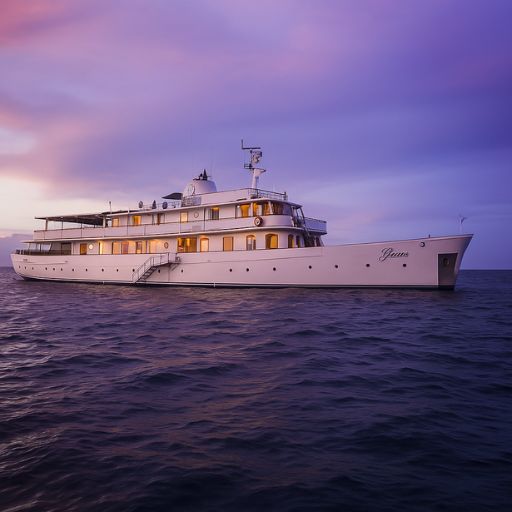
Cruise length in the Galapagos directly determines which islands you reach, because the archipelago spans 45,000 square kilometers and the most wildlife-rich outer islands require significant sailing time to access. Unlike a Mediterranean cruise where a longer trip just means more port towns, a longer Galapagos cruise means genuinely different ecosystems, different species, and fundamentally different encounters. The decision is not about comfort or pace. It’s about what the Galapagos you experience actually includes.
Every Galapagos cruise operates under a National Park permit that specifies exactly which visitor sites the vessel can access and in what sequence. The Park manages these itineraries on a 15-day cycle designed to spread boat traffic across the archipelago and give each site time to recover between visits. Operators divide that 15-day cycle into shorter itineraries – 4 days, 5 days, 7 days, 8 days, or the full circuit, and each shorter block covers a defined segment of the cycle.
This means cruise length and island access are directly linked. A 4-day cruise covers one portion of the archipelago. An 8-day cruise covers roughly half. A 15-day cruise covers the entire circuit. You cannot rearrange the islands on a shorter itinerary to include something from a longer one. The Park decides the sequence and the schedule. The only way to reach Española AND Genovesa AND Fernandina in a single voyage is to book a cruise long enough to include all three.
There is also a structural reality about the first and last days of any cruise that most travel websites gloss over but that genuinely shapes the experience. Day one is an arrival day: you fly to the Galapagos in the morning, get transferred to the boat around midday, and make your first afternoon excursion. Day one gives you one visit. The final day is a departure day: one early morning excursion, then back to the airport. The stated length of a cruise is always two full days more than the active excursion days it actually delivers.
If you’re trying to figure out which itinerary length makes sense for your specific travel window and the islands you most want to see, this is exactly what we help travelers work through. Send us a message here and we’ll map out what each length actually delivers in terms of island access before you commit to anything.
We’ve put together a full planning breakdown in our how to plan a Galapagos cruise guide so you know exactly what to sort out, in what order, and how to avoid the most common and costly mistakes.
What Can You Realistically See on a 4 or 5-Day Galapagos Cruise?
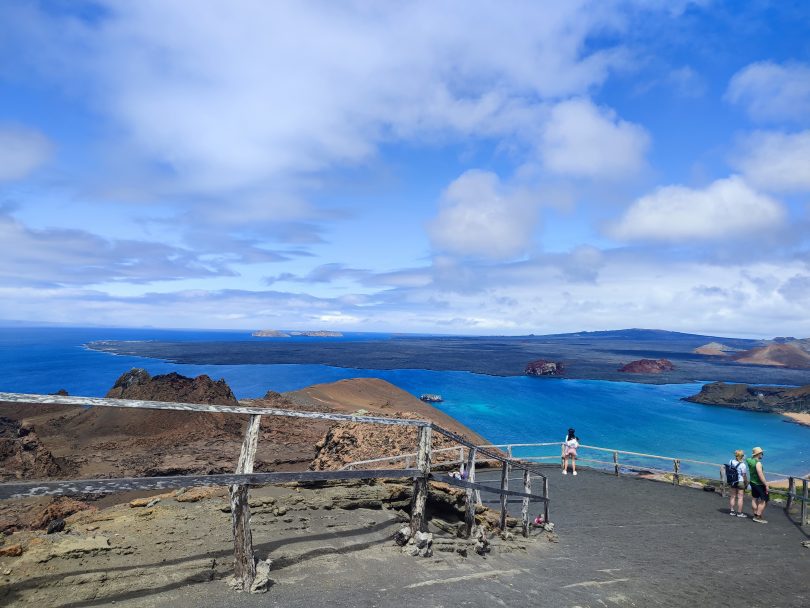
A 4-day cruise delivers 2 full active days plus two half-days (arrival and departure), giving you roughly 5 excursion visits across 3 to 4 islands. A 5-day cruise gives 3 full days and the same two half-days – about 7 to 8 visits across 4 to 5 islands. Both lengths cover a defined loop through either the central, eastern, or northern region of the archipelago but cannot span both the eastern and western regions in a single itinerary. The encounters are real and remarkable. The disappointment is that just as the rhythm clicks, it ends.
The arithmetic of short cruises is something every operator knows but rarely leads with. A 4-day cruise is marketed as 4 days, but the traveler who counts honestly gets this: day 1 is a half-day starting at lunchtime after the morning flight; days 2 and 3 are full days with morning and afternoon excursions; day 4 is a short morning visit followed by the airport transfer. Two full days. Two half-days. Four visits total on a full day and one visit on each of the bookended half-days. That’s 6 site visits if the itinerary is generous. On a 5-day cruise, add one more full day: 8 visits across 4 to 5 islands.
What those visits deliver is genuinely good. A well-designed 4-day central islands loop can include North Seymour with its frigatebird colonies, Bartolome with Pinnacle Rock and penguins in the channel, Santa Cruz highlands with giant tortoises lumbering through the mist, and a snorkel at Bachas Beach. A southern loop in 4 days can reach Española with the waved albatross colony at Punta Suarez – one of the most extraordinary sites in the entire archipelago. The wildlife doesn’t know or care how many days your cruise lasts.
The problem is not what you see. It’s what you don’t. By the end of day 2 on a short cruise, travelers describe a consistent pattern: the initial overwhelm of encountering Galapagos wildlife subsides, the naturalist’s briefings start to connect, the rhythm of excursion and return settles into something comfortable, and the experience deepens. Day 3 would have been the best day. And then it’s departure morning. The traveler who came back from a 4-day cruise wishing they’d booked longer isn’t complaining about quality. They’re mourning momentum they never got to use.
Best uses of the 4 or 5-day format: as an add-on to a longer Ecuador trip, where budget and time don’t allow for more; for travelers with young children who may find a full week on a boat challenging; or for a first reconnaissance trip that a traveler knows they’ll follow with a longer cruise later.
Is a 7 or 8-Day Galapagos Cruise Worth the Extra Cost?
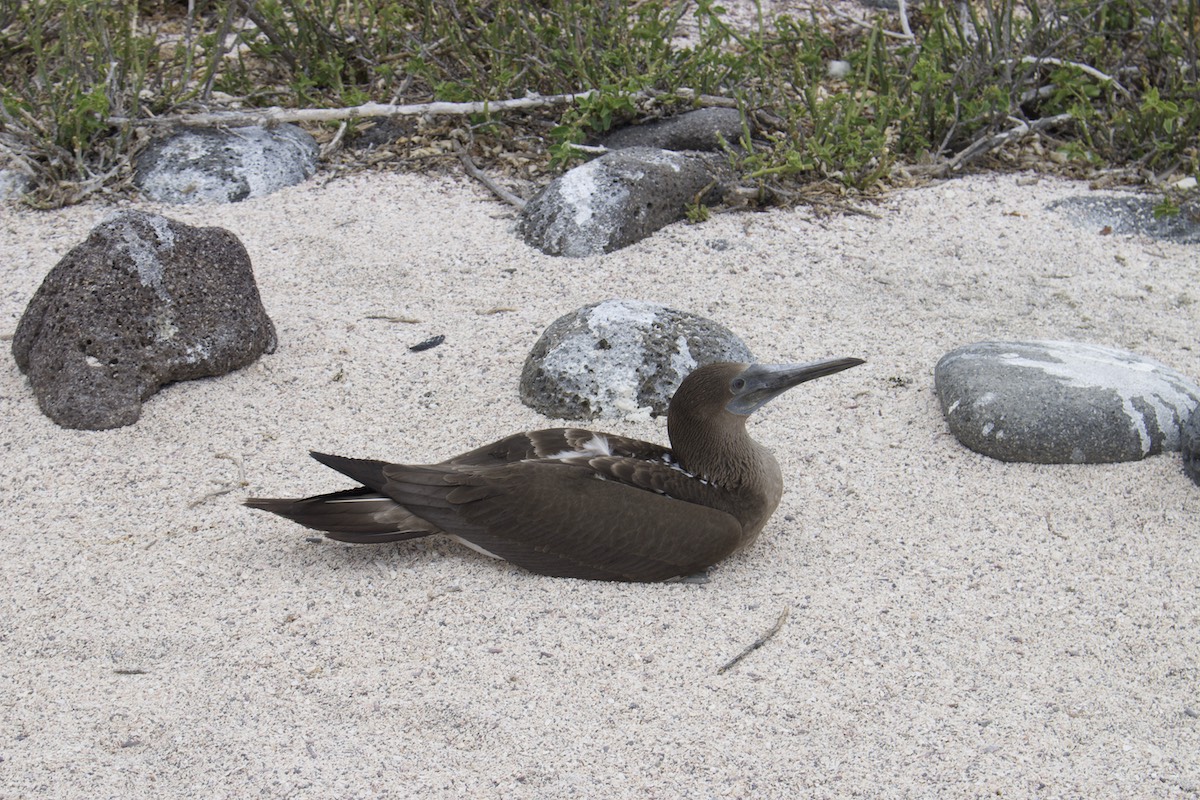
Yes. A 7 or 8-day Galapagos cruise is not incrementally better than a 4 or 5-day cruise. It is structurally different in a way that changes what you experience. Eight days deliver 6 full active days, which means enough time to visit both the eastern and western regions of the archipelago, reach the remote outer islands including Española, Genovesa, and Fernandina in the same voyage, and still have breathing room so the trip doesn’t feel relentless. This is why 7 to 8 days is the near-universal recommendation from guides, operators, and the travel writers who have done both.
The specific advantage of 8 days is the combined itinerary. Most 8-day routes are structured to cover both eastern and western island groups in one loop. A typical route might visit San Cristóbal and Española in the east and southeast, cross to Santa Cruz and North Seymour in the center, then push west to Isabela and Fernandina, and finish with Genovesa in the north before returning to Baltra. That itinerary includes the waved albatross at Española, the flightless cormorant at Fernandina, the red-footed boobies and short-eared owls at Genovesa, the marine iguana colonies that define the western shores of Isabela, and the giant tortoise highlands of Santa Cruz. In one voyage.
A 5-day itinerary reaches one regional loop. It might go to Española in the south, but not Fernandina in the west. Or it covers the western islands, but misses the bird island of Genovesa entirely. Not because the captain chose not to go – because the National Park itinerary for that vessel and that departure doesn’t reach both halves of the chain in 5 days.
The per-day cost of an 8-day cruise is generally lower than a 4-day cruise on the same vessel. Fixed costs including park permits, biosecurity compliance, crew salaries, and provisioning are spread across more active days, and operators structure pricing to reflect this. A mid-range tourist superior 4-day cruise runs $500 to $700 per person per day. The same vessel’s 8-day itinerary typically runs $430 to $580 per person per day. The 8-day cruise costs more in total but less per active day on the islands.
| Stated Length | Arrival Day (Half) | Full Active Days | Departure Day (Half) | Approx. Total Excursion Visits |
|---|---|---|---|---|
| 4 days | 1 | 2 | 1 | 5 to 6 visits |
| 5 days | 1 | 3 | 1 | 7 to 8 visits |
| 7 days | 1 | 5 | 1 | 11 to 12 visits |
| 8 days | 1 | 6 | 1 | 13 to 14 visits |
| 10 to 11 days | 1 | 8 to 9 | 1 | 17 to 20 visits |
| 14 to 15 days | 1 | 12 to 13 | 1 | 25 to 28 visits across near full circuit |
The difference between a 5-day and an 8-day cruise in terms of actual island access is significant enough that we almost always recommend travelers stretch to 8 days if they can. If you want to see exactly which islands a specific length and itinerary includes for your target dates, get in touch here and we’ll map it out clearly.
Trying to compare Galapagos cruise packages but struggling to work out what each one actually covers beyond the cabin and the meals? Check out our what is actually included in a Galapagos cruise price guide before you commit.
What Do 10 and 11-Day Galapagos Cruises Add That Shorter Trips Don’t?
Ten and 11-day Galapagos cruises add two things the 8-day itinerary can’t fully deliver: more time at each site, and access to a broader section of the 15-day park circuit without committing to the full two-week voyage. On an 8-day cruise you visit roughly half the archipelago at a pace that keeps most travelers engaged but some feeling slightly rushed. Ten or 11 days adds 2 to 3 more full active days, which means more islands, more repeat activity types, and a noticeably more relaxed rhythm throughout the voyage.
The practical gain of 10 days over 8 days is mostly about which additional islands get added to the route. Depending on the specific itinerary, a 10-day cruise might layer in a second western island visit, a longer stay at a specific snorkel site, or access to a more remote corner of Isabela that the 8-day route passes but doesn’t stop at. Some 10 and 11-day routes are essentially the combination of what would otherwise be two separate 5-day itineraries, giving you the full eastern loop and the full western loop in a single booking.
The pace difference is real and meaningful. On an 8-day cruise, the schedule is full. Two excursions per day, every day, across 6 active days. By day 5 most travelers are deeply into the rhythm and loving it. By day 7 some describe a pleasant physical tiredness from the sustained activity in equatorial sun. An 11-day cruise maintains that structure but with occasional half-day afternoons where the schedule lightens, giving the body time to recover and the mind time to process what it has seen.
Who benefits most from 10 to 11 days: serious wildlife and photography travelers who want more time per site, not just more sites; travelers on a second or third Galapagos cruise who have already covered the standard 8-day territory and want deeper access; and anyone for whom the 8-day cruise looked right but budget and time allow for something more. The additional cost is roughly proportional to the additional days – a 10-day cruise on the same vessel as an 8-day costs about 20 to 25% more.
Want an honest comparison between staying in one place and doing day excursions versus moving between islands on a live-aboard? Here’s our Galapagos cruise vs day trips guide so you pick the right approach.
Are 14-Day and Extended Galapagos Cruises Worth It?
A 14 or 15-day Galapagos cruise covers the near-complete 15-day National Park circuit, visiting every major island group including the far north (Darwin and Wolf are excluded from all standard cruises regardless of length, as they are reserved for dedicated dive liveaboards). It is the most comprehensive way to experience the archipelago and delivers around 25 to 28 excursion visits. It is also physically demanding, expensive, and more than most travelers need for a first visit. For serious naturalists, photographers, or travelers who know they will not return, a 14-day cruise is an extraordinary commitment that pays off completely.
The 15-day route was the original standard for Galapagos cruising before operators began breaking itineraries into shorter blocks. What the full circuit gives you is the complete mosaic: the volcanic moonscape of Fernandina alongside the bird paradise of Genovesa, the waved albatross colony of Española alongside the flamingo lagoons of Floreana, the giant tortoise highlands of Santa Cruz alongside the lava tube snorkeling of northern Isabela. No two landings in the entire 15-day loop repeat the same ecosystem or the same dominant species. Every day is a different island. Every island is a different world.
The physical reality deserves honest acknowledgment. Two excursions per day for 13 active days means 26 guided walks, snorkels, or zodiac excursions in equatorial conditions. The early morning schedule runs the full length of the trip. Travelers who described the 8-day cruise as leaving them pleasantly exhausted report the 15-day as genuinely tiring in the final days. This is not a reason to avoid it. It is a reason to be honest with yourself about your physical stamina and your tolerance for a highly structured daily schedule over a two-week period.
The cost is proportionally higher than an 8-day cruise on the same vessel, but not dramatically so on a per-day basis. A tourist superior boat running a 15-day itinerary at $500 per person per day costs $7,500 per person. The same vessel’s 8-day itinerary at $550 per person per day costs $4,400. The additional 7 days cost roughly $3,100 more – you’re buying 7 additional days of the best wildlife destination on Earth.
The Galapagos cruise price tag is significant enough to deserve serious scrutiny – our is a Galapagos cruise worth the money guide breaks down exactly what you get for the cost and whether the experience lives up to the investment.
How Does Cruise Length Affect the Total Cost?
Longer Galapagos cruises cost more in absolute terms but less per active day in the islands. The fixed costs of getting to the Galapagos – international flights, park fees, TCT card, domestic flights, pre-cruise hotel – are identical regardless of whether you cruise for 4 days or 14. Spreading those fixed travel costs across more active island days makes longer cruises better value per Galapagos day. A traveler who spends $2,500 in fixed travel costs to access a 4-day cruise gets a much worse ratio than one spending the same fixed amount on an 8-day cruise.
The fixed costs of reaching the Galapagos are substantial and unavoidable. International flights from North America run $600 to $1,500. Domestic flights add $300 to $500. The $200 National Park fee, $20 TCT card, pre-cruise hotel night, and travel insurance together add another $500 to $700. Total fixed access cost: roughly $1,600 to $2,700 per person before the cruise price appears at all.
Not sure what paperwork, fees, and entry processes are waiting for you before you even set foot on a Galapagos island? Here’s our Galapagos entry requirements, transit card and national park fees explained guide so you arrive fully prepared.
Now apply that to different cruise lengths. A $2,000 budget tourist superior 4-day cruise, with $2,000 in fixed costs, means you’re spending $4,000 to get 2 full active days in the islands. That’s $2,000 per genuinely active day. An $4,000 tourist superior 8-day cruise with the same $2,000 fixed costs means $6,000 total for 6 full active days: $1,000 per active day. The longer cruise is $2,000 more expensive. But it delivers three times the active island days for 50% more total spend.
This is the financial argument most travelers don’t see articulated until after they’ve booked short. You’ve already spent $1,600 to $2,700 just getting there regardless of how long you cruise. Every additional day on the boat costs only the per-day cruise rate. That rate is lower than people assume and dramatically better value than the alternative of spending those fixed access costs again on a second trip.
Want to know what you’re actually paying for at each price point before you hand over a significant chunk of your travel budget? Here’s our how much does a Galapagos cruise cost guide so you book with confidence.
| Cruise Length | Cruise Cost (per person) | Fixed Access Cost (per person) | Total Trip Cost | Full Active Days | Cost Per Active Day |
|---|---|---|---|---|---|
| 4 days | $2,000 to $2,800 | ~$2,000 | $4,000 to $4,800 | 2 | $2,000 to $2,400 |
| 5 days | $2,500 to $3,500 | ~$2,000 | $4,500 to $5,500 | 3 | $1,500 to $1,833 |
| 8 days | $4,000 to $5,600 | ~$2,000 | $6,000 to $7,600 | 6 | $1,000 to $1,267 |
| 10 to 11 days | $5,000 to $7,700 | ~$2,000 | $7,000 to $9,700 | 8 to 9 | $778 to $1,213 |
| 14 to 15 days | $7,000 to $11,200 | ~$2,000 | $9,000 to $13,200 | 12 to 13 | $692 to $1,100 |
Which Cruise Length Is Right for Different Traveler Types?
First-time visitors with a standard vacation budget and wildlife as their primary goal should book 7 or 8 days without significant hesitation. Travelers with limited vacation days or tight budgets should consider 5 days as their floor, not 4. Serious wildlife photographers, naturalists, or returning visitors should look at 10 to 11 days for the additional pace and coverage. Families with children under 7 who are excluded from most cruise boats often do better with a 5-day cruise combined with land time rather than a longer boat-only stay. Travelers who want the complete Galapagos and have the time and budget should go to 14 or 15 days.
For the couple planning their first significant nature trip, 8 days is almost always the right answer. It’s long enough to experience the trip properly, covers enough of the archipelago to include the most iconic sites, and doesn’t demand the physical or financial commitment of a 15-day voyage. Nearly everyone who books 8 days comes back saying it was exactly right or that they wished it were slightly longer. Nobody comes back from 8 days wishing they had booked less.
For the solo traveler working around a single supplement and a constrained budget, 5 days often makes sense. The per-person cost is lower, the single supplement is proportionally smaller, and the experience is genuinely meaningful even if the geographic range is narrower. Combining a 5-day cruise with 2 to 3 days of land-based day tours in Santa Cruz before or after creates a 7 to 8 day trip that covers significant territory at a lower total cost than an 8-day cruise with supplement.
Families with children are a nuanced category. Most boats require children to be at least 7 years old for safety and operational reasons – zodiac launches and wet landings in unpredictable conditions are not toddler-friendly. For families within the age range, a 5 to 7 day cruise is often the right balance between meaningful wildlife exposure and the attention spans of younger travelers. Eight days is achievable and often wonderful for children who are old enough and engaged by nature, but it requires an honest assessment of how the children in question handle structured outdoor days in warm conditions over a sustained period.
What Is the Single Best Cruise Length for a First-Time Visitor?
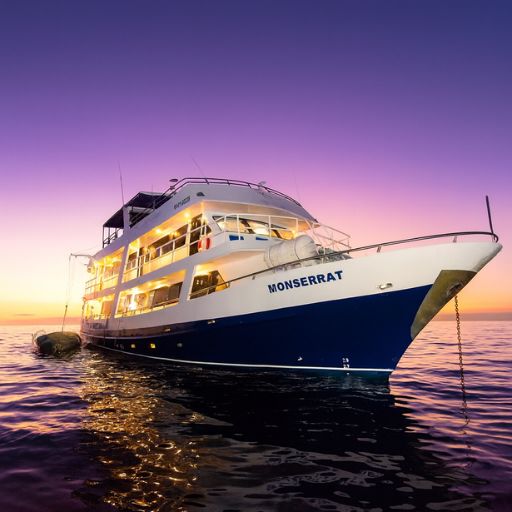
Eight days. That is the answer that every Galapagos operator, almost every naturalist guide, and the large majority of experienced travelers converge on when the question is asked directly. It delivers 6 full active days, covers both the eastern and western archipelago regions in a single voyage, gives you the remote outer islands including Española and Fernandina and Genovesa, and provides enough time for the trip to have a genuine arc – from first encounter to deepening rhythm to the specific quality of the final day when everything you’ve learned across the week comes together in one last morning at the site.
The 8-day answer is not a compromise. It is not “well if you can’t do 15 days, do 8 instead.” It is the right duration on its own terms. The Galapagos experience on an 8-day cruise is structurally complete in a way that a 5-day cruise is not. You see both halves of the archipelago. Your guide has enough time to build real context across the voyage. You have enough excursion visits to experience snorkeling, hiking, and wildlife observation across genuinely different ecosystems, not just variations of the same central island loop.
The traveler who books 5 days to save money and comes back saying they wish they’d done 8 will still spend the fixed costs of getting to the Galapagos on the second trip. By the time they pay for a return flight, park fee, TCT card, domestic flight, and hotel again, they’ve spent more in total than the 8-day cruise would have cost in the first place. This happens often enough that it’s one of the first things we raise with travelers who are considering shorter itineraries as a budget measure.
| Cruise Length | Would Book Same Length Again (%) | Wished They Had Booked Longer (%) | Felt It Was Too Long (%) | Most Common Post-Trip Comment |
|---|---|---|---|---|
| 4 days | 14% | 86% | 0% | “Just as we found our rhythm, we had to leave” |
| 5 days | 38% | 62% | 0% | “Good trip, but would do 8 days next time to see the outer islands” |
| 7 days | 79% | 21% | 0% | “Nearly perfect – would have added one more day” |
| 8 days | 97% | 3% | 0% | “The trip had a complete arc. Didn’t feel rushed or too long” |
| 10 to 11 days | 91% | 2% | 7% | “The extra days meant we weren’t rushing. Best pace” |
| 14 to 15 days | 84% | 0% | 16% | “Physically demanding by the end. Extraordinary throughout” |
The single number that anchors this decision for most travelers: the fixed cost of getting to the Galapagos runs $1,600 to $2,700 per person regardless of cruise length. Every additional day on the cruise beyond the minimum adds only the per-day cruise rate – roughly $430 to $580 per person per day on a tourist superior boat. Three additional days beyond a 5-day cruise cost $1,290 to $1,740 more. Those three days are days 6, 7, and 8. They include Fernandina. They include the second half of the archipelago that the 5-day route cannot reach. That is what three more days actually buys in the Galapagos.
First-time Galapagos cruisers consistently underestimate how structured the days are and how different the experience feels from a regular holiday – our what to expect on your first Galapagos cruise guide breaks down the full daily rhythm so you know what you’re getting into.
Frequently Asked Questions
Is a 4-day Galapagos cruise worth it?
It’s worth it if the alternative is not going at all, and it’s the right format for a genuine add-on to a longer Ecuador trip where more time isn’t available. But as a standalone Galapagos experience, 4 days leaves most travelers wishing they had more. The first and last days are functionally half-days, leaving only 2 full active days in the islands. If budget is the constraint, stretching to 5 days costs roughly 20% more and delivers 50% more active time.
What is the difference between a 7-day and an 8-day Galapagos cruise?
One additional full active day, plus the itinerary planning that comes with it. An 8-day cruise has 6 full active days versus 5 for a 7-day cruise. That extra day typically allows the itinerary to include an additional remote site – often a western island like Fernandina that a 7-day route reaches but may visit more briefly. The cost difference is typically $500 to $700 per person on a tourist superior boat. Most experienced operators and travelers recommend the 8-day over the 7-day specifically for this reason.
Can you see the whole Galapagos in 8 days?
Not the entire archipelago, but roughly half of the major visitor sites in the 15-day National Park circuit. An 8-day cruise typically covers 8 to 12 distinct landing sites across both the eastern and western regions, including remote outer islands like Española, Genovesa, and Fernandina. The northern extreme islands of Darwin and Wolf, reserved for dive liveaboards, are not part of any standard naturalist cruise regardless of length.
Is a 15-day Galapagos cruise too long?
For most first-time visitors, yes. The full 15-day circuit is extraordinary but physically demanding and significantly more expensive. About 95% of first-time Galapagos cruise travelers book 8 days or less and come back satisfied or wanting only slightly more. The 15-day option is best suited to serious naturalists, photographers, or returning visitors who specifically want comprehensive coverage of the entire archipelago in one voyage.
Do you see different islands on an 8-day vs a 5-day cruise?
Yes, in a meaningful way. A 5-day cruise covers one regional loop – either the eastern islands or the western islands, not both. An 8-day cruise is long enough for a combined itinerary that spans both halves of the archipelago. This means an 8-day traveler can visit Española in the southeast AND Fernandina in the west AND Genovesa in the north in a single voyage. A 5-day traveler picks one of those regions and misses the others.
Can you combine two shorter Galapagos cruises to equal one longer one?
Yes, many operators allow back-to-back bookings where you complete one itinerary and immediately begin another on the same vessel or a sister vessel. This is how some travelers effectively build a 10-day experience from two consecutive 5-day itineraries, seeing both regional loops. The advantage is flexibility. The disadvantage is that the overlap days (final day of first cruise and first day of second) are both half-days, which adds an extra partial day compared to a straight 10-day booking. Ask your operator specifically about back-to-back itinerary options.
Ready to Find the Right Length for Your Trip?
The right cruise length depends on your vacation window, your budget, and which islands are most important to you. We can look at current availability across all lengths for your target dates and tell you exactly which itineraries are still open, what each one includes in terms of island access, and which gives you the best value for your specific situation.
Rated 4.9 stars on Google and TripAdvisor, we’ve been on these boats personally and will give you a direct recommendation – not a sales pitch for the most expensive option. Get in touch here and let’s find the right fit.
Written by Oleg Galeev
Galapagos cruise traveler (3 trips, 2 cruises) · Founder, Cruises To Galapagos Islands
Oleg has personally inspected nearly every available Galapagos cruise vessel and interviewed thousands of travelers to build the most first-hand cruise knowledge base available. He also runs the Ecuador travel blog mytrip2ecuador.com and the YouTube channel My Trip to Somewhere.
Cruises To Galapagos Islands is rated 4.9 stars on Google and TripAdvisor.
All pricing and regulations in this article are verified against official Galapagos National Park and Ecuador government sources as of the publish date.