
TL;DR
A budget Galapagos cruise is possible, but you need to understand what you’re trading. Budget vessels run $250 to $430 per person per day and deliver the same wildlife and national park sites as mid-range and luxury boats. What changes: cabin size, food quality, guide language depth, and onboard comfort. The cheapest reliable path to a cruise is a shoulder-season booking in May, September, or October, with 8 to 12 months advance notice for early-booking discounts of 10 to 25 percent, or last-minute deals within 6 weeks of departure for unsold cabins. Land-based travel costs 40 to 60 percent less but misses the remote islands.
Quick Facts: Budget Galapagos Cruise Planning
| Cost Item | Amount (2026) | Notes |
|---|---|---|
| Park entry fee (adult) | $200 USD cash | Paid on arrival at airport – Verified July 30, 2026 |
| Transit Control Card (TCT) | $20 USD | Online before departure |
| Budget cruise (per person/day) | $250-$430 | Includes cabin, meals, excursions |
| Budget 8-day cruise (per person) | $2,000-$3,500 | Cruise fare only; add fees, flights, tips |
| Domestic flights (Quito/Guayaquil to Galapagos) | $250-$600 round trip | Not included in most cruise fares |
| Tips (guide + crew) | $150-$250 per person | Cash USD expected at end of cruise |
| Early booking discount | 10-25% off | Book 8 to 12 months out |
| Shoulder season saving | 15-20% off peak | May, September, October |
| Last-minute deals | 15-40% off | Within 6 weeks of departure; shoulder months only |
Can You Do a Galapagos Cruise on a Budget?
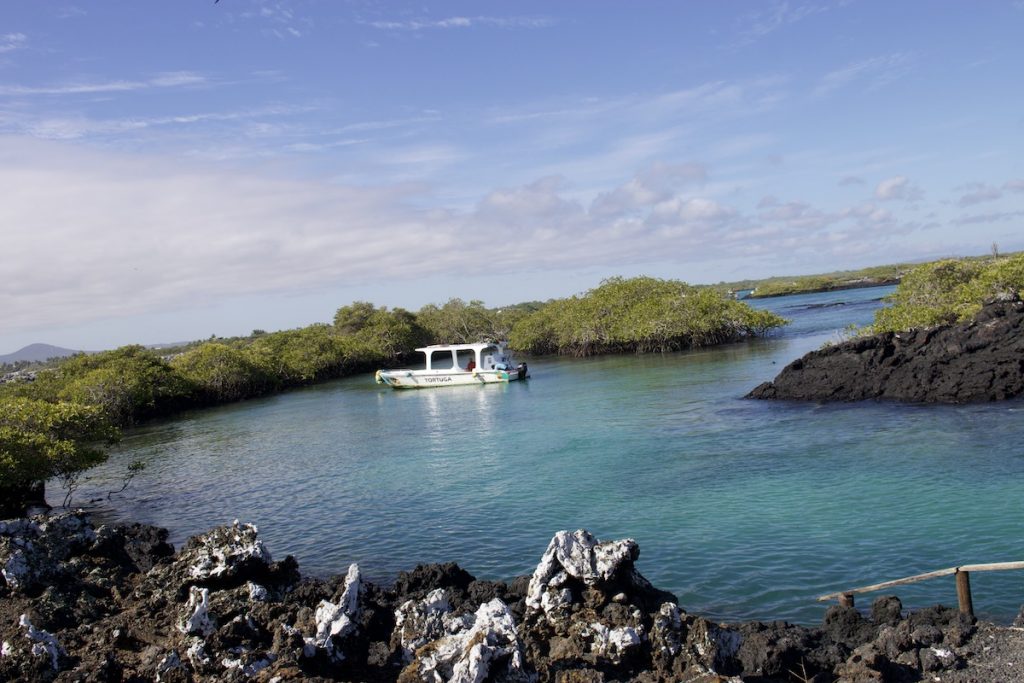
Yes, with realistic expectations. Budget cruises exist, the wildlife they visit is identical to what luxury vessels visit, and the national park sites are the same regardless of which boat you arrive on. What changes at the budget tier is the vessel itself: smaller cabins, older boats, simpler food, and guides whose English may be functional rather than fluent. For travelers who care primarily about the wildlife experience and can accept basic onboard conditions, a budget cruise is genuinely viable. For travelers who need comfort to enjoy a week at sea, it’s not the right fit.
The honest baseline: the Galapagos is not a cheap destination and there’s no version of a cruise here that approaches the price point of budget travel in Southeast Asia or Central America. The $200 national park entry fee alone is non-negotiable and non-refundable regardless of what else you spend. The domestic flight from Quito or Guayaquil adds another $250 to $600. Those fixed costs exist before any cruise fare is paid.
Within those constraints, real money-saving options exist. Shoulder season pricing, early booking discounts, last-minute unsold cabin deals, and the choice of a shorter 5-day itinerary over an 8-day one all reduce the cruise fare meaningfully. Understanding which levers actually work is the difference between spending $2,500 on a Galapagos cruise and spending $5,000 for essentially the same wildlife experience.
If you want someone to match you to the best available budget-friendly departure for your dates without doing hours of research yourself, we track current deals and promotions across the fleet. We’re rated 4.9 stars on Google and TripAdvisor. Send us a message here with your travel window and we’ll tell you what’s realistic.
Not sure which luxury Galapagos cruises deliver on the price tag versus just charging more for the same wildlife? Here’s the best Galapagos cruise for luxury travelers broken down by ship, service, and itinerary.
What Does a Budget Galapagos Cruise Actually Include?
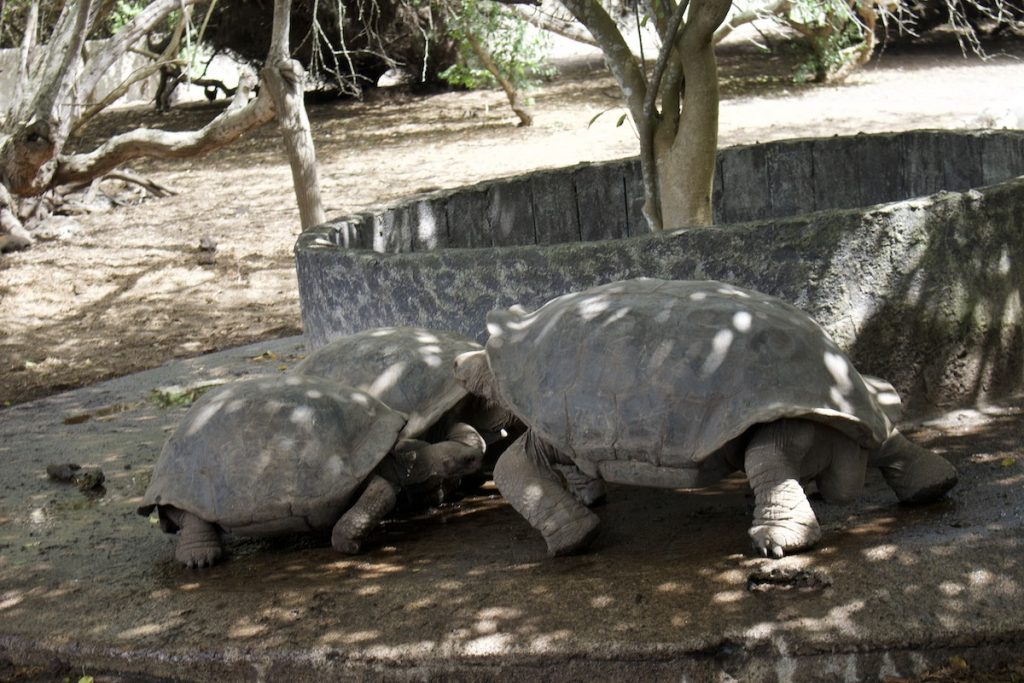
A budget cruise at the $250 to $430 per person per day level includes your cabin, all meals, all national park excursions, snorkeling gear rental, and a naturalist guide. The wildlife access is identical to what more expensive vessels provide: the same islands, the same trails, the same marine iguanas, sea lions, and giant tortoises. The difference is in the onboard quality: older boats, smaller cabins, bunk beds on some vessels, simpler food, and English-language guide quality that varies significantly by operator.
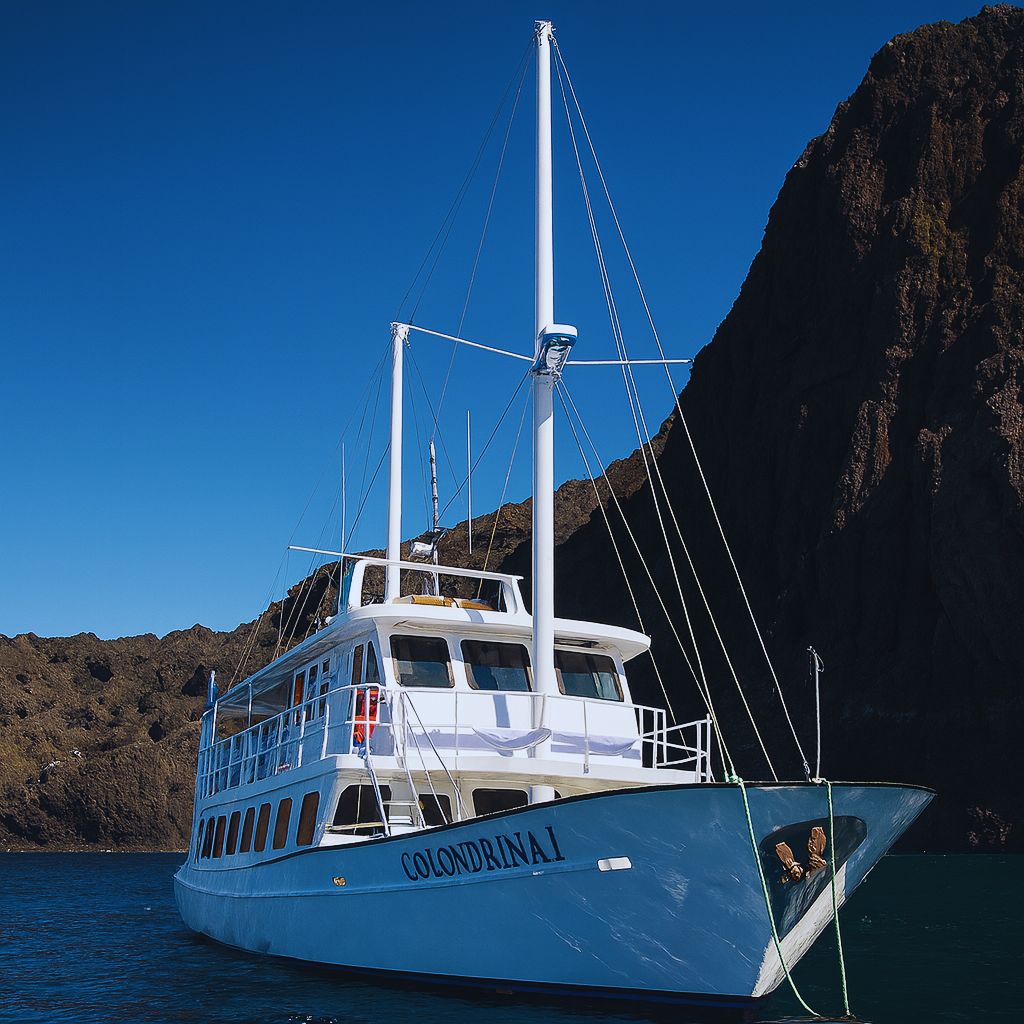
Budget vessels typically carry 16 to 36 passengers. The smallest are 16-passenger motorsailers or older catamarans where the cabins are genuinely compact. Some have bunk beds rather than double beds. Air conditioning is not always available or reliable. The food tends toward simple Ecuadorian cooking rather than a varied multi-course menu. None of these things affect the wildlife you see ashore or in the water.
What can affect the experience is guide quality. Budget vessels are generally assigned lower-level naturalist guides. A guide with strong English and genuine naturalist depth makes the difference between standing in front of a blue-footed booby and understanding what you’re looking at, versus standing in front of a blue-footed booby with a much thinner explanation. For some travelers this matters enormously. For others, the animal is the experience and the guide is secondary.
| Feature | Budget Cruise | Mid-Range Cruise | Luxury Cruise |
|---|---|---|---|
| Per person / day | $250-$430 | $450-$700 | $800-$1,500+ |
| Wildlife access | Identical | Identical | Identical |
| National park sites | Same | Same | Same |
| Cabin quality | Basic; some bunks; limited AC | Comfortable; private bath; AC | Spacious; balcony; premium finishes |
| Food quality | Simple; functional | Good; varied menu | Gourmet; chef-led |
| Guide English quality | Variable; functional | Good to strong | Excellent; Level III naturalists |
| Snorkel gear included | Rental fee applies on some vessels | Usually included | Included |
All prices per person double occupancy. Verified July 30, 2026.
What Are the Real Ways to Reduce the Cost of a Galapagos Cruise?
Three levers actually move the needle: booking 8 to 12 months in advance for early-booking discounts of 10 to 25 percent, traveling in shoulder months (May, September, October) for savings of 15 to 20 percent versus peak, and catching last-minute unsold cabin deals within 6 weeks of departure in shoulder months for discounts of 15 to 40 percent. These three approaches can be stacked: an early-booking shoulder-season departure on a budget vessel produces the lowest realistic cruise fare available. Last-minute deals are real but require complete date flexibility.
Early booking is the most reliable strategy. Most quality operators publish early-booking incentives in January through April for departures 9 or more months ahead. A 15 percent early-booking discount on a $4,000 cruise saves $600. Combined with a shoulder-season departure, the same vessel that runs $5,000 in July might be bookable for $3,800 in October with both savings applied. This is not speculation; these structures exist and we see them every booking cycle.
Last-minute deals are real but require you to be in the right place mentally and logistically. Operators with unsold cabins 3 to 6 weeks before departure will sometimes discount by 25 to 40 percent rather than sail with empty berths. In Puerto Ayora, agencies along the waterfront keep lists of upcoming discounted departures and update them daily. The trade-off is that you can’t choose your vessel, your itinerary, or your exact dates. If a specific island or site is on your must-see list, last-minute booking is a gamble. If you’re flexible on all of these, it’s the most effective single cost-reduction strategy available.
A shorter cruise also cuts the total fare. A 5-day itinerary at $300 per day per person costs $1,500 in cruise fare versus $2,400 for the same vessel on an 8-day itinerary. The trade-off is fewer islands visited, which matters more for some travelers than others. For a first-time visitor who wants the Galapagos experience without maximum island coverage, a well-chosen 5-day eastern itinerary hits the main highlights at a meaningfully lower price.
Early-booking discounts and last-minute deals aren’t always listed publicly. Operators manage them as yield tools and they open and close without announcement. We track these across the fleet week by week. Reach out here with your dates and budget and we’ll tell you what’s actually available right now.
The first Galapagos cruise is the one that either makes you want to go back or leaves you wishing you’d chosen differently. Here’s the best Galapagos cruise for first-timers so you get it right from the start.
Which Itinerary Gives Budget Travelers the Best Value?
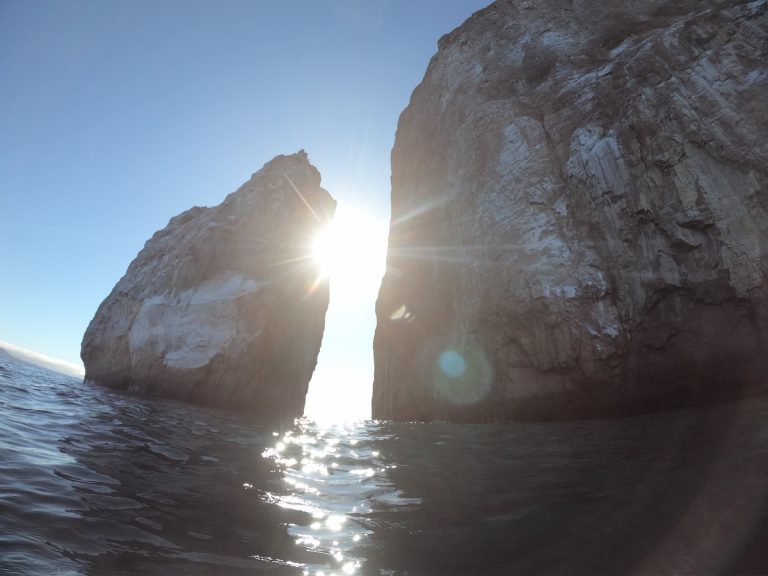
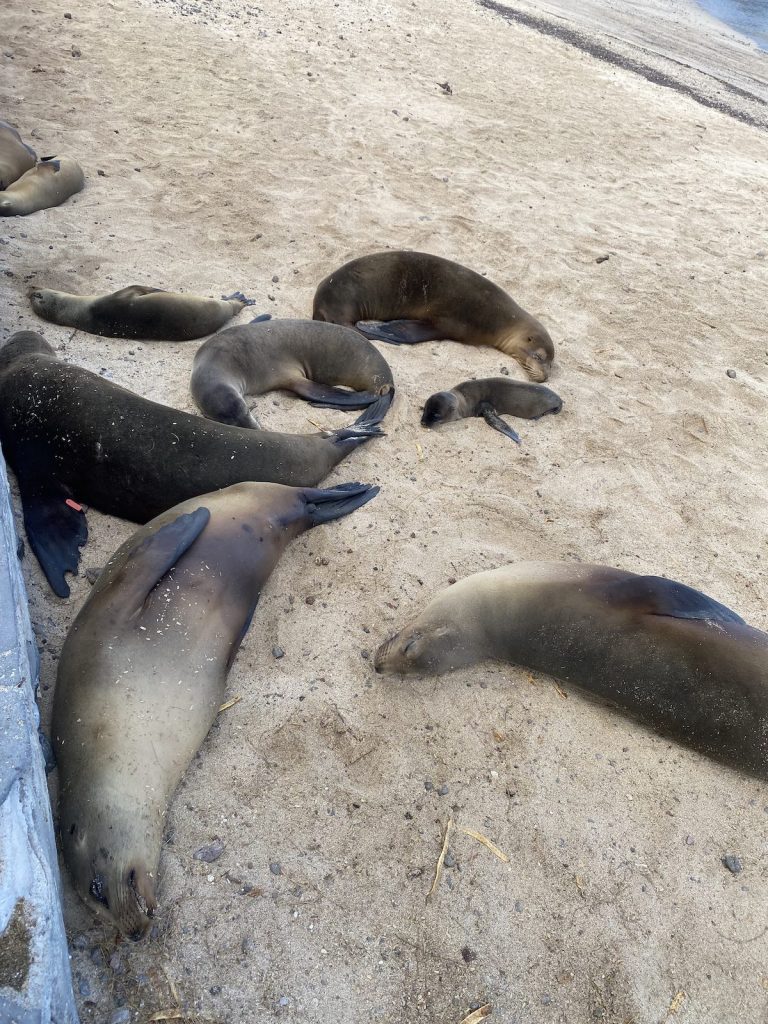
A 5-day eastern itinerary on a budget catamaran is the highest value-per-dollar option for most budget travelers. It covers the central and eastern islands where the most iconic and accessible wildlife lives: giant tortoises on Santa Cruz, sea lions on San Cristobal, blue-footed boobies and marine iguanas at multiple sites, Kicker Rock snorkeling, and at least one beach landing that produces the sea lion encounter most travelers remember longest. For the budget, it delivers 80 percent of the Galapagos experience at 60 percent of the 8-day price.
The sites that budget travelers miss on a 5-day eastern itinerary are the most remote: waved albatross on Española (April through December), the red-footed booby colony on Genovesa, the flightless cormorant on Fernandina. These are extraordinary, but they require either an 8-day combined itinerary or a western cruise. For a first-time visitor whose primary goal is experiencing the Galapagos, they are not essential to a deeply satisfying trip.
Trying to find a Galapagos cruise that balances land excursions with serious snorkeling time at the right sites? Here’s the best Galapagos cruise for snorkelers broken down so you find a ship and itinerary that treats the water as the main attraction.
Budget Cruise vs. Land-Based Tour: Which Saves More Money?
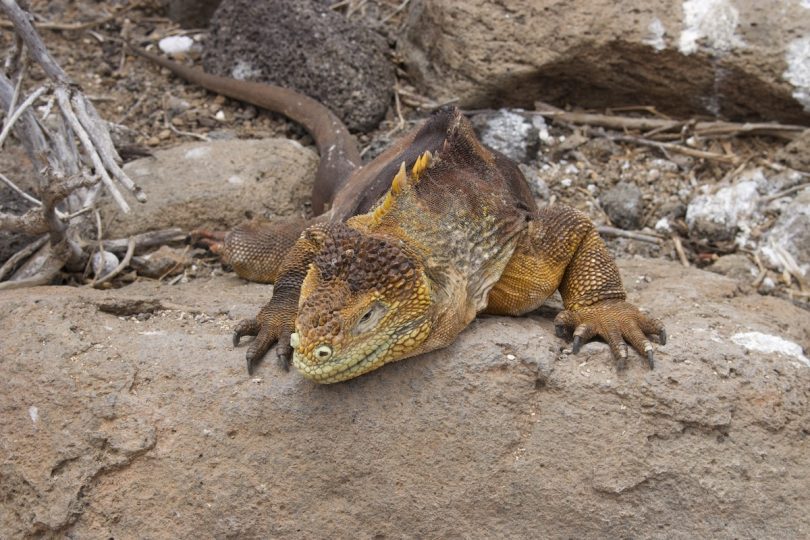
Land-based travel costs 40 to 60 percent less than a cruise of equivalent duration but misses roughly 20 to 30 percent of the Galapagos experience: specifically the remote islands only reachable by liveaboard, including Española, Genovesa, and Fernandina. What land-based travel delivers is the same wildlife on the inhabited islands, full flexibility, no seasickness risk, and daily budgets as low as $60 to $100 per day for accommodation and food. For travelers where budget is the primary constraint, land-based is genuinely worth considering. For travelers where the full island experience matters most, even a budget cruise delivers more.
| Factor | Budget Cruise (5 days) | Land-Based (7 days) |
|---|---|---|
| Total estimated cost per person | $2,800-$3,500 all-in | $1,500-$2,200 all-in |
| Remote islands (Española, Genovesa, Fernandina) | Partially accessible | Not accessible |
| Waved albatross | On some itineraries | Not accessible |
| Sea lions, tortoises, iguanas, boobies | Yes | Yes |
| Flexibility / skip activities | Fixed schedule | Full flexibility |
| Seasickness risk | Present | None |
| Best for | Maximizing island coverage on a tight budget | Tightest budgets; flexible travelers; families with young children |
All-in costs include park fee, domestic flights, accommodation/cruise, meals, and tips. Exclude international airfare. Verified July 30, 2026.
What Is the Cheapest Time of Year to Book a Galapagos Cruise?
September and October are the cheapest months for Galapagos cruises, with prices running 20 to 30 percent below peak season. May is the second-best shoulder window. Avoid December through January, Easter week, and July through August: these are the three peak windows where last-minute deals essentially don’t exist and prices are at their highest. Wildlife is excellent year-round, so the shoulder-season trade-off in terms of wildlife experience is minimal.
September and October sit in a genuine off-peak window between the cool season’s peak (July to August) and the early warm-season uptick that begins in late November. Seas can be slightly rougher in September than in warmer months, but the wildlife activity is excellent: sea lion pups are still playful, shorebird migrants are present, and penguin density around Isabela is high. The price advantage is real and consistent across the fleet.
The worst time to look for deals is July and August, when North American and European school holidays overlap and family travel volume peaks. Operators at every price tier fill completely during this window and the rare unsold cabin does not get discounted. Easter week is the same: premium over baseline of 15 to 20 percent with no last-minute availability.
First time planning a Galapagos cruise with wildlife as your absolute priority? Our guide on the best Galapagos cruise for wildlife enthusiasts walks you through which itineraries and operators are genuinely built around the animals.
What Are the Biggest Mistakes Budget Travelers Make Booking a Galapagos Cruise?
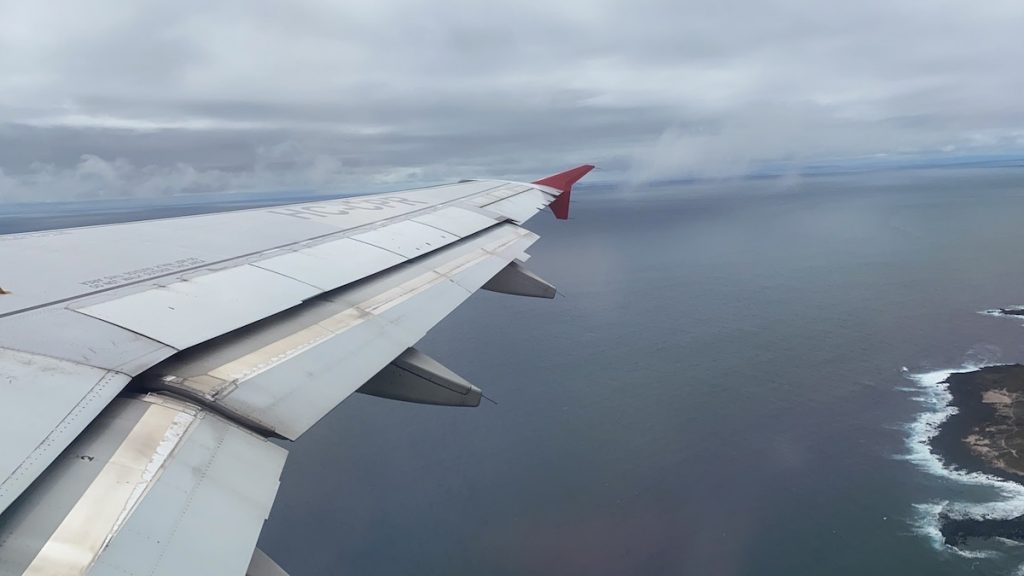
The most consistent budget travel mistakes: underestimating the fixed costs that can’t be reduced (park fee, domestic flights, tips) and planning a budget as if the cruise fare is the only cost, booking last-minute in peak season when deals don’t exist, choosing a 4-day cruise to save money without understanding that 4 days produces a genuinely truncated experience, and not asking specifically about early-booking discounts on shoulder-season departures where the savings can be substantial.
The fixed cost problem trips up more budget travelers than any other single miscalculation. The $200 park entry fee, $20 TCT, $300 to $500 in domestic round-trip flights, and $150 to $250 in tips add up to roughly $700 to $1,000 per person before any cruise fare is paid. A traveler who budgets $2,000 total and expects to spend $1,200 on a cruise will arrive to find they’ve underestimated by several hundred dollars. Budget for the full all-in number before you commit to any cruise fare.
The 4-day cruise temptation is real because the entry price looks appealing. But a 4-day itinerary means one partial arrival day, two full days ashore, and a departure morning. Effective wildlife time: around two days. Most travelers feel they’ve barely gotten started when it’s over. A 5-day cruise adds one full day of excursions for a modest incremental fare and represents a meaningfully better experience. The jump from 4 to 5 days is more valuable than any other single itinerary upgrade in the budget category.
What Budget Travelers Tell Us After Their Galapagos Cruise
Based on traveler feedback collected through mytrip2ecuador.com and Oleg’s YouTube audience, budget travelers are one of the most candid groups in terms of post-trip reflections on what they got right and wrong.
| Finding | Result | Context |
|---|---|---|
| Budget travelers who said the wildlife experience met or exceeded expectations | ~79% | Wildlife access on budget vessels identical to higher tiers |
| Budget travelers who underestimated total fixed costs | ~52% | Park fee, domestic flights, and tips most commonly overlooked |
| Budget travelers who wished they’d booked a longer cruise | ~67% | Highest among 4-day cruise bookers |
| Budget travelers who saved via shoulder-season booking | ~38% | Average saving reported: $400 to $800 per person vs. peak |
| Budget travelers who caught a last-minute deal | ~21% | All reported complete date and vessel flexibility as the key requirement |
Frequently Asked Questions
What is the cheapest way to do a Galapagos cruise?
Book a budget catamaran or motorsailer on a shoulder-season departure (May, September, or October), 8 to 12 months in advance for early-booking discounts of 10 to 25 percent. Alternatively, catch a last-minute unsold cabin deal within 6 weeks of departure during shoulder months for discounts of 15 to 40 percent. The cheapest documented cruise fares in 2026 are budget vessel promotional departures starting around $1,530 for 3 to 4-day itineraries, or $2,000 to $2,500 for 5-day itineraries per person.
Is a land-based Galapagos trip much cheaper than a cruise?
Yes, by 40 to 60 percent for equivalent durations. A 7-day land-based trip on the inhabited islands costs $1,500 to $2,200 all-in per person versus $2,800 to $3,500 for a 5-day budget cruise all-in. The price difference is real. So is the access difference: land-based travel cannot reach Española, Genovesa, Fernandina, or other remote islands. That trade-off is worth making for some travelers and not for others.
Do budget cruises see the same wildlife as luxury cruises?
Yes, completely. The national park visitor sites and landing permits are the same regardless of vessel class. A blue-footed booby on North Seymour does not behave differently based on which boat you arrived on. What differs between budget and luxury is the onboard experience: cabin quality, food, and guide depth. The wildlife itself is identical.
What is the cheapest month to visit the Galapagos?
September and October are consistently the cheapest months across flights, hotels, and cruise fares. May is the second-best budget window. Both periods sit in shoulder season with genuinely excellent wildlife activity. Avoid December through January, Easter week, and July through August for the lowest prices.
Getting the most out of a limited Galapagos budget means knowing which savings levers actually work, which fixed costs to plan for, and which itinerary delivers the best wildlife coverage at the lowest fare. We’ve been doing this for years and we’re rated 4.9 stars on Google and TripAdvisor. If you want a straight answer on what a Galapagos cruise realistically costs for your dates and travel style, get in touch here and we’ll give you a real number, not a “starting from” figure.
Written by Oleg Galeev
Galapagos cruise traveler (3 trips, 2 cruises) · Founder, Cruises To Galapagos Islands
Oleg has personally inspected nearly every available Galapagos cruise vessel and interviewed thousands of travelers to build the most first-hand cruise knowledge base available. He also runs the Ecuador travel blog mytrip2ecuador.com and the YouTube channel My Trip to Somewhere.
Cruises To Galapagos Islands is rated 4.9 stars on Google and TripAdvisor.
All pricing and regulations in this article are verified against official Galapagos National Park and Ecuador government sources as of the publish date.