
TL;DR
Galapagos snorkeling is world-class for non-divers and doesn’t require any certification. Sea lions, sea turtles, penguins, marine iguanas, rays, and reef sharks all appear at the surface or in the shallows. A cruise unlocks the best sites, including Devil’s Crown and Bartolome, that are simply not reachable from land. For snorkelers, an eastern or combined itinerary on a mid-range to first-class vessel with 3 to 4 snorkel sessions per day, an in-water naturalist guide, and both a 3mm and 5mm wetsuit available is the benchmark. Bring your own mask if you’ve ever had a leaky rental. Reef-safe sunscreen is legally required.
Quick Facts: Galapagos Snorkeling Cruises at a Glance
| Detail | What You Need to Know |
|---|---|
| Certification required | None. Snorkeling is open to all confident swimmers. |
| Park entry fee | $200 USD cash per adult on arrival – Verified July 30, 2026 |
| Transit Control Card (TCT) | $20 per person, purchased online before your flight |
| Water temperature range | 18 to 26°C depending on season and site; 3mm wetsuit minimum |
| Gear provided on cruise | Mask, snorkel, fins, and 3mm wetsuit on most vessels; 5mm available on better boats |
| Snorkel sessions per day (cruise) | 2 to 3 on mid-range vessels; 3 to 4 on first-class and luxury |
| Sunscreen rules | Reef-safe only, legally required; standard sunscreens with oxybenzone banned |
| Best season for visibility | December through May (warm season); calmer, clearer, warmer water |
| Best season for wildlife density | June through November (cool season); more marine activity, colder water |
| Top snorkel-focused vessels (2026) | Sea Star, Galaxy Sirius, Ocean Spray, Endemic, Galapagos Horizon |
Is the Galapagos Good for Snorkeling Even If You Don’t Dive?
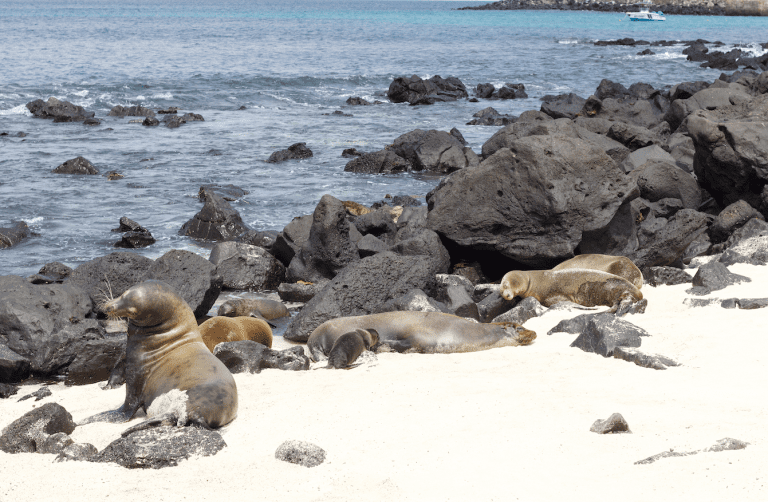
Yes, completely. Galapagos snorkeling is extraordinary by any global standard and doesn’t require a certification, prior experience in open water, or any equipment beyond what the cruise provides. The reason it works so well for non-divers is structural: most of the wildlife that makes this destination famous operates near the surface or in the shallows. Sea lions, sea turtles, penguins, marine iguanas, rays, and reef sharks all appear within a few meters of the waterline. You don’t have to go deep to see something remarkable here.
The thing that separates Galapagos snorkeling from every other snorkeling destination is the same thing that makes the land wildlife so famous: the animals have no fear of humans. A sea lion pup treating your fins like a toy, a green sea turtle grazing the rocky bottom two feet below your mask, a penguin rocketing past your shoulder hunting fish: none of these encounters are staged, none require a guide to engineer them, and none involve any particular swimming skill beyond the ability to float face-down and breathe through a tube.
We’ve taken thousands of travelers through the Galapagos who described themselves as weak swimmers, nervous in open water, or completely inexperienced with snorkeling. The majority came back saying the snorkel sessions were the highlight of their trip. The water is calm at most sites, the gear is provided, the naturalist guide is in the water with the group, and there is always a life vest available for anyone who wants extra buoyancy. If you can swim, you can snorkel in the Galapagos.
The one honest caveat: some sites involve current, open-water entries from a panga, and visibility that varies day to day. Not every snorkel on every cruise is the idyllic picture in the brochure. A rough day at Devil’s Crown is still a genuinely exciting experience, but it’s not a beginners’ calm-water float. On a well-organized cruise, the naturalist will brief you before every session on what to expect and how difficult the conditions are, and staying on the panga is always an option.
If you’re trying to figure out whether the Galapagos snorkeling experience works for your swimming ability or your travel group’s mix of confident and nervous swimmers, we can help you think through the right vessel and itinerary. We’re rated 4.9 stars on Google and TripAdvisor. Send us a message here and we’ll give you a straight answer about what to expect.
We’ve got a full breakdown on the best Galapagos cruise for wildlife enthusiasts if you want to know exactly which vessels, routes, and naturalist guides give you the deepest wildlife experience in the archipelago.
What Will You Actually See Snorkeling in the Galapagos?
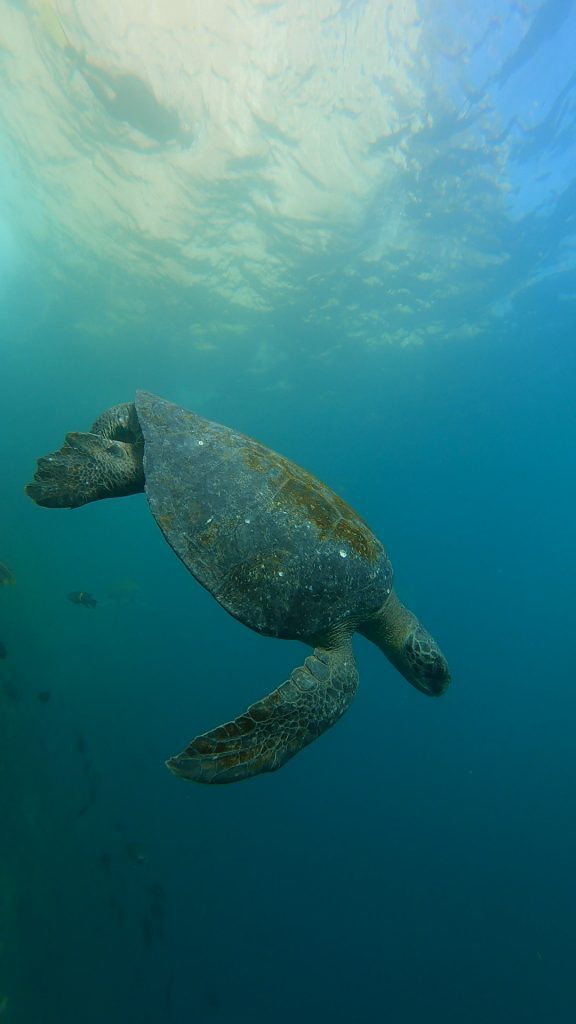
The reliable sightings on a well-chosen Galapagos cruise snorkel session include sea lions, green sea turtles, whitetip reef sharks, eagle rays, marine iguanas, and Galapagos penguins, depending on your itinerary and season. Schools of fish in the tens of thousands move through these sites in formations that make the water feel like it’s alive. Hammerhead sharks are possible at Kicker Rock and Gordon Rocks, particularly in the early morning during the cool season. Whale sharks are a deep-water encounter reserved for dive liveaboards, not snorkel sites.
The sea lion encounter is what most people talk about first when they come back. It’s not just seeing them, it’s the physical reality of a 100-kilogram animal that has decided to play with you. They’ll blow bubbles at your mask, bite your fins gently, and surface two feet away to make direct eye contact before spinning back down. The naturalists tell you not to touch them. The sea lions do not read the rule and will sometimes make that quite difficult to honor.
Sea turtles in the Galapagos are not shy. You’ll often float alongside one grazing algae off a rock while it completely ignores your presence. The warm season from December through May is when green turtles nest on eastern beaches and their population density in the water around those sites is at its highest. Some snorkelers describe this as their most peaceful moment in the entire archipelago: the turtle moves in slow motion below you, unhurried, while everything above the water is salt air and silence.
Marine iguanas snorkeling is a genuinely strange experience that most people don’t expect to be as captivating as it is. These animals, the only ocean-going lizards on earth, dive from the rocks to graze algae on the seafloor and then pull themselves out to warm up, their black and red courtship coloration glowing in the shallow light. Watching one feed underwater at Fernandina or Isabela is one of those encounters you can’t see in any other ocean on the planet.
At Kicker Rock off San Cristobal, naturalist logs from August 2025 documented scalloped hammerheads appearing on 9 of 11 early-morning snorkel sessions between 6:30 and 8:00 AM, with visibility averaging 18 to 22 meters. These are not the hundreds-strong schools that divers see at Wolf Island. But seeing a hammerhead from the surface, watching its distinctive silhouette pass beneath you in clear water, is an encounter that stays with you. The early panga slot matters here.
Diving in the Galapagos is world class but only if you’re on the right boat. Here’s a full guide to the best Galapagos cruise for divers so you book the ship and itinerary that actually gets you to the best sites.
Which Cruise Class and Vessel Type Is Best for Snorkelers?
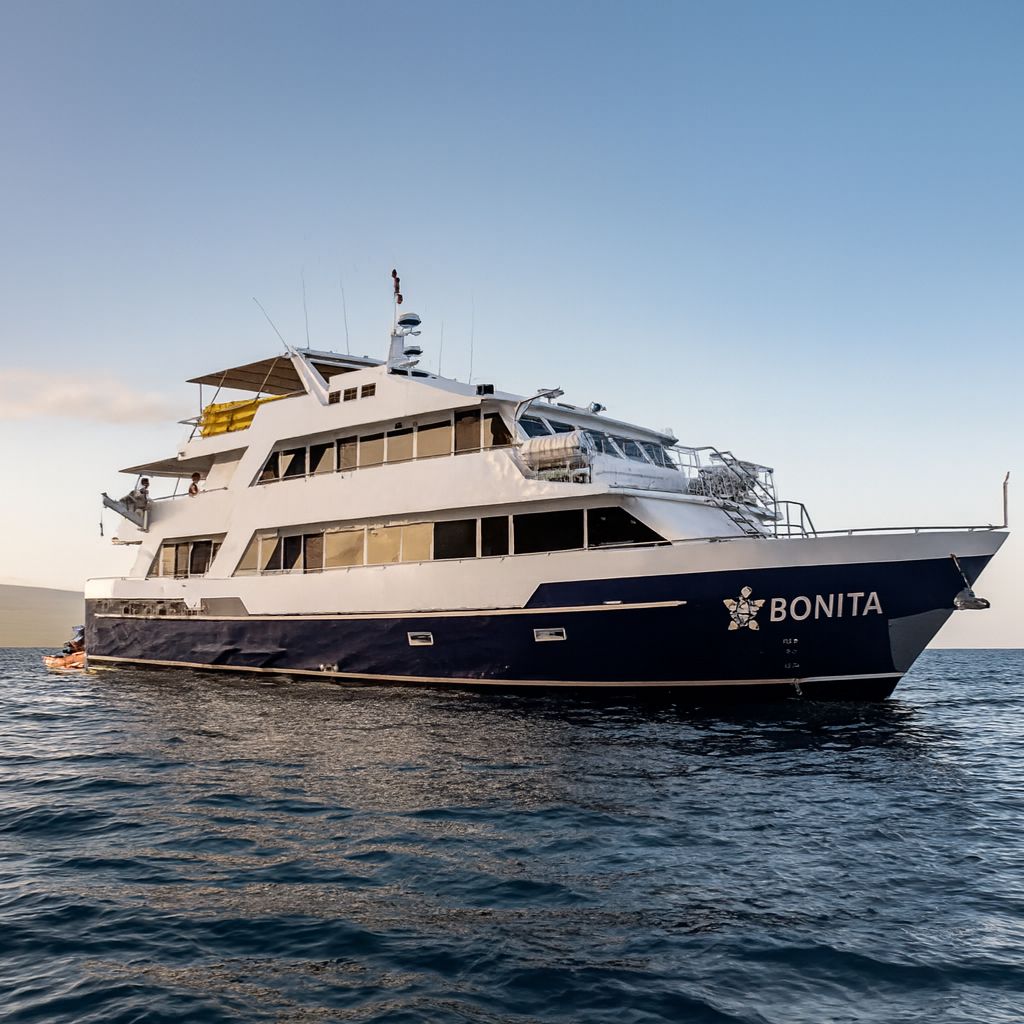
For snorkelers, the specific features to look for are more important than cruise class alone: the number of daily snorkel sessions, whether the vessel carries both a 3mm and 5mm wetsuit in multiple sizes, whether a naturalist guide enters the water with the group rather than staying on the panga, and whether the vessel visits snorkel-specific sites rather than treating snorkeling as an afterthought to hiking. Mid-range catamarans deliver good snorkel programs at accessible prices. First-class and luxury vessels typically offer 3 to 4 sessions per day with in-water guides and better gear.
The in-water guide distinction is significant and rarely highlighted on booking pages. On some vessels the naturalist stays on the panga and points animals out from above. On better vessels, the guide enters the water with you, leads you to where the turtles are feeding, taps their tank to alert you when a hammerhead passes below, and physically shows you the seahorse tucked under the lava ledge that you’d have floated past. That difference makes a 60-minute snorkel session in the same water deliver a completely different experience.
Catamaran hulls are the better choice for snorkelers for a reason that goes beyond seasickness: the swim platform and boarding ladder on a catamaran are typically lower and wider than on a monohull yacht, which makes re-entering the vessel after a snorkel session much easier. If you’ve ever tried to haul yourself up a ladder while wearing fins in a slight chop, you’ll understand why this matters. The entry and exit logistics of a snorkel session affect how much you enjoy it.
Vessel size matters differently for snorkelers than for other traveler types. A 16-passenger yacht means snorkel groups of 16 people maximum with one guide, which is the national park limit. A 48-passenger vessel still runs groups of 16 with one guide, it just runs three groups simultaneously. The wildlife at the site is the same. Where the small vessel wins for snorkelers is in site access: smaller boats can anchor in coves and bays that a larger vessel cannot reach, which sometimes means a more sheltered and wildlife-rich snorkel than what a bigger ship can access from deeper water.
| Feature | Budget Vessels | Mid-Range | First-Class / Luxury |
|---|---|---|---|
| Snorkel sessions per day | 1 to 2 | 2 to 3 | 3 to 4 |
| In-water naturalist guide | Rarely | Sometimes | Standard on better vessels |
| 5mm wetsuit available | Unlikely | Some vessels | Standard on snorkel-priority vessels |
| Life vest / buoyancy aid | Available | Available | Available |
| Camera dry storage on panga | Unlikely | Sometimes | Standard on snorkel-priority vessels |
| Top 2026 vessels | Galaxy Orion, Bonita | Ocean Spray, Monserrat | Sea Star, Galaxy Sirius, Endemic, Galapagos Horizon |
Not all cruises prioritize snorkeling equally and most booking pages don’t distinguish between a vessel that does two brief sessions and one that does four with an in-water guide. We know which vessels actually deliver for snorkelers and which ones treat it as a side activity. Fill out this short form and we’ll match you to a vessel that puts snorkeling front and center.
At this price point the vessel, the cuisine, and the expedition team all need to earn their place. Here’s the best Galapagos cruise for luxury travelers so you know which ones actually do.
Which Itinerary Has the Best Snorkeling in the Galapagos?
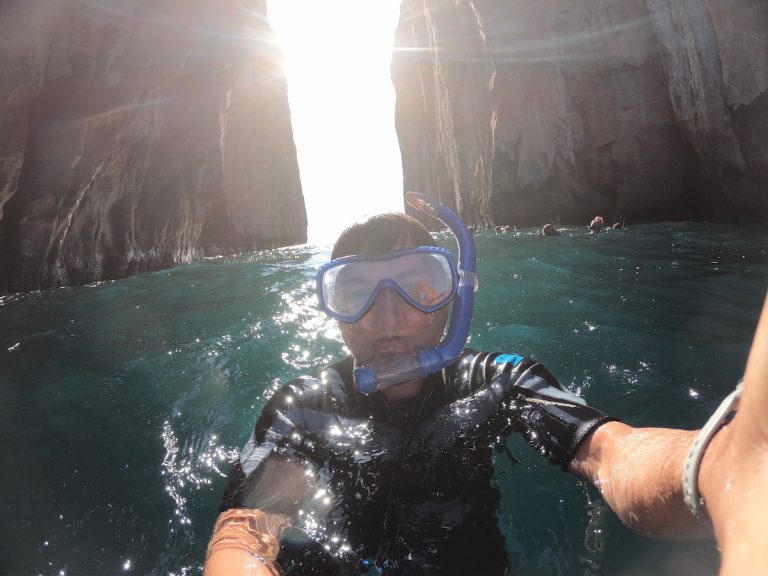
The eastern and combined eastern-central itineraries deliver the best overall snorkeling for most travelers. They cover the sites with the most consistent wildlife density: Champion Islet off Floreana, Gardner Bay on Española, Kicker Rock off San Cristobal, Bartolome, and Devil’s Crown, which is accessible only by cruise boat. For snorkelers who specifically want penguin encounters or the marine iguana feeding experience, the western itinerary adds Tagus Cove and Punta Vicente Roca, though those western waters run colder and rougher.
Devil’s Crown off Floreana deserves its reputation. It’s the remains of a submerged volcanic crater whose jagged rim breaks the surface in a rough crown shape. You drop into the current outside the crown and let it carry you in through a gap in the rocks into the interior basin, where coral formations, moray eels, golden rays, eagle rays, sea turtles, sea lions, and dense schools of tropical fish create one of the most visually packed underwater environments in the archipelago. The current keeps it interesting and slightly challenging. Depths inside the crown range from 1 to 6 meters, which is ideal for surface snorkeling. This site is accessible only to boats on cruise itineraries, not from land.
Champion Islet, a small volcanic rock a short panga ride from Floreana’s Post Office Bay, is the single most reliably productive sea lion snorkeling site in the Galapagos. One local naturalist’s tracking data places sea lion sightings on more than 9 out of 10 panga snorkels here. The colony uses the rocky shallows as a playground and treats snorkelers as mild entertainment rather than a threat. You float and they spiral around you.
Bartolome Island’s bay is the best entry-level snorkel site on most itineraries: calm, shallow, clear water with Galapagos penguins hunting fish directly alongside you. Penguins underwater move at a speed that seems physically impossible given what they look like waddling on rocks. This is also one of the most reliable spots for a beginner snorkeler because the conditions are genuinely gentle and the wildlife density is high without requiring any exposure to open-water current.
Los Tuneles on Isabela is a maze of lava arches, collapsed tubes, and shallow pools where seahorses, white-tipped reef sharks resting under ledges, sea turtles, and penguins all coexist in a setting that looks like it was designed for snorkeling. It’s accessible by day trip from Puerto Villamil but also included in western itinerary cruises. The shallow protected pools mean zero current concern. It’s consistently described as one of the most otherworldly snorkeling experiences in the entire archipelago.
| Site | Access | Difficulty | Key Wildlife |
|---|---|---|---|
| Devil’s Crown (Floreana) | Cruise only | Intermediate (current) | Rays, sea lions, eels, dense reef fish, turtles |
| Champion Islet (Floreana) | Cruise only | Easy to intermediate | Sea lions (most reliable site), reef fish, turtles |
| Kicker Rock (San Cristobal) | Cruise or day trip | Intermediate (deep, current) | Hammerheads (morning), Galapagos sharks, rays, turtles |
| Bartolome Bay | Cruise only | Easy (beginners welcome) | Penguins, fish schools, sea lions, calm clear water |
| Gardner Bay (Española) | Cruise only | Easy | Sea lions, whitetip reef sharks, turtles, rays |
| Los Tuneles (Isabela) | Cruise or day trip | Easy (calm pools) | Seahorses, sleeping reef sharks, turtles, penguins |
| Las Tintoreras (Isabela) | Cruise or day trip | Easy (shallow, calm) | Marine iguanas, penguins, reef sharks, rays |
Some of the best snorkel sites, including Devil’s Crown and Champion Islet, are only reachable on a cruise itinerary and aren’t on every route. We help snorkelers pick the itinerary that hits their priority sites rather than just booking whatever has availability. Reach out here and tell us which wildlife encounters are on your list and we’ll build a shortlist from there.
What Do You Need to Know Before Snorkeling in the Galapagos?
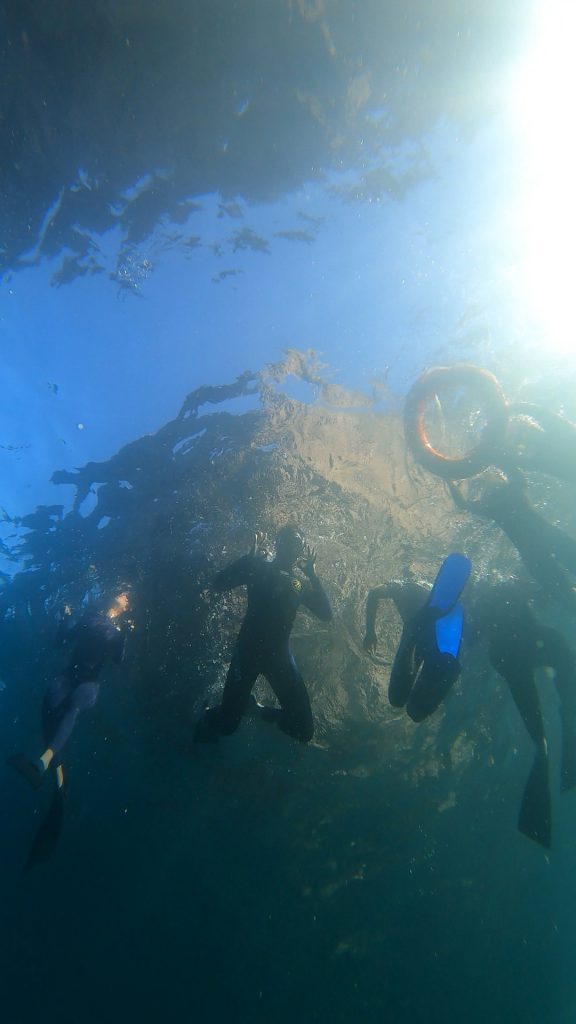
Five things most first-time Galapagos snorkelers wish someone had told them before they got in the water: the wetsuit is not optional, reef-safe sunscreen is legally required, a poorly fitting rental mask ruins the experience more than any other single factor, the early morning snorkel slot at current-exposed sites consistently produces the best wildlife activity, and the panga boarding ladder requires upper-body strength to re-enter the vessel in the water. None of these are dealbreakers. All of them are fixable with a few minutes of preparation.
The wetsuit issue is the most impactful. Even in the warm season, water temperatures sit around 22 to 24°C in the shallows, which feels cold after 45 minutes of floating. In the cool season the western sites drop to 18°C or lower. A 3mm shorty, which is what most vessels provide, keeps you comfortable for about 30 to 40 minutes in warm-season conditions and uncomfortable faster than that in cool-season water. The 5mm full wetsuit makes a significant difference for longer sessions. If your cruise provides it and you’re snorkeling in June through November, use it. If you run cold regardless of season, bring your own full suit from home.
The mask fit issue is one of those things that sounds minor until you’re 20 minutes into a snorkel session stopping every four minutes to clear water from your mask while sea turtles drift past. Rental mask sizing on cruise vessels is inconsistent. The geometry of some people’s faces doesn’t seal well with standard-issue masks. If you have snorkeled before and had mask issues, bring your own. If you wear glasses or contact lenses, prescription snorkel masks are widely available online and make the entire experience sharper and more enjoyable.
Reef-safe sunscreen is not optional in the Galapagos. The Galapagos National Park explicitly bans chemical sunscreens containing oxybenzone or octinoxate at all snorkel and water activity sites. This applies before you enter the water, meaning the standard sunscreen you applied on deck also gets rinsed into the marine reserve when you jump in. Mineral sunscreens with zinc oxide or titanium dioxide are the compliant option. Bring from home: stock on Santa Cruz is limited and priced two to three times what you’d pay before the trip.
The 2-meter rule for wildlife exists but operates differently in the water than on land. Sea lions, turtles, and penguins don’t respect it and will approach you regardless. You are not supposed to reach out and touch them, and doing so disrupts their natural behavior in ways that matter to the ecosystem. The naturalist guide manages this in real time. Following their lead, not chasing animals, and letting the encounter come to you is both the ethical approach and consistently the one that produces better encounters.
The Galapagos is one of the most protected ecosystems on earth and the cruise you choose either supports that or undermines it. Here’s a guide to the best Galapagos cruise for eco-conscious travelers so you book with the right operator.
What Snorkelers Tell Us After Their Galapagos Cruise
From the thousands of Galapagos cruise travelers Oleg has interviewed through mytrip2ecuador.com and the YouTube channel, snorkelers make up one of the most enthusiastic segments. The data below reflects aggregate feedback from travelers for whom snorkeling was a primary trip motivation.
| Finding | Result | Context |
|---|---|---|
| Snorkelers who said it exceeded their expectations | ~82% | Highest among those on vessels with in-water naturalist guides |
| Snorkelers who wished they’d brought their own mask | ~47% | Rental mask fit and leaking cited as the most common equipment complaint |
| Snorkelers who were caught off guard by water temperature | ~39% | Strongest among cool-season travelers who relied on the 3mm shorty only |
| Snorkelers who described the sea lion encounter as their trip highlight | ~73% | Consistent across all age groups, itineraries, and vessel classes |
| Snorkelers who saw hammerhead sharks during a surface snorkel session | ~41% | Highest at Kicker Rock between July and October, early morning slot |
| Snorkelers who would specifically recommend a cruise over land-based for snorkeling | ~86% | Primary reason: cruise-only sites like Devil’s Crown and Champion Islet |
What Is the Best Time of Year to Snorkel the Galapagos?
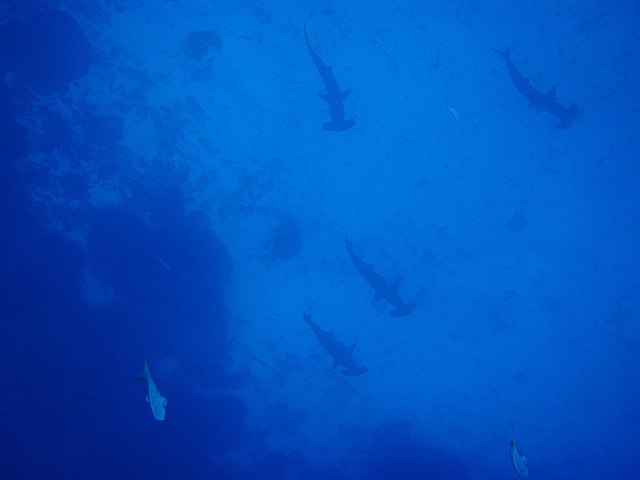
December through May is the warm season and the most comfortable window for snorkeling. Water temperatures reach 24 to 26°C, visibility improves to 12 to 20 meters on good days, sea conditions are calmer, and the snorkel sessions are simply more physically pleasant. For families, nervous swimmers, and anyone who runs cold, this is the right window. The cool season from June through November delivers colder water and stronger currents, but wildlife density and activity increase significantly, and hammerhead sightings at surface sites like Kicker Rock are much more consistent.
January through March sits in the warmest part of the warm season. Water temperature peaks around 25 to 27°C in the central and eastern sites. You can snorkel comfortably in a 3mm wetsuit, visibility is typically at its best for the year, and turtle nesting activity means high sea turtle density in the water around the eastern islands. This is the period for families with children and for anyone who wants the most comfortable physical experience alongside genuinely excellent wildlife encounters.
The cool season trade-off is worth stating clearly. June through November brings water temperatures down to 18 to 22°C in the central islands and lower in the western sites. A 5mm full wetsuit is strongly recommended from July through October if you’re snorkeling the western route. The biological payoff is real: nutrient-rich Humboldt Current water drives higher fish density, more ray activity, and the hammerhead sightings that make Kicker Rock famous during this period. Experienced snorkelers who prioritize wildlife density over water temperature often prefer the cool season specifically for this reason.
April through June is a transition window worth considering. The warm season is winding down, visibility is still good, sea conditions remain relatively calm, and the waved albatross has returned to Española for nesting from April through December. For snorkelers adding wildlife hikes to their itinerary, the April through June window combines warm-season snorkeling conditions with some of the best topside wildlife spectacles of the year.
Not sure which months give you the best combination of wildlife activity, water visibility, and comfortable conditions on a Galapagos cruise? This breakdown on the best time of year to take a Galapagos cruise covers every season honestly.
What Are the Biggest Mistakes Snorkelers Make Booking a Galapagos Cruise?
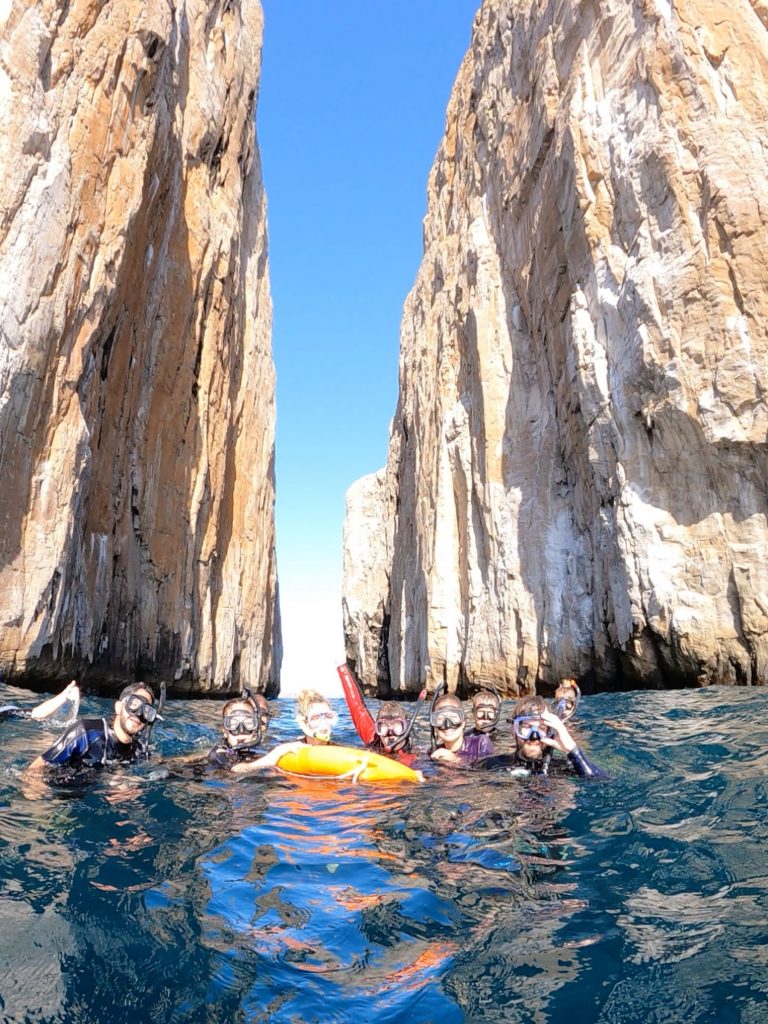
The four most consistent snorkeler mistakes: booking a cruise without checking how many snorkel sessions it actually includes per day, not bringing their own mask and spending the trip fighting a leaky rental, showing up with chemical sunscreen that has to stay on the boat, and underestimating the cool-season water temperature and declining to use the thicker wetsuit. Each of these makes a meaningful difference in how much enjoyment you get from the snorkeling. All are fixable before you board.
The session count issue matters more than most snorkelers realize when comparing cruises. A budget vessel that does one beach snorkel per day and a first-class catamaran that does three targeted sessions at wildlife-dense sites are technically both described as “snorkeling included” on most booking pages. Asking specifically how many water sessions are scheduled per day, and whether a naturalist enters the water with the group, gives you a much clearer picture of what you’re actually buying.
Not verifying the itinerary includes your priority sites is the other significant booking error. Several of the best snorkeling sites, including Devil’s Crown, Champion Islet, and Bartolome, appear on specific itineraries and not others. An 8-day western cruise focused on Isabela and Fernandina has extraordinary snorkeling but won’t visit Española or Floreana. An eastern itinerary covers Kicker Rock and Devil’s Crown but won’t include Los Tuneles on Isabela. If any specific site is on your must-see list, confirm it’s on the itinerary in writing before booking.
The chemical sunscreen issue catches people genuinely off guard, not because they’re being careless, but because most travel advice doesn’t emphasize it clearly enough. You cannot apply your regular SPF 50 on the boat deck and then jump in the water on a Galapagos snorkel. The chemical filters wash off into the marine reserve and the national park enforces the reef-safe rule increasingly strictly. Stock up on mineral zinc-oxide sunscreen before you fly. Puerto Ayora has limited supply at inflated prices.
Finally, skipping the thick wetsuit on cool-season western itineraries is the mistake that turns a great snorkel into a short one. The 3mm shorty is comfortable for 30 to 40 minutes in 22°C water. It is not enough for 60 minutes in 18°C water off Isabela in August. When the naturalist offers you the 5mm full suit, take it. The wildlife in that cold upwelling water is what makes western snorkeling extraordinary; being warm enough to stay in the water long enough to see it is the whole point.
Still trying to figure out if a budget Galapagos cruise is worth booking or just a disappointing version of the real thing? This guide on the best Galapagos cruise for budget travelers gives you a straight answer on what to expect at the lower price points.
Frequently Asked Questions
Do you need to know how to swim to snorkel in the Galapagos?
You need to be a confident swimmer, meaning comfortable floating in open water, breathing through a mask and snorkel, and re-entering a boat from the water via ladder. Life vests are always available and the naturalist guide is in the water with the group. Non-swimmers or very weak swimmers would find most Galapagos snorkel sessions stressful rather than enjoyable; a land-based visit with panga rides instead of snorkel sessions may be a better fit.
Is Galapagos snorkeling better than diving for seeing wildlife?
For most of the species the Galapagos is famous for, snorkeling and diving deliver very similar encounters. Sea turtles, sea lions, penguins, rays, and reef sharks all operate near the surface and are accessible to snorkelers at the same sites. The specific experience that snorkelers miss is the deep pelagic action at Wolf and Darwin Islands: the hundreds of hammerhead sharks and whale sharks that operate at depth in the open ocean. But for 90 percent of what makes Galapagos wildlife remarkable underwater, snorkeling from a cruise is a genuine equivalent.
What snorkel gear should I bring from home?
Your own mask and snorkel is the most valuable thing to bring: a well-fitting mask eliminates the most common equipment complaint on Galapagos cruises. Prescription masks are available online if you wear glasses. Fins are provided by cruise vessels and usually fit adequately. A 5mm full wetsuit if you run cold or are visiting in the cool season, June through November. Reef-safe mineral sunscreen with zinc oxide, SPF 50 minimum; chemical sunscreens are banned. An underwater camera or a GoPro with a wrist tether for the sea lion sessions.
Can beginners snorkel in the Galapagos?
Yes at many sites. Bartolome Bay, Las Bachas on Santa Cruz, North Seymour, Gardner Bay, and Las Tintoreras on Isabela are all calm, shallow, and appropriate for first-time or nervous snorkelers. Devil’s Crown, Kicker Rock, and Punta Vicente Roca involve current and open-water conditions better suited to confident intermediate snorkelers. A well-organized cruise with a good naturalist will match group members to the right sites and conditions rather than throwing everyone into the same water regardless of experience.
Will I see hammerhead sharks while snorkeling in the Galapagos?
Possibly, particularly at Kicker Rock between July and October in the early morning. Naturalist data from August 2025 logged hammerhead schools at the surface on 9 of 11 early morning snorkels at this site. Sightings drop significantly in the warm season and later in the day when water warms and visibility changes. Hammerhead encounters from the surface are real but not guaranteed. The deep-water schools that make Darwin and Wolf Island famous are a diver experience, not accessible at snorkeling depth.
How cold is the water for snorkeling in the Galapagos?
It ranges from 18°C in cool-season western sites in July and August to 26°C in warm-season central sites in February and March. Most cruise vessels provide a 3mm shorty wetsuit. Better vessels also carry 5mm full wetsuits for the cooler months. If you tend to feel cold quickly, bring your own 5mm full suit for any departure between June and November, and consider a rash guard as a base layer for extra insulation in the coldest western snorkel sites.
Galapagos snorkeling is the kind of experience that changes what you think snorkeling can be, but getting it right means choosing a vessel that actually prioritizes it, an itinerary that hits the right sites, and a season that matches your cold tolerance and wildlife priorities. We’ve been helping snorkelers and non-divers plan this trip for years and we’re rated 4.9 stars on Google and TripAdvisor. If you want a specific recommendation rather than a generic booking, get in touch here and tell us what’s on your list. We’ll put something real together for you.
Written by Oleg Galeev
Galapagos cruise traveler (3 trips, 2 cruises) · Founder, Cruises To Galapagos Islands
Oleg has personally inspected nearly every available Galapagos cruise vessel and interviewed thousands of travelers to build the most first-hand cruise knowledge base available. He also runs the Ecuador travel blog mytrip2ecuador.com and the YouTube channel My Trip to Somewhere.
Cruises To Galapagos Islands is rated 4.9 stars on Google and TripAdvisor.
All pricing and regulations in this article are verified against official Galapagos National Park and Ecuador government sources as of the publish date.