
TL;DR
The Galapagos is one of the world’s great birdwatching destinations, with 34 endemic species and wildlife so tame you photograph them at arm’s length. A standard 8-day cruise covers most of the headline species. Española is unmissable for waved albatross; Genovesa for frigatebirds and red-footed boobies; the western islands for flightless cormorants and penguins. April through June is the best window for serious birders. Guide quality matters more here than anywhere else: a Level III naturalist who knows their finches changes the entire trip.
Quick Facts: Galapagos Birdwatching Cruises
| Detail | What You Need to Know |
|---|---|
| Total recorded species (eBird, May 2026) | 188 species; 27 endemic land birds; 7 endemic seabirds – Verified July 30, 2026 |
| Park entry fee | $200 USD cash per adult on arrival – Verified July 30, 2026 |
| Transit Control Card (TCT) | $20 per person, purchased online before your flight |
| Best island for waved albatross | Española (only nesting site on earth); present April through December |
| Best island for frigatebirds | North Seymour and Genovesa; red throat sac display March through September |
| Flightless cormorant location | Isabela and Fernandina only; western itinerary required |
| Best season for birders | Mid-April through June (courtship season, albatross present, frigatebird display) |
| Recommended cruise length | 10 to 15 days for serious birders wanting both eastern and western species |
| Darwin’s finch species | 13 species; most visible in Santa Cruz highlands; require a good guide to identify |
Is the Galapagos Worth It for Birdwatchers?
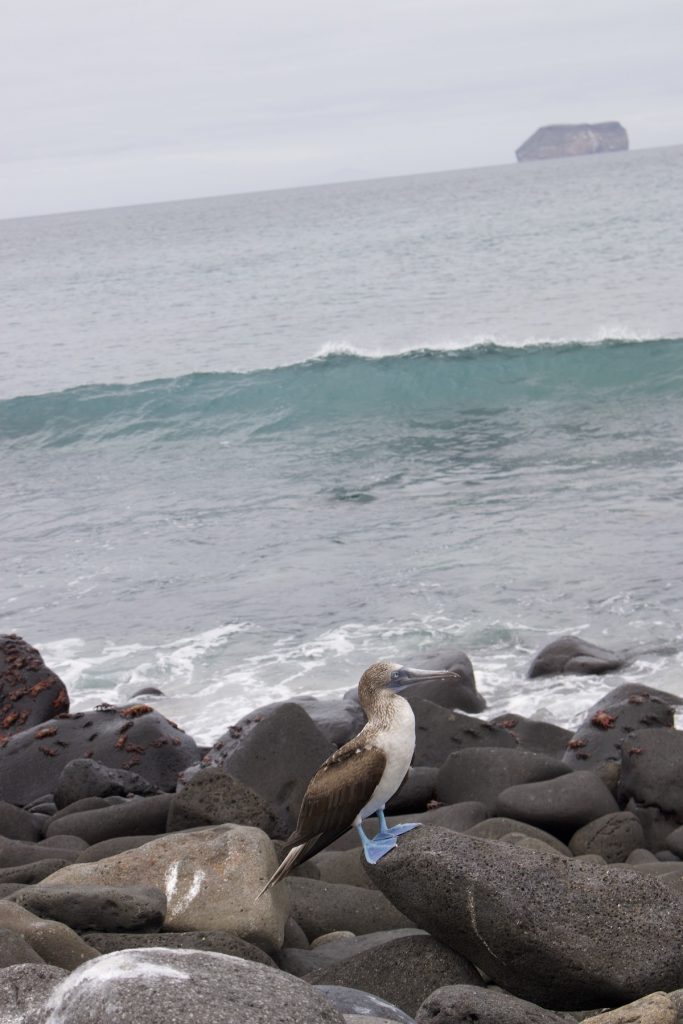
Without question. The Galapagos is one of the handful of destinations on earth where you can photograph endemic species at close range without a hide, a telephoto lens, or luck. The birds here evolved without land predators and have no instinct to flee from humans. A blue-footed booby will stand two feet from your boots while performing its courtship dance and ignore you completely. A Galapagos hawk will land on a nearby rock while you’re looking at something else. The 34 endemic species, all approachable, spread across distinct island habitats, make this one of the most rewarding ticks-per-day destinations in the world.
A standard 8-day cruise gives a birder realistic access to most of the headline endemics. With 188 total recorded species and 34 endemics across the archipelago, no single cruise covers everything, but the concentration of species unique to these islands, the lack of evasion behavior, and the structured landing schedule mean your species count climbs faster than almost any comparable destination of similar size.
One honest caveat: finch identification is hard. Darwin’s 13 finch species overlap in beak shape, coloration, and habitat, and the differences between several species pairs are genuinely subtle. Field guides disagree, taxonomy continues to shift, and even experienced birders leave unsure about several of their sightings. This is where guide quality becomes the single most important booking decision a birdwatcher makes for the Galapagos.
If you want to maximize your species count and see specific endemics rather than just whatever crosses your path, the guide and itinerary combination matters more than the vessel. We know which naturalists have the ornithological depth to satisfy serious birders. Send us a message here and tell us your target list.
The Galapagos is one of the greatest photography destinations on the planet but the cruise you pick determines how close you actually get to the subjects. Here’s a full guide to the best Galapagos cruise for photographers so you book the right one.
What Birds Will You Actually See on a Galapagos Cruise?
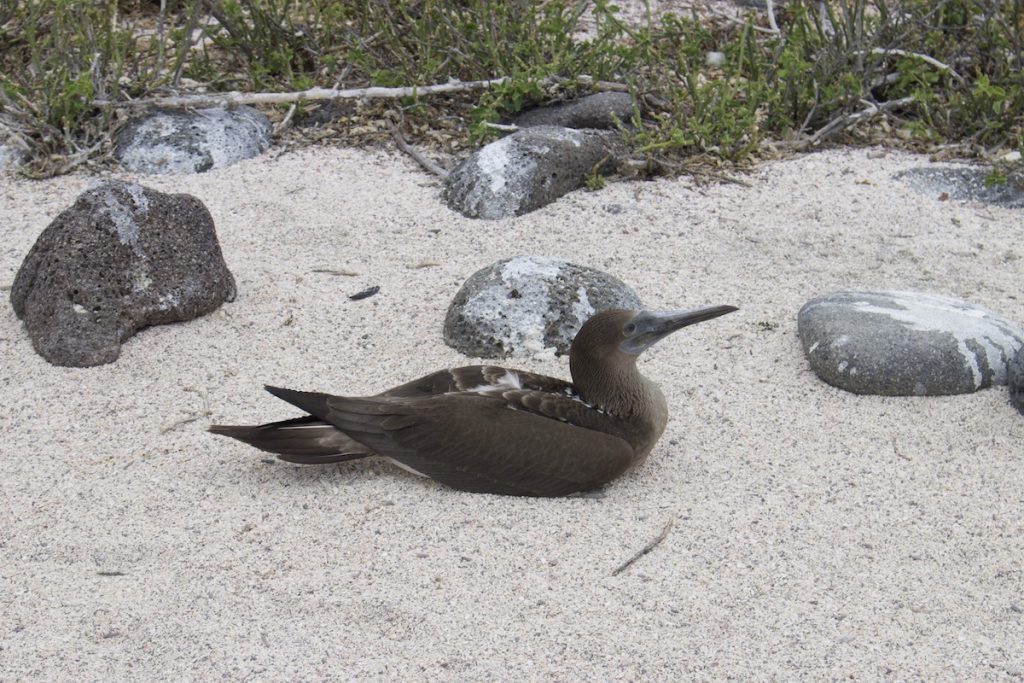
On a well-planned 8-day cruise covering both eastern and central islands, expect to see most of the following: all three booby species (blue-footed, Nazca, and red-footed), both frigatebird species, waved albatross from April through December on Española, flightless cormorant on western itineraries, Galapagos penguin, lava gull, swallow-tailed gull, Galapagos hawk, Galapagos dove, multiple mockingbird species, vermilion flycatcher, and at least six to eight Darwin’s finch species. A 10 to 15-day combined itinerary extends that significantly.
The waved albatross is the bird most Galapagos birdwatchers mention first when they come back. It nests only on Española, the only albatross species in the world that lives exclusively in the tropics, and its courtship dance is one of the great wildlife spectacles anywhere: bill clacking, sky pointing, synchronized head circling, and an awkward runway launch into the updraft off the cliff edge. You watch this from a trail that puts you within a few meters of nesting pairs who are completely undisturbed by your presence.
Genovesa is another non-negotiable for serious birders. The island holds the largest red-footed booby colony in the archipelago, frigatebirds in full throat-sac display during courtship season, Nazca boobies, swallow-tailed gulls, red-billed tropicbirds, and storm petrels. Prince Philip’s Steps on the northeast cliff delivers an extraordinary walk through a dense seabird colony. The short-eared owl on Genovesa preys specifically on storm petrels and has adapted to be more active during the day than its mainland cousins, which means daytime owl sightings in a birding context most owlers only dream about.
North Seymour is where both frigatebird species nest side by side, making species comparison straightforward. The magnificent frigatebird’s red throat sac inflation, a vivid balloon-sized display that takes ten to fifteen minutes to reach full size, is something photographs don’t quite convey in the same way as standing next to it. The male inflates, shakes his wings, and calls while dozens of others do the same around him. It’s a mass spectacle that even non-birders find completely riveting.
Trying to find a Galapagos cruise that puts wildlife encounters first rather than treating them as a backdrop to the onboard experience? Here’s the best Galapagos cruise for wildlife enthusiasts so you find the right ship and route.
Which Galapagos Islands and Sites Are Best for Birdwatching?
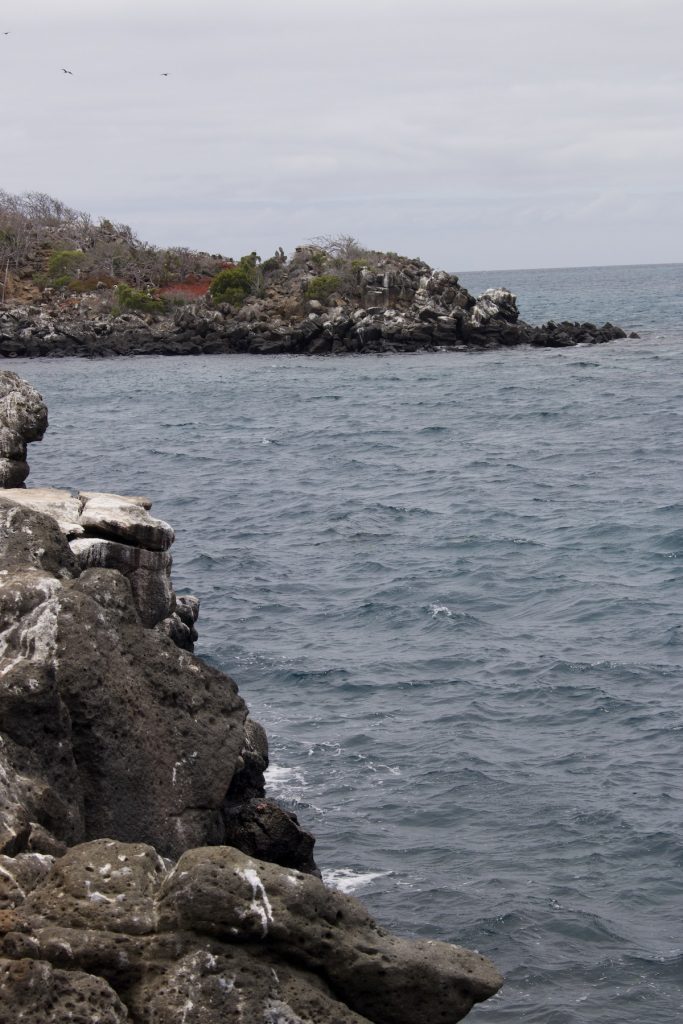
No single island covers the full Galapagos bird list. Española is essential for waved albatross and Española mockingbird. Genovesa is the top seabird island: red-footed boobies, frigatebirds, storm petrels, and owls. North Seymour delivers both frigatebird species and blue-footed boobies in courtship simultaneously. The western islands, Isabela and Fernandina, are the only places to see flightless cormorant and the highest densities of Galapagos penguin. Santa Cruz highlands are the best location for multiple finch species in a single morning.
The Santa Cruz highlands deserve specific attention for finch work. The scalesia forest zone here holds vermilion flycatcher, Galapagos flycatcher, short-eared owl, woodpecker finch, vegetarian finch, green warbler-finch, medium ground finch, and small ground finch in relatively dense habitat where patient observation pays off. Adding a private guide day in Santa Cruz after the cruise, specifically for highland finch birding, is a practical strategy used by most serious birders and increases the species count significantly without requiring a longer cruise.
| Island/Site | Itinerary | Key Target Species |
|---|---|---|
| Española (Punta Suarez) | Eastern | Waved albatross, Española mockingbird, Galapagos hawk, blue-footed booby, Nazca booby |
| Genovesa (Darwin Bay + Prince Philip’s Steps) | Northern extension or some 10-day itineraries | Red-footed booby, magnificent frigatebird, short-eared owl, Genovesa ground finch, storm petrels |
| North Seymour | Central (most itineraries) | Both frigatebird species displaying, blue-footed booby, swallow-tailed gull |
| Fernandina (Punta Espinoza) | Western | Flightless cormorant, Galapagos penguin, flightless cormorant courtship (July-October) |
| Santa Cruz highlands | Most itineraries include Santa Cruz | Multiple Darwin’s finches, vermilion flycatcher, short-eared owl, Galapagos rail |
| Floreana (Punta Cormorant lagoon) | Eastern/southern | American flamingo, white-cheeked pintail, whimbrel, striated heron, shorebirds |
Genovesa is one of the most important birdwatching islands in the archipelago and it’s not on every itinerary. If seeing red-footed boobies, the daytime short-eared owl, or the Genovesa ground finch is a priority, you need to confirm that island is on your specific departure before booking. Reach out here and we’ll check which current departures include it.
Which Cruise Class and Vessel Type Is Best for Birdwatchers?
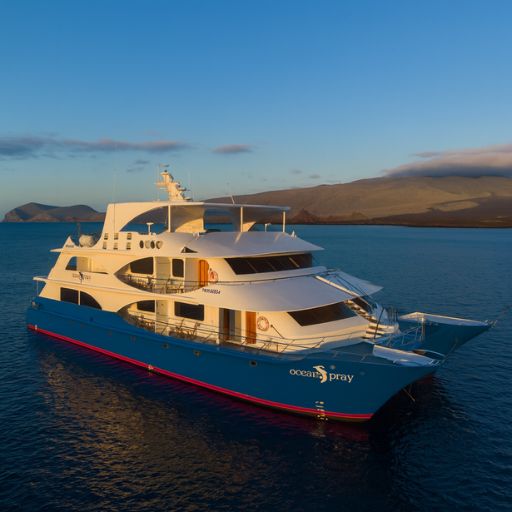
Guide quality is the most important variable for birdwatchers, more important than vessel class or price. A Level III Galapagos National Park naturalist with genuine ornithological depth will identify the finch in the cactus that a general-interest guide walks past, explain the behavioral context of what you’re seeing, and adapt the group’s pacing to let serious birders spend more time on target species. Look for this specifically. Smaller vessels of 16 passengers give guides more flexibility to slow the pace at productive sites than larger boats running timed excursion schedules.
Galapagos National Park naturalists are licensed at three levels, with Level III being the highest. Level III guides have university degrees in biology or natural sciences, are tested on ecology and species knowledge, and work mostly on higher-end vessels. The difference between a Level I and Level III guide is measurable in species count on a birdwatching trip. For casual wildlife travelers it’s less relevant. For a birder who has traveled to see specific endemics, it’s the most consequential single booking decision they’ll make.
Dedicated birding cruises do exist but are rare in the Galapagos. Most birders book general interest naturalist cruises on small vessels with strong guide reputations, then supplement with private guide time in the Santa Cruz highlands before or after the cruise. This combination consistently outperforms standard birding tours in terms of species count and the depth of encounters.
What Birdwatchers Tell Us After Their Galapagos Cruise
From the thousands of travelers Oleg has interviewed through mytrip2ecuador.com and the YouTube channel, birdwatchers are among the most discerning and vocal groups. The data below reflects aggregate feedback across multiple seasons.
| Finding | Result | Context |
|---|---|---|
| Birders who said guide quality made a measurable difference to species count | ~88% | Strongest among finch-focused birders; Level III vs Level I guides cited consistently |
| Birders who wished their itinerary included Genovesa | ~54% | Most common among those on standard 8-day eastern itineraries without northern extension |
| Birders who added private guide time in Santa Cruz highlands after cruise | ~41% | Of those who did, 94% said it was worth it specifically for finch species |
| Birders who described the waved albatross encounter as their trip highlight | ~67% | Highest of any single species encounter across all traveler profiles we track |
| Birders who found Darwin’s finch identification harder than expected | ~71% | Even experienced listers found beak measurement variation within species confusing |
Which Itinerary Is Best for Birdwatchers?
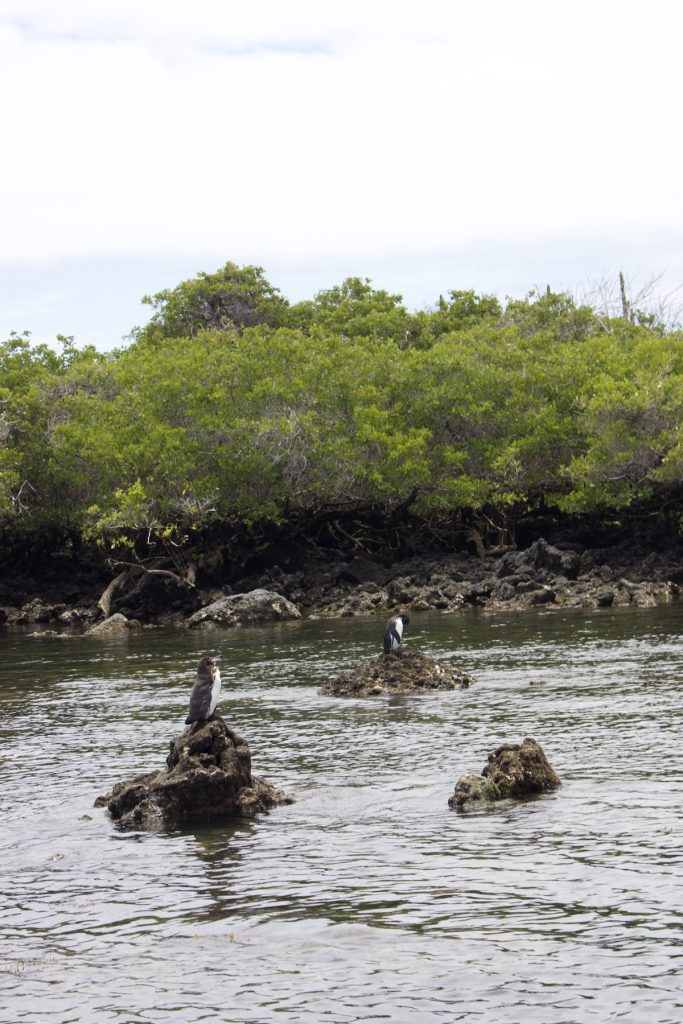
No single 8-day itinerary covers the full Galapagos bird list. Eastern itineraries deliver the waved albatross on Española and the mixed seabird colonies of Genovesa if included, plus multiple finch and mockingbird species across the central and eastern islands. Western itineraries add flightless cormorant and penguin on Fernandina and Isabela. For serious birders who want both regional groupings, a 10 to 15-day combined itinerary is the practical solution. An 8-day eastern cruise plus a 2-day private highland extension on Santa Cruz is the next best thing.
The Genovesa question is one every birdwatcher should resolve before booking. This northern island is the single best seabird colony in the archipelago and holds the endemic Genovesa ground finch and Genovesa cactus finch found nowhere else. But Genovesa is not on every itinerary. It appears on some 8-day eastern departures and most 10-day combined routes. Confirm it’s included before putting down a deposit.
For the flightless cormorant, the only cormorant on earth to have lost the ability to fly, the western itinerary around Fernandina and Isabela is the only option. This species exists nowhere outside these two islands and is genuinely extraordinary: large, ungainly, swimming with powerful feet while its useless wings dry awkwardly on the rocks above. Fernandina’s Punta Espinoza also holds Galapagos hawk, Galapagos penguin, and the largest marine iguana population on any island, which even dedicated birders find distracting enough to lose twenty minutes of birding time over.
What Is the Best Time of Year for Birdwatching in the Galapagos?
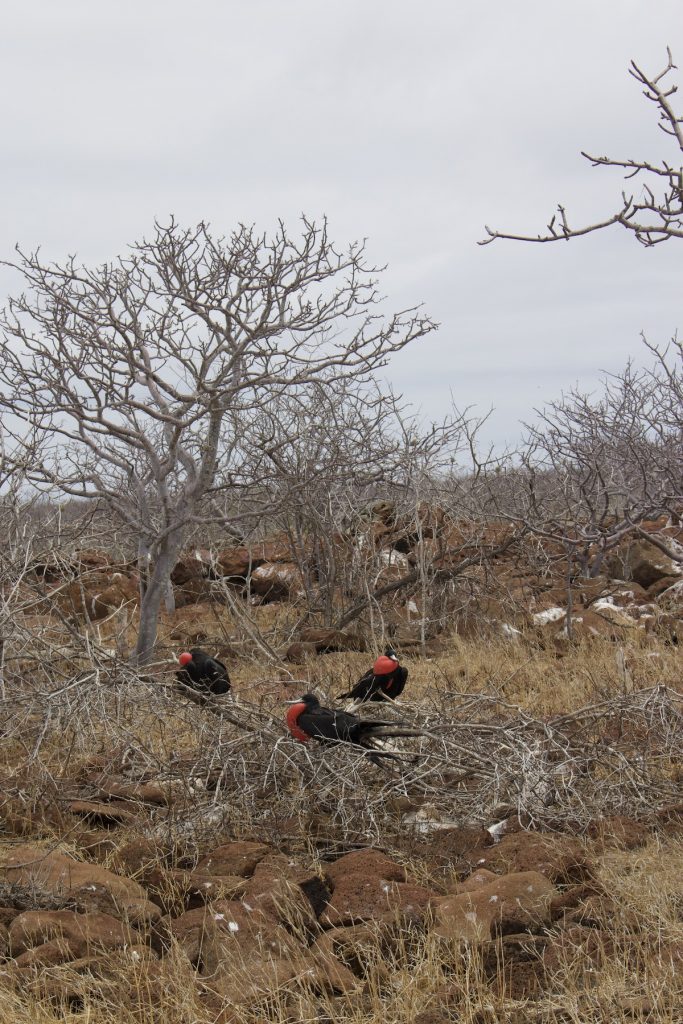
Mid-April through June is the peak period for most serious birdwatchers. The waved albatross has returned to Española from April and begins courtship immediately. Frigatebird males are in full throat-sac display on Genovesa and North Seymour. Blue-footed boobies are dancing. The cool season’s cold water currents arrive, triggering seabird breeding activity across the archipelago simultaneously. This two-month window concentrates more behavioral spectacle into a single trip than any other period.
January through March is worth avoiding specifically if waved albatross is a target: the birds are at sea between January and March and the colony on Española is empty. This catches more birders off guard than any other single seasonal mistake. Check before booking. The albatross is present on Española from approximately April through December, with the courtship display most active in April through June and chicks present from July onward.
The cool season from July through November remains excellent for most species, with frigatebird pouches still visible on Genovesa, boobies on eggs and chicks, short-eared owls active on multiple islands, and shorebird migrants present from July onward. August and September add Galapagos penguin at their highest densities around Isabela and Fernandina. For birders combining this trip with a naturalist cruise rather than a dedicated birding departure, July through September is a strong alternative window to the April through June sweet spot.
The dry season and the wet season in the Galapagos offer genuinely different experiences and neither one is wrong. Here’s the best time of year to take a Galapagos cruise so you pick the window that matches what you’re actually after.
What Are the Biggest Mistakes Birdwatchers Make Booking a Galapagos Cruise?
The most consistent mistakes: booking without confirming the guide’s ornithological credentials, not verifying Genovesa and Española are both on the itinerary, traveling January through March when the waved albatross is absent, and booking an 8-day cruise when 10 to 15 days would have covered both the eastern and western species groups. Each is avoidable with ten minutes of targeted questions before you sign anything.
The guide credential problem is the most impactful. Standard naturalist cruises use Level I and II guides who are excellent wildlife generalists but aren’t finch specialists. A birder who books a vessel without asking about the guide’s ornithological background and arrives to find the naturalist is strong on sea lions and weak on finch taxonomy will have a frustrating week. Ask directly: what is the guide’s specific experience with bird identification, and are they familiar with the current finch taxonomy debate? The answers tell you a great deal.
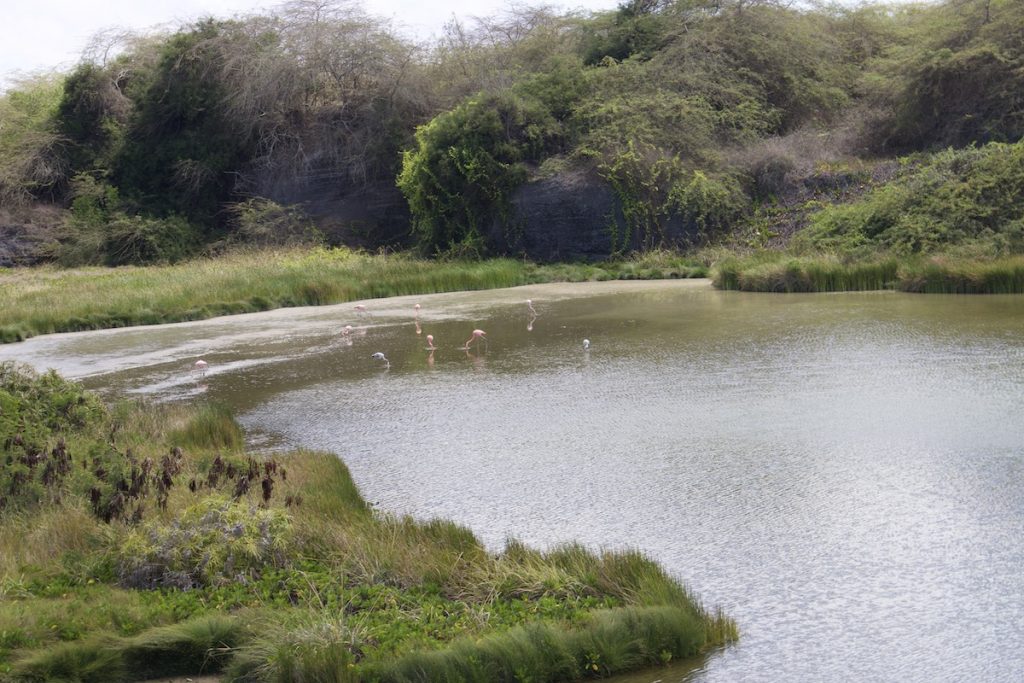
Trying to cover both the eastern and western bird groupings on a single 8-day cruise is the other structural mistake. The eastern route covers Española, Genovesa, the mockingbird islands, and the flamingo lagoons. The western route covers flightless cormorant, penguin, and the Isabela marine iguana feeding sites. A 16-passenger 8-day cruise covers one region. A 10 or 15-day departure, or two back-to-back cruises, covers both. Birders with a complete island list as a goal should budget and plan accordingly rather than expecting a single 8-day departure to deliver everything.
Frequently Asked Questions
How many endemic bird species can you realistically see on a Galapagos cruise?
On a well-planned 8-day cruise with a strong ornithological guide, 20 to 25 of the 34 endemic species is a realistic target. A 10 to 15-day itinerary covering both eastern and western islands can push that to 28 to 30. The Mangrove Finch, critically endangered and restricted to a small area of western Isabela, is essentially impossible to see through standard cruise access and should not be listed as an expectation.
Do you need binoculars for Galapagos birdwatching?
Yes, but not as urgently as at most birdwatching destinations. Many of the most iconic species, boobies, frigatebirds, albatross, penguins, marine iguanas, stand close enough on trails to photograph with a phone. Binoculars become essential for finch identification in the highlands, pelagic species spotted from the boat deck during island crossings, and shorebirds in the lagoons. A 8×42 or 10×42 is ideal. Spotting scopes are rarely necessary given encounter distances, and they’re cumbersome on the panga landings.
Is the Galapagos good for pelagic birding?
Yes. The open-water crossings between islands, particularly the overnight passages, produce Galapagos petrel, Galapagos shearwater, wedge-rumped storm petrel, Elliot’s storm petrel, and sometimes waved albatross at sea. The northward passage toward Genovesa is particularly productive. Early morning on the boat deck during crossings is the standard position for pelagic observation, and a good naturalist will alert the group to anything unusual. Galapagos petrel, a vulnerable species, is seen regularly on crossings and rarely anywhere else.
Can you see the Galapagos hawk on most cruises?
Yes, with some variation by island. Española, Fernandina, and Santa Fe are the most reliable sites. The hawk is one of the very few endemic raptors in the entire Pacific and behaves with the same approachability as everything else here: it will land near a group of people and watch them with mild curiosity rather than fleeing. Estimated at only around 200 breeding pairs remaining in the world, seeing one is a legitimately significant encounter for any lifebirder.
Getting the most out of a Galapagos birding trip requires matching the itinerary to your target species, the guide to your level of ornithological interest, and the season to the birds you most want to see. We’ve helped serious birders and casual wildlife watchers plan this trip for years, and we’re rated 4.9 stars on Google and TripAdvisor. If you want a recommendation built around your species list rather than a generic cruise, get in touch here and we’ll put something specific together.
Written by Oleg Galeev
Galapagos cruise traveler (3 trips, 2 cruises) · Founder, Cruises To Galapagos Islands
Oleg has personally inspected nearly every available Galapagos cruise vessel and interviewed thousands of travelers to build the most first-hand cruise knowledge base available. He also runs the Ecuador travel blog mytrip2ecuador.com and the YouTube channel My Trip to Somewhere.
Cruises To Galapagos Islands is rated 4.9 stars on Google and TripAdvisor.
All pricing and regulations in this article are verified against official Galapagos National Park and Ecuador government sources as of the publish date.