
TL;DR
Yes, you can do a Galapagos cruise if you get seasick, and most people who worry about it do fine. The Galapagos is not the open ocean. Most of the day is spent ashore or at anchor in protected coves. The crossings happen overnight while you sleep. The three variables that matter most: book the eastern itinerary over the western, travel in the warm season from December through May, and choose a catamaran hull over a monohull. Then bring a scopolamine patch or meclizine as backup. In that combination, the vast majority of motion-sensitive travelers complete the trip without significant problems.
Quick Facts: Seasickness Planning for a Galapagos Cruise
| Factor | Best Choice for Motion-Sensitive Travelers |
|---|---|
| Park entry fee | $200 USD cash per adult on arrival – Verified July 30, 2026 |
| Best season | December through May (warm season); calmest seas; February is peak calm |
| Worst season for seasickness | August through October; Humboldt Current strongest; avoid if highly sensitive |
| Best hull type | Catamaran or trimaran; significantly more stable than monohull in chop and swell |
| Best itinerary | Eastern (Santa Cruz, San Cristobal, Española, Floreana); shorter, more sheltered crossings |
| Itinerary to avoid (if highly sensitive) | Western (Bolívar Channel between Isabela and Fernandina); roughest water in the archipelago |
| Best prescription medication | Scopolamine patch (apply 4 hours before departure; lasts 3 days; get from doctor) |
| Best OTC medication | Meclizine (Bonine) – less drowsy than Dramamine; once daily; take 1 hour before sailing |
| Best cabin location on vessel | Mid-ship, lower deck; least motion on any vessel |
| When crossings happen | Mostly overnight while you sleep; most guests sleep through them |
Can You Do a Galapagos Cruise If You Get Seasick?
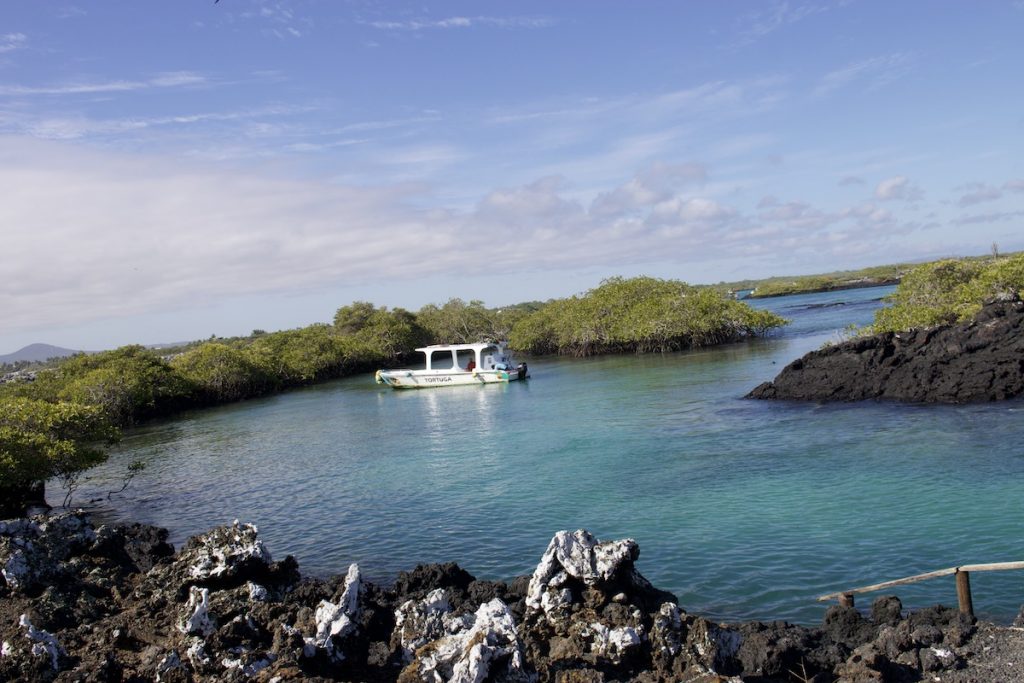
Yes, and the majority of motion-sensitive travelers who come prepared complete the trip without significant problems. The Galapagos is not open-ocean cruising. You spend most of each day either ashore at a national park site, snorkeling in a sheltered bay, or at anchor in a protected cove. The crossings between islands happen mostly overnight while you sleep. The total time spent in actual open-water transit on a typical 8-day eastern itinerary is far less than most first-timers expect, and the conditions during those crossings are generally mild compared to other small-ship destinations.
The honest caveat: the Galapagos is not a completely flat lake. Some crossings, particularly those to Genovesa in the north and through the Bolívar Channel between Isabela and Fernandina in the west, can involve genuine swell that a small vessel feels. Most travelers sleep through them. Some wake up uncomfortable. A small number have a rough night. Very few abandon the trip. Charles Darwin himself had notoriously bad sea legs and managed the voyage well enough to change the way we understand life on earth.
The three decisions that most reduce seasickness risk are: choosing the eastern itinerary over the western, booking a catamaran hull, and traveling in the warm season from December through May. Any one of these reduces risk. All three together make the Galapagos genuinely manageable for most motion-sensitive travelers. Add the right medication as a backup and the combination handles the vast majority of cases.
If seasickness is a real concern and you want help picking the right vessel, itinerary, and season combination specifically for your sensitivity level, we’ve matched many motion-sensitive travelers to the right Galapagos cruise. We’re rated 4.9 stars on Google and TripAdvisor. Send us a message here and we’ll give you a specific recommendation.
Still comparing Galapagos cruise options as a snorkeler and not sure which ship gives you the most time at the best underwater sites? This guide on the best Galapagos cruise for snorkelers gives you a straight answer on which vessels and routes deliver.
What Makes Some Galapagos Crossings Rougher Than Others?
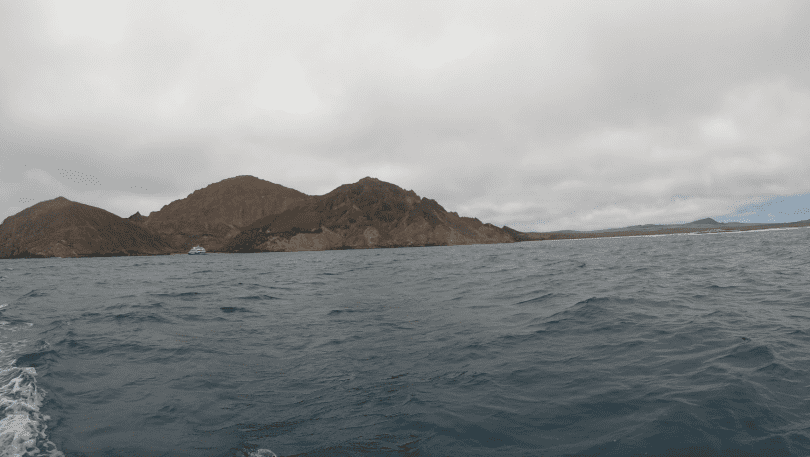
The Humboldt Current, which flows north along the South American coast before turning west toward the Galapagos, is the primary driver of rough conditions. It brings cold, nutrient-rich water and the swell that comes with it, particularly affecting the western islands and the longer open-water crossings. The roughest single passage in the archipelago is the Bolívar Channel between Isabela and Fernandina, which peaks in intensity from August through October. The calmest crossings are between the eastern and central islands, which are more sheltered from the Humboldt Current’s main flow.
Three factors determine how rough any given crossing feels: the length of the passage, how exposed it is to open ocean swell, and which season you’re traveling in. Short crossings between nearby islands in the central and eastern group, such as Santa Cruz to San Cristobal or San Cristobal to Española, are rarely problematic even for sensitive travelers. Longer passages to Genovesa in the far north or through the Bolívar Channel to Fernandina are the ones where conditions can be genuinely uncomfortable for motion-sensitive people.
The timing of crossings also matters in a practical sense. Most operators schedule their longer open-water passages to happen overnight, specifically so passengers are asleep and not focused on the motion. This is not a guarantee of a smooth night, but it’s a genuine structural advantage. Most travelers who report rough crossings also report sleeping through most of them, waking up at a new island ready for the morning excursion.
Which Vessel Type Is Best for Seasick-Prone Travelers?
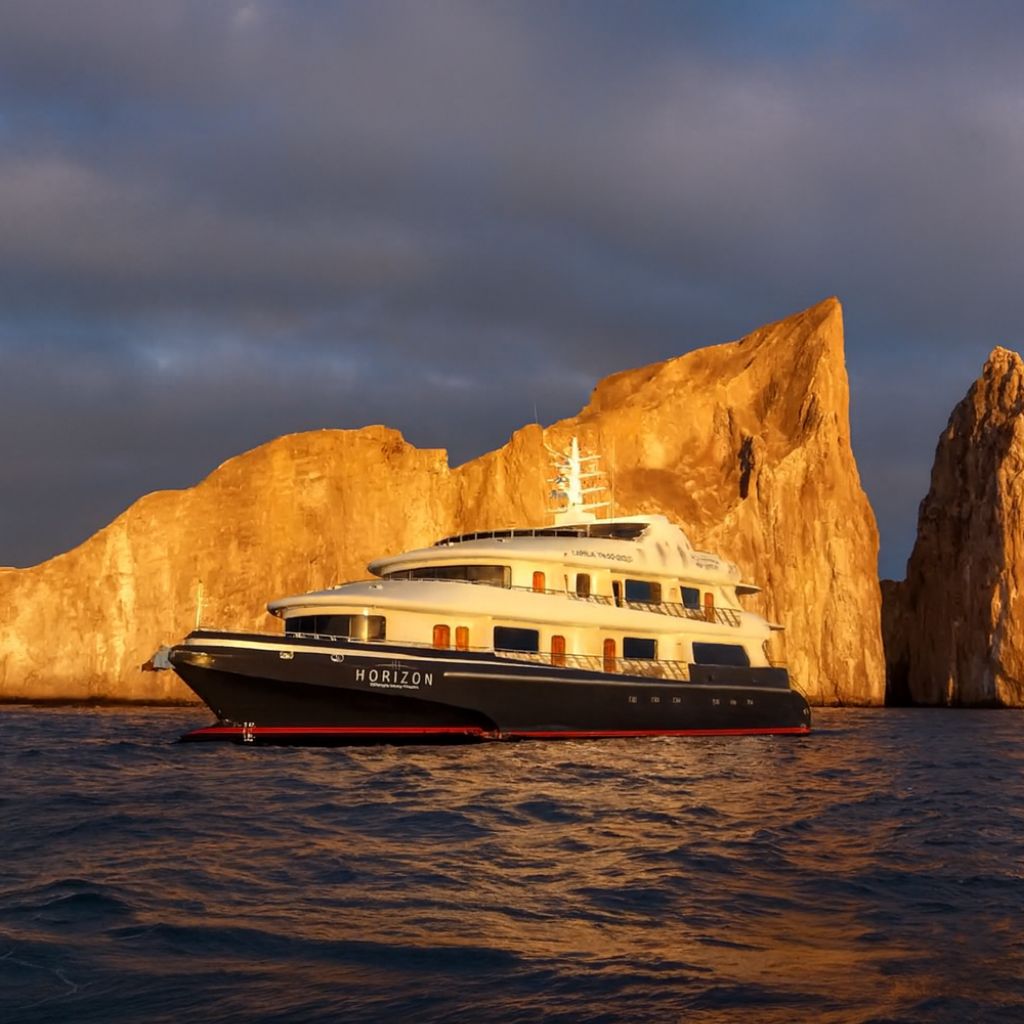
A catamaran is the most reliable choice for motion-sensitive travelers. The twin-hull design distributes weight across a wider beam, reduces lateral rolling significantly compared to a monohull, and remains more stable at anchor in a swell. The Galapagos Horizon trimaran, with three hulls, is the single most stable vessel in the archipelago for this purpose. On a western itinerary in the rough cool season, the difference between a catamaran and a comparable monohull during the Bolívar Channel crossing is meaningful enough to determine whether a motion-sensitive traveler has a good or miserable night.
The caveat that experienced sailors and naval architects consistently note: catamarans are not immune to seasickness. In a long oceanic swell where the wave length exceeds the vessel’s beam, even a catamaran rides up and over each wave. What catamarans eliminate better than monohulls is the rolling motion, the side-to-side rocking that most commonly triggers nausea. They can still pitch, bow up and bow down, in a following sea. For the specific crossing conditions in the Galapagos, particularly short-to-medium wavelength chop from the Humboldt Current, catamaran stability is a genuine advantage.
Larger vessels of 40 to 100 passengers are sometimes recommended for seasick-prone travelers on the assumption that size equals stability. This is partially true: a larger vessel has more mass and cuts through smaller chop more smoothly. But in the Galapagos, larger vessels come with real trade-offs in site access and wildlife intimacy. A 100-passenger ship can’t anchor in the small coves that 16-passenger vessels reach. The better solution for motion-sensitive travelers is not a larger vessel but a catamaran hull in the right class.
| Hull Type | Stability in Chop | Stability at Anchor | Best For | Example Vessels |
|---|---|---|---|---|
| Trimaran | Highest | Highest | Highly sensitive travelers; western itinerary | Galapagos Horizon |
| Catamaran | High | High | Most motion-sensitive travelers; best all-round choice | Endemic, Ocean Spray, Galaxy Sirius, Alya, Anahi |
| Large monohull (40-100 pax) | Moderate | Moderate | Travelers who prioritize vessel amenities over hull stability | Silver Origin, Celebrity Flora, Santa Cruz II |
| Small monohull (16 pax) | Lower | Lower | Travelers whose priority is wildlife intimacy and who manage seasickness with medication | Various budget and mid-range yachts |
Confirming which specific vessels in the 2026 fleet are catamarans or trimarans, and which eastern or western itinerary they run, is something we handle every day. Reach out here and we’ll match you to the right hull and route for your sensitivity level.
We’ve got a full breakdown on the best Galapagos cruise for wildlife enthusiasts if you want to know exactly which vessels, routes, and naturalist guides give you the deepest wildlife experience in the archipelago.
Which Itinerary Has the Calmest Conditions?
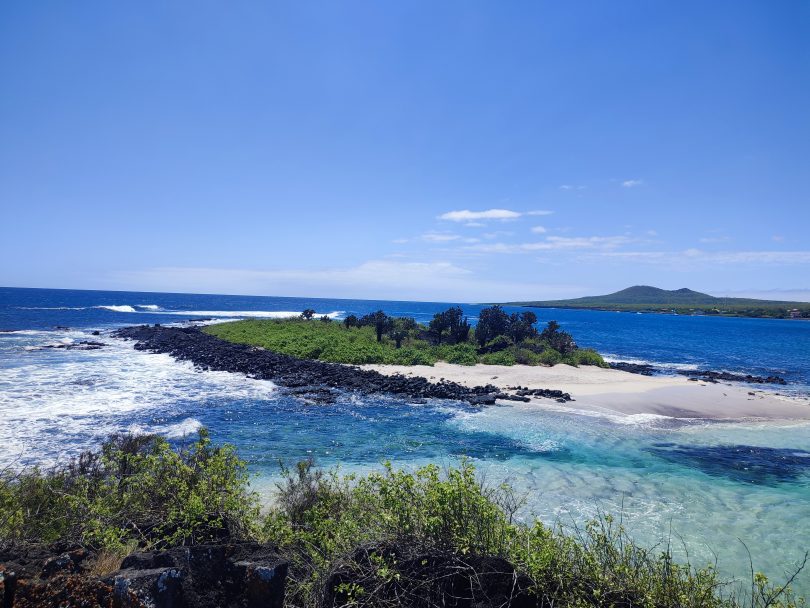
The eastern itinerary covering Santa Cruz, San Cristobal, Española, and Floreana offers the calmest conditions in the archipelago. The crossings between these islands are shorter and more sheltered from the main Humboldt Current than western or northern routes. The western itinerary, covering Isabela and Fernandina, includes the Bolívar Channel: the roughest sustained passage in the Galapagos, worst in the cool season from August through October. If seasickness is a primary concern, book eastern and avoid western unless traveling in the warm season on a catamaran.
| Route | Roughest Crossing | Worst Season | Seasickness Risk | Verdict for Sensitive Travelers |
|---|---|---|---|---|
| Eastern | San Cristobal to Española (3-4 hrs) | Sept-Oct | Low to moderate | Best choice; manageable year-round on a catamaran |
| Central | Santa Cruz to North Seymour (short) | Sept-Oct | Low | Very good; shortest crossings in the archipelago |
| Western | Bolívar Channel (Isabela-Fernandina) | Aug-Oct (peak) | High in cool season; moderate in warm season | Only on a catamaran in warm season if sensitive |
| Northern (Genovesa) | Open-ocean crossing to Genovesa (5-6 hrs) | Sept-Nov | Moderate to high | Avoid if highly sensitive; manageable on catamaran in warm season |
What Seasickness Medications and Remedies Actually Work?
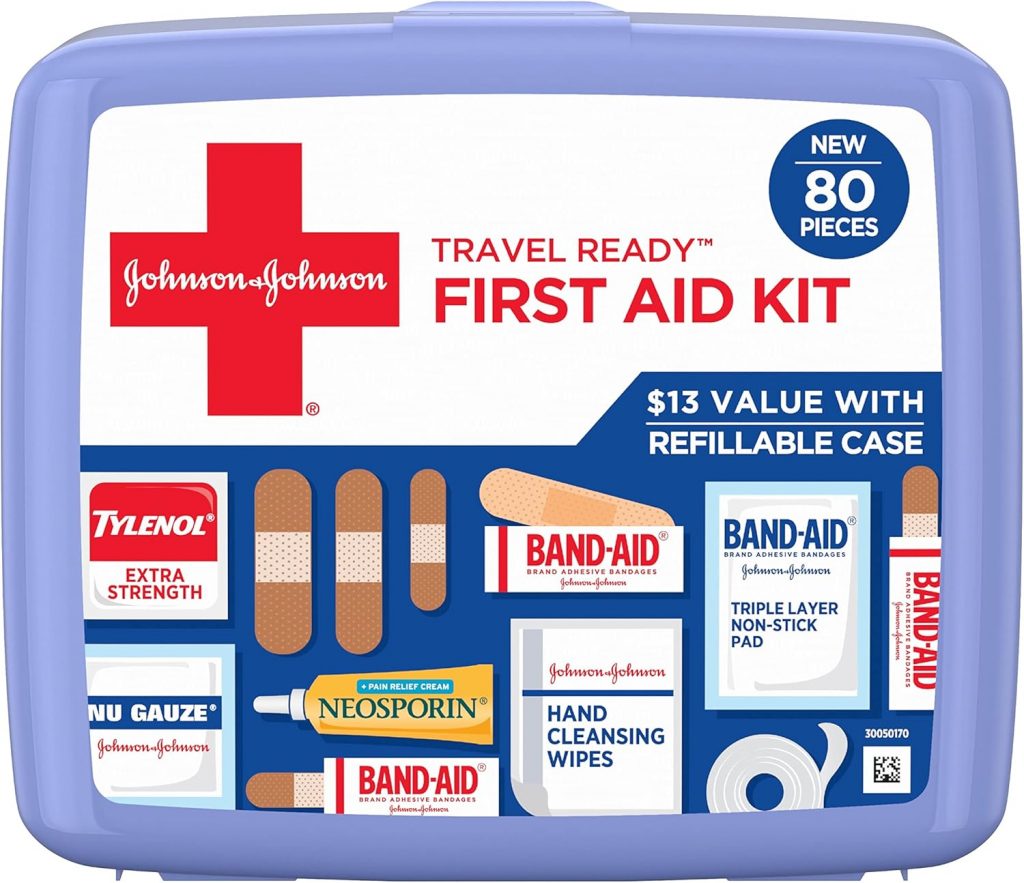
Three options have reliable evidence behind them for cruise-length seasickness prevention: the scopolamine transdermal patch (prescription, lasts 72 hours, apply 4 hours before departure), meclizine such as Bonine (over-the-counter, once daily, less sedating than Dramamine), and dimenhydrinate such as original Dramamine (over-the-counter, effective but causes significant drowsiness). Acupressure wristbands and ginger chews work for mild cases and have no side effects, making them useful as a first-line option or supplement. The right choice depends on your severity of sensitivity and how much drowsiness you can tolerate during active excursion days.
The scopolamine patch is the most consistently effective option for multi-day cruises and the one most experienced Galapagos guides recommend to worried travelers. It delivers continuous medication through the skin behind the ear, requires no daily dosing, and provides protection for 72 hours per patch. The trade-offs: it requires a prescription, can cause dry mouth in roughly 67 percent of users, and occasionally causes blurred vision. The June 2025 FDA update noted a hyperthermia risk in very hot conditions, worth discussing with your doctor before travel to an equatorial destination. Apply the patch the night before or at least four hours before your first crossing for the system to load properly.
Meclizine is the better over-the-counter option for active travelers compared to original Dramamine. It causes meaningfully less drowsiness, which matters when your morning excursion starts at 7am and you need to be functional. Take it an hour before anticipated motion, not after nausea begins. Like all antihistamine-based medications, it interacts with alcohol: avoid drinking on nights when you’ve taken it.
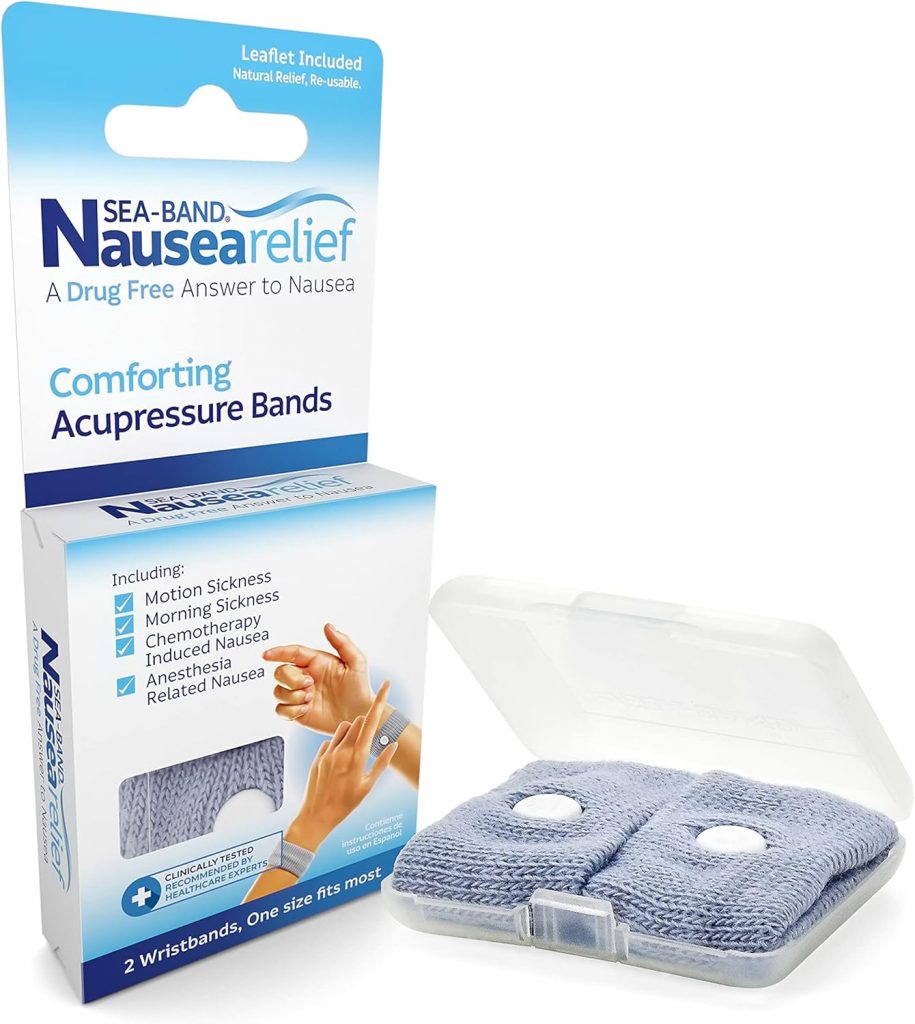
Non-medicated options work well as supplements or for mild cases. Sea-Band acupressure wristbands apply pressure to the P6 point on the inner wrist, which has modest clinical support for reducing nausea. Ginger in chew or supplement form settles the stomach for some travelers. Neither replaces pharmaceutical options for severe motion sensitivity, but both are safe to combine with medication and add a backup layer of protection.
Some Galapagos cruises are built for observation and some are built for participation. Here’s the best Galapagos cruise for active travelers so you end up on the right one.
What Motion-Sensitive Travelers Tell Us After Their Galapagos Cruise
From the thousands of Galapagos cruise travelers Oleg has interviewed through mytrip2ecuador.com and the YouTube channel, motion-sensitive travelers are among the most relieved post-trip groups. The data below reflects aggregate feedback from travelers who booked specifically concerned about seasickness.
| Finding | Result | Context |
|---|---|---|
| Motion-sensitive travelers who completed the trip without significant seasickness problems | ~81% | Highest among those on eastern itinerary, catamaran hull, warm season, with medication |
| Travelers who experienced one rough night but said it didn’t ruin the trip | ~14% | Most common on crossings to Genovesa or through Bolívar Channel in cool season |
| Travelers who said the scopolamine patch was the most effective remedy they used | ~67% | Among those who used prescription medication; consistently rated above OTC options |
| Motion-sensitive travelers who chose a monohull and wished they’d booked a catamaran | ~38% | Primarily on western itinerary cool-season crossings |
| Motion-sensitive travelers who said they would do the Galapagos cruise again | ~88% | Even travelers who had one difficult night overwhelmingly said the wildlife was worth it |
What Else Can You Do Onboard to Manage Motion Sickness?
Four practical habits reduce seasickness risk beyond medication: book a mid-ship lower-deck cabin which experiences the least motion on any vessel, spend time on deck looking at the horizon during crossings rather than below in your cabin, eat light meals rather than skipping food entirely before rough passages, and take medication before symptoms start rather than waiting until you feel unwell. Once nausea is established, most medications become significantly less effective because the stomach stops absorbing them properly.
Cabin position is the most underestimated variable that travelers control at booking time. The stern of a small vessel pitches the most in following seas. The bow pitches the most in head seas. The middle of the vessel on the lower deck stays closest to the vessel’s center of gravity and experiences the least compound motion. This is worth specifically requesting when booking, not just hoping you get a well-positioned cabin. On a catamaran, cabins in either hull tend to experience more lateral motion than mid-ship cabins between the hulls.
Staying on deck in fresh air with a clear view of the horizon is the single most effective non-medicated strategy during a rough crossing. The conflict between what your inner ear senses and what your eyes see is a primary driver of motion sickness. When your eyes can see the stable horizon, the conflict reduces. Going below to your cabin and lying down eliminates the visual anchor and often makes things worse, not better, for people who aren’t already asleep.
Avoiding alcohol the night before and during rough crossings matters more than most travelers expect. Alcohol disrupts the vestibular system’s function and compounds the drowsiness from antihistamine medications significantly. This is harder to follow on a cruise where wine is served at dinner, but for travelers who know they’re heading into a rougher crossing, skipping the evening’s drinks is a practical intervention.
What Are the Biggest Mistakes Seasick-Prone Travelers Make Booking a Galapagos Cruise?
The four most consistent mistakes: booking a monohull vessel without realizing the hull type matters for their comfort, choosing the western itinerary without understanding the Bolívar Channel is the roughest water in the archipelago, traveling in August or September without bringing prescription-level medication, and waiting until they feel sick to take medication rather than starting it the day before departure as a preventive measure. Each is avoidable at the planning stage.
The monohull booking mistake is common because most booking platforms don’t highlight hull type prominently. Travelers see the vessel photo, the price, and the itinerary, and choose based on those. The difference between a catamaran and a small monohull in a swell is not abstract. It’s the difference between sleeping through the crossing and not sleeping through the crossing. Asking specifically what hull type a vessel is, before booking, takes thirty seconds and matters significantly for motion-sensitive travelers.
The medication timing mistake is the other one with direct consequences. Scopolamine patches need four hours to load before departure. Meclizine needs an hour. If you wait until you feel the first hint of nausea before taking something, the medication has to be absorbed by a stomach that’s already starting to reject its contents. The instructions on every motion sickness medication say “take before motion begins” for this reason. For a Galapagos cruise, that means taking your first dose the evening before embarkation, not at the first sign of swell.
Frequently Asked Questions
Is the Galapagos cruise suitable for someone who gets sick on car rides?
Possibly, with the right combination of precautions. Car sickness and seasickness share the same underlying mechanism: sensory conflict between the inner ear and the eyes. If your car sickness is mild and manageable with ginger or acupressure, a catamaran on the eastern itinerary in the warm season is likely manageable with appropriate medication. If your car sickness is severe and persistent, consult a doctor before booking and discuss prescription options like scopolamine. Land-based travel on the inhabited islands is also genuinely excellent and avoids overnight crossings entirely.
Should I tell my cruise operator about my seasickness sensitivity before I book?
Yes, and this is important for two reasons. First, the operator can confirm which specific cabin positions are available and request a mid-ship lower-deck placement on your behalf. Second, some vessels carry onboard medication (usually Dramamine) but this runs out; knowing you’re sensitive allows them to stock appropriately. Third, experienced guides brief the group before rough crossings and take note of who needs extra attention the following morning. Full disclosure is in your interest.
Can I take a land-based Galapagos tour instead to avoid seasickness entirely?
Yes. Land-based travel on Santa Cruz, San Cristobal, and Isabela involves day trips by local speedboat between the inhabited islands, typically 1.5 to 2.5 hours each way. These inter-island ferries can be uncomfortable in rough weather, but you’re not sleeping aboard a moving vessel at night. The trade-off is significant: land-based tours cannot reach Española, Genovesa, Fernandina, or any of the remote cruise-only sites. For travelers with severe motion sensitivity for whom any boat crossing is genuinely debilitating, a land-based approach is a real and genuinely enjoyable option. For those who can manage with medication and the right vessel, the cruise experience delivers something that land-based travel cannot.
Choosing the right vessel, itinerary, and season for a motion-sensitive traveler takes more specific knowledge than most booking platforms provide. We know which vessels in the 2026 fleet are catamarans, which eastern itineraries avoid the roughest crossings, and which warm-season departures give you the best odds of a smooth week. We’re rated 4.9 stars on Google and TripAdvisor. If you want a specific recommendation built around your seasickness concerns, get in touch here and we’ll give you something honest and practical.
Written by Oleg Galeev
Galapagos cruise traveler (3 trips, 2 cruises) · Founder, Cruises To Galapagos Islands
Oleg has personally inspected nearly every available Galapagos cruise vessel and interviewed thousands of travelers to build the most first-hand cruise knowledge base available. He also runs the Ecuador travel blog mytrip2ecuador.com and the YouTube channel My Trip to Somewhere.
Cruises To Galapagos Islands is rated 4.9 stars on Google and TripAdvisor.
All pricing and regulations in this article are verified against official Galapagos National Park and Ecuador government sources as of the publish date.