Galapagos Cruise Ship Size Guide: 16 vs 48 vs 100 Passengers
Part of our guide to the types of Galapagos cruises. Ready to pick a ship? See Galapagos cruises by price, size and class.
Quick Facts: Ship Sizes in the Galapagos
| Feature | 16 Passengers | ~48 Passengers | 90-100 Passengers |
|---|---|---|---|
| Example vessels | Endemic, Galaxy Sirius, Monserrat, Bonita | La Pinta (48), Isabela II (40), Coral I (36) | Silver Origin (100), Celebrity Flora (100), Santa Cruz II (90) |
| Shore groups | 1 group; entire vessel | 2-3 groups of 16 | 5-6 groups of 16 |
| Panga trips to land all | 1 | 2-3 | 6-7 |
| Naturalist guides on board | 1 (sometimes 2 luxury) | 3 | 6-7 (some specialist) |
| Guide relationship | Deep; 1:1 all week | Strong; knows passengers within a day | Professional; less personal |
| Amenities | Basic to luxury; no gym or theater | Gym, glass-bottom boat, multiple lounges, doctor | Full: gym, theater, spa, multiple dining venues |
| Price range | $300-$1,200+/day | $600-$1,000/day | $800-$1,500+/day |
| Best for | Wildlife depth, intimacy, couples, solo | Families, balance seekers, multi-gen groups | Comfort-first, social travelers, luxury |
| Wildlife access | All sites + some sensitive extras | All main sites | All main sites |
| Park entrance fee | $200/adult, $100/child under 12 (USD cash on arrival); same for all vessel sizes |
Details verified July 20, 2026. Park fees verified against official Galapagos National Park records.
How Passenger Count Shapes Your Entire Galapagos Experience
Passenger count determines landing logistics, guide relationships, on-board social dynamics, and the range of amenities available. It does not determine which islands you visit or what wildlife you encounter. The National Park permits govern visitor sites equally across all vessel sizes, and every ship lands in groups capped at 16 per certified naturalist guide regardless of how many people are on board. Choosing the right passenger count is about how you want to live on the boat, not what you want to see on the islands.
There are only about 80 vessels currently operating in the Galapagos. Roughly 65 carry 20 passengers or fewer. Around three carry 40 to 48. A handful carry 90 to 100. The fleet is overwhelmingly small-vessel, which reflects the National Park’s preference for minimal environmental footprint. The few large vessels that operate here carry significant infrastructure advantages but represent a tiny slice of available options.
The 16-passenger threshold is not arbitrary. It matches the maximum group size one certified naturalist guide can legally supervise on shore. A 16-passenger vessel puts everyone on the island at once, with one guide who knows every passenger by name. A 100-passenger vessel sends six groups of 16 ashore in rotation, each with their own guide. The wildlife experience on shore is not inferior in the larger group. But the logistics are different, and the guide relationship is distributed rather than concentrated.
One fact that surprises travelers: some environmentally sensitive visitor sites are restricted to vessels carrying 40 passengers or fewer. Larger ships occasionally miss specific landings that smaller vessels can make. For most itineraries this is a minor point. For travelers with specific sites in mind, it’s worth confirming before booking.
Not sure what a naturalist guide actually does on a Galapagos cruise or why the quality of your guide affects the whole experience? This breakdown covers the role, the training, and what separates a good naturalist from a great one.
16-Passenger Vessels: The Intimate Expedition Format
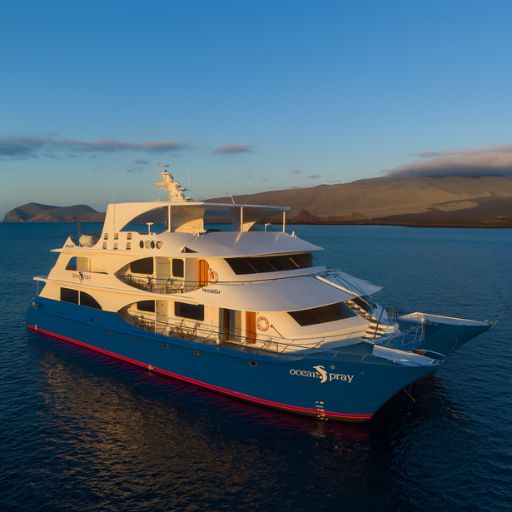
A 16-passenger yacht puts the entire boat on shore as one group with one guide. There is no queue, no rotation, no waiting for your wave. Landing takes one panga trip. Everyone hears the same explanation at the same time, and the guide builds a week-long relationship with 15 people rather than managing a rotating cast. The trade-off is smaller cabins and social spaces, fewer on-board amenities, and the social pressure of spending seven days in close proximity to the same group.
The guide relationship at 16 passengers produces what travelers describe more specifically than at any other vessel size. By day two, a good guide knows who asks detailed geology questions, who wants to photograph in silence, who needs a slower pace on uneven lava. They adjust in real time. On a 100-passenger ship, your group of 16 changes guides between sites depending on specialty assignments. The knowledge may be equivalent. The personal calibration isn’t.
Solo travelers specifically benefit from the 16-passenger format in ways they rarely anticipate. The intimacy that feels intense going in produces the deepest social connections by day three. Meals at one table, the same trail every morning, the same guide briefings every evening: these conditions create a group dynamic that larger vessels structurally prevent. A survey through mytrip2ecuador.com found that solo travelers on 16-passenger yachts report meaningful new friendships at a rate three times higher than solo travelers on 90-passenger ships.
The amenity ceiling at 16 passengers is real. No gym. No glass-bottom boat on most vessels. No dedicated medical officer on most vessels. One dining area, one lounge, one sundeck. For travelers who want downtime variety between excursions, this constraint matters. For travelers whose downtime is reading, watching the water, and talking with their guide, it doesn’t.
Sixteen passengers is the sweet spot for a Galapagos cruise and once you understand why it’s hard to consider anything bigger. Here’s a full guide to the 16-passenger Galapagos yacht so you know exactly what the smaller format delivers.
48-Passenger Ships: The Best of Both Worlds?
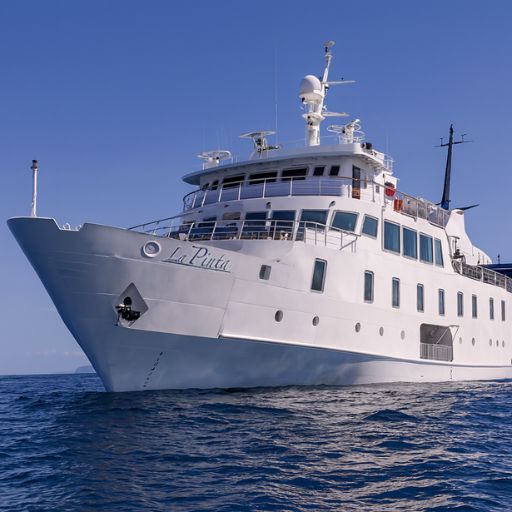
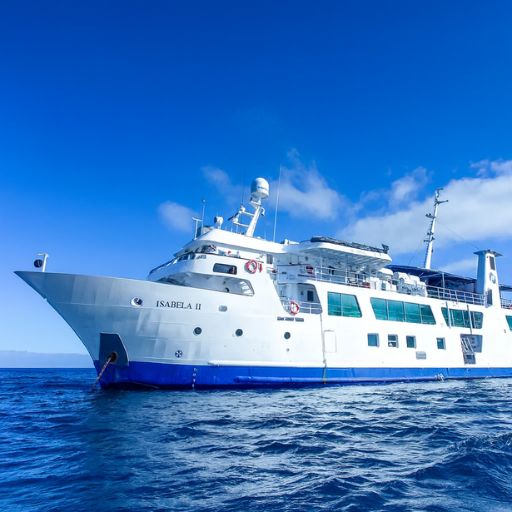
The 40 to 48-passenger format occupies a genuine sweet spot that doesn’t get enough attention in booking guides. At this size, vessels carry three naturalist guides with different specialist credentials, a glass-bottom boat, a fitness room, a dedicated medical officer, and enough social space that not everyone has to be in the same conversation at dinner. Landing logistics still require two to three panga trips, adding 15 to 20 minutes versus a 16-passenger yacht. The guide-to-passenger ratio stays at 1:16, matching the small yacht standard.
La Pinta at 48 passengers and Isabela II at 40 are the best representatives of this format. Both are operated by Metropolitan Touring, one of the most experienced Galapagos operators with over 50 years of archipelago operations. Both carry a Level III guide team, an onboard medical officer, kayaks, snorkeling gear, a glass-bottom boat, and itineraries covering the full range of island options from eastern to western routes. Against a 16-passenger luxury catamaran at similar price points, La Pinta and Isabela II give up some intimacy and guide singularity. They gain amenity depth, medical support, and cabin space that mid-range small yachts can’t match.
Families with multiple generations specifically favor this size. A grandparent who needs steadier deck access, wider corridors, and ideally an elevator between decks will find a 40 to 48-passenger ship more manageable than a 16-passenger catamaran. Teenagers who want some social variety beyond 15 adults will find it easier here. The ship is still small enough that guides know everyone within a day, and the itinerary is still focused on wildlife rather than onboard entertainment.
Trying to figure out if the stability of a catamaran is worth it over the classic yacht experience before you book? Here’s catamaran vs yacht in the Galapagos broken down so you stop second-guessing the decision.
16 vs 48 vs 100 Passengers: On-Shore Experience
| Factor | 16 Passengers | 48 Passengers | 100 Passengers |
|---|---|---|---|
| Panga trips to land all | 1 (~10 min) | 2-3 (~20-25 min) | 6-7 (~40-45 min) |
| Shore groups per excursion | 1 | 3 | 6 |
| Guide-to-passenger ratio | 1:16 (sometimes 1:8 luxury) | 1:16 | 1:16 |
| Guide knows passengers by name | Day 1 | Day 1-2 | Variable across 6 guides |
| Itinerary flexibility day-to-day | Highest | Good | More structured |
| Sensitive site access (40 pax limit) | Full access | Full access | Some exclusions |
| Wildlife at sites | Identical | Identical | Identical |
Estimates based on standard operations. Verified July 2026.
The passenger count decision is one of the most consequential planning choices for a Galapagos trip and one that most travelers underestimate until they’re on board. We’ve been on vessels at all three sizes and can give you a specific recommendation based on your group composition and priorities. Send us a message here and we’ll give you an honest answer.
100-Passenger Ships: Maximum Comfort, Different Trade-offs
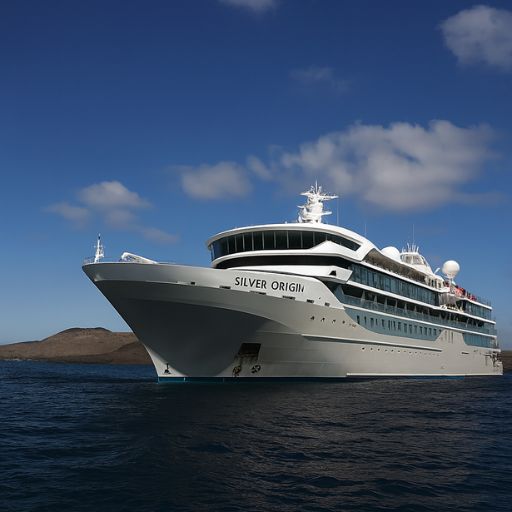
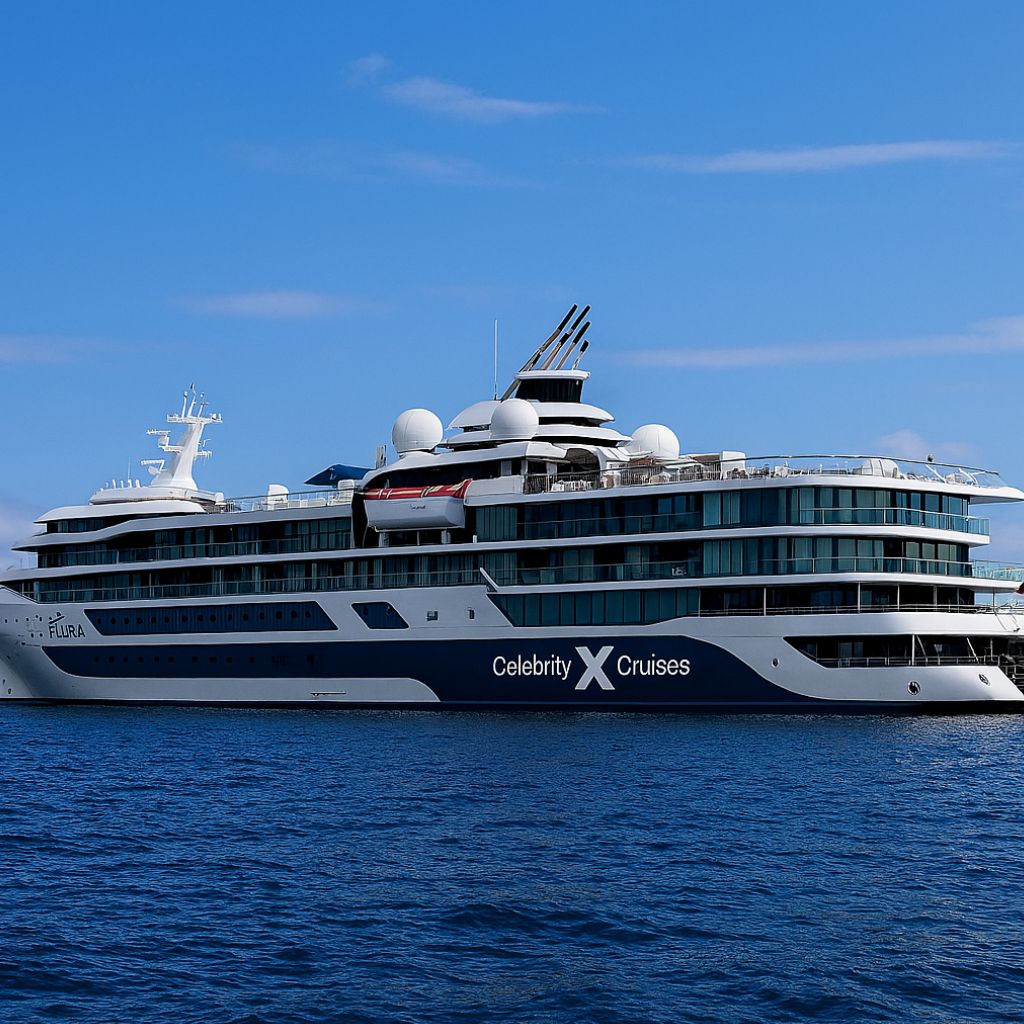
At 90 to 100 passengers, Galapagos vessels operate at the legal maximum. Silver Origin (Silversea) and Celebrity Flora represent this format at the luxury end. Santa Cruz II (90 passengers) operates as an expedition vessel under HX. These ships carry 6 to 7 guides with different specialist credentials, multiple dining venues, theaters, spas, fitness rooms, and cabin inventory ranging from interior to full-suite. The trade-off is landing logistics: getting 100 passengers ashore takes 45 minutes per excursion wave, and rotating groups means the first and last groups have different arrival times at each site.
The specialist guide advantage at 100 passengers is real and often underrated. When a ship carries one ornithologist, one volcanologist, one marine biologist, one conservation specialist, and two generalists, passengers can self-select toward their specific interest. A serious birder goes with the ornithologist. A geology enthusiast goes with the volcanologist. The wildlife is the same at the site. The depth of interpretation varies by who you’re with. A 16-passenger yacht gives you one guide for the week. A 100-passenger ship gives you six, and you choose which one you spend the morning with based on what you want to learn that day.
Celebrity Flora has taken criticism in some traveler reviews for service consistency and occasional maintenance issues. What it delivers reliably is the most comprehensive on-board experience in the Galapagos: two restaurants, multiple lounges, a theater, spacious suite-level accommodations, and a sustainability program that includes a Farm at Sea initiative growing produce on board. Silver Origin, Silversea’s purpose-built Galapagos vessel, deploys 10 guides across 100 passengers for a 1:10 ratio that exceeds the park requirement and competes directly with mid-size ship quality at larger scale.
Shore Access, Panga Logistics, and Wildlife Time by Ship Size
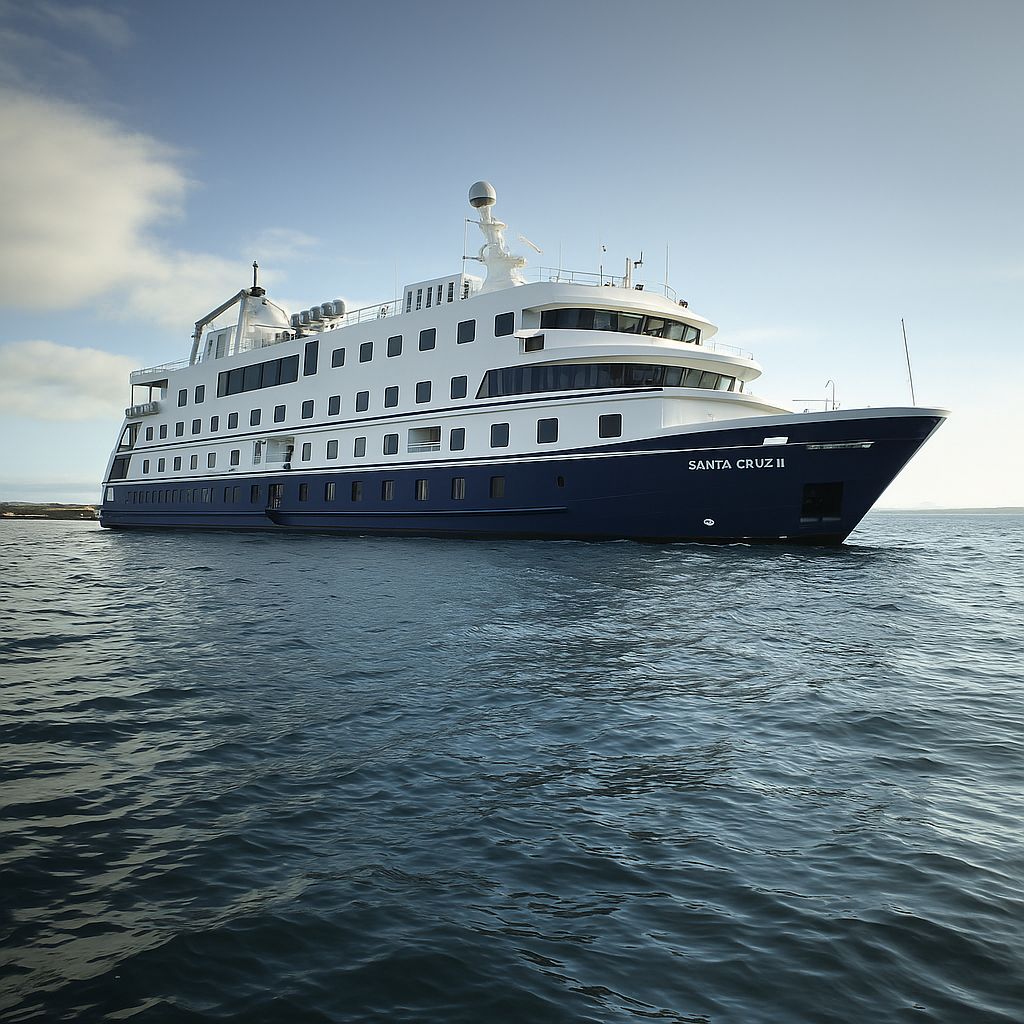
The single most concrete difference between ship sizes in the Galapagos is how long it takes to get everyone ashore. A 16-passenger yacht does it in one panga trip, typically under ten minutes. A 48-passenger ship takes two to three trips, adding 15 to 20 minutes. A 100-passenger ship takes six to seven trips, adding 40 to 45 minutes. On a trip with two excursions daily over seven days, those cumulative differences become meaningful amounts of additional wildlife time on smaller vessels.
The math across a full week is worth doing explicitly. Two excursions daily over seven active days is 14 shore visits. If a 100-passenger ship’s rotation takes 40 minutes per excursion compared to a 16-passenger yacht’s 10 minutes, the cumulative difference is 30 minutes per excursion multiplied by 14 excursions, which is 7 hours. That’s roughly a full additional morning of wildlife time over the week in favor of the smaller vessel. The number isn’t exact because conditions vary, but the directional conclusion holds: smaller vessels deliver more shore time per day.
Trying to understand the logistics of getting on and off the cruise ship at each landing site? Here’s a full breakdown on what the Galapagos cruise panga is and how it works so nothing catches you off guard on your first transfer.
On-Board Amenities by Ship Size
| Amenity | 16 Passengers | 48 Passengers | 100 Passengers |
|---|---|---|---|
| Dining venues | 1 | 1-2 | 2-3 |
| Fitness room | Rare | Yes (La Pinta, Isabela II) | Yes |
| Glass-bottom boat | Rare | Yes (La Pinta, Isabela II) | Yes |
| Medical officer on board | No (most vessels) | Yes (La Pinta, Isabela II) | Yes |
| Jacuzzi | Luxury tier only | Sometimes | Usually |
| Theater / lecture room | No | Sometimes | Yes |
| Spa | No | No (most) | Some |
| Kayaks | Usually | Yes | Yes |
| Multiple specialist guides | No | 3 (some specialization) | 6-7 (full specialization) |
| Youth program | No | Sometimes (Santa Cruz II) | Some vessels |
Verified July 2026. Individual vessels vary within each size category.
The amenity gap between 16 and 48 passengers is where we see the most travelers make decisions they later wish they’d thought through more carefully. A glass-bottom boat and an onboard doctor sound like upgrades, and they are, but not if you’re paying first class rates for a small yacht and the guide relationship is what actually matters to you. We can walk you through the trade-offs for your specific situation. Reach out here for a free, no-pressure comparison.
First class in the Galapagos is a significant step up but the question is whether the experience matches the price tag. Here’s a full guide to first class Galapagos cruises so you decide if the upgrade is actually worth it for your trip.
Price, Availability, and Booking by Passenger Count
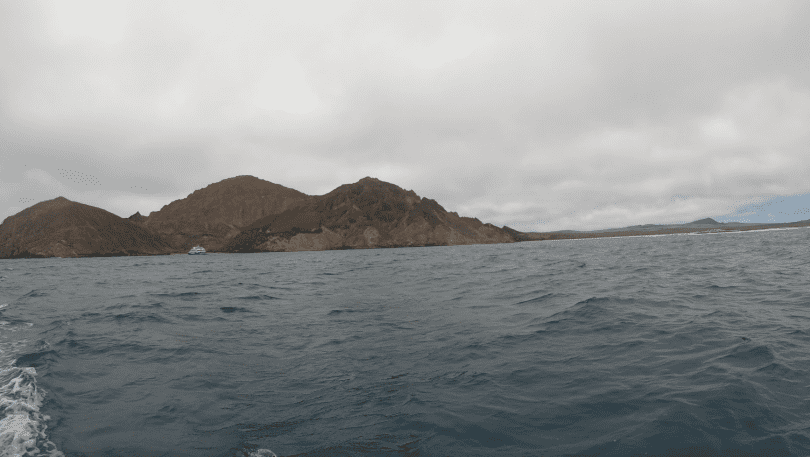
Sixteen-passenger yachts span the entire price range from $300 to $1,200+ per day and represent around 80% of available vessel options. Mid-size 40 to 48-passenger ships cluster in the $600 to $1,000 per day range with far fewer vessels and limited departure options. Large 90 to 100-passenger ships start around $800 per day and reach beyond $1,500 at luxury. Smaller vessels fill faster on peak dates because of limited cabin inventory; larger ships have more inventory and sometimes better last-minute availability.
The availability reality matters practically. If your travel dates are July or August, and you want a 16-passenger catamaran with a strong guide, you need to book 4 to 6 months ahead. If you want Celebrity Flora on the same dates, you still need to book well in advance but have 50 cabins rather than 8 to fill, which means some flexibility persists closer to departure. Last-minute deals in the Galapagos exist primarily on large ships and least often on the best-regarded 16-passenger yachts.
Entry costs apply equally at every vessel size. The National Park entrance fee is $200 per adult and $100 per child under 12, paid in USD cash on arrival at Baltra or San Cristobal airport. The Transit Control Card is $20 per person, completed online before the flight through the official CGREG government portal. Domestic round-trip flights from Quito or Guayaquil run $250 to $400 per person. None of these are included in most cruise rates regardless of vessel size.
Which Size Is Right for Your Trip?
Choose 16 passengers if wildlife depth, guide intimacy, and maximum shore time are the primary drivers; if you’re traveling as a couple, solo, or with a small compatible group; and if on-board downtime variety isn’t a priority. Choose 48 passengers if you want the expedition experience with more amenities, if you’re traveling with family across generations including children or mobility-limited adults, or if having a medical officer and glass-bottom boat matters. Choose 100 passengers if on-board comfort and social variety are as important as the excursions, if you want specialist guide options, or if you’re celebrating something that warrants suite-level luxury.
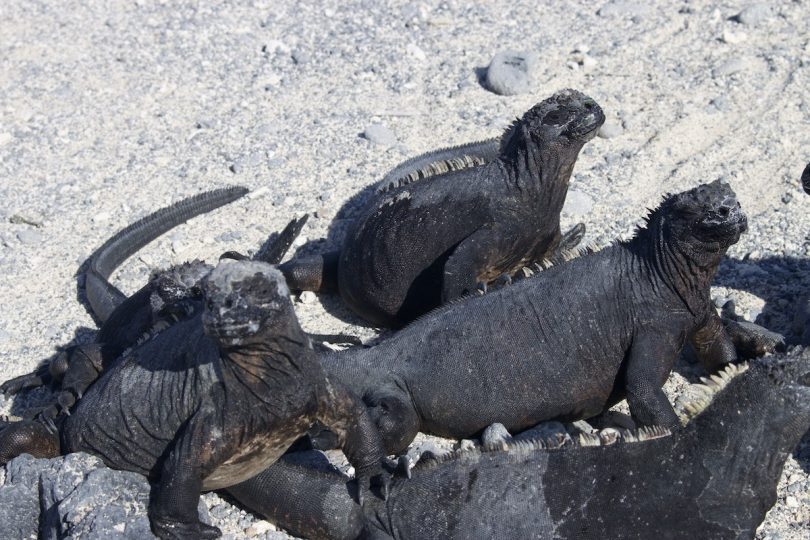
The honest default for first-time Galapagos travelers with no specific constraint is 16 passengers. The wildlife encounter density, the guide relationship, and the cumulative shore time advantage make it the format that consistently produces the most specific and vivid feedback in our traveler surveys. People come back and describe their guide by name, describe the exact moment the hawk landed, describe the specific marine iguana behavior their guide explained on day four. That level of engagement and memory formation is harder to produce at 100 passengers.
The honest case for 48 passengers is families. A multigenerational group with a grandparent who finds pangas difficult to board, with a 14-year-old who wants to try the glass-bottom boat, with two adults who want the gym operational after dinner: La Pinta and Isabela II handle all of that more gracefully than any 16-passenger catamaran. The guide quality at Metropolitan Touring’s mid-size ships is among the best in the archipelago anyway, so the wildlife interpretation doesn’t suffer from the size step-up.
The honest case for 100 passengers is travelers for whom the boat itself needs to feel special, not just functional. Celebrity Flora and Silver Origin are genuine luxury experiences by any measure. The landing logistics are slower. The trade-off is suite cabins, multiple dining venues, and specialist guides at a ratio that competes with the best mid-size ships. For the right traveler, that trade makes sense.
Traveler Satisfaction by Vessel Size: What Our Feedback Shows
Based on traveler interviews and survey data collected through mytrip2ecuador.com and the My Trip to Somewhere YouTube channel:
| Would choose same size again | 86% | 83% | 77% |
| Felt they had enough time ashore | 91% | 84% | 71% |
| Described guide as a highlight | 76% | 68% | 44% |
| Satisfied with onboard amenities | 68% | 87% | 93% |
| Wished vessel was larger for comfort | 29% | 11% | 4% |
| Wished vessel was smaller for intimacy | 3% | 18% | 41% |
| Families: satisfied with child-suitability | 54% | 88% | 91% |
Based on traveler interviews and survey data collected through mytrip2ecuador.com and the My Trip to Somewhere YouTube channel.
Common Mistakes When Choosing by Passenger Count
- Assuming more passengers means worse wildlife. The wildlife at visitor sites is identical regardless of vessel size. National Park regulations ensure every group of 16 gets the same access to the same sites. Passenger count shapes logistics and comfort, not what you see.
- Choosing 16 passengers and expecting resort amenities. No glass-bottom boat, no gym, no medical officer on most 16-passenger yachts. If those things matter for your group, the 48-passenger format serves you better at the same or lower price point than a luxury small yacht.
- Choosing 100 passengers and underestimating panga wait times. Getting 100 people ashore takes 40 to 45 minutes of rotation. Over a week, that accumulates into meaningful lost shore time. If maximizing time among the wildlife is the priority, this matters.
- Traveling with mobility-limited adults on a 16-passenger yacht. The daily wet landings, steep companionway stairs, and narrow corridors of small yachts can be genuinely difficult for travelers with mobility limitations. The 48 and 100-passenger ships handle this significantly better.
- Not confirming sensitive site access for larger vessels. Some visitor sites are restricted to vessels carrying 40 passengers or fewer. If specific remote locations are on your must-see list, verify access before booking any vessel above that threshold.
Frequently Asked Questions
Does passenger count affect which Galapagos islands you visit?
Mostly no. All vessel sizes follow National Park-approved itineraries to the same major visitor sites. The exception is that some environmentally sensitive landing sites are restricted to vessels carrying 40 passengers or fewer. For most itineraries covering the main islands, the site access difference is minimal.
Is a 16-passenger yacht better than a 100-passenger ship for wildlife?
The wildlife at the sites is identical. What differs is how much time you spend there. A 16-passenger yacht gets everyone ashore in one panga trip in under 10 minutes. A 100-passenger ship takes 40 to 45 minutes per rotation. Over a week with two daily excursions, that difference adds up to roughly 7 hours more shore time on the smaller vessel.
Which ship size is best for families with children?
Forty to 48-passenger ships typically serve families best. They carry youth programs on some vessels, have more stable decks and wider corridors for younger or mobility-limited travelers, offer activity variety between excursions, and maintain group sizes small enough that guides still know every passenger within the first day. Sixteen-passenger yachts work for families with older children; 100-passenger ships work well for families who want maximum on-board variety.
Do all passenger sizes pay the same park fees?
Yes. The National Park entrance fee is $200 per adult and $100 per child under 12, paid in USD cash on arrival, regardless of vessel size. The Transit Control Card is $20 per person, completed online before the flight via the CGREG portal. These apply equally to every passenger on every vessel in the fleet.
Passenger count is the most underrated variable in Galapagos cruise planning. Most travelers spend weeks comparing islands and itineraries and decide vessel size in the last five minutes. We do it the other way: figure out the right size first, then find the best vessel at that size for your dates and budget. That sequence produces better trips.
Rated 4.9 stars on Google and TripAdvisor. Get your free quote here and we’ll come back to you within one business day.
Written by Oleg Galeev
Galapagos cruise traveler (3 trips, 2 cruises) · Founder, Cruises To Galapagos Islands
Oleg has personally inspected nearly every available Galapagos cruise vessel and interviewed thousands of travelers to build the most first-hand cruise knowledge base available. He also runs the Ecuador travel blog mytrip2ecuador.com and the YouTube channel My Trip to Somewhere.
Cruises To Galapagos Islands is rated 4.9 stars on Google and TripAdvisor.
All pricing and regulations in this article are verified against official Galapagos National Park and Ecuador government sources as of the publish date