
TL;DR
April is widely considered one of the two or three best months in the entire Galapagos calendar. The wet season rain has largely cleared, the islands are still lush and green, water temperatures peak at their annual high, and the wildlife calendar hits a remarkable convergence point. The waved albatross courtship is in full swing on Española. Sea turtle hatchlings are emerging. Land iguana eggs are hatching on Isabela. Blue-footed boobies are dancing on North Seymour. The one real planning consideration is Easter, which falls in April some years and brings a crowd and pricing spike. Know your dates, book early, and April will likely be the best trip you’ve ever taken.
April in the Galapagos: Quick Facts
| Factor | April Details |
|---|---|
| Air Temperature | 72-88°F (22-31°C) daytime; comfortable evenings |
| Water Temperature | 76-77°F (24-25°C) – peak annual warmth, tied with March |
| Underwater Visibility | Excellent – among the best of the year |
| Rainfall | ~1.4 inches (4 cm) – wet season winding down sharply |
| Sea Conditions | Calm – warm season still holding, trade winds not yet arrived |
| Crowd Level | Variable – quieter outside Easter; busy during Easter week |
| Cruise Pricing | Shoulder rates most of April; Easter week commands peak pricing |
| Wetsuit Needed? | No, warmest water of the year for snorkeling |
| Wildlife Star of Month | Waved albatross full courtship on Española (entire month), sea turtle hatchlings, land iguana hatching on Isabela, blue-footed booby courtship on North Seymour, manta rays active |
| Landscape | Islands still lush and green from wet season rain – peak visual beauty |
| National Park Entry Fee | $200 adults / $100 children under 12 – cash only (Verified May 2026) |
| TCT (INGALA) Card | $20 per person – online completion required before travel (Verified May 2026) |
Is April a Good Month for a Galapagos Cruise?
April is exceptional. The wet season rain has mostly cleared, the islands are still brilliantly green from weeks of warm-season rainfall, water temperatures hit their annual peak, and the wildlife calendar stacks more simultaneous highlights than almost any other month. The waved albatross courtship is in full swing on Española – the single most dramatic wildlife spectacle in the Galapagos and one that only happens here, on this one island, for this specific window each year. April is the month that makes people book a second trip.
The honest case for April is almost unfair to the other months. You get the visual payoff of the wet season, the lush green landscape and impossibly blue water against vivid vegetation, without the heavy rainfall of March. The air is warm but not oppressively humid. The seas are calm. And Española is alive with thousands of albatross pairs running courtship rituals that have no parallel anywhere on earth.
We’ve sent travelers in every month of the year and taken two personal cruises ourselves. April consistently generates the most emotionally charged feedback of any month, not because the wildlife list is longer (though it is full), but because the albatross courtship is the kind of encounter that lands differently than a list of species sightings. Watching two birds that mate for life, who have been apart at sea for months, run through a multi-hour reunion ritual they’ve been doing together for years, a few feet from where you’re standing, is something people carry home and can’t fully explain to anyone who wasn’t there.
The planning caveat is Easter. When it falls in April, that specific week sees peak pricing and fuller boats. Outside that window, April is largely shoulder season, with good availability and softer rates on vessels across all classes.
Want to know which months balance the best wildlife activity with the most comfortable cruising conditions? Here’s our best time of year to take a Galapagos cruise guide so you don’t book the wrong time of year.
What Is the Weather Like in the Galapagos in April?
April is the sweet spot of the warm season. Temperatures run 72-88°F (22-31°C) during the day, rainfall drops sharply from March’s peak to just 1.4 inches for the month, and water temperatures hold at their annual warmest around 76-77°F (24-25°C). Seas are calm, humidity is lower than February or March, and the islands are still green and lush from the wet season. Most travelers find April’s weather the most comfortable of the entire warm season.
The rainfall drop from March to April is significant. March averages 3.3 inches across the month. April falls to roughly 1.4 inches. What that means on the ground is that you get the visual legacy of the rainy season, the incredible greenness and saturated colors, without the afternoon downpours that characterize February and March. When it does rain in April, it’s brief. Most days are clear, warm, and sunny from morning through evening.
The humidity shift is worth calling out specifically. February and March in the Galapagos carry high humidity that some travelers find draining on long shore excursions. April is still warm but the air is noticeably drier. The transition toward the cool, dry garúa season begins in May and June, and April catches the leading edge of that shift. It’s warm enough to enjoy all the water activities fully, but not the kind of heat that makes hiking feel like a punishment.
Water temperature deserves a second mention here. April and March share the annual peak at 76-77°F (24-25°C). This is the warmest the Galapagos water gets all year. No wetsuit needed, not even for long snorkeling sessions. By July, water temperatures can be down to 65°F or lower in some areas. April snorkelers are in a genuinely different physical experience than those who come in the cooler months.
| Month | Air Temp (°F) | Water Temp (°F) | Rainfall | Humidity | Albatross on Española? |
|---|---|---|---|---|---|
| February | 75-86 | 76 | 2.6 in | High | No |
| March | 77-90 | 76-77 | 3.3 in (peak) | High | Late month only |
| April | 72-88 | 76-77 (peak) | 1.4 in | Moderate | Yes, full courtship |
| May | 72-82 | 74 | 0.6 in | Low-Moderate | Yes, eggs being laid |
| June | 70-77 | 67-70 | Minimal | Low | Yes, incubating |
What Wildlife Can You See on a Galapagos Cruise in April?
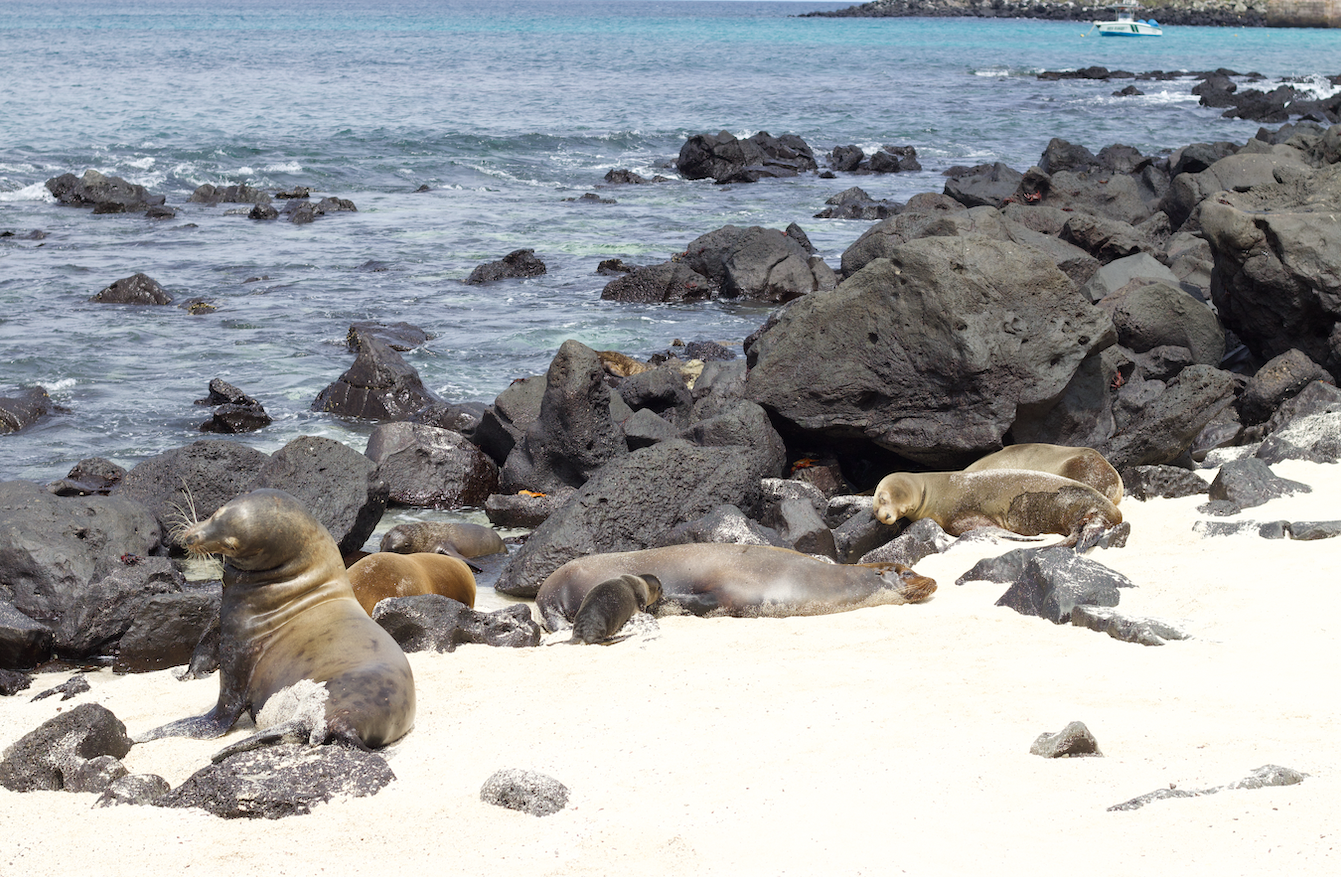
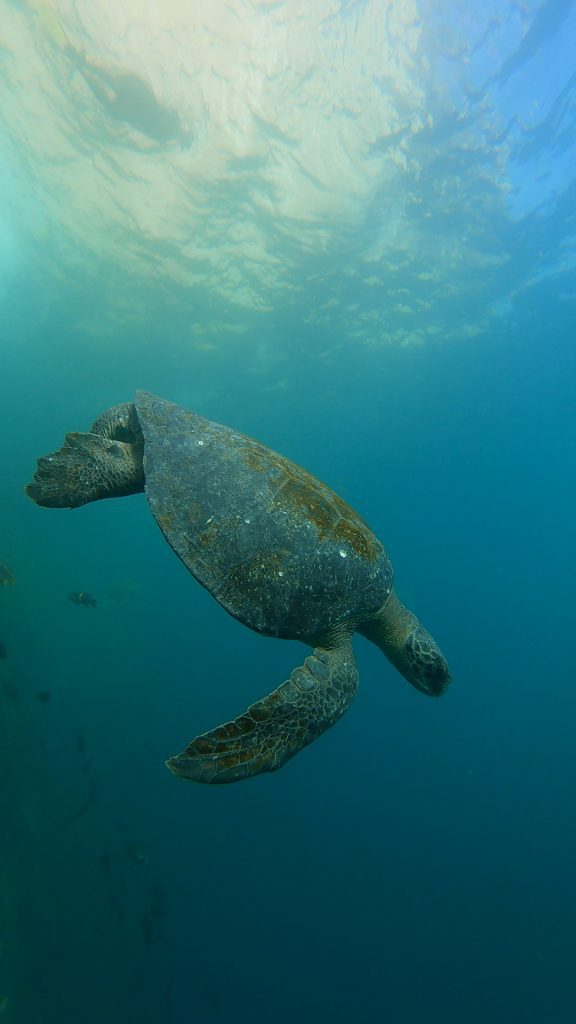
April delivers the most stacked wildlife calendar of the warm season. Waved albatross courtship is at full intensity on Española. Green sea turtle hatchlings are emerging on beaches at Santa Cruz and Floreana. Land iguana eggs are hatching on Isabela. Blue-footed boobies are performing courtship dances on North Seymour. Giant tortoise hatching season is in its final stretch. Marine life in the water includes manta rays, hammerhead sharks, sea turtles, and sea lions in peak-visibility warm water. The islands are lush, birds are active, and almost everything is happening at once.
The sheer density of simultaneous wildlife activity in April is unusual even by Galapagos standards. On a well-routed eight-day itinerary, a traveler in April can realistically encounter: the albatross courtship on Española, sea turtle hatchlings at night on Floreana or Santa Cruz beaches, blue-footed booby sky-pointing dances on North Seymour, manta rays on snorkel dives at sites like Punta Vicente Roca, and flamingos still visible at lagoon sites from the nesting season. That’s not a wishlist. It’s a realistic expectation from a cruise that covers eastern and southern islands in April.
The baby animal convergence is worth dwelling on. April catches the final stretch of giant tortoise hatching season, which began in December and runs through the month. Sea turtle hatchlings are emerging from nests at dusk and making their run to the water. Land iguana hatchlings on Isabela are digging out from their underground nests. Watching a baby giant tortoise, a few inches long and seemingly invincible in its resolve, navigate toward the highlands is one of those quiet, unhurried moments that Galapagos does better than anywhere else on earth.
Below the surface, April’s warm, clear water makes snorkeling encounters feel effortless. Sea lions are playful and interactive. Manta ray sightings continue at rates that peak through March and April. Hammerhead sharks are present at Gordon Rocks and Kicker Rock year-round, and the warm water makes those encounters considerably more comfortable than in the cooler months. The visibility in April allows you to watch what’s happening thirty feet below from the surface, which changes the whole experience.
April itineraries vary significantly in what they actually cover. Not every cruise route includes Española, North Seymour, and the western islands on the same trip. Getting all the April highlights into one itinerary requires knowing which routes are right for your specific travel dates. We’ve reviewed the April departure schedules across most operating vessels and can point you directly to the boats that fit. Reach out here and we’ll put together a no-pressure comparison for your travel window.
What Makes April Special: The Waved Albatross Courtship
The waved albatross courtship on Española Island is the single most extraordinary wildlife event in the Galapagos calendar. Nearly the entire global population of this species, around 50,000 breeding pairs, returns to Española each year between March and April. The courtship ritual between mated pairs involves up to five days of synchronized bill-clacking, bowing, head-swaying, waddling, and vocalizations. It is one of the most elaborate pair-bonding rituals in the animal kingdom and it happens on exactly one island on earth.
Start with the scale. The waved albatross is the only albatross species that breeds in the tropics, and essentially its entire global population nests exclusively at Punta Suarez on Española. There is nowhere else on earth to see this happen. Not a different island in the Galapagos. Not another country. One specific headland on one specific island, accessible only by cruise, for roughly nine months of the year. April is when the courtship is at its most active and visually spectacular, before the pairs settle into egg-laying in mid-April through July.
The ritual itself defies easy description. These birds mate for life and use their courtship dance as a fingerprint, a way to verify they have found their specific partner after months apart at sea. The sequence involves rapid bill fencing where the beaks clack together at speed, exaggerated bowing with the neck extended low to the ground, upright posturing with the bill pointed skyward, and a waddling strut that looks, frankly, absurd for an animal with an eight-foot wingspan. A pair reuniting after a failed breeding season or coupling for the first time will run through an even longer and more elaborate version.
What catches travelers off guard is how close you get. The trail at Punta Suarez runs directly through the colony. The albatross has no fear of humans and will not move for you. You walk past birds in mid-display from a meter away. Two birds beak-fencing inches from your boots while you stand completely still. It generates the kind of silence in a group of people that nothing else in the Galapagos quite replicates.
One practical detail worth knowing: Española is the southernmost island in the archipelago, accessible only by cruise. Not all itineraries include it, and day trips from San Cristóbal are the only alternative. If the albatross courtship is your primary reason for traveling to the Galapagos in April, verify that your specific vessel and itinerary visit Punta Suarez on Española before you book anything else.
The albatross is a non-negotiable for many travelers planning an April cruise, and the itinerary question around Española is the first thing we sort out when planning April departures. If you want certainty that your cruise visits Punta Suarez at the right point in your itinerary, we can confirm that for you before you commit to anything. Fill out this short form with your travel window and group details and we’ll get straight to the point.
What Are the Best Islands to Visit on a Galapagos Cruise in April?
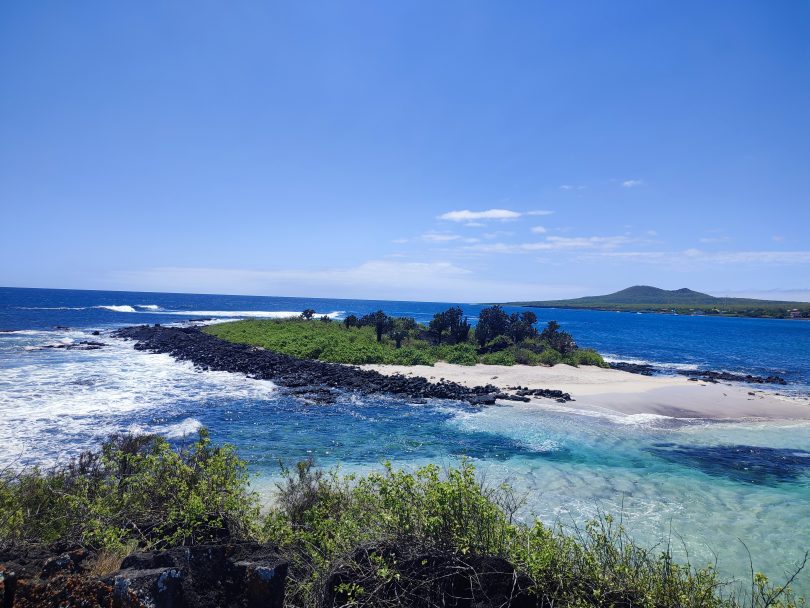
For April specifically, the five islands with the highest wildlife payoff are Española (waved albatross courtship, Nazca boobies, colorful marine iguanas), North Seymour (blue-footed booby courtship dances, magnificent frigatebirds), Genovesa (red-footed boobies, great frigatebirds, exceptional snorkeling at Darwin Bay), Fernandina (marine iguanas, flightless cormorants, penguins, pristine volcanic landscape), and Floreana (flamingos, sea turtle hatchling beaches, Devil’s Crown snorkeling). A well-designed eight-day itinerary can reach four of these five.
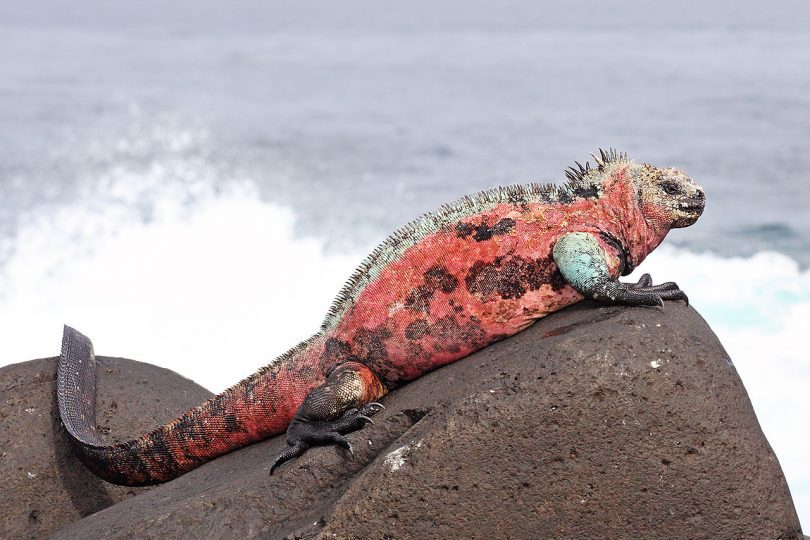
Española is the anchor of any April itinerary worth building. Punta Suarez delivers the albatross, but the island also holds Nazca boobies nesting near the trail, a spectacular blowhole that launches water twenty feet into the air, and the most colorful marine iguanas in the entire archipelago, with red and green pigmentation that intensifies during mating season. Gardner Bay on the other side of the island has one of the best snorkeling sites in the Galapagos and a sea lion colony on white sand beach. Española is two full excursions, morning and afternoon, and both are justified.
North Seymour is small, walkable in under two hours, and unreasonably productive. Blue-footed boobies here perform their courtship sky-pointing dance where the male stretches his neck upward and presents his blue feet to passing females, right on the path in front of you. Magnificent frigatebirds with their crimson pouches inflated sit in the low scrub on both sides. Land iguanas relocate here from nearby Baltra share the trail. It’s the kind of island that justifies the “wildlife unafraid of humans” reputation of the Galapagos in a very concentrated, efficient way.
Genovesa, in the far north, requires a longer ocean crossing but rewards it. Darwin Bay is a shallow, sheltered snorkeling site inside a submerged volcanic caldera where the water is unusually clear and calm. Red-footed boobies nest in the Palo Santo trees here, the only island where you consistently see them at eye level rather than in cliffs above. Great frigatebirds display alongside. The crossing to Genovesa can be rougher than the central island routes, so this one is best for travelers without strong seasickness tendencies.
Fernandina is the most pristine island in the entire archipelago, completely uninhabited, and the youngest geologically. Punta Espinosa delivers the largest marine iguana colonies anywhere in the Galapagos, flightless cormorants nesting on the lava, and Galapagos penguins swimming in the Bolivar Channel. The landscape is raw black lava with almost no vegetation, which makes the density of wildlife on it feel even more improbable. April visits here have calm channel conditions that can make Fernandina snorkeling extraordinary.
How Crowded Is the Galapagos in April?
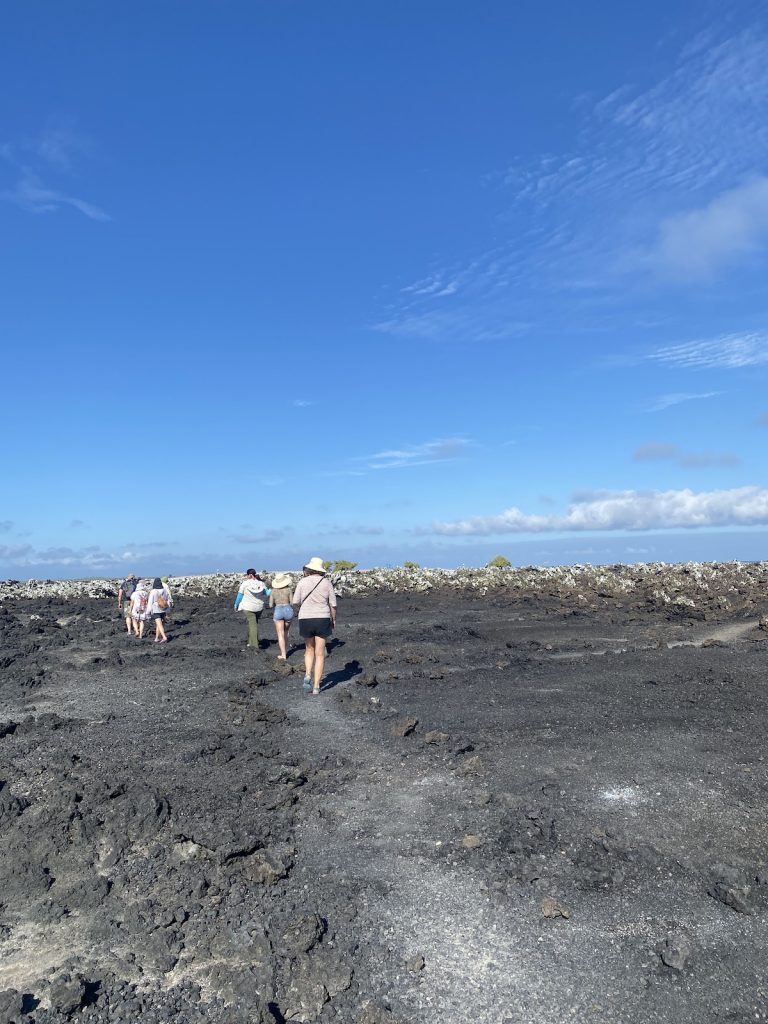
Outside the Easter window, April is moderate shoulder season with manageable visitor numbers. Easter, which falls in April many years, drives the biggest crowd spike of the first half of the year. During Easter week, boats fill across all classes, prices jump 20-30%, and the more popular anchorages see multiple vessels visiting the same sites. Outside that specific week, April feels noticeably quieter than the July-August peak or December-January holiday period.
The crowd mechanics in the Galapagos are worth understanding correctly. Because the National Park limits each visitor group to 16 people per landing site, the experience on shore never feels like a mass tourism destination regardless of month. What actually changes is the number of other boats anchored near yours and the competition for specific itinerary slots. In a busy week, your naturalist guide may be navigating minor scheduling overlaps with other vessels at popular sites. In a quiet week, you’re at many sites effectively alone.
April outside Easter is generally quiet by Galapagos standards. The March crowds have cleared. The June-August summer rush hasn’t started. Families with school-age children can’t travel freely mid-semester, which reduces the demographic most likely to cluster at peak periods. For a couple or two adults without school calendar constraints, the weeks of April that fall outside Easter represent very good value, combining the best wildlife month of the warm season with moderate pricing and manageable visitor numbers.
One thing worth knowing specifically for April: because the albatross is such a compelling draw, April does attract more dedicated wildlife travelers and birdwatchers than other months. This affects the crowd composition more than the crowd size. Shore landings at Española in April will have a higher concentration of people specifically there to see the albatross than you’d find at most sites in February. Still well within the National Park limits. But worth knowing if you’re expecting to feel like you have the island to yourself.
How Much Does a Galapagos Cruise Cost in April?
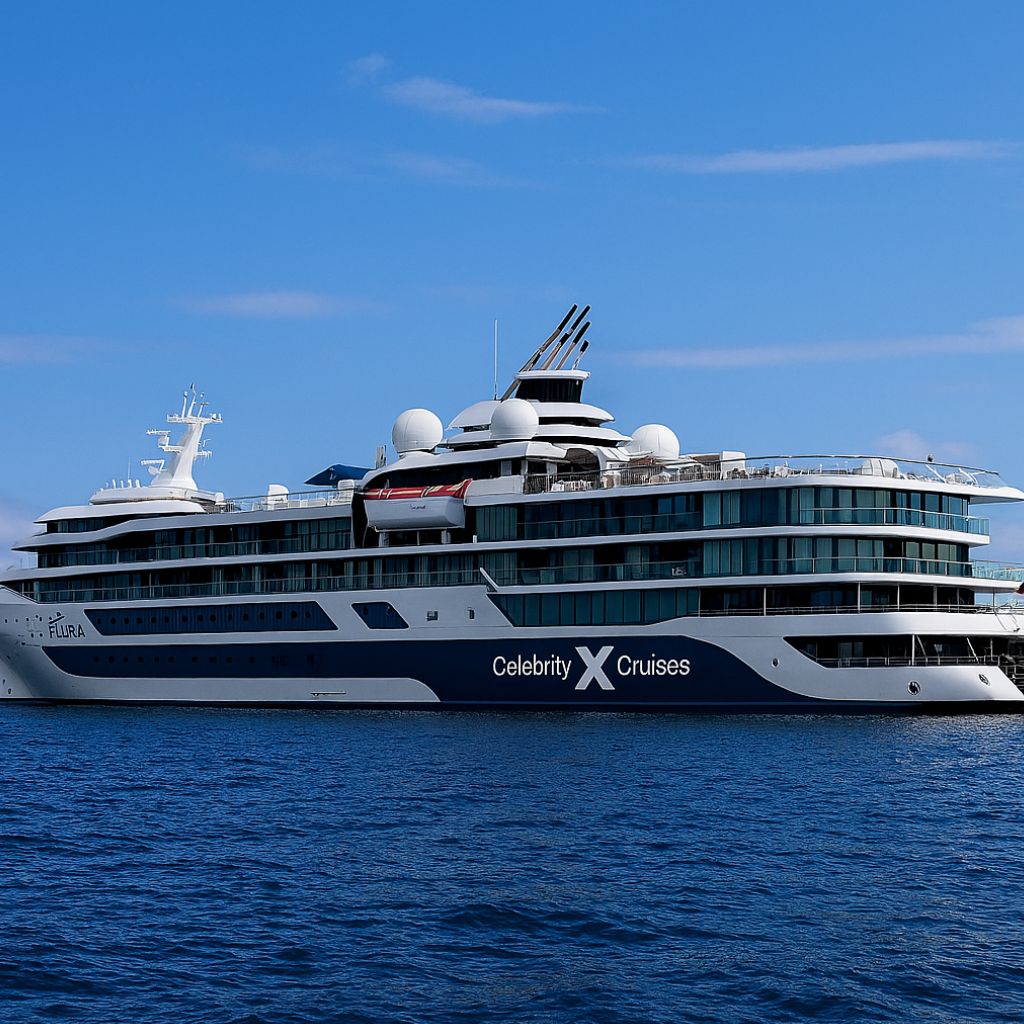
April pricing is shoulder season for most of the month, running 10-20% below the July-August summer peak or the Christmas-January holiday period. Budget options start around $250-$430 per person per day. Mid-range (tourist superior) vessels run $450-$600 per day. First-class type of Galapagos cruises fall between $610-$780 per day. Luxury yachts start at $800 and go to $1,700 per day. Easter week commands peak pricing across all classes with the best boats fully committed months ahead.
The entry fees are fixed for all visitors. The Galapagos National Park entrance fee is $200 USD per adult and $100 for children under 12, paid in cash on arrival at the island airport. The Transit Control Card (TCT) costs $20 per person and must be completed through the official government portal online before your flight. Both are required. (Prices verified May 2026)
The pricing split within April is sharper than most travelers realize. A mid-range vessel in the first week of April might have a handful of available cabins at normal rates. The same vessel during Easter week, if Easter falls in April that year, could be fully committed eight months ahead with no discounts available. The gap between a mid-April departure outside Easter and an Easter week departure on equivalent vessels can easily run $400-$600 per person on a week-long cruise when you factor in the premium pricing operators charge for that window.
One underappreciated April pricing dynamic: because the waved albatross is a known April draw, some operators price their April departures with that in mind. A luxury vessel specifically marketing its April Española itinerary to albatross-focused wildlife travelers can charge a premium based on demand. This is less pronounced in the mid-range and budget categories, where pricing is more straightforwardly seasonal. But if you’re comparing luxury boats, verify that the April premium isn’t disproportionate relative to what the itinerary actually includes.
| Cruise Class | Per Day (per person) | 7-Day Total (per person) | April Note |
|---|---|---|---|
| Budget | $250-$430 | ~$1,800-$3,000 | Available outside Easter; Easter week fills weeks ahead |
| Tourist Superior (Mid-Range) | $450-$600 | ~$3,100-$4,200 | Shoulder pricing most of April; peak during Easter week |
| First Class | $610-$780 | ~$4,300-$5,500 | Book 4-6 months ahead; Easter week 8-12 months |
| Luxury | $800-$1,700+ | $5,600-$12,000+ | Premium pricing common for albatross-focused April departures |
| Fixed entry fees (all visitors): National Park $200/adult, $100/child. TCT card $20/person. Both required regardless of cruise class or season. |
April pricing is more nuanced than almost any other month because of the Easter variable and the albatross premium. We track availability across the full April calendar and can show you which vessels and departures offer the best combination of itinerary, price, and timing for your specific travel window. Send us a message here and we’ll put together an honest comparison at no cost or obligation.
When Should You Book an April Galapagos Cruise?
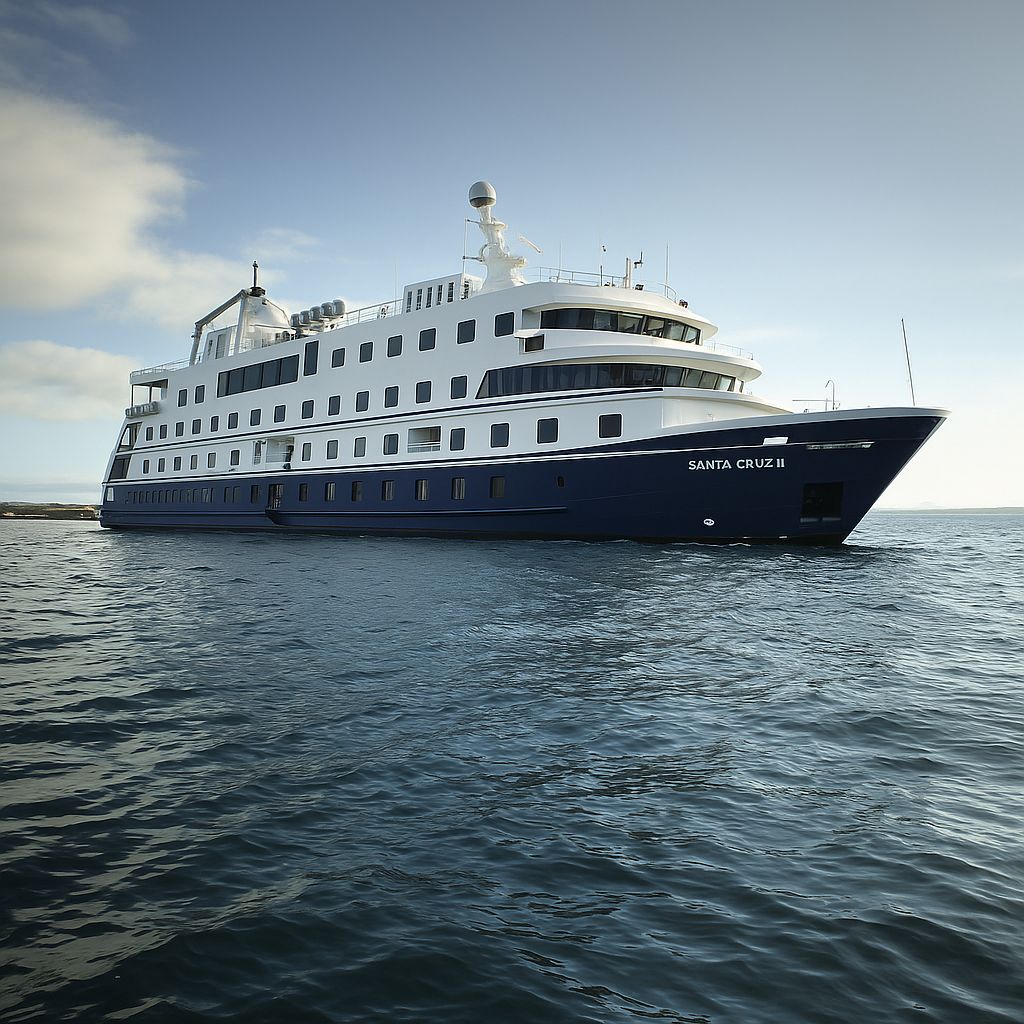
For April departures outside Easter week, book 4-6 months ahead for mid-range and first-class vessels. Easter week itself requires 8-12 months advance booking across all quality classes, with luxury yachts potentially longer. Budget boats have more flexibility but best cabins still go early. The combination of April being one of the best wildlife months and Easter falling there many years makes it one of the most competitively booked months in the Galapagos calendar. Do not assume late availability.
The first step, always, is to check whether Easter falls in April for your specific travel year. Easter Sunday moves between late March and mid-April annually. When it lands in April, the entire wildlife appeal of the month, already high, converges with the busiest holiday demand of the first half of the year. Quality boats that might have had open cabins in a quiet April become fully booked as far as eight months ahead. Travelers who discover this in January for an April trip that includes Easter week often find their preferred vessel long gone.
Outside Easter, the April booking window is more forgiving than many travelers expect, given how strong the month is. The reason is that April doesn’t have the same mass awareness as Christmas or summer. Families with school-age children can’t take most of April as freely, which reduces competition from that large segment. Couples, retirees, and adults without school calendar constraints represent the majority of April bookings, and that group tends to plan further ahead individually but doesn’t drive the same frenzied booking activity as the school holiday peaks. Four to six months ahead is genuinely workable for most non-Easter April departures.
One April-specific booking consideration: if your priority is the waved albatross and you want to be certain your cruise visits Española, confirm that specific island is on the itinerary before paying any deposit. Not all routes include Española. A cruise that covers the central and northern islands without dipping south to the outer eastern group will miss it entirely. This is worth verifying explicitly, not assuming.
What April Travelers Report: Insights from Our Community
From the thousands of Galapagos cruise travelers Oleg has spoken with through mytrip2ecuador.com and the YouTube channel My Trip to Somewhere, April produces the highest satisfaction scores of any warm-season month. These patterns emerged consistently across multiple seasons of traveler conversations:
| Category | Finding | Traveler Notes |
|---|---|---|
| Overall satisfaction | ~93% rated April as “excellent” or “life-changing” | “The albatross alone was worth the entire trip” |
| Top wildlife moment | ~78% cited the waved albatross courtship as their single most memorable experience | “I’ve done safaris in Africa. Nothing prepared me for Española in April” |
| Regrets | ~36% wished they had booked a longer cruise to reach more islands | “We missed Genovesa because our itinerary only went south – would book 8 days next time” |
| Easter crowd impact | ~31% of Easter-week travelers noticed noticeably more vessels at anchor | “Shore experience was still great – the 16-person cap helps – but evenings at anchor felt busy” |
| Water experience | ~89% rated snorkeling conditions as the best they had ever experienced | “Warmest, clearest, most wildlife-dense snorkeling of my life – no wetsuit, stayed in for hours” |
| Would recommend April specifically | ~87% said they would specifically recommend April for the albatross | “If you can go in April, go in April. Just make sure your boat goes to Española” |
What Catches April Travelers Off Guard
April is genuinely one of the smoothest months for Galapagos travel, but a handful of specific surprises come up repeatedly in traveler feedback:
The biggest and most preventable issue is booking a cruise that doesn’t visit Española. Travelers who come to the Galapagos in April specifically for the albatross, sometimes without realizing they need to verify the island is on their itinerary, occasionally discover on board that Española isn’t on the route. This is entirely avoidable with one direct question to your booking contact before you pay a deposit. Ask: does this itinerary include a landing at Punta Suarez on Española? If the answer is no, and the albatross matters to you, find a different boat.
The sea turtle hatchling timing is less predictable than most guides suggest. Hatchlings emerge at dusk and after dark, and their emergence from specific nests isn’t scheduled. Seeing them at all depends on which beaches your cruise visits and whether active nests happen to be hatching during your stay. Boats with naturalist guides who monitor beach activity can improve your chances significantly. Ask about this when evaluating vessels, it’s a detail that separates engaged guides from indifferent ones.
The Easter pricing trap catches travelers every year. When Easter falls in April, which it does many years, the week around it commands peak pricing across all cruise classes. Travelers who discover this in January for an April trip often find the boats they wanted fully booked at whatever prices they carry for that week. Always check the Easter calendar for your travel year. If Easter falls in your April window and you want a specific vessel, your booking timeline needs to be extended accordingly.
Finally, the online biosafety form. All Galapagos visitors must complete this digitally before their flight using the official government portal. It replaced the in-person airport process as of May 2026. Seeds, fresh produce, plants, and certain organic materials are prohibited. The form takes five minutes. Do it the day before your flight, save the QR code, and skip the airport delay entirely.
Frequently Asked Questions
Can you see the waved albatross in April in the Galapagos?
Yes. April is peak waved albatross season on Española Island. After returning from months at sea in late March, the birds spend April in full courtship display mode before egg-laying begins mid-month through July. The courtship ritual, a synchronized multi-hour dance of bill-clacking, bowing, and waddling between mated pairs, is at its most active and dramatic during April. Española is the only place on earth where this species breeds.
Is April the best month to visit the Galapagos?
April is genuinely one of the two or three strongest months in the Galapagos calendar. The wet season rain has cleared but the islands are still green and lush, water temperatures peak at their annual warmest, visibility is excellent, and the wildlife calendar stacks more simultaneous highlights than almost any other month. The only meaningful competition comes from May (shoulder season prices, transitional wildlife) and October (cooler season marine life). April’s specific advantage is the albatross courtship, which no other month can match.
Is it raining in the Galapagos in April?
Very little. April rainfall averages just 1.4 inches for the month, down sharply from March’s 3.3-inch peak. The wet season is winding down rapidly in April. Most days are clear and sunny. When rain does fall, it’s typically a brief shower that clears within the hour. The islands still look green and vivid from months of wet-season rainfall, but you’re not dealing with the afternoon downpours of February or March.
How far in advance should I book an April Galapagos cruise?
For non-Easter April departures, book 4-6 months ahead for mid-range and first-class vessels. Easter week departures require 8-12 months ahead across quality boats. Always check whether Easter falls in April for your specific travel year before setting your booking timeline. Luxury yachts require the longest lead times in any case. Budget boats have more flexibility, but the best cabins go early regardless of class.
Do I need to book a specific itinerary to see the waved albatross?
Yes. The waved albatross breeds exclusively at Punta Suarez on Española Island. Not all cruise itineraries visit Española. Eastern and southeastern itineraries typically include it; central and northern routes often do not. Before booking, ask your operator directly whether the cruise includes a landing at Punta Suarez on Española. If the albatross is your priority and the answer is no, choose a different vessel or route.
What entry fees are required for the Galapagos?
All visitors must pay the Galapagos National Park entrance fee of $200 USD for adults and $100 for children under 12, paid in cash on arrival. A Transit Control Card (TCT) also costs $20 per person, completed through the official government online portal before your flight. Both fees apply to all visitors regardless of cruise class, travel month, or nationality. (Verified May 2026)
Ready to Plan Your April Galapagos Cruise?
April is the month we most often point wildlife-focused travelers toward, and the waved albatross courtship on Española is one of the reasons why. But getting the most out of April means having the right itinerary on the right vessel, timed correctly relative to Easter and the albatross schedule.
We’ve personally inspected nearly every cruise vessel operating in the islands, taken two cruises ourselves, and built our service on the traveler feedback of thousands of people who have been there before you. We offer free, no-commitment cruise planning and price quotes. Rated 4.9 stars on Google and TripAdvisor.
Get your free April cruise quote here
Written by Oleg Galeev
Galapagos cruise traveler (3 trips, 2 cruises) · Founder, Cruises To Galapagos Islands
Oleg has personally inspected nearly every available Galapagos cruise vessel and interviewed thousands of travelers to build the most first-hand cruise knowledge base available. He also runs the Ecuador travel blog mytrip2ecuador.com and the YouTube channel My Trip to Somewhere.
Cruises To Galapagos Islands is rated 4.9 stars on Google and TripAdvisor.
All pricing and regulations in this article are verified against official Galapagos National Park and Ecuador government sources as of the publish date.