
TL;DR
The Galapagos caps all vessels at 100 passengers. Small yachts carry 16 or fewer. Large ships carry 50 to 100. The wildlife is identical either way. Small yachts win on intimacy, guide relationships, itinerary flexibility, and shore access speed. Large ships win on cabin space, onboard amenities, social variety, and stability in rough water. For most first-time visitors who want the deepest wildlife experience, a small yacht of 16 passengers is the stronger choice. For families, travelers prone to seasickness, or anyone who values onboard comfort and activities alongside the excursions, a larger ship makes sense.
Quick Comparison: Small Yacht vs Large Ship at a Glance
| Feature | Small Yacht (up to 16) | Mid-Size Ship (40-50) | Large Ship (70-100) |
|---|---|---|---|
| Passenger count | 8-16 | 40-50 | 70-100 |
| Shore group size | All 16 in one group | Multiple groups of 16 | Multiple groups of 16 |
| Time to get ashore | Fast; one panga trip | Moderate; 2-3 trips | Slower; 5-7 trips |
| Guide relationship | Deeply personal | Good | More structured |
| Cabin size | Variable; sometimes small | Comfortable | Generally spacious |
| Onboard amenities | Basic to good | Good; often jacuzzi | Best; gym, spa, glass-bottom boat |
| Seasickness risk | Higher (monohull); lower (catamaran) | Moderate | Lower overall |
| Itinerary flexibility | More flexible day-to-day | Some flexibility | More structured |
| Wildlife access | Identical | Identical | Identical; some site limits |
| Price range | $300-$1,200+/day | $600-$1,000/day | $800-$1,200+/day |
| Best for | Wildlife depth, intimacy, couples | Balance seekers, families | Comfort-first, seasick-prone, families |
Prices verified July 20, 2026.
What Counts as a Small Yacht vs a Large Ship in the Galapagos?
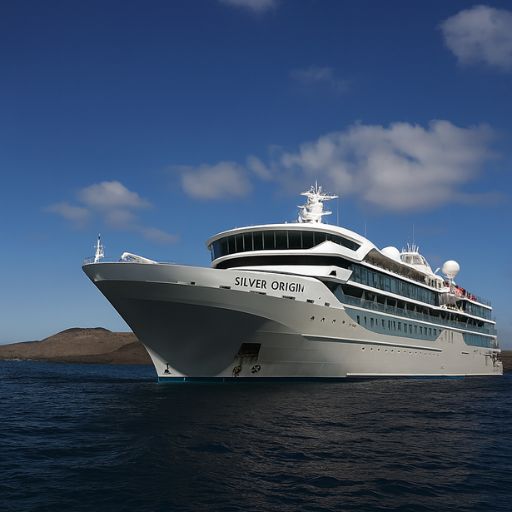
The Galapagos National Park caps all cruise vessels at 100 passengers. That’s the maximum. Most vessels fall into three size ranges: small yachts carrying up to 16 passengers, mid-size ships carrying 40 to 50, and large ships carrying 70 to 100. The 16-passenger figure isn’t arbitrary. It’s the maximum number of guests one certified naturalist guide can legally supervise on shore, which is why it functions as the defining threshold for small yacht operations.
Walk into any marina in Puerto Ayora and you’ll see the full range. A sleek 16-passenger catamaran anchored next to a 90-passenger expedition ship looks almost comically mismatched. But in the water and on the islands, the experience gap between them is more nuanced than the size difference suggests.
About 80% of vessels currently operating in the Galapagos are small yachts carrying 20 passengers or fewer. Only a handful of large ships operate here: Celebrity Flora, Silver Origin, Santa Cruz II, and a few others. This matters for booking because small yachts offer far more options across every price range, from basic tourist class boats to ultra-luxury catamarans, while large ships cluster mostly at the premium end of the market, starting at around $800 per person per day.
One important clarification: the Galapagos National Park also restricts access to certain environmentally sensitive landing sites to vessels carrying 40 passengers or fewer. Larger ships visit most of the same major sites but may be excluded from some of the more remote or fragile locations that smaller vessels can access. That’s a real consideration for itinerary planning, not just an abstract point about size.
Your naturalist guide is the person who determines how much you actually understand and remember from your Galapagos trip. Here’s a full guide on what a naturalist guide on a Galapagos cruise actually does and why they matter so much.
Shore Experience: Does Boat Size Change What You See?
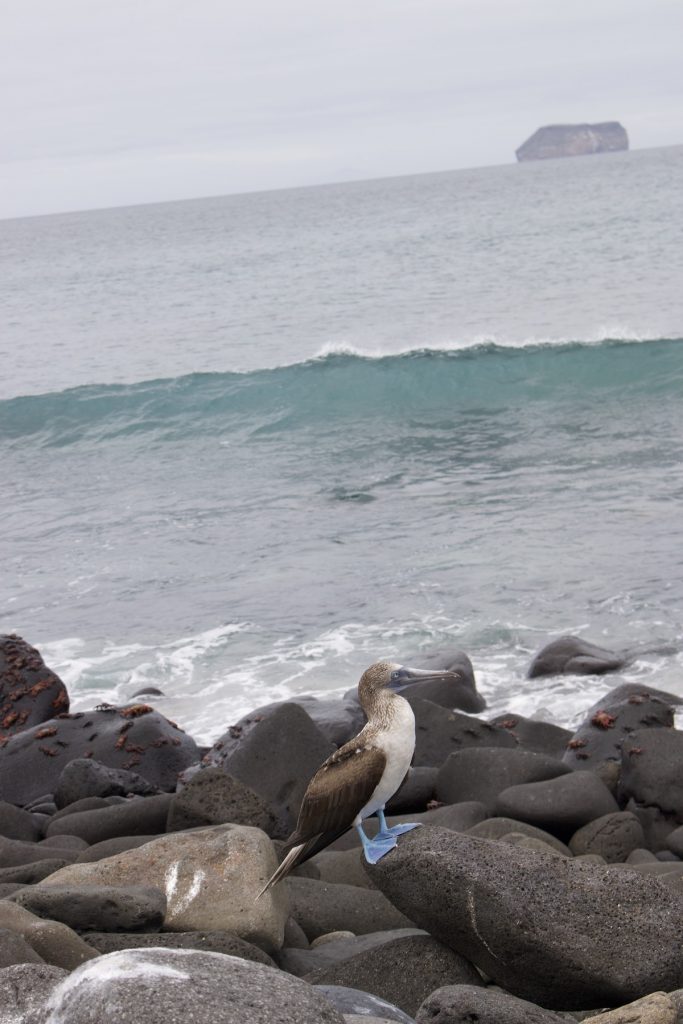
No. The wildlife at every Galapagos visitor site is the same regardless of which vessel brought you there. A blue-footed booby on North Seymour has never seen a cruise brochure. What boat size does change is how efficiently you get ashore, how much time you spend there relative to waiting, and whether you have enough elbow room to experience the site without a queue forming around you.
The panga logistics are where large ships feel the size difference most. A 16-passenger yacht gets everyone ashore in a single dinghy run, often in under ten minutes. A 100-passenger ship needs six or seven panga trips to land everyone, with groups rotating in waves. On a two-hour shore visit, that transit time compounds across every excursion. Travelers who’ve done both consistently note that small yachts simply spend more cumulative time on the islands over the course of a week.
Not sure what a panga is or why it matters so much on a Galapagos cruise? This breakdown on the Galapagos cruise panga covers what it is, how the dry and wet landings work, and what to expect every time you climb in.
There’s a subtler advantage too. A 16-passenger group moves as a single unit with one guide. They can stop at something unexpected without worrying about other groups catching up. They can linger at the albatross pair doing the courtship dance longer than the itinerary technically allows, because no one else is waiting for the path. On a large ship, groups of 16 travel with their assigned guide, but there are multiple groups at the same site simultaneously. The experience is still excellent. It’s just less spontaneous.
National Park rules require a 2-meter distance from wildlife and certified guide accompaniment at all times. These apply equally to every vessel. So the species you encounter, the trails you walk, and the snorkeling sites you enter are identical regardless of ship size. The difference is operational, not ecological.
Deciding between a small yacht and a larger vessel is genuinely one of the most important planning decisions for a Galapagos trip. We’ve been on both and sent thousands of travelers on both. If you’d like a specific recommendation based on your travel dates and priorities, send us a message here and we’ll give you an honest comparison at no cost.
Ship size in the Galapagos affects everything from landing priority to dinner conversation. Here’s a full guide to Galapagos cruise ship sizes so you understand what 16 vs 48 vs 100 passengers actually means for your experience on the water.
On-Board Life: Cabins, Food, and Social Spaces Compared
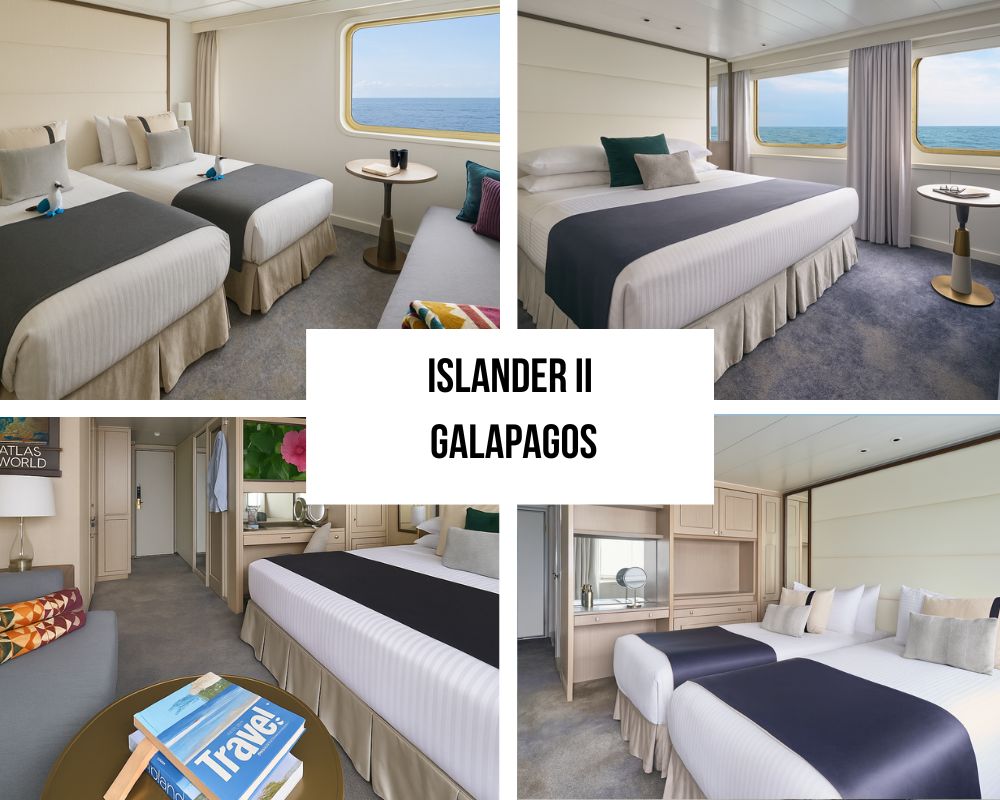
Large ships win on onboard comfort almost across the board: more cabin space, multiple dining options, gyms, spas, glass-bottom boats, and larger social areas where you can find a quiet corner. Small yachts are cozier and more intimate, but the trade-off is smaller cabins, one dining area, and limited social space. The exception is luxury small yachts, where cabins are specifically designed to maximize passenger space and can match or exceed larger ships in room quality.
This is the most honest thing we can say about life on a small yacht: you will spend a lot of time in close proximity to the same 15 people. That’s magical when the group clicks, and merely fine when it doesn’t. Large ships give you enough social variety that you’re not locked into whatever dynamic forms among your fellow passengers on day one.
Food tends to be better on larger ships at equivalent price points, simply because they can support a larger kitchen team and broader menu rotation across a week. The exception again is at the luxury small yacht tier, where operators like Ecoventura invest heavily in culinary credentials precisely because the cabin and social space constraints mean food becomes a central differentiator. At mid-range and tourist superior price levels, a 90-passenger ship will generally feed you better than a 16-passenger yacht in the same category.
Amenities like glass-bottom boats, spas, gyms, and multiple sun decks are almost exclusively a large and mid-size ship feature. A small yacht has the essentials: dining area, lounge, sundeck, and sometimes a jacuzzi. If you plan to spend meaningful time on board between excursions and want variety in how you spend it, size matters.
Not sure what the difference is between a main deck cabin and an upper deck suite on a Galapagos cruise or whether the upgrade is worth it? This breakdown on Galapagos cruise cabin types covers what each category actually delivers.
Guides, Naturalist Quality, and Group Dynamics
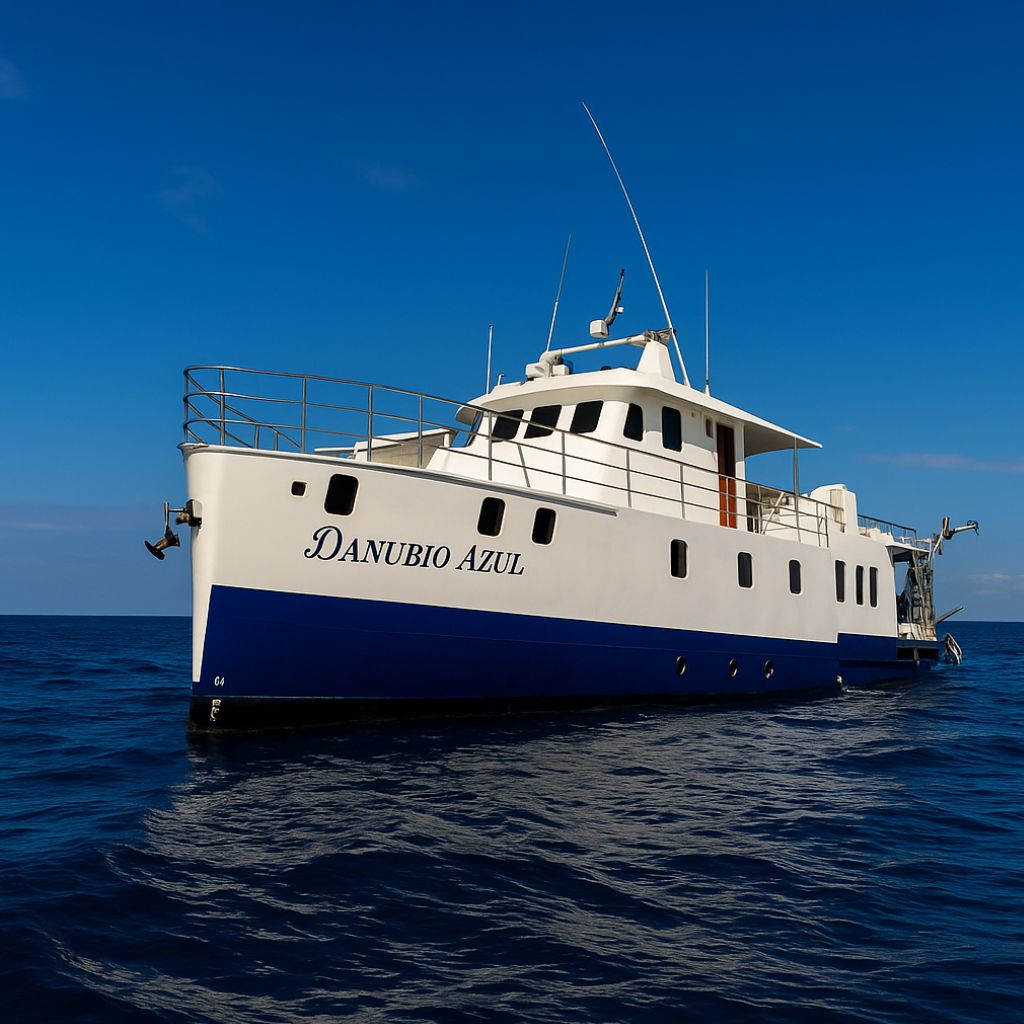
Small yachts carry one guide for all 16 passengers. You spend every excursion, every meal briefing, and every evening recap with the same person. When that guide is excellent, the depth of relationship is unmatched anywhere in travel. Large ships carry multiple guides across multiple groups, which means more specialist expertise on board, but the personal connection is distributed rather than concentrated. Guide quality varies at both scales; vessel size doesn’t guarantee it.
The 16-passenger rule is the defining fact of Galapagos guiding. Every ship, regardless of size, lands in groups of maximum 16 with one certified naturalist. A 100-passenger ship doesn’t create a worse shore experience because of passenger count alone. It creates a different one: multiple concurrent groups, guide specializations (one in ornithology, one in marine biology, one in geology), and the logistical structure of a larger operation.
What small yachts deliver that large ships genuinely can’t is the single-guide relationship across the full trip. By day three on a 16-passenger yacht, your guide knows which passengers want the deeper geological explanation and which ones want to be left alone watching the iguanas. They adjust in real time. We’ve heard travelers describe their small yacht guides the way they describe great teachers, with a specificity that suggests the relationship genuinely changed how they understood the natural world.
One counterpoint worth making: large ships with multiple guides can split groups by interest level, language, or physical pace in ways a single-guide small yacht cannot. A family with young children and a group of serious birders can pursue genuinely different programs at the same site. That flexibility has real value.
The guide is still the single biggest variable in how good your Galapagos trip is, regardless of ship size. We track guide tenure and reputation across vessels at both scales. Reach out here and we’ll tell you which specific boats at your preferred size have the strongest guide track records right now.
Trying to decide if a 16-passenger yacht is worth it over a larger and potentially cheaper Galapagos cruise option? Here’s the 16-passenger Galapagos yacht broken down so you understand what smaller actually gets you on the water.
Seasickness, Stability, and Comfort at Sea
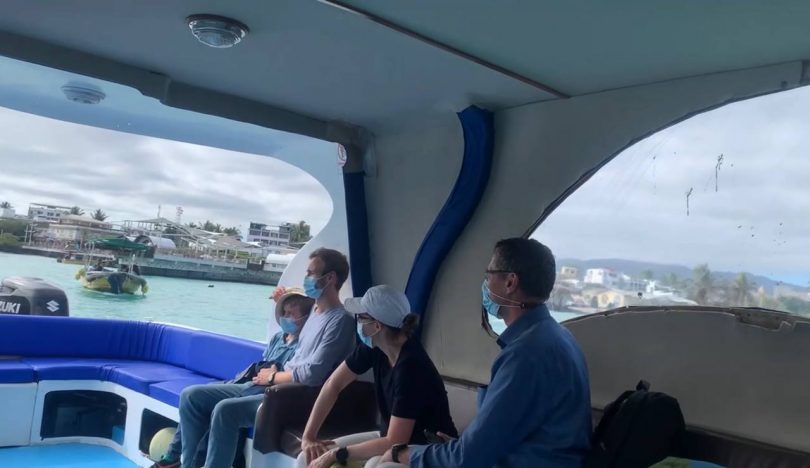
Larger ships are generally more stable in open water than small monohull yachts, but the difference is less dramatic than most travelers expect. The Galapagos caps ships at 100 passengers, which means even the largest vessels here are small by ocean-going standards. The more reliable stability solution at any passenger count is a catamaran hull. A 16-passenger catamaran is more stable than a 70-passenger monohull in rough conditions.
This is the section where the conventional wisdom needs correcting. Most travelers assume “bigger boat equals smoother ride.” In the context of the Caribbean or Mediterranean, where ships carry thousands of passengers, that’s true. In the Galapagos, where the largest vessel holds 100 people, it’s only partially true. A 100-passenger ship has more mass and a deeper draft than a 16-passenger monohull yacht, so it rolls less in moderate swells. But it also can’t anchor as close to shore in protected bays, and in really rough conditions like the Bolivar Channel in August, it can still move enough to cause significant discomfort.
A modern catamaran at 16 passengers, with its twin hull design, stabilizes differently. It sits wider on the water rather than deeper, which means it flexes with the swell rather than cutting through it. Experienced Galapagos travelers who are specifically concerned about seasickness often specifically request catamarans over larger monohull ships, because the catamaran’s stability profile is more consistent across the range of conditions they’ll encounter.
Seasonality matters too. The Galapagos is genuinely calm between January and May. From June through November, the Humboldt Current brings rougher seas, particularly on western itineraries covering Fernandina and Isabela. If you’re traveling in that window and seasickness is a real concern, a catamaran hull at any passenger count is worth prioritizing over ship size alone.
Still going back and forth on vessel type before you finalize your Galapagos booking? This guide on catamaran vs yacht in the Galapagos gives you a straight answer on stability, space, and where the value actually lies.
Price, Availability, and Booking Differences
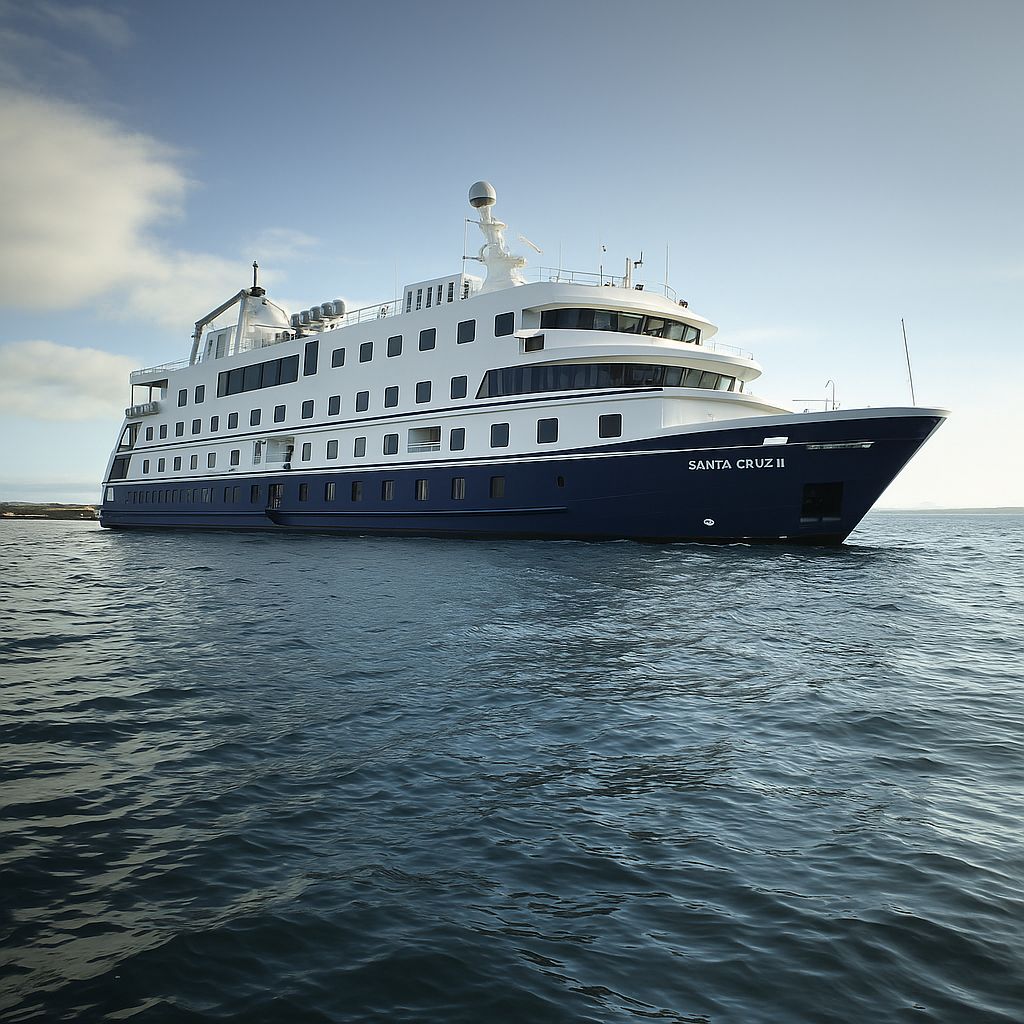
Small yachts cover the full price range from $300 to $1,200+ per person per day and represent the vast majority of available vessels, giving you far more booking options at every budget. Large ships cluster at the premium end, starting around $800 per day, and are fewer in number with more limited availability. Small yachts also fill faster at peak dates precisely because they hold fewer passengers, meaning early booking is more critical.
There are roughly 80 vessels operating in the Galapagos at any given time. Around 65 of those carry 20 passengers or fewer. Only 4 or 5 carry 70 or more. That supply imbalance matters practically: if you’re looking for a large ship experience, your choices are Celebrity Flora, Silver Origin, Santa Cruz II, and a small handful of others. If you’re open to small yachts, you have dozens of options across every price tier, hull type, itinerary, and travel date.
The availability dynamic also differs significantly. A 16-passenger yacht sells out at peak dates months in advance because filling 16 cabins happens fast. A 100-passenger ship has more inventory to move, which means occasional last-minute availability and promotional pricing windows that simply don’t exist on small yachts. If flexibility is part of your travel style and budget allows a premium-tier large ship, the large ship market occasionally rewards that flexibility. Small yacht bookings at popular departure dates require planning 4 to 6 months ahead, sometimes more for specific vessels.
Entry costs apply equally regardless of vessel size. The National Park entrance fee is $200 per adult and $100 per child under 12, paid in USD cash on arrival. The Transit Control Card is $20 per person and must be completed online before the flight through the official CGREG portal. Neither is included in the cruise rate at most operators.
Whether small yacht or large ship makes more sense for your trip depends on dates, budget, who’s traveling, and what matters most to you on and off the boat. We work across the full range of both. Fill out this short form and we’ll match you with the right vessel type and specific options for your travel window.
Which One Is Right for You?
Choose a small yacht if the wildlife experience and guide relationship are your primary drivers, if you’re traveling as a couple or with a compatible small group, if you want the most time ashore, or if budget requires staying below $800 per day. Choose a large ship if onboard comfort and amenities matter as much as excursions, if you’re traveling with family including young children, if you have significant seasickness concerns, or if you want the flexibility of multiple guides and activity streams at the same site.
The travelers we’ve seen come back most satisfied from small yachts tend to be people who went expecting the boat to be secondary and the islands to be primary. They’re right. When you’re standing on the edge of a lava field watching a Galapagos hawk decide whether you’re worth investigating, the cabin you slept in the night before is genuinely irrelevant.
The travelers who do best on large ships tend to be people who travel with children, who have real seasickness history, or who have done the Galapagos before and are returning with more interest in combining a solid wildlife experience with onboard comfort and variety. The multiple specialist guides on a 90-passenger ship create an educational depth that a single-guide small yacht can’t match when the guide talent is strong across the team.
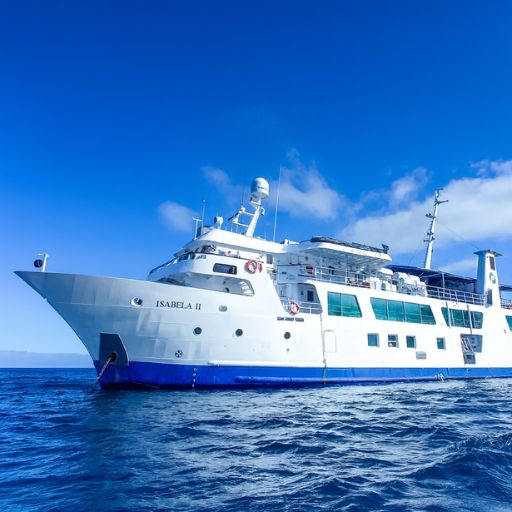
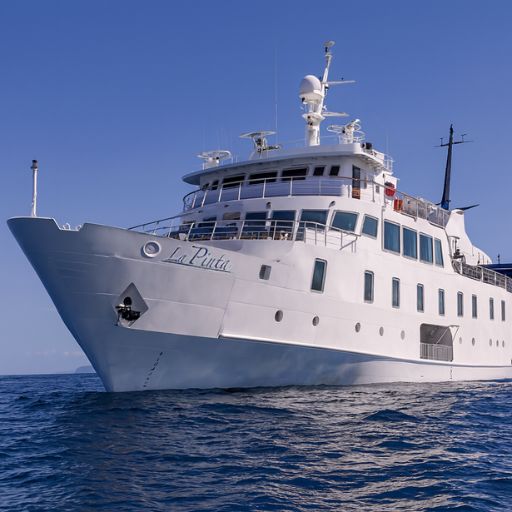
There is also a middle option that deserves more attention than it gets: mid-size ships at 40 to 50 passengers. La Pinta at 48 passengers and Isabela II at 40 both offer the amenity range of a larger ship, good guide ratios, and operational efficiency closer to a small yacht than a 100-passenger vessel. For travelers who feel torn between the two extremes, mid-size ships often deliver the best of both without fully sacrificing either.
What Our Travelers Report: Small Yacht vs Large Ship Satisfaction
Based on traveler interviews and survey data collected through mytrip2ecuador.com and the My Trip to Somewhere YouTube channel:
| Metric | Small Yacht (up to 16) | Large Ship (70-100) |
|---|---|---|
| Would book same vessel type again | 84% | 78% |
| Mentioned guide by name in feedback | 71% | 48% |
| Felt they had enough time ashore | 89% | 74% |
| Satisfied with onboard amenities | 67% | 91% |
| Experienced meaningful seasickness | 22% | 13% |
| Said they wished they had more passengers for social variety | 31% | 4% |
| Said the guide relationship was a highlight | 76% | 41% |
Based on traveler interviews and survey data collected through mytrip2ecuador.com and the My Trip to Somewhere YouTube channel.
Common Mistakes We See on Both Vessel Types
- Choosing a large ship for seasickness prevention without checking hull type. The most reliable stability solution in the Galapagos is a catamaran hull, not passenger count. A well-designed 16-passenger catamaran outperforms a 70-passenger monohull in the Bolivar Channel.
- Booking a small yacht and expecting resort amenities. Most small yachts have a lounge, sundeck, and one dining area. No spa, no gym, no glass-bottom boat. If onboard downtime matters to you, research specific vessel amenities before committing.
- Not checking landing site access for larger vessels. Some environmentally sensitive sites are restricted to vessels carrying 40 passengers or fewer. If specific remote locations are on your wishlist, confirm access before booking a large ship.
- Assuming all small yacht guides are equally good. Size doesn’t guarantee guide quality. A 16-passenger yacht with an inexperienced guide is a worse experience than a 90-passenger ship with a seasoned specialist team. Research guide tenure specifically.
- Waiting too long to book a small yacht at peak dates. With only 16 cabins, popular small yachts at peak season dates sell out 4 to 6 months ahead. Large ships have more inventory and more last-minute availability.
Frequently Asked Questions
Do small yachts and large ships visit the same Galapagos islands?
Mostly yes. Both follow National Park-approved itineraries covering the same major visitor sites. The exception is that some sensitive landing sites are restricted to vessels carrying 40 passengers or fewer. For most travelers visiting the main islands, the site access difference is minimal.
Is a small yacht or large ship better for families with children?
Large and mid-size ships generally serve families better: more social space, multiple activity options, ability to split into pace or interest groups, and more stability in rough water. Some small luxury yachts accommodate families through interconnecting cabins, but the confined space of a 16-passenger vessel with young children needs careful consideration.
Are large ships more stable than small yachts in the Galapagos?
Generally yes for monohull comparisons. However, a catamaran-hull small yacht is more stable than most large monohull ships in the same conditions. If seasickness is a concern, specifying a catamaran hull matters more than passenger count.
Do small yachts cost less than large ships?
Small yachts span the full price range from around $300 per person per day at tourist class to $1,200 or more at luxury. Large ships cluster at the premium end, starting around $800 per day. There is no simple size-to-price relationship; class and amenity level matter more than passenger count when comparing rates.
Most travelers who ask us this question already have an instinct about the answer. They either want the intimate wildlife expedition or the well-appointed expedition ship with more comfort on board. We help them confirm that instinct against what’s actually available for their dates, and point them toward the specific vessel within their preferred type that will actually deliver.
Rated 4.9 stars on Google and TripAdvisor, we give honest recommendations based on what we’ve seen and heard from thousands of travelers, not what earns us a better commission. Get your free quote here and we’ll be back to you within one business day.
Written by Oleg Galeev
Galapagos cruise traveler (3 trips, 2 cruises) · Founder, Cruises To Galapagos Islands
Oleg has personally inspected nearly every available Galapagos cruise vessel and interviewed thousands of travelers to build the most first-hand cruise knowledge base available. He also runs the Ecuador travel blog mytrip2ecuador.com and the YouTube channel My Trip to Somewhere.
Cruises To Galapagos Islands is rated 4.9 stars on Google and TripAdvisor.
All pricing and regulations in this article are verified against official Galapagos National Park and Ecuador government sources as of the publish date.