Galapagos Cruise Cabin Types: How to Choose the Right One
Part of our guide to the types of Galapagos cruises. Ready to pick a ship? See compare all Galapagos cruise ships by price, size and class.
Quick Facts: Galapagos Cruise Cabin Types
| Category | Details |
|---|---|
| Typical cabin size range | 8-12 m² (budget/bunk) to 25-30 m² (luxury suite) |
| Deck positions | Lower deck, main/mid deck, upper deck |
| Window types | Porthole (small, round, fixed); picture window (large, panoramic); private balcony |
| Bed configurations | Bunk beds; twin beds; double/matrimonial beds; queen beds; king beds (luxury only) |
| All cabins include | Private bathroom, hot water, air conditioning (standard at tourist superior and above) |
| Solo supplement | 50-100% on most vessels; some vessels waive it seasonally or have dedicated single cabins |
| Seasickness and deck | Lower and mid-ship cabins experience least motion |
| Upper deck advantage | Larger windows, better views, more natural light; higher price |
| Lower deck advantage | Less motion; lower price; closer to waterline |
| Park entrance fee | $200/adult, $100/child under 12 (USD cash on arrival); same regardless of cabin type |
Details verified July 20, 2026.
What Cabin Types Exist on Galapagos Cruise Vessels?
Galapagos cruise cabins fall into four broad categories: bunk cabins (entry level, twin berths one above the other), standard double or twin cabins (private beds side by side or separated), superior cabins with picture windows and larger footprints, and suites with private balconies and premium furnishings. Every cabin at tourist superior and above includes a private bathroom, hot water, and air conditioning. The differences between categories are window type, deck position, bed configuration, and square footage.
What doesn’t vary regardless of cabin category: the National Park visitor sites you access, the guide who leads your excursions, and the wildlife you encounter on shore. A sea lion doesn’t know which cabin you slept in. The traveler in the lower bunk porthole cabin sees the same iguana on the same lava field as the traveler in the upper deck suite. This framing matters because cabin upgrades are real expenses that sometimes get prioritized over guide quality and vessel research, which have far more impact on trip satisfaction.
On 16-passenger yachts, most vessels offer 2 to 3 cabin categories: a lower deck cabin with porthole windows at the entry price, a main deck cabin with picture windows at mid-range, and sometimes an upper deck cabin or suite at the premium. On larger 48 and 100-passenger ships, the range widens considerably: interior cabins, standard outside cabins, picture window cabins, junior suites, full suites, and balcony suites may all be available on the same vessel at significantly different price points.
We’ve got a full breakdown on the 16-passenger Galapagos yacht if you want to know exactly why the smaller format consistently outperforms larger ships on the experiences that actually matter out there.
Lower Deck vs Upper Deck: What the Position Actually Means
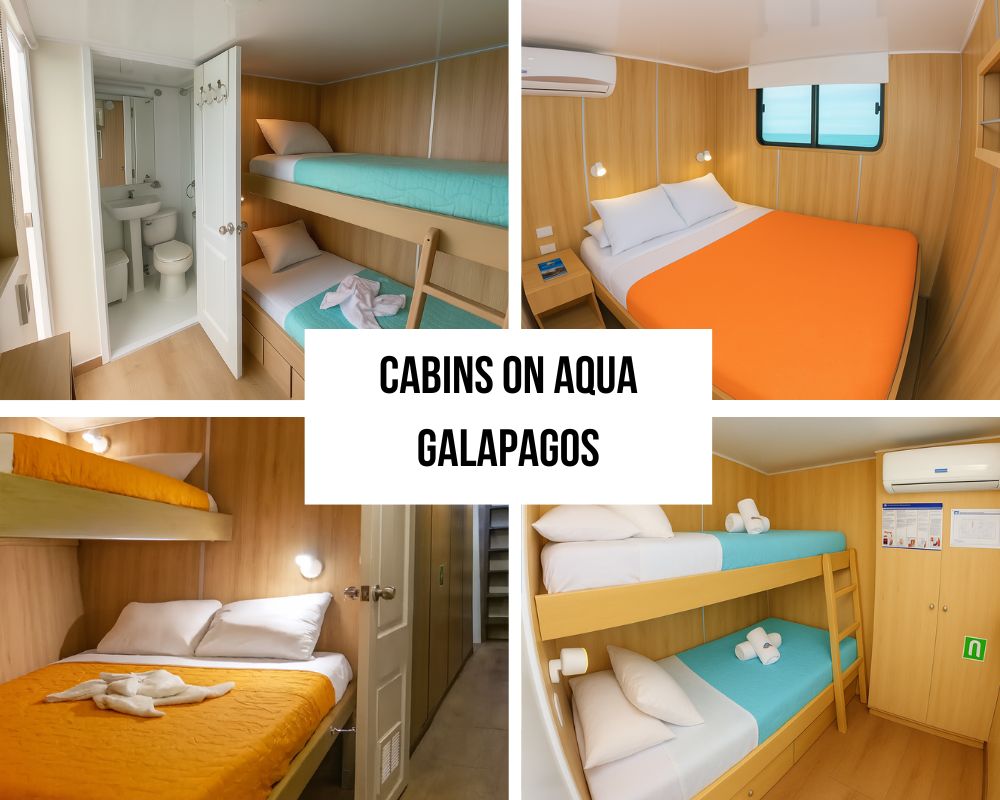
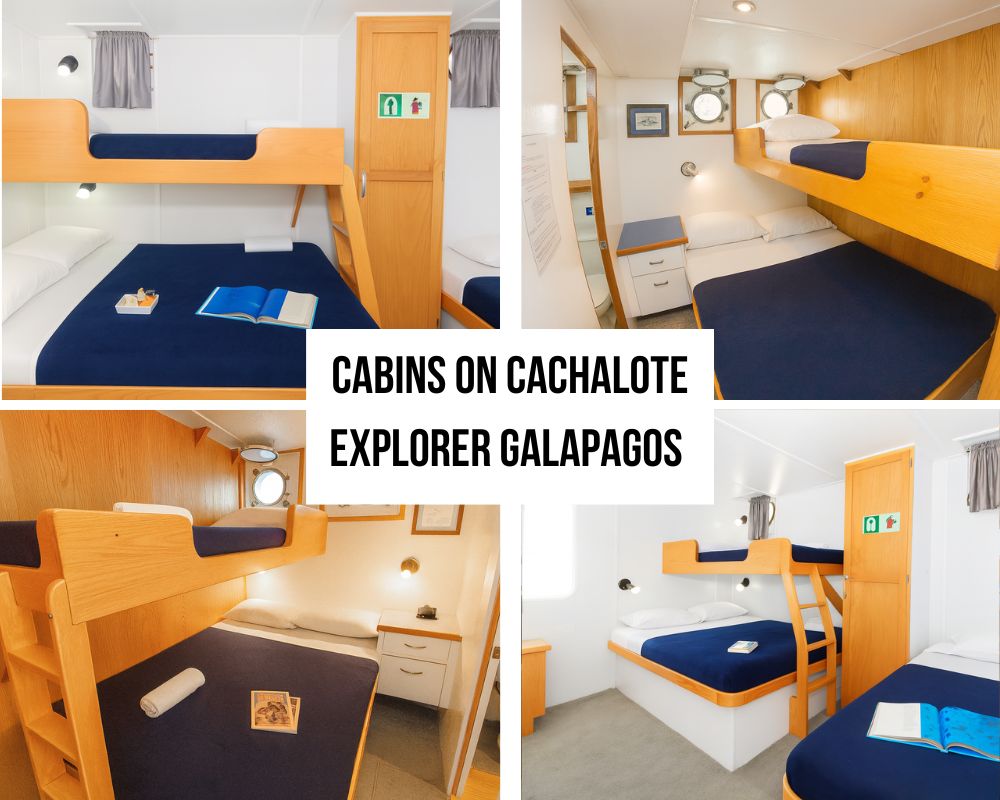
Deck position affects two things: motion and light. Lower deck cabins sit closer to the waterline, experience less motion in swell, and are the best choice for travelers with any seasickness sensitivity. They typically have porthole windows and cost less. Upper deck cabins experience more motion but have larger windows, better natural light, and usually better views. Mid-deck cabins split the difference. On most 16-passenger yachts, the difference in motion between decks is minor. On larger ships it’s more noticeable.
The physics is straightforward. A ship pivots around its center of mass when it rolls. The further you are from that center (either above or away from the midpoint), the more amplified the motion feels. Lower deck, mid-ship cabins sit closest to the center of rotation and experience the gentlest movement. Upper deck cabins at the bow or stern sit furthest away and feel the most movement. For the majority of Galapagos travelers on small 16-passenger yachts, this difference is noticeable but manageable. For travelers on larger ships with deeper roll potential, the deck choice is more consequential.
Engine noise is the other lower deck consideration. Cabins near or directly above the engine room will hear a consistent hum when the vessel is underway. Most travelers report that this becomes white noise within the first night and stops registering. Cabins directly adjacent to the engine room are the exception: the sound profile is closer to a mechanical growl than white noise, and it is worth asking the operator specifically which cabin positions are nearest the engine room before selecting.
Anchor noise is a separate issue that affects all decks roughly equally. When a vessel drops anchor at night, the chain running through the bow is loud and abrupt. It lasts about a minute. Every experienced Galapagos traveler knows to expect it. First-time cruisers should be warned in advance rather than startled awake at 11pm thinking something has gone wrong.
Not sure whether the upper deck cabin upgrade is worth it or just a way to spend more for a better view? This breakdown on upper deck vs lower deck cabins on a Galapagos cruise covers the real differences in light, noise, motion, and overall comfort.
Lower Deck vs Mid Deck vs Upper Deck Compared
| Factor | Lower Deck | Mid / Main Deck | Upper Deck |
|---|---|---|---|
| Motion in swell | Least; best for seasick-prone | Moderate; generally comfortable | Most; feel movement more |
| Window type (typical) | Porthole; small and round | Picture window; larger | Panoramic window or balcony |
| Natural light | Limited | Good | Best |
| Engine noise risk | Higher; depends on cabin position | Low | Minimal |
| Price premium | Lowest; best value | Mid-range | Highest |
| View quality | Near waterline; limited horizon | Good ocean views | Best; widest horizon |
| Best for | Budget-conscious; seasick-prone | Most travelers; good balance | Couples; light-lovers; view priority |
General guidance. Individual vessel layouts vary. Verified July 2026.
Working out which specific cabin position makes sense on the vessel you’re considering takes knowing that vessel’s actual layout, not just the general rules. We’ve been aboard most of the vessels operating in the Galapagos and know which lower deck cabins are actually near the engine room and which ones aren’t. Send us a message here and we’ll give you cabin-specific advice before you commit.
Porthole vs Window vs Balcony: How Much Does the View Matter?
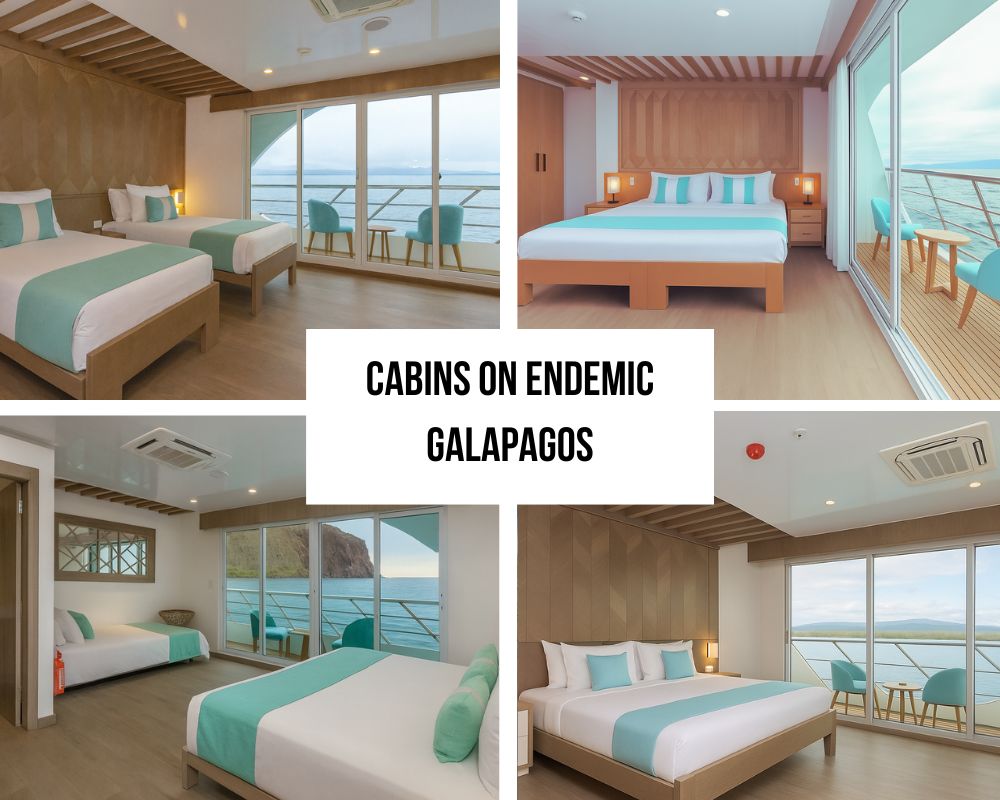
Portholes are small, round, fixed openings near the waterline. Picture windows are large, rectangular, and fill meaningful wall space with ocean or island views. Private balconies are full outdoor spaces off the cabin accessible via sliding doors. The view difference between a porthole and a picture window is significant enough that we consider it a meaningful upgrade on multi-day cruises. The jump from picture window to private balcony is real but delivers diminishing returns on a trip where you’ll spend most daylight hours outside anyway.
The cabin you wake up in at anchor sets the first sensory impression of the day. A porthole gives you a circle of blue sky or grey water. A picture window gives you the islands, the horizon, the colour of the morning on the Pacific. Travelers who chose lower-deck porthole cabins to save money consistently describe mild regret at missing the morning light that picture window travelers describe as a daily highlight. It’s not a catastrophic mistake. But it’s a mood difference that compounds across seven mornings.
Private balconies justify themselves most specifically on luxury catamaran vessels like the Endemic, where every suite has one and the morning ritual of standing on your own outdoor space watching the islands materialize out of the pre-dawn is something travelers describe for years afterward. On standard vessels where balconies come with a 30 to 50% cabin premium, the calculus is less clear. You will step out onto the shared sundeck for the same view available to the whole boat. The private balcony is not about exclusivity of view; it’s about solitude and the ability to be outside in your own space at 5:30am before the rest of the vessel is awake.
Catamarans handle the open channel crossings better but yachts often win on atmosphere and intimacy. Here’s an honest comparison of catamaran vs yacht in the Galapagos so you weigh what matters most for your trip.
Bed Configuration: Bunks, Twins, Doubles, and Queens Compared
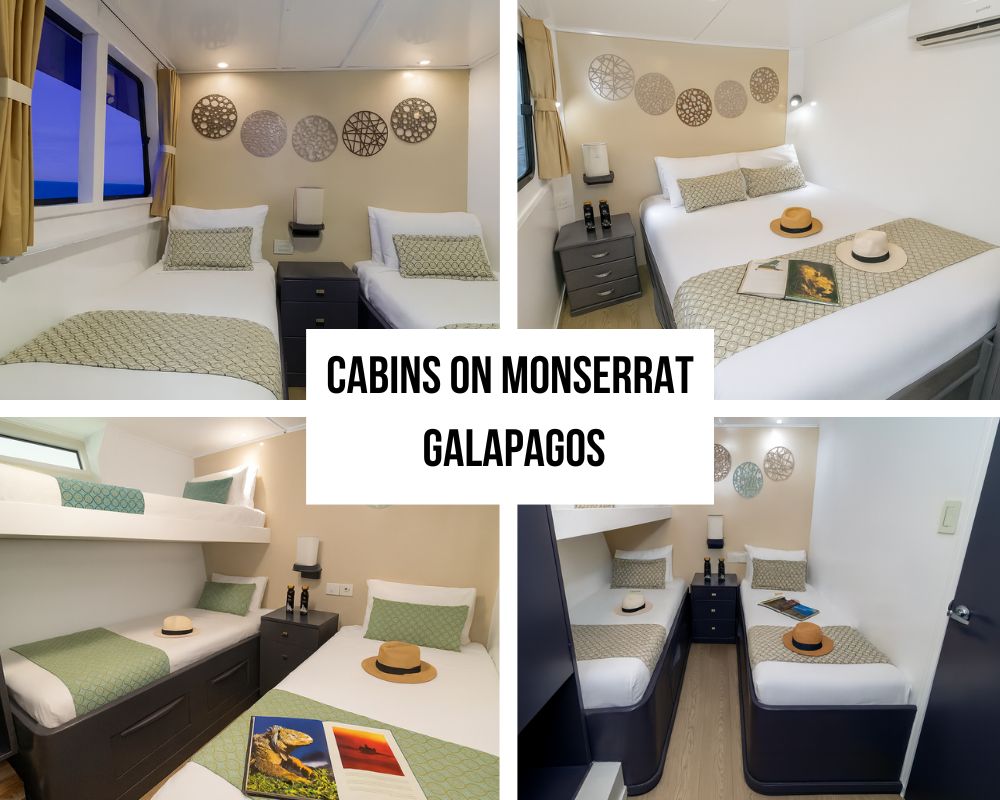
Bunk beds are the entry-level configuration on budget and some tourist class vessels. Twin beds (two single beds side by side or separated) are the most common configuration on tourist superior and first class vessels. Double or matrimonial beds are standard on first class and available on some tourist superior vessels. Queen and king beds appear on luxury vessels. For couples, the difference between a bunk and a double is the difference between a functional overnight sleep and a genuinely comfortable cabin experience.
Bunk beds on Galapagos vessels are exactly what they sound like: an upper and lower berth, each with a private mattress, shared in a cabin. On budget and some tourist class yachts these are the standard configuration for double-occupancy cabins. They work fine for solo travelers assigned a berth, for friends or family members comfortable sharing vertically, and for anyone who genuinely doesn’t care about the sleeping arrangement because they’re spending 90% of their time on the islands. For couples who want to share a bed, bunks are a dealbreaker and the operator should be asked explicitly whether the vessel offers any double-bed configuration before booking.
The twin-to-double conversion is worth asking about on vessels that list both configurations. Some cabins on tourist superior and first class vessels have two single beds that can be pushed together to form a double on request. This is not the same as an actual matrimonial bed: the mattresses are separate and there’s often a gap. But it’s a meaningful upgrade from sleeping in separate beds across the cabin and usually available at no extra charge if requested at the time of booking.
Trying to figure out if tourist class gives you enough to make the Galapagos trip worthwhile without spending on a luxury cabin you’ll barely use? Here’s tourist class Galapagos cruises broken down so you make the call with realistic expectations.
Bed Configuration by Vessel Class
| Bed Type | Typical Vessel Class | Best For | Couples Suitable? |
|---|---|---|---|
| Bunk beds (upper/lower) | Tourist class; some tourist superior | Solo travelers; friends; budget travelers | No |
| Twin beds (separate singles) | Tourist superior; first class standard | Friends traveling together; solo with roommate | Sometimes (if convertible) |
| Double / matrimonial | First class; some tourist superior | Couples; anyone wanting a shared bed | Yes |
| Queen bed | First class upper end; luxury | Couples; comfort-focused travelers | Yes |
| King bed | Luxury only | Honeymooners; milestone travelers | Yes |
Verified July 2026. Always confirm bed configuration with operator before booking.
Bed configuration is one of those details that operators don’t always volunteer until asked. We ask for you. If you want a specific bed type confirmed in writing before you book, reach out here and we’ll get that confirmed as part of the booking process.
Cabin Size, Storage, and What to Realistically Expect
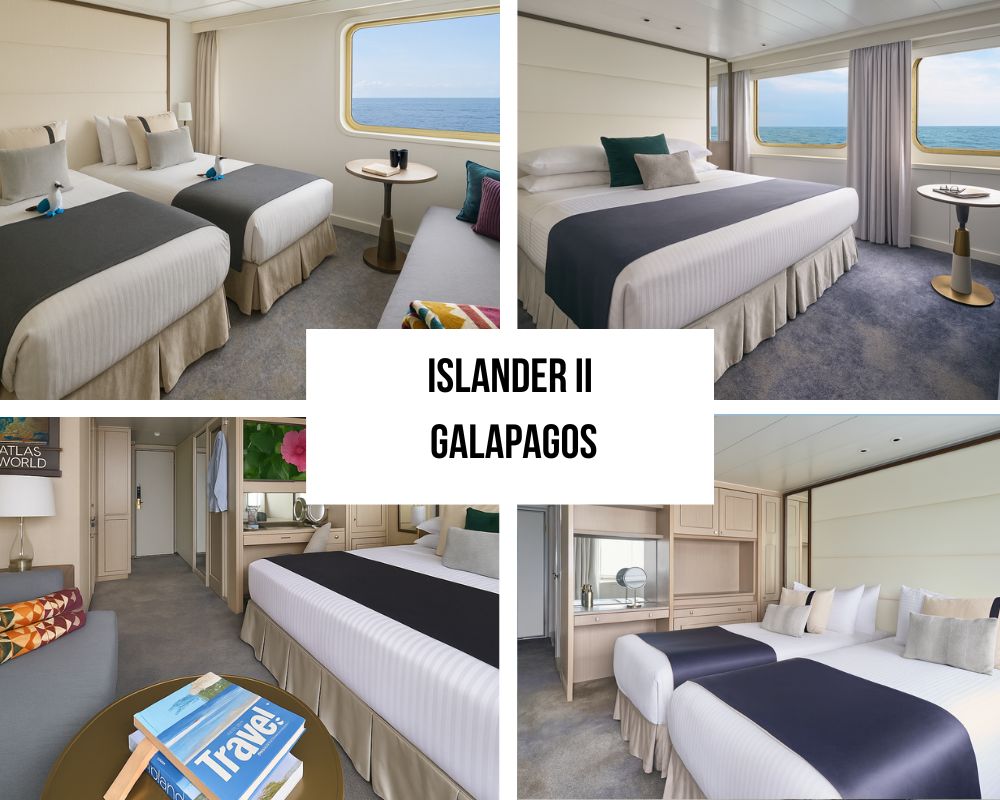
Budget and tourist class Galapagos cabins run 8 to 12 square meters. Tourist superior and first class cabins run 13 to 20 square meters. Luxury suites run 20 to 30 square meters or above. These numbers feel abstract until you understand what they mean in practice: an 8 square meter cabin is the size of a large walk-in closet with a bed and bathroom. A 20 square meter cabin feels like a small but functional hotel room. Storage is universally limited. Plan to live out of your bag rather than unpack.
The storage reality on Galapagos vessels catches travelers by surprise. Even on luxury vessels, cabin storage is optimized for one week of gear rather than an expanded wardrobe. Most cabins offer a small closet or hanging space, a shelf or two, and under-bed storage. Packing a soft-sided bag rather than a hard-sided suitcase is strongly recommended by every operator, and for good reason: a hard suitcase open on the floor of a 12 square meter cabin takes up approximately 25% of the available walking space.
Power outlets are limited. Most Galapagos cabins have one or two outlets near the desk or bed, typically 110v. Bringing a small multi-port USB charger and a universal adapter consolidates the charging logistics for phones, cameras, and dive computers without requiring multiple outlet positions. Some newer vessels have added additional USB ports built into cabin furniture. Check before you pack your power strip.
At this price point the ship itself becomes part of the experience. Here’s a guide to luxury Galapagos cruises so you understand what the top tier actually delivers and which vessels are worth the premium.
How Cabin Choice Affects Price and What Upgrades Are Worth It
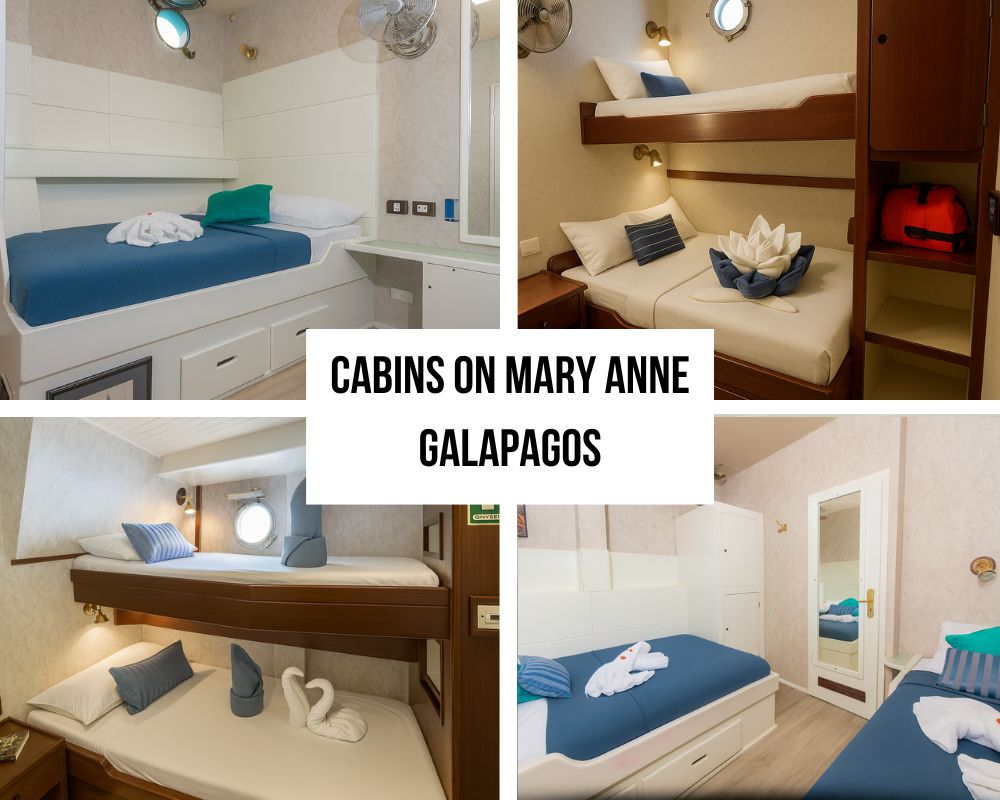
On a 16-passenger yacht, cabin categories typically represent price differences of $200 to $800 per person for a week-long trip between the lowest and highest cabin tier. On larger ships with more category options, the range can be $1,000 to $3,000+ per person between interior and balcony suite. The upgrades that deliver real experienced value are: porthole to picture window (worth doing), twin to double/queen bed for couples (worth doing), and lower deck to mid-deck if you have any seasickness history (worth doing). Balcony upgrades and suite upgrades are more personal and less universally justified.
The solo traveler cabin calculation is a specific and important case. Most Galapagos vessels charge a single supplement of 50 to 100% for solo occupancy of a double cabin. On a $500/day cruise, that means a solo traveler in a double cabin pays $750 to $1,000 per day rather than $500. A handful of vessels offer dedicated single cabins at no supplement: the Mary Anne with six single cabins, the Alya, Petrel, and Solaris with designated single cabin inventory, and occasionally vessels like the Monserrat when its triple cabin configuration allows a solo traveler to take a berth at shared rates. In shoulder months (May, June, September, October), some operators waive or reduce single supplements on selected sailings to fill remaining inventory. This is worth asking about specifically if you’re traveling solo and dates are flexible.
Cabin Upgrade Value Assessment
| Upgrade | Typical Premium | Worth It? | Best For |
|---|---|---|---|
| Lower to mid-deck (porthole to picture window) | $200-$500/person/trip | Yes, for most travelers | Anyone spending time in cabin mornings |
| Twin to double bed configuration | $0-$300/person/trip | Yes, for couples | Couples sharing a cabin |
| Standard to picture window cabin | $300-$800/person/trip | Yes, if budget allows | Light-sensitive travelers; couples |
| Picture window to private balcony | $500-$2,000/person/trip | Personal; luxury tier justified | Honeymooners; milestone occasions |
| Lower to mid-deck (seasickness concern) | $200-$600/person/trip | Yes, if any motion sensitivity | Seasick-prone travelers |
| Double to suite | $1,000-$3,000+/person/trip | Only at luxury tier | Special occasions; comfort-first |
Price premiums are approximate across fleet. Individual vessel pricing varies significantly. Verified July 2026.
How to Choose the Right Cabin for Your Group
The cabin decision follows a simple priority order: first choose the vessel and itinerary, then choose the class, then optimize the cabin within that class. Couples should confirm a double or queen bed configuration in writing. Seasick-prone travelers should request mid-ship and lower or mid-deck. Solo travelers should ask about single cabin availability or no-supplement windows. Families with children should look for connecting or adjacent cabin configurations. Light-sensitive travelers should prioritize picture windows over portholes. Everyone else should take the best available cabin at their budget and spend the rest of their planning energy on guide quality.
The most common cabin mistake we see is spending significant money on a cabin upgrade while ignoring guide quality. A balcony suite with a mediocre guide produces a more disappointing trip than a mid-deck picture window cabin with a Level III naturalist who has worked the same route for fifteen years. The suite is beautiful. The cabin is where you sleep for eight hours. The guide determines what the other sixteen hours look like.
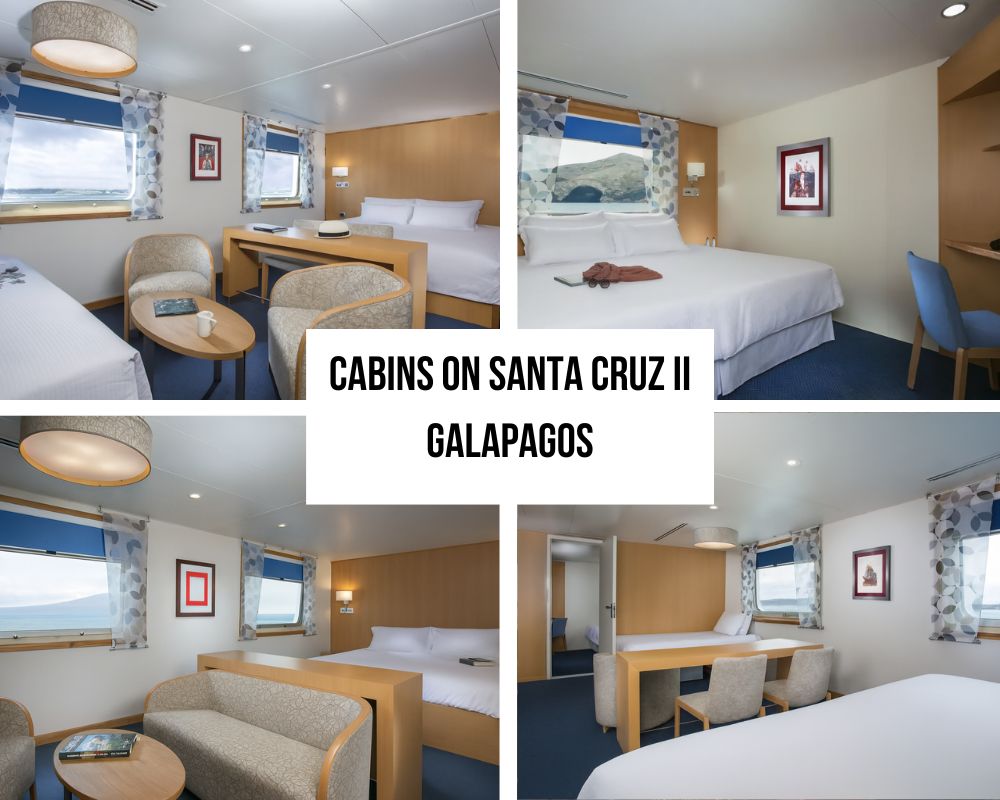
For families, the connecting cabin question is worth asking explicitly. On larger vessels like the Santa Cruz II and some luxury ships, connecting cabin configurations allow adults and children to sleep in adjacent rooms with interior access. On 16-passenger yachts, this is rarely available and the confined space of a small boat with young children requires separate conversation about what’s realistic.
One final practical note: always confirm your specific cabin assignment with the operator at booking, not just the category. On small yachts especially, lower-deck cabin one is a very different cabin than lower-deck cabin four depending on proximity to the engine room and galley. Ask which specific cabin you’re being assigned, not just which tier.
Smaller boats get to the landing sites first and larger ships have better stabilizers for rough crossings. Here’s an honest comparison of small yacht vs large cruise ship in the Galapagos so you weigh what actually matters for your trip.
Cabin Satisfaction by Type: What Our Travelers Report
Based on traveler interviews and survey data collected through mytrip2ecuador.com and the My Trip to Somewhere YouTube channel:
| Metric | Porthole / Lower Deck | Picture Window / Mid Deck | Balcony / Upper Deck |
|---|---|---|---|
| Satisfied with cabin | 61% | 84% | 94% |
| Wished they had upgraded cabin | 44% | 14% | 3% |
| Mentioned cabin as a highlight | 8% | 31% | 61% |
| Experienced meaningful seasickness | 16% (lower deck benefit) | 19% | 26% (upper deck risk) |
| Said guide quality mattered more than cabin | 88% | 82% | 74% |
Based on traveler interviews and survey data collected through mytrip2ecuador.com and the My Trip to Somewhere YouTube channel.
Common Cabin Mistakes We See
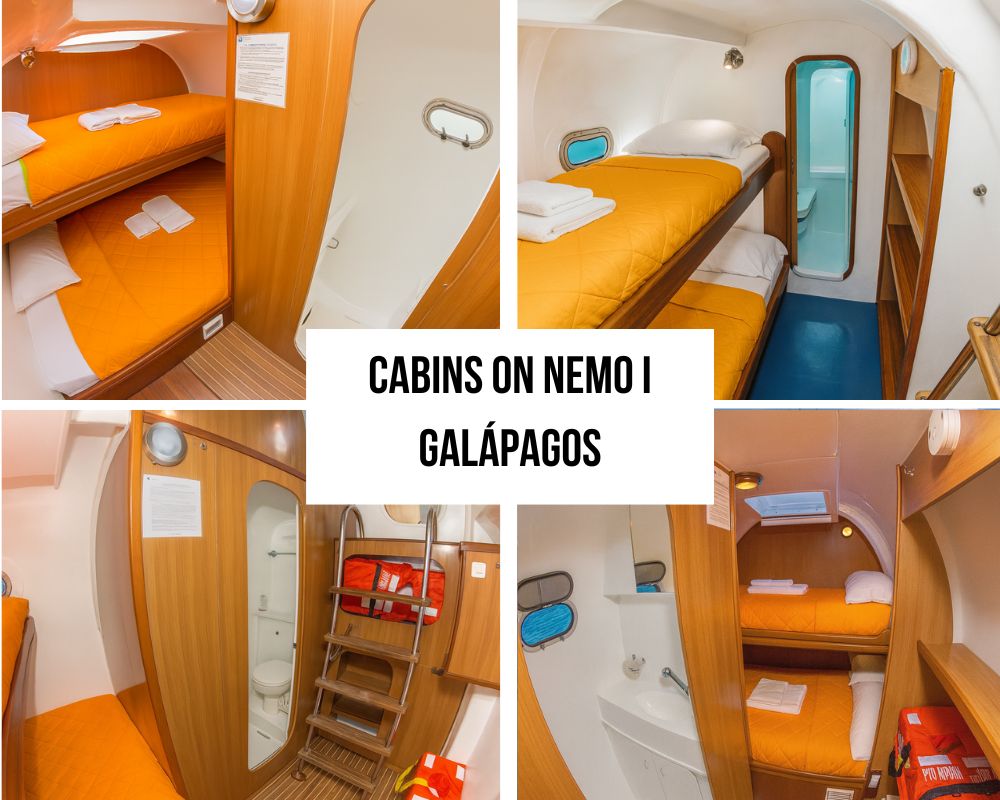
- Booking a bunk cabin for a couple. Upper and lower berths in a shared cabin are not a couples’ arrangement. Confirm double or queen bed configuration explicitly before booking. The operator should confirm this in writing.
- Not asking which specific cabin you’re assigned. Booking “lower deck cabin” on a small yacht is not enough. Ask which cabin number. The difference between cabin one (near the engine room) and cabin three (mid-ship) is real and worth knowing in advance.
- Upgrading to a balcony suite instead of a better vessel class. The money spent on a balcony suite upgrade on a mediocre vessel would often be better spent on a picture window cabin on a first class vessel with a strong guide program.
- Solo travelers not asking about single supplement waivers. The single supplement is 50 to 100% of the cabin rate on most Galapagos vessels. Shoulder-month waivers, dedicated single cabin inventory, and specific vessels with no-supplement policies exist. Asking the question before booking is always worth the conversation.
- Not packing a soft-sided bag. Hard suitcases open in a 12 square meter cabin create a logistical problem that compounds across seven days. Every Galapagos operator recommends soft-sided bags. This is one of the few cases where the generic travel advice is completely accurate.
Frequently Asked Questions
Are all Galapagos cruise cabins private?
On tourist superior and above, yes. Every cabin has a private bathroom with hot water. Some budget and tourist class vessels have shared bathrooms on older vessels. Confirm private bathroom at the time of booking if this is a requirement, which it should be for any multi-day cruise.
Do lower deck cabins always have portholes?
On most 16-passenger yachts, yes. Lower deck cabins typically have porthole windows while mid and upper deck cabins have picture windows. Exceptions exist on newer purpose-built luxury vessels where all cabin categories have full windows or balconies regardless of deck. Ask the operator about window type by specific cabin category, not just by deck.
Can couples always get a double bed on a Galapagos cruise?
Not always. Budget and tourist class vessels frequently have only bunk or twin configurations in their standard cabins. First class and luxury vessels consistently offer double, queen, or king beds. At tourist superior, it varies by vessel. Couples should confirm bed configuration specifically before booking, and get the confirmation in writing.
How do solo travelers avoid the single supplement?
Several options exist: vessels with dedicated single cabins at no supplement (Mary Anne, Alya, Petrel, Solaris, Passion Yacht); vessels that waive the supplement within 60 days of departure to fill inventory (Monserrat, Natural Paradise, Infinity, Calipso); and sharing a twin or bunk cabin with another same-sex traveler on vessels that offer this. Contact us directly for current single supplement waiver windows on vessels that match your dates and itinerary.
The right cabin is the one that lets you sleep well, wake up to something worth seeing, and spend the rest of your day entirely focused on the islands. For most travelers that means a mid-deck picture window cabin with a double or queen bed on a vessel where the guide is exceptional. Getting there requires knowing the specific vessel layout, not just the category names.
We know the cabin configurations across the Galapagos fleet because we’ve been on these boats and track traveler feedback continuously. Rated 4.9 stars on Google and TripAdvisor. Get your free quote here and we’ll match you with the right cabin on the right vessel within one business day.
Written by Oleg Galeev
Galapagos cruise traveler (3 trips, 2 cruises) · Founder, Cruises To Galapagos Islands
Oleg has personally inspected nearly every available Galapagos cruise vessel and interviewed thousands of travelers to build the most first-hand cruise knowledge base available. He also runs the Ecuador travel blog mytrip2ecuador.com and the YouTube channel My Trip to Somewhere.
Cruises To Galapagos Islands is rated 4.9 stars on Google and TripAdvisor.
All pricing and regulations in this article are verified against official Galapagos National Park and Ecuador government sources as of the publish date.