Catamaran vs Yacht in the Galapagos: Stability, Space, and Value
Part of our guide to the types of Galapagos cruises. Ready to pick a ship? See Galapagos cruises by price, size and class.
Quick Comparison: Catamaran vs Monohull Yacht at a Glance
| Feature | Catamaran | Monohull Yacht |
|---|---|---|
| Hull design | Two parallel hulls | Single hull |
| Rolling motion | Less side-to-side roll | More side-to-side roll |
| Pitching motion | More bow-up/bow-down pitch; hull slap possible | Gentler pitch in long swells |
| Deck space | Significantly wider; more outdoor space | Narrower; traditional layout |
| Cabin width | Wider; 18-25 m² typical at luxury tier | Narrower; more vertical space |
| Draft (depth in water) | Shallower; can anchor closer to shore | Deeper; some anchorage limitations |
| Speed | Generally faster under power | Slightly slower; better upwind under sail |
| Hull noise at night | Wave slap between hulls can be loud | Quieter hull sound profile |
| Wildlife access | Identical | Identical |
| Best for | Seasick-prone, western routes, couples, space | Traditional feel, calmer routes, experienced sailors |
| Price premium | Typically 10-30% higher than comparable monohull | Often lower at same class level |
Details verified July 2026 based on current fleet operating in the Galapagos.
What’s the Actual Difference Between a Catamaran and a Yacht in the Galapagos?
In Galapagos cruising, “yacht” typically means a monohull motor vessel with a single hull, while a catamaran has two parallel hulls connected by a bridge deck. Both carry up to 16 passengers at the small vessel scale, follow the same National Park-approved itineraries, and access the same visitor sites. The hull type changes how the boat moves on the water, how wide the deck and cabins feel, and what the overnight crossings sound like below. It does not change what you see on the islands.
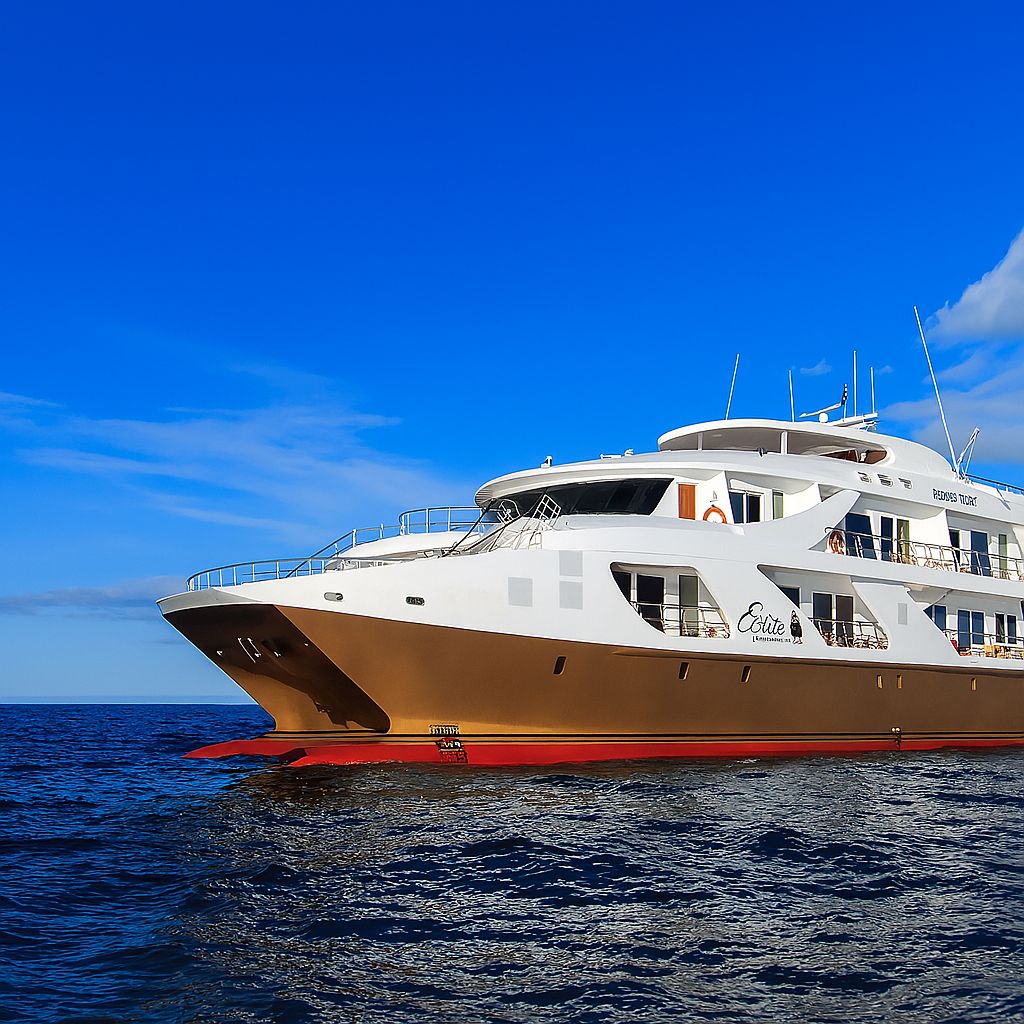
The Galapagos fleet has shifted significantly toward catamarans over the past decade. Where monohull yachts once dominated the small vessel market, catamarans now represent a large and growing share of the 16-passenger fleet. Vessels like the Endemic, Elite, Ocean Spray, Galaxy Sirius, Seaman Journey, and Anahi are all catamarans. Ecoventura’s Origin, Theory, and Evolve are the most prominent luxury monohulls still operating at small scale.
One clarification worth making early: virtually all Galapagos catamarans are motor catamarans, not sailing catamarans. The name suggests sails; the reality is engine-powered navigation between islands. The twin hull design is about stability and space, not wind propulsion. A small number of sailing vessels operate in the Galapagos, including the iconic Mary Anne barquentine, but these are a separate category from the standard catamaran fleet.
The choice between hull types matters most in two situations: rough water crossings (particularly the western itinerary’s Bolivar Channel) and overnight passages when motion affects sleep quality. On calm days with short crossings, most travelers wouldn’t notice a meaningful difference between a well-maintained catamaran and a well-maintained monohull of equivalent size.
Trying to decide between the intimacy of a small yacht and the amenities of a larger ship before you commit to booking? Here’s small yacht vs large cruise ship in the Galapagos broken down so you stop second-guessing.
Stability and Seasickness: Which Hull Wins?
Catamarans roll less from side to side than monohulls, which is the motion most travelers associate with seasickness. However, catamarans tend to pitch more from bow to stern, and their raised bridge deck can produce a hull-slap sound in choppy water that some travelers find disturbing at night. Monohulls roll more but pitch more gently in long swells. Neither hull type is universally better for seasickness: it depends on the sea conditions, the direction of travel, and individual sensitivity to roll versus pitch.
The honest version of this comparison is more nuanced than most booking guides admit. Marine architects consulted on this question have noted that in the shorter choppier seas common in the Galapagos, monohulls tend to roll side to side while catamarans tend to pitch bow-up and bow-down. Roll is what most people picture when they imagine seasickness. Pitch is less commonly discussed but equally capable of causing discomfort, especially when combined with the slapping sound of waves hitting the bridge deck between the hulls during overnight passages.
In long ocean swells, the distinction matters less. Both hull types rise and fall with the swell like a cork. The structural difference shows most in beam seas and shorter chop, which is exactly what travelers encounter on the Bolivar Channel between Isabela and Fernandina on western itineraries in July through November. In those conditions, catamaran lateral stability genuinely outperforms monohull stability, which is why western itinerary travelers with any seasickness history are consistently steered toward catamarans.
The hull-slap issue is real and worth knowing about before you book. When wave troughs hit the underside of the bridge deck connecting a catamaran’s two hulls, the sound resonates through the vessel. In calm conditions it’s barely noticeable. In choppier water it can sound like someone banging on the hull with a mallet, which is startling at 2am when you’re anchored overnight. Better-designed catamarans minimize this with hull geometry and materials. Cheaper ones don’t. It’s worth asking about specifically for overnight passages.
Motion Profile by Hull Type and Sea Condition
| Sea Condition | Catamaran Experience | Monohull Experience | Verdict |
|---|---|---|---|
| Calm (Jan-May, most central routes) | Minimal motion; very comfortable | Minimal motion; very comfortable | No meaningful difference |
| Moderate chop (shorter wavelength) | Less roll; some pitch and hull slap | More side-to-side roll; gentler pitch | Catamaran preferred for roll-sensitive travelers |
| Bolivar Channel swell (Jul-Nov) | Noticeably more stable laterally | Significant roll; overnight discomfort possible | Catamaran clearly better |
| Long ocean swell | Rises and falls with swell; pitch possible | Rises and falls; gentler angular motion | Monohull can feel more settled in long swell |
| At anchor overnight | Stable; hull slap audible in chop | Some roll; quieter hull sound | Depends on anchorage conditions |
Based on vessel behavior reports from traveler feedback and operational experience. Individual conditions vary.
If you’re trying to decide between catamaran and monohull for a specific itinerary and travel window, we can give you a concrete recommendation based on the actual conditions for your dates. Send us a message here and we’ll tell you which hull type makes more sense for where and when you’re going.
Cabin Space and On-Board Comfort Compared
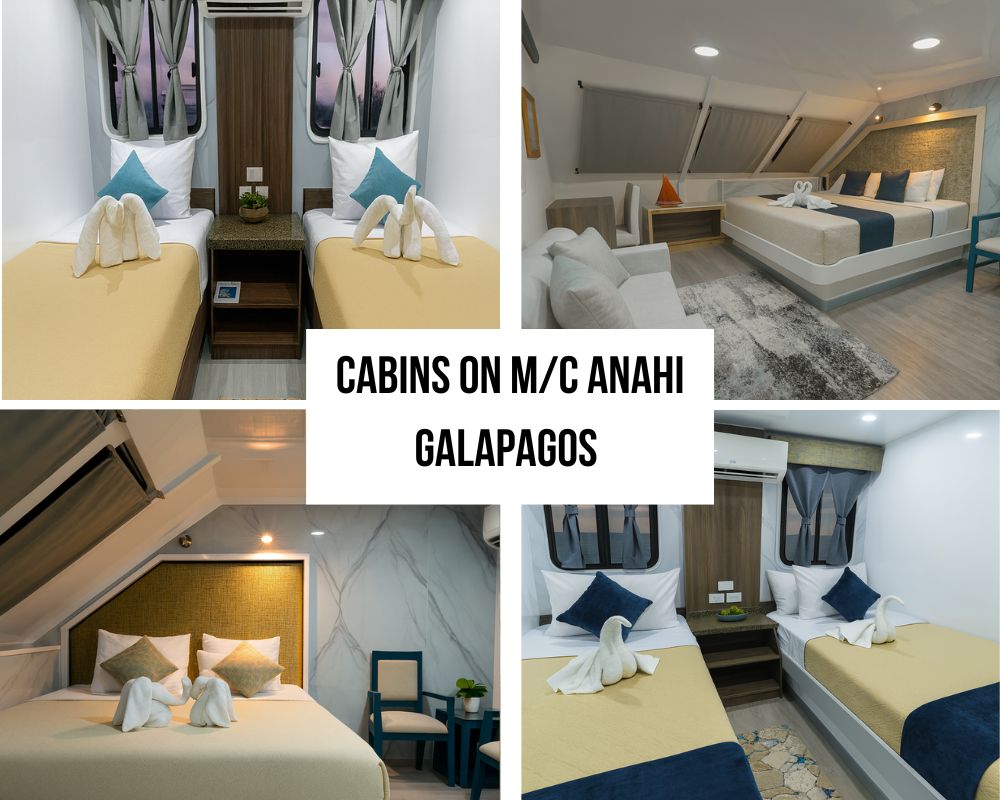
Catamarans win on deck and cabin width at equivalent overall length. Their beam is roughly 30 to 40% wider than a same-length monohull, which translates to wider cabins, more outdoor deck space, and a social area that feels less confined. Monohulls use their vertical space more effectively, with deeper hull profiles that can accommodate more storage and sometimes feel more private. At luxury tier, both hull types deliver genuinely comfortable cabins. The catamaran advantage is most pronounced at mid-range and tourist superior price points where space efficiency matters most.
Think about what being on a 16-passenger boat for seven days actually involves. You share a dining table, a lounge, a sundeck, and excursion gear with the same 15 people every day. On a catamaran, the wider beam means the sundeck has enough room for people to spread out after a snorkeling session without sitting on top of each other. The dining area feels like a room rather than a corridor. On a narrower monohull at the same passenger count, the social spaces are tighter. Not claustrophobic on a good vessel, but noticeably more compact.
Cabin width is where the physical difference is most concrete. A catamaran’s cabins sit within the individual hulls, where the beam gives enough width for two people to move around simultaneously without performing a choreographed shuffle. Premium and luxury catamaran cabins run 18 to 25 square meters. A comparable monohull at the same price point might offer 14 to 17 square meters. On a trip where the cabin is your only truly private space for a week, that difference matters more than the numbers suggest.
Monohulls have one genuine interior advantage: vertical space and storage depth. Because the single hull sits deeper in the water, there’s more volume below the waterline for storage lockers, engine access, and hull systems that don’t intrude on living space. Some travelers also find the more enclosed feel of a monohull interior more cozy than a catamaran’s open-plan layout. This is subjective, but it’s real.
The cabin you book on a Galapagos cruise affects your comfort more than most people factor in when comparing prices. Here’s a full guide to Galapagos cruise cabin types so you choose the right one before you commit to a booking.
Space and Comfort: Catamaran vs Monohull at Each Price Tier
| Price Tier | Catamaran Cabin Size | Monohull Cabin Size | Deck Space Edge |
|---|---|---|---|
| Tourist Class | 12-16 m²; wider feel | 10-14 m²; more vertical | Catamaran |
| Tourist Superior | 15-20 m²; comfortable | 13-17 m²; functional | Catamaran |
| First Class | 18-22 m²; spacious | 16-20 m²; comfortable | Catamaran (slight edge) |
| Luxury | 20-28 m²; suite standard; some with balconies | 18-25 m²; suite standard (Ecoventura) | Roughly equal |
Approximate ranges based on current fleet. Individual vessels vary. Verified July 2026.
Wildlife Access and Shore Experience: Does Hull Type Matter?
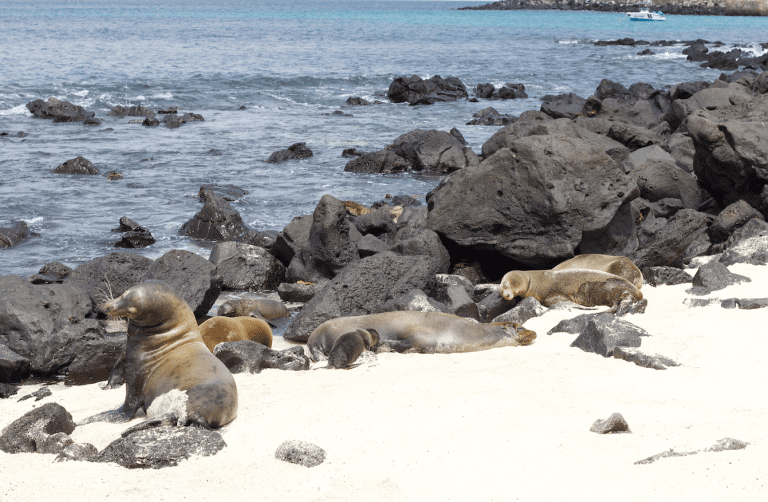
No. Every vessel in the Galapagos follows National Park-approved itineraries and visits the same certified landing sites. The hull type does not affect which islands you visit, which trails you walk, or how close you get to wildlife on shore. Where hull type has a minor indirect effect: catamarans with shallower drafts can anchor slightly closer to shore in some locations, potentially shortening panga rides. This is a marginal operational advantage, not a wildlife access difference.
We make this point explicitly because the marketing language around catamaran charters sometimes implies wildlife advantages that don’t exist. The same sea lion will swim up to your snorkel mask on either vessel type. The same iguana will ignore you on the same lava field. National Park regulations control the experience on shore, not your hull configuration.
The shallow draft advantage of catamarans is real but modest in the Galapagos context. Most landing sites use pangas regardless of how close the vessel can anchor, and the difference in anchor distance between a catamaran and a monohull is measured in meters, not kilometers. It occasionally means a slightly shorter and calmer panga ride to a wet landing. It doesn’t mean different animals or more time at the site.
Knowing the difference between a wet and dry landing before your first Galapagos cruise saves you from showing up at the panga in the wrong footwear. Here’s a full guide on wet landing vs dry landing so you know what to expect at each site.
Price and Value: What Each Hull Type Costs
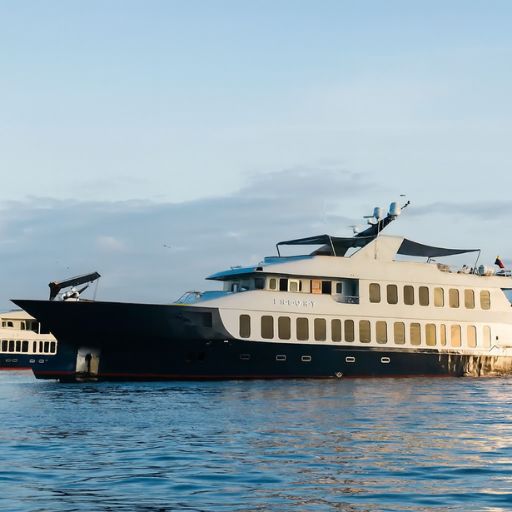
Catamarans typically run 10 to 30% higher than comparable monohull yachts at the same class level in the Galapagos. The premium reflects higher construction cost, greater beam, and market demand driven by the stability and space advantages. At tourist class and tourist superior tiers, the price gap is most noticeable. At luxury tier, some of the best-value vessels are actually monohulls (Ecoventura’s Origin, Theory, Evolve) because they compete on guide quality and food rather than hull width.
The value calculation on catamaran vs monohull in the Galapagos isn’t purely about daily rate. It also depends on what the premium buys you in practice. For a western itinerary in August, the catamaran premium is easily justified by the stability difference alone. For a calm central island itinerary in February, the same premium is harder to justify if the monohull option comes with a better guide or a more recently renovated cabin.
Tourist class is how most first-time Galapagos cruisers get out there without breaking the bank. Here’s a full guide to tourist class Galapagos cruises so you know exactly what $300-$400 a day actually buys you on the water.
Hull Type Value Comparison by Itinerary and Season
| Scenario | Catamaran Value | Monohull Value | Recommendation |
|---|---|---|---|
| Western itinerary, Jul-Nov | High: stability premium justified | Lower: Bolivar Channel swell significant | Catamaran strongly preferred |
| Eastern/central itinerary, Jan-May | Moderate: space still better | Good: calm seas reduce stability gap | Either; prioritize guide and class |
| Any itinerary, seasick-prone traveler | High: less roll regardless of season | Lower: roll risk always present | Catamaran |
| Luxury tier, any route | Strong: Endemic, Elite, Ocean Spray | Strong: Ecoventura fleet competes on food and guide | Compare specific vessels, not hull type |
| Budget traveler, tourist class | Moderate: premium harder to absorb | Good: more options at lower price points | Monohull if budget-constrained |
Based on 2026 fleet pricing and seasonal sea conditions. Verified July 2026.
The catamaran vs monohull decision is genuinely route-dependent and sometimes comes down to which specific vessel has the better guide on your departure date. We track both. Reach out here and we’ll give you a specific recommendation for your itinerary and travel window.
Best Catamarans and Best Monohull Yachts Worth Booking
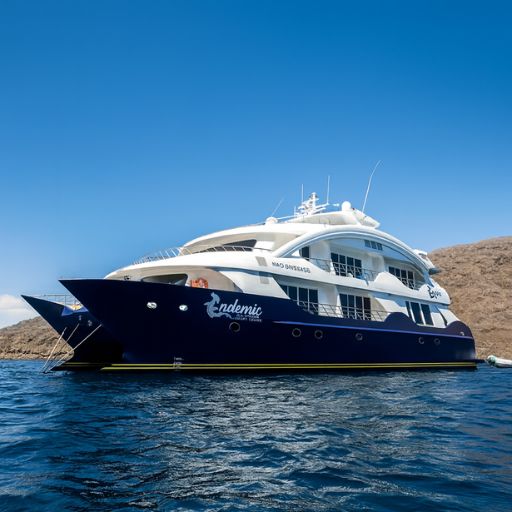
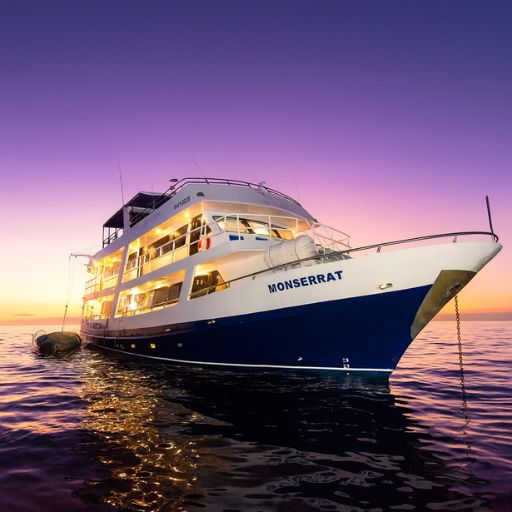
The strongest catamarans in the current Galapagos fleet are the Endemic (luxury, private balconies, best stability profile), Galaxy Sirius (first class, strong guide tenure, western itinerary standout), Ocean Spray (luxury, purpose-built, 4 to 15-day itineraries), and Seaman Journey (first class, reliable operations, consistent traveler feedback). The strongest monohulls are Ecoventura’s Origin, Theory, and Evolve (luxury, Relais and Chateaux, 30-year guide tenure), the Integrity (first class, long itinerary options), and the Monserrat (tourist superior, former first class hull, free wifi).
Ecoventura’s case for monohull is worth dwelling on because it’s the most credible counterargument to the catamaran default. Their three identical 20-passenger yachts are monohulls at the luxury tier, and they consistently produce the highest guide satisfaction scores in traveler feedback at any hull type. The argument they make, that a monohull’s motion in the specific short-chop conditions of the Galapagos is no worse than a catamaran’s, is partially supported by marine architecture data. What’s unambiguous is that their guide tenure and food program are exceptional, and for many travelers those factors outweigh hull type entirely.
At the first class and tourist superior tiers, catamarans dominate the value conversation simply because the space and stability advantages are more noticeable when the cabins are smaller and the budget is tighter. A tourist superior catamaran at $450/day feels more spacious than a tourist superior monohull at $380/day, and the effective difference per day is small enough that the upgrade makes sense for most travelers.
First time trying to navigate Galapagos cruise categories and not sure where tourist superior fits in the bigger picture? Our guide on tourist superior Galapagos cruises walks you through what this tier actually offers and who it’s best suited for.
Which One Is Right for Your Trip?
Choose a catamaran if you’re doing a western itinerary between July and November, if you have any history of seasickness on boats, if cabin and deck space are meaningful priorities, or if you’re traveling as a couple who wants the widest possible range of luxury options including private balconies. Choose a monohull if you’re traveling in calm season on central or eastern itineraries, if the specific vessel’s guide credentials and food program significantly outperform the catamaran alternatives at your price point, or if the traditional yacht aesthetic matters to you.
The honest default for a first-time Galapagos traveler with no strong preference is catamaran. The stability advantage, even if its precise magnitude is debated among marine architects, is real enough in the Bolivar Channel to justify the modest price premium. The space advantage is concrete and noticeable across a seven-day trip. And the catamaran fleet in the Galapagos now includes the strongest vessels at every price point, so choosing catamaran doesn’t mean sacrificing guide quality or food.
The honest exception is Ecoventura. If budget allows the luxury tier and deep guide expertise is the primary driver, their monohull fleet is the strongest argument for reconsidering the catamaran default. No catamaran in the Galapagos matches their guide tenure profile, and their argument that the stability difference is overstated for their specific operating conditions is not marketing spin. It’s a reasonable position supported by their traveler feedback.
Not sure if luxury Galapagos cruises deliver enough over first class to justify doubling the daily rate? This breakdown covers the ships, the service, the exclusivity, and where the premium actually shows up in the experience.
Traveler Satisfaction: Catamaran vs Monohull in the Galapagos
Based on traveler interviews and survey data collected through mytrip2ecuador.com and the My Trip to Somewhere YouTube channel:
| Would choose same hull type again | 83% | 76% |
| Satisfied with cabin space | 84% | 71% |
| Experienced meaningful seasickness | 13% | 26% |
| Mentioned hull noise as an issue | 18% (hull slap) | 9% |
| Satisfied with deck/social space | 81% | 67% |
| Said guide quality was the trip highlight | 69% | 74% |
Based on traveler interviews and survey data collected through mytrip2ecuador.com and the My Trip to Somewhere YouTube channel.
Common Mistakes When Choosing Between Catamaran and Monohull
- Assuming catamaran always means less seasickness. In long ocean swells or specific sea states, catamaran pitching and bridge deck slap can be as uncomfortable as monohull rolling. Seasickness medication is worth packing regardless of hull type.
- Choosing hull type over guide quality. The guide is still the biggest variable in how good your Galapagos trip is. A monohull with an exceptional long-tenured guide outperforms a catamaran with a weak one at any price point.
- Not asking about bridge deck clearance on catamarans. Some older or budget catamarans have low bridge deck clearance that amplifies hull slap noise significantly. This is worth asking about specifically if overnight passages are part of your itinerary.
- Defaulting to catamaran for eastern routes in calm season. January through May on central and eastern island routes is calm enough that the stability difference between hull types is largely theoretical. Spending the catamaran premium in this scenario may not be necessary.
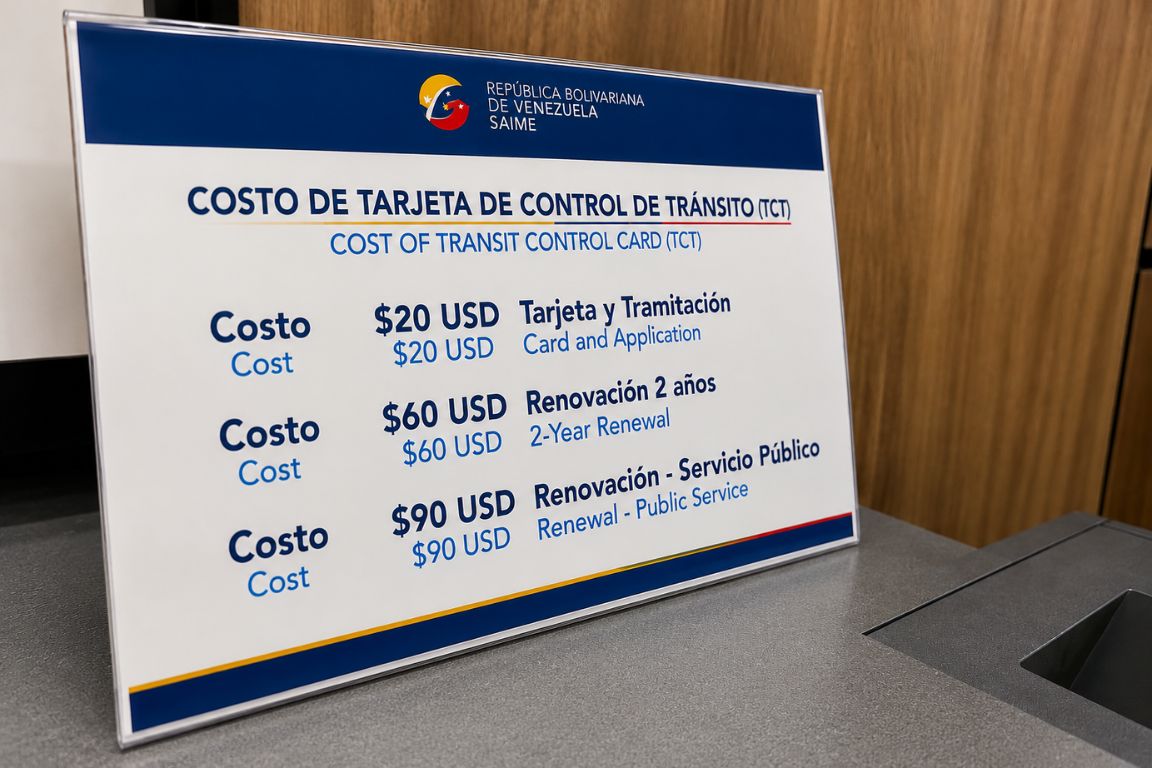
- Forgetting entry logistics regardless of vessel type. The National Park entrance fee is $200 per adult and $100 per child under 12, paid in USD cash on arrival. The Transit Control Card is $20 per person, completed online before the flight through the CGREG portal. Neither hull type exempts you from these requirements.
Frequently Asked Questions
Is a catamaran more stable than a monohull yacht in the Galapagos?
Generally yes for side-to-side rolling, which is the motion most associated with seasickness. Catamarans roll less because their twin hulls provide wider lateral stability. However, catamarans can pitch more bow-to-stern in certain conditions, and bridge deck slap can be disruptive at anchor in chop. The stability advantage is most pronounced on western itineraries through the Bolivar Channel between July and November.
Do catamarans cost more than monohull yachts in the Galapagos?
Typically yes, by 10 to 30% at equivalent class levels. The premium reflects wider beam, greater construction cost, and strong market demand. The gap is most noticeable at tourist superior and first class price points. At the luxury tier, some of the strongest monohull vessels compete directly on guide quality and food, making the hull type decision less about price and more about what experience you prioritize.
Do catamarans and monohulls visit the same Galapagos islands?
Yes. Hull type has no bearing on National Park site access. Both vessel types follow the same approved itineraries and land at the same visitor sites. Catamarans’ shallower draft allows them to anchor slightly closer to shore in some locations, but this is an operational margin rather than a meaningful access difference.
What is hull slap on a catamaran and should I be concerned?
Hull slap is the sound produced when wave troughs hit the underside of the bridge deck connecting a catamaran’s two hulls. In calm conditions it’s barely noticeable. In choppy anchorages or overnight crossings in rough water, it can sound like banging on the hull and disrupt sleep. Well-designed modern catamarans minimize this with hull geometry. If this concerns you, ask the operator specifically about bridge deck clearance before booking.
Catamaran or monohull: the right answer depends on where you’re going, when you’re going, and what specific vessel you’re considering. The hull debate is less important than the guide, the itinerary, and the class level. We’ve been on both. We know which specific vessels in each hull category are worth booking right now.
Rated 4.9 stars on Google and TripAdvisor. Get your free quote here and we’ll give you a straight answer within one business day.
Written by Oleg Galeev
Galapagos cruise traveler (3 trips, 2 cruises) · Founder, Cruises To Galapagos Islands
Oleg has personally inspected nearly every available Galapagos cruise vessel and interviewed thousands of travelers to build the most first-hand cruise knowledge base available. He also runs the Ecuador travel blog mytrip2ecuador.com and the YouTube channel My Trip to Somewhere.
Cruises To Galapagos Islands is rated 4.9 stars on Google and TripAdvisor.
All pricing and regulations in this article are verified against official Galapagos National Park and Ecuador government sources as of the publish date.