What Is a Galapagos Cruise Panga (Zodiac) and How Does It Work?
Part of our guide to our Galapagos cruise planning guide. Ready to pick a ship? See compare all Galapagos cruise ships by price, size and class. Budgeting first? Read how much a Galapagos cruise costs.
Quick Facts: Galapagos Panga
| Category | Details |
|---|---|
| What is a panga | Small motorized inflatable dinghy; also called Zodiac; used for all shore transfers and wildlife watching rides |
| Passenger capacity | Up to 10 passengers per panga |
| Landing types | Dry landing (step onto rock, dock, or firm surface); wet landing (step into ankle to knee-deep water and wade ashore) |
| Panga rides per day | Typically 2 to 4 (to and from each excursion site) |
| Transfer time | Usually 5 to 15 minutes from vessel to shore |
| Wildlife watching rides | Some excursions are panga-only; no landing; includes mangroves, cliffs, coves |
| Snorkeling use | Some snorkel sessions launch from the panga via a side ladder |
| Footwear for wet landing | Water shoes or sport sandals with straps (Tevas, Keens) |
| Camera protection | Dry bag or waterproof case strongly recommended |
| Crew role | Crew member holds your hand and assists boarding and disembarking on every transfer |
| No facilities on uninhabited islands | No bathrooms, no ramps, no infrastructure; plan accordingly |
| Park entrance fee | $200/adult, $100/child under 12 (USD cash on arrival); TCT card $20 online before flight |
Details verified July 20, 2026.
What Is a Panga and Why Every Galapagos Cruise Uses One
A panga is a small motorized inflatable dinghy, roughly equivalent to a Zodiac, that serves as the primary transport between the cruise vessel and every visitor site. Because the Galapagos National Park prohibits large ships from landing directly at protected sites, and because the anchorages used by cruise vessels are often too shallow or wave-exposed for the main vessel to approach the shore, the panga bridges the gap. Without it, there is no cruise. It is not an optional tender service. It is the mechanism by which the entire Galapagos cruise experience actually happens.
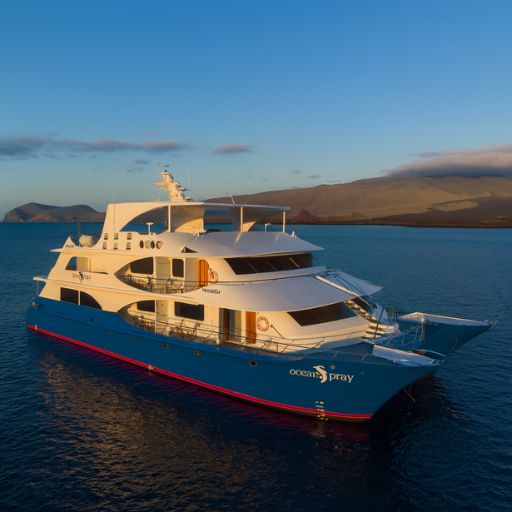
Every vessel operating in the Galapagos carries at least one panga, and most 16-passenger yachts carry two. Larger 48 and 100-passenger ships carry more, which is why getting a full group ashore takes longer on bigger vessels: they run multiple panga loads in rotation rather than landing everyone at once. The panga crew includes a driver and usually one additional crew member whose sole function during transfers is to assist passengers boarding and disembarking safely.
The name “panga” is the local term used throughout the Galapagos and Ecuador. “Zodiac” is the brand name most commonly used in expedition travel globally. They’re the same thing in operational terms. Both are inflatable rubber or PVC hulls with rigid floors, outboard motors, and rope handles around the perimeter that passengers hold during the ride. Seating is on the inflated tube sides rather than fixed seats, which is a different body position than most travelers expect the first time.
Panga rides are brief by design. The transfer from vessel to shore typically runs 5 to 15 minutes depending on anchoring distance. The National Park requires vessels to anchor at specific distances from visitor sites to minimize environmental impact, which is why some transfers are longer than others. At Black Turtle Cove on Santa Cruz, for example, the panga cuts its engine entirely and glides in quietly because the wildlife in the mangroves responds to engine noise. These operational details make the panga more than a water taxi. It’s part of the ecological management of the islands.
Not sure whether an intimate yacht or a larger ship gives you the better Galapagos experience? This breakdown on small yacht vs large cruise ship in the Galapagos covers the tradeoffs on comfort, flexibility, wildlife access, and overall atmosphere.
Dry Landing vs Wet Landing: What to Expect from Each
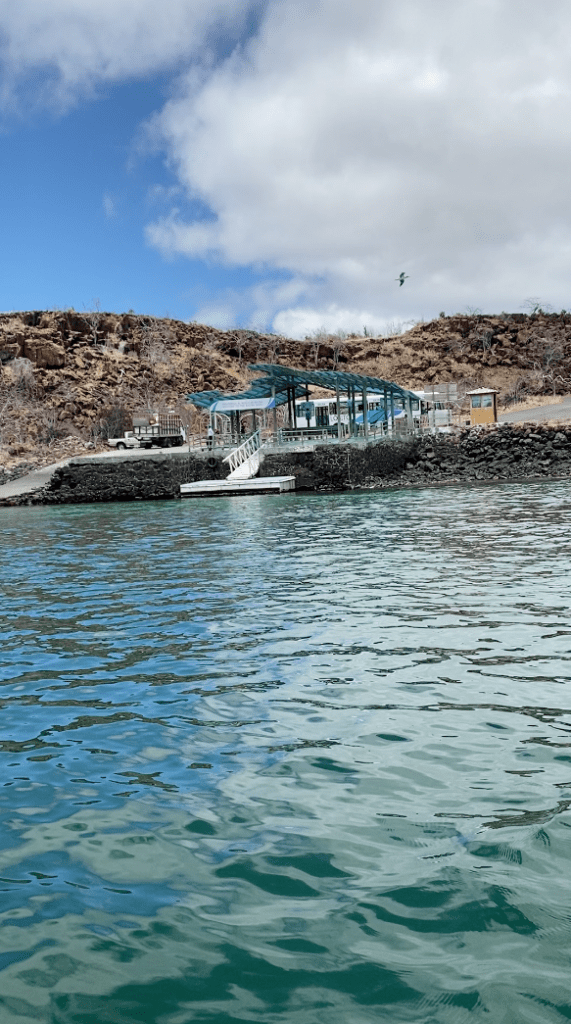
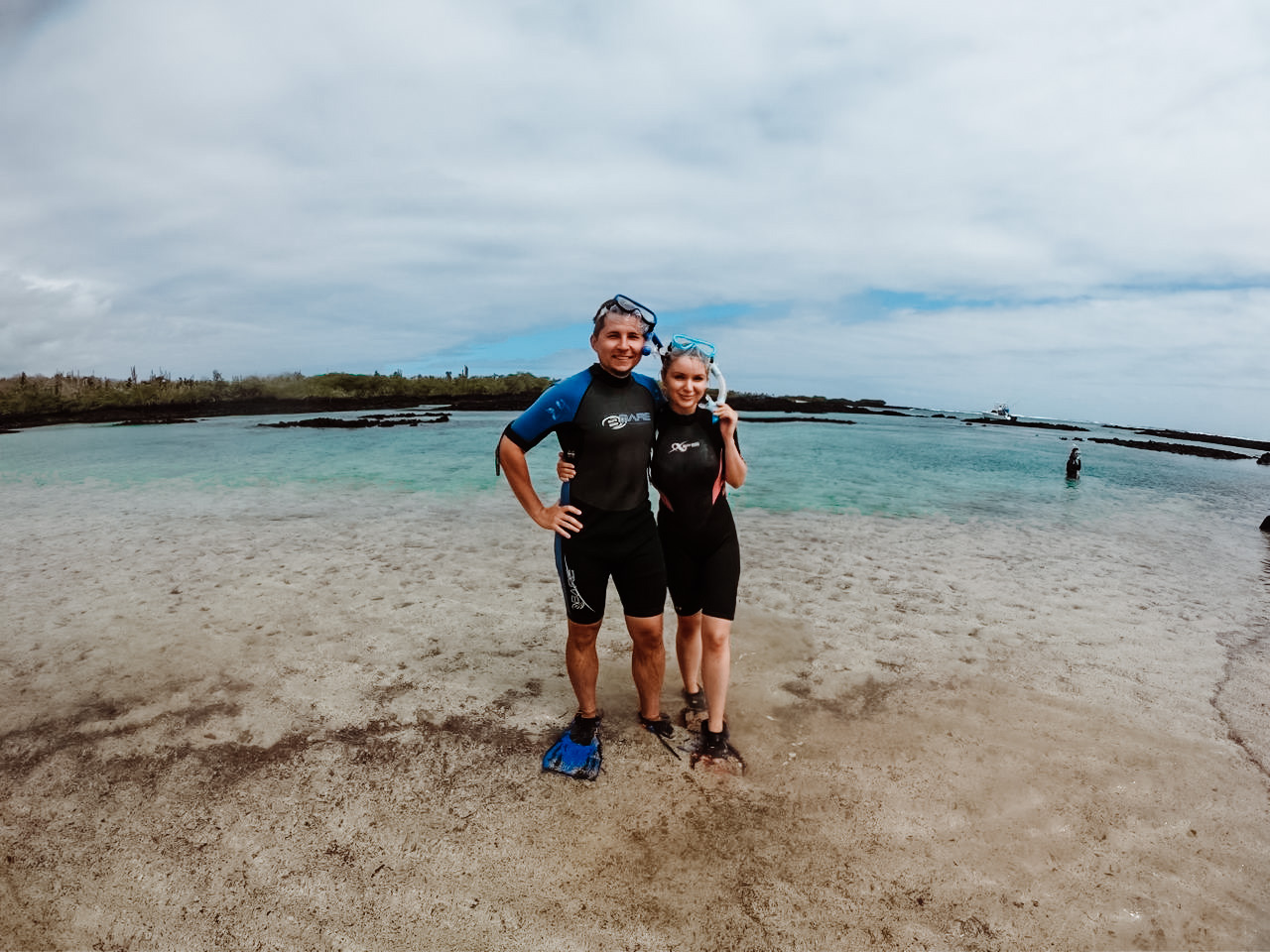
A dry landing means the panga pulls up to a dock, a flat rock platform, or a concrete landing step and passengers step directly onto solid dry ground. No water contact. A wet landing means the panga approaches a sandy beach, the bow noses into shallow surf, and passengers step off the side into ankle to knee-deep water and wade the last few meters to shore. Both happen on most 7-day itineraries. Neither is particularly difficult for most travelers. They require different footwear and slightly different technique.
Dry landings sound easier and are for most travelers. The complication is that “dry” describes the landing surface, not necessarily the ease of the step. Some dry landings are onto a flat concrete dock with the panga held steady by a crew member: straightforward. Others are onto a sloped or uneven lava rock surface with no railing and a moving panga below you: more demanding. The crew at a dry landing calls out which foot to lead with, where to step, and physically holds the panga against the surface while you transfer. The guide and crew are experienced at reading the conditions and will hold the boat as steady as possible. Rushing is the main risk. Taking the crew member’s hand and moving at a deliberate pace solves it.
Wet landings are the ones travelers mention most in pre-trip anxiety. The technique is simple: sit on the side tube of the panga, swing both legs over into the water, stand up in the water, and walk to shore. The crew holds the panga steady during this process and takes your bag if needed while you disembark. The water depth at a standard wet landing runs from ankle to knee, occasionally higher if a wave comes in as you’re stepping off. The main gear risk is camera equipment. The main comfort risk is cold feet for the first ten minutes of the excursion, which resolves quickly once you’re walking.
The guide always briefs the group before approaching a landing on what type it is and what to expect. First-timers who listen to that briefing and follow the crew’s instructions have smooth landings. Travelers who assume it’s straightforward and don’t listen miss the instruction about which side to disembark on, which direction the swell is coming from, and whether to hold the rope handle or the crew member’s hand. The briefing is short. It matters.
Not sure what a wet landing actually involves or how to prepare for one on a Galapagos cruise? This breakdown on wet landing vs dry landing covers what each transfer looks like, what to wear, and how to protect your gear.
Dry Landing vs Wet Landing: Full Comparison
| Factor | Dry Landing | Wet Landing |
|---|---|---|
| Landing surface | Rock, dock, or concrete platform | Sandy beach via shallow water wade |
| Feet get wet? | No | Yes; ankle to knee-deep |
| Footwear required | Hiking shoes or trail runners | Water shoes or sport sandals with strap |
| Main difficulty | Stepping onto uneven rock surface from moving panga | Stepping off panga side into moving surf |
| Camera risk | Low | Moderate; dry bag recommended |
| Crew assistance | Holds panga steady; assists step | Holds bag; steadies panga; may assist into water |
| Mobility challenge | More demanding on uneven rock landings | Easier for most; open water exit simpler |
| Typical visitor sites | Genovesa (Prince Philip’s Steps), San Cristobal dock, lava platform sites | Gardner Bay, Tortuga Bay, most sandy beach sites |
Verified July 2026. Landing type varies by site conditions on the day.
If you or someone in your group has mobility concerns, the landing type at specific sites on your itinerary matters a lot. Some sites are consistently wet landings, others are consistently dry, and a few switch depending on swell conditions. We can tell you what to expect at each site on any itinerary you’re considering. Send us a message here and we’ll walk through it with you.
How Many Panga Trips Per Day and How Long Do They Take
A standard Galapagos cruise day includes two excursions: one in the morning and one in the afternoon. Each excursion requires a panga ride to shore and a panga ride back. That’s four panga transfers on a typical active day. Some days include a dedicated panga wildlife-watching ride that doesn’t involve a landing at all, adding a fifth ride. The transfer itself runs 5 to 15 minutes each way. On a 16-passenger vessel with one panga, all passengers travel together. On a 100-passenger ship, rotating groups wait their turn for available pangas.
The cumulative panga time across a 7-day cruise is surprisingly significant. Four transfers per day at an average of 10 minutes each adds up to about 40 minutes of panga time daily, or roughly 4 to 5 hours across the full trip. This is not dead time. The panga ride approaching a site is when you first see the landscape at sea level, when the guide points out the silhouette of birds on the cliffs ahead, when the smell of the sea and the spray on your face are part of the experience rather than something to manage. First-time Galapagos travelers often report that the panga approach to Punta Vicente Roca or the entry into Elizabeth Bay through the mangroves were among the most memorable moments of the trip, not just the landings that followed.
Weather and swell conditions can affect both timing and landing type on any given day. If a site has a wet landing in the itinerary but a larger-than-expected swell is running on the beach, the guide and captain make a real-time call on whether to proceed with the landing, switch to an alternative site, or modify the approach. These decisions happen without advance notice and are non-negotiable. The National Park’s visitor management rules and the crew’s safety judgment supersede the printed itinerary on any given day.
Sixteen passengers is the sweet spot for a Galapagos cruise and once you understand why it’s hard to consider anything bigger. Here’s a full guide to the 16-passenger Galapagos yacht so you know exactly what the smaller format delivers.
Panga Rides for Wildlife Watching, Not Just Transport
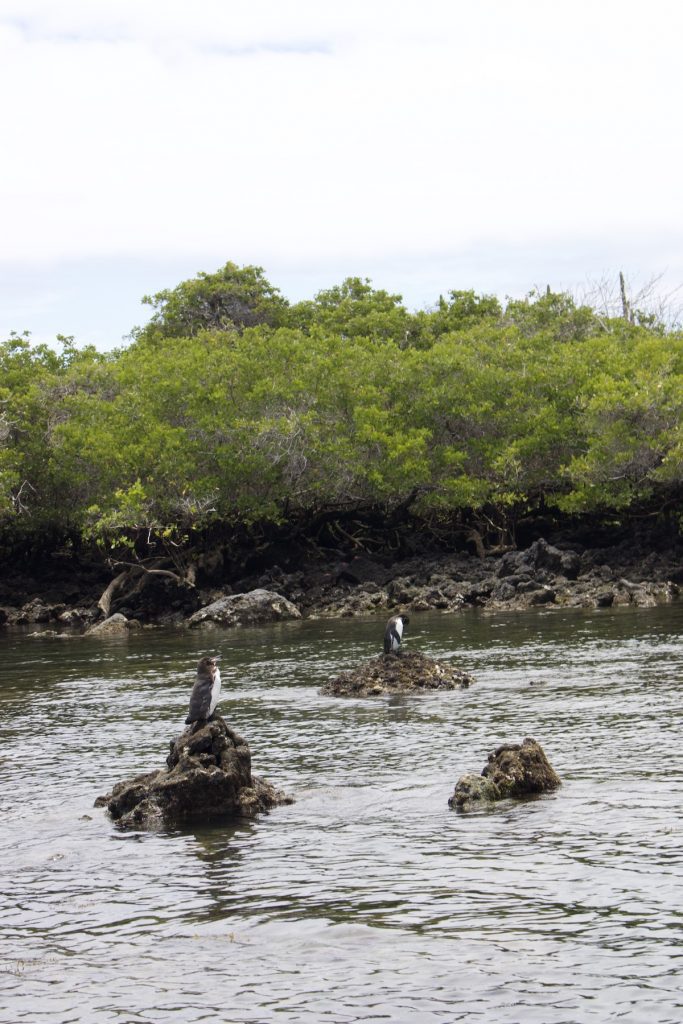
Several of the most celebrated excursions on Galapagos cruise itineraries are pure panga rides with no landing at all. Elizabeth Bay on Isabela’s west coast is one of the best wildlife-watching locations in the archipelago and is accessible only by panga. The engine cuts to an idle as the panga enters the mangrove channels, and passengers drift past green sea turtles, golden rays, Galapagos penguins, flightless cormorants, and spotted eagle rays in complete silence. Black Turtle Cove on Santa Cruz operates the same way. No landing. No walking. Just the panga and the wildlife at eye level.
The cliff-side panga ride is a different experience from the mangrove float but equally compelling. At Punta Vicente Roca on Isabela’s northwest tip, the panga tracks the volcanic cliff face close enough to see flightless cormorants on their nests, Galapagos penguins on ledges, and blue-footed boobies diving into the water beside you. The cliff drops straight into the sea and there is no landing. The experience is entirely from the water, which gives a perspective on the geology and the wildlife colonies that a trail walk cannot provide. Some of the most used wildlife photography from the Galapagos was taken from pangas rather than from shore.
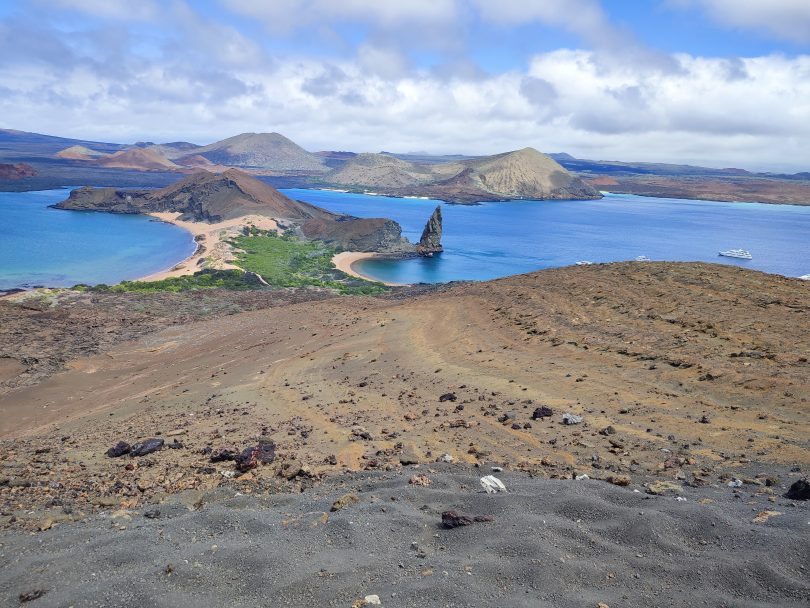
At Genovesa, the panga approach into Darwin Bay in the early morning is when you first hear the red-footed booby colony before you can see it clearly. At Bartolome, the panga ride around Pinnacle Rock at water level reveals Galapagos penguins standing on volcanic rock formations a meter from the boat. These are not incidental to the itinerary. They are itinerary items in their own right, listed specifically because the panga format makes encounters possible that no other vehicle in the Galapagos can deliver.
Panga Wildlife Watching vs Shore Excursion: What Each Delivers
| Factor | Panga Wildlife Ride (no landing) | Shore Excursion (with landing) |
|---|---|---|
| Best for | Marine species; cliff birds; mangrove wildlife | Land species; tortoises; iguanas; nesting birds |
| Example sites | Elizabeth Bay, Black Turtle Cove, Punta Vicente Roca cliffs, Pinnacle Rock | Española, Genovesa trails, Bartolome summit, Santa Cruz lava tubes |
| Mobility requirement | Low; seated throughout | Moderate to higher; trail walking on uneven terrain |
| Photography angle | Eye level with marine life; cliff wildlife at close range | Eye level with land wildlife; landscape views |
| Duration | 30 minutes to 1.5 hours | 1 to 3 hours |
| Engine use | Engine off in mangroves and sensitive sites | Full approach to landing point |
| Snorkeling option | Sometimes; panga-launch via side ladder | From beach or shore entry |
Verified July 2026. Site access subject to National Park permit and conditions on the day.
Which itineraries include the best panga wildlife rides, and which ones are heavy on shore walks, is something most booking descriptions don’t make clear enough. If you want an itinerary that maximizes panga-from-water wildlife encounters alongside the shore experience, we can identify which routes deliver that specifically. Reach out here and we’ll match you with the right itinerary.
Mobility, Safety, and What the Crew Does During Transfers
Every panga transfer includes a dedicated crew member whose function is to assist passengers boarding and disembarking. They extend a hand or forearm for passengers to grip, hold the panga against the landing surface, call out where to step, and take bags when passengers need both hands free. This is not perfunctory service. It is a practiced and essential part of operations that runs dozens of times per cruise. Taking the crew’s hand during every transfer, regardless of how confident you feel, is the standard practice and the right call.
Mobility limitations affect Galapagos accessibility in specific ways. The panga transfer itself is manageable for most travelers with moderate mobility: it requires the ability to sit on and swing off a tube edge that sits about 60 centimeters above the water, and to walk on uneven terrain once ashore. The more significant limitation is the terrain at visitor sites, which includes lava fields, rocky paths, steep steps at some landings (Prince Philip’s Steps at Genovesa being the most demanding), and sandy beach walks that don’t require infrastructure but do require balance on soft sand. Wheelchairs are not compatible with any of this. Travelers with significant mobility limitations should discuss specific sites with an operator before booking rather than relying on general accessibility descriptions.
Children manage panga transfers comfortably in most cases. The crew assists smaller passengers with extra attention and the transfer is brief enough that most children find it exciting rather than scary. The National Park doesn’t set a minimum age for panga transfers, but individual operators do set minimum ages for their cruises, typically ranging from 5 to 12 depending on the vessel and the activity profile of the itinerary.
What to Wear and Bring on a Panga Transfer
The two non-negotiable items for a Galapagos panga transfer are appropriate footwear for the landing type and protection for camera and phone equipment. For wet landings: water shoes or sport sandals with a secure strap (Tevas and Keens are the most cited brands in traveler feedback). For dry landings: trail runners or light hiking shoes. A dry bag or waterproof camera case protects equipment during both the transfer and any unexpected spray. A sunglasses strap prevents losing them overboard. Everything else is optional comfort.
The footwear decision needs to be made before you leave the vessel, not at the panga. The guide briefs the group on landing type before each excursion. Wet landing day means leaving your hiking boots in the cabin and wearing your water shoes to the panga deck. Carrying the wrong footwear onto the panga because you forgot the briefing means either wet hiking boots for the excursion or awkward barefoot navigation of a rocky landing. Neither is ideal. Ecoventura specifically advises bringing already broken-in footwear for both types, since new shoes on lava trails on day one of a seven-day trip create a blister problem that compounds every subsequent day.
Cameras deserve specific planning. The standard risk on a panga transfer is spray from boat wake or a wave taken over the bow during the approach. This is intermittent and unpredictable. A dry bag or waterproof camera housing eliminates the risk entirely. A heavy-duty ziplock bag inside a regular day pack reduces it significantly and costs nothing. Travelers who have had cameras damaged by saltwater spray universally report that the dry bag recommendation was in the pre-trip materials and they chose to skip it. Don’t skip it.
Hats with chin straps or tight-fitting hats are mentioned in nearly every experienced Galapagos packer’s list. The wind across the open water between the vessel and the landing site is brisk and consistent. Casual hats go overboard. Experienced Galapagos travelers either secure the hat under a strap or leave it behind and use sunscreen instead.
Panga Packing Checklist by Landing Type
| Item | Dry Landing | Wet Landing | Panga Wildlife Ride |
|---|---|---|---|
| Footwear | Hiking shoes / trail runners | Water shoes / sport sandals with strap | Either; staying seated |
| Camera protection | Day pack; low spray risk | Dry bag or waterproof case | Dry bag recommended; spray possible |
| Hat | With strap or tight-fitting | With strap or tight-fitting | With strap; windy on open water |
| Sunglasses | With strap | With strap | With strap; essential |
| Water bottle | Reusable; no single-use plastic | Reusable; stow in dry bag | Reusable; keep in lap or bag |
| Light layer | Optional | Optional | Recommended for early morning or evening rides |
| Sunscreen | Yes; reapply on transfer | Yes; waterproof SPF 30+ | Yes; full sun exposure during ride |
Verified July 2026. No single-use plastic bottles permitted in Galapagos National Park.
Common Panga Mistakes First-Time Cruisers Make
The most common panga mistakes are not listening to the landing briefing, wearing the wrong footwear, not protecting camera equipment, and refusing the crew’s hand. Each of these is completely avoidable. The panga transfer is one of the most practiced and well-managed logistics in expedition travel. The crew does this dozens of times per cruise. Following their lead is the entire job of the passenger during a transfer.
Not listening to the pre-excursion briefing is the root cause of most panga problems. The guide tells you the landing type, the expected conditions, which side to disembark from, and whether to take the crew’s hand or the rope. Travelers who are already in conversation with each other or distracted during the 90-second briefing miss this and then improvise on the panga, which is when errors happen. The briefing is short. It is always relevant. Pay attention.
First-Time Traveler Panga Experience: What Our Feedback Shows
Based on traveler interviews and survey data collected through mytrip2ecuador.com and the My Trip to Somewhere YouTube channel:
| Said panga transfers were easier than expected | 78% |
| Had camera equipment get wet or damaged | 11% |
| Wore wrong footwear for landing type on at least one excursion | 34% |
| Described a panga wildlife ride as a trip highlight | 61% |
| Said they lost or nearly lost a hat or sunglasses overboard | 22% |
| Said the panga itself felt unsafe at any point | 4% |
Based on traveler interviews and survey data collected through mytrip2ecuador.com and the My Trip to Somewhere YouTube channel.
Frequently Asked Questions
Is a panga ride on a Galapagos cruise scary or dangerous?
No, not in normal conditions. Only 4% of first-time travelers in our feedback said the panga felt unsafe at any point. The crew runs these transfers dozens of times per cruise and are experienced at reading conditions. In rough weather the captain may delay or cancel a transfer, but the operation itself on a normal excursion day is straightforward and very well managed.
What is the difference between a panga and a Zodiac in the Galapagos?
No practical difference. Zodiac is the brand name for a type of inflatable motorized dinghy. Panga is the local Ecuadorian and Galapagos term for the same vessel type. Both words refer to the small inflatable motorized boat used for shore transfers and wildlife rides on Galapagos cruises. You’ll hear both terms used interchangeably by guides and crew.
Can passengers with mobility issues do panga transfers?
Travelers with moderate mobility limitations manage panga transfers with crew assistance. The transfer requires the ability to sit on and swing off a tube edge roughly 60 centimeters above the water. The greater challenge is terrain at visitor sites after landing, which involves uneven lava, rocky paths, and sandy beaches with no ramps or railings. Travelers with significant mobility limitations should discuss specific sites and landing types with an operator before booking.
How wet do you get on a Galapagos wet landing?
Ankle to knee-deep in most conditions. Occasionally higher if a wave comes in as you’re stepping off. Your feet and lower legs will be wet for the first part of the excursion. Water shoes dry quickly and the walking warms you up within minutes. The crew holds the panga as steady as possible during wet landings and can hold your bag while you step off.
The panga is where the Galapagos cruise experience actually begins, not at the shore after landing. The approach into Elizabeth Bay with the engine off and penguins on both sides, the drift through the Black Turtle Cove mangroves, the spray on your face pulling up to Pinnacle Rock at eye level: these are panga moments, not landing moments. Understanding how they work turns them from logistics into highlights.
We’ve made every transfer type on every major Galapagos itinerary and can tell you what to expect at specific sites. Rated 4.9 stars on Google and TripAdvisor. Get your free quote here and we’ll help you plan a trip where every panga ride counts.
Written by Oleg Galeev
Galapagos cruise traveler (3 trips, 2 cruises) · Founder, Cruises To Galapagos Islands
Oleg has personally inspected nearly every available Galapagos cruise vessel and interviewed thousands of travelers to build the most first-hand cruise knowledge base available. He also runs the Ecuador travel blog mytrip2ecuador.com and the YouTube channel My Trip to Somewhere.
Cruises To Galapagos Islands is rated 4.9 stars on Google and TripAdvisor.
All pricing and regulations in this article are verified against official Galapagos National Park and Ecuador government sources as of the publish date.