What Is a Naturalist Guide on a Galapagos Cruise?
Part of our guide to our Galapagos cruise planning guide. Ready to pick a ship? See compare all Galapagos cruise ships by price, size and class. Budgeting first? Read how much a Galapagos cruise costs.
Quick Facts: Galapagos Naturalist Guides
| Category | Details |
|---|---|
| Required since | 1975; mandatory for all National Park visitors |
| Maximum group size | 16 visitors per guide (National Park regulation) |
| Certification levels | Level I, Level II, Level III (III is highest) |
| Total certified guides in Galapagos | Fewer than 400; around 200 actively guiding |
| Level III requirement | University degree in biology/conservation/tourism; multilingual; advanced field exam |
| Training bodies | Catholic University of Quito; Galapagos National Park Authority; Ecuadorian Ministry of Tourism |
| Post-excursion duty | Must submit site report to National Park after every tour |
| Vessel class with Level III guides | First class and luxury standard; tourist superior generally Level II |
| Tip standard | $10-$15 per person per day; given directly to guide and crew at end of cruise |
Details verified July 20, 2026 against official Galapagos National Park Authority records.
What a Naturalist Guide Actually Does on a Galapagos Cruise
A Galapagos naturalist guide does three things simultaneously on every shore excursion: they deliver ecological interpretation of what visitors are observing, they enforce National Park rules protecting the wildlife and visitor sites, and they monitor the environment and submit detailed reports to Park authorities after every tour. They are the legal and educational bridge between the Galapagos National Park and every visitor who sets foot on the islands. Without them, no one goes ashore.
The mandatory guide requirement has been in place since 1975. It predates most environmental tourism regulation anywhere in the world. The National Park Authority understood early that the only way to manage visitor impact on a fragile island ecosystem was to put a certified professional between the visitor and the wildlife at all times. No self-guided walking on uninhabited islands. No independent snorkeling at protected sites. Every person, every excursion, every day: accompanied.
What that means in practice is that your guide is not a nice extra. They are the trip. They walk the trail ahead of the group, pointing out the camouflaged hawk most visitors would step past without noticing. They crouch next to the marine iguana and explain, in real time, why salt crystals are forming around its nostrils and what that tells you about the two ocean currents converging on this specific coastline. They hold the group back when a sea lion is sleeping on the path, not to block anyone, but because waking it unnecessarily is something they are professionally and legally required to prevent.
After the excursion ends and everyone boards the panga back to the vessel, the guide’s work continues. Every certified naturalist is required to file a site report with the National Park Authority after each tour. These reports document what species were observed, what conditions the trails were in, whether any invasive species were spotted, and whether any visitors violated park rules. The guide is literally the park’s eyes and ears in the field.
The panga is how you actually get from the cruise ship to the wildlife and understanding how it works changes how you experience every landing. Here’s a full guide on what a Galapagos cruise panga is and how it works.
The Three Certification Levels Explained: Level I, II, and III
The Galapagos National Park certifies guides at three levels. Level I requires a high school diploma and completion of a six-month guide course. Level II requires at least four years of field experience beyond Level I and passing a further examination. Level III requires a university degree in biology, conservation, or tourism; fluency in at least two foreign languages; and passing the most advanced field examination the Park Authority offers. There are roughly 203 Level I guides, 98 Level II, and 77 Level III currently certified in the Galapagos.
The certification numbers tell part of the story. Level III guides are genuinely rare. Fewer than 80 operate in the entire archipelago, spread across dozens of vessels. The best luxury operators have built their guide programs specifically around attracting and retaining Level III naturalists, which is partly why guide tenure at the top luxury vessels runs into decades rather than seasons.
One important nuance that most booking guides don’t mention: the Level III exam has not been administered in approximately 20 years. This means the current cohort of Level III guides earned their certification years or decades ago. No new Level III guides have been added to the total since then. The Level II exam has also not been offered in over a decade. In practice, this means certification level is a reliable historical signal of qualification but not a current ranking of who the best active guides are. A Level II guide with 15 years of field experience on the western route may deliver a richer interpretation than a Level III guide who hasn’t been in the field recently.
Field tenure and vessel loyalty are the more reliable current signals of guide quality. A guide who has worked the same vessel for ten years knows the specific wildlife patterns, the seasonal behavior changes, the individual animals at recurring sites, and the group dynamics that produce the best learning outcomes. That knowledge accumulates in ways that no certification exam can assess.
Galapagos Guide Certification Levels Compared
| Feature | Level I | Level II | Level III |
|---|---|---|---|
| Minimum education | High school diploma | High school diploma + 4 years field experience | University degree in biology, conservation, or tourism |
| Language requirement | Some English ability | Fluent in at least one foreign language | Fluent in at least two foreign languages |
| Examination | Basic guide course + exam | Further advanced examination | Most advanced field and written examination |
| Approximate number active | ~203 certified | ~98 certified | ~77 certified |
| Typical vessel class | Tourist/economy class | Tourist superior to first class | First class and luxury |
| Field knowledge depth | Solid baseline; variable | Strong; considerable field experience | Deepest ecological knowledge; academic background |
Certification data from Galapagos National Park Authority. Verified July 2026.
How Guide Quality Changes Your Trip More Than Any Other Variable
From thousands of traveler interviews collected through mytrip2ecuador.com and our YouTube audience, guide quality is the single variable most correlated with overall trip satisfaction. More than cabin class. More than vessel size. More than itinerary. Travelers who had an exceptional guide on a modest boat consistently rate their trip higher than travelers who had a mediocre guide on a luxury vessel. The guide is where the Galapagos experience either ignites or flatlines.
The pattern appears in our traveler feedback with striking consistency. When someone comes back and describes a specific moment, a specific species behavior, a specific geological detail they now understand in a way they never did before, there is almost always a guide behind that memory. “Our guide stopped the group before we went around the corner and told us to be quiet. There was a waved albatross doing its courtship dance ten meters away.” That isn’t something you find on a trail by accident. That is a guide who knows that specific bird pair, knows the timing of their display, and knows exactly when to slow the group down.
The inverse is equally consistent. Travelers who mention feeling like the excursion was rushed, like explanations were superficial, like they didn’t understand what they were seeing beyond a list of species names: these travelers almost always come from vessels where guide quality was the weakest link. The cabin was fine. The food was acceptable. But the interpretation layer that makes the Galapagos legible rather than just visually extraordinary was absent.
One finding from our feedback that surprises most travelers: the difference between a good guide and an exceptional one is not primarily knowledge. Both know the species. Both know the park rules. What separates them is what a senior Galapagos guide once described as ecological storytelling: the ability to take what is in front of the group and connect it to the 4 million years of evolutionary history that produced it, in real time, without notes, in language that lands for both the eight-year-old and the retired biologist in the same group of 16.
Still comparing cabin options before you finalize your Galapagos booking? This guide on Galapagos cruise cabin types gives you a straight answer on what each category delivers and which one makes the most sense for your budget and travel style.
What Separates a Good Guide from an Exceptional One
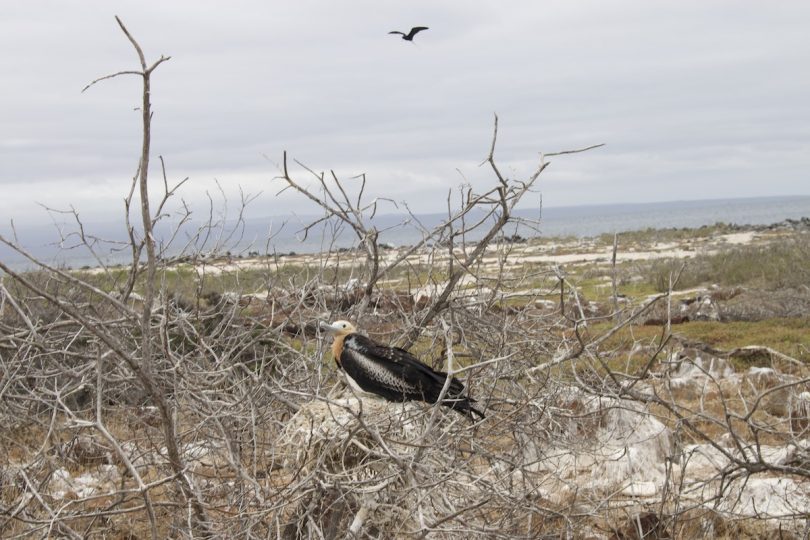
The best Galapagos guides share four traits that no certification exam measures: they notice things others don’t, they adapt their explanation in real time to the group in front of them, they are genuinely and visibly thrilled by the islands after years of repeat visits, and they know individual animals and site-specific patterns accumulated over seasons of field experience. Certification level is a useful baseline. Tenure, enthusiasm, and the ability to read a group are what determine whether the trip is memorable or merely good.
The noticing ability is the most concrete differentiator. Two groups of 16 walk the same trail at the same site on the same day. One guide points to a lava lizard doing a display behavior on a rock formation and explains, without prompting, that this specific display occurs during the transition between two temperature zones on the lava field, and that the species on this island has evolved a slightly different color pattern than its counterpart on Santa Cruz 90 kilometers away. The other group walks past. The observation, the context, the evolutionary detail: all of that comes from a guide who has walked that specific trail hundreds of times and is still paying attention.
The group-reading ability is harder to describe but easy to recognize when you’re on the receiving end. An exceptional guide knows within the first hour of a shore excursion who asks questions, who prefers to observe in silence, who needs a slower pace, and who is going to take 45 photographs of the same frigate bird. They don’t announce this awareness. They just start calibrating: pausing slightly longer at the geology for the person who asked about the lava formations at breakfast, signaling the serious photographer to hang back while the group moves forward, delivering the detailed species information to the table at the evening briefing where the questions were most engaged.
Good Guide vs Exceptional Guide: What the Difference Looks Like
| Dimension | Good Guide | Exceptional Guide |
|---|---|---|
| Species knowledge | Accurate; covers the field guide essentials | Deep; includes behavioral patterns, seasonal variation, island-specific differences |
| Wildlife noticing | Points out what’s visible on the trail | Anticipates behavior; spots camouflaged or hidden species; slows the group before the moment |
| Group adaptation | Delivers the same explanation to every group | Reads the group by day one; calibrates depth, pace, and language in real time |
| Ecological storytelling | Names the species; describes basic facts | Connects what’s in front of the group to evolutionary history, ocean currents, conservation context |
| Enthusiasm after years of repeating | Professional; engaged | Visibly excited; still discovering things; that excitement is contagious |
| Site-specific knowledge | Knows the general site | Knows specific animals, nesting pairs, seasonal micropatterns at individual sites |
Based on traveler feedback collected through mytrip2ecuador.com and thousands of guide assessments across the Galapagos fleet.
Matching the right guide to your specific trip is something we spend real time on. We know which vessels have long-tenured guides, which operators prioritize guide quality over guide cost, and which specific naturalists have the strongest track records in recent traveler feedback. Send us a message here and we’ll factor guide quality into your vessel recommendation from the start.
Which Vessel Classes and Sizes Have the Best Guides
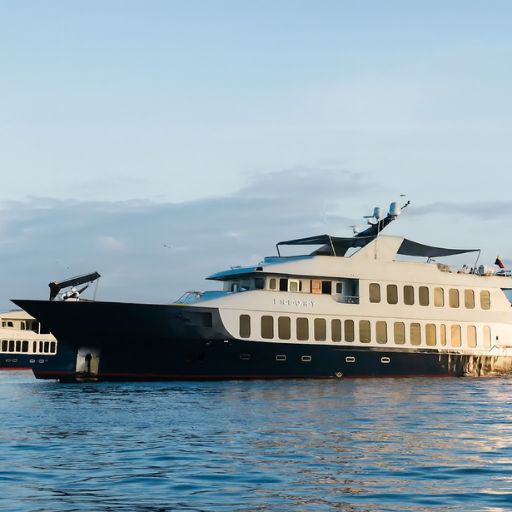
Level III guides cluster on first class and luxury vessels, where operators invest in attracting and retaining the best naturalists through better working conditions, higher tips from premium travelers, and longer vessel tenure. Tourist superior boats typically carry Level II guides. Tourist class vessels are most variable: some carry very good Level II guides, others have newer Level I guides building their hours. The best guides in the entire Galapagos fleet are found on 16-passenger luxury vessels and well-regarded mid-size expedition ships with long-standing guide programs.
The economic logic behind guide distribution is straightforward. The best guides go where they earn the most. Luxury vessel passengers tip better, have higher expectations that keep guides sharp, and provide the working environment where deep interpretation is expected rather than just acceptable. Operators who pay guides competitive retainers and provide stable long-term employment retain exceptional talent. Operators who treat guides as interchangeable contractors get whoever is available for that sailing.
Ecoventura’s fleet is the clearest example of what long-term guide investment produces. Some of their naturalists have been with the same vessels for nearly 30 years. That tenure is not the result of accident. It reflects a deliberate operator decision to prioritize guide stability as a core product differentiator. The guides know the specific wildlife patterns of the routes they sail the way a gardener knows their own garden: in granular, seasonal, individual detail that no field guide contains.
Quasar Expeditions takes a different but equally effective approach. Their guide team is hand-selected by the company’s founders personally. Every guide holds Level III certification. The result is a consistency of field expertise across their fleet that individual vessel operators cannot always guarantee. Their guide Alex Cox, a San Cristobal native who became a certified guide in 1989, is among the most experienced and respected naturalists still actively guiding in the archipelago.
Still going back and forth on whether to stretch the budget to first class or stick with a lower tier? This guide on first class Galapagos cruises gives you a straight answer on what the upgrade is worth and when it makes sense to go for it.
How to Research and Request a Specific Guide Before You Book
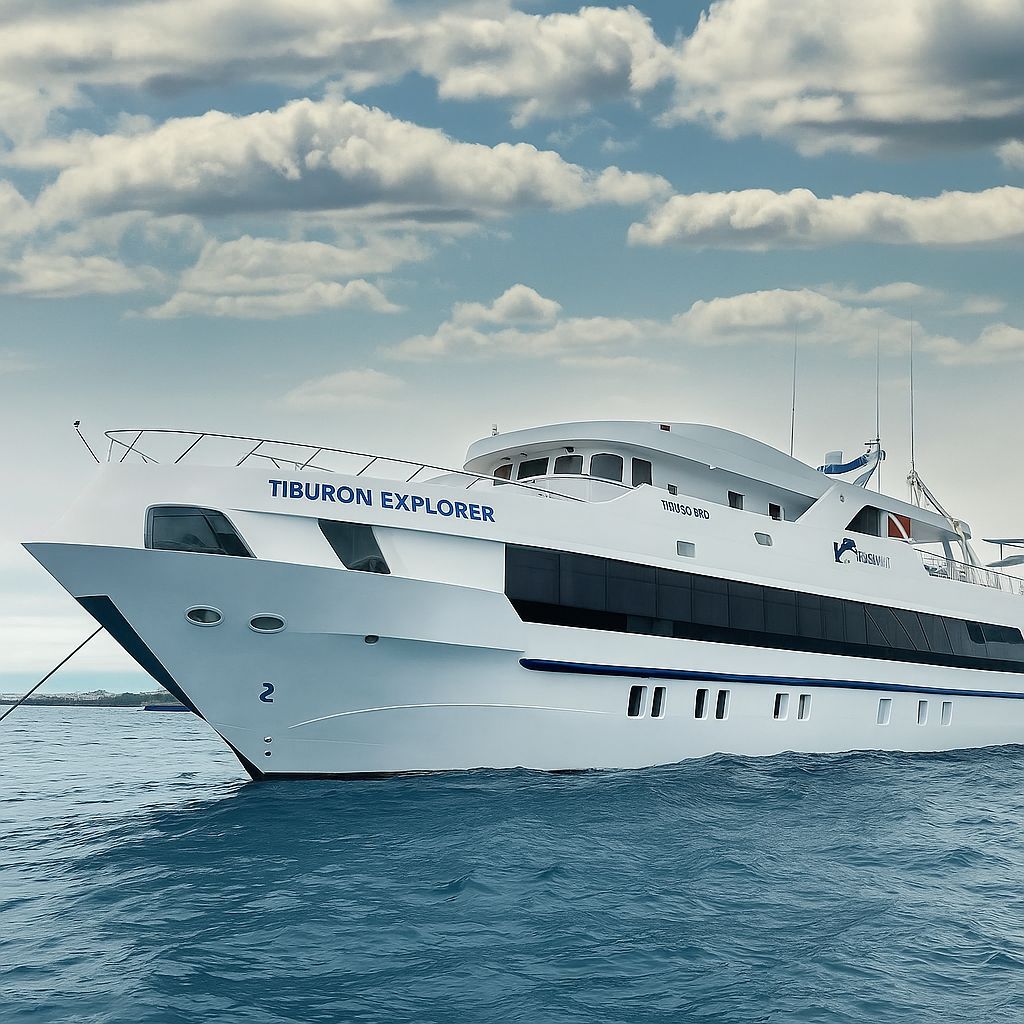
The most direct approach is asking the operator two questions before booking: who is the assigned guide for your specific sailing date, and how long have they worked on this vessel? Any operator confident in their guide program will answer both without hesitation. Operators who respond vaguely or say the guide isn’t determined until departure are telling you something important about their guide retention and program quality.
TripAdvisor is underutilized as a guide research tool. Filter reviews by the specific vessel you’re considering and look for reviews that name a guide. When the same name appears across multiple reviews spanning multiple years, that guide has consistent long-term traveler validation. When every review says “our guide was great” without naming them, the guide team rotates frequently enough that no individual builds a reputation.
The timing of your inquiry matters. Operators confirm guide assignments closer to departure, sometimes only weeks before sailing. Asking during the initial booking conversation sets the expectation that guide quality matters to you and prompts the operator to be thoughtful about the assignment. Following up 4 to 6 weeks before departure with a specific guide name request, based on your own research into who has the strongest traveler feedback for that vessel, is a completely legitimate thing to do and something experienced operators handle regularly.
One honest caveat: on 100-passenger ships with 6 or 7 guides and rotating group assignments, you have less ability to control which specific guide leads your excursions. What you can do is ask the operator how group-guide matching works on a given vessel. Some larger ships assign guides to groups based on language preference or interest area, which at least ensures you’re matched to a guide whose specialization aligns with what you care most about.
We’ve got a full breakdown on Galapagos cruise ship size if you want to know exactly how 16 vs 48 vs 100 passengers compares on wildlife access, cabin comfort, group atmosphere, and overall value.
Questions to Ask Your Operator About the Guide
Ask these six questions before finalizing any Galapagos cruise booking: What is the guide’s certification level? How many years has the guide worked on this specific vessel? Can you name the guide assigned to my sailing date? Has this guide received specific praise in recent traveler reviews? What language is the guide most comfortable interpreting in? And if it’s a larger vessel: how are passengers assigned to specific guides?
The first three questions are gatekeeping questions. An operator who can answer all three confidently is running a guide program worth trusting. An operator who says “all our guides are excellent” without specifics is giving you a marketing answer rather than an operational one. The difference matters.
The language question is more important than most travelers realize before they arrive. Guide certifications require English fluency, but fluency ranges from functional to native-equivalent. A guide who can accurately name every species in English but struggles to explain the ecological connection between two species in a spontaneous answer is a different experience from a guide who was educated in English-medium university programs and has been interpreting for English-speaking travelers for 15 years. If multilingual interpretation matters to your group, specify the language requirement explicitly and ask the operator to confirm the guide can deliver at that level.
The boat you choose shapes your entire Galapagos experience in ways most people don’t consider until they’re already on the water. Here’s an honest comparison of small yacht vs large cruise ship in the Galapagos so you pick the right one from the start.
How Guide Quality Affects Trip Satisfaction: Our Traveler Feedback
Based on traveler interviews and survey data collected through mytrip2ecuador.com and the My Trip to Somewhere YouTube channel:
| Overall trip rated “life-changing” | 84% | 51% | 19% |
| Would return to Galapagos | 91% | 79% | 54% |
| Said they “understood” what they saw | 93% | 68% | 31% |
| Named guide specifically in feedback | 81% | 38% | 12% |
| Said guide was the trip highlight | 76% | 29% | 4% |
| Recommended the same vessel to others | 89% | 71% | 38% |
Based on traveler interviews and survey data collected through mytrip2ecuador.com and the My Trip to Somewhere YouTube channel.
Common Mistakes When It Comes to the Guide
- Not asking about the guide before booking. Most travelers spend weeks comparing cabins and itineraries and forget to ask a single question about the guide. This is backwards. The guide determines more of the experience than the mattress, the menu, or the hull type combined.
- Assuming certification level equals guide quality. A Level III guide who hasn’t been in the field recently may deliver less than a Level II guide with 12 years of unbroken field experience on the same route. Ask about tenure and recent traveler feedback alongside the certification level.
- Accepting “all our guides are excellent” as an answer. This phrase appears in the marketing materials of every operator from tourist class to ultra-luxury. Ask for the specific name, certification level, and years on the vessel. The quality of the answer tells you as much as the content.
- Not tipping appropriately. The tip system in the Galapagos is the primary financial signal that good guides are worth retaining. Standard is $10 to $15 per person per day, given at the end of the cruise directly to the guide and crew. Guides who receive strong tips from travelers stay on vessels longer. That tenure is what produces the field depth that makes exceptional trips possible.
- Underestimating how much English fluency matters. A guide who struggles to explain a complex ecological relationship in English loses the interpretive layer that justifies the trip’s entire cost. Confirm English fluency specifically, not just “the guide speaks English.”
Frequently Asked Questions
Is a naturalist guide required on a Galapagos cruise?
Yes, absolutely. Since 1975, the Galapagos National Park has required a certified naturalist guide to accompany every visitor on every shore excursion. No one visits uninhabited islands independently. The guide is a legal requirement, not an optional service.
What is a Level III Galapagos guide?
Level III is the highest naturalist guide certification issued by the Galapagos National Park Authority. It requires a university degree in biology, conservation, or tourism; fluency in at least two foreign languages; a minimum of four years of field experience beyond Level II; and passing the most advanced examination the Park Authority offers. There are approximately 77 Level III guides certified in the archipelago. First class and luxury vessels employ them as standard.
Can I request a specific guide for my Galapagos cruise?
On smaller vessels you can ask the operator to assign or confirm a specific guide. The closer to departure you make the request the more likely a specific assignment has been made. On larger ships with rotating guide teams, specific assignment is harder to guarantee, but you can ask how guides are matched to groups and whether interest or language matching is available.
How much should I tip a Galapagos guide?
Standard is $10 to $15 per person per day, given at the end of the cruise. The tip is shared between the guide and crew, often in a pooled system. On a 7-night cruise with 16 passengers, a $10 per person per day tip pool generates around $1,120 for the team to share. This is a meaningful part of guide income and directly influences whether exceptional guides stay with specific vessels long-term.
We’ve said it in every article in this series and we’ll say it here most directly: the guide is the trip. Everything else is context. The cabin you sleep in is forgotten within a week of returning home. The moment your guide stopped the group before the corner and whispered “wait” before you rounded it to find a hawk three feet away, that one stays.
We factor guide quality into every vessel recommendation we make. It’s not an afterthought in our process; it’s the first question. Rated 4.9 stars on Google and TripAdvisor. Get your free quote here and we’ll match you with a vessel where we trust the guide program, within one business day.
Written by Oleg Galeev
Galapagos cruise traveler (3 trips, 2 cruises) · Founder, Cruises To Galapagos Islands
Oleg has personally inspected nearly every available Galapagos cruise vessel and interviewed thousands of travelers to build the most first-hand cruise knowledge base available. He also runs the Ecuador travel blog mytrip2ecuador.com and the YouTube channel My Trip to Somewhere.
Cruises To Galapagos Islands is rated 4.9 stars on Google and TripAdvisor.
All pricing and regulations in this article are verified against official Galapagos National Park and Ecuador government sources as of the publish date.