
TL;DR
January is one of the better months to cruise the Galapagos, especially for first-timers. The warm season is in full swing, seas are calm, water temperatures sit around 74°F (23°C), and snorkeling visibility is excellent. Green sea turtles are nesting on beaches, marine iguanas on Española are in their most vivid breeding colors, and giant tortoise hatchlings are emerging in the highlands. The main catch: the first two weeks carry over Christmas holiday pricing and limited availability. Book at least 6 to 9 months out if you’re targeting January, or aim for mid-to-late January when crowds thin and prices come down noticeably.
January in the Galapagos: Quick Facts
| Facto | January Conditions |
|---|---|
| Season | Warm / Wet Season |
| Air Temperature | 71-88°F (22-31°C); average highs around 84°F (29°C) |
| Water Temperature | 73-75°F (23-24°C) – warm and comfortable |
| Average Rainfall | Approx. 2-2.7 inches (50-68mm) – brief tropical showers |
| Sunshine Hours | Around 5-8 hours per day; one of the sunnier months |
| Sea Conditions | Calm – low seasickness risk |
| Underwater Visibility | Excellent – up to 60-100ft (18-30m) at many sites |
| Wetsuit Needed? | Not usually – warm water snorkeling without one is comfortable |
| Crowds | High early January (holiday spillover); moderate after Jan 7 |
| Prices | High first two weeks; drops to moderate mid-to-late January |
| Book How Far Ahead? | 6-9 months for first two weeks; 3-5 months for late January |
| Best For | First-timers, snorkelers, families, sea turtle and iguana fans |
Data verified May 2026 against official Galapagos National Park and Ecuador government sources.
Is January a Good Month to Cruise the Galapagos?
Yes, January is a genuinely strong month to cruise the Galapagos. Warm seas, calm crossings, vibrant wildlife, and excellent snorkeling conditions make it one of the more well-rounded months on the calendar. The only real friction points are the holiday crowd and price hangover in the first week or two, and the fact that the waved albatross won’t arrive on Española until late March. Every other major wildlife category is either active or building toward peak.
Some months in the Galapagos are great for one specific thing. January is great for a lot of things at once. The Panama Current has fully settled in by now, which means the ocean is warm, the swells are down, and the water visibility is the kind that makes you forget you’re snorkeling and not watching a nature documentary.
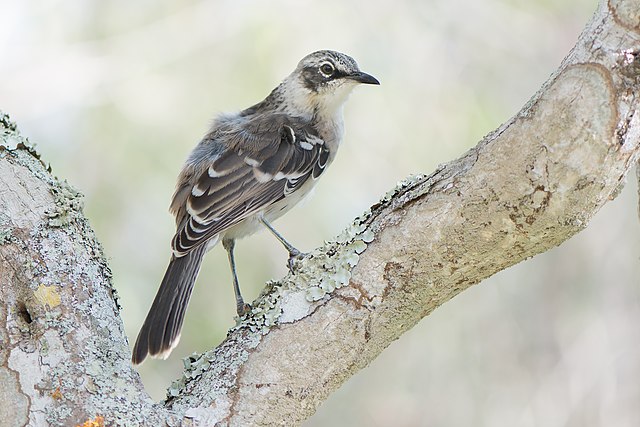
On land, the first rains of the wet season trigger something remarkable. After months of dry season arid landscapes, the islands start turning green. Land birds begin nesting. Finches and mockingbirds get active. Giant tortoise hatchlings are pushing up through the soil in the Santa Cruz highlands. And on Española, the marine iguanas have turned. From their usual dark grey-black, the males shift into startling red, green, and black breeding colors during this period. It’s one of the stranger-looking and more memorable things you’ll see on any island visit.
The honest caveat is the first week or so of January. Christmas and New Year’s holiday demand spills over, boats are full, prices are at their holiday peak, and the visitor sites feel more crowded than they will for the rest of the month. If your dates are flexible, even pushing your departure to January 8 or 10 puts you in meaningfully better conditions in terms of both cost and elbow room.
January cruises, especially in the first half of the month, fill up fast. If you’re thinking about a January trip, the time to reach out is now rather than later. Fill out this short form and we’ll let you know what’s still available and what fits your budget, with no obligation to book.
Wondering whether January or August gives you better snorkeling conditions and more active wildlife on a Galapagos cruise? This best time of year to take a Galapagos cruise guide covers the seasonal details most Ecuador travel blogs oversimplify.
What Is the Weather Like in the Galapagos in January?
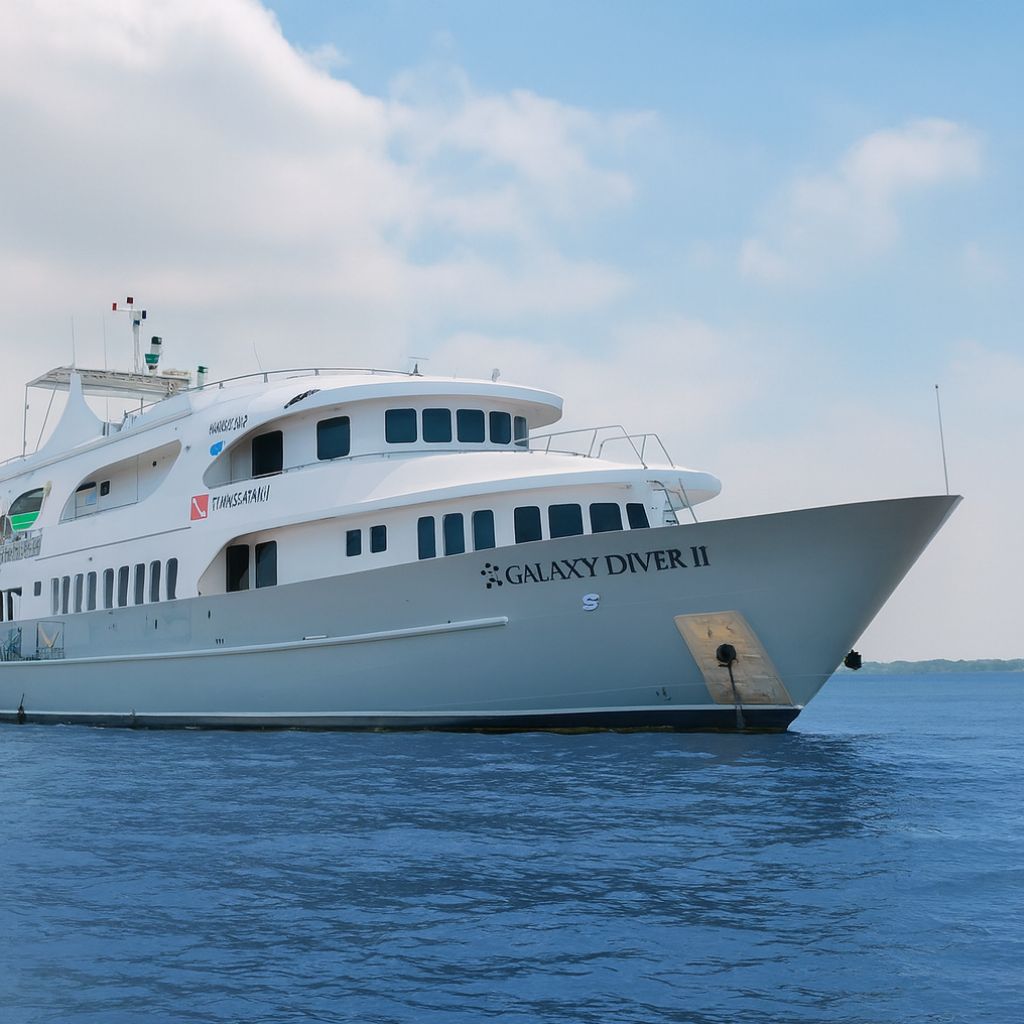
January sits firmly in the warm season. Air temperatures reach 84-88°F (29-31°C) during the day and stay above 71°F (22°C) at night. Water temperatures run around 73-75°F (23-24°C). Rainfall averages 2 to 2.7 inches for the month but arrives as short tropical showers rather than persistent rain. The sun is intense and the humidity is high. Most mornings are clear and sunny; the occasional shower passes quickly.
The rain framing trips people up more than anything else about January. “Wet season” sounds like you’ll spend the trip under grey skies and a poncho. That’s not the Galapagos in January. What actually happens is this: most mornings are spectacularly clear. You’ll do your morning excursion, come back to the boat for lunch, and notice a shower rolling through in the early afternoon. An hour later it’s clear again and the light on the water is extraordinary.
The sun in January is fierce. The equatorial angle combined with high humidity makes SPF 50 non-optional. First-timers often underestimate it because there’s usually a sea breeze on deck, and then they step onto a black lava trail at midday and understand very quickly. Wear a hat. Reapply constantly.
Humidity on land runs high, 70 to 80 percent. On the boat it’s barely noticeable because you’re usually in a breeze or in the water. The islands themselves feel lush and alive in a way they simply don’t in August, when the lowlands look like dust and rock. In January the vegetation is green and the volcanic landscapes have a color contrast they lose completely in the dry season.
January Weather at a Glance
| Metric | January Average |
|---|---|
| Daytime High (Air) | 84-88°F / 29-31°C |
| Nighttime Low (Air) | 71-72°F / 22°C |
| Water Temperature | 73-75°F / 23-24°C |
| Average Rainfall | 2-2.7 inches / 50-68mm |
| Daily Sunshine | 5-8 hours |
| Humidity | 70-80% |
| Sea State | Calm; wind and swell minimal |
| Snorkeling Visibility | 60-100ft / 18-30m at most sites |
Climate averages compiled from multiple official meteorological sources. Verified May 2026.
What Wildlife Can You See on a Galapagos Cruise in January?
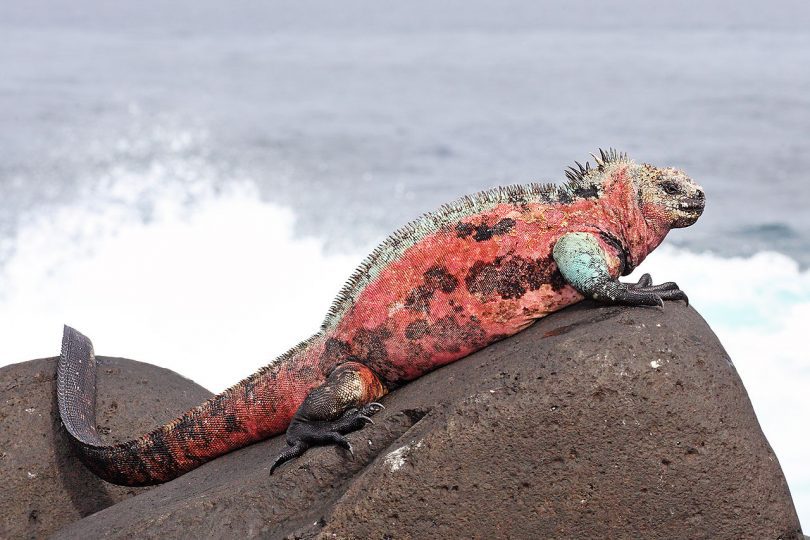
January wildlife highlights include green sea turtles nesting on beaches, Española marine iguanas in vivid red and green breeding colors, giant tortoise hatchlings emerging in the Santa Cruz highlands, land birds actively nesting, sea lion pups that are old enough to interact playfully with snorkelers, and excellent underwater encounters with rays, tropical fish, and reef sharks. The waved albatross is absent in January – they won’t return until late March.
The marine iguana story on Española in January is one of those things that sounds made up until you see it. Most of the year these animals are a dark charcoal grey, practically invisible against the volcanic rock. In their breeding season, which peaks December through February, the males on Española develop vivid patches of red and green that make them look almost painted. The locals call them “Christmas iguanas” and it’s not hard to see why. Nowhere else in the archipelago do the iguanas color up quite like this.
Green sea turtles are nesting across the islands in January, with females coming ashore at night to lay their eggs. You likely won’t see the egg-laying itself as it happens after dark and under strict observation rules, but you’ll often spot the track marks in the sand in the morning, and the turtles themselves are consistently visible underwater, gliding along reef edges and grazing on algae. Snorkeling with sea turtles in January warm water, with no wetsuit, good visibility, and calm conditions, is one of the cleanest versions of that experience available anywhere in the calendar.
Giant tortoise hatchlings are emerging in the highlands from December through April. If your itinerary includes a highland visit on Santa Cruz, a hatchling sighting is genuinely possible in January. The babies are tiny, about the size of a golf ball, and they dig themselves out over a period of days. They have the same gravity-defying calm as the adults. Seeing one fresh from the ground next to a full-grown century-old tortoise in the same frame recalibrates your sense of time in a way that’s hard to shake.
Sea lion pups born during the October and November period are now a few months old and at their most playful in the water. They’re curious about snorkelers in a way that adult sea lions generally aren’t. They’ll swim tight circles around you, tug at your fins, blow bubbles at your mask. It’s chaotic and completely joyful and it’s one of the encounters that travelers most consistently mention to us when they describe what the trip actually felt like.
January Wildlife Summary
| Species / Event | Status in January | Where to Look |
|---|---|---|
| Green Sea Turtles | Nesting on beaches; active underwater | Gardner Bay, Las Bachas, Santa Cruz beaches |
| Española Marine Iguanas | Peak breeding colors (red/green) | Española Island – Punta Suarez |
| Giant Tortoise Hatchlings | Emerging from nests | Santa Cruz highlands, breeding centers |
| Sea Lion Pups | Playful and interactive in water | Most beaches and snorkel sites |
| Land Birds (Finches, Mockingbirds) | Nesting season beginning | Across all inhabited islands |
| Blue-footed Boobies | Present; courtship not at peak | Española, North Seymour |
| Frigate Birds | Active year-round; red pouch displays visible | North Seymour, Genovesa |
| Manta Rays | Seen throughout the archipelago | Open water snorkel/dive sites |
| Reef Sharks (Whitetip) | Common at rocky sites | Kicker Rock, Tintoreras, Gardner Bay |
| Waved Albatross | ABSENT – arrives late March | Not available in January |
| Whale Sharks | Very unlikely – seasonal (June-Nov) | Darwin and Wolf only, not in January |
| Galapagos Penguins | Present but less active; move to cooler western waters | Bartolome, Isabela, Fernandina |
If there’s a specific animal encounter you want to plan around – sea turtles, marine iguanas, playful sea lions – the itinerary you pick matters more than the month. We know which routes give you the best access to these experiences in January. Reach out here and we’ll match you to the right vessel and route.
How Are the Sea Conditions in January and Will You Get Seasick?
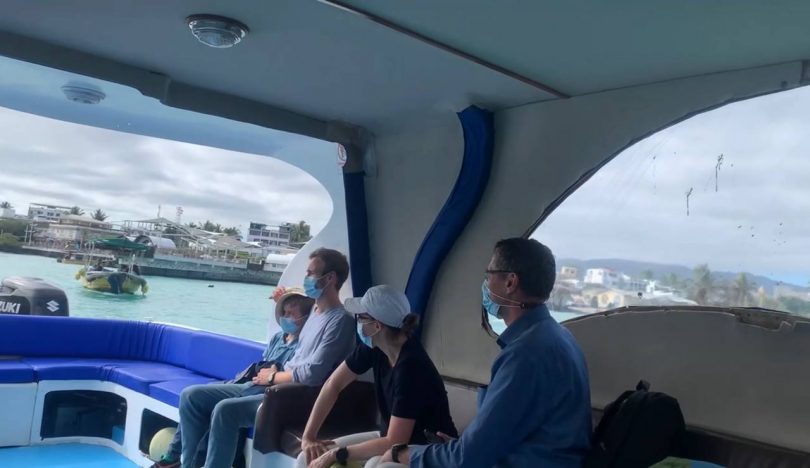
January is one of the calmest months on the water in the Galapagos. The warm Panama Current settles the ocean, reduces wind, and flattens the swells that make dry season crossings rough. Seasickness is much less of a concern in January than in July through September. Most overnight passages between islands feel gentle, and the majority of travelers who normally get motion sickness on boats report little to no trouble during the warm season.
Seasickness is the number-one anxiety we hear from first-timers planning any Galapagos cruise, and January is one of the best months for addressing it. In August or September, overnight crossings on smaller vessels can be genuinely rough. Swells build during the night, the boat rolls, and people who had no idea they were prone to motion sickness discover they are. That happens far less frequently in January.
The warm season dynamic is straightforward. The trade winds that drive the Humboldt Current lose their force around December. Without those winds pushing water, the surface settles. Swell heights drop. Night crossings between islands tend to be smooth enough that you barely notice the movement. People who take Dramamine prophylactically in August often don’t bother in January, and most report they didn’t need it.
A note of honesty: calm doesn’t mean completely flat. The Galapagos is open Pacific Ocean. An occasional weather system or strong current will produce choppy conditions regardless of month. If you are extremely susceptible to motion sickness, talk to your doctor before the trip regardless of when you go. But for the vast majority of travelers, January presents the lowest seasickness risk of any month on the calendar alongside February, March, and May.
One practical tip we share with everyone: if you’re worried, choose a larger vessel and request a mid-ship cabin on a lower deck. These variables matter more than the month. A larger hull in January warm-season conditions is about as stable as boat travel gets.
What Are the Best Islands and Sites to Visit on a January Galapagos Cruise?
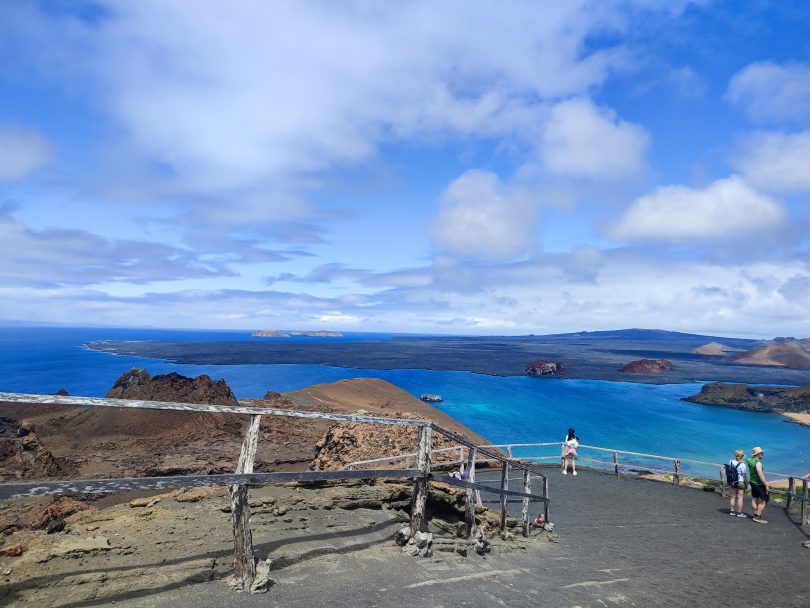
In January, the warm water and calm conditions make the central and eastern islands particularly strong. Española (Punta Suarez and Gardner Bay) is outstanding for the colored marine iguanas and sea lion encounters. Santa Cruz is essential for the highland tortoises and hatchlings. San Cristobal’s Kicker Rock delivers some of the best snorkeling of the month. Bartolome offers beginner-friendly conditions and penguin sightings. Fernandina and Isabela are worth including for sea turtles feeding underwater and flightless cormorant sightings.
Española in January is its own argument. Punta Suarez gives you the colored iguanas, Nazca booby nests, and the blowhole that shoots seawater twenty feet into the air when the swell hits right. Gardner Bay, on the north end, is one of the best snorkeling beaches in the archipelago: calm clear water, white sand bottom, sea turtles grazing along the reef edge, sea lion pups doing their thing around your legs. December through January is specifically called out by guides as one of the best periods for Gardner Bay snorkeling because of the calm water and the sea lion pup activity.
Santa Cruz remains a January anchor point for any itinerary. The highland tortoise population at the ranches in the Santa Cruz interior is one of the most accessible giant tortoise experiences in the whole archipelago, and January is prime hatchling season. You’re walking among animals that were alive before your grandparents were born, and occasionally spotting one that hatched last week. That contrast doesn’t get old.
Kicker Rock off San Cristobal is one of those snorkeling sites that people describe as the best thing they did on the entire trip. Two volcanic spires rising out of the ocean with a narrow channel between them. Sea turtles, Galapagos sharks, schools of fish, sometimes hammerheads deeper down. In January warm water with good visibility, the channel snorkel here is exceptional. The current can be strong on the outer edges so stay with your guide, but inside the channel conditions are usually manageable even for less confident swimmers.
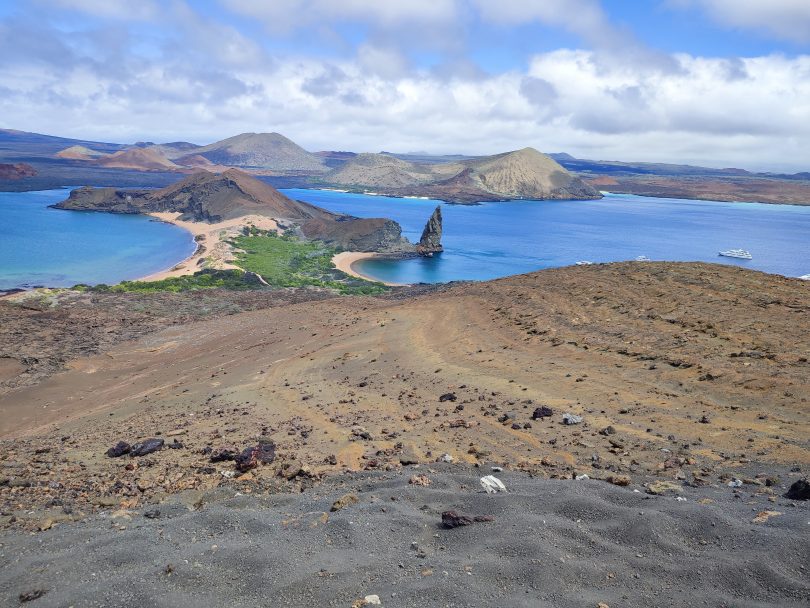
Bartolome is a strong choice for first-timers and families. The Pinnacle Rock snorkel puts you in calm shallow water with penguins hunting in the shallows, sea lions, and a variety of reef fish. It’s one of the most beginner-friendly sites in the archipelago and the volcanic landscape above water is as dramatic as anything you’ll see in the Galapagos.
Top January Sites at a Glance
| Site / Island | January Highlight | Best For |
|---|---|---|
| Española – Punta Suarez | Colored marine iguanas, Nazca boobies, blowhole | Land wildlife, photography |
| Española – Gardner Bay | Sea lions, sea turtles, calm clear snorkeling | Snorkeling, beach walks |
| Santa Cruz – Highlands | Giant tortoises, hatchlings (Dec–Apr) | Tortoise encounters, highlands walk |
| San Cristobal – Kicker Rock | Sea turtles, sharks, strong marine life in warm clear water | Advanced snorkeling, marine encounters |
| Bartolome – Pinnacle Rock | Penguins, sea lions, beginner-friendly conditions | Families, first-timers, photographers |
| Isabela – Tintoreras | Marine iguanas feeding underwater, penguins, reef sharks | Snorkeling, iguana viewing |
| Fernandina – Punta Espinosa | Flightless cormorants, marine iguanas, sea turtles grazing | Wildlife diversity, pristine landscapes |
| North Seymour | Frigate birds, sea lions, blue-footed boobies present | Birdwatching, easy walking trails |
How Much Does a Galapagos Cruise Cost in January and How Far Ahead Should You Book?
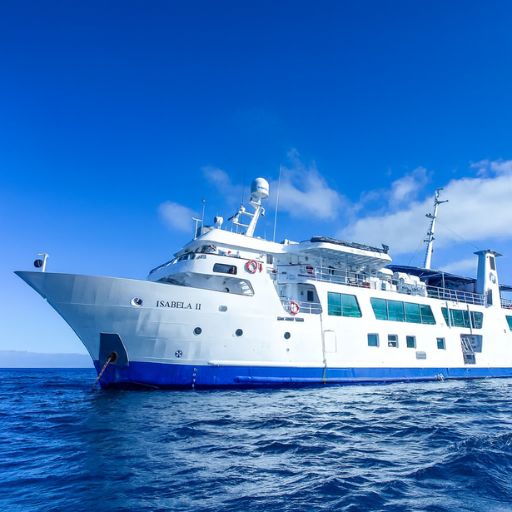
January pricing splits into two windows. The first two weeks carry holiday-season premiums, with mid-range cruises running $3,500 to $5,500 per person for 7 days and luxury vessels hitting $8,000 to $10,000 and above. After roughly January 7-10, prices moderate noticeably as holiday demand drops off. Budget cruises start around $2,000 for shorter 4 to 5-day itineraries. For early January, book 6 to 9 months out. For mid-to-late January, 3 to 5 months is generally enough.
The pricing reality in January is essentially two different months sharing a calendar page. January 1 through January 7 is still Christmas-New Year territory. Operators charge holiday rates, the best boats are full, and the visitor sites have the highest foot traffic of the year. That’s not a reason to avoid early January, but it is a reason to book it early and price it accordingly.
By the time you get to January 10 or 15, the crowd picture looks different. Holiday travelers have gone home. School breaks are ending in North America and Europe. Prices drop and the best-value mid-range vessels open up. If your goal is January warm-season conditions at the best price, the second half of the month delivers that more reliably than the first.
The Galapagos National Park entrance fee of $200 USD per person applies year-round and is not included in most cruise prices. Add the INGALA transit control card fee of $20 USD and your domestic Ecuador flights to and from the islands (Quito or Guayaquil to Baltra or San Cristobal), which typically run $400 to $600 round trip, to your total budget.
January Galapagos Cruise Price Ranges
| Cruise Class | Price Per Person (7 days) | What You Get |
|---|---|---|
| Budget / Economy | $2,000-$3,000 (4-5 days) | Basic cabins, smaller vessels, solid wildlife access |
| Mid-Range / Tourist Superior | $3,500-$5,500 | Comfortable cabins, better food, experienced naturalists |
| First Class | $5,500-$8,000 | Superior cabins, quality guides, more itinerary flexibility |
| Luxury | $8,000-$10,500+ | Suite-level accommodation, butler service, premium naturalists |
| Prices are per person, double occupancy, cruise-only. Does not include park entrance fee ($200), INGALA card ($20), or flights. Early January carries a holiday premium of roughly 10-20% above these ranges. Verified May 2026. |
January pricing varies more than almost any other month because of how sharply the holiday premium drops in the second week. If you want to know exactly what’s available and at what price for your specific dates, the fastest way is to just ask. Send us a quick message and we’ll put together a no-pressure quote based on your travel window and budget.
What Should You Pack for a Galapagos Cruise in January?
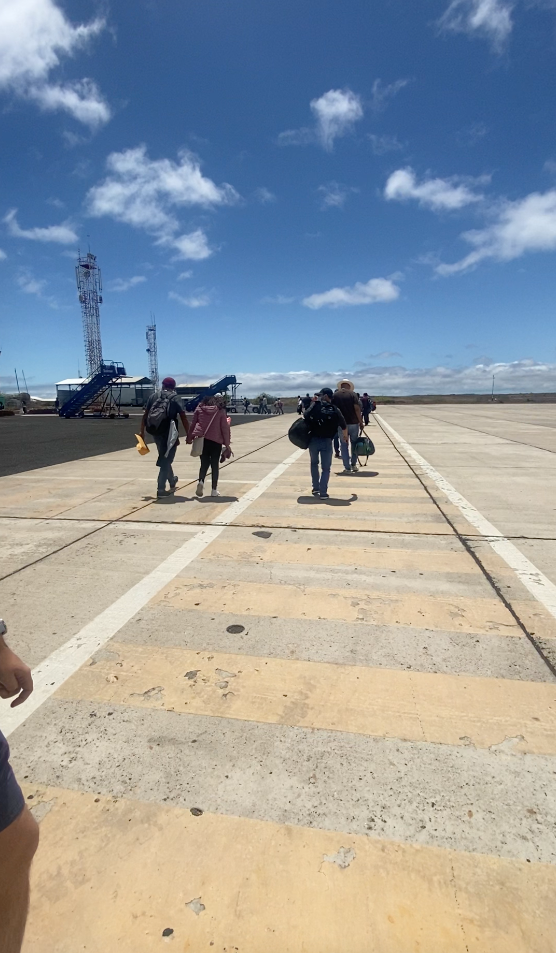
January packing centers on sun protection, lightweight breathable clothing, and rain readiness. The sun is intense and the humidity is high, so SPF 50 reef-safe sunscreen, a wide-brim hat, and light long sleeves for excursions are essential. A rain jacket or light poncho handles the afternoon showers. No wetsuit needed for most snorkelers. Good walking shoes or sandals with grip are important for lava trails.
The warm season packing list is noticeably shorter than the dry season one. You won’t need a wetsuit, a heavy fleece, or seasickness medication beyond what you’d keep as a precaution. What January actually demands is the opposite end of the spectrum: sun defense and moisture management.
Reef-safe sunscreen is not optional and it’s not just a courtesy rule. The Galapagos National Park takes biosecurity seriously, and chemical sunscreens containing oxybenzone and octinoxate are harmful to marine ecosystems. Use mineral-based SPF 50. Reapply every 90 minutes on excursions. The equatorial sun in January will damage your skin through cloud cover; you won’t always feel it until it’s too late.
On the clothing side: light breathable fabrics work better than cotton, which soaks through with sweat and doesn’t dry. A couple of quick-dry shirts, one long-sleeved layer for sun protection on open-deck time, and a light rain jacket covers most situations. Evenings on the boat deck are pleasant with a light layer but you don’t need anything insulating.
Footwear matters more than people expect. The lava trails on many islands are uneven, sharp, and slippery when wet. A closed-toe shoe or hiking sandal with real grip is worth the bag space. Flip-flops for beach landings are fine but shouldn’t be your primary trail footwear.
January Packing Essentials
| Item | Priority | Notes |
|---|---|---|
| Reef-safe SPF 50 sunscreen | Essential | Mineral-based only; chemical sunscreens not park-compliant |
| Wide-brim hat | Essential | Full sun protection on lava trails is critical |
| Lightweight breathable shirts | Essential | Quick-dry fabrics; bring 1 long-sleeve for sun cover |
| Light rain jacket / poncho | Recommended | For afternoon showers; lightweight packable style works well |
| Swimwear (2-3 sets) | Essential | You’ll snorkel almost every day – have a dry set ready |
| Closed-toe walking shoes | Essential | Grip needed for wet volcanic rock; sandals for beach only |
| Waterproof dry bag | Recommended | Protects camera and phone on Zodiac transfers and wet landings |
| Seasickness medication | Optional (bring as precaution) | Seas are calm in January; most won’t need it |
| Wetsuit | Not needed | Water is warm; most operators provide one if you want it anyway |
| Insulating jacket / fleece | Not needed | January nights are warm; a light layer is enough |
Is January Crowded in the Galapagos and How Does It Compare to Other Months?
Early January is one of the busiest periods of the year due to the holiday season, comparable to late December in terms of cruise occupancy and visitor site traffic. After approximately January 7 to 10, crowds drop considerably and January from mid-month onward is a moderately busy but not overwhelming time to visit. Compared to July and August, mid-to-late January is noticeably quieter. Compared to September and October, it’s busier. The best value window within January is roughly January 10 through 31.
The Galapagos National Park controls the number of vessels allowed to operate and enforces strict visitor quotas at each site. This cap is one of the things that makes the Galapagos experience feel so different from most popular destinations. Even in peak season, you’re not sharing a trail with a thousand other tourists. Visitor groups are capped at 16 people per naturalist guide, sites rotate on a schedule, and the animals remain completely indifferent to your presence regardless of how many other boats are anchored in the bay.
That said, peak periods do create real pressure on availability and pricing. The first week of January is essentially an extension of Christmas-New Year’s demand. Boats are at full occupancy, the better vessels are all spoken for, and the feeling of exclusivity that defines a good Galapagos cruise is slightly more diluted than it would be in, say, February or October.
After the holiday window closes, the crowd picture normalizes quickly. Mid-to-late January is when the transition happens. You’ll still share visitor sites with other groups but the sense of competing for space diminishes. Prices come down. Better last-minute availability sometimes opens up for travelers who are flexible.
For context: if July is a 10 on the crowd scale and September is a 3, early January is about a 8 and mid-to-late January sits around a 5. That’s a real difference, and it’s worth keeping in mind if you have any flexibility on your departure date.
What January Travelers Actually Tell Us: Patterns From Our Audience
Based on traveler feedback collected through mytrip2ecuador.com and our YouTube audience, here’s what people who cruise in January consistently say about the experience compared to their expectations going in.
| Traveler Feedback Category | % Reporting This | Key Takeaway |
|---|---|---|
| Snorkeling exceeded expectations | 84% | Warm water and calm conditions regularly surprised first-timers who expected colder or rougher conditions |
| Holiday crowds were more than expected | 61% (early January travelers) | Most hadn’t anticipated the holiday pricing and occupancy; noted lower crowding after Jan 8 |
| Wished they’d seen the albatross | 38% | Common regret; didn’t know the albatross window runs April through December before booking |
| Sea lion pup interactions were a trip highlight | 79% | Consistently among the most-mentioned memorable moments of any January trip |
| Would return in same window (mid-to-late January) | 88% | High repeat intent for mid-to-late January; drops to 71% for early January due to crowds/prices |
| Underestimated the sun intensity | 52% | Most common practical complaint; resulted in sunburn despite thinking they’d applied enough sunscreen |
Based on traveler feedback collected through mytrip2ecuador.com and the My Trip to Somewhere YouTube audience.
What Trips People Up: January-Specific Mistakes We See Most Often
Underestimating the holiday premium. Travelers who don’t realize how much the first week of January is priced as peak holiday season end up paying 15 to 20% more than they would for the same boat a week later. This is the most common budget mistake we see with January bookings. If you can move your departure to January 8 or later, the savings are real and availability improves.
Expecting the waved albatross. It comes up constantly. The albatross is one of the most-marketed Galapagos wildlife images, and it’s absent from January through late March. Travelers who weren’t told this before booking sometimes arrive expecting it and feel genuinely disappointed to learn it won’t be there. It’s a completely avoidable mismatch. Know what’s in season before you commit to dates.
Skipping sun protection. January on the equator is genuinely dangerous from a UV standpoint. The combination of intense equatorial sun, high humidity, and constant outdoor time on excursions and on deck means sunburn can happen fast and severely. More than half the January travelers in our audience report some level of sun damage they didn’t expect. Reef-safe SPF 50, reapplied frequently, is not optional.
Not booking early enough for early January. If your travel window includes New Year’s or the first week of January, waiting until six months out will mean limited vessel choice. The best mid-range and first-class boats for early January fill up by March or April of the same year. Book earlier than feels necessary.
Frequently Asked Questions
Is January a good time to cruise the Galapagos for first-timers?
Yes, January is one of the strongest months for first-time visitors. Calm seas reduce motion sickness risk, water temperatures are warm for comfortable snorkeling without a wetsuit, and the mix of land and marine wildlife active in January gives you a broad, well-rounded experience. The main thing to know: book early if you’re targeting the first two weeks, and manage expectations around the waved albatross, which won’t be present until late March.
Does it rain a lot in the Galapagos in January?
January sees around 2 to 2.7 inches of rainfall, mostly arriving as short afternoon tropical showers rather than extended rain. Mornings are typically clear and sunny. The rain rarely disrupts excursions meaningfully and clears quickly. Pack a light poncho or packable rain jacket but don’t plan your trip around avoiding it.
Do I need a wetsuit for snorkeling in January?
Usually not. Water temperatures in January sit around 73-75°F (23-24°C), which is warm enough for comfortable snorkeling without a wetsuit for most people. Children and those who get cold easily might want a thin shorty. Most vessels provide wetsuits on board if you want one. Bringing your own ensures a proper fit.
When in January is the best time to cruise the Galapagos?
Mid-to-late January offers the best combination of warm-season wildlife and conditions with lower prices and thinner crowds than the holiday period. Roughly January 10 through 31 is when the holiday premium drops off and availability improves on quality vessels. If your dates are flexible, aim for this window over the first week of the month.
Can I see sea turtles nesting in January in the Galapagos?
Green sea turtle nesting peaks in January. Females come ashore at night to lay eggs on sandy beaches including Las Bachas on Santa Cruz and Gardner Bay on Española. You’re unlikely to witness the actual nesting (it happens after dark under strict park rules) but you’ll see track marks in the morning sand and have excellent chances of snorkeling with turtles during daytime water activities.
How does January compare to February for a Galapagos cruise?
Both months are strong warm-season options with similar weather, water temperatures, and wildlife. February has a slight edge in value: the holiday premium is gone entirely, crowds are lighter, and prices are typically lower. Water temperatures peak in February and March. January has the advantage of tortoise hatchlings being slightly more active (they hatch through April but January is an active window). Neither month is a wrong choice for the right traveler.
January is a month that rewards travelers who plan it right. Book after the holiday crush and you get warm season conditions, active wildlife, calm water, and better prices all at once. Book into the first week without accounting for the premium and you’ll pay more than you need to and share the islands with more people than you expected.
We’ve been to the Galapagos three times and talked to thousands of travelers who’ve made this trip. We know which January dates deliver the best experience for the money, which boats handle the warm season itineraries well, and where the value really is. Contact us here for a free, no-obligation quote tailored to your January travel window. Cruises To Galapagos Islands holds a 4.9-star rating on Google and TripAdvisor because we take the time to get this right.
Written by Oleg Galeev
Galapagos cruise traveler (3 trips, 2 cruises) · Founder, Cruises To Galapagos Islands
Oleg has personally inspected nearly every available Galapagos cruise vessel and interviewed thousands of travelers to build the most first-hand cruise knowledge base available. He also runs the Ecuador travel blog mytrip2ecuador.com and the YouTube channel My Trip to Somewhere.
Cruises To Galapagos Islands is rated 4.9 stars on Google and TripAdvisor.
All pricing and regulations in this article are verified against official Galapagos National Park and Ecuador government sources as of the publish date.