Galapagos Penguins: Where to See Them on a Cruise
Quick answer
The Galapagos penguin is the world’s only tropical penguin and one of the rarest birds on Earth, with fewer than 2,000 individuals remaining. Over 90 percent live on Isabela and Fernandina, making a western cruise itinerary the most reliable route for sightings. Bartolome offers the best snorkel encounter on central routes. The garua season from June through November gives the strongest combination of active penguin behavior and cold-water food abundance. Penguins are not guaranteed on eastern routes.
Part of our guide to what wildlife you can see on a Galapagos cruise. Ready to pick a ship? See the best Galapagos cruises by price, size and class.
Quick Facts: Galapagos Penguin
| Fact | Detail |
|---|---|
| Scientific name | Spheniscus mendiculus |
| Size | 48 to 50 cm tall; 2 to 4 kg; second smallest penguin species |
| IUCN status | Endangered; rarest penguin species in the world |
| Population estimate | 1,500 to 4,700 individuals; approximately half of 1970s numbers |
| Distribution | Over 90% on Isabela and Fernandina; smaller colonies on Bartolome, Santiago, Santa Cruz |
| Unique distinction | Only penguin found north of the equator |
| Breeding season | No fixed season; breeds when food is abundant, typically May to December |
| Swimming speed | Up to 35 km/h (22 mph) |
Data verified August 7, 2026, against IUCN, Galapagos Conservancy, and Penguins International sources.
What Makes the Galapagos Penguin So Unlikely?
The Galapagos penguin should not exist. Penguins evolved for cold, nutrient-dense oceans. The Galapagos sit directly on the equator, where air temperatures on black lava fields routinely exceed 40 degrees Celsius. The fact that a penguin species survives here, and nests here year-round, is the product of two specific ocean currents that make the western islands dramatically colder than the surrounding Pacific. Without the Cromwell and Humboldt currents, there are no penguins. With them, there is the rarest penguin species on Earth.
Standing at 48 centimetres tall, the Galapagos penguin is the second smallest in the world and looks genuinely out of place on a sun-baked lava shelf surrounded by marine iguanas and Sally Lightfoot crabs. Then you see it enter the water. The same animal that waddled awkwardly across rock turns into something completely different in the ocean. It moves at speeds of up to 35 km/h, changing direction instantly, chasing sardines and anchovies through cold upwelling water with the efficiency of a torpedo.
The physics behind the species’ survival is worth understanding before you go looking for them. The Cromwell Current, also called the Equatorial Undercurrent, flows deep below the surface along the equator. When it strikes the western flank of the Galapagos platform near Isabela and Fernandina, the seafloor forces it upward. Cold water rises. That upwelling carries nutrients from the deep ocean, which feeds phytoplankton, which feeds fish, which feeds penguins. The Humboldt Current reinforces this from the south. The result is that the western islands of the Galapagos are measurably colder than you would expect from their latitude, and that temperature difference is the reason over 90 percent of the entire Galapagos penguin population concentrates there.
On land, the birds manage heat through behavioral adaptations that look comical until you understand them. They pant, like dogs, to increase evaporative cooling through the throat. They hunch forward to shade their feet from direct sun. They press into narrow lava crevices and caves during the hottest hours of the day. They molt two to three times a year rather than once, keeping their feathers in better condition against the tropical sun. None of this is charming. All of it is precise biological engineering for an environment that should, by every expectation, be lethal to their species.
Which Islands Have the Best Penguin Sightings?
Isabela and Fernandina together hold over 90 percent of the entire Galapagos penguin population and are far and away the best islands for reliable sightings. Elizabeth Bay on Isabela and Punta Espinoza on Fernandina are the top sites. Bartolome provides a smaller but often very close encounter and is accessible on central itineraries. Penguins are not reliably seen on eastern routes that skip the western islands entirely.
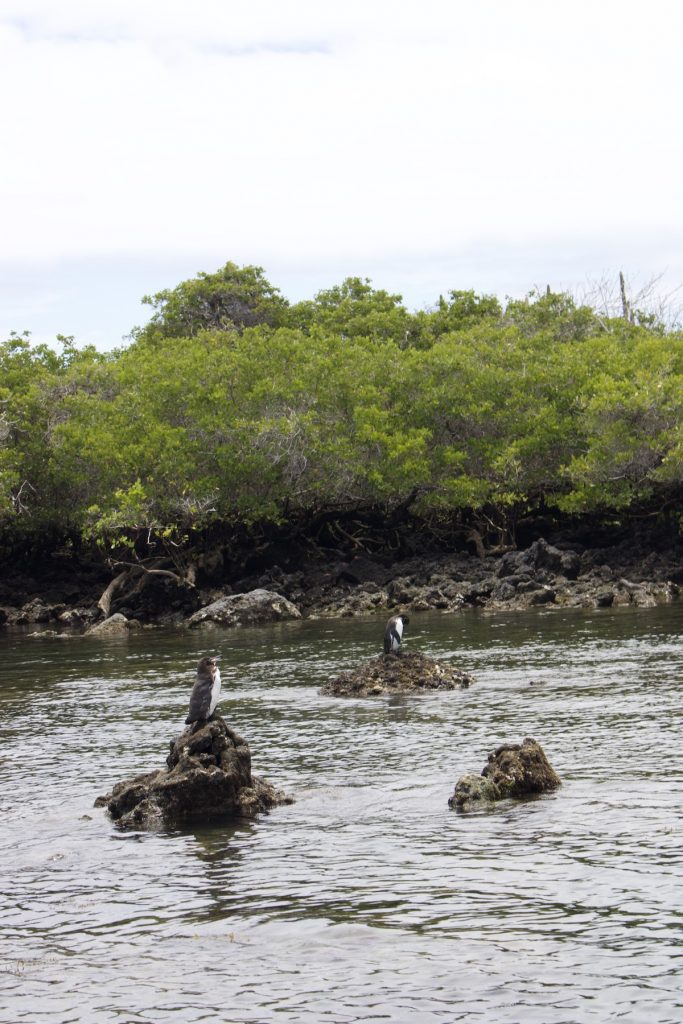
Isabela (Elizabeth Bay and Punta Vicente Roca) delivers the most concentrated penguin sightings on western routes. Elizabeth Bay is explored entirely by panga, a small motorized dinghy, as there is no landing site. Your boat moves slowly through mangrove channels where penguins perch on lava ledges or pop up from the water alongside green turtles, rays, and flightless cormorants. It is a genuinely unusual wildlife experience, watching a penguin stand ten metres from your boat in a mangrove channel at the equator. Punta Vicente Roca, on the northwestern tip of Isabela, adds nesting birds on the cliff face and the chance to snorkel in the cold channel water alongside them.
Fernandina (Punta Espinoza) is primarily the marine iguana capital of the Galapagos, but penguin sightings here are consistent because the Bolivar Channel between Fernandina and Isabela is among the coldest and most productive water in the archipelago. Penguins fish these waters intensively. Sightings from the panga transit are common, and the birds appear on the rocky shoreline at Punta Espinoza alongside the dense iguana colony.
Bartolome (Pinnacle Rock) is the most accessible site for penguin encounters on central and eastern itineraries. A small colony lives on the rocky islets around Pinnacle Rock, and snorkeling at the base of the rock puts you in the same water they fish in. This is a well-established encounter, included on many shorter cruises, and for travelers who cannot do a western route, it is the realistic alternative. The colony is smaller, the encounter more opportunistic than at the western sites, but Bartolome penguins are among the most approachable in the archipelago and regularly swim very close to snorkelers.
| Site | Experience Type | Reliability | Route Required |
|---|---|---|---|
| Elizabeth Bay, Isabela | Panga tour; mangrove channels; land and water sightings | Very high | Western; 8-day typical minimum |
| Punta Vicente Roca, Isabela | Cliff nesting; snorkel option in cold channel water | High | Western; 8-day typical minimum |
| Punta Espinoza, Fernandina | Shoreline sightings; panga transit through Bolivar Channel | High | Western; 8-day typical minimum |
| Pinnacle Rock, Bartolome | Small colony; best snorkel encounter on central routes | Moderate (colony small; not guaranteed) | Central; many 5 and 8-day itineraries |
Choosing the right route is the single most important variable for penguin sightings. We’ve sent a lot of travelers to the Galapagos and we know which current vessels and itineraries reliably include Elizabeth Bay and the Bolivar Channel. If penguins are a priority, tell us. Fill out this short form and we’ll match you to an itinerary that actually delivers.
Can You Snorkel With Galapagos Penguins?
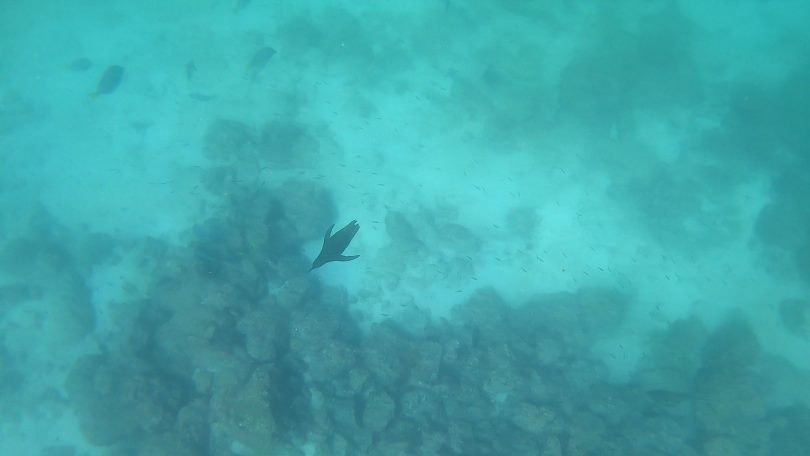
Yes, and it is one of the most disorienting wildlife experiences the Galapagos offers. A bird the size of a large house cat, moving at 35 km/h through clear water, changes direction faster than your eyes can follow. Bartolome’s Pinnacle Rock is the most accessible snorkel site for penguin encounters on central routes. The cold channels around Isabela and Fernandina deliver the same experience at larger scale on western itineraries. The animals are completely uninterested in your presence and will pass very close.
The first time a Galapagos penguin passes you underwater, you almost don’t register what just happened. It’s moving too fast, too precisely, in a direction you didn’t anticipate. Sea lions are playful and interactive. Penguins are focused. They are hunting, and you happen to be in the same water. Your guide will tell you not to chase them, which is good advice even beyond the park rules: you won’t catch one, and trying shifts the dynamic from encounter to pursuit.
At Bartolome, snorkeling launches from the beach at the base of Pinnacle Rock. The water is calmer here than at the western sites, visibility is usually good, and the combination of penguins, white-tip reef sharks, sea lions, and tropical fish makes it one of the most species-dense snorkel sessions in the central archipelago. The penguin colony at Bartolome is small enough that sightings are not guaranteed, but they are common, and the rock formations around Pinnacle Rock concentrate the birds in a relatively contained area.
At Isabela’s Punta Vicente Roca, the water is colder, the current stronger, and the penguin density much higher. This is not a beginner snorkel site. The channel receives direct upwelling from the Cromwell Current and the temperature can drop noticeably compared to sites further east. Bring a good wetsuit and expect the chill. What you get in return is snorkeling in the habitat these animals actually depend on, the same cold channel where they hunt daily, alongside flightless cormorants and occasional sea turtles navigating the same currents.
One detail most cruise brochures skip: the best snorkel timing for penguin encounters at any site is mid-morning, when the birds have finished their early warming routine on the rocks and are actively feeding. An afternoon snorkel at the same site is less productive because the animals may already be resting in crevices during peak heat. Your guide will know the daily patterns at each site you visit.
Planning a Galapagos cruise and want to make sure sea turtle snorkeling is actually built into your itinerary? Our guide on snorkeling with sea turtles walks you through the best islands and what to expect in the water.
What Time of Year Is Best for Penguin Encounters?
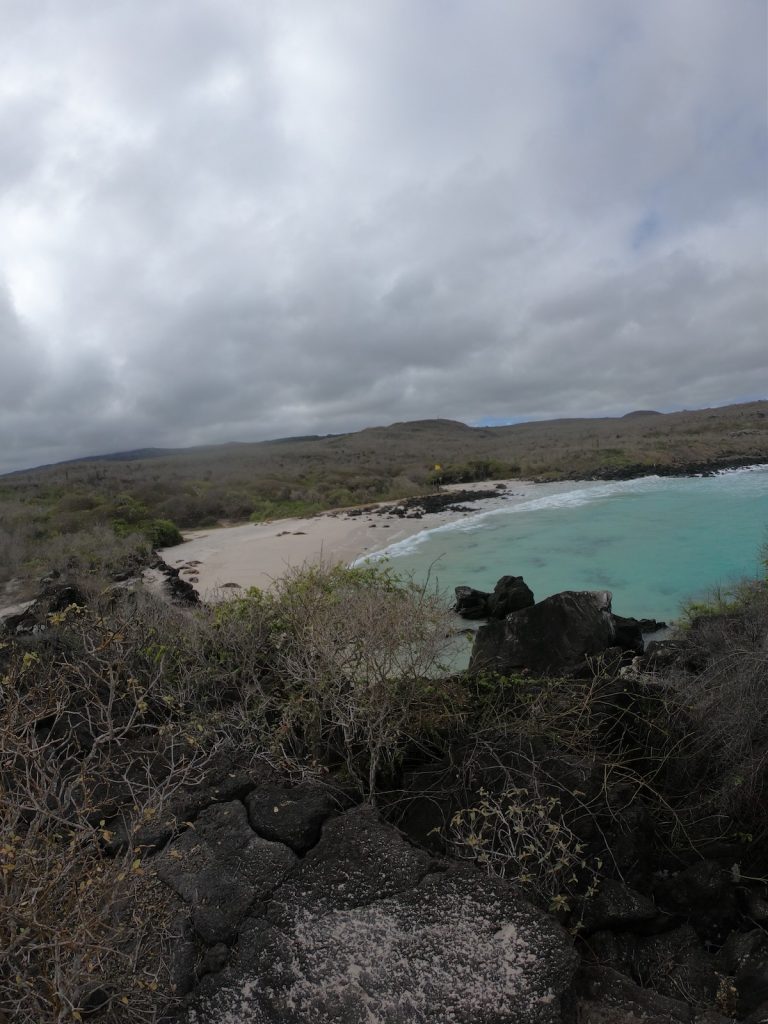
The garua dry season from June through November gives the best overall penguin experience. Cold upwelling intensifies during this period, fish populations in the Bolivar Channel are at their highest, and the birds are most actively feeding and visible. Breeding activity, which is tied to food abundance rather than calendar dates, typically peaks between May and December. Year-round sightings are possible on western routes but the density of encounters varies significantly with ocean conditions.
The Galapagos penguin is the only penguin species with no fixed breeding season. Instead of following a calendar, it breeds when food is plentiful enough to raise chicks successfully. This means that in good food years the birds may breed multiple times, and in El Niño years they may not breed at all. The flexibility is an adaptation to an environment where food availability can change dramatically within a single season.
| Period | Ocean Conditions | Penguin Activity | Notes |
|---|---|---|---|
| Jun to Nov | Peak cold upwelling; strong Humboldt Current; richest fish supply | Most active; breeding common; high density at western sites | Best overall window; September mating ritual begins |
| Dec to May | Warmer water; Panama Current influence; reduced upwelling | Less active feeding; possible late-season breeding | Good for snorkeling conditions; fewer penguins actively visible |
| El Niño years | Warm water suppresses upwelling; algae and fish decline | Breeding stops entirely; mortality can be severe | Sightings possible but density drops; population vulnerable |
A September cruise to the western islands typically combines strong penguin activity with peak mating behavior, active blue-footed booby courtship, whale shark sightings in the northern archipelago, and the most productive snorkeling of the year in cold Bolivar Channel water. It is consistently one of the best months in the Galapagos calendar for wildlife across multiple species simultaneously.
Trying to build your Galapagos itinerary around a guaranteed blue-footed booby sighting? Here’s which Galapagos islands to visit so you show up at the right colony at the right time.
How Does Your Cruise Route Affect Penguin Sightings?
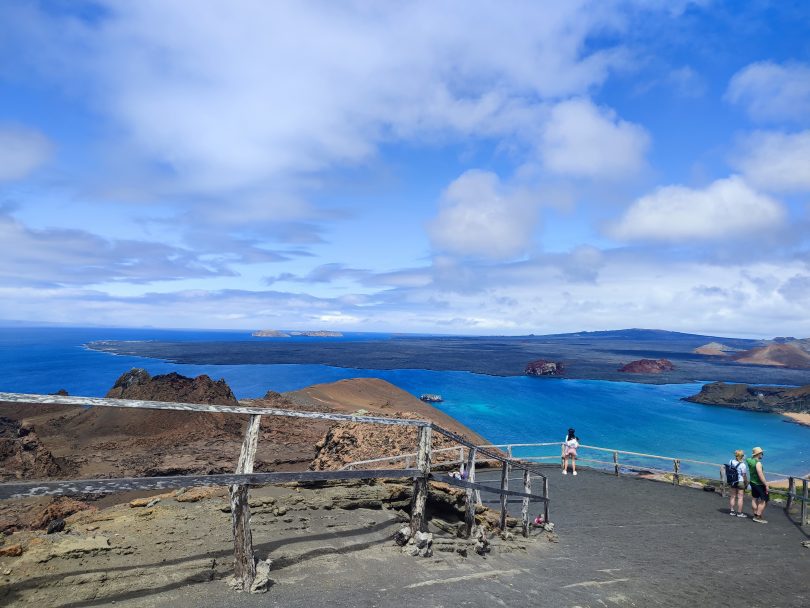
Route determines everything for this species. A central or eastern itinerary that skips Isabela and Fernandina offers Bartolome as its main penguin opportunity, and that encounter is not guaranteed. A western itinerary makes penguin sightings close to certain. Over 90 percent of the population lives on islands that only western routes visit. If seeing penguins reliably is your priority, this is not a species you can leave to chance on an eastern loop.
This is the sharpest route-dependency of any major species in the Galapagos. Giant tortoises, marine iguanas, sea lions, and blue-footed boobies appear on most itineraries in reasonable numbers. The Galapagos penguin does not. It is concentrated in the far west of the archipelago for biological reasons, not logistical ones, and the cruise routes that don’t reach the western islands simply don’t carry enough of the population to make encounters reliable.
Bartolome is the exception that makes the rule. It sits in the central archipelago, included on many 5 and 8-day central itineraries, and its small penguin colony makes it the most realistic penguin encounter for travelers not doing a western route. Sightings are common enough that most cruise operators list it as a penguin site. But a small colony in an opportunistic setting is a different proposition than the dense populations of Isabela and Fernandina, where you would be genuinely unlucky not to see penguins.
The conversation about penguin sightings, for most travelers we work with, becomes a conversation about how important this species specifically is versus the trade-offs of a western itinerary, which also delivers flightless cormorants, the largest marine iguana colonies, the Bolivar Channel’s marine life, and some of the most dramatic volcanic scenery in the islands. Usually, the western route answers multiple wishes at once. Send us a message here and tell us what’s on your list. We’ll show you which itinerary does the most.
What Do Travelers Miss About Galapagos Penguin Encounters?
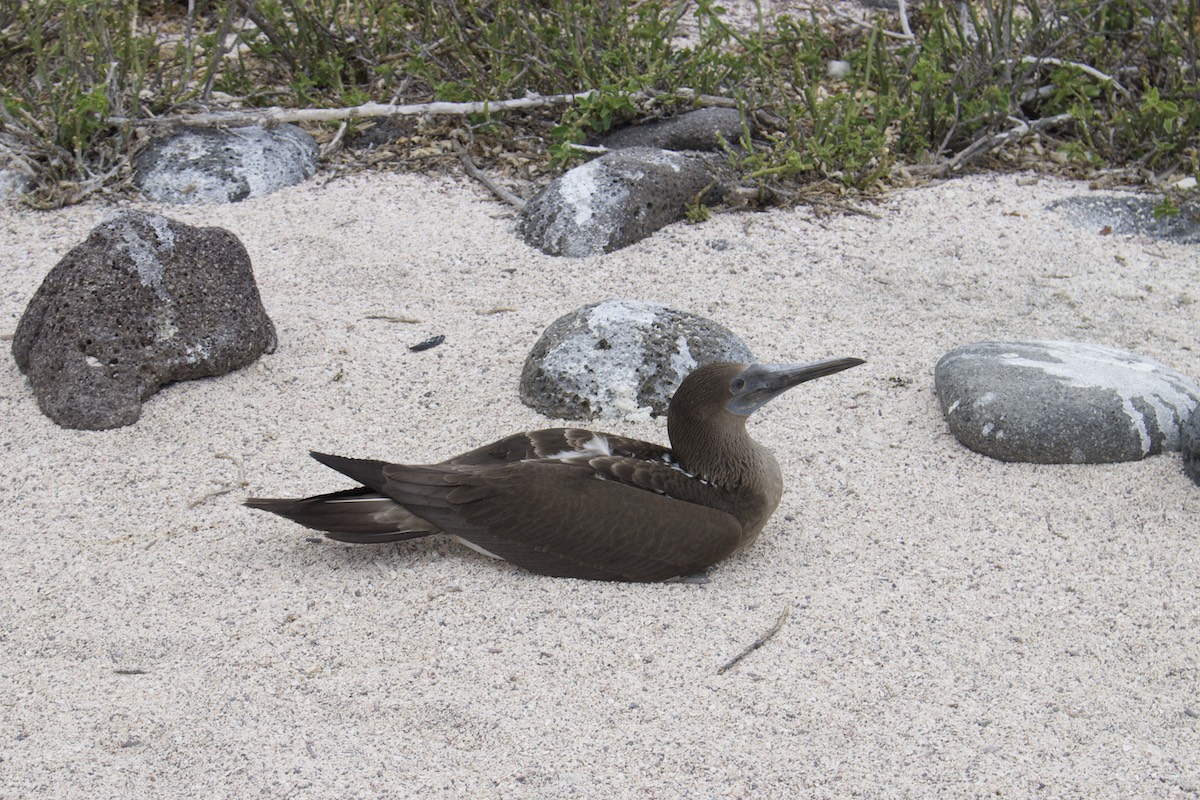
The most common miss is booking a central or eastern itinerary without checking where the penguins actually are, then being surprised that Bartolome didn’t deliver. The second miss is underestimating the snorkel encounter at Pinnacle Rock because the colony is small. The third is not knowing what penguin behavior means in the moment: why they’re on that particular rock, why they’re panting, why that one just entered the water at high speed. The travelers who have the best penguin encounters are almost always the ones who asked their guide to explain what they were watching.
Here is what we hear from travelers who felt they missed something:
Assuming Bartolome guarantees a sighting. Bartolome is listed as a penguin site on most cruise descriptions and it is, genuinely, one of the better central-route options. But the colony is small and the birds are not always visible from shore or in the water during any given visit. Travelers who arrive expecting the kind of density they saw in a photo from Isabela are sometimes disappointed. The Bartolome encounter is real and often excellent, but it is a small colony at a peripheral site, not a primary habitat. Manage the expectation appropriately, and it delivers reliably.
Skipping the panga tour at Elizabeth Bay because it doesn’t involve a land landing. Elizabeth Bay on Isabela has no shore landing, which leads some travelers to treat it as a passive transit rather than an active excursion. The panga ride through the mangrove channels at Elizabeth Bay is one of the best wildlife experiences in the western Galapagos. Penguins appear on ledges, in the water, fishing alongside turtles and rays. The flightless cormorants nest in the mangroves within arm’s reach of the boat. It is not a missed island. It is one of the best excursions on the western itinerary.
Not understanding the species’ population context. When you see a Galapagos penguin, you are looking at one of fewer than 4,700 animals in the world. This is a species whose numbers have halved since the 1970s and continue to fluctuate with ocean conditions. Knowing that changes the quality of the encounter. Most travelers who hear this from their guide describe a different quality of attention in the moment. Ask your guide to put the population number in context during the excursion. The answer is worth hearing.
What Our Travelers Report: Penguin Encounter Quality by Route
Based on feedback collected through mytrip2ecuador.com, our YouTube audience, and Oleg’s direct traveler interviews across three personal visits to the Galapagos:
The gap between a central route without Bartolome and an 8-day western route during garua season is the widest species-specific gap in the entire Galapagos. No other major species has this level of route dependency. For penguins, the itinerary is everything. Get in touch here and we’ll tell you exactly which vessels are currently sailing western routes.
Galapagos Penguin Conservation: The Numbers Are Worrying
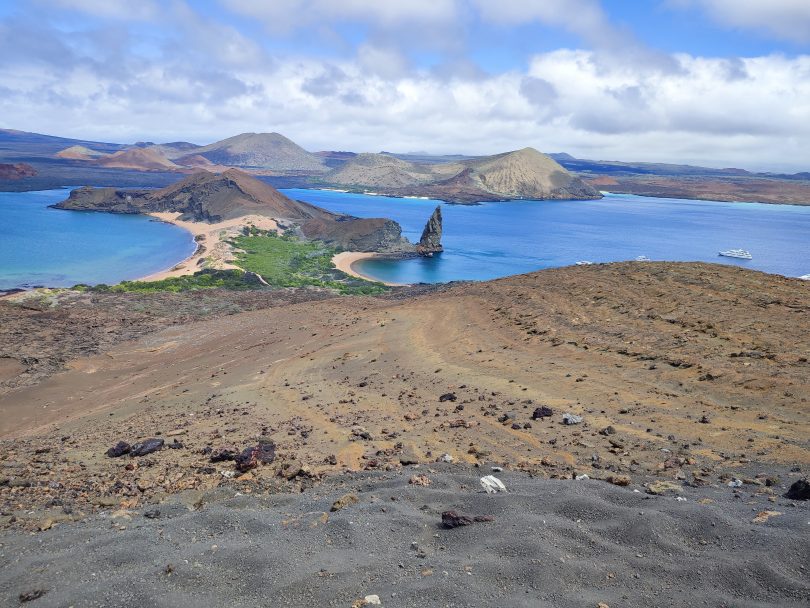
The Galapagos penguin is the rarest penguin species in the world. Current estimates place the global population at 1,500 to 4,700 individuals, roughly half the number recorded in the 1970s. The species is listed as Endangered by the IUCN. The primary threats are El Niño-driven food shortages, introduced predators, entanglement in fishing nets, disease carried by introduced mosquitoes, and oil pollution. Conservation efforts have had measurable successes but the population remains highly vulnerable to ocean temperature fluctuations.
The numbers tell a fragile story. During the severe 1982 to 1983 El Niño, the population dropped by an estimated 77 percent. The 1997 to 1998 event caused another significant crash. Each time, the population partially recovers when cold upwelling returns and fish come back. But each crash leaves the species with fewer individuals from which to rebuild, and the baseline population at the start of each recovery is lower than the last.
In 2020, during the COVID-19 pause in tourism, a research team from the Charles Darwin Foundation reported record nesting numbers at Isabela and Fernandina. The concurrent La Niña event brought unusually cold water to the western islands, improving food supply dramatically. Population surveys from that period showed that given the right ocean conditions and reduced human pressure, the species can recover quickly. The challenge is that ocean conditions are increasingly unpredictable, and climate projections suggest El Niño events will become more frequent and more intense over the coming decades.
On land, the work continues. Introduced predator control on Isabela and Fernandina, specifically targeting cats, rats, and feral dogs that prey on eggs and chicks, has produced measurable improvements in breeding success at treated sites. The Galapagos National Park’s predator eradication programs, funded in part through park entrance fees and ecotourism revenue, are among the most effective conservation tools currently deployed for this species.
What this means for your cruise: you are one of perhaps 25,000 to 30,000 people per year who visit these islands responsibly and generate the revenue that funds the work keeping this species alive. The park fees, the vessel licenses, the guide certifications: all of it is conservation infrastructure. Choosing a licensed, responsible operator is not a peripheral ethical consideration. For a species with fewer than 5,000 individuals, it is part of the reason the animal still exists.
Frequently Asked Questions
Is the Galapagos penguin the smallest penguin in the world?
No, it is the second smallest. The Little Blue penguin of New Zealand and Australia holds the title for smallest. At 48 to 50 centimetres tall and 2 to 4 kilograms, the Galapagos penguin is significantly smaller than most of its relatives, which is itself an adaptation: smaller bodies lose heat more slowly in hot environments and fit more easily into the lava crevices and caves the birds use for nesting and shade.
Do Galapagos penguins mate for life?
Yes. Galapagos penguins form strong pair bonds and typically remain with the same partner throughout their lives. Both parents share incubation duties and chick-rearing. Unlike most penguin species, they have no fixed breeding season, breeding whenever food conditions are sufficient to raise chicks successfully. In good years a pair may breed more than once. In El Niño years they may not breed at all.
Why don’t Galapagos penguins live in Antarctica?
They evolved specifically in the Galapagos over millions of years and are adapted to that specific environment. They are most closely related to the African, Humboldt, and Magellanic penguins, all of which live in temperate rather than polar regions. Their ancestors likely arrived in the Galapagos via the Humboldt Current from the coast of South America. They cannot survive in polar conditions any more than Antarctic penguins could survive at the equator.
Are penguin sightings guaranteed on a Galapagos cruise?
On a western itinerary including Isabela and Fernandina, sightings are close to certain, particularly during garua season. On central routes including Bartolome, sightings are common but not guaranteed given the small colony size. On eastern itineraries that skip the western islands and Bartolome, penguin sightings are unlikely. Route and season determine the probability more than any other factor.
Want Reliable Penguin Sightings? Start With the Right Itinerary
The Galapagos penguin is one of the most sought-after encounters in the islands and one of the most route-dependent. We know which vessels are currently running western itineraries with Elizabeth Bay and Bolivar Channel included, and which months give the best odds of seeing them actively fishing and nesting. A free quote from Cruises To Galapagos Islands includes a genuine itinerary recommendation based on your priorities, not just a price list. Tell us when you’re going and what you most want to see.
Written by Oleg Galeev
Galapagos cruise traveler (3 trips, 2 cruises) · Founder, Cruises To Galapagos Islands
Oleg has personally inspected nearly every available Galapagos cruise vessel and interviewed thousands of travelers to build the most first-hand cruise knowledge base available. He also runs the Ecuador travel blog mytrip2ecuador.com and the YouTube channel My Trip to Somewhere.
Cruises To Galapagos Islands is rated 4.9 stars on Google and TripAdvisor.
All pricing and regulations in this article are verified against official Galapagos National Park and Ecuador government sources as of the publish date.