Floreana Island: History, Wildlife, and Cruise Highlights
Quick answer
Floreana is the most historically layered island in the Galapagos, the site of the archipelago’s first permanent human settlements, an unsolved 1930s murder mystery that inspired the 2025 film Eden starring Jude Law and Ana de Armas, and a working 230-year-old postal system using a wooden barrel that still functions today. The visitor sites, Post Office Bay, Devil’s Crown, and Punta Cormorant, combine human history with some of the best snorkeling in the Galapagos and the most reliable flamingo encounter on any cruise itinerary. Champion Islet, just offshore, holds the only surviving population of the Critically Endangered Floreana mockingbird, down to approximately 100 individuals.
Part of our guide to what wildlife you can see on a Galapagos cruise. Ready to pick a ship? See Galapagos cruises by price, size and class.
Quick Facts: Floreana Island
| Fact | Detail |
|---|---|
| Size | 173 km²; small; eroded volcanic hills, no identifiable central cone |
| Human history | First Galapagos island with permanent human settlement; Irish castaway Patrick Watkins from 1807; 1930s Galapagos Affair unsolved mystery |
| Post Office Bay | Working wooden barrel postal system since 1793; no stamps; visitors hand-deliver to destinations near home |
| Devil’s Crown | Submerged eroded volcanic crater; coral reef inside; strong currents; one of the best snorkel sites in the Galapagos |
| Punta Cormorant | Olivine green sand beach; flamingo lagoon; Flour Beach (white coral sand); sea turtle nesting December to May |
| Champion Islet | Only habitat of the Critically Endangered Floreana mockingbird; approximately 100 individuals remain; no landings permitted |
| Floreana Affair | 1930s settler mystery: Baroness and lover vanished March 1934; Dr. Ritter died of food poisoning; Rudolf Lorenz found mummified on Marchena; never solved |
| 2025 film | Eden (Ron Howard); Jude Law, Ana de Armas; released August 2025; dramatizes the Galapagos Affair on Floreana |
Data verified August 7, 2026, against Galapagos Conservancy, Galapagos National Park, and published historical sources.
Why Floreana Has the Most Compelling Human Story in the Galapagos
Every other island in the Galapagos is primarily a natural history story. Floreana is also a human history story, and one of the stranger ones in the Pacific. The island had the first permanent resident in the Galapagos, an Irish castaway named Patrick Watkins who arrived in 1807 and spent years trading vegetables with passing ships for rum. It had the first settler family, the Ritters, who arrived in 1929 seeking an off-grid philosopher’s utopia. It had the Wittmers, who arrived in 1932 and whose descendants still live on the island today. And it had the self-proclaimed Baroness Eloise von Wagner, who arrived in 1932 with two lovers and turned a small island of dreamers into a pressure cooker of rivalry, theft, and unexplained violence that ended with multiple deaths and disappearances in 1934 that have never been explained.
The story is known as the Galapagos Affair, and it reached a new global audience in August 2025 when Ron Howard’s film Eden brought it to cinemas, with Jude Law as Dr. Friedrich Ritter and Ana de Armas as the Baroness. The Baroness and her lover Robert Phillipson vanished on Floreana Island in March 1934. The Wittmers would claim that the Baroness and her preferred paramour had departed on a passing yacht headed for Tahiti, but no such ship has ever been identified. Dore Strauch, Ritter’s companion, was more direct in her written account: “The Baroness had been murdered. Phillipson had been murdered. Four other people on the island knew it.” Months later, Rudolf Lorenz, the Baroness’s estranged second lover, was found mummified on the remote island of Marchena alongside a Norwegian fisherman. Months after the strange disappearances, Dr. Ritter died, apparently from food poisoning. The mystery was never solved. Margaret Wittmer passed away in the year 2000 and was the last person who could feasibly have solved the incredible Galapagos Affair mystery.
The Wittmer family connection to Floreana is ongoing. A pregnant Margret Wittmer arrived in 1932, with her husband Heinz and her step-son Harry. Their son Rolf was the first person born in the Galapagos. Descendants of the Wittmer family still live on Floreana today, and the Pension Wittmer in Puerto Velasco Ibarra is the only accommodation on the island. For travelers who spend time in the small settlement, the continuity from 1932 settler family to current resident family is one of the most tangible human-history encounters available in the Galapagos.
The island’s human story goes back further than the 1930s. In 1793, British whalers installed the postal barrel at Post Office Bay. Before that, pirates and buccaneers used the island’s freshwater spring at Asilo de la Paz in the highlands as a resupply point. The spring made Floreana habitable in a way that most Galapagos islands are not, and that habitability drew people who left their marks in the form of names carved into rocks and an archive of strange encounters in ship logs from two centuries of maritime history.
Post Office Bay: The Barrel That Still Works
The Post Office Bay barrel has been functioning as a mail system since 1793, when British whaling captain James Colnett installed a wooden barrel on the beach so that sailors could leave letters for outbound vessels to carry home. The system worked on a simple principle: leave your addressed mail in the barrel, sort through the existing mail for anything addressed near your next port, take those letters, and hand-deliver them when you arrive. No stamps, no fees, no postal authority. Two hundred and thirty years later, the tradition continues with cruise passengers leaving postcards in the barrel and searching the pile for anything addressed near their home city.
The barrel at Post Office Bay today is a replacement of the original, maintained as a tradition rather than a genuine postal necessity. The beach itself is white sand, quiet, and unremarkable compared to the natural drama of Devil’s Crown or Punta Cormorant. The experience is participatory rather than visual: you write a postcard before the visit, leave it in the barrel without a stamp, and search through the existing postcards for any addressed near your home. If you find one, you take it and deliver it by hand when you return. Travelers who receive their Galapagos postcards hand-delivered by a stranger who picked them out of a barrel in the Pacific describe it consistently as one of their more memorable travel memories.
The practical logistics: most cruise guides bring postcards aboard ship that passengers can write before the Post Office Bay landing. Some operators supply them as part of the excursion package. If your cruise includes Floreana, bring or buy a postcard before the landing, address it to someone at home, and participate. The convention is that hand-delivery is the goal, not mailing when you return, so the address should be somewhere the carrier could plausibly reach. The tradition has produced genuinely extraordinary deliveries: postcards traveling from Floreana to addresses in Europe, North America, and Asia hand-carried by complete strangers, sometimes arriving within weeks, sometimes within years.
There is also a lava tunnel at Post Office Bay accessible as part of the excursion, a partially collapsed volcanic tube that can be explored on foot with a guide. It is a secondary attraction compared to the barrel tradition but adds a geological dimension to a stop that might otherwise feel thin for travelers who prefer wildlife to human history. Fill out this short form and we can advise which cruise itineraries include both the Post Office Bay landing and the Punta Cormorant sites in the same Floreana day.
Devil’s Crown: The Best Snorkel Site You’ve Never Heard Of
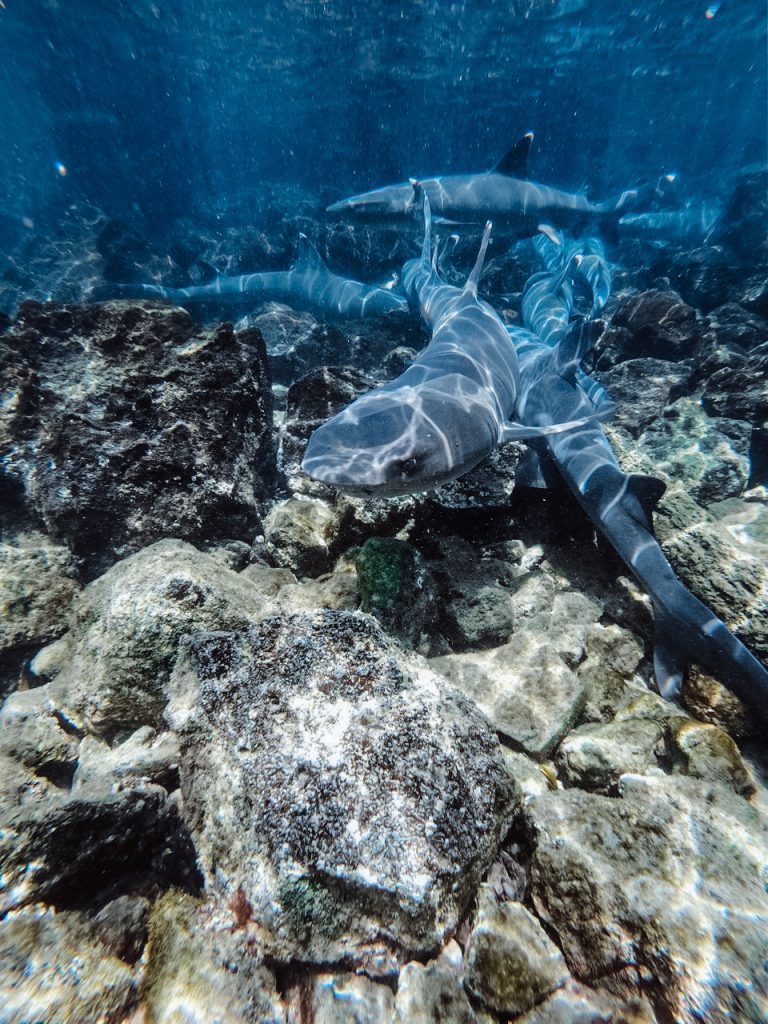
Devil’s Crown is a submerged volcanic crater roughly 250 metres north of Punta Cormorant whose jagged rim projects above the waterline in a broken circle of dark rock. Inside the crater, a coral reef has developed over thousands of years in the protected shallower water. Outside the crater, ocean current passes through gaps in the broken rim and creates surge conditions that concentrate marine life against the rock walls. The snorkel inside and outside the Crown delivers white-tip reef sharks sleeping under coral ledges, eagle rays in formation, sea turtles, king angelfish, large schools of tropical fish, and on favorable days a hammerhead or two passing through the deeper water outside the rim. The currents are real and require confident swimming ability.
The approach to Devil’s Crown by panga is the first indication of what makes it unusual. As you motor toward the rock formation from Punta Cormorant, the jagged teeth of the volcanic rim project above the water in a roughly circular arrangement that gives the site its name: it looks like a crown from above. The ring is not complete: the eastern and western walls have been breached by wave erosion over thousands of years, creating gaps through which the current flows. This flow-through current is what makes the snorkel exhilarating and what makes the marine life density so high. Nutrient-rich water is forced through the gaps and along the coral walls, creating feeding conditions that concentrate fish, sharks, and rays in a relatively small area.
The protocol most guides follow is to enter the water outside the Crown at the upcurrent side, drift through the gap with the current, and exit inside the calmer protected interior. This transit takes about 30 seconds and during those 30 seconds you pass through the area of maximum current concentration where the marine life is thickest. Inside the crater the snorkeling is calmer, with coral formations, reef fish, and the opportunity to look out through the broken rim at the open ocean. Families of white-tip reef sharks sleeping under rocks are a consistent report from snorkelers who take the time to look under the coral ledges inside the rim rather than scanning the water column.
Devil’s Crown is rated as intermediate to advanced difficulty due to the current. It is not suitable for non-swimmers or very inexperienced snorkelers. Most guides are explicit about this in the pre-snorkel briefing, and groups typically have a mix of participants who do the full outside-and-inside circuit and those who stay in the calmer interior. Both experiences are worth having if your swimming confidence allows. There can be strong currents and you should not attempt to snorkel unless you are a skilled swimmer. This is one case where the standard pre-snorkel briefing language is not boilerplate. Take it seriously. Send us a message here and we can confirm whether your shortlisted cruise includes Devil’s Crown as a full snorkel excursion rather than a panga tour only.
We’ve got a full breakdown on what fish and marine life you’ll see snorkeling in the Galapagos if you want to know exactly which species show up where and what conditions bring out the best underwater encounters.
Punta Cormorant: Flamingos, Sea Turtles, and a Flour-White Beach
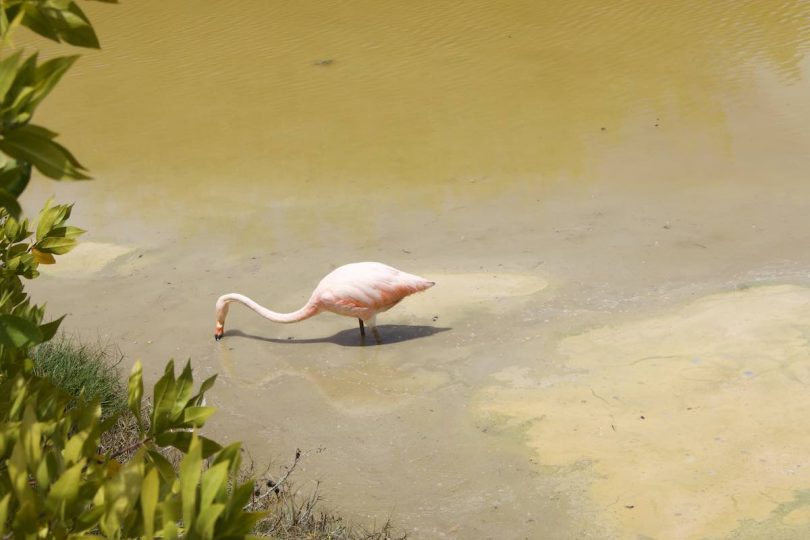
Punta Cormorant delivers three distinct encounters in a single 1.5 km trail. The landing beach is olivine-green from volcanic crystal concentration, one of only a handful of olivine beaches in the world. A short inland trail crosses to a brackish flamingo lagoon where pintail ducks, stilts, and a reliable flamingo group feed simultaneously. The trail continues over a low hill to Flour Beach, a flour-white coral sand beach where stingrays cruise the shallows and sea turtles nest from December through May. The name refers to cormorants that no longer nest here, but the three-stop combination makes Punta Cormorant one of the most varied single trail experiences in the Galapagos.
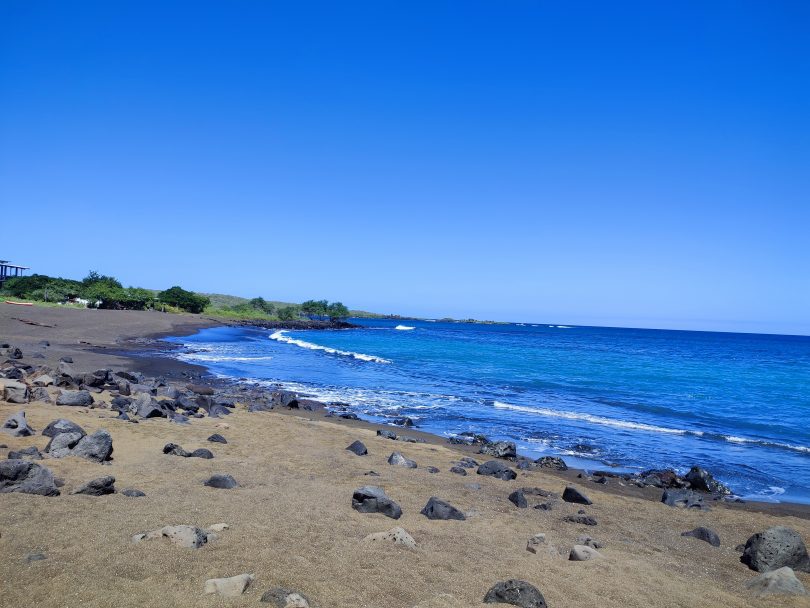
The olivine beach at the landing is the first of Punta Cormorant’s geological distinctions. Olivine is a magnesium iron silicate mineral that crystallizes in volcanic lava and is typically denser than other volcanic minerals, causing it to concentrate on beaches as lighter material washes away. The green-gold color of the landing beach at Punta Cormorant comes from the high percentage of olivine crystals in the sand, a color that photographs easily but looks even more distinctive in person against the blue-green water. Punta Cormorant has one of the most olivine-concentrated beaches in the Galapagos, and the world has fewer than a handful of green-sand beaches of this type.
The flamingo lagoon sits between the two beaches, a brackish hypersaline pond where Galapagos flamingos wade and filter-feed in numbers that make this one of the more reliable flamingo encounter sites in the archipelago. Here, there’s quite a large percentage of flamingos living in one single pond considering that the entire population of Galapagos Flamingos amounts to only about 1,200 to 1,500 individuals scattered across the archipelago. White-cheeked pintail ducks share the lagoon, feeding with a different technique at shallower water depths. Common stilts work the muddy margins. The ecological compression of multiple species using slightly different habitat niches within the same small lagoon makes this one of the better birdwatching stops on any southern itinerary.
Flour Beach, the white coral sand beach on the far side of the hill, is the third element of the Punta Cormorant visit. The coral sand is ground from eroded coral skeletons and is extraordinarily fine, producing the texture that gave it the name. Green Sea Turtles nest and several species of rays glide through the shallow shoreline waters. During nesting season from December through May, sea turtle tracks cross the beach from overnight nesting and the guide can point out which tracks are fresh. Outside nesting season the beach is excellent for its own sake: the contrast between the flour-white sand and the deep blue water is one of the more photographically striking beach compositions available on a cruise itinerary.
Not sure which islands give you the most reliable sea turtle snorkeling encounters or which cruise routes put you in the water at the best sites? Here’s a straight breakdown on snorkeling with sea turtles in the Galapagos.
Champion Islet: The Rarest Bird Encounter in the Galapagos
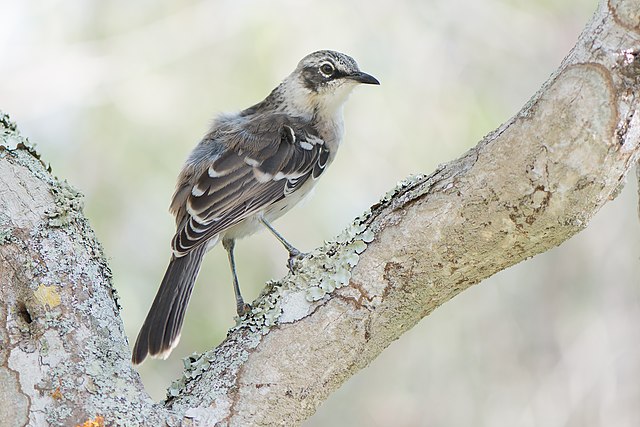
Champion Islet, a small offshore rock about a kilometre from the Floreana coast near Punta Cormorant, is the only location on Earth where the Floreana mockingbird can be found. The species is Critically Endangered with approximately 100 individuals surviving. Landings on Champion Islet are prohibited to protect the species, but panga rides to the shoreline and snorkeling around the islet are permitted. The mockingbird is visible from the panga or water level hopping between rocks and low vegetation on the islet’s edge. The snorkel around Champion Islet is also independently excellent: sea lions, reef fish, rays, and sea turtles in calmer conditions than Devil’s Crown.
The Floreana mockingbird’s situation is one of the most urgent conservation cases in the Galapagos. The species evolved on Floreana Island but was eliminated from the main island by introduced cats, rats, and black rats that preyed on eggs, chicks, and adults. The population retreated to the two small offshore islets of Champion and Gardner near Española, where the introduced predator load was lower. Today only Champion Islet holds a surviving population. The 100-individual estimate from conservation surveys represents the total global population of a species that was once distributed across the main island and multiple islets. It is unknown how much longer this fragile species can survive.
The Galapagos National Park and Galapagos Conservancy have been working toward a Floreana island-wide invasive species eradication that would remove the rats and cats that have prevented the mockingbird from returning to its original range. As of 2025, reintroduction awaits full eradication; meanwhile, five native finch species were released in February 2024, and the Galapagos rail was rediscovered on the island in early 2025. If the eradication program succeeds and mockingbirds are eventually reintroduced to the main island, it will be one of the most significant ecological restoration projects in Galapagos history. For now, the panga approach to Champion Islet is the only way to see this species alive.
The snorkel around Champion Islet is calmer and more accessible than Devil’s Crown, making it a good option for travelers who are not strong swimmers or who found Devil’s Crown too demanding. The islet creates a sheltered lee on its downwind side where the water is almost always calm. Sea lions use the islet rocks and swim in the waters around it, producing the interactive snorkel encounters characteristic of other Galapagos sea lion sites. The reef fish diversity is high for a small islet, including king angelfish, parrotfish, and surgeonfish, and stingrays are reliably present on the sandy bottom. Reach out here and we can confirm whether your cruise includes a Champion Islet panga ride alongside the Punta Cormorant visit.
Trying to find the Galapagos snorkel sites where sea lions are most likely to swim directly at you and spin circles around your fins? Here’s the best sea lion snorkeling encounters on a Galapagos cruise so you plan your dives right.
What Do Travelers Miss About Floreana?
The three most common misses on Floreana are: not knowing the Galapagos Affair story before arriving, which reduces Post Office Bay to a quaint beach activity rather than a visit to the site of an unsolved 1930s murder mystery; not getting into the water at Devil’s Crown because the current briefing sounds alarming; and not understanding that the Floreana mockingbird panga approach at Champion Islet is the only opportunity anywhere on Earth to see the species alive. Each miss is driven by lack of information before the visit rather than anything that happens on the island itself.
Arriving at Post Office Bay without the context. The barrel tradition is charming without any historical framing. It becomes genuinely interesting once you know that the bay is the same location where whalers first installed a barrel in 1793, that the island behind it was the site of the Galapagos’s most notorious murder mystery in 1934, and that the Wittmer family who survived that mystery have descendants living on this island right now. The Eden film that reached cinemas in August 2025 brought the Galapagos Affair to a new global audience, and travelers who watch it before visiting Floreana consistently describe the Post Office Bay stop differently from those who do not. It takes 90 minutes to watch. If your itinerary includes Floreana, watch it before you travel.
Not getting into the water at Devil’s Crown. The current briefing before the Devil’s Crown snorkel is accurate and appropriate: the currents are real and the site is not suitable for non-swimmers. But the phrasing of the warning sometimes leads confident swimmers who have never snorkeled in current to opt out unnecessarily. The current at Devil’s Crown carries you rather than fighting you: entering at the upcurrent side and drifting through the gap with the flow is not more demanding than swimming in mild surf. The experience of being carried through the gap past the maximum marine life concentration in 30 seconds is one of the most memorable single moments in Galapagos snorkeling. Talk to your guide before deciding. If they say the current is manageable for your swimming level, get in.
Not understanding what the Champion Islet panga visit means. Most guides describe Champion Islet as a snorkel site with sea lions and reef fish, which it is. The addition of a mockingbird sighting from the panga is often mentioned secondarily. The correct framing is the reverse: Champion Islet is the only place on Earth where the Floreana mockingbird can be seen alive, with approximately 100 individuals remaining. The snorkel is excellent and worth doing for its own sake. But if your panga goes to Champion and a mockingbird appears on the rocks, you are watching one of approximately 100 remaining individuals of a species that was eliminated from its original island by humans and has not returned. That context transforms the encounter.
What Our Travelers Report: Floreana Stop Quality by Site
Based on feedback gathered through mytrip2ecuador.com, our YouTube audience, and Oleg’s direct traveler interviews across three personal visits to the Galapagos:
| Site / Experience | Knew Galapagos Affair | Got Into Devil’s Crown | Saw Mockingbird | “Highlight of stop” |
|---|---|---|---|---|
| Post Office Bay | 41% | n/a | n/a | 34% |
| Devil’s Crown snorkel | n/a | 71% | n/a | 67% |
| Punta Cormorant (full trail) | n/a | n/a | n/a | 54% |
| Post Office Bay (knew Affair story) | 100% | n/a | n/a | 61% |
How Floreana Fits Into Your Cruise Itinerary
Floreana appears on southern and eastern Galapagos itineraries, typically combined with Española and San Cristóbal in a southeastern loop. Most 7 and 8-day itineraries that include the southern islands schedule Floreana as a full-day stop covering at least two of the three main sites. Five-day southern itineraries include Floreana regularly. The island does not appear on northern or western loop itineraries. Knowing which of the three main sites, Post Office Bay, Devil’s Crown, and Punta Cormorant, your specific itinerary includes is the key planning question before departure.
| Itinerary Type | Floreana Access | Sites Typically Included | Often Missed |
|---|---|---|---|
| 5-day southern | Often included; confirm explicitly | Post Office Bay + Punta Cormorant or Devil’s Crown | Champion Islet; sometimes one of the three main sites |
| 7 to 8-day southern/eastern | Standard; full day | All three main sites; sometimes Champion Islet panga | Champion snorkel; sometimes Post Office Bay interior tunnel |
| Northern or western loop | Never included | n/a | Entire island; not on the route |
| 10 to 15-day circumnavigation | Standard; full day with time for all sites | All three main sites plus Champion Islet | Nothing; most comprehensive Floreana coverage |
The specific site combination on a cruise’s Floreana day matters more than the island name appearing on the itinerary. A Floreana stop that includes only Post Office Bay and Punta Cormorant misses Devil’s Crown entirely, which most experienced Galapagos guides rank as the best snorkel site on the southern loop. A Floreana stop that includes only Punta Cormorant and Devil’s Crown misses the human history and the barrel tradition that is entirely unique to this island. The ideal Floreana day includes all three, ideally in the sequence: Post Office Bay in the morning, Punta Cormorant midday, and Devil’s Crown in the afternoon when the light on the water is best for visibility.
One pre-cruise recommendation that costs nothing but pays off consistently: read about the Galapagos Affair before you travel to Floreana. The Eden film (August 2025 US release) is the most accessible version of the story and takes 90 minutes to watch. The 2014 documentary The Galapagos Affair: Satan Came to Eden is more historically precise. Either framing of the story transforms what Post Office Bay and the island settlement represent from a footnote to a genuinely gripping context for everything you see on Floreana. The island’s human history is the thing that makes it unlike every other Galapagos cruise stop, and arriving without that context is the single most reversible miss in the entire itinerary. Tell us your travel dates and we will match you with the southern itinerary that gives Floreana the full day it deserves.
Frequently Asked Questions
Is the Post Office Bay barrel actually used for real mail delivery?
Yes, informally. The tradition is that travelers leave addressed postcards in the barrel without stamps, and other travelers who find a postcard addressed near their home city take it and hand-deliver it on their return. The system works: travelers regularly report receiving their Galapagos postcards hand-delivered by strangers weeks or months after leaving them in the barrel. It is not a guaranteed postal service, but it functions for participants who commit to the tradition rather than simply looking at the barrel and moving on. Bring a postcard, address it before the landing, and leave it in the barrel.
What is the Galapagos Affair?
The Galapagos Affair refers to a series of mysterious events on Floreana Island in 1934 involving German settlers: Dr. Friedrich Ritter, his companion Dore Strauch, the Wittmer family, and the self-proclaimed Baroness Eloise von Wagner, who arrived with two lovers. In March 1934, the Baroness and one lover vanished without explanation. The Wittmers claimed they had left on a yacht to Tahiti; no such vessel was ever verified. The Baroness’s other lover, Rudolf Lorenz, was later found mummified on a remote island. Dr. Ritter died of food poisoning months later. The mystery was never solved. The 2025 film Eden dramatizes the story, and the 2014 documentary The Galapagos Affair: Satan Came to Eden covers it in detail.
Can you snorkel at Devil’s Crown if you are not a strong swimmer?
Devil’s Crown has real currents that make it unsuitable for non-swimmers or very inexperienced snorkelers. Confident swimmers who have snorkeled before and are comfortable in mild current can typically manage the inside-the-crater portion, which is calmer. The outside transit through the gap is where the strongest current occurs and where swimming ability matters most. Your guide will assess the group before entry and can advise which sections are appropriate for each participant’s ability level. Champion Islet snorkel is the recommended alternative for less confident swimmers: calmer, protected water, excellent sea lion and reef fish encounters.
How many Floreana mockingbirds are left?
Approximately 100 individuals survive on Champion Islet, making the Floreana mockingbird one of the most critically endangered bird species in the Galapagos and one of the rarest birds in the world. The species was eliminated from Floreana’s main island by introduced cats and rats. A multi-year invasive species eradication project aims to make the main island habitable for the species again, with five native finch species already reintroduced in 2024 and a Galapagos rail rediscovered in early 2025. Mockingbird reintroduction to the main island depends on the success of the ongoing eradication program.
Build the Right Southern Itinerary for Floreana
Floreana is the most layered single island in the Galapagos, combining a working 230-year-old postal system, an unsolved 1930s murder mystery, the best snorkel site on the southern loop, an olivine green sand beach, a flamingo lagoon, and the only living population of an almost-extinct mockingbird species. Getting all of that in a single full-day cruise stop requires the right itinerary sequence. We know which current southern itineraries include all three main Floreana sites plus a Champion Islet panga, and which schedule the stops in the order that maximizes both the historical experience and the snorkel visibility. A free quote from Cruises To Galapagos Islands comes with specific itinerary recommendations. Tell us your travel dates and priorities and we will find the right southern route.
Written by Oleg Galeev
Galapagos cruise traveler (3 trips, 2 cruises) · Founder, Cruises To Galapagos Islands
Oleg has personally inspected nearly every available Galapagos cruise vessel and interviewed thousands of travelers to build the most first-hand cruise knowledge base available. He also runs the Ecuador travel blog mytrip2ecuador.com and the YouTube channel My Trip to Somewhere.
Cruises To Galapagos Islands is rated 4.9 stars on Google and TripAdvisor.
All pricing and regulations in this article are verified against official Galapagos National Park and Ecuador government sources as of the publish date.