Marine Iguanas: Best Spots on a Galapagos Cruise
Quick answer
Marine iguanas are visible on virtually every Galapagos cruise, on every island, at every time of year. The most spectacular encounters are at Punta Espinoza on Fernandina, where the largest colonies in the archipelago bask on black lava and can be watched feeding underwater. Española’s subspecies turns vivid red and green during breeding season from January to March. If snorkeling with iguanas underwater is on your list, a western route including Fernandina is the itinerary you want.
Part of our guide to what wildlife you can see on a Galapagos cruise. Ready to pick a ship? See the best Galapagos cruises by price, size and class.
Quick Facts: Galapagos Marine Iguana
| Fact | Detail |
|---|---|
| Scientific name | Amblyrhynchus cristatus |
| Subspecies | 11, each island-specific; largest on Isabela and Fernandina |
| Maximum size | Up to 1.5 metres; the “Godzilla” subspecies (San Cristóbal) among the largest |
| Diet | Exclusively algae, scraped from underwater rock surfaces |
| Dive duration | Typically 5 to 10 minutes; recorded up to 30 minutes |
| IUCN status | Vulnerable; all Galapagos iguana species upgraded to CITES Appendix I in 2025 |
| Mating season colors | Española: vivid red and green (Jan to Mar); Santa Cruz: red and black; Fernandina: dull green and brick red |
| Best snorkel site | Punta Espinoza, Fernandina Island (western routes only) |
Data verified August 7, 2026, against Galapagos Conservation Trust, IUCN, and Charles Darwin Foundation sources.
Why Are Marine Iguanas Unlike Any Other Lizard on Earth?
The Galapagos marine iguana is the only lizard in the world that feeds in the ocean. It dives into cold saltwater, holds its breath for up to 30 minutes, and scrapes algae from submarine rock using a blunt, specially adapted snout. When it returns to land, it sneezes to expel the accumulated salt through glands beside its nose. Darwin called them “imps of darkness.” We call them one of the most biologically extraordinary animals you will ever stand next to on a trail.
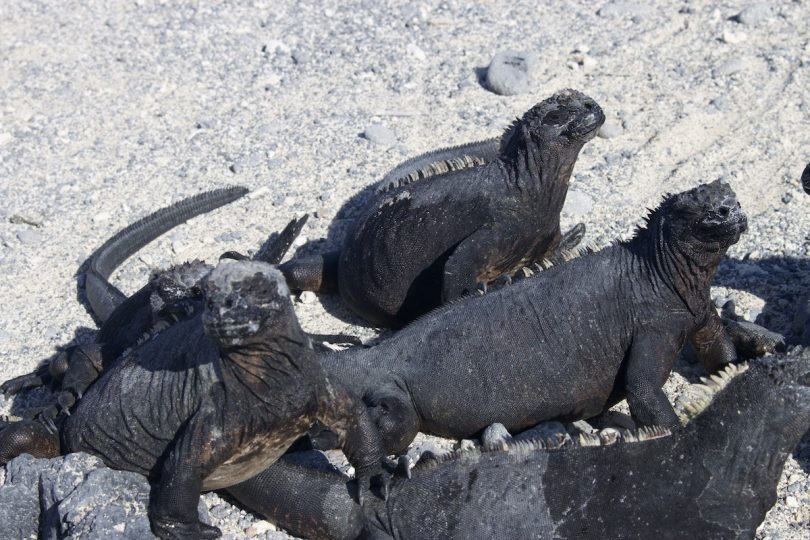
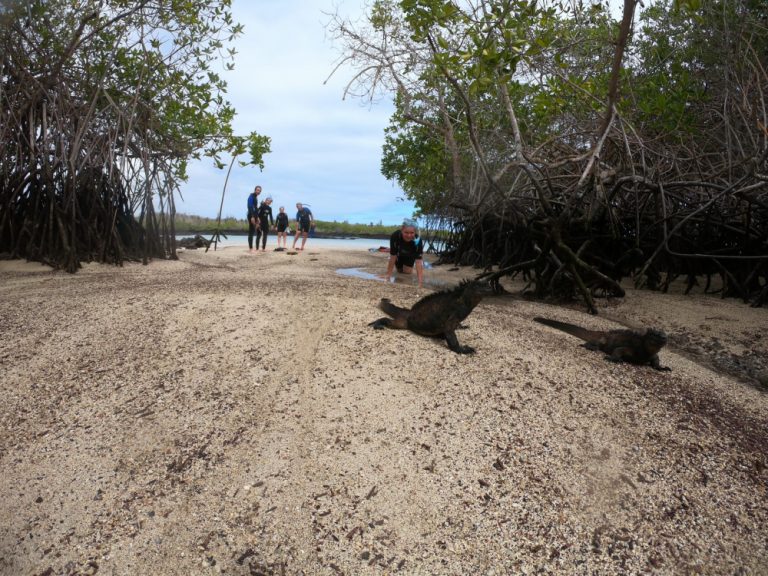
Every coastline in the Galapagos has them. You walk off the panga onto black lava and they are already there, piled together in the sun, eyes half-closed, occasionally blasting a fine mist of salt crystals from their nostrils. They don’t move. A marine iguana warming itself after a cold dive has about as much interest in your presence as the rock it is sitting on. They evolved alongside no predators that walked upright, so you register as nothing threatening.
The biology behind all of this is stranger than it sounds in a field guide. Marine iguanas are ectothermic, meaning their body temperature depends entirely on external heat. When they dive into water that can be as cold as 13 degrees Celsius near the Humboldt Current, their heart rate drops sharply to slow heat loss. They navigate to their feeding area using their powerful, laterally flattened tail as a propeller, legs tucked flat against their body to reduce drag, claws spread to grip the rock the moment they arrive. Then they graze. Then they swim back. Then they bask for hours to recover the thermal energy they burned.
The salt-expulsion sneeze is not just comic. Salt accumulates as a byproduct of consuming seawater while feeding, and the nasal glands process it constantly. Walking through a resting colony at Punta Espinoza, you will at some point get lightly dusted with iguana salt spray. Your guide will mention this before you go in. It is not unpleasant. It is simply part of the experience of being very close to a very ancient animal doing something no other lizard on Earth does.
One more piece of biology worth knowing before we get to the islands: marine iguanas can shrink. Not metaphorically. During El Niño events, when warm water kills the algae they eat, individuals have been documented reducing their actual bone length by up to 20 percent, roughly 6.8 centimetres, to lower their caloric needs. When food returns, they grow back. This was first documented scientifically by biologist Martin Wikelski and published in the journal Nature in 2000. It remains one of the most extraordinary phenotypic adaptations ever recorded in a vertebrate animal. No other lizard, and very few animals of any kind, can do this.
Which Islands Have the Best Marine Iguana Encounters?
Marine iguanas are present on every major island in the Galapagos and are visible on virtually every cruise excursion. What varies dramatically by island is size, color, and density of the colony. Fernandina holds the largest and most visually striking concentrations. Española produces the most colorful subspecies during breeding season. For sheer scale of encounter, Punta Espinoza on Fernandina is in a category of its own.
Fernandina (Punta Espinoza) is the benchmark. The colony here is enormous, hundreds of animals piled on black lava in dense, overlapping groups. The iguanas on Fernandina are among the largest in the archipelago, and their coloring during mating season shifts to dull green and brick red against that stark volcanic rock. The site is only accessible on western cruise routes, which typically require an 8-day itinerary minimum. This is also the best place in the Galapagos to snorkel with marine iguanas feeding underwater, a full section follows on that. If Fernandina is on your route, Punta Espinoza should not be optional.
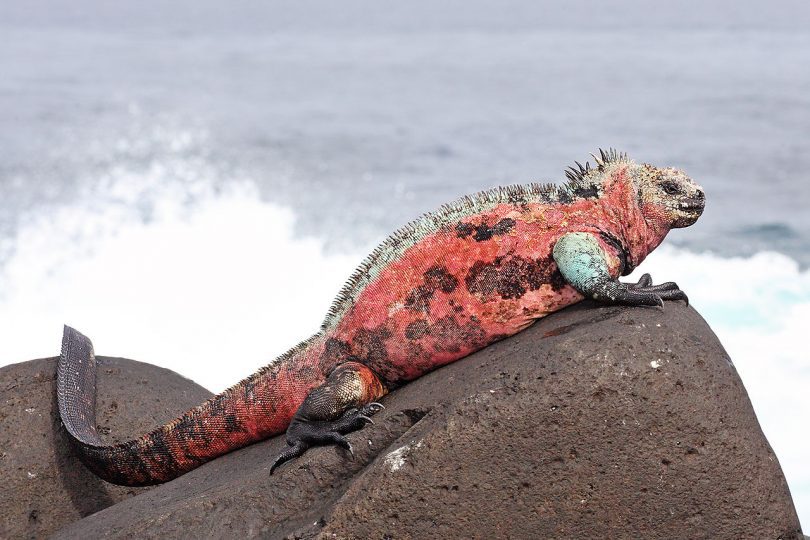
Española (Punta Suárez) is where you go for color. The marine iguana subspecies here turns bright green and red during breeding season from January through March, vivid enough that they’ve earned the unofficial nickname “Christmas iguanas.” The island’s geography is thought to be the driver: Española’s southern shore, where the best algae grows, is steep cliff rather than gentle beach, creating intense competition for breeding sites. The most aggressive males tend to be the most brightly colored, and over generations the entire population has shifted toward more vivid display coloration. Nothing else in the Galapagos looks quite like an Española marine iguana at peak mating season.
Santa Cruz has marine iguanas at Tortuga Bay and at numerous coastal sites around the island. The subspecies here is smaller than Fernandina’s, turning red and black during mating season rather than green. These are accessible on almost any cruise itinerary and are typically the first iguanas most passengers see, often while still on the panga approaching the dock at Baltra or Puerto Ayora.
Isabela has populations along its entire western coast and shares the largest-subspecies designation with Fernandina. The Bolivar Channel between the two islands is particularly productive for iguana watching from a panga.
| Island | Subspecies Character | Mating Colors | Cruise Access |
|---|---|---|---|
| Fernandina | Largest; densest colony; Punta Espinoza | Dull green and brick red | Western routes; 8-day minimum typical |
| Española | Most colorful; “Christmas iguana” | Vivid green and red (Jan to Mar) | Southern/eastern routes; 7 to 8-day typical |
| Santa Cruz | Medium size; very accessible | Red and black | All itineraries; most common first sighting |
| Isabela | Large; long western coastline | Green, yellow and black | Western and central routes |
| San Cristóbal | Includes the “Godzilla” subspecies (northern coast) | Primarily black | Eastern routes; some 5 to 8-day cruises |
We’ve walked Punta Espinoza three times across our own trips to the islands. It changes every visit depending on season and tide. What stays constant is the sheer density, animals stacked on animals, a living carpet of black scales on black rock, and the smell of salt and algae that hits you from the panga before you even land. If you want to put Fernandina on your itinerary and need to know which vessels currently sail that route, we can tell you exactly. Fill out this short form and we’ll match you to the right cruise.
Can You Snorkel With Marine Iguanas?
Yes, and it is one of the most singular wildlife experiences in the archipelago. The best site by a significant margin is Punta Espinoza on Fernandina, where large iguanas feed on algae at depths of 2 to 4 metres while snorkelers hover above them. The iguanas graze methodically against the current, claws locked onto volcanic rock, tails sweeping slowly for balance. They surface, breathe, and go back under. They are entirely unbothered by your presence in the water with them.
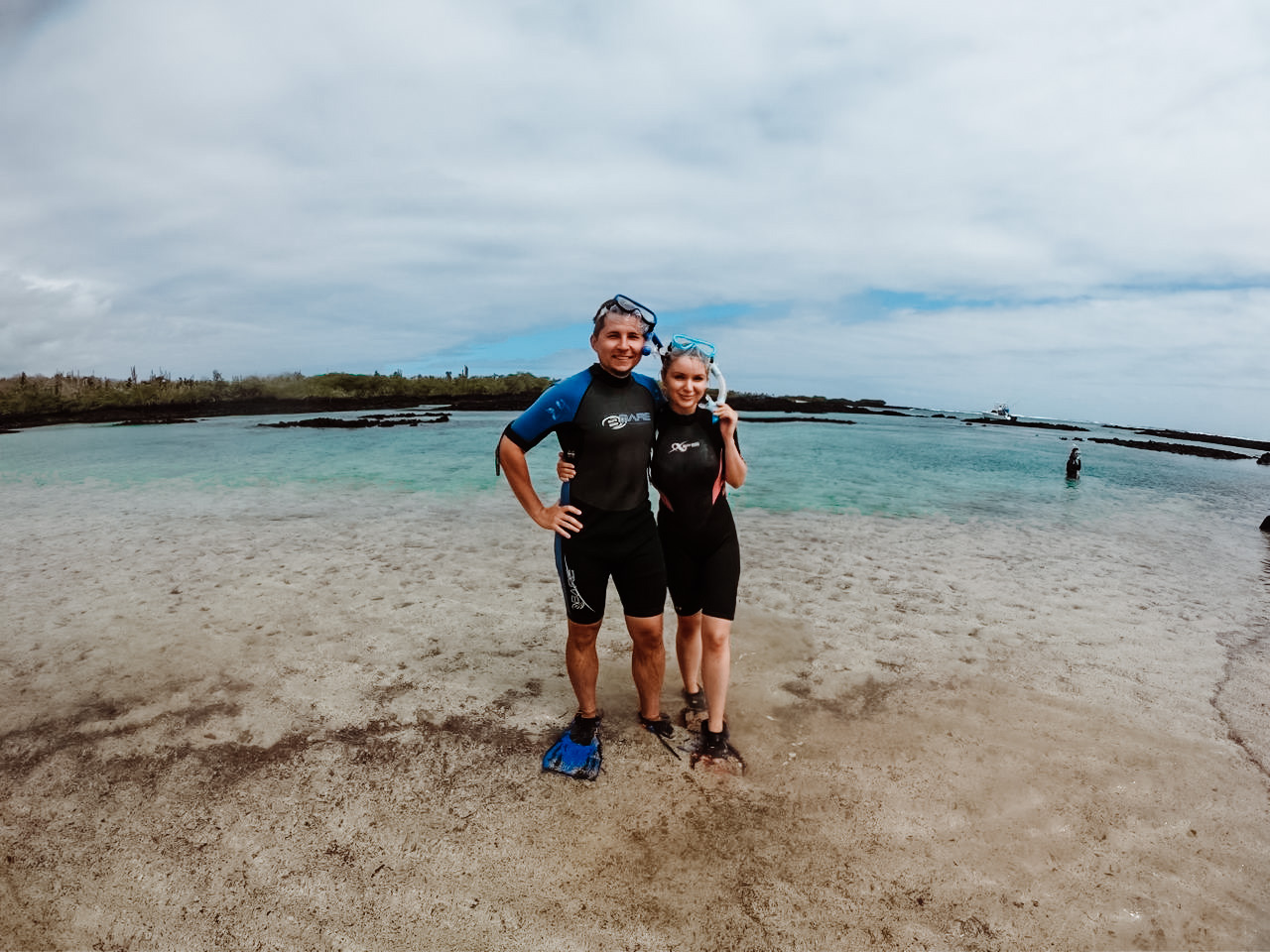
The snorkel setup at Punta Espinoza requires some basic confidence in the water. The entry is from shore or panga into water that can be cold, particularly during garua season when the Humboldt Current brings temperatures as low as 18 degrees Celsius. Your cruise should provide a wetsuit; use it. The visibility is usually decent, the underwater landscape is volcanic and dramatic, and the iguana feeding areas are at depths that don’t require any diving ability on your part. You float. They feed below you.
The best timing for iguana snorkeling at Punta Espinoza is between 11 a.m. and 2 p.m., when body temperatures are highest after morning basking and the animals are most actively feeding. Earlier sessions are possible but the iguanas tend to still be warming up on shore rather than in the water. Your guide should know the colony’s daily rhythms and can advise on the most productive window on the day you visit.
What makes the encounter remarkable is not just the novelty. Watching an animal this size use its tail as a rudder, maneuver against a current with apparent ease, and methodically work a patch of algae with that blunt snout shows you the full adaptation in action. On land, these animals look inert, ancient, almost geological. In the water, they are precise and purposeful. The contrast is arresting.
Sites near Isabela’s southern islets also offer iguana snorkeling encounters, where the animals come within range of the water surface during feeding excursions. For most passengers on western itineraries, these encounters happen somewhat spontaneously as the panga moves between sites. Fernandina is the one you plan for. Isabela is the bonus.
What Time of Year Shows Marine Iguanas at Their Most Dramatic?
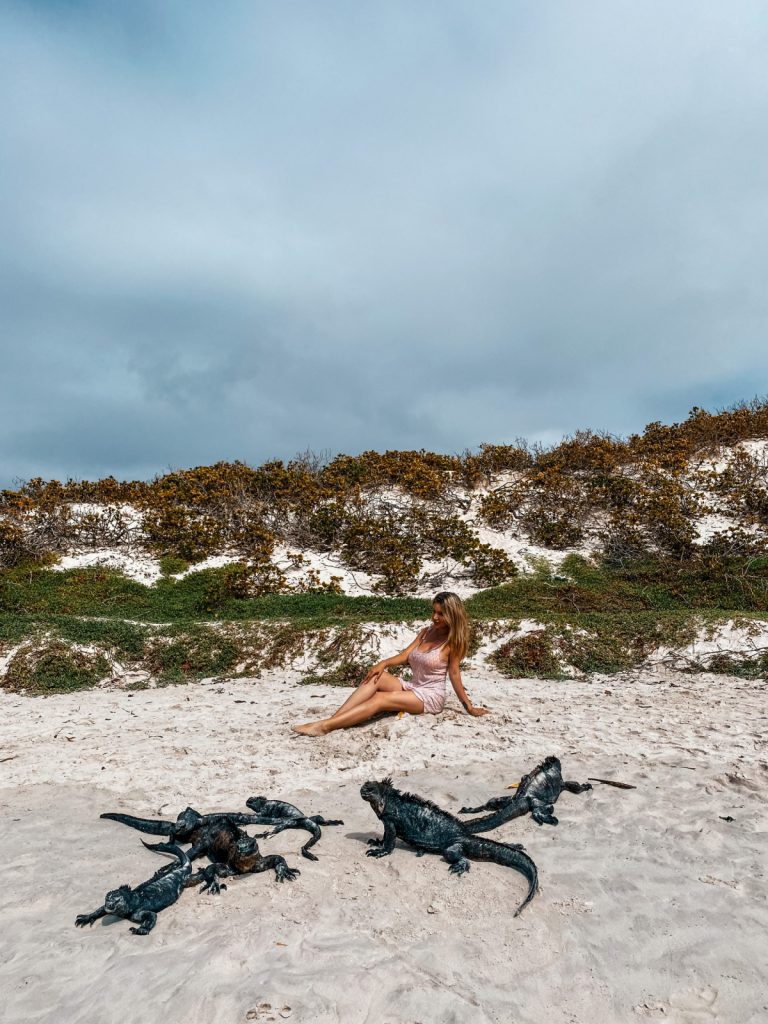
January through March is when Española’s Christmas iguanas turn their most vivid red and green. This is the mating season, when males compete for breeding sites and brighter color signals dominance. Year-round, the most consistently large and active iguana colonies are at Fernandina and Isabela. The garua season from June through November tends to produce more active underwater feeding behavior as cooler, algae-rich water draws the animals in more frequently.
The color change in marine iguanas is a secondary sexual characteristic, not a year-round feature. For most of the year, across most islands, the animals are predominantly black, which maximizes heat absorption from the sun. During breeding season, males of certain subspecies accumulate pigment in patches of skin that shift from black to red, green, or combinations of both depending on their island. The Española subspecies is the most extreme example. Females, which are consistently smaller than males, do not change color regardless of season.
| Season | What You See | Best Islands for It |
|---|---|---|
| Jan to Mar | Peak mating colors; male territorial battles; nesting females | Española (most vivid); Santa Cruz; Fernandina |
| Apr to May | Colors fading; egg incubation underway; large colonies active | All islands; Fernandina most productive |
| Jun to Nov | Black coloring; cold-water feeding surge; active underwater behavior | Fernandina and Isabela (Humboldt Current algae bloom) |
| Dec | Early mating activity beginning on Española and Santa Cruz | Española; large colony density at most sites |
A practical note on the Christmas iguana timing: if your main goal is to see the vivid mating colors on Española, January through early March is the specific window. The colors begin appearing in late December, peak in January and February, and fade through March. A mid-March visit will catch some color but noticeably less than January. This is granular enough that travel timing can reasonably be adjusted around it if it matters to you. We can tell you which itineraries currently route through Española during that window.
How Does Your Cruise Route Affect Marine Iguana Sightings?
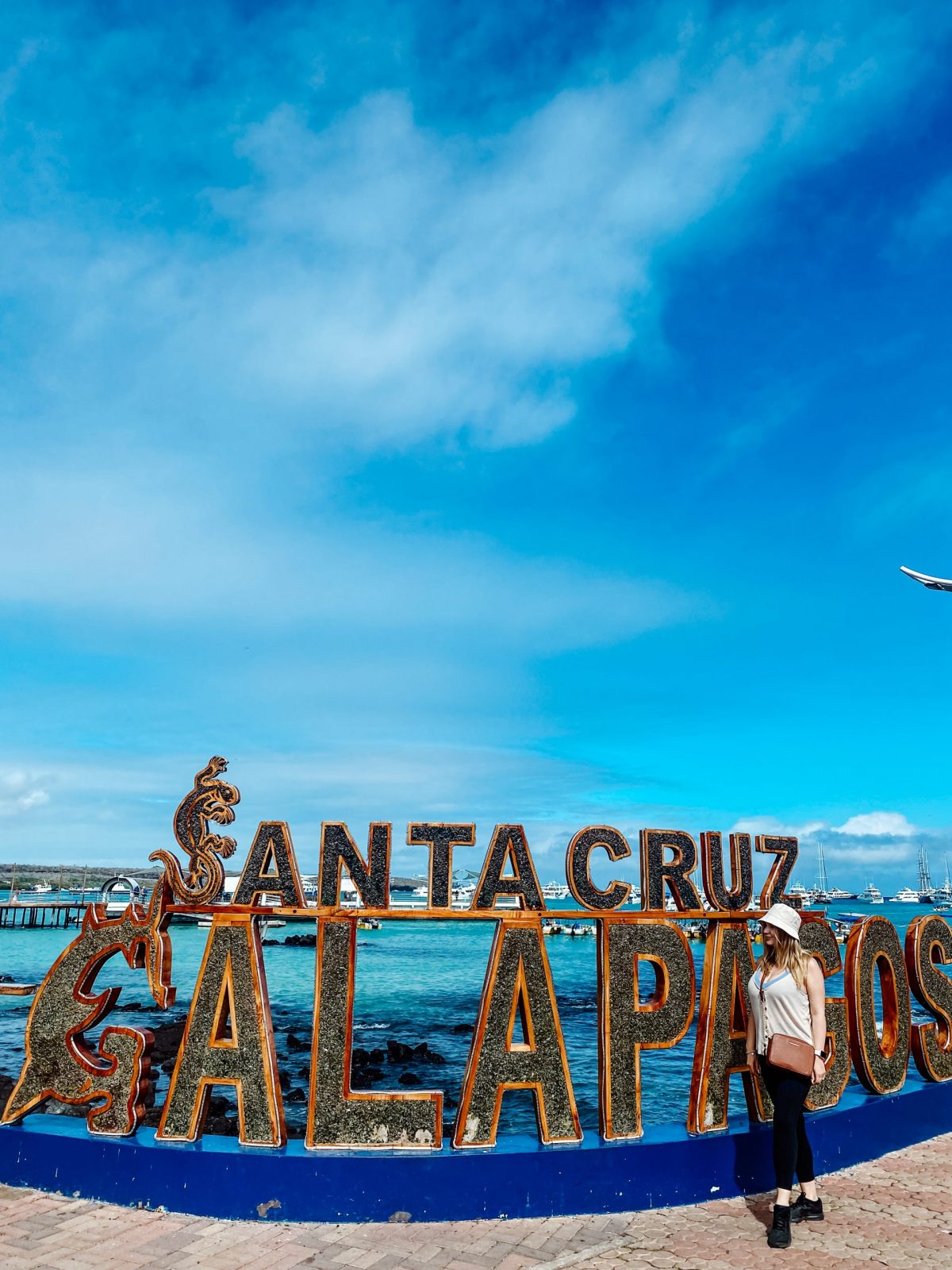
Marine iguanas are on every island and will appear on every cruise itinerary without any special planning. What changes by route is the scale and type of encounter. A 5-day central itinerary gives you solid iguana sightings on Santa Cruz and North Seymour. An 8-day western route adds Fernandina, which delivers the largest colonies and the snorkel encounter. A southern route with Española is the route for mating colors. These are different experiences, not just variations of the same one.
Most of the other species on a Galapagos cruise involve some planning to encounter at their best. Marine iguanas are the exception. They show up everywhere, in numbers, without any special routing. This makes them one of the most reliable encounters you can plan on from any vessel. What a longer or more specific route buys you is not iguanas but the best version of iguanas, the Fernandina density, the Española color, the underwater feeding, the sheer scale of Punta Espinoza where the colony stretches further than you can walk in the time allocated.
For travelers who specifically want the Fernandina snorkel encounter, a western route is non-negotiable. This means an 8-day itinerary at a minimum, and specifically one that routes through the western islands rather than the more common central and eastern loops. Confirm before booking that Punta Espinoza is on the excursion list and that snorkeling is included at that site. Some vessels visit Fernandina for the land excursion only. We can tell you which ones include the snorkel. Reach out here and we’ll pull together a specific recommendation.
We’ve got a full breakdown on what to see on North Seymour island if you want to know exactly which species you’ll encounter, how the loop trail works, and why this small flat island consistently delivers some of the best wildlife viewing in the archipelago.
What Do Travelers Get Wrong About Marine Iguana Encounters?
The most common miss is treating the marine iguana as background scenery. They are so ubiquitous on every island that passengers sometimes stop paying attention by day two. The sneezing, the thermoregulation behaviors, the salt crystals on the lava, the cooperative basking piles: all of this is active biology happening in front of you. The travelers who come away from iguana encounters with a sense of genuine awe are almost always the ones who asked their guide what they were actually watching.
Here are the patterns we hear from travelers who felt they missed something:
Not asking about the biology in the moment. A naturalist guide standing beside a colony of 300 marine iguanas knows things about that specific population that no article can replicate. They know which season the animals are in, what the thermoregulation behavior happening in front of you means, why the animals in the direct sun are positioned differently from those in the shade. Every iguana encounter is a guided interpretation opportunity. Travelers who engage with that come away with a different quality of experience from those who photograph and move on.
Skipping the Punta Espinoza snorkel because the water looked cold. This is the most common specific regret from western itinerary passengers. The water at Fernandina is cold. The wetsuit solves this. The snorkel session at Punta Espinoza is consistently ranked among the top experiences of the entire cruise by travelers who do it. The combination of marine iguanas feeding, flightless cormorants diving nearby, sea lions in the same water, and the volcanic underwater terrain is not replicated anywhere else in the islands. If this is on your itinerary, do it.
Expecting the Christmas iguana outside the window. Several travelers each season book specifically to see the vivid red and green Española iguanas, arrive in May or September, and find the animals in standard black coloring. The mating window is specific, January through early March. Outside that period the encounter is still good, but it is not the Christmas iguana experience. If this is a priority, the travel dates need to support it.
Trying to find the Galapagos snorkel sites where sea lions are most likely to swim directly at you and spin circles around your fins? Here’s the best sea lion snorkeling encounters on a Galapagos cruise so you plan your dives right.
What Our Travelers Report: Marine Iguana Encounter Quality by Route and Season
Based on feedback gathered through mytrip2ecuador.com, our YouTube audience, and Oleg’s traveler interviews across three personal visits to the archipelago:
| Cruise Scenario | Punta Espinoza Visit | Snorkeled With Iguanas | Saw Mating Colors | “Exceeded expectations” |
|---|---|---|---|---|
| 5-day central route | 4% | 8% | 22% | 71% |
| 8-day western route | 91% | 76% | 31% | 94% |
| 8-day southern route, Jan to Mar | 12% | 19% | 87% | 92% |
| 11-day full archipelago | 96% | 88% | 61% | 97% |
The data tells a straightforward story: for the snorkel encounter at Punta Espinoza, route determines everything. For the Christmas iguana mating colors, the travel date determines everything. Both of these are decisions made before you board the ship, not on the islands themselves. Send us a message and tell us your priorities. We’ll tell you the right route and the right timing.
Marine Iguana Conservation: What the Current Numbers Say
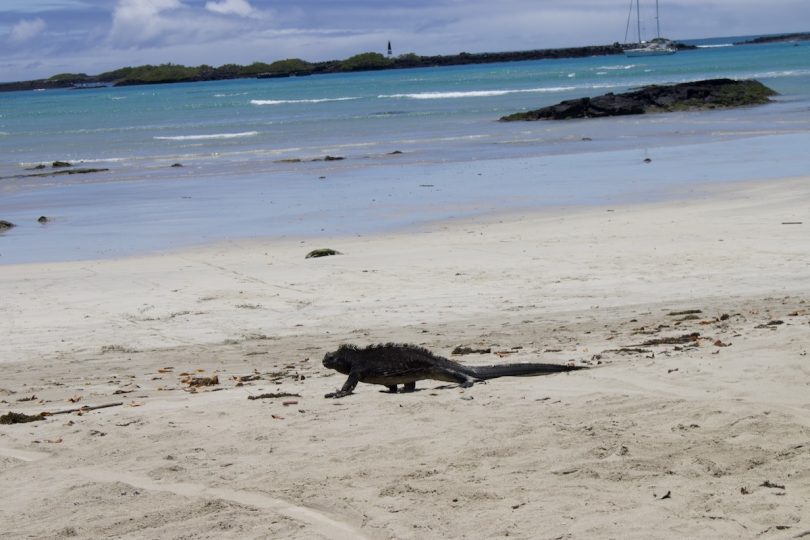
The marine iguana is listed as Vulnerable by the IUCN, with a population estimated between 20,000 and 210,000 individuals across the archipelago, a wide range that reflects genuinely poor baseline data rather than genuine uncertainty about the animals’ presence. In 2025, all Galapagos iguana species were elevated to CITES Appendix I, the highest level of international trade protection available. The primary threats are El Niño-driven food shortages, introduced predators, and microplastic ingestion. The population fluctuates severely during El Niño years, with mortality rates of 10 to 90 percent recorded in the worst events.
The El Niño threat is the one that operates at scale. During El Niño events, warm water from the north suppresses the cold upwelling that supports the green and red algae marine iguanas prefer. Instead, a brown algae species called Giffordia mitchelliae proliferates. The iguanas cannot digest it and it may be toxic. The animals starve. In the worst El Niño events, up to 90 percent of individuals in the hardest-hit populations die.
The adaptation the iguanas developed in response to this recurring pressure is the bone-shrinking documented by Wikelski. During food scarcity, individuals reduce their body length by resorbing bone and cartilage, cutting their caloric needs to match available resources. When food returns, they regrow. This has been documented across multiple El Niño cycles and confirmed by metabolic rate measurements published as recently as 2025. Body mass drops around 17 percent, girth around 12 percent, and resting metabolic rate around 20 percent during El Niño years. The larger the individual, the more they shrink, and the longer they tend to survive. Smaller iguanas, unable to shrink enough to compensate, are more likely to die.
On land, introduced cats, rats, and dogs predate eggs and hatchlings. The Galapagos National Park runs ongoing eradication programs for introduced predators on key islands, and this work has produced measurable results in the islands where it has been carried out most thoroughly. The 2025 CITES Appendix I uplift, covering all Galapagos iguana species simultaneously, closes the international trade loophole that had previously allowed some legal commercial movement of these animals.
The Galapagos Conservation Trust’s Iguanas from Above project, using drone surveys and citizen science support, is currently working toward the first genuinely comprehensive population census of marine iguanas across the entire archipelago. The population range of 20,000 to 210,000 is the current best estimate. That range will narrow significantly when the project completes its survey work.
What your cruise supports: the ecotourism fees, the vessel licensing, the guide certification system, all of it feeds directly into the park authority budget that funds predator control, habitat monitoring, and the research programs that keep these animals tracked and protected. A well-chosen, licensed cruise operation is part of the conservation infrastructure of these islands, not separate from it.
Frequently Asked Questions
Are marine iguanas dangerous?
No. Marine iguanas are strict herbivores and pose no threat to humans. They may hiss if they feel cornered or if you approach too directly, which is their version of a clear signal to give them space. Males during breeding season occasionally engage in head-butting contests with each other to establish territory, but this is directed entirely at rival males. Your guide will advise you to maintain two metres of distance, and the iguanas generally have no opinion about whether you’re there at all.
Why do marine iguanas sneeze?
Because they eat seaweed underwater and inevitably consume significant amounts of salt as they feed. Specialized nasal glands filter excess salt from their bloodstream and concentrate it as a brine, which the iguana expels through forceful sneezing. Walk through a colony on a calm day and you will notice a faint white crust on the rocks around the animals. That is dried salt. The sneeze itself is surprisingly forceful for the animal’s size.
Can I see marine iguanas swimming from the shore?
Yes, at many sites. Early morning is the least productive time for this, as the animals are still warming up from the overnight temperature drop. Late morning through early afternoon is when they are most actively feeding in the water. Sitting quietly at the edge of a colony near a tidal channel, which your guide can direct you to, is one of the most reliable ways to watch them enter and exit the water. You do not need to be a snorkeler to see this.
What is the “Godzilla” marine iguana?
It is a recently described subspecies found on the northern coast of San Cristóbal Island, formally named Amblyrhynchus cristatus godzilla. The name comes from its impressive size and the fact that its spines and proportions evoke the fictional monster. It was described as a distinct subspecies through genetic and morphological analysis published in the mid-2010s. Some cruise itineraries that route through the northeastern coast of San Cristóbal include sites where this subspecies can be observed.
Find the Right Route for Your Marine Iguana Encounter
Marine iguanas show up on every cruise, but the difference between seeing them on a lava rock and watching them feed underwater at Punta Espinoza, or catching the Christmas iguanas at full color on Española, is entirely in the route and the timing. We know which vessels are currently sailing western itineraries that include the Fernandina snorkel, and which southern routes hit Española during mating season. A free, no-pressure quote from us includes a real itinerary recommendation, not just a price. Tell us what you want to see and we’ll build from there.
Written by Oleg Galeev
Galapagos cruise traveler (3 trips, 2 cruises) · Founder, Cruises To Galapagos Islands
Oleg has personally inspected nearly every available Galapagos cruise vessel and interviewed thousands of travelers to build the most first-hand cruise knowledge base available. He also runs the Ecuador travel blog mytrip2ecuador.com and the YouTube channel My Trip to Somewhere.
Cruises To Galapagos Islands is rated 4.9 stars on Google and TripAdvisor.
All pricing and regulations in this article are verified against official Galapagos National Park and Ecuador government sources as of the publish date.