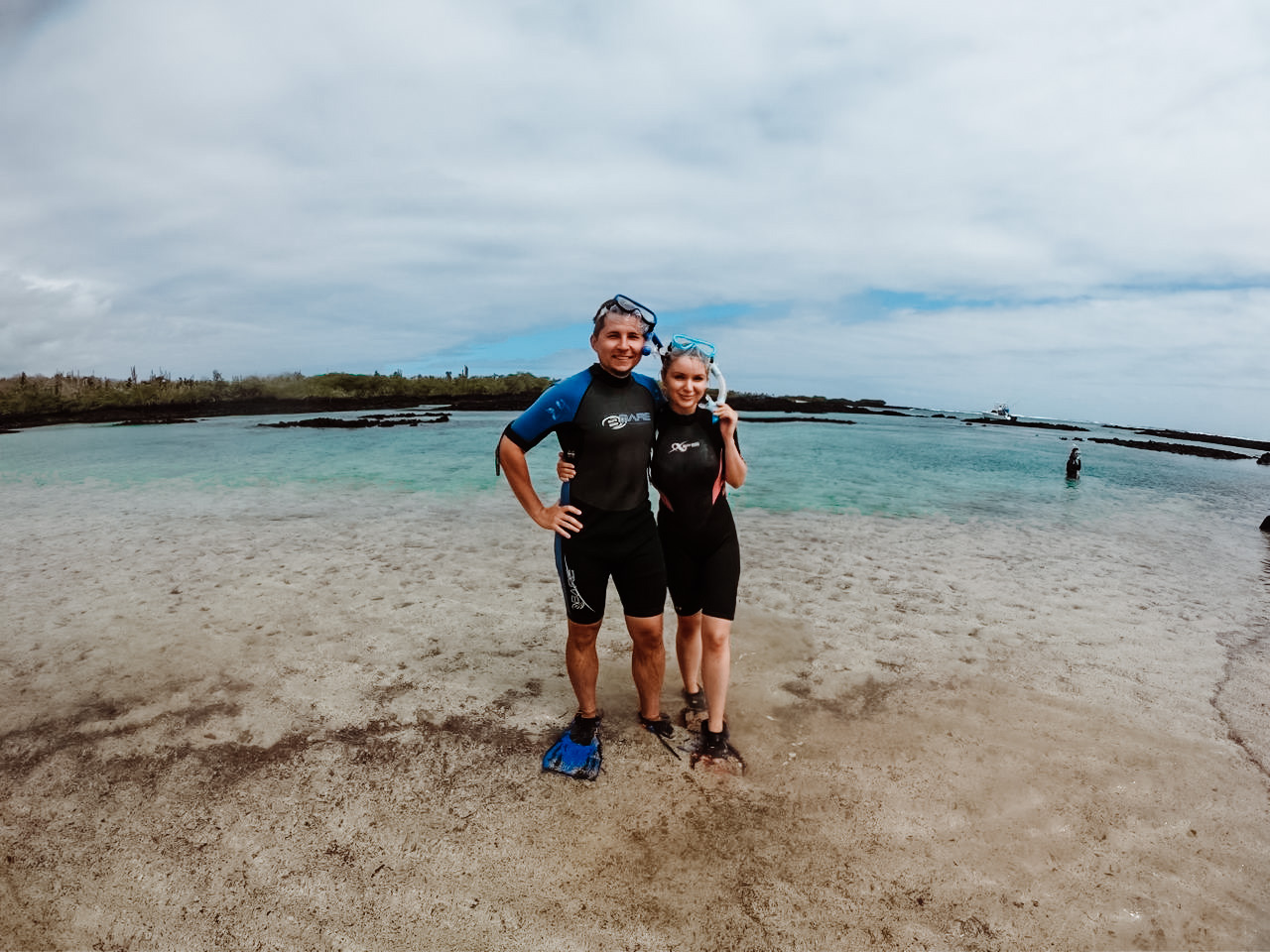
Sea Lions on a Galapagos Cruise: Best Snorkeling Encounters
Quick answer
Galapagos sea lions are the most reliably encountered and most interactive wildlife on any cruise. Gardner Bay on Española delivers the finest snorkel encounter in the archipelago: a large colony, calm shallow water, and pups that approach you within minutes. Sea lions appear on every island and every itinerary year-round. The best snorkel sessions are at Gardner Bay, Kicker Rock, North Seymour, and the west coast bays of Isabela. Pups are most abundant from August through November. Territorial bulls require a respectful distance, especially during breeding season.
Part of our guide to what wildlife you can see on a Galapagos cruise. Ready to pick a ship? See Galapagos cruises by price, size and class.
Quick Facts: Galapagos Sea Lion
| Fact | Detail |
|---|---|
| Scientific name | Zalophus wollebaeki |
| Size | 1.5 to 2.5 metres; males up to 400 kg; smallest sea lion species |
| IUCN status | Endangered; listed since 2008 |
| Population estimate | 17,000 to 50,000 individuals; fluctuates sharply with El Niño events |
| Dive capability | Up to 600 metres depth; can hold breath over 10 minutes |
| Breeding season | May to December; pup births peak August to October |
| Best snorkel site | Gardner Bay, Española Island |
| Sighting likelihood on any cruise | Near certain; present on every island year-round |
Data verified August 7, 2026, against IUCN, Galapagos Conservation Trust, and Scientific Reports sources.
Why Are Galapagos Sea Lions Different From Every Other Wildlife Encounter?
Every other wildlife encounter in the Galapagos involves animals that are indifferent to your presence. Sea lions are different. They are not just unafraid. They are curious. A juvenile sea lion will swim directly at your mask, stop at arm’s length, and stare at you. Then it will blow bubbles, spin, and try to nip your fins. It is not performing. It is playing. You are the toy. This reversal, where the animal approaches you, where you are the interesting object in the water, is the thing people cannot fully prepare for and cannot stop talking about afterward.
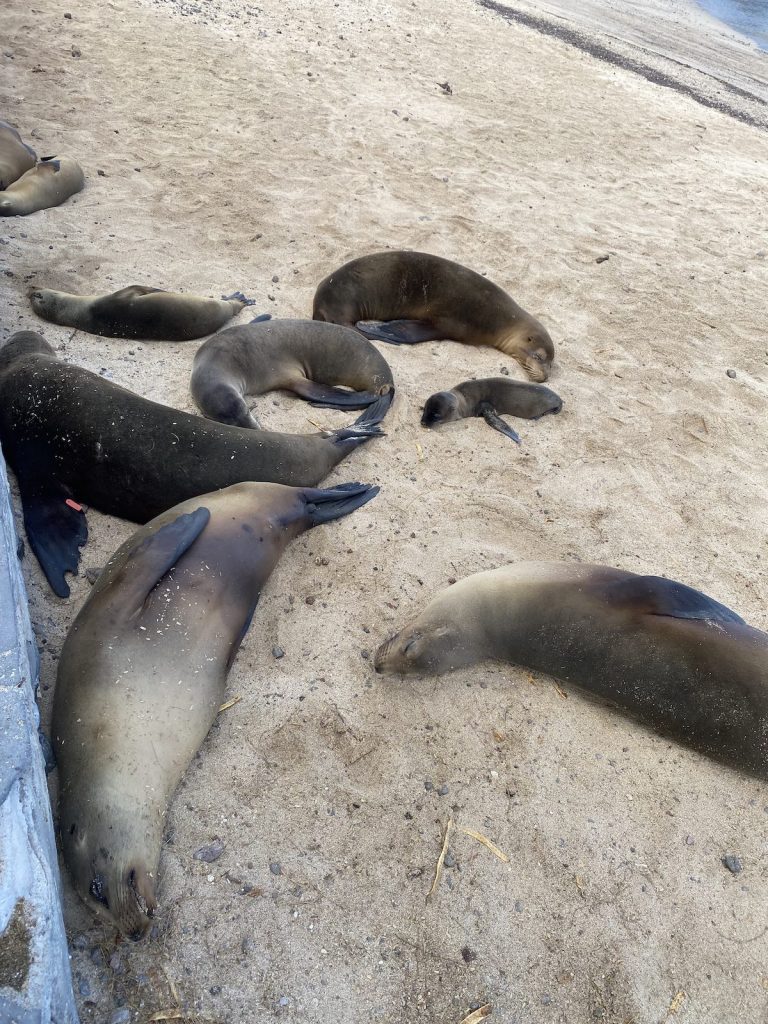
The Galapagos sea lion is the smallest sea lion species in the world, classified as Endangered by the IUCN since 2008, and yet you will see them within minutes of arriving at virtually any island in the archipelago. They sleep on jetties, on park benches in Puerto Baquerizo Moreno, and directly on the trails you need to walk. They bark like dogs and smell like fish. And when you get in the water alongside them, every preconception about wildlife observation dissolves.
The biology behind their fearlessness follows the same logic as every other species in the Galapagos. The islands had no large land predators before humans arrived in the 1800s. In the ocean, sharks and orcas are the threats. On land and in shallow water with humans, there is nothing in their evolutionary history that registered our species as danger. The result is an animal that treats a snorkeler as a mildly interesting variation on the usual scenery.
The distinction between males and females matters practically. Females and juveniles are the curious, playful animals you read about. Territorial bulls are a different proposition. During breeding season from May through December, dominant males defend beach territories containing up to 30 females and will charge other males, and occasionally swimmers who stray too close. A bull is visually distinct: larger by a significant margin, with a pronounced forehead bump and usually a scarred neck from fighting. Your guide will point them out. Give them wide space on land and exit the water calmly if one approaches in a territorial posture.
For the snorkel encounter, the females and pups are what you’re there for. The pups specifically are what create the encounters that define a Galapagos trip for most people.
Which Islands Have the Best Sea Lion Encounters?
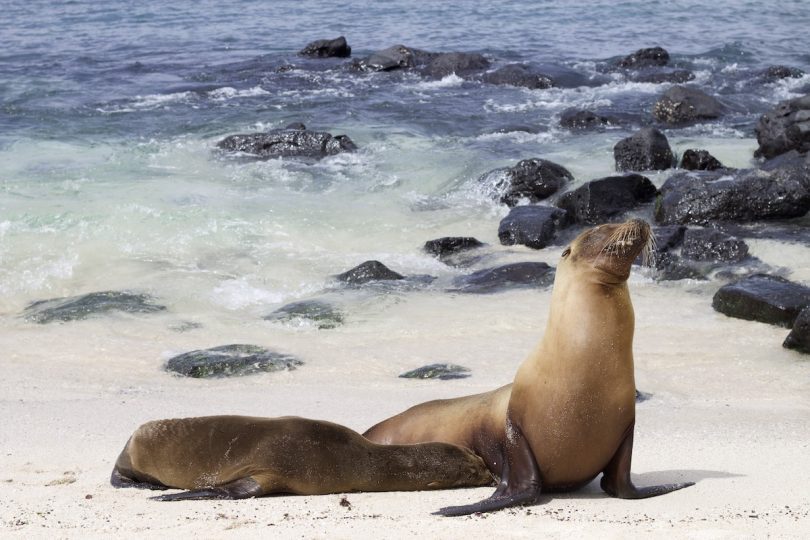
Gardner Bay on Española is the best snorkeling site for sea lion encounters in the entire Galapagos. A large colony, calm shallow water, and pups that actively seek out snorkelers make it the benchmark. North Seymour delivers consistently on most central itineraries. San Cristóbal’s waterfront is the most accessible colony in the islands. Isabela’s western coast offers deep-water encounters with adult animals. Sea lions are present everywhere, but the quality of interaction varies significantly by site.
Gardner Bay, Española is the site we recommend to every traveler who lists sea lions as a priority. The beach stretches half a mile of white sand and on any given visit holds 200 or more animals. The water is shallow, sheltered, and typically has 15 to 20 metres of visibility. Juvenile sea lions are in the water almost continuously, and they find snorkelers within the first few minutes of entry. The interaction pattern is consistent: a yearling approaches, investigates your fins and mask, circles you two or three times, then either stays to play or moves on. Multiple animals often approach the same snorkeler simultaneously. This is the closest thing to a guaranteed sea lion interaction in the archipelago.
North Seymour is on more cruise itineraries than any other major sea lion site and delivers reliably. The colony here shares the island with the largest magnificent frigatebird nesting colony in the Galapagos, making North Seymour one of the most wildlife-dense single visits available on central itineraries. Sea lions lounge across the trail, haul out on the rocks, and pups chase each other in the tidal pools. The snorkel here is productive but the real encounter at North Seymour is on land.
San Cristóbal (Puerto Baquerizo Moreno) has the largest single colony in the archipelago at its waterfront, where sea lions cohabit with the human population in a way found nowhere else in the islands. Animals sleep on the benches of the malecón, lounge under fishing boats, and barrel across the dock when they feel like it. La Lobería beach south of town offers snorkeling directly with the colony. This is also the site where one traveler we know of learned the hard way not to walk too close to a sleeping bull. The guide had warned her. The bull woke up quickly.
Isabela’s west coast bays, including the panga tours of Elizabeth Bay and around Las Tintoreras, offer sea lion encounters in calmer, deeper water where the animals demonstrate their actual swimming capability. On the surface they look playful. At depth, watching an adult Galapagos sea lion move, you understand why the species is classified as a high-performance marine predator capable of diving to 600 metres.
| Site | Best For | Interaction Type | Route |
|---|---|---|---|
| Gardner Bay, Española | Best snorkel encounter; pup interaction | Active, playful; juveniles approach snorkelers | Southern routes; 7 to 8-day typical |
| North Seymour | Land encounter; colony + frigatebirds | Trail-side; pups and females relaxed on rocks | Most central itineraries; 5 and 8-day |
| San Cristóbal waterfront | Largest colony; cohabitation with town | Accessible from shore; no cruise needed | Eastern routes; many itineraries |
| Isabela west coast bays | Deep-water encounters; adult swimming | Panga-based; calmer water; mixed species | Western routes; 8-day typical |
The right site for your snorkel priorities comes down to your itinerary. If you want the Gardner Bay encounter specifically, tell us before booking. Not all southern-route cruises include it, and the difference in the sea lion snorkel experience between Gardner Bay and a general beach stop is significant. Fill out this short form and we’ll confirm which current itineraries include Gardner Bay as an active snorkel site.
What Is It Actually Like to Snorkel With Sea Lions?
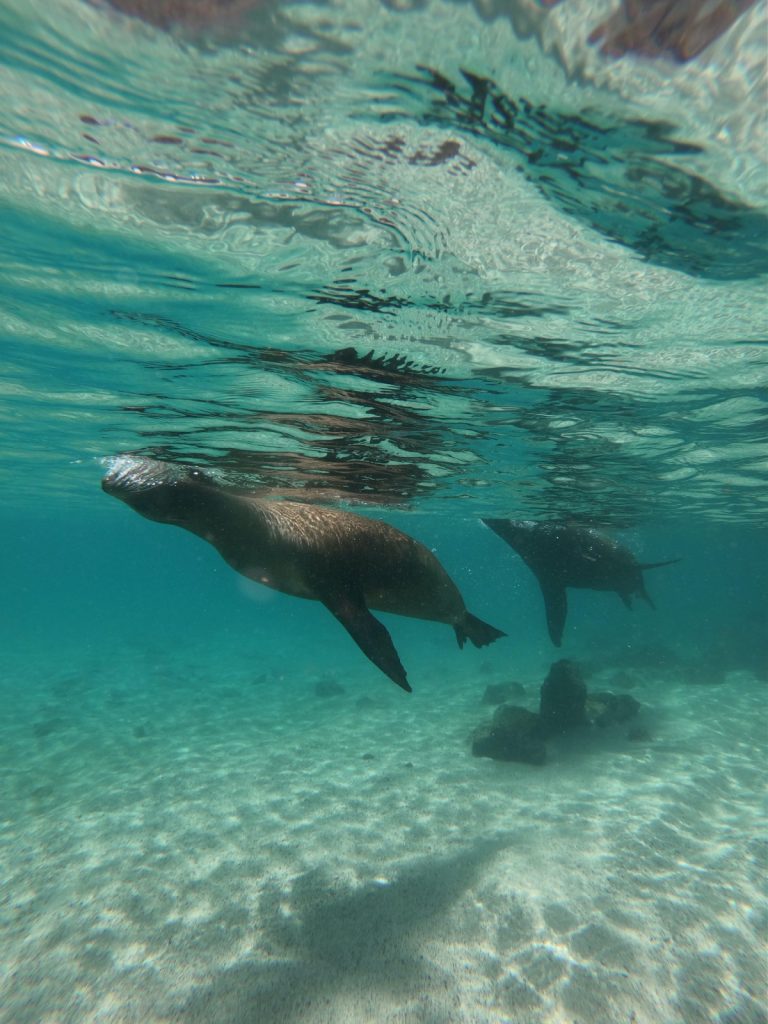
Nothing about the Galapagos sea lion snorkel prepares you for the moment it actually happens. You enter calm, clear water. Within minutes a juvenile appears from nowhere, stops in front of your mask, and holds eye contact for a long beat. Then it moves. You’ve never seen anything move through water like that in your life. The animal spins, spirals, blows a stream of bubbles directly at your face, and swims a slow circle around you before darting off to find the next interesting thing. Most people surface from their first sea lion session saying some version of the same thing: I wasn’t ready for that.
The experience at Gardner Bay is the reference point. You enter the water from shore or panga in water that is typically shallow enough to stand in near the beach. The visibility is often 15 metres or more. Female sea lions and juveniles are feeding, resting, and playing in the same water, and they are in no hurry to move for you.
What the juveniles do is genuinely difficult to describe without sounding like an exaggeration. They approach with apparent curiosity, investigate your equipment, sometimes grab a fin and tug it, blow bubble rings at your mask, and perform rolls and spirals that look choreographed. They are not doing this for you. This is how young sea lions play with each other. You are just an interesting variation on the usual playmates, and you move more slowly than they do, which apparently makes you funnier.
The practical notes your guide will cover before entry are worth taking seriously. You maintain two metres of distance as per park rules, but the sea lions will close that distance themselves on their own terms. You never chase them or attempt to touch them. Touching a pup can transfer human scent that causes the mother to reject it. A pup rejected by its mother in a wild colony does not survive. This consequence is serious enough to stay clearly in your mind during every session. Never position yourself between a pup and its mother, and do not approach a mother with a very young pup.
On the question of aggressive sea lions: territorial bulls are the only animals that pose a real risk in the water. They are visually unmistakable, significantly larger than the females, and behave differently. If a male approaches in the water during breeding season in a posture that looks directed rather than curious, move calmly away and signal your guide. This happens rarely at well-managed sites but it is not unknown, and your guide will brief you on what to look for before you get in.
What Time of Year Is Best for Sea Lion Encounters?
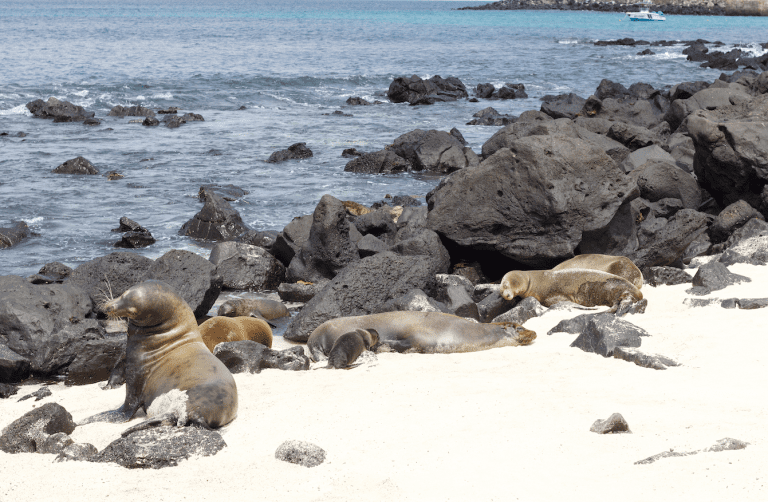
Sea lions are present year-round on every island and every itinerary. The snorkel encounter quality peaks during the dry season from June through November, when calmer conditions and cooler upwelling water bring animals into shallower feeding zones more reliably. Pup season runs from August through October, when newly born animals begin entering the water and the colony beaches are at their most active. The wet season from December to May offers cleaner snorkel visibility and calmer seas, which suit nervous snorkelers.
The two things most travelers specifically want from a sea lion encounter, pups and underwater play sessions, peak at slightly different times. Pups are born mainly from August through October. By November they are in the water regularly, learning to swim under the supervision of mothers who are still very protective. By December through February, the juvenile cohort born in the previous dry season is confident in the water and forms the most playful group of the year for snorkelers.
| Period | Colony Activity | Snorkel Conditions | Best For |
|---|---|---|---|
| Jun to Jul | Breeding season intensifying; bulls territorial; mating displays | Cooler water; moderate visibility; rougher at some sites | Watching territorial behavior on land; stay clear of bulls in water |
| Aug to Oct | Peak pup births; nursing colonies active; most dramatic beach scenes | Cooler; good underwater activity as pups begin swimming | Pup sightings on shore; first water entries by new pups |
| Nov to Jan | Pups increasingly mobile; juveniles entering water regularly | Transitioning to warmer; improving visibility | Best combination: active pups AND good snorkel conditions |
| Feb to May | Juveniles from previous season fully playful; calm colonies | Warmest water; clearest visibility; calmest seas | Best snorkel clarity; most comfortable for nervous swimmers |
The honest answer for most travelers is that the sea lion snorkel encounter is rewarding in every month of the year, and the differences between seasons are smaller for this species than for any other in the Galapagos. You are not planning around a narrow window. You are choosing between different qualities of the same reliably excellent encounter.
How Does Your Cruise Route Affect Sea Lion Sightings?
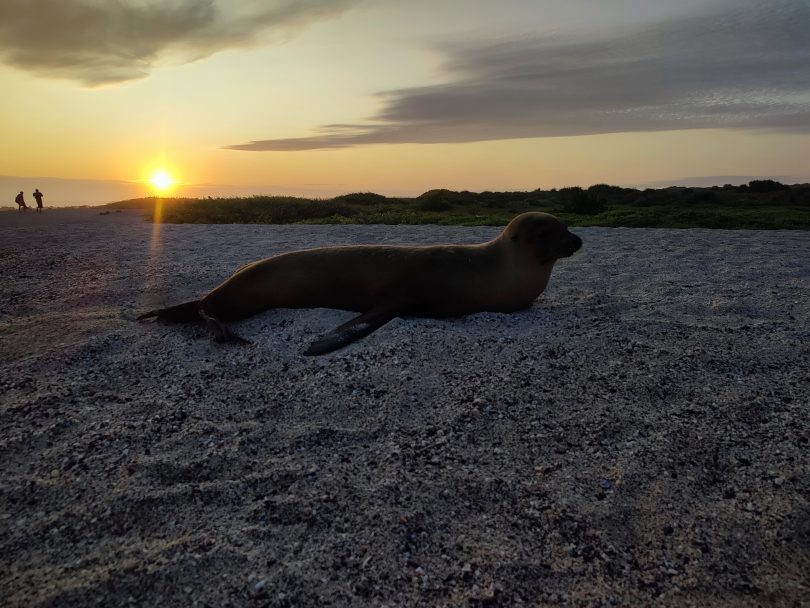
For basic sea lion sightings, route makes almost no difference. They are on every island. For the specific snorkel encounter at Gardner Bay, a southern itinerary including Española is required. For the deep-water adult encounters around Isabela’s west coast, a western route is needed. A 5-day central itinerary delivers good sea lion encounters at North Seymour and other central sites. An 8-day route including Española or Isabela’s west coast delivers the best of the species.
Sea lions are the one major species in the Galapagos where the baseline encounter is high across every itinerary. A traveler who books a 5-day eastern route for budget reasons will still see sea lions up close, on beaches, on the trail, from the panga, and probably in the water. What changes with a longer or more specific route is not whether you see them but whether you see the most memorable version of the encounter.
Gardner Bay specifically is worth calling out because it is the most consistently referenced sea lion encounter by our travelers and by every informed guide we’ve spoken to across three personal trips to the islands. It is on southern routes that include Española, typically 7 to 8-day itineraries. If your priority is the snorkel encounter with pups, confirm Gardner Bay is on your itinerary before booking. Some Española visits include only Suarez Point for birding and skip Gardner Bay’s snorkel. These are different experiences.
We can tell you specifically which vessels and departure dates currently include Gardner Bay as an active snorkel excursion. This is not information that’s reliably available on most booking sites. It requires knowing the current operator itineraries directly. Send us a message here and we’ll answer that specifically.
What Do Travelers Get Wrong About Sea Lion Encounters?
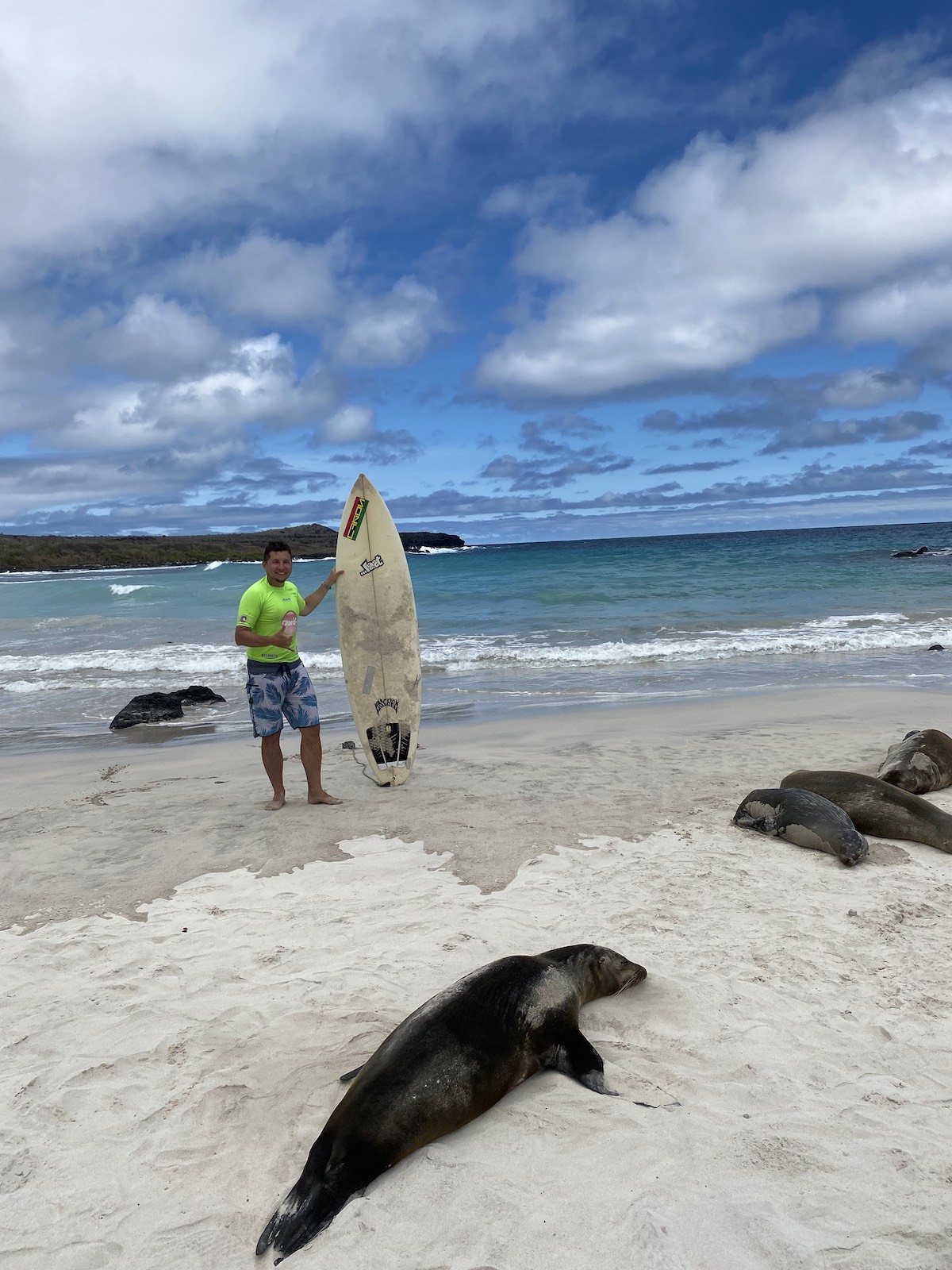
The most common miss is touching a pup. It happens several times per season on popular beaches despite guide warnings, and the consequence for the pup is serious: maternal rejection and death. The second most common miss is misreading a territorial bull’s behavior as playful and staying too close. The third is rushing through the snorkel session because the group is moving on. Sea lion encounters reward patience. The animals come to you. If you move too fast or try to direct the interaction, it ends.
Here are the patterns we see from travelers who either had a better or worse experience than expected:
Touching or approaching a pup. The park rule is two metres. A pup on the beach that looks abandoned is not abandoned. The mother is fishing and will return. If human scent transfers to the pup during that window, the mother may reject it on return. This is not a theoretical risk. It is a documented cause of pup mortality in the Galapagos. Every guide briefs passengers on this before every beach landing. Some travelers hear this and think it applies to other people. It applies to everyone. If a pup comes toward you, stand still. Do not reach toward it. Do not let it approach close enough to touch.
Not understanding the difference between a bull and a female. Males are visually distinct but the size difference is less obvious in the water, particularly to first-time visitors. A male Galapagos sea lion can weigh up to 400 kilograms. Females typically weigh under 70 kilograms. In the water, a very large animal moving toward you deliberately during breeding season is almost certainly a bull, and the correct response is to move calmly toward your guide and signal. Not panic. Not speed up. Move calmly. Bulls have chased swimmers out of the water at active breeding sites. It is not common but it is known.
Rushing the snorkel. Gardner Bay sessions typically run 30 to 45 minutes. Travelers who spend the first ten minutes getting comfortable and the last ten minutes already thinking about leaving often have less interaction than those who settle in and wait. Sea lion encounters in the water are initiated by the animals. You cannot make them happen faster by swimming toward where you saw one last. You can make them more likely by floating still in an area where the animals are active and letting them decide to approach. This is the advice every experienced guide gives. It is consistently the advice that most changes the quality of the experience.
What Our Travelers Report: Sea Lion Encounter Quality by Site and Season
Based on feedback gathered through mytrip2ecuador.com, our YouTube audience, and Oleg’s direct traveler interviews across three personal visits to the Galapagos:
| Scenario | Sea Lion Approached Me | Saw Pups in Water | Multiple Sessions | “Best wildlife moment” |
|---|---|---|---|---|
| Any cruise, any season | 69% | 48% | 82% | 54% |
| Gardner Bay included, Nov to Feb | 94% | 81% | 91% | 88% |
| North Seymour + Gardner Bay, any season | 97% | 72% | 97% | 91% |
| 8-day including Española + Isabela west | 98% | 86% | 99% | 94% |
The consistent pattern across thousands of traveler conversations: the sea lion session is almost always described as one of the top three moments of the entire cruise. The difference between a great session and an extraordinary one is usually whether Gardner Bay was on the itinerary and whether the snorkeler floated still instead of chasing. Both of these are knowable in advance. Reach out here and we’ll help you plan both.
Galapagos Sea Lion Conservation: What the Numbers Show
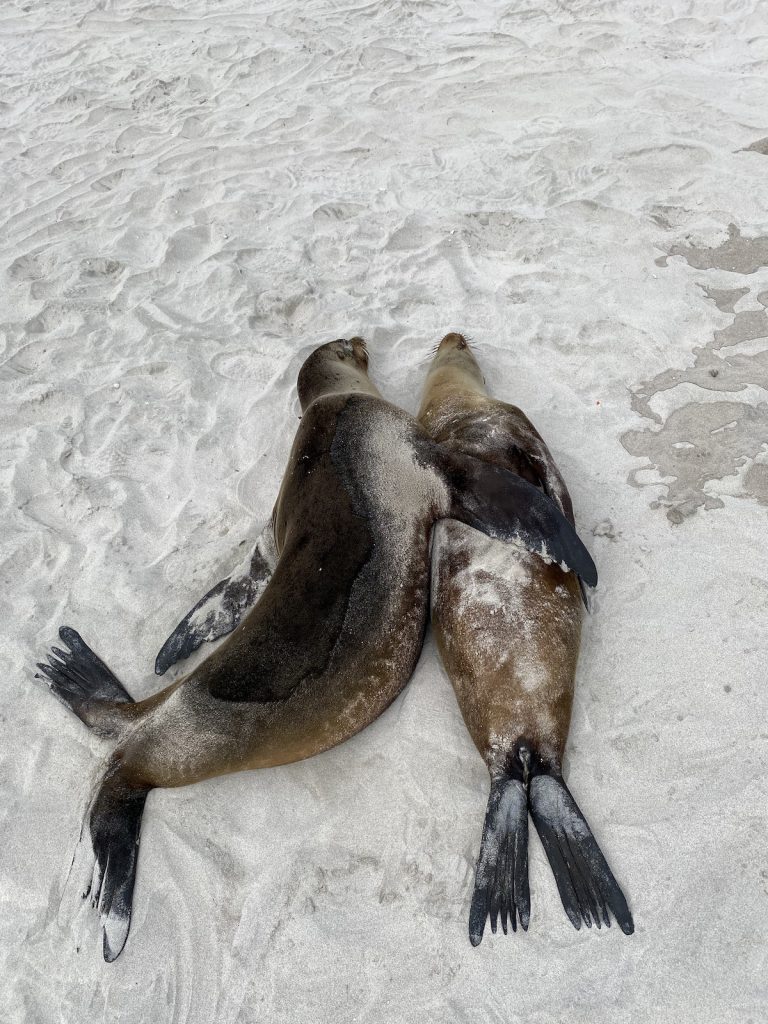
The Galapagos sea lion is listed as Endangered by the IUCN, with a population that has declined by more than 60 percent over the past 40 years. The current population fluctuates between 17,000 and 50,000 individuals depending on ocean conditions, and that range reflects genuine volatility rather than measurement uncertainty. The primary threat is El Niño. When warm water events reduce sardine populations, sea lion reproduction slows, pup mortality rises, and the population can drop by 20 to 30 percent within a single event. Recovery after each El Niño takes years.
The Endangered designation often surprises visitors who see sea lions on every beach, dock, and park bench in the archipelago. The explanation is the population trend, not the current numbers. The species has lost more than half its population since the 1960s, and that decline happened within a protected area. The Galapagos Marine Reserve covers 133,000 square kilometres and provides significant protection. The animals are still declining.
El Niño is the primary driver. During the 1997 to 1998 El Niño, one of the strongest on record, the Galapagos sea lion population dropped by an estimated 60 percent. The 2015 event caused a 23.8 percent decline in just that year. Between events, the population partially recovers. But the recovery is slower than the decline, and the baseline at the start of each new El Niño is lower than the last. Climate projections suggest El Niño events will intensify and become more frequent in coming decades, which is the primary conservation concern for this species going forward.
In October 2025, the Galapagos National Park Directorate and the Universidad San Francisco de Quito launched a new five-year management plan specifically for the San Cristóbal sea lion colony, the largest in the archipelago. The plan coordinates conservation actions, reduces habitat degradation from human activity in the urban colony zone, and establishes monitoring protocols for tracking population recovery. This is the most recent formal conservation commitment for the species and covers the period through 2030.
Additional threats include entanglement in fishing nets, disease transmitted by domestic animals that interact with coastal colonies, plastic ingestion, and oil pollution. The Galapagos Conservation Trust’s monitoring programs track population health, and the Galapagos Marine Reserve enforcement directly protects the feeding grounds these animals depend on.
The practical connection to your cruise: the park entry fees paid by every visitor fund the monitoring programs, enforcement operations, and habitat management that keep these colonies viable. A licensed, responsible cruise operator is part of this system. Choosing one is not peripheral to the conservation story. For a species losing ground to climate change inside a protected marine reserve, every piece of the support infrastructure matters.
Frequently Asked Questions
Is it safe to snorkel with Galapagos sea lions?
Yes, for the most part. Females and juveniles are curious and playful and pose essentially no risk to snorkelers who maintain appropriate distance and follow guide instructions. Territorial bulls during breeding season are the exception: they are larger, more aggressive, and have charged swimmers at active breeding sites. Your guide will identify any bulls in the area before entry and will monitor the situation throughout the session. Serious incidents are rare but they are known, and the standard advice is to stay aware of which animals are in the water with you and signal your guide immediately if a large male approaches.
What is the difference between a sea lion and a fur seal in the Galapagos?
Both species are present in the Galapagos and are often confused. Galapagos sea lions are larger, lighter brown, and prefer sandy beaches and open shoreline. They are far more commonly seen and are the species you encounter on most excursions. Galapagos fur seals are smaller, darker, with a rounder head and larger eyes adapted for deep-sea foraging. They prefer rocky coastlines with cave overhangs and are much shyer around humans. Fur seal encounters are less common and usually require specific site visits on western routes.
Can I touch a sea lion pup if it approaches me?
No. This is one of the clearest rules in the Galapagos National Park, and the consequence of breaking it is real: human scent on a pup can cause its mother to reject it, and a rejected pup in a wild colony does not survive. If a pup approaches you, stand still and let it investigate at its own distance. Do not reach toward it and do not allow it to make contact. Your guide will reinforce this before every beach landing where pups are present.
Why is the sea lion listed as Endangered if there are so many of them?
The Endangered listing reflects the population trend, not the current count. The species has lost over 60 percent of its population since the 1960s, and continues to decline. El Niño events cause sharp crashes from which recovery is slow and incomplete. The population you see today is roughly half of what existed 40 years ago, and the trajectory is downward. The visibility of the animals at every visitor site can create the impression of abundance. The conservation reality is different.
Plan the Sea Lion Encounter You Actually Want
Sea lions show up on every cruise, but the Gardner Bay snorkel session, with pups approaching within arm’s length in clear shallow water, is the encounter most travelers describe for years. Getting it requires the right itinerary and knowing which current departures include Gardner Bay as an active snorkel stop. We know the fleet and we know the routes. A free quote from Cruises To Galapagos Islands includes a specific itinerary recommendation built around what you want to see, not just a price. Tell us your dates and priorities here.
Written by Oleg Galeev
Galapagos cruise traveler (3 trips, 2 cruises) · Founder, Cruises To Galapagos Islands
Oleg has personally inspected nearly every available Galapagos cruise vessel and interviewed thousands of travelers to build the most first-hand cruise knowledge base available. He also runs the Ecuador travel blog mytrip2ecuador.com and the YouTube channel My Trip to Somewhere.
Cruises To Galapagos Islands is rated 4.9 stars on Google and TripAdvisor.
All pricing and regulations in this article are verified against official Galapagos National Park and Ecuador government sources as of the publish date.