Sailing Boat vs Motor Yacht in the Galapagos: Which to Choose
Part of our guide to the types of Galapagos cruises. Ready to pick a ship? See compare all Galapagos cruise ships by price, size and class.
Quick Comparison: Vessel Types in the Galapagos
| Feature | True Sailing Vessel | Motor Sailer | Motor Yacht / Catamaran |
|---|---|---|---|
| Primary propulsion | Wind (sails); engine backup | Engine; sails for aesthetics/occasional use | Engine only |
| Examples in Galapagos | S/S Mary Anne | Cachalote I, Golondrina | Endemic, Galaxy Sirius, Integrity, Monserrat, most of the fleet |
| Cruising speed | 8-10 knots under motor; variable under sail | 8-10 knots | 10-14 knots |
| Schedule predictability | Moderate; wind dependent | Good | Excellent |
| Aesthetic experience | Genuinely romantic; historic | Traditional charm | Modern; functional |
| Engine noise below deck | None when under sail | Present when motoring | Present; varies by vessel quality |
| Cabin style | Traditional; often bunks; wood-trimmed | Traditional; private bathrooms | Modern; ranges from basic to luxury |
| Wildlife access | Identical | Identical | Identical |
| Price range | First class; ~$600-$800/day | Tourist class to first class | $300-$1,200+/day |
| Best for | Sailing enthusiasts, romantics, solo travelers | Travelers wanting traditional feel with reliability | Most travelers; maximum itinerary and class range |
Fleet details verified July 2026.
What Types of Sailing Vessels Actually Operate in the Galapagos?
The Galapagos fleet divides into three vessel types by propulsion: true sailing vessels that can navigate by wind power, motor sailers that carry sails for occasional use but run primarily on engines, and motor yachts and catamarans that are engine-powered only. True sailing vessels are extremely rare. The S/S Mary Anne is the only vessel currently operating in the Galapagos that can navigate under sail power alone. The vast majority of what operators market as “sailing experiences” in the Galapagos are motor sailers or motor yachts with masts for aesthetics.
This is the most important clarification to make before booking anything described as a “sailing cruise” in the Galapagos. When operators use the word sailing, they almost always mean a vessel with masts and the romantic visual of sails, not a vessel that actually crosses between islands by wind. The Galapagos National Park requires vessels to follow pre-approved itineraries with specific timing at each site. Wind-dependent propulsion doesn’t fit cleanly into a scheduled itinerary system. Which is exactly why nearly every vessel in the fleet runs on diesel engines regardless of how many masts it has.
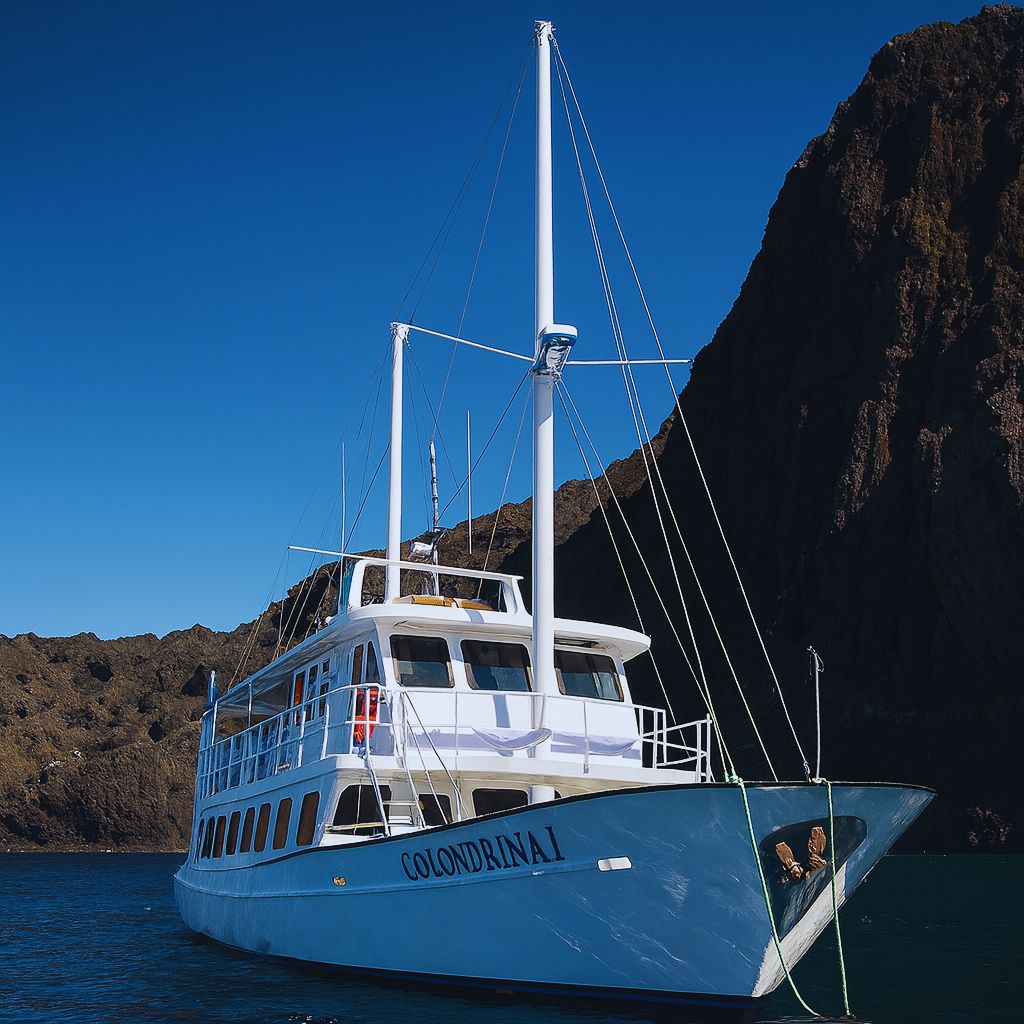
The motor sailer category sits in the middle. Vessels like the Cachalote I and Golondrina carry traditional rigging and can hoist sails in the right conditions, but their diesel engines do the work for most inter-island transits. The experience is more traditional in feel and atmosphere than a modern motor catamaran, but don’t board expecting to cross from Santa Cruz to Española under canvas.
The S/S Mary Anne is genuinely different. A 216-foot, three-masted barquentine launched in 1997, she is the only ship in the Galapagos that can navigate by wind power alone. Her 1,000 square meters of canvas sails are functional, not decorative. Crew invite passengers to help hoist them. The experience of sailing between islands in silence, without engine vibration, with the sound of water against the hull, is something no motor vessel in the archipelago can replicate. It is a specific and rare thing, and travelers who want it know why they’re booking the Mary Anne specifically.
Not sure whether a catamaran or a traditional yacht gives you the better Galapagos experience? This breakdown on catamaran vs yacht in the Galapagos covers the real differences in stability, cabin space, and what you actually get for the money.
How Sailing vs Motor Changes the On-Water Experience
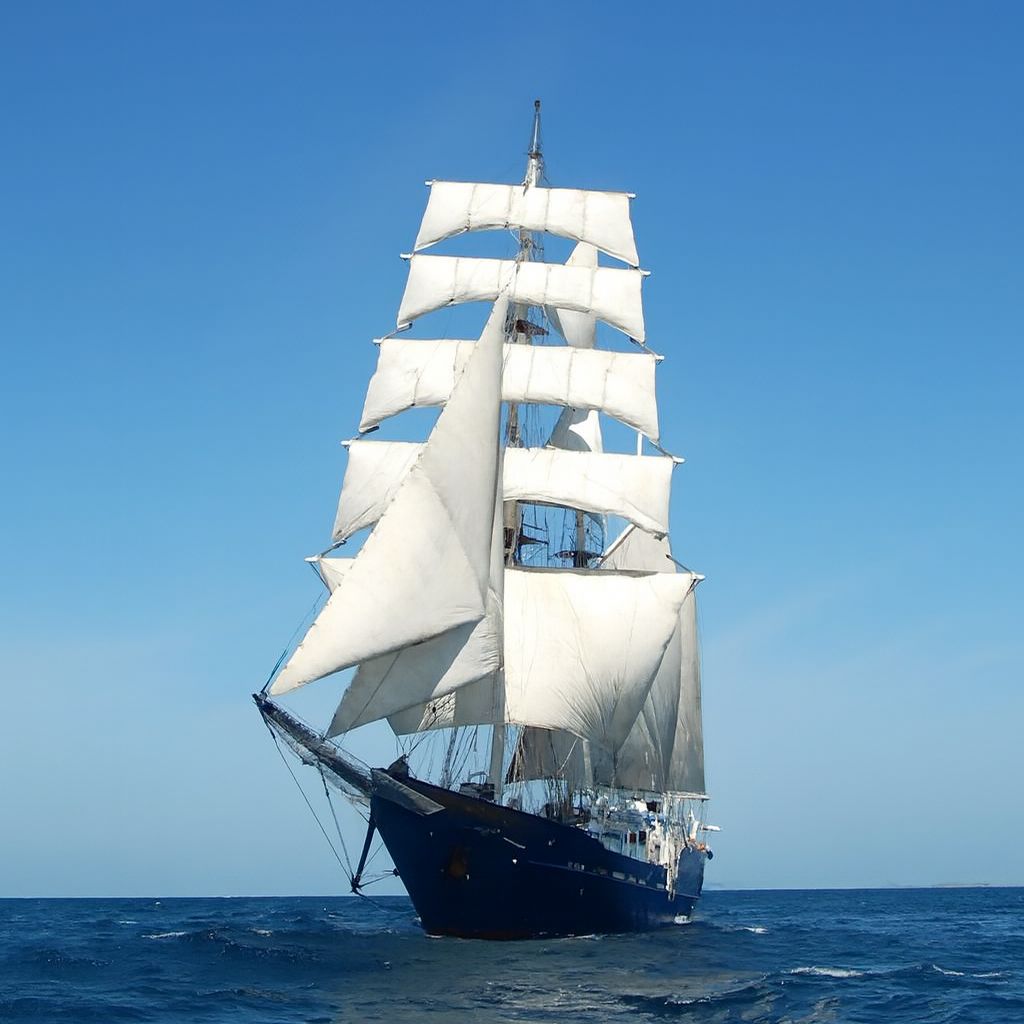
The fundamental difference is sensory. Under sail on the Mary Anne, the engine is off, the noise disappears, and what replaces it is the sound of wind in rigging, water against the hull, and occasionally the breath of a whale surfacing nearby. Motor yachts and catamarans navigate with constant engine noise and vibration below deck. Between excursions, that difference is real. Some travelers find it irrelevant. For sailors and romantics, it’s the entire point.
Motor yachts have one significant counter-advantage: control. An engine-powered vessel goes where it needs to go when it needs to go there, regardless of wind direction. The Galapagos itinerary system requires vessels to arrive at specific sites within specific windows. A motor yacht hits those windows reliably. A sailing vessel is more dependent on conditions, which is partly why the National Park itinerary system and true sail-powered travel are difficult to reconcile at scale. The Mary Anne manages it because she is large enough and her crew experienced enough to work with the islands’ wind patterns rather than against them.
Dolphin encounters illustrate the sensory difference well. When a motor vessel cuts its engine in the presence of dolphins, the silence is temporary and the restart is abrupt. On the Mary Anne under sail, dolphins approach a vessel moving quietly through the water by wind alone. Multiple traveler reviews specifically mention dolphin encounters alongside the Mary Anne that felt entirely different from anything they’d experienced on engine-powered boats. That observation isn’t sentimental. It reflects something real about how marine wildlife responds to noise.
On-Water Experience: Sailing vs Motor in Practice
| Experience Factor | True Sailing (Mary Anne) | Motor Sailer | Motor Yacht / Catamaran |
|---|---|---|---|
| Engine noise between islands | None when under sail | Continuous when motoring | Continuous; varies by insulation |
| Wildlife encounters en route | Quieter approach; dolphins and whales more common | Standard | Standard |
| Passenger involvement | Can help hoist sails; active maritime experience | Mostly passive | Passive |
| Schedule flexibility | Wind-dependent; some variability | Good; engine-reliable | Excellent |
| Atmosphere / aesthetic | Historic, romantic, unique | Traditional charm | Modern; functional |
| Shore excursion experience | Identical to any other vessel | Identical | Identical |
Based on operational experience and traveler feedback. Verified July 2026.
The sailing vs motor decision is more about the experience between islands than on them. If you want help working out which vessel type actually fits your priorities for a specific itinerary and travel window, send us a message here and we’ll give you a straight answer.
Speed, Scheduling, and Itinerary Flexibility Compared
Motor yachts and catamarans cruise at 10 to 14 knots and hit National Park site windows reliably. True sailing vessels under canvas move at 8 to 10 knots and depend on wind conditions, which introduces variability into scheduling. Motor sailers run on engines at similar speeds to motor yachts. In practice, the Mary Anne’s experienced crew has navigated these islands for decades and manages the scheduling requirements effectively. But a motor yacht offers the cleaner scheduling option for travelers with tight connections or strong itinerary preferences.
The National Park assigns specific site windows to specific vessels. This system was designed partly to prevent overcrowding at visitor locations and partly to protect wildlife from simultaneous disturbance by multiple groups. It requires vessels to operate on predictable schedules. Motor yachts fit that requirement naturally. A sailing vessel working around wind patterns introduces a layer of variability that, on the Mary Anne, the crew manages through experience and route planning. On a smaller or less experienced sailing vessel, that variability would be a real problem.
Speed matters for one specific scenario: western itineraries reaching Fernandina and the outer islands require longer overnight transits. A faster motor vessel covers that distance more efficiently, leaving more time at anchor rather than in transit. The Mary Anne, despite her size, manages these transits under a combination of motor and sail depending on conditions. Her 8-day and 15-day itineraries specifically accommodate the western route.
Cabins, Comfort, and On-Board Life on Each Vessel Type
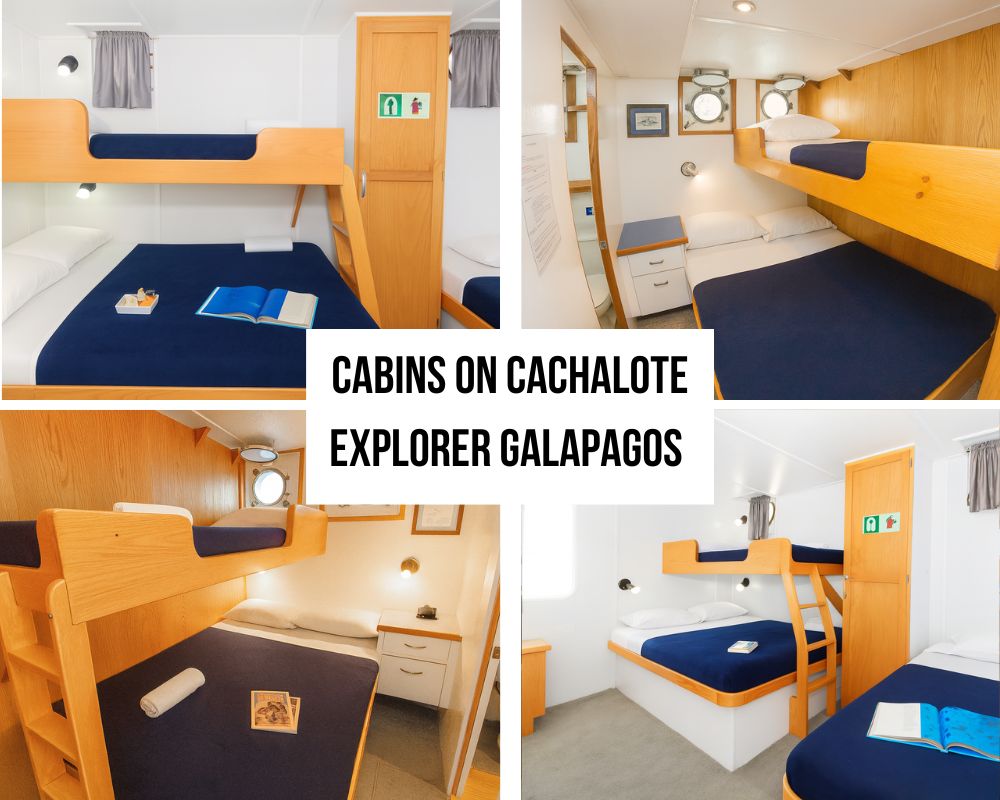
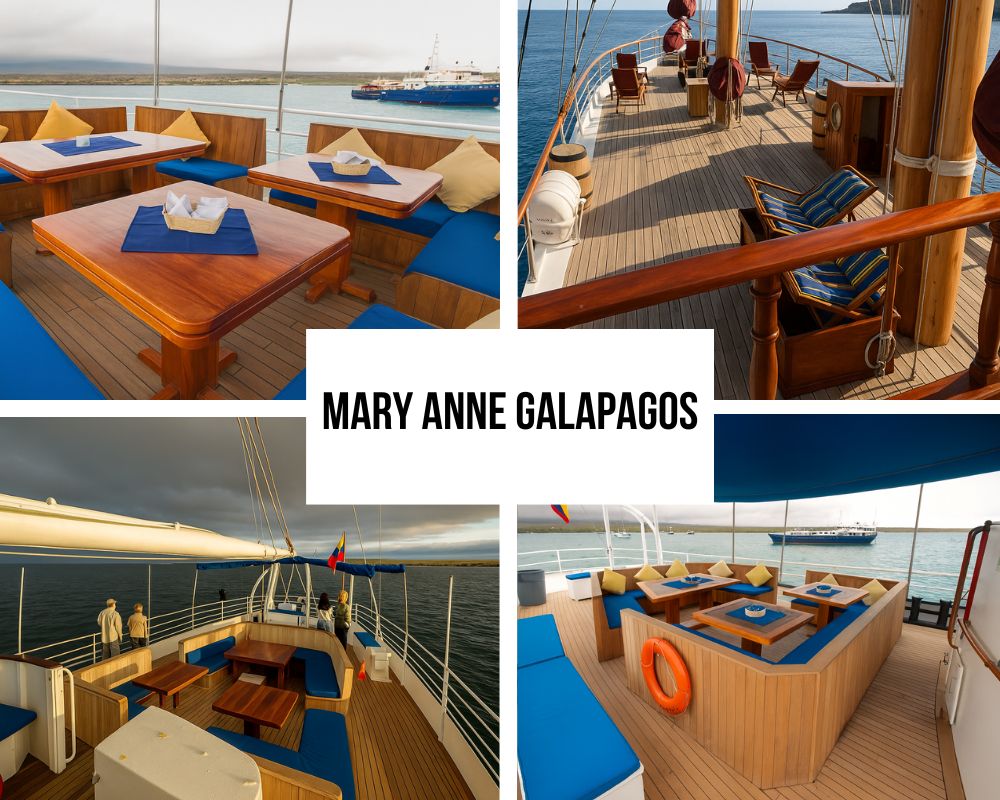
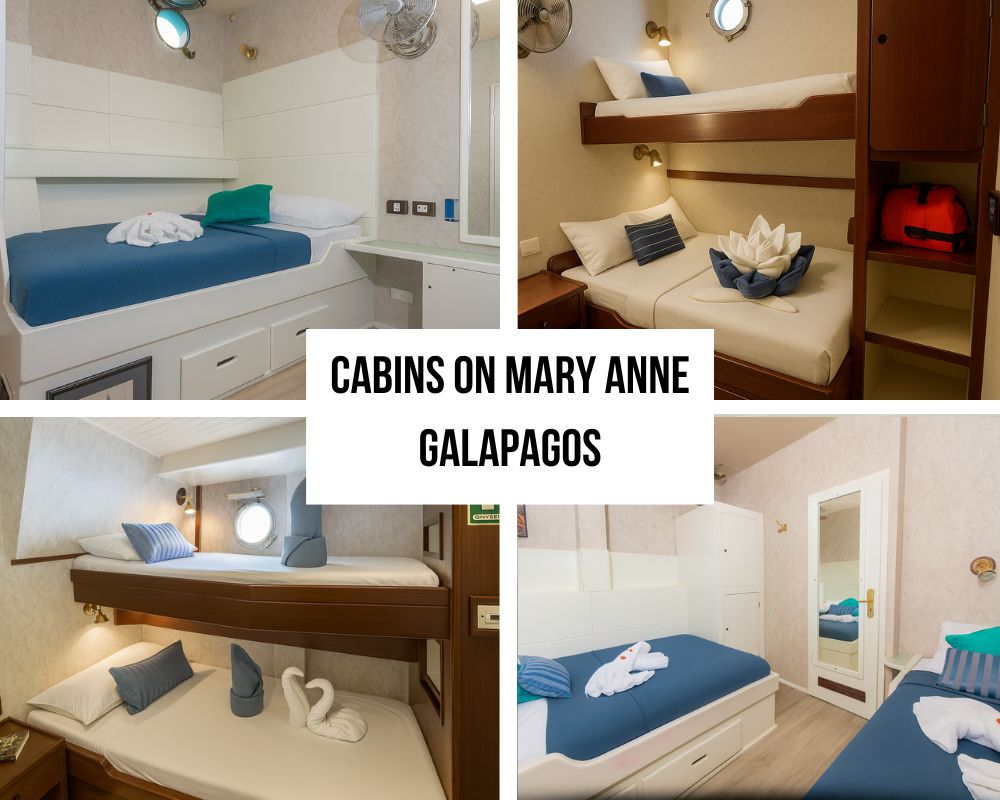
Motor yachts span every class from basic tourist to ultra-luxury, offering modern cabin designs, air conditioning, and amenities that range from simple to exceptional. True sailing vessels and motor sailers lean toward traditional aesthetics: wood-trimmed interiors, bunk-style cabins on some vessels, and a generally more nautical atmosphere. The Mary Anne specifically has 12 cabins for 16 passengers, most with bunk beds and porthole windows, renovated in 2020. The aesthetic is authentic rather than luxurious, which is a selling point for the right traveler and a drawback for someone expecting resort-level comfort.
Life on a sailing vessel like the Mary Anne involves a specific texture that motor yacht travelers don’t experience. The sound of the rigging at night. The lean of the deck when sails catch wind. Being invited on deck to help hoist canvas before an inter-island crossing. These are not incidental details. They are what the sailing experience in the Galapagos specifically is, and travelers who choose the Mary Anne for those reasons consistently rate it among the most memorable trips of their lives.
Motor sailers like the Cachalote I sit somewhere between the two extremes. Traditional rigging and schooner-style hull give them the visual character of a sailing vessel. Modern diesel engines give them scheduling reliability and consistent cabin conditions. First class rating with 8 double cabins, air conditioning, and hot water throughout. The sailing aesthetic is present without the wind-dependency. For travelers who want the look and feel of a sailing voyage without committing to actual sail-dependent transit, a motor sailer is the honest compromise.
Trying to figure out which cabin type gives you the best value without sacrificing sleep quality on a week-long cruise? Here’s Galapagos cruise cabin types broken down so you make the right call before you book.
Cabin and Comfort Profile by Vessel Type
| Feature | S/S Mary Anne (Sailing) | Motor Sailer (e.g. Cachalote I) | Motor Yacht (mid-range) |
|---|---|---|---|
| Passenger capacity | 16 (12 cabins) | 16 (8 cabins) | 16 (8 cabins) |
| Cabin beds | Mostly bunks; 2 double cabins | Upper/lower berths; 1 matrimonial | Twin or double standard |
| Air conditioning | Yes (post-2020 renovation) | Yes | Yes |
| Interior aesthetic | Wood-trimmed; nautical; historic | Traditional; warm | Modern; functional to luxury |
| Social areas | Lounge, bar, sundeck, kayaks | Salon, deck space, multiple wooden decks | Lounge, dining, sundeck; varies by vessel |
| Single supplement | No single supplement on 6 single cabins | 50% single supplement applies | 50-100% supplement typical |
| Class | First class | First class | Tourist class to luxury |
Details verified July 2026. Individual vessels vary.
Price and Availability: What Each Type Costs
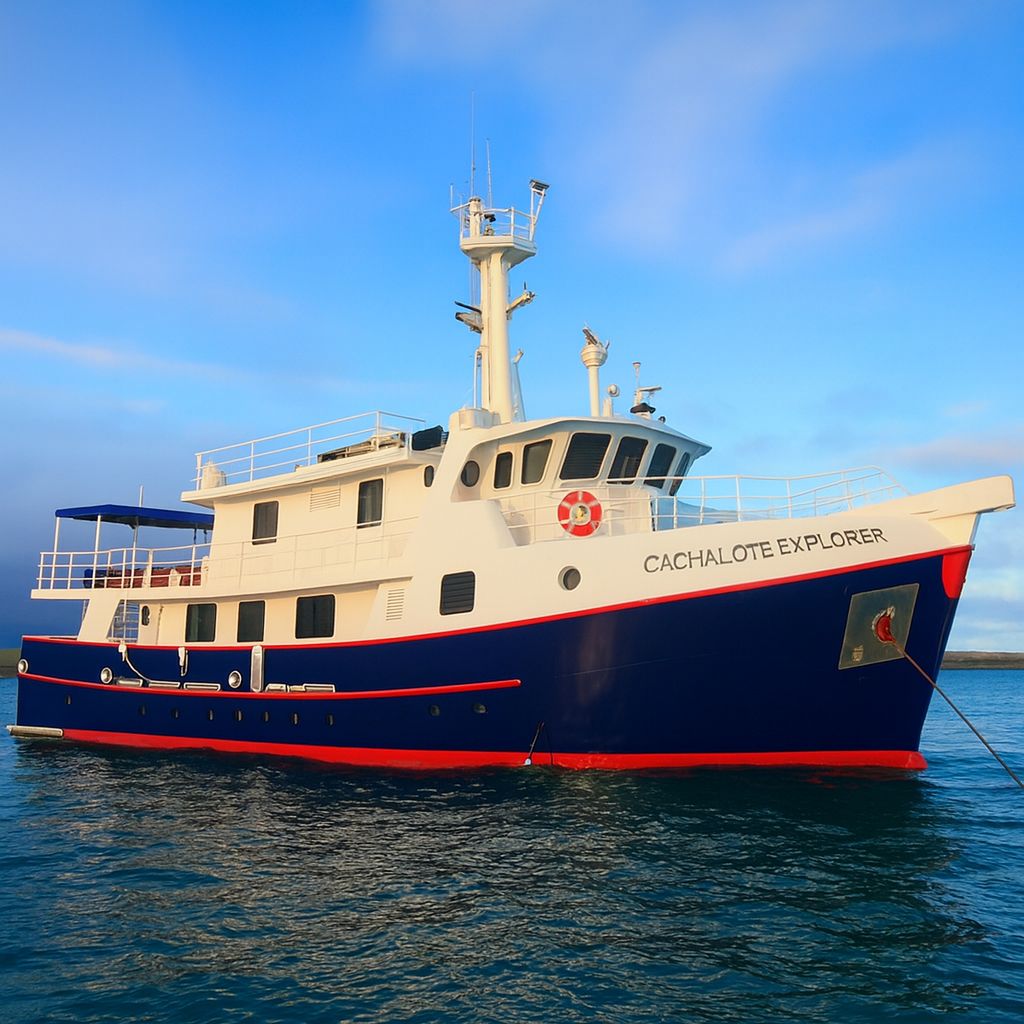
Motor yachts and catamarans cover the entire Galapagos price range from $300 to $1,200+ per person per day and represent the overwhelming majority of vessel availability. The Mary Anne operates at first class pricing, roughly $600 to $800 per day, and has the specific advantage of no single supplement on six dedicated single cabins, making it one of the few vessels in the Galapagos where solo travelers don’t pay a penalty. Motor sailers like the Cachalote I operate at first class pricing with a 50% single supplement.
The availability picture matters practically. If you want a motor yacht in the Galapagos, you have dozens of options across every class, itinerary length, and travel window. If you want the Mary Anne specifically, you’re booking one vessel with 12 cabins that sells out months in advance on peak dates. The scarcity is part of what makes it special and a real planning constraint.
The no-single-supplement policy on the Mary Anne deserves emphasis for solo travelers. Six of her 12 cabins are designated single cabins with no price penalty. In a fleet where most vessels charge 50 to 100% extra for solo occupancy, the Mary Anne is one of very few options that builds solo travel into its pricing structure. Combined with the unique sailing experience, this makes her one of the most recommended vessels for solo travelers regardless of budget comparison.
If the Mary Anne’s schedule doesn’t fit your dates, or you want to compare her against motor sailer options at similar price points, we can run that comparison for you. Get in touch here and we’ll tell you what’s available for your travel window.
We’ve got a full breakdown on first class Galapagos cruises if you want to know exactly what the upgrade delivers and whether the gap between first class and tourist superior justifies the extra spend.
Best Sailing Vessels and Best Motor Yachts Worth Booking
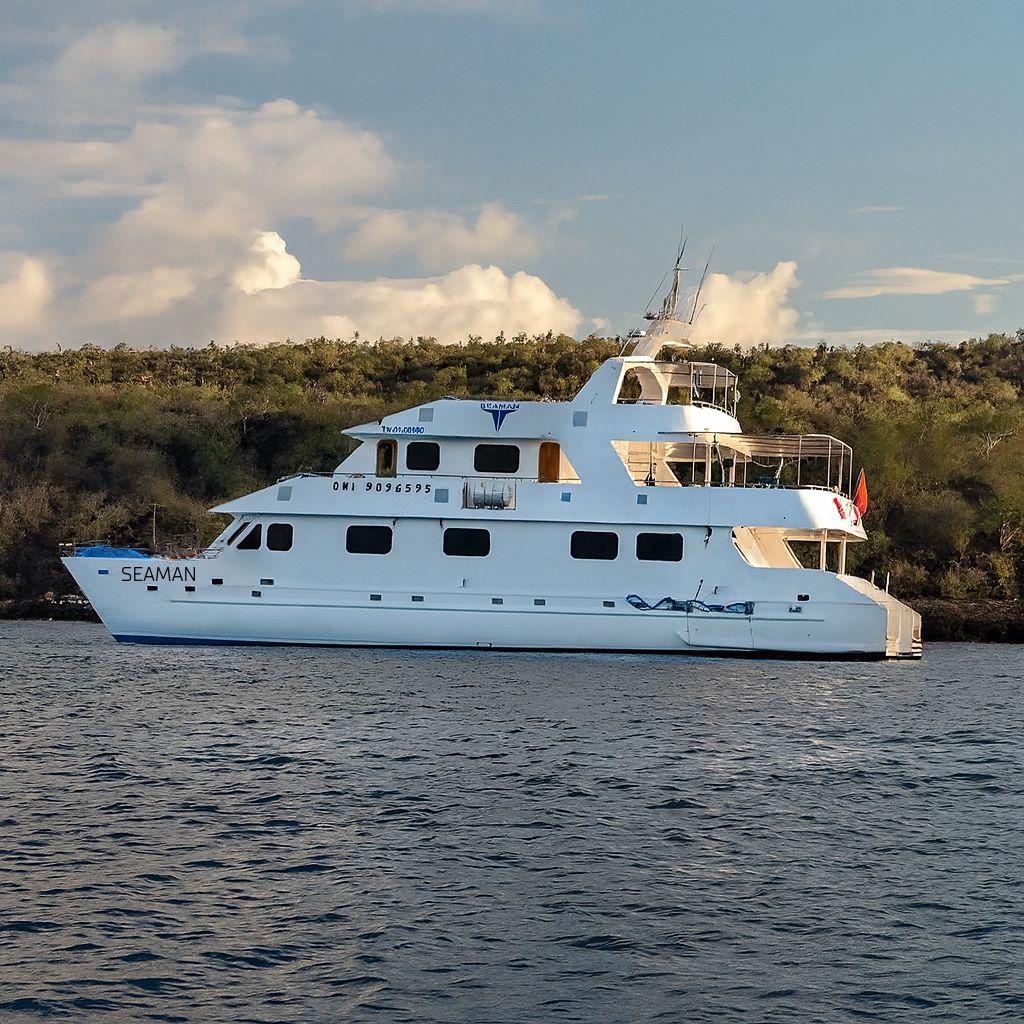
For sailing: the S/S Mary Anne is the only genuine choice. For motor sailers: Cachalote I (first class, traditional schooner rigging, 16 passengers, 8-day itineraries including western route) and Golondrina (tourist class, classic lines, good value for budget travelers wanting traditional atmosphere). For motor yachts: the Endemic, Galaxy Sirius, Seaman Journey, Monserrat, and Bonita cover the range from luxury to tourist superior with consistently strong traveler feedback.
We’ve got a full breakdown on luxury Galapagos cruises if you want to know exactly what $600-$1200 per day gets you on the water and whether the gap between luxury and first class is worth the price difference.
Recommended Vessels by Type and Traveler Profile
| Vessel | Type | Class | Best For | Notable Feature |
|---|---|---|---|---|
| S/S Mary Anne | True sailing vessel | First class | Sailing enthusiasts, solo travelers, romantics | Only wind-powered vessel; no single supplement |
| Cachalote I | Motor sailer | First class | Traditional feel with reliability | Schooner-rigged; western route access; Smart Voyager certified |
| Golondrina | Motor yacht (classic lines) | Tourist class | Budget travelers wanting classic feel | Traditional wooden bunk aesthetic; good value |
| Endemic | Motor catamaran | Luxury | Honeymooners, maximum comfort | Private balconies; best catamaran stability |
| Galaxy Sirius | Motor catamaran | First class | Wildlife depth, western itinerary | Strong guide tenure; catamaran stability |
| Monserrat | Motor yacht | Tourist superior | Value seekers; mid-range comfort | Former first class hull; free wifi; 3-15 day itineraries |
Classifications verified July 2026. Contact us for current availability and pricing.
Which One Is Right for Your Trip?
Choose the S/S Mary Anne if sailing specifically matters to you, if you’re a solo traveler who wants to avoid single supplements, or if the idea of helping hoist canvas sails between islands is more compelling than the fastest catamaran to the same destination. Choose a motor sailer if you want the traditional maritime aesthetic with engine reliability. Choose a motor yacht or catamaran for everything else: maximum class and price range, fastest transit times, and the widest availability of itinerary and departure options.
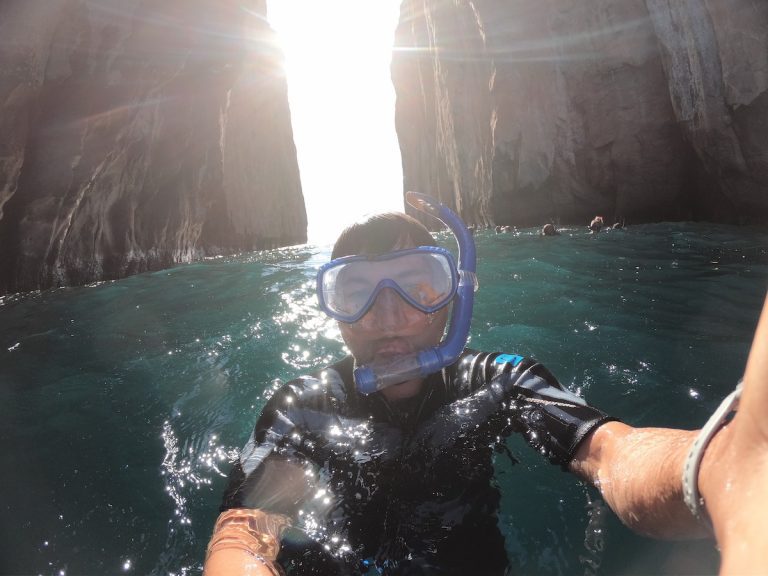
The honest framing: for 95% of Galapagos travelers, the vessel type question resolves to motor yacht or catamaran before sailing vessels enter the conversation at all. The wildlife doesn’t care what propels you to it. The guide is the same quality regardless of what the masts look like. The snorkeling at Kicker Rock is just as extraordinary from a diesel-powered catamaran as from a wind-powered barquentine.
Where sailing changes things is in the hours between excursions and in the transit moments themselves. Crossing from one island to another in silence, under sail, watching the rigging fill and the wake lengthen behind you: this is a specific and irreplaceable thing. Travelers who value that experience won’t find it anywhere else in the Galapagos fleet. The Mary Anne exists to provide it, and she does so reliably.
Motor sailers occupy a genuine niche for travelers who want some of the traditional character without the wind dependency. The Cachalote I’s schooner rigging and traditional wooden decks create an atmosphere that modern motor catamarans simply don’t have. The engines underneath mean the schedule holds. If the aesthetic matters but true sail-power doesn’t, a motor sailer threads that needle well.
Traveler Satisfaction by Vessel Type
Based on traveler interviews and survey data collected through mytrip2ecuador.com and the My Trip to Somewhere YouTube channel:
| Would choose same vessel type again | 91% | 79% | 82% |
| Described on-water experience as a highlight | 78% | 41% | 29% |
| Satisfied with cabin comfort | 74% | 76% | 81% |
| Mentioned sailing/atmosphere specifically | 83% | 47% | 8% |
| Experienced meaningful seasickness | 19% | 22% | 18% monohull / 11% catamaran |
| Said guide quality was the trip highlight | 69% | 71% | 72% |
Based on traveler interviews and survey data collected through mytrip2ecuador.com and the My Trip to Somewhere YouTube channel.
Common Mistakes When Choosing Between Sailing and Motor Vessels
- Booking a “sailing cruise” expecting to travel under sail. Almost every vessel described as a sailing cruise in the Galapagos is a motor sailer that uses engines for the vast majority of transit. If actual wind-powered sailing matters, only the S/S Mary Anne delivers it reliably.
- Underestimating the Mary Anne’s bunk cabin situation. Most of her 12 cabins have bunk-style beds. Two have double lower beds. If sleeping in a bunk for 8 nights is a dealbreaker, clarify the cabin configuration before booking.
- Choosing a motor sailer for stability without checking hull profile. Motor sailers with narrow traditional hulls can roll significantly in the Bolivar Channel. The Cachalote I’s broad beam and steel hull handle it better than most, but rolling on a motor sailer with traditional lines can exceed what a modern catamaran delivers.
- Missing the solo supplement advantage on the Mary Anne. Solo travelers who don’t specifically ask about the Mary Anne’s no-supplement single cabins often end up paying 50 to 100% premiums on motor yachts. The Mary Anne is almost always worth comparing for solo travelers at the first class price point.
- Not checking entry logistics regardless of vessel type. The National Park entrance fee is $200 per adult and $100 per child under 12, paid in USD cash on arrival. The Transit Control Card is $20 per person, completed online before the flight through the CGREG portal. These apply equally to every vessel in the fleet.
Frequently Asked Questions
Are there actual sailing boats in the Galapagos?
Yes, but very few. The S/S Mary Anne is the only vessel in the Galapagos fleet that can navigate by wind power alone. Most vessels described as sailing boats are motor sailers that carry sails for occasional use or atmosphere but run on diesel engines for the majority of inter-island transits.
Is the S/S Mary Anne worth booking over a motor yacht?
For the right traveler, yes. If sailing specifically matters to you, if you’re a solo traveler wanting to avoid single supplements, or if the historic maritime atmosphere is part of what you’re paying for, the Mary Anne is a genuinely special vessel. If those factors don’t matter, a motor catamaran at the same price point delivers more schedule reliability and often more modern cabin comfort.
Do motor sailers visit different islands than motor yachts?
No. Every vessel follows National Park-approved itineraries to the same certified visitor sites. Vessel type does not determine which islands you visit. The itinerary you book determines that, and both motor sailers and motor yachts operate the same standard routes including western, eastern, and combined options.
Is the sailing experience worth it for wildlife encounters?
For en-route wildlife encounters specifically, yes. Multiple travelers on the Mary Anne report dolphin and whale encounters that felt different from anything they experienced on engine-powered vessels, because a quiet wind-powered approach produces a different response from marine wildlife. On the islands themselves, hull type and propulsion make no difference to wildlife behavior.
The sailing vs motor decision is one of the more personal choices in Galapagos cruise planning. Most travelers end up on a motor yacht or catamaran and have extraordinary trips. A smaller number seek out the Mary Anne specifically and come back describing something they couldn’t have found anywhere else in the fleet. We know both options well and can tell you honestly which fits your situation.
Rated 4.9 stars on Google and TripAdvisor. Get your free quote here and we’ll come back to you within one business day.
Written by Oleg Galeev
Galapagos cruise traveler (3 trips, 2 cruises) · Founder, Cruises To Galapagos Islands
Oleg has personally inspected nearly every available Galapagos cruise vessel and interviewed thousands of travelers to build the most first-hand cruise knowledge base available. He also runs the Ecuador travel blog mytrip2ecuador.com and the YouTube channel My Trip to Somewhere.
Cruises To Galapagos Islands is rated 4.9 stars on Google and TripAdvisor.
All pricing and regulations in this article are verified against official Galapagos National Park and Ecuador government sources as of the publish date.