Isabela Island: Best Wildlife and Activities for Cruise Visitors
Quick answer
Isabela is the largest island in the Galapagos, formed by six coalesced volcanoes, five of which remain active. It holds more Galapagos penguins than any other island, five giant tortoise subspecies, the only flightless cormorant nesting sites in the world outside of a single nearby location on Fernandina, and the highest marine species density of any snorkel site in the archipelago at Punta Vicente Roca. Western itineraries that include Isabela consistently produce the most wildlife-dense experiences in the entire Galapagos. Cruises that skip Isabela miss the cold-water endemic community, the Bolivar Channel, and the geological drama of an island still being actively built.
Part of our guide to what wildlife you can see on a Galapagos cruise. Ready to pick a ship? See the best Galapagos cruises by price, size and class.
Quick Facts: Isabela Island
| Fact | Detail |
|---|---|
| Size | 4,588 km²; largest island in the Galapagos; larger than all other islands combined |
| Formation | Six shield volcanoes fused together: Wolf, Darwin, Alcedo, Sierra Negra, Cerro Azul, Ecuador; five remain active |
| Highest point | Wolf Volcano; 1,707 metres; highest point in the Galapagos archipelago |
| Tortoise subspecies | Five distinct subspecies; one on each of the major volcanic massifs; only island with multiple subspecies |
| Penguin status | More than 50% of all Galapagos penguins live on Isabela; largest population in the archipelago |
| Key marine site | Punta Vicente Roca; most species-diverse snorkel site in the Galapagos |
| Main town | Puerto Villamil; southern Isabela; approximately 2,200 residents |
| Recent eruptions | Wolf Volcano erupted 2022; Sierra Negra erupted 2018 and 2005; Cerro Azul last erupted 2008 |
Data verified August 7, 2026, against Galapagos National Park, Galapagos Conservancy, and USGS Volcano Hazards Program sources.
Why Isabela Is the Galapagos’ Most Ecologically Diverse Island
Isabela is larger than all other Galapagos islands combined and was formed not by a single volcanic event but by the gradual fusion of six separate shield volcanoes over millions of years. This origin story produced an island with six distinct volcanic ecosystems, five subspecies of giant tortoise associated with five separate volcanic massifs, and a western coast bathed by the cold Cromwell Current upwelling that makes it the center of gravity for the Galapagos’s cold-water endemic community. The flightless cormorant, Galapagos penguin, and largest marine iguanas in the archipelago are all concentrated here. No other single island delivers this combination.
The six volcanoes that form Isabela, from north to south Wolf, Darwin, Alcedo, Sierra Negra, Cerro Azul, and Ecuador, are not historical remnants. Five are active. Wolf erupted in 2022, leaving fresh lava flows visible from the air over the northern part of the island. Sierra Negra erupted in 2018, the largest eruption in the Galapagos in over a century, and again in 2005. This is an island that is still being actively built. The result is one of the most varied geological landscapes in the Galapagos: fresh black lava fields adjacent to older, vegetation-covered flows, tuff cones along the coast, pahoehoe lava formations on the shore at Punta Espinoza, and the second-largest volcanic caldera on Earth at Sierra Negra, a crater roughly 10 kilometres across.
The western coast of Isabela faces the Bolivar Channel, the narrow stretch of water between Isabela and Fernandina Island. The Cromwell Current upwells powerfully in this channel, bringing cold, nutrient-rich water to the surface. This upwelling creates the feeding conditions that make the western shores of both islands the core habitat for the Galapagos’s cold-water specialists: penguins, flightless cormorants, and the largest marine iguanas on the archipelago, which need the cold, algae-rich water to feed and the warm basalt shore to thermoregulate.
The practical consequence for cruise passengers is that Isabela delivers a qualitatively different wildlife experience from the central and eastern islands. Not better or worse in absolute terms, but categorically different. The animals here are species that evolved specifically in response to cold upwelling ecology rather than the tropical reef conditions of the central archipelago. A cruise that includes western Isabela encounters wildlife communities that simply do not exist elsewhere in the Galapagos.
Punta Vicente Roca: The Best Cold-Water Snorkel in the Archipelago
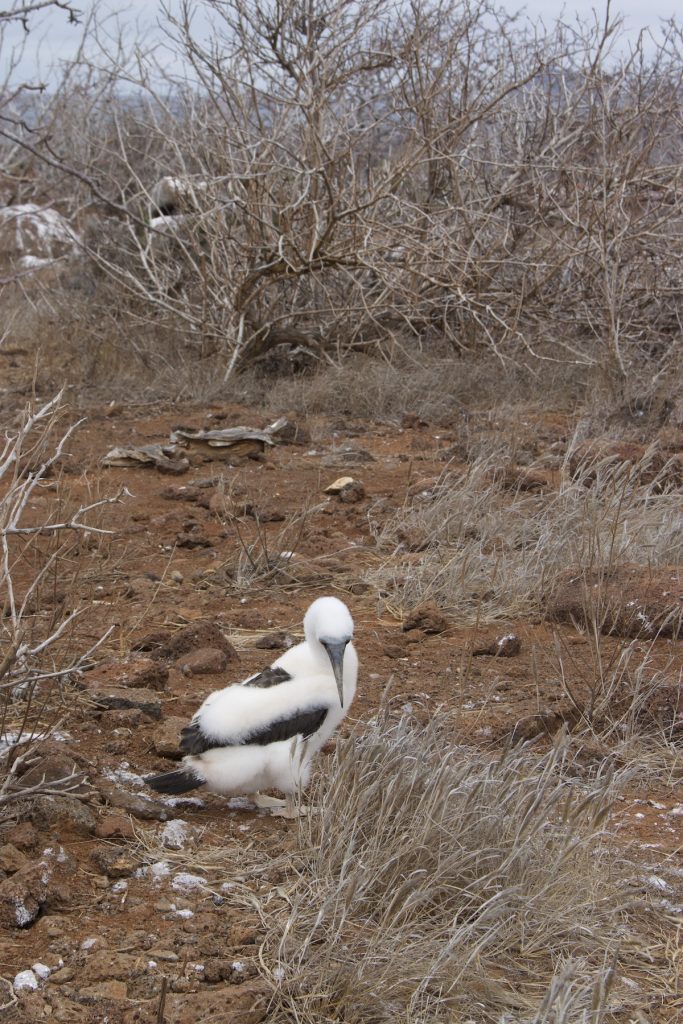
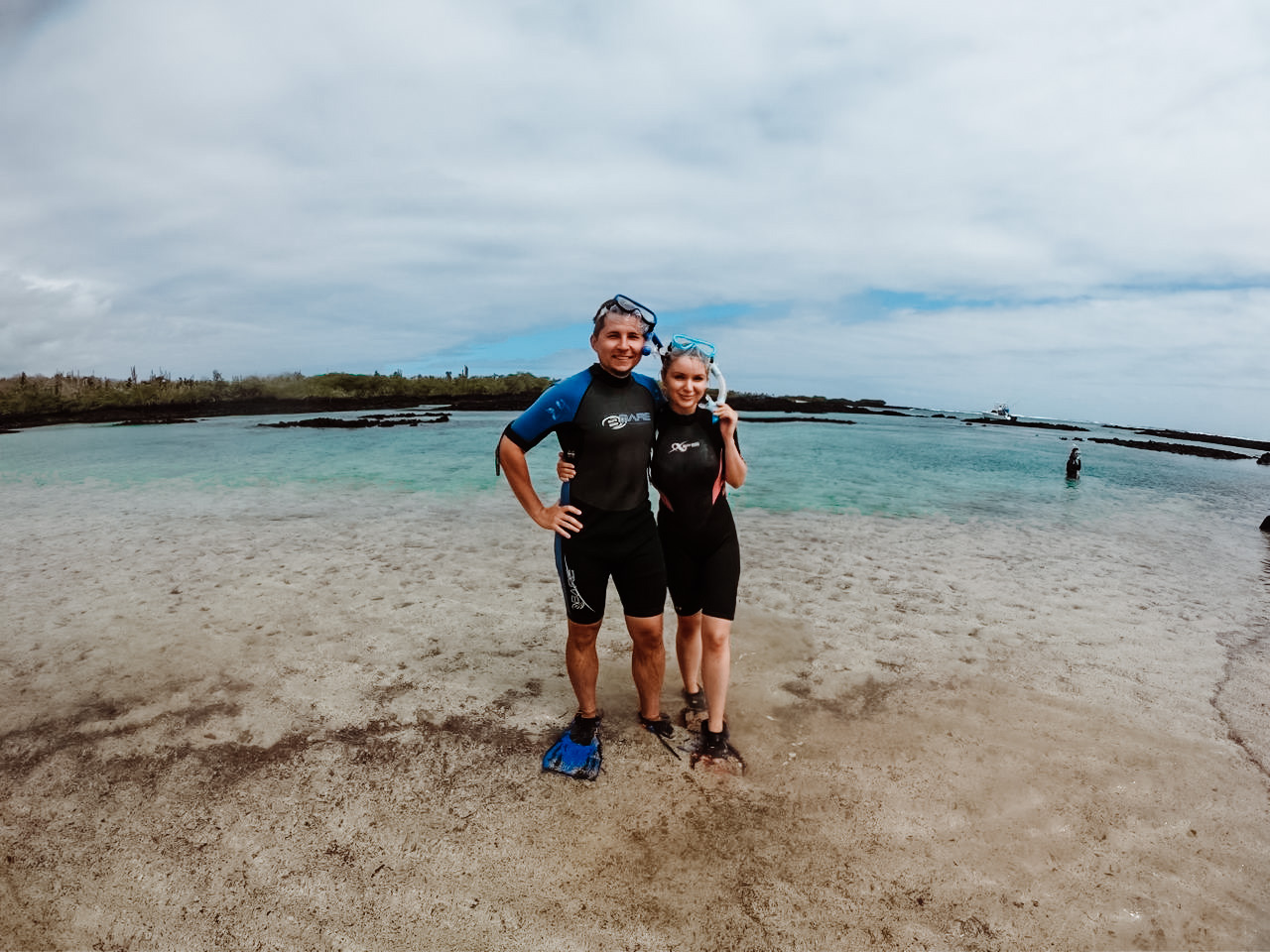
Punta Vicente Roca on the northwestern coast of Isabela is consistently identified by naturalist guides, experienced Galapagos divers, and traveler accounts as the most species-diverse snorkel site in the archipelago. Two separate coves formed by volcanic tuff cliffs are accessible by panga only, with no landings permitted. Species routinely encountered during a single snorkel session include green sea turtles, marine iguanas feeding on the underwater rock face, Galapagos penguins at full sprint, flightless cormorants diving for fish, eagle rays, white-tip reef sharks, seahorses, puffer fish, and during June through November, mola mola at cleaning stations near the surface. The water is cold, typically 16 to 20 degrees Celsius, and a full 5mm wetsuit is essential.
The site structure matters for understanding why so many species appear simultaneously. The volcanic tuff cliffs drop steeply into the water and continue as an underwater wall to approximately 28 metres. The Cromwell Current upwells against this wall, concentrating nutrients in the narrow channel between the two coves. This creates a vertical transition from cold, food-rich deep water to the surface, which different species exploit at different depths. Seahorses and red-lipped batfish occupy the sandy bottom. Sea turtles cruise at mid-depth. Penguins hunt at speed through the shallow zone. Marine iguanas descend from the surface to grip the rock face at 3 to 5 metres and graze algae. Mola mola rise from depth to cleaning stations near the surface. All of these occupants are visible from the surface on a productive snorkel session.
The mola mola encounter at Punta Vicente Roca during the cold season is the experience that most frequently produces what travelers describe as a complete recalibration of what wildlife looks like. A mola mola can reach 2 metres in body length and 1,000 kilograms, making it the largest bony fish on Earth. It has no real tail, propels itself with two enormous fins, and approaches cleaning stations near the surface in a slow, slightly rocking motion that looks nothing like swimming. Watching one hover beside a snorkeler in the upwelling water of Vicente Roca’s northern cove, with cormorants diving past and a marine iguana clinging to the rock nearby, produces an encounter that has no equivalent at any other snorkel site in the world.
The panga ride around the cliffs before and after snorkeling adds a seabird dimension: blue-footed boobies, Nazca boobies, brown pelicans, and nesting flightless cormorants on the rock ledges above the waterline, all within metres as the panga moves slowly along the cliff base. Fill out this short form and we can confirm which cruise itineraries include Punta Vicente Roca as a dedicated snorkel stop rather than a panga-only tour.
We’ve got a full breakdown on the best spots for marine iguanas on a Galapagos cruise if you want to know exactly which islands, beaches, and tidal zones give you the closest encounters with the world’s only seagoing lizard.
Punta Espinoza and Tagus Cove: The Western Shore Encounters
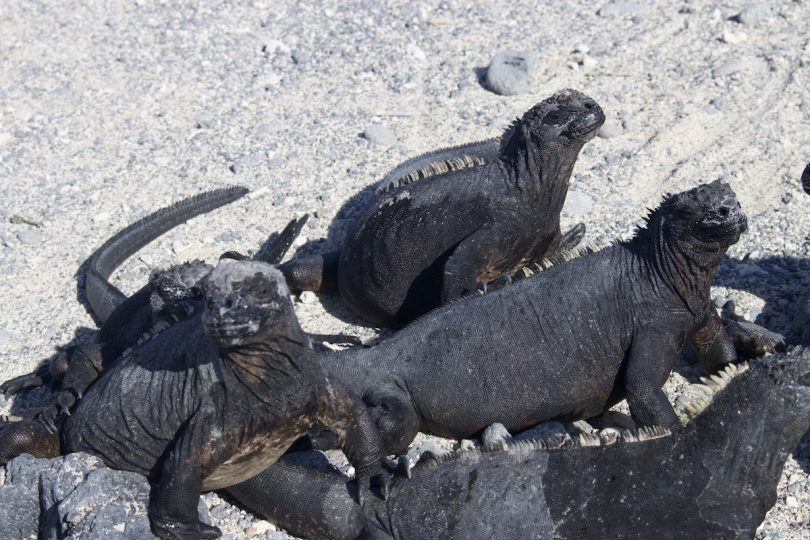
Punta Espinoza technically sits on Fernandina Island rather than Isabela, but it is reached by crossing the Bolivar Channel from Isabela and is included on the same western itinerary day as Isabela’s Tagus Cove. Punta Espinoza holds the largest single colony of marine iguanas in the Galapagos and is the primary flightless cormorant nesting site in the archipelago. Tagus Cove on Isabela’s western coast is a historically significant anchorage where pirates and whalers carved names into the cliffs from the 1800s onward, with a trail leading up to Darwin Lake inside a tuff cone and a productive snorkel in the clear water below the historic carvings.
The marine iguana colony at Punta Espinoza is the most concentrated wildlife spectacle in the Galapagos on a per-square-metre basis. The point where the lava flow meets the sea is covered in iguanas so densely packed that navigating the trail requires watching every footstep. They are the largest marine iguanas in the archipelago, reaching over a metre in length, and their deep red breeding coloration during the warm season gives the colony a visual intensity that photographs almost universally understate. Flightless cormorants nest at the same site, displaying their vestigial wings in courtship on the rocks beside the iguana colony. Galapagos penguins fish in the channel directly below the trail. A single 45-minute walk at Punta Espinoza delivers three endemic Galapagos species in the same field of view at once.
Tagus Cove provides a different kind of encounter: geological and historical rather than wildlife-intensive, though wildlife is still present. The cove was used as an anchorage by pirates and whalers for over two centuries, and the names carved into the tuff cliffs above the waterline include vessels from the 1830s and 1840s. The oldest include the Phoenix in 1836 and the Genie in 1846. The trail from the cove leads uphill past Darwin Lake, a brackish saltwater lake inside an ancient tuff cone, then continues to a ridge with views over the Bolivar Channel and Fernandina Island. Flightless cormorants nest at the water’s edge near the cove. The snorkel directly off the anchoring point, in the tuff-cone enclosed bay, produces sea turtles, sea lions, penguins, and the algae-feeding marine iguanas visible underwater.
Still not sure if Fernandina deserves a spot on your Galapagos itinerary or if the western route is worth choosing over other options? This guide on Galapagos’ most pristine volcanic island gives you a straight answer on what makes it worth the detour.
Elizabeth Bay and Urbina Bay: Turtles, Rays, and Penguins by Panga
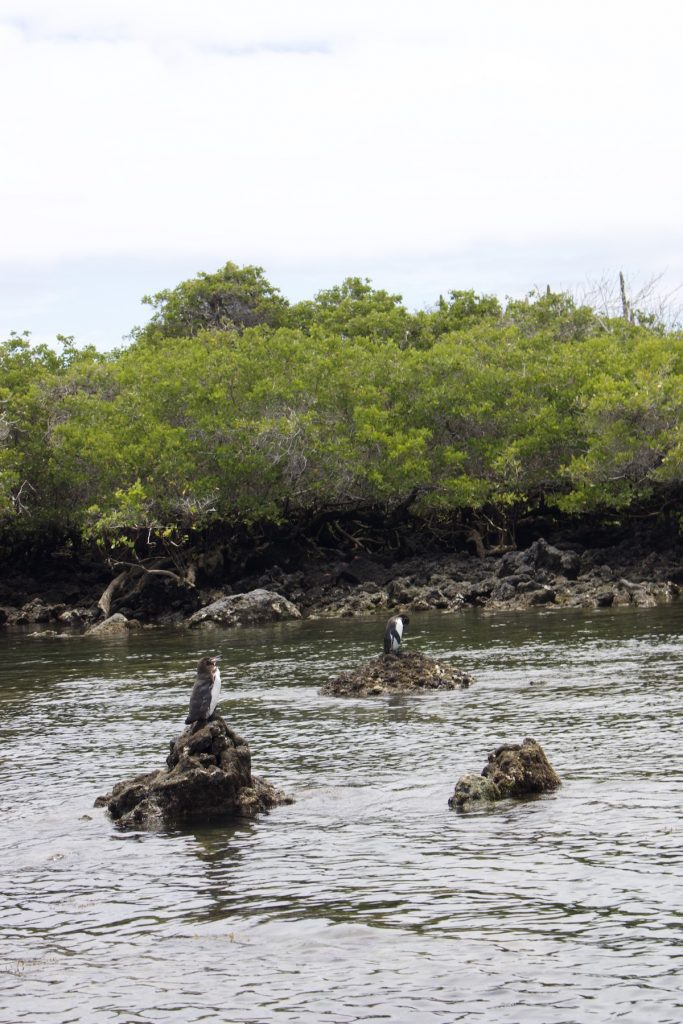
Elizabeth Bay on Isabela’s inner west coast is a panga-only excursion with no landing permitted, a two-hour ride through islets, mangroves, and open channels where Galapagos penguins rest on rocky outcrops, flightless cormorants perch at the waterline, golden rays and eagle rays pass in formation below the surface, and sea turtles are so consistently present that travelers who have been to other islands describe this as the most reliably multi-species panga encounter in the archipelago. Urbina Bay, formed by one of the most dramatic geological events in recorded Galapagos history, offers a land trail past stranded coral heads, wild giant tortoises, and land iguanas, with snorkeling off the same beach.
Elizabeth Bay earns its description from the structure of the excursion rather than a single species highlight. The panga enters the bay and moves through the Marielas islets, where Galapagos penguins congregate in numbers that make this the highest-density penguin sighting opportunity on any cruise itinerary. It then moves into the inner bay where red mangroves line the shore and the combination of sea turtles, rays, sea lions, flightless cormorants, and blue-footed boobies creates a progressively accumulating wildlife encounter that traveler accounts consistently describe as one of the best experiences in the Galapagos despite involving no swimming and no certified naturalist trail.
Urbina Bay’s backstory is geological. In 1954, a sudden uplift of the land raised the seabed by over 5 metres and pushed the coastline over 1 km further away from its previous position. The result is a stretch of exposed coral reef now sitting well above sea level, with coral heads deteriorating in the open air and the original waterline invisible behind the new extended shore. The coral heads are rapidly deteriorating and represent one of the sights of the Galapagos that will not be around indefinitely. Inland from the beach, the trail through the arid zone passes land iguanas nesting in the soil of the path itself and occasionally wild giant tortoises visible in the brush. Flightless cormorants appear near the shore as the trail loops back. The snorkel off Urbina Bay beach includes penguins, sea turtles, and flightless cormorants swimming alongside snorkelers in water calmer than the open western shore.
Galapagos penguins are the only penguin species found north of the equator and finding them requires knowing where to look. Here’s a guide on where to see Galapagos penguins on a cruise so you don’t miss them.
| Site | Access Type | Primary Wildlife | Unique Feature |
|---|---|---|---|
| Punta Vicente Roca | Panga + snorkel; no landing | Sea turtles; iguanas feeding underwater; penguins; cormorants; mola mola; seahorses | Most species-diverse snorkel site in Galapagos |
| Elizabeth Bay | Panga only; no landing | Penguins on islets; rays; sea turtles; cormorants; blue-footed boobies; sea lions | Highest-density penguin panga encounter in Galapagos |
| Urbina Bay | Wet landing; trail + snorkel | Land iguanas; wild tortoises; cormorants; penguins; turtles; coral heads above sea level | 1954 geological uplift; exposed coral reef above waterline |
| Tagus Cove | Dry landing; trail + snorkel | Historical carvings; Darwin Lake; cormorants; penguins; sea turtles in cove | Historical anchorage; pirate and whaler inscriptions from 1836 onward |
Puerto Villamil: Flamingos, Tortoises, and Los Túneles
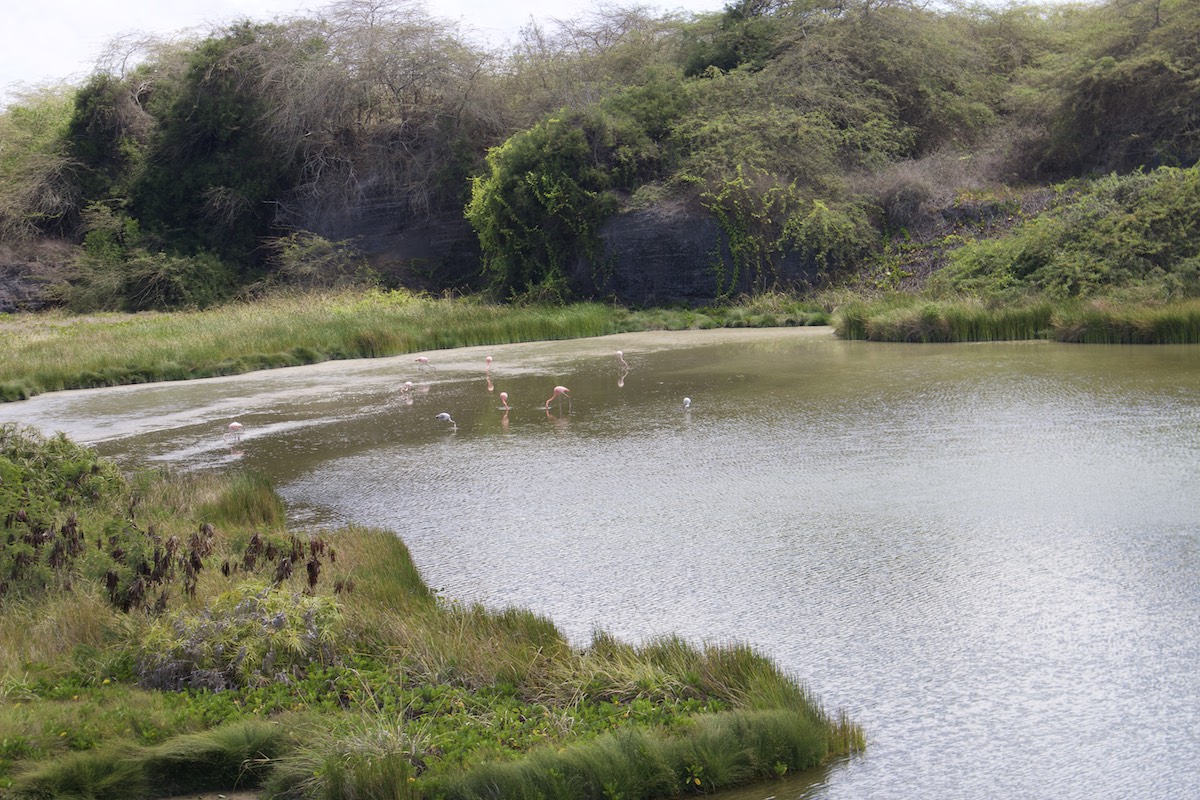
Puerto Villamil, Isabela’s only town on the southern coast, is the entry point for cruise passengers visiting Isabela’s land-based southern sites. The Arnaldo Tupiza Tortoise Breeding Center near town holds five giant tortoise subspecies in a semi-natural habitat. The wetland boardwalk network behind the beach passes flamingo lagoons, sea turtle nesting beaches, and shorebird habitat. Los Túneles, a volcanic arch and tunnel system accessible by boat from Puerto Villamil, is the most reliably productive site for snorkeling with pacific seahorses, resting white-tip reef sharks, and sea turtles in calm, warm water. Sierra Negra Volcano’s crater hike is the most dramatic land excursion available on any Galapagos island.
The tortoise breeding center is named after Arnaldo Tupiza, a Galapagos National Park ranger who dedicated much of his career to tortoise conservation on Isabela. Five subspecies are present, associated with five different volcanoes: Alcedo, Wolf, Darwin, Sierra Negra, and Cerro Azul. Standing in front of a tortoise from Wolf Volcano and one from Cerro Azul and seeing the physical differences between them, animals from the same species separated by less than 100 kilometres of island, is one of the most accessible in-person demonstrations of adaptive divergence available in the Galapagos. Hatchlings, juveniles, and release-ready adults are all observable on the grounds.
Los Túneles is a maze of partially submerged lava arches and collapsed lava tubes about 45 minutes by boat from Puerto Villamil. The calm, sheltered pools within the tunnel system hold sea turtles resting in the shade of the arches, Pacific seahorses gripping the rocky substrate, schools of fish in the channels between the lava formations, white-tip reef sharks on the sandy floor, and blue-footed boobies nesting on the flat rock surfaces above. The warm, protected water of the tunnels contrasts sharply with the cold open-water snorkeling at Punta Vicente Roca and makes Los Túneles the best site for less experienced snorkelers who want productive encounters in easy conditions. Send us a message here and we can advise whether Los Túneles is available on your cruise itinerary or as a day-trip addition from Puerto Villamil.
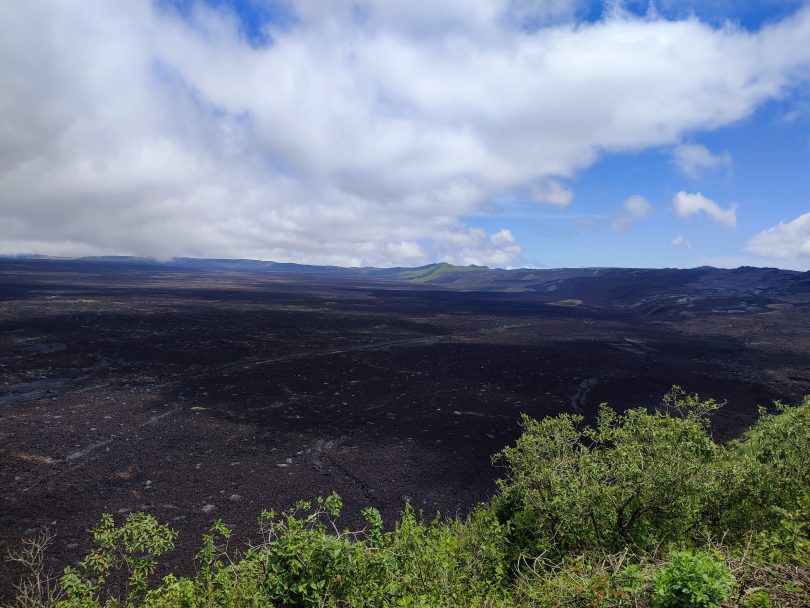
Sierra Negra Volcano is a 16 km round-trip hike to the rim of the second-largest volcanic caldera in the world, roughly 10 kilometres across and 100 metres deep. The hike takes 4 to 6 hours round trip and is rated moderate, with a consistent uphill gradient for the first half and a rewarding view from the caldera rim that encompasses the entire western island and the Pacific beyond. The 2018 eruption deposited fresh lava on the caldera floor that is still visible from the rim as a distinct dark intrusion into the older lava. This is the only active caldera accessible by trail in the Galapagos and one of the only places in the world where a visitor can stand on the rim of a caldera of this scale. Cruise passengers typically need a full day allocated to Isabela’s southern section to combine the tortoise center, wetlands, and Sierra Negra hike.
Planning a Galapagos cruise and want to make sure giant tortoises are actually on the itinerary? Our guide on giant tortoises on a Galapagos cruise walks you through the best islands and landing sites.
What Do Travelers Miss About Isabela?
The most common miss is not understanding that western Isabela and southern Isabela are two different cruise itinerary experiences, often visited on different days and sometimes on different cruise types entirely. Western Isabela, meaning Punta Vicente Roca, Tagus Cove, Elizabeth Bay, and Urbina Bay, requires a cruise routed through the western islands. Southern Isabela, meaning Puerto Villamil, the tortoise center, Los Túneles, and Sierra Negra, is accessible from a wider range of itineraries. Many travelers visit one and assume they have visited Isabela. The second miss is wearing an inadequate wetsuit at Punta Vicente Roca and spending the snorkel focusing on cold rather than wildlife.
Booking a cruise that visits “Isabela” without specifying which part. Western Isabela is a full-day itinerary of its own. Puerto Villamil and the southern sites are another. A 7-day cruise that includes a morning stop at Puerto Villamil and the tortoise center has visited a very different Isabela from a cruise that spends two days on the western shore at Vicente Roca, Elizabeth Bay, Urbina Bay, and Tagus Cove. The itinerary description needs to specify site names, not just island names. Ask your operator which specific visitor sites on Isabela are included in the excursion program before booking. The difference between a satisfying Isabela experience and the transformative one that experienced travelers describe as the best of their Galapagos visit comes down to which sites and how much time.
Arriving at Punta Vicente Roca in a shorty wetsuit. The water at Vicente Roca runs 16 to 20 degrees Celsius year-round due to the Cromwell Current upwelling. A 3mm shorty wetsuit, which is what many cruise operators provide as standard equipment, is inadequate for a 45-minute to 1-hour snorkel in these temperatures. Snorkelers who enter the water in insufficient insulation spend the session focused on cold rather than the extraordinary marine life around them. A 5mm full wetsuit, gloves, and hood make the experience what it is supposed to be. Check with your operator before the Vicente Roca excursion what wetsuit thickness they provide and request the heavier option explicitly.
Skipping the flightless cormorant at the expense of the penguin. Both species are present on western Isabela, and most cruise guides prioritize the penguin because it is more visually striking and more commonly requested. The flightless cormorant is the more ecologically singular animal: the only cormorant species on Earth that cannot fly, with vestigial wings it spreads in a courtship display that looks like an appeal for something it once had. Understanding its evolutionary trajectory, from a flying seabird to a diving specialist that traded flight for fishing efficiency over millennia of island isolation, is one of the cleaner evolutionary narratives in the Galapagos. Ask your guide specifically about the cormorant’s wing behavior during your next sighting. Reach out here and we can recommend operators whose guides cover the cormorant’s evolutionary story in detail.
What Our Travelers Report: Isabela Encounter Quality by Site
Based on feedback gathered through mytrip2ecuador.com, our YouTube audience, and Oleg’s direct traveler interviews across three personal visits to the Galapagos:
| Site | Rated Excellent | Saw Cormorant | Saw Penguin | “Best day of cruise” |
|---|---|---|---|---|
| Punta Vicente Roca | 96% | 91% | 88% | 61% |
| Elizabeth Bay panga | 91% | 84% | 94% | 44% |
| Urbina Bay hike + snorkel | 88% | 77% | 69% | 31% |
| Sierra Negra volcano hike | 89% | n/a | n/a | 38% |

Oleg G.cruisestogalEdit Profile
How Isabela Fits Into Your Cruise Itinerary
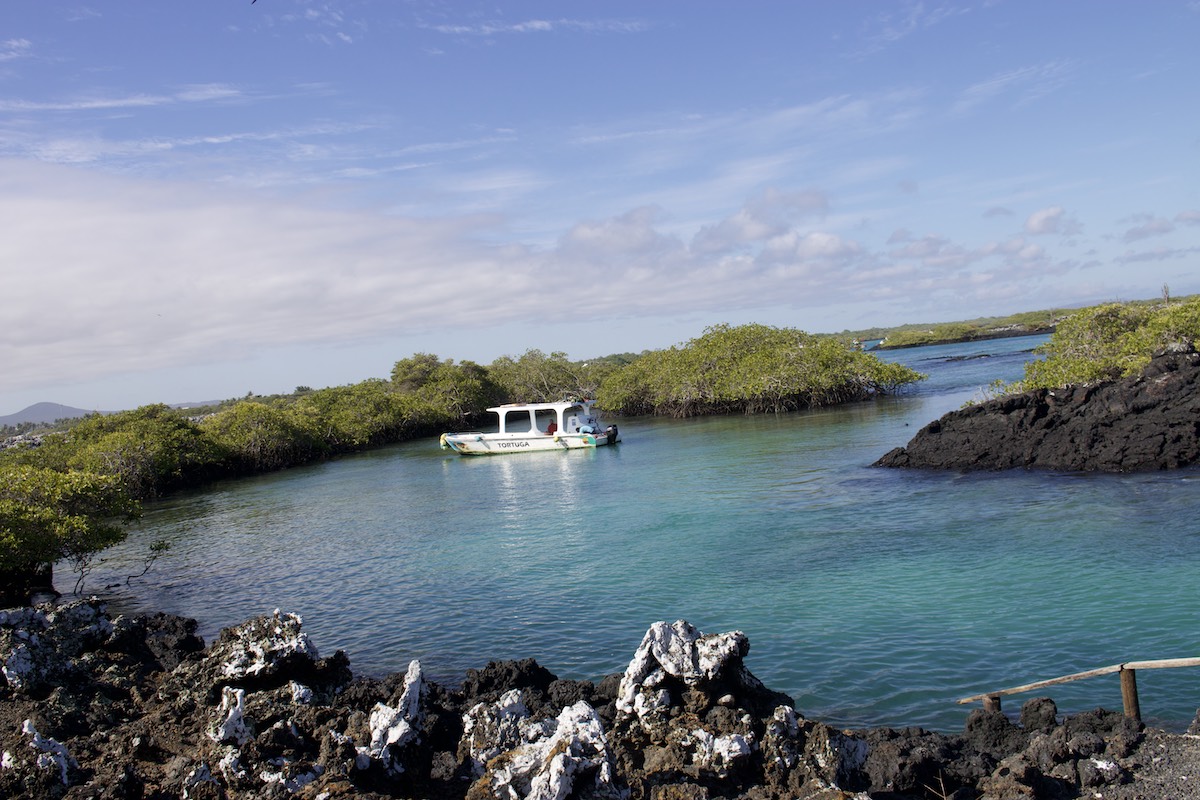
Isabela appears on western and central Galapagos itineraries but not on all eastern or southern routes. The western shore sites, including Vicente Roca, Tagus Cove, Elizabeth Bay, and Urbina Bay, require a western loop itinerary that most 8-day and some 7-day cruises include. Puerto Villamil and the southern sites are more widely accessible and appear on a broader range of itineraries. The question to ask before booking is not whether Isabela is on the route but which specific sites on Isabela are scheduled, for how long, and at what time of day. Vicente Roca in the morning versus the afternoon produces different light conditions for photography and different mola mola probabilities.
| Itinerary Type | Typical Isabela Access | Western Sites Included | Southern Sites Included |
|---|---|---|---|
| 5-day central | Puerto Villamil only; sometimes omitted | Rarely | Sometimes; tortoise center and Las Tintoreras |
| 7-day western loop | 1 to 2 full days; western shore primary | Vicente Roca; Tagus Cove; Elizabeth Bay; Urbina Bay | Sometimes; Puerto Villamil morning stop |
| 8-day circumnavigation | 2 to 3 full days; both coasts | All western sites; Bolivar Channel crossing to Fernandina | Puerto Villamil; tortoise center; Sierra Negra; Los Túneles |
| 10 to 14-day extended | 3 to 4 days; comprehensive coverage | All western sites; multiple days; Albemarle Point possible | All southern sites; multiple excursion days in Puerto Villamil |
The western shore of Isabela is accessible only on itineraries that specifically route there: vessels traveling from central islands must commit a full day of sailing to reach Punta Vicente Roca, and the return takes another day. This is why shorter central itineraries rarely include the western sites. A 7-day western loop cruise that prioritizes Isabela’s western coast and Fernandina over the eastern central islands delivers a profoundly different Galapagos experience from a 7-day eastern loop cruise of equivalent length and price. Neither is the complete Galapagos. The western loop delivers the cold-water endemic community and the volcanic drama of a geologically young island. The eastern loop delivers Darwin’s finches in depth, the waved albatross on Española, and the hammerhead encounter at Kicker Rock. Understanding the difference before booking is what we help with.
One practical note for Sierra Negra: the hike requires clear weather for the caldera view to be worthwhile, and highland cloud typically rolls in by mid-morning. Operators who schedule the Sierra Negra hike as a morning activity and the coastal excursions in the afternoon consistently receive better reviews than those who reverse the order. If your itinerary includes Sierra Negra, ask specifically what time the hike departs. Contact us here and we will walk you through which western itineraries cover the most Isabela ground within your preferred cruise length.
Darwin’s finches are small but the story behind them is what makes the Galapagos matter scientifically. Here’s a guide on what to know about Darwin’s finches before your Galapagos cruise so you actually appreciate what you’re looking at when you land.
Frequently Asked Questions
Is Isabela Island accessible on a short 5-day Galapagos cruise?
Southern Isabela, specifically Puerto Villamil and the nearby sites, sometimes appears on 5-day itineraries. Western Isabela, including Punta Vicente Roca, Tagus Cove, Elizabeth Bay, and Urbina Bay, almost never does: the sailing time from the central islands to the western shore requires an itinerary of at least 7 days with a western routing. If western Isabela’s wildlife community is a priority, the itinerary needs to be 7 days or longer and must specifically route west rather than through the central or eastern islands.
What makes the flightless cormorant unique?
The flightless cormorant is the only cormorant species on Earth that cannot fly. Its wings have reduced over generations of island isolation to vestigial stubs, traded for enhanced diving ability: the species became a highly specialized underwater fisher that no longer needs to travel between islands. The wings are still used in a distinctive courtship display, spread and held out to dry in a gesture identical to their flying relatives, despite the fact that these wings can no longer generate lift. The species is endemic to Isabela and Fernandina and numbers only around 1,000 individuals globally, making every sighting at a nesting site genuinely significant.
Why are Isabela’s penguins special compared to other Galapagos penguins?
More than half of all Galapagos penguins live on Isabela, making it the best island for penguin encounters in the archipelago. The concentration is driven by the Cromwell Current upwelling along the western shore, which provides cold, fish-rich water. The Marielas islets in Elizabeth Bay hold the single largest penguin colony in the Galapagos. Penguins in the water at Punta Vicente Roca and Tagus Cove hunt at speeds that produce a distinctively kinetic encounter, a bird moving faster than a sea lion through the same water column, that registers as genuinely disorienting even for experienced snorkelers.
Can you hike to an active volcano on Isabela?
Yes. The Sierra Negra Volcano hike reaches the rim of the second-largest basaltic caldera in the world, approximately 10 kilometres across. The hike is 16 km round trip and takes 4 to 6 hours, rated moderate. From the rim, fresh lava from the 2018 eruption is visible on the caldera floor. Wolf Volcano, the highest point in the Galapagos at 1,707 metres, erupted in 2022, but is not on the standard visitor trail system. Sierra Negra is the only active caldera accessible to cruise passengers by trail in the archipelago.
Build the Right Isabela Itinerary
Isabela is large enough and diverse enough that two cruises that both visit it can have nothing in common. A cruise that stops at Puerto Villamil for a morning and a cruise that spends three days on the western shore are different trips to a different island. We know exactly which current itineraries cover which Isabela sites, which operators schedule Sierra Negra in the morning for the best caldera views, and which western loop cruises give you the most time at Punta Vicente Roca. A free conversation with Cruises To Galapagos Islands maps your priorities to the right route before you commit. Tell us what matters most on Isabela and we will find the itinerary that delivers it.
Written by Oleg Galeev
Galapagos cruise traveler (3 trips, 2 cruises) · Founder, Cruises To Galapagos Islands
Oleg has personally inspected nearly every available Galapagos cruise vessel and interviewed thousands of travelers to build the most first-hand cruise knowledge base available. He also runs the Ecuador travel blog mytrip2ecuador.com and the YouTube channel My Trip to Somewhere.
Cruises To Galapagos Islands is rated 4.9 stars on Google and TripAdvisor.
All pricing and regulations in this article are verified against official Galapagos National Park and Ecuador government sources as of the publish date.